“Free Water for the Dog, But You? Marry Me,” She Told the Former Navy SEAL – Part 3
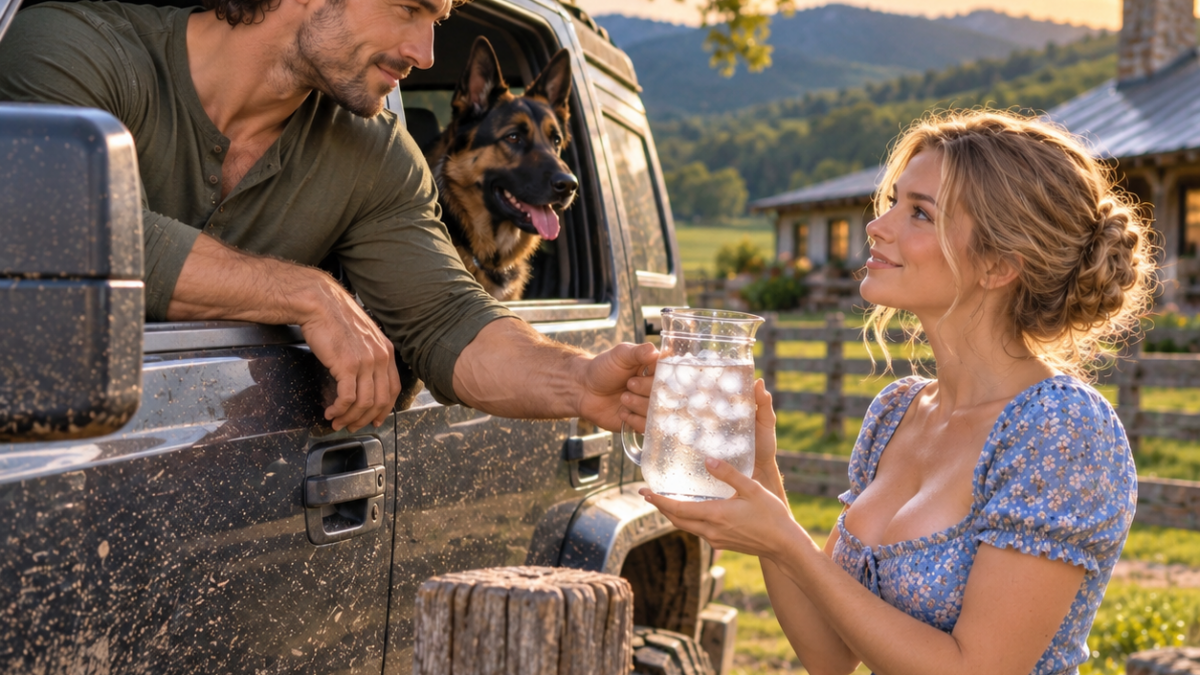
The problem was that Maggie knew how quickly temporary people could become familiar and how efficiently a house could erase them afterward. She worked until the feeling dulled.
Around 4:30, clouds began gathering again in the west, though nothing like the previous storm. Maggie was at the side of the barn, coiling an extension cord when she heard an engine on the county road.
She kept working. There were plenty of trucks out there.
Then the sound slowed at the drive. Maggie looked up. The Ford F250 turned through the gate.
Arlo’s head appeared near the passenger window.
Behind the cab, the truck bed carried fresh lumber, several lengths of pipe, two hardware boxes, and a cardboard carton marked with the pump suppliers logo. Maggie stood still long enough that Wesley noticed when he got out.
You all right? She looked at the truck, then at him. You came back.
Wesley paused, not offended. Just confused.
I said I was going to Emporia. Maggie looked toward the rear cab. The duffel was there.
So was the backpack. You took everything.
Wesley followed her gaze as though he had never considered what the bags might look like to somebody watching from the porch. Habit. Maggie waited.
For once, he seemed to realize that one word was not enough. He rested one hand on the open truck door. For 5 years, if the truck moved, everything moved.
She said nothing. Wesley looked into the cab. Clothes, gear, dog food, whatever I needed.
I never had much reason to leave anything behind. The explanation was simple.
That made it harder to dismiss. Maggie looked past him toward Cedar Draw.
The house, the barn, the pump house, still waiting for parts he had just brought back. Then she looked at Wesley again. Next time you go to town, the backpack can stay.
His expression changed slightly. Next time, Maggie turned toward the house.
Don’t make it weird.
Arlo jumped down from the truck and followed her toward the porch without waiting to see whether Wesley was coming. Wesley stood beside the open door for another moment.
Then he laughed quietly and began unloading the parts.
That evening, after dinner and another hour spent organizing the next day’s work, Wesley went to the guest room.
He set the duffel against the dresser. The backpack remained in his hand for 5 years. It had stayed close to the door wherever he slept.
motel, campground, truck stop, friend’s spare room.
He looked toward the hallway. Arlo had already settled near the kitchen. Wesley lowered the backpack to the floor beside the bed, not by the door.
The week after Wesley came back from Emporia, settled into a rhythm neither of them had planned, the part for the pump system arrived with the technician two mornings later. He handled the electrical controls and pressure equipment while Wesley stayed with the framing and roof work he actually knew how to do. Maggie moved between them, answering questions, carrying tools, checking cattle, and making sure the temporary water setup kept doing its job until the system was stable again.
By the end of that day, the pump house looked less like something the storm had tried to fold in half. There was still work left.
Wesley did not seem bothered by that. He replaced damaged boards, reset trim, and helped Maggie fit new roofing over the repaired section. They worked without much conversation, falling into the kind of coordination that did not need constant instruction.
Maggie knew where the pry bar had been left. Wesley knew which ladder leg sank slightly into the soft ground. When one of them needed the other to hold something, a glance was often enough.
Arlo spent most of the heavy work in the shade. He had learned the geography of cedar draw quickly. The kitchen door meant cool floor.
The equipment shed meant water and a place command. The porch meant people might sit long enough to become interesting. He was also beginning to treat Maggie as part of the routine.
Not family, not yet, but no longer a stranger. Harker recovery and roofing returned on Thursday.
Doug Harker stepped out with the same clipboard and polished confidence. Maggie met him beside the driveway. Wesley was near the pump house measuring a board.
He did not walk over. Doug spoke for less than 5 minutes before Maggie handed the papers back.
I’m going another direction.
He tried once to persuade her otherwise. Maggie thanked him and repeated herself.
That was the end of it. Later, Rey mentioned that two other ranchers had asked to compare estimates after hearing what Harker had quoted Maggie. Both found other contractors.
Nobody made a public lesson out of it. Harker simply lost work he had assumed was already his. Cedar Draw moved on.
As the practical problems became smaller, ordinary things began taking up more space. Maggie and Wesley drove into Cottonwood Falls for groceries. One afternoon, Wesley pushed the cart while Maggie worked from a handwritten list.
He added the cheapest coffee on the shelf. She removed it. He put it back.
She looked at him.
You survived the Navy and chose that it’s coffee that is brown regret in a can.
Wesley studied the label. It says medium roast.
It lies. He put the coffee back and let her choose. That evening, he repaired a kitchen cabinet hinge that had squeaked every time Maggie opened it.
She stood behind him for a moment after the sound disappeared.
I’d gotten used to that.
That’s not a reason to keep it broken.
She thought about the sentence longer than the hinge deserved. Wesley was already looking for the screwdriver he had set down. At dusk, they began sitting on the porch more often.
Sometimes they talked. Sometimes Maggie sorted receipts while Wesley cleaned tools.
Arlo lay between them and released a long theatrical sigh whenever dinner was late enough to offend him. One evening, Maggie looked down at the dog.
You know, some people are grateful for shelter. Arlo did not move.
Wesley said he’s union.
Of course he is. The old rocking chair remained at the far end of the porch. Wesley had avoided it without admitting to himself that he was doing so.
Then one afternoon he noticed the loose spindle. It was not enough to make the chair unsafe. It simply shifted under pressure.
And once he had seen it, he could not stop seeing it. Maggie was inside on a phone call. Wesley fetched wood glue and a clamp from the shed.
When it was done, he pressed the spindle once, then lowered himself into the chair to test how the frame carried weight. The screen door opened behind him. Maggie stopped.
Wesley saw her face before she had time to hide the reaction. He stood immediately.
Sorry, I didn’t know.
Maggie’s eyes stayed on the chair.
My dad. Wesley waited. She came onto the porch and rested one hand against the rail.
He sat there every morning. Coffee in the left hand, radio in the right. Always too loud before 7.
Wesley looked at the faded ring on the armrest. The two crooked brass screws made sense now. He fixed this about 15 years ago.
Refused to buy the right hardware because he said the screws he had were already paid for. A small smile passed across her face. Wesley shifted away from the chair.
I can leave it alone. Maggie looked at the seat, then at him. stay.
The word was quiet. Wesley sat again. Maggie took the plain chair beside him.
For a while, the porch carried only the sound of insects in the grass and Arlo’s breathing beneath the railing.
Henry Ellison, Maggie eventually explained, had not been good at apologies. If he knew he had been wrong, something around the house usually got fixed within 24 hours. A gate that had dragged for months would suddenly swing clean, or a truck that needed gas would be full in the morning.
Once after a particularly stubborn argument with Rey, Henry drove over at Dawn and left two fuel cans beside Ray’s barn without knocking.
That was his version of emotional communication. Maggie said. Wesley looked down at the brass screws.
I’ve known men like that.
She glanced at him. You do some of the same things.
He looked over. Should I be worried? No.
Maggie looked toward the yard.
It’s just familiar.
She left it there. So did he. Two days later, they went into town again, this time for hardware and dog food.
On the drive back, the sun sat low enough to shine directly through the passenger side of the windshield. Maggie reached up and pulled down the visor.
A photograph slipped partly free from the clear sleeve tucked inside it. She caught it before it fell.
Three people stood in the picture. Beside Wesley was a woman with dark hair and an easy smile. Between them stood a little girl holding both their hands.
Maggie looked at the photograph only long enough to understand what it was. Then she slid it carefully back into place.
She did not ask. Wesley kept his eyes on the road. For the rest of the drive, neither mentioned it.
That night, after dinner, they ended up on the porch again. The air had cooled enough that Maggie brought out a light sweater. Arlo settled near the steps.
Wesley sat in Henry’s chair now because Maggie had stopped reacting when he did.
He looked out across the darkening pasture. Her name was Natalie. Maggie turned slightly.
Wesley rubbed his thumb once along the armrest. The girl was our daughter.
Maggie said nothing. He did not need encouragement.
Only room. They died 5 years ago. I was still serving.
His voice stayed level, but the pauses grew longer. When I got back, the house looked like they were coming home later.
cup in the sink, shoes by the door, magnets on the refrigerator. He stopped. A moth circled the porch light.
Maggie kept her hands around her mug. Wesley said he stayed in the Navy for a while after that because leaving would have required deciding what came next.
Eventually, he did leave. When Arlo retired, Wesley took him. Then the truck became enough.
motel when needed, campgrounds when convenient, truck stop showers, laundromats, short jobs, and occasional nights with old friends until the question of how long he planned to stay began appearing.
“So, you left first,” Maggie said.
“It was not an accusation,” Wesley looked toward the yard.
“Usually, that explained the backpack better than anything he had told her before.”
A few minutes passed.
Then Wesley said, “You reminded me of her.”
Maggie’s fingers stopped against the mug.
He noticed.
“Not like that.”
She looked at him.
“The first day, the fence.”