Three MMA Fighters Threatened a Female CEO—Until a Single Dad’s Hidden Navy SEAL Past Took Over
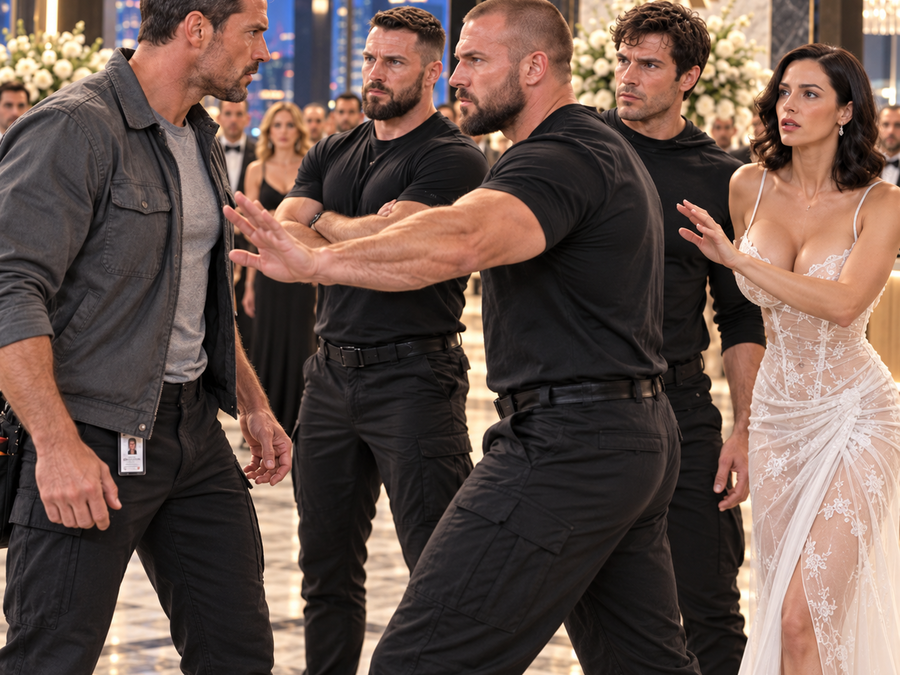
Three MMA Fighters Threatened a Female CEO—Until a Single Dad’s Hidden Navy SEAL Past Took Over
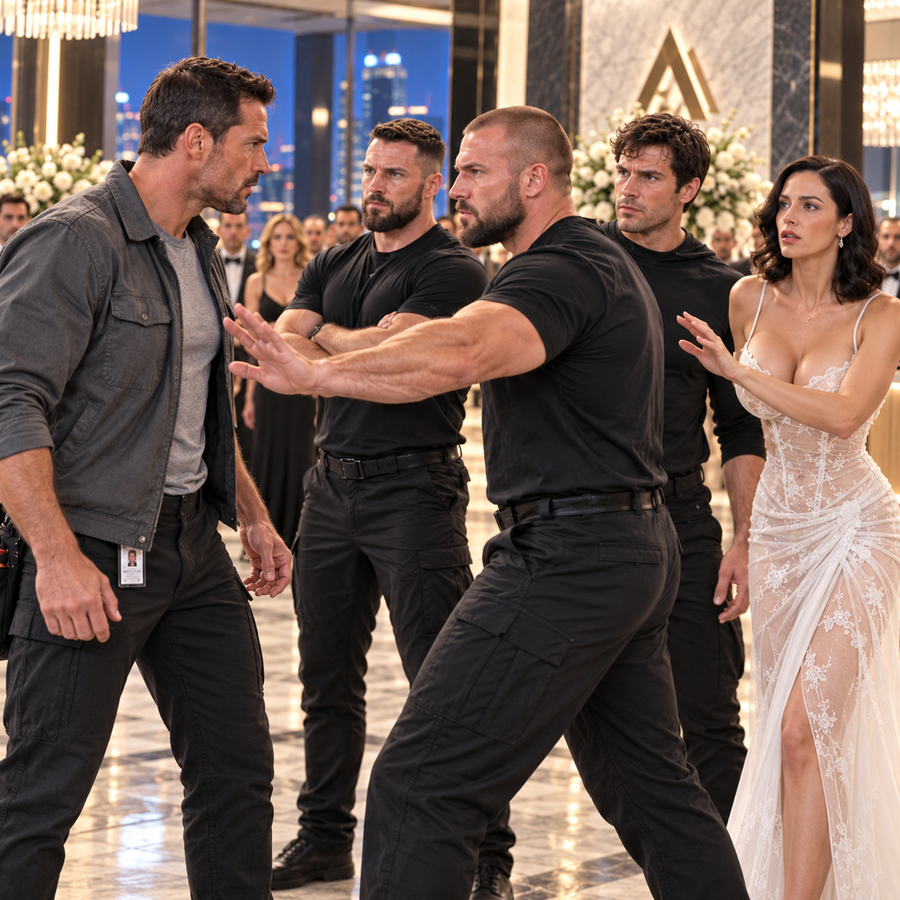
The doors locked from the inside.
The cameras went dark.
And somewhere on the 42nd floor of a billion-dollar skyscraper
a woman was being held prisoner inside her own company by the man she trusted most.
The security chief knew.
The executives knew.
And every single one of them did nothing.
But one man heard her voice through the wall.
Not a cop
not a bodyguard
not a hero
a maintenance worker in a gray uniform carrying a tool bag who was supposed to go home to his 8-year-old daughter.
He didn’t go home.
The rain started around 9 that Tuesday evening.
The kind of steady Seattle rain that didn’t announce itself dramatically.
It just arrived and settled in the way most bad things do.
On the third subbasement level of the Oraline Robotics headquarters
a man named Calder Reigns was lying flat on his back inside a ventilation crawl space
pressing a replacement sensor module against a duck junction with one hand while holding a flashlight in his
teeth.
Condensation dripped from the metal above him onto his forehead.
He didn’t flinch.
He hadn’t flinched at worse things than cold water in the dark
and he’d long since stopped keeping track of what those things were.
His radio crackled.
Reigns, you still in sub 3?
He pulled the flashlight from between his teeth.
Yeah.
Sensor is almost seated.
Give me 10 minutes.
After that one, 42 needs a ventilation check.
North corridor panels been throwing intermittent fault codes since this afternoon.
Calder wedged the sensor into position and heard it click.
Copy that.
He wasn’t a man who talked much on the radio or anywhere else.
The other facilities technicians had noticed this about him over the 14 months he’d worked at Oraline
and most of them had decided he was either unfriendly or hiding something.
They weren’t entirely wrong about either.
What they knew about Calder Reigns was what was in his file.
37 years old
certified in building systems and HVAC
single father
dependable
zero disciplinary incidents.
He arrived on time, finished what he was assigned, and went home.
What they didn’t know
what nobody in this building knew
because he had never once volunteered
it was that 10 years ago
Calder Reigns had been a Navy Seal.
Not in a glamorous movie poster way
in the real way
which meant long stretches of genuine boredom
interrupted by intervals of controlled violence in places most Americans couldn’t locate on a map.
He’d done that work for 8 years.
He’d been good at it.
And then his wife Dana had been diagnosed with pancreatic cancer and he had come home and then she had died anyway and he had become a father.
And the man who used to move through darkness for a living had spent 2 years learning how to make a 7-year-old’s lunch without burning the toast.
He had deliberately built a small, quiet life after that.
Not because he was broken
though there were days when broken didn’t feel entirely inaccurate
but because Brinn needed predictability more than she needed a father who was impressive.
She needed someone who would pick her up from school at 3:15 without fail
who remembered that she hated the crusts on her sandwiches
but would eat them if he left them on.
Who sat beside her at her third grade science project even when he didn’t understand half of what she was explaining about butterfly metamorphosis.
He had chosen ordinary.
He had done it on purpose, and he was fine with that.
He climbed out of the crawl space at 9:23P.
M dusted himself off
collected his tool bag
and took the service elevator to floor 42.
The 42nd floor of Orleans headquarters was executive territory
not the kind that had been designed for warmth.
Every surface up there was glass and brushed steel and engineered silence
the aesthetic of a company that wanted you to feel that it operated at a level slightly above ordinary human experience.
The regular elevators required a key card called didn’t have
but there was a service elevator that opened onto the maintenance corridor on the north side
and that was how he reached the ventilation panel that had been throwing fault codes.
He checked in with the building management system on his tablet, panel 42N7.
Sure enough
an intermittent pressure variance
not dangerous
probably a partial obstruction or a calibration drift
but the kind of thing that would become a documented problem if he didn’t address it.
He opened the service panel
pulled out his diagnostic equipment
and started working.
It was quiet up here.
The executive offices on this floor were dark.
No one worked late on this side of the building on Tuesday nights.
The only occupied space was the restricted conference suite at the far end of the north corridor.
Suite 4
21
which required dual factor authentication to enter and had its own independent power regulation.
He could see its frosted glass doors from where he was crouched.
The interior light was on a warm diffused glow behind the translucent panels.
He wasn’t paying attention to it.
He was focused on the sensor.
Then he heard the elevator arrive, not the service elevator.
The main executive elevator at the far end of the hall
the one that required the key card.
The doors opened and three men stepped out
moving with the particular kind of purposeful efficiency that Calder recognized immediately the walk of men who had agreed on something and were now executing it.
He didn’t recognize two of them.
The third he knew from company all hands meetings.
The frame frame porch that lined the main lobby.
Merrick Shaw
Orurelen’s chief strategy officer
44 years old
silver gray hair
always impeccable.
The executive who was photographed beside the CEO at every major announcement.
They didn’t look at him.
He was a maintenance worker crouching by a panel in a gray uniform.
People in suits at Oralene didn’t look at maintenance workers.
Shaw swiped his key card at suite 4,21.
The three men went inside.
The frosted doors closed behind them.
Calder went back to his diagnostic work.
11 minutes later, the second elevator arrived.
This one carried Vesper Langford.
He’d seen her in person maybe twice in 14 months.
She was harder to miss than most people.
Not because she was physically imposing.
She wasn’t she was maybe 5’5
but because she had the quality of someone who was always the person in the room that other people were watching.
She was 30 years old and she ran a company worth more than a billion dollars.
And she wore both facts the way certain people wear expensive clothes
like she’d forgotten they were there.
She was moving fast
the way she always seemed to be moving
heels sharp against the polished floor.
She had her phone in her hand
and she was reading something on it
frowning slightly.
She was almost to the sweet doors when she glanced up and registered Calder’s existence with the brief automatic scan that people in her position gave service workers
noting presence
not details.
Ventilation issue, she said, not breaking stride.
Yes, ma’am.
Should have it cleared before the frosted doors to sweet 4
21 parted before she reached them.
Merrick Shaw stood in the doorway
and something about the way he was standing relaxed
positioned slightly to one side like a doorman
made a small thing tighten in the back of Calder’s mind.
A recognition he couldn’t immediately name.
“Vesper,” Shaw said.
“Glad you could make it.”
“Where’s Danner?”
she said.
“He told me this was urgent.
He’s inside.
Come in.”
Shaw stepped back, closed the door.
Vesper went in.
The doors closed.
The lock engaged with a clean electronic click that Calder heard distinctly because the corridor was very quiet.
He returned to the sensor.
40 seconds later, the lights in the executive elevator panel went dark.
Then the service elevator indicator.
Then one by one
the small green status lights on every security camera in the north corridor blinked out.
Calder set down his tool and looked at the cameras.
He had worked in this building for over a year.
He knew the camera system.
Those lights didn’t go dark unless there was a deliberate override of the security protocol
a system level command that required executive authorization
or a direct intrusion into building security.
Cameras didn’t fail simultaneously.
Not like this.
From behind the frosted glass of sweet 4
21
he heard Vesper Langford’s voice.
Not words, just the tone sharp and rising.
Then a man’s voice lower, controlled, saying something he couldn’t make out.
Then Vesper’s voice again.
What is this?
Calder sat very still and then clearly enough that he would remember it later with the precision of someone trained to retain spoken information under pressure.
Sign it and you walk out.
He tried the suite doors first
locked not the soft lock of a room in use
but the hard lock of a security override.
The panel beside the door showed a red indicator instead of green.
He pulled out his radio control.
This is rains on 42.
I need a status check on suite 4,201.
Who authorized the camera override on this floor?
A pause, then a voice he didn’t recognize.
Standby.
40 seconds of nothing.
Then the voice again.
Reigns.
Building security has the situation handled.
Return to your assigned work.
Who am I speaking with?
Another pause.
Chief Vale.
And I’m telling you this doesn’t concern the facilities team.
Go back to sub3 Orson Veil security chief.
Calder knew him by reputation 15 years at Oralign.
Before that, law enforcement.
The kind of man who treated his authority like a fence he’d personally built.
Chief, I can hear a disturbance in 4,21.
The cameras on this floor are dark.
That’s not I said it’s handled.
Reigns.
Stand down.
Calder held the radio for a moment.
Through the frosted glass, Vesper’s voice was rising again.
He couldn’t make out words, but the sound had a specific quality.
The sound of someone refusing something over and over.
He set the radio down carefully on top of his tool bag.
Then he picked up his tablet and pulled up the building schematic.
Not the current version that existed in the digital system
but the original 2008 architectural drawings that the facilities team used for mechanical reference
the ones that showed the building as it had been constructed before 17 years of renovations had altered the executive
floor layouts.
There on the original schematic
a mechanical service shaft running inside the northwest wall of the building
a narrow vertical passage designed for cable management that connected the subb systems to the roof passing through every floor.
Not listed on any current floor plan
not accessible through any documented entrance except for a maintenance hatch on the 42nd floor behind a storage panel in the north corridor’s utility closet.
He found the closet.
He moved the shelving unit carefully, quietly, and there it was.
A hatch bolted from the inside that hadn’t been opened in years
if the rust pattern on the hinges was any indication.
He got it open.
The shaft was narrow enough that he had to move sideways in places
and it smelled of decades olds insulation and electrical conduit.
He moved slowly, the way he’d learned to move in spaces that punished noise.
Deliberate, methodical, one point of contact at a time.
The shaft ran along the interior wall of suite 4,201.
He found the maintenance panel
a small access point that opened into the space behind a recessed ceiling section inside the suite
and he pressed his ear to it.
Shaw’s voice
measured and almost gentle in a way that was worse than shouting
“Vesper
think about what you’re doing.
This is business.
This is just restructuring of authority while we manage a sensitive situation.
You sign the proxy
the voting rights transfer temporarily and in 6 months everything goes back.
There is no sensitive situation.
Vesper’s voice was tight and controlled.
The way a person sounds when they’re furious and know that showing it is a disadvantage.
The sensitive situation is that you’ve been diverting funds through three shell suppliers for 2 years and I found out.
That’s the situation, Merrick.
A silence.
That’s a serious allegation.
It’s a documented fact.
I have the payment records.
Those records are going to look very different by tomorrow morning.
They’re going to look like you authorized them.
Your approvals, your signature on the vendor onboarding.
Shaw’s voice didn’t change.
That was the most unsettling part.
This is your last opportunity to walk away from this intact.
You’re threatening to frame me.
I’m explaining your options.
There are two of them.
You sign the proxy and you leave on your own terms or we proceed with the documentation I’ve already prepared and you leave in handcuffs.
A pause.
Sign it, Vesper.
Go to hell, Merrick.
Calder pressed his eye to a gap in the panel.
The suite was large
a long oval table
the kind used for board presentations
with chairs down both sides.
Vesper stood at one end
both hands flat on the table
a single sheet of paper in front of her that she hadn’t touched.
Shaw stood at the other end.
The two men Calder had seen arrive with him were positioned near the only exit
one by the main doors
one by the secondary access panel beside the presentation wall.
Three men, one exit he knew about, a CEO who wasn’t going to sign anything.
He shifted his weight carefully to get a better angle
and his elbow connected with a metal bracket inside the shaft.
The sound it made wasn’t loud
but in the silence of that room
it was enough.
Shaw’s head turned toward the wall.
There’s someone in the service space.
One of the men by the door said.
“Find them,” Shaw said.
“They were fast.
He’d give them that.”
The two men moved out of the suite and into the corridor
and one of them knew enough to check the maintenance hatch almost immediately
which told Calder these men had done their preparation.
They’d looked at the building plans
or at least someone had told them about access points to watch
which meant Orson Veil.
Calder was already moving back through the shaft by the time he heard the hatch open below his position.
He didn’t run running in a tight metal passage
made noise
and cost precision.
He moved up instead of back through a junction above the 42nd floor into the utility space between the executive level ceiling and the mechanical room above.
One of the men followed him into the shaft.
The other didn’t.
He could hear the one behind him not trained or not trained for this because the man was breathing audibly and moving too fast hitting the walls.
Calder stopped moving and went still, listened, counted seconds.
The man passed him in the dark.
Calder reversed direction.
He was back on the 42nd floor in under 2 minutes.
He came out of the utility closet
moved down the corridor without the lights.
The camera override meant the corridor’s motion activated lighting was also compromised
which suited him
and reached the secondary access panel on the wall of suite 4
21
the one the man had been standing next to before he left.
It was locked from the suite side
but it was mechanical
not electronic
an older installation.
He had the right tool in his bag.
He’d been carrying the right tools for over a year.
He got it open in 90 seconds, and then he was inside.
Vesper Langford was standing exactly where she’d been standing when he’d watched through the gap hands flat on the table
not moving
not looking at the papers in front of her.
Shaw was on his phone, his back half turned.
She saw Calder emerge from the access panel in the wall
and her entire body went rigid.
He held up one hand
palm out
low and slow
the way you approach someone who’d been frightened and might make noise.
She didn’t make noise.
He crossed the space between them in six steps.
When he reached her
he leaned close and kept his voice below a whisper
barely breath in shape.
Maintenance back corridor.
There’s a way out.
She looked at him the way people looked at a stranger who had just appeared through a wall in the middle of the worst moment of their their life with an expression caught somewhere between relief and the particular suspicion of someone who’d learned not to trust easy rescues.
“Who are you?”
she said barely audible.
Calder, I fix your ventilation system.
Something shifted in her expression.
Not quite a smile, nothing close to a smile.
This was not a smiling situation
but a fractional relaxation of the specific terror of believing no one was coming.
Shaw’s phone call was ending.
Cder could hear his voice behind them.
Wrapping up, turning back, he put his hand very lightly on Vesper’s arm.
Stay close.
Keep moving.
She looked at the papers on the table.
The ones she hadn’t signed.
The ones that would let Merrick Shaw gut her company while she stood there.
Then she looked at the access panel Calder had come through.
Okay, she said.
They moved.
They were three steps from the panel when Shaw turned and saw the empty space where Vesper had been standing.
Stop them.
Calder pushed Vesper through the opening first
followed immediately
and pulled the panel closed from the inside.
He could hear Shaw shouting behind the wall
the scrape and impact of men moving fast toward them.
The service corridor was dark.
Vesper stumbled once and he caught her arm without breaking stride.
Which way?
She said.
Left.
Don’t talk.
I’m the CEO of this company and right now that doesn’t help either of us.
Left.
She went left.
They moved fast through the maintenance corridor
past the camera housings that were still dark
past the locked elevator bank toward the service shaft access that would take them down.
Calder was running an inventory in his head as he moved exits
positions
what they knew and what he didn’t.
What he didn’t know was how many people Merrick Shaw had inside this building tonight.
What he knew was that Orson Vale had answered that radio call and that Vale had told him to stand down
which meant security wasn’t coming to help them.

