A Single Father Fixes A CEO’s Broken Fence—What She Gives Him In Return Leaves Him Speechless (Part 2)
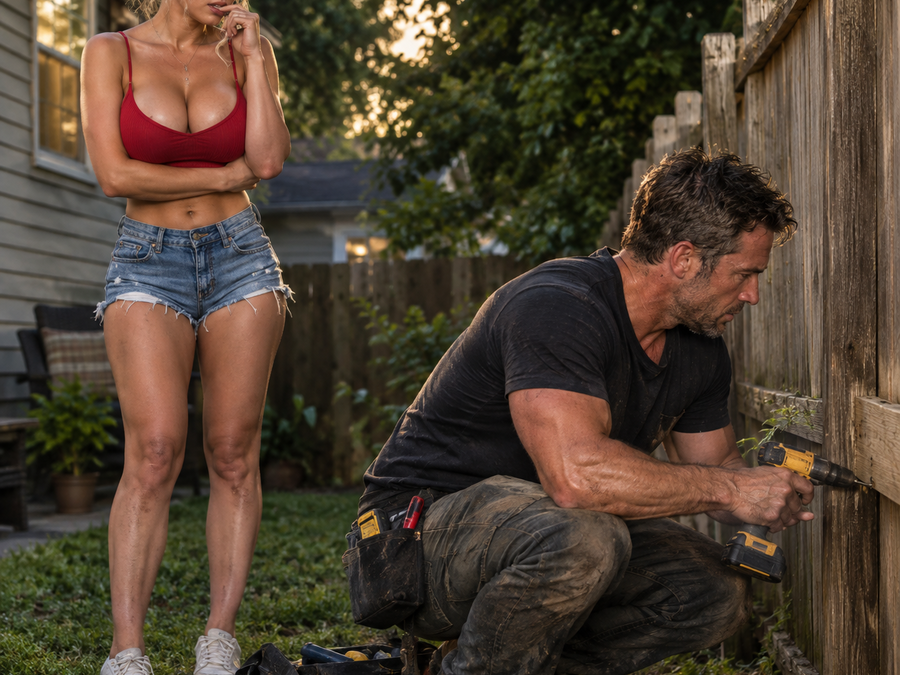
A Single Father Fixes A CEO’s Broken Fence—What She Gives Him In Return Leaves Him Speechless (Part 2)
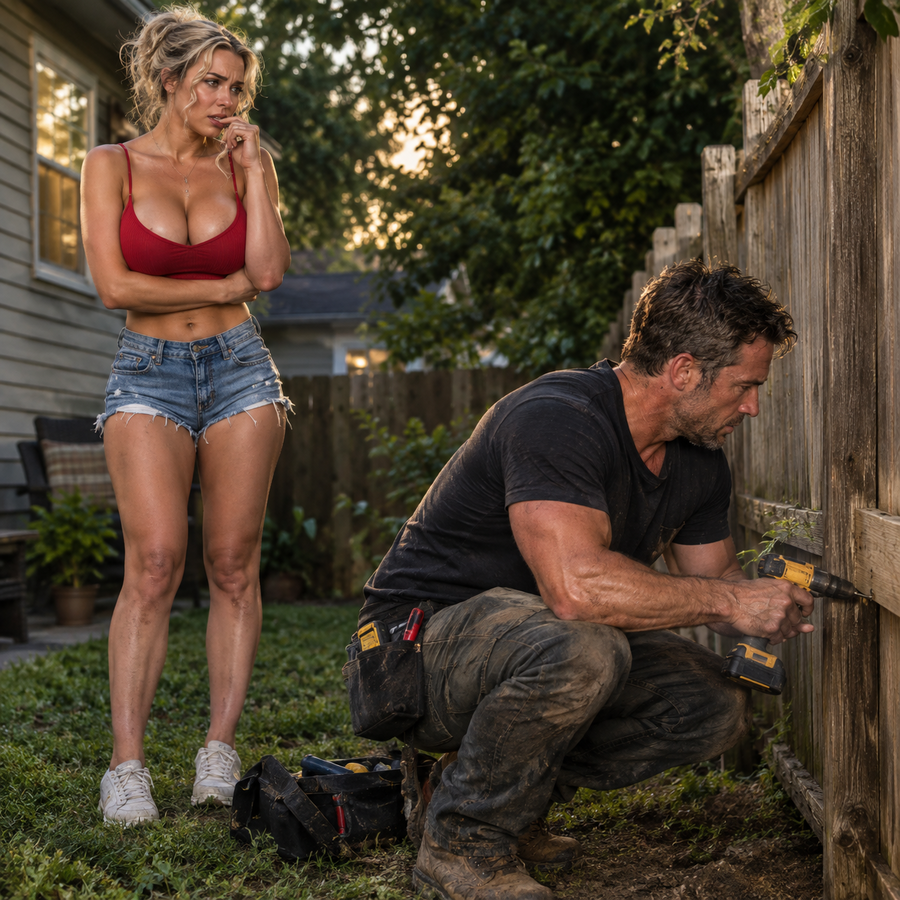
PART 2
He was loading his tools when Richard came back. The black Mercedes came through the gate at 11:15 with the precise timing of a man who had calculated when the contractor would be nearly gone and the house would feel most unsettled. Daniel had met men like this before. They didn’t always announce their strategy, but it lived in their timing. Richard got out and looked at the fence with the same measuring look as before. Then he looked at Daniel. Then he looked at the house, where Catherine had just appeared in the doorway.
“Nice work,” Richard said to Daniel. The way some men compliment the help to perform their own reasonableness.
“Thanks,” Daniel said. Richard turned toward Catherine.
“You have a minute.”
“I’m on my way out,” Catherine said. He blinked.
“You weren’t going anywhere when I pulled in.”
“I am now,” she said. She had her bag over her shoulder, keys in hand. She had moved very fast.
“I just want to talk,” Richard said, “about Lily, about the arrangement, about being reasonable, Catherine, which I think we both want to be.”
“Your attorney’s emails are not reasonable,” Catherine said. “My attorney will respond to them.”
“I’m not here as opposing counsel. I’m here as Lily’s father.”
“Then be her father,” Catherine said. “Call her, take her to dinner, help her with her homework. Don’t send legal documents designed to destabilize her mother and call that fatherhood.” She walked toward her car, which was parked to the side. She stopped beside Daniel’s truck.
“Lock the gate when you leave.” She said to Daniel, “The code is on the box.” She drove away.
Richard stood in the driveway. Daniel kept loading tools. Richard looked at him with the expression of a man recalibrating.
“You’re just the contractor,” Richard said slowly, testing.
“That’s right,” Daniel said.
“How long have you been working here?”
“3 days.”
“You seem,” Richard paused. “Comfortable here.” Daniel lifted the toolbox into the truck bed.
“Good fence work takes time,” he said. “You don’t rush it.” Richard looked at the fence, at the gate, at the clean, straight line of it running along the property edge.
“Has she got you doing other work?” he said. “Beyond the fence.” Daniel closed the truck bed. He looked at Richard directly. Not aggressively, just directly.
“I’m done here,” he said. “Have a good day.” He got in the truck. He could feel Richard watching him as he backed out, and he let himself be watched because he had nothing to hide and nothing to prove. And there was something in having nothing to prove that was its own kind of power. He pulled onto the street and drove.
His phone rang at 1:47. “Catherine, the first shareholder meeting is set,” she said without preamble. “Tuesday, Tuesday at 8, James Whitmore. He was the second person to ever write me a check. He picked up on the second ring.”
“Good,” Daniel said.
“He said he’d been waiting for me to call.” Her voice had something in it that hadn’t been there before. Not quite restored, but moving in that direction. “He said he had questions about the board’s proposal, and no one had asked him what he thought.”
“People always have questions,” Daniel said. “Most of the time, no one asks.”
“I spent the morning pulling together the documentation,” she said. “Revenue trajectory, client retention, three-year plan, the programs that the board wants to cut. It’s,” She stopped. “It’s a stronger story than I remembered. I’d been so close to the crisis that I forgot what the whole thing actually looked like.”
“That happens,” he said. “You get close enough to something and you start seeing what’s damaged and forget to look at what’s holding.” A pause.
“Are you going to keep doing that?” she said.
“What? Saying things that apply to more than one situation at a time.” He almost smiled.
“Occupational habit,” he said. She was quiet for a moment.
“The gate,” she said. “It swings perfectly now.”
“It should,” he said. “The old hinges had about another season in them, maybe less.”
“You could have just replaced them on day one.” She said, “You waited until the fence was done.”
“Sequence matters,” he said. “You set the structure first, then you address the points of entry.” Another pause. Longer.
“Daniel,” she said.
“Yes.”
“Lily asked me tonight if you were coming back.” A pause. “I didn’t know what to say.” He drove for a moment in the silence of that.
“What did you want to say?” he asked. She was quiet long enough that he thought maybe he’d overstepped, that the question was too direct, that he’d misjudged the shape of this.
“Then I wanted to say yes,” she said. “And that felt like something I should tell you before someone else’s yes becomes the wrong answer.” He was at a red light. He looked at the red without seeing it.
“I’m not going anywhere,” he said. “But I’m also not in a hurry.”
“I’m not asking you to be.”
“I know,” he said. “I just wanted you to know I’m saying it the same way I set posts. Deep, not fast.” She made a sound that might have been a laugh. Small and real and not composed at all.
“The gate code,” she said. “You still have it.”
“I do.”
“Don’t lose it,” she said. She hung up. He sat through the green light for a full 2 seconds before the car behind him reminded him where he was.
He drove home. He picked up Noah from Marcus Jr.’s house. He made dinner. He listened to Noah explain in comprehensive detail every single thing that had happened at the sleepover, which took 45 minutes, and which Daniel received with his full attention. And later, when Noah was asleep, and the house was quiet, and the burned place on his hand had long since healed, Daniel sat at the kitchen table with a cup of coffee gone cold, and thought about what it meant to set something deep instead of fast. What it meant to address the points of entry only after the structure was solid. What it meant to test the thing at its base, press your palm against it, feel for the give or the hold. He thought about a woman who had gotten up at 4:30 in the morning to fight for something she built. He thought about a girl who said she needed real. He thought about a gate that swung perfectly now. He drank the cold coffee and tomorrow, whatever it brought, he would be ready for it. Not because he knew what was coming, but because he had learned a long time ago that readiness wasn’t about knowing. It was about being the kind of person who showed up 2 minutes early. Every time.
The Tuesday shareholder meeting changed things. Daniel knew it changed things, not because Catherine told him the details, she didn’t, not all of them, but because of how she sounded when she called him at 9:47 that night. She called from her car, parked in the driveway because she’d pulled in and not gone inside yet, and her voice had the specific texture of someone who had been running on adrenaline for 6 hours and had just felt the ground under their feet again.
“James Whitmore brought two other original shareholders,” she said. “I was expecting one meeting. I got three.”
“What happened?”
“They listened,” she said. “For 2 hours, they just listened. And then James looked at the board’s proposal and said, and I’m quoting directly, ‘This reads like a document written by people who want the harvest without having planted anything.'” A pause. “I hadn’t even used that framing. He found it himself.”
Daniel was in his kitchen. Noah was asleep. He was standing at the counter because he’d been too focused on the call to find a chair.
“How many votes does that give you?” he said.
“Not enough alone,” she said. “But James knows people. He said he’d make three calls tonight. The kind of calls that happen before anyone’s official position is public.” She paused. “He also said something else. He said, ‘Catherine, the people who want to take this from you are counting on you being too tired to fight. Don’t be tired yet.'”
“Good man,” Daniel said.
“He’s 73 years old,” she said. “He started his first company at 40. He said he’d been watching me for 11 years and that this board move was the most predictable thing he’d ever seen. And he was embarrassed it had taken him this long to say so out loud.” Her voice did something complicated on the last sentence.
“I almost cried in the meeting.”
“Did you?”
“No. Would it have been the end of the world if you had?” A pause.
“Probably not,” she said. “But old habits.” He understood old habits. He had a collection of them himself. Most of them built in hospital corridors and insurance offices and school pickup lines where falling apart wasn’t available as an option.
“Lily’s been asking about Noah,” Catherine said, shifting.
“He’s been asking about her fractions argument,” Daniel said. “I think he’s still bothered that he might have been wrong.”
“He wasn’t wrong,” Catherine said. “Lily admitted it. She just took 4 days to do it.”
“She’s her mother’s daughter,” he said. A silence, not uncomfortable. The kind that had started to feel over the past week like its own form of conversation.
“Will you come Tuesday?” she said. “Not for work. There’s nothing to fix.” A pause. “Lily has a school presentation, history project. She’s been practicing her opening, and I, I think she’d want you there. And Noah. She’d want Noah to be difficult about the fractions.”
Daniel was quiet for a moment. “What time?” he said.
“Seven,” she said. “Dinner first, if that’s all right.”
“That’s all right,” he said. She said good night. He sat down his phone and stood at the counter for a while longer than he needed to, looking at nothing in particular, aware of something expanding quietly in his chest that he hadn’t made room for in a long time and wasn’t sure yet what to do with.
He went to bed. He slept better than he had in months.
Wednesday, the contractor who owed him $400 paid him. Not voluntarily. Daniel had sent a third notice, formal this time, with the specific language his attorney friend had advised, and the check arrived via same-day mail with no note, just the check. Daniel deposited it, took Noah out for burgers, and didn’t make a speech about it because some victories were their own complete thing and didn’t need narration.
Thursday, he got a call from a property manager in Whitfield Hollow who had heard about the fence job from a neighbor. Wooden gate and two sections of privacy fence. Bigger job, better money. He gave her a quote the same way he always did. Honest, detailed, no padding. She hired him on the spot. He called Marcus to tell him the referral chain was working. Marcus said, “What did you do out there? Save somebody’s life?” Daniel said, “Just a fence.” Marcus said, “Uh-huh.”
Friday came with a phone call he hadn’t expected. Richard Hail. The number came through at 8:00 in the morning, and Daniel almost didn’t answer because it wasn’t his call to take, and he knew it. Richard had no business calling him. They’d exchanged maybe 30 words total. He answered because not answering felt like hiding.
“I want to talk to you,” Richard said. “Man to man.” Daniel was in his truck, parked outside the new job site, not yet started. He looked at the windshield.
“About what?”
“About my daughter,” Richard said. “And about what’s happening in that house.”
“I fixed a fence,” Daniel said.
“3 days. You’ve been back.” Richard said, “I have a friend in the neighborhood.” Daniel felt something go carefully still inside him. Not anger. Attention.
“Your friend, the neighbor, can tell you what I drive,” he said. “They can’t tell you what I’m doing there.”
“I’m not accusing you of anything,” Richard said quickly. “I’m a father who’s concerned about who’s spending time with his daughter.”
“Your daughter is 12 years old, and she’s smart enough to explain your custody petition back to you in legal language,” Daniel said. “She read the email. She understood it. And she chose to tell her mother instead of carrying it alone. Your concern might be better directed at the document your attorney sent.” Silence.
“That’s not, I want what’s best for Lily,” Richard said. The smoothness in his voice had developed a rough edge.
“Then be what’s best for her,” Daniel said. “She doesn’t need a custody battle. She needs her father to show up the way fathers are supposed to show up. Dinner, homework, being there on a regular Tuesday when nothing special is happening. That’s the job.” He paused. “I know what the job is. I do it alone.” A silence that lasted long enough to have weight.
“You don’t know anything about my relationship with my daughter,” Richard said. And now there was something real in his voice. Something underneath the performance. Something that might have been, if you pressed it at the base, actual pain. Daniel heard it. He shifted.
“No,” he said. “I don’t. And that’s fair.” A pause. “But I know that the legal route makes Lily a territory instead of a person. And she knows the difference. She told me herself.” Another silence.
“She talked to you about this,” Richard said quietly. Not accusing, just absorbing.
“She talks to people who listen,” Daniel said. The call sat in that for a moment.
“She used to talk to me,” Richard said. “Before.” He didn’t say before what. He didn’t need to.
“She probably still would,” Daniel said, “if the conversation wasn’t coming from an attorney’s office.” He heard Richard breathe in and out. The sound of a man looking at something he didn’t fully want to see.
“I’ll think about it,” Richard said.
“All right,” Daniel said.
“The fence,” Richard said suddenly. “The work you did, it’s, I drove past it.” A pause. “It’s good work.”
“Thank you,” Daniel said. Richard hung up.
Daniel sat for a moment. He thought about what it costs a person to call someone they’ve already decided to dislike and say the thing they actually mean. He thought it probably cost more than the call looked like from the outside. He got out of the truck and went to work.
Tuesday arrived with Lily’s nerves visible from across the room. She was dressed carefully, her presentation notes printed and held in a folder that she’d already reorganized twice by the time Daniel and Noah came through the gate at 6:50. Noah was in his good shoes, which he’d put on without being asked, which Daniel noted and stored quietly.
“You’re early,” Lily said.
“Always,” Noah said.
“The fractions thing,” Lily started.
“You were wrong about sevens,” Noah said. “I’ve had a week to confirm it. Multiple sources.”
“I know,” Lily said. “I was going to say you were right.” Noah blinked.
“Oh.” A pause. “Okay.”
“Don’t make a thing of it,” Lily said.
“I’m not making a thing.”
“You’re doing the face.”
“I don’t have a face.”
“You have a face.” Daniel said, “Both children looked at him.”
“You do,” he told Noah. “It’s a good face. Put it away for now.” Noah put it away.
Catherine was in the kitchen and she turned when they came in and there was a moment, brief, natural, unperformed, where she and Daniel looked at each other across the room and the look said something that neither of them was ready to say out loud, but both of them understood. Something like, this is a good thing, whatever this is.
Dinner was pasta and garlic bread and a salad that Lily had made herself, slightly overdressed because she’d been nervous and put the vinaigrette in twice. Noah ate three helpings without mentioning the dressing. Daniel noticed and felt something swell in his chest that was specifically pride.
“The presentation,” Catherine said to Lily, “do you want to run it once?”
“No,” Lily said. “If I run it again, I’ll overthink it.”
“Smart,” Daniel said.
“She’s ready,” Noah said with complete authority. “I watched her practice Wednesday. She knows it. Running it again just adds doubt.” Lily looked at Noah.
“That’s the most useful thing you’ve said all week,” she said.
“I have my moments,” Noah said.
The presentation was at the school, in a room that held about 40 parents and siblings and the occasional grandparent. Lily was the sixth to present. She stood in front of a map she’d drawn herself. Daniel had learned this from Catherine, who leaned over and said it quietly. She drew the whole thing by hand, wouldn’t use a template. And she spoke about the Underground Railroad with the focused precision of someone who had done the research and found the human story inside it and decided the human story was the part that mattered. She talked about the people who had built stations, ordinary houses who had opened doors in the middle of the night, not because it was safe, but because someone needed to open it. She talked about how those people weren’t recorded in most of the official histories. How they left behind not documents but structures, barns with hidden rooms, cellars with false floors, fence lines that marked safe passage.
Daniel went very still. He heard the fence in it. He heard Catherine’s company. He heard Richard’s phone call. He heard Noah explaining galvanized mesh on a Thursday afternoon like it was the most natural thing in the world. He heard his whole life in it. The part of his life that had never been in any official record, but had held things together. At the base, had kept things from collapsing, had been the structure that let other things stand. Lily looked up at the end and found his eyes in the room. She held them for one second, just one. Then she looked at the room and said, “The fence line mattered as much as anything else. Not because it was grand, because it was there. Because someone built it and made sure it held.”
The room applauded. Noah beside Daniel said, “She’s really good.”
“Yeah,” Daniel said. His voice came out slightly different than usual. He hoped nobody noticed. He was fairly certain Catherine, sitting on his other side, noticed. She didn’t say anything. She just shifted slightly, almost imperceptibly, so that her shoulder was closer to his. He didn’t move away.
They were back at the house by 9:15. Noah fell asleep on the couch with the speed of a child who had been too excited all evening to acknowledge being tired. Daniel covered him with the blanket Lily brought without being asked. Lily went to bed at 9:30, pausing in the doorway to say, “Thanks for coming.” She said it to both of them, but she looked at Daniel when she said it.
“You were excellent up there,” he said.
“I know,” she said. “But it helped that you were there.” She paused. “Both of you.” She went to bed.
The house settled into its nighttime quiet. Catherine made tea. She made two cups without asking, the same way she’d made two coffees on Saturday morning, with the natural ease of someone who had stopped needing to ask a particular question. They sat at the kitchen table and Daniel thought about how long it had been since he’d sat at someone else’s kitchen table at 9:40 at night and felt like he wasn’t in the way.
“She talked about fence lines,” Catherine said. “I heard. She didn’t tell me that part was in the presentation.” A pause. “She wrote it after Saturday, after you left.” He looked at his tea.
“You got to her,” Catherine said. “The thing you said about things that look broken not always being as broken as they seem. She wrote that in her notebook. I saw it.”
“She got to herself,” he said. “I just stood nearby.”
“You’re very good at that,” Catherine said. “Standing nearby in a way that actually helps.” She paused. “Most people stand nearby and make it about themselves.”
“Most people are scared of the quiet,” he said. “They fill it with noise because it feels like doing something. And you, I learned the quiet was where the real stuff lived.” He said, “Once you stop fighting it.” She was looking at him, not the way she’d looked at him on day one. Measuring, evaluating. Looking at him the way you look at something when you’ve already decided you trust what you see and now you’re just seeing it.
“Richard called me today,” she said. Daniel looked up.
“He withdrew the custody petition,” she said. “His attorney sent a formal notice this afternoon.” A pause. “He also called Lily directly. First time he’s called her without a scheduled reason in 8 months.” Another pause. “She talked to him for 45 minutes. I know because I could hear her voice through the door. She was laughing about halfway through.” Daniel nodded slowly.
“Did you talk to him?” Catherine said. “Richard.” He considered his answer.
“He called me Friday,” he said. “We talked.” She stared at him.
“What did you say?”
“I told him that Lily talks to people who listen,” he said. “And that the legal route makes her a territory instead of a person.” Catherine set down her mug.
“Daniel, it wasn’t my business,” he said.
“I know that.”
“No,” she said. “No, that’s not.” She stopped. She pressed her hand flat on the table and looked at it.
“I have been trying to manage Richard through attorneys for 3 years,” she said. “Three years of formal language and correct procedures and making sure every word was documented.” She looked up. “You called him directly and told him the truth in one conversation.”
“Sometimes people just need someone to say it plainly,” he said. “The formal language lets everyone protect themselves. It doesn’t let anyone be honest.”
“You didn’t have to do that,” she said. “For me?”
“I did it for Lily,” he said. “But also,” he stopped. She waited. “Also, yes,” he said. “For you.” The kitchen was very quiet. Outside, the wind moved through the trees in the yard, and somewhere along the east property line, the new fence held the boundary steady, the way it was built to do, the posts set deep, the mesh tight, the gate swinging clean on its new hinges.
Catherine looked at her hands on the table. Then she looked at him.
“The shareholder vote is in 11 days,” she said.
“I know.”
“James Whitmore called me tonight before dinner. He’s got four votes committed. He needs two more to create a blocking minority.” She paused. “He thinks he can get them.”
“He’ll get them,” Daniel said.
“You don’t know that.”
“No,” he said. “But I know the work you’ve put in this week, and I know that what you built is real. Real things have a way of surviving if somebody fights for them hard enough and long enough.” She looked at him steadily.
“Is that experience talking again?”
“4 months,” he said. “Every form, every appeal.” She reached across the table. She put her hand over his. Not romantic, not dramatic, just a hand on a hand. The specific warmth of another person saying, “I’m here. I see what this costs. I’m not going anywhere.” He turned his hand over. She didn’t pull away. They sat like that for a while in the quiet of a kitchen where the tea was going lukewarm and a boy was asleep on the couch and a girl was already dreaming. And outside, the new fence held the line exactly as it was supposed to.
“I don’t know how to do this slowly,” she said. “I’ve run a company for 11 years. I make decisions fast.”
“I know,” he said. “But you also got up at 4:30 and made the calls and walked into the room and said the thing that was true.” He paused. “Fast isn’t always the problem. What matters is what you’re building.”
“And what are we building?” she said directly, because she was Katherine Hail and she did not circle the real question twice. He looked at her hand in his.
“Something that holds,” he said. “That’s all I know how to build.” She was quiet for a long moment.
“That’s enough,” she said.
Noah stirred on the couch and called out for his dad in the half-asleep, half-somewhere-else voice of a child who needed to know someone was near. Daniel squeezed her hand once. He got up and went to his son. He sat on the edge of the couch and said, “I’m here.” Noah settled back to sleep in 12 seconds. Daniel sat there for a minute longer. Then he came back to the kitchen. Catherine was still at the table. She hadn’t moved. She’d waited. He sat back down. And whatever they were building, they kept building it quietly, the way all the best things get built. Not in a single moment, but in the accumulation of small, honest ones, set deep, made to last, tested at the base, and found to hold.
The shareholder vote was set for a Thursday. Daniel knew this because Catherine had told him 11 days ago, and he had counted quietly, without meaning to, the way you count towards something without admitting to yourself that you’re counting. He knew it the way he knew when concrete was ready. Not by the clock, but by the feeling, by the weight of the days as they passed. He was at the new job in Whitfield Hollow on Wednesday when his phone rang at 2:17 in the afternoon, and Catherine’s name came up, and his hand moved to answer it faster than he decided to.
“James got the votes,” she said. He set down the wire cutter.
“All of them,” he said.
“Six committed, four firm, two soft, but holding. The board needs a supermajority to remove me. They don’t have it.” A pause. And in that pause, he could hear her breathing. Could hear the specific sound of a person who has been holding something enormous for 11 days and has just been told they can put it down.
“They called this morning. The vote is postponed pending further review.” Another pause. “Which means they lost and they know it. And they’re looking for a door that doesn’t say defeated on it.”
“That’s a win,” he said.
“That’s a win,” she said. And her voice broke on the second word. Not dramatically, just a small, clean break of something that had been held under enormous pressure, finally being allowed to release. He stood in the middle of the job site and said nothing because she didn’t need him to say anything. She needed him to be on the other end of the line while she let herself feel the size of what had just happened. After a moment, she said, “I keep waiting to feel relieved.”
“What do you feel instead?”
“Tired,” she said. “Really? Genuinely tired. Like I’ve been standing up straight for so long that I forgot I was doing it and now my body is remembering all at once.”
“That’s the right feeling,” he said. “That’s what it feels like when it’s real.” She laughed. Small and real and completely unguarded.
“How do you know?”
“4 months,” he said. “Every form, every appeal. When the insurance company finally paid, I sat in the truck in the parking lot for 40 minutes because I didn’t know what to do with my hands when they didn’t have something to fight.” She was quiet for a moment.
“What did you do after the 40 minutes?”
“I drove home,” he said. “I picked Noah up from my neighbor’s house. I made dinner. And that night after he went to sleep, I sat at the kitchen table and I cried for about 20 minutes and then I was done. Just done,” he said, “because I’d held it long enough. And then I didn’t have to anymore.” Another silence, the kind that held something neither of them needed to name.
“Come to dinner tonight,” she said. “Both of you. I want to tell Lily in person, and I want, I want you there when I do.”
“We’ll be there at 6:00,” he said.
“6:30,” she said. “I’m going to need a shower and at least 20 minutes to stop shaking.”
“6:30,” he said. She hung up. He stood in the Whitfield Hollow yard and looked at the work in front of him and felt something move through him that was not quite joy and not quite relief, but was adjacent to both. The particular satisfaction of watching something you believed in survive the thing that was trying to end it. He picked up the wire cutter and went back to work.
Lily knew before Catherine said a word. She opened the door when Daniel and Noah arrived at 6:28, took one look at her mother standing in the kitchen doorway with her eyes slightly too bright and her posture too carefully relaxed, and said, “You won.”
Catherine said, “We’re having dinner first.”
“Mom, sit down, Lily.”
“Mom, you won. Just say it.”
“I won,” Catherine said. Lily made a sound that was not a word, crossed the kitchen in four steps, and put her arms around her mother’s neck and held on. Catherine held back with the complete physicality of a woman who had been putting on armor every morning for 11 days and was now allowed to just be a mother being held by her daughter. Noah looked at Daniel. Daniel looked at Noah.
“Should we,” Noah started.
“Let’s find something to do in the kitchen,” Daniel said. They found something to do in the kitchen, which was mostly standing near the counter pretending to be interested in the fruit bowl, while the two people in the doorway took the time they needed. After a while, Lily pulled back and wiped her face with the back of her hand with the brisk efficiency of someone who had decided that was enough of that.
“Okay,” she said. “Now dinner.”
“Now dinner,” Catherine agreed, and her voice was the most ordinary it had ever sounded. No control in it, no precision, just regular human, ordinary. And it was the best Daniel had heard her sound in two weeks.
Noah said, “What are we having?”
“Pasta,” Lily said. “Same as last time.”
“You overdressed the salad last time.” Noah said.
“I know,” Lily said. “I’m not making salad this time.”
“Smart,” Noah said.
They made dinner together, all four of them, in the specific comfortable chaos of people who have learned each other’s kitchen habits without meaning to. Catherine at the stove because she was particular about sauce. Lily cutting bread because it was the job she’d assigned herself. Noah setting the table with the quiet efficiency of a boy raised to pull his weight. And Daniel finding the things that needed doing without being told. Filling the water glasses, locating the right serving spoon, being useful in the small, invisible ways that kept everything moving. At one point, Catherine turned from the stove and found Daniel already holding the right-sized pot lid and said, “How did you know I needed that?”
“You were about to reach for it,” he said. She took the lid. She looked at him for a half second too long.
“Thank you,” she said. He went back to the water glasses.
Dinner was easy in the way that things are easy when the hard thing has passed and everyone knows it. Lily talked about a project at school. Noah talked about a boy in his class who had done something complicated with a rubber band and a cafeteria spoon that had resulted in what Noah called the most impressive trajectory he’d ever personally witnessed. Catherine asked detailed follow-up questions about the trajectory as though it mattered, which was the right thing to do.
It was somewhere between the pasta and the moment when Lily went to find something for dessert that Noah looked at Catherine and said, completely without preamble, “Are you okay now?” Catherine looked at him.
“What do you mean?”
“My dad said you were fighting for something important,” Noah said. “He didn’t say what it was, but I could tell it was important because he was paying attention the way he pays attention when things matter.” He paused. “So, are you okay now?” Catherine glanced at Daniel. He raised his eyebrows slightly in the way that said, “This is what you get with him. I don’t apologize for it.”
“I’m okay now,” she said to Noah.
“Good,” Noah said. He picked up his fork. “My mom built things, too. Dad says she would have kept building them if she’d had more time.” He said it the way he said most things about his mother, directly, without flinching, with the particular clarity of a child who had decided the grief was part of the story and not something to hide around. “I think it’s important when people fight for the things they build.” The table was quiet.
“So do I,” Catherine said.
“My dad fights for things quietly,” Noah said. “He doesn’t make a lot of noise about it, but he doesn’t stop.” He looked at his father. “You didn’t stop, right? With the insurance.”
“I didn’t stop,” Daniel said.
“I know,” Noah said, and went back to his pasta with the complete satisfaction of a boy who had made his point and didn’t need to underline it. Lily reappeared with ice cream and four spoons and said, “Why does everyone look like they’re in a movie?”
“Noah was being profound,” Catherine said. Lily looked at Noah.
“It’s a gift,” Noah said.
They stayed until 8:45, which was later than Daniel had planned, and exactly right for how the evening felt. Noah was horizontal on the couch by 8:30, not asleep, but moving in that direction, one arm over his face, making the sounds of a boy who has eaten well and is deeply content. Lily sat on the floor near him with her knees pulled up, talking to him about something in the quiet, easy way she’d developed with him over the past two weeks. Comfortable and low stakes, the way siblings talked, Daniel thought, and then stopped himself on the thought and held it for a moment and decided it didn’t scare him the way he might have expected.
Catherine walked him to the door. They stood in the space between inside and outside, the door open, the night air moving gently, the yard behind him in the dark, and somewhere along the east property line, the fence stood exactly where he’d built it, steady and true.
“I have a meeting with the board next week,” she said. “Formal reconciliation, they’re calling it.” She said the last two words with the specific tone of someone who finds the euphemism mildly offensive. “I have to sit across from the people who tried to take what I built and work out the terms of them not succeeding.”
“Can you do that?”
“I can do that,” she said. “I’ve had 11 days of practice being in the room with something difficult and not falling apart.” She looked at him. “I had good coaching.”
“I didn’t do anything,” he said.
“You showed up 2 minutes early every single time,” she said. “You fixed things nobody else looked at carefully enough. You told my daughter the truth when she needed it. You called my ex-husband and said the thing that 3 years of legal procedure couldn’t say.” She paused. “And you held the post steady when I needed to check the angle.” She looked at him steadily. “That’s not nothing, Daniel. That’s everything. That’s the whole list of things that actually mattered.” He looked at her and felt the weight of being seen fully by someone who was paying complete attention, the specific weight of it, how it was both more than you expected and exactly what you needed, and slightly terrifying in the way that real things are terrifying because they cost something real.
“I’m not going anywhere,” he said. “I told you that.”
“I know you did,” she said. “I’m telling you the same thing back.” He looked at her.
“Lily is going to have opinions,” he said.
“About everything,” she said. “She already does.”
“Noah’s going to correct people’s math,” he said.
“Constantly,” she said. “Without apology.”
“I’ve noticed,” she said. “I consider it a feature.”
“This is going to be complicated,” she said. “Real. Slow in the right places and fast in the wrong ones and nothing like a plan.” She paused. “I know. I’ve thought about it.” Another pause. “I’ve thought about it a lot.”
“So have I,” he said. She smiled. Not the professional smile, not the controlled expression, not the composure. The real one, the one that changed everything in her face and made her look like someone who had stopped managing the moment and was just living in it.
“Good,” she said. He took one step and kissed her once, gently, the way you do something you’ve thought about carefully and want to do right. She kissed him back the way a woman kisses someone she has already decided she trusts, without hesitation, without performance. When they separated, she looked at him.
“That took long enough,” she said.
“I told you,” he said. “I set things deep, not fast.”
“I know,” she said. “I was ready about 4 days ago.”
“I know,” he said. She laughed. He smiled. The night air moved between them and it was warm enough.
3 weeks later, Richard Hail came to the house on a Saturday. He called ahead. He brought Lily a book she’d mentioned once 6 months ago in passing. Something about a girl who builds bridges. And when Lily opened the door and saw it, her face did something complicated and true. The expression of a child who realizes she has been heard by someone she’d stopped expecting to listen.
“You remembered?” she said.
“I wrote it down,” Richard said. “When you mentioned it, I wrote it down and then I forgot about the notebook for a while.” Lily looked at the book.
“But you found it.”
“I found it,” he said.
Daniel was not there that day. He had the new job in Whitfield Hollow to finish, and he’d learned, had been learning for weeks now, that being present did not mean being at the center of every moment. Sometimes the most important thing you could do was stay out of the way and let the right people find their way back to each other. Catherine told him about it that evening on the phone. She said Lily and Richard had sat on the back steps for an hour and a half. She said she’d stayed inside because it wasn’t her conversation. She said she’d made tea and drunk it standing at the kitchen counter and felt the specific complicated gratitude of a woman watching her daughter get something she’d needed for a long time.
“Did you listen?” Daniel said.
“A little,” she said. “I’m human.”
“What did you hear?”
“Lily told him she didn’t want a custody arrangement,” Catherine said. “She told him she wanted a father. She said those were two different things, and she needed him to understand that before they talked about anything else.” A pause. “She’s 12 years old.”
“She’s her mother’s daughter,” Daniel said.
“She’s herself,” Catherine said. “That’s better.”
The first real storm of winter came on a Friday night in November. Daniel was at the house. He was there most Friday nights now, in the easy, established way of something that has become natural without being announced. When the wind came up and the rain hit hard and fast, and Lily from her room called out, “The fence!” It was the instinct of someone who had learned to worry about the fence the way you worry about something that matters. Daniel was already pulling on his jacket.
“I’ll check it,” he said.
“I’m coming,” Catherine said.
“You don’t have to, Daniel.” She was already at the door. “I’m coming.” They went out together into the rain and wind and crossed the yard to the east property line, and the fence was holding. Every post stood exactly where he’d set it. The mesh was tight. The gate was closed and latched, swinging slightly against the latch with each gust, but not giving, not dragging, the hinges smooth and strong. He checked the posts one by one, pressing his palm against each one at the base, the way he always did, feeling for the give that wasn’t there. Catherine watched him do it.
“It’s holding,” she said.
“It’s holding,” he confirmed.
“You built it to hold,” she said.
“That was the job,” he said. She put her hand over his on the last post. Rain on both their hands, the cold of the metal underneath, the solid hold of the thing they were both touching.
“Not just the fence,” she said. He looked at her in the rain. This woman who had fought for 11 years and built something real and refused to let it be taken and had stood at the edge of her own property line trying not to fall apart until someone showed up and asked her to hold a post steady.
“No,” he said. “Not just the fence.” She leaned into him. He put his arm around her. They stood at the fence line in the rain, and it was cold and wet and completely real, and neither of them moved toward the house.
Inside, through the lit kitchen window, Noah and Lily were visible at the table. Lily was gesturing at something with her pencil. Noah was nodding with the concentrated expression that meant he was either deeply agreeing or preparing a counterargument. Either way, they were there, both of them, in the light. Daniel looked at the window for a long moment. He thought about the cold coffee and the Minecraft sticker and a 9-year-old boy pressing his palm against wood and learning what to feel for. He thought about a woman who held a post with both hands because she had decided to do the thing completely or not at all. He thought about four months and every form and the insurance company parking lot and 20 minutes of crying and being done. He thought about what his wife used to say about the kind of man he was, that he showed up. That he showed up before you knew you needed him and stayed after everyone else had left. That was the whole of it. That was the gift and the cost of it.
He thought about how long he’d been ashamed of the smallness of that. He wasn’t ashamed anymore. Catherine turned her face up and the rain was on her cheeks and she was not composed at all and she was the most herself she had ever been in front of him, which meant she had given him something real and was not taking it back.
“Come inside,” she said.
“In a minute,” he said. She understood. She went inside. He stood at the fence alone for one more minute. He pressed his palm against the last post, solid, deep, not giving. He thought about Noah asleep on a couch, and Lily with her hand-drawn map, and a gate that swung perfectly now, and a woman who had fought her way back to what she built, and had not let go. He thought about the things that look broken that aren’t as broken as they seem. He thought about the things that look solid that you have to press to know. He thought about the difference between the two. How the whole skill of it, the whole life of it, was learning to tell which was which.
He had spent 41 years building things and holding things and fixing things and being the man nobody put in the official record. The man who showed up before the crisis and stayed after the crisis and never asked to be recognized for any of it because the work was its own complete thing. He had spent four of those years doing all of it alone. He wasn’t alone anymore. He walked back to the house. He opened the door.
Noah looked up from the table. “The fence okay?”
“The fence is fine,” Daniel said.
“I knew it would be,” Noah said. “You built it.”
“Lily said he does that a lot. Just states things like they’re facts.”
“They usually are,” Noah said.
Daniel hung up his wet jacket. Catherine handed him a dry towel and a cup of tea she’d already made. And he took both without saying anything because some things didn’t need words because they had built something between them that was past the point of needing every piece narrated. He sat down at the table, four people in a kitchen on a Friday night in November. Rain on the windows, tea going warm, two children arguing amiably about something that didn’t matter and everything at once.
This was the life. Not the dramatic version. Not the version with a clean resolution and a bow. The real version, complicated and warm and earned. Built the way he built everything. One honest piece at a time, set deep, checked at the base, made to hold. He looked around the table, Noah explaining something with his hands. Lily tolerating it with the fond impatience of someone who has decided she likes this person despite herself. Catherine watching them both with the open, undefended face of a woman who has stopped bracing for things to be taken from her. Daniel picked up his tea.
Some men build fences. Some men build companies. Some men build the invisible infrastructure of other people’s lives and never get a record written about them. Never get a mention in the official history. Never get the credit that the loudest person in the room collects as a matter of course. Daniel Mercer was that kind of man. And he had finally, after 41 years and four years of alone and 3 days of a fence job that became something else entirely, found the people who knew exactly what that was worth. Not because they told him, because they showed him. Every day, in the small, honest ways that don’t make noise, but last the longest.
The fence held through the whole winter. So did everything else.

