Part 2: “I’ve been threatened by better-dressed men than you, Mr. Ortega. And I’m not in Tallahassee anymore.”
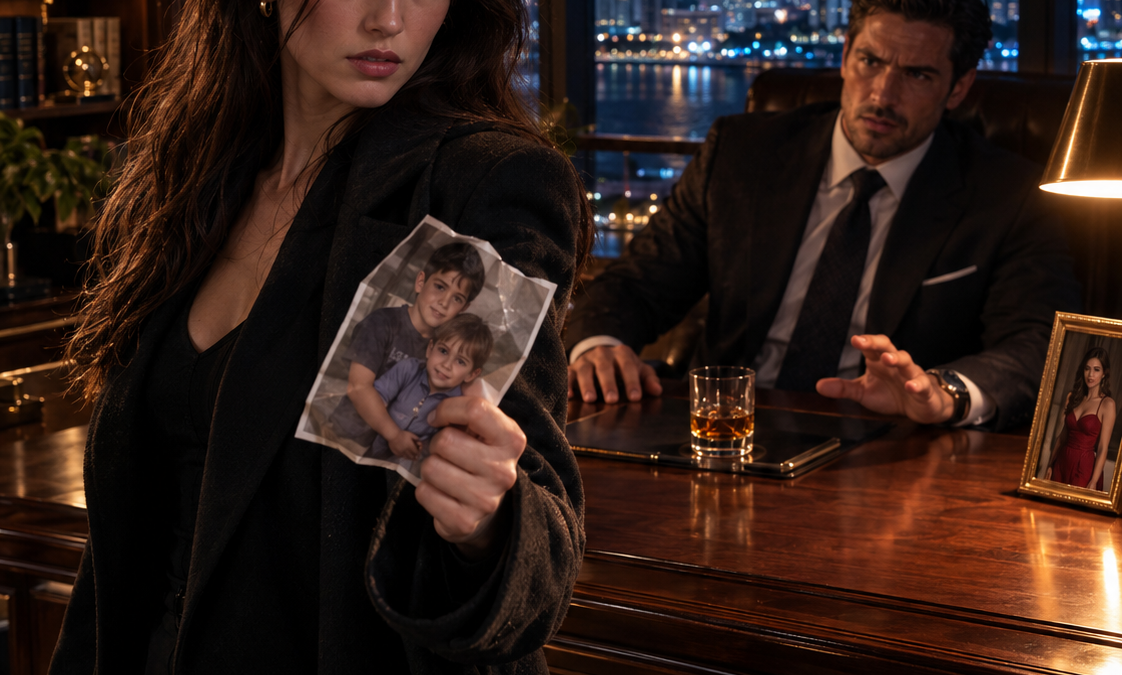
CHAPTER NINE: The Photo in the Drawer
The breakthrough came on a Tuesday.
Elena had been digging through Emilio Cruz’s personal records—the ones Vivian had pulled from a secure server, the ones that weren’t supposed to exist—and she found a photograph. Emilio, younger, standing next to a man who looked familiar. It took her a moment to place him.
Mateo Ortega. Rafael’s father.
They were standing in front of a building—a warehouse, maybe, or a storage facility. Emilio was smiling. Mateo was not.
The photo was dated 2002. One year before Mateo’s death.
Elena stared at it. Then she noticed something in the corner of the frame—a woman. Dark hair, red dress. Isabella.
She was watching them. Her expression was unreadable.
Elena pulled up the death certificate. Isabella Ortega, age 47, cause of death: accidental overdose. Time of death: 11:47 p.m.
The same time as the transfers.
She sat back. Her hands were shaking.
“Rafael.”
He looked up from his desk. “What is it?”
“The transfers. The 3:47 a.m. pattern. It’s not random.” She turned her laptop toward him. “It’s the time your mother died. 11:47 p.m. Pacific. 2:47 a.m. Eastern. 3:47 a.m. in the time zone where the accounts were registered.”
Rafael’s face went pale.
“Whoever’s been moving the money—whoever set up the trusts—they chose that time on purpose. It’s a message. Or a memorial.” She paused. “Or a confession.”
Rafael took the laptop. He stared at the screen for a long moment.
“Emilio,” he said. “Emilio was there that night. He was the one who found her.”
“Did he kill her?”
“I don’t know.” Rafael’s voice was barely a whisper. “But he knows what happened. And he’s been living with it for seventeen years.”
Elena stood up. “We need to confront him. We need to—”
“We need proof.” Rafael set the laptop down. “We need something he can’t deny. A document, a witness, something that ties him to the murder and the cover-up.”
“We have the photo.”
“The photo proves he knew my father. It doesn’t prove he killed my mother.” He stood, walked to the window. “There’s something else. Something I haven’t told you.”
“What?”
He was quiet for a long moment. Then he reached into his desk drawer and pulled out a small, worn envelope.
“My mother left this for me. I found it in her jewelry box after she died.” He handed it to Elena. “I’ve never shown it to anyone.”
Elena opened the envelope. Inside was a single sheet of paper, handwritten, the ink faded but still legible.
Rafael—
If you’re reading this, I’m gone. I’m sorry. I didn’t want to leave you, but I couldn’t stay. Your father is involved with dangerous people. I tried to stop him, and now I’m afraid.
There’s a man named Emilio Cruz. He works for your father. He knows everything. He has proof. If something happens to me, go to him. Make him tell you the truth.
I love you. I’m sorry.
—Mama
Elena looked up. Rafael was still staring out the window, his reflection ghostly in the glass.
“She knew,” Elena said. “She knew Emilio was dangerous, and she still told you to go to him.”
“She thought he would help me. She thought he was a good man.” Rafael’s voice was bitter. “She was wrong.”
“Or she was right.” Elena stood, walked to him. “What if Emilio didn’t kill her? What if he was trying to protect her? What if he’s been trying to protect you all along—in his own way?”
Rafael turned. His eyes were dark, unreadable.
“What if the person who killed your mother is still out there?” Elena said. “What if it’s someone else? Someone we haven’t even considered?”
The silence stretched. Then Rafael’s phone buzzed.
He glanced at the screen. His face went white.
“What?” Elena asked.
“It’s Emilio.” He held up the phone. “He wants to meet. Tonight. Alone.”
CHAPTER TEN: The Warehouse
The address was in Hialeah—a warehouse district, industrial, empty at this hour. Elena parked two blocks away and walked the rest, her heart pounding in her throat.
She wasn’t supposed to be here. Rafael had told her to stay at the office, to keep working, to let him handle it. But she couldn’t. She couldn’t sit in that study and wait, not knowing if he was alive or dead.
The warehouse was dark except for a single light in the back. She found a side door, unlocked, and slipped inside.
Voices. Rafael’s, low and controlled. Emilio’s, rougher, older.
“You’re a fool,” Emilio was saying. “You think you can take them on? You think you can win?”
“I think I have to try.”
“Your mother tried. Look what happened to her.”
Elena pressed herself against the wall, listening.
“I know you were there that night,” Rafael said. “I know you found her. I need you to tell me what happened.”
A long pause. Then Emilio sighed.
“I loved your mother. You know that. Everyone knew that. But she loved your father—even after everything he did, even after she found out what he was.” Another pause. “She was going to go to the police. She was going to turn him in. I tried to stop her. I tried to protect her. But she wouldn’t listen.”
“And then?”
“And then someone else found out. Someone in the organization. They sent a man—a Cuban, professional, no ties to Miami. He came to her apartment. I wasn’t there. I didn’t know until it was too late.”
“Who sent him?”
“I don’t know.” Emilio’s voice cracked. “I’ve been trying to find out for seventeen years. That’s why I’ve stayed in the organization. That’s why I’ve done things—terrible things—to stay close to the people who might know. I’ve been waiting for a chance to make it right.”
Elena’s breath caught. She stepped forward, into the light.
“Who else knew?” she asked. “Who else knew your mother was going to the police?”
Rafael and Emilio both turned. Emilio’s face went pale.
“You,” he said. “You’re the auditor.”
“I’m the person who’s going to help you find out who killed Isabella Ortega.” Elena walked toward them. “Because I think you’re telling the truth. I think you’ve been trying to protect Rafael. And I think the person who killed his mother is still out there—and they’re trying to destroy him.”
Emilio stared at her. Then he laughed—a dry, humorless sound.
“You’re right,” he said. “But you’re also wrong. The person who killed Isabella isn’t just trying to destroy Rafael. They’re trying to destroy everything. The family, the firm, the whole goddamn city. And they’re closer than you think.”
“Who?”
Emilio looked at Rafael. “Your uncle. Your father’s brother. Andres Ortega.”
Rafael’s face didn’t change. But something behind his eyes went dark.
“Andres died in 2010,” he said. “Car accident.”
“Did he?” Emilio shook his head. “Andres is alive. He’s been living in Venezuela for nine years. And he’s the one who’s been feeding information to the FBI. He’s the one who paid the fake Delgado. He’s the one who’s been trying to collapse the case.” He paused. “And he’s the one who killed your mother.”
The silence was absolute.
Then Rafael spoke, his voice very quiet.
“Where is he?”
CHAPTER ELEVEN: The Uncle
The safe house was in Coral Gables—a quiet street, expensive cars, well-manicured lawns. Rafael parked two blocks away and sat in the dark, staring at the house.
Elena sat beside him. She hadn’t spoken since they left the warehouse. Neither had he.
“He’s been here the whole time,” Rafael said finally. “Nine years. Nine years, and I didn’t know.”
“He didn’t want you to know.”
“He sent me a condolence card when my mother died. A card. With flowers.” Rafael’s hands were tight on the steering wheel. “He was at the funeral. He cried. He told me he would always be there for me.”
“And then he disappeared.”
“And then he disappeared.” Rafael opened the door. “Stay in the car.”
“Like hell I will.”
“Elena—”
“I’ve come this far. I’m not letting you go in there alone.” She got out. “Besides, if he’s got proof, we need it. Two witnesses are better than one.”
Rafael looked at her. In the dim light, his face was unreadable. Then he nodded.
They walked to the door together.
Andres Ortega was waiting for them.
He was older than Rafael, grayer, thinner, but with the same sharp eyes and the same hard mouth. He was sitting in a leather armchair, a glass of whiskey in his hand, and he didn’t look surprised to see them.
“I wondered when you’d figure it out,” he said. “Emilio always was a terrible liar.”
“You killed her.” Rafael’s voice was steady, but Elena could see the tremor in his hands. “You killed my mother.”
“I had her killed.” Andres took a sip of whiskey. “It wasn’t personal. She was going to go to the police, and that would have destroyed everything. The family, the business, everything my brother built. I couldn’t let that happen.”
“She was your sister-in-law.”
“She was a threat.” Andres set the glass down. “And you—you’re a bigger threat. You’ve been trying to destroy everything we built. You’ve been working with the FBI. You’ve been stealing from our clients. Did you think we wouldn’t notice?”
“We?”
“The organization. The families. The people who’ve been paying us for decades.” Andres stood. “You think you’re the only one with a deal? You think you’re the only one who’s been feeding information to the authorities? We have people everywhere, Rafael. We have people in the FBI, in the Justice Department, in the goddamn White House. And when you started this little crusade, we decided to let you run. We wanted to see what you’d do.”
“It was a test.”
“It was a trap. You’ve been so busy trying to take us down, you didn’t notice you were walking into it.” Andres smiled. “The FBI thinks they’re building a case against the cartel. But the case is compromised. Every piece of evidence you’ve given them is tainted. Every witness you’ve identified has been compromised. By the time they figure it out, it’ll be too late. The cartel will have moved on, and you’ll be dead.”
Rafael’s face was pale. “You’re bluffing.”
“I’m not.” Andres reached into his pocket and pulled out a phone. “I have proof. Records, transcripts, everything. Every conversation you’ve had with your FBI handler. Every document you’ve passed. We’ve been watching you for three years, Rafael. We know everything.”
The room was silent.
Then Elena stepped forward.
“If you have proof, then you have proof of your own crimes.” She pulled out her phone—the recorder app was running, had been running since they’d walked in. “This conversation, for example. The confession. The admission of conspiracy, of murder, of obstruction. That’s enough to put you away for the rest of your life.”
Andres’s smile flickered. “You think a recording will save you?”
“I think it’s a start.” Elena met his eyes. “And I think you’ve underestimated us. Both of us.”
She pressed send.
The door burst open. FBI agents—six of them, maybe more—poured into the room, guns drawn. Vivian was with them, her badge visible for the first time, her face hard.
“Andres Ortega,” she said. “You’re under arrest for the murder of Isabella Ortega, conspiracy to obstruct justice, and a dozen other things we’ll figure out on the way to the station.”
Andres stared at her. Then he laughed.
“You think this changes anything? You think this—”
“It changes everything.” Rafael stepped forward. “You’re going to spend the rest of your life in prison. And the cartel—the people you were trying to protect—they’re going to find out that you’re the one who brought the FBI down on them. They’re going to know you betrayed them. And there’s nowhere you can hide.”
The smile vanished from Andres’s face.
“You wouldn’t.”
“I would.” Rafael’s voice was cold. “You killed my mother. You tried to destroy me. You deserve everything that’s coming.”
The agents took Andres away. The room emptied. And Rafael stood alone in the center, his hands shaking, his eyes wet.
Elena walked to him.
“It’s over,” she said.
“It’s not over.” He looked at her. “The cartel is still out there. The investigation is still compromised. And I still don’t know if I’m the man I thought I was.”
“You’re the man who risked everything to bring down the people who killed his mother. You’re the man who trusted me, even when I didn’t trust you. You’re the man who—” She stopped.
“Who what?”
She didn’t answer. She just took his hand, and held it, and let the silence say what she couldn’t.
CHAPTER TWELVE: The Morning After
The sun came up over Miami like a promise—gold and pink and impossibly bright. Elena sat on the balcony of Rafael’s penthouse, a cup of coffee in her hand, watching the city wake up.
She’d spent the night at the office. Not with Rafael—he’d been with the FBI, giving statements, answering questions. But she’d stayed. She’d sat in the study and waited, because she couldn’t leave. Not yet.
The door opened behind her. Footsteps. Rafael sat down beside her.
“How did it go?” she asked.
“They’re going to prosecute. Andres, Emilio, the whole network. It’ll take years, but they’re going to prosecute.” He paused. “The cartel is already pulling out. Vivian’s people are tracking the money. It’s over.”
“Good.”
“Elena.”
She looked at him.
“I need to tell you something.” He took a breath. “When this started, I saw you as a threat. Someone I needed to manage. Someone I needed to control. But you—” He stopped. “You didn’t let me control you. You pushed back. You questioned me. You held me to a standard I didn’t even know I had.”
“That’s my job.”
“That’s not what I mean.” He turned to her, his eyes searching her face. “I’ve spent my whole life using people. Using them for information, for protection, for revenge. I’ve never—I’ve never met someone who made me want to be better. Not just to be successful. Not just to win. To be better.”
Elena’s heart was pounding. “Rafael—”
“I know you’re going to report what you found. I know you’re going to do your job. I’m not asking you to compromise that.” He paused. “But I’m asking you—when it’s over, when the dust settles—I’m asking you to consider the possibility that we could be something. Not just partners. Not just allies. Something more.”
She looked at him for a long moment. Then she set down her coffee and took his hand.
“You’re an idiot,” she said. “You know that?”
“I’ve been told.”
“You’re a criminal, and a liar, and you’ve done things that should have put you in prison a dozen times over.”
“I know.”
“And I’m an auditor. My job is to find people like you and put them out of business.”
“I know.”
She leaned closer. “So tell me—why should I trust you?”
He met her eyes. “Because I’ve told you everything. Every secret, every lie, every terrible thing I’ve ever done. I’ve shown you the worst parts of myself—” He stopped. “And you’re still here.”
She kissed him.
It wasn’t a gentle kiss. It wasn’t tentative. It was the kiss of two people who’d been circling each other for months, who’d been fighting and pushing and pulling, who’d finally stopped pretending.
When they broke apart, he was smiling.
“What?” she asked.
“Nothing.” He touched her face. “I just—I didn’t think I’d ever feel this again.”
“Feel what?”
“Hope.”
CHAPTER THIRTEEN: The Cost of Coming Clean
The next six weeks were a blur of depositions, hearings, and paperwork. The Office of the Comptroller wanted Elena’s head on a platter—she’d technically committed a dozen violations, from unauthorized access to withholding evidence. But Vivian’s testimony—and the FBI’s—kept her from being fired.
She was suspended instead. Pending review.
“You should be grateful,” her supervisor told her. “You could have gone to prison.”
“I know,” Elena said.
She didn’t feel grateful. She felt exhausted. She felt hollowed out. She felt like she’d been through a war and was still standing in the rubble, trying to figure out what came next.
She was walking out of the government building when her phone buzzed. A text from Rafael.
Dinner tonight?
She typed back: I don’t know.
Please.
She stared at the screen for a long moment. Then she typed: Fine.
CHAPTER FOURTEEN: The Dinner
He took her to a small restaurant in Little Havana—the kind of place with checkered tablecloths and handwritten menus, where the waiters called you mija and the food was so good you wanted to cry.
“You’re trying to charm me,” Elena said, sitting down.
“I’m trying to feed you. There’s a difference.”
“There’s no difference with you.”
He smiled—a real smile, the kind that made her heart do something she didn’t want to name. “You’re right. There’s no difference.”
They ordered. They ate. They talked—not about the case, not about the cartel, not about the past. They talked about small things. Books. Music. The way the light came through the window at a certain time of day.
“When you’re done with your suspension,” Rafael said, “what are you going to do?”
“I don’t know.” Elena set down her fork. “My career is—complicated. My reputation is—complicated. I’m not sure anyone in my field will hire me after this.”
“You could work for me.”
She laughed. “As what?”
“As a consultant. As an independent auditor. As someone who can look at the firm’s records and tell me when I’m screwing up.” He paused. “As a partner.”
“Rafael—”
“I’m not asking for anything. I’m just saying—there’s a place for you. If you want it.”
She was quiet for a long moment. Then she reached across the table and took his hand.
“I don’t know what I want,” she said. “But I know I’m not done. Not with you, not with this.”
He squeezed her hand. “Good.”
CHAPTER FIFTEEN: The Deed
The box arrived on a Tuesday.
Elena was in her apartment, still in her pajamas, trying to figure out what to do with her life, when the doorbell rang. The delivery man handed her a package—small, plain, no return address.
Inside was a photograph. Isabella Ortega, young and smiling, holding a baby. Rafael.
And a single sheet of paper—a deed. To a piece of land in the Bahamas. A small island, uninhabited, beautiful.
There was a note taped to the back:
This was my mother’s. She bought it the year before she died. She wanted a place where we could be free—away from my father, away from the business, away from all of it.
She never got to go there.
I want you to have it. Not as a gift, not as a gesture. As a promise.
There’s still a world outside this one. There’s still hope.
Come with me.
—R.
Elena stared at the note for a long time. Then she picked up her phone.
“Rafael.”
“Did you get it?”
“I got it.” She took a breath. “What does it mean?”
“It means I’m not my father. It means I’m not my mother. It means—it means I want a life. Not just a victory. Not just revenge. A life.”
“With me?”
“With you.”
She closed her eyes. She thought about everything—the danger, the secrets, the lies, the blood. She thought about her mother, dying in a hospital bed. She thought about the system, and how it failed. She thought about Rafael, sitting across from her in a restaurant in Little Havana, holding her hand.
“I don’t know if I can,” she said. “I don’t know if I can be with someone who’s done what you’ve done.”
“I know.”
“But I don’t know if I can walk away either.”
“I know.”
She opened her eyes. “I need time.”
“Take it.” His voice was soft. “I’m not going anywhere.”
CHAPTER SIXTEEN: The Comeback
Elena didn’t take the island. Not yet.
Instead, she went back to work. The suspension was lifted after three weeks—Vivian’s testimony, and the FBI’s, had made her a hero rather than a villain. She was promoted. Given a new assignment. Tasked with overseeing the cleanup of Ortega Capital’s legitimate business.
She and Rafael saw each other every day. Not romantically—not yet. Professionally, at first. Then casually. Then something more.
They didn’t talk about the island. They didn’t talk about the future. They just… were. In the quiet moments. In the spaces between.
And slowly, over months, Elena began to heal. She began to trust. She began to believe that the system could work—not perfectly, not always, but sometimes. Enough.
Then, one morning, she woke up and knew what she wanted.
She called Rafael.
“I’m ready,” she said.
“Ready for what?”
“Ready to go. To the island. To see it.”
A pause. “Are you sure?”
“I’m sure.”
“Then I’ll book the flight.”
“Rafael.”
“Yes?”
“I’m not just going for the island. I’m going for you. I’m not saying I forgive you—not for everything. I’m not saying I’ll ever be able to forget. But I’m saying—” She took a breath. “I’m saying I want to try.”
The silence on the other end was long. Then Rafael spoke, his voice rough.
“I don’t deserve you.”
“I know.” She smiled. “But you’re going to spend the rest of your life trying to.”
CHAPTER SEVENTEEN: The Island
The island was everything she’d imagined. White sand, turquoise water, palm trees that swayed in the breeze. There was a small house—Isabella’s house, restored, modernized, but still hers. There were flowers in the garden. There was sunlight on the water.
Elena stood on the beach and looked out at the ocean.
“You were right,” she said. “It’s beautiful.”
Rafael stood beside her. “She would have loved it here.”
“I know.”
They were quiet for a long moment. Then Rafael took her hand.
“I want to tell you something,” he said. “Something I’ve never told anyone.”
“What?”
“I was there when she died.”
Elena turned to him. “What?”
“I was in the apartment. I was upstairs, sleeping. I heard the door open. I heard voices. I heard—” He stopped. “I heard her scream. And I didn’t go down. I was nine years old, and I was scared, and I didn’t go down.”
“Rafael—”
“I’ve been carrying that for seventeen years. The guilt. The shame. The knowledge that if I’d just been brave enough—”
“You were a child.”
“I know. But I still—” He met her eyes. “I still can’t forgive myself.”
Elena reached up and touched his face.
“You were a child,” she said again. “And you’ve spent your whole life trying to make it right. You’ve brought down a cartel. You’ve exposed a murderer. You’ve built something—something that might actually do some good in the world.” She paused. “Your mother would be proud of you.”
Rafael’s eyes were wet. “You think so?”
“I know so.”
He kissed her. Gently, this time. With reverence. With hope.
When they broke apart, the sun was setting over the water—gold and pink and impossibly bright.
“I love you,” he said.
Elena smiled. “I know.”
CHAPTER EIGHTEEN: The Wedding
The wedding was small.
Just family. Just friends. Just the people who mattered. Vivian was there, in a dark blue dress, her badge tucked away but her smile genuine. Emilio was there—out on bail, awaiting trial, but alive, and that was enough. Catalina came from Madrid—Rafael’s sister, who’d stayed away for years, who’d finally come home.
They were married on the beach. Barefoot. In the fading light.
“Do you take this man,” the officiant said, “to be your husband? To love him, to honor him, to fight with him, to forgive him, for as long as you both shall live?”
Elena looked at Rafael. At his dark eyes, his sharp jaw, his hands that had done terrible things and his heart that had spent years trying to make them right.
“I do,” she said.
“And do you take this woman—”
“I do,” Rafael said, before the officiant could finish. “God help me, I do.”
They kissed. The small crowd cheered. And somewhere, in the ether, Elena felt the presence of a woman in a red dress, smiling.
CHAPTER NINETEEN: The Truth That Sets You Free
Eight months later, the trial ended.
Andres Ortega was convicted of first-degree murder, conspiracy, and a dozen other charges. He was sentenced to life without parole. Emilio Cruz was convicted of lesser charges—obstruction, money laundering—and sentenced to ten years. He would serve five.
The cartel’s operations in Miami were dismantled. The FBI’s investigation, rebuilt from the ground up, led to thirty-seven arrests across four countries. It was, the U.S. Attorney said, the largest organized crime takedown in Florida history.
Elena watched the verdict from the gallery. She watched Andres’s face as the sentence was read—the disbelief, the fury, the slow dawning understanding that he would die in prison. She watched Rafael, sitting two rows ahead, his shoulders shaking with silent sobs.
Afterward, they stood in the hallway. Rafael was still crying.
“It’s over,” Elena said. “You can let it go.”
“I don’t know how.”
“I know.” She took his hand. “But you have the rest of your life to figure it out. And I’ll be there. Every step.”
He looked at her. His eyes were red, his face blotchy, his composure shattered. He looked, for the first time, like a man who’d finally put down a weight he’d been carrying for seventeen years.
“I love you,” he said.
“I know.” She smiled. “You keep saying that.”
“Because it’s true.”
“I know that too.”
They walked out of the courthouse together, into the Miami sunshine, and began the slow, uncertain work of building a life.
CHAPTER TWENTY: The Quiet Bleed
Elena found the letter six months later.
She was cleaning out the desk in the study—Isabella’s desk, the one Rafael had kept, the one she’d never been able to open. She found it at the bottom of the drawer, underneath a photo album and a dried corsage.
A letter. From Isabella. To Elena.
She opened it with trembling hands.
Dear Elena—
You don’t know me. But I know you. I’ve been watching you for months—from the other side, from wherever it is we go when we’re done here. And I want you to know that I’m grateful.
I’m grateful that you found the truth. I’m grateful that you saved my son. I’m grateful that you love him.
I know he’s difficult. I know he’s done things that can’t be undone. I know he’s inherited his father’s darkness, as well as mine. But I also know that he’s capable of change. I’ve seen it. In the way he looks at you. In the way he’s trying, finally, to be a good man.
That’s all any of us can do, isn’t it? Try.
I know you’re afraid. I know you’re wondering if you made the right choice. I know you’re wondering if love is enough—if it can ever be enough, in a world like this.
But here’s what I’ve learned: love is not a solution. It’s not a cure. It’s not a promise that everything will be okay.
Love is a choice. It’s waking up every day and choosing to stay. Choosing to forgive. Choosing to believe that the person you love is worth the pain they’ve caused.
My son is worth it, Elena. I promise you. He’s worth the pain. He’s worth the fight. He’s worth everything.
Take care of him. And let him take care of you.
With all my love,
Isabella
Elena folded the letter. She sat in the quiet of the study, surrounded by books and photographs and ghosts, and thought about what it meant.
Then Rafael came in. He saw the letter in her hands. He saw her tears.
“What is it?”
She handed him the letter. He read it. When he finished, he looked at her, his eyes bright.
“How did you find this?”
“It was in the drawer. The one you never opened.”
He sat down beside her. He took her hand.
“She knew,” he said. “She knew about you. Before I did.”
“I think she knew before either of us.” Elena leaned against him. “She’s been watching over you. The whole time.”
“I know.” He kissed her forehead. “I know.”
They sat there, in the quiet, and let the light come in. And somewhere, beyond the window, beyond the city, beyond everything, the sun was rising over the ocean—gold and pink and impossibly bright.
The truth had set them free.
And the quiet bleed—the slow, patient theft that had started everything—had finally stopped.
EPILOGUE: The Promise
One year later.
The island was warm. The water was clear. The house was full of light.
Elena sat on the beach, her feet in the sand, watching Rafael teach their daughter to swim. The baby was six months old—a surprise, a joy, a gift they hadn’t planned but couldn’t imagine living without. Her name was Isabella. After her grandmother.
Rafael caught Elena’s eye. He smiled—that real smile, the one that still made her heart do something she didn’t want to name.
She smiled back.
It hadn’t been easy. It hadn’t been clean. There were still nights when Rafael woke up gasping, dreaming of his mother. There were still days when Elena wondered if she’d made the right choice—if she’d compromised too much, forgiven too easily, given up too much of herself.
But those days were fewer now. The nightmares came less often. The doubt was quieter.
She’d found her footing. She’d built a life—not perfect, not simple, not what she’d imagined—but hers. She’d stood her ground, fought her battles, won her victories. She’d emerged from the wreckage of the Ortega empire with her integrity intact, her heart open, and a partner who understood, finally, what it meant to be truly seen.
She’d been a victim. She’d been a pawn. She’d been the woman on the losing side of a power imbalance.
But she’d risen. She’d claimed her own power. She’d become the one holding the cards.
And she’d done it without losing herself.
Rafael walked out of the water, the baby in his arms. He sat down beside her.
“What are you thinking about?” he asked.
“The past. The future.” She leaned against him. “Everything.”
“That’s a lot.”
“It is.” She smiled. “But I have time.”
He kissed her. The baby giggled. And the sun kept rising, and the world kept turning, and the quiet bleed—the long, patient theft of power and truth—was finally, irrevocably, over.
The end.








