“You Handle the House. Stay Out of My Way,” the Former Navy SEAL Said—Until Her Scarf Slipped – Part 4
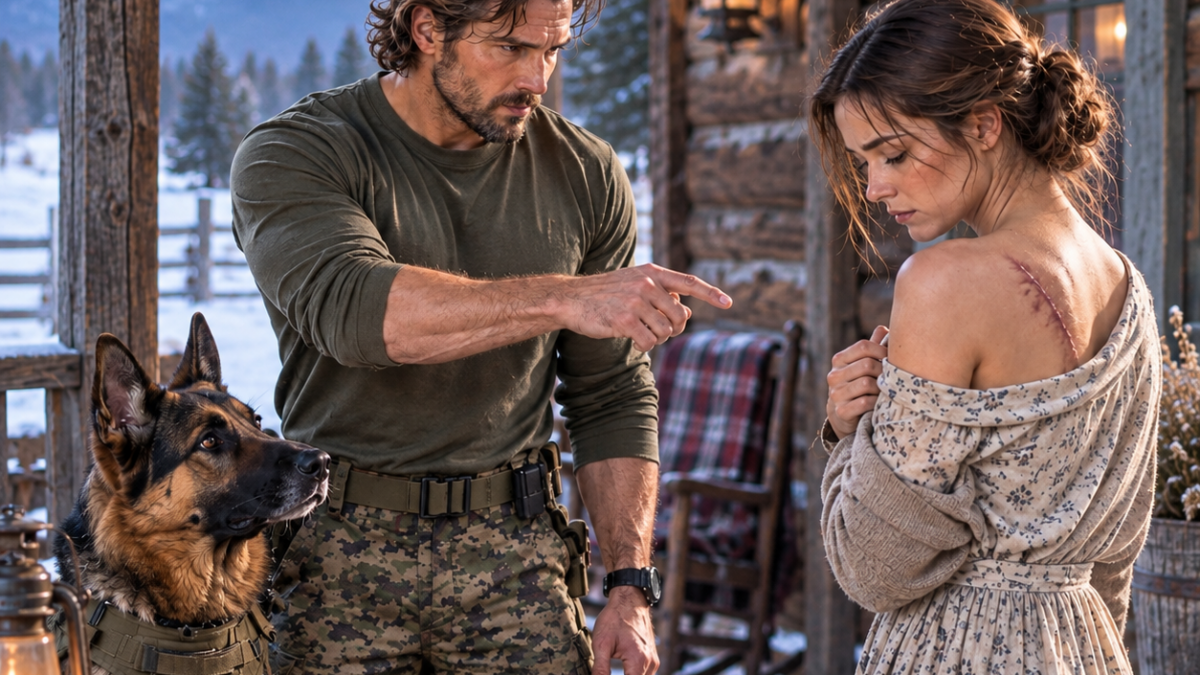
By late August, Harlon noticed the supply expenses had dropped enough to matter. He said only that the new system was working.
Mara answered that systems usually worked better when people used them. It was as close as either came to discussing money.
Harlon knew better than to turn competence into gratitude. Mara was not there as charity.
She was good at the job. That deserved to be treated as fact. Walt remained the last person to settle.
Then one Wednesday, he forgot his lunch. He had driven halfway to the south section before realizing the cooler was still on his kitchen counter. By noon, heat had burned away his pride more effectively than argument ever could.
He appeared in Mara’s kitchen while she was slicing roast beef.
She looked at him. He looked at the sandwich.
Nothing was said about Witchita. Mara set a plate on the counter.
Walt sat at his old place. He was not ready to apologize. She did not force him.
Sometimes a person returned before they knew how to explain why. The following Sunday, Mara made scrambled eggs.
Ridge was asleep beneath the edge of the table when a small piece slipped from the spoon and landed on the floor. His eyes opened instantly. He was standing before the egg stopped moving.
Mara laughed under her breath. Harlon looked at the dog.
For one moment, the kitchen from years earlier seemed to sit inside the room they had now. Catherine had done exactly the same thing. Every Sunday, always pretending the first piece was an accident.
Ridge had apparently never stopped believing the tradition remained in effect. Harlon expected the memory to hurt sharply enough that he would need to leave.
It did hurt. He stayed. Mara bent and picked up the egg before Ridge could take advantage.
Nice try, Ridge sat. His expression suggested negotiations were still possible. Haron reached for his coffee.
The moment passed without taking the room with it. That evening, Mara went to her bedroom after everyone had gone quiet.
The small metal box was still beneath the writing desk where she had placed it on her first afternoon at Red Willow. She pulled it out, set it on the bed.
Her hand rested on the latch. For a long time, she did nothing.
There were things inside she had carried through six jobs and nearly as many rooms. Things that had outlasted every landlord, every supervisor, every person who had discovered her name online and begun looking at her differently. Mara did not open the box.
Not yet. She slid it back beneath the desk. But this time, before turning off the light, she looked around the room differently.
For the first time in four years, she wondered whether the box might not have to travel to a seventh house. By the last week of August, the Flint Hills had lost most of their softness. The spring green had gone out of the higher slopes first, leaving the tall grass yellow brown and brittle at the edges.
Stock ponds sat lower than they had in June. Dust gathered around the gates in pale drifts and worked into every hinge, boot seam, and pickup bed on the property. Even the creek behind the cottonwoods had narrowed enough that Ridge could cross without wetting more than his paws.
The radio in the kitchen began talking about dry thunderstorms before breakfast. Mara was making coffee when the warning came through.
Gusty winds, little measurable rain, lightning possible by late afternoon. Harlon heard it once.
That was enough. By 7, the water trailer had been checked and topped off.
The fuel cans stored near the equipment barn were moved farther from the buildings. Radios went on to chargers until they were needed, and every man who left the central yard knew which section he was working and which route he planned to use back. Nobody thought much of it.
Harlon always prepared. If the forecast had called for heavy rain, he would have checked low crossings. If hail had been possible, he would have moved equipment under cover.
If the temperature had been expected to drop hard overnight, somebody would have checked exposed lines before supper. That was simply red willow under Harlon Beckett.
The only person who seemed to recognize something more in the routine was Ridge. The shepherd followed Harlon more closely that morning, watching his hands in posture, as if some older pattern had surfaced beneath ranch life. By noon, heat sat over the property like weight.
The wind died almost completely. Even Walt had stopped talking about the weather.
That changed after 4. A dark line formed in the west, not broad enough to promise real rain, but high enough to carry electricity. Thunder moved across the hills without much sound reaching the ground.
For a few minutes, the light became strange bright in the east, bruised purple in the west. Then the wind came back fast. Mara stepped onto the porch and watched dust lift off the lane.
The radio crackled from inside. Harlon came around the side of the barn with Ray.
Neither man looked toward the sky for long. They had already seen what they needed.
The first strike hit somewhere beyond the east section. No one at the house saw it directly. What they saw was smoke, a thin gray line at first, then darker.
Harlon reached for the radio clipped to his belt. Within minutes, the ranch shifted, not into panic, into motion.
Ray was sent toward the south pasture to move a small group of cattle away from the east fence. Another hand took the water trailer.
Walt headed toward the north access road to meet the first volunteer unit coming in from the county road. Mara stayed near the house long enough to move loose propane cylinders away from the mudroom and then helped clear vehicles from the lane.
Harlon’s voice never got louder.
It got shorter. Southgate first.
Keep that road open. Check in when you turn back.
Leave one truck here. The difference mattered. People under stress often mistook movement for progress.
Harlon had learned years ago that 10 people making 10 separate decisions could become its own kind of hazard. So he kept the work simple enough that everyone knew where they belonged. The past did not make him a firefighter.
It made him good at preventing confusion. By the time the Chase County volunteer crews reached Red Willow, the first flame front had already been slowed along a cut section of pasture. The problem was not size so much as wind.
It pushed sparks into dry grass, then changed direction just enough to make the next 10 minutes harder to predict than the last. A second line of fire moved toward the eastern equipment area. Not directly at the main house, not yet near the cattle lots, but close enough that Harlon sent two people to move a trailer and an older tractor before the smoke thickened.
Mara carried bottled water from the house to the tank area and kept a written list of who had gone where. It was a small job. It became important later.
Ridge stayed beside Harland until Harlon sent him back near Mara. The dog obeyed, though reluctantly. His old training showed in the way he carried himself now.
Head higher, attention narrowed. He no longer watched the kitchen door or hoped somebody would drop food.
He watched Haron for the next hour. Most of the fire stayed manageable. That was what made the missing person easy to notice.
People began returning toward the central yard as the volunteers gained better control along the southern edge. Ray came in first. Two others followed.
The water trailer returned nearly empty. Mara checked the names, then checked again. Harlon looked over the yard.
Where’s Walt?
Nobody answered. Ray lifted his radio. Nothing.
They tried Walt’s channel again.
Still nothing. His truck was not in the yard.
One of the hands remembered seeing it near the north access earlier, where Walt had gone to meet the incoming volunteer unit, but Walt himself had not returned.
Harlon’s attention narrowed immediately.
Not emotionally, operationally. Last known location, vehicle, radio contact, likely route.
He asked three questions and stopped. Then Mara pointed toward the bench near the water tank.
Walt’s work glove lay there.
He had taken it off some time before heading out. Harlon looked at Ridge. The shepherd was already watching him.
He brought the glove down. Ridge smelled it once, then again. His whole posture changed.
This was not kitchen routine, not a walk, not play. Haron gave the cue. Ridge moved across the yard, nose low at first, then angled toward the eastern equipment area.
Harlon followed. Mara did too, until he motioned her back.
She ignored the gesture long enough to say, “He was near the barn earlier.”
Harlon looked at her. She pointed east.
He took a parts box over there before the storm came through. That mattered. Harlon nodded once.
Ridge continued. The dog tracked across churned ground and dry grass toward the side of the equipment barn, then slowed as smoke pushed harder across the yard.
Harlon saw the change before Ridge reached the edge of it. Visibility had begun dropping.
The wind had shifted. Ridge leaned forward against the leash.
Years earlier, Harlon might have let the dog continue because the task was not finished. He did not. Enough.
Ridge stopped. The shepherd looked back at him. Harlon shortened the leash and moved him away from the heavier smoke.
The dog had given them direction. That was enough. A volunteer firefighter named Miller was coming around the south side of the building when Mara caught up.
The front approach had worsened. Smoke blew across the main doors and loose equipment near that side made the route slower. Mara looked toward the east wall, the service door, the one that used to stick.
For a moment, she was back in April carrying shop towels and lifting a handle that refused to move. Then Harlon had repaired it.
She pointed east side. Harlon understood immediately.
Miller checked conditions, then motioned them toward the wall. The route remained clear enough. Mara knew the interior better than Miller did because she had been carrying supplies there for months.
She knew where the shelves stood, where the tool cage ended, where the side aisle narrowed. Harlon did not charge ahead. He let the person with the best information lead.
That was a different kind of discipline. They entered only far enough to find Walt.
He was near a stack of portable panels, partly blocked by a shifted equipment cart, and unable to move cleanly through the aisle. He was conscious, coughing, angry at himself and trying to free the wrong end of the obstruction. Mara reached him first.
Walt stared at her for half a second. Neither moved.
Then Mara pointed to the east side. this way. No lecture, no reminder about Witchita.
No satisfaction. Walt pushed himself upright.
Miller moved the lighter obstruction.
Harlon took Walt’s arm when his balance faltered.
Mara stayed ahead, guiding them through the side aisle. The east door opened with one pull. Outside, air hit differently, cleaner, brighter.
Ridge stood exactly where Harlon had left him, body angled toward the doorway. The dog took one step forward, stopped, waited.
Walt looked at Mara once they were clear. Whatever he meant to say did not come. She handed him water instead.
The fire took another 2 hours to settle into something the crews could confidently hold. A small shed on the eastern edge of the property was lost.
Several hundred yards of fence would need replacing. A section of pasture burned black enough that the ground looked shaved from a distance.
The main barn stood. So did the house. No cattle were lost.
No horses were lost. No one else was missing.
Near midnight, exhaustion replaced urgency. People sat wherever there was room.
Tailgates, overturned buckets, the ground beside the water tank. Smoke had left gray smudges on faces and shirts. Someone passed around bottled water gone warm from the heat.
Mara sat on the edge of the trough wall with both hands around a cup.

