Single Dad Froze When the Disabled CEO Wearing His Shirt Whispered, “Be My Husband.”
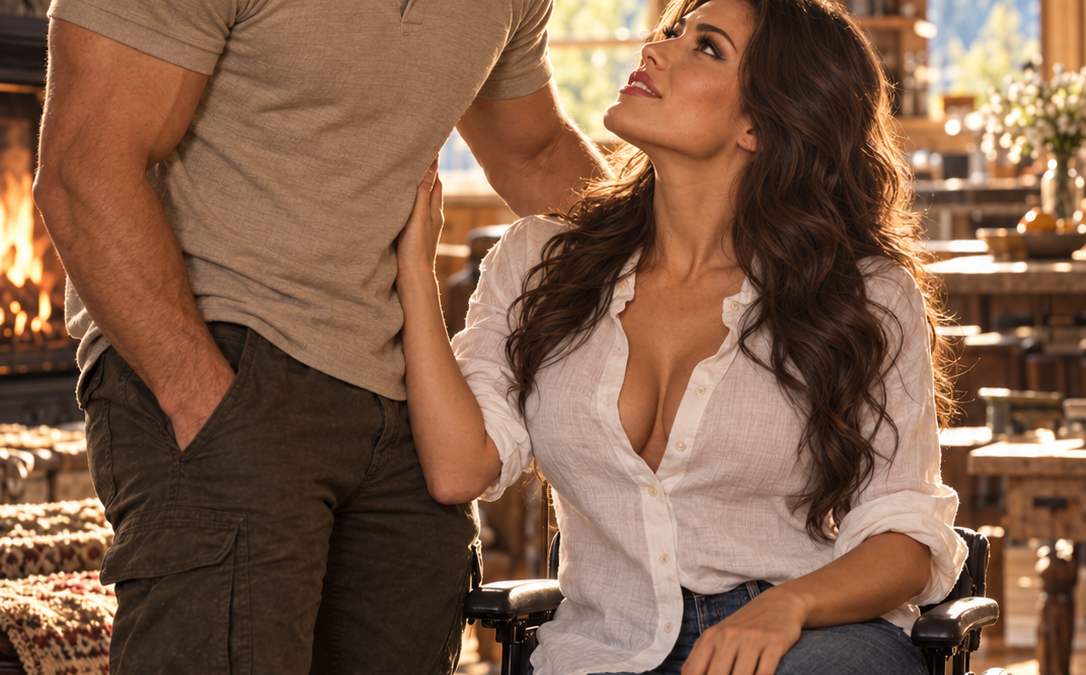
Single Dad Froze When the Disabled CEO Wearing His Shirt Whispered, “Be My Husband.”
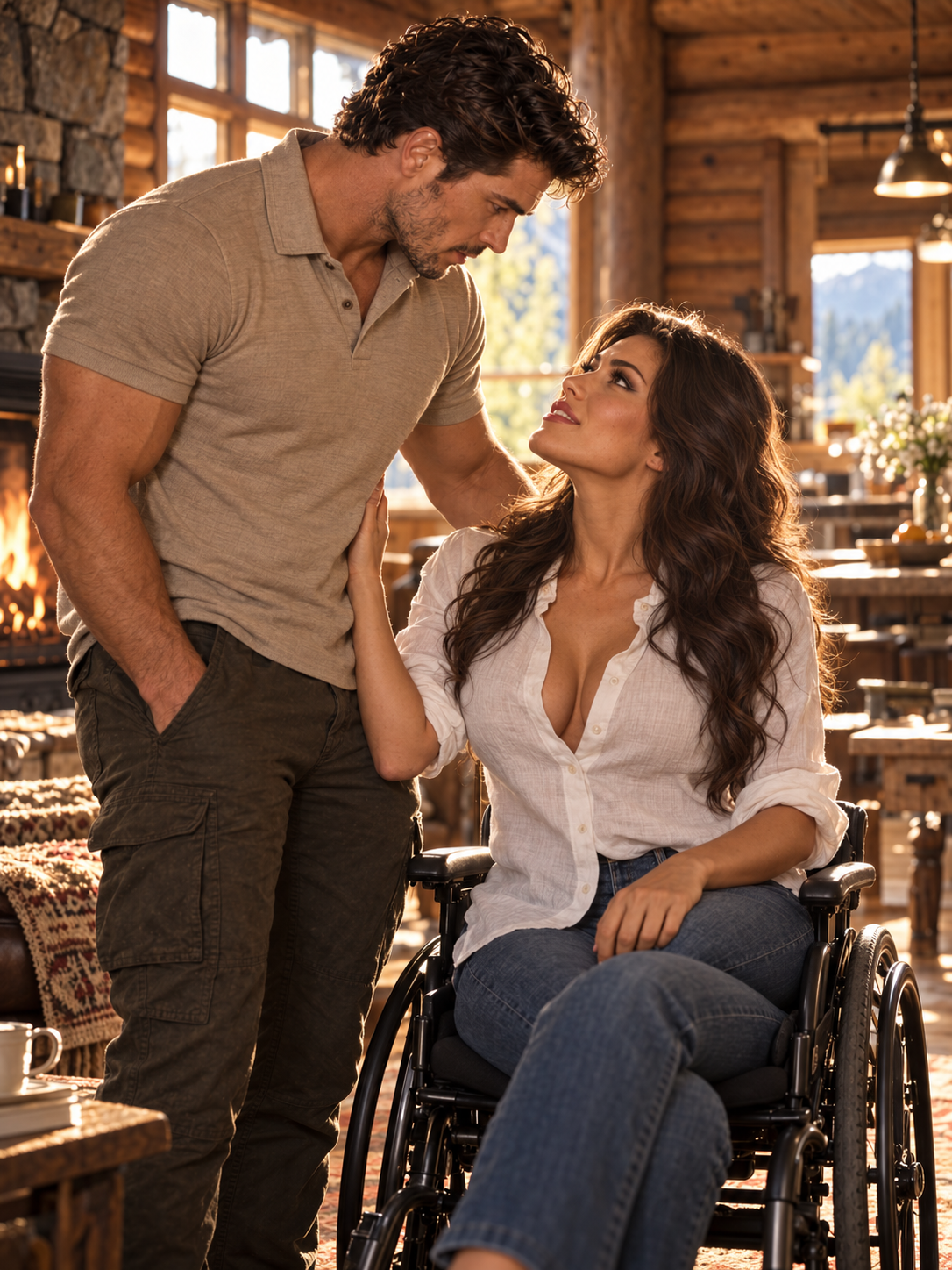
PART 1
By, she slapped the check out of his hand.
A hundred thousand dollars, fluttering to the floor of his own kitchen like trash.
That’s what last night cost.
Victoria Sinclair said. Cold.
Precise. For your trouble. Ethan Carter looked at the check on the floor.
Looked at her.
This woman in his flannel shirt, coffee still warm in her hands, his daughter’s drawings on the wall behind her.
Then he bent down, picked it up and handed it back. Emma, he said quietly.
Go get your backpack, baby. Victoria stared at him.
Nobody had ever handed it back. That was the moment everything changed. But neither of them knew it yet.
She fired him before she even knew his name. That was the part nobody ever reported correctly.
Not the journalists, not the shareholders, not the gossip columns that would later spend 6 months trying to destroy Ethan Carter’s reputation.
They all started the story in the wrong place.
The real beginning wasn’t the wedding.
Wasn’t the press conference.
Wasn’t even the morning Victoria Sinclair appeared in his kitchen wearing his shirt.
It started with a phone call at 11:47 at night in the middle of the worst storm to hit rural Virginia in a decade when Victoria’s assistant finally reached her on a borrowed cell signal and Victoria said four words without hesitation.
Whoever helped me terminate them. She meant it when she said it.
She just hadn’t counted on the fact that the man she was trying to erase would be standing 10 feet away close enough to hear every word.
Ethan Carter had driven Route 9 a thousand times. He knew the dip near Callaway Creek Bridge went underwater after heavy rain.
He knew the shoulder dropped sharp on the left side past mile marker 7.
He knew the stretch between Henderson’s Hardware and his neighborhood well enough to drive it half asleep, which tonight was more or less necessary.
Jai. Second shift at the warehouse had run 45 minutes over.
His boots were soaked. His lower back had been sending him signals since about hour 6 that he needed to stop pretending he was 28.
In the back of the truck, a grocery bag was getting warm because the cooler had cracked and he hadn’t had 40 bucks to replace it.
And tomorrow, Emma had a field trip that required a packed lunch and a signed permission slip he still hadn’t found under the pile of mail on the counter.
My teeth. He was tired in this particular way that accumulates not from one hard night, but from 900 hard nights stacked behind it. Each one leaving a little residue.
He wasn’t thinking about any of that when his headlights hit the water.
He braked. The creek had jumped the road.
Not unusual. Happened twice a winter most years.
He’d turned around here before without a second thought.
But there was a car in it. Black, low, European, the kind of vehicle that costs more than some houses. Sitting at a dead tilt off the shoulder front end, angled into the current, the water already at the door panels and climbing.
Ethan sat with the truck running for exactly 4 seconds. Then he got out.
Bets. The water was cold and moving with intention. It hit him at mid-shin and immediately tried to redirect him.
He planted his feet wide and waded toward the car, grabbed the door handle locked, then saw the window rolling down. She looked at him the way someone looks at a construction detour. Inconvenient, temporary, already calculating around it.
“The door’s jammed.”
she said. No greeting, no panic.
“The frame torqued when I went off the shoulder.
I can see that.
” He got both hands on the handle and pulled.
The door gave with a sound like a gunshot. He stopped.
She was in the back seat, not the driver’s position.
The driver’s area was empty, airbag deployed on the steering column.
A collapsed wheelchair was wedged into the rear footwell, a laptop bag crushed against the window, a dead phone on the seat beside her. She had both hands pressed to the seat in front of her arms, rigid body, absolutely still from the waist down.
She didn’t explain, didn’t apologize for it, just met his eyes and waited.
“My name is Ethan.”
he said.
“I’m going to carry you to my truck.
Then I’ll come back for the chair.”
“I don’t require.”
“Ma’am.
” He said it quiet, not cutting her off, not performing patience, just landing the word like a hand on a table.
“Your rear axle has about a minute before this current takes it.
I’m picking you up now.”
She looked at him for one full second. The calculation was visible running fast behind her eyes, checking exits, finding none.
“Fine.”
she said. He got one arm under her knees, one behind her back. She was lighter than he expected, and she held herself completely rigid, not fighting him, but not yielding either.
Like she could refuse to be carried even while being carried. Her fingers gripped his jacket, and he felt how hard she was working to make this look like something other than what it was.
He didn’t comment on that.
He moved through the water deliberately, watching the current, testing each step before committing to it. When he got her to the truck and set her in the passenger seat, she was already straightening her blazer.
Both hands, quick, precise movements. Like if the jacket was right, everything else could be controlled.
“I’ll get your chair.”
He said. Dot.
He went back for it. The trunk latch had warped and it took him six solid minutes and a gash across his left palm to get it open.
He got the chair. He loaded it. When he got back in the truck, she was staring through the windshield at the rain.
“Thank you.”
She said. He heard what was underneath it. The way the words cost her something.
“Sure.”
He said. He started the truck.
She found a bar of signal on his phone before they’d gone a mile.
She borrowed it without asking.
Just reached over with a look that said she assumed he wouldn’t object and he didn’t and she dialed.
A man’s voice answered on the second ring.
Tense already talking before hello.
“Victoria, where the hell we’ve been trying to reach you for 2 hours?
The board is” “I’m aware.”
She said, flat.
“I’m handling it.
I need you to listen.”
She talked for 4 minutes without stopping. Ethan drove and listened to half a conversation about merger timelines, liability exposure. Someone named Hargrove who apparently needed to be managed, a press statement that needed to be killed before morning.
She spoke the way surgeons cut, no hesitation, no unnecessary motion.
Then her assistant said something Ethan couldn’t hear clearly.
And something moved across Victoria’s face.
Fast. There and gone.
“No.”
She said.
“Do not call my father.”
A pause.
“I said no.
Handle it without him.”
Another pause, longer.
“I know what it costs.
I said handle it.”
She ended the call. She sat with his phone in her lap and looked out the window at nothing.
Ethan didn’t say anything.
Sometimes people needed to not be asked about things.
After a while, she said, “Where are we going?”
“My house.
4 miles.
Roads behind us are flooding, too.”
“How long?”
“Until the water recedes.
Morning at earliest.”
He heard her exhale, slow, controlled, the sound of someone accepting a situation while actively resenting it.
“All right,” she said.
“I’m asking one question,” Ethan said, “and then I’m done asking.”
She looked at him.
“Is there someone who needs to know you’re safe tonight?
Family?
Someone waiting?”
The pause before she answered was the kind that answers the question before the words do.
“No,” she said.
“Okay.”
He watched the road.
“Then we’ll get you dry and sort the rest in the morning.”
She didn’t say anything after that.
Neither did he.
By the time they pulled up to the house, the rain was hitting so hard you couldn’t see 10 ft past the porch light.
The orange flower pot Emma had painted last summer was sitting lopsided at the bottom of the steps, bright as a signal fire in the headlights. Victoria looked at it.
Just for a second. Something quiet moved in her face, then it was gone.
Mrs.Dalton from next door was inside asleep in the recliner with the TV going because Emma had refused to sleep in the storm, and Mrs.Dalton had made the tactical decision to simply outlast her, a strategy that had clearly failed because Emma was very much awake at the kitchen table with a glass of milk and a picture she was drawing of what appeared to be a horse or possibly a large dog or possibly a horse-sized dog. Emma looked up when the door opened.
She saw her father. She saw the woman behind him in the wheelchair.
She looked at the woman for a long 3 seconds taking in the ruined blazer, the wet hair, the general air of someone who was used to being the most important person in any room and was currently sitting in a room that had never seen anyone like her.
Emma said, “Is she staying?”
“One night.”
Ethan said. Emma looked at Victoria.
“I’m Emma.”
she said.
“I’m 7.
My dad rescued a snapping turtle in April.
It bit him.”
Victoria blinked. It was the first unguarded thing Ethan had seen from her, that single blink of pure unscripted response.
“I’ll try not to bite him.
” Victoria said.
Emma considered this answer seriously. Then she nodded.
“Your shirt is ruined.”
Emma said looking at the blazer.
“Daddy has a red one that’s really soft.
You could borrow it probably.”
“Emma.”
“What?
She’s wet, Daddy.”
Emma was already sliding off her chair.
“I’ll go get it.”
Victoria looked at Ethan. He looked back at her.
“She’s not wrong.”
he said.
“The blazer’s done.”
And he set her up in the spare room.
It wasn’t much.
It had been a reading room before then, a storage room after then, something in between that had no name.
He’d cleared a path to the foldout couch in under 5 minutes, found towels that matched, located a blanket that wasn’t covered in cartoon dinosaurs.
He left Emma’s offered flannel shirt, the soft red one, folded on top.
Bathrooms across the hall.
There’s one step up at the doorway.
I can bridge it with a board, take me 2 minutes.
I’ve managed steps before.
I know you have. He said it easy, no edges.
Offer stands. Knock on the wall if you need anything.
I’m right next door.
He was almost to the door when she said, You recognized me. Not a question. He turned around.
She was watching him with that measuring look again, the one she probably used in boardrooms. Yes, he said.
And you haven’t said anything about it.
Don’t see why I would.
She studied him. Most people when they realize who I am, they start She stopped, recalibrated.
They change. I expect they do, he said.
You didn’t.
I carry people out of blood water first and figure out who they are second. He reached for the lamp.
Good night, Miss Sinclair. He pulled the door halfway closed. In the hallway, he stood still for a moment, listened, heard nothing.
Then he went to bed and lay there thinking about Sarah, the way he always reached for her when something confusing happened, this automatic reflex that four years hadn’t worn down, this habit of turning towards someone who wasn’t there.
There’s a billionaire in the spare room, Sarah.
He could hear her laugh, clear as anything. Only you, Ethan. God help you, only you.
He was up at 5:30. He was always up at 5:30. He made coffee and started on eggs.
The rain had slowed to a drizzle. Through the kitchen window, the sky was the pale washed out gray of early morning after a hard storm. Everything soaked and still and somehow cleaner than before.
He heard the wheelchair in the hallway before he saw her. He turned.
Shame on you. Victoria Sinclair sat in the kitchen doorway wearing his flannel shirt. Sleeves rolled to the elbow, hair loose, no blazer, no armor.
The wheelchair positioned the way she’d clearly positioned it in a thousand other rooms forward, direct the angle of someone who leads rather than waits.
But without the armor, she just looked like a person.
A person who hadn’t slept well, a person with something behind her eyes she was actively choosing not to say.
Coffee’s done, he said.
I can smell it.
She moved to the table, didn’t ask, didn’t perform gratitude, just took the space like she had a right to it, which he liked honestly.
He’d spent too much time around people who made everything an apology.
He set a mug in front of her. She put both hands around it.
I want to pay you for last night, she said. Not necessary.
I’m aware of that.
Her eyes came up. I want to. He looked at her for a moment, then he turned back to the stove.
Drink the coffee, he said.
We’ll call it even.
Silence. Then the sound of her setting the mug down. My assistant called back late last night, she said.
He waited. Something I said on your phone.
I said She stopped, looked at the mug. I told him to terminate whoever had helped me. Ethan kept his eyes on the eggs.
I heard, he said. You She stopped.
Windows were down, current was loud, you were on the phone. He moved the eggs off the heat.
You thought I’d want something from you.
Silence. Everyone does.
She said, flat, not defensive, just factual. I know. He plated the eggs, set one in front of her.
You were wrong about me, but I understand why you assumed it. She looked at the plate, then at him.
You’re not angry, she said.
No. Why not? He sat down across from her with his own plate, thought about it honestly.
Because you’ve clearly been through enough to make that reflex make sense, he said.
Doesn’t make it right, but I get it.
She was quiet for a long moment.
When she picked up the fork, her hand wasn’t quite steady.
The call, she said. I told him to cancel it. I know, Ethan said.
I heard that part, too. She almost smiled.
Not quite, but almost.
Emma found them like that, her father at the table with his coffee, the woman in his red shirt with her eggs, and a quiet between them that wasn’t uncomfortable, the kind of quiet that takes time to earn.
Emma stood in the doorway in her moon pajamas and looked at this with the deep seriousness of a child who recognizes something important without knowing exactly what it is.
You’re still here, she said to Victoria.
I am. The storm stopped.
Mostly. Emma climbed onto her chair. She looked at Victoria with frank, uncomplicated interest.
Do you have a little girl? Emma asked.
No. A dog?
No. Anybody? The word landed quietly.
Victoria’s hands tightened slightly around the mug.
Not at the moment, she said. Emma nodded like she was filing this information away.
We have room, Emma said. Daddy says we have more room than stuff.
Ethan closed his eyes briefly. Emma. What?
It’s true.
She pulled her worksheet over. Will you help me with my sevens?
I’m terrible at sevens.
Daddy says practice, but I’ve been practicing and I’m still terrible.
Victoria looked at the worksheet, looked at Emma.
What’s the problem with the sevens specifically?
They all sound the same, Emma said. Seven, seven, seven, seven.
Say them differently each time, Victoria said. Change the rhythm.
Emma frowned. Can you show me? Victoria pulled the worksheet across the table.
Ethan stood up, took both their empty plates and went to the sink. He stood there with his back to them, listening to Emma read multiplication problems in her careful, determined voice, listening to Victoria answer, and once correct her, and once say good in a tone that was absolutely not praise for children, but landed on Emma like sunlight anyway.
The house didn’t feel the way it usually felt.
More sure.
He didn’t examine that.
Just let it sit there. The way you leave something delicate without pressing on it, without asking it to be more than it is. Outside the sky was getting lighter.
The cell tower came back online at 8:43. He saw the signal bars return on his phone and said nothing.
At 2:00 in the afternoon, Victoria’s phone lit up with 49 notifications, 11 missed calls and a name on the screen he didn’t recognize, but that made her jaw tighten the moment she saw it.
She looked at the phone for a long time. Then she set it face down on the counter. The East Road is clear now.
Ethan said. He was fixing the porch rail.
He didn’t look up.
I know. Victoria said.
Quiet.
I’ll leave tomorrow.
She said. He drove one more nail into the rail. Okay.
He said. She went back inside.
And tomorrow came.
And she didn’t leave.
That was day one. And it was the last normal day either of them would have for a long time.
She said she was leaving tomorrow. Tomorrow came.
She made coffee before he was even out of bed. Ethan walked into the kitchen at 5:30 and found the pot already full.
Two mugs on the counter and Victoria at the table with her laptop open and her phone pressed to her ear talking in that clipped surgical way she had the voice that didn’t negotiate it simply declared.
She saw him. She pointed at the coffee without interrupting her sentence.
He poured himself a cup and sat down and pretended to read yesterday’s newspaper while she dismantled someone’s quarterly projection on the phone with the quiet efficiency of a person pulling weeds.
She hung up at 5:52. I need to stay one more day.
She said. He turned the page. Okay.
The East Road has a section still closed. My assistant confirmed it this morning.
He nodded. She looked at him.
You’re not going to ask?
Ask what?
Whether I checked the road report, whether I’m telling the truth.
Ethan set the paper down, looked at her directly. Are you a beat. The road is closed.
She said.
Whether I’d stay anyway is a separate question.
He picked the paperback up.
Coffee’s good, he said.
She went back to her laptop, and he heard something very small, very fast, that might have been the beginning of a laugh, swallowed before it fully arrived. That was day two. Day three, she stopped mentioning leaving at all.
Emma noticed before Ethan let himself notice. Kids have a radar for these things.
They feel the weather change in a room before the adults admit the pressure’s dropped.
She started setting three places at dinner without being asked. She started saving the good chair at the table, the one near the window where the afternoon light came in for Victoria, without comment, the way you save a seat for someone who belongs there.
Ethan watched this happen and said nothing. Because saying something would make it a thing, and right now it was still just a woman at a table, and a girl who liked her, and a house that was a little less quiet than usual.
He told himself that was all it was. He almost believed it. Day, Victoria worked constantly.
That was the first thing he understood about her work wasn’t something she did.
It was something she was made of.
Her laptop was open before sunrise, and the phone calls ran until after Emma’s bedtime.
She took meetings from the spare room, her voice low and controlled through the wall. She drafted documents on the kitchen table while Emma did homework beside her. Once, Ethan came home from his afternoon shift to find them both at the table in absolute silence.
Emma doing long division. Victoria reading a 50-page contract, like two people who had established a working arrangement without discussing it. He stood in the doorway for a moment before either of them saw him.
Daddy, Emma said without looking up. Victoria says I carry the wrong number when I borrow.
She showed me a better way. Victoria looked up. Something moved across her face when she saw him standing there.
Something she covered fast.
“It’s a common mistake.”
She said, neutral, professional.
“Is it fixed?”
he asked. Emma held up her paper.
Every answer was circled in red, which either meant they were all wrong or all right.
“She checks them with red pen.”
Emma said reverently.
“Like a real teacher.”
“I’m not a teacher.”
Victoria said.
“You’re better than my teacher.”
Emma said simply.
“Mrs.Patterson just says try again.
You say why.
” Victoria looked at Emma’s paper for a moment.
Then she made a small sound, not quite agreement, not quite dismissal. But her posture changed, just slightly.
Like a door opening an inch. Ethan went to start dinner. Later after Emma was in bed, he came back to the kitchen to find Victoria still at the table.
Laptop closed, hands around a cold cup of coffee, staring at nothing.
“You should warm that up.”
he said.
“It’s fine.”
He took the mug anyway, emptied it, refilled it, set it back in front of her. She looked at the fresh coffee like it had surprised her.
“Tell me about your company.”
he said. He sat across from her.
She looked up, suspicious.
The way people who’ve been used get suspicious when someone expresses interest.
“Why?”
“Because you’ve been working since before I woke up and it’s 9:30 at night and you look like someone who needs to talk about it instead of just do it.”
Do, a long pause.
“My board is pushing a merger.”
she said finally. Sinclair Industries and Hargrove Capital.
Combined portfolio worth about 4 billion on paper. She said the number the way people say the weather factual unimpressed by itself.
The deal has conditions. What kind of conditions?
Her jaw tightened.
The kind that aren’t usually put in writing.
He waited. Richard Hargrove has a son, she said, 38. Sits on the board.
The merger is structured so that our families hold joint controlling interest. She looked at the coffee.
A united front.
That’s how Hargrove senior phrases it.
Ethan was quiet for a moment. Then?
They want you to marry him. They want me to not embarrass them by being unmarried and disabled and inconvenient.
She said it flat. Not self-pitying.
Just precise. The marriage is the optics.
The merger is the money. Both things are true at the same time.
And you’re considering it.
I’m being pressured into it.
Those are different things. She looked at him.
I haven’t said yes.
But you haven’t said no.
Her hands tightened around the mug. My company employs 11,000 people, she said. The merger protects jobs.
It opens markets. The math is real even if the reason is ugly. And what does Victoria Sinclair want?
Ethan asked. Not the CEO.
Not the board asset. You.
The silence that followed was the longest of the week. Nobody asks me that.
She said quietly.
I’m asking.
She looked at him across the kitchen table.
This man in his flannel shirt with his scarred palm and his steady eyes who carried her out of a flood and hadn’t asked for a single thing since.
I don’t know anymore.
She said.
“I used to know.
I used to know exactly.”
Something moved behind her eyes.
“The accident was 6 years ago, and I keep thinking I keep thinking that woman who knew exactly what she wanted died in that car with her ability to walk.
And what’s left is just” She stopped.
“Very good at managing outcomes.”
Ethan didn’t rush to fill the silence.
He let it sit there the way she needed it to.
“You’re still the same person.”
he said finally.
“You don’t know that.”
“No.”
“But you’re sitting in my kitchen at 9:30 at night talking about something real instead of managing it, so.
” He stood up.
“I think she’s still in there.”
He rinsed his cup.
“Goodnight, Victoria.”
She didn’t answer.
But when he passed the kitchen door an hour later to check the locks, she was still at the table. Not working, not on the phone, just sitting there in the quiet.
She looked like someone remembering something she’d been trying to forget.
Day four hit like a freight train.
Ethan was at the hardware store when his phone rang, Emma’s school Mrs.Patterson’s voice already apologetic in that way that meant something had gone sideways.
Emma had gotten into an argument with a boy in her class.
Not a small argument, the kind that required the principal’s office and a phone call home.
He was there in 20 minutes.
Emma was sitting outside the principal’s door with her arms crossed and her chin set, the exact posture Sarah used to call the fortress because it was what Emma built when she was protecting something.
The boy, Jacob, 8 years old, already halfway to something mean, had told Emma that her mom was dead because her mom didn’t want to stay.
Emma had responded by dumping his entire lunch tray on his head. Ethan sat with the principal, said the right things, signed the right forms, walked Emma to the truck.
They drove the first 2 miles in silence.
Then Emma said, “I didn’t cry.”
“I know.”
“I wanted to.”
“I know.”
“Is it true that Mom left because she wanted to?”
His hands tightened on the wheel.
“No, that’s not true.
Mom got sick.
Being sick wasn’t a choice.
Leaving wasn’t a choice.
She would have stayed forever if she could have.”
Emma looked out the window.
“How do you know?”
“Because she told me every day that she got to stay with us was the best day of her life.”
Quiet.
“Daddy?”
“Yeah, bug?”
“Is the lady going to leave, too?”
The question hit him somewhere he wasn’t prepared for.
He kept his eyes on the road.
“She’s not.
She’s not our person, Emma.
She has a life.
She has to go back to it.”
“But she’s still here.”
“For now.”
“For now?”
Emma repeated, like she was memorizing a word in a language she didn’t trust.
When they got home, Victoria was on the porch.
She’d heard the truck.
She looked at Emma’s face, the set jaw, the red around her eyes she was refusing to cry through, and she didn’t say anything cheerful or fixing.
She just said, “Bad day.”
“The worst,” Emma said.
“Come tell me.”
Emma looked at her father. He nodded once.
Emma went up the ramp to the porch and sat on the top step beside Victoria’s chair.
And she talked.
Not to be comforted, just to say it out loud to someone who wasn’t going to fall apart over it.
Ethan stood by the truck and watched a billion-dollar CEO listen to his 7-year-old daughter describe the worst day she’d had in months and not once try to fix it or rush it or make it about something else.
Victoria just listened. Asked one question at a time. Let Emma be angry at the right things.
After a while, Emma said, “Did you ever have someone say something really mean about you?”
“Many times,” Victoria said.
“What did you do?”
“Sometimes I cried.
Sometimes I worked harder.
Sometimes I dumped things on people’s heads.
” A pause.
“I don’t recommend the last one in a professional setting.”
Emma almost laughed. Almost.
“Does it stop?”
Emma asked.
“Do people stop being mean eventually?”
“No,” Victoria said, straight, clean.
“But you get better at knowing which ones to let in.”
Emma thought about this.
“You’re the first person,” Emma said, “who didn’t tell me it gets easier.
” “That would be a lie.”
“I know.”
Emma leaned her head against the arm of the wheelchair without asking.
“I like it better when people tell me the truth.”
Victoria looked down at Emma’s head on her arm.
Her hand came up slowly.
She didn’t quite know what to do with it.
Then she set it on Emma’s hair.
Very light. Like she was afraid of getting it wrong.
Ethan turned and walked around the side of the house because his eyes were doing something he didn’t want anyone to see.
He stood against the wall and breathed. Pressed his back to the siding.
Listened to the distant sound of his daughter’s voice and thought about Sarah with an ache that had changed shape, still the same weight, but not the same wound.
And that scared him more than the wound had. That night, after Emma was in bed, Victoria knocked on the doorframe of the living room.
Ethan was on the couch with the lamp on, supposedly reading, actually staring at a page that hadn’t changed in 20 minutes.
“She’s asleep,” Victoria said.
“Yeah.”
“She talked about her mother while you were around the side of the house.
” Victoria wheeled in, stopped near the window.
“She said her mother had the same laugh as Summer Rain.”
“Whatever that means to a 7-year-old.”
Ethan set the book down.
“It means exactly what it sounds like,” he said.
“Sarah laughed like like it surprised her every time.
Like she didn’t expect life to hand her something funny, and then it did.
” Silence.
“She sounds like someone worth missing,” Victoria said.
“Every day.”
Victoria looked at the window.
“I’ve never let myself miss anyone,” she said.
“I always told myself that was strength.”
“That needing someone was a liability.”
She turned back.
“I think I was wrong about that.”
“Yeah,” he said.
“I’m not saying” She stopped.
Recalibrated.
“I’m not saying something I shouldn’t be saying.”
“I know.”
“I just” A breath.
“I don’t know what this is.”
“Being here.”
“I’ve never” Another stop.
“I run a billion-dollar company.”
“I can read a room.”
“I can close a deal.”
“I cannot figure out what is happening in this house.”
Ethan looked at her for a long moment.
“A woman got stranded in a flood,” he said slowly.
“A man brought her home.
A kid adopted her without asking permission.”
“And now it’s day four.”
He met her eyes.
“That’s what’s happening.”
“That’s not enough to explain it.
No. He agreed.
It’s not.
She held his gaze. And for the first time since the flood, she looked neither armored nor calculating. She looked like someone standing in a place she had no map for.
My board meeting is Thursday, she said. I know. I have to go back.
I know that, too. Ethan.
She said his name the way she hadn’t said it before, not like a transaction, not like data.
Like something she’d decided to say carefully.
What do I do about Thursday? He was quiet.
What does Victoria want? Not the CEO, not the merger math. She closed her eyes.
When she opened them, something had settled in them that hadn’t been there before.
I want to not spend my life being managed, she said. I want to stop performing recovery and actually live somewhere.
He nodded. She looked at him.
This isn’t the right moment to say the thing I’m almost saying.
No. He agreed.
It’s not.
But it exists, she said. Whatever it is, it exists. He held her gaze.
Yeah. He said. It does.
She turned and went back down the hall.
He heard the wheelchair stop at Emma’s door.
He heard the pause, 30 seconds, maybe 40, of her just listening to his daughter breathe in her sleep. Then the soft movement of the chair back to the spare room. The door clicking gently shut.
Ethan turned off the lamp and sat in the dark for a long time. Thursday was coming.
And for the first time in 4 years, he wasn’t entirely sure he wanted the week to end.
Thursday came, the way bad things always come with a knock at the door that sounds too confident, like whoever’s on the other side already owns what’s inside.
Ethan heard it first. He was in the garage, hands inside the engine of his truck, when the knock landed. Sharp, twice.
The kind of knock that isn’t asking.
He wiped his hands on a rag and came around the side of the house. There were two cars in his driveway.
Black, recent model, the kind of cars that didn’t belong on this street and knew it.
A man in a gray suit was standing at the front door, mid-50s, silver at the temples. The particular posture of someone who made other people wait professionally.
Beside him stood a younger man, 30s. Good-looking in the way that requires maintenance. He was looking at the house the way people look at something that offends them by existing.
Ethan stopped walking.
“Help you,” he said.
The older man turned. He had the kind of smile that arrived before the face was ready for it.
“Mr.Carter?”
Not a question. He already knew the name.
“My name is Gerald Hargrove.
This is my son, Marcus.
We’re here for Victoria.”
Everything in Ethan went quiet and still.
“Does she know you’re coming?”
he asked.
“She knows we’d be coming eventually,” Gerald said, smooth like oil on water.
“We tried her phone.
She hasn’t been answering.”
“Then she’s probably busy.”
Gerald’s smile didn’t move.
“Mr.Carter, I understand you were kind enough to offer Victoria shelter during the storm.
That’s admirable, genuinely.
But she has obligations to her company, to her board, and frankly to our family that can’t wait any longer.
” Marcus hadn’t said a word.
He was still looking at the house.
Something about his expression made Ethan’s jaw tighten.
I’ll let her know you’re here, Ethan said.
She can decide if she wants to come to the door.
Gerald’s smile thinned by exactly 1 mm.
Of course, he said. Ethan went inside.
Victoria was at the kitchen table. She heard his footsteps and looked up from her laptop.
One look at his face and she knew.
“How many?”
she said.
“Two.
Gerald and Marcus Hargrove.”
She closed the laptop. The sound of it was final in a way that scared him slightly.
“How do they look?”
she asked.
“Gerald looks like he’s already won.
Marcus looks like he’s already bored.
” Ethan leaned against the counter.
“You don’t have to go out there.”
“Yes, I do.”
She said it flat, not afraid, not resigned, just clear.
“If I don’t go out, they come in, and I won’t have them in here.”
She looked at the kitchen.