No Pilot Dared to Fly the Paralyzed CEO — Then a Single Dad Took the Controls (Part 2)
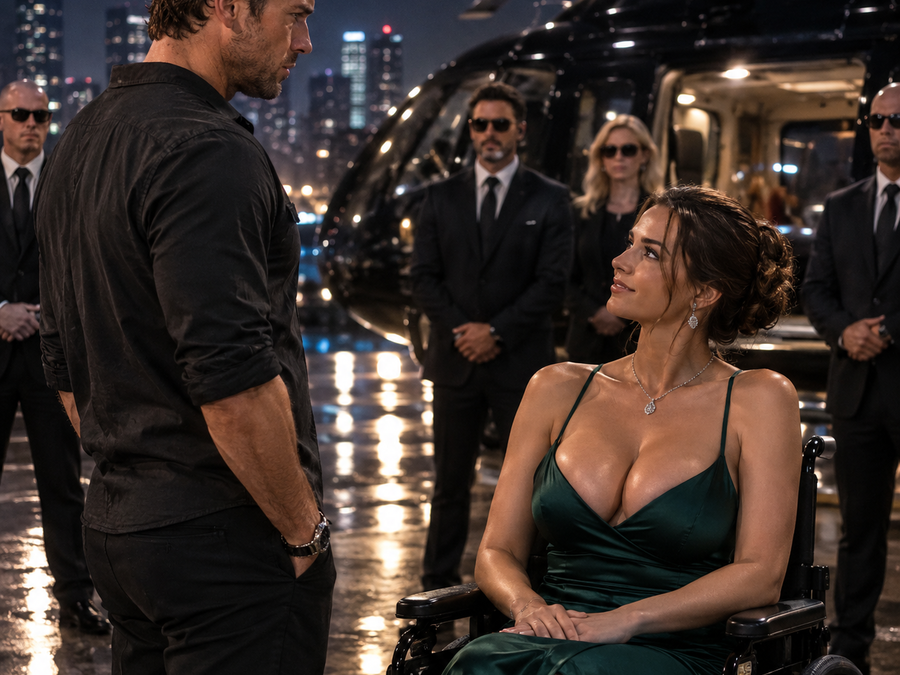
No Pilot Dared to Fly the Paralyzed CEO — Then a Single Dad Took the Controls (Part 2)
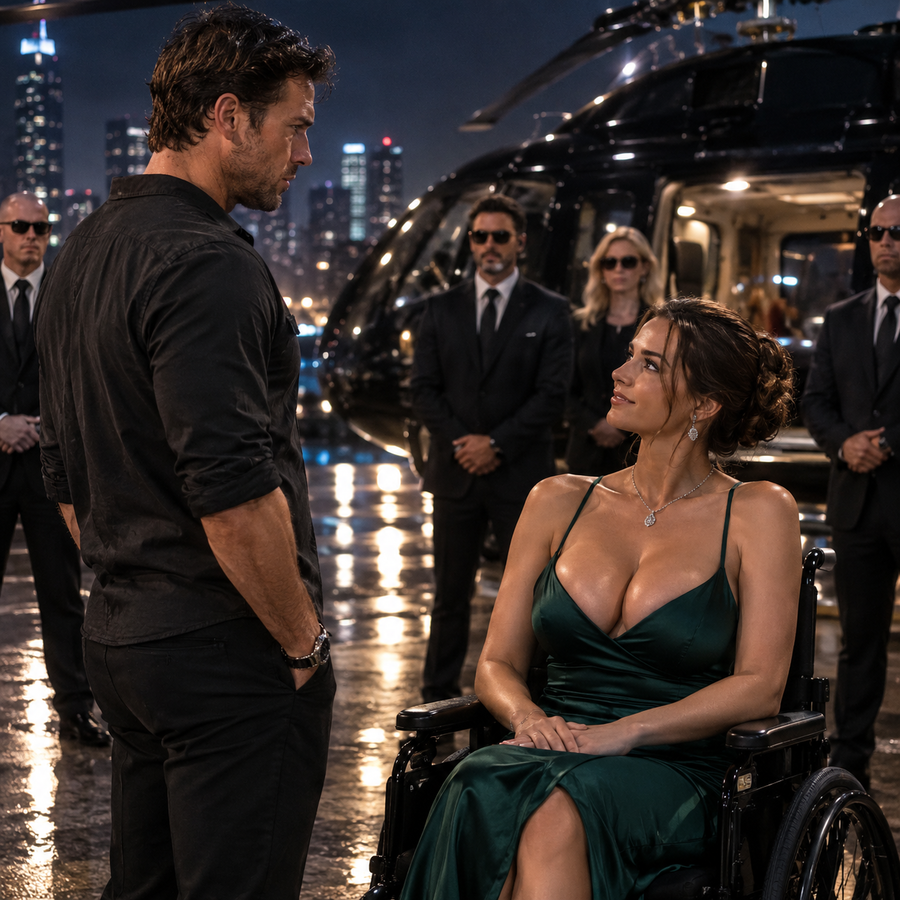
PART 2
The coffee sat on the table, untouched.
“The aviation department,” Victoria said.
“Executive transport, specifically.”
“There’s a—” Marcus checked the tablet, and Ethan could see his hands weren’t steady. “There’s an attachment. A risk memo. 12 pages. It was uploaded to the board portal at 4:19 yesterday afternoon.”
“4:19?”
“Four minutes after the notice. Yes, ma’am.”
“Read me the header.”
Marcus’s mouth opened. Closed. He looked at Ethan once, quickly, and Ethan understood right then that whatever was on that tablet was going to be bad in a specific way.
“Marcus,” Victoria said, “read it.”
He read it. “Assessment of personal and institutional risk factors in executive air travel, with particular reference to medical contingency, egress capability, and command continuity.”
Nobody said anything.
“Egress capability,” Victoria repeated.
“Yes, ma’am.”
“That’s a fire word,” Ethan said quietly.
“What?”
“That’s the word you use when you want the room to picture an aircraft on fire and somebody who can’t get out of it.”
Victoria’s hands were flat on the arms of her chair. She looked at the table for four full seconds. Then she said, “Marcus, get me Ellen Park. Now.”
“Not her assistant—her. She’s in Chicago. It’s 3:00 in the—”
“Wake her.”
At 9:22, Ellen Park was on speaker from a bedroom in Winnetka. She was Sterling Arrow’s general counsel, and she’d been Richard Sterling’s general counsel before that, and she sounded like she’d been awake for a while already.
“I saw it at midnight,” she said. “I’ve been reading it since.”
“Why didn’t you call me?”
“You were over the Atlantic, Victoria. There’s no secure line. You know that.” A pause. “That’s why they did it then. How bad?”
“It’s careful,” Ellen exhaled. “That’s what worries me. There’s not one sentence in 12 pages you could put in front of a jury. It never says the word disability. It never says the word wheelchair. It says medical contingency. It says reduced independent mobility profile. It says insurer sensitivity.”
“Insurer sensitivity,” Victoria said.
“They got a broker’s letter. Page nine. An aviation underwriter says—and I’m quoting, because you need the exact words—’executive transport risk premiums are sensitive to command continuity factors.'”
“What does that mean?” Ethan said.
There was a pause on the line. “Who’s that?”
“My pilot.”
Another pause, longer. “Your pilot is in the room?”
“Yes, Victoria. Ellen, what does it mean?”
Ellen Park sighed, and when she spoke again, she’d chosen to answer him instead.
“It means nothing, Mr. Carter. It’s a letter from a broker saying that, in the abstract, insurers care about who’s on board and whether they can be evacuated. It’s true of every executive aircraft on Earth. It doesn’t name Victoria. It doesn’t have to. It’s on page nine of a memo about her.”
“So it’s a picture,” Ethan said.
“It’s a picture,” Ellen agreed. “They’re not going to argue she can’t do the job. They’re going to put 12 pages of neutral language in front of six people and let those six people build the argument in their own heads. And then Vance is going to look sad about it.”
At 9:31, Ellen Park said the thing that changed the shape of the morning.
“Victoria, don’t go in there swinging.”
“Excuse me?”
“They want you angry. That memo is engineered to make you angry. And if you walk in there and call it what it is—which is discrimination, which is exactly what it is—you hand them the narrative. Emotional. Reactive. Can’t take criticism. That’s the second half of the play.”
“So I sit there.”
“You sit there, and you let them table it, and you say four words: ‘I’ll respond in writing.’ And then you get on a plane and you go to Tokyo and you close the Nakamura contract, because $140 million in signed revenue is the only thing on earth that outvotes a memo.”
Silence.
“Victoria,” Ellen said. “Do you hear me?”
“I hear you.”
“Say it back.”
“I’ll respond in writing.”
“Good.” A beat. “And Victoria—do not be late to Tokyo.”
The call ended at 9:34. Nobody in the room said anything for a while. Then Victoria said, without looking up, “Mr. Carter. Nine days. Tokyo.”
“Yes, ma’am.”
“Tell me right now, honestly, if there is any weather, any maintenance, any crew rest problem, any single thing between here and the 14th of the month that could make me late.”
Ethan thought about it. He didn’t rush it. That was the thing Victoria had started to notice about him weeks ago and had never mentioned—when you asked Ethan Carter a hard question, he actually stopped and considered it. And there was something almost unbearable about being taken that seriously.
“Weather’s a coin flip that far out,” he said. “Maintenance is the aircraft. Crew rest is math, and I’ll manage it. And if the coin comes up wrong, then I fly it wrong side up and get you there anyway.”
“That’s not an answer.”
“No, ma’am. It’s a commitment. Those aren’t the same word either.”
At 10:30, they wheeled into the boardroom. And at 11:40, they came out, and Ethan Carter—who had spent that hour and 10 minutes standing in a hallway outside a closed door with his hands folded, which was the longest hour and 10 minutes he had spent since a hospital waiting room 14 months earlier—watched the door open and watched Victoria Sterling come through it with her chin exactly level and her expression exactly neutral, and knew instantly that she had done it well.
“Tabled,” she said. “Pending my written response.”
“You said the four words.”
“I said the four words.”
She was three feet past him when he said, “Ma’am.”
She stopped.
“That was the hardest thing I’ve watched anybody do in a long time,” Ethan said. “And I couldn’t even see it.”
Victoria Sterling did not turn around. But she sat there for a second in the middle of a hallway in Canary Wharf, and Ethan saw her shoulders drop about half an inch. And that was all. And then she was moving again, and Marcus was reading her the afternoon, and the day went on.
They flew home Friday. Sophie had a soccer game Saturday. Ethan stood on a sideline in a windbreaker with 40 other parents and watched his daughter chase a ball with the tactical sophistication of a golden retriever, and score on her own team’s goal, and celebrate anyway. And he laughed so hard he had to put his hand on his knee.
On the drive home, she said, “Daddy, is Victoria coming to my birthday?”
He nearly went through a red light. “Bug. Victoria is my boss.”
“So?”
“That’s not really how it works.”
“Why?”
And Ethan Carter opened his mouth to explain the professional boundaries of an executive pilot relationship to a six-year-old and discovered that he did not have a single sentence that would survive contact with her.
“I’ll ask,” he said.
“Okay,” Sophie said, satisfied, and went back to her juice box, because in her world the matter was now settled. And Ethan drove the rest of the way home wondering when exactly the ground had shifted under him and why he hadn’t felt it happen.
Monday. Four days out from Tokyo. Danny Reyes called him at 6:00 in the morning.
“You need to come down here.”
“Danny, it’s 6:00.”
“I know what time it is. Come down here.”
Ethan was at the hangar at 6:40. Danny took him around the back of the aircraft, up the stairs of a maintenance stand, and pointed. Left engine. Number two. Look at the pylon.
Ethan looked. “It’s clean. It’s new.”
Ethan went still.
“Somebody replaced the fire detect loop on number two,” Danny said. “Saturday. There’s a work order. It’s signed. It’s legitimate. It’s in the system.”
“So?”
“So the loop wasn’t due for 11 months. Nobody wrote a discrepancy, and the tech who signed it isn’t on our contract.”
Ethan’s mouth went dry. “Who authorized it?”
“That’s the thing.” Danny handed him a printout, and his hand was shaking a little, and Danny Reyes had been on ramps for 25 years and his hands did not shake. “It came down through corporate maintenance oversight, under a budget line I’ve never seen before. Approved eight days ago.”
“Eight days ago is—”
“Yeah,” Danny said. “The day before they filed the notice.”
Ethan stood on a maintenance stand at 6:52 in the morning and felt his heartbeat somewhere up in his throat.
“Danny,” he said carefully. “Is the aircraft airworthy?”
“That’s the part that’s going to keep you up.” Danny wiped his mouth. “Yeah. It’s airworthy. Everything checks. The work’s good. The parts are right. The signatures are right. There is not one thing I can point at and say, ‘This is wrong.'”
“Then why’d you call me at 6:00 in the morning?”
Danny looked at him. “Because in 25 years,” he said, “nobody has ever done unscheduled maintenance on an airplane I take care of without telling me first. Nobody. And I don’t know what it means. But I know what it feels like.”
Ethan looked at the engine for a long time. “Danny,” he said, “from now until we’re back from Tokyo, nobody touches this aircraft unless you or I are standing there.”
“That’s not really how—”
“Nobody,” Ethan said. And Danny Reyes, who had not once in 25 years taken an order from a pilot about how to run his ramp, said, “Yeah. Okay.”
Ethan didn’t tell Victoria. He thought about it for two days, and he didn’t tell her. And he would go over that decision in his head for a long time afterward, and he would never be sure he’d been right—because what would he have said? “Ma’am, somebody replaced a part that didn’t need replacing and did the work correctly.” There was no accusation in that. There was no evidence in that. There was a feeling in the stomach of a ramp mechanic. And Ethan Carter had spent eight years in a military where a feeling in the stomach was the least admissible thing on earth and also the thing that kept you alive.
So he did the only thing he knew how to do. He rebuilt the flight.
Tuesday night he was at the kitchen table until 1:00 in the morning with charts spread out and a laptop and a legal pad. Wednesday night, same. Thursday, he called the Anchorage station manager—a man he’d never met—and talked for 40 minutes about a runway he hoped he would never need. He planned the Pacific crossing three separate ways. He built a fuel load that gave him 4,000 more than he needed and made the numbers work anyway. He memorized every divert field between Chicago and Tokyo like he was going to be quizzed, because in a very real way, he was.
Sophie found him at the table at midnight on Thursday. “Daddy.”
“Hey, Bug. Go back to bed.”
She didn’t. She climbed into the chair next to him and looked at the charts. “Is that Tokyo?”
“That’s the whole ocean.”
“That’s a lot of ocean.”
“It is.”
Sophie put her chin on the table, which put her eyes at chart level, and studied it with total seriousness. “Daddy,” she said, “are you scared?”
Ethan set down his pen. He could have said no. That’s what you say. That’s the whole job. You say no. You say everything’s fine. You keep the floor under them.
“A little,” he said.
Sophie nodded slowly, like this was reasonable. “Victoria said she’s not scared when you’re flying.”
Ethan’s throat closed.
“She said that on the plane when I asked.” Sophie yawned enormously. “So you don’t have to be scared. She’s not scared, so you don’t have to be.”
And she slid off the chair and padded back down the hall. And Ethan Carter sat alone at his kitchen table at midnight with a chart of the Pacific Ocean in front of him and put his face in his hands for about 10 seconds.
Then he picked the pen back up.
They pushed for Tokyo at 11:02 on Saturday morning. The forecast was decent. Not clean. There was a system building over the northern Pacific that the models disagreed about, which is the worst thing a system can do. But decent. Ethan briefed it to Victoria on the tarmac, exactly the way he’d briefed everything for nine weeks.
“There’s weather at the back half. Models are split. The European model has it moving north and out of our way. The American model has it sitting on the route. I don’t believe either one of them yet.”
“What do you believe?”
“I believe I put an extra 4,000 pounds of fuel on, and I’ll know more in six hours.”
Victoria looked at the aircraft, then at him. “Mr. Carter, if I’m not in that room Monday at 9:00 in the morning, Nakamura signs with Bombardier, and Harold Vance gets his sixth vote by Thursday.”
“I’m aware.”
“Then say the thing pilots say.”
“What thing?”
“The thing where you tell me the airplane doesn’t care about my board.”
Ethan almost smiled. “The airplane doesn’t care about your board, ma’am.”
“That’s the best news you’ve had all month.”
They were wheels up at 11:09. The first eight hours were nothing. That’s how it always is. Eight hours of black water and quiet radios and coffee that gets progressively worse. And Ethan flew. And Ethan’s first officer, a solid, unremarkable man named Pete Kowalski, flew. And they traded rest cycles and watched the fuel burn and said maybe 40 words to each other.
At hour nine, the models stopped disagreeing.
“Oh, that’s not great,” Kowalski said.
Ethan looked at the weather and did not say anything for a moment. The system hadn’t moved north. It hadn’t sat still either. It had deepened, and it had come south, and it was now squarely across the route, with tops that the satellite estimate put well above anything the Gulfstream could climb over.
“Options,” Kowalski said.
“North of it costs us 400 miles. Fuel.” Ethan ran it. He ran it twice. Because he’d built 4,000 extra pounds into the load nine days ago at a kitchen table in Chicago at 1:00 in the morning while his daughter slept down the hall.
“Fuel’s there,” he said.
Kowalski whistled. “You planned this.”
“I planned something.”
At 11:40 at night, Chicago time, Ethan keyed the intercom.
“Miss Sterling.”
“Go ahead.”
“The weather did the bad thing. It’s on our route, and I’m not going through it. I’m going north around. It costs us about 50 minutes, and we have the fuel. You’ll be on the ground in Tokyo at 8:05 Monday morning local instead of 7:15. That’s 55 minutes to your meeting instead of an hour 45.”
There was a pause. “Is 55 minutes enough?”
“Marcus says the hotel is 19 minutes from the airport at that hour, and the meeting is in the hotel.”
Another pause. “You asked Marcus.”
“I asked Marcus in Chicago on Wednesday, ma’am, because I wanted to know how much I could afford to lose before I had to start making bad decisions.”
Silence on the intercom, long enough that Kowalski glanced over.
“Fly north,” Victoria said.
They flew north. And at hour 11 and 40 minutes, at 2:48 in the morning Chicago time, over the Kamchatka corridor, with nothing under them but 4,000 feet of cloud and several miles of very cold water, the master caution lit up.
Kowalski said a word. Ethan’s hand was already on the panel.
“Number two,” he said. “Fire loop.”
And every single thing in Ethan Carter’s body went cold at once, because he was looking at a warning light on a fire detect loop that some technician nobody knew had replaced, eight days before a board vote.
“Fire?” Kowalski’s voice was tight.
“Do we have a fire? Negative fire.” Ethan’s hands were moving, fast and exact, and his voice had gone somewhere flat and far away. The voice he hadn’t used since a night over Kandahar in 2011. “No fire indication. That’s a loop fault. That’s the detector, not the engine.”
“How do you know?”
“Because the engine’s fine.” Ethan’s eyes went across the gauges in one sweep. “N1’s good. N2’s good. EGT’s normal. Oil pressure normal. Vibration normal. There is nothing wrong with that engine. What’s wrong is the thing that tells us if something’s wrong with that engine.”
“So we’ve got an engine we can’t monitor.”
“We’ve got an engine we can’t monitor,” Ethan agreed, over the Pacific at 3:00 in the morning.
The checklist said what the checklist said. Kowalski read it out loud, and his voice only shook a little on the second line.
“Nearest suitable is Petropavlovsk,” Kowalski said. “210 miles. Russia.”
“Russia.”
“How’s the weather in Petropavlovsk?”
Kowalski pulled it. Then he said, quietly, “800 overcast. Three-quarters of a mile, blowing snow. That’s not suitable. That’s just close. Anchorage is 940.”
And there it was. Ethan Carter sat in the left seat of a Gulfstream at 3:00 in the morning over the northern Pacific and understood the shape of the thing completely. If he turned for Anchorage—which was the conservative call, which was the call that every check airman on Earth would nod at, which was the call that no investigator would ever question—Victoria Sterling would land in Alaska at 6:00 in the morning, and Nakamura would sign with Bombardier at 9:00, and Harold Vance would have his sixth vote by Thursday, and the memo about egress capability would be entered into the minutes of a company her father built in a garage in Rockford in 1987.
And if he pressed on to Tokyo with an unmonitored engine over water and anything at all went wrong—anything—then a woman who had already survived one plane crash would be in a second one, and it would be his fault. And Sophie Carter would grow up knowing what her father had traded and what he’d traded it for.
Kowalski said, “Ethan.”
Ethan didn’t answer.
“Ethan, it’s your call, but it’s not a hard one.”
“No,” Ethan said. “It’s not.”
He keyed the intercom. “Miss Sterling, I need you to hear this exactly as I say it, and I need you not to fill in any blanks.”
Three seconds. Then her voice, absolutely level: “Go ahead.”
“We have a fault on a fire detection loop on the number two engine. There is no fire. There has never been a fire. The engine is running normally, and every parameter on it is where it should be. What has failed is the sensor that would tell me if something did go wrong. So I am flying an engine I cannot monitor.”
Silence.
“Say the rest,” Victoria said.
“The rest is that I have two options. I can divert to Anchorage, which is 940 miles behind us, and which has a runway and a hangar and a maintenance base, and you will not be in Tokyo Monday. Or I can continue to Tokyo, which is three hours ahead, over water, with an engine I can’t monitor, and I would be making that decision for commercial reasons.”
Another silence. Longer.
“And what’s your recommendation, Mr. Carter?”
“Anchorage.”
“Why?”
And Ethan Carter, 41 years old, three deployments, 11,000 hours, said the truest sentence of his professional life at 3:00 in the morning over the Pacific Ocean.
“Because I don’t get to gamble with you, ma’am. Not on a schedule, not on a contract, not on a vote. That’s not what you hired me for, and it’s not what I’d tell my daughter I did.”
Nothing came back for a long moment. Then Victoria Sterling said, “Go to Anchorage.”
“Ma’am—”
“Mr. Carter.” Her voice didn’t rise. It never rose. “Go to Anchorage. That’s not me being brave. That’s me agreeing with my pilot, which is the entire reason I hired one.”
They turned at 3:04 in the morning. The turn took 90 seconds, and Ethan flew it perfectly, and Kowalski called Anchorage, and the flight attendant went back and sat with Victoria for the whole descent, even though Victoria didn’t need anyone to sit with her. And at 4:52 in the morning, Ethan Carter put $14 million of aircraft and one chief executive officer down on runway 7 Right at Ted Stevens Anchorage International, on the numbers, in a 15-knot crosswind, so smoothly that the flight attendant said afterward she wasn’t sure they’d landed.
The engines spooled down. The airplane sat there. And Ethan Carter put both hands flat on his thighs and let out a breath he’d been holding for 106 minutes.
Kowalski was shaking. Just his left hand. He put it under his leg.
“That was a loop fault,” Kowalski said.
“Yeah.”
“That was—Ethan, that was just a loop fault. We do those in the sim.”
“Yeah.”
“So why do I feel like that?”
Ethan looked out the windscreen at an Alaskan runway at 5:00 in the morning. “Because it wasn’t the loop,” he said.
At 5:40 in the morning, Anchorage time, Ethan came down the airstair, and Danny Reyes’s voice was in his ear on a phone with a terrible connection.
“Say it again,” Ethan said.
“I said I pulled the paperwork on that loop the second you called me from the air.” Danny’s voice was fast. Too fast. “The part number’s right. The install’s right. The signatures right.”
“Then what?”
“The tech, man. Danny took a breath. I ran him down. Took me an hour. He’s a contract A&P out of a shop in Wheeling. Legit. Licensed. Clean record. Everything.”
“Danny—”
“He’s been on the payroll of a consulting firm for 11 months. Retainer, $2,200 a month.”
Ethan stopped walking. “What consulting firm?”
“Meridian Strategic Advisors.” Danny’s voice cracked. “Ethan—”
“Ethan. I looked them up. It’s three guys and a P.O. box in Schaumburg.”
“Who owns it?”
“That’s what took me the hour. Danny said it. It’s a holding entity, two layers, and the second layer files with the state of Delaware.”
“Danny. Who owns it?”
There was a silence on a bad phone line from a hangar in Chicago to a tarmac in Anchorage at 5:41 in the morning.
“Vance’s son-in-law,” Danny said.
Ethan Carter stood absolutely still on a cold ramp in Alaska.
“Danny, listen to me very carefully. Is the work bad?”
“That’s what I’m telling you.” Danny’s voice went up. “The work is perfect. It’s the best loop install I’ve ever seen. The kid did it by the book. Torqued to spec. He even upgraded the clamp hardware. It is a better installation than the one that came out of the factory.”
“Then I don’t understand.”
“Neither did I,” Danny said. “For two days, I didn’t. And then you called me from the middle of the ocean and told me you had a loop fault, and Ethan—a loop fault doesn’t come from a bad install.”
“Then where does it come from?”
“It comes from a sensitive one. Danny said, You install a fire loop that’s too tight. Too well clamped. Too rigid. It doesn’t fail. It doesn’t break. It just gets touchy. It reads thermal expansion as a fault. It throws a caution on a long flight over water at 3:00 in the morning when the airframe’s been cold-soaked for 11 hours.”
Ethan closed his eyes. “It’s not sabotage,” he said slowly.
“It’s an event.”
“It’s an event,” Danny said. “It was never going to crash the airplane. It was going to scare the airplane. It was going to put a warning light in front of a pilot at the worst possible hour and see what he did with it. And whatever he did with it—divert, delay, miss the meeting, declare an emergency, put it in a logbook—that’s the incident. That’s the thing. That’s 12 pages of a memo about egress capability with an actual date on it.”
Ethan looked back at the aircraft. At Victoria Sterling, coming down the lift in the dark at 5:43 in the morning in Anchorage, Alaska. 940 miles from where she was supposed to be. With $140 million walking out the door in three hours, and a board meeting on Thursday, and no way on earth to prove that any of it had been done to her on purpose.
“Danny,” Ethan said. “How many people know what you just told me?”
“You, me. Keep it that way.”
He hung up. He walked across the ramp. Victoria was at the bottom of the lift, and Marcus was talking into a phone very fast, and Ethan stopped in front of her, and for about four seconds, neither of them said anything.
“You made the right call,” Victoria said.
“Ma’am—”
“You made the right call, Mr. Carter. And it cost me $140 million and probably my company. And it was still the right call. And I need you to hear me say that once, so you never wonder about it.”
Ethan looked at her. And then he did the thing he had promised himself nine weeks ago in a glass office in Chicago that he would never do. He crossed the line.
“It wasn’t an accident,” he said.
Victoria Sterling went very, very still. “What did you say?”
“The loop that faulted. It was replaced eight days ago. It wasn’t due for 11 months. Nobody wrote it up. The work order came down through a corporate budget line Danny Reyes has never seen in 25 years. The tech who signed it is on a $2,200-a-month retainer from a consulting firm with a P.O. box in Schaumburg.”
Ethan didn’t blink. “The firm’s owned by a holding entity. The holding entity files in Delaware. The name on the filing is Harold Vance’s son-in-law.”
Marcus stopped talking into his phone. The ramp was very quiet. Victoria Sterling did not move. She did not breathe, as far as Ethan could tell. And then, in a voice that was not level for the first time in nine weeks, she said, “Say the rest.”
“The work was perfect,” Ethan said. “That’s the point. He didn’t break it. He built it too well. He made it sensitive. It was never going to bring the airplane down, ma’am. It was going to throw one caution light at 3:00 in the morning over the Pacific, and whatever the pilot did next was going to end up in a logbook with a date on it, and that logbook entry was going to be page 13 of that memo.”
Victoria Sterling looked at him. “You knew,” she said.
“I didn’t know.”
“You knew something. That’s why the extra fuel. That’s why you called Anchorage nine days ago. That’s why you had a station manager’s cell phone number in a town you’ve never landed in.”
Ethan didn’t answer.
“How long have you known?”
“Monday,” he said. “Six days.”
Her voice didn’t rise. It never rose. That was the worst part. “You’ve known for six days, and you put me on that airplane anyway, and you didn’t tell me.”
“Yes, ma’am.”
“Why?”
And Ethan Carter, kneeling on a freezing ramp in Anchorage, Alaska, at 5:47 in the morning, with everything he had built over nine weeks balanced on the next sentence, told her the truth.
“Because if I told you Monday,” he said, “you’d have canceled Tokyo. And that’s exactly what they wanted. They didn’t need the airplane to fail, ma’am. They needed you to stop getting on it.”
Victoria Sterling stared at him. And somewhere behind them, at 5:48 in the morning, Marcus’s phone lit up in his hand, and he looked down at it, and every drop of color went out of his face.
“Miss Sterling,” he said.
“Not now.”
“Miss Sterling.” Marcus’s voice cracked straight down the middle. “It’s Chicago. It’s Ellen Park.”
“Marcus—”
“They filed a complaint,” Marcus said. “Twenty minutes ago. With the FAA.”
Ethan stood up slowly.
“Against who?” he said.
Marcus looked at him, and his hand was shaking so hard he could barely hold the phone.
“You,” he said.
Ethan Carter did not move for three full seconds.
“Say that again,” he said.
“The complaint’s against you. Marcus was reading off the phone, and his voice kept sliding sideways. Filed at 9:06 Chicago time. Anonymous safety report. It alleges—hold on. It alleges the pilot in command departed Chicago with knowledge of an unresolved maintenance discrepancy on the number two engine, and continued a transoceanic flight into known adverse weather.”
“That’s not what happened.”
“I know it’s not.”
“Marcus, that is the opposite of what happened. I diverted. I diverted 900 miles to a maintenance base to avoid exactly what they’re accusing me of.”
“I know.”
“Then who filed it at 9:06 Chicago time?” Ethan’s voice went up for the first time in nine weeks. And Marcus actually stepped back. “Marcus, we landed at 4:52. That’s 8:52 Chicago. Somebody filed a 1,400-word safety complaint about a diversion 14 minutes after the wheels touched.”
Marcus opened his mouth. Nothing came out.
Victoria said, very quietly, “They wrote it before we landed.”
“They wrote it Tuesday,” Ethan said. “They wrote it Tuesday, and they left a blank where the outcome goes.”
At 5:52 in the morning in Anchorage, Alaska, Ellen Park’s voice came out of the speaker on Marcus’s phone, and it sounded like a woman who had done the math already and hated it.
“Victoria, is he standing there?”
“He’s standing here.”
“Mr. Carter, don’t say anything to anyone. Not the FSDO, not the operator safety officer, not a coworker, not your first officer, and God help you, not a reporter.”
“I want to answer it.”
“I know you do. That’s why I’m telling you not to.”
“Ms. Park, the flight data is going to show—”
“The flight data is going to show exactly what you say it shows,” Ellen cut in, “and it’s going to take 11 weeks to say it. That’s the point, Mr. Carter. Nobody thinks you’re going to lose this. They think you’re going to be pending for 11 weeks.”
Ethan went quiet.
“You’re a contractor,” Ellen said. “You fly under Sterling’s operating certificate. The second there’s an open safety complaint on the pilot in command, the insurer’s position changes, and the operator’s risk committee has a written obligation to review the assignment. Which means Harold Vance doesn’t have to fire you. He just has to ask a question in a room and let the process do it.”
“So they ground me.”
“They don’t ground you. They temporarily reassign pending resolution. It’s four words in a memo.” A pause. “And then Victoria has no pilot again, for the 10th time.”
And there it was, laid out flat on a cold ramp at 5:54 in the morning. And Ethan Carter understood the entire architecture of the thing at once, and felt something in him go very cold and very still.
“It was never the airplane,” he said.
“No,” Ellen said.
“It was never about crashing anything. It was about the 10th pilot.” Mr. Carter, that memo says “command continuity.” Ethan’s voice was flat now. “12 pages. Egress capability, medical contingency, command continuity. And the last four pages are going to be a list, aren’t they? Nine names, and then mine. Nine pilots who quit, and one who got a complaint filed on him. And Vance stands up in front of six people and says, sadly, that he’s not questioning anyone’s ability. He’s just noting that in 14 months, the CEO’s aircraft has been through 10 pilots. And doesn’t that suggest something structural?”
Silence on the line from Winnetka.
“Ms. Park,” Ethan said, “am I wrong?”
“No,” Ellen Park said. “You’re not wrong. That’s page 14. It’s a table.”
Victoria Sterling had not said a word in 90 seconds. Ethan looked at her. Her hands were on the arms of her chair, and they were not moving, and her face was doing absolutely nothing, and he had learned by now that this was the single most dangerous thing about her, because it meant she had gone somewhere very far down and was reading the whole board.
“Victoria,” he said.
“Ellen,” she said. “How long have you known about the table?”
A pause. “Since midnight, London time.”
“You didn’t tell me.”
“I told you to say four words and go to Tokyo. That was my advice, with the table in it. And now I’m in Anchorage.”
“Yes.”
“With no contract, no pilot for 11 weeks, a board vote Thursday, and $140 million signing with Bombardier at 9:00 this morning.”
“Yes,” Ellen Park said.
Victoria Sterling looked out across a ramp in Alaska at 5:57 in the morning.
“Marcus,” she said. “What time is it in Tokyo?”
Marcus checked. “10:57 at night. Sunday.”
“Get me Nakamura.”
Marcus’s face went blank. “Miss Sterling—”
“Get me Nakamura.”
“He’s—ma’am, he’s 71 years old. He’s at home. We do not have his—”
“Marcus.”
Victoria turned her head and looked at her assistant. And Marcus stopped talking mid-word.
“Two years ago, that man sat in my hospital room in Denver for 40 minutes and did not say one word about my legs. He talked about my father. He’s the only one who did. I have his home number in my phone under his wife’s name, because she gave it to me.” A beat. “Get me Nakamura.”
At 6:04 in the morning, Anchorage time. 11:04 at night in Tokyo. A 71-year-old man picked up a phone in a house in Setagaya. Victoria spoke Japanese for 90 seconds. Then she switched, and Ethan understood later that she’d done it on purpose, because she wanted him to hear it.
“Kenji-san, I’m not in Tokyo. I’m in Alaska. My aircraft had a fault over the Pacific, and my pilot brought us down. I will not be in your conference room at 9:00 in the morning.”
Ethan couldn’t hear the other side. He watched her face instead.
“No,” Victoria said. “No, I’m not asking you to move the meeting.”
Marcus made a strangled noise.
“I’m asking you to keep it,” Victoria said. “At 9:00, exactly as scheduled. And I’m asking you to let my pilot brief your engineers on why he turned around.”
Ethan’s head came up.
“Because you’re not buying a contract from me, Kenji. You’re buying 11 years of aviation systems from a company you’ve done business with since my father was alive. And in about four days, six people are going to vote on whether I’m fit to run it. And the argument they’re making is that when something goes wrong on my aircraft, I’m the reason.” Her voice did not rise. It never rose. “Something went wrong on my aircraft eight hours ago. And I would like your engineers—the best avionics people in Asia—to hear exactly what happened and decide for themselves whose judgment they’re buying.”
There was a very long silence on the line. Then a man in Setagaya said something, and Victoria Sterling closed her eyes for one full second.
“Thank you,” she said. She hung up.
“Well?” Marcus said.
“9:00,” Victoria said. “Video. And he’s putting his chief engineer and his head of procurement in the room.”
Marcus stared. “That’s—ma’am, that’s good. That’s—”
“That’s not why he said yes,” Victoria said.
“Then why?”
Victoria Sterling looked at Ethan Carter across a ramp in Anchorage. “He said, ‘Your father would have gone to Alaska, too.'”
Nobody said anything. And Ethan turned away toward the aircraft, because he had exactly two seconds to get his face under control, and he did not want to spend them in front of anyone.
At 6:40 in the morning, Ethan called home. It rang four times. Mrs. Kaminsky answered, and Ethan heard cartoons, and something in his chest unclenched a quarter turn.
“She’s fine,” Mrs. Kaminsky said, before he asked. “She’s eating cereal on the couch, which I know you don’t allow, but I allowed it.”
“Thank you,” Ethan. A pause. “There was a man here.”
Everything in him went to ice. “What?”
“Last night. Around eight. Rang the bell. Said he was from the company. Very polite. Nice coat.”
“Did you let him in?”
“Do I look like I let people in?” Mrs. Kaminsky said. “I told him you were flying. He said he knew. He said he just wanted to leave a card. A Russell—it’s on your counter.”
“Read it to me.”
“It says Meridian Strategic Advisors.” And then a name. And then he wrote on the back—hold on—he wrote, “Mr. Carter, when you get home, I’d like 15 minutes. There’s no downside for you here.”
Ethan stood on a ramp in Alaska and felt something he had not felt in 14 months, which was rage. Clean, cold, structural rage. The kind that doesn’t make you loud. The kind that makes you extremely precise.
“Mrs. Kaminsky,” he said. “Is the deadbolt on?”
“Ethan—”
“Is the deadbolt on?”
“It’s on,” she said quietly. “It’s been on since he left.”
“Don’t answer the door until I’m home. Sophie has soccer at 11:00. Take her to soccer, and come straight back, and don’t answer the door.”
He hung up. He stood there for a second. Then Ethan Carter walked back across the ramp, and Victoria saw his face, and she said immediately, “What?”
“They went to my house,” Ethan said.
At 9:00 Tokyo time—1:00 in the afternoon, Sunday, in Anchorage—though nobody in that FBO conference room was thinking in Anchorage time anymore, Ethan Carter sat down in front of a laptop in a borrowed room with a bad chair and briefed seven Japanese engineers on the worst 106 minutes of his professional life. He did it flat. No adjectives. That was the only way he knew how.
“At 02:48 Chicago time, at flight level 410, we received a master caution on the number two engine fire detection loop. There was no fire indication. All engine parameters were nominal—N1, N2, EGT, oil pressure, vibration—nominal. And they stayed nominal for the remainder of the flight.”
He talked for 19 minutes. He put the fuel numbers up. He put the weather up. He put the divert analysis up. Petro-Pavlovsk at 210 miles, with 800 overcast and blowing snow. Anchorage at 940, with a maintenance base and a runway you could land a space shuttle on.
“I want to be clear on one point,” he said. “Petropavlovsk was closer. Petropavlovsk would have gotten us on the ground an hour and 40 minutes sooner. Petropavlovsk was also three-quarters of a mile visibility and blowing snow, at an airfield I have never operated into, with an engine I could not monitor. Close is not the same as suitable. I went to Anchorage.”
The chief engineer, a small man named Ito with reading glasses pushed up on his head, said, in careful English: “Captain, the fuel, sir. You had fuel for 940 miles after you had already flown 400 miles of a northern deviation you did not plan.”
“Yes, sir.”
“Why?”
And Ethan Carter, in a borrowed conference room in Alaska, said the thing that broke it open.
“Because nine days ago I sat at my kitchen table, and I could not make the flight work with legal fuel.” He said, “Legal is legal. Legal would have been fine. But legal assumed the weather went where the models said it would go, and legal assumed the airplane did what the airplane was supposed to do. And I had a feeling in my stomach I could not defend to anybody. So I put 4,000 extra pounds on and I ate the performance penalty. And I did not tell anyone why, because I didn’t have a why. I had a feeling.”
Silence in Tokyo.
“Captain Carter,” Ito said. “In our company, we have a word for this, sir.” Ito said a word in Japanese. Then he said, “It does not translate. The closest is—the pilot who packs for the flight he hopes he does not take.”
Ethan didn’t say anything. Ito took his glasses off his head and put them on the table and looked directly at the camera.
“Miss Sterling,” he said. “Is this man your pilot, or is he your employee?”
Victoria Sterling, off to the side of the frame, said, “He’s my pilot.”
“Then I have one question for the room.” Ito looked around at his own people. “Sterling Arrow has offered us a fire detection architecture for the Nakamura 400 series. In four days, six people will vote on whether the woman who signed that offer is capable of running the company that builds it.” He put his glasses back on. “This morning, that architecture threw a false caution over the Pacific Ocean at 3:00 in the morning. And a pilot who could not monitor an engine chose to fly 940 miles backward rather than three hours forward. And the woman who signed the offer told him to do it.” He paused. “I am an engineer. I do not care about the vote. I care that when the system lied, the people did not.”
At 1:40 in the afternoon, Anchorage time, Nakamura Heavy Industries signed. Not for $140 million. For $165 over nine years, with a joint development clause on the fire detect architecture that Ellen Park later described on a phone call as “the single most valuable 11 lines of contract language in the history of this company.”
Marcus sat down on the floor. Just sat down, right there, with his back against the wall of the FBO conference room, and put his head in his hands. And Ethan Carter stood at the window and did not celebrate, because he was doing arithmetic.
“It doesn’t fix it,” he said.
Victoria looked up. “What?”
“The contract doesn’t fix it.” Ethan turned around. “Ma’am, they’ll say you got lucky. They’ll say a customer felt sorry for you. And on Thursday, they’ll still put a table on page 14 with 10 names on it, and mine will have a complaint next to it.”
Victoria Sterling was very quiet. “Yes,” she said. “They will.”
At 8:00 the next morning—Monday—Ethan Carter walked into his own kitchen in Chicago, after 19 hours of getting home commercially, with a duffel bag and no sleep, and Sophie hit him at approximately the speed of sound.
“Daddy!”
He caught her. He held on for longer than usual.
“You were in Alaska.”
“I was in Alaska.”
“Was there bears?”
“There were no bears.”
“There’s always bears in Alaska, Bug.”
“I was on a runway.”
“Runways have bears,” Sophie said, with total authority. And Ethan laughed—for the first time in three days, a real one, from the bottom—and had to set her down before his arms gave out.
The card was on the counter. He read it four times. Then he picked up his phone and called the number on the front, and a man answered on the second ring and said, “Mr. Carter. Thank you for calling.”
“Who is this?”
“My name’s Grant Mercer. I left a card with your neighbor. I hope that wasn’t out of line.”
“You came to my house.”
“I did.”
“My six-year-old daughter was inside my house.”
There was a pause. And when Grant Mercer spoke again, something in his voice had changed. And Ethan, who had spent nine weeks reading a woman who never changed her voice at all, heard it.
“That’s fair,” Mercer said. “That’s completely fair. I apologize.”
“What do you want?”
“15 minutes.”
“Say it on the phone.”
“I’d rather not.”
“Then we’re done, Mr. Carter.” A breath. “There’s a complaint filed against your certificate. It’s going to sit open for 11 weeks. During those 11 weeks, Sterling’s risk committee is going to reassign you. That’s not a threat. That’s a schedule. And it happens on Wednesday, whether you and I ever speak.”
“I’m aware.”
“There’s a corporate flight department in Denver,” Mercer said. “Fractional operator. Real one. Good one. They need a chief pilot. $210,000 a year. Home five nights a week. And a signing structure that would clear the complaint off your record, because a settlement makes the complaint go away and everybody moves on.”
Ethan stood in his kitchen. “And what do I have to do?”
“Resign,” Mercer said. “Today. Cite family. Nobody will ever question a widower with a six-year-old citing family, Mr. Carter. And I mean that with total sincerity. It’s the cleanest exit any of the 10 of you have had.”
“Any of the 10 of us?”
Mercer didn’t answer.
“Mr. Mercer,” Ethan said slowly. “How many of the other nine did you call?”
There was a silence on the line that lasted three seconds and told him everything.
“Six,” Mercer said.
Ethan sat down. He actually sat down, in a kitchen chair, in his own kitchen, at 8:20 in the morning on a Monday, with his daughter’s cereal bowl three feet away and a card from a P.O. box in Schaumburg in his hand.
“Six of the nine,” he said.
“Yes.”
“They didn’t quit.” “They took better jobs,” Mercer said. “Every one of them legitimate jobs. Real salaries. Nobody was hurt, Mr. Carter. Nobody was harmed. Six good pilots got better careers, and one company got a talking point. And if you want to be angry about that, I understand. But I’d ask you to notice that it’s the least violent way anyone’s ever done this.”
“The least violent.”
“Nobody put a bomb on a plane,” Mercer said. And he said it tiredly, like a man who’d made peace with a sentence a long time ago. “Nobody sabotaged an engine. We paid six men more money to fly nicer airplanes closer to their families. That’s the whole crime. And in nine days, a board is going to look at a table with 10 names on it and draw the obvious conclusion. And not one line of that table will be a lie.”
Ethan closed his eyes.
Nine pilots. Nine men who left. Nine men Victoria Sterling had watched walk out the door and had quietly, privately, in the part of herself she never showed anybody, decided were leaving because of her. Two years of that.
“Mr. Mercer,” Ethan said, “does she know?”
“Does who know?”
“Does Victoria Sterling know that six of the nine pilots who left her were paid to leave her?”
A long, long pause.
“No,” Grant Mercer said.
And Ethan Carter, sitting in his kitchen at 8:24 on a Monday morning, understood that he was holding the only thing on earth that mattered.
“$210,000,” he said.
“Yes.”
“Home five nights a week.”
“Yes.”
“And the complaint goes away. It evaporates.”
“Mercer said. By Friday.”
Ethan looked across the kitchen. Sophie was standing in the doorway in her socks, holding a stuffed rabbit by one ear, watching him with her mother’s serious brown eyes.
“Mr. Mercer,” Ethan said. “I’m going to tell you what I told my daughter last week when she asked me if I was scared.”
“Mr. Carter—”
“I told her a little,” Ethan said, “because it was true. And she told me that Victoria Sterling isn’t scared when I’m flying.”

