Part 3: “Why don’t you ever say thank you to Daddy?”
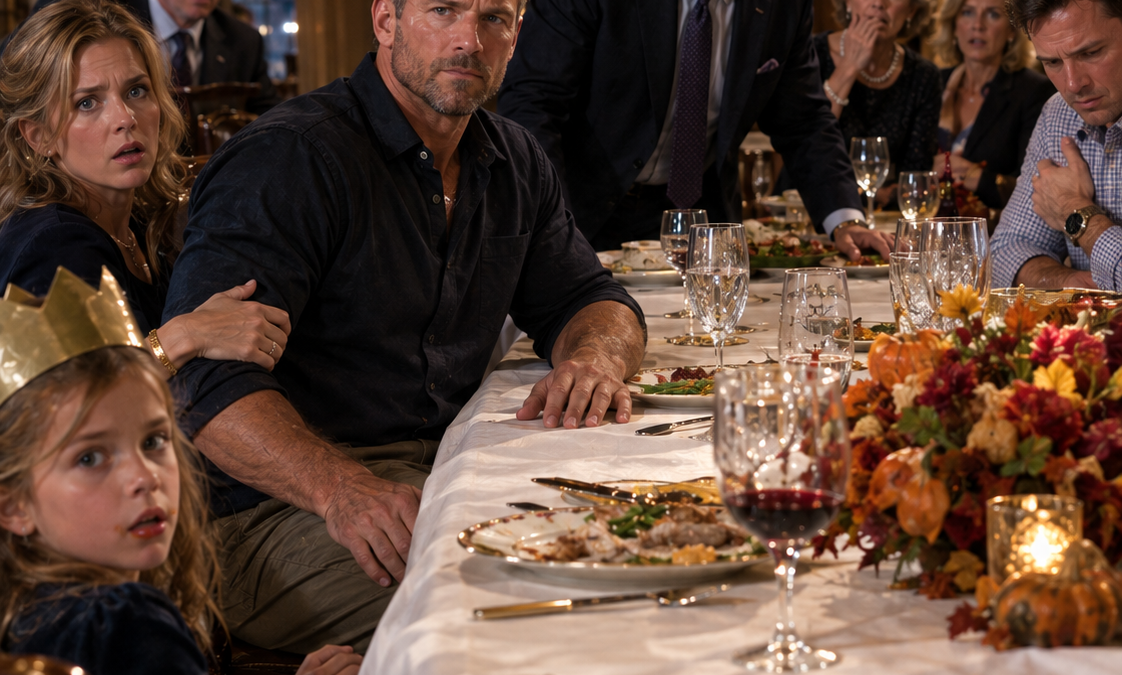
PART 8 — THE FRIDAY DEADLINE
Friday came and went.
Richard didn’t call. He didn’t write. He didn’t show up at Harold’s house. He didn’t do anything.
So I did what I said I would do.
I called Harold on Saturday morning.
“It’s time,” I said.
“Time for what?”
“Time to tell the family. All of it.”
He was quiet for a minute.
“You’re sure?”
“I’m sure.”
“Then I’ll call everyone. Tomorrow. Sunday dinner.”
“Not dinner. Morning. Ten o’clock. I want everyone awake.”
“Why morning?”
“Because people are more honest in the morning. They haven’t had time to rehearse.”
Sunday morning was cold.
The kind of cold that gets into your joints and stays there. I felt it in my back where the surgery had been. A dull ache. A reminder.
Claire drove. Ellie sat in the back with her tablet. She didn’t know what was happening. She didn’t need to know.
“Are you okay?” Claire asked.
“I’m fine.”
“You’re quiet.”
“I’m always quiet.”
“You’re quieter than usual.”
I looked out the window.
“I’m thinking about what I’m going to say.”
“What are you going to say?”
“The truth.”
Everyone was at Harold’s house.
Margaret. Dan. Claire. Me. Ellie. Harold’s brother Charles. Margaret’s sister Elaine. A few cousins. The same crowd from the last family meeting.
Richard wasn’t there.
Neither was Patricia.
But Fitzsimmons was.
He was standing in the corner of the living room, holding a cup of coffee he wasn’t drinking. He was wearing a gray suit and a tie that was slightly too tight. He was watching me the way a man watches a dog he isn’t sure is friendly.
I didn’t say anything to him. I just sat down.
Harold stood up.
“Thank you all for coming. I know this is short notice. I know some of you have questions about why we’re here.”
He paused.
“The reason we’re here is because there’s something I need to tell you. Something I should have told you a long time ago.”
He looked at me.
“Daniel found out something. About Richard. About the trust. About what’s been happening for the past twenty years.”
The room went still.
“He’s been stealing from us. From all of us. He’s been moving money into offshore accounts. He’s been hiding it from everyone.”
Charles stood up.
“That’s a serious accusation.”
“It’s not an accusation. It’s a fact. I have the records. I’ve seen them.”
“Where are they?”
Harold held up a folder.
“Here. Everything. Every account. Every transfer. Every lie.”
He set the folder on the coffee table.
“I should have seen it. I should have caught him. But I didn’t. Because I was too busy trying to control everything. Because I was too busy being the man in charge.”
He looked around the room.
“And now I’m not going to be the man in charge anymore. I’m going to tell the truth. And then I’m going to let the truth do what it does.”
The room erupted.
Charles was demanding answers. Elaine was asking if she was implicated. The cousins were talking in low voices. Margaret was crying. Dan was sitting in a chair with his head in his hands.
I didn’t say anything. I just watched.
Fitzsimmons hadn’t moved.
He was still standing in the corner. Still holding his coffee. Still watching me.
“Where’s Richard?” Charles asked.
“He’s not coming,” Harold said.
“Why not?”
“Because he’s a coward. And because he knows what he did.”
“That’s not an answer.”
“It’s the only answer I have.”
Charles looked at Fitzsimmons.
“Who are you?”
Fitzsimmons set his coffee down.
“I’m Richard’s attorney. Gerald Fitzsimmons. I’m here on his behalf.”
“On his behalf? He’s not here.”
“He asked me to represent him.”
“Represent him for what?”
Fitzsimmons straightened his tie.
“For the allegations that are being made. Mr. Pemberton is innocent until proven guilty. These documents—” he gestured at the folder “—may not be authentic. They may not be admissible. They may not—”
“They’re authentic,” I said.
Everyone looked at me.
“They’re authentic,” I repeated. “I’ve seen the originals. I’ve seen the wire transfers. I’ve seen the account statements. They’re real.”
Fitzsimmons looked at me.
“You’re not a lawyer.”
“No. But I know how to read a bank statement.”
“That’s not the same thing.”
“No. But it’s enough.”
Fitzsimmons took a step forward.
“You’re making a mistake. Richard is willing to settle. He’s willing to make this go away. All you have to do is back off.”
I stood up.
“Back off?”
“Back off. Stop pushing. Stop investigating. Let Richard keep some of what he has. In exchange, he’ll withdraw everything. He’ll leave you alone. He’ll leave the family alone.”
I looked at him.
“Did you write the note?”
Fitzsimmons blinked.
“What note?”
“The note that was left on my porch. The note that threatened my daughter.”
“I don’t know what you’re talking about.”
“You’re lying.”
“I’m a lawyer. I don’t lie.”
“You’re a fixer. You fix things. That’s what Richard pays you for.”
Fitzsimmons looked at me. His face was still. His eyes weren’t.
“I think you should be careful about what you say next,” he said.
“Is that a threat?”
“It’s advice.”
I took a step toward him.
“I’ve been threatened by better men than you. Men with weapons. Men with training. Men who wanted to kill me and almost did.”
I stopped a foot away from him.
“You’re not a threat. You’re a lawyer who’s about to lose his biggest client. And when you lose that client, you’re going to lose everything else too.”
Fitzsimmons didn’t say anything.
“Tell Richard I’m not going to back off. Tell him I’m not going to settle. Tell him I’m going to do exactly what I said I would do.”
I turned around and walked back to my seat.
“You have until the end of the week to tell the truth. After that, I’m going to the U.S. Attorney.”
The room was quiet.
Then Charles spoke up.
“The U.S. Attorney? Daniel, you can’t—”
“I can. And I will.”
“Richard is family.”
“Richard stole from family. He stole from you. He stole from your kids.”
He didn’t say anything.
“He’s been doing it for twenty years. And nobody stopped him. Because nobody looked. Because nobody wanted to believe.”
I looked around the room.
“I looked. I found it. And I’m not going to pretend it didn’t happen.”
Margaret stood up.
“Please,” she said. “Please don’t do this. Not today. Not here.”
“I’m sorry, Margaret. I don’t have a choice.”
“You always have a choice.”
“No. Not always.”
I walked to the door.
“I’ll see myself out.”
Claire followed me outside.
“What are you doing?” she asked.
“I’m doing what I said I would do.”
“You’re going to the U.S. Attorney?”
“If Richard doesn’t tell the truth, yes.”
She looked at me.
“Are you sure that’s what you want?”
“It’s not about what I want. It’s about what’s right.”
She was quiet for a minute.
“I’ll support you. Whatever you decide.”
“I know.”
“That’s what family does.”
I looked at her.
“You’re the best thing that ever happened to me,” I said.
She smiled.
“You’re not so bad yourself.”
We drove home.
Ellie was still in the back seat, still on her tablet. She’d missed everything. She didn’t know about the note. She didn’t know about Richard. She didn’t know about any of it.
I wanted to keep it that way.
That night, I got a call from Marcus.
“We have a problem,” he said.
“What kind of problem?”
“Fitzsimmons. He’s been busy.”
“Busy how?”
“He’s been talking to people. People who know people. The kind of people you don’t want to owe favors to.”
“Who?”
“A guy named Sal Mancuso. He runs a crew out of Staten Island. Loans. Protection. The usual.”
“Mafia?”
“Not exactly. But close enough.”
“What’s he doing talking to Mancuso?”
“I don’t know yet. But it’s not good.”
I sat down.
“How long have you known this?”
“An hour. Kevin just called me.”
“What else did he say?”
“He said Mancuso was at Fitzsimmons’ office this afternoon. He was there for two hours. When he left, he was smiling.”
“That’s never good.”
“No. It’s not.”
I thought about it.
“Can you watch him? Mancuso?”
“I can watch him. But I need more guys. This isn’t a one-man job.”
“How many guys?”
“Three. Maybe four. Guys I trust. Guys who owe me.”
“Call them.”
“Are you sure?”
“I’m sure.”
“You’re going to owe them.”
“I know.”
I hung up.
Then I called Harold.
“Fitzsimmons is talking to people,” I said.
“What kind of people?”
“The kind that hurt people for money.”
There was a long pause.
“What do you want to do?”
“I want to keep everyone safe. I want you to keep the doors locked. I want Margaret to stay inside. I want you to call me if anything feels wrong.”
“Daniel—”
“Just do it. Please.”
“Okay.”
“And Harold?”
“Yeah?”
“Thank you. For today. For telling the truth.”
He was quiet for a second.
“You were right,” he said. “The truth was the only thing that mattered. I just wish I’d figured that out sooner.”
“So do I.”
The next morning, I woke up to a knock on the door.
It was five a.m. Still dark. Still cold.
I looked out the window. A car was parked in the driveway. A black SUV. Two men standing on my porch.
I didn’t recognize them.
I went to the bedroom. Claire was asleep. Ellie was asleep. I closed the door behind me.
I went to the closet. I opened the lockbox. I took out the pistol I kept there. The one I’d never used. The one I’d hoped I never would.
I walked to the door.
I opened it.
“Can I help you?”
The taller one spoke. He was wearing a black jacket and dark jeans. He had a scar on his cheek.
“Mr. Kessler?”
“That’s me.”
“We have a message from our client.”
“What client?”
“Mr. Fitzsimmons.”
I looked at him.
“Go on.”
“Our client wants you to know that he’s willing to be reasonable. He’s willing to work something out. But he’s not willing to be pushed.”
“Is that it?”
“That’s it.”
“Tell him I’m not interested.”
The man looked at me. He smiled.
“He said you’d say that.”
“Then why’d you come?”
“Because he wanted us to see the house. He wanted us to see where you live. He wanted us to see the streets. The schools. The places you go.”
He looked past me. Into the house.
“He wanted us to see who lives with you.”
My hand tightened on the door frame.
“You need to leave.”
“We’re leaving. We just wanted to introduce ourselves.”
He turned. He walked down the steps. The other man followed.
At the bottom of the steps, he turned back.
“Have a nice day, Mr. Kessler.”
They got in the SUV and drove away.
I didn’t sleep.
I sat in the kitchen with the pistol on the table and a cup of coffee that went cold three hours ago. I watched the street. I watched the trees. I watched the way the sun came up, slow and gray, behind the houses.
At seven, Claire came downstairs.
“What’s wrong?”
I told her.
She didn’t cry. She didn’t panic. She just sat down next to me.
“We’re not going to let them scare us,” she said.
“No.”
“What are we going to do?”
“I don’t know yet.”
“Call Marcus.”
“I already called him.”
“What did he say?”
“He said he’d be here in an hour. He said he’s bringing friends.”
She looked at the pistol on the table.
“You really think it’s going to come to that?”
“I hope not. But I’m not going to be caught off guard.”
She nodded.
“I’m going to take Ellie to my mother’s.”
“Good.”
“Will you come with us?”
“No. I need to stay here.”
“Why?”
“Because if I run, they win. And I’m not going to let them win.”
She looked at me.
“I love you.”
“I love you too.”
Marcus arrived at eight.
He had three men with him.
Kevin Dolan. The former Ranger from Jersey. Short, stocky, with a face that looked like it had been through a wall. He shook my hand.
Tommy Vasquez. The guy from Texas. He’d flown in overnight. He was tall and thin and had a drawl that made everything he said sound like a joke.
And a third man I didn’t know.
“Who’s this?” I asked.
Marcus looked at the man.
“This is Eli Rourke.”
The man stepped forward.
He was about my age. Six feet. Lean. Gray at the temples. He was wearing a jacket that didn’t quite hide the way he held his shoulders. The way he watched everything. The way his eyes moved.
“Mr. Kessler,” he said.
“Do I know you?”
“You don’t remember me.”
“Should I?”
“I was in the Hindu Kush in 2008. You were there. I was with a different team.”
I looked at him.
“The helicopter crash.”
“That was me.”
He unzipped his jacket. Underneath, his shirt was open at the collar. A scar ran from his shoulder to his chest.
“You pulled me out of that chopper. You carried me up the side of a mountain. You kept me alive until the medics got there.”
I remembered.
The crash. The fire. The man screaming. The man who’d stopped screaming and started praying. The man who’d told me he had a daughter at home.
“You were the one who wouldn’t stop talking,” I said.
“I wanted you to keep carrying me. I figured if I kept talking, you’d feel bad if you dropped me.”
“I wouldn’t have dropped you.”
“I know that now.”
He looked at me.
“I owe you my life. That’s why I’m here.”
“What do you do now?”
Eli Rourke reached into his pocket. He pulled out a badge.
“I’m an Assistant U.S. Attorney. Southern District of New York.”
I stared at him.
“I work financial crimes. Fraud. Embezzlement. Wire transfers. The kind of thing that puts people in prison for a long time.”
He looked at the badge. Then at me.
“I heard about your brother-in-law. I heard about the shell companies. I heard about the threats. And I came as soon as I could.”
PART 9 — THE ASSISTANT U.S. ATTORNEY
Eli Rourke sat down at my kitchen table like he’d been there a hundred times.
He took out a notebook. A pen. He set them on the table next to my cold coffee.
“I’ve been following this for a while,” he said. “Not you specifically. The pattern. Fitzsimmons has been on our radar for three years.”
“Three years?”
“He’s careful. He doesn’t leave fingerprints. He works through intermediaries. He uses shell companies that are three or four layers deep. But he always makes the same mistake.”
“What mistake?”
“He gets greedy. He keeps clients too long. He thinks he’s untouchable.”
Eli looked at me.
“Your brother-in-law is his biggest client. And when you started pulling at the thread, Fitzsimmons panicked. He hired people he shouldn’t have hired. He made calls he shouldn’t have made. And now we have him.”
“On what?”
“Wire fraud. Conspiracy. Aiding and abetting. Possibly racketeering if we can link him to Mancuso.”
“Mancuso.”
“Sal Mancuso. Staten Island. He’s been on our list for years. We’ve never been able to make anything stick. But if we can tie him to Fitzsimmons, and Fitzsimmons to your brother-in-law, we have a case.”
Marcus leaned against the counter.
“What do you need from us?”
“Nothing. I need you to stay out of it.”
“Why?”
“Because I’m a federal prosecutor. I can’t have civilians running around collecting evidence. If you do, it could compromise the case.”
I looked at him.
“You’re telling me to do nothing.”
“I’m telling you to let me do my job. That’s why I’m here. That’s why I came.”
He looked at me.
“You saved my life, Daniel. I’ve been waiting seventeen years to repay that debt. This is how I repay it.”
I didn’t like it.
I’d spent my whole life handling things myself. Solving problems. Taking action. The idea of sitting back and letting someone else do the work made my skin crawl.
But Eli was right. He was the professional. He was the one with the badge and the resources and the legal authority.
“Okay,” I said. “What do you need from me?”
“I need you to keep doing what you’re doing. Keep the family together. Keep the pressure on Richard. Don’t do anything that gives Fitzsimmons an excuse to say you provoked him.”
“And the men who came to my house?”
“I’ll have a team watching Mancuso. I’ll have a team watching Fitzsimmons. If they make a move, we’ll know before they do.”
“How long?”
“A week. Maybe two. We need to build the case carefully. If we move too fast, he walks.”
I looked at Marcus.
“You okay with this?”
Marcus nodded.
“He’s right. This is the right way.”
I looked at Claire.
She was standing in the doorway. She’d been listening.
“Do it,” she said. “Let him do his job.”
I looked at Eli.
“Okay,” I said. “We do it your way.”
The next two weeks were the longest of my life.
I went to work. I picked Ellie up from school. I made dinner. I watched TV. I pretended everything was normal.
It wasn’t normal.
There were cars I didn’t recognize on my street. There were men in unmarked sedans parked outside the coffee shop. There were phone calls from numbers I didn’t answer.
Claire noticed.
“Something’s happening,” she said.
“Yes.”
“What?”
“I don’t know. But something’s happening.”
She didn’t ask any more questions. She just held my hand.
On the tenth day, Eli called.
“We have them.”
“Who?”
“Fitzsimmons and Mancuso. We caught them on tape. Fitzsimmons offering Mancuso fifty thousand dollars to ‘make a problem go away.’ He didn’t say your name. He didn’t have to.”
“What happens now?”
“We’re filing charges. Wire fraud. Conspiracy. Solicitation of a crime. We’re also filing charges against Mancuso for the same thing.”
“And Richard?”
“Richard is next. We have the records. We have the accounts. We have the testimony of three former employees who’ve agreed to cooperate.”
I sat down.
“You’re going to arrest him.”
“He’s already been arrested. Twenty minutes ago. At his house in Boston. He’s in custody.”
I didn’t say anything.
“Daniel?”
“I’m here.”
“Are you okay?”
“I don’t know.”
I called Harold.
He didn’t answer.
I called Dan.
He didn’t answer either.
I called Margaret.
She answered on the first ring.
“Daniel.”
“Margaret. Have you heard?”
“Yes. Harold told me. Richard is in custody.”
“Where’s Harold?”
“He’s in his study. He won’t come out.”
“Has he said anything?”
“No. He just closed the door.”
“I’ll come over.”
“Please.”
I drove to Harold’s house.
Margaret let me in. She looked like she’d been crying for hours. She pointed toward the study.
“He hasn’t come out since he got the call.”
I walked to the study. I knocked.
“Harold. It’s Daniel.”
No answer.
I knocked again.
“Harold. Open the door.”
A minute passed. Then two. Then the lock clicked.
Harold was sitting in his chair. The same chair he’d been sitting in when I’d first met him. The same chair he’d been sitting in when he’d handed me control of the trust.
He looked old.
“Daniel.”
“Harold.”
“I failed him.”
“You didn’t fail him. He made his own choices.”
“I should have seen it. I should have stopped it.”
“You couldn’t have. He was hiding it from everyone.”
“I could have been a better father. I could have been the kind of father he didn’t need to lie to.”
I sat down across from him.
“Maybe. But that’s not why he did it. He did it because he wanted the money. He did it because he wanted the power. He did it because he thought he was smarter than everyone else.”
Harold looked at me.
“He’s my son.”
“I know.”
“I love him.”
“I know.”
“I don’t know how to stop loving him.”
“You don’t have to stop loving him. You just have to stop protecting him.”
He looked at me.
“What does that mean?”
“It means you let the justice system do what it does. You don’t hire lawyers to get him out. You don’t call in favors. You don’t try to make it go away.”
“And if I do?”
“Then you’re no better than he is.”
He was quiet for a long time.
“I won’t,” he said. “I won’t protect him.”
“Good.”
“What happens now?”
“He’ll be arraigned. He’ll get a lawyer. There’ll be a trial. He’ll go to prison.”
“He’ll go to prison.”
“For a long time. He stole millions of dollars. He threatened my family. He’s going to pay for it.”
Harold nodded.
“Good.”
That surprised me.
“Good?”
“He needs to pay for what he did. He’s been getting away with things his whole life. I made excuses for him. I covered for him. I told myself he was just ambitious. Just driven. Just doing what men in this family do.”
He looked at me.
“I was wrong. And now he needs to face the consequences.”
Richard’s trial started three months later.
It was in federal court in Manhattan. Room 110. Judge Morrison presiding. A jury of twelve people who didn’t know any of us.
I was called as a witness.
I sat in the witness box and told the truth. About the accounts. About the transfers. About the money. About the note on my porch.
Fitzsimmons’ lawyer tried to discredit me. He brought up my military record. He brought up the fact that I’d never reported the note to the police. He tried to make me look like I was out for revenge.
I didn’t take the bait.
I answered every question. Calmly. Clearly. The way I’d been trained.
When he asked me if I hated Richard, I said no.
When he asked me if I wanted revenge, I said no.
When he asked me why I was there, I said the truth.
“Because my daughter asked why her grandfather never said thank you to her father. And that question led to all of this. And I believe the truth matters.”
The jury deliberated for two days.
They found Richard guilty on all counts.
Wire fraud. Conspiracy. Money laundering. Obstruction of justice.
He was sentenced to twelve years in federal prison.
After the sentencing, I walked outside the courthouse.
It was a bright day. Colder than it should have been. The kind of day that makes you pull your coat tighter around yourself.
Harold was waiting outside.
He looked older than he had at the trial. He’d aged ten years in three months.
“He got twelve years,” he said.
“Yeah.”
“I thought I’d feel something. Relief. Anger. Something.”
“What do you feel?”
He was quiet for a minute.
“I feel empty.”
“That’s normal.”
“Is it?”
“When my father died, I felt empty for a year. I kept waiting for something to fill the space. But nothing did.”
“How did you get through it?”
“I just kept going. One day at a time. One foot in front of the other. That’s all you can do.”
He nodded.
“I want to say something to you.”
“What?”
“I’m sorry.”
I looked at him.
“You’ve already said that.”
“I know. But I want to say it again. Because I mean it differently now. I’m not sorry for the way I treated you. I’m sorry for the years I wasted. The relationship I could have had with you. The father-in-law I could have been.”
“You can still be that father-in-law.”
“I know. But I wasted so much time.”
I put my hand on his shoulder.
“You can’t change the past. You can only decide what you do next.”
He looked at me.
“That’s very wise.”
“I read it on a fortune cookie.”
He laughed. A real laugh. The same one I’d heard in his study that night.
“Let’s go home,” he said. “Margaret’s making dinner.”
“Okay.”
We walked to the car.
That night, we had dinner at Harold’s house.
Margaret. Harold. Claire. Dan. Me. Ellie.
Six people around a table that had once held twenty-two.
It was quiet. Not the bad kind of quiet. The good kind.
Ellie asked if she could have more mashed potatoes. Margaret gave her a second helping. Harold made a joke about the gravy being too salty. Dan told a story about a dog he’d had when he was a kid.
Nothing important happened. No one made a speech. No one made a toast.
It was just a family having dinner.
And for the first time, I felt like I was part of it.
PART 10 — THE SIXTH OF DECEMBER
Fitzsimmons got eight years.
He pled guilty two weeks after Richard’s verdict. His lawyer worked out a deal. He gave up Mancuso. He gave up three other clients. He gave up everything he knew about everything he’d ever done.
Mancuso got eleven.
The U.S. Attorney’s office called it one of the largest financial crime takedowns in the district that year. They held a press conference. Eli Rourke stood at the podium and answered questions for forty minutes.
He never mentioned my name.
He didn’t have to.
Harold had a second heart event in February.
It was milder than the first one. Margaret found him in the kitchen again. He was conscious this time. He was talking. He told her to call the ambulance and then he told her to call me.
I got there before the ambulance did.
He was sitting on the floor with his back against the cabinets. His face was gray. His hands were shaking. But he was awake.
“Daniel.”
“I’m here.”
“I thought you should know something. In case.”
“In case what?”
“In case I don’t come back.”
“You’re going to come back.”
“Listen to me.”
I knelt down next to him.
“I changed my will,” he said. “Two weeks ago. Everything goes to Margaret. When she passes, it splits three ways. Claire. Dan. And a third to the foundation.”
“What about Richard?”
“Nothing.”
“Harold—”
“Nothing. He stole from this family. He threatened your daughter. He doesn’t get a dime.”
“That’s not my decision to make.”
“I know. It’s mine.”
The ambulance came. They put him on a stretcher. He grabbed my wrist as they wheeled him out.
“Thank you,” he said.
“For what?”
“For not giving up on me.”
He was in the hospital for nine days.
I visited every day. Sometimes with Claire. Sometimes with Ellie. Sometimes alone.
On the fourth day, he asked me to bring him something. A photograph. From the study. On the top shelf of the bookcase, behind the row of law books he never read.
I found it.
It was a picture of Claire, taken the day she graduated from Georgetown Law. She was standing on the steps of the law school, holding her diploma, squinting into the sun. She was twenty-five years old. She looked like she didn’t have a care in the world.
I brought it to the hospital.
Harold held it for a long time.
“She called me that day,” he said. “She called me from the steps. She said, ‘Dad, I did it.’ And I said, ‘Of course you did.'”
He looked at me.
“I didn’t tell her I was proud of her. I didn’t tell her I loved her. I just said, ‘Of course you did.'”
“Why?”
“Because I was afraid. Afraid that if I told her how proud I was, it would mean I’d been wrong about everything else. The way I raised her. The way I treated her. The way I treated you.”
He set the photo on the bedside table.
“I’ve spent my whole life being afraid of the wrong things.”
“What are the right things?”
“People. The people you love. Telling them the truth before it’s too late.”
He looked at me.
“I’m telling you now. I’m proud of you. I love you like a son. And I’m sorry it took me fourteen years to say it.”
I sat there for a minute.
“I love you too,” I said.
It was the first time I’d ever said it.
He came home in March.
He was weaker. Slower. He walked with a cane now. He couldn’t drive anymore. Margaret drove him everywhere, and she complained about it, and he pretended to be annoyed, and they both enjoyed it more than they’d admit.
He started coming to our house for Sunday dinner.
Not every Sunday. Every other Sunday. He’d sit at the table and eat whatever Claire made and play checkers with Ellie and fall asleep in the armchair by the window around eight o’clock.
Ellie loved it.
She’d climb up on the arm of the chair and poke him until he woke up. He’d pretend to be startled. She’d laugh. He’d laugh.
He was different with her than he’d been with his own children. Softer. Slower. He listened.
One Sunday in April, she asked him about the war.
“Grandpa, were you in a war?”
“No, sweetheart. I was never in a war.”
“Did you ever want to be?”
“No.”
“Why not?”
He thought about it.
“Because I was afraid,” he said. “And because I didn’t understand what men like your father do.”
“What do they do?”
“They protect people. They protect people they’ve never met. And they don’t ask for anything in return.”
Ellie looked at me.
“Is that what you did, Daddy?”
“Yeah,” I said. “That’s what I did.”
She nodded. Like she understood. Maybe she did. Kids understand more than we give them credit for.
The foundation grew.
By the end of the first year, we’d funded eleven scholarships. By the end of the second, twenty-six. Harold’s money was the seed. But other people gave too. Veterans. Widows. Men who’d served and never talked about it and saw something in our story that made them want to give.
Dorothy Whelan became the chair of the board.
She was good at it. She had a mind for numbers and a way with people. She’d sit at the head of the table and run the meetings with the same quiet authority she’d used to raise four boys in a house near a lake in Cleveland.
I went to see her every year on Patrick’s birthday.
March 17. I’d fly to Cleveland. She’d pick me up at the airport. We’d drive to the cemetery and put flowers on his grave. Then we’d go back to her house and sit on the porch and watch the sun go down over the water.
She’d tell me stories about him. About the time he broke his arm falling out of a tree. About the time he got caught smoking behind the church. About the time he told her he wanted to be a SEAL and she told him he was crazy.
I’d listen.
I never told her about the second floor. About the blood. About the pulse I checked twice. Those were things she didn’t need to know.
She needed the other things. The things he’d been before he was a name on a wall.
One year, she gave me something.
We were sitting on the porch. It was the fourth year I’d come. The sun was low. The water was still.
“I want you to have this,” she said.
She handed me a small box. Inside was a metal bracelet. Stamped steel. The kind of bracelet POWs wore. On it was a name.
PATRICK J. WHELAN
USN
3-17-06
“I had it made after he died,” she said. “I wore it for ten years. Then I put it in a drawer and I couldn’t look at it anymore.”
She closed my hand around it.
“I want you to wear it. So you don’t forget him.”
“I haven’t forgotten him.”
“I know. But I want you to wear it anyway.”
I put it on.
I still wear it.
Claire made partner that fall.
She’d been at the firm for eleven years. She’d been passed over twice. She’d been told she wasn’t aggressive enough. She’d been told she wasn’t the right fit.
She came home the day they told her and she didn’t say anything. She just stood in the kitchen with her coat still on.
“What happened?” I asked.
“I made partner.”
I picked her up and spun her around. She screamed. Ellie came running downstairs thinking something was wrong.
It was one of the best days of my life.
Marcus moved to Virginia the following spring.
He said he wanted to be closer to his daughter. She’d just had a baby. His first grandchild. He said he wanted to be the kind of grandfather who was actually there.
We drove him to the airport.
“You going to be okay?” he asked.
“I’ll be fine.”
“You sure?”
“I’m sure.”
He looked at me.
“You know, when I came to your house that Thanksgiving, I didn’t know what I was going to find. I thought maybe you’d be a mess. I thought maybe the last six years had broken you.”
“And?”
“And you were fine. You were more than fine. You were the same man I served with. Calm. Steady. Ready.”
He put his hand on my shoulder.
“That’s why I stayed. Because I wanted to see how it turned out.”
“How did it turn out?”
He looked around. At the house. At Claire. At Ellie, who was standing by the car with her backpack and her paper crown from a birthday party she’d been to that morning.
“I think it turned out pretty good,” he said.
He hugged me.
Then he got on the plane.
I turned forty-five in June.
Claire threw a party. Not a big one. Just family. Harold and Margaret. Dan and his new girlfriend. Sarah Chen. Eli Rourke, who’d driven up from the city. A few of the guys from the foundation.
And Ellie.
She was eight now. She’d lost two teeth. She’d learned to ride a bike without training wheels. She’d decided she wanted to be a veterinarian, then a teacher, then an astronaut, then a veterinarian again.
She made me a card.
It was construction paper folded in half. On the front she’d drawn a stick figure with a big smile and a smaller stick figure next to it. Inside she’d written, in careful second-grade handwriting:
“Dear Daddy, thank you for saving people. Thank you for being my dad. Love, Ellie.”
I read it three times.
Then I put it in my wallet.
I still have it.
Harold died in November.
It was quiet. He was at home. Margaret was with him. He’d been getting weaker for weeks. The doctors had told us it was coming. They’d told us there was nothing else they could do.
We were all there. Claire. Dan. Margaret. Me.
He was in his bed, propped up on pillows. He was awake. He was aware. He knew what was happening.
He asked to speak to each of us alone.
Dan went first. They talked for twenty minutes. When Dan came out, he was crying.
Claire went second. She was in there for half an hour. When she came out, she was calm. She said he’d told her he was proud of her. She said he’d told her he loved her. She said it was the first time he’d ever said it without her having to ask.
Margaret went third. She didn’t come out for a long time.
Then it was my turn.
He looked smaller than he’d ever looked. His hands were thin. His face was gray. But his eyes were clear.
“Daniel.”
“Harold.”
“I want to tell you something. And I want you to listen.”
“I’m listening.”
“I spent sixty-eight years being afraid. Afraid of losing money. Afraid of losing status. Afraid of what people thought. And none of it mattered. None of it.”
He took a breath.
“What mattered was the people I loved. What mattered was you. What mattered was Claire. What mattered was Ellie.”
He reached out and took my hand.
“You saved my son. You saved my family. You saved me. And I spent fourteen years treating you like you were nothing.”
“You didn’t spend fourteen years treating me like nothing. You spent fourteen years learning how to see me.”
He looked at me.
“Is that what you think?”
“That’s what I know.”
He closed his eyes.
“I don’t deserve your forgiveness.”
“Nobody deserves forgiveness. That’s not how it works.”
He opened his eyes.
“Then how does it work?”
“You forgive people because holding on to it hurts you more than it hurts them. You forgive people because you want to move forward. You forgive people because they’re your family and you love them.”
He was quiet for a minute.
“I love you, Daniel.”
“I know.”
“Thank you.”
“For what?”
“For not giving up on me.”
I held his hand.
“I never did,” I said.
He died four hours later.
The funeral was at the church in Greenwich.
It was packed. Two hundred people. Maybe more. Business associates. Old friends. Family. Men Harold had known for fifty years.
Richard wasn’t there. He was in prison. He’d asked for permission to attend. It had been denied.
I gave the eulogy.
I stood at the podium and looked out at two hundred faces and told the truth.
I told them about the man I’d met fourteen years ago. The man who’d dismissed me. The man who’d judged me. The man who’d spent a decade pretending I didn’t exist.
And then I told them about the man I’d come to know. The man who’d admitted he was wrong. The man who’d changed. The man who’d spent his last years trying to make things right.
“He wasn’t a perfect man,” I said. “He wasn’t even a good man for most of his life. But he was a man who learned. And that’s the hardest thing anyone can do.”
I looked at Margaret. She was crying. She nodded at me.
“He learned too late. But he learned. And that’s more than most people ever do.”
I stepped down.
I went to see Richard in prison the following spring.
I don’t know why. I didn’t tell Claire at first. I just got in the car and drove to the federal correctional facility in upstate New York and put my name on the list.
He came into the visiting room wearing a tan jumpsuit. He looked thinner. Older. His hair was gray. His eyes were tired.
“Daniel.”
“Richard.”
He sat down across from me.
“Why are you here?”
“I don’t know. I just wanted to see how you were doing.”
He laughed. It wasn’t a real laugh.
“I’m in prison. How do you think I’m doing?”
“Fair enough.”
We sat there for a minute.
“I’ve had a lot of time to think,” he said. “About what I did. About why I did it.”
“And?”
“And I still don’t have an answer.”
“Maybe there isn’t one.”
“There’s always an answer. That’s what I used to tell my clients.”
“Maybe you’re not your clients.”
He looked at me.
“What does that mean?”
“It means maybe you made bad choices because you were scared. Because you were afraid of being ordinary. Because you were afraid of being the son who didn’t measure up.”
He didn’t say anything.
“I’ve been there,” I said. “I spent fourteen years being the son-in-law who didn’t measure up. I know what that does to a person.”
“And what did it do to you?”
“It made me quiet. It made me patient. It made me wait for the right moment.”
“And then what?”
“And then the right moment came. And I took it.”
He looked at the table.
“I’m not going to forgive you,” I said. “Not yet. Maybe not ever. But I’m not going to hate you either.”
“That’s what you said last time.”
“I meant it last time. I mean it now.”
I stood up.
“I’ll come back. Every year. On your father’s birthday.”
“Why?”
“Because he would have wanted me to. And because you’re still family.”
He looked up at me.
“Thank you.”
Harold’s birthday was March 12.
That year, I drove up to the prison. Richard was waiting for me in the visiting room. We talked for an hour. It wasn’t comfortable. It wasn’t easy. But it was something.
The next year, I brought Claire.
She didn’t want to go. She argued with me for two weeks. But she came. And she sat across from her brother and she listened while he talked. And when she left, she was crying.
“He’s different,” she said in the car.
“He’s been in prison for two years. That changes people.”
“Do you think he means it?”
“I think he’s trying.”
“That’s not the same thing.”
“No. It’s not.”
She looked out the window.
“I don’t know if I’ll ever forgive him.”
“You don’t have to. You just have to decide what you want the rest of your life to look like.”
She was quiet for a long time.
“I want it to look like this,” she said. “Like us. Like Ellie. Like a family that tells the truth.”
“Then that’s what we’ll have.”
PART 11 — THE SECOND THANKSGIVING
Six years after the first Thanksgiving, we did it again.
Same house. Same table. Same china. But everything else was different.
Harold had been gone for four years. Margaret had kept the house. She said she couldn’t bear to sell it. She said it was full of too many memories. Some of them bad. But some of them good.
She invited everyone.
Claire. Me. Ellie. Dan and his wife, a woman named Priya who worked in publishing and made Dan laugh in a way I’d never seen. Sarah Chen, who’d become a friend. Eli Rourke, who’d brought his daughter, a girl Ellie’s age who wanted to be a surgeon.
And Richard.
He’d been released three months earlier. Good behavior. He’d served eight years of his twelve-year sentence. He’d walked out of prison with a duffel bag and a bus ticket and no idea where to go.
Margaret had picked him up.
She’d driven him to a small apartment in Stamford she’d rented for him. She’d stocked the refrigerator. She’d put flowers on the table. She’d told him he could stay there as long as he needed.
Then she’d told him he was invited to Thanksgiving.
He’d said no at first. He’d said he didn’t deserve it. He’d said he didn’t want to ruin it for everyone.
She’d told him he wasn’t ruining anything. She’d told him he was her son. She’d told him he was coming.
He came.
I got there early.
Margaret was in the kitchen. She was making the same turkey she’d made for forty years. The same stuffing. The same mashed potatoes. She was wearing the same apron she’d worn when I’d first met her. The one with the faded flowers and the torn pocket.
“Daniel,” she said. “You’re early.”
“I wanted to help.”
“You never help.”
“I’m turning over a new leaf.”
She laughed.
“Get out of my kitchen.”
I got out of her kitchen.
Claire and Ellie arrived twenty minutes later.
Ellie was twelve now. She was tall for her age. She had her mother’s eyes and my stubbornness. She was in seventh grade. She played soccer and cello and had just been elected to student council.
She walked into the house like she owned it.
“Grandma Margaret!”
Margaret came out of the kitchen. She hugged Ellie. She held her for a long time.
“You’re getting so big.”
“I know. I’m almost as tall as Mom.”
“Not quite,” Claire said.
“Almost.”
Dan and Priya arrived next. Dan looked different. Softer. He’d stopped wearing the Rolex. He’d stopped talking about money. He’d started teaching at a community college in the city. He said it was the most fulfilling thing he’d ever done.
Priya was kind and sharp and didn’t take any of Dan’s nonsense. She was exactly what he needed.
Sarah Chen arrived with a bottle of wine and a story about a case she’d just won. Eli Rourke arrived with his daughter, Maya, who immediately disappeared upstairs with Ellie.
And then Richard arrived.
He walked in the door and stopped. He looked around the room. At the same table. The same china. The same people.
He looked at me.
“Daniel.”
“Richard.”
“I didn’t know if you’d be here.”
“I’m always here.”
He nodded.
“I don’t know what to say.”
“You don’t have to say anything. Just sit down and eat.”
He sat down.
The table was different this time.
Harold’s chair was empty. Margaret had left it empty on purpose. She said he should be there. She said he was there.
Everyone found a seat. Margaret at one end. Claire at the other. Me on the side. Dan. Priya. Sarah. Eli. Maya. Ellie. Richard.
We ate. We talked. We laughed.
Nobody made a toast. Nobody made a speech. Nobody said anything about the past.
It was just dinner.
After dinner, Ellie asked if she could ask a question.
She was twelve now. She understood more than she had at six. She’d learned the whole story over the years. The rescue. The lies. The trial. The truth.
“What do you want to ask?” Claire said.
“Why did Grandpa never say thank you?”
The room went quiet.
Not the bad kind of quiet. The kind where everyone is thinking.
Margaret spoke first.
“Because he was afraid,” she said. “He was afraid of a lot of things. And he didn’t know how to say the things he felt.”
“But he learned,” Ellie said.
“He learned.”
“Did you forgive him?”
Margaret looked at her.
“I loved him,” she said. “That’s different from forgiving him. But I did both.”
Ellie nodded.
She looked at Richard.
“Uncle Richard?”
“Yeah, sweetheart?”
“Did you forgive yourself?”
Richard looked at his plate. He looked at his mother. He looked at me.
“I’m working on it,” he said.
“Good,” Ellie said. “That’s what Daddy says. He says you just keep working on it.”
She looked at me.
“That’s what you say, right?”
“That’s what I say.”
She smiled.
“Okay.”
She went back to her pie.
After dinner, I walked outside.
The night was cold. The kind of cold that made you want to go back inside. But I needed a minute.
I stood on the porch and looked out at the driveway. The cars. The streetlights. The houses across the way.
I thought about Harold.
I thought about the first time I’d stood in this driveway. I’d been thirty. I’d been nervous. I’d been trying to make a good impression on a man I’d just met.
It hadn’t worked.
But things had changed. Slowly. Painfully. But they’d changed.
I heard the door open behind me.
Richard stepped out.
“Can I join you?”
“Sure.”
He stood next to me. He didn’t say anything for a minute.
“I wanted to tell you something,” he said.
“What?”
“I know I said I was working on forgiving myself. But I also wanted to say thank you.”
“For what?”
“For coming to see me. In prison. For bringing Claire. For not writing me off.”
“You’re family.”
“I stole from you. I threatened your family. I did everything I could to destroy you.”
“And now you’re standing on your mother’s porch with me.”
He was quiet.
“I don’t understand it,” he said. “I don’t understand why you didn’t just let me rot.”
“Because I know what it’s like to carry something you can’t put down. And I know what it’s like to want a second chance.”
He looked at me.
“Did you get one?”
“I got what I made.”
“What does that mean?”
“It means I built a life. With Claire. With Ellie. With all of you. Not because anyone gave it to me. Because I decided that’s what I wanted.”
He nodded.
“I want that too.”
“Then build it.”
We went back inside.
The house was warm. The fire was going. Ellie was showing Maya her new phone. Claire and Priya were talking in the kitchen. Margaret and Sarah were comparing notes on some book.
Dan was sitting in Harold’s chair.
I stopped in the doorway.
He looked up.
“I know,” he said. “I shouldn’t be sitting here.”
“It’s okay.”
“No, it’s not. This is Dad’s chair.”
“He’s not here.”
“I know. But it feels like he is.”
I walked over. I sat down on the arm of the chair.
“He’d want you to sit here,” I said.
“You think so?”
“I know so.”
Dan looked at me.
“You know something?”
“What?”
“I used to hate you.”
I didn’t say anything.
“I hated you because you were better than me. You were braver than me. You were the one who saved me, and I couldn’t stand it. I couldn’t stand being the one who needed to be saved.”
“That was a long time ago.”
“I know. But I still think about it. Every day.”
“Dan—”
“Let me finish.”
I let him finish.
“I don’t hate you anymore. I don’t hate anyone anymore. I just want to be the kind of person who doesn’t need to hate anyone.”
“That’s a good thing to want.”
He looked at me.
“Do you think I can get there?”
“I think you already are.”
Claire found me an hour later.
She sat down next to me on the couch.
“How are you?”
“I’m good.”
“You’re quiet.”
“I’m always quiet.”
“You’re happier than usual.”
I thought about it.
“Yeah,” I said. “I am.”
“What changed?”
“Nothing changed. Everything changed.”
She leaned into me.
“I love you.”
“I love you too.”
We drove home late.
Ellie fell asleep in the back seat. Claire drove. I watched the houses go by.
“Hey,” Claire said.
“Yeah?”
“That first Thanksgiving. The one where everything happened.”
“What about it?”
“I’m glad it happened.”
“You are?”
“I’m glad the truth came out. I’m glad my father changed. I’m glad we’re here now.”
I reached over and took her hand.
“Me too.”
She squeezed my fingers.
“What do you think is going to happen now?”
“I don’t know. We’ll figure it out.”
“That’s what you always say.”
“It’s always true.”
She laughed.
We drove home.
I went to see Dorothy Whelan that spring.
It was the fifteenth year. I’d never missed one.
She was older now. Slower. Her hands shook when she poured the tea. She didn’t walk to the cemetery anymore. I drove her.
We stood at Patrick’s grave. The same headstone. The same flowers. The same wind off the lake.
“He would have been thirty-eight this year,” she said.
“I know.”
“Do you think he would have married?”
“Probably.”
“Do you think he would have had children?”
“Probably.”
“Do you think he would have been happy?”
I looked at her.
“He was always happy,” I said. “That’s what I remember about him. He was the happiest man on the team. Even when everything was falling apart, he was laughing.”
She smiled.
“That was him. That was always him.”
She took my arm.
“I’m glad you’re here.”
“I’m glad I’m here too.”
We stood there for a while.
I went back to Cleveland every year until Dorothy died.
She passed in her sleep five years later. Peaceful. At home. Her sons were with her. Her grandchildren. She was eighty-six years old.
I flew in for the funeral.
I gave the eulogy. I told the story of the woman I’d met fifteen years earlier. The woman who’d written me an angry letter and then forgiven me. The woman who’d turned her grief into something that helped hundreds of people.
The woman who’d taught me that love was stronger than anger.
After the funeral, her oldest son came up to me.
“Mom left you something,” he said.
He handed me a box.
Inside was a photo. Patrick at his boot camp graduation. He was wearing his dress blues and a smile that took up half his face.
On the back, in Dorothy’s handwriting:
“He kept his promises.”
I put it in my wallet.
I still have it.
PART 12 — THE QUESTION
Ellie was seventeen when she asked me the question I’d been dreading for eleven years.
We were sitting on the back porch. It was June. The air was thick and warm and smelled like cut grass. She had a glass of lemonade and a book she wasn’t reading. I had a cup of coffee I wasn’t drinking.
She’d just finished her junior year of high school. She was ranked third in her class. She’d been accepted to a summer program at Georgetown. She wanted to study international relations. She wanted to work for the State Department.
She was nothing like me. She was everything like her mother.
“Dad?”
“Yeah?”
“Can I ask you something?”
“You can ask me anything.”
She set her book down.
“Why did you never tell me? About Fallujah. About Uncle Dan. About any of it.”
I looked at her.
“I told you pieces. Over the years.”
“You told me what happened. You didn’t tell me what it was like.”
I was quiet for a minute.
“What do you want to know?”
“What was it like? Being there. Doing what you did.”
I thought about it. About how to answer. About what to say.
“It was hot,” I said. “It was always hot. The kind of heat that makes it hard to breathe. The kind of heat that makes everything smell worse than it should.”
She waited.
“The building was on fire. Not the whole thing. But enough of it. There was smoke everywhere. I couldn’t see more than a few feet in front of me.”
“How did you find Uncle Dan?”
“I heard him coughing. I followed the sound.”
“Were you scared?”
“Yeah.”
“What did you do?”
“I kept going.”
She was quiet for a minute.
“Why?”
“Why what?”
“Why did you keep going? Why didn’t you turn around? Why didn’t you wait for backup?”
I looked at her.
“Because he was in there. And if I didn’t go in, no one else would.”
“But you could have died.”
“Yeah.”
“Didn’t that scare you?”
“Of course it scared me. But fear isn’t the thing that stops you. It’s the thing you move through.”
She looked at me.
“That’s what you always say.”
“It’s always true.”
She was quiet for a long time.
“I’ve been reading about it,” she said. “About the war. About what happened over there.”
“Why?”
“Because I wanted to understand. Because I wanted to know what you went through.”
“What did you find?”
She looked at her hands.
“I found out that a lot of guys came home and never talked about it. I found out that a lot of them struggled. I found out that some of them didn’t make it.”
“That’s true.”
“Did you struggle?”
I thought about it.
“Yeah,” I said. “I struggled.”
“How?”
“I couldn’t sleep. I couldn’t sit in a room with my back to the door. I couldn’t hear a car backfire without flinching. I couldn’t be around fireworks or helicopters or anything that sounded like the things I’d heard over there.”
“How did you get through it?”
“Your mother.”
She looked at me.
“Mom?”
“She was patient. She didn’t push. She didn’t ask questions I couldn’t answer. She just sat with me. She just let me be quiet. She just let me know she was there.”
“I didn’t know that.”
“I didn’t tell you. I didn’t tell anyone.”
“Why?”
“Because I didn’t want you to think of me as broken. I wanted you to think of me as strong.”
She looked at me.
“You are strong.”
“Strength isn’t about never being broken. It’s about what you do after.”
She got up and sat down next to me.
“I’m sorry,” she said.
“For what?”
“For not knowing. For not asking. For being a kid and thinking you were just… my dad.”
I put my arm around her.
“You don’t have to be sorry. You were a kid. You were supposed to think I was just your dad.”
“But you’re not just my dad.”
“No,” I said. “I’m also a man who did things he can’t take back. A man who carries things he can’t put down. A man who tried to be good in a place where good didn’t always exist.”
“And you’re still my dad.”
“And I’m still your dad.”
She leaned into me.
“I’m proud of you,” she said.
“I’m proud of you too.”
We sat there for a while.
The sun was going down. The sky was orange and pink and purple. The kind of sunset that made you stop and look.
“Dad?”
“Yeah?”
“Would you do it again?”
“Do what?”
“Go over there. Fight. Save Uncle Dan. All of it.”
I thought about it.
“Yeah,” I said. “I would.”
“Why?”
“Because it’s what I was trained to do. Because it’s what I was good at. Because it’s what I believed in.”
She looked at me.
“Do you still believe in it?”
“Yes.”
“Even after everything?”
“Even after everything.”
“Why?”
I looked at her.
“Because there are people in the world who do terrible things. And there are people in the world who need protection. And if the people who are capable of protecting them don’t do it, then who will?”
She was quiet for a minute.
“I want to do something like that,” she said.
“You want to be a SEAL?”
She laughed.
“No. I want to help people. I want to be part of something bigger than myself.”
“Then do it.”
“Just like that?”
“Just like that. Figure out what you’re good at. Figure out what you care about. And then go do it.”
She nodded.
“I will.”
“I know you will.”
Claire came out onto the porch.
“What are you two talking about?”
“Life,” Ellie said.
“That sounds serious.”
“It is serious.”
Claire sat down on the other side of me.
“Are you okay?”
“Yeah,” I said. “I’m okay.”
She leaned into me.
“You’re quiet.”
“I’m always quiet.”
“You’re happier than usual.”
“I’m always happy when I’m with my girls.”
She laughed.
“Cheesy.”
“I know.”
That night, after Ellie went to bed, I sat in the living room with Claire.
She was reading a brief. I was watching the news. The kind of comfortable silence that comes after years of being together.
“Ellie asked me about Fallujah today,” I said.
Claire looked up.
“What did you tell her?”
“The truth.”
“How much of the truth?”
“Enough.”
She set her brief down.
“How did she take it?”
“Better than I expected.”
“She’s a strong kid.”
“She gets it from you.”
Claire smiled.
“She gets it from both of us.”
I looked at her.
“I was thinking about something today.”
“What?”
“Harold.”
“What about him?”
“I was thinking about that first Thanksgiving. When Ellie asked why he never said thank you. And how everything changed after that.”
“It did change.”
“Yeah.”
“He became a better man.”
“He did.”
“What are you thinking now?”
I looked at the window. At the dark. At the reflection of the two of us sitting on the couch.
“I’m thinking about how you never know what’s going to happen. You never know what’s going to come out. You just have to be ready.”
“Are you ready?”
“For what?”
“For whatever comes next.”
I looked at her.
“I’ve been ready my whole life.”
The story got picked up again a few years later.
A documentary producer called. She wanted to do a film about the foundation. About the men the scholarships honored. About the families who’d been helped.
I said no at first. I’d had enough of being in the spotlight.
But Ellie talked me into it.
She said the story mattered. She said people needed to know. She said the men who’d died deserved to be remembered.
I said yes.
The documentary came out the following year.
It was called “The Sixteenth of December.” It was about Patrick Whelan and the men like him. The ones who died and the ones who lived. The ones who came home and the ones who didn’t.
It featured interviews with Dorothy’s sons. With Dan. With Marcus. With Harold — footage they’d recorded before he died.
It featured me.
I talked about Patrick. About the night he died. About the way I’d carried him out. About the way I’d carried him with me every day since.
I talked about the other men. About the ones I couldn’t save. About the ones I still dreamed about.
I talked about the truth. About how the truth mattered more than anything.
The film won awards. It played at festivals. It aired on public television.
Ellie watched it with me.
When it was over, she was crying.
“That was beautiful,” she said.
“It was honest.”
“That’s the same thing.”
I went back to Cleveland that spring.
Dorothy was gone. Her sons had sold the house. The new owners didn’t know who’d lived there.
But the cemetery was the same. The same headstone. The same flowers.
I stood at Patrick’s grave.
“I brought someone,” I said.
Ellie stepped forward.
She was eighteen now. She was taller. She was smarter. She was better.
“This is my daughter,” I said. “Her name is Ellie.”
Ellie knelt down and put a flower on the grave.
“Thank you,” she said. “Thank you for what you did. Thank you for what my dad did.”
She stood up.
“I never met you,” she said. “But I feel like I know you. My dad talks about you all the time.”
She looked at me.
“I’m going to Georgetown in the fall. I’m going to study international relations. I’m going to try to do something that matters.”
She paused.
“I’m going to try to be like you.”
We drove back to the airport.
Ellie looked out the window.
“Dad?”
“Yeah?”
“Thank you.”
“For what?”
“For telling me the truth. For not hiding it. For letting me know who you really are.”
I looked at her.
“I didn’t always tell you the truth. I hid things. For a long time.”
“I know. But you told me eventually. That’s what matters.”
She looked at me.
“You’re not perfect. You’re not a hero. You’re just my dad.”
I laughed.
“Your mother says the same thing.”
“She’s right.”
I looked at her.
“I’m not a hero. But I’m proud of what I did. And I’m proud of you.”
She smiled.
“I know.”
We got on the plane.
The flight was smooth. The sky was clear. I looked out the window at the clouds and the sun and the world below.
I thought about my life. About where I’d been. About who I’d become.
I thought about the men I’d served with. The ones who’d lived. The ones who’d died.
I thought about Harold. About how he’d changed. About how he’d learned.
I thought about Richard. About how he was still trying. About how that was all any of us could do.
I thought about Claire. About Ellie. About the life we’d built.
I thought about the question Ellie had asked when she was six years old. The question that had changed everything.
“Why don’t you ever say thank you to Daddy?”
I hadn’t known it at the time. I hadn’t known that a child’s simple question would lead to the truth coming out. That it would lead to a trial. To a foundation. To a documentary.
But that’s how life works. You never know what’s going to happen. You just have to be ready.
The plane landed.
Claire was waiting at the gate.
“How was it?”
“Good,” I said. “It was good.”
“Did you tell her about Patrick?”
“I told her everything.”
She hugged me.
“Let’s go home.”
We drove home.
The house was the same as it had always been. The same front porch. The same driveway. The same quiet street.
But it was different. It was different because of everything that had happened. Because of everything we’d learned. Because of everything we’d become.
I sat on the porch.
I watched the sun go down.
I thought about the first Thanksgiving. The one that had started it all.
I thought about the look on Harold’s face when Ellie had asked that question.
I thought about the silence.
I thought about the truth.
And I thought about the fact that a six-year-old girl had done what no adult had been willing to do. She’d asked the question that needed to be asked. She’d asked it in front of everyone.
She’d forced the truth to come out.
I got up and went inside.
Claire was in the kitchen. Ellie was in her room.
It was just a normal night. A normal family. A normal life.
But it wasn’t normal. It was extraordinary.
Because it was built on the truth.
Ellie graduated from Georgetown four years later.
She was magna cum laude. She’d spent her junior year abroad. She’d interned at the State Department. She’d been accepted into a master’s program at Johns Hopkins.
I sat in the audience and watched her walk across the stage.
She was beautiful. She was confident. She was everything I’d hoped she’d be.
When she found us after the ceremony, she hugged me.
“I did it,” she said.
“I knew you would.”
“I mean it. I did it. Because of you.”
“You did it because of yourself.”
She looked at me.
“You taught me that the truth matters. You taught me that doing the right thing is worth it. You taught me that being strong isn’t about never being afraid.”
She paused.
“You taught me how to be a good person.”
I hugged her.
“I didn’t teach you anything. You were always good.”
“I learned it from watching you.”
That night, we had dinner.
Claire. Ellie. Dan and Priya. Margaret. Sarah Chen. Eli Rourke. A few of the guys from the foundation.
The table was crowded. The food was good. The conversation was loud.
Ellie stood up and made a toast.
“To my dad,” she said. “To the man who saved Uncle Dan. To the man who stood up to the family. To the man who told the truth even when it was hard.”
She looked at me.
“To the man who taught me that a single question can change everything.”
Everyone raised their glasses.
“To Daniel,” they said.
I looked around the table.
At the faces of the people I loved. At the family I’d built. At the life I’d made.
I thought about the first Thanksgiving. The one where everything had fallen apart.
And I thought about the fact that if Ellie hadn’t asked that question, none of this would have happened.
I raised my glass.
“To Ellie,” I said. “To the little girl who asked the question that changed everything.”
She smiled.
“To the truth,” she said.
“To the truth.”

