Part 2: My mother called me forty-eight hours before my wedding to tell me she wasn’t coming. ‘I’m sorry, sweetheart. The timing is just impossible.'”
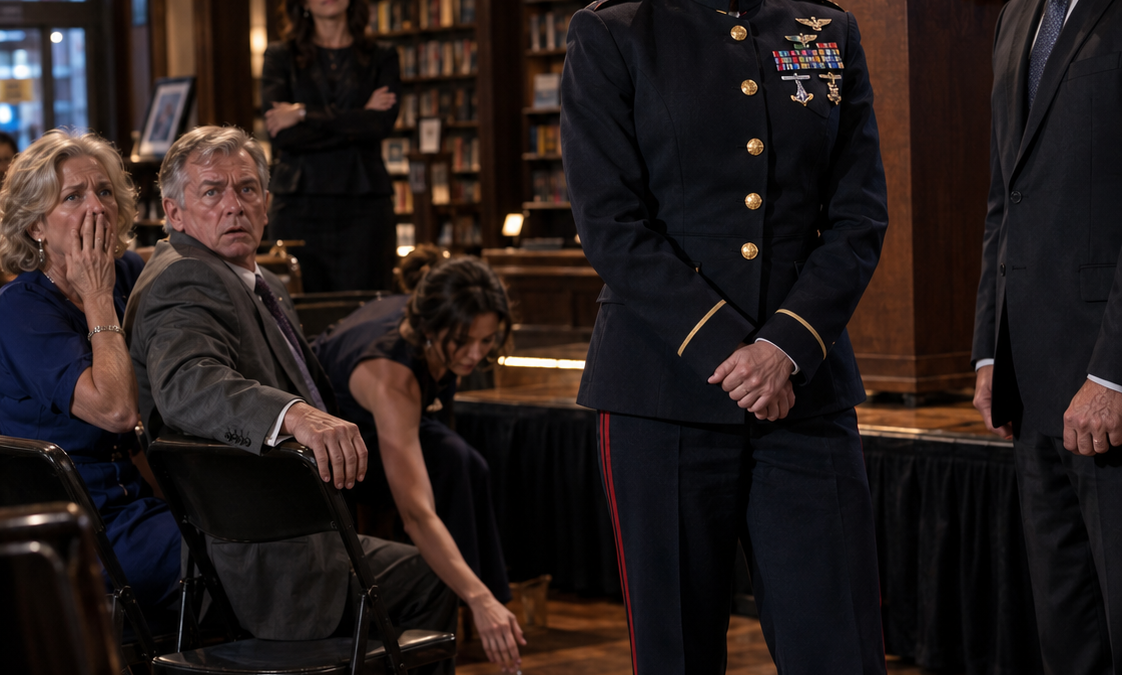
PART 4 — THE FAMILY MEETING
Three weeks after the press conference, my mother called.
I was at work when she did. Standing on a job site in Norfolk, hard hat on, blueprints in my hand. The bridge inspection was going well. The weather was clear. I was thinking about rebar and concrete and load-bearing calculations.
My phone buzzed. I looked at the screen. Mom.
I almost didn’t answer.
But I did.
“Hello.”
“Katherine.” Her voice was tight. “We need to talk.”
“I’m at work.”
“This can’t wait.”
“Then it can wait until I’m done. I’ll be home at six.”
“Your father and I will be there at seven.”
She hung up before I could say no.
I got home at five-thirty. Daniel was already there, making dinner. He took one look at my face and turned off the stove.
“They’re coming,” I said.
“I figured.”
“You don’t have to stay.”
“I’m staying.”
“Daniel—”
“I’m staying.”
He didn’t raise his voice. He didn’t argue. He just said it, plain and simple, the way he says everything.
I nodded.
“Okay.”
We ate dinner in silence. Pasta with red sauce. Garlic bread. I wasn’t hungry but I ate anyway. I needed the fuel.
At seven o’clock, the doorbell rang.
I opened the door.
My mother stood on the porch. She was wearing a navy blouse and pearls. My father was behind her, in a gray suit. They looked like they were going to a funeral.
“Katherine,” my mother said.
“Mom. Dad.”
They didn’t hug me. They didn’t shake my hand. They just walked past me into the living room like they owned the place.
Daniel was in the kitchen. He came out and stood in the doorway.
“Mr. and Mrs. Marsh,” he said.
“Daniel,” my mother said. She didn’t smile.
“Can I get you anything? Water? Coffee?”
“No, thank you.”
“Sit down,” I said. “Both of you.”
They sat on the couch. I sat in the armchair across from them. Daniel stayed in the doorway.
My mother spoke first.
“We’ve been talking to Bradley.”
“I figured.”
“He’s devastated.”
“I’m sure he is.”
“He hasn’t left his apartment in two weeks. He hasn’t written a word. His publisher is talking about canceling his contract.”
“That’s between him and his publisher.”
My mother’s eyes narrowed.
“He’s your brother.”
“I know.”
“He made a mistake. He’s sorry. He’s tried to make it right.”
“By issuing a statement his lawyer wrote.”
“By apologizing. Publicly. In front of cameras.”
“Because my lawyer made him.”
My mother’s face flushed.
“You’ve always been like this,” she said. “So cold. So unfeeling. You never think about anyone but yourself.”
I felt the words land. They stung. But I didn’t react.
“That’s not true,” I said.
“It is true. You went off to the Marines and you never looked back. You missed birthdays. Holidays. Family dinners. You were always somewhere else. Always doing something more important.”
“I was serving my country.”
“You were hiding.”
I blinked.
“Hiding?”
“From us. From the family. From everything. You couldn’t handle being normal. You couldn’t handle being ordinary. So you ran away and you put on a uniform and you convinced yourself you were a hero.”
I didn’t say anything.
“Your brother stayed. Your brother was here. He took care of us. He helped us when we needed help. He wrote a book that made us proud. And you—” she stopped. She was crying.
“You what? You got married without us. You made a scene at his reading. You turned the whole world against him.”
I looked at my father. He was staring at the floor. He hadn’t said a word.
“Dad,” I said. “Do you have anything to say?”
He looked up. His eyes were tired. His face was old.
“Your mother is upset,” he said. “We both are.”
“That’s not an answer.”
“What do you want me to say, Katherine?”
“I want you to tell me the truth. For once. I want you to tell me why you skipped my wedding.”
He didn’t answer.
“I want you to tell me why you chose Bradley over me. Why you’ve always chosen Bradley over me. I want you to tell me why my service, my career, my life—all of it—was never enough for you.”
He looked at my mother. She nodded.
“Your brother needed us,” he said.
“I needed you too.”
“You didn’t act like it.”
“What does that mean?”
He sighed. It was a long, tired sound.
“You were always so capable,” he said. “So independent. You never asked for help. You never needed anything. You just went off and did your thing and expected us to be proud of you.”
“We were proud. But you didn’t make it easy.”
“Easy?”
“Bradley was here. Bradley needed us. He needed our help with his writing. He needed our encouragement. He needed our support. You didn’t need any of that.”
“I needed it. I just didn’t know how to ask.”
My mother wiped her eyes.
“You never told us anything,” she said. “You never talked about what you did over there. You never told us about the danger. You never told us about the people you lost. We had to hear about it from the news. From the newspapers.”
“I couldn’t talk about it.”
“Why not?”
“Because it was classified.”
“That’s an excuse.”
“No. It’s the truth. I couldn’t tell you what I did. I couldn’t tell you where I went. I couldn’t tell you about the missions or the people I lost. It was part of the job.”
“We didn’t know that.”
“I couldn’t tell you.”
She shook her head.
“We didn’t know what to think. You came home different. Quieter. Angrier. You didn’t want to talk to us. You didn’t want to be around us. You just went off to Virginia and started your own life and left us behind.”
“I didn’t leave you behind. I just needed space.”
“Space from what?”
“From everything. From the memories. From the pressure. From the way you always looked at me like I was a problem you couldn’t solve.”
My father looked up.
“We never looked at you like that.”
“Then how did you look at me?”
He was quiet.
“Answer the question, Dad.”
He didn’t.
“Okay,” I said. “Let me tell you something. When I was in Afghanistan, I led a team of twelve men. I was responsible for their lives. Every day. Every mission. I made decisions that determined whether they lived or died. I carried a man on my back for three miles through hostile territory. I killed people. I watched people die. I held a twenty-two-year-old kid in my arms while he bled out.”
My mother covered her mouth.
“And when I came home, I couldn’t tell you any of that. Because it was classified. But also because I didn’t think you wanted to know. I didn’t think you cared.”
“We cared.”
“Then why didn’t you ask?”
Silence.
“I called you every week,” I said. “I tried to tell you things. I tried to share pieces of my life. But you always turned the conversation back to Bradley. Bradley’s writing. Bradley’s career. Bradley’s book. It was always about him.”
“He needed us.”
“He needed you. And I needed you too. But you weren’t there.”
My mother looked at my father. He looked away.
“We didn’t know,” she said.
“Now you do.”
Nobody said anything for a long time.
Daniel came in and sat on the arm of my chair. He didn’t speak. He didn’t need to. He was just there.
My mother wiped her eyes again. My father stared at the floor.
“Your brother wants to see you,” my mother said finally.
“I know.”
“He wants to apologize. In person.”
“I know he does.”
“Will you meet with him?”
I thought about it. I thought about the years of being second. The empty chairs at my wedding. The book that wasn’t his. The letter from Maria Ramirez.
“No,” I said.
My mother looked shocked.
“No?”
“No.”
“But he’s your brother.”
“He’s my brother. And I love him. But I don’t owe him a meeting. I don’t owe him forgiveness. I don’t owe him anything.”
“That’s not how family works.”
“That’s exactly how family works. Family is earned. Family is trust. Family is showing up for each other. And Bradley didn’t show up for me. Neither did you.”
“Katherine—”
“No, Mom. You asked me why I was cold. Why I was distant. Why I never let you in. And the answer is: because you never made me feel safe. You never made me feel like I was enough. You never made me feel like I mattered as much as Bradley.”
“We love you.”
“I know you do. But love isn’t enough. Love without action is just a word.”
She was quiet.
“I’m not going to meet with Bradley,” I said. “Not now. Maybe not ever. That’s my decision. And you need to respect it.”
My father stood up.
“We should go,” he said.
My mother stood up too. She looked at me. Her eyes were wet.
“I’m sorry,” she said.
“For what?”
“For everything.”
“Okay.”
“I mean it.”
“I know you do.”
“Can we—” she paused. “Can we try again?”
I looked at her. At this woman who had raised me. Who had taught me to tie my shoes. Who had sat with me when I had nightmares as a child. Who had chosen my brother over me. Who had skipped my wedding.
“I don’t know,” I said. “Maybe. But not tonight.”
She nodded. She walked to the door. My father followed.
“Katherine,” my father said.
I looked at him.
“I’m proud of you,” he said. “I’ve always been proud of you. I just didn’t know how to say it.”
I didn’t answer.
He walked out. My mother followed.
The door closed.
I sat in the armchair and stared at the wall.
Daniel put his hand on my shoulder.
“You okay?” he asked.
“No.”
“You want to talk about it?”
“No.”
“Okay.”
He sat down next to me. We didn’t speak for a long time.
The next morning, I got a call from Maya.
“Katherine. You need to see this.”
“See what?”
“The news. Open your laptop.”
I opened my laptop. I went to the news site she told me about.
The headline said: Marine Captain Who Inspired Bestselling Novel Speaks Out.
I clicked on the story.
There was a photo of me. In my dress blues. From the Strand.
And there was a quote.
“I didn’t want to make a scene. I just wanted the truth to be known. My brother took my story. He took my letters. He took the worst experience of my life and turned it into a novel. And I never gave him permission. That’s the truth. And now everyone knows it.”
I read the quote three times.
I didn’t remember saying it.
“Where did they get this?” I asked.
“Susan Chen,” Maya said. “She gave them an interview. She told them everything. The letters. The book. The whole story.”
“Why?”
“Because you needed someone to fight for you. And she did.”
I sat back in my chair.
“I didn’t ask her to do that.”
“I know. But she did it anyway.”
I looked at the photo of myself. In my dress blues. Standing in front of a crowd. Telling the truth.
I didn’t look angry. I didn’t look sad. I looked like someone who had finally decided to stop hiding.
“Okay,” I said. “Okay.”
“Katherine?”
“Yeah?”
“What are you going to do now?”
I thought about it. I thought about the letter from Maria Ramirez. About the medal in my closet. About the empty chairs at my wedding. About my mother’s apology. About my father’s words.
“I’m going to keep living my life,” I said. “I’m going to keep running my company. I’m going to keep loving my husband. And I’m going to let the truth do what it does.”
“And Bradley?”
“He’ll figure it out. Or he won’t. Either way, it’s not my problem anymore.”
Maya was quiet for a moment.
“That’s the healthiest thing you’ve ever said.”
“I know.”
“Okay. I’m proud of you.”
“Thanks, Maya.”
“Love you.”
“Love you too.”
I hung up.
Daniel was standing in the doorway.
“Everything okay?” he asked.
“Yeah,” I said. “Everything’s okay.”
For the first time in a long time, I meant it.
But Bradley wasn’t done.
Three days later, I got a letter from his lawyer.
It said that Bradley was contesting the settlement. He was claiming that the letters I wrote home were his intellectual property because they were sent to our parents’ house. He was claiming that he had “transformed” them into a work of fiction and that my claims of ownership were invalid.
He was suing me.
For defamation.
I read the letter twice. Then I called Patricia Okafor.
“He’s suing you,” she said.
“I know. I read the letter.”
“It’s a frivolous claim. He doesn’t have a case.”
“I know.”
“But it will be expensive. And it will be public. And it will be ugly.”
“I know.”
“Do you want to settle?”
“No.”
“Do you want to counter-sue?”
“Yes.”
“For what?”
“Breach of contract. Theft of intellectual property. Fraud. Whatever you think will stick.”
Patricia was quiet.
“You’re sure?”
“I’m sure.”
“Okay. I’ll get started.”
I hung up.
Daniel was watching me.
“He’s suing you,” he said.
“Yeah.”
“For defamation.”
“Yeah.”
“Because you told the truth.”
“Yeah.”
“That’s insane.”
“I know.”
“What are you going to do?”
I looked at him. At this man who had stood by me through everything. Who had never asked me to be smaller. Who had never made me feel like I was less than.
“I’m going to fight,” I said. “And I’m going to win.”
PART 5 — THE DEPOSITION
Patricia Okafor was not a woman who wasted time.
By the end of the week, she had filed our counter-suit. Breach of contract. Unjust enrichment. Intentional infliction of emotional distress. She had also filed a motion to dismiss Bradley’s defamation claim on the grounds that truth is an absolute defense.
“The hearing is in three weeks,” she told me over the phone. “Before that, we’ll do depositions. His lawyers will want to question you. You’ll want to question him.”
“I don’t want to question him.”
“You have to. It’s part of the process.”
“I know.”
“Are you ready?”
I looked out the window of my office. The oak tree was bare now. Winter was coming.
“I’ve been ready for fifteen years,” I said.
The deposition was in Richmond. A conference room in a law firm downtown. Neutral ground. Patricia had insisted on it.
I wore a gray suit. No uniform. No medals. Just me.
Daniel came with me. He sat in the hallway with a book. He didn’t say anything when I walked in. He just nodded.
Bradley was already there.
He looked terrible. His face was pale. His hands were shaking. He had lost weight since the reading. His turtleneck hung loose on his frame.
He didn’t look at me.
His lawyer was a man named Gerald Foster. Sharp suit. Expensive watch. The kind of lawyer who charges by the minute and makes sure you know it.
Patricia sat next to me. She had a legal pad and a pen. She didn’t need notes. She had memorized everything.
The court reporter swore us in.
“Let’s begin,” Foster said.
The first hour was procedural.
Foster asked me about my service. My deployments. My rank. My duties. He asked me about the letters. When I wrote them. How often. What I said.
I answered every question. Calmly. Precisely. The way I had been trained.
“When you wrote these letters,” Foster said, “did you intend for them to be published?”
“No.”
“Did you intend for them to be used in a work of fiction?”
“No.”
“Did you give your brother permission to use them?”
“No.”
“Did you know he had them?”
“No.”
“Did you ever tell him he could use them?”
“No.”
“Did you ever discuss the contents of the letters with him?”
“Not specifically. I told him I had served. I told him I had been deployed. I didn’t tell him the details.”
“Why not?”
“Because they were classified. And because they were painful. And because I didn’t think he cared.”
Foster paused. He looked at his notes.
“Mrs. Marsh—”
“Captain Marsh.”
He blinked.
“Excuse me?”
“My rank is Captain. I earned it. I’d appreciate if you used it.”
He glanced at his notes. “Captain Marsh. You’re claiming that your brother stole your story. But isn’t it true that you never told him the story in the first place? Isn’t it true that he had to discover it on his own?”
“He discovered it in my letters.”
“The letters were sent to your parents’ home. They were in the family home. They were part of the family’s possessions.”
“They were mine.”
“They were addressed to your parents.”
“They were written by me. They contained my experiences. My memories. My pain. They were mine.”
“But you sent them to your parents. You gave them away.”
“I didn’t give them away. I shared them. There’s a difference.”
“Is there?”
“Yes.”
Foster smiled. It was a thin smile. “Captain Marsh, isn’t it true that you’re jealous of your brother’s success? Isn’t it true that you’ve always been jealous?”
Patricia stood up.
“Objection. Argumentative. Badgering.”
“Sustained,” the judge said. “Counselor, stick to the facts.”
Foster nodded. He didn’t look bothered.
“Captain Marsh,” he said. “Isn’t it true that you never wanted your brother to succeed? Isn’t it true that you resented his career? His book? His fame?”
“No.”
“Isn’t it true that you skipped family events for years? That you were distant? That you were cold?”
“I was serving my country.”
“That’s not what I asked.”
“I was deployed. I was stationed overseas. I couldn’t come home.”
“But when you were home, you were distant. You were cold. You didn’t engage.”
“I was dealing with things you can’t imagine.”
“Things like what?”
Patricia stood up again. “Objection. Relevance.”
“Sustained.”
Foster nodded.
“Let me rephrase,” he said. “Captain Marsh, is it your testimony that your brother knowingly and intentionally stole your intellectual property for personal gain?”
“Yes.”
“Did he ever admit that to you?”
“He admitted he read my letters. He admitted he used them as inspiration. He admitted he never asked for permission.”
“But did he admit he stole them?”
“He didn’t have to. It’s in the book.”
“The book is fiction.”
“The book is my life with the serial numbers filed off. He changed the names. He changed the gender. He didn’t change the mission. He didn’t change the terrain. He didn’t change the details. He didn’t change the dying Marine.”
Foster was quiet for a moment.
“Captain Marsh,” he said. “Do you hate your brother?”
“No.”
“Do you want to hurt him?”
“No.”
“Do you want to destroy his career?”
“No.”
“Then what do you want?”
I looked at Bradley. He was staring at the table. His hands were clenched in his lap.
“I want him to tell the truth,” I said. “I want him to admit what he did. I want him to stop pretending he’s a hero. I want him to stop pretending he earned something he didn’t.”
“And if he does that?”
“Then maybe we can talk about forgiveness.”
Foster nodded. He looked at his notes.
“No further questions,” he said.
Bradley’s deposition was the next day.
I didn’t want to be there. Patricia told me I had to be. “You need to hear what he says,” she told me. “You need to see his face. It’s part of the process.”
I sat in the conference room. Daniel was in the hallway again. Patricia next to me.
Bradley walked in with his lawyer. He looked worse than the day before. His eyes were red. His hands were shaking.
He sat down. He was sworn in.
Patricia began.
“Mr. Marsh,” she said. “You’re the author of The Long Walk Home, correct?”
“Yes.”
“A novel about a Marine Corps corporal named Ethan Cole.”
“Yes.”
“A character who serves in Afghanistan.”
“Yes.”
“A character who leads a rescue mission in a village. A character who carries a wounded translator out of hostile territory. A character who kills three enemy combatants in close quarters. A character who holds a dying Marine in his arms.”
“Yes.”
“Did you serve in Afghanistan, Mr. Marsh?”
“No.”
“Did you serve in the military at all?”
“No.”
“Have you ever been in combat?”
“No.”
“Have you ever held a dying man in your arms?”
“No.”
“Then how did you write those scenes?”
Bradley didn’t answer.
“Mr. Marsh?”
“I used research.”
“Research.”
“Yes.”
“What kind of research?”
“I read books. I watched documentaries. I talked to veterans.”
“Which veterans?”
“I don’t remember.”
“You don’t remember?”
“It was a long time ago.”
“Mr. Marsh, you’re claiming that you don’t remember which veterans you talked to? Veterans who gave you detailed accounts of combat experiences? Veterans who told you about the terrain, the weather, the radio call signs, the exact sequence of events?”
“I talked to a lot of people.”
“Did you talk to your sister?”
He was quiet.
“Did you talk to your sister, Mr. Marsh?”
“No.”
“Did you read her letters?”
“Yes.”
“Did you use them?”
“I used them as inspiration.”
“Did you copy them?”
“No.”
“Did you copy the details? The terrain? The weather? The mission? The dying Marine?”
“I changed things.”
“But you kept the details.”
“I kept some details.”
“Did you keep the detail about the translator? The wounded translator that the hero carries out of the village?”
“Yes.”
“Did you keep the detail about the three enemy combatants killed in close quarters?”
“Yes.”
“Did you keep the detail about the dying Marine? The one the hero holds in his arms while he bleeds out?”
Bradley’s voice cracked.
“Yes.”
“Did your sister tell you about those details in person? Or did you read them in her letters?”
“I read them in her letters.”
“Did you ask her permission to use them?”
“No.”
“Did you tell her you were using them?”
“No.”
“Did you give her credit?”
“No.”
“Did you pay her?”
“No.”
“Did you do anything to acknowledge that the story was hers?”
“I dedicated the book to her.”
“You dedicated the book to her.”
“Yes.”
“The dedication says, ‘To my sister, who served.’ That’s it. That’s the entire dedication.”
“Yes.”
“That’s not credit. That’s not acknowledgment. That’s a nod. A wink. A way to make yourself feel better without actually giving her anything.”
Bradley didn’t answer.
“Mr. Marsh,” Patricia said. “Did you know that your sister was awarded the Silver Star?”
He looked up.
“What?”
“Did you know that your sister was awarded the Silver Star for her actions in Afghanistan?”
“No.”
“Did you know that she was recommended for the Medal of Honor?”
“No.”
“Did you know that she carried a wounded Marine on her back for three miles through hostile territory?”
“No.”
“Did you know that she held that Marine’s hand while he died?”
“No.”
“Did you know that she wrote a letter to his mother? A letter that his mother kept until the day she died?”
Bradley was crying.
“No.”
“Did you know any of that, Mr. Marsh?”
“No.”
“Then what did you know?”
He wiped his eyes. He looked at me. For the first time, he looked at me.
“I knew she was a Marine,” he said. “I knew she served. I knew she was brave. But I didn’t know—” he stopped. “I didn’t know what it cost her.”
Patricia was quiet for a moment.
“Mr. Marsh,” she said. “Why did you write the book?”
He didn’t answer.
“Why did you write the book?”
“Because I wanted to be a writer.”
“Why this book?”
“Because it was a good story.”
“Whose story?”
He was quiet.
“Whose story, Mr. Marsh?”
“It was her story.”
“Did you know that when you wrote it?”
“Yes.”
“Did you know that when you published it?”
“Yes.”
“Did you know that when you accepted the praise? The awards? The money?”
“Yes.”
“And you did it anyway.”
“Yes.”
Patricia closed her folder.
“No further questions,” she said.
The lawsuit was settled three weeks later.
Bradley dropped his defamation claim. He agreed to a public statement acknowledging that the book was based on my experiences without my consent. He agreed to a financial settlement that I donated to a veterans’ charity. He agreed to add a full acknowledgment page to the next printing.
He also agreed to stop writing about the military. Permanently.
I didn’t ask for that. Patricia did. She said it was necessary. She said it was the only way to prevent him from doing it again.
I didn’t argue.
The day the settlement was finalized, I got a call from my mother.
“Katherine.”
“Mom.”
“It’s done?”
“It’s done.”
“Bradley called me. He was crying.”
“I’m sure he was.”
“He said you ruined his life.”
“I didn’t ruin his life. He ruined his own life. I just told the truth.”
“He said you hate him.”
“I don’t hate him.”
“Then why did you do this?”
I closed my eyes.
“Because he needed to learn that actions have consequences. Because he needed to learn that you can’t take something that isn’t yours. Because he needed to learn that being sorry isn’t enough.”
“He’s your brother.”
“I know.”
“You’re supposed to forgive him.”
“I’m supposed to forgive him when he’s earned it. Not before.”
She was quiet.
“Are you going to talk to him?”
“Maybe. Someday.”
“He’s your brother.”
“I know, Mom. You keep saying that. But being my brother doesn’t give him the right to steal from me. It doesn’t give him the right to lie to me. It doesn’t give him the right to use my pain for his profit.”
“Katherine—”
“No, Mom. Listen to me. For once in your life, listen to me. I spent twelve years in the Marine Corps. I did things you can’t imagine. I saw things you can’t imagine. I lost people. I lost pieces of myself. And when I came home, you weren’t there. You were too busy with Bradley. Too busy with his writing. Too busy with his book. You chose him over me. Every time. And I’m done pretending that didn’t hurt.”
She was crying now. I could hear it.
“I’m sorry,” she said.
“I know you are.”
“Can we—can we try again?”
I thought about it. I thought about the years of being second. The empty chairs at my wedding. The phone call that ruined everything. The letters I had written that no one had ever read.
“I don’t know,” I said. “Maybe. But not today.”
“Okay.”
“Goodbye, Mom.”
“Goodbye, Katherine.”
I hung up.
Daniel was sitting on the porch when I got home.
He had a glass of wine waiting for me. He had the blue jay in the oak tree. He had the setting sun.
“How’d it go?” he asked.
“It’s done.”
“Good.”
“Yeah.”
I sat down next to him. I took the wine. I looked at the sky.
“You okay?” he asked.
“I don’t know.”
“You want to talk about it?”
“No.”
“Okay.”
We sat there for a long time. The sun went down. The blue jay flew away. The stars came out.
And for the first time in months, I felt like I could finally breathe.
PART 6 — THE INVITATION
Winter came.
The oak tree in my backyard lost its last leaves. The blue jay stopped visiting. The days got shorter and colder and quieter.
I went back to work. I finished the bridge inspection in Norfolk. I started a new project at a Coast Guard station in Cape May. I hired two new foremen. I bid on a contract at Camp Lejeune.
I kept my hands busy. I kept my mind off the phone calls I wasn’t returning. The emails I wasn’t answering. The letters from my mother that arrived every week, handwritten, unopened, stacked on the corner of my desk.
Daniel didn’t push. He never pushed.
Maya went back to Germany. She called every Sunday. We talked about nothing. Weather. Work. The Broncos. The kind of conversations you have when you’ve already said everything that matters.
The settlement money went to the Semper Fi Fund. I got a letter from them. A thank-you note. I put it in a drawer.
The publisher issued a statement. They added an acknowledgment page to the next printing. They made a donation in my name. They said all the right things.
I didn’t read any of it.
In January, I got an invitation.
It came in a thick envelope. Cream-colored. Embossed. The kind of envelope that means something.
I opened it at the kitchen table. Daniel was making coffee.
It was from the Marine Corps Scholarship Foundation. They were holding their annual gala in Washington, D.C. They wanted to honor a few veterans. They wanted me to be one of them.
I read it twice.
“You should go,” Daniel said.
“I don’t know.”
“You should go.”
“I don’t like galas.”
“I know.”
“I don’t like being honored.”
“I know.”
“Then why should I go?”
He poured the coffee. He set the cup in front of me. He sat down.
“Because you spent fifteen years hiding,” he said. “And now you don’t have to.”
I looked at him.
“That’s not fair.”
“It’s not supposed to be fair. It’s supposed to be true.”
I picked up the invitation. I looked at the date. The location. The names of the other honorees.
“Colonel Webb will be there,” I said.
“I know.”
“Maya’s flying in.”
“I know.”
“Susan Chen is coming.”
“I know.”
“You already RSVP’d.”
“I did.”
I looked at him. He was smiling. That calm, steady smile that made me feel like everything was going to be okay.
“You’re impossible,” I said.
“I know.”
The gala was in February.
I wore my dress blues. The ones I hadn’t worn since the Strand. The ones that still fit. The ones that still felt like armor.
Daniel wore a tuxedo. He looked ridiculous. He looked perfect.
Maya met us at the hotel. She was in her mess dress. She looked sharp. She looked like a Marine.
“You clean up nice,” she said.
“So do you.”
“Are you nervous?”
“No.”
“Liar.”
“Okay. Maybe a little.”
She laughed. She hugged me.
“You’re going to be fine,” she said. “You’ve done harder things.”
“Like what?”
“Like live through Fallujah. Like raise a family that didn’t deserve you. Like tell the truth when everyone wanted you to lie.”
I looked at her.
“When did you get so wise?”
“Germany. Lots of time to think.”
I laughed.
“Let’s go,” I said.
The gala was at the Willard InterContinental. A grand hotel. Marble floors. Crystal chandeliers. Men in dress uniforms. Women in evening gowns. A string quartet playing something classical.
I walked in and felt the eyes on me. People knew who I was. They had seen the video. They had read the articles. They knew about the book. The lawsuit. The truth.
I held my head up. I walked the way I had been taught to walk. Calm. Steady. In control.
Colonel Webb met us at the entrance.
“Captain Marsh,” he said.
“Colonel.”
“You look well.”
“I look tired.”
“That too.”
He smiled. He shook Daniel’s hand. He nodded at Maya.
“There’s a table near the front,” he said. “I’ll be there. Along with a few others who served with you.”
“Others?”
“Some of your old team. They flew in.”
I stopped.
“What?”
“Ramirez’s squad. What’s left of them. They wanted to be here.”
I didn’t say anything.
“Are you okay?” Webb asked.
“Yeah,” I said. “I’m okay.”
The dinner was long. Speeches. Videos. Awards.
I sat at the table with Daniel and Maya and Webb and four men I hadn’t seen in fifteen years.
They were older now. Grayer. Softer around the edges. But I recognized them.
Sergeant First Class Marcus Bell. He had been my radio operator. He had a wife and three kids now. He ran a hardware store in Ohio.
Corporal David Chen. He had been my point man. He had a limp, like me. He worked for the VA in California.
Lance Corporal Anthony Rivera. He had been my driver. He had a tattoo of Ramirez’s name on his forearm. He owned a gym in Texas.
And Staff Sergeant James Okafor. No relation to Patricia. He had been my second in command. He had saved my life twice. He was a police officer in Chicago.
They didn’t say much. They didn’t have to.
Bell shook my hand and said, “It’s good to see you, Captain.”
Chen said, “You look good.”
Rivera said, “We saw the video. We’re proud of you.”
Okafor said, “You should have told us. We would have been there sooner.”
I didn’t cry. I wanted to. But I didn’t.
The award was presented after dessert.
They called my name. I walked to the stage. The room applauded.
Colonel Webb introduced me. He talked about my service. My deployments. My Silver Star. My leadership. My sacrifice.
Then he said something I didn’t expect.
“Captain Marsh once told me that the greatest honor of her career was not the medal. It was the men she served with. The men she led. The men she brought home.”
He looked at me.
“Some of those men are here tonight. They wanted to be here. They wanted to say something.”
He stepped back.
Okafor stood up.
He walked to the stage. He looked out at the crowd.
“My name is James Okafor,” he said. “I served with Captain Marsh in Afghanistan. I was her second in command. She saved my life twice.”
The room was silent.
“The first time was in a firefight in the Helmand Valley. I was hit. I couldn’t move. She came back for me. Under fire. She carried me out.”
He paused.
“The second time was after. When I came home. When I couldn’t sleep. When I couldn’t eat. When I couldn’t look at my wife without seeing the faces of the men I killed. She called me every week. For a year. She didn’t let me give up.”
He looked at me.
“You didn’t let me give up, Captain.”
I didn’t say anything.
“None of us would be here without you. None of us. And we wanted you to know that. We wanted everyone to know that.”
The room applauded.
I stood there. On the stage. In my dress blues. With my medals. And I felt something I hadn’t felt in years.
I felt seen.
After the gala, we went to a bar.
A dive bar. Near the hotel. The kind of place that doesn’t care about dress uniforms. We sat in a booth in the back and ordered beers and told stories.
Bell told the one about the time I fell in a ditch during a night patrol and pretended it was a tactical maneuver.
Chen told the one about the time I argued with a colonel about the location of a checkpoint and won.
Rivera told the one about the time I made them all do push-ups because someone left a candy wrapper on the ground.
Okafor told the one about the time I held a dying Marine in my arms and told him it was going to be okay.
“I was there,” he said. “I saw it. You didn’t cry. You didn’t flinch. You just held him. You just told him he was going to be okay. And when he died, you closed his eyes and you stood up and you kept going.”
He looked at me.
“I’ve never seen anything like it.”
I didn’t say anything.
“Ramirez’s mother wrote to me after he died,” Okafor said. “She wanted to know if he suffered. I told her no. I lied. You were the one who was there. You were the one who held him. You knew the truth.”
“I wrote her a letter,” I said.
“I know. She told me. She said it was the most beautiful thing anyone ever wrote to her.”
I looked at my beer.
“I never sent it,” I said.
“What?”
“I wrote it. I never sent it. I was too scared. I didn’t know what to say. I didn’t know if she would want to hear from me. I didn’t know if she would blame me.”
Okafor was quiet.
“She didn’t blame you,” he said. “She loved you. She told me. She said you were the reason her son had a family when he was far from home. She said you were the reason he was brave.”
I didn’t say anything.
“She wrote you a letter,” Okafor said. “Before she died. She asked me to make sure you got it.”
“I got it.”
“Did you read it?”
“Yeah.”
“What did it say?”
I looked at him.
“It said thank you.”
He nodded.
“That’s what I thought.”
We stayed at the bar until two in the morning.
We told stories. We laughed. We cried. We remembered.
And when we finally left, when we finally walked out into the cold D.C. night, when we finally said goodbye, Okafor pulled me aside.
“Captain,” he said.
“James.”
“You need to know something.”
“What?”
“Bradley called me.”
I stopped.
“What?”
“A few weeks ago. He found my number. He wanted to talk to me. He wanted to apologize.”
“For what?”
“For the book. For stealing your story. For using Ramirez’s death. He said he didn’t know. He said he didn’t understand.”
“And?”
“I told him the truth.”
“What truth?”
“I told him that the man he wrote about was real. I told him that the man he wrote about died in your arms. I told him that the man he wrote about had a mother who loved him and a squad who missed him and a life that mattered.”
He paused.
“And I told him that he had no right to that story. No right at all.”
I looked at him.
“What did he say?”
“He cried. He said he was sorry. He said he wanted to make it right.”
“And what did you tell him?”
“I told him that sorry wasn’t enough. I told him that if he wanted to make it right, he had to do it in person. He had to look you in the eye and tell you the truth.”
“Did he say he would?”
“He said he would try.”
I looked at the sky. The stars. The city lights.
“Okay,” I said.
“Okay?”
“Yeah. Okay.”
“You’re not going to call him?”
“No.”
“Why not?”
I looked at Okafor. At this man who had stood by me through everything. Who had flown across the country to be here. Who had told me the truth when I needed to hear it.
“Because I’m done chasing people who should be chasing me,” I said. “If he wants to make it right, he knows where to find me.”
Okafor nodded.
“That’s fair,” he said.
“I know.”
He hugged me. Tight. The way we used to hug after a mission.
“I’m proud of you, Captain,” he said.
“I’m proud of you too, James.”
The next morning, I got a text.
It was from a number I didn’t recognize.
Katherine. This is Bradley. I know you don’t want to talk to me. I know I don’t deserve it. But I need to see you. I need to tell you something. In person. Please.
I looked at the text for a long time.
Then I typed back.
Okay.
Where?
When?
The Pines. Saturday. Noon.
The Pines. The venue where I got married. The place where everything started.
I’ll be there.
I put the phone down.
Daniel was watching me.
“Bradley?” he asked.
“Yeah.”
“You’re going to see him?”
“Yeah.”
“You sure?”
“No.”
“Then why?”
I looked at him. At this man who had never asked me to be anyone other than who I was.
“Because I need to know,” I said. “I need to know if he’s sorry. Really sorry. Or if he’s just scared of losing everything.”
“And if he’s not sorry?”
“Then I’ll know that too.”
Daniel nodded.
“You want me to come?”
“No.”
“You want me to wait in the car?”
“No.”
“Okay.”
I looked out the window. The city was waking up. Cars. People. Noise.
“I’ll be back by dinner,” I said.
“I know.”
“I love you.”
“I love you too.”
 [Tap here for the Next Part ]


