No Pilot Dared to Fly the Paralyzed CEO — Then a Single Dad Took the Controls (Part 3)
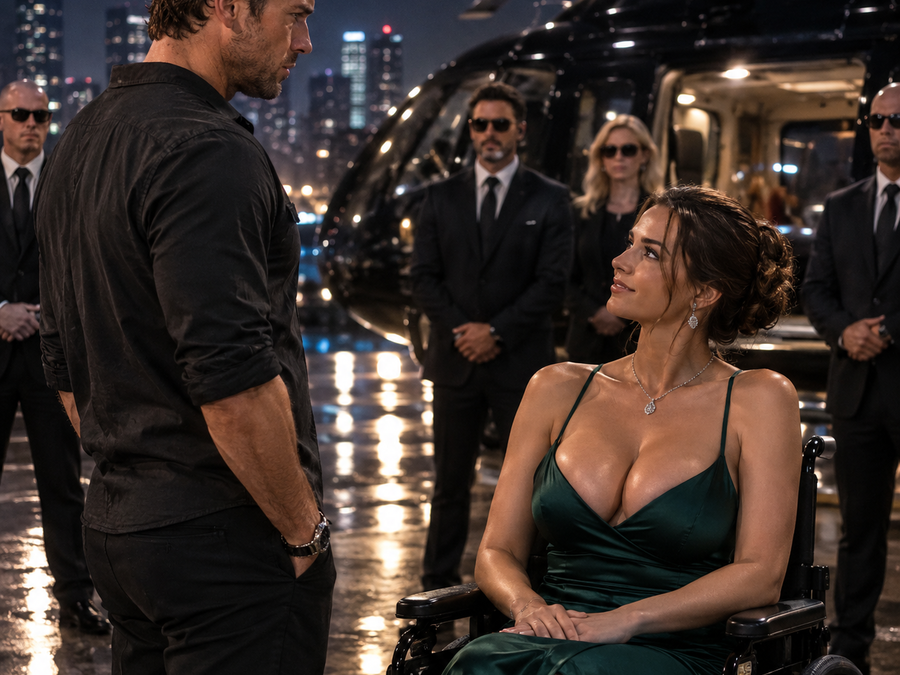
No Pilot Dared to Fly the Paralyzed CEO — Then a Single Dad Took the Controls (Part 3)
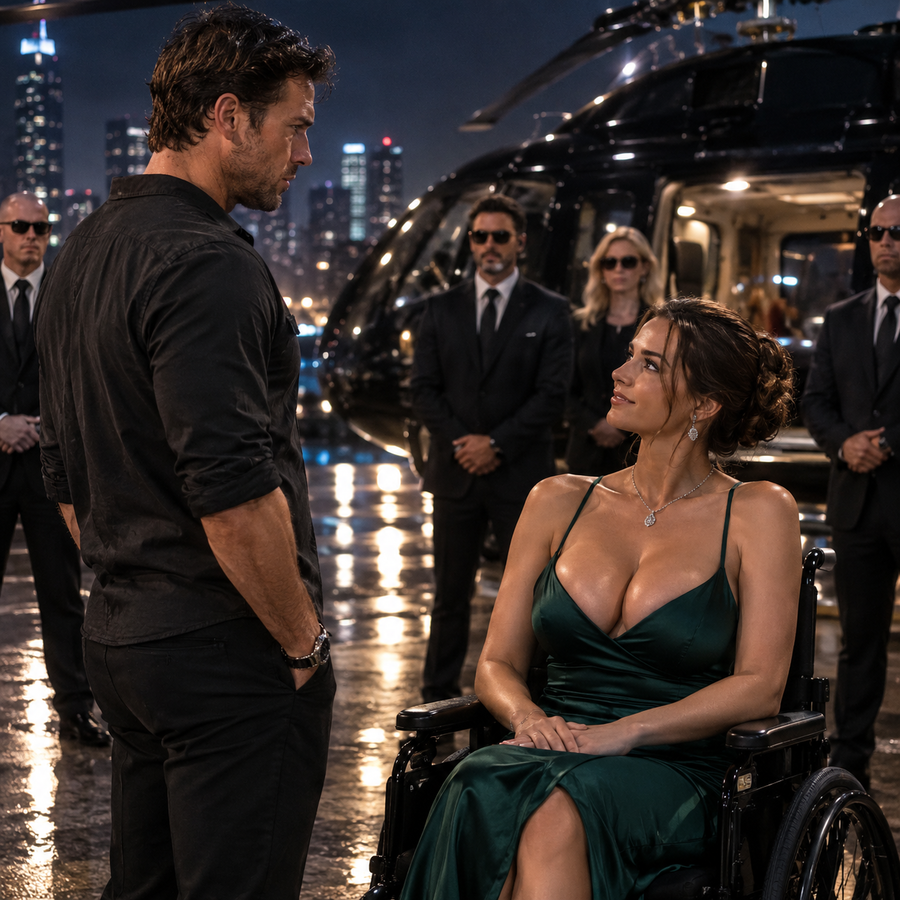
PART 3
He stood up. “You want to know why I’m not taking your job? It’s not principle. It’s not honor. It’s not any of the things you’re braced for. It’s that I’ve got a six-year-old who’s going to ask me at dinner tonight how work was. And I am not going to lie to her in my own kitchen for $210,000.”
“Mr. Carter, there is no version of this where you win.”
“Probably not.”
“Then what’s the point?”
And Ethan Carter said, “The point is that she thinks nine men left because of her. And I know they didn’t. And I’m the only person on this planet who knows that. And if I take your money, she never finds out. And she goes into that room Thursday believing something about herself that isn’t true.”
He paused. “That’s the point, Mr. Mercer. There isn’t another one.”
He hung up.
Sophie said, “Daddy, who was that?”
“Nobody, Bug. Was at work.”
Ethan looked at his daughter. “It was a man who wanted me to quit,” he said.
Sophie’s eyebrows came down. “Are you going to?”
“No.”
“Good,” Sophie said, and went to get her rabbit a seat at the table.
And that was the entire conversation, and it was the easiest decision Ethan Carter had ever made in his life.
He called Ellen Park at 8:41.
“He called you,” Ellen said. Not a question.
“How did you—”
“Because he called number seven in October, and number four last spring, and I have known that for 11 months and I have not been able to prove one single word of it.” Her voice was tight in a way Ethan hadn’t heard from her. “Mr. Carter, what did he offer you?”
“210 in Denver, and the complaint disappears.”
“Did you record it?”
“No.”
Ellen Park said a word Ethan hadn’t expected from a general counsel.
“Ms. Park—”
“He told me a number.”
“What number?”
“Six,” Ethan said. “He said six of the nine took the deal.”
There was a silence on the line so complete that Ethan checked the screen to see if the call had dropped.
“Say that again,” Ellen said.
“Six of the nine pilots who left Victoria Sterling were paid to leave by Meridian Strategic Advisors, which is owned two layers down by Harold Vance’s son-in-law. He said it out loud to me. At 8:20 this morning.”
“He said it to you,” Ellen said. “Because you’re a contractor with no counsel, no recording, and no reason for anyone to believe you over a board member, and he knows exactly how that plays in a hearing room.”
“Yes, ma’am.”
“Mr. Carter, I need you to understand what you’re holding. You are holding a sentence spoken by one man to one man in a kitchen. That’s not evidence. That’s a story.”
“I know.”
“Then why do you sound like that?”
And Ethan Carter, standing in his kitchen at 8:43 on a Monday morning, said, “Because he called six of them, Ms. Park. Six men. And every one of those men is out there right now flying a nicer airplane, closer to his kids, and telling himself he took a better job.”
He looked out the window. “And not one of them knows that a woman in Chicago has spent two years thinking they left because she’s in a wheelchair.”
Silence.
“Ms. Park,” Ethan said. “How many of those six do you think would sleep fine if somebody told them that?”
Ellen Park did not say anything for a long moment. Then she said, very quietly, “Oh.”
“Do you have their names?”
“I have all nine names. I have their contracts, their exit dates, and their forwarding addresses. And I have never had one single reason to call any of them.”
“You have one now, Mr. Carter.”
“It’s Monday. The vote is Thursday.”
“Then we should probably start with the ones in the central time zone,” Ethan said.
At 11:12 on Monday morning, Ethan Carter called a man named Wade Hollis in Tulsa, Oklahoma. Number seven. 58 years old. 26,000 hours. Currently flying a Falcon for an energy company.
“Yeah.”
“Mr. Hollis, my name’s Ethan Carter. I’m the pilot who took the Sterling job after you.”
The pause on the other end was 11 seconds long. Ethan counted.
“I got nothing to say about that.”
“I know. So, why are you calling?”
“Because a man named Grant Mercer told me this morning that six of the nine pilots who left Victoria Sterling were paid to leave.” Ethan said, “And I’m calling to find out if you were one of them. And I’m going to tell you right now, before you answer, that I’m not calling to make you feel bad. I don’t care about the money. You took a better job. Anybody would.”
Silence.
“Mr. Hollis. How’s she doing?”
Wade Hollis said, and Ethan closed his eyes, because there it was.
“Not good,” he said. “There’s a board vote Thursday. There’s a memo with a table on page 14. 10 names on it. Nine pilots who quit, and one who’s got a safety complaint filed on him 14 minutes after he landed.” A beat. “The argument is that she’s the reason. That in 14 months, 10 pilots is a pattern, and the pattern is her.”
Wade Hollis didn’t say anything for a very long time.
“I flew her 11 times,” he finally said. “11 trips. You know what she did the second one? Denver weather went to hell, and I told her we were going to sit for an hour, and she said fine. And she didn’t say another word about it. Didn’t push. Didn’t ask me to try. First executive I ever flew who didn’t ask me to try.”
“I know they called me in October.” Hollis’s voice had gone rough.
“Guy in a nice coat. Said there was a Falcon seat in Tulsa, home every night. My mother’s in Tulsa. She’s 84. She’s got dementia. 84 years old, and I’m flying out of Chicago.”
He stopped. “You know what he said to me?”
“He said something like that to me, too.”
“He said, ‘Nobody would ever question a man going home for his mother.'” Ethan sat down on the edge of his kitchen table. “He said something like that to me, too.”
“He’s good at it.”
“He’s very good at it, Mr. Carter.” Wade Hollis’s voice had changed. “You telling me she thinks I left because of the chair?”
“I’m telling you,” Ethan said carefully, “that she’s watched nine men walk out in 14 months, and nobody ever gave her a reason she believed.”
The line was quiet. Then Wade Hollis, 58 years old, 26,000 hours, said, “Give me the lawyer’s number.”
At 2:40 in the afternoon, Ellen Park called Ethan back, and her voice was doing something strange.
“Four,” she said.
“Four. What?”
“Four of them are in. Hollis called two others himself. Hollis is calling people, Mr. Carter. I did not tell him to do that. He just started doing it.”
She sounded winded. “Number four is a man named Rossi in Milwaukee, and he’s already emailed me a copy of his settlement agreement, and he did not ask me a single question about liability. He just sent it. That’s four out of six.”
“Four out of six in six hours.”
A pause. “And Mr. Carter—number three isn’t one of the six. Number three never got a call. He just quit.”
“Then why is he talking to you?”
“He isn’t. Ellen said. He called me 20 minutes ago. He said he heard from Hollis, and he wants to give a statement about something he saw.”
“About what?”
Ellen Park took a breath. “He says that 14 months ago, three weeks before he quit, Harold Vance asked him to lunch.” She said, “And he says that at that lunch, Harold Vance asked him a question.”
“What question?”
“He asked him—” Ellen said. “How difficult was it to fly with her?” Ethan didn’t say anything. “And number three said it wasn’t difficult at all.” Ellen said. “And Harold Vance said—and this man swears he’ll say this under oath—Harold Vance said, ‘That’s disappointing.'”
At 6:15 that evening, Ethan Carter drove to a glass tower downtown and took an elevator to 14, and Victoria Sterling was at her desk with the lights half off, and she looked up, and she’d been working for 11 hours.
“You’re not on the schedule,” she said.
“No, ma’am.”
“Then why are you here?”
Ethan crossed the room and sat down in the chair across from her desk, which he had never once done.
“Nine pilots,” he said.
Victoria’s face did something. It was the first time in nine weeks he’d seen it happen before she could stop it.
“Don’t,” she said.
“Ma’am—”
“Mr. Carter, I have been in this office since 7:00 this morning, writing a response to a memo that says I can’t get out of an airplane. I have exactly enough left in me to get home, so whatever this is—”
“Six of them were paid,” Ethan said.
Victoria Sterling stopped. The room was completely silent.
“What?”
“Six of the nine pilots who left you.” Ethan’s voice did not shake. “They didn’t quit because of you. They didn’t quit because of your schedule. They didn’t quit because of the chair. They were offered better jobs by a firm called Meridian Strategic Advisors. And every one of them took it. And every one of them believed it was legitimate—because it was legitimate. And that’s why it worked.”
Victoria did not move.
“Meridian is owned two layers down by Harold Vance’s son-in-law,” Ethan said. “Grant Mercer called me this morning at 8:20 and offered me $210,000 a year in Denver and told me the complaint against my license would evaporate by Friday if I resigned today and cited family. I said no.”
Victoria Sterling put one hand flat on her desk. It was the first uncontrolled movement Ethan had ever seen her make.
“Wade Hollis is giving a statement,” Ethan said. “So is Rossi in Milwaukee. So are two others. Ellen has four signed affidavits as of 2:40 this afternoon. And Hollis is still calling people. Ma’am, he’s calling them himself. Nobody asked him to.”
“Why?” Victoria said. Her voice had gone somewhere Ethan had never heard it go.
“Why would they?”
“Because I told them what you thought,” Ethan said.
Victoria Sterling looked at him.
“I told them you’d watched nine men walk out in 14 months,” Ethan said quietly, “and nobody ever gave you a reason you believed. And Wade Hollis was on the phone with Ellen Park in about 90 seconds.”
And Victoria Sterling—who had run a $2 billion company from a wheelchair for two years, who had sat through a memo about egress capability without her voice rising one single time, who had told her pilot to turn around over the Pacific Ocean and lose $140 million and had not blinked—put her hand over her mouth.
And Ethan Carter looked away. He looked at the window, at the wall, at anything, because there are things a man does not watch. And because he had learned 14 months ago, in a hospital room in Chicago, that the kindest thing you can do for a person in that particular second is to be in the room and not be looking.
It lasted about eight seconds. Then Victoria Sterling took her hand down, and her face was wet, and she did not apologize for it, and she said, in a voice that was absolutely level:
“Two years.”
“Yes, ma’am.”
“Two years I have gotten on that airplane thinking—” She stopped. Started again. “Do you know what I told myself? I told myself it was the schedule. I made myself believe it was the schedule, because the other thing was—” She didn’t finish it.
“I know,” Ethan said.
“You don’t.”
“No,” Ethan agreed. “I don’t.”
Victoria Sterling laughed. It came out broken in the middle, and she didn’t care. Then she picked up her phone. “Marcus, get Ellen. Get her here.” A pause. “I don’t care what time it is. Marcus, get her here.”
She hung up. She looked at Ethan.
“Thursday,” she said.
“Thursday, Mr. Carter. When they call that vote, Harold Vance is going to stand up in front of six people and put a table on the screen with 10 names on it.”
“Yes, ma’am.”
Victoria Sterling wiped her face with the back of her hand, once, and put both hands on the arms of her chair.
“Then let’s give him the 10th name,” she said.
Ellen Park arrived at 7:40 that night with a rolling bag, a laptop, and the expression of a woman who had canceled something she’d been looking forward to for a year and did not intend to mention it.
“Four affidavits,” she said, before she was all the way through the door. “Hollis, Rossi, number six out of Atlanta, and number two, who is currently flying for a hedge fund in Greenwich and who cried on the phone with me for nine minutes. Victoria, I want you to hear that.”
Victoria didn’t say anything.
“Number two is Brian Alcott,” Ellen said. “44 years old. He was your first pilot. He flew you out of the hospital in Denver.”
“I remember who he is.”
“He asked me whether you thought he’d left because he was uncomfortable.” Ellen set her bag down. “I said yes. He said—and I’m quoting—’Tell her I have thought about that woman every week for two years, and I could not figure out why I felt so bad about a job I got promoted out of.'”
The room was quiet.
“Four out of six,” Ethan said. “Who’s missing?”
“Number five and number nine.” Ellen sat down and opened the laptop. “Number five won’t return a call. Number nine—” She stopped.
“Number nine’s the one who made the comment,” Victoria said. “About tempting fate.”
“Yes.”
“Then leave him.” Victoria, Ellen— “I don’t want him. I don’t want his name on anything I put in front of that board. He said what he said, and he meant it. And he’s the only one of the nine who was actually what I thought all nine of them were.” Her voice was flat. “Leave him out.”
Ellen Park looked at her over the laptop. “That’s a mistake,” she said.
“Why?”
“Because Vance is going to say we cherry-picked, and he’s going to be right, unless the list is everybody.”
Victoria was quiet for four seconds. “Then get him,” she said.
At 9:20 that night, Ellen Park got him. She put him on speaker, and Ethan stood by the window with his arms folded and listened to a man named Doug Prescott—49, currently flying charters out of Scottsdale—spend the first three minutes being defensive and the next 90 seconds being something else.
“I said what I said,” Prescott said, “about the fate thing. I’m not walking that back. It was a stupid thing to say, and I said it, and she fired me, and she was right to.”
“Mr. Prescott, that’s not why I’m calling.”
“Then why—”
“Did anyone from a firm called Meridian Strategic Advisors ever contact you?”
Silence.
“Mr. Prescott.”
“Yeah,” Doug Prescott said. “Yeah, they called me.”
Ellen Park’s hands stopped moving on the keyboard. “When?” she said.
“Two weeks before.”
“Before what?”
“Before I said it,” Prescott said.
Nobody in the room moved.
“Mr. Prescott,” Ellen said, very carefully. “What did they say to you?”
“They didn’t offer me a job.” His voice had gone strange. “That’s the thing. That’s the thing—I could never—they didn’t offer me anything. Guy took me to lunch. Nice coat. He just—he asked me questions.”
“What questions?”
“Whether the boarding took extra time. Whether I ever worried about an evacuation. Whether I’d thought about what I’d do if we had to get off the airplane fast.” Prescott’s voice cracked. “And I said no. I said I hadn’t thought about it. And he said, ‘Really? Never?’ And I said no. And he said, ‘Huh.'”
“That’s it?” Ellen said.
“He said ‘Huh?’ And he paid for lunch, and I never heard from him again.”
Ethan Carter closed his eyes.
“And two weeks later,” Ellen said.
“And two weeks later, I’m standing on a ramp, and it’s in my head,” Prescott said. “It’s just in my head, and it wasn’t before. And I opened my mouth, and I said the single worst sentence of my entire life to a woman who never did anything to me except pay me on time.”
He stopped, breathed. “Ma’am, I have replayed that lunch 400 times. I thought I was just an idiot. I’m okay with being an idiot. I’ve been an idiot before.”
“Mr. Prescott,” Ellen said, “he put it there, didn’t he?”
Doug Prescott said, “Nobody answered him.”
“Ma’am,” Prescott said, “send me whatever I have to sign.”
At 11:50 that night, Victoria Sterling said, out of nowhere, into a room that had been silent for 10 minutes: “He didn’t pay that one.”
Ellen looked up. “What?”
“Prescott. Vance didn’t pay him. He didn’t have to.” Victoria’s voice was very quiet. “He just asked him a question. Twice. And then he waited.”
“Victoria—”
“That’s cheaper,” Victoria said. “That’s so much cheaper, Ellen. He paid six men to leave, and he only had to talk to one, and the one he talked to did more damage than all six of them put together, because the one he talked to said it out loud where I could hear it.”
She looked at the window. “And I fired him on the spot in front of the crew. And for two years, I have carried that man around in my head as proof.”
“Proof of what?”
“That the other nine were thinking it too,” Victoria said. “And just didn’t say it.”
Ethan Carter, standing by the window at 11:50 at night on a Monday, understood then that he had never actually met Harold Vance. He’d met the coat, the handshake, the chin up. He’d never met the man who figured out that you don’t have to build a prejudice in someone. You just have to hand them a question and let them build it themselves.
Tuesday was a war. Ellen Park ran it out of a conference room on 12, with three associates and a paralegal and an unbelievable amount of coffee. And by 4:00 in the afternoon, there were seven affidavits, six settlement agreements, the Meridian corporate filings from Delaware, and a maintenance work order signed by a contract A&P out of Wheeling who had, when Ellen called him, gone completely silent for 40 seconds and then said, “I want a lawyer.” Which was, Ellen noted, its own kind of statement.
At 4:40, Danny Reyes came downtown in a jacket with grease on the cuff and sat in a leather chair in a boardroom he’d never been in and said, “You want me to say all that out loud in front of the board?”
“Yes,” Ellen said.
“I’m a ramp guy.”
“You’re the man who noticed.”
Danny Reyes looked at his hands for a long moment. “Two years,” he said. “Nobody ever asked me to say anything in a room like this.”
“I’m asking.”
“Yeah,” Danny said. “Okay.”
At 6:00 on Tuesday evening, Ethan’s phone rang, and it was a number he didn’t know, and he answered it, and Grant Mercer said, “You called Hollis.”
Ethan said nothing.
“You called Hollis, and Hollis called Rossi, and Rossi called Alcott.” Mercer’s voice was very calm. “Mr. Carter, do you understand what you’ve done to six men who did nothing wrong?”
“They’re grown men. They took legitimate jobs.”
“Then they’ve got nothing to worry about.”
“Every one of them signed a confidentiality clause.”
“Then sue them,” Ethan said. “Sue six pilots for telling the truth about a job offer, Mr. Mercer. Do it Thursday. Do it in the room.”
The pause was very long.
“210 was the opening,” Grant Mercer said.
“I know. You didn’t ask what the ceiling was.”
“I know, Mr. Carter.” And for the first time, Grant Mercer sounded tired all the way down. “You’ve got a six-year-old and a mortgage and a complaint on your certificate. This isn’t a movie. On Friday, you’re going to be exactly as unemployed as you were nine weeks ago, and she’s going to be exactly as gone.”
“Maybe.”
“Then why?”
And Ethan Carter said, “Because you were wrong about one thing.”
“What?”
“You said nobody got hurt.” Ethan said, “Six good pilots got better careers, and one company got a talking point, and nobody got hurt.” He watched his daughter across the kitchen, coloring, feet swinging. “Mr. Mercer, she spent two years thinking she drove nine men out of her own airplane. You did that. You did it on purpose. And you did it with a checkbook and a lunch reservation. And you’re standing there telling me nobody got hurt.”
Silence.
“That’s the part I can’t get past,” Ethan said. “You don’t even know what you did.”
He hung up.
Wednesday at 11:00 in the morning, the risk committee met. It took 19 minutes. Ethan wasn’t in the room. He found out from Marcus, who called him from a hallway and sounded like he’d been running.
“They reassigned you.”
“Okay.”
“Pending resolution of the complaint. Effective immediately. You’re not on the certificate.”
“Okay.”
“Mr. Carter—”
“Marcus.” Ethan’s voice was steady. “It’s exactly what Ellen said would happen on Monday morning. It happened on Wednesday. That’s not a surprise. That’s a schedule.”
There was a pause.
“She wants you at the meeting tomorrow,” Marcus said.
“I’m not her pilot anymore.”
“She knows.”
“Marcus, I’m a grounded contractor with an open FAA complaint. If I walk into that room, Vance is going to point at me and say the 10th name brought himself, and every word out of my mouth is going to sound like a man defending his own license.”
“She knows that, too.”
“Then why?”
Marcus was quiet for a second. “Because she said if you’re not in the room,” he said, “then the whole thing is her talking about you. And she spent two years having people talk about her.”
Ethan stood in his kitchen. “What time?” he said.
At 6:40 on Thursday morning, Sophie Carter sat on her father’s bed and watched him put on a suit.
“Is it a work day?”
“Sort of.”
“You’re not wearing the pilot clothes.”
“No.”
“Why?”
Ethan looked at himself in the mirror. Then he crouched down, because that’s what you did.
“Bug, do you remember when you asked Victoria why she uses the wheels?”
Sophie nodded.
“Do you remember what she said?”
“She said her legs don’t work.”
“And do you remember what you said next?”
Sophie thought hard. “I asked if it hurt.”
“You did. Ethan’s throat did something. You didn’t ask her if she was sad. You didn’t ask her if she wished it was different. You asked if it hurt, and then you asked if it hurt now, which is a completely different question. And you asked it because you actually wanted to know the answer.”
Sophie’s eyebrows came together. “Was that bad?”
“No.” Ethan said, “Bug, that was the best question anybody’s asked her in two years.”
“Why?”
“Because everybody else already decided what the answer was before they walked in.”
Sophie considered this with total seriousness.
“Daddy,” she said. “Is today the day with the mean people?”
Ethan Carter looked at his daughter. “Yeah,” he said. “Today’s the day with the mean people.”
“Are you going to be okay?”
And Ethan said, “I don’t know.”
Sophie nodded slowly. She didn’t get upset. That was the thing about Sophie. She’d been told the truth about hard things since she was four and a half, and she’d developed the unnerving calm of a person who knew that in this house, nobody was going to hand her a lie to hold.
“Okay,” she said. Then she hugged him hard around the neck, with her whole body weight and no regard for his spine. “Fly safe, Daddy,” she said into his shoulder.
The meeting was at 10:00. At 9:52, Ethan Carter walked into a boardroom on the 16th floor of Sterling Arrow’s headquarters in a suit without a uniform, and 11 people turned to look at him.
Harold Vance smiled. “Mr. Carter,” he said. It was warm. “I didn’t know you were joining us.”
“Miss Sterling asked me.”
“Of course she did.” Vance sat down and adjusted his cuff. “Chin up.”
At 10:00, Harold Vance stood. He was good. Ethan had known he’d be good. He didn’t raise his voice. He didn’t gesture. He thanked Victoria twice in the first 90 seconds, and he meant it both times. And he spent four full minutes on Richard Sterling and the garage in Rockford in 1987. And by the end of those four minutes, half the room had gone soft in the eyes.
Then he put the table up. 10 names.
“I want to be very clear,” Harold Vance said, “because I know how this looks, and I want it on the record that I’m not questioning Victoria’s competence. Nobody in this room is. Victoria Sterling is the smartest person at this table, and I’ve said so publicly.”
He let that sit.
“What I’m questioning is continuity.” He gestured at the screen. “10 pilots. 14 months. Nine departures, and one, as of yesterday, reassignment pending an FAA safety complaint. I’m not going to characterize why. I’m not qualified to. I’m simply going to note that this is a rate of turnover that would concern us in any department of this company, and I’d be failing in my duty if I didn’t ask the room to look at it.”
He sat down.
Nobody said anything for four seconds. And Ethan understood, in those four seconds, exactly how it worked. Vance hadn’t said one prosecutable word. He’d just put 10 names on a screen and asked six people to do the ugly part in their own heads, silently, where it couldn’t be quoted.
Victoria said, “Ellen.”
Ellen Park stood up. “Item one,” she said. “Seven affidavits.”
Vance’s face didn’t move.
“Sworn statements from seven of the nine pilots on that table,” Ellen said. “Six of them state that between March of last year and January of this year, they were approached by a representative of a firm called Meridian Strategic Advisors and offered employment at other flight departments. All six accepted. All six signed confidentiality agreements. All six state that at no point did they resign for reasons relating to Miss Sterling, her schedule, her management, or her disability.”
The room made a sound. Not a loud one. A small one. The sound 11 people make when a floor moves.
“Item two,” Ellen said. “Meridian Strategic Advisors is a Delaware entity. Its filings identify a holding company. That holding company’s filings identify a managing member.” She looked up. “Douglas Renert. Harold, would you tell the room who that is?”
Vance said, evenly, “My son-in-law.”
Somebody at the far end of the table said, “Jesus, Harold.”
“Item three,” Ellen said, and she did not stop. And Ethan understood that she’d rehearsed the pace of this the way he rehearsed a departure.
“The seventh affidavit is from Douglas Prescott. The ninth pilot, terminated 14 months ago for a remark made on a ramp. Mr. Prescott was never offered a job. Mr. Prescott states that two weeks before that remark, he was taken to lunch by a Meridian representative and asked, repeatedly, whether he had concerns about evacuating Miss Sterling from an aircraft.”
Silence.
“He states that he had never once thought about it before that lunch,” Ellen said, “and that he had not been able to stop thinking about it since.”
Harold Vance said, “That’s a man rationalizing his own bigotry two years after the fact.”
“Maybe,” Ellen said. “He said that, too. It’s in paragraph nine. He said he’d been trying to convince himself he was just an idiot, because being an idiot was easier than the other thing.”
At 10:19, Danny Reyes talked for six minutes about a fire detect loop. And he was nervous, and he stumbled twice, and it was the single most credible thing that happened in that room all morning.
“It wasn’t broken,” Danny said. “That’s what I couldn’t—I kept waiting to find the bad part. There’s no bad part. It’s a beautiful install. That kid torqued every clamp to spec, and then he added two more.”
He looked around. “You put that many clamps on a fire loop, it don’t fail. It gets jumpy. It reads the airframe cooling off at 41,000 feet, and it goes, ‘Huh, that’s a fault.’ And it throws a light at 3:00 in the morning overwater.”
“Mr. Reyes,” a board member said, “are you alleging sabotage?”
“No, sir,” Danny said. “That’s what makes it so mean.”
At 10:31, Harold Vance stood up again, and Ethan watched a man who had been doing this for 22 years reach for the only thing left.
“Everything Ellen has said may be true,” he said. “I’m not going to insult this room by pretending I have a rebuttal ready for documents I received 40 minutes ago. But I’d ask you to notice something.”
He turned. “Not one word of it touches the actual question. Suppose I did it. Suppose all of it. The pilots still left. The turnover still happened. The complaint on Mr. Carter’s certificate is still open—filed by someone, for reasons we don’t know—and it will be open for 11 weeks. And during those 11 weeks, the chief executive of this company has no dedicated pilot.”
He spread his hands. “I’m not asking you to blame Victoria for that. I’m asking you to notice that it’s true. Motive doesn’t change a schedule. It doesn’t put a pilot in a seat.”
And that, Ethan realized, was the actual play. That was why the man was good. He’d just been caught, and he’d converted it, in 11 seconds, into the argument that the mess itself was the problem, regardless of who made it. Half the table was nodding.
“So I’ll withdraw the memo,” Vance said. “Gladly. And I’ll ask the room to vote on the only thing that was ever in front of us—whether an executive whose air transport arrangement has failed 10 consecutive times can continue to run a company that flies for a living.”
He sat down, and the room was quiet, and Victoria Sterling said, “Mr. Carter.”
Ethan stood up.
“You’re not on the certificate,” Vance said immediately.
“No, sir.”
“Then you have no standing to address a board of directors on an operational matter.”
“He’s not addressing an operational matter,” Victoria said. “He’s the 10th name on your table, Harold. You put him on a screen in front of 11 people. He gets to talk.”
Nobody objected.
Ethan Carter stood in a boardroom in a suit that didn’t fit right and looked at 11 people who did not want to be looking at him.
“I’m not going to talk about the flight,” he said.
Vance blinked.
“Ms. Park has the flight data. It says what it says, and it’ll say it in 11 weeks, and I don’t need this room to believe me about it today.”
Ethan put his hands on the back of the chair.
“I’m going to talk about the lunch.”
“Mr. Carter—”
“On Monday morning at 8:20, a man named Grant Mercer called my house.” Ethan didn’t look at Vance. He looked at the woman at the end of the table who hadn’t nodded. “He offered me $210,000 a year in Denver, home five nights a week, and he told me the complaint against my certificate would evaporate by Friday. All I had to do was resign that day and cite family.”
The room was very still.
“I’ve got a six-year-old,” Ethan said. “My wife died 14 months ago. I had $8 in my wallet the day I took this job.”
He paused. “So I want everybody here to be clear that I’m not a hero, and there’s nothing noble about me. That was the best offer I’ve ever had in my life, and I wanted it.”
Somebody shifted.
“You want to know why I said no?” Ethan said. “It wasn’t ethics. He’d already thought of ethics. He had a whole thing about how nobody got hurt. Six good pilots got better careers. One company got a talking point. No harm done. And he believed it. That’s the part you all need to understand. He wasn’t lying to me. He’d never once run the number he was actually running.”
He looked around the table.
“Here’s the number,” Ethan said. “Nine men left this woman in 14 months. Six of them were bought. One of them was aimed. And every single day for two years, she got on that airplane thinking they left because of her.”
Nobody moved.
“She never said it out loud. Not once. I flew her for nine weeks, and she never said one word about it, because she spent two years making sure nobody in this building ever sees her flinch.”
Ethan’s voice had gone rough, and he let it.
“I found out at 3:00 in the morning over the Pacific Ocean, when I told her I had an engine I couldn’t monitor and I recommended we turn around and lose her $140 million. You know what she said?”
Silence.
“She said, ‘Go to Anchorage.’ Four seconds. No argument. And then she said, ‘That’s not me being brave. That’s me agreeing with my pilot, which is the entire reason I hired one.'”
Ethan looked directly at Harold Vance.
“You want to talk about command continuity, sir? I’ve flown for eight years in the Air Force and 11,000 hours since. I have never—not once, not in a squadron, not in a cockpit, not in a war—had a principal on board who took a pilot’s recommendation in four seconds when it cost them everything they had.”
He turned back to the table.
“You’re not voting on whether she can get out of an airplane,” Ethan said. “You’re voting on whether the man who spent two years making her think she was the reason should get to point at the mess he made and call it evidence.”
Nobody said anything. Then Ethan said, quietly, “Mr. Vance, I’ve got one question.”
“I’m not going to—”
“14 months ago, you took Doug Prescott to lunch.”
Ethan’s voice didn’t rise. It didn’t need to.
“You asked him how difficult it was to fly with her, and he said it wasn’t difficult at all.”
Vance’s face didn’t move.
“And you said, ‘That’s disappointing.'”
The room went so quiet Ethan could hear the ventilation.
“He’s willing to say that under oath,” Ethan said. “So I’ve got one question, sir, and it’s not a legal one, and you don’t have to answer it, and I don’t think you can.”
He paused.
“What were you hoping he’d say?”
Harold Vance opened his mouth, and nothing came out. Four seconds. Five. Eleven people watched a man who had spoken in that room for 22 years sit there with his mouth open and produce absolutely nothing.
And that—not the affidavits, not the Delaware filings, not the fire loop—was the moment the vote ended.
The woman at the far end of the table, whose name was Constance Yei and who had been on that board for nine years and had never once voted against Harold Vance on anything, said, “I’d like to move that we table the operational risk review permanently and open an investigation into Meridian Strategic Advisors.”
“Second,” said someone.
It carried, 8 to 3.
Harold Vance resigned at 2:40 that afternoon, in a letter of 109 words that did not contain the word sorry. The investigation took four months. It found what it was always going to find, because Ellen Park had built the thing like a bridge. Douglas Renert settled. Grant Mercer’s firm dissolved. Two other board members went with them, quietly, the way people do.
The FAA complaint was resolved in seven weeks, not 11. It was resolved, in the end, by the flight data, which showed exactly as Ethan had said it would—an aircraft that had turned 940 miles backward with a loop fault and 4,000 pounds of fuel nobody had required him to carry.
The investigator who closed the file, a career man out of the Phoenix office named Ray Boland, called Ethan personally, which was not procedure.
“Mr. Carter, I’ve been doing this 19 years.”
“Yes, sir.”
“That fuel load.” A pause. “Nobody made you do that.”
“No, sir.”
“Why’d you do it?”
Ethan was quiet for a second. “Had a feeling,” he said.
Ray Boland laughed. “You know that’s not admissible.”
“I’m aware.”
“Yeah. Well.” Boland’s voice changed. “It’s in my report anyway. Page six. I put it in there, and my supervisor asked me to take it out, and I told him no.”
A beat.
“Fly safe, Captain.”
Sophie Carter turned seven in October. There were 11 kids, a sheet cake, and a bounce house Ethan had rented for four hours and would be finding pieces of grass from in his truck for the next year.
Victoria Sterling came. She came at 2:00 and she stayed until 6:00, and Sophie introduced her to every single child at that party as “my dad’s boss, and she runs a whole company.” And by 3:30, there were four seven-year-olds in a line, taking turns asking her whether her wheels were faster than a bike.
“They’re not faster than a bike,” Victoria said.
“Faster than a scooter?”
“Depends on the scooter.”
“Faster than Sophie’s dad?”
“Your dad’s slow,” said Victoria Sterling.
And four seven-year-olds fell over.
Ethan stood by the grill and watched it. Mrs. Kaminsky came and stood next to him and said, “That’s the CEO?”
“That’s the CEO.”
Mrs. Kaminsky watched for a while. “She’s laughing,” she said.
“Yeah.”
“Ethan.” Mrs. Kaminsky patted his arm once. “Sarah would have liked her.”
And Ethan Carter, 41 years old, standing at a grill in his own backyard with a spatula in his hand, said, “Yeah. She would have.”
And it did not hurt the way it would have a year ago. It hurt a different way. The way weather hurts. Always there. You dress for it.
He got them all cake.
At the end of the night, after the last kid was gone and Sophie was asleep on the couch in her shoes, Victoria Sterling was in the driveway, and Ethan walked her out.
“Thank you for coming,” he said.
“She asked me. She asks everybody.”
“She asked the mailman.”
“Did the mailman come?”
“The mailman did not come.”
“Then I’m ahead of the mailman,” Victoria said. And Ethan laughed. And then they stood there for a second in the dark.
“Mr. Carter.”
“Ma’am.”
“Nine weeks ago, I told you not to make me regret it.”
“I remember.”
Victoria Sterling looked at the house. At the lit window. At the wreckage of a seven-year-old’s birthday party all over a lawn in Chicago.
“I want you to understand something,” she said. “And then I’m never going to say it again, so listen the first time.”
“Okay.”
“I didn’t hire you because you were the best pilot who applied.” She turned and looked at him. “You weren’t. Number two had more hours. Number five had more type ratings. Whitmore told me you were the 10th-best resume he’d shown me in 14 months.”
Ethan said nothing.
“I hired you,” Victoria said, “because you were the only one of the 10 who asked me a question about my job.”
She let that sit.
“Every one of those men walked into my office and looked at the chair and started managing it. Working around it. Being careful. And you sat down and asked me whether any of the nine had ever given me a reason I believed.”
Her voice was very steady.
“Nobody had ever asked me that, Mr. Carter. In two years. Not my board. Not my counsel. Not my assistant. Not my doctors. Not one person. And you asked it in an interview, before you had the job, when you had $8 in your wallet and every reason on earth to keep your mouth shut.”
Ethan looked at the driveway. “It wasn’t strategy,” he said.
“I know. I just wanted to know the answer.”
“I know,” Victoria said. “That’s the entire point. That’s what your daughter does, too. She asked me if it hurt, and then she asked if it hurt now. And those are two different questions. And everybody else on Earth only ever asks the first one, because they already decided the answer to the second.”
She was quiet for a second.
“You didn’t restore my career, Mr. Carter,” she said. “The affidavits did that. Ellen did that. Danny Reyes and seven pilots and a 71-year-old man in Setagaya did that.”
“Then what did I do?”
Victoria Sterling looked at him. “You showed up,” she said. “Every single day. When it got hard, and then when it got worse, and then when a man offered you $210,000 and a way out with your name still clean.”
Her hands were still on the arms of her chair.
“That’s it. That’s the whole thing. That’s all it ever was.”
“Ma’am—”
“Nine men left me, Mr. Carter,” Victoria said. “And for two years, I believed something about myself that wasn’t true. And I built an entire life on top of it. And I was very, very good at it. I ran a company on top of it. And you took the whole thing apart by refusing to leave.”
She started toward her car. Then she stopped.
“Tokyo’s in three weeks,” she said.
“Fourteen hours.”
“I’ll be there.”
“Weather’s going to be bad.”
“Then I’ll put extra fuel on.”
Victoria Sterling laughed. A real one. Out loud, in a driveway in Chicago, at 10:00 at night.
“Good night, Ethan,” she said.
It was the first time she had ever used his name.
“Good night, Victoria,” he said.
He went inside. He picked his daughter up off the couch, shoes and all, and carried her down the hall, and she woke up halfway and mumbled something about cake. And he said, “Tomorrow, Bug.” And she said, “Promise.” And he said, “Promise.”
He tucked her in. He stood in the doorway for a second—the way he had every night for 14 months, the way he would every night for years—watching his daughter breathe in the dark.
Nine pilots had refused the job. Six had been paid to leave it. One had been aimed like a weapon at a woman who’d already survived the worst day of her life once.
And Ethan Carter, the 10th, had stayed.

