Single Dad Hid as a Janitor — Then His Navy SEAL Skills Saved the CEO From Enemies (Part 1)

Single Dad Hid as a Janitor — Then His Navy SEAL Skills Saved the CEO From Enemies (Part 1)

PART 1
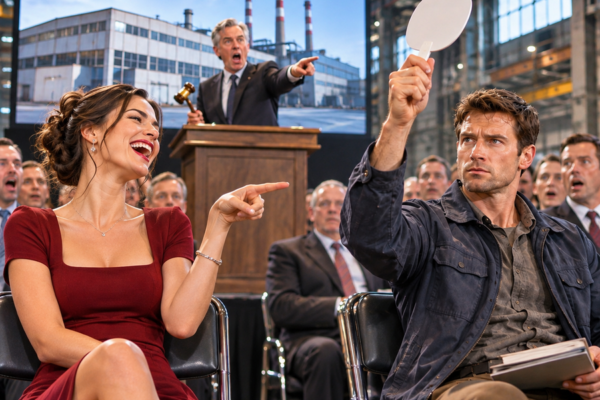
The boardroom door swung open and a man in a $4,000 suit had the CEO by the throat, pressing her back against the glass while three other men stood there and did nothing. Then a mop handle came down across his forearm and snapped it like a dry branch. The janitor didn’t even raise his voice. He said, “Let her go. I asked nice the first time.”
Nobody in that building knew his name. Nobody had ever looked at his face. And in about 90 seconds, all of them were going to find out why a man with 16 confirmed rescues chose to push a mop for $14 an hour.
At 2:14 in the morning, Daniel Carter heard a woman say the word “don’t.” He heard it through a closed door on the 38th floor of Everheart Solutions, 40 feet down a hallway, over the sound of his own cartwheels. Most people would have missed it. Most people would have kept walking, because at 2:00 in the morning on an executive floor, a raised voice is just a bad quarter and somebody’s marriage falling apart on the phone.
Daniel stopped the cart. He stood there with one hand still on the handle and he counted—not seconds, voices. One woman, three men. The woman was near the window. Her voice came back flat, no echo, because the glass ate it. The three men were spread. One at the door, one at the table, one behind her. That last one was the problem. Nobody stands behind a person they’re negotiating with.
Walk away, he told himself. You are a janitor. You have a daughter asleep in a two-bedroom apartment in Ballard and a babysitter you pay in cash and no health insurance worth the name. Walk away. He’d been telling himself that for 11 months. Then he heard the woman say, “Take your hand off me.” And Daniel Carter did something he had promised his dead wife and his living daughter and 11 flag-draped coffins that he would never ever do again. He let go of the cart.
Fourteen hours earlier, his daughter Emma, nine years old, stood in front of him with her backpack already on and her hair in a ponytail she had done herself, which meant it was crooked and she would not accept help. “Your face is asleep,” she said. “It’s 7:05 and you got home at 6:00.” “6:20.” “That’s worse, Dad.”
He sat up and rubbed his hands over his face hard, the way you do when you’re trying to push the tiredness back into your skull for a few more hours. “You eat. I made toast.” “You made toast for both of us.” “I made toast for me. You were asleep. I didn’t want to waste bread.” That right there was the thing that got him. Not the 12-hour shifts. Not the chemicals that had eaten the fingerprints off his thumbs. A nine-year-old kid doing math on a loaf of bread.
“Emma, what? You never have to save bread from me ever. You understand?” She shrugged with one shoulder. “Okay, say it back.” “I never have to save bread.” “Dad, we’re going to be late.”
He drove her the 11 blocks to school in a 2009 Corolla with a tape deck and a heater that only worked at full blast or not at all. She talked the whole way. She always did. Daniel had learned over the last four years that his job in the morning was not to talk. It was to be a wall she could throw a ball against.
“And Mrs. Okafor said we have to do a thing about our parents’ jobs.” The wall stopped being a wall. “A thing like a poster about what our parents do and you present it. You present it to the class. Everybody does it. Marcus Delgado’s dad flies planes and Priya’s mom is a—I don’t know. She does something with laws.”
Daniel watched the light. Watched a woman cross with a stroller. Watched a delivery van run the yellow. “What are you going to say?” he asked. Emma was quiet for the length of a block. That was unusual enough that he glanced over.
“I’m going to say you’re a night custodian at a technology company,” she said. Every word carefully placed, like she’d been practicing it. “That’s true.” “Yeah, Emma. It’s fine, Dad. That’s not what I asked.” She looked out the window. Nine years old, and she already knew how to protect him. He hated that. He hated it more than the shifts, more than the bread.
“Kayla said her mom said janitors are people who didn’t finish school.” Emma said, “I told her, you finished school. You did finish school, right?” “I finished school.” “See, that’s what I said.” She unbuckled her seat belt before the car stopped, which was a thing he’d asked her not to do 400 times. “Anyway, I don’t care what Kayla says. Kayla eats glue sticks. She ate one in second grade. I remember.” “Okay.” “Bye, Dad.”
She was gone. Backpack bouncing, crooked ponytail. Daniel sat in the drop-off lane with his hands at 10 and two. And behind him, somebody honked and he did not move for four full seconds. I told her I finished school. He’d finished BUD/S. He’d finished SERE. He’d finished a language course in Pashto and a course in maritime interdiction and a course God help him on how to write a letter to a mother. He had a Bronze Star in a coffee can in the back of a closet under a bag of Christmas lights. And his daughter was going to stand up in front of Kayla, who ate a glue stick, and say, “My dad cleans buildings at night.”
He pulled out into traffic. The thing about being invisible is that it’s a skill. Daniel had been trained in it. Not in a classroom—you can’t teach it in a classroom—but on rooftops in cities where a 6’1″ American male is not a normal thing to be. You learn to make yourself the least interesting object in the room. You learn to move at the speed of the environment. You learn that people don’t see faces, they see categories. Show them a category and their brain files you and moves on. At Everheart Solutions, the category was gray coveralls and a cart. He’d been there 11 months, and he could count on one hand the number of employees who had ever looked directly at his eyes. Carter, make that one hand and a thumb.
Marcus Webb was 58 years old, night security, 22 years Air Force before that, and the only man in the building who treated Daniel like a person instead of an appliance. He had a bad knee, a worse ex-wife, and an opinion on everything. “Marcus, you look like death warmed over and served cold.” “Thank you.” “You sleeping?” “Sure.” “Uh-huh.” Marcus buzzed him through the turnstile without looking at the screen. “Hey, you hear about 36?” “What about it?” “Whole floor is badge restricted now. Overnight used to be I could walk it on rounds. Now, my card don’t open it.”
Daniel had already known that. He’d known it for six days, because on Tuesday, his master key had stopped working on the 36th floor stairwell door and nobody had told him. “Huh,” he said. “That’s it, huh?” Marcus leaned on the desk. “22 years I did this in the service, and I’m telling you, when they start carving up a building’s access, somebody upstairs is scared of somebody else upstairs. Or they’re doing an audit.” “An audit.” Marcus said the word like it had personally insulted him. “Daniel, my man, in the middle of the night with private contractors carrying their own hardware?”
Daniel’s hand paused on the cart handle for about a quarter of a second. “Contractors,” he said. “Four of them Sunday came in at 11:00, out at 4:00. Van signed them in himself.” “Richard Vaughn signed in a night crew.” “Executive vice president of operations walking down to my desk at 11 at night with a clipboard. You believe that?” Marcus laughed. “Man’s never said good evening to me in six years. Sunday he asks about my knee.”
Daniel looked at the elevator bank, then at the ceiling camera in the northwest corner, which had been rotated 8 degrees to the left sometime in the last two weeks so that its cone no longer covered the freight elevator door. 8 degrees. Just enough. Not enough for anybody to notice. “Well,” Daniel said, “people are nice sometimes.” “People are never nice for free, brother.” Marcus waved him off. “Go clean something.”
He worked the floors in order. 31, 32, 33. Trash, glass, restrooms, vacuum, move on. 240 minutes of work he could do in 180, which left him 60 minutes a night that nobody had ever accounted for. He didn’t waste them. On 33, he emptied a shredder bin and noticed it was full of documents that had been fed in the wrong direction—long strips instead of confetti, which meant somebody had been in a hurry. On 34, he found a conference room where four chairs had been pulled to one end of a 12-person table and one chair pulled around to the opposite side alone. That’s not a meeting. That’s an interview or an interrogation.
On 35, he found a phone charger left in an outlet under the credenza. Not a normal charger. It had a second port on the underside and it was warm. He crouched and looked at it for a long moment. Not your problem. He stood up. He left it. He kept cleaning.
That was the deal he’d made with himself. He could see. He couldn’t unsee. You don’t get to turn that off. It’s not a switch. It’s a way your brain assembles the world after 11 years of it. But seeing wasn’t doing. Seeing was free. Doing was what cost. Doing was what put a folded flag in a woman’s arms. He’d stood in 11 living rooms. He’d said the words 11 times on behalf of a grateful nation.
And in the ninth living room, a woman named Denise Ramirez had looked up at him with her son on her hip and said, very quietly, “Was it worth it, Danny?” And he hadn’t had an answer. Sarah had been alive then. Sarah had been alive for eight more months. Then a drunk kid in a pickup on I-5 had taken care of that. And Daniel Carter had come home from a war to find that the war wasn’t the thing that took people from him.
Emma had been five. She didn’t remember her mother’s voice. She’d asked him once at seven if he had a recording. He didn’t. Twelve years of marriage and he did not have 30 seconds of Sarah’s voice because who records their wife saying the milk’s gone bad? So, no. Daniel Carter did not do things anymore. Daniel Carter saw things and pushed a cart.
He was on 37 at 11:40 when he heard Richard Vaughn. He heard him before he saw him—a particular kind of voice, the kind that’s never once had to wonder if it’s being listened to. “Don’t care what the board thinks. The board is nine men who think a spreadsheet is a personality. The board will think what I tell them to think by Thursday.”
Daniel took his cart into the alcove by the copy room, not hiding, just being where the eye slides off. Vaughn came around the corner with his phone against his ear and a second man behind him. Daniel clocked the second man in half a second. Mid-40s. Gray polo. No lanyard. And a walk that started from the hips—cop walk or contractor walk—and he was carrying his weight on his back foot, which meant he’d been trained to expect trouble from any direction.
Vaughn didn’t look at Daniel. Vaughn had never once looked at Daniel. “The problem isn’t the audit,” Vaughn was saying. “The problem is she found the audit. Her father built the company on trust, and she inherited the same disease.” He stopped talking.
Daniel felt rather than saw the second man’s head turn toward him. Daniel kept mopping. Same speed. Same slow arc. He hummed four notes of nothing. “Him?” the man said. “That’s the cleaner,” Vaughn said, with the exact tone a man uses for a piece of furniture in the way. “He doesn’t speak English.”
Daniel mopped. They walked on. And there it was—the thing he’d been keeping at arm’s length for six weeks, snapping into place with a click he could almost hear. Her father built the company on trust, and she inherited the same disease. She found the audit. Daniel finished the hallway. He rung the mop. He emptied the bucket in the utility sink, and he watched the gray water spiral down. And he thought about a nine-year-old girl standing in front of a class with a poster. Then he went up to 38.
Olivia Bennett was still at her desk. She was always still at her desk. Eleven months, and he’d seen her leave before 10:00 maybe four times. Thirty-two years old, running a company of 1,100 people. And she ate dinner out of the vending machine on 38 because she didn’t want to be seen going out for food while the finance team was working late.
Daniel knew that because she’d told him six weeks ago—the first time she’d ever spoken to him. He’d been vacuuming outside her office at 11:00 p.m., and she’d opened the door, and he’d shut the machine off and said, “Sorry, ma’am. I’ll come back.” And she’d said, “No, no, please. Actually, can I ask you something, ma’am? Do you ever eat?”
He’d looked at her. “Sorry, that came out strange.” She’d laughed at herself. She had a good laugh—the kind that was clearly annoyed at itself for existing. “I mean, I’ve been here until 11:00 or 12:00 four nights a week for a year and a half. And I’ve never seen you take a break. Not once. And I thought, either that man has some kind of superhuman constitution, or he’s like me and he’s decided food is optional.”
“I eat at 3:00.” “3:00 in the morning?” “Yes, ma’am.” “What do you eat at 3:00 in the morning?” “Whatever. My daughter didn’t finish.” She’d gone quiet. “How old?” “Nine.” “What’s her name?”
And that had been the moment. That had been the exact moment where he should have said, I need to get back to work, ma’am. Because the number one rule of being invisible is that you do not let anyone hand you a name. “Emma,” he’d said.
Olivia Bennett had smiled. “My dad worked nights when I was little. Loading dock. He used to leave me a note in the kitchen every night so it’d be there in the morning. Just dumb stuff. Riddles. Bad jokes.” “That’s a good thing to do.” “It was.” She’d looked past him at nothing for a second. “He built all this, and I feel like every day I’m about 10 minutes from finding out I’m not him.” “Ma’am—” “Sorry. It’s midnight. I’m oversharing at a stranger.” She’d stepped back into her office. “Good night. I’m sorry. What’s your name? I should know your name. That’s inexcusable.” “Daniel.” “Good night, Daniel.”
That was six weeks ago. And every night since, without fail, when he’d come to 38, there had been a granola bar sitting on the corner of the reception desk with a sticky note that said “3:00 a.m.” He had eaten every single one of them at 3:00 in the morning. He had never told her that.
Tonight, 38 was different. Tonight there was no granola bar. Tonight Olivia Bennett’s office door was open, and she was standing over her desk with both hands flat on it. And there were three men in her office, and one of them was named Richard Vaughn.
Daniel stopped his cart at the far end of the hall and began very slowly to wipe down a door frame that did not need wiping. “Not signing anything at midnight, Richard.” “Olivia, please sit down.” “I’m fine standing.” “You’ve been awake for 20 hours. You’re emotional.” “Do not.” Her voice cracked like a whip, and Daniel’s hand paused on the doorframe. “Do not use that word with me. Not you. My father hired you when you were selling copiers.”
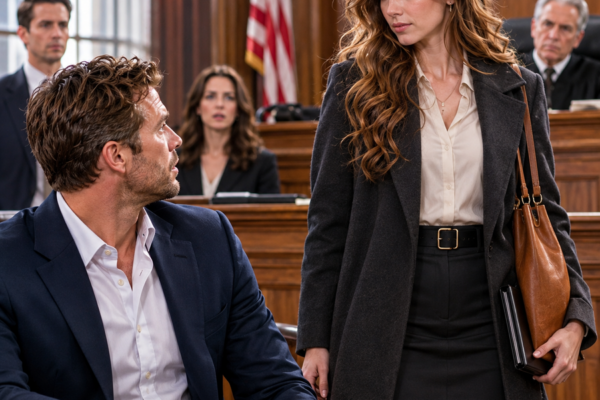
“Your father,” Vaughn said, “was a great man who could not read a balance sheet, and you inherited his eyesight.” “$11 million, Richard.” Silence. “$11 million,” she said again. “Moved through four vendors that don’t have offices. One of them has a UPS store as its corporate address in Nevada. I have the wire confirmations.”
“You have partial documentation of a restructuring you weren’t briefed on.” “I’m the CEO.” “You’re the founder’s daughter,” Vaughn said. It was gentle. That was the worst part. He said it the way you’d tell somebody their dog was old. “There’s a difference. And everyone in that boardroom knows it but you.”
Daniel put down the rag. He picked it back up. Not your problem. Not your problem. Not your— “The Meridian files are gone,” Olivia said. “Nine years of clinical modeling. The diagnostic engine. My father’s—the entire reason this company exists. And the repository was cloned to an external endpoint on Sunday night at 11:40 p.m. I have the log.”
“Sunday 11:00 p.m. Four contractors. Van signed them in himself.” “You have a log,” Van repeated. “I have a log.” “Do you know how many logs I have?” And now his voice changed. Now the gentleness went out of it the way heat goes out of a room when a door opens.
“I have a log of every decision you’ve made in 19 months. I have a log of the Tacoma expansion. I have a log of you hiring a chief technology officer who lasted five months. I have 400 pages of documentation showing a young woman in over her head. And on Thursday morning, I am going to walk into that boardroom, and I am going to be kind about it, Olivia, because I promised your father I would look after you.”
“Get out of my office.” “Sign the transition agreement tonight, and you keep the title. You keep the office. You keep the stock. You keep your father’s name on the building.” “Get out of my office.” “And if you don’t sign it,” Van said, “then on Thursday, I don’t have to be kind.”
Daniel heard footsteps. He pushed his cart six feet down the hall and knelt to check a baseboard. Three men came out. Vaughn first, straightening his cuff. Then the gray polo man from 37. Then a third—younger, heavier—and he was the one who glanced at Daniel. Daniel let his shoulders round, let his chin drop, let his eyes go dull and slow and fix on nothing. Category: cleaner. File and forget. The man looked away.
They got in the elevator. Daniel stayed on one knee by the baseboard for 11 seconds after the doors closed. Then he stood up and he went back to work, and his hands were completely steady. And that fact bothered him more than anything else that had happened that night.
At 12:50, he came around to 38 again for the trash. Olivia was sitting on the floor—not at her desk, on the floor—with her back against the front of it, shoes off, a legal pad next to her that she wasn’t writing on. When she saw him in the doorway, she didn’t scramble up. She just looked at him with an expression he recognized instantly, because he’d seen it on 22-year-old kids in the back of a helicopter: I don’t know if I can do this, and I can’t tell anyone.
“Sorry, ma’am.” He reached for the trash bin. “Daniel.” “Ma’am, how much did you hear?” He could have said nothing. It would have been the easy thing. It would have been the smart thing. “Enough,” he said.
She let out a breath that was almost a laugh. “Great. Fantastic. So it’s not just in my head.” “No, ma’am.” “You know what the worst part is?” She pulled her knees up. “He’s right about one thing. I’m 32. I got this job because my last name is on the lobby. Every single person in that building is polite to my face and does math about me behind my back. And Richard has been here 19 years, and he’s good at it. He really is. And if he walks into that boardroom Thursday and says she’s not ready—” She snapped her fingers. “Nine men will nod because it’s the thing they already think.”
“Then don’t let it be about you.” She looked up sharply. “What?” Daniel set the trash bin down. He should not have set the trash bin down. “He wants Thursday to be a conversation about whether you’re good enough,” he said. “Because that’s a conversation he wins. Nobody can prove they’re good enough. It’s not a provable thing.” He shrugged. “So don’t have that conversation. Have a different one.”
“Which one?” “$11 million and a Nevada mailbox.” Olivia Bennett stared at him. “That’s what he’s afraid of,” Daniel said. “Not you. Notice he came at midnight. Notice he brought two men who don’t work here. Notice he offered you the title, the office, the stock, and your father’s name on the building. Everything except the books. A man who’s winning doesn’t come at midnight, and he doesn’t offer that much.”
The silence went on for a while. “Who are you?” she said. And Daniel Carter felt the floor tilt about two degrees under him, the way it does when you realize you’ve walked farther out than you meant to. “I’m the guy who cleans these halls,” he said, and picked up the trash bin. “Daniel.” “Ma’am, I’m behind on 39.” “Daniel.”
She got up off the floor in her socks—5’4″ in her socks—and she came around the desk and stood in front of him. “My father spent 30 years around men who talk. He used to say the ones who scared him were the ones who counted the exits.” He didn’t answer. “You counted the exits when you walked in.” She said, “You’ve done it every night for a year. I noticed six weeks ago and I’ve been trying to figure out why ever since.” “Good night, ma’am.” “Olivia.” “Good night, ma’am.”
He got out of the office. He got the cart down the hall. His pulse was at 71, and he knew it was at 71. And that was the part that scared him, because a normal man’s heart doesn’t stay at 71 when a woman tells him she can see straight through him.
At 1:20, he found the stairwell door on 36 propped with a folded piece of cardboard. At 1:26, he found a coffee cup in the north stairwell, still warm on the landing between 36 and 37—a floor with no breakroom, no vending, and no reason for anyone to be standing. At 1:31 in the freight elevator lobby, he found a black nylon bag under the fire cabinet.
He crouched. He didn’t touch it. He tilted his head and looked at the zipper pull, at the way the bag sat at the corner where the fabric had gone shiny from being set down on concrete a thousand times. He knew that bag—not that bag, but that kind of bag. He’d carried one for 11 years. Walk away.
He put two fingers on the zipper. Walk away, Daniel. He opened it. Four inches inside: two coils of flexible restraint. A roll of gaffer tape. A radio. Off. A folded floor plan of the 38th floor with three positions marked in pencil. One at the door. One at the table. One behind the window seat. One behind. And underneath the floor plan, a printed photograph. Daniel looked at it for a long, long time. It was Olivia Bennett coming out of a coffee shop on 5th. Long lens. Two days old, judging by the coat.
He closed the bag. He put it back exactly as he’d found it, with the zipper pull at the same angle. And he stood up and he walked to the utility closet on 36. And he shut the door and he put both hands flat against the wall and he breathed. In four, hold four, out four. Because here’s what he knew, and it was the only thing he’d ever been truly excellent at: restraints and tape and a radio and a floor plan is not a robbery. Nobody restrains people to steal a server. That’s a control package. That’s what you bring when you intend to put people in a room and keep them there until a document has a signature on it.
And they had marked tonight on the floor plan. Not Thursday. Thursday’s the boardroom. Daniel thought, Thursday’s the show. Tonight’s the rehearsal. Tonight they get the signature. And Thursday, Vaughn walks in and reads it out loud.
He looked at his watch. 1:38. He thought about Emma. He thought about her crooked ponytail. He thought about the poster. He thought about a woman named Denise Ramirez saying, “Was it worth it, Danny?” And about 11 living rooms, and about a coffee can in a closet under a bag of Christmas lights. He thought, If I call 911, they take 12 minutes. And by then there’s a signature on a page and three men in the wind and one woman who voluntarily resigned. He thought, If I do nothing, she signs it. That’s all. She signs it and she’s fine. Nobody dies over a signature.
And then he thought about the second coil of restraint, because there was only one CEO in that building tonight. So who was the second one for?
He took the north stairs up, not the elevator. He went up two floors and stopped, because he was not going to walk into a room with three trained men and a bad plan. And he did not, in fact, have a plan. And there is a specific kind of arrogance that gets people killed. And Daniel Carter had spent 11 years watching it happen to better men than him. So he did what he’d been trained to do before anything else. He got information.
He went to the 37th floor security closet, keyed it with a master he technically wasn’t supposed to have, and pulled up the camera feed on a monitor that had been showing a screensaver of a mountain since 2019. 38. Executive floor. Olivia in her office at her desk. Elevator lobby empty. Northwest corner freight elevator—the camera that had been turned eight degrees. He looked at that dead angle for three full seconds. Then he called the only number he had for anyone in that building.
Marcus picked up on the fourth ring. “Front desk.” “It’s Daniel.” “Man, you sound weird.” “Marcus, listen to me and don’t ask questions yet. Is Vaughn in the building?” A pause. “Keys badged out at 12:14.” “Did he badge back in?” “No.” “Did anybody badge in after him?” Longer pause. Daniel could hear him scrolling. “Three visitor passes,” Marcus said slowly. “Issued at 12:31. Sponsor field says R. Vaughn. Escort required. No escort logged.” His voice had changed completely. 22 years of Air Force came up through it like bedrock. “Daniel, where are you?” “37.” “Where’s Miss Bennett?” “38. In her office. Alone.” “I’m calling PD.” “Do it. Then get in your car.” “The hell I will, Marcus.” Daniel closed his eyes. “You’ve got a bad knee and no vest and a flashlight. You call the police. You lock the lobby. And you keep the elevator on the ground floor so nobody leaves. That’s the job. That’s your job tonight.” “And what’s yours?” Daniel didn’t answer. “Daniel.” Marcus’s voice dropped. “Man, who are you?” “I’m the janitor,” Daniel said, and hung up.
He went down the hall and got his cart. That was the part that would confuse people afterward. That was the part Olivia would ask him about a hundred times over the next six months. You had five minutes. You went and got the mop cart. Yes, he got the mop cart. Because three men in a room look at a door when it opens. What they look for is a threat. And there is no threat on Earth shaped like a 50-something guy in gray coveralls pushing a squeaky yellow bucket. And every second their brains spend filing him under nothing is a second he doesn’t have to spend fighting. He’d learned that in a country he wasn’t allowed to say the name of. The best weapon in any room is the four seconds before anyone believes you’re dangerous.
He took the north stairs. Two at a time. Quiet. Carried—actually carried—41 pounds held out from his body so it wouldn’t knock the rail. And set it down on the 38th floor landing without a sound. Then he pushed it out into the hallway and let the wheel squeak, because now he wanted it to. The office door was closed. It had been opened 40 minutes ago. Threw it 40 feet away. He heard a man’s voice say, “Sign the page, Miss Bennett.” And he heard Olivia say, “No.” And he heard something hit the desk hard enough to rattle it.
Daniel kept pushing the cart. Same speed. Same squeak. He was counting again. One woman, three men. One at the door, one at the table, one behind her by the window. 30 feet. “You’re making this stupid,” the man said. “You know how this ends. Everybody signs.” “My father didn’t.” “Your father’s dead.” 20 feet.
Daniel felt it come up in him. Not rage. Rage he could have managed. Rage he’d had a hundred times, and it was loud and useless and it made you slow. This was the other thing. The old thing. The cold, quiet, terrible calm that used to come down over him like a helmet, where the world went to half speed. And every object in a room turned into either cover, a weapon, or a person. And he stopped being a man with a name and became a tool that solved problems.
He had spent four years running from this feeling. It came back like it had never left. It came back like it had been waiting in the closet with the coffee can. 10 feet. Sarah, he thought, I’m sorry. Emma, baby, I’m sorry. 5 feet.
Inside, Olivia Bennett said, in a voice with absolutely nothing left in it, “Take your hand off me.” Daniel Carter put one hand on the door. And for the first time in four years, three months, and 19 days, he stopped pretending.
The door opened. Not fast. Daniel had never once in his life opened a door fast. He pushed it with the cart, the way a man does when his hands are full and his mind is somewhere else. And he came into that office at the exact speed of a tired employee who had gotten the floors mixed up.
Four faces turned toward him. The one at the door was closest, six feet away, gray polo, weight on his back foot. The one at the table had a folder open and a pen in his hand, and he did not look up for a full second, which told Daniel everything about who was in charge and who was hired. And the third man had one hand on Olivia Bennett’s shoulder, holding her against the glass, and his other hand was flat on the desk beside the paper.
Olivia’s eyes found him. Daniel watched her face do three things in half a second. Recognition. Hope. Then a terrible, sick understanding that a janitor had just walked into a room with three men in it. “No,” she said. “Daniel, go.”
“Sorry,” Daniel said. “I got the wrong floor.”
Gray Polo laughed. It was a short, ugly, relieved sound. “Yeah, you did, pal.” “I’ll come back.” “You’ll do more than that.” Gray Polo took a step. “Come here.” “Sir, I’m just here for the trash.” “I said, come here.”
And Daniel came here. That was the thing nobody ever expected. Everyone expects a man to back up. Backing up is what a scared man does. And a scared man moving backward is easy to walk down. Daniel walked forward into the space where Gray Polo was already committing his weight. And Gray Polo’s body had to make a decision it had not planned to make.
The cart came with him. 41 pounds of steel frame and dirty water, driven low and hard into the man’s shins. He went down over it. Not gracefully. He went down the way furniture goes down, and his hands came out, and his forearm landed across the metal edge of the frame. And Daniel put his palm on the back of that elbow and dropped his own weight through it. The sound was not loud. That was the worst part. It was a small, dry, private sound. And then Gray Polo started making a noise like a man trying to breathe through a straw.
Daniel was already moving. “Hey. Hey.” The one at the table was up. Chair going back. And Daniel took the mop out of the bucket in one hand, and he did not swing it at the man’s head, because heads are hard and they move. He swung it at the man’s knee. The handle was aluminum and 42 inches long, and it came in on a diagonal from low right, and there is very little a human being can do about that. The man folded sideways into the credenza. A photograph of a man in a hard hat at a ribbon cutting—Olivia’s father, 20 years younger—went off the top of it and hit the carpet face down.
The third man let go of Olivia’s shoulder. He came off the window fast, and this one was different. Daniel saw it in the first step. This one didn’t rush. This one moved his feet like they were expensive, and his hands came up to his chest, and he did not throw anything yet. Trained.
“Okay,” the man said. “Okay.” Daniel dropped the mop. “Olivia,” he said, without taking his eyes off the man. “Behind me now.” She didn’t move. “Miss Bennett.” She moved. She came around the side of the desk with her back scraping the glass, and she got behind him, and Daniel felt her hand grab a fistful of the back of his coveralls, and he thought absurdly, Emma does that. Emma does that in parking lots.
“You made a mistake, buddy,” the third man said. “Probably.” “You know what this is. You know who’s paying for this?” “Richard Vaughn,” Daniel said. That stopped him. Just for a heartbeat. But a heartbeat was a very long time. “You want to think about your job?” the man said. “I’m thinking about it.” “You got a family.”
And there it was. Daniel had been in a hundred rooms with a hundred men, and there was always, always the one who reached for that. It was supposed to be a lever. It was supposed to be the thing that made a man’s arms heavy. “Yeah,” Daniel said. “I do.” Then he stepped in.
It took four seconds. Olivia would say later that she never actually saw it. She saw the man start to raise his hands, and then she saw the ceiling. No, that wasn’t right. She saw the man see the ceiling, and there was a sound like a phone book dropped on a table. And then Daniel Carter was kneeling on the man’s back with the man’s wrist folded up between his shoulder blades, and he wasn’t even breathing hard.
Ten seconds after that, the man was zip-tied with restraints from his own bag. Daniel had gone and gotten the bag. He’d left it under the fire cabinet, and he’d walked back out into the hall while the man was still on the floor and retrieved it and come back. And he’d used their own restraints on all three of them. And Olivia Bennett stood in the middle of her own office with her arms wrapped around herself and watched a night janitor secure three men to a conference table leg with the calm efficiency of a man loading a dishwasher.
It was 1:53 in the morning. “Miss Bennett?” She didn’t answer. “Olivia, are you hurt?” She looked down at herself like she genuinely had to check. “No.” “Did any of them touch you before I came in?” “He had my shoulder. He was—he had me against the—” She stopped. Her jaw was doing something. “No, I’m not hurt.”
“Okay.” Daniel stood up. “Sit down.” “I don’t want to sit down.” “You’re going to in about 30 seconds anyway. Better to choose it.” She sat down. Right there on the floor, back against the desk, same as an hour ago. And her hands started shaking so hard she had to press them flat against her own thighs. “There it is,” Daniel said quietly. “What is this?” “Adrenaline dump. It’s normal. It’ll pass in about 10 minutes.” “How do you know that?” He didn’t answer that one.
On the floor, Gray Polo said through his teeth, “You’re dead. You know that? You’re dead, man. You don’t even know what you just—” “Hey.” Daniel crouched next to him. “Not close. Just enough. Do you know what a stress fracture in the ulna feels like in about four hours?” The man stopped talking. “You’ve got a long night. Save your voice.”
At 1:58, the phone on Olivia’s desk rang. She jumped like she’d been shot. Daniel picked it up. “Yeah.” “Daniel.” Marcus’s voice, tight as a wire. “Daniel, PD’s four minutes out. They’re rolling two cars. I’ve got the lobby locked and the elevators.” A pause. “Daniel, are you—is she—” “She’s fine. I’ve got three individuals restrained on 38. Tell PD there’s no weapons deployed and one guy needs an ambulance for an arm.” Silence on the line. “An arm,” Marcus repeated. “Marcus.” “Yeah, don’t come up, man. I’m 60 in November.” “I ain’t coming up. But I want you to know I got a Maglite and I thought about it.” Daniel almost laughed. It came out as nothing. He hung up.
Olivia was staring at him from the floor. “You called security before you came in here,” she said. “I called Marcus and police before.” “Yes.” “How long before—” “12 minutes.” “You knew 12 minutes ago that men were coming to my office to—” Her voice failed on that. She started over. “You knew.” “I found their bag on 36.” Olivia pressed the heels of her hands into her eyes. “Okay. Okay. Their bag. Okay.” “Restraints, tape, a radio, and a floor plan of this office with three positions marked.” Daniel paused. “And a photograph of you leaving the coffee place on 5th. Taken with a long lens. Two days ago.”
She took her hands off her eyes. “There were two sets of restraints,” Daniel said. “Only one of you in the building.” “What?” “They brought two. I’d like to know who the second one was for.”
At 2:04, the elevator chimed and the 38th floor filled with Seattle police. What happened over the next 40 minutes was, in Daniel’s experience, entirely predictable and entirely useless. The first officer through the door was 26 years old and had his hand on his weapon, and he pointed it at the only man standing, which was Daniel, which was correct procedure. And Daniel got down on his knees with his fingers laced behind his head before anyone told him to, which the officer found so unnerving that he actually said, “Sir, have you done this before?” “Yes.”
Olivia was on her feet by then, saying, “No, no, he’s the one who—he’s the reason I’m—he works here.” And it took four minutes to get it straightened out. And Daniel stayed on his knees the entire four minutes, because he had learned a long time ago that being right is not the same as being safe.
They cut the zip ties. They cuffed the three men properly. Gray Polo went out on a gurney at 2:31 with his arm in a temporary splint. And on the way past, he turned his head and looked at Daniel and said, very clearly, “Ballard.” Just that. One word. Daniel’s face didn’t change, but something behind his ribs went very, very cold.
At 2:40, a detective named Ruiz sat on the corner of a table in the 38th floor conference room with a notebook she wasn’t writing in. “So, walk me through it again.” “They were in her office. I came in.” “You came in?” “Yes.” “With a mop cart?” “Yes, Mr. Carter.”
Ruiz was maybe 45, and she had the flat, patient, deeply unimpressed manner of someone who had heard 4,000 versions of what happened. “Three men. One of them’s got a spiral fracture of the ulna. One’s got a knee that’s going to need an MRI. One’s got a hyperextended shoulder. And he won’t say a word. Not one word. Not even his name. And you’re telling me you did that with a mop?” “I did that with a cart, a mop handle, and the floor.” “In how long?” “I didn’t time it.” “Guess.” “Six seconds.”
Ruiz looked at him. “You want to tell me where a night custodian learns that?” “No, ma’am.” “That’s not really an option here.” “Then I served 11 years in the Navy, and I’d rather not go into the rest of it. And if you run me, you’ll find a DD214 with a lot of gray on it. And if you call the number on it, somebody will call you back and tell you I’m not interesting.”
Ruiz wrote something down for the first time. “You’re going to be interesting to a lot of people by lunch,” she said.
At 3:10 in the morning, Daniel Carter sat on a bench in the lobby of Everheart Solutions with a paper cup of coffee that Marcus had put in his hands and that he had not drunk. And he did the thing he had been not doing for the last 70 minutes. He thought about the word Ballard.
He’d never told anyone at that company where he lived. It wasn’t on his badge. It was on a W-4 in an HR file that a vice president of operations could pull in about nine seconds. He took out his phone. The babysitter, Mrs. Novak, was 71 and slept in the recliner and did not appreciate being called at 3:00 in the morning. And Daniel called her anyway.
She picked up on the second ring, which was wrong. “Mrs. Novak.” “Daniel.” Her voice was thin. “Daniel, I was going to call you. I didn’t want to be a—it’s probably nothing.” Everything in Daniel’s chest stopped. “Tell me.” “There was a car.” “Where?” “Across the street. Since maybe 11:00. And I thought, well, people park.” She was talking too fast now. “But nobody got out. And around 1:00 in the morning, I got up for the bathroom, and the light was still on inside it. Like somebody’s phone. And Daniel, when I went to the window, it drove away.”
“Is Emma asleep?” “She’s asleep. She’s fine. She’s got that stuffed rabbit.” “Mrs. Novak, listen to me. Go to Emma’s room right now and stay in it. Lock the door. Don’t turn on any lights.” “Daniel, you’re scaring—” “Please.” He heard her getting out of the chair. He heard the floor. He was already moving across the lobby.
“Marcus.” “Yeah.” “I need your car.”
At 3:24, a 2016 Ford Explorer that smelled like cigarettes and pine air freshener took the on-ramp to I-5 North at a speed that would have gotten a normal man a ticket. And Daniel Carter drove with his phone against his ear and his mind doing arithmetic. Vaughn badged out at 12:14. He knew the job was live. He would have had someone on the family from the start. That’s what you do. That’s what I would have done.
Second set of restraints. Because a man like Vaughn didn’t want a fight. A man like Vaughn wanted a lever. And there is exactly one lever that works on a father.
The phone rang. “Daniel.” “Olivia.” “Not a good time.” “They found something. Ruiz. The detective. She pulled the badge log, and there’s a fourth visitor pass issued at 12:31. There were four of them. Daniel, one of them never came up to 38.” “I know.” “You know?” “Second set of restraints.”
He changed lanes. “Olivia, I have to go.” “Where are you going?” “Home.” She was quiet for exactly one second. When she spoke again, her voice had changed completely, and Daniel would remember it later as the first moment he understood who she actually was under the job. “Give me the address.”
“No, Daniel, I’m not putting you in a car at 3:00 in the morning.” “I’m not driving there. I’m sitting in a building full of police officers, and one of them is a detective who owes me a statement. Give me the address and I’ll have a car there in six minutes instead of you being alone in it in 14.” Daniel didn’t say anything for two blocks. Then he gave her the address.