Three MMA Fighters Threatened a Female CEO—Until a Single Dad’s Hidden Navy SEAL Past Took Over
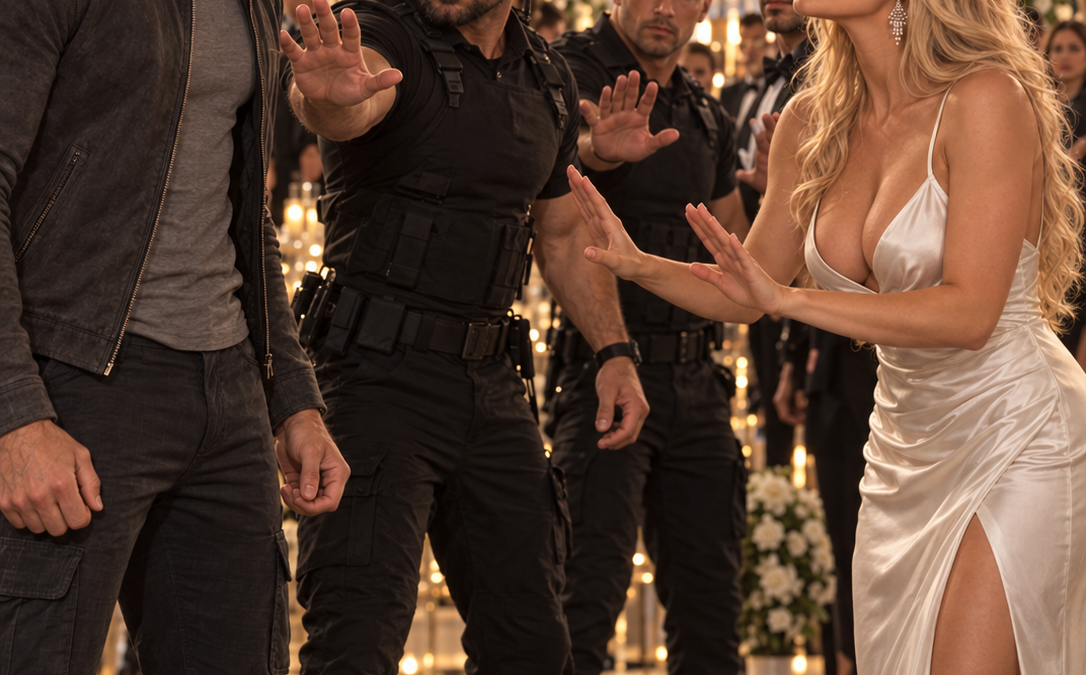
Three MMA Fighters Threatened a Female CEO—Until a Single Dad’s Hidden Navy SEAL Past Took Over
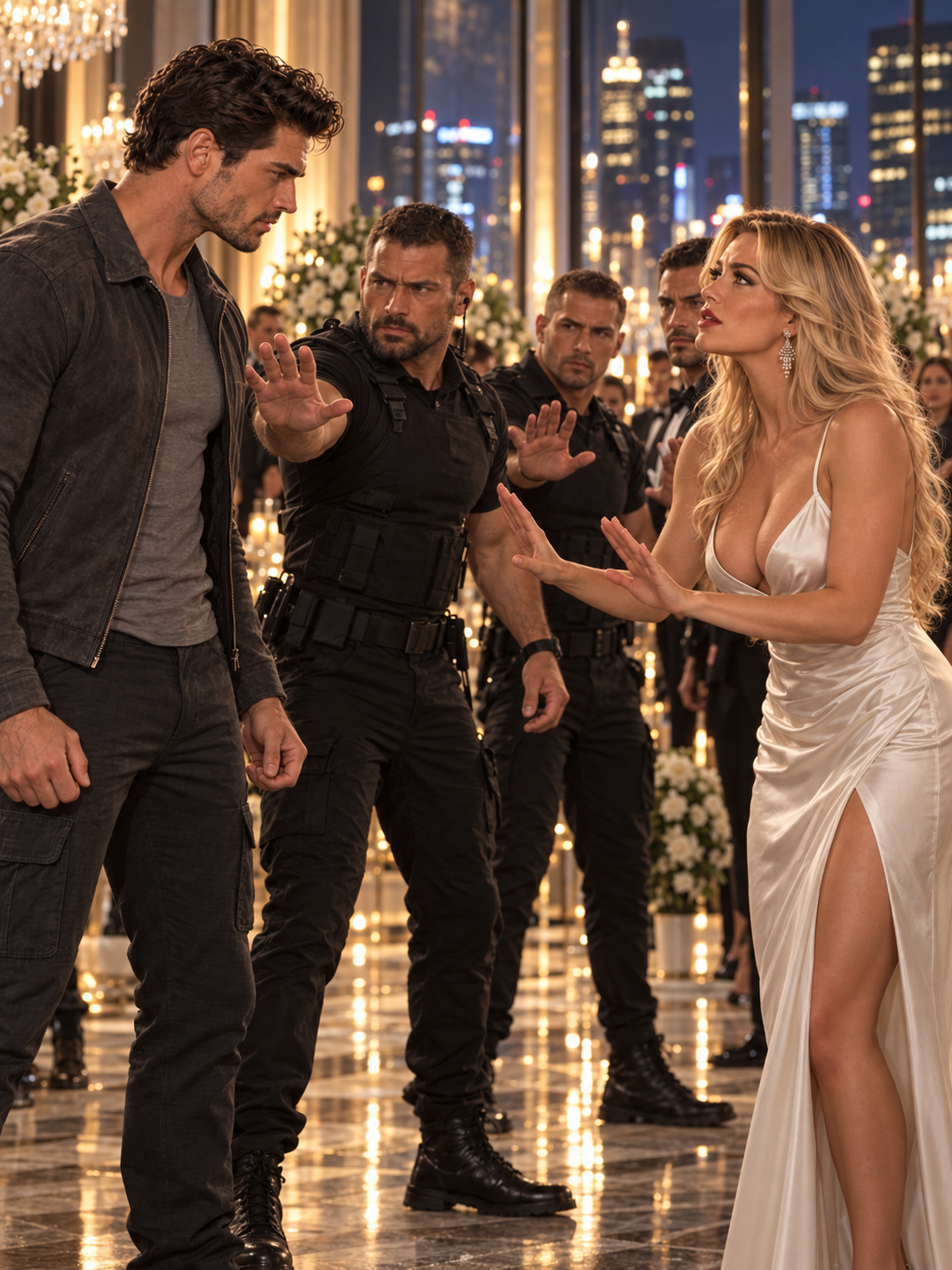
PART 1
The doors locked from the inside. The cameras went dark.
And somewhere on the 42nd floor of a billion-dollar skyscraper, a woman was being held prisoner inside her own company by the man she trusted most. The security chief knew. The executives knew.
And every single one of them did nothing. But one man heard her voice through the wall.
Not a cop, not a bodyguard, not a hero, a maintenance worker in a gray uniform carrying a tool bag who was supposed to go home to his 8-year-old daughter.
He didn’t go home.
The rain started around 9 that Tuesday evening.
The kind of steady Seattle rain that didn’t announce itself dramatically.
It just arrived and settled in the way most bad things do. On the third subbasement level of the Oraline Robotics headquarters, a man named Calder Reigns was lying flat on his back inside a ventilation crawl space, pressing a replacement sensor module against a duck junction with one hand while holding a flashlight in his
teeth.
Condensation dripped from the metal above him onto his forehead.
He didn’t flinch.
He hadn’t flinched at worse things than cold water in the dark, and he’d long since stopped keeping track of what those things were.
His radio crackled. Reigns, you still in sub 3?
He pulled the flashlight from between his teeth. Yeah.
Sensor is almost seated. Give me 10 minutes. After that one, 42 needs a ventilation check.
North corridor panels been throwing intermittent fault codes since this afternoon. Calder wedged the sensor into position and heard it click.
Copy that.
He wasn’t a man who talked much on the radio or anywhere else.
The other facilities technicians had noticed this about him over the 14 months he’d worked at Oraline, and most of them had decided he was either unfriendly or hiding something.
They weren’t entirely wrong about either.
What they knew about Calder Reigns was what was in his file. 37 years old, certified in building systems and HVAC, single father, dependable, zero disciplinary incidents.
He arrived on time, finished what he was assigned, and went home.
What they didn’t know, what nobody in this building knew, because he had never once volunteered, it was that 10 years ago, Calder Reigns had been a Navy Seal.
Not in a glamorous movie poster way, in the real way, which meant long stretches of genuine boredom, interrupted by intervals of controlled violence in places most Americans couldn’t locate on a map.
He’d done that work for 8 years.
He’d been good at it.
And then his wife Dana had been diagnosed with pancreatic cancer and he had come home and then she had died anyway and he had become a father.
And the man who used to move through darkness for a living had spent 2 years learning how to make a 7-year-old’s lunch without burning the toast.
He had deliberately built a small, quiet life after that.
Not because he was broken, though there were days when broken didn’t feel entirely inaccurate, but because Brinn needed predictability more than she needed a father who was impressive.
She needed someone who would pick her up from school at 3:15 without fail, who remembered that she hated the crusts on her sandwiches, but would eat them if he left them on.
Who sat beside her at her third grade science project even when he didn’t understand half of what she was explaining about butterfly metamorphosis.
He had chosen ordinary. He had done it on purpose, and he was fine with that.
He climbed out of the crawl space at 9:23P. M dusted himself off, collected his tool bag, and took the service elevator to floor 42. The 42nd floor of Orleans headquarters was executive territory, not the kind that had been designed for warmth.
Every surface up there was glass and brushed steel and engineered silence, the aesthetic of a company that wanted you to feel that it operated at a level slightly above ordinary human experience.
The regular elevators required a key card called didn’t have, but there was a service elevator that opened onto the maintenance corridor on the north side, and that was how he reached the ventilation panel that had been throwing fault codes.
He checked in with the building management system on his tablet, panel 42N7.
Sure enough, an intermittent pressure variance, not dangerous, probably a partial obstruction or a calibration drift, but the kind of thing that would become a documented problem if he didn’t address it.
He opened the service panel, pulled out his diagnostic equipment, and started working. It was quiet up here. The executive offices on this floor were dark.
No one worked late on this side of the building on Tuesday nights. The only occupied space was the restricted conference suite at the far end of the north corridor.
Suite 4,21, which required dual factor authentication to enter and had its own independent power regulation. He could see its frosted glass doors from where he was crouched. The interior light was on a warm diffused glow behind the translucent panels.
He wasn’t paying attention to it.
He was focused on the sensor. Then he heard the elevator arrive, not the service elevator.
The main executive elevator at the far end of the hall, the one that required the key card. The doors opened and three men stepped out, moving with the particular kind of purposeful efficiency that Calder recognized immediately the walk of men who had agreed on something and were now executing it.
He didn’t recognize two of them.
The third he knew from company all hands meetings. The frame frame porch that lined the main lobby.
Merrick Shaw, Orurelen’s chief strategy officer, 44 years old, silver gray hair, always impeccable.
The executive who was photographed beside the CEO at every major announcement.
They didn’t look at him.
He was a maintenance worker crouching by a panel in a gray uniform.
People in suits at Oralene didn’t look at maintenance workers.
Shaw swiped his key card at suite 4,21. The three men went inside.
The frosted doors closed behind them. Calder went back to his diagnostic work. 11 minutes later, the second elevator arrived.
This one carried Vesper Langford.
He’d seen her in person maybe twice in 14 months.
She was harder to miss than most people. Not because she was physically imposing.
She wasn’t she was maybe 5’5, but because she had the quality of someone who was always the person in the room that other people were watching.
She was 30 years old and she ran a company worth more than a billion dollars.
And she wore both facts the way certain people wear expensive clothes, like she’d forgotten they were there.
She was moving fast, the way she always seemed to be moving, heels sharp against the polished floor. She had her phone in her hand, and she was reading something on it, frowning slightly.
She was almost to the sweet doors when she glanced up and registered Calder’s existence with the brief automatic scan that people in her position gave service workers, noting presence, not details.
Ventilation issue, she said, not breaking stride.
Yes, ma’am.
Should have it cleared before the frosted doors to sweet 4,21 parted before she reached them.
Merrick Shaw stood in the doorway, and something about the way he was standing relaxed, positioned slightly to one side like a doorman, made a small thing tighten in the back of Calder’s mind.
A recognition he couldn’t immediately name.
“Vesper,” Shaw said.
“Glad you could make it.”
“Where’s Danner?”
she said.
“He told me this was urgent.
He’s inside.
Come in.”
Shaw stepped back, closed the door. Vesper went in.
The doors closed. The lock engaged with a clean electronic click that Calder heard distinctly because the corridor was very quiet.
He returned to the sensor. 40 seconds later, the lights in the executive elevator panel went dark.
Then the service elevator indicator. Then one by one, the small green status lights on every security camera in the north corridor blinked out. Calder set down his tool and looked at the cameras.
He had worked in this building for over a year. He knew the camera system.
Those lights didn’t go dark unless there was a deliberate override of the security protocol, a system level command that required executive authorization, or a direct intrusion into building security.
Cameras didn’t fail simultaneously.
Not like this.
From behind the frosted glass of sweet 4,21, he heard Vesper Langford’s voice.
Not words, just the tone sharp and rising.
Then a man’s voice lower, controlled, saying something he couldn’t make out.
Then Vesper’s voice again.
What is this? Calder sat very still and then clearly enough that he would remember it later with the precision of someone trained to retain spoken information under pressure.
Sign it and you walk out. He tried the suite doors first, locked not the soft lock of a room in use, but the hard lock of a security override.
The panel beside the door showed a red indicator instead of green. He pulled out his radio control.
This is rains on 42. I need a status check on suite 4,201.
Who authorized the camera override on this floor?
A pause, then a voice he didn’t recognize.
Standby. 40 seconds of nothing. Then the voice again.
Reigns. Building security has the situation handled. Return to your assigned work.
Who am I speaking with? Another pause. Chief Vale.
And I’m telling you this doesn’t concern the facilities team.
Go back to sub3 Orson Veil security chief. Calder knew him by reputation 15 years at Oralign.
Before that, law enforcement.
The kind of man who treated his authority like a fence he’d personally built.
Chief, I can hear a disturbance in 4,21. The cameras on this floor are dark.
That’s not I said it’s handled.
Reigns. Stand down. Calder held the radio for a moment.
Through the frosted glass, Vesper’s voice was rising again.
He couldn’t make out words, but the sound had a specific quality.
The sound of someone refusing something over and over. He set the radio down carefully on top of his tool bag.
Then he picked up his tablet and pulled up the building schematic. Not the current version that existed in the digital system, but the original 2008 architectural drawings that the facilities team used for mechanical reference, the ones that showed the building as it had been constructed before 17 years of renovations had altered the executive
floor layouts.
There on the original schematic, a mechanical service shaft running inside the northwest wall of the building, a narrow vertical passage designed for cable management that connected the subb systems to the roof passing through every floor.
Not listed on any current floor plan, not accessible through any documented entrance except for a maintenance hatch on the 42nd floor behind a storage panel in the north corridor’s utility closet.
He found the closet. He moved the shelving unit carefully, quietly, and there it was.
A hatch bolted from the inside that hadn’t been opened in years, if the rust pattern on the hinges was any indication.
He got it open. The shaft was narrow enough that he had to move sideways in places, and it smelled of decades olds insulation and electrical conduit.
He moved slowly, the way he’d learned to move in spaces that punished noise.
Deliberate, methodical, one point of contact at a time. The shaft ran along the interior wall of suite 4,201.
He found the maintenance panel, a small access point that opened into the space behind a recessed ceiling section inside the suite, and he pressed his ear to it.
Shaw’s voice, measured and almost gentle in a way that was worse than shouting, “Vesper, think about what you’re doing.
This is business. This is just restructuring of authority while we manage a sensitive situation. You sign the proxy, the voting rights transfer temporarily and in 6 months everything goes back.
There is no sensitive situation.
Vesper’s voice was tight and controlled.
The way a person sounds when they’re furious and know that showing it is a disadvantage.
The sensitive situation is that you’ve been diverting funds through three shell suppliers for 2 years and I found out.
That’s the situation, Merrick.
A silence.
That’s a serious allegation.
It’s a documented fact.
I have the payment records. Those records are going to look very different by tomorrow morning.
They’re going to look like you authorized them.
Your approvals, your signature on the vendor onboarding.
Shaw’s voice didn’t change.
That was the most unsettling part. This is your last opportunity to walk away from this intact.
You’re threatening to frame me.
I’m explaining your options.
There are two of them.
You sign the proxy and you leave on your own terms or we proceed with the documentation I’ve already prepared and you leave in handcuffs.
A pause. Sign it, Vesper.
Go to hell, Merrick. Calder pressed his eye to a gap in the panel.
The suite was large, a long oval table, the kind used for board presentations, with chairs down both sides.
Vesper stood at one end, both hands flat on the table, a single sheet of paper in front of her that she hadn’t touched.
Shaw stood at the other end. The two men Calder had seen arrive with him were positioned near the only exit, one by the main doors, one by the secondary access panel beside the presentation wall.
Three men, one exit he knew about, a CEO who wasn’t going to sign anything.
He shifted his weight carefully to get a better angle, and his elbow connected with a metal bracket inside the shaft.
The sound it made wasn’t loud, but in the silence of that room, it was enough.
Shaw’s head turned toward the wall.
There’s someone in the service space.
One of the men by the door said.
“Find them,” Shaw said.
“They were fast.
He’d give them that.”
The two men moved out of the suite and into the corridor, and one of them knew enough to check the maintenance hatch almost immediately, which told Calder these men had done their preparation.
They’d looked at the building plans, or at least someone had told them about access points to watch, which meant Orson Veil.
Calder was already moving back through the shaft by the time he heard the hatch open below his position.
He didn’t run running in a tight metal passage, made noise, and cost precision.
He moved up instead of back through a junction above the 42nd floor into the utility space between the executive level ceiling and the mechanical room above. One of the men followed him into the shaft.
The other didn’t.
He could hear the one behind him not trained or not trained for this because the man was breathing audibly and moving too fast hitting the walls. Calder stopped moving and went still, listened, counted seconds. The man passed him in the dark.
Calder reversed direction. He was back on the 42nd floor in under 2 minutes.
He came out of the utility closet, moved down the corridor without the lights.
The camera override meant the corridor’s motion activated lighting was also compromised, which suited him, and reached the secondary access panel on the wall of suite 4,21, the one the man had been standing next to before he left.
It was locked from the suite side, but it was mechanical, not electronic, an older installation. He had the right tool in his bag.
He’d been carrying the right tools for over a year.
He got it open in 90 seconds, and then he was inside.
Vesper Langford was standing exactly where she’d been standing when he’d watched through the gap hands flat on the table, not moving, not looking at the papers in front of her.
Shaw was on his phone, his back half turned. She saw Calder emerge from the access panel in the wall, and her entire body went rigid.
He held up one hand, palm out, low and slow, the way you approach someone who’d been frightened and might make noise.
She didn’t make noise.
He crossed the space between them in six steps. When he reached her, he leaned close and kept his voice below a whisper, barely breath in shape. Maintenance back corridor.
There’s a way out.
She looked at him the way people looked at a stranger who had just appeared through a wall in the middle of the worst moment of their their life with an expression caught somewhere between relief and the particular suspicion of someone who’d learned not to trust easy rescues.
“Who are you?”
she said barely audible. Calder, I fix your ventilation system.
Something shifted in her expression. Not quite a smile, nothing close to a smile. This was not a smiling situation, but a fractional relaxation of the specific terror of believing no one was coming.
Shaw’s phone call was ending.
Cder could hear his voice behind them.
Wrapping up, turning back, he put his hand very lightly on Vesper’s arm.
Stay close. Keep moving. She looked at the papers on the table.
The ones she hadn’t signed.
The ones that would let Merrick Shaw gut her company while she stood there. Then she looked at the access panel Calder had come through.
Okay, she said. They moved. They were three steps from the panel when Shaw turned and saw the empty space where Vesper had been standing.
Stop them. Calder pushed Vesper through the opening first, followed immediately, and pulled the panel closed from the inside. He could hear Shaw shouting behind the wall, the scrape and impact of men moving fast toward them.
The service corridor was dark. Vesper stumbled once and he caught her arm without breaking stride. Which way?
She said. Left.
Don’t talk.
I’m the CEO of this company and right now that doesn’t help either of us.
Left. She went left.
They moved fast through the maintenance corridor, past the camera housings that were still dark, past the locked elevator bank toward the service shaft access that would take them down.
Calder was running an inventory in his head as he moved exits, positions, what they knew and what he didn’t.
What he didn’t know was how many people Merrick Shaw had inside this building tonight.
What he knew was that Orson Vale had answered that radio call and that Vale had told him to stand down, which meant security wasn’t coming to help them.
They were on their own on the 42nd floor with men who knew this building looking for them and a CEO who he was already coming to understand was not going to be as easy to manage as a ventilation sensor. His phone buzzed in his pocket. He knew without looking at it what it probably was.
the check-in app he used with the sitter, the alert that Brinn had woken up and was asking for him.
He didn’t look at it.
He kept moving. The dark corridor stretched ahead of them.
And somewhere behind the wall, Shaw’s voice was still giving orders.
And Calder Reigns, the man who fixed ventilation systems, who packed his daughter’s lunches, who had deliberately built a small and quiet life, was already calculating what happened next.
The service shaft was ahead. The way down was there, and Calder was beginning to understand that this night was not going to end the way any of them had planned.
The service shaft smelled like old metal and insulation foam that had been baking against hot conduit pipes for the better part of two decades.
Calder went first, moving backward down the access ladder with one hand guiding Vesper’s foot to each rung.
She was wearing heels heels 3-in block heels, the kind that looked professional in a boardroom and were completely useless inside a wall cavity.
and she hadn’t complained about them once, which told him something about her.
Next rung is about 8 in lower than the last one, he said. The spacing gets uneven here.
I feel it. Her voice was controlled. Tight, but controlled.
You’re doing fine.
I’m not looking for reassurance.
I know. I was just saying. They made it down to the 41st floor landing and Calder stopped, pressing his ear to the access panel.
Silence on the other side. He eased it open 2 in, checked the corridor empty, dark, cameras still dead, and pulled it closed again.
“We’re not going all the way down,” Vesper said.
“It wasn’t a question.”
“Not yet.
They’ll have the ground floor exits covered by now.”
He pulled out his tablet, keeping the screen brightness low.
“How many men does Merrick have with him?”
I saw three in the room. The two who came with him and the man by the secondary panel. She paused.
Orson Vale wasn’t in the room, but he’s involved.
He called me to that meeting. He said it was Danner who needed me, that it was urgent.
Danner’s the CFO.
Yes. And he had nothing to do with tonight.
I could hear it in Vale’s voice when I think about it now.
He was reading from something.
He does that when he’s nervous.
She shifted her weight on the narrow landing. I should have noticed that.
You noticed it now.
After I walked into a locked room, Calder didn’t offer anything to that because there was nothing useful to offer.
She’d walked into it and now they were here.
And the only thing that mattered was what came next. His phone buzzed again.
He pulled it from his pocket just long enough to see the screen.
Brin through the sitter’s app.
Daddy, when are you coming home? He turned the screen dark and put it away. Someone waiting for you?
Vesper said.
She’d seen it.
My daughter, she’s 8.
She wakes up sometimes. A beat of silence, then quietly.
How old is she? I just said 8.
I know. I was She stopped.
Never mind.
What’s the plan?
He appreciated that she moved on.
Some people would have softened, said something sympathetic, and he didn’t have room for sympathy right now anymore than she did.
I need to get to a maintenance terminal on this floor.
There’s one in the electrical room at the south end.
If the camera override was pushed through the building security system, there might be a way to access the emergency network from there.
It runs on a separate circuit that’s not controlled from the main security office.
And if you can access it, then the cameras come back on. Everything from the last 2 hours gets preserved. What happened in that room gets preserved.
She was quiet for a moment.
That’s why they needed the cameras off.
Not just to hide what they were doing in real time to make sure there was no record. That would be my guess. Merrick is thorough, she said.
And there was something in her voice that wasn’t quite bitterness, more like the specific exhaustion of realizing you’d misjudged someone you’d worked alongside for 4 years.
He doesn’t do anything halfway.
Neither do I. Called to crack the panel again. Still clear.
Stay behind me.
Don’t use your phone if they’ve got access to building communications.
They might be able to track active signals. You have a key card. Executive card.
It opens everything.
Don’t use it.
They’ll see the swipe log.
She reached into her jacket pocket and for a second he thought she was going to argue with him. She had the look of someone who was accustomed to making decisions and not being told not to use her own access credentials in her own building.
But she just held the card between two fingers, looked at it, and put it back in her pocket.
“Okay,” she said.
They moved. The 41st forward floor was a design and engineering floor.
Open workstations, whiteboards covered in system diagrams, prototype units in various stages of assembly on rolling carts. Empty at this hour except for the machinery that hummed continuously regardless of who was present. Calder moved along the wall using the rows of workstations as cover, navigating by the emergency lighting strips along the floor rather than the overheads.
Vesper moved with him and didn’t make unnecessary noise.
She’d kicked off the heels somewhere back in the shaft.
He hadn’t heard them go.
She’d done it without comment and without asking his permission, and now she was moving in her stockhinged feet across the industrial floor tile with a kind of practiced quiet that surprised him slightly.
He didn’t comment on it.
They reached the south electrical room without incident, and Calder used his facility’s master key, the manual override.
Not electronic, just a physical key that hadn’t changed since 2009 to open the door.
The room was warm and loud with the white noise of power distribution equipment.
He found the maintenance terminal on the back wall, a gray panel that most people in the building didn’t know existed, connected to the emergency backup network that the building’s original architects had installed as a redundancy against
exactly the kind of system failure that was happening right now.
He opened it and sat down on an overturned cable spool and started working. Vesper stood near the door, watching the corridor through the narrow window.
How long?
I don’t know.
I’ve never had to do this before.
That’s reassuring.
I told you I wasn’t offering reassurance.
She was quiet, then fair.
He worked the terminal, moving through menus he’d read about in the facility’s manual, but never had occasion to use.
The emergency backup network was isolated from the main system.
That was the whole point of it, which meant it hadn’t been touched by whatever override command had killed the cameras.
But accessing it required navigating through several layers of authentication that the facilities manual described in the confident unhelpful language of documentation written by someone who’d never actually had to use it under pressure.
He hit an authentication wall and stopped. I need an executive authorization code, he said.
A current one, not a key card swipe of numeric code. Vesper crossed the room immediately. Move over.
He moved.
She sat where Sor he’d been sitting, looked at the screen for about 3 seconds, and typed an 8digit sequence from memory.
The terminal unlocked. You know that code? He said, I wrote that protocol.
She didn’t look up from the screen.
I restructured the emergency system 2 years ago after a power surge knocked out security for 11 minutes during a board meeting. Merrick told me it was unnecessary. She paused at that just for a second and then kept typing.
The recording buffer is intact.
Everything from tonight is still in the emergency server, but I need to reroute it if it’s sitting in the building’s main storage.
Veil can still access and delete it. Where do you want to send it? Is there an isolated server on this network?
Something facilities side, not security. Calder thought maintenance operation server subb 2.
It’s not connected to anything Vale would have access to.
a standalone unit we use for equipment logs. Give me the network identifier.
He pulled it up on his phone, the facility’s internal directory, and read it to her.
She typed steadily.
Her hands weren’t shaking.
He noticed that specifically because most people’s hands shook in this situation, and he’d stopped thinking of that as a character flaw years ago.
It was just physiology, but the absence of it in her told him something. Done.
She said, “The recordings are routing to your maintenance server now.
It’ll take about 4 minutes.
She stood up and moved back toward the door and now they’ll see we access this terminal.
I know. So, we have maybe 3 minutes before they know exactly where we are. Two, Calder said, standing up and collecting his tablet.
Merrick is thorough, you said. She looked at him steadily.
Yes. Then we move. They were back in the corridor in under a minute, moving north away from the electrical room toward the central stairwell that connected floors 40 through 45.
Calder’s plan was straightforward in the way that plans in tight spaces needed to be.
Get Vesper to the stairwell, take it down past the floors that would likely be watched. Cross to the seaside of the building through the maintenance corridor on floor 38 and reach the parking structure access on 37. From there, out of the building through the vehicle ramp, which would not require a key card from the structure side, he had it mapped in his head.
He had maybe 60% confidence it would work. He kept that percentage to himself. They were halfway to the stairwell when the lights came on.
Not all of them. Not the emergency strips, which had been on the whole time, but the full overhead panels in the 41st floor ceiling, flooding the open workspace with sudden white light that made both of them stop and press flat against the wall nearest them. Voices in the stairwell ahead.
Two men coming down. Calder pulled Vesper back behind a row of workstations and crouched, pulling her down beside him.
She didn’t hesitate.
She went down immediately, no protest, understanding the geometry of it. Through the glass partition of the nearest workstation cluster, Calder watched two men in dark civilian clothes push through the stairwell door and sweep the floor with flashlights, even though the overheads were already on. Private security contractors.
He could read it in the way they moved, not police, not Orleans regular security staff, but hired personnel with training working a contained space with intention. Shaw had brought people in from outside.
The two men split, one heading south toward the electrical room they’d just vacated.
One moving along the west wall toward the prototype area. Calder looked at the distance to the stairwell door. 40 ft open floor, no cover, no way to reach it without crossing the sight line of at least one of the men.
He looked at the prototype carts to his left. Half assembled robotic units, servo components in open trays, cable bundles.
The nearest cart had a loose power cable running across the floor to a a charging station on the wall. He reached across to the cart, found the cable, and pulled it free from the charging station with a sharp tug.
The cart’s indicator light died.
That wasn’t what he wanted.
What he wanted was the sound, and he got it when the cable end dragged across the metal leg of the cart with a sharp scrape of metal on metal that carried across the floor. The contractor near the prototype area turned toward the sound.
The one near the south wall turned two. Both of them moving toward the prototype area.
Now, Calder said, and they moved fast, low across the 40 ft of open floor to the stairwell door.
Vesper two steps ahead of him because he’d positioned her that way through the door and onto the stairwell landing before either contractor turned back around.
He eased the door shut. Vesper was already moving down.
He caught her arm up, he said. Up. They came from above us.
Going down is what they’re expecting.
He looked at the floors painted on the stairwell wall. 43.
It’s an unfinished floor construction storage.
No workstations, no reason for anyone to be up there. She considered this for approximately 1 second.
Okay. They went up.
Floor 43 was everything he’d said it was.
Bare concrete, exposed duct work, pallets of construction material wrapped in plastic sheeting, folding tables with contractor equipment, no lights beyond the emergency strips. the kind of space that existed in every large building, the unfinished gap between what the building was and what somebody intended it to become. They moved to the far corner away from the stairwell door and stopped.
Vesper sat down on a sealed pallet of flooring tile and pulled her feet up, examining the bottom of one stocking foot. It was bleeding.
She’d cut it somewhere on the 41st floor.
A small cut, not serious, but he hadn’t noticed.
And apparently neither had she until this moment.
There’s a first aid kit in my bag, Calder said, setting the tool bag down.
It’s fine.
The kit’s right here.
I said it’s fine, Calder.
He stopped reaching for the bag.
She said his name the way someone said the name of a person they’d already decided to take seriously, which was different from the way she’d said it the first time downstairs when he’d told her who he was.
He wasn’t sure what had changed between then and now, but something had.
Below them, the stairwell door opened and closed. Footsteps on the landing one set, moving upward.
Both of them went still. The footsteps reached 42, paused, continued up. 43 landing.
The door handle moved. Calder was already beside the door, flat against the wall on the hinge side. The door opened.
A flashlight beam swept the space one pass left to right, lingering on the pallet stacks and the folding tables. Two seconds.
Three, the door closed, footsteps descending.
Vesper let out a breath she’d been holding so steadily that he’d almost forgotten she was holding it.
How did you know he wouldn’t come in?
She said barely audible.
I didn’t.
She absorbed that. What would you have done? Dealt with it?
She looked at him for a moment in the thin emergency lighting. You were military.
It wasn’t a question, but he answered it anyway.
Navy. A while ago.
How long ago?
Long enough that I don’t think about it most days.
You thought about it tonight. He sat down on the concrete floor across from her, putting his back to the wall where he could watch both the stairwell door and the emergency exit on the far side.
My daughter’s mother got sick when I was still in.
He said he wasn’t sure why he was saying it.
It wasn’t relevant to their immediate situation, and he wasn’t generally a man who explained himself.
But Vesper had asked a direct question, and he’d learned that direct questions deserve direct answers, even when the answers were complicated.
I came home, she died anyway. That was 6 years ago.
After that, I just needed things to be quiet for a while, and they’ve been quiet until tonight.
Yeah. Vesper looked down at her feet. Her nail polish was a deep professional burgundy, and there was a streak of concrete dust across her left ankle.
I’m sorry about your wife.
Thank you. I mean it.
I’m not just saying it.
I know. He did know somehow, which was unusual because he was generally not good at knowing whether people meant things. What about you?
anyone who’s going to be wondering where you are tonight.
She shook her head, a small movement, matter of fact.
No, he didn’t follow up on it.
My phone, she said then, reaching into her jacket. You said not to use it, but I need to tell you I started recording when I was still in the room. Before you arrived, I had time to open the audio app before Merrick positioned himself at the other end of the table.
Calder stared at her.
He recorded him, most of it, from when he laid out the proxy documents, his voice explaining what they were, what he wanted, what would happen if I didn’t sign.
She held the phone up.
It’s not a clean recording, but it’s there.
That’s I know.
We need to make sure it doesn’t disappear along with everything else.
She turned the phone over in her hands. If they track the signal, turn it off.
Airplane mode isn’t enough if they’ve got someone with the right equipment full power off.
He watched her do it. The recording saved locally.
Yes, then it’s safe as long as the phone is.
He looked at her directly. You had the presence of mind to start recording while a man was threatening you. I was terrified, she said simply.
Being terrified doesn’t mean you stop thinking.
He nodded once.
No, it doesn’t.
The building hummed around them. Somewhere below, he could hear the distant sound of the elevator moving, which meant the elevators were no longer fully locked down.
Either Veil had restored them for the search teams or the lockdown had been partial from the beginning designed to trap Vesper rather than shut down the entire building.
He was recalculating the path he’d mapped downstairs to 38 east corridor parking structure was compromised now.
They knew he was in the building.
They’d expect conventional exit routes.
The maintenance shaft he’d used to reach 42 was a known quantity now, too.
They’d have someone watching it.
What they didn’t know was that Calder had spent 14 months in this building doing nothing but learning its physical infrastructure, every mechanical room, every access panel, every bypass that didn’t appear in the current system
documentation.
There was one other way down. He opened his tablet and pulled up the 2008 schematic again.
There’s a freight elevator on the east side of the building, he said, tracing the route with his finger.
Not the main freight elevator, an older one installed during the original construction that was supposed to be decommissioned when the building was renovated in 2014.
It’s still in the shaft.
The car is still there.
It hasn’t been serviced in years, but the mechanical components should still be functional.
Vesper leaned over to look at the schematic. Her hair fell forward over one shoulder, and she pushed it back impatiently, a small unconscious gesture.
Should be. I maintain the building.
I know the difference between equipment that’s been decommissioned and equipment that’s been left alone.
The old freight car is the second one. The cable tension was fine last time I checked the shaft, which was about 4 months ago.
You check elevator shafts for decommissioned equipment. I check everything.
He looked up.
It’s the job.
She studied the schematic for a moment. It exits on the ground level.
Loading dock east side. Not connected to the main lobby or the parking structure entrance.
The loading dock has a manual rollup door. No electronic lock, just a physical bolt.
And on the other side of that door, an alley 40 ft to the street. Vesper was quiet running through it. If we can get to the street, I have people I can call.
My personal security team, not oralign security. Private contractors I hired independently after a stalking incident 2 years ago.
They’re on call.
You trust them more than I trust anyone currently inside this building. She looked at him.
present company accepted.
He almost said something about how she’d only known him for 40 minutes and trusting people too quickly was how she’d ended up in that conference room, but she already knew that.
It was written all over her face every time Merrick Shaw’s name came up that particular expression of someone inventorying their own mistakes in real time.
He let it go. The freight elevator shaft access is on 41.
He said, “We have to go back down one floor.
The two men on 41 will have moved on by now. They checked the floor.
They didn’t find us.
They moved to the next position. He gathered his tools and stood. Movement is safer than staying still at this point.
As long as we’re moving, they’re reacting to us.
If we stay here, we’re just waiting for them to finish their grid.
She stood without assistance, picked up her heels from where she’d set them on the pallet not to put back on, he realized, but because she wasn’t going to leave them behind, and followed him to the stairwell door.
He checked it. Silence.
One thing, Vesper said behind him. He turned. Merrick found out I was going to expose the fraud because someone in my finance team told him.
I don’t know who yet.
When we get out of this building, I need you to understand that there are people at Oraline who are part of this, and I don’t know all of them yet.
She met his eyes directly. That includes people who might try to help us tonight and might not be helping us. Like who?
The board liaison called me this afternoon.
Asked if I’d be attending a board update Thursday.
He’s never called me directly about scheduling.
She paused. It might be nothing.
It might be someone making sure I was going to be available tonight.
Calder absorbed this so we don’t contact the board.
Not until we have everything.
Not until there’s nothing left to dispute.
She held her phone up even though it was off.
This recording, the emergency server footage you rerouted, whatever else we can document before we’re out of this building.
She lowered the phone.
I’m not leaving this building just to survive the night.
I’m leaving this building to make sure they can’t walk away from what they did.
He looked at her for a long moment. In the thin emergency lighting of an unfinished concrete floor with dust on her expensive jacket and a cut on her foot and her heels in her hand, she looked nothing like the portrait in the lobby downstairs.
She looked like someone who’d been tested in the last hour and had not yet found the point at which she would fold.
He hadn’t found that point in her yet either.
“Okay,” he said.
They went through the door and down the stairs, moving quietly and quickly. And when they reached the 41st floor landing, Calder opened the door two inches and held it while he checked the space. The overhead lights were off again.
The two contractors had moved on or moved to a different floor, and the open workspace was dark and silent, except for the hum of equipment and the thin green glow of machinery indicator lights. He pushed the door open. They crossed the floor along the east wall, passing the prototype carts and the charging stations and the rows of unoccupied workstations, moving toward the east side of the building, where, according to a schematic that was 18 years old and might be slightly optimistic.
An elevator car was waiting
in a shaft that nobody except Calder Reigns had thought about in the better part of a decade. They were 2/3 of the way across the floor when Calder heard the stairwell door behind them open.
He didn’t stop moving.
He didn’t look back.
He simply took Vesper’s arm and changed course, angling between a row of prototype carts toward the east wall, where a recessed al cove held a pair of storage lockers and a maintenance panel he’d clocked on the way across.
A flashlight beam swept the space behind them. The lockers were not locked.
They were equipment lockers for the engineering team, combination coded, and Calder didn’t know the combinations.
The maintenance panel beside them was, however, his. He had it open in 4 seconds.
It led into a narrow cable management space behind the east wall.
Not a walkable shaft, but a two-ft gap between the drywall surface and the structural concrete running the full length of the floor’s eastern face.
Vesper looked at the opening 2 ft wide, dark, the sound of footsteps somewhere on the floor behind them.
“You’re serious,” she said.
30 ft to the freight elevator housing in a wall in a gap. She handed her heels to him without a word, tucked them under his arm, turned sideways, and went in. He followed, pulling the panel closed behind them.
They moved sideways through the gap, Calder navigating by feel and the occasional thin strip of light coming through cable penetrations in the drywall. He could hear the contractor on the other side of the wall footsteps.
The sound of equipment being moved, a brief exchange of radio communication that he couldn’t quite make out.
20 ft 25.
The contractor’s radio crackled louder closer now on the other side of the wall, right beside them.
Both of them stopped moving. They stood in the dark 2 feet apart, not breathing. The contractor was close enough that Calder could hear him exhale.
Could hear the specific sound of a flashlight being clicked off and back on. The man was standing almost exactly where the freight elevator housing was on the other side of 4 in of drywall and concrete. Calder counted seconds.
The contractor moved on. They stood still for another 30 seconds after the footsteps faded before Calder found the junction box that indicated the freight elevator housing and felt along the wall for the access point.
His hand found the edge of the panel he pushed it gave. The freight elevator housing on the other side was small utilitarian half filled with old equipment that had been stored here.
When the shaft was decommissioned, folded tarps, a broken hand truck, coils of old wiring, a pair of elevator call buttons, gray with age, on the wall beside a steel door that opened onto the shaft. Calder stepped over the old hand truck and reached the shaft door.
Through the gap at its base, he could feel air moving.
The shaft was still ventilated, still a live shaft in the building’s mechanical sense, even if the car inside it hadn’t moved in years.
He found the manual release for the shaft door, a steel lever mechanism mounted to the frame, and pulled it. The door opened. The shaft was dark, and from somewhere below, came the smell of old cable grease and concrete dust.
A faint light filtered up from a safety lamp several floors down.
And there, suspended in the shaft, maybe 3 ft below the floor level of the housing, was the freight elevator car, a heavy industrial cab with steel mesh walls, resting on its cable, waiting exactly as he’d said it would be.
Vesper looked down at it. The cable, she said, is fine. You said should be.
It’s fine.
I can feel the tension from here.
It’s not degraded.
She looked at him in the near dark of the housing.
If you’re wrong about this, then we’ll both know pretty quickly.
He held out her shoes. You want these back? She took them.
She looked at the elevator car below. She looked at the space.
They’d just come through the contractor.
They just barely avoided the floors above and below occupied by men who were systematically searching the building. If we ride this car down and the car makes noise, it will make noise. Machinery this old always does.
We go slow. Manual control, not full power.
Freight cars this age have a handbrake that’ll let me lower us gradually.
He paused.
It’s not going to be a smooth ride.
I didn’t expect smooth, Vesper said.
She climbed down into the car first. He followed, pulled the shaft door closed above them, found the handbrake control exactly where the schematic indicated it would be because he was right about the schematic, and he was right about the car.
And 14 months of learning this building’s bones had been building toward something, even if he hadn’t known it, and began the slow, careful, grinding descent toward the loading dock.
The car moved with a sound like a large, unhappy thing waking from a long sleep. Metal on metal, a groan from somewhere in the cable mechanism that made Vesper press her back flat against the smash wall for one involuntary second before she steadied herself.
Calder watched the shaft walls move past them and counted floors.
Above them on 41, a radio crackled, then a voice, distant and tiny through several floors of concrete and steel, but recognizable Merik Shaw’s voice speaking to someone giving an instruction.
Calder only caught two words of it clearly, but two words were enough. The two words were the daughter. He kept both hands on the brake and kept his expression even and kept the car moving at exactly the same pace it had been moving because there was nothing he could do about those two words right now except file them in the part of his mind where he put things that required his full attention the moment he had space to give it.
And right now the freight elevator needed his full attention. But something in him had shifted.
The man who’d climbed into this shaft 30 minutes ago had been a facilities technician doing the right thing because he’d heard someone who needed help.
The calculation had been simple. The risk had been manageable. And somewhere in the back of his mind had been the quiet assurance that this would resolve itself without getting worse.
It had just gotten worse. The loading dock appeared below them.
As the car descended past the ground floor, mechanical space, a gray concrete platform, rollup door at the far end, a single fluorescent tube burning on the ceiling, empty, the car settled to its lowest position with a final shutter and a sound like something that had given up, resisting gravity. Vesper pushed the mesh gate open.
They stepped onto the loading dock, 40 ft to the roll-up door, then the alley, then the street.
Calder moved to the door, found the bolt, a simple physical mechanism, exactly as he’d said, exactly as the schematic showed, and lifted it.
He didn’t push the door open yet.
He turned back to Vesper.
When we get outside, he said, “Call your security team first.
Then we figure out the next move together.”
She looked at him. She was reading something in his face.
He could see her doing it. The way perceptive people read the faces of people who were trying not to show something, and he watched her decide whether to ask about it.
she decided to ask. What did you hear?
She said in the shaft. What did he say? There was no point in not telling her.
She was going to need to know. And people who were being protected without information made worse decisions than people who had been told the truth and were afraid.
He said, “My daughter,” Calder said.
The loading dock was quiet.
Vesper’s expression didn’t change on the surface, but something behind her eyes did a hardening, a specific kind of anger that looked different from the anger she’d had in the conference room.
That anger had been about her company, her work, her fraud, her conspiracy. This one was about something else.
They know who you are, she said.
Apparently, he found out and he’s using it.
That’s what it sounded like.
She looked at the rollup door, then back at him. We get out. You call home first.
Your daughter’s safety is the first thing we do.
He shook his head. Your security team first. Getting you out of the immediate situation is called her.
She said his name the same way she’d said it upstairs, flat and serious.
Call home first.
I’ll wait 60 seconds.
He looked at her. She held his gaze without flinching.
He pulled out his phone, powered it back on, and dialed the sitter’s number while he lifted the rollup door with his other hand.
It went up smoothly, the alley appearing beyond it. wet asphalt, distant traffic sounds, the cold Seattle rain still falling with its patient in different consistency.
The sitter answered on the second ring. He asked if everything was okay.
She said Brin had gone back to sleep, that everything was fine, that she’d triple locked the door like he’d asked her to.
He told her to stay where she was, to not open the door for anyone except him, and to call 911 immediately if anyone came to the building.
She heard something in his voice and didn’t ask questions, which was one of the reasons he trusted her.
He ended the call.
She’s okay, he said.
Good. Vesper already had her own phone out powering it up. Now mine.

