She Thought the Former Navy SEAL Was Just the Handyman—He Let Her Believe It

She Thought the Former Navy SEAL Was Just the Handyman—He Let Her Believe It
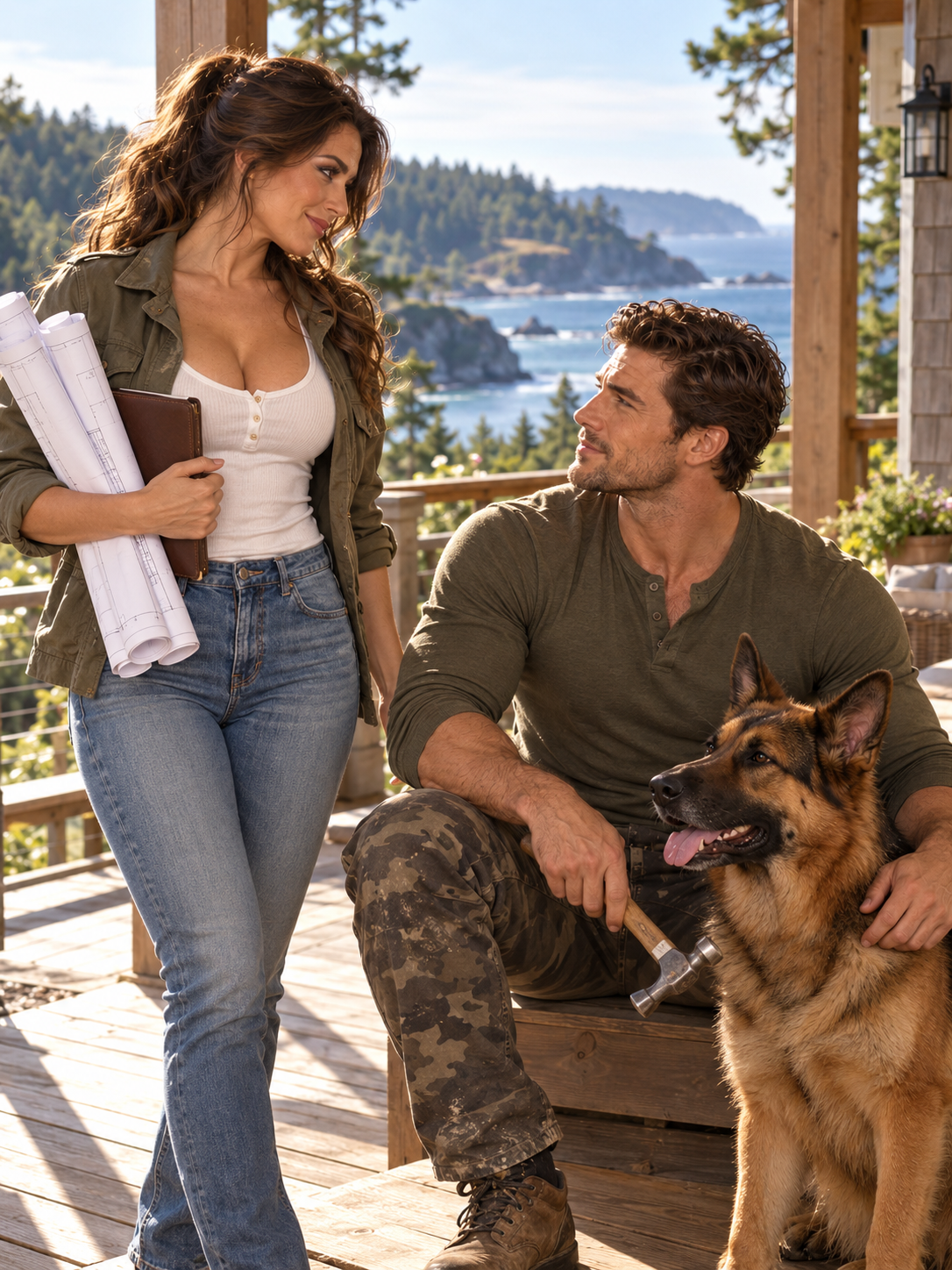
PART 1
Sophie Lane had been at the old estate for less than three minutes when she found a man on a ladder fixing a storm shutter with a German shepherd stretched out below him. Maintenance, she called.
The man glanced down. Sometimes Sophie lifted her plans.
Then tell the owner that avoiding a renovation won’t make his problems disappear.
His mouth twitched.
I’ll make sure he hears that.
She walked inside without another thought.
What Sophie didn’t know was that the man holding the hammer was Mason Hail, a former Navy Seal, and the new owner of the estate she had been hired to restore.
And behind two locked doors at the end of the West Hall was a ballroom no one had entered in 14 years. By the time Sophie learned why it had been closed, the renovation would no longer be about saving an old house. It would be about whether some doors should remain closed forever or whether opening them could give an entire family a future again.
Sophie Lane had been inside Alderwick house for less than 5 minutes when she decided the owner was going to be difficult. That judgment had started outside.
She had pulled into the gravel drive with two sample cases, a tube of drawings, and coffee she had forgotten to finish. Near the front porch, a man in an olive green long-sleeve shirt stood on a short ladder, easing a cedar storm shutter back toward its upper hinge. A sable German Shepherd lay several feet away with his chin on his paws, watching the work with the patience of someone who had seen the same repair take longer than expected.
“Maintenance?”
Sophie called. The man glanced down. He was tall, dark-haired, clean shaven, and dressed for work rather than a design meeting.
Sometimes Sophie shifted the plans against her hip.
“Then tell the owner that avoiding a renovation does not make the renovation disappear.”
A corner of his mouth moved.
“I’ll make sure he hears that.”
She nodded and carried her things toward the porch. Behind her, the dog raised his head.
The man waited until Sophie disappeared through the front doors before looking down at him. Not a word, Flint.
Flint yawned. Inside, Alderwick felt almost exactly as Sophie remembered it, and older at the same time.
The front hall was lined with dark wood that caught the morning light in narrow amber streaks. Brass sconces had dulled at the edges. Two rugs disagreed about what shade of red they were, and the floor dipped slightly near the library entrance.
A small bronze plaque beside the front desk read 1903. Sophie had noticed it the previous autumn during three weeks restoring sash windows and trim in the east sunroom. The house had been built in cedar shingles and local fieldstone when summer families were beginning to settle along the main coast.
The Hail family had kept it through several generations and decades earlier Walter and Evelyn Hail had turned much of it into a seasonal inn and wedding property so the house could help pay for its own survival. It had worked mostly. Sophie
Colleen Doyle came around the front desk carrying a ring of keys and wearing the same navy cardigan Sophie remembered from the year before.
At 61, Colleen moved like a woman who knew which door stuck, which guest needed another blanket and which contractor should already know the answer. You came back, Colleen said.
I was told there would be fewer windows this time. There are. That sounded more reassuring in the email.
Colleen smiled, took the drawing tube, and started through the renovation priorities. Guest rooms first, then circulation, terrace access, lighting, and finishes. The owner wanted the major work done before next wedding season before Sophie could ask when she would meet him.
The front doors opened again. The man from the ladder came in carrying her smaller sample case.
You left this beside your car. I was coming back for it, I figured.
There was no accusation in his voice, which somehow made Sophie hear one. Anyway, she took the case.
Since you’re here, can you hold something?
He looked toward Colleen. Colleen suddenly became very interested in the reservation ledger. A minute later, Sophie had him holding one end of a tape measure against the library wall settled in the doorway.
Three guest room doors upstairs need remeing, Sophie said. The West Hall lighting is worse than I remembered.
There’s a draft in the dining room and somebody should check why the second floor linen closet only closes if you lift it.
The man nodded. You writing any of this down? No.
That confidence is concerning. 28 guest rooms, three doors, west hall lights, dining room draft, linen closet. Sophie stopped writing.
That is unnecessarily organized. I used to make a living not forgetting things. She studied him for a second, then went back to her notes.
Good. You can be useful. By late morning, Sophie had used him often enough to make the arrangement seem official.
He held the end of a tape in the dining room, moved two boxes in the library, and caught a folding step stool before Sophie backed into it while carrying paint samples. Whenever she reached for a ladder, he checked its feet against the floor before stepping away. She noticed that on the third time you inspect every ladder, the ones people climb.
That sounds exhausting.
It’s quick.
Sophie stepped onto the second rung. Do you also count exits and identify the nearest fire extinguishers? Only when the wallpaper looks flammable.
She laughed despite herself. The house gave them plenty to work with.
A library window latched only if lifted at the frame. An old radiator ticked loudly enough to interrupt conversation, then went quiet for no obvious reason.
Sophie moved through each problem with a pencil behind one ear, leaving removable tabs where repairs and design decisions overlapped. Outside, the light had sharpened.
The bay beyond the long windows had turned a harder blue, and the tops of the maples along the drive moved more than they had an hour earlier. The man looked out twice.
We should finish exterior measurements before lunch. Sophie glanced toward the glass.
Why? Winds turning.
The forecast says clear until late afternoon.
It’ll stay clear.
Your drawings won’t stay on the table.
She followed his eyes to the trees, then gathered the exterior plans with exaggerated patience. You have strong opinions for maintenance.
I’m developing more every minute.
On the porch, Sophie spread two sheets beneath a brass paper weight. Flint stayed near the steps with his nose lifted into the moving air. The man placed a toolbox beside the wall and arranged three drivers, a pry bar, and a pencil before returning to the shutter.
Sophie watched him. You always do that.
Do what? Put everything in order before you use it.
Yes, even pencils. They wander.
You’ve lost one today.
Sophie checked behind her ear. He said nothing.
That is not lost. Of course, she pulled the pencil free.
You’re becoming difficult.
I’ll tell the owner.
By noon, Gus were lifting the corners of her plans, and Sophie had to pin one sheet under her palm. The man continued working without looking pleased about being right.
That helped a little. After lunch, Colleen left sandwiches on the library table and went to deal with a florist who had the wrong date for a spring booking. Sophie ate half of hers while marking changes on an old floor plan, then set one glove beside the chair without noticing.
Flint noticed. The shepherd picked it up gently and carried it to the man who was tightening a brass latch near the window. That yours?
He asked. Sophie checked her hands.
Apparently not anymore. He handed it back and rubbed Flint once behind the ear.
Does he retrieve everything people leave around? Mostly things they come looking for later.
That’s judgmental.
He has standards. Flint returned to the doorway.
Later, while checking the service corridor, Sophie stopped at the pantry door. Pencil marks climbed the inside frame beneath old clear finish.
Some had initials and dates, and one sat low enough that she had to bend to read it. M Hey, age nine.
She tapped it with her pencil. Yours?
The man looked over. For the first time all day, his answer did not come immediately.
Yeah. So, you worked here as a kid, too? Visited summers, some holidays.
He ran one thumb over the edge of the door frame. My grandfather used to put me on an upside down apple crate and make me hold screws while he worked on the shutters.
I stripped one so badly, I thought I’d ruined the whole thing.
What did he do? Moved the hinge half an inch.
That’s it.
He said the house was old enough to survive me learning. Sophie looked again at the mark. There were other initials above it, but he had already returned to the hinge.
She let the question go. By late afternoon, Alderwick had begun to feel larger than it had in the morning.
Sophie had measured rooms, she remembered, found two that had been repurposed since her last visit, and discovered a narrow service stair that did not appear on Hearth’s copy of the plans.
The work was the kind she liked, because the building kept disagreeing with paper. At the end of the west hall, she found the doors.
They were taller than the others, dark wood below and glass above, with brass handles dulled by time. Through dusty glass, Sophie could make out the lower curves of covered chandeliers. A strip of hardwood floor, and farther away, three tall windows facing the water.
A heavy brass lock sat between the handles. She leaned closer.
Even closed, the room was easily the largest event space on the floor. Footsteps approached behind her. Sophie turned.
What is this? The man stopped several feet away. Harbor Ballroom.
It’s not on my active scope.
No storage. No.
She looked through the glass again. Then why is it locked? He took longer to answer than the question required.
That room isn’t part of the renovation.
Sophie glanced back at him. That sounds like something the owner should decide. His expression barely changed.
He has. The answer carried more certainty than she expected from a man she still believed was there to fix shutters and stubborn doors. Sophie looked once more at the ballroom, then at the old brass lock.
For the first time all day, she did not write anything down. By the first week of October, Sophie had stopped thinking of Mason as the man from the ladder.
He had become the person who knew which library window needed to be lifted before it latched, which guest room door would swing shut on its own, and which section of porch floor collected water after a hard rain.
None of it appeared in Hearthine’s drawings.
Mason carried the knowledge the way some people carried keys. Without showing it off, and without seeming surprised when someone else needed it, the work settled into a rhythm. One morning began under a hard blue sky, with Sophie measuring the eastern parlor, while sunlight came through the old glass unevenly and turned the floorboards gold in narrow strips.
The next day, a cold rain pushed off the bay and sent everyone indoors, where drills, footsteps, and the smell of fresh coffee moved through the library together. By Saturday, fog had rolled across the lawn and softened the stone wall beyond the terrace until the edge of the property seemed to disappear.
Sophie liked all three versions of Alderwick. She liked it enough to distrust that feeling. Historic projects were easier when she remained slightly annoyed with them.
Mason found her in the east parlor holding two pieces of trim against the wall.
You’ve been staring at that for 5 minutes.
I’m thinking it looks serious.
It is serious. He waited.
Sophie lowered one piece. The newer profile is technically cleaner.
And I hate it. That sounds less technical. She ignored him and held the older profile back in place.
This one belongs here. Mason looked at the wall, then at her. You always decide with that much suffering.
Mason, you should see me choose tile. He nodded once.
I’ll prepare the house.
She smiled despite herself. that happened more often now. Sophie had started in restoration at 19, though not in the elegant way people imagined when she mentioned historic interiors.
Her first summer job had been with a small crew in New Hampshire, where she spent several weeks scraping paint, labeling hardware, cleaning sash weights, and discovering that 100-year-old dust had ambitions of its own. She told Mason about it while they sorted boxes in the old service hall.
My foreman made me redo two hours of work because I mixed screws from two window sets. Mason looked at the labeled trays in front of her. That explains this.
She followed his gaze. Every piece of hardware sat in its own compartment, tagged by room and location. I learned fear is a good teacher.
He wasn’t scary.
You remembered the screws 8 years later. Sophie pointed a pencil at him. His name was Pete.
He had standards. So does Flint. At the sound of his name, Flint lifted his head from the doorway.
Sophie looked at the dog. Your standards appear to include sleeping in the middle of my work area.
Flint put his head back down. Mason continued sorting hinges.
He feels strongly about floor access.
Flint’s presence had become part of Sophie’s workday without either of them deciding it should.
If she opened fabric books in the library, he appeared near the table. If she stretched a measuring tape across the floor, he often found the exact section she needed and settled there with the unhurried certainty of a dog who believed people could work around him. By mid-afternoon, Sophie had discovered the pattern.
It was not the fabric, it was the crackers.
She opened a sleeve and Flint’s ears moved.
You’re a fraud, she told him.
Mason looked over from the window. He served honorably.
He’s staring at a rosemary cracker.
Retirement changes priorities.
That was the first time Sophie realized Flint had been more than simply Mason’s dog.
She looked from the shepherd to Mason. Retirement.
Mason was quiet for a moment. He worked with me in the Navy.
Yeah. Sophie glanced again at Flint, who had now decided the conversation was less useful than Crumbs. What happened?
Training injury. Shoulder started bothering him afterward. He could still work, but not at the level they wanted for the long term.
Mason scratched once behind Flynn’s ear.
They retired him early. And you? A little later.
He returned to the window latch before the conversation could turn into a biography. Sophie, let him.
She was beginning to understand that Mason answered direct questions better than broad ones. The next afternoon, she brought three paint swatches into the library.
I need a neutral for the second floor hall. Mason looked at them.
Sophie waited. He looked longer.
Well, they’re off-white.
Her expression changed. They are not.
They’re close.
This one has warmer undertones. Warm off-white.
This one leans stone. Stone off-white. And this one reflects the coastal light better.
Mason turned the third card toward the window. Expensive off-white. Sophie lowered the samples.
You have managed to be wrong three times in under a minute.
I’m efficient.
You are no longer allowed to have opinions about color. That seems harsh.
It’s professional protection.
Flint sighed from the rug. Mason looked down at him. He agrees with me.
Flint is waiting for crackers. He can multitask.
Not everything Sophie wanted to change survived the week. Near the kitchen corridor, an old brass dinner bell hung from a dark wooden bracket.
It had a worn rope pull and no obvious purpose in a building with phones, radios, and a staff group text. Sophie stood beneath it with her notebook.
This can go. Mason glanced over.
Why? Because the invention of modern communication has reached Maine.
Before he answered, Colleen came through the service door carrying two folders. She reached up, pulled the rope, and rang the bell once.
The sound carried through the first floor. From somewhere near the back stairs, one of the contractors called lunch. Colleen smiled.
Lunch. Sophie looked at Mason. He did not smile.
That was worse. Say nothing.
I wasn’t going to.
You were absolutely going to. She crossed out remove bell and wrote keep existing.
2 days later, she found initials carved into the inside face of the porch railing.
M’s one d oat.
The marks were old, shallow, and partly softened by layers of finish. Sophie rubbed a thumb near them. We should sand this section carefully before recotating.
Mason’s hand came down on the sandpaper before she touched the wood.
Not those. She looked at him.
He released the paper.
One’s mine.
And the other Daniel. There was enough difference in his voice for Sophie to stop joking.
My brother older. Four years. She looked at the two sets of initials again.
You both get caught immediately. What was the punishment?
3 days sanding porch furniture. Sophie smiled. That seems appropriate.
There were 26 chairs. That seems excessive.
Grandfather believed in complete lessons. She wrote beside the railing note.
Preserve initials. Clean around carving only. When she looked up, Mason was watching her.
He said nothing. Neither did she. Alderwick was slowly changing the way Sophie wrote specifications.
At first, her notes had been practical. Repair, replace, remove, refinish. Now, other words appeared.
Keep, preserve, ask first. One afternoon, she found a narrow bench beneath the upper landing window.
Its wood scratched and its cushion badly faded.
A small tag tied to the arm read, “Owner request keep.”
Sophie stared at it. The Hail family may be physically incapable of throwing anything away. Mason, carrying a toolbox behind her, slowed.
They keep things that still have a job.
This bench’s current job is damaging the reputation of upholstery.
Then fix the upholstery. She looked at the frame. The wood was solid.
The seat caught the afternoon light. Someone had rubbed one corner smooth from years of sitting there. Sophie Se had fine.
New cushion. Wood stays.
You’re learning.
Do not make me reverse the decision. The wallpaper in the adjacent room tested her generosity more seriously.
Faded green vines climbed across a yellowed background, meeting tiny red flowers that seemed determined to fight every other color in the room. Sophie stepped back.
Whoever chose this had a complicated relationship with daylight. Mason looked at the wall.
They liked it. They were wrong.
You say that with confidence. I have eyes. A little later, Colleen joined them with contractor invoices and mentioned that Walter and Evelyn had finally settled in comfortably in Brunswick.
Sophie glanced up. The previous owners, yes, they needed less responsibility and ownership went to another family member. Colleen nodded.
A few months ago, Sophie looked toward Mason, expecting him to add something. He was adjusting the blade in a utility knife. He did not.
What Sophie did not know was that Walter, 84, and Evelyn, 82, had spent the better part of 40 years turning Alderwick into something that could survive without being sold piece by piece. By the time Mason had been out of the Navy for several months, neither of them had the energy for winter maintenance, wedding schedules, staffing, insurance renewals, and the hundred quiet decisions an old property demanded.
They had offered Alderwick to Mason. His first answer had been no.
He knew how to organize people under pressure. How to work from incomplete information.
How to make decisions when circumstances refused to become convenient. None of that told him whether the dining room needed six top tables or whether spring brides preferred the east lawn.
Then came the purchase inquiries, boutique groups, small hotel operators, one developer with polished brochures, and a plan to modernize the guest experience. Mason had read that phrase twice.
Alderwick would have remained standing. He was less sure Alderwick would have remained Alderwick.
He accepted the transfer 3 weeks later.
Walter and Evelyn moved to Brunswick to stay with Mason’s uncle, where someone else could worry about groceries, appointments, and the steps after dark.
Mason moved into the room above the old carriage wing. He still had not decided if that meant he had come home. Flint had adjusted faster.
The dog liked the library rug, the kitchen staff, the lawn, and an old maple near the service drive, where squirrels had made the tactical mistake of becoming interesting. Mason had been out of uniform for a year. Some mornings that still felt recent.
Other mornings, it felt like a life he had heard someone else describe. By the middle of October, Sophie knew only fragments.
He had served. Flint had worked with him. He had spent summers at Alderwick.
He knew the Hail family unusually well. For reasons she had not yet examined closely, she had not asked why all of those facts seemed to fit together so neatly. The question waiting at the west end of the house interested her more.
She returned there late one afternoon with a tape measure and a copy of the circulation plan. Outside the glass, fog had thinned enough to reveal the bay again.
Inside the locked ballroom, the late light reached farther across the hardwood floor than it had the week before. Mason came down the hall carrying a small ladder. Sophie held up the plan.
If that room is really the size it looks, the entire event layout changes. Mason stopped.
No seasonal tent on the west lawn. No bottleneck between dining and the terrace. You could run a reception in there and keep the rest of the ground floor functioning normally.
He leaned the ladder against the wall. Sophie tapped the drawing. And with those windows, people would book October weekends just for the room.
Mason did not look at the plan. The ballroom stays closed.
I know that’s what you said.
Then why are we doing this again? Because I assume someone might eventually explain why the most useful room in a wedding property is locked.
His gaze moved toward the dark brass handles. Sophie waited. Nothing.
She exhaled and looked back at the plan. Fine.
I’ll ask the owner when I meet him.
Mason’s expression gave away almost nothing.
Design around it. Sophie lowered the paper.
The words had not sounded like advice. For the first time, she wondered why the handyman spoke as though the decision had already been made. By the middle of October, Sophie had developed a professional dislike for the west corridor, not the corridor itself.
Alderwick’s western hall was actually one of the better parts of the house.
Broad enough to move event furniture without scraping walls, lined with tall windows that caught the afternoon light, and close enough to the dining room that guests would never need to cross the entire first floor. The problem waited at the end of it.
Every time Sophie passed the harbor ballroom, she saw wasted square footage. Mason saw something else. He simply refused to tell her what.
Colleen was not much more helpful. Sophie found her one morning in the front office sorting invoices into two neat stacks while Rain darkened the windows behind the desk.
I need one answer, Sophie said. That sentence usually means several.
The ballroom. Colleen stopped moving papers. Sophie noticed.
There’s no structural issue, right?
Nothing serious. No fire damage? No water problem?
Not beyond what you would expect in a coastal house this old. Sophie leaned one hand on the desk.
Then why has it been closed? Colleen looked down at the invoice she had been holding. Family decision.
For how long? 14 years. Sophie stared at her.
14. Colleen nodded. Sophie turned slightly toward the hall as though distance might make the answer more reasonable.
That room could eliminate the seasonal reception tent entirely. I know it could change the economics of the whole renovation.
I know that too. Then why is everyone acting like the door belongs to another building?
Colleen’s expression softened without becoming open because not every closed room is waiting for a better business plan.
That was all Sophie got. She left with more questions than she had brought in.
The weather did nothing to improve her patience. A clear morning could turn sharp by noon.
Wind came off Ponobscot Bay in long gusts that rattled loose branches against the stone wall, and one entire afternoon vanished beneath steady rain that turned the lawn dark and glossy. Alderwick changed with it.
On bright days, Sophie wanted to open every curtain and pull the house toward the windows. On gray days, the dark wood made more sense.
Brass lamps warmed the halls. The library smelled faintly of old books and coffee, and even the floorboards seemed louder when the rain covered every other sound. Mason seemed to belong equally to both versions.
He was working on the West Hall sconces one afternoon while Sophie checked fixture spacing against her drawings. Flint lay near the far wall, front paws crossed, watching people move around him without feeling obligated to participate. Sophie looked through the ballroom glass.
The light beyond the doors was silver. Now, the sea nearly the same color as the sky.
“You know what would sell this room?”
she asked. Mason did not look down from the fixture.
“Apparently, I’m about to find out.”
“Okay,” he tightened a screw.
“Think about it.
Those windows, late afternoon, leaves still on the trees, no tent walls, no heaters fighting wind all night.
You could do ceremony outside if the weather cooperates, then move everyone straight in here.”
Mason kept working. Sophie continued. Dinner dancing.
First dance right in front of the bay. The screwdriver stopped only for a second, but Sophie saw it. Flint did too.
The shepherd lifted his head toward Mason, waited, then lowered it again when Mason resumed. Sophie did not ask. Instead, she looked back through the dusty glass.