No One Could Handle the Paralyzed CEO— Until a Single Dad Stayed and Changed Everything (Part 2)
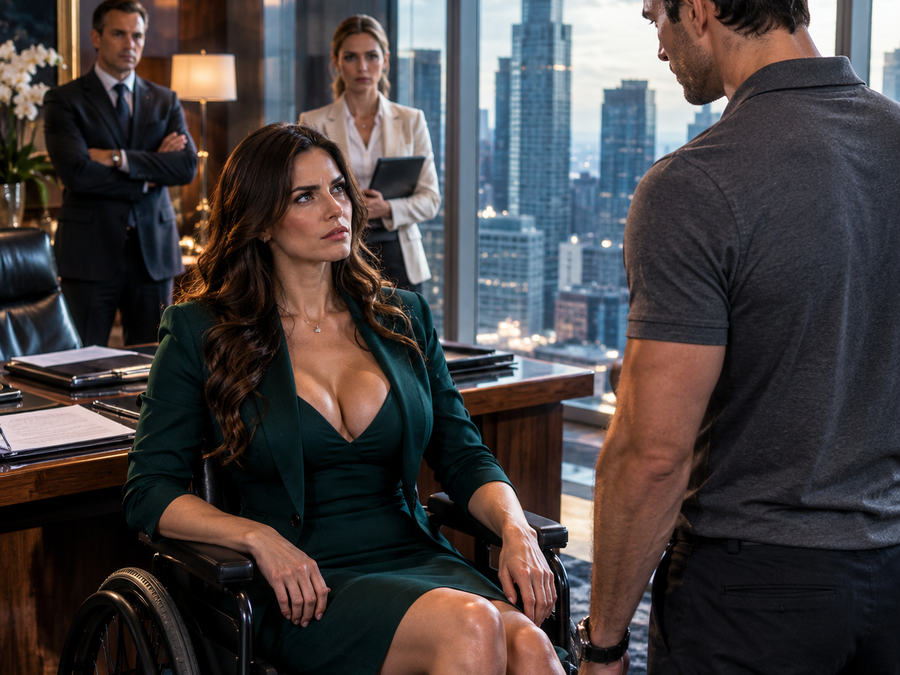
No One Could Handle the Paralyzed CEO— Until a Single Dad Stayed and Changed Everything (Part 2)
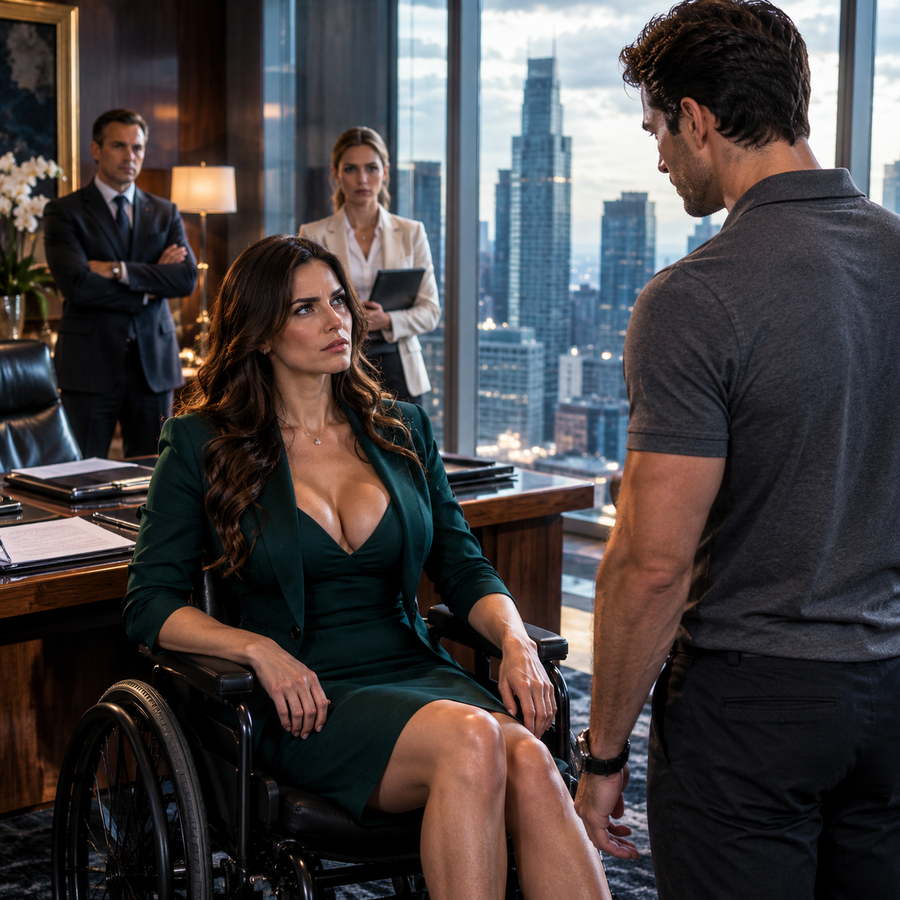
PART 2
By week six, the testing was mostly gone. She still pushed back when she disagreed. Still delivered corrections without softening them. But the underlying current had changed. She wasn’t checking his work to find errors anymore. She was engaging with it as a starting point.
That was different. That was trust in the specific language Victoria Hartwell spoke. It was on a Thursday evening at the end of week six that the second real crack appeared. Bigger than the first.
Daniel was in the adjacent office finishing the weekly correspondence review when he heard her phone ring. He wasn’t paying attention to her calls. He had learned early to create enough distance that she had privacy while remaining available.
But something in the quality of the silence that followed made him look up. She had answered. She was speaking. Her voice was low. Controlled. And underneath the control was something he had not heard before. Something that sounded like pain of a completely different kind.
“No,” she said. “That’s not—no.” A pause. “James, I understand what you’re saying.” A pause. “I don’t think this is the right venue for that conversation.” Another pause. Longer. “I said I understand.”
Her voice had gone very flat. The flatness that wasn’t calm but was control deployed over something that wasn’t calm at all. “I don’t need you to explain it to me again.” And then, much quieter. “Please don’t call this number again.”
The call ended. The silence after it was different from her usual silences. It sat in the air differently. Heavier. And irregular. The way silence does after something breaks.
Daniel kept his eyes on the document in front of him. He didn’t move. He didn’t make a sound. Three minutes passed. “James Whitfield,” Victoria said. Her voice came through the open doorway. Still flat, but with a precision to it now, like she was making a decision about what to say and committing to it.
“We were together for four years. He left eight months after the accident.” A pause. “He called to tell me he’s getting married.”
Daniel sat down the tablet. He didn’t say anything immediately. He let the information settle. “Are you okay?” he asked. He kept his voice the same way he had kept it on the bad morning. Level. Present without performance.
“No,” Victoria said. Just like that. Flat and honest. “No, I’m not particularly okay.” “Do you want me to leave?” A long pause. “No,” she said. “Keep working.”
So he did. He picked up the tablet and went back to the correspondence. And from the other room, she went back to whatever she had been doing. And they sat in that silence together. Not a comfortable silence exactly, but a shared one. The kind of silence that means you’re not alone, even when nobody is talking.
An hour later, when he stood to leave, he paused in the doorway. “My wife used to say,” he said, and he kept his voice quiet, “that the hardest part of losing someone isn’t the big moments. It’s the ordinary ones. The Tuesday afternoons when you reach for the phone to tell them something. And then remember.”
Victoria was at her desk. She didn’t look up. “She sounds like she was smart,” Victoria said. “She was the smartest person I ever knew,” Daniel said. “Until recently.” He left before she could respond.
And he drove home with the windows down, thinking about the way she had said no twice. Plainly. Without performance. When he asked if she was okay. That’s simple honesty. How hard it must have been for her. How foreign, he thought. She is still in there. She is still in there underneath everything.
That was week six. Week seven brought the board. Not the routine board calls that came and went. This was different. This was the thing Ranata had warned him about in a terse phone call two weeks earlier, and that Margaret had referenced in oblique terms the week after, and that Daniel had been tracking in the margins of the board-related correspondence with growing concern.
There was a motion being prepared. A formal motion, circulated quietly among three of the five board members, proposing that the board vote on a temporary transfer of executive authority from Victoria to a co-CEO arrangement, pending a formal performance review.
The language was careful. The language was always careful in these situations. Designed to sound reasonable. To sound like concern rather than what it actually was. Which was a power move executed by people who had been circling for months and had decided that fourteen months post-accident was enough time to make their play.
Daniel found out about it on a Wednesday morning when he intercepted a misdirected email. Misdirected because someone on the board’s legal team had made the specific, careless error of sending a draft of the proposal to Victoria’s corporate email address rather than the personal email address of her lead board ally. And it had landed in the stack of correspondence he reviewed each morning.
He read it twice. He sat with it for four minutes. Then he walked into Victoria’s office. She was on a call. She looked up and immediately read something in his face. He wasn’t performing alarm, but he also wasn’t performing everything is fine. And she was fluent by now in the specific vocabulary of his expressions.
She said into the phone, “I need to call you back.” And set it down. “Tell me,” she said. He set the printout on her desk. She read it. She read it again. Her face went very still. Not the controlledness of someone maintaining composure, but the deeper stillness of someone whose body has stopped moving so the mind can work at full speed.
“When did this come in?” “This morning’s correspondence. It was misdirected. Came to your corporate email instead of Preston’s.” “Preston.” She said the name with a flatness that told him Preston was the board ally who should have received it. “So they don’t know I have it.” “Not yet.”
She was quiet for ten seconds. He counted them. “Sit down,” she said. He sat. “Three board members,” she said, still reading. “Hargrove and—” she stopped. “Chen.” Something crossed her face. “Marcus Chen has been on this board for nine years. I appointed him. I know—” He sat across from me three weeks ago and told me the Q3 numbers were strong.”
“Yes.” “While he was drafting this, apparently.” Victoria set the paper down on the desk very precisely. The way she set everything down. Exactly parallel to the edge. Exactly centered. Like even now, even in this moment, the geometry of the physical world needed to be correct.
“They think I’m vulnerable,” she said. Not angry. Accurate. “They think the accident made you vulnerable,” Daniel said. “There’s a difference.” She looked at him. “Is there?” she said. “Yes,” he said. “One of those things is true and one isn’t.”
The silence that followed had a different quality from all the silences before it. It was charged. It was the silence before something shifts. “What do I need to do?” she said. Not what are my options. Not what do you suggest. “What do I need to do?” Like she had already decided she was going to fight.
And the only question was how. That was the Victoria Hartwell who had built a billion-dollar company from a product concept and three employees in a converted warehouse in San Jose. That was the woman Margaret had been waiting for.
Daniel leaned forward. “You need to get to Preston in the next twenty-four hours,” he said. “Before anyone realizes the email was misdirected. You need the two remaining board members—Preston and Williamson—locked in with you before Hargrove, Lou, and Chen have a chance to work them.”
“Preston I can get. Williamson is—Williamson is cautious. She doesn’t commit quickly.” “What does Williamson care about most?” Victoria thought. “Liability exposure. She’s been on the board of three companies where executive transitions went badly. She knows what a forced transition does to stock price.”
“Then you don’t sell her on your leadership. You sell her on the risk of destabilizing a leadership structure in the middle of your largest product cycle in four years.” Daniel kept his voice even and clear. “You make it about math, not loyalty.”
Victoria was looking at him with an expression he hadn’t seen before. It wasn’t the evaluating look or the correcting look or the carefully neutral look she deployed when she didn’t want him to read her. It was something more direct than any of those.
“You know,” she said slowly, “that if this motion passes, there’s no job here. Not for you.” “I know.” “You’d be advising me on how to save a position that, if I lose it, ends your employment.” “Yes.” “That’s a conflict of interest.” “It would be,” Daniel said, “if I were giving you advice to protect my job. I’m giving you advice because it’s the right strategy and you need someone to think clearly right now and you’re too close to it.”
A pause. “You’re too close to it,” he said again, gently. “That’s not a criticism. It’s just true.” Victoria looked at the paper on her desk for a long moment. “I’ve been running this company alone for fourteen months,” she said. Not a complaint. A statement. “I know.” “I built it alone before the accident. I’ve operated alone since.” She paused. “I don’t know how to—” She stopped.
“Accept help?” Daniel said. Her jaw tightened. “I was going to say delegate strategy,” she said. “Sure,” Daniel said. She looked at him. Something shifted in her expression. The closest thing to humor he had seen on her face in seven weeks. And it was buried under layers of other things. But it was there.
“Get Preston on the phone,” she said. “And find me everything you can pull on Williamson’s voting record on executive matters. I want to walk into that conversation knowing exactly what arguments land with her.” “I’ll have it by six,” Daniel said.
He was at the door. “Carter,” she said. He stopped. “Why are you still here?” Her voice was quiet and without its usual edge. Not challenging. Genuinely asking. “Eleven people before you. You have a daughter. You could find another job easier than this.” A pause. “Why are you still here?”
He stood in the doorway for a moment. “Because you’re worth staying for,” he said. “And because I think some part of you already knows that and is waiting for someone else to know it, too.”
He didn’t wait for her response. He went to get Preston on the phone. Behind him in the office, there was silence. But it was not the silence of someone who had nothing to say. It was the silence of someone who was trying to remember how to receive something they had stopped believing they deserved.
And in that silence, something that had been frozen for fourteen months began, very slowly, very quietly, to move.
Preston came through in eighteen hours. Daniel had gotten him on the phone that same Wednesday evening, and he had watched Victoria conduct that conversation from the adjacent office—not listening, but present. Available if she needed anything.
And what he heard in her voice during that call was different. The Victoria who ran board meetings and dictated strategy and managed eleven simultaneous moving pieces without blinking. This was quieter. More careful. Like someone who had learned to trust very few people and was now having to lean on one of them and wasn’t entirely sure the ground would hold.
Preston held. “He’s with us,” Victoria said when she ended the call. She didn’t say it with relief. She said it like a general moving a piece on a board. “Good,” Daniel said. “Williamson.” “Tomorrow morning. I want to go in person.” He looked at her. “Her office is in the city,” she said. “I know what you’re thinking. I don’t care.”
Her chin was set at the angle he had come to recognize as unnegotiable. “I’m not having that conversation over a screen. I need her to see me in the room.”
He didn’t argue. He was already thinking through the logistics. The transport arrangements, the accessibility requirements, the timing relative to her morning medication schedule. He had all of it mapped in his head by the time she finished the sentence.
“8:15 departure,” he said. “That puts you at her building by nine. Enough buffer before her first morning meeting.” “Fine. I’ll drive.” She looked at him. “You don’t have to.” “I know I don’t have to,” he said. “8:15.” She didn’t argue either.
That night, alone in his apartment after Lily had gone to bed, Daniel sat at the kitchen table and looked at the ceiling for a long time. He was thinking about what Victoria had said. Eleven people. You could find another job. Why are you still here?
He had given her the true answer. But there was another layer underneath the true answer. One he hadn’t said out loud because it wasn’t relevant to the moment. And because some things you kept to yourself until you understood them better.
He was staying because for the first time since Susan died, he felt like himself again. Not the diminished, surviving version of himself that had been moving through the past eighteen months. The real version. The one who was good under pressure. The one who solved things. The one who didn’t flinch.
Victoria Hartwell had not given him that back. But she had created the conditions for him to find it again. And that was something he hadn’t expected and didn’t quite know what to do with. He went to bed at midnight. He was up at 5:30.
The meeting with Williamson lasted forty-seven minutes. Daniel waited in the car. He had offered to come up, to carry documents, to manage anything that needed managing, and Victoria had looked at him and said, “I need to walk in there alone.” And he had understood completely and said nothing except, “I’ll be right here.”
He sat in the car and thought about the eleven people who had come before him. And about what it must have cost each of them to leave. Not the walking out part. The decision part. The moment when they decided that this was too hard, that the damage being done to them outweighed whatever the job offered.
He didn’t judge them. He had come close to that decision himself. In the first week. On a Tuesday afternoon, when Victoria had dismantled a scheduling decision he’d made in front of her entire executive team on a video call. Not cruelly, not unfairly, but completely. Without softening a single word.
And he had felt something hot and humiliating move through him and had spent thirty seconds looking at the exit. He had looked at the exit and thought about Lily. Then he had thought about the way Victoria had rearranged his priority document on that first day. The way she had used his work and not said so. The respect underneath the harshness.
And he had turned back to the room and kept going. Forty-seven minutes. Victoria came out of the building at 9:52. He could read her from fifty feet away. The set of her shoulders. The angle of her chin.
Williamson was in. “She’s voting with us,” Victoria said when he opened the car door. Her voice was controlled, but her eyes were alive in a way they hadn’t been yesterday. “She wants a written brief on the transition risk analysis. I told her you’d have it on her desk by Thursday afternoon.” “I will,” Daniel said.
“She also—” Victoria paused. She was looking at her hands in her lap. “She told me she’d been planning to vote with Hargrove.” Daniel went still. “Before today,” Victoria said. “She’d been leaning toward the motion.” She was quiet for a moment. “She said what changed her mind was seeing me in the room.” A pause. “She said she’d been told I was diminished.”
“Those were her words. That the accident had left me diminished.” She said the word like it was something she was picking up off the floor and examining from a distance. “She said I was the most undiminished person she’d seen in months.”
Daniel started the car. He didn’t say anything because nothing he could say would add to what Williamson had already given her. And he knew when words were just noise in the way of something a person needed to sit with.
They drove in silence for four minutes. “Thank you,” Victoria said quietly. Like she was not entirely sure how to deploy those two words anymore. “For what?” Daniel said. “For making me go in person.”
He kept his eyes on the road. “You made that call yourself. You didn’t argue with me.” “No.” “Everyone argues with me.” “I know,” he said. “That’s their mistake.”
He heard something from the passenger seat. Not quite a laugh. Something shorter and more surprised than a laugh. More like the sound a person makes when something catches them off guard and the response comes out before they can control it.
It was the first real sound of anything close to lightness he had ever heard from her. He did not make a big deal of it. He kept driving.
That was Thursday morning. The next ten days were the most intense of Daniel’s professional life. He wrote the Williamson brief in fourteen hours, cross-referencing three years of board voting records and two failed executive transitions at competitor companies that Williamson had been vocal about publicly.
He built the argument with the precision of someone who had read enough of Victoria’s own strategic documents to know how she thought. And he wrote it in a voice that sounded like hers. Because by now, after seven weeks, he knew how she constructed a case. The specific architecture of it. The way she laid foundation before she built. The way she never oversold.
Victoria read the draft at six in the morning the day he finished it. He was in the adjacent office when she called him in. She had the draft on her desk with three pages annotated. “Page four,” she said. “The transition risk matrix. You’re missing the IP portfolio vulnerability. If I’m removed and the co-CEO arrangement disrupts the development pipeline, we lose the patent window on the accessibility suite.”
He had missed it. He took the note and didn’t make excuses. “I’ll have the revised version in two hours,” he said. “One hour.” “One hour.” He had it to her in fifty-five minutes. She sent it to Williamson without changing a word.
But that was not the moment he remembered from those ten days. The moment he remembered happened on a Saturday afternoon, late in the second week of their preparation, when he came by the estate to drop off documents and found Lily with him.
Because his sister had canceled last minute and he had no backup, and he had debated not coming. But the documents needed to be there. And so he had brought her. Lily sat in the front hall with a book while Daniel went to Victoria’s office. He was in and out in four minutes. Dropped the documents, confirmed two items, left.
He was almost back to Lily when Victoria appeared in the hallway. She had not been told about Lily. She had simply come out of her office for something else and found a nine-year-old sitting on the bench in her front hall reading a library book with total absorption.
Daniel’s first instinct was to apologize. He stopped himself. An apology would make it a problem. And right now, it wasn’t a problem. It was just a child reading a book. Victoria stopped in the hallway. Lily looked up.
She looked at Victoria with the particular directness of children who have not yet learned to perform their reactions for other people’s comfort. “Hi,” Lily said. “Hello,” Victoria said.
Lily looked at the wheelchair with the uncomplicated curiosity of someone too young to have learned that looking was impolite. “Does it go fast?” she asked. Victoria blinked. “What?” “Your chair. Can it go fast? My friend Marcus has one and his goes really fast on the driveway.”
Something moved across Victoria’s face. Not a fence. Not the controlled blankness she deployed against unwanted attention. Something slower and more genuine. “It goes a reasonable speed,” Victoria said. “That means medium,” Lily said, turning a page. “Medium is fine.”
She looked up again. “I’m Lily. My dad works for you. He says you’re really demanding, but that’s okay because demanding people are usually the most interesting.”
The silence that followed was one of the strangest of Daniel’s recent life. He watched Victoria Hartwell—who had reduced grown executives to silence, who had outlasted eleven assistants, who had looked three hostile board members in the eye and not blinked—stand in her own hallway and stare at a nine-year-old girl with an expression that could only be described as completely disarmed.
“He said that?” Victoria said. “Uh-huh.” Lily was reading again. “He also said you play piano, but that you say it doesn’t count. He thinks it counts.”
Victoria turned her head and looked at Daniel. Daniel looked back at her with the expression of a man who had raised a very honest child and had no apologies to make for it. “She’s direct,” Victoria said. “She gets it from her mother,” Daniel said.
Something moved through Victoria’s eyes at that. She looked back at Lily. “What are you reading?” she said. And for ten minutes, in the hallway of that enormous house, Victoria Hartwell talked to a nine-year-old about a fantasy novel. Not performing interest. Not going through a social motion. Actually engaged. In the way people get engaged when they weren’t expecting to be and then find themselves there before they realize it.
Lily, for her part, treated Victoria with the same easy equality she treated everyone. As simply another person. Neither more nor less significant for the wheelchair or the billions or the reputation. Just a person in a hallway who wanted to know about the book.
When Daniel and Lily left twenty minutes later, he glanced back before the gate closed. Victoria was still in the hallway. Standing still. Looking at nothing in particular. Like something had moved inside her, and she was waiting to see where it settled.
That was the moment Daniel understood what had actually been taken from her. Not mobility. Not independence. Not even the version of her life that had existed before the accident. What had been taken was the ease of ordinary human contact. The simple experience of being met by another person without that person’s first adjusting themselves to account for what she had lost. Without the pity or the performance or the careful calibration of how much to look and how much not to look and what to say and what not to say.
Lily had given her thirty seconds of that. Just thirty seconds of being met like a person. Without adjustment. And it had stopped her cold.
He drove home thinking that the most powerful person he had ever worked for had been undone completely and totally by a child asking if her wheelchair went fast.
The following Tuesday was when everything cracked open. It was almost ten in the evening. Daniel was still at the estate. There were documents to finish before a board-related call the next morning, and he had been working late more often than not in these two weeks. Not because Victoria demanded it, but because the work required it. And he had stopped counting hours against each other.
He was at the side desk when he heard her voice from the main office. Not on a call this time. Not directed at him. He heard his name. He heard it the way you hear something that wasn’t meant for you. Unclear. Partial. Uncertain.
He stood and moved toward the doorway without thinking. Victoria was on the phone. Her back was to the door. “He doesn’t—” She stopped. “No, he doesn’t know.” Another pause. “Margaret, I’m not saying it.” Her voice dropped lower. “I know what you’re saying. I know.”
He stepped back. He moved away from the doorway without making noise. He went back to the desk. He sat there for sixty seconds. He was not naive. He knew what it sounded like. He knew what a person’s voice sounded like when they were talking about something they were trying not to feel.
He had heard that voice in the mirror for a year and a half. He also knew that Victoria Hartwell had spent fourteen months building walls and that whatever was on the other side of those walls was her own. And he was not going to put her in the position of knowing he had heard.
He picked up the tablet. He went back to work. Fifteen minutes later, she appeared in the doorway. She looked at him for a moment. “You should go home,” she said. “It’s late.” “Almost done,” he said.
“Daniel.” She almost never used his first name. His head came up. She was in the doorway, one hand on the frame. The controlled composure was still there, but the edges of it were less precise than usual. Like she had been doing something that cost her and was managing the aftermath.
“The night of the accident,” she said. He put the tablet down. “I don’t talk about it.” She said, “I don’t talk about it with anyone. My doctors know the medical facts. Margaret knows the practical details. The legal team knows what they need to know for the insurance case that’s been running for sixteen months.” She paused. “Nobody knows what actually happened.”
He waited. “I wasn’t alone in the car,” she said. The quiet in the room shifted. “James was driving.” She said he walked away without a scratch. “The physics of it. The angle of the impact. It hit entirely on my side.”
She said it the way she said everything factual. Directly. Without decoration. But underneath the directness was something enormous and poorly contained. “The official reports say driver error on the other vehicle. That’s true. It was the other driver’s fault.” She paused. “But James had been drinking. Not heavily. Enough that his reaction time was slow. Enough that he didn’t brake when he should have. And the angle was worse than it needed to be.”
Another pause. “He knows that. I know that. Nobody else does.” Daniel did not move. “He stayed for eight months,” Victoria said. “I told myself he stayed because he loved me. But I think he stayed because he needed to know that I wasn’t going to say anything about the drinking. About his reaction time.”
The flatness in her voice was doing a lot of work. “When he was sure I wasn’t going to say anything. When enough time had passed and it was clear I was going to keep it contained. He left.” She looked at the wall rather than at Daniel. “And I let him. Because what was the alternative? Destroying someone publicly over something that wouldn’t change the physics.”
The silence was the longest and heaviest one Daniel had sat in since the night Susan died. “So you protected him,” Daniel said. His voice was very quiet.
“I protected myself,” Victoria said. Sharp and immediate. “I didn’t want to be the story. The billionaire CEO whose boyfriend was half-drunk and slow on the brakes. I didn’t want that to be the narrative.” She stopped. “But I also—” Yes. Something shifted in her face. The sharpest thing. The most honest thing he had seen from her in nine weeks. “I protected him because I had loved him. And that felt like the last thing I could do with that.”
He looked at her and felt something behind his sternum that was not pity and was not sympathy in the soft, cushioned sense of that word. It was recognition. He knew what it looked like when someone had been carrying a thing alone for too long. He knew it from the inside.
“You have been holding that for fourteen months,” he said. “Yes.” “By yourself.” “Yes.” “And tonight you told me.”
She looked at him then. Really looked at him. The way she almost never did. Without the layers, without the management, without the distance. “I don’t know why,” she said. “I do,” Daniel said. She waited.
“Because you trust me,” he said. “And you haven’t trusted anyone in a very long time. And it’s terrifying. And you did it anyway.”
Her jaw was set. Her eyes were bright in the way that had nothing to do with tears and everything to do with someone holding themselves very precisely because the alternative was not holding themselves at all. “I’m not—I don’t want—” She stopped. She looked away. “I don’t want you to see me differently because of this.”
“I don’t,” Daniel said. “You can’t know that, Victoria.” He said her name quietly. The way you say something you want someone to actually hear. “I’ve been in this house for nine weeks. I’ve watched you run a company and fight a board and navigate medical appointments and prepare for the hardest meeting of your professional life. I’ve watched you play piano alone at eleven at night and pretend it doesn’t matter. I’ve watched you talk to my daughter about a fantasy novel like it was the most natural thing in the world.”
He paused. “I already see you. All of it. This doesn’t change the picture. It fills it in.”
The silence after that was long and different from all the silences before. She didn’t say anything, but she didn’t look away either. And for the first time in nine weeks, Victoria Hartwell sat in the same room as another person without managing the distance between them.
Just sat. Just breathed. Just let herself be seen. Outside, the night was quiet. Somewhere in the house, a clock was ticking. Daniel sat still in his chair, not filling the silence, not requiring anything from her. Just present in the way that he had learned, slowly, through loss of his own, was the only real thing you could offer someone who was carrying something too heavy.
After a long time, she said, “I’m tired.” He said, “Not tonight. I mean—” she paused. “I’m tired of how much this all costs.” “I know that, too.”
She looked at him one more time. Something in her face had shifted. Not opened, exactly. But rearranged. Like furniture moved in a room to make space for something new. “Go home to your daughter,” she said. “Yes,” he said.
He stood. He gathered the documents. He moved to the doorway and paused. The way he always did when he was leaving. “Victoria,” he said. “What?” “You’re the least diminished person I’ve ever met.”
He left before she could respond. And behind him, in the stillness of that house, something that had been locked for fourteen months turned in its lock. Just slightly. Just enough. Like a door that was not yet open, but was no longer fully closed.
He didn’t sleep that night. Not because anything was wrong, because something was right. And he didn’t quite know what to do with that. He lay in the dark in his apartment and listened to Lily breathing from down the hall and thought about what Victoria had told him.
The accident. James. The eight months of silence. The particular kind of loneliness that comes from protecting someone who didn’t deserve it and knowing every single day that you made that choice and you would make it again because that was the kind of person you were underneath everything.
He thought about Susan. About the last three months when the pain was bad and she had stopped being able to hide it and had cried one afternoon and told him she was sorry. She was so sorry for what this was costing him. And he had held her face in his hands and told her that loving her was the least expensive thing he had ever done.
He understood Victoria in a way that had nothing to do with strategic planning or calendar management or board politics. He understood her the way people understand each other when they’ve both been through the kind of thing that strips everything down. But what’s actually there?
He was at the estate by 6:15. Victoria was already at her desk. She didn’t look up when he came in. He didn’t expect her to. He went to the correspondence, started the morning triage, made her coffee, set it on the credenza, said nothing about the night before, said nothing about what she had told him, gave her the morning she always got. Clean. Efficient. Without weight.
She picked up the coffee. After a moment, she said without looking up, “The brief for Williamson is holding.” “Good,” he said. “Preston spoke to her again this morning. Early. He’s thorough.” “He’s nervous,” Victoria said. “There’s a difference.” She turned a page. “Hargrove is making calls. He’s working the investor community. Trying to build pressure from outside the board. He wants this to look like a market concern, not a power play.”
Daniel set down the tablet. “How do you know?” “Because I have people too,” she said. Her eyes came up and met his for just a second. “I’ve been running this company for eleven years. I didn’t do it by being the only person in the room without information.”
He looked at her. “What are they saying?” “That I’m erratic. That the accident changed my judgment. That the accessibility project is a vanity play, not a real business direction.” She said each one with the flatness of someone reading charges they fully intend to contest. “That I’ve become emotionally unstable.”
The last one landed differently. Both of them knew it. “They have someone on the inside,” Daniel said. It wasn’t a question. Victoria’s jaw tightened. “That’s what I believe. Yes.” “Who?”
She was quiet for three seconds. “I don’t know yet. But someone has been feeding information to Hargrove’s camp. Things that should not have left this office.” Daniel ran through the list. Margaret. Dr. Cho. Ranata at headquarters. Marcus in IT. The legal team. The handful of executive staff who had access to Victoria’s direct correspondence.
“How long has this been happening?” he said. “The specific leaks? Three, maybe four weeks.” He felt something go cold and precise in his thinking. Three to four weeks. Right around the time the board motion had been drafted. Someone had known it was coming. Or had helped it along.
“I want to go through all internal correspondence from the past month,” he said. “Everything. Not just the flagged items. Everything.” “That’s twelve hundred documents.” “I read fast,” he said.
She looked at him. “You did that once before,” she said. “The Hartford contract.” “Yes.” “That was three hundred pages and you did it overnight.” “This will take two nights,” he said. “Maybe three.”
Something moved through her eyes. Not gratitude, exactly. Not yet. Something more complicated. The particular emotion of someone who is not accustomed to being fought for and doesn’t know immediately what to call it when it happens.
“You have a daughter,” she said. “Who is at school during the day and asleep by nine,” he said. “I have the hours.” She looked at him for another long moment. “Start with the external communications,” she said. “If there’s a leak, it goes out, not in. Look for patterns in what’s being shared and when. That’s what I would have done.” “I know,” she said. “I said it anyway.”
He started that afternoon. He had the answer by the end of the second day. It wasn’t in the documents themselves. It was in the metadata. The timestamps. The access logs. The pattern of who had opened what and when.
He had gone to Marcus in IT with a specific request framed as a routine security audit. And Marcus, who was meticulous and loyal to Victoria in the way of someone who had watched her build something extraordinary and was not going to let it be taken apart, had pulled the access records going back ninety days.
The pattern was clear once you knew to look for it. Someone had been accessing Victoria’s strategic planning files on a recurring basis. Not the operational documents, not the correspondence, but the forward-looking strategy files. The ones that outlined the accessibility project and its budget projections and its timeline.
