A Navy SEAL Stopped for Coffee… Then He Froze at a Familiar Voice Behind the Counter – Part 1
A Navy SEAL Stopped for Coffee… Then He Froze at a Familiar Voice Behind the Counter
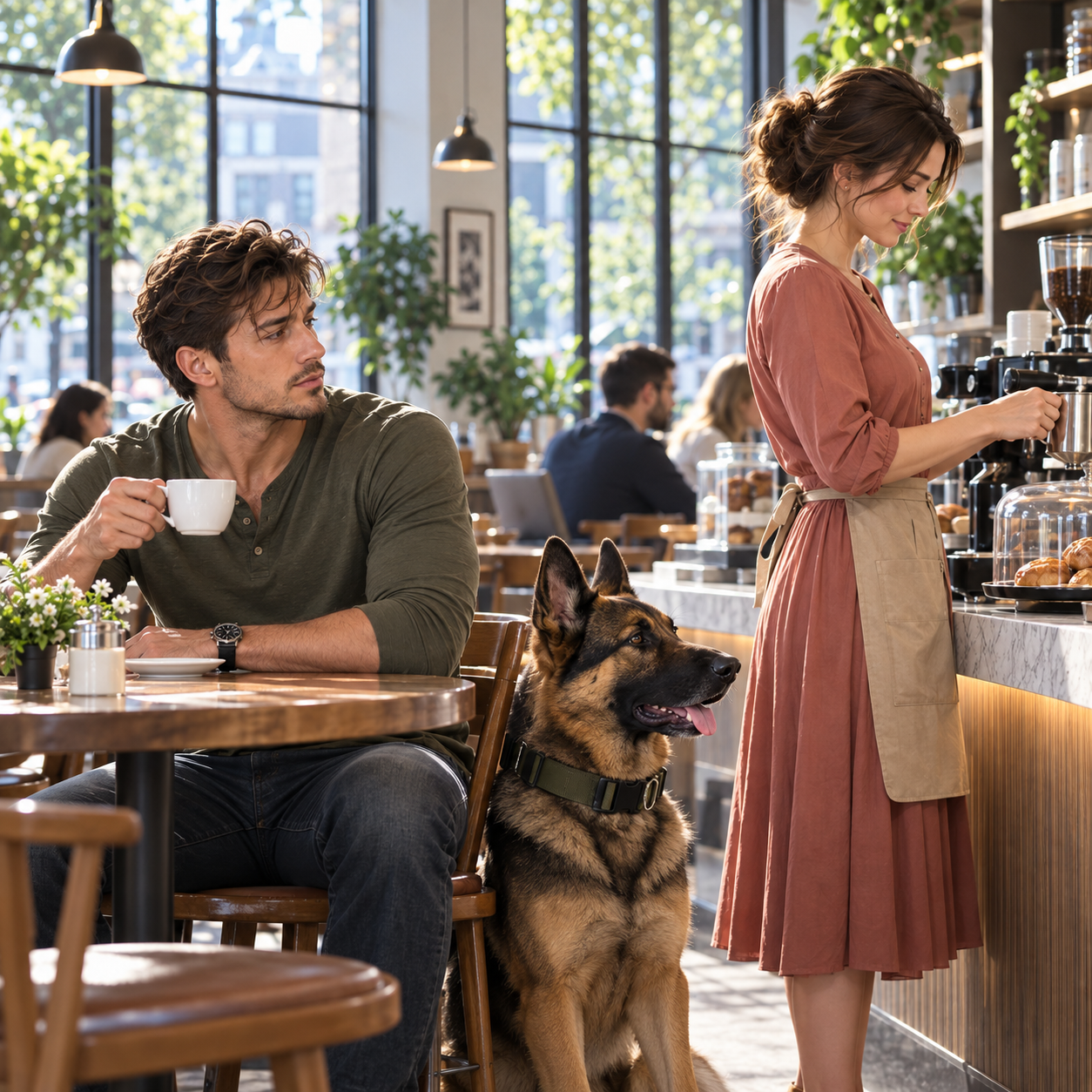
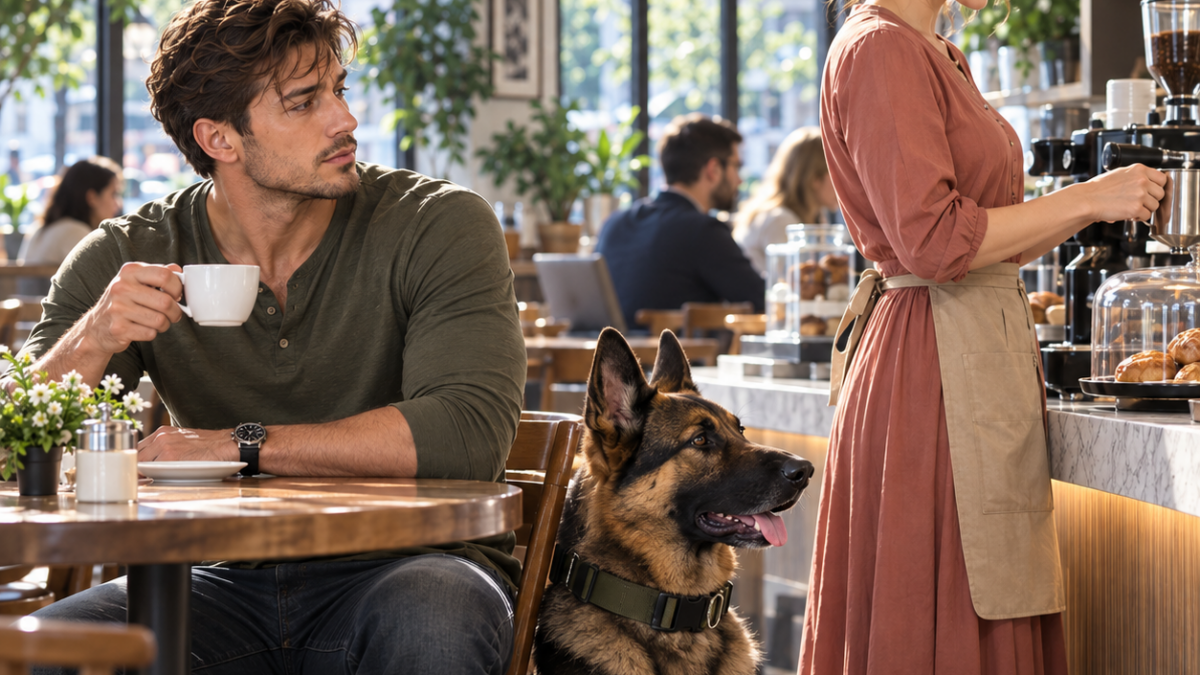
The coffee cup nearly slipped from Alec Warren’s hand, the moment he heard the woman behind the counter speak.
14 years had passed since he last heard that voice, and the Navy Seal had spent all that time telling himself she belonged to a life he would never see again. He looked up and recognized her instantly.
Rachel, she still hadn’t seen him, so Alec quietly watched from across the cafe.
Then a boy came rushing in and threw his arms around her and something inside Alex sank. Maybe she really had moved on.
Maybe he was the only one who hadn’t.
He was about to leave without saying a word when Rachel picked up the coffee pot and started walking toward his table. And as she came closer, Alec was about to discover that almost everything he had believed through all those years was wrong.
By the last week of September, Alec Warren had been awake before sunrise so many mornings in a row that sleeping late no longer felt natural. His leave had started 2 days earlier, 10 days on paper between one training cycle and whatever came next. At 35, Alec had spent most of his adult life inside schedules that belonged partly to other people.
report times, flights, training blocks, briefings, movements, windows that opened and closed, whether a man was ready for them or not. He had learned to work comfortably inside that structure.
Lately, though, he had begun to notice how easily a life could become a collection of departure dates. There was nothing dramatic behind the trip to Eastern Oregon.
An old teammate had once told him that if he ever wanted a few quiet days without traffic, aircraft, or somebody asking where he needed to be next, he should drive to Walawa County in early fall. Joseph was small, the mountains were close, and by late September, the summer crowds thinned enough that a man could hear wind moving through dry grass before he heard an engine. That had sounded good.
So, Alec packed lightly, put Mako in the back of the truck, and headed north. Mako was five, a dark sabled German Shepherd with the compact, controlled energy of a dog that had spent most of its life learning that waiting could matter as much as moving. He rode without complaint, occasionally lifting his head when the road changed texture, or Alex slowed through a town.
Otherwise, he slept with his chin against the edge of the seat, conserving himself with a seriousness Alex sometimes envied. The first two days had been uneventful in the best possible way. Long roads, gas station, coffee, a sandwich eaten beside the truck.
A few miles on foot without a destination beyond turning around when the light began to change. On the third afternoon, the weather shifted before Alec reached Joseph. The sky had been pale and open for most of the drive, but a bank of gray moved over the Wallawa Mountains with little warning.
Rain struck the windshield in hard, uneven bursts. Within minutes, the road ahead blurred under a sheet of water, and even Mako lifted his head at the sudden change in sound. Alec reduced his speed and kept going until Main Street came into view.
That was where he saw the cafe. Juniper and Pine occupied the ground floor of an old brick building with wide front windows and a dark green awning that shivered under the rain. Warm light showed behind the glass.
Alec had passed three other places without stopping, but the rain had grown heavy enough to turn a simple drive into unnecessary work. He parked.
“Coffee,” he told Mo.
The dog stood immediately. Alec waited until a truck passed, gave the queue, and crossed with Makco close beside him.
By the time they reached the entrance, rain had darkened the shoulders of Alex’s jacket and left small beads of water along Mako’s coat.
Inside, the cafe was warmer than he expected. The first thing Alec noticed was the smell of roasted coffee and baked apples.
Then came the quieter details. A ceiling fan turning slowly above the center tables.
A shelf of used books near the front window. Ceramic mugs that did not match one another. A chalkboard menu written in careful block letters.
Someone had left a wet umbrella open inside a bucket by the door. It felt used rather than designed.
Alec preferred that. He chose a table near the wall, partly hidden behind the low bookshelf, and settled Mako beside his left leg. The dog turned once, lowered himself, and rested his head between his paws.
A young barista with copper-colored hair came over, glanced at Mo, then looked to Alec rather than reaching toward the dog.
“Coffee?
Black food?”
Alec looked toward the pastry case.
“Maybe later.”
She nodded and moved away. He pulled out his phone to check the route to Wallow a Lake. That was when he heard the voice.
Give me one second and I’ll get that warmed up for you.
The words came from somewhere behind the counter, ordinary enough that no one else in the room seemed to notice them. Alex stopped moving.
His thumb remained over the map on his screen. The voice continued, speaking to another customer now, a little softer. He could not make out every word over the espresso machine, but he did not need to.
14 years had changed plenty of things. Not that he lifted his head.
The woman behind the counter was turned partly away from him, tying the top of a paper bag while talking to an older man in a rain jacket. Her dark hair was shorter than he remembered and pulled loosely behind her head.
A few early silver strands showed near one temple when she moved beneath the lights. She wore a brown apron over a cream colored shirt, and there was a pencil tucked above one ear.
Alec watched for another second before allowing himself to believe it. Rachel Heartley.
For years, he had wondered what recognizing her again might feel like. He had imagined surprise, maybe anger, maybe nothing at all after enough time had passed. Instead, what came first was certainty.
The angle of her head when she listened, the slight narrowing of her eyes when someone spoke too softly, the way she folded the top of a bakery bag twice before handing it over. As though once had never been enough, he knew all of it. Rachel still had not seen him.
The position of Alex table placed him behind the bookshelf from her side of the counter. And when she glanced toward the room, her attention passed over Mako first. She gave the dog a brief look of recognition the practical kind people used when they understood enough not to approach and then turned back to a customer.
Alec could have stood then. He could have said her name. Instead, he remained where he was.
Part of that was habit. He preferred understanding a situation before stepping into the middle of it.
Another part was less disciplined.
He was not yet ready to see what Rachel’s face would do when she recognized him.
His coffee arrived. Alec thanked the barista without really seeing her.
Across the room, Rachel moved through the afternoon rush with the efficiency of someone who had done the work long enough to stop wasting motion. She wiped a spill while answering a question about soup, carried two plates to a window table, then returned to the register before the next customer had finished deciding what he wanted. Nothing about her suggested the girl of 19 Alec carried in memory.
And yet almost everything did. A county road worker came in wearing a reflective jacket darkened by rain.
He ordered breakfast to go, accepted a paper sack, then caught its corner against a chair as he turned. The bottom opened.
A wrapped biscuit and container of potatoes hit the floor. The man stared down at the mess.
Perfect. He crouched immediately, embarrassed enough that Alec recognized the impulse before the man even began apologizing.
Rachel was already coming around the counter. She picked up the sealed items, took the torn bag from him, and carried everything back without making the moment larger than it needed to be.
I’ll replace it.
The man reached for his wallet. Rachel shook her head. Gravity already charged you once.
He gave a tired laugh despite himself. She handed him a new bag a minute later and moved on.
Alec looked down at his coffee. That more than the voice brought back L Grande.
Rachel had always known how to help people without leaving them feeling observed. A few minutes later, an elderly woman at the register struggled with the card reader. The line behind her grew by two customers.
Rachel never glanced at it. She turned the machine slightly, explained which button to press, then waited while the woman tried again on her own.
No grabbing the card. No exaggerated patience, just time. Later, a delivery driver stepped in carrying an old steel thermos and asked for coffee.
Rachel filled it nearly to the top, charged him for a single cup, and pushed the lid back across the counter before he could comment on the difference. Three small things. Rachel probably forgot each one within minutes.
Alec did not. At 19, she had worked evenings at Hartley Bread and Pie while taking classes toward becoming a physical therapist assistant.
Her mother, Diane, had run the bakery with the stern practicality of someone who believed bread could solve more problems than conversation if you gave it enough time. Alec had been 21 then, working at Lark and Tire and service and taking whatever extra hours he could get. His evenings with Rachel had rarely looked like dates.
Sometimes he arrived at the bakery after closing and carried flower sacks from the storage room because Diane’s back hurt.
Sometimes he fixed a loose hinge badly enough that Diane stood over him and informed him he owed the cabinet an apology. On better nights, Rachel saved two cinnamon rolls that would otherwise be thrown out, and they ate them with cheap coffee after midnight. They had been poor enough to split things without discussing it.
Alec remembered being happy anyway, a chair scraped near the rear hallway. He looked up.
A boy came through the door carrying a school backpack that seemed slightly too large for him. He was around 11, lean, dark-haired, with the distracted energy of someone who had spent the last hour thinking about food instead of whatever his teacher had assigned.
He dropped the backpack onto a chair he clearly considered his. Then he went straight to Rachel.
He wrapped both arms around her from behind while she was arranging cups. Rachel stumbled half a step and caught herself against the counter. You promised me one.
I promised nothing. The apple turnover.
I said I’d think about saving one.
That means yes.
Rachel turned and rested a hand briefly on the boy’s hair.
Homework first. He looked genuinely offended. That was not part of the agreement.
There was no agreement. Alec almost smiled. Then the boy looked up at Rachel.
Something in his face stopped the smile before it arrived. The eyes not identical, but close enough.
Same dark shape. Same slight lift at the outer corners.
Alex sat very still.
He had spent 14 years knowing almost nothing about Rachel’s life after Lrand.
There had been guesses, of course, but he had trained himself long ago not to mistake guesses for facts. This one came too easily, her son. The conclusion did not need much help after that.
Alec looked briefly at Rachel’s left hand as she reached for a plate.
No ring. That meant very little.
People removed rings for work. People divorced. People built families in ways strangers could not read from across a cafe.
The boy said something that made Rachel laugh. Alec turned his attention to his cup.
For all those years, some small part of him had kept Rachel suspended exactly where he had last known her, even while the rest of him understood how foolish that was. He had changed cities, units, responsibilities, habits. Rachel had every right to have changed, too.
Maybe she had done the sensible thing. Maybe she had built the life that kept moving after he left. The thought should have made the old questions easier.
It did not. Mako shifted beside his chair.
Not dramatically, only enough to rest one shoulder against Alex’s boot.
Alec looked down at him. Yeah, he murmured. The dog closed his eyes again.
Alec finished half the remaining coffee in one drink. He would leave quietly.
There was no reason to step into Rachel’s afternoon carrying 14 years of unfinished history, especially if the life around her was already full.
He could pay, walk back into the rain, drive to the lake, and let the coincidence remain nothing more than that. Across the cafe, Rachel picked up the stainless steel coffee pot.
She checked two tables near the counter first, then she turned toward his side of the room. Alex set his cup down. Rachel started walking toward him.
Rachel crossed the cafe with the coffee pot in one hand, stopping first at a table near the window and then at another beside the pastry case, Alec watched her come closer. From 20 ft away, he had been able to observe her almost clinically. Noticing changes without having to deal with what they meant.
At three steps away, none of that distance helped. Rachel reached his table and tilted the pot toward his cup. Then she stopped.
Her eyes went first to his hand resting beside the saucer, then to his face. Alex saw the instant when routine left her expression. She looked at the thin scar above his right eyebrow, then at the line of his jaw, as though checking one detail against another before trusting the answer.
Alec, for 14 years, he had imagined that if they ever met again, he would have something useful to say. What came out was simpler. Hey, Ra.
The coffee pot lowered a fraction. Rachel did not smile immediately. She just stood there studying him while the sounds of the cafe carried on around them.
The espresso machine released a short hiss. Someone near the front door laughed. Rain tapped against the windows with less force than before.
You’re really here.
Alec glanced around the room as if checking. Looks that way.
That finally brought a small smile to her face. It was different from the smile he remembered and exactly the same in the places that mattered.
Rachel looked down at Mako.
And you brought company, “Maco?”
The German Shepherd lifted his head at the sound of his name, but remained where Alec had placed him. Rachel gave him another careful look.
“He’s working more or less.”
She nodded and did not reach toward him. Alec noticed that Rachel had always been better than most people at accepting a boundary without making a performance of respecting it.
The copper-haired barista called her name from behind the counter. Rachel glanced over her shoulder. I have to.
Yeah. She took two steps away, then stopped.
Don’t leave.
The words came out before she seemed to decide whether she wanted to say them. Alec looked at her. Rachel adjusted the coffee pot in her hand.
I mean, I get a break in 10 minutes. Alec could have made it easier by joking.
He did not.
I’ll be here.
Rachel returned to the counter. Alec looked down at his coffee and realized he no longer had any intention of leaving. Mako shifted one paw forward.
“You’re not helping,” Alec murmured.
The dog rested his chin back on the floor.
Rachel’s 10 minutes became 16.
Alec watched her finish a line of orders, wiped the counter, carry a tray to an older couple, then speak briefly with the other barista before untying the front of her apron. She brought her own mug when she came over, but not another chair. For a second, she stood beside the table as though unsure whether sitting would make the reunion more real.
Then she pulled out the chair opposite him.
I don’t know where to start.
Neither do I. That seemed to reassure her more than a polished answer would have. Rachel wrapped both hands around her mug.
You’re still in the Navy?
Alec nodded. Still in?
She glanced at his clothes. jeans, a dark green shirt, weathered jacket. Nothing on him announced his profession unless someone knew what to look for.
I wondered. Alec did not ask when. What about you?
Rachel looked toward the counter. This is me right now. He waited.
Rachel knew him well enough or had once to recognize the silence as an invitation rather than a demand.
I’ve been in Joseph a while.
How long coulding class sing long enough to complain about tourists like I was born here? That official town ordinance?
Alex smiled. Rachel took a sip of coffee, watching him over the rim.
You look different. So do you.
Good. Different.
I’m still working on the report.
She gave him the old look then. The one that said he had earned exactly one more bad joke before consequences. For a moment, Alec was 21 again, standing behind Heartly Bread and Pie with a wrench in one hand, while Rachel explained that no reasonable person needed three attempts to tighten the same hinge.
The memory arrived so clearly that he almost looked away. Rachel noticed something.
What? Nothing.
That used to mean something. Still does.
She studied him for another second, then let it go. Alec appreciated that, too. Rachel asked what had brought him to Joseph.
He told her about the teammate who had recommended Walawa County and his 10 days of leave, leaving out most of the details because there were no interesting ones. He had wanted somewhere quiet.
He had a truck. Joseph happened to be at the end of a road he had finally taken.
Rachel looked out at the rain. You picked a very Oregon way to find quiet.
This wasn’t in the brochure.
Wait 20 minutes for better weather. For different weather? Alec laughed softly.
The sound seemed to surprise Rachel. Her eyes stayed on him for a moment longer than before.
Then she looked down at Mako again. How old? Five.
And he’s always this serious?
No.
Mako’s ears moved at a noise from the kitchen.
Alec glanced down.
He’s pretending because you’re new.
Rachel smiled. Good.
I’d hate to ruin his reputation.
The conversation found a strange rhythm after that. Not easy exactly, but workable.
Rachel asked if Alex still drank coffee black. He said yes. She reminded him that when they were young, he had spent months complaining that the coffee she made at the bakery tasted like burned fence posts.
It did. It was fulgars.
That doesn’t help your case.
My mother drank it. Your mother thought toast was done when the smoke detector agreed.
Rachel laughed into her cup. Alec remembered Diane standing in the bakery kitchen with flour on one forearm, accusing him of using the wrong screwdriver on a cabinet hinge. She really did hate that screwdriver, he said.
Rachel shook her head. No, she hated you using it as a chisel. It worked.
It damaged the cabinet. The cabinet survived. So did you.
That doesn’t make it good technique.
They both smiled. Then Alec noticed the boy through the open doorway behind the counter. He was sitting at a small table with his backpack open, pencil moving slowly across a worksheet.
Every few minutes, he looked toward Rachel before returning to his work. Alex smile faded without his permission.
Rachel caught it. Her expression changed slightly.
You okay? Yeah. He picked up his cup.
Just didn’t expect the place to be so full.
Rachel glanced around at the cafe, apparently taking the comment literally. It gets worse on weekends. Alec nodded.
Good to know. She looked at him another second, sensing something she could not place. A customer approached the counter and Rachel checked the clock.
My glamorous break is almost over.
You’ve still got 2 minutes.
You always count everything. Occupational hazard.
There it is. What? The thing where you make normal conversations sound like a briefing.
Alec leaned back.
I’m on leave.
I’m very relaxed.
Rachel looked at his posture. No one has ever sat that straight while relaxed.
Before Alec could answer, the boy appeared beside the table. He had approached quietly enough that Alec noticed him only when Mako lifted his head.
The boy stopped several feet away. His eyes went directly to the German Shepherd, then to Alec, then back to the dog.
Rachel turned in her chair. What happened to homework?
I finished math. You had reading.
I’m between subjects.
That’s not a thing.
It should be. The boy shifted his weight but did not move closer to Macco. Aunt Ra, can I ask him?
Alec looked at Rachel. One word had rearranged the entire room.
Aunt. Rachel nodded toward Alec. You can ask.
The boy looked at him. Can I pet your dog? Alec did not answer immediately.
What’s your name?
Ellie. Eli.
What? Bennett. Alec glanced at Rachel again.
She understood the question he had not asked.
My sister Megan’s boy.
Something inside Alec released so quietly that he almost resented it for being noticeable. Rachel continued, her voice softer.
He’s been with me four years.
Alec knew enough not to ask the next question in front of Eli. The word had been Rachel had used it without explanation. He filed that away.
Eli was still waiting. Alec turned his attention back to him.
You ever been around a working dog?
My friend’s uncle has a Labrador.
That’s not an answer to the question I asked.
Eli considered that. No. Okay.
First rule is you ask the handler, which you did. Eli nodded seriously.
Second, you don’t go over his head, hold your hand low, and let him decide whether he wants to check you out.
Eli crouched slightly, but stayed where Alec indicated. Mako looked at Alec. Alec gave a small release cue.
The shepherd rose, took two measured steps forward, and sniffed Eli’s hand.
Eli held remarkably still. Mako smelled his sleeve next, then his shoes, apparently finding the school cafeteria considerably more interesting than the boy himself, Eli whispered. Does he understand English?
Alec kept his face straight. Depends what you ask.
Sit, usually. Stay.
Very good at that. Eli thought for a second.
Homework.
I’ve never met a German Shepherd with that kind of training.
Rachel laughed. Alec did too.
His laugh came easier this time without the restraint that had followed every glance toward Eli before. Rachel looked at him, not at the joke. At him, Alex saw the question form, but she chose not to ask it.
Eli gently touched Mako’s shoulder.
The dog accepted it for several seconds, then stepped back toward Alec on his own.
“That means we’re done,” Alec said.
Eli withdrew his hand immediately.
“Did I do something wrong?”
No, he just decided he had enough. Eli looked impressed rather than disappointed, so he can say no in his way.
Rachel’s expression softened.
That’s probably a useful rule for people, too.
Eli looked between the adults. Was that about me?
Yes, Rachel said, Alec answered at the same time. Probably.
Eli se hit.
I’m going back to math.
You said you finished math.
I’m checking it.
I’m checking it.
Rachel watched him go. 11.
Alec nodded. I guessed close.
He’s suspicious of anyone who enjoys vegetables.
Reasonable. And apparently very interested in military dogs now.
Mako will recover. Rachel smiled again.
Her break had ended several minutes ago, but neither mentioned it until the other barista called from behind the counter that a group had just come in. Rachel stood. I really do have to go.
Alec rose halfway out of habit before sitting again. Rachel noticed you still do that.
What? Stand when a woman leaves the table. My mother had rules.
She had a lot of them. She was thorough.
Rachel retied her apron for the first time since approaching Alec. She looked uncertain.
Are you staying around town? For a little while.
How long? Alec took out his phone and checked the date. Although he already knew the answer.
10 days total. He looked at the calendar. 9 days now.
Rachel nodded. Neither of them said anything for a moment. 9 days was just a number.
It did not feel like one. 9 days became 8, then seven.
Without Alec ever deciding that juniper and pine had become part of his routine. He simply found himself there most mornings.
Sometimes he arrived after walking Mo along the quieter streets near the edge of town. Sometimes he drove out toward Walawa Lake first. let the dog work off some energy along the shoreline, then came back when the breakfast crowd had thinned.
Rachel rarely had more than a few minutes at a time, and neither of them seemed interested in forcing the reunion into something larger than it was ready to become. That helped. There were no long talks about destiny, no promises about what their meeting meant, and no attempt to make 14 years disappear because they could still make each other laugh.
Rachel worked. Alec drank coffee. Eli did homework badly whenever Mo was within sight.
The rest came in pieces. One morning, Rachel noticed Alec rubbing at a faint scrape across his knuckles and asked whether the Navy still paid him to damage his hands. Alec told her the Navy had never paid him specifically for that, though he had developed considerable experience anyway.
You used to do that at Larkens, she said. Do what?
Come into the bakery with cuts all over your hands and pretend you didn’t notice.
I noticed you put electrical tape on one once. It held.
That wasn’t medical care.
It stopped the bleeding. Rachel stared at him.
Alec took another drink. Very judgmental cafe. Her smile stayed after she turned back toward the counter.
The memory followed him long after the conversation ended. At 21, Alec had been working full-time at Larkinire and service on the east side of Lrand.
The shop smelled permanently of rubber, brake dust, stale coffee, and whatever somebody had spilled near the alignment rack 10 years earlier. Alec did tires, oil changes, brakes, small repairs, anything that kept him useful enough to pick up extra hours.
His apartment was three rooms above a laundromat. The pipes knocked when anyone downstairs started a washing machine. He owned one decent jacket, an unreliable pickup, two pairs of running shoes, and a notebook where he tracked swim times and distances because paper was cheaper than pretending he needed expensive equipment.
The Navy had started as an idea he kept mostly to himself. A recruiter had told him there was a path worth trying if he could meet the standards.
Alec did not talk about it much because he had always disliked announcing plans before they became real. So he worked at Larkens through the day, ran after closing, found pool time when he could, and treated every improvement as something that mattered, even if no one else knew about it. Rachel knew he was considering the Navy.
She did not know how far the process had gone. At 19, she was trying to build something of her own.
She took classes toward becoming a physical therapist assistant and spent the rest of her time at Heartley Bread and Pie with Diane. Rachel had liked the work from the beginning because progress could be measured in ordinary things. Someone who could stand a little longer.
Someone who could take another step. Someone who could button a shirt without asking for help.
Diane had approved of the career for a different reason. People will always need help walking, she had once said while shaping bread dough before sunrise. Bread may be less reliable.
Rachel had accused her of insulting the family business. Diane had told her to finish weighing the flower. Alec remembered those mornings because he had occasionally arrived at the bakery before his shift at Lens, especially when he knew Rachel had been up since 4.
Neither of them had much money. That had never seemed especially tragic at the time.
Alec could afford gas or dinner, but often not both. Rachel could afford textbooks only because Diane let her take extra bakery hours.
They shared cheap food, delayed purchases, borrowed tools, and laughed about appliances that required negotiation before they worked. Poverty had been inconvenient.
They had never treated it like an identity. That was probably why neither of them had understood how quickly a few bad weeks could change the direction of everything. The first real sign had been Diane missing a morning at the bakery.
Rachel mentioned it while refilling Alex’s coffee several days into his stay in Joseph.
They were talking about nothing important, whether Diane had ever once followed the measurements in her own recipes. When Rachel said, almost casually, she got sick right around then.
Alec looked up. Rachel kept her attention on the coffee pot.
She’d been tired for a while.
We thought she was working too much. A customer at another table asked for cream.
Rachel went to get it. The conversation ended there.
Alec did not bring it back. The next piece came 2 days later.
Rachel finished an afternoon shift early, and the weather had turned clear enough that she agreed to walk part of the lake shore with Alec and Mako before picking Eli up from an afterchool program. Cottonwoods near the road had begun turning yellow, and the wind off the water carried enough cold to make Rachel pull her sleeves down over her hands. They walked without talking for several minutes.
MCO moved ahead on leash, interested in wet grass and the tracks left by birds near the shoreline.
Rachel eventually said, “Mom went to Portland.
” Alec knew immediately what she meant.
When the night before you left, he slowed half a step. Rachel kept walking.
She got worse fast. Megan came over. We drove her down because they wanted tests done there.
Alec remembered that night differently. He had gone to Hartley Bread and Pie after his shift at Larkens because he finally had the date he had been waiting for.
He had intended to tell Rachel that he had to report that the Navy was no longer an idea he could keep discussing in the future tense. The bakery had been dark.
Rachel’s apartment had been empty.
He had called then called again. His own departure date had not moved.
“I didn’t know,” he said.
Rachel gave a small nod.
“I know that now.”
There was no accusation in the words. That made them harder to hear.
Alec looked across the lake. I tried your apartment.
We weren’t there.
I tried the bakery. I know. That surprised him.
Rachel tucked loose hair behind one ear. Mrs.
Keller from next door told me later. Alec remembered Mrs.
Keller. She had owned a terrier that hated his truck. You never got my messages.
Some not enough.
