“Can I ride with you?” A Wheelchair-Bound CEO Asked a Single Father — His Answer Left Her Stunned (Part 1)
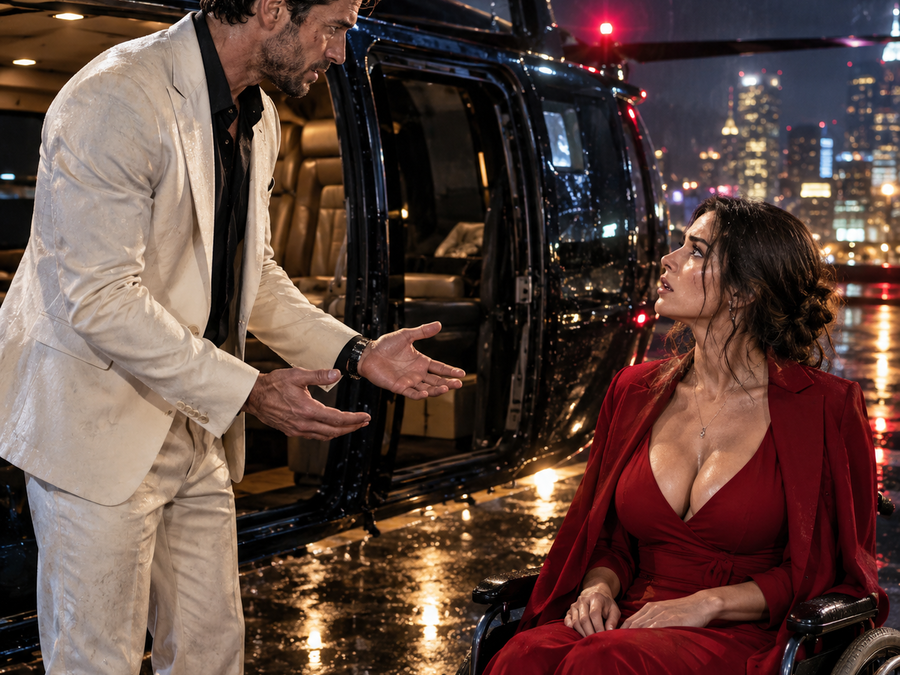
“Can I ride with you?” A Wheelchair-Bound CEO Asked a Single Father — His Answer Left Her Stunned (Part 1)
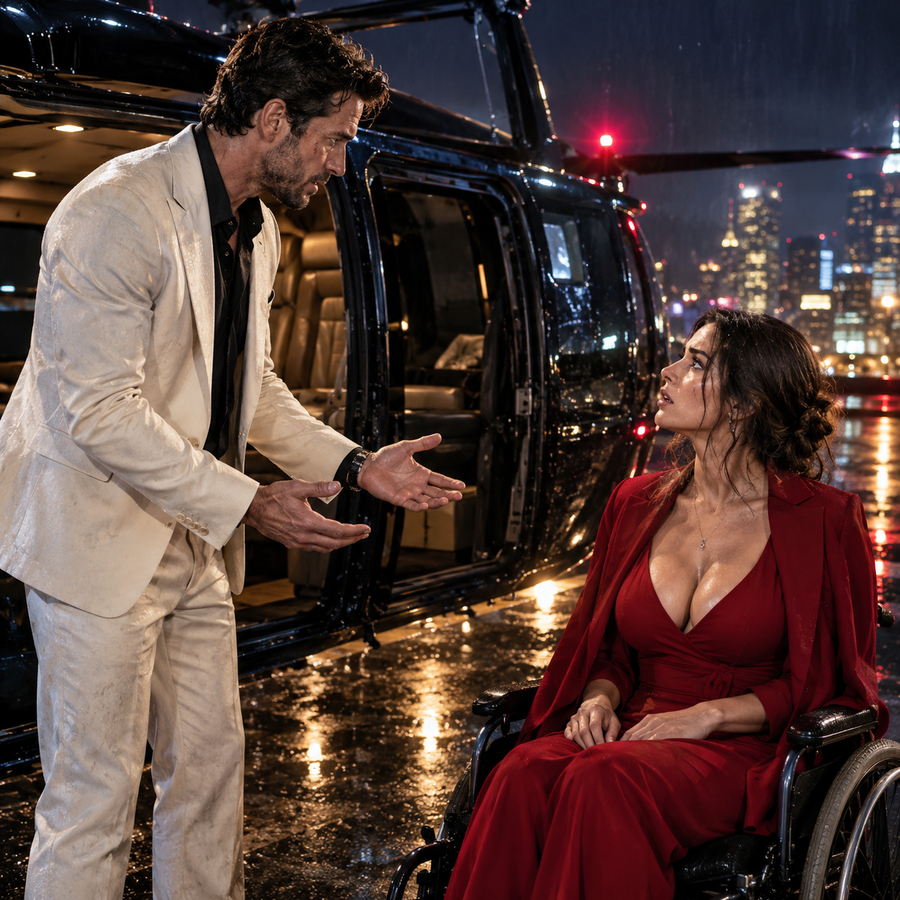
PART 1
She fired three people before 9:00 a.m., not because she wanted to, but because they kept looking at the chair. Clare Whitmore, billionaire CEO and wheelchair user, had built an empire on one rule: see the person, not the disability. But on the one day she tried to disappear into the crowd like a normal mother, a stranger with worn-out boots and a kind smile said four words that cracked something open inside her chest. And those four words would eventually expose a conspiracy inside her own company that had been buried for over a decade.
The morning started the way every day at Discier starts. Quietly. Clare Whitmore sat in the back of her private SUV with her tablet open, her coffee going cold in the cup holder and her 9-year-old daughter, Lily, pressed against the window, watching the highway blur past like a painting someone refused to finish. “Mom,” Lily said without turning around. “You’re working again.” “I’m reading.” “You’re frowning.” Clare closed the tablet. “Better.” Lily finally turned and looked at her with those big honey-brown eyes that always made Clare feel like she was being evaluated by someone far older than nine. “You promised today was just us. No phones, no assistance.” “Marcus is staying in the car,” Clare said, meaning her head of security. “Derek is staying at the hotel,” her chief of staff. “And I left my laptop in the suite. That counts.” Lily considered this with the gravity of a federal judge. Then she nodded once and turned back to the window. “Fine, but if your phone rings, I’m throwing it in the fountain.” “That’s a $2,000 phone.” “Then you better put it on silent.”
Clare laughed. It came out rusty, like a door that hadn’t been opened in a while. She couldn’t remember the last time she’d laughed before noon. She couldn’t remember the last time she’d been anywhere that wasn’t a boardroom, a conference call, or a physical therapy appointment where someone spoke to her in that careful, over-enunciated voice that people use when they’re afraid of saying the wrong thing. She was 43 years old. She ran a company with operations in 14 states. She had been in a wheelchair for 11 years, and on most days, the wheelchair was the first thing people saw when they looked at her. Not the woman, not the CEO, not the mother, just the chair and everything they’d already decided about her because of it. Today, just today, she wanted to be invisible.
Bluewater Family Resort was one of Whitmore Hospitality’s crown jewels. 300 acres of rides, trails, pools, and restaurants tucked into the Virginia foothills. Clare had bought it six years ago during an acquisition that her board had called reckless and her CFO had called optimistically catastrophic. It had returned a 40% profit margin for four consecutive years since. She hadn’t actually visited it since the ribbon cutting. She told herself today was a site inspection, a working mother’s compromise. She could be present with Lily and still technically be on company grounds. But the truth and Clare Whitmore had spent years learning to be honest with herself even when it was uncomfortable. The truth was that she’d chosen Bluewater because she thought she could control it. She owned it. She knew the layout. She’d approved the accessibility renovations herself from blueprints sitting at a conference table 300 miles away. She wanted to feel like a person here. She wanted to feel like it was possible.
The SUV rolled through the service entrance. Marcus’s idea, not hers, and Clare felt the familiar tightening in her chest that came whenever someone made a decision about where she could and couldn’t go based on the chair without asking her first. “Front entrance,” she said. Marcus glanced in the rearview mirror. “Ms. Whitmore. Security protocol recommends—” “Marcus. Front entrance.” “Then, yes, ma’am.” The front entrance was loud and golden and smelled like sunscreen and funnel cake. And for exactly 30 seconds, sitting in the middle of it, Clare felt something loosen in her shoulders. Lily grabbed her hand. “Where do we start?” “Wherever you want.” Lily’s face went luminous. She pointed across the main plaza toward a massive wooden roller coaster that curved and dropped against the blue August sky like something alive. “There.” “Absolutely not.” “Mom, I said wherever you want.” “Not wherever you want me to have a heart attack.” Lily giggled and pivoted, scanning the park with the focused intensity of a military strategist.
She landed on a family ride near the center of the plaza, a slower, circular attraction built around the theme of an old-fashioned river journey. Comfortable, accessible, the kind of ride that Clare had specifically requested be redesigned when she bought the property because the original version had required guests to climb three steps and there was no ramp. “That one,” Lily said, and took off toward it at a pace that made Clare’s wheels work to keep up. She was halfway across the plaza when her phone buzzed in her pocket. She ignored it. It buzzed again and again. She pulled it out. Derek. Of course it was Derek. She silenced it, dropped it back in her pocket, and kept moving. Then she stopped. Not because of the phone, because of the line.
The ride’s entrance had two queues. The main queue, which curved through a shaded walkway lined with benches and misters, and the accessibility entrance, which was a narrow concrete path that split off to the left and ended at a gate beside a storage shed that smelled like machine oil. A sign above the accessibility entrance read, “Wheelchair users, please use this entrance.” Clare sat very still for a moment. She had approved that sign. She’d approved it from a spreadsheet in a conference room, checking boxes on an ADA compliance checklist that her facilities manager had emailed her. Dedicated accessibility entrance confirmed. She’d moved on to the next item without a second thought. Looking at it now, from this angle, at this height, she understood something she hadn’t understood from a conference room 300 miles away. The accessibility entrance was hidden. Not literally. It was right there, clearly marked, but it was off to the side. It was narrow. It faced a storage shed. It said, “Please use this entrance.” Like a note slipped under a door, like a whisper instead of a welcome. It said, “You can come in. Just don’t use the front door.” “Mom.” Lily was looking back at her with a small frown. “You okay?” “Yeah.” Clare swallowed. “Yeah, I’m fine. Let’s go.”
She turned toward the accessibility entrance, and that was when she heard it. “Maggie, would you just stop for one second, please?” “I can’t.” The voice was male, low, and carrying the particular exhausted patience of a man who had been having the same conversation for the last 20 minutes and was losing. Clare turned her head. A man was standing near the main entrance queue, about 30 feet away, with a teenage girl who was clearly doing her absolute best to walk in the opposite direction from him. The girl was maybe 15, with dark hair pulled back in a ponytail and the unmistakable body language of someone who had decided deeply and completely to be somewhere else. The man was somewhere in his early 40s. He was tall with the kind of build that came from actual work rather than a gym, broad through the shoulders with hands that looked like they’d fixed things. His clothes were clean but not new. Dark jeans, a gray t-shirt, work boots that had seen better years. He had a lanyard around his neck with what looked like a day pass, and he was holding two bottles of water and a folded park map with the slightly overwhelmed expression of a man who had planned this trip very carefully and was watching those plans dissolve in real time.
“I don’t want to do the river ride,” the girl, Maggie, announced. “It’s for little kids.” “It’s not for little kids. It’s rated for all ages.” “You googled that?” “I absolutely Googled that. Yes.” “And Google said, ‘Dad.'” Maggie turned and faced him with the full force of teenage exasperation. “I’m not going on the river ride.” The man, her father, took a breath, a slow, deliberate breath that Clare recognized immediately. The breath of a parent who is choosing their battles. He looked down at the map. He looked up at the ride. He looked at his daughter. “Okay,” he said. “What do you want to do?” Maggie’s exasperation deflated slightly. She hadn’t expected him to give in. “I don’t know. Something that isn’t boring.” “Define boring.” “You know what boring is.” “Humor me.” She sighed. “Boring is anything that goes less than 40 miles an hour.” The man nodded slowly. “Right. Okay. The Falcon Drop it is.” Maggie blinked. “The drop ride. You hate heights.” “I never said I hate heights.” “Dad, at grandma’s house, you won’t even stand on the second step of the ladder to get stuff from the attic.” “That’s different. The attic ladder is unstable.” “You checked it three times.” “It’s still unstable.”
Maggie stared at him. Then, despite herself, despite all the teenage effort she was putting into being somewhere else, she laughed. It wasn’t a big laugh, but it was real. And the man smiled, and it changed his entire face. Not a polished smile, not a practiced one, the kind of smile that only happened when someone forgot to guard it. Clare realized she had been watching them for too long. She turned back toward the accessibility entrance. “Can we ride with you?” She stopped. The voice was small and clear and confident in the way that only children who haven’t yet learned to doubt themselves can be confident. It was Lily. Clare turned slowly. Her daughter was standing two feet away from the man and his teenage daughter, hands clasped behind her back, looking up at them with an expression of complete guileless hope.
The man looked down at Lily with mild surprise. Maggie looked at her with the particular weariness of a teenager confronted with a young child who is being very direct. And then both of them looked over at Clare. She felt it land. The look. Not cruel. It was never cruel. Not from strangers in public places. Not usually. But there was the moment. That half second where people’s eyes went to the wheelchair and their expression changed. Not to pity. Not always. Sometimes it was uncertainty. Sometimes it was the calculation of whether they were about to have to do something that made them uncomfortable. She waited. She was very good at waiting. The man’s gaze moved from Lily to Clare. And then, and this was the thing she would think about later, in the quiet of her hotel suite, while Lily slept and she sat by the window watching the lights of the park below, his expression didn’t change. Not in the way she expected. He didn’t soften into sympathy. He didn’t stiffen into discomfort. He didn’t do the thing that most people did, which was look slightly past her like eye contact might obligate him to something. He just looked at her. The way people look at other people. “Of course,” he said. “Everyone deserves a place at the table.”
His name was Nathan Brooks. She learned that 45 minutes later, after the river ride, which Nathan in fact had not hated, though he’d spent the first two minutes with the particular white-knuckled grip of someone who was not going to admit he was nervous, when all four of them were standing in line for frozen lemonade. And Lily was explaining with great authority the precise difference between a regular lemon and a Meyer lemon. “I’m Clare,” she said during a pause in the lemon lecture. “And the small food scientist is Lily.” “Nathan.” He shook her hand, not awkwardly, not with the over-careful grip some people used when they weren’t sure whether she had upper body strength. Just a normal handshake. “This is Maggie.” Maggie offered a small wave without fully committing to it. Lily responded with a wave that involved her entire arm.
“You come here a lot?” Nathan asked. It was such a normal question. Such a mundane, ordinary question. Clare felt something strange happen in her chest. “First time.” “Actually, really? We drove up from Richmond. Maggie’s been asking about this place for two years.” “Gie corrected without looking up from her phone.” “Two and a half years,” Nathan amended. “We kept planning it and then something would come up. Work or—” he stopped. Something moved across his face briefly, like a shadow crossing open ground, and then it was gone. “—or something. So this year I said August 15th, we’re going no matter what.” “And here you are.” “Here we are.”
Lily tugged on Clare’s sleeve and pointed at the menu board. And Clare turned to look. And when she looked back, Nathan was watching her with the same calm, direct attention he’d had from the beginning. Not intrusive, not invasive, just present. “Do you need a table?” he asked. “If the ground level ones are taken, I can move one of those.” He gestured toward a patio area with picnic-style seating. “I’m fine,” she said. Automatic. Practiced. He nodded and didn’t push. “Okay.” And that was it. That was the whole exchange. Two words. Okay. And he moved on. Looking at the menu. Clare sat with that for a moment because she was not fine, not entirely. The patio tables were the right height, but the chairs were bolted in, and the accessible spot at the end of each table meant she would be sitting at the edge rather than in the middle, slightly separated from the group in the way that accessible seating always managed to make her feel. She knew this. She’d been navigating it for 11 years. But what Nathan had given her in those two words was something more valuable than a relocated table. He had given her the choice. He had offered, she had answered, and he had respected that answer without making it a thing, without the follow-up, without the hovering, without the look. “I’m fine.” “Okay.” Done. She couldn’t remember the last time that had happened with someone she just met.
They ended up at the patio tables anyway because Lily decided she and Maggie needed to sit at the same table. And Maggie, who was thawing perceptibly the way teenagers do when a younger child is genuinely funny rather than performing at them, agreed. And the whole geometry of the seating arrangement sorted itself out naturally around that fact. Nathan pulled one of the middle chairs out of the way, casually, as if he was just rearranging to make room, and Clare rolled into the space that opened up and sat at the center of the table, not the edge. She looked at him. He was reading the back of the lemonade cup. “You do that a lot,” she said. He looked up. “Do what?” “Notice things without making them a production.” A pause. He seemed to think about this seriously. “I don’t know. I’m an engineer. I notice what needs adjusting and then I adjust it. I don’t think of it as doing anything.” “Most people do,” she said. He met her eyes. “Most people also think holding a door for someone is a heroic act worth mentioning for the rest of the conversation.” He took a sip of his lemonade. “It’s a door. You hold it. You move on.” Clare looked at him for a long moment. “What kind of engineering?” she asked.
It was that question, what kind of engineering, that pulled on the thread that unraveled everything. Not right away, not that afternoon, sitting in the Virginia sun with frozen lemonade going watery in paper cups and Lily attempting to teach Maggie a hand-clapping game that Maggie was absolutely too old for and was learning with complete concentration. But that’s where it started. Nathan answered her question the way people answer questions about jobs they used to love and no longer have. Carefully. Like he was handling something that still had edges. “Industrial safety,” he said. “Ride systems, mostly. Theme parks, family resorts. The mechanical side. How attractions function, where they fail, what you do to make sure they don’t.” Past tense. Clare noted a flicker. “Repair technician now. Still mechanical, just—” a pause, “—smaller scale.” She didn’t push. He’d earned the same courtesy he’d given her. Instead, she said, “You’re good at this. I watched you with the operator at the entrance gate. When the scan system jammed, you had it diagnosed before he finished explaining the problem.” Nathan blinked. He hadn’t thought she’d notice that. It had been 40 seconds. A quick exchange. The kind of thing he did without thinking. “It’s a common fault in that gate model. The reader calibration drifts in heat.” “How do you know that?” “Because I’ve seen it before.” “Where?” Another pause. Longer this time. “I used to work with a lot of these systems.” He was looking at the table now rather than at her. “Before.” Before. Clare let that word sit between them. She understood about befores. She had her own.
The afternoon moved the way good afternoons move. Slowly, without agenda, accumulating in small moments that don’t announce themselves as important until later. Nathan was easy to be around. That was the simple truth of it. He was easy in a way that very few people in Clare’s life were easy. He didn’t need anything from her. Not her approval, not her connections, not her status. He was a man who had driven up from Richmond on a Tuesday in August to take his daughter on a trip they’d been planning for two and a half years. And Clare Whitmore was just a woman in a wheelchair who happened to be sitting at the same table. And he treated her exactly like that. No performance, no agenda, no subtext. She had forgotten what that felt like.
At 2:30, Lily and Maggie disappeared toward a water feature at the edge of the plaza. Lily had spotted it. Maggie had decided it looked actually kind of interesting, and they’d gotten Clare’s permission and Nathan’s permission and Nathan’s very specific instruction about staying where they could be seen from the table, which Maggie had responded to with a “Dad, I’m 15,” which Nathan had responded to with a “I know how old you are, Mags,” which had resolved the entire conversation. Left alone at the table, relatively alone, surrounded by strangers eating and talking, Clare and Nathan sat in a silence that was more comfortable than it had any right to be between people who had met three hours ago. “Can I ask you something personal?” Clare said. Nathan looked at her steadily. “You can ask.” “What happened to the career?” He was quiet for long enough that she thought he might not answer. He turned the lemonade cup in his hands, looked at the table, looked at the water feature where two teenagers were now definitely getting splashed and were both pretending they didn’t mind. “I made a call that cost people a lot of money,” he said finally. “And they returned the favor.” “You were wrong?” “No,” he said it without heat. Just fact. “I was right.” “That’s worse.” “Sometimes. When you’re right and you lose anyway.”
Clare was quiet. “I flagged a ride system,” he said. “Safety reports. Written, documented, submitted through every proper channel. The attraction was drawing big numbers, peak season, and the operators didn’t want to pull it for inspections, so they buried the reports. Told me I was being overcautious, told me I didn’t understand the business side.” He paused. “Three weeks later, there was an incident.” The word sat between them like a stone dropped in still water. “Incident,” Clare said. “And you got blamed.” “Not a question.” “I got blamed.” He said it flatly. Like a man who has finished being angry about something and is now simply carrying it. “Lost the job. Lost the certifications. They disputed my competency on the record. Made sure no one in the industry would hire me without climbing a mountain to prove myself. I had a 7-year-old and a wife who—” he stopped. “I had Maggie. So I retrained, moved to repair work, made it work.” “Your wife,” Clare said quietly. “Gone.” A beat. “Not because of the career. It was—” he exhaled. “There were a lot of pressures. It was a lot at once. We didn’t make it through.” “I’m sorry.” “Yeah.” He looked up at her with that same direct, unguarded expression. “Are you?” It was a strange question. Not hostile. Almost curious. “I am,” she said. “People who do the right thing shouldn’t lose everything for it.” He held her gaze for a moment. “No,” he agreed. “They shouldn’t.”
The water feature shrieked. Lily had apparently discovered the pressure jet, based on the quality of Maggie’s reaction. Nathan stood immediately, the instinct of a parent moving faster than thought. Then he stopped. Because Maggie was laughing and Lily was delighted and no one was hurt. He sat back down slowly, looking slightly embarrassed. “She does this,” he said. “Gets me every time.” “Lily does it too,” Clare said. “I don’t think they stop.” “Do you have—” as Lily’s father? “No,” Clare said simply. “Just us.” He nodded once, the same way he’d nodded when she said she was fine. Accepted it, moved on. “Just us,” he repeated. And there was something in the way he said it, not sad, not resigned, but almost like recognition. Like two people who’d traveled different roads to the same place, reading the same sign at the same time.
It was 3:40 when everything changed. Not subtly, not gradually. The sound came first, a grinding metallic shriek that cut through the ambient noise of the park like a blade, followed by a low, rhythmic thumping that wasn’t right. Wasn’t natural. Wasn’t anything a well-maintained ride was supposed to produce. Nathan was on his feet before the first employee moved. Clare saw it happen, and the change in him, the way his body responded, not with panic, but with a kind of activated stillness. The way people who are trained for emergencies move when the thing they’re trained for actually occurs. Clear, direct, purposeful. Across the plaza, the Old Heritage Mill attraction, a slow-moving water ride experience positioned near the park’s historical section, had stopped moving. A claxon was sounding. Guests near the exit were starting to cluster and uncertain. Two park employees were jogging toward it. An announcement began over the PA system in the practiced calm of someone reading from a crisis script. Nathan was already moving. Clare caught his arm. “What are you doing?” “The Heritage Mill uses a hydraulic drive system,” he said, and he said it like she’d understand, like he’d forgotten for a moment that not everyone carried that information in their head. “If it locked up, there are guests inside. You need to vent the pressure before you can—” He stopped. Looked at her. “Sorry. I should go.” “She said.” He went.
Clare watched from across the plaza. She was not a woman who watched things happen from across plazas. She was a woman who ran toward problems. Or who used to be. Before the chair changed the geometry of every room and every crisis and every decision about where her body could go, she’d spent years relearning how to move through a world that was built for a different configuration of herself. She watched Nathan reach the two employees and speak to them. Quickly, gesturing toward the base of the attraction’s mechanical housing. One of them shook his head. Nathan said something else. The other employee listened, looked at the housing, looked back at Nathan, and pointed toward a utility panel near the base of the structure. Nathan moved to the panel. He opened it. He did something with his hands that Clare couldn’t see clearly from this distance. The thumping stopped. The claxon changed pitch. A maintenance supervisor in a different colored polo appeared at a jog from the left side of the attraction, took one look at the situation, and said something to Nathan. Nathan responded, still calm. The supervisor nodded, picked up a radio, spoke into it. Two minutes later, the guests were being guided out from the ride. Orderly, unhurried, some of them annoyed, some of them sheepish, all of them fine. Nathan stepped back from the panel. He said something to the supervisor, who offered his hand. Nathan shook it. And then Nathan turned around and walked back across the plaza. And his expression when he arrived back at their table was not triumphant and not dramatic and not anything except slightly tired. “Everyone okay?” he said. “Everyone’s okay,” Clare confirmed. He nodded.
She looked at him for a long moment. “You pressurized the secondary hydraulic bypass.” He blinked. “You know what that is?” “I own 12 family resorts,” she said. “I read maintenance reports.” “You actually read them.” “I actually read them.” A pause. “How did you know the bypass valve was accessible from that utility panel?” Something moved behind his eyes. A calculation or something like one. “I’ve worked on that model before,” he said. And it was a true answer. And simultaneously, she understood. Not the whole one. She let it go for now because Lily and Maggie were running back toward them. Maggie with a soaked sleeve and the expression of someone who had made peace with it. And Lily with the incandescent energy of someone who had witnessed something exciting and had questions about it. And because Clare Whitmore was very good at reading people, and what she was reading right now in the way Nathan had moved toward that attraction, in the specific and practiced certainty of what he’d done there, in the particular weight of “I’ve worked on that model before,” was a man who carried more history with ride systems than a repair technician from Richmond had any ordinary reason to carry. She filed it away. She had been filing things away all afternoon.
By 6:00, the four of them had eaten dinner at one of the park’s outdoor restaurants. Nathan had insisted on splitting the check. Clare had argued that she was treating. Nathan had said he hadn’t asked to be treated. Clare had pointed out that he hadn’t needed to ask. Nathan had won on a technicality when he handed his card to the server before she could reach hers and said, “Sorry, faster hands,” without apology. And were sitting at a table watching the park’s lights come on against the early evening sky. Lily was asleep against Clare’s shoulder, which happened sometimes in the evening, the way children’s bodies just decided they were done, regardless of location or social context. Maggie was sitting across the table, earbuds in but not checked out. She was watching the lights, too. And there was something open in her face that Clare suspected wasn’t usually there.
Nathan was quiet. “She looks like you,” Clare said softly. “Mean Maggie.” “She’s better than me,” he said. And it was simple and factual and absolutely true. “She’s tougher. She’s been through things she shouldn’t have had to go through, and she came out—” He paused. “She came out herself. She didn’t let it change her into something else. I don’t know how she does it.” “You do though,” Clare said. “Because you’re the same way.” He looked at her. “I’ve been watching you all day,” she said. Not apologetically, because it was true and there was no reason to apologize for the truth. “You’ve been through something. Something significant. And you came out of it intact. Not untouched. You carry it. I can see that. But intact. That’s not an accident.” Nathan was very still. “Who are you?” he said. And it wasn’t quite a question. “I told you. I’m Clare.” “That’s not what I meant.” She held his gaze. “What did you mean?” He shook his head slowly. The way people shake their heads when they’re not ready to say a thing out loud. “I just—” He stopped. Started again. “Today wasn’t what I expected it to be.” “No,” she agreed. “It wasn’t.” A pause. The park lights finished coming on around them. Gold and warm and full of the sound of people who were having a good time in the uncomplicated way that only exists outside in summer when you’re not yet ready for the day to be over. “My daughter needed today,” Nathan said. “She needed a good day. We’ve had—” he exhaled. “It’s been a hard year. And I needed to give her a good day. That’s all I came here to do.” Clare looked at Lily, asleep and warm against her shoulder. “I know that feeling exactly,” she said.
And she did. And something about being understood, not pitied, not helped, not accommodated, just understood by a stranger on a Tuesday afternoon at a theme park in Virginia, in a moment that hadn’t been planned or performed or arranged by anyone, it was, Clare Whitmore would think later, sitting by the hotel window in the dark, watching the park lights go quiet below, it was the most human she had felt in years. She didn’t know yet that this man’s name existed in a file she had never read. She didn’t know yet that his history was tangled with hers in a way that would demand everything she’d built to make right. She didn’t know yet that the kindness she’d been given today had been carried through a decade of injustice by a man who had every reason to stop being kind. She only knew what she felt. And what she felt was that something had shifted. Something that had been locked a long time was starting very quietly to open.
The hotel suite was too quiet. That was the first thing Clare noticed when she got back. Too quiet, too clean, too arranged. The kind of room that existed to signal wealth rather than to actually be lived in. Lily had fallen asleep in the car on the way back, and Marcus had carried her in without being asked, which was the one thing Clare genuinely appreciated about having security. Occasionally, someone else could be the person who carried the sleeping child. She should have slept, too. It was past 9. She had a 7 a.m. call with the board of the Southeast Division and a contract review with legal at 10 and a site debrief with the Bluewater facilities manager she’d been avoiding scheduling because she hadn’t wanted to ruin the day before it started. She didn’t sleep. She sat by the window in the dark the way she’d known she would. And she looked at the park lights below. The Bluewater lights. Golden, looping, the ride still running for the evening crowd. And she thought about Nathan Brooks. Not romantically. Or not only that. She thought about him the way she thought about problems that refused to resolve cleanly. Turning him over in her mind, examining the edges. A repair technician from Richmond who could diagnose a hydraulic fault in 30 seconds flat. A man who’d lost a career in ride safety and wouldn’t explain exactly how. A man who moved through a crowd like someone who had learned very specifically where all the exits were and exactly how fast he could reach them.
She pulled out her phone. Derek picked up on the second ring, which meant he’d been awake. He was always awake. She suspected he ran on a combination of caffeine and professional anxiety. “I need a background check,” she said. A pause. Then carefully, “Miss Whitmore. It’s 9:15 and you promised Lily a full vacation day tomorrow.” “I’m not cancelling tomorrow. I need information on a Nathan Brooks. Former industrial safety engineer, ride systems specialty. I think he was based somewhere in the Mid-Atlantic region maybe 10 to 15 years ago. There was an incident. He mentioned a ride malfunction, disciplinary action, possibly a license dispute. I need to know what company, what ride, what year.” A longer pause. “Tonight, tomorrow morning is fine. Before my 7:00 a.m. call.” She could hear Derek writing. He always wrote things down with an actual pen on actual paper, which was one of the many things she found confusing and oddly comforting about him. “Anything else?” “Pull any litigation records associated with the incident. And pull the Bluewater acquisition files, specifically the safety inspection reports from the two years before we bought the property.” “That’s a lot of paper.” “That’s why I pay you.” She hung up.
Outside, the park lights began to dim as the evening attractions closed. She watched them go out one by one, section by section, until only the security lights remained, pale and functional, illuminating nothing in particular. She thought about the accessibility entrance with its sign facing a storage shed. She thought about Nathan pulling a chair out of the way without being asked and without making it a production. She thought about what he’d said. “I want a world where people don’t have to apologize for needing space.” He hadn’t said it today. She didn’t know yet that he would say it. But she was already thinking in the shape of it, orbiting the thing she didn’t know she was circling yet. She turned away from the window and went to bed. She did not, for a long time, sleep.
The 7 a.m. call came and went with the usual aggressive normalcy of executive life. Three divisions reporting numbers. Two VPs arguing about Q4 projections. One facilities director who had apparently been waiting three weeks to tell her about a drainage problem in the Phoenix location and had chosen today specifically to do it. Clare managed all of it from the small desk in the hotel suite with her second coffee, and Lily eating cereal at the table behind her, trying and mostly failing to be quiet. At 6:58, two minutes before the call ended, Derek appeared in her email with a single subject line: Nathan Brooks. Found something. Call me when you’re free. She was free at 7:14. “Talk,” she said. Derek’s voice was careful in the way it only got when he’d found something that changed the picture. “Nathan Brooks, 42 years old, currently residing in Richmond, Virginia. Degree in mechanical engineering. Certified ride safety inspector. Well, formerly certified. License was suspended eight years ago following a disciplinary review initiated by his then-employer, Keystone Attractions Group. He worked for them as a senior safety engineer for six years.” A pause. “The suspension came after an incident at one of their properties. Westfield Adventure Park in Northern Virginia. August. 12 years ago.”
Clare stopped breathing for a second. August. 12 years ago. Northern Virginia. “Derek,” she said. “I know.” “What was the incident?” He told her. And the coffee in her hand went cold. Because the incident at Westfield Adventure Park in August, 12 years ago, was the reason Clare Whitmore used a wheelchair. She hadn’t known the park’s name until this moment. She’d been there for a conference, a hospitality industry networking event. One of 200 guests moving through the property over a weekend. The ride had been a signature attraction, a high-capacity suspended rail experience. The kind of thing that parks build their identities around. She remembered the line had been long. She remembered the weather had been perfect. She remembered the sound the restraint system made before it failed. And she remembered very little after that. She’d woken up in a hospital three days later, and she had never, in 11 years, wanted to know the details. She knew them now. She sat down. She placed the coffee cup very carefully on the desk in front of her. “What happened to the safety reports?”
“That’s where it gets complicated.” Derek was reading from something, his voice taking on the particular rhythm he used when he was reciting facts he wanted to get exactly right. “Brooks submitted three formal safety reports on the suspended rail system in the eight weeks before the incident. The reports flagged calibration failures in the restraint release mechanism. He requested the attraction be taken offline for full inspection. All three reports were logged by Keystone’s internal systems and then classified under executive review, which means buried, which means nobody responded to them and they were quietly filed away from the main operational records. After the incident, Keystone conducted an internal investigation and attributed the failure to technician error during a routine maintenance inspection. Brooks was the technician of record.” Clare felt something cold and very specific move through her chest. “Was he the technician who performed the inspection?” “No,” Derek said. “He was the engineer who had flagged the system as unsafe. The technician who performed the final inspection was a different employee who was given paperwork that indicated the system had passed Brooks’s signoff. Brooks’s signature was on documents he says he never saw. He disputed it. He disputed everything. Loudly and in writing. Keystone initiated a competency review, questioned the validity of his reports, brought in two external consultants who, and this is interesting, were both subcontracted through a firm that Keystone had financial relationships with. The review concluded that Brooks’s safety assessments had been overly conservative and operationally unrealistic.” A pause. “They suspended his license. He filed an appeal. The appeal process took two years and cost him everything he had. He dropped it.” A beat. “He had a 7-year-old daughter.”
The suite was very quiet. Lily had stopped eating cereal and was looking at her mother with the precise attention of a 9-year-old who has learned to read a room. “Mom,” Lily said. “Are you okay?” “Fine, baby. Give me one more minute.” “Derek,” Clare said, and her voice was even, the way her voice got when she needed it to be even, when the thing under the surface was too big to let any of it show. “What happened to the Westfield property?” “Keystone shuttered it 14 months after the incident. Liability settlements. They sold the land to a residential developer.” He paused. “Keystone Attractions Group was acquired four years later by a holding company. The holding company was reorganized twice and folded into a larger hospitality portfolio.” Another pause, longer. “Miss Whitmore. The hospitality portfolio was acquired by Whitmore Group as part of the Southeast expansion three years ago. Keystone’s archived records are technically now in our document management system. They’ve never been fully audited.”
She closed her eyes. She opened them. “Pull every document,” she said. “Every report, every filing, every executive communication related to the Westfield incident and the Nathan Brooks disciplinary review. I want them on my secure drive by end of business today.” “That’s going to raise questions in legal.” “Tell legal I’m conducting a routine acquisition audit. That’s accurate.” “Is that all?” “No.” She looked out the window at the park below, already filling up with the morning crowd. “Find out if Nathan Brooks is still at Bluewater today.” A silence. “You want to find him?” “I want to know if he’s here. That’s different.” She hung up.
Lily was watching her with complete, serious attention. “Dad,” she said. Clare looked at her daughter. “No, baby. It’s work.” “Is someone in trouble?” Clare thought about Nathan. About a man who had done everything right and lost everything anyway. About a woman in a wheelchair who had spent 11 years being angry at something she didn’t have a name for. “Someone was in trouble a long time ago,” she said carefully. “And I’m just now finding out about it.” Lily absorbed this with the solemnity she brought to things she didn’t fully understand but recognized as important. Then she picked up her spoon and went back to her cereal. “Okay,” she said. “Are we still going to the park?” Clare looked at the park, at the lights, at the accessibility entrance she could see from this angle. From up here, the narrow concrete path pointing toward a storage shed. “Yeah,” she said. “We’re going to the park.”
She found him at 11:30. Not because Derek tracked him down, though Derek had confirmed that Nathan and Maggie had returned for the second day of what turned out to be a two-day pass, but because Lily found Maggie first near the East Section Food Court, and the geography of children solved the problem of adults. Clare saw Nathan before he saw her. He was standing with a park map and a corn dog, squinting at something in the distance with the focused expression of a man trying to figure out the fastest route between two points. He was wearing the same boots as yesterday, a different shirt, and the same lanyard. He looked exactly as unimpressive and exactly as real as he had the day before. She watched him for a moment. She thought about what she knew now that she hadn’t known 24 hours ago. She thought about what to do with it. She could say nothing. She was here. He was here. There was no rule that required her to tell him what she’d found. She could spend another ordinary day, if ordinary was even possible now, and go back to her hotel tonight and begin the legal process of reviewing the Keystone files quietly, without him, without any of it bleeding into whatever this was. She could keep it clean. She had always been very good at keeping things clean.
Then Nathan looked up from the map and he saw her and he smiled. Not with surprise, with something more like simple recognition. The way you recognize someone you expected to see again without quite knowing why you expected it. “Hey,” he said. And Clare thought, no. She was not going to keep it clean. “I need to tell you something,” she said. His expression shifted, not alarmed, but alert. In the way of someone who has learned to read tone changes the way other people read maps. “Okay. Not here.” She glanced toward the food court, toward where Lily and Maggie had already dissolved into conversation about something that had them both gesturing with French fries. “Can we?” “Yeah,” he said. “Yeah, of course.”
They moved to a bench along the pathway near the east perimeter. Away from the main foot traffic, where the noise of the crowd became a low ambient hum rather than a specific thing. Nathan sat on one end of the bench. Clare positioned her chair beside it. He waited. She said, “I know what happened at Westfield. The corn dog in his hand went still. He didn’t say anything. “I know about the reports you filed, the restraint system failures. I know about the review Keystone initiated after the incident. And I know what they did with your signature. And I know what the appeal cost you.” She paused. “I know because I had my team pull the records this morning.” Nathan was looking straight ahead now. Not at her. His jaw was set. “You had no right to do that,” he said, and his voice was absolutely flat. “I know.” “That’s my private professional history. You had no right to go looking.” “You’re right.” She said it directly, without softening it. “I did it anyway. And I’m not going to pretend I didn’t.” “But Nishi—” she stopped, started again. “Keystone Attractions Group is a part of Whitmore Group now. Those records are in my system, and I needed to know.” He turned to look at her. Then his eyes were sharp, and there was something old in them. Something that had been through a very specific kind of fire and come out changed. “Why?” She held his gaze. “Because I was there.” He went very still.
“Westfield Adventure Park. August. 12 years ago. I was there for an industry conference. I was on the suspended rail attraction when the restraint system failed.” She kept her voice even. She had rehearsed this in the car on the way to the park. She’d thought she had it under control. “I don’t remember much after the failure. I woke up three days later.” A pause. “I’ve been in this chair since.” Nathan’s face did something she had never seen a face do in quite that way. A cascade of things happening simultaneously. None of them small. Shock. And beneath it, something that looked like pain. And beneath that, surfacing slowly, a devastation so old it had become structural, like a crack in a foundation that had been there so long the building had shaped itself around it. “No,” he said. It wasn’t a denial. It was something closer to disbelief. “Yeah. You were.” He stopped. His voice was rough. “You were there.” “I was there.” He stood up abruptly and turned away from her. One hand coming up to the back of his neck, the way people do when the body needs to do something because standing still is not an option. He stood with his back to her and Clare let him, because she understood. She understood exactly what it felt like to have something reorganize itself inside you without your permission.
“I filed those reports,” he said. To the wall, to the air, to nothing in particular. “I filed them and nobody—” His voice broke slightly and then steadied. “I tried to stop it. You have to know that. I did everything I was supposed to do. Everything.” “I know,” Clare said. “I did everything right.” “I know you did.” He turned back around. His eyes were red at the rims, and he was holding himself with the rigid control of a man who had been carrying something heavy for a very long time and had just been told what it weighed. “For 11 years, I’ve lived with this. I didn’t know who—” He stopped. “I never knew who was hurt. The settlement agreements had confidentiality. I knew there were injuries. I knew they were serious. I never knew.” His voice dropped. “I never knew who.” “Neither did I,” she said quietly. “I never wanted to know the details. Until now.”
He sat back down on the bench. He sat with his elbows on his knees and his head down, and the corn dog forgotten on the ground beside him. And he didn’t say anything for a while. And Clare didn’t say anything either. And the sound of the park continued around them as if nothing seismic had just occurred. “Why are you telling me this?” he said finally. It was the right question. She had expected it and she still had to think about how to answer it, because the true answer was layered and she wasn’t sure which layer to start with. “Because it wasn’t an accident,” she said. “Not in the way it was described. Because Keystone buried your reports, forged your signoff, and then used you as the explanation when everything went wrong. And because those records are in my system and I have the ability to do something about that. And I think—” she stopped, corrected herself. “I know it’s the right thing to do.”
He looked at her sideways. Something wary was moving in his expression. “You’re the CEO of what?” She had wondered when this would come up. She had been avoiding it yesterday. Not dishonestly, but selectively. The way you leave certain things out of a first conversation because the first conversation has enough weight without them. “Whitmore Hospitality,” she said. He stared at her. “I own this park,” she said. “Among others.” “You own—” He stopped, looked around slowly, like seeing the place differently, looked back at her. “You’re Clare Whitmore.” “Yeah.” “Whitmore Group. Clare Whitmore. There’s only one of me.” He leaned back on the bench and let out a sound that wasn’t quite a laugh and wasn’t quite anything else. A sound of pure, dazed disorientation. “You came here with my daughter for a normal day.” She met his eyes. “That part was completely true.” “And you had me investigated.” “I had information investigated that you happen to be part of. The distinction matters to me even if it doesn’t to you.” He thought about this. She could see him thinking about it. The wheels turning. The careful mind she’d identified yesterday, working through the information in real time. “And now what?” he said.
“Now I want to know what you want.” He looked at her sharply. “What?” “I’m reopening the Keystone file. I’m going to find out exactly what happened, exactly who knew what and when, and exactly what was done with your reports and your signature. That’s going to happen regardless of what you say in the next five minutes. But I want to know what you want from it.” She paused. “Nobody has ever asked you that. Have they?” It wasn’t a question. His jaw tightened. “No,” he said. “Nobody has.” “So I’m asking.” He looked at her for a long time. Then he looked at the park. At the families moving through it. At the strollers and the kids on shoulders and the grandmother navigating the cobblestone path near the food court with a cane. At the accessibility entrance to the Heritage Mill that was tucked around the corner from the main entrance and could only be found if you already knew where to look. “I want people to be safe,” he said. “That’s the only thing I ever wanted. I got into this field because I was 23 years old and I read an incident report from a park in Florida. A kid, 7 years old. And the investigation found that three different engineers had flagged the same fault that caused the accident, and all three had been overruled by operations management because pulling the ride would have cost them the revenue from a holiday weekend.” He stopped. “I got into this field because I thought I could be the person who made sure that didn’t happen. And then I became the person who flagged the fault and got overruled anyway. And when it happened, everyone looked at me.” “That’s not justice,” Clare said. “No,” he agreed. “It’s not.” “What would be?” He was quiet for a moment. “The truth on the record. Not a private settlement, not a quiet correction. The actual truth. Documented. Public. In the record where my name is.” A pause. “I don’t care about money. I never cared about money. I care that somewhere there is a file that says Nathan Brooks failed to do his job, and that file is wrong, and I want it corrected.”