Part 2: “You’re not my real family. You’re just the woman my dad married.”
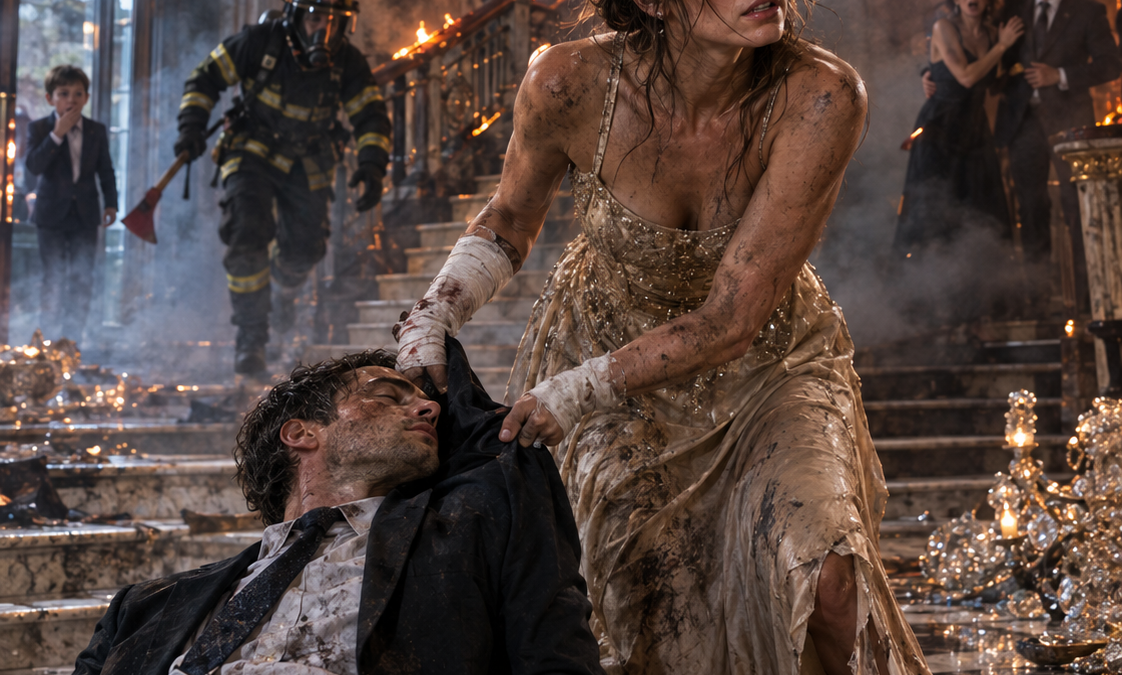
Chapter 12: The Woman in the Photograph
Elena Vance showed up at the brownstone five days later.
Celeste was in the kitchen when she heard the knock — three sharp raps, insistent. She opened the door to find a woman in her early thirties, blonde, nervous, wearing a coat that looked expensive but didn’t quite fit.
“Mrs. Ashford?”
“Yes.”
“I’m Elena. Elena Vance.” She glanced over her shoulder. “Can I come in? I need to talk to you.”
Celeste hesitated. This was the woman from the photograph — the woman who had been paid to be seen with Adrian, to make it look like he was having an affair. This was the woman who had helped destroy her marriage.
But there was something in Elena’s eyes — something desperate, something afraid.
“Come in,” Celeste said.
They sat in the living room. Elena didn’t take off her coat. She sat on the edge of the sofa, twisting her hands together, and told her story.
Marcus had hired her two years ago. Paid her fifty thousand dollars to pose as Adrian’s mistress — to be seen with him at hotels and restaurants, to let herself be photographed, to plant evidence in his car and his office that would make it look like they were involved.
“I didn’t know what he was really doing,” Elena said. “I thought it was just… I don’t know. Corporate espionage. Something like that. He told me he was trying to catch Adrian cheating, and I was helping him gather evidence.”
“But there was no evidence.”
“No. I was the evidence.” Elena’s voice shook. “I didn’t know about the money. I didn’t know about the divorce. I didn’t know he was going to—” She stopped. “I didn’t know about the fire.”
“Did he set it?”
“I don’t know. But he called me the day after. He said I needed to leave town. He said if I stayed, I’d be implicated. He gave me money — a lot of money — and told me to disappear.”
“Why didn’t you?”
Elena looked at her. “Because I saw the news. I saw what you did. Running into that house to save your husband, even after everything.” She shook her head. “I’ve done a lot of things I’m not proud of. But I’m not going to let you go down for something Marcus did.”
She reached into her bag and pulled out a phone. “This is his. I stole it when I left. It has everything — texts, emails, bank records. All of it.”
Celeste took the phone. It felt heavy in her hand, heavier than the USB drive, heavier than the folder in the safe.
“Why are you giving me this?”
“Because I want to testify.” Elena’s voice was fierce. “I want to tell the police everything. I want to help you put him away.”
“Marcus will try to destroy you.”
“He already tried.” Elena stood up. “He tried to kill my dog last week. My dog. He’s not going to stop until someone stops him.”
She walked to the door, then turned back.
“Your husband didn’t cheat on you,” she said. “He was set up. I know that doesn’t fix anything, but… it’s the truth.”
“I know.”
“And for what it’s worth — you’re a lot stronger than I expected.”
Elena left. Celeste stood in the doorway, the phone in her hand, and watched her disappear into the grey November afternoon.
Chapter 13: The Boardroom Confrontation
Adrian called an emergency board meeting on the first Tuesday of December.
Celeste went with him. Not because he asked her to, but because she wanted to be there. She wanted to see Marcus’s face when the evidence came out.
The Ashford building had been in the family for seventy years — a glass tower in the financial district, thirty floors of offices and conference rooms and executive suites. She’d never been to a board meeting before. She’d never been invited.
Today, she walked into the boardroom on Adrian’s arm.
Marcus was already there. He was sitting at the far end of the table, next to Gerald Whitmore and two other board members, his posture relaxed, his expression pleasant. He looked up when Celeste entered, and for a split second, something flickered in his eyes.
Surprise. And fear.
“Adrian,” Marcus said, standing. “What’s this? I thought this was a closed meeting.”
“It is.” Adrian pulled out a chair for Celeste. “My wife is a shareholder. She has every right to be here.”
“Shareholder? She doesn’t own—”
“She owns eleven percent of the company. Given to her by me on our tenth anniversary.” Adrian sat down. “You didn’t know that, did you, Marcus?”
Marcus’s pleasant expression didn’t change, but his hands tightened on the back of his chair. “I’m sure there’s a lot I don’t know.”
“Yes.” Adrian reached under the table and pulled out a folder. “There is.”
What followed was surgical.
Adrian went through the evidence piece by piece — the bank records, the emails, the shell companies. Vivian had done her work well; every dollar was accounted for, every transfer documented. Marcus had stolen twenty-three million dollars over three years, funneling it through a network of offshore accounts in the Cayman Islands and Switzerland.
“These are fabricated,” Marcus said. “These documents are—”
“These documents are from your own files.” Adrian slid a printout across the table. “Your computer. Your signature. Your account numbers.”
“I’ve been set up—”
“By whom? Your own assistant, who’s been cooperating with the investigation for three weeks? Your own bank, which turned over records when we presented the court order?” Adrian leaned forward. “It’s over, Marcus.”
Marcus looked around the table. Gerald Whitmore was staring at the documents with an expression of dawning horror. The other board members were whispering among themselves. No one was looking at Marcus — not with sympathy, anyway.
“You think this is over?” Marcus’s voice was low. “You think you can destroy me and walk away? I know things, Adrian. I know everything about you. About your father. About that deal in ’09 that you covered up—”
“The deal in ’09 is not the topic of this meeting.”
“It will be.” Marcus stood up. “You want to play hardball? Fine. Let’s play. I’ll go to the press. I’ll tell them everything.”
“What will you tell them?” Adrian stood too, and suddenly the room felt very small. “That you stole from me? That you tried to destroy my marriage? That you set fire to my house?”
“I didn’t set—”
“The electrician you paid three weeks before the fire. The one whose phone records show calls to your office. The one who’s currently in witness protection, telling the FBI everything you said to him.” Adrian’s voice was ice. “You’re not going to the press, Marcus. You’re going to prison.”
Marcus’s face went white. For a long moment, he just stood there, staring at Adrian. Then he looked at Celeste.
“You,” he said. “You did this.”
“I didn’t do anything.” She met his eyes. “You did this. You just didn’t expect anyone to fight back.”
Marcus opened his mouth to respond — but the conference room door opened, and two men in dark suits walked in. FBI. They had a warrant. They had handcuffs.
Marcus was arrested in front of the entire board.
Chapter 14: The Carriage House
Three days later, Celeste went back to the estate.
The main house was a wreck — charred timbers, boarded windows, the smell of smoke still clinging to the walls. But the carriage house at the back of the property had survived. It was small, two rooms and a kitchenette, but it was intact.
She walked through it slowly, touching the walls, remembering the years she’d spent here. This had been her studio, once — a place where she’d painted, back when she still had time for things like that. Before Adrian’s world swallowed her whole.
She found a box in the corner. Old photographs. Letters. A sketchbook she’d filled with drawings of the estate when she’d first moved in.
One drawing caught her eye. It was of Adrian, sitting in his study, reading. She’d drawn it from memory — the curve of his shoulders, the way he held his book, the way he looked when he thought no one was watching.
She’d loved him so much.
She still did.
That was the complicated part.
Chapter 15: The Room with One Bed
They went back to Webster Street that night. Elias was at a friend’s house. The brownstone was quiet, empty.
Celeste took a shower. When she came out, Adrian was in the living room, sitting on the couch with his head in his hands.
“She’s testifying tomorrow,” he said. “Elena. She’s going to tell the grand jury everything.”
“Good.”
“It should be enough. Combined with Vivian’s evidence, and the electrician’s testimony—”
“Adrian.” She sat down beside him. “We don’t need to talk about the case tonight.”
He looked at her. His eyes were red, his face haggard. He looked exhausted — not just physically, but in a way that went deeper.
“I’m sorry,” he said. “I know I’ve said it before, but—”
“I know.”
“I should have trusted you. I should have seen what he was doing. I should have—”
“Adrian.” She took his hand. “Stop.”
He stopped.
“I’m not going to pretend it’s fine,” she said. “It’s not. You let him destroy us, and I don’t know if we can come back from that. But I’m here. I’m still here.”
“Why?”
“Because I made a choice.” She looked at him. “I could have left. After the gala, after the fire, after everything. I could have taken the evidence, filed for divorce, and walked away with more money than I could spend in a lifetime. But I didn’t.”
“Why not?”
“Because I love you.” She said it simply, without heat. “I’ve loved you for eleven years. Even when you were distant, even when you believed lies about me, even when I thought you were cheating — I still loved you. That’s the stupid part. That’s the part I can’t explain.”
Adrian’s hand tightened on hers. “I don’t deserve you.”
“No. You don’t.” She smiled slightly. “But you’re going to spend the rest of your life earning me back. That’s the deal.”
“What kind of deal?”
“The kind where you don’t lie to me. The kind where you don’t keep secrets. The kind where you trust me, even when it’s hard. The kind where—” She stopped. Swallowed. “The kind where you let me be your partner. Not your wife in name only. Your actual partner.”
He stared at her. “That’s all I’ve ever wanted.”
“Then start acting like it.”
She leaned in and kissed him.
It was the first time in months — the first time since before the gala, before the photograph, before everything fell apart. His mouth was warm, familiar, and she felt something crack open inside her chest.
He pulled back. “Are you sure?”
“I’m sure.”
Chapter 16: The Quiet Hours
Later, she would remember that night as the turning point.
Not the kiss. Not the way he held her afterward, his arm wrapped around her waist, his breath warm against her neck. Not even the way he whispered her name in the dark, like a prayer, like a promise.
But the quiet hours after.
They lay in bed, the sheets tangled around them, the city lights flickering through the window. They talked about everything — the years of distance, the lies Marcus had told, the way Adrian had believed them. They talked about Elias, about the fire, about the moment she’d pulled him from the study and thought she might die in the process.
They talked about the future.
“I want to sell the estate,” Adrian said. “I want to move somewhere smaller. Somewhere that’s ours.”
“I want to finish my degree,” Celeste said. “I never got to. I dropped out when we got married, because you wanted me to focus on the family, and I—” She paused. “I want to go back.”
“Then go back.”
“Really?”
“Really.” He turned to look at her. “I want you to have what you want. Whatever that is.”
She was quiet for a moment. Then she said, “I want to run the Foundation.”
“What?”
“The Ashford Foundation. Vivian’s been running it, but she’s been talking about moving on. I want to take over. I want to do something that matters.”
Adrian was silent. Then he said, “You’d be good at it.”
“You think so?”
“I know so.” He kissed her forehead. “You’re good at everything.”
“Not everything.”
“Almost everything.” He smiled. “Good enough.”
She laughed. For the first time in months, she laughed.
And then she said, “I love you.”
“I love you too.”
“I know.” She closed her eyes. “I know.”
Chapter 17: The Trial
The trial was in February.
It lasted three weeks. Celeste was in the courtroom every day, sitting in the front row, watching Marcus slowly self-destruct.
The prosecution had everything: bank records, emails, phone recordings, the electrician’s testimony. Elena Vance testified for two days, her voice steady, her story consistent. Vivian Cross testified for three, walking the jury through the complex financial transactions with the patience of someone who had spent years untangling the truth.
Marcus’s defense was weak. His lawyer tried to paint him as a victim — a man who had been set up by a jealous husband, a woman who had stolen his client’s money, a conspiracy that didn’t hold up under cross-examination.
It didn’t work.
The jury deliberated for two hours. When they came back, the foreman’s voice was clear: guilty on all counts.
Fraud. Embezzlement. Arson. Attempted murder.
Marcus was sentenced to twenty-five years.
Celeste watched him being led away in handcuffs. He looked old, defeated, nothing like the charming man she’d known for a decade. He didn’t look at her. He didn’t look at anyone.
She didn’t feel triumph. She didn’t feel vindication. She felt… tired. Tired and sad and relieved, all at once.
“It’s over,” Adrian said beside her.
“No.” She shook her head. “It’s just beginning.”
Chapter 18: The Son Who Said He Was Sorry
Elias came back to the brownstone in March.
He’d been staying with Diana for the past few months, while the estate was being repaired, while everything was falling apart. But now he was home — or what passed for home, anyway.
“I heard about the trial,” he said, dropping his bag in the hallway. “Marcus is going away forever?”
“Twenty-five years.”
“Good.” He looked at her. “You okay?”
“I’m fine.” She smiled. “How are you?”
“Been better.” He shrugged. “Been worse.”
He walked into the kitchen and opened the refrigerator, looking for something to eat. Celeste watched him — this boy who had hated her, who had said she wasn’t his real family, who had hugged her in a hospital room and cried.
“Elias,” she said.
“Yeah?”
“I’m sorry. About your mom. I never knew her, but I know she must have been… I know you miss her.”
He was quiet for a moment. Then he closed the refrigerator and turned to face her.
“I do,” he said. “But I think she would have liked you.”
“You do?”
“Yeah.” He smiled slightly. “She liked people who didn’t give up. That’s what my dad says, anyway. She always said the only failure was quitting.”
Celeste felt tears prickle at her eyes. “That’s a good way to think.”
“Anyway.” Elias grabbed an apple from the bowl on the counter. “You’re not quitting, right? You’re not leaving?”
“No. I’m not leaving.”
“Good.” He bit into the apple. “Because I’ve gotten used to having you around.”
He walked out of the kitchen, and Celeste stood there, the sunlight streaming through the window, and felt something settle in her chest.
This was her family. Not the one she’d expected, not the one she’d planned, but the one she had.
And she was going to keep it.
Chapter 19: The Foundation
Vivian Cross resigned in April.
She called Celeste on a Tuesday morning, her voice brisk and businesslike as always. “I’ve done what I came here to do. Marcus is in prison. The money’s been recovered. The Foundation is stable.” A pause. “It’s time for me to move on.”
“Where will you go?”
“I’ve been offered a position in London. A foundation that works with refugees. It’s… it’s what I’ve always wanted to do.” Another pause. “I recommended you as my replacement.”
Celeste sat down on the edge of the bed. “You what?”
“I recommended you. To the board. They’re going to vote next week.” Vivian’s voice softened, just slightly. “You’re ready for this, Celeste. You’ve been ready for years. You just needed someone to give you the chance.”
“I don’t have any experience—”
“You have more experience than you think. You’ve been running the estate’s charitable programs for a decade. You’ve organized galas, managed budgets, dealt with donors. You’ve been doing the work without the title.” A pause. “And after everything that’s happened, the board wants someone they can trust. Someone who’s proven they’ll fight for what’s right.”
Celeste was silent. The offer hung in the air, enormous and terrifying.
“What did Adrian say?” she asked finally.
“He doesn’t know yet. I wanted to tell you first.” Vivian’s voice was firm. “This is your decision, Celeste. Not his. Yours.”
“I’ll think about it.”
“Don’t think too long. The board votes on Friday.”
Vivian hung up. Celeste sat there, the phone in her hand, and felt something shift inside her.
This was what she wanted. This was what she’d been waiting for — a chance to be more than Adrian’s wife, more than a figurehead, more than a woman who existed only in relation to a man.
She called Adrian.
“I need to tell you something.”
Chapter 20: The Vote
The board voted on Friday.
Celeste stood outside the conference room, her hands clasped in front of her, her heart pounding. Adrian was inside — he’d insisted on being there, even though he’d recused himself from the vote. The other board members were there too, the ones who had watched her walk into that meeting with Marcus, the ones who had seen her face on the news after the fire.
The door opened. Gerald Whitmore stepped out, his expression unreadable.
“Mrs. Ashford.”
“Yes?”
He looked at her for a long moment. Then he smiled — a real smile, the kind she’d never seen from him before.
“Congratulations,” he said. “The position is yours.”
Celeste felt her breath catch. “Really?”
“Unanimous vote. Well, except for Adrian, who abstained. But everyone else was in favor.” Gerald extended his hand. “You’ve earned this. We all know what you did — not just for Adrian, but for the family. For the company. You’ve shown us what you’re made of.”
Celeste shook his hand. Her fingers were trembling, but her voice was steady. “Thank you. I won’t let you down.”
“I know you won’t.”
She walked into the conference room. Adrian was standing by the window, looking out at the city. He turned when she entered, and his expression — pride, love, something else she couldn’t name — made her heart ache.
“Congratulations,” he said.
“Thank you.”
“You’re going to be amazing.”
“I know.” She smiled. “I’ve always known.”
He laughed. It was a good sound — a sound she hadn’t heard enough in the past year.
“Come here,” he said.
She walked into his arms. He held her tightly, his chin resting on her head, and for a long moment, neither of them spoke.
“I’m proud of you,” he said finally. “Not because of what you’ve done for me. Because of what you’ve done for yourself.”
“That’s the nicest thing you’ve ever said to me.”
“I’ll say it more often.” He pulled back to look at her. “I promise.”
Chapter 21: The House on the Hill
They sold the estate in June.
It took months to repair the damage from the fire, and even after the work was done, neither of them wanted to go back. The house held too many memories — some good, many bad. The walls had seen too much.
“We need a fresh start,” Adrian said. “Somewhere that’s ours.”
They bought a house on the other side of the city — a modern place, all glass and light, with a garden in the back and a studio for Celeste on the ground floor. It was smaller than the estate, but it felt bigger somehow. It felt like home.
Elias had a room on the second floor. He’d started at a new school in the fall, a local one, closer to the house. He was doing better — his grades had improved, his attitude had softened, and he’d even joined the soccer team.
“You’re staying, right?” he asked one night, as they sat on the back porch watching the sunset. “Like, for good?”
“I’m staying,” Celeste said.
“Even though Dad’s a pain in the ass sometimes?”
“Even though.”
Elias grinned. “Good. Because I’d miss you if you left.”
“I’d miss you too.”
He looked at her for a long moment. Then he said, “You know you’re my family, right? Like, actually. Not just because you married my dad. But because… because you’re you.”
Celeste felt tears prick her eyes. “Thank you, Elias.”
“Don’t get sappy about it.” He stood up. “I’m going to get ice cream. You want some?”
“I want some.”
He disappeared into the house. Celeste sat there, the sun setting over the garden, and felt something she hadn’t felt in a long time: peace.
Chapter 22: The Woman She Was Becoming
The Foundation work was harder than she’d expected.
Celeste spent her days in meetings, reviewing grant applications, meeting with donors, traveling to visit programs across the city. She learned quickly — she had always been a fast learner — and within six months, she had transformed the Foundation from a sleepy charitable arm of the Ashford conglomerate into a real force for change.
She focused on women’s shelters. Domestic violence programs. Job training for single mothers. The things she’d never had to think about before, the things she’d taken for granted.
“I want to do something that matters,” she told Adrian one night. “I want to use what I have to help people who don’t have anything.”
“You’re already doing it.”
“Not enough.” She shook her head. “I want to do more.”
Adrian looked at her — really looked at her, the way he had when they first met, when she was young and idealistic and full of fire.
“You’re different,” he said.
“I know.”
“I mean it. You’re… you’re stronger. More sure of yourself. When we first met, you were always trying to please me. Trying to be what I wanted. Now—”
“Now I’m what I want.” She smiled. “Took me a while to figure out what that was.”
“And what is it?”
“A woman who doesn’t need anyone to save her.” She paused. “But who’s grateful when someone tries.”
Adrian laughed. “That’s a good answer.”
“I thought so.”
Chapter 23: The Anniversary
Their twelfth anniversary was in October.
Adrian planned something elaborate — a dinner at the hotel where they’d had their first date, a private suite, flowers everywhere. But Celeste shook her head.
“No,” she said. “Not this year.”
“Then what do you want?”
“I want to stay home. I want to cook dinner. I want to eat on the porch with you and Elias. I want to watch a movie and fall asleep on the couch.”
Adrian stared at her. “That’s it?”
“That’s it.”
So that’s what they did.
Elias joined them for dinner — homemade pasta, a recipe Celeste had learned from her grandmother, back when she was a girl and her family was still alive. They ate on the porch, the autumn air crisp and cool, and talked about nothing in particular.
After dinner, Elias went to his room. Celeste and Adrian sat on the couch, a movie playing on the screen, their hands intertwined.
“I love you,” Adrian said.
“I know.”
“You say that a lot.”
“Because I do know.” She turned to look at him. “I’ve always known. Even when I didn’t want to.”
Adrian was quiet for a moment. Then he said, “I don’t deserve you.”
“You keep saying that.”
“Because it’s true.”
“Maybe.” She leaned against him. “But I chose you anyway. That counts for something.”
“What?”
“That you’re worth choosing. Even after everything.”
He kissed her forehead. “I’ll spend the rest of my life proving you right.”
“You’d better.”
Chapter 24: The Ashes
The arson investigation was officially closed in November.
The electrician had testified. Marcus had been convicted. The case was airtight, and the city had moved on. But Celeste hadn’t.
She drove back to the estate one last time before the new owners took possession. The main house had been rebuilt, but it looked wrong — too new, too clean, like a dollhouse version of the place she’d lived for eleven years.
She stood in the driveway and thought about everything that had happened. The gala. The photograph. The fire. The moment she’d run into the burning house, knowing she might never come out.
She’d been so afraid. Not of dying — she’d been afraid of failing. Of not saving him. Of letting him die while she watched.
But she hadn’t failed. She’d pulled him out. She’d saved his life.
And in doing so, she’d saved herself.
The estate had burned. But she had risen from the ashes.
She got back in her car and drove away, and she didn’t look back.
Chapter 25: The Son Who Became Her Own
Elias graduated from high school in June.
Celeste sat in the audience beside Adrian, watching him walk across the stage in his cap and gown. He’d grown six inches in the past year, his voice had dropped, his face had lost its boyish softness. He looked like a man now — or close enough.
When he found them in the crowd afterward, he grinned and held up his diploma.
“I did it.”
“You did.” Celeste hugged him. “I’m proud of you.”
“I know.” He pulled back. “Thanks for… you know. Being here.”
“Where else would I be?”
He shrugged. “I don’t know. I just… I wanted to say it.”
“Say what?”
“That you’re the best thing that ever happened to my dad.” He glanced at Adrian, who was talking to another parent nearby. “And to me.”
Celeste felt her eyes sting. “Elias—”
“I know I was a little shit. I know I made things hard. But you never gave up on me. And I just…” He paused. “I just wanted you to know that it mattered. What you did. It mattered.”
“It mattered to me too.”
He hugged her again, tighter this time. “I’m going to college in the fall. But I’ll come home. I promise.”
“I know you will.”
He pulled back and smiled — a real smile, the kind she’d rarely seen from him.
“Love you,” he said.
“Love you too.”
He walked away to find his friends. Celeste stood there, the sun warm on her face, and felt something settle in her heart.
This was her son. Not by blood, not by birth, but by choice. By years of patience and persistence and love.
He was hers.
And she was his.
Chapter 26: The Woman Who Held the Power
The Foundation gala was in September.
Celeste stood at the podium, looking out at the crowd — four hundred of the city’s elite, the same people who had watched her walk out of the ballroom a year ago, humiliated and broken. They were watching her now, but differently. With respect. With admiration.
With the knowledge that she was not someone to be pitied.
She was someone to be reckoned with.
“Thank you all for being here,” she said. “When I took over this Foundation, I had no idea what I was doing. I was scared. I was unsure. I was a woman who had spent her entire marriage being told who she was supposed to be.”
She paused. The room was silent.
“But I learned something. I learned that the people who try to tear you down are often the ones who are most afraid of you. I learned that power is not something you’re given — it’s something you take. And I learned that the only way to truly fail is to quit.”
She looked at Adrian in the front row. He was smiling.
“So I didn’t quit. I fought. I fought for my marriage, for my family, for myself. And I won.” She smiled. “Not because someone saved me. But because I saved myself.”
The audience applauded. Celeste stepped back from the podium, and Vivian Cross — who had flown in from London for the event — hugged her tightly.
“You did good,” Vivian said.
“I had a good teacher.”
“No.” Vivian shook her head. “You had a good heart. That’s all that matters.”
Chapter 27: The Promise
Later that night, Celeste and Adrian walked along the river.
The city lights reflected on the water, shimmering and bright. The air was cool, the sky clear, the world quiet.
“I’m proud of you,” Adrian said.
“You keep saying that.”
“Because I keep meaning it.”
She stopped walking. Turned to face him.
“You hurt me,” she said. “You believed lies about me. You let someone else destroy our marriage. And I forgave you — not because you deserved it, but because I chose to. Because I love you.”
“I know.”
“But I need you to understand something.” She stepped closer. “I’m not the woman I was. I’m not the wife who waited at home while you worked. I’m not the stepmother who tried too hard and got nothing back. I’m not the victim.”
“I know.”
“I’m the woman who saved your life. I’m the woman who fought for her family. I’m the woman who took back her power.” She met his eyes. “And I need you to see me that way. Not as someone who needs saving. As someone who saves.”
Adrian looked at her for a long moment. Then he nodded.
“I see you,” he said. “I’ve always seen you. I just… I was too blind to know what I was looking at.”
“And now?”
“Now I know.” He took her hands. “You’re the strongest person I’ve ever met. And I’m going to spend the rest of my life trying to be worthy of you.”
She smiled. “That’s a good answer.”
“I’ve had practice.”
She laughed — a real laugh, the kind that came from deep in her chest.
“Come on,” she said. “Let’s go home.”
They walked back along the river, their hands intertwined, and Celeste felt something she hadn’t felt in years.
She felt free.
Chapter 28: The Resolution
Six months later, Celeste stood in her studio, looking at the painting on the easel.
It was a portrait of a woman. Not herself — not exactly. A woman with fire in her eyes and strength in her bones. A woman who had been through hell and come out the other side.
She’d been working on it for months. It was almost finished.
Adrian appeared in the doorway. “Elias is on the phone. He wants to know if he can bring a friend home for spring break.”
“Tell him yes.”
“He also said to tell you he got an A on his history paper.”
“He’s lying.”
“Probably.” Adrian grinned. “But it’s a nice lie.”
Celeste laughed. She picked up her brush and made a final stroke on the painting.
“What do you think?” she asked.
Adrian walked over and looked at it. “It’s beautiful. Who is it?”
“Me.” She set down the brush. “Or who I used to be. Or who I want to be. I haven’t decided.”
“Maybe it’s all three.”
“Maybe.”
He put his arm around her waist. “I love you.”
“I know.” She leaned into him. “I love you too.”
They stood there together, looking at the painting, and Celeste thought about everything that had happened. The photograph. The fire. The trial. The years of silence and the months of healing.
She had lost everything, and she had found everything. She had been broken, and she had been rebuilt.
She was not the woman she had been.
She was stronger.
She was free.
She was whole.
