6 Men Cornered a Female CEO—Then a Single Dad’s Navy SEAL Past Left Their Leader Stunned – PART 2
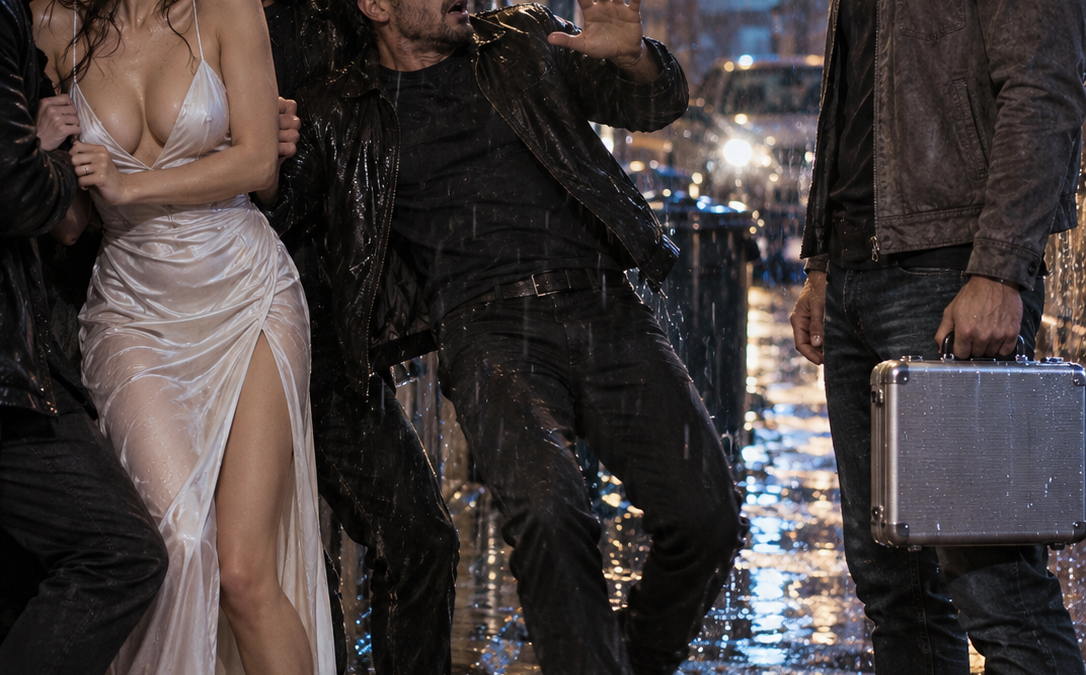
PART 2
Some of the client relationships that have been quietly diverted when this comes out, and it will come out, those clients don’t automatically will come back.
Preston,” she said.
It wasn’t really a question anymore.
It had stopped being a question sometime in the last 4 days, but she’d been holding on to the shape of the question because certainty required action, and she wasn’t sure yet what action looked like.
The authorization chains lead to him on 11 of the 17 Shell Company vendor registrations, Grant said. Not directly.
There are always two or three intermediary steps, always a plausible alternative explanation for each individual step.
But collectively, the only person with the access, the authority, and the institutional knowledge to build this particular structure is someone who’s been inside your executive leadership for a minimum of 10 years and understands the company’s operational systems at an architectural level.
That describes
three people, Vanessa said. Preston, my CFO, Diane Marsh, and Russell.
Russell doesn’t have the operational authority, Grant said.
He controls security and facilities, but the vendor registrations require executive sign off at the VP level or above. And your CFO, he hesitated.
What? Your CFO has been actively flagging irregularities in the accounts payable system for the past 2 years and requesting expanded audit access that Preston has blocked three times through the executive committee. He pulled another document and set it in front of her.
She’s been trying to find this.
Vanessa stared at the document. It was an internal memo from Diane Marsh dated 22 months ago requesting authorization for an independent audit of third-party logistics vendors. It was stamped deferred pending executive committee review.
There was a handwritten note in the margin in Preston’s handwriting.
Timing not appropriate given current client negotiations. Revisit Q3. Q3 had come and gone twice since that memo.
The audit had never happened. He blocked her. Vanessa said three times, Grant said.
The third time he circulated a separate memo suggesting the CFO’s audit request was creating unnecessary alarm among the vendor community and potentially damaging client relationships.
He cited two client calls I checked. The calls happened, but the clients I could reach had no recollection of expressing any concern about an audit. He fabricated the client concerns or significantly exaggerated them.
Either way, the audit didn’t happen.
Vanessa stood up again.
She couldn’t sit still with this.
She walked to the edge of the lit space and back once, the way she paced her office when a problem had too many moving parts, and she needed her body doing something mechanical while her mind worked.
“I need proof that holds,” she said.
“Not a chain of inference, not circumstantial authorization trails that a good attorney deconstructs in 40 minutes.”
“Something concrete, I know,” Grant said.
“The drive isn’t enough.”
“I know that, too.”
She stopped pacing.
“So, what do we do?”
He was quiet for a moment.
In the 11 days since the alley, she’d learned that his silences were not hesitations.
They were processing. The same as when he moved his pen from document to document without touching them.
He was running something through. We give him something to take, Grant said.
The trap took 3 days to construct.
It was Grant’s design, but Vanessa built it because she was the only one who could.
The concept was straightforward in the way that effective traps usually were simple enough that it didn’t require the target to be unusually careless, sophisticated enough that the evidence it produced would be unambiguous.
They created three versions of a document.
a confidential infrastructure contract real in the sense that it described a genuine planned expansion of Whitmore Meridian’s Pacific Northwest shipping network, something Preston knew was under development and would have strong reason to want to access.
The contract was worth $48 million and contained routing decisions that would, if the plan were real, significantly affect three of the Shell Corporation vendor relationships Grant had identified. The three versions were identical in every visible respect. Same formatting, same language, same figures.
The differences were buried in the technical specifications, a warehouse capacity figure here, a transit corridor designation there, small enough that you’d have to know what you were looking for to spot them.
Each version had a unique combination of those small differences, like a watermark. Vanessa gave one version to Russell Dayne in a briefing on internal infrastructure planning, describing it as preliminary and confidential. She gave a second version to Preston in a separate one-on-one meeting, framing it as something she wanted his input on before it went to the full executive team.
She kept the third version in her own files. Then they waited.
It took 48 hours.
Grant was running a search against Whitmore Meridian’s external facing vendor communication portal, a system she’d given him limited read access to through a credential she’d created under a false employee registration, which was the most legally uncomfortable thing she’d done in her
career.
And she tried not to think about it too hard when the document surfaced. Not in its entirety.
A fragment, two paragraphs appearing in an encrypted communication routed through one of the Shell Corporation vendor accounts to an external address Grant couldn’t immediately trace, but the fragment was enough.
The warehouse capacity figure was Preston’s version.
The transit corridor designation was Preston’s version.
Every small difference that distinguished the document she’d given Preston from the documents she’d given Russell and kept for herself was present in the fragment that had been transmitted externally within 48 hours of Preston receiving it.
Grant sent her a single message.
It’s him Preston’s version confirming now.
She read the message sitting at her desk at Whitmore Meridian on a Friday afternoon, with the city visible through the floor to siling windows behind her and her assistant moving through the outer office and the ordinary machinery of a functioning corporation operating around her. And she sat very still for a moment, 12 years.
Her father’s closest friend, the man who’d stood beside her at the funeral and said, “Your father knew you were ready, Vanessa.
He told me 3 weeks before the end, the man she had quoted in interviews when asked who had shaped her leadership, the man whose advice she had repeated to young executives in her own company as wisdom she’d been fortunate enough to receive.
12 years. She picked up her phone and called Grant. I need a minute, she said when he answered.
Take it, he said.
She didn’t say anything.
The line was open and the city was outside her window and she just sat there and let the thing that needed to happen in her chest happen quietly without naming it because naming it would have required a vocabulary for this particular kind of loss that she wasn’t sure existed.
After maybe 90 seconds, she said, “What’s next?”
“We need physical evidence,” Grant said.
The digital trail is strong, but a defense attorney will argue fabrication, manipulation of access logs, any number of things. We need something that predates any involvement from either of us.
Where do we find that? The ghost warehouses, Grant said.
The ones that exist in your system at physical addresses that don’t match.
I think at least one of them is a cover for a real location, a real facility that isn’t registered in Whitmore Meridian system at all.
A place where physical records might exist.
Original contracts, signed documents, shipping manifests that don’t go through any digital system.
Why would he keep physical records?
because he’s been doing this for 12 years and he’s been very careful.
Grant said, “Care careful people don’t rely entirely on digital records they can’t personally control.
At some point in 12 years, somebody needed a piece of paper to sign, and careful people keep the paper.”
She thought about that. It was logical.
It was also the kind of logic that came from a specific kind of experience, the experience of someone who’d spent years understanding how people built things they planned to deny later.
“How do we find the real location?”
she asked.
I’ve been working on that, Grant said.
I think I have it, but I need two days. You have them?
She said. Grant. She paused.
Yeah, thank you. She said it simply without the weight she could have put on it because the weight was there whether she put it in her voice or not, and he was perceptive enough to know that.
A brief pause on his end.
I’m going to make this right, he said.
And then, as if he’d heard himself say something he hadn’t planned to say and wasn’t entirely comfortable with.
I mean, we’re going to make this right.
I know what you meant, she said. 2 days later, on a Sunday evening, when the Pilson warehouse was quiet and the city outside had settled into the particular stillness of a late autumn weekend, Grant and Vanessa sat at the folding table with a laptop between them and a new set of documents on the table, and someone knocked on the warehouse door.
Vanessa was on her feet before she’d consciously decided to stand.
Grant was already moving toward the door, but not toward it the way someone moves when they’re frightened.
Toward it.
The way someone moves when they’ve already assessed the situation and made a decision about it.
He’d heard something before the knock.
Some quality of approach that had given him information she didn’t have.
Stay back, he said, not to her pastor at the door. Loudly, a voice came through the door.
It’s Wade.
The name landed in the room like a dropped tool. Vanessa looked at Grant. His face was doing the thing it did when he was processing completely still on the surface while something complicated moved underneath.
“How did you find this place?”
Grant called.
“Same way I found you 11 years ago,” Wade said through the door.
“I’m very patient and I don’t have anything better to do.”
Another voice different from WDEs came through.
“There are six of us.
We’re not carrying.”
“Open the door,” Northstar.
“Don’t call me that,” Grant said.
To the door.
Then open the door and tell me what to call you,” Wade said.
Grant looked at Vanessa. She gave him nothing, no indication of what she thought he should do because she understood this was not her call to make.
This was something between people who had a history she’d only heard one side of.
He opened the door. They came in out of the cold night air.
Six men ranging in age from their mid-30s to early 40s. All of them carrying the particular physical quality of people who had spent years doing things that required their bodies to be reliable in difficult circumstances and had since found other things to do with themselves. Wade was at the front.
Behind him came men who moved with the same difference Vanessa had seen in the alley not subservience. Something different. The kind of voluntary difference that came from a specific shared history.
They filled the warehouse with a different quality of air. not threatening something older than that.
WDE looked at Grant for a long moment without speaking. Then he looked at the table at the documents at Vanessa.
You’ve been working, he said.
Close the door, Grant said. Wade closed it. The six men stood in the lit space of the warehouse and looked at the map still pinned to the north wall at the photographs.
One of them, a man with a close-cropped beard and a scar across his left forearm, went very still when he saw the group photograph. He looked at it for a moment, then looked away. How long have you been looking for me?
Grant asked actively. Wade considered.
About 3 years. We knew roughly where you were before that, but made a small gesture that encompassed the warehouse, the decision not to appear.
The 11 years. We respected it. Why now?
Because we found something. WDE reached into the interior pocket of his jacket and produced a photograph.
He held it out toward Grant, who didn’t take it immediately.
Wade set it on the table between them. It was a surveillance photograph long lens, slightly grainy, the kind taken from a significant distance.
It showed the exterior of a building Vanessa didn’t recognize and two men visible through a ground floor window.
One of the men was blurred by distance and angle. The other was Preston Veil.
Vanessa’s breath stopped.
“We’ve been running our own investigation,” Wade said.
“Into the leak, into who put us in that situation 11 years ago.”
He looked at Grant.
We’ve been running it since about 8 months after it happened when we all stopped being too injured or too angry to think straight.
It’s taken us a long time.
We followed a lot of wrong threads. He nodded toward the photograph.
That one’s right.
Grant picked up the photograph and looked at it. The building in the background, Wade said.
It’s in Gary, Indiana.
It was leased 18 months ago under a corporate name that doesn’t appear in any registry we can find.
But the lease payments originate from an account that traces back to Whitmore Meridian, Grant said indirectly. Through two holding companies, WDE looked at Vessa.
Ms.Whitmore, I apologize for the alley.
We needed that drive and we didn’t know who we could trust in your organization.
In retrospect, the approach was alarming.
Vanessa said, “That’s fair.”
He looked back at Grant, the man we’ve been looking for, the person who sold the intelligence that led to that ambush.
11 years ago, we didn’t know who it was for a long time.
We knew it was someone with access to military contracting networks, which narrowed it to several hundred possible people.
We’ve been eliminating them one by one for years, he paused.
Preston Vale appears in defense contracting records from that period. Not visibly, not in a way that would show up in a normal background check, but he had connections through private consulting work to the contractor network that supplied our operational intelligence.
The warehouse was very quiet. Grant set the photograph down carefully.
“You’re saying he sold us,” Grant said.
The flatness in his voice had a different quality now. Not the practiced evenness of someone managing their emotional state, but the flatness of something gone beyond the range where emotion had useful vocabulary.
I’m saying the evidence points that way strongly.
WDE’s voice was steady, but his eyes weren’t.
And I’m saying that whatever he’s been doing inside Whitmore Meridian, we don’t know all of it, but we know enough to know it isn’t separate from what happened to us.
He’s been operating inside legitimate business structures for a long time.
We think the company was always part of it, a vehicle for moving things, hiding things, laundering the proceeds of things that were happening before.
Miz Whitmore’s father got sick.
Vanessa put both hands on the table and leaned on them. The room had acquired a weight that was separate from the cold.
He used my father’s company, she said.
Starting before your father died. Yes, we think so. My father trusted him.
She said it very quietly. Not to anyone in particular.
Nobody answered that because there wasn’t an answer.
There was only the fact of it sitting in the warehouse light. WDE turned to Grant.
We’ve been looking for you for 3 years because we needed someone who could lead this to an end.
Not because we want to relitigate what happened. None of us blame you for that night.
And if you argue with me about it, I’ll stand here all night and we’ll both get nowhere.
We need this finished. And the six of us doing it alone without someone who understands how to build an evidentiary case that survives a federal courtroom is how this ends wrong.
I’m not Northstar.
Grant said, “I know.”
Wade said, “We don’t need Northstar.
We need the person who turned around and came back for us when he didn’t have to.”
He glanced at Vanessa. And I think she needs the same thing.
The man with the scarred forearm, who hadn’t spoken since coming through the door, said the quietly.
He went back for us, Wade. He went back bleeding, and he carried every one of us out. Whatever he wants to call himself.
He stopped.
He pressed his lips together, whatever name he’s going by.
We’d like his help.
Grant stood in the middle of the warehouse floor and looked at the six men around him. And for a moment, something moved across his face that was hard to name.
Precisely. It was the look of someone who had spent 11 years building a wall between one life and another and was now standing at the wall looking at both sides of it. Simultaneously, understanding that the wall had never been as solid as he needed to believe.
He looked at Vanessa. She looked back at him.
She didn’t say anything either.
She’d told him in the parking garage conversation 2 days ago that she wasn’t asking for Northstar.
She wasn’t asking now.
She’d meant it, but she was looking at him honestly without managing her expression.
And what was in her face was not a request.
It was just the truth of where they were and what was needed and the straightforward acknowledgement that she couldn’t finish this without him.
Grant looked down at the table at the documents he’d spent two weeks pulling apart at the photograph of Preston Vale standing in front of a building in Gary, Indiana that was leased through a corporate structure that connected to Whitmore Meridian.
and probably if you followed it far enough to a decision made 11 years ago that had cost six men their health and 3 months of their lives and grant Holloway something considerably harder to name. The Gary building he said to Wade is it still active as of 6 days ago? Yes, I need everything you have on it.
Access records, lease documents, any surveillance you’ve done on the approach and exit patterns.
He looked up and I need to know if Preston has any reason to accelerate his timeline.
If he’s aware your investigation has gotten this close to him, he may move before we’re ready.
” Wade exchanged a look with the man on his left, a quick contained look, the kind that carried more information than the words around it.
“What?”
Grant said, “We may have gotten close enough that he noticed.”
Wade said, “One of our surveillance positions 3 weeks ago, we think we were made.
Not definitively, but possibly, which means his timeline may already be moving.
” Grant said, “It’s possible.
How quickly can you get me that access data on the Gary building? I have it with me, Wade said.
Grant looked at him for a second. Of course you do.
Something almost like a smile moved across WDE’s face.
Just briefly.
I’ve been patient for 3 years, he said.
I came prepared. Grant sat down at the table. He moved two of the document stacks aside to make room.
He looked at Vanessa and said, “You should call Diane Marsh tonight, your CFO, not from your regular phone.
Tell her you found what she’s been looking for.
Tell her you need her to pull everything she has on the vendor audit irregularities and be ready to move on 72 hours notice. Vanessa nodded. And Preston Preston needs to believe nothing has changed.
Grant said he needs to feel safe through Monday morning. He looked at the documents on the table then at Wade.
Sit down all of you. The six men settled into the available space two chairs the edge of the shelving unit. The floor near the heater.
WDE sat in the chair across from Grant and laid a folder on the table between them. Outside the warehouse, Chicago had gone fully quiet.
It was after 10:00. The rain from 2 weeks ago had given way to clear and bitter cold, the kind that came off the lake in November like a statement of intent.
Stars were visible for the first time in days. Inside the work light hummed above them and the heater ran in the corner and seven people who had arrived at this table by completely different routes sat together in the particular focused stillness of people who have finally found the room where the actual problem lies and are ready to deal with it. Grant pulled the folder toward him and opened it.
He did not use the name Northstar. He did not need to. The Gary building turned out to be a converted cold storage facility on the southwest edge of the city.
The kind of structure that had been built for one industrial purpose and then repurposed several times over until its original function was unrecognizable under layers of renovation and neglect. It sat at the end of a service road off a stretch of highway that carried mostly truck traffic surrounded by the kind of flat, scrubby industrial landscape that nobody drove through unless they had a specific reason to be there.
WDE’s team had been running intermittent surveillance on it for 3 weeks.
They had access patterns, vehicle logs, a rough interior layout based on what was visible through loading dock windows during daytime hours. Grant spent Monday morning studying everything they had on it.
He sat at the folding table in the warehouse and went through Wade’s surveillance notes.
The the way used to go through pre-mission intelligence packages, not skimming for the dramatic details, but reading the mundane ones carefully because the mundane ones were where real information lived. What time did the exterior lights come on? How long between the last vehicle departure and the first exterior light cycling off?
Whether the lock on the secondary entrance was electronic or mechanical, and if electronic, whether it had a visible keypad or a card reader. There are two people who access it regularly.
WDE told him he was sitting across the table with his own copy of the notes, which was slightly redundant, but Grant didn’t say so.
A man we’ve identified as a logistics coordinator employed by one of the shell companies name of Terrence Alcott.
No prior record probably doesn’t know the full picture of what he’s managing.
And one other person who appears roughly once a month always in the evening always alone. Preston Grant said Preston Wade confirmed last visit was 19 days ago.
Based on the pattern he’s due again sometime in the next 10 days.
We can’t wait 10 days.
Grant said, “If he’s been alerted that his surveillance position was made, then his pattern breaks and he comes sooner or not at all.”
Wade finished. I know.
So, we go in before he does, Grant said.
We get what’s there and we document it before he has the chance to remove it.
He looked up from the notes. How many of your people have done this kind of entry before?
WDE didn’t answer that directly, which was itself an answer.
The secondary entrance, Grant said. Mechanical lock. Mechanical old.
The building’s been through three different tenant organizations, and none of them bothered to upgrade the secondary.
Good. Grant set the notes down and looked at the ceiling for a moment. The particular posture of someone laying out a sequence in their head.
I’m going in alone.
Monday night.
That’s not It’s a documentation job, Grant said.
Not an extraction. I go in, I photograph everything, I come out.
Two people doubles the noise and the risk and doesn’t add anything I actually need.
He looked at Wade. I need you positioned outside on the service road.
One vehicle running oriented for departure.
If something goes wrong inside, I’ll signal and then you leave.
WDE stared at him. If something goes wrong, I leave.
If something goes wrong inside, the evidence I’ve gathered until that point is on a transmitting device that uploads automatically.
Your job is to make sure that transmission reaches Vanessa’s attorney.
If I’m still inside and the evidence is out, my situation doesn’t change what you do.
A long pause.
You’ve thought about this for approximately 12 hours, WDE said.
And you’re already giving orders like it’s 11 years ago.
I’m giving logistics, Grant said.
You can disagree with any of it. I disagree with you going alone. Noted.
Grant picked up his coffee. Monday night.
He told Vanessa that evening on the burner phone while she was in her car in the parking structure beneath Whitmore Meridian’s building, engine running, heater on, the particular privacy of a moving vehicle that wasn’t moving.
She didn’t argue with him going alone.
She didn’t like it, which she said plainly.
But she understood the logic and she wasn’t the kind of person who argued against logic simply because the conclusion was uncomfortable.
Instead, she said, “What do you need from me for Monday?
Keep Preston in a meeting until at least 4:00,” Grant said.
Doesn’t matter what kind.
Budget review, client presentation, anything that requires his presence in the building. I can do that.
and call your attorney, your personal attorney, not corporate counsel. Have them ready to receive an encrypted file transmission and initiate federal disclosure proceedings.
Don’t tell them what it contains yet.
Just have them ready. A pause on her end.
Once we do that, there’s no walking it back.
There was never walking it back.
Grant said Preston built something that can’t be quietly dismantled.
It goes to federal investigators or it goes nowhere. Another pause longer.
Okay. She said Monday. Vanessa.
He said her name with a slight hesitation, like he’d thought about using it and then decided to.
👉 [Tap here for the Next Part ] 👈
