Single Dad Hid as a Janitor — His SEAL Skills Saved the Wheelchair CEO From Attackers (Part 2)
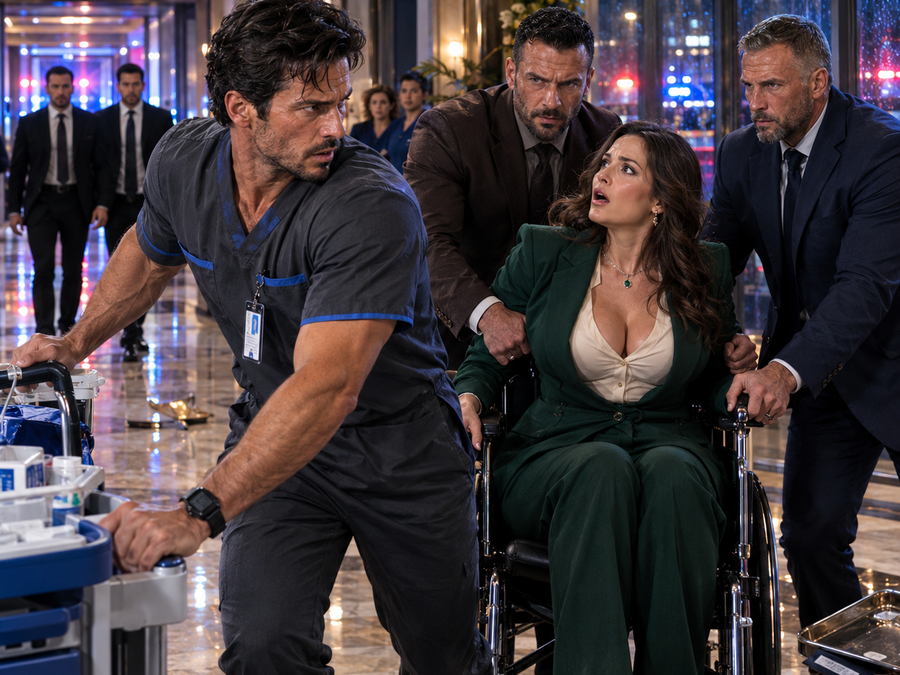
Single Dad Hid as a Janitor — His SEAL Skills Saved the Wheelchair CEO From Attackers (Part 2)
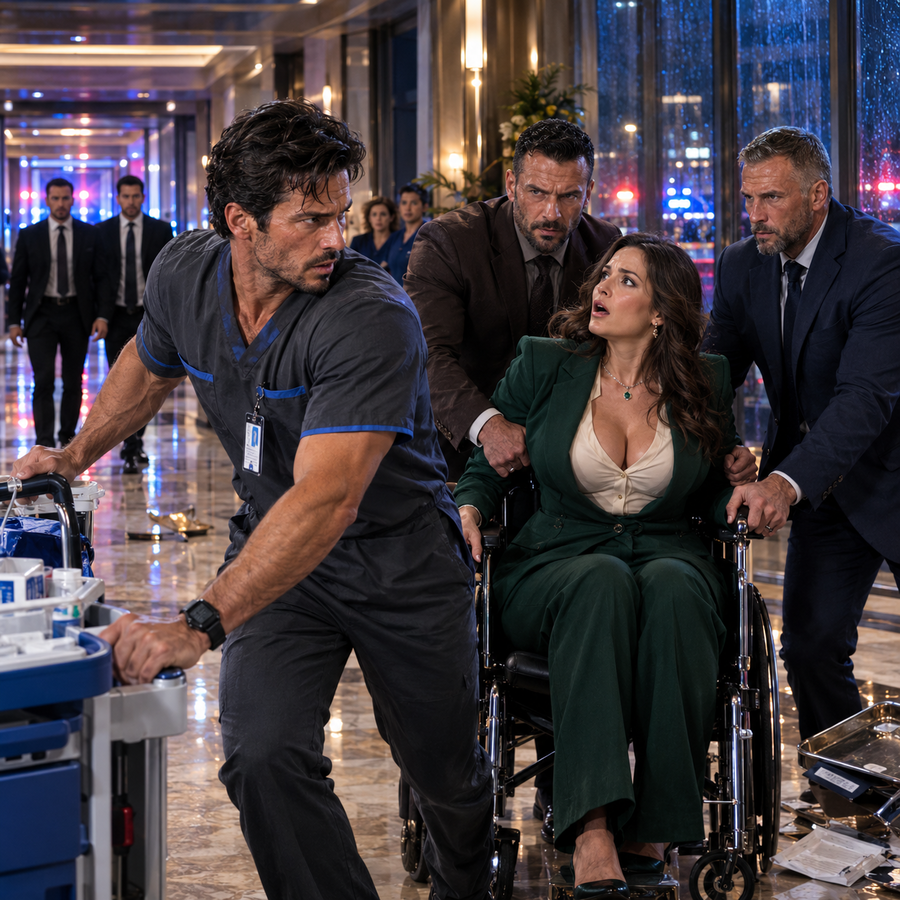
PART 2
The private conference room had one phone and one window, and Ryan stood at the window while he waited for the call to connect, looking at the city 42 floors below. All that ordinary Tuesday morning Chicago, going about its business with no awareness of the room he was standing in or the name Clare had just said or the shape of what was forming around all of them.
The call connected. Ryan’s sister-in-law Mara answered on the second ring. Her voice was bright in the way that Mara’s voice was always bright. An almost aggressive cheerfulness that Ryan had once found exhausting and now found deeply reassuring. “Ryan, it’s early. Is everything—” “Mara,” he said. “I need you to pick up Lily from school today.” A beat. Mara had known Ryan for 10 years. She had been his wife’s sister. She had sat beside him in a hospital for three days, and she had held his daughter while Ryan handled arrangements he should not have had to handle. At 34 years old, she understood the difference between Ryan calling to chat and Ryan making a specific, calm, early-morning request in a particular tone of voice.
“Okay,” she said. No questions. Not yet. “I’ll pick her up.” “And I need her to stay with you tonight,” he said. “Maybe a few nights.” Another beat. A different kind. “Ryan, are you safe?” He thought about it honestly. He was the kind of man who didn’t offer false reassurance as a reflex. “Right now? Yes,” he said. “I’m being careful.” “Should I be worried?” “I’m handling something,” he said. “I just need to know Lily is with you while I handle it.”
Mara was quiet for a moment. He could hear her making the decision. The decision of a woman who loved her dead sister’s husband and her dead sister’s daughter and who had spent four years watching Ryan Cole try to fold himself small enough to disappear into ordinary life. “I’ll get her,” she said. “She’ll be fine. You know she loves it here.” “Tell her I called,” he said. “Tell her I said good morning.” “I will.” A pause. “Ryan.” “Yeah.” “Be careful.” “Always,” he said. He hung up.
He stood at the window for exactly 10 seconds. Then he walked back to Clare’s office, knocked once, and opened the door. Everyone looked at him. He looked at Clare. “Tell me everything about your father’s research,” he said. “All of it. From the beginning.” Clare looked at him for a moment. Then she looked at the attorneys, at Carver, at the woman with a laptop. “Give us the room,” she said.
Nobody argued. When the door closed and it was just the two of them, Clare folded her hands on the desk and looked at Ryan across the space between them and said, “You don’t have to do this.” “I know,” he said. “This is not your fight.” “I know.” “These are people who—” “Clare.” He said her name the same way she’d said his. For attention, because he already had it. “I’ve been watching this building for two years. I’ve been watching you for eight weeks. I watched three men walk in here and put a gun to your head over a company your father built with 30 years of his life.” He was quiet for a moment. “I made a choice the other night in that corridor. I don’t unmake choices.”
She looked at him for a long time. “My father’s last research project,” she said finally. “He called it the Atlas Protocol. A breakthrough in neurodegenerative treatment. Something that could fundamentally change how we treat conditions like Alzheimer’s and Parkinson’s.” A pause. “He got sick before he could publish. Before he could properly secure the intellectual property. And the data, the full research data, lives on a proprietary server inside this building. And now certain people know that if they own this company, they own that data.”
She looked at her hands. “And they will bury it. Because the treatments it points toward are not profitable enough compared to the medications people are currently buying from the companies they control.” She looked up. “My father spent 30 years on that work. It could help millions of people. And they want to lock it in a drawer.”
Ryan was very still. He was thinking about Dr. Edward Whitmore, whom he had never met, who had built something important and then gotten sick and trusted his daughter to protect it. He was thinking about Maya, who had been in a car accident, and about the two surgeries she’d survived, and about the medical technology that had kept her alive for four days before it ran out of options. He was thinking about a nine-year-old boy in Macon, Georgia, who noticed when something was wrong. He was thinking about Coach Sims, who told him not to waste it.
He said, “What do you need me to do?” And this time, Clare told him.
Clare told him about a man named Douglas Merritt. She didn’t say the name like it was unfamiliar. She said it the way you say the name of something you’ve been afraid of for a long time but hadn’t been willing to say out loud until now. Carefully. Like the saying of it made it more real.
Douglas Merritt was 61 years old. He had built his pharmaceutical empire across three decades and four continents. Starting with a generic drug company in New Jersey that he’d bought for 11 million and sold eight years later for 900 million. He had the particular kind of wealth that stopped being about money somewhere around the third billion and became about something else entirely. Time. Control. Legacy. The satisfaction of owning things that other people needed.
He had tried to acquire Aurelius Medical Technologies three times in the past four years. The first two times, Clare had declined through attorneys. The third time, 14 months ago, Merritt had made the offer directly. A personal meeting. A conference room in a downtown hotel. A number written on a card that Clare said was insulting in its precision. Sign immediately. She hadn’t signed.
Merritt had looked at her across the table and said, very pleasantly, “Miss Whitmore, I want you to understand something. I always get what I’m after. The only variable is how long it takes and how much it costs the other party.” Clare had looked back at him and said, “Then I hope you enjoy waiting.” She had wheeled out of that conference room and never heard from him directly again.
What she hadn’t known, what Voss had now confirmed, was that the conversation with Merritt had ended in that conference room and continued somewhere else entirely. Merritt had identified Voss three months later. Had spent six months building leverage over him. Financial leverage. The kind that grew from the discovery that Voss had been quietly supplementing his already generous salary in ways that didn’t survive scrutiny. And then Merritt had given Voss a simple choice. Help from the inside, or face what the outside looked like when Douglas Merritt decided to make an example. Voss had chosen to help from the inside.
Ryan listened to all of this without interrupting. When Clare finished, he was quiet for a moment. And then he said, “The three men from Thursday night. They were contractors. Professional ones.” Clare said, “Carver’s people traced them back to a security firm in Miami. The firm does legitimate work. Corporate investigations. Executive protection. But they also take private contracts that don’t appear in any public record. Merritt’s connection to the firm. Two layers removed. Clean enough that he could deny it credibly in front of a jury.” She paused. “Which is why Voss is so valuable right now. He’s the link.”
Ryan nodded. “Where is Voss?” “Federal protective custody as of this morning.” “Good.” He thought for a moment. “The Atlas Protocol data. The server it lives on. Who has physical access?” “Three people,” Clare said. “Me. My father’s original research director, a woman named Dr. Susan Kang. And the head of our IT security.” She stopped. “His name is Philip Torrance.” Something in her voice changed on the last name. Just slightly. Just enough. Ryan caught it immediately.
“Tell me about Torrance.” Clare looked at her hands. “He’s been with the company for six years. He was hired by my father personally. He’s competent. Highly competent.” Another pause. “Last week, I found an access log discrepancy on the Atlas server. A login at 3:40 in the morning that matched Torrance’s credentials.” Ryan said nothing. “He said it was a routine security audit. He said he runs them periodically during off hours to minimize disruption.” “Does he?” “He has before. Not at 3:40 in the morning, but it’s not impossible.” She looked up. “I don’t have evidence it was anything else. I just have a feeling.”
Ryan looked at her steadily. “How long have you had the feeling?” A long pause. “Three weeks.” “You didn’t tell the attorneys.” “No.” “Why?” She met his eyes. “Because if I’m wrong, I’ve accused a loyal employee my father trusted. And if I’m right—” She stopped. “If I’m right, then Merritt already has access to the Atlas data, and everything we’re doing right now is already too late.”
The room was very quiet. Ryan stood up. “Where is Torrance now?” he asked. “In the building,” Clare said. “He came in at seven this morning. He’s on 28.” Ryan was already at the door. “Ryan,” Clare said. He turned. “You can’t just—” She stopped herself. “What are you going to do?” He said, “My job.” He left before she could respond.
It was 9:47 in the morning when Ryan Cole, in his gray janitor’s uniform, took the service elevator down to the 28th floor with his cleaning cart and a mind running at a speed that the people who designed the elevator would never have imagined it witnessing. Philip Torrance’s domain was the server room and the adjacent IT security office. A glass-walled space that gave Torrance visibility over the hardware racks while also giving anyone walking past visibility of Torrance. It was the kind of layout that communicated transparency. “Look at me,” it said. “I have nothing to hide.”
Ryan had learned, over 12 years of operating in places where the truth was currency, that the people most aggressively communicating transparency were often the ones with the most to hide. He didn’t go to the server room directly. He went to the break room on 28 first. Made himself a cup of coffee. Unhurried. Routine. And stood near the window and watched the hallway.
At 9:52, Torrance came out of his office and walked to the printer station 30 feet away. He was 43, medium build, the kind of man whose face communicated competence and nothing beyond it. Ryan watched the way he walked. He watched where Torrance’s eyes went when he collected the printed pages. He watched the half-second delay before Torrance turned back toward his office. A micro-pause that Ryan had seen before in people who were thinking about whether they’d been observed. Torrance hadn’t seen Ryan. But Ryan had seen enough.
He went back to his cart, pushed it to the corridor outside IT security, and started working. Methodical. Unhurried. The same Ryan Cole who had mopped this floor 140 times in the past two years. At 10:08, his phone vibrated. A message from a number he didn’t recognize. He looked at it. It said, “You should leave the building, Mr. Cole. What happens next isn’t something a janitor can stop.” Ryan stared at the message for exactly three seconds. Then he typed back, “Wrong janitor.” He put his phone in his pocket, pushed his cart to the next section of corridor, and kept working.
At 10:31, Detective Carver called. Ryan answered on the second ring. “Detective.” “Where are you?” Carver’s voice had a specific quality. Not quite alarm, but the heightened alertness of a man who has just received information he wasn’t expecting and is still computing its implications. “28th floor,” Ryan said. “Working.” “Get to 30,” Carver said. “Now. Use the stairs, not the elevator.” “What happened?” “Voss,” Carver said. “He’s dead.” Ryan stopped moving. “Protective custody,” Ryan said. Not a question. He was processing, reorganizing, reassessing. “Twenty minutes ago. The facility is locked down. We don’t know how.” Carver stopped himself. Ryan could hear the controlled urgency in the background. “Get to 30. I’m sending two officers to your location now.”
“I don’t need—” “Ryan.” Carver’s voice dropped. “You’re the most visible loose end in this building right now. You understand what that means?” Ryan understood. “Thirty,” he said. He moved toward the stairwell. He did not use the stairwell on the east side, which was the nearest one. He used the stairwell on the west side, which added 40 feet to his route. Because the east stairwell had a camera in a good position, and the west one had a camera in a bad position. A fact he had noted 14 months ago and never had occasion to use until this moment.
He hit the door, took the stairs, was on 30 in 40 seconds. He came out of the stairwell door and nearly walked directly into a man he had never seen before. Who was standing just outside the door with the particular stillness of someone who had been told to wait in exactly that spot. Ryan assessed him in under a second. Professional. Not police. Wrong shoes. Wrong posture relative to how cops hold themselves in a building. Private. The man looked at Ryan. Looked at the cleaning cart. Looked at Ryan’s face. Ryan kept moving. Didn’t slow down. Didn’t speed up. Same pace. Eyes forward. The rhythm of a man who had somewhere routine to be. The man didn’t stop him.
Ryan rounded the corridor corner, put 30 feet between himself and the stairwell door, and took out his phone and called Clare. She answered immediately. “Ryan, Voss is dead,” he said quietly. A sharp intake of breath. “I just heard from Carver,” he said. “I need to ask you something, and I need you to think carefully before you answer. The text on the Atlas Protocol server. The 3:40 access. Did Torrance know you’d seen the log?” Silence. “Clare.” “I—I mentioned it to him,” she said. “I wanted to give him the opportunity to explain. That was 10 days ago.” “Did anyone else know you’d seen the log?” “No. Just Torrance and me.”
Ryan closed his eyes for one second. Ten days ago, Clare had told Torrance she’d seen the access log. Three days later, the men had appeared in her office with documents for her to sign. The timeline was exact. “Clare,” he said, “I need you to not be alone right now. Where are you?” “My office. Daniel is here. And one of the attorneys.” “Don’t let anyone else in. No one without Carver’s clearance.” He paused. “Especially not Torrance.” “Ryan, what—” “I’ll explain when I’m with you. Don’t open that door.” He was already moving back toward the elevator. “And Clare—the Atlas data. Is there a physical backup? Anything not connected to the building’s network?”
A pause that lasted about two seconds too long. “There’s a drive,” she said. “My father kept a physical backup drive. It’s in the company safe in my office.” “Is anyone else aware of the drive?” Another pause. Shorter this time, but weighted differently. “Torrance is,” she said. “He helped catalog it after my father got sick.” Ryan’s pace didn’t change. His voice didn’t change. But something in his chest that had been operating at one level shifted to another. “Lock your office door,” he said. “Right now.” He heard the sound of a lock engaging over the phone. “Done,” she said. “Good,” he said. “I’m coming up.”
He hit the elevator call button and stood with his back to the wall. Not casually. The way a person waits for an elevator. But the way a person waits when they want a full view of the corridor in both directions. And he thought about Voss dying in protective custody 20 minutes ago. And he thought about the man outside the stairwell who wasn’t a police officer. And he thought about the text on his phone that knew his name. And he understood, with the specific clarity of a man who had spent 12 years reading situations, that what had seemed like a corporate crime story had just shifted into something significantly more operational.
These were not people who made mistakes. These were people who removed loose ends. The elevator arrived. He got in, pressed 42. As the doors closed, his phone vibrated again. Same unknown number. This time it said, “The drive isn’t in the safe anymore, Mr. Cole. Save yourself the trip.” Ryan stared at the message. The elevator rose. He thought about what the message meant, operationally. Whoever sent it wanted him to know the drive was gone. They wanted him to feel it. The helplessness of arriving too late. The futility of the effort. It was a psychological move as much as an informational one. Demoralizing. Designed to stop movement. He thought about that for approximately four seconds. Then he typed, “Where I come from, we don’t stop moving.” He put his phone away.
The elevator opened on 42. Two things happened at the same time. The first was that Ryan saw Daniel standing in the corridor outside Clare’s office. Not inside. Outside. Which meant the door had opened. Which meant something had changed in the 60 seconds since Clare had locked it. The second was that Daniel’s face communicated everything before he opened his mouth. Daniel was a naturally transparent person. Ryan had noticed that about him from the beginning. His face was an open transcript. What his face said right now was: something is very wrong, and I am very scared.
Ryan covered the distance between them in seconds. “Daniel,” he said quietly. “Where is she?” “She’s inside,” Daniel said. “But Torrance is in there. He came in through the private entrance. The connecting door from the 43rd-floor conference suite. I didn’t even know that door was there. It was locked, but he had a key, and I didn’t—” He stopped. His voice was unsteady. “I didn’t know I was supposed to stop him. You said no one without clearance, but I didn’t know he—is she okay?” Ryan said, “She was when I came out. He told me to wait in the corridor.” Daniel looked at him. “Mr. Cole, he has something in his jacket. I don’t know what it is, but the way he’s holding himself—”
Ryan put his hand briefly on Daniel’s shoulder. “One second. Steady. Call Carver,” he said. “Right now. Tell him Torrance is in Clare’s office through the 43rd-floor connector. Tell him to come fast.” He met Daniel’s eyes. “Can you do that?” “Yes.” “Do it now,” Ryan said. And he turned toward Clare’s office door.
He didn’t knock. He used his master facilities key, the one that gave him access to every non-executive room in the building for cleaning purposes, and that technically did not authorize him to open the CEO’s office door. And he opened it. Torrance was standing in the center of the room. Clare was behind her desk. The thing in Torrance’s jacket was now in his hand. And it was not a gun. It was a hard drive. Small. Black. The kind that held more information than most people accumulated in a lifetime.
Ryan looked at it. Torrance looked at Ryan. Clare looked at both of them. For a moment, no one moved. The room held itself still. The way rooms do when something irrevocable is about to happen, and everyone present can feel it approaching. Then Torrance said, quietly, “You should not be in this room.” “Neither should you,” Ryan said.
Torrance looked at him with the specific expression of a man who has done something he knows cannot be undone and is now in the arithmetic phase. Calculating what happens next. What the variables are. What the costs look like. “You’re the janitor,” Torrance said slowly. Like he was working something out. “You’re the one from Thursday night.” “Yes,” Ryan said. “I know who you used to be,” Torrance said. His voice was steady, which told Ryan something. Either Torrance had done difficult things before, or he was running on the particular calm of someone who had committed fully to a course of action and was past the point of second-guessing it. “I know your service record. The parts that aren’t redacted.” A pause. “Which means you know I’m not walking out of here without this drive.”
“You’re not walking out of here with it either,” Ryan said. “Mr. Cole,” Torrance said, “I have people in this building right now. Professionals. One call, and this gets significantly more complicated for everyone in this room.” He looked at Clare. “Miss Whitmore, I want you to understand that this was never about hurting you. This is business. The data goes to people who will use it differently than your father intended. But use it.”
Clare said, “My father spent 30 years on that research so that people could be helped. Not so Douglas Merritt could bury it because it threatens his profit margins.” “Your father was a scientist,” Torrance said. “He didn’t understand how the world actually works.” “He understood it better than you think,” Clare said. Something moved across Torrance’s face. Not guilt. He was past guilt. But something that might have been its shadow.
Ryan had been very still since he entered the room. He had spent the conversation doing what he always did. Reading. Assessing. Calculating the geometry of the situation. Distance to Torrance: 11 feet. Torrance’s dominant hand: right, currently holding the drive. The connecting door behind Torrance: closed, but unlocked. The desk between Ryan and Clare: four feet wide, could not be cleared quickly from a standing position. One phone call, Torrance had said. He hadn’t made it yet. That meant he was still trying to resolve this without escalation. Which meant Torrance was not, at his core, a man who wanted violence. He was a man who had made a choice and was trying to carry it through with minimal additional damage. That was information.
Ryan said, “Phillip.” Torrance looked at him. The use of his first name created a small shift. A slight rerouting of the calculation. “You’ve worked for this company for six years,” Ryan said. “You were hired by Edward Whitmore personally. He trusted you.” He paused. “What did they offer you?” A long silence. “Enough,” Torrance said. “Enough for what?” Another silence. “Longer.” “My daughter has a condition,” Torrance said. And for the first time, his voice changed. Something underneath the steadiness coming through. “Treatment costs more than I make in three years. Merritt’s people offered to cover everything. Every treatment. Every procedure. For as long as she needs it.” He stopped. “So yes. Enough.”
Ryan heard that. He heard it the way a father hears things in a different register than everything else. Lower. More resonant. He thought about Lily. About the stuffed dog named Captain. About the school play on Friday. He said, “How old is she?” Torrance looked at him. “Your daughter,” Ryan said. “How old?” “Eight,” Torrance said. And the word came out different from everything else he’d said. Smaller. More honest. Eight years old.
Ryan was quiet for a moment. “Merritt is going to lock that research away,” he said. “You know that. You know what the Atlas Protocol is. You know what it could do.” He kept his voice even. No judgment. Just facts. “Your daughter is eight. She’s going to need treatment for how long?” Torrance said nothing. “Possibly her whole life,” Ryan said. “And the research that might actually change her prognosis, change it fundamentally, is sitting in that drive in your hand. And you’re about to give it to a man who will make sure it never sees the light of day.” He paused. “Because her treatment costs less than what that data is worth to him as a competitive advantage.”
The room was absolutely still. Torrance’s hand on the drive was no longer steady. Something had changed in it. Not dramatically. Just the way a structure changes when one of its supporting elements shifts. Clare said, very quietly, “Phillip. What’s her name?” He looked at her. “Your daughter,” Clare said. “What’s her name?” The pause lasted four full seconds. “Emma,” he said.
Clare held his gaze. “My father’s research was never just about money. It was about Emma. Children with conditions that aren’t treated well enough. Adults watching their minds disappear. Families sitting in waiting rooms counting what they have left.” Her voice got lower, quieter, which was somehow more powerful. “If you give that drive to Merritt, Emma never benefits from what’s in it. Nobody does. It becomes leverage, and then it becomes nothing.”
Torrance was very still. “But if you give it to me,” Clare said, “I will personally ensure that Emma’s treatment is covered. Not because Merritt paid for it. Because my father would have wanted his research to help the children it was designed to help. Starting with yours.” Ryan watched Torrance’s face. He watched the arithmetic happening. He watched the moment, the specific, precise moment, when the outcome shifted.
Torrance looked at the drive in his hand. He looked at Clare. He set the drive on the desk. His hand was shaking slightly when he pulled it back. Just slightly. The shake of a man releasing something he’d been holding too tightly for too long. Ryan crossed the room in four steps. Put himself between Torrance and the drive and picked it up. It was lighter than he expected. These things always were. The things that changed everything were never as heavy as they should be.
He heard footsteps in the corridor. Then Carver’s voice outside the door. “Chicago PD, open up.” Ryan looked at Torrance. Torrance looked back at him. He looked exhausted in a way that went beyond the morning. He looked like a man who had been carrying something for a long time and had just put it down and wasn’t sure yet if the ground beneath him was going to hold. He said, “Will she be okay? Clare’s offer. Is it real?” Ryan looked at Clare. Clare said, “It’s real.” Torrance nodded slowly.
Ryan opened the office door. Carver came through with two officers, and the situation in the room registered immediately. Ryan with the drive. Torrance standing still with his hands visible. Clare behind her desk. Carver looked at Ryan. He looked at the drive. He looked at Torrance. He said, “Everybody all right?” “Yes,” Ryan said. Carver took a long breath. Let it out. “Mr. Torrance, I need you to come with me.” Torrance went without resistance. One of the officers followed. The other stayed.
Carver stood in the doorway and looked at Ryan, and the specific look he gave him was one Ryan recognized. The look of a man who finds a situation already resolved and is simultaneously grateful and unsettled by the fact that it happened without him. “The drive,” Carver said. Ryan handed it to him. Carver took it, held it, looked at it the way people look at things when they’re computing the weight of what they’re holding. He looked at Ryan. “How did you know about the connection through 43?” “I didn’t,” Ryan said. “Daniel told me.” Carver looked at him for a long moment. “You’re telling me an administrative assistant.” “Daniel paid attention,” Ryan said. “People do when you give them a reason to.”
Carver shook his head slowly. Not dismissal. Something more like reluctant acknowledgment. “I need a statement,” he said. “Both of you.” “I know,” Ryan said. Carver left. The remaining officer stationed himself outside, and for the first time since 9:47 that morning, the office was quiet. Just Ryan and Clare. And the particular silence that arrives after something that was moving very fast has finally stopped.
Clare looked at Ryan across her desk. She said, “You told him about his daughter.” “Yes.” “You could have taken the drive from him.” “Probably,” Ryan said. “Why didn’t you?” Ryan thought about a man with a daughter named Emma and a medical bill that looked like a mountain range and a choice he’d made for the worst possible reasons and the best possible ones. “Because he’s a father,” Ryan said, “and he was doing what fathers do when they’re desperate.” He paused. “It doesn’t make what he did right. But it makes it human.”
Clare looked at him for a long time. Then she said, “Your daughter’s play is Friday.” He looked at her. Surprised, just slightly. “You mentioned it to Carver,” she said. “The other night. The tree.” The corner of Ryan’s mouth moved. “She’s a very committed tree,” he said. Clare almost smiled. Almost. The morning had been too much for a full one.
“Ryan,” she said. “Yeah.” “Merritt is still out there,” she said. “Voss is dead. We have the drive, but we don’t have the case closed. He’s going to come at this differently now.” She looked at the desk where the drive had been 30 seconds ago. “He’s not finished.” Ryan said nothing for a moment. Then, “Neither are we.” He picked up his cleaning cart from beside the door, where he’d left it. Clare watched him. “You’re going back to work,” she said. “Floors 40 through 42 don’t clean themselves,” he said.
She looked at him. Really looked at him. The way she had in the elevator on that first night. The way that had made him feel seen in a building full of people who looked straight through him. She said, “What are you, Ryan Cole?” He pushed the cart toward the door. “Right now,” he said, “I’m the janitor.” He stepped into the corridor. Behind him, for the first time all morning, he heard Clare Whitmore exhale.
It was 11:14 in the morning, and Douglas Merritt had not yet been reached for comment, and Garrett Voss was in a federal morgue, and Philip Torrance was in a police interview room on the ground floor, and the Atlas Protocol drive was in an evidence bag on its way to a secure federal facility, and Ryan Cole pushed his cleaning cart down the executive corridor of the 42nd floor of Aurelius Medical Technologies and he thought about Emma, who was eight years old, and about Lily, who was almost seven, and about Maya, who had wanted the world to be better than it was and had believed, genuinely, stubbornly, completely, that certain people were put here to help it get there. He thought she might have had a point. He emptied a trash can. He kept moving.
Douglas Merritt called Clare’s personal cell phone at 2:33 in the afternoon. Not through attorneys. Not through intermediaries. Directly. The same number he had called exactly once before, 14 months ago, after the meeting in the downtown hotel conference room where she had told him she hoped he enjoyed waiting.
Clare was still in her office when the call came. Ryan was in the corridor outside, close enough that she could have opened the door and spoken to him without raising her voice. She had not asked him to stay. He had not asked permission. He was simply there, the way he had apparently been there for eight weeks without anyone asking him to be. She looked at the screen. Looked at the number. Looked at the door. Then she answered it and said, “Mr. Merritt.”
His voice was exactly what she remembered. Calm. Unhurried. The voice of a man who had never been told no and kept it. “Miss Whitmore. I understand today has been difficult.” “It’s been clarifying,” she said. A brief pause. “I’m calling because I believe there’s been a significant misunderstanding about my intentions regarding Aurelius.” “Your intentions,” Clare said. “You mean the corporate fraud, the coercion, the armed men you sent to my office, or the fact that a man who was cooperating with federal investigators died in protective custody this morning?”
Silence on the line. “I had nothing to do with Mr. Voss’s death,” Merritt said. “I’m sure your attorneys will be very effective at establishing that.” Another pause. When he spoke again, something had shifted in his voice. Not the smoothness, that was still there. But underneath it, something had tightened. “Miss Whitmore, you have the drive. I understand that. And I understand that the federal situation is currently complicated. But I want you to consider something very carefully.” He paused for effect. A practiced pause. The pause of a man who had used silence as a tool in 10,000 negotiations.
“Your company is vulnerable right now. The public disclosure of what Voss was doing inside Aurelius. The financial irregularities. The board involvement. That story is going to damage your company’s valuation significantly. Your contracts will be at risk. Your research partnerships will be nervous. In six months, Aurelius may be worth a fraction of what it is today.” Another pause. “I am prepared to make an acquisition offer that protects your employees, honors your father’s legacy in name, and ensures that the Atlas research continues under proper stewardship.”
Clare was very quiet. Outside the door, Ryan stood with his back against the wall and listened to the one side of the conversation he could hear, which was mostly silence on Clare’s end, which told him she was being offered something designed to sound reasonable. He didn’t move. He waited. Clare said, “Mr. Merritt, I want to make sure I understand your offer correctly. You believe that after everything that has happened today, after your people put a gun to my head, after Garrett Voss died in federal custody, after your IT asset tried to walk the Atlas Protocol out of this building in his jacket, you believe I’m going to sell you my father’s company?”
A pause from Merritt. “I believe you’re a businesswoman who understands reality.” “You’re right,” Clare said. “I am.” She let a moment pass. “So here’s the reality, Mr. Merritt. The Atlas Protocol data is in federal evidence. My attorneys filed a protective intellectual property claim on it 40 minutes ago. The board members who were involved in your arrangement are already talking to federal investigators, because when people sense a sinking ship, they swim. And your ship is sinking. And as of 11:00 this morning, every major research institution that my father collaborated with over 30 years has received a briefing package from my office outlining the Atlas Protocol’s findings in enough detail that the chorus cannot be suppressed, even if every piece of physical evidence disappears.”
She paused. “My father wasn’t stupid, Mr. Merritt. And neither am I. We planned for people like you.” The silence that followed was different from the previous silences. It had a different quality. The quality of a calculation failing to resolve. When Merritt spoke again, the pleasantness was still there. It was architectural. Built into him. But something else was underneath it now. Something with an edge. “You should think carefully about your next steps,” he said. “I have been,” Clare said. “For quite some time.” She ended the call.
Ryan heard her say, “Through the door, Ryan.” He opened it. She was sitting very straight in her chair. Her phone facedown on the desk. Her hands pressed flat on the surface in front of her. She was breathing deliberately. The kind of deliberate breathing that a person does when they’ve just done something that took everything they had and they need a moment to confirm that they’re still standing. She looked at him. “Did you hear?” “Parts.” “The research institutions. That was real.” She said, “We sent the briefing package at 11:00. My attorney and I have been working on it for two weeks.” She paused. “I just hadn’t told anyone else yet.”
Ryan was quiet. “You had a contingency,” he said. “My father always said, ‘Never fight one battle. Fight the next three at the same time.'” She looked at her desk. “I just never told Merritt I’d learned that lesson.” Ryan stood in the doorway and looked at this woman who had sat in a hotel conference room 14 months ago and told one of the most powerful men in the pharmaceutical industry that she hoped he enjoyed waiting. And he thought that perhaps he had underestimated exactly what kind of person Clare Whitmore was. He had not underestimated much. But that, specifically, he had underestimated.
His phone rang. Carver. He answered. “Detective.” “We have a problem,” Carver said. And the specific quality of Carver’s voice, 19-year detective, not easily rattled, communicated immediately that this was not a small problem. “Two of Merritt’s people. We picked them up on surveillance footage entering the building at 1:50 this afternoon. Service entrance. Ground level. They used valid contractor credentials.” Ryan’s body changed before his mind fully finished processing the information. Every muscle shifted to a different readiness. “Where are they now?” he said. “We don’t know,” Carver said. “The footage shows them going into the stairwell on one. We lost them.” A pause. “Ryan, the building security is compromised. The contractor credentials they used, they came from inside. Someone in the building issued them today.”
Ryan looked at Clare. She read his face. She was already reaching for her phone. He said to Carver, “How many of your people are in the building?” “Six,” Carver said. “I’m sending four more now.” “How long?” “Five minutes.” Ryan did the math. Two men. Unknown location. In a 45-floor building. Contractor credentials that let them move freely. Six police already in the building, but spread across multiple floors. Four more, five minutes out. He said, “Get your people to 42 now. All six.” “Ryan—” “Get them to 42,” he said. He wasn’t asking. It wasn’t aggressive. It was the calm, specific voice of a man who had spent 12 years in situations where a clear directive delivered without hesitation was the difference between manageable and catastrophic. “Clare is the target. Everything else is distraction. Get your people to 42.”
A pause. Carver making a decision. “Forty-two,” Carver said. “Moving now.” Ryan hung up. Looked at Clare. “We need to move you.” Clare looked at him steadily. “Where?” “Not here,” he said. “This office has two entry points. Main door and the 43 connector. That connector is now a vulnerability. I need you in a room with one way in and one way out that I control.”
Clare didn’t argue. She was already moving her chair toward the door. “Daniel,” Ryan said, stepping into the corridor. Daniel appeared from behind his desk with the immediate responsiveness of someone who had spent the last six hours developing a very precise instinct for when Ryan Cole used that particular tone. “Conference room C on 42,” Ryan said. “The interior one. No windows to the exterior corridor. Can you get there ahead of us and open it?” “Yes,” Daniel said. “Go.” Daniel went.
Ryan moved alongside Clare toward the corridor, keeping himself between her and the open hallway. And his mind was running the building layout. 42nd floor. Conference room C was interior. Single entry. The room adjacent to it was a records storage space with a secondary fire exit he had restocked and inspected and memorized. Good fallback. Good geometry. It was 2:51 in the afternoon. They were in the corridor, 20 feet from conference room C, when Ryan heard the stairwell door on the east end of the building open. He heard two sets of footsteps. He said quietly, “Clare. Speed up.”
She did. No questions. No hesitation. Pushing her wheels faster. Conference room C was 15 feet ahead. Daniel was at the door, card in hand. Ten feet. Behind them, the footsteps were in the corridor. Ryan heard them stop. Heard the recognition pause. The split second when someone spots what they are looking for. One of them said, “There.” Ryan said, “Go to Clare.” Put himself between her and the corridor behind them and turned around.
The two men were professional. Well-dressed. The kind of professional that communicated through their movement. Not aggressive. Not theatrical. Just purposeful and direct. They were carrying themselves like men executing a plan. Not like men improvising one. One of them was bigger. One of them was faster. Ryan could read that from the way they moved. From the weight distribution. From the first two steps they’d taken in the corridor. The faster one spoke. “Mr. Cole. We’re not here for you.” “I know,” Ryan said. He kept his voice completely even. “But she’s through that door. So this is where we are.” “Step aside,” the man said. Not threatening. Almost reasonable. “This doesn’t have to involve you.” “It already does,” Ryan said.
The bigger one moved first. He was good. He was genuinely good. Ryan had enough experience to recognize it instantly. The way you recognize quality in any craft. The man was trained. Not street-trained. Professionally trained. And he committed to his movement rather than telegraphing it, which meant Ryan had less warning than he would have had against a less capable person. But Ryan had 12 years on him in terms of the specific kind of thinking that happened in the space between intention and action.
He moved inside the commitment the same way he had with Kevin on Thursday night. Not back. Not sideways. Inside. And used the man’s own mass and direction against him in a way that produced a result significantly disproportionate to the apparent effort. And the big man went into the corridor wall with a force that dented the drywall. The faster one came immediately after. Overlapping the first. Smart. Good tactics. The kind of tandem pressure that was designed to prevent exactly the kind of response Ryan had just used. Ryan had three seconds to work with. And he used all of them.
What happened in those three seconds would not be fully reconstructed by anyone who wasn’t there. What the corridor cameras showed, Ryan reviewed it later with Carver on a laptop in a conference room, was two men going down in a sequence that looked almost choreographed for how economical it was. No wasted motion. No drama. The kind of efficiency that only existed on the far side of 10,000 hours of extremely specific practice. Both men were on the floor when the four additional officers came through the stairwell door with Carver behind them.
