Part 2: “Don’t let him tell you war stories. This one sat behind a computer his whole career.”
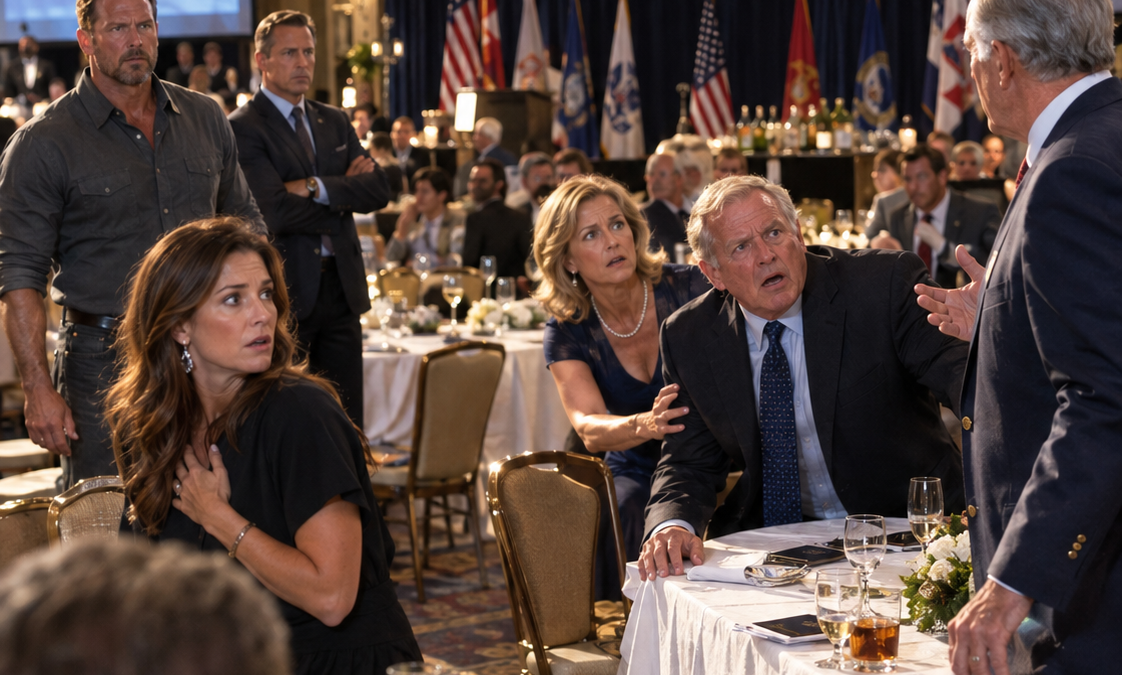
PART 5 — THE REPORTER
The story got out.
I don’t know who leaked it. Maybe someone at the reunion posted something. Maybe a cousin talked to a friend. Maybe Patricia Holloway told someone. It didn’t matter. By the third week after the reunion, a reporter from the Virginian-Pilot called my office.
“Mr. Reeve? This is Angela Marsh. I’m a reporter with the Pilot. I heard about what happened at your family reunion. I’d like to talk to you.”
I was at my desk. The parking lot was empty. The blue sedan was gone.
“I don’t do interviews.”
“I understand. But this is a good story. A real story. People should know.”
“I don’t need people to know.”
“I’m not asking for your whole life. Just a few minutes. On background. You can tell me what you’re comfortable with.”
I leaned back in my chair. The window was warm. The sun was out.
“Let me think about it.”
“Of course. Here’s my number.”
She hung up. I stared at the phone for a long time.
I called Marcus that night.
“A reporter called me.”
“About what?”
“About the reunion. About my service.”
“Damn.”
“Yeah.”
“What did you say?”
“I said I’d think about it.”
“Are you going to do it?”
I looked out the window. The street was quiet. A neighbor was walking his dog.
“I don’t know.”
“You should.”
“Why?”
“Because people should know. Not for you. For the next guy. The guy whose family thinks he’s a desk jockey.”
I didn’t say anything.
“Look,” Marcus said. “I spent ten years not talking about what I did. And you know what it got me? Nothing. My ex-wife still thinks I was a mechanic. My kids think I worked in an office. I let them think that because I thought it was easier.”
He paused.
“It wasn’t easier. It was just quieter. And quiet isn’t always good.”
I rubbed my eyes. “You sound like a fortune cookie.”
“Maybe. But I’m right.”
“You’re always right.”
“Not always. But this time.”
We hung up. I sat on the couch. The apartment was dark. I didn’t turn on the lights.
The next day, I called Angela Marsh.
“I’ll do it,” I said. “On my terms.”
“Okay.”
“No details about missions. No specifics about where I served. Nothing that could compromise anyone I served with.”
“Of course.”
“You can talk about the reunion. You can talk about what my uncle said. You can talk about what Admiral Vance said. That’s it.”
“Fair enough.”
We set a time. She came to my office on Friday afternoon.
Angela was younger than I expected. Thirty-two. Short hair. Sharp eyes. She carried a notebook and a small recorder.
“Thank you for seeing me,” she said.
“Let’s just get it over with.”
She sat down. She turned on the recorder.
“Tell me about the reunion.”
I told her. The facts. The ballroom. The laughter. Carl’s speech. The silence. Vance standing up.
She didn’t interrupt. She wrote things down. She nodded.
“Can I ask you something?” she said when I was done.
“You can ask.”
“Why didn’t you defend yourself?”
I looked at her.
“Because I didn’t need to.”
“But he humiliated you. In front of your whole family.”
“I’ve been humiliated before. By professionals.”
She tilted her head. “What does that mean?”
“It means I’ve been in rooms where people wanted me dead. A joke at a family reunion doesn’t rank.”
She wrote that down.
“One more question.”
“Okay.”
“Are you angry at your uncle?”
I thought about it.
“No.”
“Why not?”
“Because anger is a waste of energy. I learned that a long time ago. You can’t change what people think of you. You can only do the work.”
She nodded. She turned off the recorder.
“Thank you, Mr. Reeve. That’s enough.”
She stood up. She walked to the door.
“One thing,” I said.
She turned.
“Why did you want this story?”
She paused. “My father was a Marine. Vietnam. He never talked about it either. He died when I was sixteen. I never knew who he really was.”
She looked at me.
“I’m not writing this story for you. I’m writing it for him. And for everyone else who served in silence.”
She left.
The article ran three days later.
It was on the front page of the local section. “SEAL’s Service Revealed After Family Reunion Confrontation.” There was a picture of me. I didn’t remember taking it. I looked tired.
I read it twice. It was fair. It was accurate. It didn’t make me look like a hero. It made me look like a man.
That was enough.
The phone started ringing that afternoon. Local news. Radio stations. A podcast. A veterans group. A documentary producer.
I turned off my phone. I went for a run. Five miles. Slow. The sun was setting. The air was cool.
When I got back, there were forty-seven new emails.
I deleted most of them. I answered three.
One was from Admiral Vance. “Well done. Don’t let it go to your head.”
One was from Sarah. “I’m proud of you.”
One was from a woman I didn’t know. “Thank you for telling your story. My husband was a SEAL. He died in 2018. He never talked about it either. I always wondered what he was hiding. Now I know he was protecting me.”
I didn’t answer that one. I didn’t know how.
The article had consequences.
The VFW post in my hometown asked Carl to step down as chapter president. He did. Quietly. No announcement. No ceremony.
A local veterans group asked me to speak at their annual dinner. I declined.
A young man in Norfolk emailed me. He was twenty-three. His family thought he was wasting his life by joining the Navy. He wanted to know what I thought.
I wrote back.
“Don’t worry about what they think. Do the work. The people who matter will see it eventually. The ones who don’t never will.”
He wrote back: “Thank you.”
I never heard from him again.
Carl came home from the hospital on a Tuesday.
I found out from Aunt Linda. She called me. She was still living in the house. They were separated, but she hadn’t moved out yet.
“He’s not good,” she said.
“What does that mean?”
“He’s not drinking. That’s something. But he’s not leaving the house either. He just sits in the living room. Watching TV. Not talking.”
“Maybe he needs time.”
“Maybe.”
She paused. “He asked about you.”
“What did he ask?”
“He asked if you were okay. He asked if you were still working. He asked if you were happy.”
“What did you tell him?”
“I told him I didn’t know. Because I don’t.”
I didn’t say anything.
“Daniel?”
“I’m here.”
“Are you happy?”
I looked out the window. The street was quiet. The sun was going down.
“I’m working on it.”
“That’s all any of us can do.”
We hung up. I sat on the couch. The apartment was quiet.
I thought about Carl. Sitting in his living room. Watching TV. Not talking.
I didn’t feel pity. I didn’t feel anger. I just felt distance. The kind of distance that comes when someone you’ve known your whole life becomes a stranger.
Maybe that was sad. Maybe it was fine.
I didn’t know.
The next week, I got a call from Captain Torres.
“Mr. Reeve. I’m calling about the program Admiral Vance mentioned.”
“Yes.”
“We’ve reviewed your file. We’d like to bring you in for an interview.”
“When?”
“Next Thursday. If that works.”
“It works.”
“Good. I’ll send you the details.”
He hung up. I sat at my desk. The parking lot was empty. The blue sedan was gone.
I hadn’t told anyone about the program. Not Sarah. Not Marcus. Not even Vance. Not really.
I didn’t know if I wanted it.
But I knew I had to try.
That night, I called Marcus.
“I’m going to Washington next week,” I said.
“For what?”
“Interview. For a job.”
“What kind of job?”
“Training. Planning. Working with operators.”
“You’re going back in?”
“Not in. Adjacent.”
He was quiet for a moment.
“You’re going to be good at that.”
“You think so?”
“I know so. You were always the best of us at teaching without making people feel stupid.”
“Thanks.”
“You nervous?”
“No.”
“Liar.”
I laughed. “Maybe a little.”
“You’ll be fine. You always are.”
We hung up. I sat in the dark. The apartment was quiet.
For the first time in years, I felt like I was moving forward.
It was a strange feeling. Not bad. Just strange.
Friday came. I drove to Washington.
The building was nondescript. A glass office building in a business park. No signs. No logos. Just a security desk and a man who checked my ID.
“Mr. Reeve. Third floor. Room 312.”
I took the elevator. The hallway was quiet. The carpet was thick. I found the room.
Inside was a table. Four chairs. A window that looked out at a parking lot. Two men in suits. One woman in a Navy uniform.
“Mr. Reeve. Thank you for coming.”
We shook hands. I sat down.
The interview lasted two hours.
They asked about my deployments. My training. My leadership style. My thoughts on the current state of special operations. My thoughts on what had changed. What had stayed the same.
I answered honestly. I didn’t embellish. I didn’t exaggerate.
At the end, the woman in uniform said, “One more question.”
“Okay.”
“Why do you want this job?”
I thought about it. The office. The parking lot. The blue sedan. The quiet life I’d built.
“I don’t want it,” I said.
They looked at each other.
“Then why are you here?”
“Because I need it. Not the job. The purpose. I’ve been hiding for five years. I’m done hiding.”
They nodded. The woman wrote something down.
“Thank you, Mr. Reeve. We’ll be in touch.”
I stood up. I shook their hands. I walked out.
The hallway was quiet. The elevator was slow. The parking lot was hot.
I got in my truck. I sat there for a long time.
I didn’t know if I got the job. I didn’t know if I wanted it.
But I knew I’d told the truth.
That was enough for now.
PART 6 — THE GRAVE
The call came on a Tuesday.
I was at my desk. The parking lot was empty. The blue sedan was gone. I was reviewing a security assessment I’d already reviewed twice.
My phone buzzed. Unknown number. Washington area code.
“Mr. Reeve?”
“Yes.”
“This is Captain Torres. We’d like to offer you the position.”
I leaned back in my chair. The window was warm. The sun was out.
“When do you need an answer?”
“Take a few days. Think about it.”
“I don’t need a few days.”
He paused. “You’re accepting?”
“Yes.”
“Good. We’ll send the paperwork. You’ll start in three weeks.”
“Okay.”
“Welcome aboard, Mr. Reeve.”
We hung up. I sat there for a minute. Then I called Marcus.
“I got the job.”
“Damn right you did.”
“I start in three weeks.”
“What are you going to do until then?”
“I don’t know. Maybe take a drive.”
“Where?”
“I don’t know yet.”
I took the drive two days later.
I didn’t tell anyone. I just got in my truck and drove north. Three hours. Past Richmond. Past Fredericksburg. Into the hills.
My mother was buried in a small cemetery outside Culpeper. She’d grown up there. She’d wanted to be buried there. Next to her parents.
I hadn’t been back since the funeral.
The cemetery was on a hill. Old stones. New stones. A few flags. I parked on the gravel road and walked up.
Her stone was simple. Gray granite. Her name. Her dates. A small etching of a bird. I’d picked that out. She loved birds.
I stood there for a long time.
“I got a new job,” I said.
The wind moved through the trees. A bird sang somewhere.
“I’m going back to work. Real work. The kind that matters.”
I put my hands in my pockets.
“I don’t know if you’d be proud. I don’t know if you’d understand. But I think you would. You always tried.”
I knelt down. I touched the stone.
“Carl’s not doing well. He broke his arm. Linda left him. He’s alone.”
I paused.
“I don’t feel sorry for him. I don’t feel anything. Is that wrong?”
The wind blew. The trees swayed.
“I don’t think it’s wrong. I think it’s just true.”
I stood up. I looked at the stone one more time.
“I’ll come back. I don’t know when. But I’ll come back.”
I walked down the hill. I got in my truck. I drove home.
The next week, Sarah called.
“Carl wants to see you.”
“I know.”
“He called me. He said he wants to talk. Really talk.”
“I know.”
“Are you going to go?”
I was sitting on my balcony. The sun was setting. The street was quiet.
“I don’t know.”
“He’s your uncle.”
“He’s a stranger.”
She was quiet for a moment.
“That’s fair.”
“I’ll think about it.”
“Okay.”
We hung up. I sat there until the sun went down.
I went to see him on a Thursday.
His house was a small place in Suffolk. Brick. A porch. A yard that needed mowing. Linda’s car was gone. His truck was in the driveway.
I knocked. He opened the door. His arm was still in a cast. His face was still bruised. He looked older than he had in the hospital.
“Daniel.”
“Carl.”
He stepped back. I walked in.
The house was clean. Too clean. The kind of clean that meant nobody lived there anymore. The couch was neat. The tables were dusted. The TV was off.
“You want something to drink?” he asked.
“No.”
We sat in the living room. He was in a recliner. I was on the couch. The distance between us felt like a mile.
“I read the article,” he said.
“Okay.”
“It was good. It was fair.”
“Okay.”
He looked at his hands.
“I’m not going to apologize again. I’ve done that. It doesn’t mean anything if I keep doing it.”
I waited.
“I want to tell you something. Something I’ve never told anyone.”
I didn’t say anything.
“I was going to enlist for real. After my four years. I was going to go active duty. I was going to go to jump school. I was going to try out for something.”
He paused.
“I had the papers filled out. I had the date set. I was going to do it.”
“What happened?”
“My father died. Your grandfather. He had a heart attack. I was twenty-four. I had to take care of the family. I had to take the job at the mill. I had to stay.”
He looked at me.
“I never forgave him for that.”
I leaned back. The couch creaked.
“So you spent your whole life pretending you served. Because you couldn’t.”
“Yes.”
“And you took it out on me.”
“Yes.”
I looked at the wall. A picture of Carl and Linda at their wedding. A picture of Carl in his Army uniform. A picture of my mother.
“That’s a sad story,” I said.
“It’s not an excuse.”
“No. It’s not.”
He nodded. He wiped his eyes.
“I don’t expect you to forgive me.”
“Good.”
“I just wanted you to know. The truth. Not the apology. The truth.”
I stood up. I walked to the door. Then I stopped.
“Carl.”
He looked up.
“You could have told me. Twenty years ago. You could have told me you wanted to be like me. I would have understood.”
He didn’t say anything.
“Instead you spent twenty years trying to make me small. That’s not a mistake. That’s a choice.”
He looked at the floor.
“I know.”
I opened the door. I walked out.
I didn’t slam it. I didn’t look back. I just walked to my truck and drove away.
The next day, I got a letter.
It was from Carl. Handwritten. Two pages.
“Daniel,
I know you don’t want to hear from me. I know you don’t want my apologies. But I need to say something.
I spent my whole life being afraid. Afraid I wasn’t enough. Afraid people would find out I never deployed. Afraid I was a fraud.
You were never afraid. That’s what I hated. You did things I can’t imagine and you never once acted like it made you better. You just lived your life. Quiet. Steady. Sure.
I wanted to be you. I wanted to have what you had. And when I couldn’t, I tried to tear it down.
That’s on me. Not on you. Not on anyone else.
I don’t know if you’ll ever forgive me. I don’t know if I deserve it. But I want you to know that I see you now. I see what you did. I see who you are.
I’m proud of you. I should have said that a long time ago.
Carl”
I read it twice. Then I folded it. I put it in a drawer.
I didn’t forgive him. Not yet. Maybe not ever.
But I didn’t throw it away either.
The next week, I packed my apartment.
It didn’t take long. I didn’t have much. Clothes. Books. A few pictures. Some gear I hadn’t touched in years.
Marcus came over to help.
“You ready for this?” he asked.
“Yeah.”
“You nervous?”
“No.”
“Liar.”
I laughed. “Maybe a little.”
We loaded boxes into the truck. It took two hours. Then we sat on the empty floor and drank water.
“You’re going to be good at this,” Marcus said.
“You keep saying that.”
“Because it’s true.”
I looked around the apartment. The bare walls. The empty rooms. Five years of my life in cardboard boxes.
“I spent so long trying to be invisible,” I said.
“I know.”
“I thought if I just stayed quiet, stayed small, nobody would notice. Nobody would ask questions.”
“And?”
“And I was wrong. People notice anyway. They just notice the wrong things.”
Marcus nodded. “Yeah.”
“I should have told them. A long time ago.”
“You weren’t ready.”
“That’s not an excuse.”
“It’s not. But it’s the truth.”
We sat there for a while. The sun came through the window. The apartment was warm.
“You know what I’m going to miss?” I said.
“What?”
“This place. Not the apartment. The quiet. The routine. The parking lot.”
“The parking lot?”
“I knew every car. Every person. Every schedule. It was safe.”
Marcus looked at me.
“Safe is overrated.”
I laughed. “Maybe.”
We stood up. We walked to the door. I took one last look at the apartment.
Then I closed the door and didn’t look back.
I drove to Washington on a Sunday.
The city was quiet. The streets were empty. I found my new apartment. Small. One bedroom. A view of a parking lot.
I carried my boxes up the stairs. I unpacked the essentials. Clothes. Coffee maker. A picture of my mother. A picture of my team.
Then I sat on the floor and looked out the window.
The sun was setting. The city was glowing. Somewhere out there was a building where I’d start my new job. Somewhere out there was a new life.
I didn’t know what it would look like. I didn’t know who I’d become.
But I knew I was done hiding.
That was enough.
The first day of work was a Monday.
I walked into the building at 7:45. I showed my ID. I took the elevator to the third floor. I found my office.
It was small. A desk. A computer. Two chairs. A window that looked out at a parking lot.
I almost laughed.
I sat down. I turned on the computer. I looked at the stack of files on my desk.
The first file was about a training program for new operators. The second was about a leadership assessment. The third was about a mission that had gone wrong and needed a review.
I opened the first file. I started reading.
The work was hard. It was important. It was real.
At lunch, a woman knocked on my door. She was tall. Short hair. A former Marine.
“Mr. Reeve?”
“Yes.”
“I’m Kate. I work in the office next door. Just wanted to say welcome.”
“Thanks.”
She looked at me for a moment.
“You’re the SEAL, right? The one from the article?”
I nodded.
“I read that. It was good.”
“Thanks.”
“My dad was a Marine. He never talked about it either.”
I looked at her.
“You should tell him you want to know.”
She paused. “He’s gone. Passed away last year.”
“I’m sorry.”
“It’s okay. I just wanted to say I get it. The quiet thing.”
She smiled. She walked away.
I sat there for a moment. Then I went back to work.
That night, I called Sarah.
“How’s the new job?”
“Good. Hard. Real.”
“Are you happy?”
I thought about it.
“I’m getting there.”
“Good.”
“How are the kids?”
“Loud. Exhausting. Wonderful.”
“Good.”
“Carl called me. He wanted me to tell you he’s going to start going to therapy.”
“Okay.”
“He said he wants to be better.”
“Okay.”
“Do you believe him?”
I looked out the window. The city was dark. The lights were on.
“I don’t know. But I hope so.”
“That’s more than most people would say.”
“I’m not most people.”
She laughed. “No. You’re not.”
We hung up. I sat on my couch. The apartment was quiet.
I thought about the reunion. The laughter. The silence. The admiral standing up.
I thought about Carl. His letter. His tears. His confession.
I thought about my mother. Her hand in mine. Her voice.
“You’re a good man, Daniel. Better than they know.”
She was right. For a long time, I was better than they knew. I was invisible.
Not anymore.
I stood up. I walked to the window. The city stretched out below me. Cars. Lights. People.
I didn’t know what came next. But I was ready.
For the first time in a long time, I was ready.
PART 7 — THE SECOND REUNION
Six months passed.
I settled into the job. The work was hard. The hours were long. I flew to bases I couldn’t name and talked to operators I couldn’t describe. I reviewed training programs. I sat in on planning sessions. I wrote assessments that went to people with stars on their collars.
I was good at it. Not because I was smart. Because I’d been there. I knew what it felt like to be cold and tired and scared. I knew what it felt like to lose someone. I knew what it felt like to come home and find that nobody understood.
That was the job. Teaching people how to do the work without losing themselves. Teaching them how to come home.
I didn’t talk about my own deployments. Not in detail. But I talked about the feelings. The weight. The silence.
The young operators listened. Some of them asked questions. Some of them just nodded.
I helped where I could.
Sarah called in March.
“Mom’s birthday is coming up,” she said.
“I know.”
“We’re doing another dinner. Same as last year. You should come.”
“I will.”
“And Daniel?”
“Yeah?”
“Carl wants to come. He asked if he could.”
I was quiet for a moment.
“What did you tell him?”
“I told him I’d ask you.”
I looked out the window. The parking lot was full of cars. People coming and going. Normal life.
“Let him come.”
“Are you sure?”
“No. But I’m not going to be the reason he’s not there.”
She paused. “That’s more than he deserves.”
“Maybe. But it’s what Mom would have wanted.”
“Okay. I’ll tell him.”
We hung up. I sat there for a minute. Then I went back to work.
The dinner was on a Sunday.
Same house. Same table. Same people. Aunt Linda was there. The cousins. Sarah’s kids. Tom in the kitchen.
Carl came last.
He walked in slowly. He looked different. Thinner. Older. He wasn’t wearing the VFW hat. He wasn’t wearing anything that said veteran.
He saw me. He nodded. I nodded back.
He sat at the far end of the table. He didn’t say much. He ate. He listened. He smiled at the kids.
After dinner, I went out to the porch. The sun was setting. The air was cool.
Carl came out a few minutes later.
“Mind if I sit?” he asked.
“Go ahead.”
He sat down in the chair next to me. We looked at the yard. The dog was running in circles.
“I’ve been going to therapy,” he said.
“I heard.”
“It’s hard.”
“I bet.”
“I’ve been thinking about what you said. About choices.”
I didn’t say anything.
“You were right. I made a choice. Every day. For twenty years. I chose to tear you down instead of building myself up.”
I looked at him.
“What do you want me to say, Carl?”
“Nothing. I don’t want you to say anything. I just wanted you to know I heard you.”
We sat there for a while. The sun went down. The yard got dark.
“I read your letter,” I said.
He looked at me.
“I didn’t throw it away.”
He nodded. His eyes were wet.
“That’s more than I expected.”
“I’m not ready to forgive you.”
“I know.”
“But I’m not going to spend the rest of my life being angry.”
He wiped his eyes. “That’s fair.”
We sat there for another few minutes. Then he stood up.
“I should go. Linda’s waiting.”
“Okay.”
He walked to the door. Then he stopped.
“Daniel.”
“Yeah?”
“Thank you.”
He went inside. I stayed on the porch. The stars were coming out. The dog had stopped running.
I didn’t feel anything. Not anger. Not forgiveness. Just quiet.
Maybe that was enough.
The next week, I got a call from Angela Marsh.
“Mr. Reeve. I’m working on a follow-up piece. About the reunion. About what happened after.”
“Okay.”
“I wanted to know if you’d be willing to talk again.”
I thought about it.
“I’ll talk. But not about my uncle.”
“Fair enough.”
She came to my office in Washington. Same notebook. Same recorder.
“How’s the new job?” she asked.
“It’s good. Hard. Real.”
“Are you happy?”
“I’m getting there.”
She smiled.
“What do you want people to know? The ones who read the first article.”
I leaned back in my chair.
“I want them to know that silence isn’t weakness. It’s a choice. Sometimes it’s the right choice. Sometimes it’s not.”
“What made you decide to speak?”
“Admiral Vance. He stood up for me when I wouldn’t stand up for myself.”
“And your uncle?”
“Carl’s a small man. He spent his whole life being afraid. I don’t hate him for it. I just don’t want to be like him.”
She wrote that down.
“One more question.”
“Okay.”
“Do you think your family sees you differently now?”
I thought about it.
“Some of them. The ones who wanted to. The others just see the article. They see the story. They don’t see me.”
“And that’s okay?”
“It has to be.”
She turned off the recorder. She stood up.
“Thank you, Mr. Reeve. This will be good.”
She left.
The article ran two weeks later.
It was longer than the first one. Deeper. It talked about the silence that veterans carry. The weight of it. The cost of it.
It quoted Admiral Vance. It quoted Marcus. It quoted Sarah.
It didn’t quote Carl.
I read it twice. Then I folded it. I put it in the drawer with Carl’s letter.
That spring, I went back to Virginia Beach.
Marcus was getting married. A small ceremony. A few friends. A backyard.
I drove down on a Friday. The weather was good. The ocean was calm.
The ceremony was simple. Marcus in a suit. His bride in a white dress. A judge. A few words. A lot of laughing.
Afterward, we stood in the yard. People were drinking. Talking. Someone was grilling.
Marcus came over to me.
“Glad you came.”
“Wouldn’t miss it.”
“You look good.”
“I feel good.”
He looked at me.
“You’re different.”
“How?”
“Not different. More… present.”
I nodded. “I think I am.”
“Good.”
We stood there for a while. The sun was warm. The food smelled good.
“You ever think about the old days?” he asked.
“Sometimes.”
“You miss it?”
I looked at the yard. The people. The laughter.
“I miss the men. I don’t miss the rest.”
“Yeah.”
He put his hand on my shoulder.
“You did good, Danny. You always did.”
“Thanks.”
He walked away. I stood there for a while. Then I went to get some food.
That night, I drove to the cemetery.
It was late. The gate was open. I parked on the gravel road and walked up the hill.
My mother’s stone was still there. Gray granite. Her name. Her dates. The bird.
I stood there for a long time.
“I’m okay,” I said.
The wind moved through the trees.
“I got a new job. I’m helping people. I’m teaching. I’m not hiding anymore.”
I put my hands in my pockets.
“I saw Carl. He’s trying. I don’t know if it’s real. But he’s trying.”
I looked at the stone.
“I think you’d be proud. I hope you’d be proud.”
The wind blew. The trees swayed.
“I’ll come back. I don’t know when. But I’ll come back.”
I walked down the hill. I got in my truck. I drove back to Washington.
The reunion came around again in the fall.
Same hotel. Same ballroom. Same flags on the wall.
I almost didn’t go.
But Sarah called. Then Linda. Then Michael. Then a cousin I hadn’t spoken to in years.
“Are you coming?” they all asked.
“I don’t know.”
“Please come.”
I went.
The ballroom was full. Two hundred people. Veterans. Families. White tablecloths. Folded programs.
I walked in and people noticed.
Not because I was famous. Not because of the article. Because they knew me now.
A man I didn’t recognize walked up to me. He was older. A Vietnam hat. A cane.
“You’re Daniel Reeve?”
“Yes.”
“I read about you. I wanted to say thank you.”
“For what?”
“For telling the truth. I never talked about my service either. I spent forty years pretending I was fine. I wasn’t fine.”
He shook my hand.
“You made it easier for me to talk.”
I didn’t know what to say.
“Thank you,” I said.
He walked away. I stood there for a minute.
Then Sarah found me. She hugged me.
“You came.”
“I came.”
“Carl’s here. He’s sitting at the back.”
I looked. He was at a table near the door. Alone. He wasn’t at the head table. He wasn’t speaking.
He saw me. He nodded.
I nodded back.
The dinner was quiet.
No speeches. No jokes. No one called anyone a desk jockey.
People talked. People laughed. People remembered.
At the end, the organizer stood up. She was a woman in her sixties. A retired Navy captain.
“Thank you all for coming,” she said. “This year, we wanted to do something different. We wanted to honor someone who served in silence.”
She looked at me.
“Daniel Reeve. Senior Chief. Navy SEAL. Silver Star. Bronze Star. Purple Heart. And a man who never asked for recognition.”
The room applauded.
I didn’t stand up. I didn’t speak.
I just sat there and let it happen.
Carl was watching. He wasn’t clapping. He wasn’t smiling. He was just watching.
When the applause stopped, the captain said, “Would you like to say a few words?”
I stood up. The room was quiet.
“I’m not good at speeches,” I said. “I’m better at listening.”
A few people laughed.
“I served for fourteen years. I did things I can’t talk about. I lost people I’ll never forget.”
I paused.
“But I’m not here to talk about that. I’m here because my family asked me to come. And because I spent a long time thinking I didn’t belong in rooms like this.”
I looked around.
“I was wrong. I belong here. We all belong here. Not because of what we did. Because of who we are.”
I sat down.
The room was quiet for a moment. Then someone started clapping. Then someone else. Then the whole room.
It went on for a long time.
After the dinner, I walked outside.
The hotel was on the oceanfront. The waves were loud. The air was cool.
Carl came out a few minutes later.
“That was good,” he said.
“Thanks.”
“I didn’t expect you to say that.”
“Neither did I.”
We stood there for a while. The waves crashed. The wind blew.
“I’m proud of you,” he said.
I looked at him.
“I know you said it in the letter. But I wanted to say it to your face.”
“Okay.”
“I’m proud of you, Daniel. I should have said it twenty years ago.”
I didn’t say anything.
“I know it doesn’t fix anything. I know it doesn’t make up for what I did. But I wanted you to hear it.”
I looked at the ocean. The waves. The sky.
“I hear it,” I said.
He nodded. He walked back inside.
I stayed outside for a long time.
The next morning, I drove home.
The sun was coming up. The highway was empty. The radio was off.
I thought about the reunion. The applause. The speech. Carl’s face.
I thought about my mother. Her hand in mine. Her voice.
“You’re a good man, Daniel. Better than they know.”
She was right. For a long time, I was better than they knew.
Now they knew.
I didn’t know what came next. But I was ready.
For the first time in my life, I was ready.
I got back to Washington on Sunday night.
I unpacked my bag. I made tea. I sat on the couch.
The apartment was quiet. The city was dark. The lights were on.
I thought about the last year. The reunion. The article. The hospital. The letter. The new job.
I thought about Carl. Sitting alone at the back of the ballroom. Standing on the porch. Saying he was proud.
I didn’t forgive him. Not yet. Maybe not ever.
But I didn’t hate him either.
That was something.
The next morning, I went to work.
I walked into the building at 7:45. I showed my ID. I took the elevator to the third floor.
I sat down at my desk. I turned on the computer. I opened the first file.
The work was hard. It was important. It was real.
At lunch, Kate knocked on my door.
“Hey. A few of us are getting lunch. You want to come?”
I looked at the stack of files on my desk. Then I looked at her.
“Yeah. I’ll come.”
She smiled. “Good.”
I stood up. I walked out of my office. I followed her down the hall.
The building was full of people. Young operators. Old veterans. Men and women who had served and were still serving.
I was one of them.
I always had been.
I just hadn’t known it.
That night, I called Sarah.
“How was the reunion?”
“Good. Quiet. Different.”
“Different how?”
“People knew who I was. Not the story. Me.”
“That’s good.”
“Yeah.”
“You okay?”
I looked out the window. The city was glowing. The lights were on.
“I’m okay.”
“Really?”
“Yeah. Really.”
She paused. “I’m proud of you.”
“I know.”
“I love you.”
“I love you too.”
We hung up. I sat on the couch. The apartment was quiet.
I thought about the desk job. The one Carl said I hid in. The one that wasn’t real.
It was real. It was my life. It was quiet and small and mine.
But it wasn’t all I was.
I was a SEAL. I was a brother. I was a son. I was a friend.
I was Daniel Reeve. Senior Chief. Veteran. Man.
And I was done hiding.

