“I don’t talk about it because the only story I have is about a man who died in my arms.”
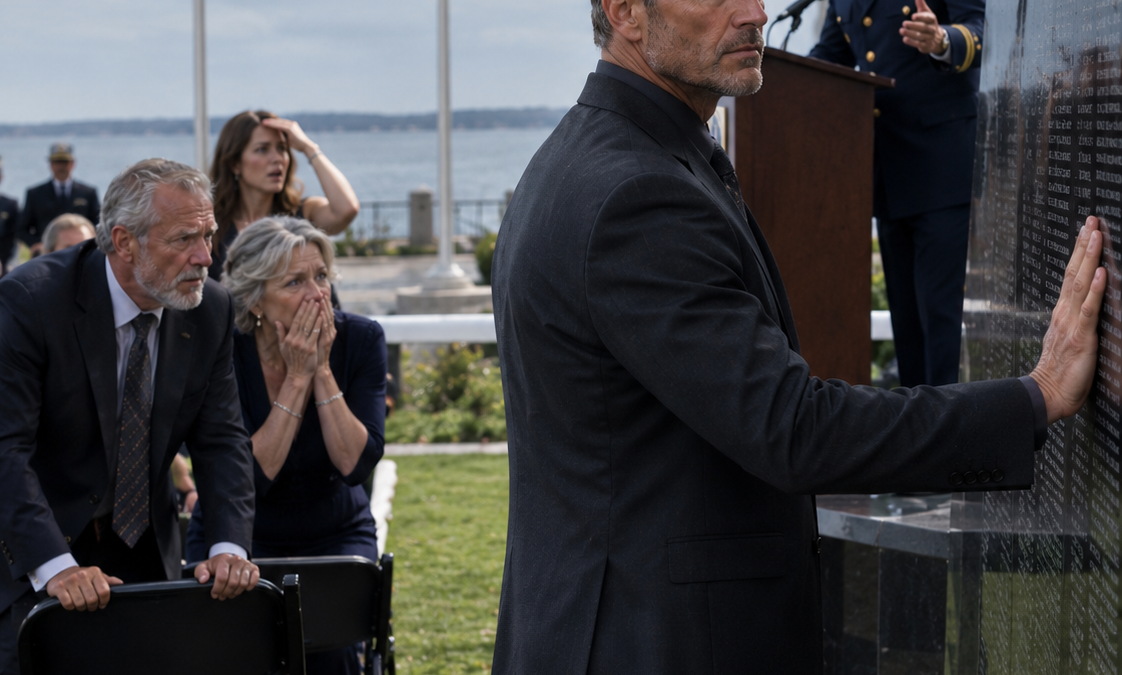
“I don’t talk about it because the only story I have is about a man who died in my arms.”
The joke had been running for three years.
I never laughed at it. I never asked them to stop. I just kept my head down and did my work, the way I’d been trained to do.
What they didn’t know was that the medal wasn’t in a display case. It wasn’t on a wall. It was in a drawer, wrapped in a black cloth, and I hadn’t looked at it in eleven years.
My name is Jack Morrison. I was forty-seven years old when I started at Kessler Logistics, and I’d been out of the Navy for six years by then. Before that, I’d spent twenty-two years in uniform, the last fourteen of them as a Navy SEAL, mostly with Team Three, then a stint with DevGru before I hung it up.
I didn’t talk about it. Not at work. Not anywhere.
That was the problem.
Brian Kellerman sat two cubicles over from mine. He was thirty-four, loud, and had the kind of personality that needed an audience. He sold freight contracts for Kessler, and he was good at it in the way that men who’ve never been tested are good at things. He had a laugh that carried, a handshake he used like a weapon, and an opinion about everything.
He also had a thing about me.
I never figured out why. Maybe it was because I didn’t talk much. Maybe it was because I didn’t go to happy hour. Maybe it was because when he told his stories about college lacrosse or his bachelor party in Cabo, I just nodded and went back to my spreadsheets.
Whatever it was, he’d decided I was his project.
“Hey, Jack,” he said one Tuesday morning, leaning over the cubicle wall. “You ever gonna tell us about the war?”
I kept typing. “No.”
“Come on, man. You were in the Navy, right? What’d you do, drive a boat?”
“Something like that.”
“Something like that.” He laughed. “You’re always so mysterious, Jack. You got like a whole hidden life or something.”
I didn’t answer.
He didn’t stop.
The joke started small. A comment here, a nudge there.
“Jack’s probably got a chest full of medals he’s hiding from us.”
“Jack’s got secrets, man. Deep, dark secrets.”
“Hey, everybody, look out. Jack’s about to go full Rambo on us.”
I let it roll off. That’s what you learn to do. You let things roll off. You don’t engage. You don’t explain. You don’t give them anything to grab onto.
But it kept building. Brian was like water on stone. Drip, drip, drip.
“What’d you do, Jack? Really?”
“Were you like a cook or something?”
“Did you even see combat or were you just, like, on a ship the whole time?”
I gave him the same answer every time. “I did my job. That’s all.”
That answer never satisfied him. It only made him dig harder.
Kessler Logistics was a mid-sized freight brokerage in Norfolk, Virginia. I’d been there four years by then. I handled carrier compliance — making sure the trucks we contracted met federal regulations, checking insurance, verifying licenses. It was quiet work. Repetitive. Exactly what I wanted.
I had a small apartment near the water. I had a routine. I went to the gym at 5 a.m. every day, did my PT, went to work, came home, made dinner, read, slept. On weekends I ran or swam or worked on my boat, a 22-foot center console I kept at a marina on Willoughby Bay.
I didn’t have friends, exactly. I had acquaintances. People I nodded to. People I said good morning to.
That was enough for me.
It had to be.
The drawer in my apartment was a simple thing. Gray metal, two feet wide, one foot deep. It sat in the corner of my bedroom, under a stack of old paperbacks I never read anymore.
Inside it was a black cloth. Inside the cloth was a medal.
The Medal of Honor.
I hadn’t touched it in eleven years. I knew it was there. I knew exactly where it sat, the weight of it, the way the ribbon felt under my fingers. I never opened that drawer. Never looked at it. Never thought about it if I could help it.
But I couldn’t help it.
Not on days like today.
March 14th.
I woke up at 4:45 a.m., same as always. I lay in the dark for a long minute, staring at the ceiling. I didn’t need a calendar to know what day it was. My body knew. My bones knew. The tightness in my chest knew.
Mike.
I got up. I made coffee. I drank it standing at the kitchen window, looking out at the gray water of the bay. The sun wasn’t up yet. The sky was the color of old pewter.
I thought about the way Mike laughed. The way he always had a joke, always had something to say. The way he’d put his hand on my shoulder before a mission and say, “Let’s go get ’em, old man.”
I thought about the sound of the gunfire. The smell of the dust. The weight of him in my arms.
I thought about the words he said at the end. The last words.
“Tell my mom I’m sorry.”
I finished my coffee. I put the mug in the sink. I went to work.
Brian was in rare form that day.
He’d been on a sales call that morning and closed a big deal. He came back to the office practically vibrating, slapping desks, high-fiving whoever would let him. I stayed in my cubicle. I kept my head down.
That didn’t matter.
“Jack! My man!” He appeared at the edge of my cubicle. “You hear about the Winslow account? Biggest deal this quarter. Kessler’s gonna be buying us all steak dinners.”
“Congratulations,” I said.
“Thanks, brother.” He leaned against the cubicle wall. “Hey, you know what I was thinking? We should do a team thing. Like a real team-building thing. You know, get everybody together, share stories, bond.”
I said nothing.
“Come on, Jack. You never come out. You never talk. You never share anything. What’s up with that?”
“I keep to myself.”
“Yeah, I noticed.” He smirked. “What are you, like, a spy or something?”
“No.”
“Then what? Come on, man. You were in the Navy. That’s cool. That’s interesting. Why don’t you ever talk about it?”
I looked at him. I kept my face blank. “Nothing to talk about.”
“Nothing to talk about.” He laughed. “See, that’s what I mean. You’re like a vault. A big, silent, mystery vault.”
I went back to my screen.
He didn’t leave.
“Hey, I got an idea,” he said. “What if we do like a veterans thing? Like, you could tell us some stories. Give us some of that SEAL wisdom.”
I felt my jaw tighten. I made myself relax. “I wasn’t a SEAL.”
“What were you then?”
“I was in the Navy. That’s all.”
“That’s all.” He shook his head. “Man, you are the most boring mysterious person I’ve ever met.”
He laughed again and walked away.
I sat there, staring at my screen, not seeing it.
The day got worse.
Around 2 p.m., Brian came back with a group. Three of the younger guys from sales — Dave, Marcus, and Tyler. They followed him like ducklings.
“Hey, Jack,” Brian said. “We were talking about you.”
I didn’t look up. “Okay.”
“I told them about the mystery medal.”
I felt my hands go still on the keyboard.
“What mystery medal?” Marcus asked.
“Jack’s got this thing about medals,” Brian said. “Every time I ask him about the Navy, he clams up. So I figure he’s got like a whole chest of them he’s hiding.”
“Or maybe he doesn’t have any,” Dave said. He was twenty-six, cocky, always smirking. “Maybe he was a cook.”
“Hey, nothing wrong with being a cook,” Brian said. “Cooks are heroes too.”
They laughed.
I kept typing. My hands were steady. They always were.
“Come on, Jack,” Brian said. “Just tell us. What’d you do? Were you like a paper pusher? A supply guy? What?”
“I did my job,” I said.
“See? That’s what he always says.” Brian spread his hands. “I did my job. That’s not an answer.”
“It’s the only answer you’re getting.”
“Ooh, mysterious.” Tyler grinned. “Maybe he was a sniper. Maybe he killed a hundred people.”
“Maybe he’s making it all up,” Dave said. “Maybe he was never in the Navy at all.”
I stopped typing.
I looked up. I looked at Dave. I didn’t say anything. I just looked at him.
He stopped smiling.
I went back to my screen.
They drifted away after that. Brian made one more joke — “Don’t worry, Jack, your secret’s safe with us” — and then they were gone.
I sat there for a long time.
My chest hurt. Not from anything physical. From the weight of it. The weight I carried every day. The weight I’d been carrying for eleven years.
Mike.
I saw his face. I saw him in the dust, in the heat, in the blood. I saw his eyes. I saw his mouth move.
“Tell my mom I’m sorry.”
I closed my eyes.
When I opened them, it was 4:45 p.m. Time to go home.
I drove home in silence. No radio. No music. Just the hum of the engine and the gray sky and the water on either side of the bridge.
My apartment was quiet. It was always quiet. I liked it that way.
I made dinner. I ate it standing at the counter. I cleaned up. I sat on the couch and stared at the wall.
Then I got up.
I walked to the bedroom. I knelt down. I opened the drawer.
The black cloth was still there. I didn’t unwrap it. I just put my hand on it. Felt the shape underneath. The metal. The ribbon.
I stayed like that for a long time.
Then I closed the drawer.
I got into bed. I stared at the ceiling.
Tomorrow would be better. Tomorrow was always better.
That’s what I told myself.
That’s what I always told myself.
The phone rang at 6:15 a.m.
I was already awake. I was always awake before the alarm. I reached for the phone on the nightstand. The screen said: CAROL BRENNAN.
My heart stopped.
Carol was Mike’s mother. I hadn’t heard from her in months. Not since Christmas, when I’d sent a card and she’d sent one back. She lived in Ohio now. She was in her seventies. She had COPD. She’d been in and out of the hospital.
I answered on the second ring.
“Hello?”
“Jack?” Her voice was thin. Frail. “Jack, is that you?”
“It’s me, Carol.”
“Oh, Jack.” She started to cry. “Jack, I’m so sorry to call you like this. I’m so sorry.”
“It’s okay. What’s wrong?”
“It’s—” She coughed. It was a bad cough, deep and wet. “I’m in the hospital, Jack. They found something. In my lungs. They said it’s—they said it’s not good.”
I sat up. My hands were steady. They were always steady. “Which hospital?”
“Mercy General. In Dayton. I—” She coughed again. “I don’t have anyone else, Jack. I don’t have anyone to call.”
I was already out of bed. Already reaching for my clothes. “I’m on my way.”
“Jack, it’s—it’s a long drive. You don’t have to—”
“I’m on my way, Carol.”
I hung up. I got dressed. I grabbed my keys.
I was in the truck five minutes later, heading west on I-64.
The sun was coming up. The sky was the color of blood.
PART 2 — THE DRIVE
Twelve hours.
That’s how long it took to drive from Norfolk to Dayton. Twelve hours of highway, of rest stops, of coffee that tasted like burnt water. Twelve hours of thinking.
I didn’t listen to music. I never did. I just drove and let the road unwind in front of me, mile after mile, the way I’d done a hundred times before. Only this time I wasn’t heading into a mission. I wasn’t heading into anything but a hospital room and a woman who’d lost her son because of me.
The sun climbed. The sky went from blood to gray to a pale, washed-out blue. I stopped once for gas, once for coffee, once to use a restroom at a truck stop outside Charleston. I didn’t eat. I wasn’t hungry.
I thought about Mike.
Mike Brennan was twenty-eight when he died. He was from Dayton, Ohio, a city he talked about the way men talk about a place they love but never want to go back to. He had a mother, Carol, and a father who’d passed when Mike was a teenager. He had a sister somewhere out west. He had a laugh that filled a room and a smile that made you forget, for a second, where you were.
He was my spotter. I was his sniper. We’d been paired for three years. We’d been through hell together more times than I could count.
He was the best man I ever knew.
I thought about the day he died. I thought about it a lot. Too much. The way you think about a wound that won’t heal right, that aches when the weather changes, that reminds you it’s still there.
It was March 14th, 2009. We were in the mountains. We’d been inserted two days earlier, a four-man team, with orders to observe and report on a target. It was supposed to be a quiet mission. A look-and-see. No engagement.
It went bad.
We got compromised. An ambush. They came out of the rocks like they’d been waiting for us. We fought. We ran. We fought again. Two of our guys went down. I got hit in the leg, shrapnel, not bad but bad enough. Mike dragged me behind a boulder and held position while I tried to stop the bleeding.
He could have run. He should have run. That’s what I told him. “Go, Mike. Get out. I’ll cover.”
He looked at me. He smiled. That stupid, beautiful smile.
“Nah,” he said. “We go together or not at all.”
The rest happened fast. Too fast. A grenade. A flash. Mike threw himself on top of me. The blast took him in the back, in the head, in places I couldn’t see and didn’t want to.
I held him. I held him while he died. I held him while the blood ran out of him and onto the rocks and onto my hands and onto everything I’d ever been or ever would be.
“Tell my mom I’m sorry,” he said.
Then he was gone.
I got to Dayton at 6:30 p.m.
Mercy General was a big hospital on the east side of town, all glass and concrete and fluorescent light. I parked in the visitor lot and sat in the truck for a minute, my hands on the wheel, my eyes on the building.
I hadn’t seen Carol in person since Mike’s funeral. That was eleven years ago. I’d sent cards, called, written letters. I’d kept in touch as much as I could stand. But I’d never gone back. I couldn’t.
Now I had to.
I got out of the truck. I walked through the automatic doors. I found the information desk and asked for Carol Brennan.
The woman behind the desk was young, maybe twenty-five, with bright orange hair and a name tag that said KELSEY. She typed something into her computer.
“Carol Brennan? Room 412. She’s in the pulmonary ward. Take the elevator to the fourth floor, turn left, follow the signs.”
“Thank you.”
“Visiting hours end at eight,” she said. “You’ve got about an hour.”
I nodded and walked to the elevator.
Room 412 was at the end of the hall. The door was open. I stood in the doorway for a moment, looking in.
Carol was in the bed by the window. She looked smaller than I remembered. Frailer. Her skin was pale, almost gray, and her hair was thinner. She had an oxygen tube under her nose and an IV in her arm. Monitors beeped softly beside her.
She saw me. Her eyes lit up.
“Jack.”
I walked in. I sat in the chair beside her bed. I took her hand.
“I’m here, Carol.”
She squeezed my hand. Her grip was weak. “You came all this way.”
“Of course I did.”
“You didn’t have to.”
“I know.”
She looked at me for a long moment. Her eyes were wet. “You look good, Jack. You look healthy.”
“I’m fine.”
“You always say that.”
“It’s usually true.”
She laughed, a small, sad sound. Then she coughed. The cough went on for a while. I waited, holding her hand.
When it stopped, she leaned back against the pillow. “They say I’ve got maybe six months. Maybe a year. The cancer’s in both lungs now.”
I didn’t say anything. There was nothing to say.
“I’m not scared,” she said. “I’ve had a good life. I’ve had my boy. I’ve had my memories.” She paused. “But I wanted to see you, Jack. I wanted to see you one more time.”
“I should have come sooner.”
“You had your reasons.” She looked at me. “I know what you carry. I know what you think you owe me. But you don’t owe me anything.”
I looked away.
“I mean it, Jack. Mike loved you. He loved you like a brother. What he did, he did because he wanted to. Because that’s who he was.”
I didn’t answer. I couldn’t.
“Tell me about your life,” she said. “Tell me what you’ve been doing.”
So I told her. I told her about the apartment, about the boat, about the job. I told her about the quiet routine, the early mornings, the gray water of the bay. I told her about the people at work, the ones who didn’t know me, the ones who made jokes.
I didn’t tell her about Brian. I didn’t tell her about the medal.
“You sound lonely,” she said.
“I’m okay.”
“That’s not what I asked.”
I met her eyes. “I’m okay, Carol.”
She nodded slowly. “Maybe. But you don’t have to be. Not forever.”
A nurse came in to check her vitals. I stepped out into the hall. I stood there, looking at the white walls, the gray floor, the fluorescent lights. My hands were steady. They were always steady.
The nurse came out a few minutes later. “She’s tired,” she said. “You can stay a few more minutes, but she needs to rest.”
I nodded. I went back in.
Carol was already drifting off. Her eyes were half-closed. She looked at me one last time.
“Thank you for coming, Jack.”
“Always.”
“I’ll see him soon.” She smiled. “I’ll tell him you’re okay.”
I didn’t say anything. I couldn’t.
I sat there until she was asleep. Then I stood up. I leaned down and kissed her forehead.
“I’m sorry, Carol,” I whispered. “I’m sorry I couldn’t save him.”
Then I left.
I got a hotel room near the airport. It was cheap and quiet and anonymous. I didn’t sleep. I lay on the bed, staring at the ceiling, thinking.
I thought about Carol. About Mike. About the life I could have had, the life I should have had, if things had gone differently.
I thought about the medal. The one I’d never wanted. The one I’d never earned, not really. Mike earned it. Mike earned everything. I just survived.
I thought about Brian and Dave and the others. The jokes. The questions. The way they looked at me like I was a mystery they were entitled to solve.
They didn’t know anything. They didn’t know what it cost to be me. What it cost to wake up every morning and put one foot in front of the other and pretend to be normal when the only thing you wanted to do was scream.
I thought about the way Mike’s blood felt on my hands. Warm at first, then cooling, then cold.
I thought about the sound he made when he died. It wasn’t a word. It wasn’t anything. Just a sound.
I thought about the promise I made to him, there in the dust, holding him in my arms. I promised him I’d take care of his mom. I promised him I’d live.
I wasn’t sure I’d kept that promise. I wasn’t sure I’d lived at all.
I fell asleep around 3 a.m. I woke up at 5, same as always. I checked out of the hotel. I drove back to the hospital.
Carol was awake. She was sitting up, sipping water from a straw. She smiled when she saw me.
“You came back.”
“I told you I would.”
She patted the bed beside her. “Sit with me.”
I sat. She took my hand.
“I want you to promise me something, Jack.”
“Anything.”
“When I’m gone—” She paused, catching her breath. “When I’m gone, I want you to stop punishing yourself.”
I didn’t answer.
“I know you, Jack. I know how you are. You’ve been carrying this for eleven years. You think it’s your fault. You think you should have been the one.”
“It should have been.”
“No.” Her voice was firm. “No, Jack. It shouldn’t have been anyone. That’s what war is. That’s what happens. Mike knew that. Mike accepted that. And so should you.”
I looked at the floor.
“He gave his life for you,” she said. “The least you can do is live it.”
I sat there for a long time. The monitors beeped. The oxygen machine hummed. Outside the window, the sun was rising.
“Okay,” I said finally. “I’ll try.”
That was all she wanted to hear.
I stayed in Dayton for three days.
I sat with Carol, talked with her, helped her eat when she was too weak to hold the spoon. I met her doctors, asked questions, wrote things down. I called her sister in California, her old friend from church, the neighbor who’d been checking on her.
I made sure she wasn’t alone.
On the third day, she told me to go home.
“You’ve got a job, Jack. You’ve got a life. You can’t stay here forever.”
“I can stay as long as you need.”
“No.” She shook her head. “No, you can’t. And I don’t want you to. I want you to go home and live. That’s what I want.”
I looked at her. She looked back at me. Her eyes were clear.
“Okay,” I said.
“I’ll call you,” she said. “Every week. And you’ll answer.”
“I’ll answer.”
“Good.” She smiled. “Now go. And Jack?”
“Yeah?”
“Thank you.”
I didn’t say anything. I just nodded. Then I left.
The drive back was harder than the drive there.
I kept thinking about Carol. About what she’d said. About the promise I’d made.
I kept thinking about the medal. About the drawer. About the black cloth.
I kept thinking about Brian. About the way he laughed. About the way he looked at me like I was a joke.
I got back to Norfolk at 10 p.m. I parked the truck. I walked up to my apartment. I stood in the doorway for a long moment, looking at the quiet rooms.
Then I walked to the bedroom. I knelt down. I opened the drawer.
The black cloth was there. I picked it up. I held it in my hands.
I didn’t unwrap it. Not yet. But I held it.
I held it for a long time.
Then I put it back. I closed the drawer. I went to bed.
The next morning, I went to work.
Brian was waiting for me.
“Hey, Jack! There he is. The mystery man returns.” He grinned. “Where’ve you been? We missed you.”
I sat down at my desk. I turned on my computer. “Family stuff.”
“Family stuff. Vague as always.” He leaned against the cubicle wall. “Hey, so I’ve been thinking. We need to do something about this whole mystery thing. You never talk about yourself. You never share anything. It’s not healthy, man.”
I didn’t look up. “I’m fine.”
“You always say that.” He laughed. “Come on, Jack. Just tell us one thing. One story. Something from the Navy. Anything.”
I kept typing.
“Just one thing,” he said. “One little thing. What’s the harm?”
I stopped typing. I looked up. I met his eyes.
“I don’t talk about it,” I said, “because the only story I have is about a man who died in my arms. And I don’t think you want to hear it.”
He blinked. The smile froze on his face.
“What?”
“You asked for a story. That’s the story. Do you want to hear it now?”
He stared at me. He didn’t say anything.
“No,” I said. “I didn’t think so.”
I went back to my screen.
He stood there for a minute. Then he walked away.
The rest of the day was quiet. Brian didn’t come back. Dave and Marcus and Tyler didn’t come by. I sat at my desk and did my work and nobody said a word to me.
At 4:45, I packed up and went home.
I made dinner. I ate standing at the counter. I cleaned up. I sat on the couch and stared at the wall.
Then I got up. I walked to the bedroom. I knelt down. I opened the drawer.
I took out the black cloth. I unwrapped it.
The medal was there. The blue ribbon with the white stars. The gold pendant. The words on the back.
Michael J. Brennan. For conspicuous gallantry and intrepidity at the risk of his life above and beyond the call of duty.
I’d never worn it. I’d never displayed it. I’d never told anyone I had it.
But I had it. And now, for the first time in eleven years, I was looking at it.
I held it in my hands. It was heavier than I remembered.
I thought about Mike. I thought about his smile. I thought about the way he laughed. I thought about the sound he made when he died.
I thought about Carol. About what she’d said. About the promise I’d made.
I sat there on the floor, holding the medal, for a long time.
Then I wrapped it back in the cloth. I put it back in the drawer. I closed the drawer.
I stood up. I walked to the kitchen. I poured a glass of water. I drank it.
Then I went to bed.
Tomorrow would be better.
I had to believe that.
PART 3 — THE BROTHER
The quiet lasted four days.
Brian didn’t talk to me. He didn’t look at me. He stayed on his side of the office and I stayed on mine, and for a little while I thought maybe that was the end of it.
It wasn’t.
On Friday, I came back from lunch and found a small crowd at the coffee station. Brian was in the middle of it, holding court. Dave and Marcus were there. Tyler was there. Two women from accounting whose names I never learned.
Brian saw me. He didn’t stop talking.
“—and I’m just saying, if the guy was really some kind of hero, wouldn’t he want to talk about it? Wouldn’t he want people to know? That’s what I don’t get.”
“That’s what I said,” Dave agreed. “The real guys never brag. But they don’t hide it either.”
“Right?” Brian nodded. “So what’s he hiding? What’s the big secret?”
I walked past them to the coffee machine. I poured myself a cup. I didn’t say anything.
“Hey, Jack,” Brian said. “Hey, no offense, man. We’re just talking.”
“I know.”
“So what is it? Why the big secret?”
I looked at him. I looked at all of them. Then I took my coffee and went back to my desk.
Behind me, I heard Brian laugh. “See? See what I mean? Weird.”
I sat down. I opened my spreadsheet. I got to work.
That night, my phone rang.
I was on the couch, reading. The screen said: DAVID MORRISON.
My brother.
I hadn’t talked to David in eight months. Not since our father’s birthday party, which I’d skipped because I couldn’t face it. Not since the argument we’d had at Christmas the year before, the one where he’d called me selfish and I’d called him a puppet and neither of us had apologized.
I answered on the fourth ring.
“Jack.”
“David.”
“Where the hell are you?”
“I’m at home. Where am I supposed to be?”
“Dad’s in the hospital.”
I sat up. “What happened?”
“He fell. At home. Broke his hip and his wrist. They’re talking about surgery.”
“When?”
“Last night. I’ve been trying to reach you all day.”
I looked at my phone. He was right. Three missed calls.
“I was at work. My phone was on silent.”
“Yeah, well.” His voice was tight. “Same old Jack.”
“Which hospital?”
“Mercy in Richmond. He’s in the orthopedic ward.”
“I’ll be there tomorrow.”
“Good.” He paused. “Mom’s a wreck. She’s been asking for you.”
“Okay.”
“Jack?”
“Yeah?”
“He’s old. He’s not doing great. If you can’t come, just tell me now so I can prepare them.”
“I said I’ll be there.”
“Fine.” He hung up.
I sat on the couch for a long time after that.
David Morrison. My older brother. The golden child. The one who’d done everything right, according to our parents. The one who’d gone to Virginia Tech, married a nice girl from a good family, become a CPA, bought a house in the suburbs, had two kids and a golden retriever and a lawn he mowed every Saturday.
The one who’d stayed.
I was the one who’d left. The one who’d joined the Navy at eighteen and never come back. The one who’d missed birthdays and Christmases and anniversaries. The one who’d shown up at the family reunions in a uniform and answered questions with one word and left as soon as I could.
The one who’d never told them anything.
My parents didn’t know I was a SEAL. Not really. They knew I was in the Navy. They knew I’d been deployed. They knew I’d been in “some kind of combat unit” because a family friend had told them once. But they didn’t know the details. They didn’t know about Team Three. They didn’t know about DevGru. They didn’t know about the mountains, about the ambush, about Mike.
They didn’t know about the medal.
I’d never told them. Not because I wanted to hide it. Because I didn’t know how. Because every time I tried, the words wouldn’t come. Because I could see them sitting at the kitchen table, my mother’s hands folded, my father’s face blank, and I could hear the silence that would follow. The silence that always followed when I tried to talk about anything real.
So I stopped trying.
And they stopped asking.
My father was a man who believed in order. He believed in rules and routines and doing things the right way. He’d worked for the same insurance company for thirty-eight years. He’d gone to church every Sunday. He’d mowed his lawn in straight lines and paid his bills on time and never once, in all the years I’d known him, said the words “I love you.”
That wasn’t his way. His way was to show up. To be there. To provide. To do the things a father was supposed to do, the way a father was supposed to do them, without any of the softness that some people needed.
I’d spent my whole childhood trying to get him to see me. To notice me. To say something that would let me know I mattered.
It never happened.
When I told him I was joining the Navy, he nodded. “That’s a good choice,” he said. “They’ll teach you discipline.”
When I told him I’d made it through BUD/S, he said, “That’s good. That’s a real accomplishment.”
When I told him I was deploying, he said, “Be safe.”
When I came home after Mike died, after the medal, after everything, he looked at me for a long moment and then he said, “You look tired.”
That was it. That was all.
I’d wanted him to ask. I’d wanted him to see. I’d wanted him to understand that something had happened to me, something that had changed me, something that I couldn’t put into words.
He didn’t ask. He didn’t see. He didn’t understand.
So I stopped wanting him to.
David, on the other hand, was everything I wasn’t.
He was there. He was present. He showed up for Sunday dinners and birthday parties and holidays. He called Mom every week. He helped Dad with the yard and the house and the car. He did all the things a son was supposed to do, and he did them without complaint, and he made sure everyone knew it.
He wasn’t wrong to do those things. He was a good son. A good brother, in his way.
But he never let me forget that I wasn’t.
“You should call Mom more,” he’d say.
“You should come home more,” he’d say.
“You should think about someone other than yourself,” he’d say.
And I’d nod and say nothing and go back to wherever I was, and the distance between us would grow a little more.
I drove to Richmond the next morning.
It was a three-hour drive. I left at 5 a.m. and got there at 8. The hospital was a big brick building on a hill, surrounded by parking lots and trees. I found a spot in the visitor lot and sat in the truck for a minute.
I hadn’t seen my father in two years. Not since the last Christmas I’d spent at home, the one that had ended in the argument with David, the one where my mother had cried and my father had said nothing and I’d left in the middle of dinner and driven eight hours back to Norfolk without stopping.
I didn’t know what I was going to say to him. I didn’t know if there was anything to say.
I got out of the truck. I walked into the hospital. I found the orthopedic ward.
My father was in room 317.
He looked smaller than I remembered. He was propped up in the bed, his leg in a sling, his wrist in a cast. His face was gray and lined. His eyes were closed.
My mother was sitting in the chair beside him. She looked up when I walked in.
“Jack.”
I walked over. She stood up. She hugged me, which she hadn’t done in years.
“You came.”
“I said I would.”
She pulled back. She looked at me. Her eyes were red. “He’s been asking for you.”
I looked at my father. His eyes were still closed.
“Is he asleep?”
“On and off. The medication makes him tired.”
“What did the doctors say?”
“He needs surgery on his hip. They’re doing it tomorrow. They said it’s routine, but…” She trailed off.
“But he’s old.”
She nodded. “He’s old.”
I sat down in the chair on the other side of the bed. My mother sat back down. We sat there in silence for a while.
Then my father opened his eyes.
“Jack.”
“I’m here, Dad.”
He looked at me for a long moment. His eyes were cloudy, unfocused. He blinked a few times.
“You came.”
“I came.”
He nodded slowly. Then he closed his eyes again.
David showed up an hour later.
He walked in with a coffee in each hand and a folder under his arm. He was wearing a suit, because of course he was. He looked like he’d come straight from a meeting.
He saw me. His face didn’t change.
“Jack.”
“David.”
He set the coffees down. He kissed my mother on the cheek. He looked at our father, who was asleep again.
“The surgeon came by,” he said. “He said the surgery’s scheduled for 10 a.m. tomorrow. He said there’s a small risk of complications, but he’s optimistic.”
“Good,” I said.
“Yeah.” He looked at me. “Can I talk to you outside for a minute?”
I followed him into the hall. He closed the door behind us.
“Where’ve you been?” he said.
“Norfolk. Working.”
“Working.” He shook his head. “Dad’s been in the hospital for two days and you couldn’t pick up your phone?”
“I was at work. I didn’t see the calls.”
“You never see the calls. You never answer. You never show up.” He crossed his arms. “You know Mom’s been worried about you for years. You know she cries about it. She thinks you’re depressed. She thinks you’re lonely. She thinks something happened to you over there and you won’t talk about it.”
I didn’t say anything.
“Is that it?” he said. “Is that what it is? Did something happen?”
I looked at him. I thought about Mike. I thought about the medal. I thought about all the things I’d never told anyone.
“It doesn’t matter,” I said.
“Of course it matters. You’re my brother. You’re her son. We’re supposed to be a family.”
“Then why don’t you ask me about it?”
He blinked. “What?”
“Twelve years. Twelve years since I got out. You’ve never asked me what I did. Not once. You’ve never asked me what happened. You’ve never asked me anything real. You just tell me what I should be doing and then you get angry when I don’t do it.”
He stared at me. His face was red.
“That’s not fair.”
“It’s the truth.”
“You’ve never given us anything to work with. You show up twice a year and sit in the corner and say nothing. You’re like a ghost. How are we supposed to know you when you won’t let us?”
I looked at him. I didn’t say anything.
“You could start,” he said. “Right now. You could tell me what’s going on. You could tell me what happened. You could actually let me in for once.”
I thought about it. For a second, I almost did. I almost told him everything. About BUD/S. About Team Three. About the mountains. About Mike. About the medal in the drawer.
But then I looked at his face. The impatience. The frustration. The way he’d already decided who I was and wasn’t interested in being wrong.
“No,” I said.
“No?”
“You don’t actually want to know. You want me to be the person you think I should be. That’s different.”
He shook his head. “You’re impossible.”
“I know.”
He walked back into the room. I stayed in the hall.
The surgery went fine.
I stayed at the hospital all day, sitting with my mother, making small talk, waiting. David came and went. He had calls to make, meetings to attend, a life to run.
Around 4 p.m., my mother went home to rest. I told her I’d stay. She kissed my cheek and left.
I sat in the chair beside my father’s bed. He was awake now, groggy but present.
“You’re still here,” he said.
“I’m here.”
He looked at me. His eyes were clearer than they’d been that morning.
“David told me you were in the Navy. For a long time.”
“Twenty-two years.”
“Twenty-two years.” He nodded slowly. “That’s a long time.”
“Yes.”
“What did you do?”
I looked at him. He was asking. He was actually asking.
I thought about all the times I’d wanted him to ask. All the times I’d stood in front of him, waiting for him to see me, waiting for him to say something. All the times I’d gotten nothing.
But now he was asking.
“I was a SEAL,” I said.
He blinked. “A SEAL.”
“Yes.”
“Like the ones in the movies?”
“Not exactly.”
“What’s it like?”
I looked at him. I didn’t know how to answer that. Not really. Not in a way that would make sense to a man who’d never been there.
“It’s hard,” I said. “It’s the hardest thing I’ve ever done.”
He nodded. He didn’t say anything for a while. Then he said, “Did you see combat?”
“Yes.”
“Did you lose anyone?”
I felt my chest tighten. I looked at the floor.
“Yes.”
He was quiet for a long moment.
“I’m sorry,” he said.
I looked up. I couldn’t remember the last time he’d said those words to me.
“Thanks, Dad.”
He closed his eyes. “You should have told me.”
“I know.”
“You should have told me a long time ago.”
“I know.”
He was quiet for a while. Then he said, “I’m proud of you, Jack.”
I sat there, in that chair, in that room, and I didn’t know what to say. I’d waited my whole life to hear those words. I’d waited decades. I’d imagined them so many times that they didn’t feel real when they finally came.
“Thanks, Dad,” I said again.
He didn’t answer. He was asleep.
I drove back to Norfolk that night.
The highways were dark and empty. The radio was off. The sky was black.
I kept hearing his voice. I’m proud of you, Jack.
I didn’t know if he meant it. I didn’t know if he’d remember saying it. But he’d said it. That was something.
It was something.
When I got home, I checked my phone.
Carol had called. She’d left a voicemail. I played it.
“Jack, it’s Carol. I’m doing okay. The doctors say the treatments are working, a little. I wanted to hear your voice. Call me when you can. Love you.”
I sat on the couch and listened to it twice. Then a third time.
Then I called her back.
She picked up on the second ring. “Jack?”
“Hi, Carol.”
“Oh, Jack.” I could hear the smile in her voice. “I’m so glad you called.”
We talked for an hour. I told her about my father. She told me about the hospital food. We laughed. We talked about Mike.
It was good. It was the best I’d felt in weeks.
After we hung up, I sat on the couch for a while. I thought about my father. About what he’d said. About the look on his face when I’d told him I was a SEAL.
He’d asked. That was more than I’d ever expected.
Maybe things could change. Maybe they could get better.
I got up. I walked to the bedroom. I opened the drawer. I looked at the medal.
Then I closed it.
Tomorrow was Monday. Back to work. Back to Brian. Back to the jokes.
I went to bed.
PART 4 — THE LINE
Monday morning.
I got to the office at 7:45, same as always. I poured my coffee. I sat at my desk. I opened my email.
The first message was from HR.
From: Dana Whitfield, Human Resources
To: All Staff
Subject: Mandatory Sensitivity Training — March 28
I read it twice. Then I read it a third time.
In response to recent feedback, all employees are required to attend a two-hour sensitivity training session on workplace conduct and respect. Attendance is mandatory. Please sign up for one of the available slots by end of day Friday.
I didn’t think anything of it. I deleted the email and went back to work.
Brian came in at 9.
He was quieter than usual. He walked past my cubicle without a word. He sat down at his desk. He didn’t look at me.
For the first hour, nothing happened. I worked. He worked. The office hummed along the way it always did.
Then Dave showed up.
“Hey, Brian. You hear about the sensitivity training?”
“Yeah.”
“Think it’s about you?”
Brian laughed. It was a forced laugh. “What? No. Why would it be about me?”
“I don’t know. You’re the one always making jokes about Jack’s military thing.”
“I’m not making jokes. I’m just asking questions. There’s a difference.”
“Sure there is.”
Dave walked away. Brian sat at his desk. I could feel him looking at me.
I kept typing.
At lunch, I went to the break room to heat up my food. Brian was there, sitting at one of the tables, eating a sandwich.
I nodded at him. He nodded back.
I put my food in the microwave. I waited. The microwave hummed.
“Jack.”
I turned around.
Brian was looking at me. His face was different. Not angry. Not mocking. Something else.
“Yeah?”
“I heard what you said the other day. About the story. About the guy who died in your arms.”
I didn’t say anything.
“I’ve been thinking about it.”
“Okay.”
“I shouldn’t have pushed you like that. It was out of line.”
The microwave beeped. I took my food out. I sat down at the table across from him.
“It’s fine,” I said.
“It’s not fine. I was being an asshole.”
I looked at him. He looked back at me. For the first time, he looked like a person instead of a performance.
“Why?” I said.
“Why what?”
“Why were you being an asshole?”
He was quiet for a moment. He looked down at his sandwich.
“I don’t know. I guess… I guess I wanted to know something about you. You’re always so quiet. You never talk. It made me uncomfortable.”
“Why?”
He looked up. “Because I don’t understand you. Because you don’t react the way people are supposed to react. Because when I make jokes, you don’t laugh, and when I push, you don’t push back. You just… sit there. It’s weird.”
I took a bite of my food. I chewed. I swallowed.
“I’m not trying to be weird,” I said. “I’m just trying to do my job and go home.”
“I know. I get that now.” He paused. “Can I ask you something?”
“You can ask.”
“The guy who died. Was he a friend of yours?”
I looked at him. I thought about Mike. I thought about his smile. I thought about the sound he made when he died.
“He was my best friend,” I said.
Brian nodded slowly. He didn’t say anything for a while.
“I’m sorry,” he said finally.
“Thanks.”
We sat there in silence. The break room hummed. Someone walked in, got a soda from the fridge, walked out.
“I’m not going to ask you anything else,” Brian said. “I just wanted you to know. I’m sorry.”
I nodded. I finished my food. I stood up.
“Thanks for saying that,” I said.
“Sure.”
I walked out. I went back to my desk. I sat down.
It was the first real conversation I’d had with Brian in three years.
It didn’t fix anything. But it was something.
That night, Carol called.
“Jack, I need to tell you something.”
Her voice was different. Weaker. I sat up on the couch.
“What’s wrong?”
“The doctors called today. The treatments aren’t working. The cancer’s spreading.”
I felt my chest tighten. “How long?”
“They don’t know. A few months. Maybe less.”
I didn’t say anything. I couldn’t.
“I’m not scared,” she said. “I told you that. I’m not scared.”
“I know.”
“I just wanted you to know. I wanted you to hear it from me.”
“Thank you.”
“Jack?”
“Yeah?”
“I want you to come back. Before the end. I want to see you again.”
“I’ll come.”
“Promise me.”
“I promise.”
She was quiet for a moment. Then she said, “I love you, Jack. You know that, right?”
“I know.”
“I love you like a son. You were always my son. You and Mike. Both of you.”
I closed my eyes. “I love you too, Carol.”
“Good.” She sounded tired. “Good. I’ll call you next week.”
“Okay.”
“Goodnight, Jack.”
“Goodnight, Carol.”
She hung up. I sat there on the couch, holding the phone.
Then I put it down. I stood up. I walked to the bedroom. I opened the drawer.
I took out the medal. I unwrapped it. I held it.
Michael J. Brennan.
I sat on the floor for a long time.
The next morning, I called in sick.
It was the first time in four years. I never called in sick. I never took vacation. I never missed a day.
I didn’t care.
I spent the day on the water. I took my boat out onto the bay. I went south, past the naval base, past the ships, past everything. I anchored in a quiet cove and sat there, watching the water, feeling the sun on my face.
I thought about Carol. About Mike. About the promise I’d made.
I thought about my father. About what he’d said. About the look on his face.
I thought about Brian. About the apology. About the way he’d looked at me.
I thought about the medal. About what it meant. About what it cost.
I stayed out there until the sun started to set. Then I pulled up anchor and went home.
When I got back to my apartment, there was a voicemail on my phone.
I played it.
“Jack, this is David. Dad’s back in the hospital. He’s got an infection from the surgery. They’re saying it’s serious. Call me.”
I called him back. He picked up on the first ring.
“Jack.”
“What’s going on?”
“It’s bad. The infection’s in his bloodstream. They’ve got him on antibiotics, but they’re not sure it’s going to work. They said we should come.”
“I’m on my way.”
“Jack—”
“What?”
“Mom’s not doing well. She’s been asking for you. She’s been asking for you for years, and you never come, and now—”
“I’m on my way, David.”
I hung up. I grabbed my keys. I was in the truck five minutes later.
The drive to Richmond took three hours. I made it in two and a half.
My father was in the ICU.
He looked worse than he had before. His skin was gray. His eyes were closed. Machines beeped and hummed around him.
My mother was sitting in a chair beside the bed. David was standing by the window.
My mother saw me. She stood up. She walked over. She hugged me.
“You came.”
“I came.”
She pulled back. Her eyes were red. “He’s been asking for you.”
I looked at my father. He was still.
“Is he awake?”
“On and off.”
I walked over to the bed. I sat in the chair beside him. I took his hand.
It was cold. Thin. Frail.
“Dad,” I said. “It’s Jack. I’m here.”
He didn’t move. He didn’t open his eyes.
I sat there, holding his hand, for a long time.
David came over after a while.
“Can I talk to you?”
I looked at him. I nodded.
We walked out into the hall. The ICU was quiet. The lights were dim.
“I’m sorry,” he said.
I blinked. “What?”
“I’m sorry. For what I said the other day. For what I’ve said for years. I was wrong.”
I looked at him. I didn’t say anything.
“I’ve been thinking about it. About what you said. About how I never asked. You were right. I never asked.”
“David—”
“No, let me finish.” He took a breath. “I was jealous. I’ve always been jealous. You got out. You did something. You went places and saw things and did things that I never had the guts to do. And instead of being proud of you, I resented you for it. I resented you for leaving. I resented you for not being here. I resented you for being different.”
I looked at him. His eyes were wet.
“I’m sorry,” he said. “I’m sorry I wasn’t a better brother.”
I didn’t say anything for a long moment. Then I said, “It’s okay.”
“It’s not okay.”
“It’s okay now.”
He nodded. He wiped his eyes. He looked at me.
“Can we start over?”
I looked at him. My brother. The golden child. The one who’d stayed. The one who’d done everything right.
“Sure,” I said. “We can start over.”
He nodded. He put his hand on my shoulder. We stood there in the hall, two brothers, saying nothing, saying everything.
My father died at 4:12 a.m.
I was in the chair beside him. My mother was asleep in the chair on the other side. David was in the waiting room.
The monitors beeped. The machines hummed. And then, all at once, they stopped.
I sat there, holding his hand. It was still warm. It was always warm, until it wasn’t.
I closed my eyes.
I’m proud of you, Jack.
I heard his voice. I heard it as clear as if he’d been standing next to me.
I’m proud of you, Jack.
I opened my eyes. I looked at his face. It was peaceful. Calm.
I leaned down. I kissed his forehead.
“Goodbye, Dad,” I whispered.
Then I let go of his hand.
The funeral was three days later.
It was a small service. Family and a few old friends. My mother sat in the front row. David sat next to her. I sat on the other side.
The pastor said words. People stood up and talked about my father. About his life. About his work. About his dedication to his family.
I didn’t speak. I didn’t have anything to say.
After the service, we went to the cemetery. We stood by the grave. We watched the casket lower into the ground.
My mother cried. David held her. I stood apart, watching.
Then it was over. People drifted away. Cars drove off.
I stayed.
I stood by the grave for a long time. The sun was setting. The sky was orange and gold.
I thought about my father. About all the years we’d spent not talking. About all the things we’d never said.
I thought about the last thing he’d said to me. I’m proud of you, Jack.
I didn’t know if it was true. I didn’t know if he meant it. But he’d said it. That was something.
I knelt down. I put my hand on the dirt.
“I’m sorry, Dad,” I said. “I’m sorry I didn’t tell you sooner.”
I stood up. I walked back to my truck.
I drove back to Norfolk that night.
The highways were dark. The sky was black. The radio was off.
I thought about Carol. I thought about Mike. I thought about my father.
I thought about the medal. About what it meant. About what it cost.
I thought about Brian. About the apology. About the way he’d looked at me.
I thought about David. About what he’d said. About starting over.
I got home at midnight. I parked the truck. I walked up to my apartment.
I stood in the doorway for a long moment. The rooms were dark. Quiet.
I walked to the bedroom. I opened the drawer.
I took out the medal. I unwrapped it. I held it.
Michael J. Brennan.
I sat on the floor. I held it. I thought about Mike.
I thought about what he’d say if he could see me now. Sitting alone in an empty apartment, holding a medal I never wanted, crying in the dark.
He’d probably laugh. He’d probably say something stupid. He’d probably put his hand on my shoulder and say, “Come on, old man. Let’s go get a beer.”
I smiled. For the first time in a long time, I smiled.
“I miss you, Mike,” I said.
I sat there for a long time. Then I got up. I wrapped the medal. I put it back in the drawer.
I closed the drawer. I went to bed.
Tomorrow was Monday. Back to work.
I wasn’t afraid of it anymore.
 [Tap here for the Next Part ]


