“Don’t Board That Jet!” Single Dad Warned the CEO—Minutes Later, It Exploded (Part 3)
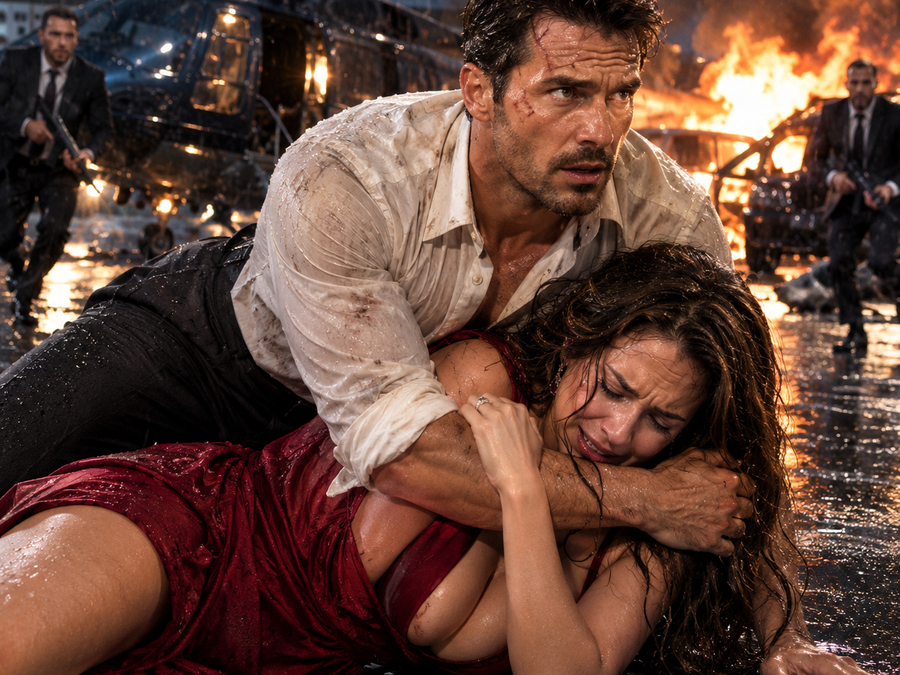
“Don’t Board That Jet!” Single Dad Warned the CEO—Minutes Later, It Exploded (Part 3)
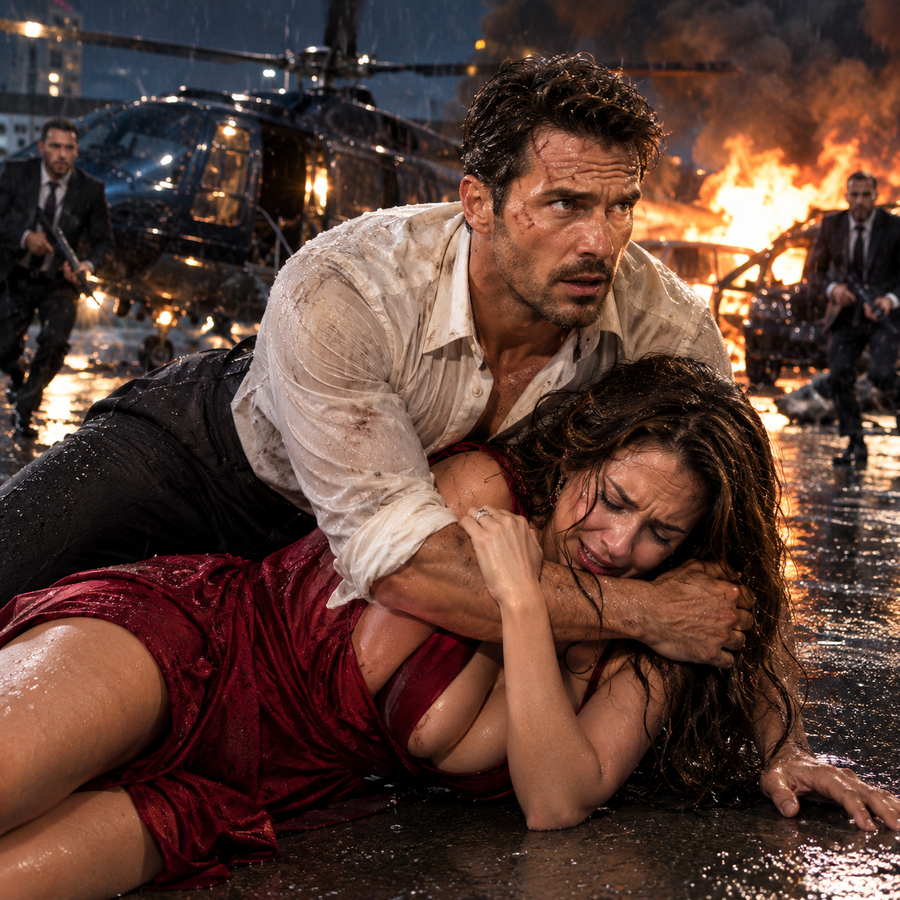
PART 3
“Tell me.” “The email chain Reston archived. His attorney showed me two messages as a good-faith preview before the agreement is finalized.” Her voice went very flat. “One of them is from Richard Vale to Alan Price. Sent Sunday night. The night before Monday’s incident. The subject line is a routing reference for the Cascade departure. And the body contains three sentences.”
She stopped. “Collins.” “The last sentence says, quote, ‘Given the board’s succession timeline, the outcome of this trip should be final.'” The house was completely quiet. Somewhere outside, a car went past. The refrigerator cycled on with a low hum.
Daniel Mercer sat in his chair and understood, with the complete and terrible clarity of a man who has been in the room where bad decisions get made and knows exactly what the language of those rooms sounds like, that Richard Vale had sent an email the night before Victoria Sterling’s flight that amounted to a death warrant dressed up in corporate syntax.
“He wrote it down,” Daniel said. “He wrote it down,” Collins confirmed. “That’s—why would he write it down?” “Because he’s been doing this for 20 years and nothing has ever come back on him. Because the people who understood what that language meant were the people who benefited from it. Because he’s never been in a situation where the outcome failed to be final.”
A pause. “Until Monday.” Daniel thought about the way Vale had said Emma’s name on the phone. Casually. Precisely. The way a man uses a piece of information to demonstrate that he has it. Not because he needs to use it, but because demonstrating possession is itself the message.
He thought about how that calculation must have looked on Vale’s side. A ground inspector at a small Oregon airport. A single father. A man who’d already been broken once and had retreated to the simplest possible version of his life. The kind of person who, in Vale’s experience, understood how much he had to lose. The kind of person who wasn’t supposed to still be standing.
“When does this become public?” Daniel said. “The proffer agreement is confidential until charges are filed. But Victoria is meeting with her corporate attorneys tonight about voluntary disclosure to the acquisition partners. If she moves forward with that, and I believe she will, the story goes public within 24 hours, regardless of what Vale does.”
Collins let that land. “He knows the timeline. That’s why the text tonight was a last-ditch pressure move. He’s running out of options and he knows it.” “Is Emma safe tonight?” “I have a unit on your street. They’ve been there since 5. You won’t see them, but they’re there.”
Her voice softened a fraction. “She’s safe, Daniel. You both are. Get some sleep.” “You sure about that?” “I’m not sure about most things in this case yet,” she said. “I’m sure about that.” He thanked her and ended the call.
He sat for a while. Then he got up and checked the front door lock, the back door, the window in Emma’s room. Habits. All habits. The quiet choreography of a man who has always been responsible for someone else’s safety. Emma’s light was still on. He could see it under her door. He knocked.
“Yeah,” she said. He opened the door. She was lying on her bed with the book face down on her chest, which meant she’d been thinking rather than reading for the last few minutes. “Hey,” he said. “Hey.” He leaned against the doorframe. “You need anything?”
She looked at him in that way. She had the gray-eyed assessment that was so much older than 12. “Are you going to tell me what’s actually going on?” He considered the question with the seriousness it deserved.
“Some people are being held accountable for some things they did wrong,” he said. “And some of them don’t like it. But it’s being handled by people whose job is to handle it. And we’re not in the middle of it.” “But you started it. I noticed something. Other people are handling it.”
She looked at him for a long moment. “Mom would have said you always undersell yourself.” It hit him the way mentions of her mother always hit him. Not with the acute pain of the early years, but with something softer and more complicated. Like pressing on a scar that had healed, but still remembered. “She would have been wrong,” he said.
Emma almost smiled. “She was wrong about stuff sometimes.” “Yeah. Not often.” “No. Not often.” She picked up her book. “Night, Dad.” “Night, bug.”
He pulled the door most of the way closed and went to bed. He didn’t sleep well. He lay in the dark and ran the sequence in his head. The way an engineer runs a system check. Vale to Price to Reston to the overridden flag to the fuel leak to the fire to the call to Emma’s name to the text. Enjoy dinner. This isn’t over.
He ran it forward and backward, looking for the points of failure, the places where it could have gone differently, the places where it still could. At 2:14 in the morning, his phone buzzed. Collins. A text.
“Price just filed for emergency protective status. His attorney contacted the DA’s office at midnight, claiming Price has information about additional planned incidents and fears for his safety. They’re moving him tonight.” A second text, 30 seconds later. “Vale is going to know by morning. Be ready.”
He stared at the ceiling and thought, be ready. He got up at 6:00, made coffee, made Emma’s lunch, packed the pretzel nuggets, did all of it with the methodical calm that was his version of armor.
Because the alternative, falling into the anxiety of what was coming, would not help Emma, would not help Collins, would not help Victoria, and would not change a single fact. At 6:45, his phone rang. Victoria Sterling.
Her voice was different from any version he’d heard before. Not the CEO register, not the careful personal tone of the coffee shop. Something rarer. Like someone who had been awake all night with something heavy and had stopped pretending otherwise. “They called an emergency board meeting,” she said. “40 minutes ago. Vale is trying to call a vote of no confidence before the acquisition partners receive my disclosure.”
“Can he do that?” “He needs seven of 11 board members. He’s been working the phone since last night.” A pause. “I have four members I’m certain of. Three who are genuinely undecided. Two who are Vale’s completely. And two who I don’t know.”
“What does a successful vote mean for you?” “It means I’m removed as CEO pending a board-directed review. Which means Vale controls the narrative during the investigation. Which means everything Collins is building gets filtered through a board that he controls.”
Her voice tightened. “It also means the acquisition partners receive a vote of no confidence as their first official notification of what happened Monday, rather than my voluntary disclosure. And the deal dies in a way that benefits whoever positioned themselves correctly in the event of a distressed sale.” “Which Vale did?” “Which Vale did.”
A pause. “I have 2 hours before the meeting.” Daniel leaned against the kitchen counter with his coffee. “What do you need?” he said. “I’ve been honest with you,” she said. “I want to be honest about this, too. I’m not asking you to fight my corporate battle. That’s mine. But I need you to understand that what happens in that boardroom in 2 hours has direct consequences for the investigation.”
“If Vale controls this company’s posture toward the NTSB before Reston’s agreement is signed, before Collins can formally enter it into the record, he buries it again.” Daniel said, “He tries. Collins is good and I think she’s too far along for him to stop the federal side. But corporate cooperation versus obstruction is the difference between 6 months and 6 years.”
Her voice was steady, but he could hear the cost of the steadiness. “I am not a person who asks for help easily.” “I know,” he said. “But I’m asking.”
He thought about what help looked like here. He wasn’t a board member. He wasn’t a lawyer. He wasn’t a person with any leverage in the corporate architecture of Sterling Global Aviation. He was a ground inspector from a small airport in Oregon.
What he had was the thing Collins had built on. The thing Reston had made his decision based on. The thing that apparently was harder to account for than Richard Vale had calculated. He had the fact of what he knew and the willingness to say it on the record, in any room, to any audience. “Who are the undecided three?” he said.
She told him. Two women and a man. All of them longtime board members. All of them with records that suggested they cared about the company as a functioning enterprise rather than a vehicle for extraction. One of them, a woman named Margaret Osei, had been on the safety and compliance subcommittee for 6 years.
“Can you get me into that room before the meeting?” Daniel said. “The board meeting, not the meeting before it. Can you get me 15 minutes with Margaret Osei?” A silence. “Yes,” Victoria said. “Yes, I can.” “Then set it up.”
She set it up in 23 minutes. Daniel drove Emma to school, which he did with the full, focused presence he always brought to that task. Because Emma deserved his full attention and not his divided mind. He watched her walk through the school doors. He waited until they closed behind her. Then he drove to the Sterling Global Regional Office, a three-story building on the edge of Medford’s small business district.
He parked in the visitor lot and walked in wearing the same clothes he’d worn yesterday, because he hadn’t thought about clothing, and it didn’t matter anyway. Victoria met him in the lobby. She looked like someone who had marshaled every resource she had for the next two hours and was running on the far side of tired, but had decided tired was irrelevant. Her blazer was perfect. Her posture was perfect. Only her eyes showed the weight of the night.
“Osei is in conference room B,” she said. “She agreed to 15 minutes.” “Does she know who I am?” “She knows you’re the person who stopped me from boarding that aircraft.” He nodded. “That’s enough.”
Margaret Osei was 61. A compact woman with close-cropped gray hair and reading glasses pushed up on her forehead. And she looked at Daniel when he walked into the conference room the way people look at someone they’ve been trying to form an opinion of and haven’t quite managed.
She stood, shook his hand firmly, and sat back down. “Mr. Mercer,” she said. “I have 15 minutes.” “I’ll take 10,” he said. He sat across from her and did not use the 10 minutes to argue for Victoria or against Vale, to characterize the investigation, or to make any claim about what the board should do.
He used them to tell her what he knew. The fuel streak. The 2018 report. The Nevada emergency landing. The specific technical mechanism by which a maintenance flag had been overridden at 7:48 Monday morning. The fact of Alan Price’s name on the Nevada report and on the Sterling maintenance system.
The fact of Reston’s proffer agreement. The fact of Collins’s 14-month file. He told it the way he told Collins. In sequence. Without drama. Just the data, in order, and what it meant if you understood the technical context.
Osei did not interrupt him once. When he finished, she was quiet for a moment. “You understand I can’t share the contents of this conversation with other board members before the meeting,” she said. “I understand.” “And you understand that what you’ve told me constitutes your testimony, not verified evidence, at least not yet.”
“I understand that, too. Collins will have verification within the next few hours. What I’m asking is that you don’t make an irreversible decision before you have the full picture.” She looked at him steadily. She had the kind of eyes that had been in a lot of boardrooms and had learned to read the gap between what people said and what they meant.
“Why did you come here?” she said. “You don’t have skin in this fight. You don’t work for Sterling. You don’t benefit from how the board votes today.” “I do have skin in it,” he said. “I have a professional interest in whether safety reports get buried or acted on. And I have a personal interest in whether the people who tried to use my daughter’s name as a pressure point last night are the ones who end up controlling the investigation.”
Osei’s expression changed. Something very specific moved across it. “He mentioned your daughter,” she said. “Yes. By name.” “Yes.” She looked at him for a long moment. Then she picked up her glasses from her forehead, folded them, put them in her jacket pocket. “Thank you for coming in, Mr. Mercer,” she said.
He stood. “Thank you for your time.” He walked out into the lobby. Victoria was waiting. She looked at his face. “How did it go?” He listened. He said, “That’s all I can tell you.”
He left the building and sat in his truck in the parking lot. He didn’t have anything else to do here. The meeting was Victoria’s. The investigation was Collins’s. The next hour was not his to control. He thought about that. About the edge of a man’s influence and the discipline of knowing where it ended.
His phone buzzed at 9:47. Collins. “Proffer agreement signed. Reston’s full statement in progress. Price’s attorney has been in contact. This is moving.” At 10:12, another buzz. A number he didn’t recognize. Different from Monday’s calls. Different from the prepaid. He almost didn’t answer. He answered.
“Mr. Mercer.” Vale’s voice. Completely level. The voice of a man who had made a professional calculation and was delivering the result. “I want you to understand something. Whatever you think you’ve accomplished this week, whatever story you’ve told yourself about what Monday meant, you are a maintenance worker from a regional airport. When this is over, that’s still what you’ll be. And the people you’ve aligned yourself with have interests that are not the same as yours.”
Daniel said nothing. “I’m giving you one more opportunity,” Vale said. “To step back. To understand that your role here is finished. To go home to your daughter and let the people who understand how these things work manage the outcome.”
Silence. Then Daniel said, “Goodbye, Mr. Vale.” He ended the call. He called Collins immediately. She answered before the first ring finished. “Vale just called me directly,” Daniel said. “Second time. No mention of Emma this time. Just the standard step-back pressure.”
“He’s scared,” she said. “Scared people make calls they shouldn’t make. We’re recording everything on his known lines. We’ve been monitoring since yesterday. He knows we’re monitoring. He’s using clean phones, but he can’t resist contact.” Her voice had that controlled energy again. “It’s almost over.”
“Almost,” Daniel said. He put the truck in drive and headed toward the airport. He had a shift. He had a clipboard and a checklist and a row of aircraft that needed someone to look at them with clear eyes and call things what they were.
He pulled into the staff lot at 10:41. He clipped his badge. He picked up his clipboard from the equipment room. And then, before he walked out onto the apron, his phone rang one more time. Victoria Sterling.
Her voice was absolutely controlled, which told him everything before she said a word. “The vote was 8 to 3,” she said. “In my favor.” He exhaled. “Margaret Osei voted with you,” he said. It wasn’t a question. “And brought two others.”
A pause. And in the pause, he heard something he hadn’t heard from her before. A crack in the composure. Small, but real. “Richard Vale was escorted from the building 20 minutes ago. Collins has people waiting for him at the exit.” Another pause. “It’s done, Daniel. The board voted to fully cooperate with the NTSB investigation. Voluntary disclosure to the acquisition partners goes out at noon. Everything goes on the record.”
She stopped. “Because of you.” He stood at the edge of the apron with his clipboard in his hand and the October morning doing its cold and ordinary thing around him. “Because of Reston,” he said. “Because of Collins. Because of the three board members who were willing to hear it.”
“Because you started it,” she said firmly. “Because you were the one person who saw what was happening and didn’t walk past.” Her voice steadied. “I know what it cost you. The first time. I know what it cost to do it again.”
He thought about the fireproof box. About 17 pages. About Charles Drummond’s smile. About Nevada. About Emma in the passenger seat, asking if they were safe and him saying yes and meaning it only because he decided to mean it. “It didn’t cost me anything this time,” he said. “Not yet. Ask me in a year.”
She almost laughed. The sound of it, brief and genuine and surprised, was different from anything else she’d given him all week. “Ask you in a year,” she said. “I will.” He ended the call.
He stood on the edge of the apron. Then he raised his clipboard. Then he started his walk. Aircraft to aircraft, check by check. The ordinary and essential work of a man who looks at things carefully and calls them what they are. The morning light was cold and very clear. He could see the ridge line in perfect detail.
The walk helped. It always did. There was something about the rhythm of it. Clipboard up, eyes moving, the specific sequence of checks that his hands knew without prompting, that settled the noise in his head into something manageable. Aircraft by aircraft, item by item, left to right, top to bottom.
The way he’d been trained 20 years ago by a man named Hal Briggs, who used to say that the discipline of the checklist was the most honest thing in aviation, because it didn’t care who you were or what you were feeling. It only cared whether the box got checked.
He was on his fourth aircraft when his phone buzzed with a name he hadn’t expected to see. Tom Garrett. His old supervisor from Pacific Coast Aerotech. The man who’d been two levels above Daniel in 2018. Who’d sat in the conference room with Charles Drummond and said nothing while Drummond classified the report as non-actionable.
Not a villain exactly. More like the kind who looks away because looking away is easier than what looking straight ahead requires. Daniel stared at the name for 3 seconds. Then he answered. “Tom.” “Daniel.” The voice was older, rougher at the edges. “I saw it on the news last night. The Sterling jet.” A pause. “I figured it was you.”
“Why?” “Because nobody else would have caught it from 12 ft on a walk-by.” Another pause. Longer. “I’ve been thinking about calling you for 8 years. I want you to know that.” “Thinking about it isn’t the same as doing it.” “No,” Garrett said. “It isn’t.”
He was quiet for a moment. “I’m sorry, Daniel. For what happened in that room. I should have backed you up. I knew the report was solid. I knew Drummond was wrong. And I had a mortgage and two kids in college. And I told myself the statistical probability wasn’t high enough to justify—” he stopped. “I’ve told myself that story for 8 years, and it sounds worse every time.”
Daniel stood on the apron with the cold air moving around him and let the man finish. “Nevada happened,” Daniel said. “I know.” “Six passengers.” “I know.” Garrett’s voice dropped. “I saw the report. I knew what it meant. I knew where it traced back to. And I still didn’t call you.”
“Why are you calling now?” “Because a federal investigator named Collins contacted me yesterday afternoon and told me she was building a formal record of the 2018 report and the decisions that followed. And she told me that cooperation at this stage was materially different from non-cooperation.” A beat. “And because I’m 62 years old and I’m tired of carrying it.”
Daniel thought about what to do with that. Forgiveness was not something he doled out like currency. And Garrett wasn’t asking for it exactly. He was confessing. Which was different, and had its own kind of weight. “You’re going to talk to Collins,” Daniel said.
“I already have. I gave her a full statement this morning. Everything I witnessed in 2018. Everything I knew about Drummond’s reasoning. Everything I knew about the board pressure that surrounded that decision.” A pause. “Including Vale.”
“Vale was involved in 2018.” “Not directly. But board members communicate. There were conversations about the acquisition timeline. About what a fleet grounding would cost the deal. Nobody said anything explicit. Nobody had to.” Garrett’s voice had the quality of someone excavating something they’ve kept buried under other things for a long time.
“That’s how those rooms work, Daniel. You already know that.” “Yeah,” Daniel said. “I know.” “I’m sorry it took this long for someone to listen.” He thought about what to say. He thought about the fireproof box, now empty on the closet shelf. About Collins sitting across a coffee shop table, treating his 8-year-old report with the attention it deserved.
About Reston deciding to talk because of a newspaper story about a ground inspector who decided not to walk past. “Tell Collins everything,” Daniel said. “That’s how you make it right. Not to me. Just tell her everything.” “I will,” Garrett said. “I already have.”
The line went quiet for a moment. “Take care of yourself, Tom,” Daniel said. He ended the call and stood there on the apron, and the cold air moved around him, and then he raised his clipboard and went back to work.
By noon, the acquisition partners had Victoria’s disclosure. By 12:30, the first industry news outlet had the story. Not the full picture yet, but the outline. CEO of Sterling Global Aviation narrowly avoids aircraft fire. Federal investigation underway. Board member Richard Vale escorted from company premises.
By 1:00, Daniel’s name was in it. Not buried, not as a footnote. His name. His title. Ground inspector. And the sentence that would follow him for the rest of his professional life. “A former aviation safety engineer who left the industry after a whistleblower dispute in 2018.”
He read it on his phone during his lunch break, sitting in the crew lounge with a sandwich he wasn’t fully tasting. He read it twice. He thought about how strange it was to see your own life described in 20 words by someone who had never met you. His phone was buzzing continuously. Numbers he didn’t recognize. He let them all go to voicemail and ate his sandwich.
One text came through from a number he did recognize. Emma’s school phone. The line the front office used for parent communications. His chest tightened before he even read it. Then he read it. “Hi, Mr. Mercer. Just a heads-up that we’ve had a few media inquiries today asking about Emma. We haven’t provided any information and won’t. She’s completely fine and having a normal day. We wanted you to be aware.”
He texted back a thank you and then immediately called Collins. “Media is at Emma’s school,” he said. “I know. I’ve been monitoring. They’re on public sidewalks, not on school property. The Medford PD unit is still there.” Her voice was even. “She’s safe, Daniel. This is the story breaking, not the threat escalating. There’s a difference.”
“She’s 12.” “I know. The school is handling it correctly.” A pause. “I need to ask you something. And you can say no.” “What?” “The US Attorney’s Office is filing charges against Vale and Price this afternoon. Reston’s statement is fully incorporated. Garrett’s statement from this morning is incorporated. The email from Vale to Price, the Sunday night email, has been authenticated and is in the filing.”
Collins paused. “The US Attorney wants to hold a press statement at 3:00. She’d like you to be there. Not to speak. Just to be present. She thinks your presence communicates something that her prepared remarks can’t communicate as efficiently.”
Daniel was quiet for a moment. “What does it communicate?” he said. “That the person at the center of this is a real person, not a concept, not a regulatory mechanism. A man who showed up for work on a Tuesday and did the right thing.” Collins’s voice had the particular directness she used when she was telling him something she meant completely.
“A lot of people are going to hear this story, Daniel. How they understand it depends partly on whether they can picture the person it happened to.” He thought about being pictured. About standing in a room full of cameras and people with microphones and the weight of a story that had been his private scar for 8 years suddenly becoming public property.
He thought about Tom Garrett calling from whatever quiet room he’d been sitting in for 8 years with the weight of it. He thought about Reston archiving those texts and sitting on them until a newspaper story about someone else’s courage made him decide. He thought about Nevada. “3:00,” he said. “I’ll be there.”
He was at the school at 2:55. Three news vans were parked on the street outside. Two people with cameras on the sidewalk. He pulled into the pickup line like any other parent, which was deliberate. And Emma came out at 3:12 and got in the truck and looked at the cameras on the street and then looked at him.
“That’s about you,” she said. “Some of it.” “Are you going somewhere after?” “Yes. I need you to go to Karen’s for a couple of hours. Is that okay?” She thought about it. “Can I bring my homework?” “Yes.” “Then okay.” She looked at the cameras again. “Dad, are you going to be on TV?” “Maybe.”
She considered this with the specific expression she used for information that was new and not entirely comfortable. Then she said, “You should wear a different jacket. That one has a stain on the left sleeve.” He looked down at his left sleeve. She was right. He had absolutely no idea when that had happened. “I’ll borrow one from Karen,” he said.
Emma nodded, apparently satisfied that the most important issue had been resolved. He dropped her at Karen’s, borrowed a dark blue fleece from Karen’s late husband’s closet—Karen pressed it into his hands without his having to ask, because Karen had spent 30 years reading people and knew when someone needed something practical done without ceremony—and drove to the federal building on the edge of downtown Medford.
Collins met him in the lobby. She looked at him for a moment, taking in the borrowed fleece, the clipboard he was still somehow carrying from his shift, the particular expression on his face that was the product of a week he hadn’t asked for and a year’s worth of events compressed into 5 days. “You okay?” she said.
“I’ve been asked that a lot this week,” he said. “Has the answer changed?” He thought about it. “A little,” he said. She almost smiled. “Good.” She gestured toward the elevator. “We’ve got about 10 minutes. Victoria’s already upstairs. The US Attorney is named Foster. She’s direct and she doesn’t waste time, which I think you’ll appreciate.”
“What do I actually need to do up there?” “Stand in the room. Answer direct questions from Foster if she asks them. Don’t talk to the media afterward unless you decide to. That’s entirely your call.” He nodded. “Collins,” he said as the elevator opened. “Yeah.” “Price. Is he going to cooperate?”
Her expression shifted. “He’s been in a protective situation since last night. His attorney is negotiating the terms of his cooperation. There’s a complication.” “What kind of complication?” They stepped into the elevator. She pressed the button for the fourth floor.
“Price isn’t just connected to Sterling and Pacific Coast Aerotech,” she said. “He’s been consulting on safety certification for three other corporate aviation operators over the last 6 years. We’re pulling those records now.” She looked at him steadily. “This may be larger than Monday. Significantly larger.”
“How many aircraft?” he said. “We don’t know yet.” Her voice was very even. “That’s the answer I’m trying not to give you, because it’s the answer that means what happened to you in 2018 and what almost happened to Victoria on Monday may have been part of something systematic rather than opportunistic.”
She paused. “Which is either better or worse, depending on how you look at it.” “It’s worse,” he said. “Yes,” she said. “It is.”
The doors opened. The room they walked into was the conference room of the US Attorney’s Office. Government furniture. Water pitchers on a side table. A podium already set up near the windows for the press statement. Victoria Sterling was standing near the far wall with two attorneys Daniel didn’t recognize, and she turned when he came in.
And something in her posture changed. A fractional release of tension that told him she’d been waiting for him specifically and was relieved he was here. She crossed the room to him. “Thank you for coming,” she said. “You don’t have to keep thanking me,” he said. “I know.” She held his gaze. “I want to.”
The US Attorney, Foster, a trim woman in her 50s with silver hair cut close and the kind of directness in her manner that Collins had promised, came over and shook Daniel’s hand with a grip that meant business. “Mr. Mercer. I’ve read your file. Both files.” She held his gaze.
“The 2018 report should have been in our record 8 years ago. It’s there now. And the work you did this week, the willingness to talk to Collins, to provide documentation, to go on the record with everything, that’s what made this filing possible today.”
She didn’t let go of his hand immediately. “The country owes you an apology for 2018. I can’t deliver it officially, but I can tell you personally.” He held her gaze. He didn’t know what to say. So he said nothing, which she seemed to understand.
“At the statement,” she said, “I’ll introduce you briefly. I’ll say who you are, what you did Monday, and what your 2018 report contributed to today’s filing. I’ll keep it factual. If you want to say something, you can. If you don’t, you don’t have to.” “I might say something,” he said. “I hoped you would.” She released his hand and turned toward the podium.
The room filled over the next 8 minutes. Cameras. Reporters. Two aviation industry journalists he could identify by their specific combination of technical vocabulary and impatience. Collins stood to one side. Victoria stood to the other. Daniel stood between them, which was not a position he had planned for or requested, but which seemed, in the logic of how the week had assembled itself, correct.
Foster began at exactly 3:00. She was as direct as advertised. The charges: Richard Vale, conspiracy to commit wire fraud, obstruction of a federal safety investigation, and three counts of reckless endangerment involving air transportation. Alan Price, falsification of aviation safety documentation, conspiracy, two counts of obstruction.
Carl Reston, granted immunity in exchange for full cooperation. No charges filed. The Sunday night email. The three sentences. The phrase, “The outcome of this trip should be final,” was entered into the public record. Foster read it aloud in the flat, factual tone of someone who understood that it needed no editorializing.
The room was very quiet when she finished reading it. Then she turned to the context. The 2018 report. The Nevada emergency landing. The pattern of suppressed safety documentation across multiple operators. The investigation Collins had been building for 14 months without a public anchor, and the event on Monday that had given her one.
She said Daniel’s name clearly and without embellishment. “Ground inspector Daniel Mercer, a former aviation safety engineer, identified the fuel system anomaly on Miss Sterling’s aircraft from approximately 12 ft during a routine apron walk, despite having no authorization to inspect the aircraft and no obligation to do so.”
“His decision to act, to stop a departure that had been certified safe by a compromised inspection process, is the reason there are charges being filed today rather than a crash report being written.” She paused.
“Mr. Mercer’s 2018 internal report, which documented the same fuel line vulnerability in the same engine family, was suppressed by Pacific Coast Aerotech management and never entered into the NTSB record. As of this morning, that report has been formally incorporated into the federal investigative record. 8 years later.”
She looked at Daniel. “Mr. Mercer, do you want to say anything?” He hadn’t prepared anything. He’d told himself on the drive over that he might not say anything. That presence was enough. That he was not the kind of man who needed the room’s attention to feel like something had been accomplished.
But he thought about Reston deciding to talk because of a story in the news. He thought about Garrett calling because he was 62 and tired of carrying it. He thought about the other operators Collins was now pulling records on, and the maintenance techs at those operators who maybe had flagged something and been told to understand the difference between a genuine concern and a career-damaging false alarm. He stepped forward.
“I don’t have a prepared statement,” he said. The room was very quiet. The cameras were on him. He was aware of them the way you’re aware of weather. Present. Impactful. Not something to fight. “What I have is something I’ve been thinking about since 2018. Which is that safety culture doesn’t fail because of one bad decision by one bad person. It fails because systems are built that make it easier to look away than to speak up.”
“And when that happens long enough, looking away becomes the culture.” He stopped for a moment. “I lost a career for speaking up in 2018. I’m not asking anyone to feel sorry about that, because what happened to me is minor compared to what almost happened to six passengers over Nevada in 2019 and to what almost happened on Monday.”
“What I’m asking is that the people listening to this, technicians, engineers, inspectors, anyone who has ever looked at something on an aircraft and wondered whether to say something, understand that the cost of not saying something is always higher than the cost of saying it.” He paused. “That’s all I have.”
He stepped back. The room held its quiet for another second, and then the questions started. Directed at Foster, at Victoria, at Collins. And Daniel stood where he was and answered the two that came directly to him, both from aviation press, both technical.
And then the statement was over, and the room reorganized into the controlled chaos of people wrapping up and talking on phones and checking their recordings. Victoria came to stand beside him. She didn’t say anything for a moment. Just stood there, which he’d come to understand was one of the ways she communicated the things that were harder to say.
“The acquisition closes tomorrow,” she said finally. “The partners reviewed the disclosure. They’re proceeding. With a condition.” “What condition?” “That Sterling Global implement a fully independent safety oversight structure within 90 days. External auditors. Direct reporting to a newly formed safety board that exists outside the standard board structure and cannot be overridden by the board on safety decisions.”
She looked at him. “It was the partners’ requirement. I didn’t suggest it. But when they named it, I didn’t fight it either.” “That’s the right structure,” he said. “I know.” She held his gaze. “I want you to chair it.”
He looked at her. “The independent safety board,” she said. “I want you to chair it. Paid position. Full authority to halt any aircraft in the Sterling fleet for any reason you deem sufficient. No override pathway. Your word is final on safety questions.”
She paused. “I know that’s a significant ask. I know you’ve rebuilt your life specifically to not be in a position where the weight of a company’s decisions is on you. I know you have a daughter and a routine that matters to you and a job that doesn’t ask too much.”
She held his gaze the way she’d held it on the apron on Monday. Direct. Without performance. “I’m asking anyway. Because I need someone in that chair whose first language is the truth and who can’t be bought or pressured into changing it. And I’ve spent this entire week watching you demonstrate that you’re that person.”
He looked at her for a long time. He thought about the chair in the living room where he sat in the evenings. About the grocery list with bananas and pretzel nuggets. About Emma saying, “You always notice stuff,” as if it were the most ordinary thing about him, rather than the thing that had defined the worst and best moments of his adult life.
He thought about the other operators Collins was pulling records on. About how many texts and how many facilities were sitting on flagged reports and trying to decide what it was worth to say something. He thought about Hal Briggs, who’d trained him 20 years ago with a checklist philosophy. The discipline of the checklist doesn’t care who you are or what you’re feeling. It only cares whether the box got checked.
“I have conditions,” he said. Something shifted in Victoria’s expression. Relief, he thought, moving through professionalism like light through a curtain. “Name them,” she said.
“Emma’s schedule doesn’t change. I’m at school pickup every day. I’m not traveling. If there’s a conflict, work moves, not the pickup.” “Done.” “The safety board has its own budget. Independent of Sterling operations. I control hiring and I hire based on technical qualification alone, not corporate relationships.” “Done.”
“Any technician anywhere in the Sterling fleet can file a safety concern directly to the board without going through their direct management chain. Anonymous if they choose. And the board responds to every filing within 48 hours with a documented outcome.” “Done,” she said. “And then that’s exactly what it should have been all along.”
“Yes,” he said. “It is.” He extended his hand. She shook it. It wasn’t the handshake of a deal being made. It was something else. The particular handshake between two people who have been through something real together and come out the other side holding something that didn’t exist before the week started.
Collins found him near the elevator 5 minutes later, gathering his borrowed fleece. “You heard?” he said. “I heard.” She looked at him with the expression of someone calibrating. “How do you feel about it?” “I feel like I said yes to something large.” “You did. But the right kind of large.” “Yeah.”
She put her hands in her jacket pockets. “For what it’s worth, the 14 months I spent building that file, the reason I kept going when it felt like nothing was going to break the right way, was exactly what you described out there. The system that makes looking away easier than speaking up.”
She held his gaze. “You speaking up in 2018, even though it buried you, that report is in the chain of evidence that gets Vale and Price convicted. It’s not a footnote. It’s a load-bearing piece.” She paused. “You did that when no one was watching and there was no benefit to you. That matters.”
He nodded once. “You have a 14-month file,” he said. “On how many operators?” She looked at him. “Five currently under active review,” she said. “Potentially nine.” He held that number for a moment. “My board will cooperate fully with your investigations,” he said. “I know it will.”
The trace of almost a smile. “That’s partly why I suggested to Victoria that she offer you the chair.” He looked at her. She had the particular expression of someone who has been playing a long game and has just allowed one piece of it to be visible. “You told her to ask me,” he said.
“I told her she needed someone in that chair who understood how this system breaks and why. I mentioned that I happen to know exactly such a person.” She shrugged fractionally. “The rest was her decision.”
He almost laughed. Then he did laugh, briefly and genuinely, the surprise of it. The particular shape of a week that had started with a grocery run and a voicemail and was ending with him being maneuvered by a federal investigator into a position he hadn’t known he wanted until it was in front of him. “Okay,” he said. “Okay,” she said.
He picked up Karen’s husband’s fleece and the clipboard he’d set against the wall and headed for the elevator. He picked up Emma at 6:00. She was at Karen’s kitchen table doing math homework with the focused frown she reserved for numbers, and she looked up when he came in and read his face with the quick precision she’d been developing for 12 years.
“You were on TV,” she said. “Probably.” “Karen showed me.” She looked at him steadily. “You said the thing about speaking up.” “Yeah.” “It sounded like you.”
He sat down across from her at the table. “Is that okay?” She thought about it. Emma always thought about things before she answered them, which was one of his favorite things about her. “Mom used to say that some people see problems and some people fix them, and the rarest kind does both. She said she was talking about you.”
She looked back at her homework. “She was right.” He sat with that for a moment in Karen’s kitchen, with the sound of Karen doing something at the counter and Emma’s pencil moving across paper and the ordinary evening settling around them. “I took a new job,” he said.
Emma looked up. “Same work,” he said. “Just a bigger version of it. More aircraft to watch. More people to make sure the checklist gets done.” She considered this. “Does that mean we’re moving?” “No. We stay here. Still at school pickup. Every day I’m in town.”
She looked at him for another moment. Then she looked back at her math. “Okay,” she said. He stayed at Karen’s for another 30 minutes. Helped Emma finish the last two problems. Geometry, which she was better at than she gave herself credit for. And then they drove home and ate dinner, because it was late and neither of them felt like anything complicated.
And they ate at the kitchen table and talked about whether Karen’s porch railing needed fixing, which it did, and whether Daniel could fix it this weekend, which he probably could. They did not talk about the press statement. They did not talk about Vale or Price or the investigation or the week that had just happened.
There would be time for that in appropriate amounts as Emma grew into a person who could hold more of it. For tonight, they talked about the railing. After dinner, he did the dishes and Emma dried. And when she went to bed at 9:30, she stopped at her door and looked back at him in the hall.
“Dad.” “Yeah.” “The new job. Is it what you were supposed to be doing all along?” He stood in the hallway and thought about that question. About 2018 and the report and Drummond’s smile. About the fireproof box and the three years in Medford and the walk-by on a Tuesday afternoon that had started all of this.
About the strange, unlikely thread that ran from who he’d been to who he was standing here. “I think so,” he said. She nodded, satisfied. “Good night, Dad.” “Good night, bug.”
Her door closed. He stood in the quiet hallway for a moment. Then he walked to the living room chair and sat down and the house settled around him with all its ordinary sounds. The refrigerator. A branch moving against the side of the house. The distant hum of the street.
He thought about the independent safety board. About hiring the first team. About the forms he’d need to file, the protocols to write, the first meeting agenda. About how you built a structure that protected the people who were brave enough to tell the truth before the truth became a disaster.
He thought about what he’d say to the first technician who came to him with a flagged report that someone in their chain of command had pressured them to bury. He thought, I’ll tell them what I know. Which was this. You don’t need a title to tell the truth. You don’t need permission to act when you know something is wrong.
You need the discipline to look when looking is hard. The courage to speak when speaking costs you something. And the understanding that the cost of silence is always paid by someone who had no vote in your decision. He’d learned that the hard way. At the price of a career and three years in the quiet corner of his life he’d built to recover in.
He didn’t regret the price. Because on a Tuesday afternoon in October, he’d been 12 ft from a silver jet with a streak on the nacelle, and he’d had the knowledge to understand what it meant. And he’d made the choice to say something instead of walking past.
And everything that came from that choice, the investigation, the charges, the board, the reforms, the technicians across nine operators who would file their concerns and receive a documented response within 48 hours rather than a phone call telling them their careers depended on their silence, all of it traced back to a man who noticed something and refused to pretend he hadn’t.
That was the job. It had always been the job. Daniel Mercer sat in the chair by the window and let the quiet of the house settle over him. And outside, the street was dark, and the neighbor’s light was on, and somewhere a few blocks over, a dog was barking at something it couldn’t name.
And in the room down the hall, his daughter was asleep. He was exactly where he was supposed to be. And tomorrow, the work continued.

