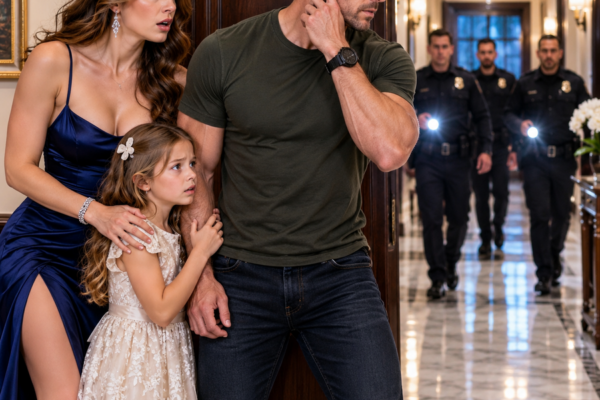
My name is Thomas Callahan. I was twenty-three years old when I earned the Green Beret. I was fifty-nine when a restaurant manager named Diane Whitmore called me a liar in front of sixty people.”
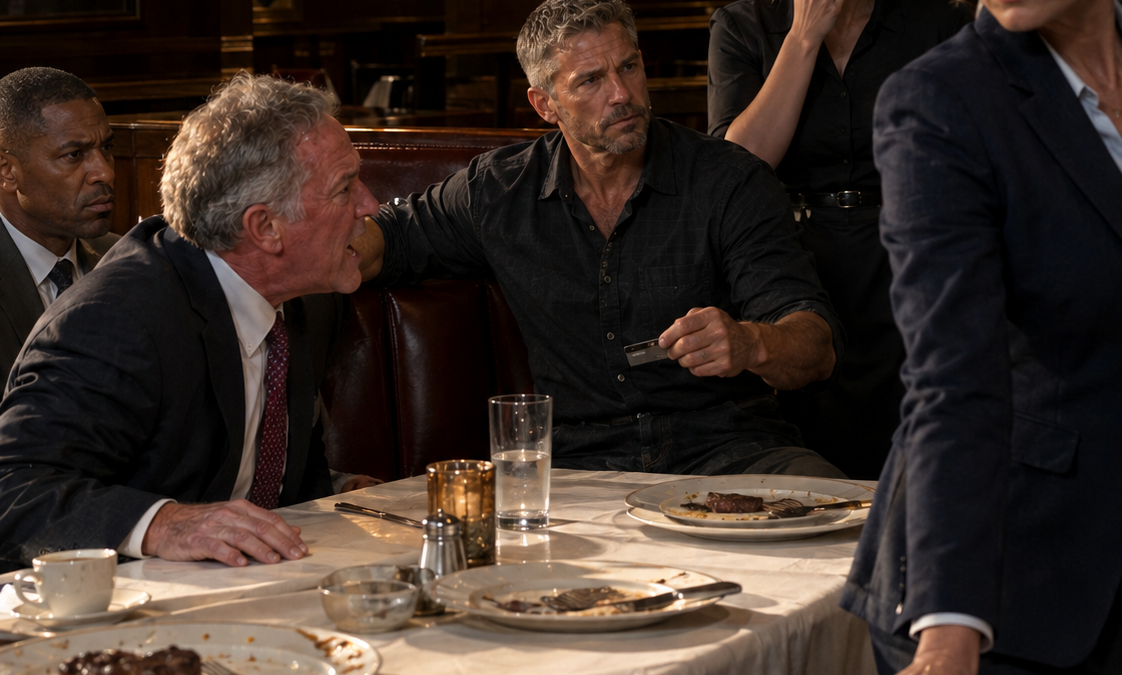
“My name is Thomas Callahan. I was twenty-three years old when I earned the Green Beret. I was fifty-nine when a restaurant manager named Diane Whitmore called me a liar in front of sixty people.”
They thought they could make him small → By the end, everyone who doubted him was standing to honor his name.
What she didn’t know was that the quiet old man in the corner booth had been invited to that restaurant by men who didn’t need proof of anything.
The hostess had seated us at 6:45. I’d made the reservation three weeks in advance. Table twelve. The corner booth with the view of the parking lot. It was the same table we’d used every year since 2011.
The steakhouse was called Corrigan’s. White tablecloths. Dark wood. Military flags on the walls — not decorations, real ones, framed with plaques. The owner’s father had been a Marine. You could feel it in the place. The lighting was low. The booths were deep. It was the kind of restaurant where men like us could talk without anyone listening.
Not that we talked much anymore.
I arrived first. I always did. I liked the quiet before they came. I liked watching the door.
I ordered water. No ice. The waitress was young, maybe twenty-two, with a name tag that said BRITTANY and a ponytail that swung when she walked. She smiled at me the way you smile at a grandfather.
“Waiting on someone special?”
“Four someones,” I said. “They’re always late.”
She laughed and left. I checked my watch. 6:52.
The first to arrive was Frank DiSanto. Sixty-seven years old. Retired Sergeant Major. He walked with a limp from a bad landing in 1983 and complained about it every single year. He wore a sports coat that didn’t match his pants and a tie clip shaped like a tiny sword.
“You’re early,” he said, sliding into the booth across from me.
“I’m always early.”
“You’re always nervous.”
“I’m always ready.”
Frank snorted. He flagged down Brittany and ordered a bourbon. Neat. She didn’t card him. He looked offended.
The second was Marcus Webb. Fifty-four. Still worked contract jobs for the government, though he’d never say what kind. He wore jeans and a black polo shirt. He had the build of a man who still ran five miles before breakfast. His handshake could break fingers. He didn’t offer it. He just nodded and sat down.
“Tom.”
“Marcus.”
The third was Danny Kowalski. The baby of the group. Only forty-eight. He’d been a staff sergeant when I was a team sergeant. Now he owned a landscaping company in Ohio and had three kids and a wife who worried about his blood pressure. He brought a card every year. A stupid card. With a joke inside. He thought it helped.
It didn’t help. But I kept every one.
“Hey, Tom,” he said, sliding in next to Frank. “You look good.”
“I look old.”
“Same thing.”
The fourth was late. He was always late. Gerald “Gerry” Pratt. Seventy-two. The oldest of us. He’d been my first team leader in 1987. He’d taught me how to read a map, how to walk without leaving tracks, how to stay alive in places that wanted me dead. He walked with a cane now. His wife had died in 2019. He didn’t talk about it. None of us asked.
He arrived at 7:10. He stood in the doorway for a moment, scanning the room, the way we all still did. Old habits. Then he saw us and made his way over.
“Gentlemen,” he said.
“Gerry,” we all said back.
He sat down next to me. His cane leaned against the booth. He ordered tea. He always ordered tea. Frank gave him grief about it every year. Gerry ignored him every year.
We ordered food. Steaks. Potatoes. Nothing fancy. We weren’t there for the food.
We were there for Mike.
Mike Herrera died on October 17, 2005. He was thirty-one years old. He was a staff sergeant on my team. He was killed by an IED outside of Baghdad. He’d been married for two years. His daughter was six months old. He never met her.
I was there when it happened. I was twenty feet away. I couldn’t get to him in time.
I don’t talk about that. Not to anyone. Not even to these men. But they know. They were there too. Or they were somewhere else, doing the same thing, losing the same people.
Every year since 2011, we met at Corrigan’s on October 17th. We ate steak. We drank. We told stories about Mike. The funny ones. The ones that made us laugh instead of cry. We raised a glass. We said his name.
Then we went home.
That was the ritual. That was the whole thing.
We’d been doing it for fourteen years. The restaurant knew us. The owner, a man named Sal Corrigan, always came by the table to shake our hands. He’d lost his father in Vietnam. He understood.
But Sal wasn’t there that night. He was in Florida, dealing with his mother’s estate. His daughter was running the place. Her name was Diane Whitmore. She was forty-five, with tight blonde hair and a tight smile and the kind of eyes that were always calculating something.
I didn’t know her. I’d never met her. But I would.
We were halfway through our steaks when it happened.
Brittany had just cleared our plates. We were talking about Mike. Danny was telling the story about the time Mike tried to teach him how to fish and fell out of the boat. It was a good story. We were laughing. Even Gerry was laughing.
Then Diane appeared at the edge of our table.
She had a tablet in her hand. Her smile was tight. Her eyes were tighter.
“Gentlemen,” she said. “I’m Diane Whitmore. I’m the manager tonight. I understand you’re here for some kind of… memorial?”
Frank looked up at her. “That’s right.”
“I’m very sorry for your loss. Truly. But I need to ask about the discount.”
We all went quiet.
“Discount?” I said.
“One of you requested the veterans discount when you made the reservation. I need to verify eligibility.”
I felt my jaw tighten. I’d mentioned it when I booked the table. Not for the money. The discount was ten percent. It wasn’t about the money. It was about the principle. We’d earned it.
“I made the reservation,” I said. “I’m a veteran.”
Diane’s smile didn’t move. “Do you have proof?”
“Proof?”
“Identification. A VA card. A DD-214. Something official.”
I didn’t carry a VA card. I didn’t carry a DD-214. I hadn’t needed to prove I was a veteran since I retired in 2009. I had a driver’s license. I had a credit card. I had a photo of my grandson in my wallet.
I didn’t have a piece of paper that said I’d spent twenty-six years in the Army.
“I don’t have anything on me,” I said.
Diane’s smile flickered. “Then I’m afraid I can’t apply the discount.”
Frank’s voice was low. “Ma’am, we’ve been coming here for fourteen years. Sal knows us.”
“Sal isn’t here. I am. And I have a policy. No proof, no discount.”
Marcus set down his fork. He hadn’t said a word until now. He was the kind of man who watched before he spoke. “You’re calling him a liar.”
“I’m not calling anyone anything. I’m asking for verification.”
“You’re asking a sixty-year-old man to prove he served his country.”
“I’m asking for documentation.”
Danny jumped in. “We all served. We’re all veterans. Do you want our documentation too?”
Diane looked at him. Then at Marcus. Then at Gerry. She didn’t say anything. But her face said enough.
She didn’t believe us.
That was when I saw the phone.
A table across the room. Four people. Two men, two women. Late twenties, early thirties. They’d been watching us since we sat down. I’d noticed them earlier — the way they kept glancing over, the way one of the women kept whispering to the man next to her.
Now one of them was holding up a phone.
Recording.
The man with the phone was smirking. He had a beard and a man-bun and a shirt that said “DEFUND THE MEDIA.” He was filming us. He was filming Diane. He was filming the whole thing.
Diane saw him too. Her face changed. She straightened her jacket. She raised her voice.
“I’m sorry for the inconvenience,” she said. “But rules are rules. If you can’t prove you’re a veteran, I can’t give you the discount. And I’d appreciate it if you didn’t make a scene.”
I hadn’t made a scene.
I’d said four sentences.
Frank pushed back from the table. His chair scraped against the floor. “This is ridiculous. Sal would be ashamed.”
“Sal isn’t here.”
“That’s not the point.”
“I’m going to have to ask you to lower your voice.”
“My voice is fine.”
“Sir—”
“Don’t ‘sir’ me. I earned that.”
Diane’s jaw tightened. She looked at me. “Sir, I need you to control your party or I’ll have to ask you to leave.”
I looked at her.
I’d been in firefights. I’d been ambushed. I’d been shot at and blown up and left for dead. I’d held men while they died and I’d carried them on my shoulders and I’d written letters to their wives.
And this woman was telling me to control my party.
I didn’t raise my voice. I never raised my voice. That wasn’t how I was trained. When things got loud, you got quiet. You got calm. You got precise.
“Ma’am,” I said. “We’re not going to make a scene. We’re going to finish our dinner. We’re going to raise a glass to our friend who died in Iraq. And then we’re going to leave. You can keep your discount.”
Diane stared at me.
“That’s not the point,” she said.
“No. It’s not.”
She didn’t move. She stood there, tablet in hand, like she was waiting for something. An apology. A concession. Something she could write down and feel good about.
I didn’t give it to her.
“Are you going to sit down?” I said. “Or are you going to stand there all night?”
Her face flushed. She turned and walked away. Her heels clicked on the hardwood floor. The table across the room was still filming.
Frank looked at me. “You okay?”
“I’m fine.”
“Want me to break his phone?”
“No.”
“He’s a punk.”
“He’s a punk with a camera. That’s worse.”
Gerry hadn’t said a word. He’d been watching the whole thing. His tea was cold. He hadn’t touched it.
“You handled that well,” he said.
“I didn’t handle anything.”
“You didn’t give her what she wanted.”
“She wanted me to prove I’m me.”
“She wanted you to be small.”
I didn’t say anything. He was right. She wanted me to be small. She wanted all of us to be small. She wanted us to bow and scrape and apologize for existing.
I didn’t know why. Maybe she’d had a bad day. Maybe she’d had a bad year. Maybe she just hated old men who reminded her of something she didn’t want to remember.
It didn’t matter.
What mattered was Mike.
We finished our meal. We ordered dessert. We didn’t want to leave. We wanted to sit there in that booth and remember our friend. We wanted to pretend the last twenty minutes hadn’t happened.
But the table across the room was still watching us. The phone was still recording. The man-bun man was still smirking.
Danny leaned over. “They’re posting it.”
“What?”
“He’s on Instagram. He’s already posting.”
Marcus pulled out his phone. He didn’t use social media. He didn’t have Instagram. But he knew how to find things. He scrolled for a minute. Then he stopped.
“Tom.”
“What?”
He handed me the phone.
The video was already up. Thirty seconds. A clip of Diane telling us we couldn’t have the discount. A clip of Frank raising his voice. A clip of me sitting there, calm, saying nothing. The caption read: “Old guys in a steakhouse try to scam a veterans discount and get caught. The manager doesn’t back down. LOOK AT THEIR FACES. 💀”
Twenty thousand views.
In four minutes.
I felt something cold settle in my chest.
This was the danger we’d talked about. The reason we kept our heads down. The reason we didn’t talk about our service in public. Not because we were ashamed. Because people like this existed. People who wanted to turn us into a joke.
The comments were already rolling in.
“Fake veterans. Every time.”
“Stolen valor. Lock them up.”
“Look at the old guy in the corner. He looks like he’s about to cry.”
“Scammers always look harmless.”
I handed the phone back to Marcus.
“Don’t,” I said.
“What?”
“Don’t respond. Don’t engage. Let it die.”
“That’s not right.”
“No. But it’s smart.”
Frank was reading over Marcus’s shoulder. His face was red. “We can’t let this stand.”
“We can. We will. We don’t need to prove anything to strangers on the internet.”
“They’re calling us liars.”
“I know.”
“They’re calling us fakes.”
“I know.”
“They’re calling us—”
“I know, Frank.”
He went quiet. He knew that tone. We all did. It was the tone I used when I was done talking. When I was done explaining. When I was done.
Gerry finished his tea. He set the cup down carefully. He looked at me.
“The truth comes out,” he said. “It always does.”
“I’m not waiting for the truth to come out. I’m going home.”
“Not yet.”
“Why not?”
He nodded toward the door.
I looked up. A man was walking in.
He was tall. Six-two, maybe six-three. Gray hair, cut short. A leather jacket. Jeans. Boots that had seen better days. He moved like a man who’d spent his whole life walking through doors that might have bad news behind them.
He saw us. He changed direction. He walked straight to our table.
He was looking at Gerry.
“Gerald Pratt,” he said.
Gerry looked up at him. His face didn’t change. But his hands did. His hands had been resting on the table. Now they were gripping the edge of his cane.
“Albert,” he said. “Albert Kincaid.”
“That’s right.”
“What are you doing here?”
“I heard there was trouble.”
“From who?”
“From someone who still knows someone.”
Albert looked at the rest of us. His eyes were gray. His face was weathered. He had a scar on his left cheek that looked like it came from a knife.
“Gentlemen,” he said. “I’m sorry to interrupt your dinner.”
“You’re not interrupting,” Frank said. “We were just leaving.”
“No you weren’t.”
Frank blinked. “Excuse me?”
“You weren’t leaving. You were sitting here, letting that manager and that punk with the phone tell you who you are.”
“We weren’t letting anything happen.”
“You were letting it happen.”
Frank’s face went red again. “Who the hell are you?”
Albert didn’t answer. He looked at Gerry.
“Tell them,” he said.
Gerry was quiet for a long moment.
Then he said, “Albert Kincaid. Command Sergeant Major. Retired. He was my team sergeant in ’87. Same rotation as Tom and me. Different team. Different AO. But we shared a firebase for three months.”
Albert nodded. “And I was at Mike Herrera’s funeral.”
The table went still.
Albert pulled up a chair. He didn’t ask. He just sat. He looked at me.
“You’re Callahan,” he said.
“I am.”
“I heard about you.”
“From who?”
“From Mike. Before he died. He talked about you. Said you were the best team sergeant he ever had.”
I didn’t say anything. I couldn’t. My throat had closed up.
Albert looked at Diane, who was standing behind the bar now, watching us. He looked at the table across the room, where the man-bun guy was still filming.
Then he looked back at me.
“They don’t know who they’re messing with,” he said.
“They don’t need to know.”
“That’s not how it works. Not anymore.”
“What do you mean?”
Albert leaned forward. His voice was low. “I mean there’s a reunion tomorrow. At Fort Bragg. The old team. The guys who are still alive. They’re getting together for the first time in twenty years. And I came here to tell you that you’re invited.”
I stared at him.
“I don’t—”
“You do.”
“I haven’t seen those men in—”
“I know. That’s why you should come.”
“I don’t—”
“Tom.” Gerry’s voice was soft. “Listen to him.”
I looked at Gerry. He was old. He was tired. He’d buried his wife and half his friends and he still got up every morning and put on a clean shirt and pretended the world wasn’t falling apart.
He was looking at me like he knew something I didn’t.
“What?” I said.
“Tomorrow,” he said. “We’ll go tomorrow.”
“Go where?”
“Fort Bragg.”
“We can’t just—”
“We can.”
“Gerry—”
“Trust me.”
I didn’t say yes. I didn’t say no. I just sat there, in that booth, with my cold coffee and my dead friend’s memory and a phone somewhere recording all of it.
Albert stood up. He handed me a card. It was blank except for a phone number.
“Call this number tonight,” he said. “They’ll tell you where to be.”
Then he walked out.
Diane came back to our table ten minutes later. She had a check in her hand. She set it down without a word.
Frank picked it up. He looked at it. Then he looked at her.
“This is full price.”
“That’s correct.”
“You’re charging us full price after you called us liars?”
“I’m charging you full price because you couldn’t verify your status.”
Frank’s hand shook. He reached for his wallet.
I put my hand on his arm.
“Don’t,” I said.
“Tom—”
“Don’t.”
I took out my credit card. I set it on the check. I looked at Diane.
“We’ll pay,” I said. “But I want you to remember something.”
“What’s that?”
“You don’t know who you’re serving. You don’t know who’s sitting in your booths. You don’t know what they’ve done or where they’ve been or who they’ve lost.”
Diane’s face was stone. “Is that a threat?”
“No. It’s a fact.”
She picked up the check and walked away.
Brittany came back with the receipt. Her face was red. She looked like she’d been crying.
“I’m sorry,” she whispered. “I’m so sorry.”
“It’s not your fault.”
“She shouldn’t have—”
“Don’t get in trouble. It’s not worth it.”
She nodded. She wiped her eyes. She walked away.
We sat there for a long time. None of us moved.
Then Gerry said, “Let’s go.”
We stood up. We put on our coats. We walked out the door.
The table across the room was still filming.
In the parking lot, Danny said, “I can’t believe that happened.”
“Believe it,” Frank said.
“I mean, I’ve been called a lot of things. But never a fake veteran.”
“First time for everything.”
“It’s not funny.”
“I know it’s not funny.”
“Then why are you—”
“I’m not. I’m just—” Frank stopped. He rubbed his face. “I don’t know.”
Marcus was quiet. He was looking at his phone.
“Tom.”
“What?”
“The video’s at two hundred thousand views.”
I closed my eyes.
“It’s on Twitter now. Someone reposted it. The comments are—”
“I don’t want to hear the comments.”
“You need to hear them.”
“No. I don’t.”
“Tom—”
“Marcus. I’m going home.”
I walked to my truck. I got in. I started the engine.
Then I sat there.
I sat there for ten minutes. I didn’t drive. I didn’t move. I just sat there, in the dark, with the engine running and the heat blowing and the weight of everything pressing down on me.
I thought about Mike. I thought about his daughter, who was twenty now. I thought about the letters I’d written to her over the years, the ones I’d never sent. I thought about the life he should have had.
I thought about Diane Whitmore. I thought about her tight smile and her tight eyes and her tight little rules.
I thought about the man-bun guy and his phone and his smirk.
I thought about the two hundred thousand people who thought I was a liar.
Then I took out my phone. I dialed the number on Albert’s card.
A woman answered on the second ring. “Yes?”
“My name is Thomas Callahan. Albert Kincaid told me to call.”
“One moment.”
There was a click. Then a man’s voice. Deep. Familiar. I couldn’t place it.
“Tom?”
“Yeah.”
“This is Robert Ellison. You probably don’t remember me.”
I did remember him. He’d been a captain when I was a sergeant. He’d left the Army in 1995. Became a lawyer. Moved to D.C.
“I remember you.”
“Good. Because I need you to listen carefully.”
“I’m listening.”
“There’s a reunion tomorrow. At Fort Bragg. The old team. The ones who are still alive. We’re getting together for the first time in twenty years.”
“I heard.”
“Albert told you?”
“Yeah.”
“Good. Because there’s something else.”
“What?”
“The Secretary of the Army is going to be there.”
I went quiet.
“Tom?”
“I’m here.”
“The Secretary is going to be there. And there’s going to be a ceremony. And you’re going to be part of it.”
“I don’t—”
“You do.”
“I don’t do ceremonies.”
“You do this one.”
“Why?”
Robert paused. Then he said, “Because Mike Herrera’s daughter is going to be there. And she’s going to present an award in her father’s name. And she asked for you specifically.”
I couldn’t breathe.
“She what?”
“She asked for you. By name. She said you were the only one who ever wrote to her. She said you were the only one who ever told her what her father was really like.”
“I didn’t—”
“You did. She kept every letter.”
“I never sent any letters.”
“Then how did she get them?”
I didn’t have an answer.
Robert said, “There’s more.”
“What?”
“The ceremony is being filmed. By the Army. For their archives. And there’s a reporter from the Fayetteville Observer who’s going to be there. And a photographer.”
“Why are you telling me this?”
“Because I want you to understand what’s going to happen.”
“What’s going to happen?”
“By this time tomorrow, everyone is going to know who you are.”
I drove home.
The house was empty. It had been empty since my wife died in 2018. I hadn’t sold it. I couldn’t. Too many memories. Too much of her still in the walls.
I sat in the kitchen. I drank a glass of water. I looked at the clock. It was 10:47.
I thought about the reunion. I thought about the ceremony. I thought about Mike’s daughter.
I thought about the video.
I didn’t sleep that night. I just sat there, in the dark, waiting for morning.
At 6:00 A.M., my phone buzzed.
A text from an unknown number. It was a link.
I clicked it.
It was the video. The one from the restaurant. It was at eight hundred thousand views now. It was trending on Twitter. It was on Reddit. It was on Facebook.
And in the comments, someone had written:
“I know that guy. The old man in the corner. He’s not a fake. He’s a Green Beret. He’s got a Silver Star. I served with him in Iraq. His name is Tom Callahan and he’s the real thing.”
The comment had twelve thousand likes.
I stared at the screen.
Then I put the phone down.
I went to the closet. I took out my old dress uniform. It still fit. Barely. I laid it on the bed.
I looked at the medals. The Silver Star. The Bronze Star. The Purple Heart. The others. The ones I never talked about.
I hadn’t worn this uniform in sixteen years.
I put it on.
Then I drove to Fort Bragg.
PART 2 — THE OLD TEAM
Fort Bragg looked the same. It always did. The same gates. The same guards. The same red clay dust that got into everything.
I hadn’t been back since 2009. My retirement ceremony. Twenty-six years of service, and I’d walked out the gate and never looked back.
I parked in the visitor lot. I got out of the truck. My knees hurt. My back hurt. Everything hurt. That was what fifty-nine felt like.
I walked toward the building. A young soldier at the door checked my ID. He looked at my uniform. His eyes widened.
“Sir,” he said. “Are you—”
“I’m here for the reunion.”
“Yes, sir. Right this way.”
He led me down a hallway. The walls were covered with photographs. Men in uniform. Men in jungles. Men in deserts. Men who were dead now. Men who were still alive.
I didn’t look at them.
The room was at the end of the hall. A conference room. The door was open. I could hear voices inside.
I stopped.
I hadn’t seen these men in twenty years. Some of them longer. I didn’t know what to say. I didn’t know if they’d remember me.
I walked in.
There were twelve of them. Twelve men. All old now. All gray or bald or both. All wearing the same kind of clothes — polo shirts, jeans, sports coats. The uniform of retired soldiers who didn’t want to look like soldiers anymore.
They went quiet when I walked in.
Then one of them stood up.
“Tom Callahan.”
I didn’t recognize him at first. Then I did. It was Jimmy Nguyen. He’d been a medic on my team. He’d saved my life in 2003. He’d pulled me out of a burning truck and patched me up and told me I was too stubborn to die.
“Jimmy.”
He walked over. He hugged me. He didn’t say anything. He just hugged me.
Then the others came. One by one. Handshakes. Hugs. Names I hadn’t heard in years.
“Tom.”
“Tom.”
“Good to see you, Tom.”
“Damn, you got old.”
“You too, Frank.”
“That’s Sergeant Major to you.”
“Not anymore.”
“Always.”
I sat down. Someone handed me coffee. Someone else handed me a donut. I didn’t eat it. I just held it.
Robert Ellison was there. He looked like a lawyer now. Gray suit. Gray hair. Gray eyes. He nodded at me from across the room.
Albert Kincaid was there too. He was standing by the window, looking out at the parade ground.
Gerry was in the corner. He’d gotten there before me. He was talking to a man I didn’t recognize.
Then I saw her.
A young woman. Twenty years old. Dark hair. Dark eyes. She was standing by the door, watching me.
I knew who she was before anyone told me.
She looked like Mike.
Her name was Sofia Herrera. She was Mike’s daughter. She was six months old when he died. She was twenty now. She was a sophomore at UNC. She was studying political science. She wanted to be a lawyer.
She walked over to me. She held out her hand.
“Mr. Callahan.”
I took her hand. It was small. Warm. Steady.
“You don’t have to call me that.”
“What should I call you?”
“Tom. Or Sergeant. Or anything you want.”
She smiled. It was Mike’s smile.
“My mother told me about you,” she said. “She said you were the one who wrote to her. After my father died.”
“I didn’t—”
“You did. Every year. On his birthday. On the anniversary. On my birthday. You sent letters.”
“I don’t remember sending letters.”
“Then who sent them?”
I didn’t have an answer.
She reached into her pocket. She pulled out a small bundle. Letters. Dozens of them. Worn and faded. Some of them were opened. Some of them weren’t.
“These are yours,” she said. “I wanted you to see them.”
I took one. I opened it.
It was in my handwriting.
Dear Sofia,
I served with your father. He was a good man. He was brave. He was kind. He talked about you all the time. He loved you more than anything.
I’m sorry I couldn’t save him.
I’m sorry you never got to know him.
I’m sorry for everything.
—Tom Callahan
I read it twice. Then I folded it. Then I handed it back.
“I don’t remember writing this.”
“You did.”
“I don’t—”
“You did.”
I looked at her. She was crying. Not much. Just a little. Just enough.
“I wanted to meet you,” she said. “I wanted to thank you.”
“For what?”
“For not forgetting him.”
I didn’t say anything. I couldn’t.
The reunion lasted three hours. We told stories. We laughed. We cried. We drank coffee and ate donuts and pretended we were young again.
Then Robert stood up.
“Gentlemen,” he said. “We have one more thing to do.”
He led us outside. We walked across the parade ground. The sun was high. The sky was blue. A group of soldiers was standing at attention near a flagpole.
The Secretary of the Army was there. A woman. Short gray hair. Sharp eyes. She was standing next to a podium.
There were cameras. There was a reporter. There was a photographer.
There was a crowd.
Robert led us to a row of chairs. We sat down. I was in the front. Gerry was next to me. Sofia was behind me.
The Secretary stepped to the podium.
“Good afternoon,” she said. “We’re here today to honor a man who gave his life for his country. Staff Sergeant Michael Herrera. Killed in action. October 17, 2005. Baghdad, Iraq.”
She talked about Mike. His service. His sacrifice. His family.
Then she said, “His daughter, Sofia Herrera, would like to say a few words.”
Sofia stood up. She walked to the podium. She looked out at the crowd.
Then she looked at me.
“My father died when I was six months old,” she said. “I never knew him. I only knew what people told me. My mother told me he was kind. My grandparents told me he was brave. But I didn’t really know him. Not until I started getting letters.”
She held up the bundle.
“These letters were from a man I’d never met. A man who served with my father. A man who was there when he died. He wrote to me every year. He told me stories. He told me what my father was like. He told me what he loved and what he hated and what he laughed at. He made my father real.”
She looked at me.
“That man is here today. His name is Thomas Callahan. He’s a retired Green Beret. He’s a Silver Star recipient. He’s a hero. But he’s also the reason I know who my father was.”
She paused.
“And yesterday, someone called him a liar.”
The crowd went silent.
“I saw the video,” she said. “The one from the restaurant. The one where a manager accused him of being a fake. The one where people laughed at him. The one where he sat there, calm, and didn’t say a word.”
She looked at the cameras.
“I want those people to know something. I want everyone to know something. This man is not a liar. This man is not a fake. This man is the reason I have a father. Not a real one. But a memory. A story. A legacy.”
She stepped back from the podium.
“Thank you,” she said.
The crowd applauded.
I didn’t move.
After the ceremony, Robert found me. He handed me a phone.
“What’s this?”
“The video. It’s been taken down.”
“By who?”
“By the platform. After they got a call from the Army.”
I stared at him.
“The Army called?”
“The Secretary called. She was not happy.”
“She doesn’t know me.”
“She knows Sofia. She knows what you did for her.”
“I didn’t do anything.”
“You wrote letters for twenty years.”
“I don’t even remember writing them.”
“Then who did?”
I didn’t have an answer.
That night, I drove home. I was tired. I was sore. I was old.
But I felt something I hadn’t felt in a long time.
I felt seen.
I pulled into my driveway. I turned off the engine. I sat there in the dark.
Then my phone buzzed.
A text from an unknown number.
“You think you’re a hero? You’re a fraud. We know what you did. We know where you live.”
I stared at the screen.
Then I looked at the house.
The porch light was off.
I always left the porch light on.
PART 3 — THE PORCH LIGHT
I didn’t go inside.
I sat in the truck for ten minutes. Engine off. Windows down. Listening.
The neighborhood was quiet. It always was. Old houses. Old people. Nothing ever happened.
But the porch light was off.
I got out of the truck. I walked to the house. I didn’t use the front door. I went around the side. The gate was open. I always closed the gate.
I moved through the backyard. Quiet. Slow. The way I was trained.
The back door was closed. Locked. Good.
I checked the windows. All closed. All locked.
I checked the garage. Closed. Locked.
I went back to the front. I stood on the porch. I looked at the light.
The bulb was loose.
I reached up. I tightened it.
The light came on.
I stood there for a moment, in the yellow glow, looking at the street.
Someone had loosened the bulb. Someone had wanted me to know they’d been there.
Or someone had just been clumsy.
I went inside. I locked the door. I checked every room.
Nothing was missing. Nothing was moved. Everything was exactly where I’d left it.
I sat down in the kitchen. I poured a glass of water. I drank it.
Then I called Robert.
He answered on the first ring.
“Tom. What’s wrong?”
“Someone was at my house.”
“What?”
“The porch light was off. The gate was open. Someone was here.”
“Are you sure?”
“I’m sure.”
“Did you call the police?”
“No.”
“Why not?”
“Because I don’t know what to tell them.”
“Tell them someone was at your house.”
“That’s not a crime.”
“Tom—”
“I’m fine. I just wanted you to know.”
“Who would do this?”
“I don’t know.”
“The video?”
“Maybe.”
“You think someone from the video found your address?”
“I don’t know.”
Robert was quiet for a moment. Then he said, “I’ll make some calls.”
“Don’t.”
“Why not?”
“Because I don’t want this to get bigger than it already is.”
“It’s already big. You’re trending on Twitter.”
“I don’t care about Twitter.”
“You should. People are crazy.”
“I’ve dealt with crazy.”
“Not this kind.”
I didn’t say anything.
Robert said, “I’m going to send someone to watch your house.”
“I don’t need—”
“I’m not asking.”
“Robert—”
“Tom. Listen to me. You’re not a young man anymore. You’re not on a team anymore. You’re alone. And someone knows where you live.”
I wanted to argue. I wanted to say I could take care of myself. I wanted to say I’d been taking care of myself for fifty-nine years.
But he was right.
I was alone.
“Fine,” I said. “Send someone.”
“Good. I’ll call you tomorrow.”
He hung up.
I sat there in the kitchen. I looked at the clock. It was 11:47.
I didn’t sleep that night either.
The next morning, a car pulled up in front of my house. A black SUV. Tinted windows. A man got out.
He was young. Thirty-five, maybe. Short hair. Clean shaven. He wore a dark jacket and jeans. He walked to my door and knocked.
I opened it.
“Mr. Callahan?”
“Yes.”
“My name is David Chen. I’m with a security firm. Mr. Ellison hired me.”
“To do what?”
“To watch your house.”
“For how long?”
“As long as necessary.”
I looked at him. He looked back at me. He didn’t blink.
“Come in,” I said.
He stepped inside. He looked around. He checked the windows. He checked the doors. He checked the locks.
“Your back door is weak,” he said. “You should replace it.”
“I’ve had it for thirty years.”
“It’s weak.”
“I’ll think about it.”
He nodded. He sat down at the kitchen table. He pulled out a laptop. He opened it.
“I’ll be here,” he said. “If you need anything, just ask.”
I didn’t need anything. I just needed to be left alone.
But I didn’t say that.
The video was gone from most platforms. But it was still on some. It was still being shared. It was still being commented on.
The comments had changed.
Some people were apologizing. Some people were defending me. Some people were sharing the story of the ceremony. The Silver Star. The letters.
But others weren’t.
“Fake hero. Stolen valor. Lock him up.”
“Look at him. He’s a fraud. The Army is covering for him.”
“He probably paid that girl to say those things.”
I stopped reading the comments. I stopped looking at the video. I stopped checking my phone.
But I couldn’t stop thinking about it.
Three days later, I got a call from the restaurant.
Not from Diane. From Sal Corrigan.
“Tom,” he said. “I’m so sorry.”
“It’s not your fault.”
“It is my fault. I left her in charge. I trusted her.”
“You couldn’t have known.”
“I should have. She’s been like this for years. She’s my daughter’s friend. She needed a job. I gave her one. I shouldn’t have.”
“It’s done.”
“No. It’s not done. I’m going to make it right.”
“Sal—”
“I’m going to fire her.”
“Don’t.”
“What?”
“Don’t fire her.”
“She called you a liar.”
“I know.”
“She humiliated you in front of your friends.”
“I know.”
“Then why—”
“Because it won’t help. It won’t change anything. It won’t make her a better person. It’ll just make her angry.”
“I don’t care if she’s angry.”
“I do.”
“Why?”
“Because angry people do stupid things.”
Sal was quiet for a moment.
“You’re a better man than me,” he said.
“No. I’m just tired.”
That night, David Chen knocked on my door.
“Mr. Callahan.”
“What?”
“You have a visitor.”
I looked out the window. A car was parked on the street. A woman was getting out.
Diane Whitmore.
She walked to the door. She knocked. I opened it.
She looked different. Smaller. Her tight blonde hair was loose. Her tight smile was gone.
“Mr. Callahan.”
“Ms. Whitmore.”
“I came to apologize.”
I didn’t say anything.
“I was wrong. I was rude. I was cruel. I’m sorry.”
“Why are you here?”
“Because I saw the video. The ceremony. The girl. I didn’t know.”
“Didn’t know what?”
“That you were real.”
I looked at her. She looked at me.
“I’ve been called a lot of things,” I said. “But never a fake.”
“I know. I’m sorry.”
“You said it in front of my friends. You said it in front of strangers. You said it in front of a camera.”
“I know.”
“You made me feel small.”
“I know.”
“Why?”
She didn’t answer.
“Why did you do it?”
She looked down. Then she looked up.
“Because I was jealous.”
“Jealous?”
“Of you. Of your friends. Of the way you looked at each other. The way you laughed. The way you belonged.”
“You were jealous of a bunch of old men eating steak?”
“I was jealous of a bunch of old men who had something I never had.”
“What’s that?”
“Family.”
She was crying now. Not much. Just a little.
“I don’t have anyone,” she said. “I don’t have friends. I don’t have family. I don’t have anything. I just have a job and a car and an empty apartment. And when I saw you, all of you, sitting there, laughing, I wanted to ruin it.”
I didn’t say anything.
“I know that’s not an excuse.”
“It’s not.”
“I know.”
“But it’s the truth.”
She nodded.
I looked at her. She was forty-five years old. She was alone. She was miserable.
I knew what that felt like.
“Come in,” I said.
She blinked. “What?”
“Come in. Have some coffee.”
“You’re inviting me in?”
“Yes.”
“Why?”
“Because you’re not the only one who’s alone.”
She stayed for an hour. We didn’t talk about the restaurant. We didn’t talk about the video. We just talked.
She told me about her childhood. Her parents. Her divorce. Her empty apartment.
I told her about my wife. My daughter. My grandson. My years in the Army.
She listened. She didn’t interrupt. She didn’t judge.
When she left, she said, “I’m going to quit my job.”
“Why?”
“Because I don’t want to be that person anymore.”
“What person?”
“The one who ruins things.”
I nodded.
“Good luck,” I said.
“Thank you.”
She walked to her car. She got in. She drove away.
I watched her go.
Then I went back inside.
David Chen was sitting at the kitchen table. He hadn’t said a word the whole time.
“You let her in,” he said.
“Yes.”
“Why?”
“Because she was sorry.”
“That’s not always enough.”
“No. But it’s a start.”
He nodded. He went back to his laptop.
I went to bed.
The next morning, I got a call from Robert.
“Tom. There’s something you need to see.”
“What?”
“Turn on the news.”
I turned on the news.
A reporter was standing in front of a courthouse. She was talking about a man named Carl Decker.
I didn’t know who Carl Decker was.
Then I saw his face.
It was the man-bun guy from the restaurant.
“The man who filmed the viral video at Corrigan’s Steakhouse has been arrested,” the reporter said. “He’s been charged with stalking, harassment, and making threats against a retired Army veteran.”
I stared at the screen.
“Decker allegedly sent threatening text messages to the veteran, Thomas Callahan, and visited his home on at least two occasions. He’s being held on $50,000 bail.”
I didn’t move.
“Tom?” Robert said. “Are you there?”
“I’m here.”
“Did you hear that?”
“I heard.”
“Are you okay?”
“I’m fine.”
“You don’t sound fine.”
“I’m fine.”
“Tom—”
“I have to go.”
I hung up.
I sat there in the kitchen. The TV was still on. The reporter was still talking.
I thought about the porch light. The open gate. The text messages.
I thought about Carl Decker. His smirk. His phone. His video.
I thought about all the people who had watched it. All the people who had laughed. All the people who had called me a liar.
Then I thought about Sofia. Her letters. Her tears. Her words.
“This man is not a liar.”
I smiled.
It was the first time I’d smiled in a long time.
PART 4 — THE GOLDEN CHILD
His name was Steven.
Steven Callahan. My son. My only child.
He was forty-two years old. He lived in Charlotte. He worked in finance. He drove a BMW. He wore suits that cost more than my first car.
He called me twice a year. Christmas and Father’s Day. The calls lasted five minutes. Ten, if he was feeling generous.
He didn’t know I’d been in the Army. Not really. He knew I’d served. He knew I’d retired. But he didn’t know what I’d done. He didn’t know where I’d been. He didn’t know who I’d lost.
He didn’t want to know.
I’d tried to tell him once. Years ago. When he was sixteen. I’d sat him down and tried to explain what it was like. The heat. The dust. The fear. The friends who never came home.
He’d listened for five minutes. Then he’d said, “Dad, can I go now? I have practice.”
I never tried again.
The story broke on a Tuesday.
I didn’t know it had broken. I was at the grocery store. Buying eggs. Milk. Bread. The usual.
My phone buzzed. A text from Danny.
“Tom. Turn on the news.”
I didn’t turn on the news. I finished my shopping. I drove home. I put away the groceries.
Then I turned on the news.
A reporter was standing in front of the Pentagon. She was talking about a video. A viral video. A video that had been seen by millions of people.
“The Army has confirmed that Thomas Callahan, the retired Green Beret who was accused of stolen valor at a North Carolina steakhouse, is indeed a decorated veteran. He served twenty-six years in the Army, including multiple combat deployments. He was awarded the Silver Star for actions in Iraq in 2003.”
I stared at the screen.
“Since the video went viral, hundreds of people have come forward to defend Callahan. Fellow soldiers. Veterans. Even a few celebrities. But perhaps the most surprising defense came from his own son.”
I sat down.
“Steven Callahan, a financial advisor in Charlotte, posted a statement on social media yesterday. In it, he said, ‘My father is the bravest man I know. I’m ashamed that I ever doubted him. I’m ashamed that I ever made him feel small.'”
I didn’t move.
“I’m proud to call him my father.”
The reporter kept talking. But I wasn’t listening.
I was thinking about Steven. My son. The boy who didn’t want to hear my stories. The man who called twice a year.
He’d defended me. In public. On the internet. For everyone to see.
I didn’t know what to feel.
Steven called me that night.
“Dad.”
“Steven.”
“I saw the video.”
“I know.”
“I’m sorry.”
“For what?”
“For everything. For not listening. For not asking. For not being there.”
“You were busy.”
“That’s not an excuse.”
“It’s okay.”
“It’s not okay. I made you feel like your life didn’t matter. Like your service didn’t matter. Like you didn’t matter.”
“You didn’t—”
“I did. I know I did. And I’m sorry.”
I was quiet for a moment.
“Where did you post that statement?”
“On Facebook. On Twitter. On LinkedIn.”
“LinkedIn?”
“I wanted everyone to know.”
“Everyone?”
“Everyone who matters.”
I didn’t say anything.
“Dad?”
“I’m here.”
“Are you okay?”
“I’m fine.”
“You don’t sound fine.”
“I’m just… surprised.”
“Surprised?”
“I didn’t think you cared.”
“I care. I’ve always cared. I just… I didn’t know how to show it.”
“You could have called.”
“I know. I should have. I’m sorry.”
I closed my eyes.
“Steven.”
“Yeah?”
“Thank you.”
“For what?”
“For saying something.”
“You don’t have to thank me.”
“I do.”
“Why?”
“Because no one’s ever said that before.”
He was quiet.
Then he said, “Dad, can I come see you?”
“When?”
“This weekend.”
“You’re not busy?”
“I’ll make time.”
I smiled.
“Okay,” I said. “Come see me.”
He came on Saturday. He brought his wife. His kids. My grandkids.
I hadn’t seen them in two years. They’d grown. The oldest was twelve now. The youngest was seven. They ran through my house like it was a playground.
Steven sat in the kitchen. He drank coffee. He looked around. He looked at the photos on the wall.
“You have a lot of pictures,” he said.
“I do.”
“I didn’t know you had these.”
“You never asked.”
He nodded.
“Tell me about them.”
“About what?”
“The pictures. The people. The places.”
I looked at him.
“You want to know?”
“I want to know.”
So I told him.
I told him about Mike. About the letters. About the ceremony. About Sofia.
I told him about Gerry. About Albert. About Robert. About the men who had stood beside me.
I told him about Iraq. About the heat. About the fear. About the day Mike died.
I told him everything.
He listened.
He didn’t interrupt. He didn’t look away. He didn’t check his phone.
He just listened.
When I was done, he said, “I’m sorry.”
“For what?”
“For not knowing.”
“You know now.”
“I should have known sooner.”
“You know now.”
He nodded.
“Dad?”
“Yeah?”
“I’m proud of you.”
I didn’t say anything.
“I know I should have said it sooner. I know I should have said it a long time ago. But I’m proud of you.”
I looked at him. My son. My only child.
“I’m proud of you too,” I said.
He smiled.
It was the first time I’d seen him smile in years.
That night, after they left, I sat in the kitchen. The house was quiet again. Empty again.
But it didn’t feel empty.
I looked at the photos on the wall. The men in uniform. The men who were dead. The men who were still alive.
I thought about Steven. About his apology. About his pride.
I thought about Diane. About her tears. About her empty apartment.
I thought about Carl Decker. About his smirk. About his arrest.
I thought about all the people who had called me a liar.
Then I thought about Sofia.
“This man is not a liar.”
I smiled.
The next morning, I got a call from Robert.
“Tom. There’s something you need to know.”
“What?”
“Carl Decker. He’s been released.”
“Released?”
“His bail was posted. He’s out.”
I didn’t say anything.
“Tom?”
“I’m here.”
“There’s more.”
“What?”
“He’s been talking to the press. He’s saying the charges are politically motivated. He’s saying you’re a fraud. He’s saying he’s the victim.”
“Of what?”
“Of cancel culture.”
I closed my eyes.
“He’s planning a rally. In Fayetteville. Next weekend.”
“A rally?”
“To support ‘free speech.’ To support him. To protest ‘stolen valor.'”
I didn’t say anything.
“Tom?”
“I’m here.”
“Are you okay?”
“I’m fine.”
“You don’t sound fine.”
“I’m fine.”
“Tom—”
“I have to go.”
I hung up.
I sat there in the kitchen. The sun was coming through the window. The birds were singing. The world was waking up.
But I felt cold.
Carl Decker was out. He was planning a rally. He was calling me a fraud.
I thought about the porch light. The open gate. The text messages.
I thought about what he might do next.
I thought about what I might have to do.
 [Tap here for the Next Part ]