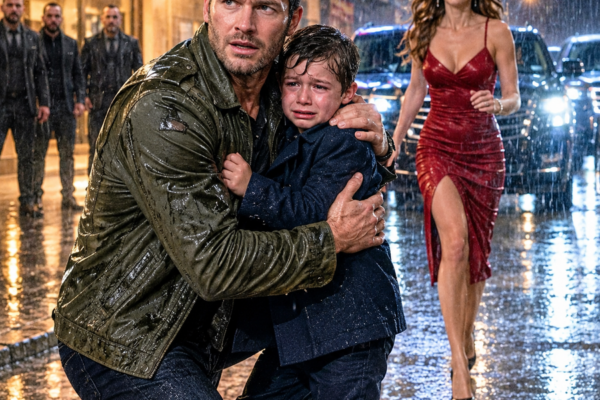
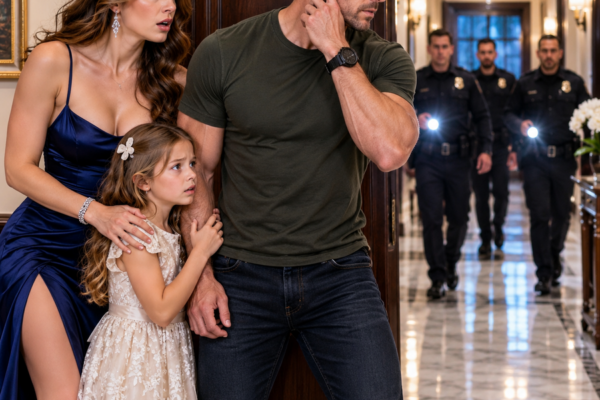
“Spies have personality. Mike’s got the personality of a filing cabinet.”
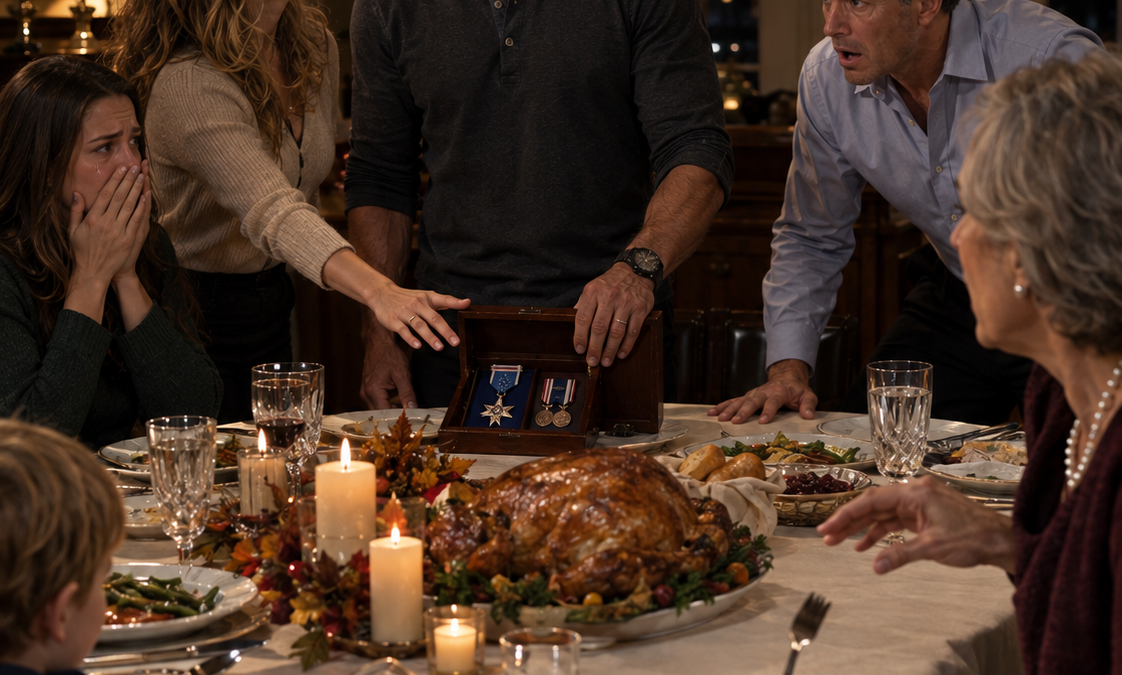
“My father-in-law called me a boring man with no stories to tell. He said it loud enough for the whole table to hear. Seventeen people. Thanksgiving. The good china. The candles his wife spent two hours arranging.”
The family thought Mike was a quiet man with nothing to say — they didn’t know he’d carried a child out of a Colombian compound, or that the folder arriving at their dinner table would expose what they’d been hiding for fifteen years.
He said it loud enough for the whole table to hear. Seventeen people. Thanksgiving. The good china. The candles his wife spent two hours arranging. And me, Michael Kessler, sitting at the end of the table like I always did, closest to the door.
He didn’t know I’d already counted the exits. I always count the exits.
“The man’s been sitting there for twenty years and I still don’t know a single thing about him,” Gerald said, fork pointed at me like a conductor’s baton. “What do you even do all day, Mike? Sit in your garage? Polish your truck?”
Laughter. Not mean laughter. Worse. The kind of laughter that comes from people who’ve decided you’re not worth being mean to.
My wife Christine’s hand found my knee under the table. A small squeeze. Sorry. That’s what it meant. Sorry my father is like this. Sorry I didn’t stop him. Sorry you have to sit here and take it.
I squeezed back. It’s fine.
My name is Michael Kessler. I’m fifty-two years old. I spent twenty-four years in the United States Navy, most of it in the SEAL teams. I was a chief petty officer when I retired. I did things I don’t talk about and went places I can’t name. I have a box in my closet with medals in it that my family has never seen.
Gerald didn’t know any of that.
None of them did.
Not really.
They knew I was “in the Navy.” They knew I retired. They knew I worked as a security consultant now, which they assumed meant I checked door locks for small businesses. They knew I was quiet, that I didn’t drink much, that I always sat near the door, that I left parties early, that I never talked about the past.
They decided that meant I had nothing to say.
What they didn’t know was that the last time someone broke into a room I was sitting in, three men died and I walked out without a scratch.
That was a long time ago.
I hoped it would stay that way.
“Leave him alone, Dad,” Christine said. Her voice was tired. She’d been saying that for two decades. “Not everyone needs to be the center of attention.”
“I’m not saying he needs to be the center of attention. I’m saying the man has no stories. Twenty years, and I’ve never heard one interesting thing come out of his mouth. Not one.”
Gerald Whitmore was seventy-four years old. He’d built a commercial real estate empire in northern Virginia. He owned strip malls and office parks and a vacation home in the Outer Banks. He measured people by their square footage and their tax brackets. His son, Derek, was a senior VP at the family company. His daughter, Christine, had married down, in his estimation, to a quiet man with a government pension and calloused hands.
“Dad,” Derek said, grinning, “maybe Mike’s got stories he can’t tell. Maybe he’s a spy.” He winked at his wife, Marcia, who giggled.
“Spies have personality,” Gerald said. “Mike’s got the personality of a filing cabinet.”
More laughter.
I cut a piece of turkey. Ate it.
The turkey was dry. It always was. Barbara, my mother-in-law, had never learned to brine.
Christine’s younger sister, Heather, was sitting across from me, next to her husband, Paul. Paul worked in finance. He was loud and liked to dominate conversations. He’d already told three stories about his golf game, two about a deal he’d closed, and one about a restaurant in Georgetown where the maître d’ knew his name.
He was watching me now. Enjoying this.
“So what’s the deal, Mike?” Paul said. “You ever gonna tell us what you did in the Navy? Or is that classified?” He said classified like it was a joke. Like I was some guy who worked in a supply depot and was pretending to be important.
“I was in the Navy,” I said. “Not much to tell.”
“See?” Gerald said, throwing his hands up. “Twenty-four years and not much to tell. I ran a business for forty years and I’ve got a story for every day of it.”
“That’s because your stories are about you,” Christine said quietly.
The table went silent.
Gerald’s face tightened. He didn’t like being challenged, especially by his daughter, especially in front of guests. His wife’s sister and her husband were there, two people from the office, Derek’s college roommate, a couple of neighbors. Seventeen people total.
“Excuse me?” Gerald said.
“You heard me,” Christine said. She was tired. I could hear it. “Every story you tell is about something you did or something you won or something you own. Mike doesn’t tell stories because he doesn’t need to be the hero of them.”
“That’s a fancy way of saying he’s got nothing to say.”
“Maybe it’s a fancy way of saying he’s secure enough not to need your approval.”
The silence stretched. Barbara cleared her throat. Derek looked at his plate.
“I’m secure,” Gerald said. “I’m just saying the man is boring. That’s not an insult. It’s an observation. Some people are boring. That’s fine. The world needs boring people.”
My wife’s jaw tightened.
I put my hand on her arm.
“It’s fine,” I said. Quiet. Calm.
She looked at me. Her eyes were wet.
“It’s not fine.”
“It’s fine.”
I meant it. It was fine. I’ve been called worse by better men. I’ve been called worse by men who were trying to kill me. Gerald Whitmore’s opinion of my personality ranked somewhere below the weather report on the list of things I cared about.
But Christine cared. That was the problem. She’d spent twenty years watching her family treat me like furniture. Like I was a chair that had been in the house so long nobody remembered buying it. Functional. Forgettable.
I didn’t care for myself.
I cared that it hurt her.
“What I don’t understand,” Paul said, leaning forward, “is how you just sit there and take it, Mike. I mean, no offense, but if my father-in-law called me boring, I’d have something to say.”
“He’s not my father,” I said.
Paul blinked.
“Excuse me?”
“He’s my father-in-law. He’s Christine’s father. He’s not mine. And he’s entitled to his opinion.”
“That’s it? That’s all you’ve got?”
“What else would I have?”
Paul sat back. Confused. He’d been trying to get a rise out of me. He’d been trying for years. It never worked.
The thing about being trained to stay calm is that it doesn’t turn off. You spend enough years learning to control your breathing, your heart rate, your reactions, and it becomes who you are. You don’t get angry when someone insults you. You don’t get defensive. You just… observe. Note it. File it. Move on.
Paul was a man who needed to win every conversation. He was insecure underneath it, but he covered it with noise. He was harmless.
Gerald was different. Gerald genuinely believed he was better than me. He’d believed it from the first day Christine brought me home, twenty-three years ago. I was thirty then, fresh out of a deployment, still carrying weight I hadn’t shed yet. I didn’t talk much. I didn’t laugh at his jokes. I didn’t ask about his business.
He decided I was a nobody.
I didn’t correct him.
I’ve never corrected anyone about that.
The truth is, I didn’t join the Navy to impress anybody. I joined because I wanted to serve. I became a SEAL because I wanted to be the best. I spent twenty-four years doing things that I will never describe to my wife or my children or the man at the head of this table who thinks I’m a filing cabinet.
Some of those things kept him safe.
He doesn’t know that.
He’ll never know that.
My daughter, Emma, was sitting next to me. She was twenty-six, a nurse at a hospital in Arlington. She had my quietness but not my patience. She’d been glaring at her grandfather for the last five minutes.
“You know what I don’t understand, Grandpa?” she said.
“Here we go,” Derek muttered.
“Grandpa, I don’t understand why you think it’s okay to insult Dad at Thanksgiving. In front of guests. In front of his own kids.”
“I’m not insulting him. I’m just saying—”
“You’re saying he’s boring. Over and over. Loud enough for everyone to hear. That’s not an observation. That’s being mean.”
Gerald’s face reddened. “I’m not being mean.”
“Yes you are. You’ve been doing it for years. Every time we get together, you find a way to remind everyone that Dad is less-than. Less successful. Less interesting. Less important. And he just sits there and takes it, and I don’t understand why.”
“Emma,” I said.
“No,” she said. “No, Dad. You always say it’s fine. It’s not fine.”
“It’s fine.”
“Why? Why is it fine?”
I looked at her. My daughter. She had Christine’s eyes and my temperament. She was fierce and loyal and she didn’t understand why I didn’t fight back.
“Because it costs me nothing,” I said. “He says what he wants to say. I know who I am. I don’t need him to know.”
“That’s crap.”
“Emma.”
“No. It’s crap. You deserve better.”
I didn’t answer. There was nothing to say.
She was right. I did deserve better. But deserving better and getting better are two different things, and I’d made peace with that a long time ago.
Derek’s college roommate, a man named Steve, was watching me with curiosity. He was the only one at the table who wasn’t laughing. He was a lawyer, I think. Or maybe a lobbyist. Something in D.C.
“So what did you do?” Steve asked. “In the Navy, I mean.”
“Various things.”
“Like what?”
“Security. Training. Logistics.”
That was true. In the broadest possible sense. I’d done security. I’d done training. I’d done logistics. I’d also done things that don’t have names. But that wasn’t what he was asking.
“Were you a SEAL?” he asked.
The table went quiet.
“Why do you ask?” I said.
“Just curious. You have that look.”
“What look?”
“Like you’re always watching the room. Like you’re counting something.”
I didn’t answer.
Gerald snorted. “Mike? A SEAL? Steve, I love you like a son, but come on. The man sells security systems to dentists.”
“I don’t sell security systems to dentists,” I said.
“He consults,” Christine said. “I don’t really know what he does. He doesn’t talk about it.”
“Because there’s nothing to talk about,” Gerald said.
“Or because it’s classified,” Steve said.
Gerald laughed. “Oh, for God’s sake. Not everything is classified. Mike, just tell us. What did you do in the Navy? Did you cook? Did you drive a boat? Did you file paperwork?”
I set my fork down.
“I was in the Navy,” I said. “I did my job. I retired. That’s the story.”
“That’s not a story,” Gerald said. “That’s a headline.”
“It’s the only one I have.”
He rolled his eyes. “See? Boring. I’ve been saying it for twenty years. The man is boring.”
And that’s when the window broke.
The sound was sharp and sudden. Glass shattering. A chair scraping. The heavy thud of something hitting the floor.
I was already moving.
I don’t think about it. I never have. When something breaks, my body reacts before my mind does. I was on my feet before the first piece of glass hit the tile. I was already three steps toward the kitchen before anyone else moved.
“Micha—” Christine started.
“Get down,” I said.
My voice was flat. Calm. Not loud. It was the voice I used when things were about to get bad. The voice that came from somewhere deep, somewhere I’d buried a long time ago.
Two men were coming through the back door.
They weren’t quiet. They weren’t professional. They were big and loud and moving fast, and one of them was holding a crowbar. They had ski masks pulled down over their faces. Blue. Cheap. The kind you buy at a sporting goods store.
I saw all of it in a second. Their weight distribution. Their posture. The way the one with the crowbar held it—like a baseball bat, not like a weapon. The other one had something in his pocket that he was reaching for.
They didn’t see me.
They saw the table full of people. They saw the china and the candles and the nice clothes. They saw an opportunity.
“Everybody down!” the one with the crowbar yelled. “Get on the floor! Now!”
People screamed. A glass broke somewhere. Someone knocked over a chair. I heard Barbara start crying.
I was already behind them.
I don’t remember deciding to move. I just did. My feet knew the path. My hands knew what to do. I came up behind the one with the crowbar and caught his wrist before he could swing. One twist and the crowbar was on the floor. Another twist and he was on the floor, face down, his arm bent behind his back at an angle that made him scream.
The second one turned toward me.
He was reaching into his pocket. I knew what was in there. I’d seen it in his eyes. A weapon. A knife or a gun, something he thought would make him dangerous.
He didn’t get the chance to use it.
I caught his arm and redirected it. His momentum carried him forward. He hit the kitchen counter hard, and I heard the air leave his lungs. I didn’t hit him. I didn’t need to. I just held him there, one hand on his wrist, one hand on the back of his neck, keeping him pinned until he stopped struggling.
“Stop,” I said. “It’s over.”
He stopped.
The whole thing took eleven seconds.
Maybe less.
When I looked up, the entire table was staring at me. Seventeen people. Frozen. Some of them were crying. Some of them had their hands over their mouths. Some of them were still on the floor, where they’d dived when the window broke.
Christine was standing by the table. Her eyes were wide.
Gerald was still in his chair. He hadn’t moved. He was gripping the armrests like he was afraid he’d fall.
“Call 911,” I said.
Nobody moved.
“Christine. Call 911.”
She blinked. Then she nodded. Then she picked up her phone.
I held the two men until the police came. They were amateurs. Opportunists. They’d been watching the house, they said later, and they figured Thanksgiving was a good night for a robbery. Rich neighborhood. Big house. Everybody distracted.
They didn’t know I’d be there.
They didn’t know about the man at the end of the table.
The police took them away. The paramedics checked everyone for cuts—the glass had sprayed across the dining room, and a few people had minor scratches. Nobody was seriously hurt.
I stood in the kitchen while it happened. Watching. Counting. I didn’t sit down. I didn’t eat. I just waited until it was over.
When the police left, the family came back to the table. The window was covered with a board. The glass was swept up. The candles were relit.
Nobody spoke.
Gerald was still in his chair. He was looking at me like he’d never seen me before.
“Mike,” he said.
“Yeah.”
“What… what was that?”
“What was what?”
“That. What you just did. You—”
He stopped. He didn’t have words.
“I handled a situation,” I said. “It’s over.”
“Handled a situation? You took down two men in—”
“Eleven seconds,” Steve said. “I timed it. Eleven seconds.”
The table was quiet.
I sat back down. I picked up my fork. My turkey was cold.
“Mike,” Christine said.
“Yeah.”
“You never told me you could do that.”
“You never asked.”
“I’ve known you for twenty-five years. I’ve never seen you—”
“You’ve never seen me need to.”
She stared at me. Her eyes were wet again.
“Who are you?” she said.
“I’m your husband.”
“That’s not what I mean.”
I set my fork down.
“I’m the same person I’ve always been,” I said. “I just don’t talk about it.”
“What do you mean, you don’t talk about it?”
I looked at her. I looked at the table. I looked at Gerald, who was still gripping the armrests, whose face had gone pale, whose hand was shaking.
“I was a SEAL,” I said. “For twenty-four years. I retired as a chief. I’ve been in situations worse than this. I don’t talk about it because there’s nothing to say. It’s not a story. It’s just what I did.”
The silence stretched.
“Bullshit,” Derek said.
I looked at him.
“Bullshit,” he said again. “You’re not a SEAL. You’re a consultant. You fix security systems. There’s no way—”
“Derek,” Christine said.
“No. I don’t believe it. He’s messing with us. He’s trying to—”
“Shut up,” Gerald said.
Derek stopped.
Gerald was looking at me. His eyes were hard to read. Something had shifted in them. Something that hadn’t been there before.
“You’re a SEAL,” he said.
“I was.”
“For twenty-four years.”
“Yes.”
“Retired as a chief.”
“Yes.”
“You never said anything.”
“I didn’t think it mattered.”
Gerald was quiet for a long time.
Then he said, “That man—the one with the crowbar—he was going to hurt someone. He was going to hurt my family. And you stopped him. In eleven seconds. And then you just… sat back down.”
“Yes.”
“Why didn’t you tell us?”
I thought about it. The question deserved a real answer.
“Because I didn’t need you to know,” I said. “I knew who I was. I didn’t need you to.”
“But you could have said something. You could have told us about your service.”
“I could have.”
“Why didn’t you?”
I looked at him. At the man who’d spent twenty years calling me boring. At the man who’d measured me by my job and my car and my clothes and found me lacking.
“Because it’s not your business,” I said. “It’s not anyone’s business. What I did, I did because I wanted to do it. Not because I wanted credit. Not because I wanted a story to tell at Thanksgiving. I did it because it needed to be done. That’s all.”
Gerald stared at me.
“You saved my family,” he said.
“I stopped two robbers. It’s not the same thing.”
“It’s exactly the same thing.”
He stood up. His legs were unsteady. He walked around the table to where I was sitting.
“Mike,” he said.
“Yeah.”
“I’m sorry.”
I nodded.
“I called you boring,” he said. “I said you had no stories. I said you were a filing cabinet.”
“You did.”
“I was wrong.”
“You weren’t entirely wrong. I am boring. I like boring. I’ve had enough excitement for one lifetime.”
He didn’t laugh. His face was still pale. His hands were still shaking.
“You saved us,” he said. “You saved my family. And I’ve been—I’ve been treating you like—”
He stopped.
“It’s fine,” I said.
“It’s not fine.”
That was the second time someone had said that to me that night.
“Gerald,” I said. “Sit down. Have some turkey. It’s Thanksgiving. We’re all okay. That’s what matters.”
He didn’t sit down. He just stood there, looking at me like he was seeing me for the first time.
“Mike,” he said. “What else haven’t you told us?”
I didn’t answer.
That’s when the front door opened.
We all turned. A woman in a dark suit stepped into the entryway. She was holding a black folder. She had credentials on her belt.
“Excuse me,” she said. “I’m looking for Michael Kessler.”
Gerald looked at me.
I stood up.
“That’s me,” I said.
She walked toward me. She handed me the folder.
“Mr. Kessler, I’m Special Agent Morales with the Naval Criminal Investigative Service. We’ve been trying to reach you for three days.”
The table went silent again.
“What’s this about?” I said.
She looked at the folder in my hand. Then she looked at me.
“Your service record,” she said. “It’s been flagged. Someone’s been trying to access it.”
I opened the folder.
Inside was a single piece of paper. A photograph. A name I hadn’t seen in fourteen years.
My heart stopped.
PART 2 — THE FOLDER
The photograph was old.
Twelve years old, maybe thirteen. It showed four men in desert camouflage, standing in front of a concrete wall. No unit patches. No insignia. Just four men who looked tired and dirty and alive.
I was one of them.
The other three were Marcus Webb, Danny Okafor, and a man named Victor Reyes.
I hadn’t seen Victor Reyes in fourteen years.
“Mr. Kessler,” Agent Morales said. “Is there somewhere we can talk?”
I closed the folder.
“Here is fine.”
She glanced at the table. Seventeen people, all staring. Christine. Emma. Gerald. Derek. Paul. Everyone.
“This is a family matter,” she said. “Perhaps—”
“Here is fine,” I said again.
She nodded. She was professional. Late thirties, maybe forty. Dark hair pulled back. The kind of eyes that had seen too much and learned to hide it.
“Someone’s been trying to access your service record,” she said. “For the past three weeks. They’ve been using a compromised credential from a naval database. We caught it yesterday.”
“Who?”
“We don’t know yet. The credential belonged to a logistics officer who retired six years ago. He’s dead. His account should have been deactivated. Someone reactivated it.”
“Why?”
“That’s what we’re trying to find out.”
I looked at the photograph again. Victor Reyes. He was standing on the left, next to me. He was smiling. He always smiled. Even when things were bad, he smiled. It was the thing I remembered most about him.
“What does this have to do with Victor?” I asked.
“Victor Reyes was killed two weeks ago,” Morales said. “In San Diego. It was ruled a car accident. We’re not so sure.”
The room was quiet. Nobody moved.
“Killed,” I said.
“Yes.”
“How?”
“His car went off a bridge. No witnesses. No skid marks. Single-vehicle accident, according to the report.”
“And you don’t believe it.”
“We don’t believe it.”
I set the folder on the table. I kept my hand on it. I didn’t sit down.
“Victor was a SEAL,” I said. “He retired eight years ago. He ran a gym in Coronado. He had a wife and two kids. He wasn’t involved in anything.”
“That’s what his wife said.”
“She’s alive?”
“Yes. She’s the one who called us. She said Victor had been getting strange phone calls for weeks before he died. He wouldn’t tell her what they were about. He just said he was handling it.”
I felt something cold settle in my chest.
“Handling what?”
“We don’t know. That’s why I’m here. You were on his team. You were the last person he listed as an emergency contact. His wife said you two hadn’t spoken in years, but he never changed it.”
I looked at the photograph. Four men. Desert camouflage. Tired. Alive.
Marcus was dead. He’d died six years ago, a heart attack, forty-eight years old. Danny was in Montana, raising horses, off the grid. Victor was dead, and now someone was trying to access my service record.
“What aren’t you telling me?” I said.
Morales met my eyes.
“Mr. Kessler, the men who tried to access your record weren’t just looking for your file. They were looking for anyone who served with you. We’ve flagged three other records. All from your platoon. All accessed within the last month.”
“Why?”
“We don’t know.”
“Who else?”
“Marcus Webb.”
“He’s dead.”
“We know. Someone accessed his file anyway.”
I let go of the folder. I put my hands on the table. I looked at the photograph.
“Somebody’s cleaning up,” I said.
“That’s our theory.”
“Cleaning up what?”
“That’s what we’re trying to find out. And that’s why I’m here. We think you might be a target.”
Christine stood up.
“A target?” she said. “What does that mean?”
“Ma’am, I’m sorry. I can’t say more.”
“A target?” she said again. “Someone wants to hurt my husband?”
“We don’t know that. But we’re concerned. Your husband’s name came up in a file that was accessed by someone who shouldn’t have had access. That’s all we know.”
“This is insane,” Derek said. “This is—this is some kind of mistake. Mike’s a consultant. He’s not—he’s not—”
“He’s a former SEAL,” Morales said. “And someone is looking for former SEALs from his unit. That’s all we know.”
Derek shut up.
I looked at Morales.
“Where’s Victor’s wife?” I asked.
“San Diego. She’s under protection.”
“She knows I’m coming?”
“She asked for you.”
I nodded.
Christine grabbed my arm.
“Michael,” she said. “You can’t—”
“I can.”
“You can’t just go to San Diego. There are people looking for you. There are people who might want to hurt you.”
“I know.”
“Then why—”
“Because Victor was my friend,” I said. “And someone killed him.”
She stared at me.
“You don’t know that.”
“Morales does.”
Morales nodded. She didn’t say anything.
“Victor was one of us,” I said. “He was one of the best men I ever knew. If somebody killed him, I need to know why.”
“Michael—”
“Christine.”
She stopped. Her eyes were wet. Her hand was still on my arm.
“You just got back,” she said. “You’ve been—you’ve been sitting at that table for twenty years, and now—”
“Now I have to go.”
“Now you have to go,” she repeated.
“I’m sorry.”
She let go of my arm. She stepped back. She looked at me like she was seeing me for the first time.
“Who are you?” she said.
“I’m your husband.”
“That’s not what I mean.”
“I know.”
I picked up the folder. I looked at Morales.
“Give me an hour,” I said.
“To do what?”
“To pack.”
She nodded.
“I’ll be outside,” she said.
She left. The door closed behind her.
The room was silent.
Gerald was the first one to speak.
“Mike,” he said.
“Yeah.”
“Are you in trouble?”
“I don’t know.”
“Are you—are you going to be okay?”
I looked at him. His face was pale. His hands were shaking. He looked like a man who’d just learned that the furniture had been a person the whole time.
“I’ve been okay before,” I said.
“That’s not an answer.”
“It’s the only one I have.”
I walked out of the dining room. I went upstairs. I went to the closet.
At the back, behind Christine’s coats and my old jackets, there was a black duffel bag. I hadn’t opened it in eight years.
I pulled it out.
Inside was a pair of boots. A knife. A satellite phone I’d never used. A set of dog tags. And a small wooden box.
I opened the box.
Medals. A Silver Star. Two Bronze Stars. A Purple Heart.
Christine had never seen them.
I’d never shown her.
I put the box in the duffel. I zipped it up. I carried it downstairs.
When I got back to the dining room, everybody was still there. Nobody had eaten. Nobody had moved.
Emma stood up.
“Dad,” she said.
“Yeah.”
“I’m coming with you.”
“No.”
“Dad—”
“No. You’re staying here. You’re staying with your mother.”
“But—”
“Emma.”
She stopped. She looked at me. Her jaw was set. She had my stubbornness.
“You’re not going alone,” she said.
“I’m not alone. I’ll have Morales. And I’ll have the people I served with. That’s enough.”
“The people you served with?”
“Victor was one of them. There are others.”
“How many others?”
“Enough.”
She didn’t look convinced. But she sat down.
I looked at Christine. She was standing by the table. Her arms were crossed. Her face was unreadable.
“Michael,” she said.
“Yeah.”
“Come back.”
“I will.”
“Promise me.”
“I promise.”
She nodded. She didn’t say anything else. She didn’t need to.
I walked to the door. I stopped.
“Gerald,” I said.
He looked up.
“Yeah?”
“The dry turkey,” I said. “Add salt to the water before you brine it. It’ll help.”
He stared at me.
Then he laughed. A short, surprised laugh. The kind of laugh that comes when you don’t expect to laugh.
“I’ll remember that,” he said.
I nodded.
I walked out the door.
Morales was waiting in a black SUV. She opened the passenger door.
“Get in,” she said.
I got in.
She pulled out of the driveway. She didn’t say anything for a long time.
“You handled that well,” she said finally.
“I’ve had practice.”
“At what?”
“At being underestimated.”
She glanced at me.
“I read your file,” she said.
“Which one?”
“The one that was accessed. The real one.”
“Then you know.”
“I know you were in a lot of places you shouldn’t have been. I know you did things that aren’t in the public record. I know you were awarded a Silver Star for something that’s still classified.”
“Then you know more than my family does.”
“Your family doesn’t know?”
“No.”
“Why not?”
I looked out the window. The houses were passing by. Big houses. Bright lights. Thanksgiving dinners.
“Because it’s not their business,” I said.
“That’s not an answer.”
“It’s the only one I have.”
She drove. The highway was dark. The lights of the city were behind us.
“Where are we going?” I asked.
“Andrews Air Force Base. There’s a plane waiting.”
“A plane?”
“A military flight. It’s the fastest way to get you to San Diego.”
“Who arranged that?”
“Your file was flagged. Somebody up the chain saw your name and made some calls.”
“Who?”
“I don’t know. The orders came from high enough that I didn’t ask.”
I nodded.
We drove in silence for a while. Then she said, “Your father-in-law. The man at the table. He called you boring.”
“He did.”
“And you just sat there.”
“I did.”
“Why?”
“Because I’ve been called worse.”
She glanced at me again.
“You’re not what I expected,” she said.
“What did you expect?”
“I don’t know. A SEAL. A Silver Star. I expected… I don’t know. Something different.”
“I’m just a man who did a job.”
“Most men who did that job don’t sit quietly while someone calls them boring.”
“I’m not most men.”
She smiled. Just a little.
“No,” she said. “You’re not.”
We drove.
The highway was dark. The city was behind us. Ahead of us was a plane and a dead friend and a question I couldn’t answer.
The folder was on my lap. The photograph was in my hand.
Four men. Desert camouflage. Tired. Alive.
Now two of them were dead. One was in Montana. And one was in a car on the way to San Diego.
Victor was dead.
Somebody had killed him.
And somebody was looking for me.
I looked at the photograph.
I looked at Victor’s smile.
“I’m coming,” I said quietly.
Morales didn’t ask who I was talking to. She just drove.
PART 3 — THE FLIGHT
The plane was a C-130.
I’d flown in worse.
Morales walked me through the terminal. The base was quiet, the way all bases are at night. Floodlights on tarmac. A few airmen moving with purpose. Nobody looked at me twice.
“Your seat’s in the back,” she said. “It’s not comfortable.”
“I’ve slept in worse.”
“On a C-130?”
“On a rock in Afghanistan.”
She didn’t ask more.
We boarded. The plane was mostly empty. A few pallets of cargo strapped to the floor. A crew chief who nodded at me and didn’t ask questions. Morales sat across from me, her folder on her lap.
“You want to tell me what you know?” I said.
“I told you what I know.”
“You told me what you’re allowed to tell me. What do you actually know?”
She looked at me for a long moment.
“Victor Reyes was working on something,” she said. “We don’t know what. He’d been in contact with someone in D.C. for the past six months. We found emails on his laptop. Encrypted. We can’t read them.”
“Who was he talking to?”
“We don’t know. The emails came from a burner account. No name. No trace.”
“What else?”
“His gym. He ran a gym in Coronado. He trained SEALs. Active duty, retired, guys getting ready for selection. It was a good business. Respected. Nobody had a bad word to say about him.”
“Except someone killed him.”
“Except someone killed him.”
The plane took off. The engines were loud. I leaned back against the cargo netting and closed my eyes.
I didn’t sleep. I just rested. There’s a difference.
I thought about Victor.
We’d met in 2006. We were both in the same platoon. Third SEAL Team, though we deployed with a task force that didn’t have a name. He was younger than me by four years. The son of Mexican immigrants. Grew up in El Paso. Joined the Navy at eighteen because he wanted to be a frogman. He was fast, smart, and he never stopped smiling.
Even when things were bad.
Even when we were in places we shouldn’t have been, doing things we shouldn’t have done.
He smiled.
I remembered one night. A compound in the mountains. We were pinned down. Two of us were hit. Victor was the one who kept his head. He laid down fire, called in the medevac, and got us out. He got a Bronze Star for it. He never talked about it.
That was Victor.
The plane landed at Naval Air Station North Island at 2:14 AM.
Morales had a car waiting. We drove through Coronado. Quiet streets. Expensive houses. The ocean somewhere to our left.
Victor’s gym was called Third Wave Fitness. It was on a side street off Orange Avenue. I’d never been there. I’d meant to visit. I’d always been busy.
The gym was dark. Yellow tape across the door. A police seal.
“His wife’s at a safe house,” Morales said. “We’re going there now.”
We drove north. The houses got smaller. The streets got darker. We stopped at a duplex in Imperial Beach. A plainclothes officer stood outside. He nodded at Morales and let us in.
The living room was small. A couch. A TV. A picture of Victor and his wife on the wall. Their wedding day. They looked happy.
She was sitting on the couch.
Her name was Elena. She was forty-one years old. Dark hair. Dark eyes. The kind of eyes that had been crying for two weeks and hadn’t stopped.
She stood up when I walked in.
“You’re Michael,” she said.
“I am.”
“Victor talked about you. He said you were the best man he ever served with.”
I didn’t answer. There was nothing to say.
She sat back down. I sat across from her. Morales stayed by the door.
“He was scared,” Elena said. “For the last month. He didn’t tell me why. He just said he had to take care of something. Something from a long time ago.”
“What did he mean?”
“I don’t know. He wouldn’t tell me. He said it was better if I didn’t know.”
“Did he say anything else?”
“He said he’d made a mistake. A long time ago. And now someone was paying for it.”
“A mistake?”
“He wouldn’t tell me what. He just said he’d done something he shouldn’t have. And now it was coming back.”
I looked at Morales. She was watching Elena with a careful expression.
“Mrs. Reyes,” I said. “Did Victor ever mention a man named Marcus Webb?”
She nodded. “Marcus. He died a few years ago. Heart attack.”
“Yes.”
“He was Victor’s friend. From the teams. Victor went to his funeral.”
“Did he mention anyone else? Danny Okafor?”
“Yes. Danny. He’s in Montana now. Victor talked to him sometimes.”
“When was the last time?”
“A few months ago. Maybe longer. He said Danny was worried about something.”
“What?”
“I don’t know. He didn’t say.”
Morales stepped forward.
“Mrs. Reyes, did your husband have any documents? Anything he kept at home? A safe deposit box? A storage unit?”
Elena shook her head.
“He had a locker at the gym. But the police already searched it.”
“What did they find?”
“Nothing. Just clothes. Some old photos. A letter.”
“A letter?”
“From a man named Reyes. But not Victor. Someone else.”
Morales and I looked at each other.
“Where’s the letter now?” Morales asked.
“The police took it.”
“Do you know what it said?”
“No. Victor never showed me. But he said it was important. He said it was the reason for everything.”
Morales pulled out her phone. She stepped into the other room.
I stayed with Elena.
“Mrs. Reyes,” I said. “I’m going to find out who did this.”
She looked at me. Her eyes were wet.
“How?”
“I don’t know yet. But I will.”
“Victor said you were the one who always figured things out. He said you saw things other people didn’t.”
“He was kind.”
“He wasn’t kind. He was honest.”
I nodded.
Morales came back.
“The letter’s in evidence,” she said. “We’re going to pull it. But it’s going to take a day.”
“A day is too long.”
“I know. But it’s the best I can do.”
I stood up.
“Mrs. Reyes,” I said. “Do you have a car?”
“Victor’s truck is in the garage. I can’t drive it. It’s too big.”
“Can I borrow it?”
She looked at Morales. Morales nodded.
“Yes,” Elena said. “The keys are on the hook by the door.”
I took the keys.
“Where are you going?” Morales asked.
“To the gym.”
“It’s sealed.”
“I know.”
“Mr. Kessler—”
“I need to see where he died,” I said. “Not where he was killed. Where he worked. Where he spent his days. There’s something there. Something the police missed.”
“How do you know?”
“Because I know Victor. And I know what kind of man he was. If he was scared, he left something behind. He wouldn’t just wait to be killed.”
Morales stared at me.
“You’re not going to wait for the letter?”
“No.”
“That’s obstruction.”
“I’m not obstructing. I’m investigating. You can come with me or you can stay here.”
She sighed.
“I’ll come with you,” she said.
Victor’s truck was a black Ford F-150. It smelled like gym clothes and coffee. There was a photo taped to the dashboard. Victor and Elena and their two kids at Disneyland. Everybody was smiling.
I drove. Morales sat in the passenger seat.
“Third Wave Fitness,” she said. “You really think there’s something there?”
“I think Victor was a SEAL for twenty years. He knew how to hide things.”
“From the police?”
“From anyone.”
We parked across the street from the gym. The yellow tape was still there. The police seal was still on the door.
I got out. I walked around the building. Morales followed.
The gym was in a strip mall. A martial arts studio on one side. A juice bar on the other. Behind the building, there was an alley. A dumpster. A back door.
I stopped at the back door.
“What?” Morales said.
“Victor was a SEAL,” I said. “He would have a secondary exit. A way out if things went bad.”
“It’s a gym. Not a safe house.”
“He ran a gym that trained SEALs. He knew the kind of people who might come looking for him.”
I tried the door. Locked. But the lock was old. A basic deadbolt. I could have picked it in thirty seconds.
I didn’t have a pick. But I had a knife.
I took it out of my pocket. A small folding knife. I worked the blade into the doorframe and popped the latch. The door swung open.
Morales stared at me.
“That’s breaking and entering,” she said.
“It’s Victor’s gym. He gave me a key.”
“He didn’t give you a key.”
“He would have.”
She didn’t argue.
We went inside.
The gym was dark. Mats on the floor. Kettlebells on racks. A heavy bag in the corner. Pictures on the wall. Men in camouflage. Men in gym clothes. Men who looked hard and tired and proud.
Victor was in almost all of them.
“He kept pictures,” Morales said.
“He was proud of the teams. He was proud of what he did.”
“He never talked about it?”
“Not to outsiders. But in here, with his guys, he would have talked.”
I walked through the gym. I looked at everything. The office in the back. The lockers. The shower room. The storage closet.
I stopped at the storage closet.
“What?” Morales said.
“The door’s different.”
“Different how?”
“The lock. It’s new. A keypad. Not a deadbolt.”
“So?”
“So Victor didn’t put a keypad on a storage closet. There’s nothing in there worth locking up. Unless there’s something he wanted to protect.”
I looked at the keypad. A standard four-digit model. I thought about Victor. What number would he use?
I tried 1-9-8-4. The year he joined the Navy.
Nothing.
I tried 0-7-1-2. The date he graduated BUD/S.
Nothing.
I tried 1-2-2-5. Christmas. The day he married Elena.
The lock clicked.
Morales stared at me.
“How did you know?”
“Because he was sentimental,” I said. “And he loved his wife.”
I opened the door.
Inside was a small room. A desk. A chair. A metal filing cabinet. And on the wall, a map of the world with pushpins in it.
Red pushpins. Blue pushpins. Yellow pushpins.
Places we’d been. Operations we’d run. Things we’d done.
I looked at the map. I looked at the pins.
There was one pin that didn’t fit. A red pin in a place we’d never operated. A place that wasn’t on any mission list.
“Morales,” I said.
“What?”
“Look at this.”
She came over. She looked at the map.
“What is that?” she said.
“I don’t know. But Victor marked it.”
“Where is it?”
I looked at the location. A small town in the mountains of Colombia. A place that didn’t exist on any map I’d ever seen.
“That’s not on any mission list I know of,” I said.
“Then why did he mark it?”
“I don’t know.”
I looked at the desk. There was a notebook. A small, leather-bound notebook. I opened it.
Pages and pages of names. Dates. Places. Some of them I recognized. Some I didn’t.
And on the last page, written in Victor’s handwriting, a single sentence.
“If anything happens to me, find the boy.”
I closed the notebook.
Morales was reading over my shoulder.
“The boy?” she said. “What boy?”
“I don’t know.”
I looked at the map again. The red pin in Colombia. The notebook in my hand. The sentence on the last page.
Victor had been scared. He’d been looking for something. Someone.
The boy.
“Morales,” I said.
“Yeah.”
“I need to make a call.”
“To who?”
“A friend.”
I pulled out my phone. I dialed a number I hadn’t dialed in eight years.
It rang twice.
“Okafor,” a voice said.
“Danny,” I said. “It’s Mike.”
Silence.
Then: “Mike? Mike Kessler?”
“Yeah.”
“Holy shit.”
“I need your help.”
“What’s wrong?”
“Victor’s dead.”
Silence again. Longer this time.
“I know,” Danny said. “I heard.”
“He was looking for something. A boy. In Colombia. Do you know anything about that?”
The line was quiet. I could hear Danny breathing.
“Danny?”
“I know about the boy,” he said. “I told him not to look. I told him it was too dangerous.”
“Who is he?”
“He’s the reason we’re all in danger,” Danny said. “And if you’re asking about him, you’re already in it.”
“Then tell me what I need to know.”
“You need to get out of San Diego. Tonight. Before they find you.”
“Who’s they?”
“The men who killed Victor. They’re not done.”
I looked at Morales. She was watching me.
“Danny,” I said. “I need to know what Victor was into.”
“Not on the phone. Where are you?”
“San Diego.”
“Go to Montana. Come to the ranch. I’ll tell you everything.”
“How long will that take?”
“Two days if you drive. One if you fly.”
“I don’t have one day.”
“You don’t have a choice.”
I looked at the map. The red pin. The notebook. The sentence.
“Fine,” I said. “I’ll come.”
“Hurry,” Danny said. “And Mike—”
“Yeah.”
“Watch your back. They know who you are.”
He hung up.
I put the phone in my pocket.
“Who was that?” Morales asked.
“Danny Okafor. He’s in Montana. He knows something.”
“And?”
“And I need to get to Montana.”
“That’s not my call.”
“I know. But you’re the one with the plane.”
She sighed. She looked at the map. She looked at the notebook in my hand.
“What did he mean? They know who you are?”
“I don’t know.”
“Mr. Kessler—”
“Call me Mike.”
“Mike. I need you to tell me what’s going on.”
“I don’t know what’s going on. That’s the problem. But I know Victor was scared. I know he was looking for a boy. And I know Danny knows something. That’s all I have.”
“That’s not enough.”
“It’s what I’ve got.”
She stared at me. Then she pulled out her phone.
“I’ll make some calls,” she said.
She stepped outside.
I stood in Victor’s secret room. I looked at the map. The red pin. The notebook.
“If anything happens to me, find the boy.”
I closed my eyes.
“I’m trying, Victor,” I said. “I’m trying.”
The night was quiet. The gym was dark. Somewhere in Montana, Danny Okafor was waiting.
And somewhere else, the men who killed Victor were looking for me.
 [Tap here for the Next Part ]