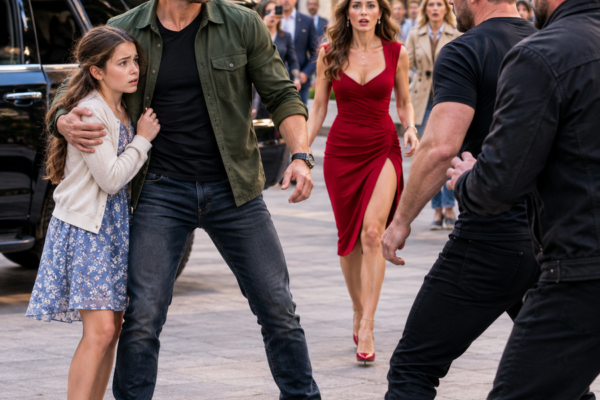
“You stopped being my mother-in-law the day you started stealing from me.”
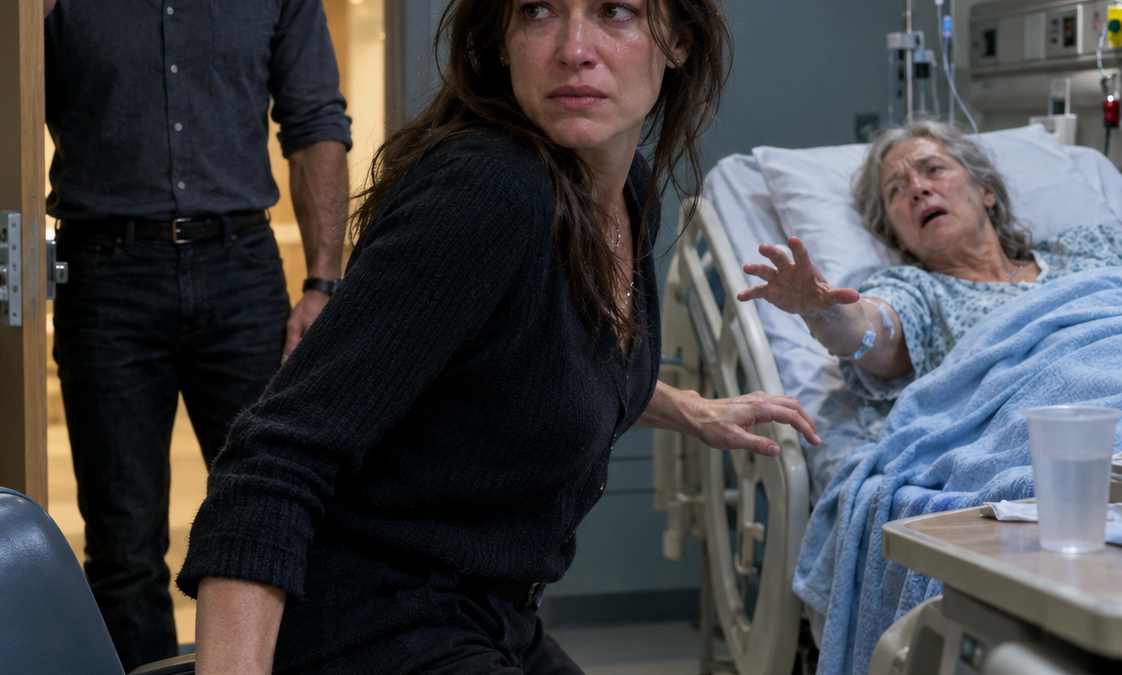
“The mailbox was empty. I checked it twice. Same result both times. The little red flag was down. The door creaked open on its rusty hinge and showed me nothing but a spiderweb and a dried leaf from last fall.”
Margaret Holt thought she could erase her son-in-law from her daughter’s life by stealing their letters and their money — instead, the shoebox under her stairs became the evidence that sent her to federal prison and gave the couple back everything she tried to destroy.
I checked it twice. Same result both times. The little red flag was down. The door creaked open on its rusty hinge and showed me nothing but a spiderweb and a dried leaf from last fall.
I stood there on the porch of my mother-in-law’s house with my duffel bag still on my shoulder and my dress uniform still smelling like the inside of a C-17, and I felt something in my chest go loose and cold.
Fourteen months.
Fourteen months of writing my wife every Sunday. Every single Sunday. Sometimes Wednesdays too, if the patrol schedule let me steal twenty minutes with a pen and a pad of paper under a poncho liner.
And in fourteen months, not one letter back.
Not one.
I told myself it was the mail. I told myself it was the military postal system, which is slow on the best day and hopeless on the worst. I told myself Elena was busy with work, with her mother, with the house. I told myself a lot of things.
What I didn’t know was that every letter I wrote — every single one, all fifty-six of them — was sitting in a shoebox under the stairs of the house I was standing in front of.
What I didn’t know was that Elena had written me back. Every week. Sometimes twice a week. Fifty-eight letters, in her neat small handwriting, addressed to Sergeant Daniel Mercer, 7th Special Forces Group, APO AE.
What I didn’t know was that her mother had intercepted every single one.
My name is Daniel Mercer. I was thirty-four years old when I came home from Afghanistan and found out that my marriage had been murdered by a woman who smiled at me every Thanksgiving and called me “Danny boy.”
I’m a former U.S. Army Special Forces soldier. Green Beret. 7th Group, out of Eglin. I spent eleven years in uniform, four deployments, and more nights in the mountains of Kunar Province than I care to count.
I’ve been shot at. I’ve been blown up. I’ve carried a dying teammate down a rock face with one arm.
None of that prepared me for what was waiting in that mailbox.
Or rather, what wasn’t.
The front door opened before I could knock.
“Daniel.”
Margaret Holt stood in the doorway with her arms crossed and her mouth set in that thin line she used when she was about to say something she’d rehearsed. She was sixty-two years old, silver-haired, and dressed like she was going to a garden party even though it was a Tuesday afternoon in November.
“Mrs. Holt.”
“You’re early.”
“Flight got in early.”
She didn’t invite me in. She just stood there, blocking the doorway with her body, like I was a salesman she was trying to get rid of.
“Elena isn’t here.”
“I know. She’s at work. I wanted to surprise her.”
That thin line got thinner.
“She’s been doing well, Daniel. Really well. She’s got a good job now. She’s been promoted twice since you left. She’s been… moving on.”
Moving on.
The words hit me somewhere below the ribs.
“What does that mean?”
“It means what it means.”
“Mrs. Holt, I’ve been writing to her every week for fourteen months. She hasn’t written back once. Not once. I’m not here to cause trouble. I just want to see my wife.”
Something flickered across her face. Something quick. Something I would have missed if I hadn’t spent eleven years learning to read faces in places where the wrong read gets you killed.
It was satisfaction.
Just for a second.
Then it was gone.
“I don’t know anything about letters,” she said. “Elena doesn’t talk to me about that sort of thing.”
That was the first lie.
I didn’t know it yet. But I felt it. The way you feel a tripwire before you see it.
Let me back up.
I met Elena Holt seven years ago at a hardware store in Fort Walton Beach. She was buying paint for her apartment. I was buying a new lock for my storage unit. We reached for the same can of WD-40 at the same time and her hand touched mine and she laughed.
She had the kind of laugh that made you want to say something funny just to hear it again.
She was a schoolteacher then. Third grade. She had this way of explaining things that made you feel like you were the only person in the room. She was smart. She was kind. She was nothing like the women I’d dated before, the ones who wanted to know about the danger and the excitement and got bored when they realized most of the job is waiting.
Elena wanted to know about me.
Not the uniform. Not the deployments. Me.
What I liked to eat. What I dreamed about. What I wanted my life to look like when I finally hung up the boots.
We got married eighteen months later. Small ceremony. Her mother cried. Her father shook my hand and said, “Take care of my girl.”
I said, “Yes, sir. With my life.”
I meant it.
I still mean it.
Margaret Holt never liked me.
She was polite about it. She was always polite. That was her weapon. She’d smile and say something that sounded like a compliment and leave you feeling like you’d been slapped.
“Oh, Danny, it’s so brave of you to serve. I could never do something so… physical.”
“He’s a Green Beret, Mom,” Elena would say. “He’s a soldier.”
“Yes, dear. I know. I just mean it’s not exactly a career that requires a college degree, is it?”
That kind of thing.
Margaret came from money. Old money, or what passes for it in the Panhandle. Her father had been a bank president. Her first husband — Elena’s father — had been a lawyer. She’d spent her whole life around people who wore suits and talked about portfolios and sent their kids to private schools.
And then her daughter married a soldier.
A sergeant.
A man who worked with his hands and slept in the dirt and couldn’t talk about what he did for a living.
It wasn’t that she hated me. It was worse than that. She thought I was beneath her. Beneath Elena. A mistake that her daughter would eventually outgrow.
She never said that. Not directly. But I heard it in every “Danny boy” and every “how… interesting” and every time she changed the subject when someone asked about my career.
Elena defended me. Every time. She’d squeeze my hand under the table and say, “Mom, Danny’s done more for this country than anyone in this room.”
And Margaret would smile and say, “Of course he has, dear.”
And that would be that.
Before I deployed, Elena and I had a fight.
Not a real fight. Not the kind where you say things you can’t take back. Just… a tension. A thing neither of us wanted to name.
“I don’t want you to go,” she said.
“I know.”
“I hate this.”
“I know.”
She was standing in our kitchen with her back against the counter and her arms wrapped around herself like she was cold, even though it was July and the air conditioning was broken.
“What if something happens to you?”
“Nothing’s going to happen to me.”
“You don’t know that.”
“No. I don’t.”
She started crying.
I held her. I didn’t say anything. There was nothing to say. I’d been to Afghanistan three times already. I knew what could happen. I knew the odds better than she did.
“I’ll write you every week,” I said. “Every Sunday. I promise.”
“You better.”
“I will.”
She looked up at me with those eyes, the ones that made me feel like I was the luckiest man on earth, and she said: “I’ll write you back. Every week. Even if it’s just a postcard. I’ll write you back.”
“You better,” I said.
She laughed.
It was the last time I heard her laugh for fourteen months.
The first month was fine.
I wrote her from Bagram. From a forward operating base in Kunar. From a mud-walled compound in the middle of nowhere with a satellite phone that worked once a week if the weather was right.
She didn’t write back.
I told myself it was the mail. The military postal system is a joke. Letters take weeks. Sometimes months. Sometimes they never arrive at all.
The second month, I started to worry.
I wrote her again. Longer this time. Told her about the guys, about the mission, about the little Afghan kid who’d adopted our team and followed us around like a puppy. I told her I missed her. I told her I loved her. I told her I was counting the days.
She didn’t write back.
The third month, I called.
The satellite phone connection was garbage. I could barely hear her. But I could hear enough.
“Danny? Danny, is that you?”
“Yeah, baby. It’s me.”
“Oh my God. Oh my God, I’ve been so worried.”
“Worried? Why? I’ve been writing you every week.”
The line crackled.
“What? I can’t— Danny, you’re breaking up.”
“I said I’ve been writing—”
“I can’t hear you. Danny, I can’t hear you. Call me back. Call me back when you—”
The line went dead.
I called back three times. Never got through.
The fourth month, I started to wonder if she was getting my letters at all.
The fifth month, I stopped wondering and started to accept.
Maybe she’d moved on. Maybe she’d met someone else. Maybe she’d realized that being married to a soldier wasn’t the life she wanted.
I didn’t blame her. I couldn’t. I’d known what I was asking when I married her. I’d known the cost.
But it hurt.
God, it hurt.
I didn’t stop writing.
Every Sunday. Every week. Fifty-six letters over fourteen months. I wrote about everything. The mission. The guys. The dreams I had about her. The things I wanted to do when I got home. The house we were going to buy. The kids we were going to have.
I wrote like she was reading every word.
I wrote like she was writing back.
I wrote because it was the only thing keeping me sane.
And when I came home, when my boots finally hit American soil and I got on that plane to Florida, I thought maybe — maybe — there was a chance.
Maybe the mail was just broken.
Maybe she’d been writing too.
Maybe we could fix this.
I got to Margaret’s house at 2:15 in the afternoon.
By 2:20, I knew something was wrong.
“Where’s Elena?”
“I told you. She’s at work.”
“Where does she work?”
Margaret’s eyes narrowed.
“Why do you want to know?”
“Because she’s my wife. And I want to see her.”
“She’s moved on, Daniel. I told you that.”
“Moved on where?”
She didn’t answer.
I stood there on the porch with my duffel bag and my dress uniform and my heart in my throat, and I realized something.
Margaret wasn’t just being cold. She was blocking me. She was standing in that doorway like a gatekeeper, like she was protecting something.
Or hiding something.
“Mrs. Holt,” I said. “I’m going to ask you one more time. Where is my wife?”
She looked at me for a long moment.
Then she smiled.
That thin, polite, knife-edged smile she’d been giving me for seven years.
“She’s at the school, Daniel. The elementary school on Pelham Road. She teaches third grade.”
I turned and walked back to my truck.
I didn’t see the way her smile dropped when I turned my back.
I didn’t see the way she looked toward the stairs, toward the basement door, toward the place where fifty-eight letters sat in a shoebox under the stairs.
But I felt it.
The way you feel a tripwire.
Right before it goes off.
PART 2 — THE SCHOOL
Pelham Road Elementary was a low brick building with a flagpole out front and a chain-link fence around the playground. It looked like every other elementary school in America. Flat roof. Painted lines on the blacktop. A sign that said WELCOME WILDCATS in peeling blue letters.
I parked my truck in the visitor lot and sat there for a minute.
My hands were shaking.
That embarrassed me. I’d walked through ambushes without my hands shaking. I’d cleared rooms in the dark with my heart rate under sixty. But sitting in a Ford F-150 in front of an elementary school in Niceville, Florida, I couldn’t get my hands to stop trembling.
I kept telling myself it was just adrenaline. Just nerves. Just the letdown of coming home after fourteen months and finding the woman I loved wasn’t waiting at the door.
I told myself she’d be happy to see me.
I told myself she’d throw her arms around my neck and cry and tell me she’d missed me every single day.
I told myself a lot of things.
The front office smelled like crayons and hand sanitizer.
A woman behind the counter looked up from her computer. She was maybe fifty, with reading glasses on a chain and a cardigan covered in little embroidered pumpkins.
“Can I help you?”
“I’m looking for Elena Mercer. She teaches third grade.”
The woman’s face did something complicated. A flicker of recognition, then confusion, then a careful blankness.
“Elena Holt?”
Holt.
Not Mercer.
That hit me harder than it should have.
“Yeah,” I said. “Elena Holt. Though her name’s Elena Mercer. She’s my wife.”
The woman’s eyebrows went up.
“Your wife?”
“Yes, ma’am.”
She looked at my uniform. At the ribbons on my chest. At the green beret tucked under my arm.
“You’re… you’re the soldier?”
“I’m her husband.”
She was quiet for a moment. Then she picked up the phone.
“Let me just… let me call down to her classroom.”
I heard her before I saw her.
The hallway was long and polished and lined with construction-paper turkeys. I stood outside room 108 with my cap in my hands and listened to the sound of twenty-two eight-year-olds singing something about Thanksgiving.
And then a voice I’d been hearing in my head for fourteen months.
“Okay, okay, settle down. Everyone find their seat. Marcus, that’s not your seat. Marcus. Marcus. Yes, that’s your seat.”
I closed my eyes.
She sounded exactly the same. The same lilt. The same affectionate exasperation. The same way of saying a name twice when a kid wasn’t listening.
The door opened.
Elena stood there with a dry-erase marker in her hand and a cardigan the color of rust, her dark hair pulled back in a clip, her eyes going wide as she saw me standing in the hallway.
“Danny?”
“Hey, baby.”
She didn’t move.
She just stood there in the doorway with the marker in her hand and her mouth half-open, staring at me like she was seeing a ghost.
“You’re… you’re here.”
“I’m here.”
“You’re supposed to be— they said— the deployment was extended. They said you weren’t coming back until January.”
“Got back early. Didn’t tell anyone. Wanted to surprise you.”
She blinked.
“January,” she said again. “They told me January.”
Something cold started to coil in my stomach.
“Who told you January?”
“My mom. She said she got a call from the unit. She said they extended you through the holidays.”
I hadn’t told anyone January.
My deployment had ended on schedule. On time. To the day.
Margaret had made that up.
Elena got a substitute for the rest of the afternoon.
We sat in her empty classroom with the construction-paper turkeys and the tiny chairs and the smell of crayons, and neither of us knew where to start.
“You look different,” she said.
“So do you.”
“I look tired. That’s not the same thing.”
“You look beautiful.”
She laughed. But it wasn’t the laugh I remembered. It was thin. Brittle. Like paper about to tear.
“Danny,” she said. “Why didn’t you write me?”
The room went very quiet.
“What?”
“Fourteen months. I checked the mail every single day. Every day. I called the unit. I called the Red Cross. I called everyone I could think of. And nothing. Not one letter.”
I stared at her.
“Elena. I wrote you every week.”
She shook her head.
“No. No, you didn’t. I would have gotten them. I would have—”
“I wrote you every Sunday. Fifty-six letters. I have the dates in my journal. I wrote you from Bagram, from Kunar, from a mud hut in the middle of nowhere. I wrote you so many letters the supply sergeant started calling me ‘the pen pal.'”
Her face went pale.
“That’s not possible.”
“It’s true.”
“I didn’t get one letter. Not one.”
“Then where did they go?”
She didn’t answer.
She just sat there in that tiny chair with her hands folded in her lap and her eyes somewhere far away, and I could see her thinking, see her trying to put pieces together that didn’t fit.
And I could see the moment she started to suspect.
“Elena,” I said. “When I got to your mom’s today, she told me you’d moved on.”
“Moved on?”
“She said you’d been promoted. That you were doing well. That you’d been… moving on.”
Elena’s jaw tightened.
“She said what?”
“She told me you’d moved on. She didn’t tell me where you worked. She didn’t invite me in. She stood in the doorway like she was guarding something.”
Elena closed her eyes.
“Mom,” she said. Quietly. Like a curse.
“What?”
“Nothing. I just—” She shook her head. “She’s been… she’s been telling me things too.”
“Like what?”
“Like you’d stopped writing. Like you’d met someone else. Like the deployment had changed you, and you weren’t the same person anymore, and I should… I should prepare myself.”
The cold in my stomach spread.
“She told you I’d met someone else?”
“She didn’t say it directly. She never says anything directly. She just… hinted. She’d leave these little comments. ‘I saw Mrs. Caldwell’s son came home from deployment with a new girlfriend, isn’t that sad.’ Things like that.”
“And you believed her?”
Elena looked at me. Her eyes were wet.
“I didn’t want to. But fourteen months, Danny. Fourteen months of silence. What was I supposed to think?”
“I don’t know.”
“I thought you were dead. I thought you’d been killed and nobody was telling me. I called the unit six times. I called every number I could find. I even called the Pentagon.”
“What did they tell you?”
“They told me you were alive. That was all. They said they couldn’t give me any more information. Operational security.”
“That’s true. They don’t tell anyone anything.”
“I know. I know. But it didn’t help.” She wiped her eyes. “I thought maybe you’d found someone over there. One of those… those interpreters. Or another soldier. I thought maybe you’d decided you didn’t want to come home.”
“I wrote you every week, Elena. Every week.”
“Then where are the letters?”
We looked at each other.
Neither of us had an answer.
But I was starting to get one.
We drove to her apartment.
Not our apartment. Not the house we’d rented together before I deployed. A one-bedroom on the third floor of a complex called Magnolia Trace, with a balcony that overlooked the parking lot and a kitchen that was too small for two people to stand in at the same time.
“I moved out of our place six months ago,” she said. “I couldn’t afford it on my own. Mom said I should downsize. She said it would be… good for me.”
“Good for you.”
“That’s what she said.”
I stood in her living room and looked at the space. The small couch. The folding table she used as a desk. The single bed in the bedroom I could see through the open door.
“You gave up the house.”
“I gave up everything. I thought you weren’t coming back.”
“Elena. I sent you my whole paycheck. Every month. Direct deposit to our joint account.”
She stared at me.
“What?”
“The account we opened before I deployed. I sent everything there. Housing allowance. Combat pay. All of it. Fourteen months of it.”
“I never saw any of it.”
The room tilted.
“What do you mean you never saw it?”
“The account was closed, Danny. Three months after you left. The bank sent a letter saying the account had been closed by the primary account holder.”
“I didn’t close any account.”
“I know that now.”
“Who closed it?”
She didn’t answer.
We both knew.
I called my bank that night.
The customer service rep was polite and confused. She looked up my account history and found exactly what we expected.
The joint account had been closed three months into my deployment. The funds had been transferred to a new account. A new account under a different name.
“What name?” I asked.
“I can’t share that information without verification, sir.”
“I’m the account holder. I’m verifying.”
“The account was opened under a different Social Security number, sir. We can’t share details of another customer’s account.”
“Different Social Security number?”
“Yes, sir.”
I hung up.
Then I called my JAG contact.
Every Special Forces soldier has one. A lawyer in uniform who handles the things that happen when you’re deployed and can’t handle them yourself. I’d used mine twice before. Once for a car accident. Once for a landlord who tried to keep my deposit.
“Sergeant Mercer,” he said. “You’re back stateside?”
“Got in this morning.”
“Congratulations. What can I do for you?”
“I need to know if someone can close a bank account without a power of attorney.”
“Not legally. If you didn’t sign anything, it’s fraud.”
“I didn’t sign anything.”
There was a pause.
“Sergeant, are you telling me someone committed fraud against you while you were deployed?”
“I’m telling you I don’t know what happened. But I’m going to find out.”
Elena sat on the floor of her apartment with her back against the couch and her knees pulled up to her chest.
“I feel so stupid,” she said.
“You’re not stupid.”
“I believed her. All those little comments. All those hints. I believed her.”
“You trusted your mother.”
“She’s my mother. I’m supposed to trust her.”
“You’re supposed to trust people who earn it.”
She looked up at me.
“What do we do now?”
“I don’t know yet.”
“Danny—”
“I need to think.”
I stood by the window and looked out at the parking lot. A kid was riding his bike in circles under the streetlight. His mother was watching from a porch, calling him in for dinner.
Normal life. Normal people. Normal problems.
Except mine.
“Do you still have the letters?” I asked.
“What letters?”
“The ones you wrote me. Did you keep copies?”
She blinked.
“Yes. Yes, I did. I kept them all. I typed them on my laptop and printed them out. I have… I have a folder.”
“Where?”
“At my mom’s. I stored some of my stuff there when I moved. I didn’t have room here.”
“At your mom’s.”
“Yes.”
“Can you get them?”
“I don’t know. She’s been weird about me going in the basement. She keeps saying it’s messy.”
The basement.
I filed that away.
“Elena. When I got to your mom’s house today, she stood in the doorway. She didn’t invite me in. She acted like she was guarding something.”
“She’s always like that.”
“No. This was different. She was nervous. She kept looking back over her shoulder.”
Elena’s face changed.
“What are you saying?”
“I’m saying I think your mother knows more than she’s telling us.”
She was quiet for a long time.
Then she said: “What are we going to do?”
I looked at her.
That face. Those eyes. The woman I’d married. The woman I’d been writing to for fourteen months.
The woman who’d been writing back the whole time.
“I’m going to find out what happened to those letters,” I said. “And then I’m going to make sure it never happens again.”
“How?”
I thought about it.
I thought about Margaret Holt standing in her doorway with her arms crossed and that thin little smile.
I thought about the missing letters.
The missing money.
The lies.
The fourteen months of silence that could have been fourteen months of marriage.
“I have an idea,” I said.
And I did.
But I didn’t know yet how deep it went.
I didn’t know about the basement.
I didn’t know about the shoebox.
I didn’t know about the fifty-eight letters sitting in the dark, waiting for me.
That would come later.
But the first piece was already in motion.
And Margaret Holt was about to find out that you don’t steal from a Green Beret and get away with it.
PART 3 — THE BASEMENT DOOR
I didn’t sleep that night.
Elena offered me the couch. I took it. She went into her bedroom and closed the door, and I lay there in the dark listening to the hum of the refrigerator and the distant sound of cars on the highway.
I kept thinking about the letters.
Fifty-six letters. Every one of them written by hand. Every one of them folded into an envelope with her name on it and a stamp I’d bought from the base exchange. Every one of them dropped into a mail pouch and sent halfway around the world.
Where did they go?
I had a theory. It wasn’t a good theory. It was the kind of theory that made me want to put my fist through a wall.
But I’d learned a long time ago not to act on theories until I had evidence.
So I made a list.
At 0500, I was sitting at Elena’s folding table with a notebook and a cup of coffee I’d made in her tiny kitchen. The coffee was bad. The notebook was worse. But the list was good.
Item one: the letters.
I’d written fifty-six. Elena said she’d written fifty-eight. Neither of us had received a single one.
Item two: the bank account.
Closed three months into my deployment. Funds transferred to an account under a different name. A different Social Security number.
Item three: Margaret’s lies.
She’d told Elena my deployment was extended. She’d told Elena I’d met someone else. She’d told me Elena had moved on.
Item four: the basement.
Elena said her mother kept it locked. That she’d been weird about it. That she wouldn’t let anyone down there.
I circled that one twice.
At 0700, I called my old team sergeant.
His name was Marcus Webb. He’d retired two years before me and moved to a little town outside Asheville, North Carolina. He ran a hardware store now. He had a wife and three kids and a dog that he talked about more than he talked about his kids.
He answered on the second ring.
“Mercer. You’re back.”
“Got in yesterday.”
“You sound like hell.”
“I feel like hell.”
“What’s going on?”
I told him.
The whole thing. The letters. The silence. The bank account. Margaret standing in the doorway like a gatekeeper.
He listened without interrupting. That was one of the things I’d always respected about Webb. He didn’t jump in. He let you finish.
When I was done, he was quiet for a moment.
“You think the mother-in-law did it.”
“I think she knows something.”
“You think she stole your mail.”
“I think she stole my mail.”
“That’s a federal crime.”
“I know.”
“Mail theft. Obstruction of correspondence. That’s up to five years.”
“I know.”
“You want me to make some calls?”
I thought about it.
Webb had contacts. Everyone in Group had contacts. You spend enough time in the special operations community and you build a network that stretches across every agency in the government. FBI. DEA. ATF. The postal inspection service.
“I don’t know yet,” I said. “I want to be sure before I start pointing fingers.”
“You’re sure enough to call me.”
“I’m sure enough to call you.”
He laughed. It was a dry, raspy sound, like he’d been smoking cigars for thirty years even though I knew he’d never touched one.
“All right,” he said. “Here’s what I want you to do. Don’t confront her. Not yet. If she did it, she’s been covering it up for over a year. She’s had time to think about what she’d say if she got caught. You go in hot, she’ll lie her way out of it.”
“So what do I do?”
“You watch. You listen. You let her think she’s gotten away with it.”
“And then?”
“And then you find the proof.”
I spent the next three days watching Margaret Holt.
Not in a creepy way. Not in a way that would get me arrested. Just… watching.
I sat in my truck outside her house at 0600 and watched her leave for her morning walk. I sat in the parking lot of the Publix where she did her grocery shopping and watched her buy a carton of milk and a bag of salad. I sat in the pews of the First Methodist Church on Sunday morning and watched her sing hymns with her hands folded and her eyes closed.
She looked like a normal sixty-two-year-old woman. She looked like someone’s grandmother.
But she wasn’t.
I’d seen the flicker. That moment of satisfaction when I told her I hadn’t heard from Elena. That little smile.
She’d been enjoying it.
She’d been enjoying every minute of it.
On the fourth day, Elena called me.
“Danny. I need to tell you something.”
“What’s going on?”
“I went to my mom’s today. I told her I wanted to pick up some of my things. Old clothes. Stuff from my teaching credential program.”
“And?”
“She said no.”
“She said no?”
“She said the basement was flooded. That there was mold. That she didn’t want me breathing it in.”
“Was it flooded?”
“I don’t know. She wouldn’t let me down there.”
I was quiet for a moment.
“Elena. Did you see anything? Anything unusual?”
“I saw… I saw her acting weird. She kept standing in front of the basement door. Like she didn’t want me to look at it.”
“She was blocking the door?”
“Not blocking it exactly. But every time I moved toward the hallway she’d find some reason to move me back toward the kitchen.”
“Did she say anything else?”
“She asked about you.”
“What did she ask?”
“She asked if you’d been by. If you’d come to see me.”
“What did you tell her?”
“I told her you had.”
“And?”
“She went quiet. Then she said, ‘I suppose he told you some story about letters.'”
“She said that?”
“Word for word.”
I closed my eyes.
She knew.
She knew we were talking.
She knew we were putting pieces together.
She was scared.
That night, I called Webb back.
“She knows,” I said.
“Knows what?”
“Knows that Elena and I are talking. Knows that we’re comparing notes. She called them ‘stories.’ She’s already setting up her defense.”
“Which means she’s guilty.”
“Which means she’s guilty.”
Webb was quiet for a moment.
“All right,” he said. “You want my advice?”
“Yeah.”
“Stop watching and start recording.”
“Recording?”
“Get a warrant. Get a lawyer. Get a private investigator. Do it right. If she’s been intercepting your mail for fourteen months, that’s not a one-time crime. That’s a pattern. That’s a federal case.”
“I don’t want a federal case. I want my marriage back.”
“Then get the proof first. The case comes after.”
I thought about it.
He was right.
I knew he was right.
But I also knew something else.
Margaret Holt wasn’t the kind of woman who backed down.
She was the kind of woman who doubled down.
And if I wasn’t careful, she was going to do something that couldn’t be undone.
The next day, I went to the county courthouse.
I filed a request for a full financial history. Every account I’d ever been associated with. Every transfer. Every withdrawal. Every deposit.
The clerk behind the counter was a woman in her fifties with a name tag that said LINDA and a haircut that looked like it had been fashionable in 1985.
“Military?” she asked.
“Army.”
“Which branch?”
“Special Forces.”
She nodded.
“My son was in the Navy. He did two tours in Iraq. Came home with a bad back and a wife who didn’t want him anymore.”
“I’m sorry to hear that.”
“She wasn’t the right one. He found someone else. Someone better.”
“That’s good.”
“It took him a while to get there. But he got there.”
She handed me the papers.
“This’ll take a few days to process. You want me to call you when it’s ready?”
“Yes, ma’am.”
“Put a rush on it. You deserve it.”
I thanked her and left.
I was halfway to my truck when my phone rang.
It wasn’t Elena.
It was Margaret.
“Daniel,” she said. “I think we need to talk.”
I met her at a little café on the main street of town. It was the kind of place with hanging ferns and chalkboard menus and coffee that cost more than it should. She was already there when I arrived, sitting at a table by the window with a cup of tea in front of her.
“Daniel. Thank you for coming.”
“I didn’t come for you. I came for Elena.”
Her smile flickered.
“I understand.”
“What do you want?”
“I want to clear the air.”
“The air is pretty clear already.”
“Is it?”
She picked up her tea and took a sip. Deliberate. Calm. She’d rehearsed this.
“I know you’ve been talking to Elena. I know she’s told you… things. Things that aren’t true.”
“What things?”
“She’s always been dramatic. Ever since she was a little girl. She used to make up stories about her father and me. About how we didn’t love her. About how we treated her differently.”
I didn’t say anything.
“After her father died, she went through a difficult time. She started seeing things that weren’t there. Making connections that didn’t exist. I blame myself. I should have gotten her help.”
“What are you talking about?”
She set the teacup down.
“I’m saying that Elena isn’t well, Daniel. She’s been struggling for years. I didn’t want to tell you. I didn’t want to embarrass her. But now… now that you’re back… I think you need to know.”
“You’re lying.”
Her eyes widened.
“Excuse me?”
“You’re lying. You’re sitting there in a nice café with a nice cup of tea and you’re lying to my face.”
“I don’t—”
“You told Elena my deployment was extended. You told her I’d met someone else. You closed our bank account. You intercepted our mail. And now you’re trying to tell me my wife is crazy.”
She was very still.
“I don’t know what you’re talking about.”
“The bank account. The one that was closed three months after I left. The one that had fourteen months of my pay in it. Where did that money go, Margaret?”
“I don’t have access to your accounts.”
“Someone did. Someone opened a new account under a different Social Security number and transferred every dime I earned while I was overseas. Someone who knew I was gone. Someone who knew exactly when to strike.”
Her face was pale.
“This conversation is over.”
“Not yet.”
I leaned forward.
“I’m going to find out the truth. All of it. The letters. The money. The lies. And when I do, I’m going to make sure everyone knows. Your church. Your friends. Every person in this town.”
She stood up.
“You think you can threaten me?”
“I’m not threatening you. I’m telling you what’s going to happen.”
“You’re a soldier. You’re nothing. You don’t have the power to—”
I stood up too.
I didn’t raise my voice. I didn’t move toward her. I just stood there.
“I’ve spent eleven years in Special Forces. I’ve been shot at more times than I can count. I’ve buried friends. I’ve carried wounded men out of firefights. You think you’re the first person who’s tried to take something from me?”
She took a step back.
“I don’t—”
“I’m going to find those letters. I’m going to find that money. And then I’m going to find out who else helped you. Because I know you didn’t do this alone.”
She didn’t say anything.
She just turned and walked out of the café.
I watched her go.
I watched her get into her car and drive away.
And I knew — I knew — that something was about to break.
The call came two days later.
Elena’s voice was shaking.
“Danny. Danny, you need to come.”
“What’s wrong?”
“It’s my mom. She’s in the hospital.”
“What happened?”
“I don’t know. They said she collapsed at home. They said she had a stroke.”
I felt the cold settle into my chest.
“Which hospital?”
“Baptist. She’s in the ICU.”
“I’m on my way.”
I hung up and grabbed my keys.
I should have felt relieved. Margaret Holt was the source of everything wrong in my life. If she was out of the picture, maybe the truth would finally come out.
But I didn’t feel relieved.
I felt something else.
Something worse.
Dread.
Because I knew what happens when a person like Margaret Holt gets backed into a corner.
And I knew she wasn’t done with us yet.
PART 4 — THE HOSPITAL
Baptist Hospital was a big white building off the interstate with a parking garage that charged eight dollars an hour and a lobby that smelled like antiseptic and stale coffee.
I found Elena in the waiting room on the third floor.
She was sitting in a plastic chair with her arms wrapped around herself, staring at a muted television mounted on the wall. Some daytime talk show. A woman in a red dress was yelling at a man in a blue suit. Neither of them mattered.
“Elena.”
She looked up.
Her eyes were red. Her face was blotchy. She’d been crying for a while.
“She’s in surgery,” she said. “They said it was a hemorrhagic stroke. Bleeding in her brain.”
“I’m sorry.”
“I know you don’t mean that.”
“I mean it for you.”
She nodded. Slowly.
“I know.”
I sat down next to her. The plastic chair creaked under my weight.
“Have you talked to the doctors?”
“They said it’s serious. They said she might not… they said she might not make it.”
“And if she does?”
“She could have deficits. Paralysis. Speech problems. Memory problems.”
I didn’t say anything.
I didn’t know what to say.
Margaret Holt had spent seven years treating me like dirt. She’d spent fourteen months stealing my mail and my money and my marriage. She’d lied to my wife. She’d lied to me. She’d done everything in her power to destroy us.
And now she was on an operating table with her skull open.
I should have felt something.
I felt… nothing.
Elena went to get coffee.
I stayed in the waiting room and watched the muted television and thought about the basement.
The basement.
Elena had said her mother kept it locked. That she was weird about it. That she stood in front of the door like she was guarding something.
If Margaret Holt had stolen our letters — and I was sure she had — where would she keep them?
Not in her bedroom. Too obvious.
Not in the garage. Too public.
The basement.
It was always the basement.
The surgery took six hours.
When it was over, a doctor came out in blue scrubs with a cap in his hand and a look on his face that I’d seen before. The look of a man who’d done everything he could and wasn’t sure it was enough.
“Mrs. Holt is stable,” he said. “We were able to stop the bleeding. But she’s not out of the woods yet. The next forty-eight hours are critical.”
“Can we see her?” Elena asked.
“One at a time. She’s sedated. She won’t be able to respond.”
Elena went in first.
She was in there for twenty minutes.
When she came out, her face was wet.
“She looks so small,” she said. “She’s got all these tubes in her. She’s never looked small before.”
“I’m sorry.”
“I know.”
She wiped her eyes.
“Danny. I need to tell you something.”
“What?”
“When I was in there… I kept thinking about the basement.”
I looked at her.
“The basement?”
“She’s in the hospital. She can’t stop us. We can go to her house and look.”
I was quiet for a moment.
“You want to break into your mother’s house?”
“I want to find out what she’s been hiding.”
“She’s your mother, Elena. She just had a stroke.”
“I know.”
“And you want to go through her things while she’s in a coma.”
“I know how it sounds.”
I looked at her.
She wasn’t crying anymore. Her jaw was set. Her eyes were hard.
She looked like a woman who’d made a decision.
“You have a key?” I asked.
“I have a key.”
“Then let’s go.”
Margaret Holt’s house was a two-story colonial on a quiet street lined with oak trees and brick mailboxes. It had a wraparound porch and a front door painted a tasteful shade of green. It looked like something out of a magazine.
It looked like the kind of house where nothing bad ever happened.
That was the trick.
Elena unlocked the front door. It swung open on silent hinges. The house was dark inside. Quiet. The only sound was the hum of the refrigerator and the ticking of a grandfather clock in the hallway.
“You know where the basement is?”
“Off the kitchen. There’s a door. She keeps it locked.”
“Where’s the key?”
“I don’t know. She never told me.”
I looked around the kitchen. White cabinets. Granite countertops. A bowl of artificial lemons on the island. A stack of unopened mail on the counter.
I started opening drawers.
“Looking for what?”
“Keys. Spare keys. Anything.”
The first drawer was full of pens and rubber bands and old receipts. The second drawer was full of takeout menus. The third drawer had a small brass key on a keychain shaped like a star.
“This it?”
Elena looked at it.
“That’s the one. I’ve seen her use it.”
We went to the basement door.
It was a heavy wooden door, painted white, with a brass knob and a deadbolt above it. The deadbolt was locked. I put the key in and turned.
The lock clicked open.
The door swung inward.
The stairs were dark. I found a light switch on the wall and flipped it. A bare bulb flickered on and cast a weak yellow light over the steps.
“Stay behind me,” I said.
We went down.
The basement was finished.
Not a creepy dirt-floor cellar. Not a dungeon. A finished basement with drywall and carpet and a couch and a television. There was a desk in the corner with a computer on it. A bookshelf full of old paperbacks. A treadmill that looked like it hadn’t been used in a decade.
It looked like a normal basement.
But I’d learned a long time ago that normal is a lie.
“Look around,” I said. “Check everything.”
Elena started going through the desk. I checked the bookshelf. Nothing but old novels and photo albums. The treadmill was covered in dust.
Then I saw the stairs.
The underneath of the stairs.
A small door, low to the ground, painted the same white as the walls. It blended in. If you weren’t looking for it, you’d never see it.
“Elena.”
She looked up.
“What?”
I pointed.
She came over. Her face went pale.
“That’s… that’s a crawlspace. I didn’t know she had a crawlspace.”
“Neither did I.”
I knelt down and opened the door.
It was dark inside. I pulled out my phone and turned on the flashlight.
The beam cut through the darkness.
And there it was.
A shoebox.
A brown leather shoebox, old and scuffed, with a lid that didn’t quite fit. It was sitting on the concrete floor, right at the front of the crawlspace, like someone had put it there in a hurry.
“Elena.”
She was already behind me.
“Is that…”
I pulled the box out.
It was heavy. Heavier than a shoebox should be.
I set it on the carpet and opened the lid.
Letters.
Hundreds of letters.
Bundled with rubber bands. Sorted by date. Every envelope addressed in my handwriting. Every stamp a military stamp. Every return address an APO.
Fifty-six letters.
And underneath them, another stack.
Fifty-eight letters.
Addressed to Sergeant Daniel Mercer, 7th Special Forces Group.
In Elena’s neat small handwriting.
She made a sound.
Not a word. Not a cry. Just a sound. Like something breaking inside her.
“Those are… those are mine. Those are the ones I wrote you.”
“Yeah.”
“She kept them. She kept all of them.”
“Yeah.”
“She’s had them this whole time.”
“Yeah.”
Elena sat down on the floor.
She picked up one of her own letters. Turned it over in her hands. Looked at the stamp. Looked at the address.
“I wrote this two years ago,” she said. “Two years ago. I put it in the mailbox at the end of our street. I watched the mailman take it.”
“He didn’t take it to the post office.”
“No.”
“He took it to your mother.”
She looked up at me. Her eyes were wet.
“How? How did she do this?”
I was already looking at the other things in the box.
There was more than just letters.
There was a stack of bank statements. A folder with account information. A power of attorney form with my name on it.
My signature.
Forged.
“Elena.”
She looked at the folder.
“What is that?”
“Your mother didn’t just steal our mail. She stole my identity.”
I spread everything out on the carpet.
Bank statements going back fourteen months. Every deposit from my military pay. Every transfer. Every withdrawal.
The account had been opened three months after I deployed. It was under my name. My Social Security number. But the signature on the forms didn’t match mine.
I know my own signature. I’ve signed it ten thousand times. It’s messy and jagged and the M in Mercer looks like a W.
The signature on the forms was neat.
Too neat.
“She forged my signature.”
Elena was staring at the papers.
“How… how could she do this? How could she open an account in your name?”
“She had my information. My Social Security number. My birth certificate. Probably a copy of my orders.”
“How?”
“I don’t know. Maybe she went through our stuff when we were moving. Maybe she found a copy of my file.”
“She wouldn’t do that. She’s my mother.”
“Elena.”
“She wouldn’t—”
“Elena. Look at the evidence.”
She went quiet.
She looked at the papers.
She looked at the letters.
She looked at the shoebox.
“This is… this is insane. This is actually insane. Why would she do this?”
“Because she didn’t want you to be married to me.”
“That’s not a reason.”
“It’s her reason.”
Elena shook her head.
“No. No, there has to be something else. Something more. She wouldn’t do all this just because she didn’t like you.”
I picked up a bank statement.
“Three months after I deployed. That’s when she opened the account. That’s when she started intercepting the mail. That’s when she told you the deployment was extended.”
“She said she got a call.”
“She lied.”
“But why three months? Why not right away?”
I thought about it.
“Because three months is when she knew you weren’t going to leave me on your own. Three months is when she realized you were serious about waiting for me. Three months is when she decided to take matters into her own hands.”
Elena was quiet.
“This is my mother,” she said. “This is the woman who raised me. The woman who took me to piano lessons and made me Halloween costumes and cried at my wedding.”
“The same woman who stole your husband’s letters and hid them in her basement.”
She started to cry.
Not loud. Not dramatic. Just quiet tears rolling down her cheeks.
“I don’t understand. I don’t understand how someone can do this.”
“Some people can’t stand losing control.”
“She didn’t lose control. She had everything.”
“She had you. And then you married me. And she lost you.”
Elena looked up.
“You think she did this because she was jealous?”
“I think she did this because she couldn’t stand the idea of you loving someone more than her.”
“That’s sick.”
“Yeah.”
“That’s actually sick.”
“Yeah.”
She wiped her face.
“What do we do now?”
I looked at the box.
The letters. The bank statements. The forged documents.
“We take pictures of everything. Every letter. Every statement. Every signature. Then we call a lawyer.”
“And then?”
“And then we figure out who else helped her.”
“Who else?”
“The bank. Someone at the bank had to approve this account. Someone had to accept the forged power of attorney. Someone had to transfer the funds.”
“You think someone at the bank was involved?”
“I think someone at the bank didn’t do their job. Whether they were involved or not, we’re going to find out.”
Elena nodded.
She was still crying.
But her jaw was set.
“Okay,” she said. “Let’s do it.”
We spent the next two hours photographing everything.
Every letter. Every envelope. Every bank statement. Every forged document.
I catalogued each item and uploaded the photos to a secure cloud folder. Then I texted the folder link to Marcus Webb.
He called me ten minutes later.
“What am I looking at?”
“Evidence.”
“Evidence of what?”
“Mail theft. Identity theft. Bank fraud. Forgery. Possibly conspiracy.”
“Jesus, Mercer.”
“Yeah.”
“Who’s the suspect?”
“My mother-in-law.”
There was a long pause.
“Your mother-in-law stole your mail and your money?”
“And my wife’s letters. Fifty-eight of them. She kept them in a shoebox under her stairs.”
“Under her stairs.”
“In the basement.”
Another pause.
“Jesus.”
“Yeah.”
“You sure it’s her?”
“It was in her house. Under her stairs. In her basement.”
“That’s not proof. That’s just evidence she had it.”
“The forged signature has her handwriting patterns. She signed my name on a power of attorney form.”
“She could argue she was trying to help.”
“She could. But she’d have to explain why she hid the letters and didn’t tell Elena.”
“Fair point.”
“Webb. I need you to do something for me.”
“What?”
“I need you to reach out to your contacts at the postal inspection service. And the FBI. I have evidence of a federal crime. I want to do this right.”
“You’re sure?”
“I’m sure.”
“All right. I’ll make some calls. But Mercer—”
“Yeah?”
“This is going to get ugly. Mail theft is one thing. Identity theft is another. If she used your identity to open accounts and steal your pay, she’s looking at serious time. We’re not talking about a slap on the wrist. We’re talking about prison.”
“I know.”
“Does your wife know?”
“She’s standing right here.”
“Does she know what it means if we go forward?”
I looked at Elena.
She was sitting on the floor of the basement with a letter in her hand and tears on her face.
“I think she does.”
“Then I’ll make the calls.”
He hung up.
I sat down next to Elena.
She leaned her head against my shoulder.
“I’m sorry,” she said. “I’m so sorry.”
“For what?”
“For not knowing. For believing her. For letting this happen.”
“You didn’t let anything happen. She did.”
“I should have known.”
“How?”
“I don’t know.”
She was quiet for a moment.
“I kept writing you,” she said. “Every week. Even when I thought you’d moved on. Even when I thought you didn’t love me anymore. I kept writing.”
“I kept writing too.”
“I know.”
“I have the letters to prove it.”
“I know.”
She looked up at me.
“Can we… can we read them? The ones we wrote? I want to hear your voice.”
I looked at the box.
Fifty-six letters from me. Fifty-eight from her.
Fourteen months of words that never reached their destination.
“Yeah,” I said. “We can read them.”
She pulled out one of my letters. Opened it carefully, like it was made of glass.
And she started to read.
 [Tap here for the Next Part ]