Arrogant MMA Fighters Challenged Her For Fun — Until A SEAL Legend Shocked Them All – Part 1
Arrogant MMA Fighters Challenged Her For Fun — Until A SEAL Legend Shocked Them All
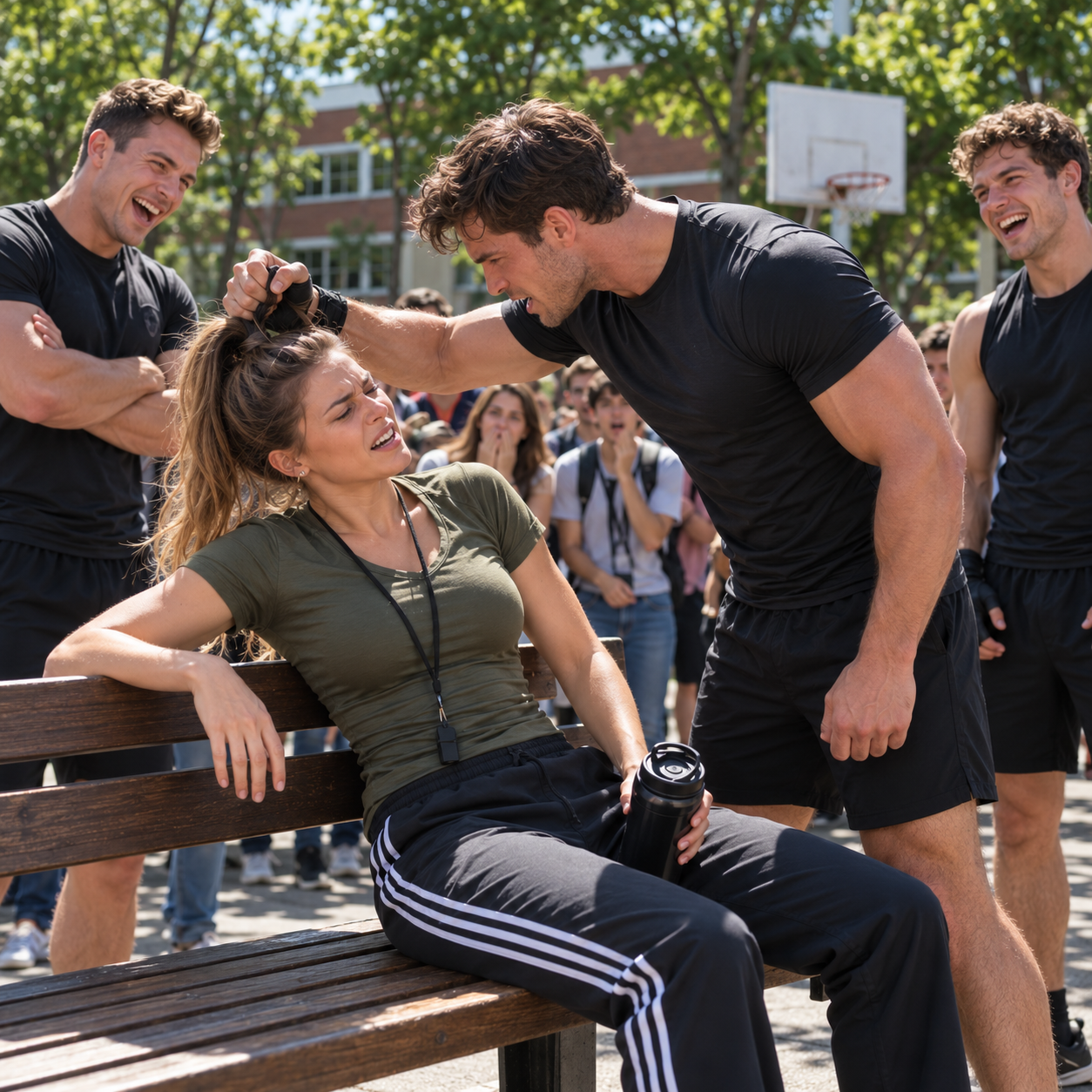
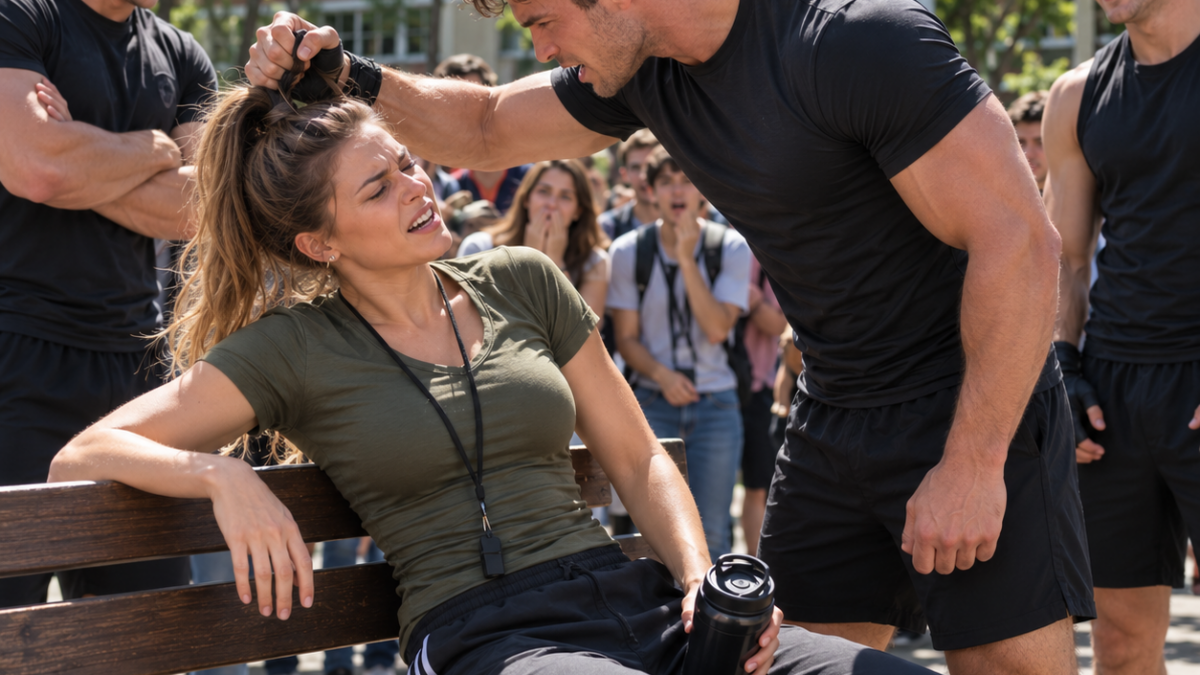
Derek snatched the microphone from the announcer’s hand, climbed onto the mat, and pointed directly at the new instructor.
Everybody stopped. His voice bounced off every wall. I want to ask this woman something right here, right now, in front of all of you.
The entire gym froze.
Rachel Bennett didn’t move.
You were hired to teach us, Derek said, letting the silence stretch deliberately.
Sweetheart, I’ve been fighting since I was 12.
What exactly are you supposed to show me? Rachel looked at him.
Not with anger, not with fear, with the quiet of someone who has already survived things this boy could not imagine.
“Sit down,” she said softly.
“And I’ll show you everything.”
The morning, Rachel Bennett walked into Redwood Valley Combat Academy. Nobody paid attention.
That was the truth. Nobody looked up.
Nobody nodded. Nobody came over to shake her hand or offer to show her around. The fighters in that gym were used to new people arriving and disappearing within weeks.
instructors who came in promising something revolutionary and left quietly when they realized these athletes didn’t want to be changed.
They just wanted to be celebrated. So when Rachel signed her contract with the academy director, a soft-spoken man named Jean Tilman, who had been running the facility for 22 years, she did it without ceremony.
She shook his hand, accepted the small key to the equipment room, and walked out onto the main mat for the first time alone, while three separate training groups went right on working around her like she wasn’t there at all.
Jean had warned her.
“They’re good kids,” he told her that morning, leaning against his office doorframe with his arms crossed and a look on his face like a man confessing something he had been carrying for too long.
“But this group, Derek’s group, they’ve been winning for three years straight.
regional titles, state qualifications. Two of them have interest from professional scouts already.
And when people win like that, they start to believe the winning is permanent. They start to believe it belongs to them.
Rachel had listened without interrupting.
I’m not asking you to break them, Jean continued.
I’m asking you to teach them something they don’t even know they’re missing.
Because right now, I’ve got the most talented fighters I’ve ever trained in 22 years, and I’m genuinely afraid of who they’re becoming.
Rachel had looked at him quietly for a moment.
Then she said, “How many of your younger students have quit in the last 6 months?”
Jean went still. He counted slowly.
“11.
” “And how many of them left because of Dererick’s group specifically?”
The silence that followed answered the question better than words could. Rachel nodded once.
“Okay,” she said.
“I’ll start Monday.”
She had not come to Redwood Valley looking for a fight. That was the thing nobody in that gym understood about her yet.
Rachel Bennett was 41 years old.
She was not tall, 5’6 in her training shoes.
She did not carry the kind of physique that made people step aside when she walked into a room. She had brown hair she kept pulled back simply efficient and practical. The way someone keeps their hair when they have spent years in environments where vanity was not just irrelevant, but genuinely dangerous.
She had a scar along her left shoulder that she never covered and never explained. She had laugh lines around her eyes.
She had the kind of quiet that didn’t feel like shyness.
It felt like something that had been forged, like the quiet of a person who had been in rooms where noise could cost lives and had learned so deeply to control every impulse toward sound that it had simply become part of who she was.
The fighters didn’t see any of that.
What they saw was a woman who looked like someone’s aunt, someone who might teach yoga on weekends, someone who had perhaps taken a couple of self-defense classes and decided she had enough knowledge to share it.
Derek Lawson saw exactly that. Derek was 21 years old, and in the world of Redwood Valley, he was as close to royalty as a young man could get without a crown. He was good-looking in the aggressive way that gets boys into trouble.
sharp jaw, dark eyes that were always watching for an angle. The kind of confidence that had been fed so consistently by victory that it had curdled somewhere along the way into something that looked like confidence, but felt to anyone standing close enough, like a hunger that winning alone could never quite satisfy.
He had started training at 12. By 15, he was defeating men twice his age.
By 19, he had his first regional title. By 21, he had three.
His teammates followed his lead in everything. There were six of them in his core group, and they had trained together long enough that they moved like a single organism, laughing at the same things, dismissing the same people, performing the same casual cruelty toward anyone they decided was beneath them, which was almost everyone.
The younger students at Redwood Valley feared Derek’s group the ways students at certain schools fear the hallway where the wrong crowd gathers.
Not because they had ever been physically harmed. Derek was too smart for anything that obvious.
But because the psychological weight of Derek’s contempt was its own kind of punishment.
A look, a laugh, a comment delivered just loud enough to land where it was meant to land. 11 students had quit in 6 months.
Gene Tilman knew exactly why. And now he had hired a 41-year-old woman with a scar on her shoulder and a quiet that felt like it came from somewhere most people never traveled.
and he was hoping quietly, privately, the way men hope when they have run out of easier solutions that she could somehow reach a 21-year-old who had never once been forced to reckon with the limits of his own understanding.
Rachel’s first three days at the academy were unremarkable.
She ran conditioning sessions for the intermediate group. She corrected form. She demonstrated techniques with a precision that several of the more serious students noticed and quietly respected, but said nothing about because commenting positively on anything connected to the new instructor felt.
In the current social climate of Redwood Valley, like a form of betrayal, Dererick’s group watched from a distance.
They commented among themselves in the way that people do when they want to be overheard.
Where’ they find her?
Jean’s losing it, man.
She moves. Hey, I guess for like a cardio class, Rachel heard every word.
She did not respond. She kept teaching.
On the fourth day, something shifted.
It was a Thursday afternoon and the main training floor was unusually crowded because Gene had scheduled a combined session, all groups, all levels, working in the same space for 2 hours to build what Gene called community cohesion, which was his diplomatic way of trying
to force Dererick’s group to exist near other human beings without destroying them.
Rachel was working with a 16-year-old named Marcus, a quiet, careful boy who had been at the academy for 8 months and showed genuine promise, real instincts, good body mechanics, a mind that processed spatial relationships faster than most adults. But Marcus was shy in the way that gifted young people are sometimes shy, which is to say he was not afraid of work.
He was afraid of being seen doing the work and still failing. He preferred the private struggle over the public one. Rachel had noticed this about Marcus in his first session with her.
She had adjusted her approach accordingly, working with him in ways that gradually built his confidence without forcing him onto a stage before he was ready. They were working on a specific defensive sequence.
Marcus was moving well, better than he had the week before, and Rachel was saying something quiet and encouraging to him when Dererick’s voice cut across the mat like a blade.
Yo, Marcus, you know she’s never actually fought anyone, right?
The room shifted the way rooms shift when someone drops a stone into still water. Marcus stopped moving.
Rachel kept her posture steady. Dererick strolled closer with two of his teammates flanking him.
Tyler, who was 18, and had Dererick’s same quality of borrowed confidence, and a boy they called Reef, 20 years old, 6’2, who had the physical gifts Dererick lacked and the intellectual ambition Derek made up for.
I’m serious.
Derek’s louder now playing to the wider room.
She’s a self-defense instructor.
That’s like being a swimming coach who learned from YouTube.
He smiled at Rachel. Then the smile of someone who had rehearsed cruelty enough that it looked natural. No offense, the room was watching.
Rachel looked at Derek, not with anger, not with the flustered defensiveness he was clearly expecting. She looked at him with the patient steadiness of someone who had seen much larger problems than a 21-year-old with a need for attention. None taken, she said simply.
Derek blinked. That was not the reaction he had scripted.
I’m just saying he pressed.
This is a serious training facility. We have people here who are going to go pro.
You can’t teach what you haven’t done.
Rachel tilted her head slightly.
What haven’t I done?
Competed fought. Real pressure.
Not like teaching. Interesting theory, Rachel said.
She looked around the room slowly, not performing the look. Just genuinely taking in the faces around her.
Then she looked back at Derek.
What makes you think I haven’t competed?
Derek laughed. Because if you had, we would have heard of you.
Rachel smiled then. And the smile was the first thing in this entire exchange that made Derrick feel just briefly uncertain.
Would you? She said. The conversation should have ended there.
Rachel had every opportunity to walk away and everyone in that gym would have understood it. She was the instructor. He was the student.
She could have simply redirected to her class and let the moment dissolve the way uncomfortable moments sometimes do when the adult in the room simply refuses to feed them.
But Dererick didn’t let it end.
I’m just saying,” he said again.
Voice now carrying a new edge beneath the performance.
“If you’re going to teach fighters, you should be able to demonstrate at a fighter’s level.
Otherwise, you’re just theoretical.”
The word theoretical landed in the room with a particular kind of weight.
A few of Dererick’s teammates exchanged glances, not because they disagreed with him, but because several of them had quietly developed a feeling over the past few days that they couldn’t articulate yet.
A feeling that the woman in front of them was not quite what she appeared to be.
Reef, in particular, had been watching Rachel’s movement patterns during her demonstration sessions.
He had a fighter’s eye for mechanical truth, and something about the way Rachel moved didn’t match the category Derrick had assigned her to.
But Reef said nothing because saying something would have meant contradicting Derek and three years of social structure at Redwood Valley had made that feel like a physical impossibility.
“All right,” Rachel said.
The room went completely still.
“You want a demonstration?”
she continued.
“I can demonstrate.”
Derek’s smile came back bigger now.
He spread his hands like a man who had just been given exactly what he asked for.
“Yeah, let’s do it.
Not now,” Rachel said calmly.
Saturday in front of whoever wants to be here. You choose the format.
Dererick stared at her.
You’re serious?
He said, “I’m always serious,” Rachel replied.
She turned back to Marcus.
“Let’s run that sequence again.
” The next 48 hours at Redwood Valley Combat Academy were electric in the way that only anticipation can make a place feel.
Word spread the way word spreads in tight communities where everyone is starved for something real to happen fast and slightly distorted. The story growing with each retelling until by Friday evening there were people claiming Derek had issued a formal challenge and Rachel had responded by demonstrating a hold so advanced that three instructors watching had asked her to slow it down so they could record it. None of that was true.
But the truth that a quiet 41-year-old woman with a scar on her shoulder had simply said all right and turned back to her student was somehow more interesting than any of the embellishments. Dererick spent those 48 hours performing confidence he was starting to not entirely feel. He told his teammates it was going to be quick.
He was careful to frame it not as a fight Rachel had been clear that it wasn’t a fight.
And to Dererick’s credit, he understood enough about the situation to know that if he went in swinging hard against a 41-year-old woman instructor, he would win nothing regardless of the physical outcome.
The gym’s culture had certain lines even he knew not to cross.
So, he was calling it a demonstration of technical skill, a friendly session, a chance for the new instructor to show what she had.
But Tyler said something Friday night in the small group chat the six of them used that lodged itself in Dererick’s brain like a splinter.
Hey, you notice how she never looked scared? Like, not even a little.
Dererick typed back immediately because she’s in denial.
Tyler, maybe. The maybe bothered Derrick more than a disagreement would have. Saturday morning arrived gray and cold.
the way Northern California mornings sometimes do in late November with a mist that sits on everything and makes the world feel temporary. The academy opened at 7:00.
By 7:30, there were already people there who didn’t usually come on Saturdays.
Gene Tilman stood near the water station with his coffee and said nothing to nobody. By 8:00, the mat was ringed with people. Fighters of every level.
Some of the younger students who had been made to feel invisible by Derek’s group stood at the outer edge.
uncertain whether they were even allowed to be there for something like this. Marcus was in that outer ring he had almost not come.
He had lain awake Friday night with the specific misery of someone who cares very much about something they cannot control. Turning over the possibilities in his mind, afraid that whatever happened on Saturday would either prove that his instincts about Rachel were right or reveal that he had misread everything and was more naive than he had already feared.
He came anyway because she had
never once made him feel like his presence in the gym was a problem. Derek walked onto the mat at 8:15 with his teammates around him.
And the room rearranged itself the way it always did when he arrived. Small movements, posture adjustments, the invisible gravitational pull of social hierarchy expressing itself in physical space. He had his gloves on the back of his hands, knuckles facing out.
He was loose, moving with the easy flowing energy of someone completely at home. He stopped in the center of the mat and looked around.
“Where is she?”
“Right here,” Rachel said.
“She came from the far side of the room, walking steadily.
And she had done something that Dererick registered immediately and couldn’t quite categorize.
She had changed nothing about herself. She wore the same simple training clothes she wore everyday.
Her hair was back the same way.
She wasn’t performing readiness the way fighters perform readiness.
with all the ritual signals of intention.
The jaw set, the eyes narrowed, the body language that says, “I am about to become something.”
She was just herself. She walked to the center of the mat and stood across from Derek.
And the distance between them felt to everyone watching, like the distance between two completely different definitions of what it meant to be strong.
“Same rules as open mat,” Rachel said.
“Technical demonstration only.
We stop when someone taps or I call it.
You choose the starting position.”
Derek nodded.
He was studying her now with an attention he hadn’t given her before.
His fighter’s brain switching on in spite of himself standing.
She agreed. Gene Tilman sat down his coffee. The first 20 seconds told Derek something that he did not want to know.
He moved toward her with the control of someone who had done this thousands of times measured, not reckless. Because despite the performance of the past few days, Derek Lawson was genuinely good at this.
And some part of him wanted whatever happened next to be earned. Not accidental.
He committed to a movement. Clean, direct.
Rachel wasn’t there.
Not in a fleshy way, not in the way of someone who had practiced a counter specifically for that attack and was deploying it with the satisfaction of a prepared answer. She was simply somewhere else.
And his momentum had been redirected so subtly that for a full second he wasn’t certain anything had happened.
Then he found himself off balance. He recovered, came back, tried again.
Same result, different approach, same fundamental experience. He was working, committing energy. And Rachel was meeting that energy, not with equal force, but with something stranger and more disorienting.
A kind of responsiveness that made his own strength feel like it was working against him. The room was quiet in the particular way that rooms go quiet when people stop thinking about being in a room and start simply watching.
Dererick’s teammates had gone still.
Reef standing near the left wall had his arms uncrossed.
Now he was watching Rachel’s footwork with an expression that nobody around him would have recognized as the face Derrick’s closest friend made when he was genuinely learning something.
After 90 seconds, Derek tried something he reserved for fights that had gotten complicated a committed combination. Fast and layered, the kind of sequence that had finished opponents who were better prepared for it than a 41-year-old instructor. He felt himself moving through air and then he was on the mat controlled.
She had not slammed him, had not made it violent or humiliating. She had simply guided his momentum to its conclusion. And when he landed, he felt her hands release him immediately.
Clean, precise, professional in a way that stung worse than aggression would have because aggression he could have responded to.
This he didn’t have a response for.
He got up. He looked at her. Rachel was standing exactly where she had been.
She was breathing slightly harder. She was human, not a machine. And the effort was real.
But her expression had not changed. She had not smiled, had not looked to the crowd for a reaction, had not said anything.
She was just looking at Derek with the same patient, genuine attention she had been giving him since the moment he first tried to embarrass her. Again, she asked. Dererick stared at her for a long moment.
Several things moved across his face. anger, confusion, something he would never have named aloud in that setting.
Something that would have required a vocabulary he hadn’t yet built for the interior life he had been too busy performing to actually live.
Yeah, he said again. They went four more rounds.
Each one taught Derek something he didn’t want to learn.
Not about technique, though. There was plenty of that. but about the thing underneath technique.
The thing that Rachel moved with that he could feel the absence of in himself.
A quality he couldn’t name but could sense the way you sense the difference between a room where a person is genuinely present and a room where a person is simply performing presence.
Rachel fought without ego was the only way Derek could have put it later. Though it would take him weeks to find those words.
She was not fighting him. She was not trying to prove anything. She was responding to what he gave her, to what the moment required, and there was a fluency to it that his three years of championship wins had not given him, and that he had not known he was missing.
By the end of the fourth round, Derek was breathing hard. Rachel called it.
“Okay,” she said quietly.
“That’s good.”
She looked at Derek with an expression he had no category, for she looked at him the way people look at something they recognize. Not condescension, not pity, recognition. As if she saw in him something she had seen before somewhere and found it more interesting than threatening.
“You’re fast,” she told him simply.
“Your instincts are good.
You’ve trained well.”
Derek said nothing, and she continued, and her voice dropped slightly, just enough that only the people closest to them could hear.
You fight like someone who’s terrified of losing, which means you’re not really fighting at all.
You’re just running very fast from the thing you’re afraid of.
The silence that followed was so complete that someone coughing on the far side of the room was audible.
Dererick’s jaw was tight.
His eyes were locked on Rachel. And for the first time in 3 years, in front of his teammates and the younger students and Gene Tilman and everyone else in that room, Derek Lawson did not have a single thing to say, Rachel walked off the mat without ceremony. She picked up her water bottle, drank from it, and moved toward the equipment room without looking back.
At the edge of the crowd, Marcus was standing with his hands in the front pocket of his hoodie. And when Rachel passed him, she slowed just slightly.
“Good morning,” she said to him.
“The same tone she always used, as if the last 40 minutes had simply been one part of a day that contained many parts.
” Marcus looked at her.
“How did you do that?”
Rachel considered the question.
“Which part?”
she asked.
“All of it?”
he said. But especially, how did you stay that calm when he was trying to when he was doing all of that before the stuff he said?
How did you just stopped, searched for the word? How did you not let it get to you?
Rachel was quiet for a moment. When she answered, her voice was steady and simple. The way she said everything because nothing he said was about me, she told him.
People who need to make you feel small are always always talking about themselves. Once you understand that, really understand it. Not just as a concept, but in your body, you stop being affected.
Because you realize there’s nothing there aimed at you.
It’s just noise from a person who’s hurting.
Marcus was quiet. Did you always know that?
He asked.
Rachel’s expression shifted.
Just slightly a movement of something real behind the composure. No, she said. I learned it the hard way like most things worth knowing.
She put her hand briefly on his shoulder, a light matter-of-act gesture, and walked on. Marcus stood where he was for a long moment. And then he turned and looked across the room to where Derek Lawson was standing alone.
For the first time that morning, his teammates a few feet away, but not quite close enough.
And there was something in Dererick’s posture that Marcus had never seen before in all his months at Redwood Valley.
Derek looked for the first time like someone who didn’t know what came next.
And somehow impossibly standing in the outer ring where the invisible students gathered, Marcus found himself feeling something he hadn’t expected to feel in this moment.
Not satisfaction, something closer to compassion. He thought about what Rachel had said.
People who need to make you feel small are always, always talking about themselves. He looked at Derek across the room and he wondered for the first time what Derek Lawson was actually afraid of. Gene Tilman found Rachel in the equipment room 20 minutes later.
She was sitting on a bench, her shoulder rolled slightly forward, her hand pressed against the left side of her collarbone in a way that made Jean’s chest tighten before he said a word.
“You okay?”
he asked.
“Fine,” she said and moved her hand away.
“Rachel, I’m fine, Jean?”
he sat down across from her. They had known each other for 3 years before she came here old channels.
mutual people.
The kind of connection that comes from shared professional worlds that most people don’t know exist.
Gene had served two years before Rachel in a different branch in a different era. Not the same work, but enough shared context to speak plainly.
Something opened up, he said quietly.
She didn’t deny it.
Old injury.
It’s fine.
You should let someone look at it. I Today.
She looked at him then, and there was a flicker of something almost amused in her expression. Yes, today. Can I sit here for five more minutes first?
Jean nodded. He sat with her.
After a moment, he said, “You didn’t have to do that.
I know you had every professional justification to refuse.
He’s a student.
You’re the instructor.”
Jean’s the academy director.
There are protocols that exist precisely so that Jean, he stopped. He needed to feel it.
She said simply, not hear it, feel it.
There’s a category of lesson that doesn’t transfer through words.
You know that.
Jean beside,” she said.
“I wasn’t doing it for Derek.”
Jean looked at her.
“I was doing it for Marcus,” she said.
And the 10 other kids in that room who needed to see something different than what they’ve been watching for the past 3 years.
Jean sat with that outside through the equipment room door. They could hear the sound of the gym returning to its ordinary rhythm, the smack of bags, the shuffle of feet voices.
“The world going on.
What happened out there today?”
Jean asked finally with Derek. Rachel thought about it.
He heard something he wasn’t ready for, she said.
But his body already knew it was true.
That’s usually when things start to move.
Jean nodded slowly.
And when things start to move, he said, “They don’t always move smoothly.”
Rachel leaned back against the wall.
“No,” she agreed.
“They don’t.”
What nobody in that gym knew, not Jean, not Marcus, not Derek, was the full weight of what Rachel had carried onto that mat with her on Saturday morning. She had not come to Redwood Valley on a whim.
She had come because 3 months ago, sitting in a VA office in San Jose, filling out paperwork she had already filled out twice before, a counselor named Patricia had asked her a question that Rachel couldn’t answer.
What are you doing with what you survived? Rachel had sat with that question for 11 weeks.
She had been out of the SEAL program for 4 years, not by choice, or rather by a choice that was made in the aftermath of something that had taken so much that the camp of what remained didn’t fit the structure she’d been built for.
She had done the work of rebuilding herself, therapy, physical rehabilitation, the slow and unglamorous process of becoming someone who could move through a civilian world without flinching at every sound or running exit calculations in her head every time she walked into a new room. She had gotten better, but
better had started to feel in the months before.
She called Gene Tilman like its own kind of stasis, like a recovery that had stabilized, but not yet pointed toward anything. What are you doing with what you survived? She had taught one self-defense class years ago.
As a favor, a group of women at a community center, most of them there, because someone in their lives had made them afraid. She had expected to feel useful in the practical sense.
skills transferred, knowledge shared, boxes checked.
Instead, she had felt something she hadn’t felt since before the last mission.
She had felt like she was doing the thing she was actually built to do. Not the fighting.
Never just the fighting, the teaching, the specific act of taking what she carried, every hard lesson, every scar, every piece of knowledge earned at enormous cost and handing it to someone else so they didn’t have to learn it the same way she did.
That feeling had lived in her for 2
years like a pilot light, small and persistent. When Gene called, she answered on the second ring.
So on Saturday morning when she walked onto that mat, she wasn’t carrying just her training and her history and her body’s memory of a thousand repetitions.
She was carrying a question she was still answering. And the answer she was beginning to understand lived not in what she did to Dererick Lawson on that mat. It lived in what she did for Marcus watching from the outer ring.
It lived in what she did for the 11 students who had left and the ones still here who had learned to make themselves invisible to survive.
The mat wasn’t the point.
The mat was just where the lesson started. By Saturday afternoon, the story of what had happened had already spread through the networks that combat sports communities maintain text chains, gym group chats, the informal word of mouth that moves faster than any social media because it carries the heat of people who were physically present for something and cannot stop thinking about it. The story mutated as it traveled.
It always does. Some versions had Rachel throwing Derek across the room.
Some versions had Dererick tapping out in under 30 seconds. Some versions had Rachel delivering a speech that brought the entire gym to tears. None of that was true.
The truth was quieter. It always is.
The truth was that a 41-year-old woman had walked onto a mat, moved with a kind of mastery that couldn’t be faked, said three sentences to a 21-year-old champion and walked away, and in doing so had changed the atmospheric pressure of an entire place.
Changes like that don’t announce themselves.
They move through people slowly, like weather.
Derek Lawson went home Saturday afternoon and didn’t talk to his teammates.
He sat in his apartment for 2 hours. He thought about the thing Rachel had said.
You fight like someone who’s terrified of losing.
He turned it over, tried to find the angle where it was wrong. Tried to locate the way it was unfair or inaccurate or the kind of generic thing a self-defense instructor would say to sound deep.
He couldn’t find the angle.
Because the problem with an observation that is entirely accurate is that no amount of looking at it from different directions changes what it is. He thought about the 11 students who had quit.
He hadn’t thought about them before.
Not really. They had been background to him.
Part of the landscape of the gym, people who came and went and whose departure was simply information without weight. He thought about them now.
He didn’t feel good about what he thought and the discomfort of not feeling good about it.
The specific unfamiliar discomfort of a conscience that had been dormant beginning to wake was so foreign to him that he almost reached for his phone to call Tyler and say something dismissive about the morning to make it feel smaller. He put
his phone down.
He sat with it instead. It was the hardest thing he had done all day.
And he had spent the morning being physically outmaneuvered by someone he had publicly dismissed. Rachel iced her shoulder Saturday night. She sat on the edge of her bed in her apartment 8 mi from the academy.
Ice pack held against the collarbone area that had been complaining since the third round. And she looked at the wall across from her and breathed. The injury was old, a remnant of something she carried the way veterans carry things not always visibly, but always present, woven into the physical structure of her life so completely that she could not always locate where the injury ended.
And she began. She was fine.
She was genuinely fine.
But Jean was right that she hadn’t needed to accept Dererick’s demonstration.
She had accepted it because she had made a calculation, not a cold calculation, a human one, the kind that happens when you read a room and a moment and a 16-year-old boy standing at the outer edge of a crowd trying to be invisible. And you understand what will happen to him if the story today ends the same way every other story has ended in this gym for 3 years.
She had made the calculation. She stood by it.
But lying there with ice on her shoulder, she also let herself feel what she’d been moving past all day.
The way the third round had wrenched something slightly. The way she had controlled her expression and her breath in the moment and filed the pain for later.
The way later had arrived now and was sitting with her quietly in the dark of a Saturday evening. She was 41 years old.
She had been on missions that broke things inside her that medicine could partially address us and time could partially address and therapy could partially address and that she would carry in some form for the rest of her life. She was fine, but fine and easy were not the same word. She closed her eyes.
She thought about Marcus.
She thought about what he’d asked her.
How did you not let it get to you? She had given him a true answer.
It was not the complete answer because the complete answer involved things she hadn’t needed to say in that doorway in front of a gymnasium full of people.
Things about what it had cost her over years to develop that steadiness. Things about the missions.
Things about the night when the steadiness had been tested past what any amount of training could prepare a person for. And she had found on the far side of that night that she was still standing, still present, still herself. That night had cost her friends.
It had cost her the career she had built her identity around for 15 years. It had reshaped her entire understanding of what she was for and what she was capable of.
And it had given her this, the ability to stand across from a 21-year-old boy who needed to be bigger than everyone around him. And to look at him and see not a threat, but a person who was scared, and to remain to just absolutely remain steady and present and without aggression until that steadiness became its own kind of demonstration. People who need to make
you feel small are always talking about themselves.
She had learned that in a room very different from a gym. She was glad lying there with her ice pack in the dark that she had been able to pass it on. She was glad Marcus had been listening.
She hoped Derek had been too, but Derek would take longer. Change always does when someone has had so many years of confirmation that they were right.
She understood. She had once been certain of things that turned out not to be true. The night that rearranged her certainty had been the worst night of her life.
It had also eventually been the thing that made her into someone who could actually help another person.
She didn’t know yet how to explain that to anyone.
She wasn’t sure she needed to.
Some things she had learned don’t need to be explained.
They need to be lived in front of people until those people find themselves understanding something they didn’t know they were learning.
That was what Saturday had been. That was what Monday would be.
and she would be there on Monday’s shoulder and all to teach the next part of the lesson.
Whatever it turned out to be.
Derek didn’t sleep Saturday night.
He told himself he did.
He lay in his bed, stared at the ceiling, and ran the morning over and over in his head the way a fighter reviews footage after a loss, looking for the moment where everything went wrong, looking for the technical error, the lapse in judgment, the specific second where he could say, “There, that’s where it happened.
That’s
the thing I can fix.”
He couldn’t find it.
That was the problem because the thing Rachel had done to him on that mat was not a technique he could counter study.
It wasn’t a movement pattern he could break down and reverse engineer.
It was something underneath technique, something that lived in a layer he didn’t have a name for yet.
And the inability to name it made him angrier than the loss itself. He picked up his phone at 2 in the morning and almost called Tyler. He put it down.
He picked it up again at 3 and scrolled through the comment thread that had already started on the gym social media page where someone had posted a vague description of what happened Saturday without naming names.
And the responses ranged from impressed to skeptical to one comment from an account he didn’t recognize that simply said, “Some people fight to win, some people fight because they’ve already lost everything else and survived it.
You can always tell the difference.”
Dererick stared at that comment for 4 minutes. Then he put his phone face down on the nightstand and did not pick it up again until morning.
He came into the academy Sunday not because he was scheduled to, but because he needed to move, needed the familiar weight of the big and the rhythm of footwork and the simple mechanical reliability of a body that knew what to do even when his mind was running in circles. The gym was quiet on Sundays.
A few people, the serious ones, who showed up when there was no audience, which Derek had always considered himself to be, until Saturday, made him wonder whether the last 3 years of his life had been built on an audience he hadn’t fully admitted he needed.
He was working the heavy bag alone for 40 minutes before he heard the door. He expected Tyler.
He expected Reef. He expected anyone from his regular orbit. It was Marcus.
The 16-year-old stopped just inside the doorway when he saw Derek. And for a moment, the two of them existed in the particular awkward silence of people who have been placed by events neither of them controlled into a relationship neither of them chose.
Derek kept working the bag. Marcus moved to the far side of the gym, pulled out a jump rope, and started his own warm-up without a word. They worked in parallel for 10 minutes.
Derek hit the bag harder than he needed to. Marcus jumped rope with the steady patient rhythm of someone who had learned to occupy space without asking permission for it. Finally, Dererick stopped, turned around, looked across the gym at the younger boy.
“You were there yesterday?”
he said.
“It wasn’t a question.”
Marcus didn’t stop jumping.
“Yeah, what did you think?”
Marcus slowed the rope, let it drop, looked at Derek with an evenness that Derek realized reminded him uncomfortably of Rachel. Not the same.
Marcus was 16 and uncertain and still learning how to stand in his own skin, but there was something in the directness of his gaze that didn’t flinch.
And Dererick had noticed it now enough times to know it wasn’t an accident.
Honestly, Marcus said, “Yeah, honestly.”
Marcus thought about it for a second.
I thought you were going to crush her and then I watched it happen and I thought she’s not trying to beat him.
She’s trying to show him something.
And then I thought, is he going to be able to see it? Derek was quiet and he said finally.
I don’t know yet, Marcus said simply.
He picked the rope back up. I guess that depends on you. He started jumping again.
Derek turned back to the bag. He hit it three times hard.
Then he stopped, pressed his forehead against the leather for a moment, breathing. The silence in the gym held both of them without comment. Outside Sunday morning moved on.
Neither of them talked again for another hour. But when Marcus was leaving and Dererick was still there, Marcus paused at the door and said without turning around, she told me something yesterday.
After she said, “People who try to make you feel small are always talking about themselves, not about you.”
Derek said nothing.
I just thought Marcus said, “Maybe that goes both ways.
Maybe it’s worth knowing what you’re actually talking about when you do it.”
He left before Derek could respond. Dererick stood alone in the gym for a long time after that.
The bag swayed gently in front of him.
He didn’t hit it again.
Monday arrived the way Mondays do at training facilities with a particular collective energy of people who spent the weekend unable to stop thinking about something and are now attempting to pretend they are thinking about something else.
Derek’s group arrived together as always.
The six of them moved through the gym entrance in the loose formation that had become reflexive over years of shared training. And the room adjusted around them as it always had, except something was different.
It took Derek 3 minutes to identify what it was. The room was not adjusting the same way.
The smaller adjustments, the barely perceptible shrinking, the way younger students angled their bodies away, the social choreography of a space that had learned to organize itself around the presence of Derek’s group.
Those adjustments were
still there, but they were slightly less automatic, slightly less complete, as though the people making them were doing so out of habit now rather than genuine instinct. And some of them were noticing the habit for the first time and not being entirely sure they wanted to keep following it.
Derek noticed, he said, and Rachel was already there.
She was working with a group of intermediate students on the farm mat, and she did not look up when Dererick’s group came in.
and her not looking up was in some way more pointed than any acknowledgement would have been because it communicated clearly and without drama that Saturday had not changed her daily relationship with this gym one degree in any direction. She was here. She was working.
She was not thinking about Derek Lawson. Derek found this profoundly irritating in a way he could not have explained to anyone. Tyler leaned close.
Fine, Dererick said. Tyler looked at him the way close friends look at each other when the answer is obviously wrong.
But the moment is not right to press it. He nodded and moved toward the equipment rack.
Reef came up on Dererick’s other side.
Reef who was the tallest in the group and the quietest and who had spent Saturday watching Rachel’s movement patterns with an attention.
Dererick had clocked and filed away. So Reef said voice look. Are we going to talk about it?
No.
Dererick said because I’ve been thinking about it.
Reef the way she moves.
Reef said unbothered by Derek’s tone in the particular way of someone who has decided that something is worth saying regardless of the reception.
It’s not any style I can place.
I’ve been watching footage since Saturday.
I went through combat sports stuff. I went through military combatives.
There are elements but it’s not a curriculum.
It’s something that comes.
He paused. Chose the word carefully. Experience.
Real experience. The kind where not getting it right had consequences outside a mat.
Dererick looked at him.
I’m just sensing Reef continued.
That I don’t think she’s what we said she was.
I know that, Dererick said sharply. Reef was quiet for a moment. Do you?
The question landed harder than it had any right to. Dererick walked away toward the heavy bags.
Reef watched him go and said nothing further. Rachel called her class to the center mat at 8:15. She had 12 students in her group a mix of ages from 15 to 34.
All of them intermediate level. all of them there for different reasons that she had taken the time to learn individually because she believed that knowing why someone was in a room changed how you could help them.
She stood in front of them and looked at them and said, “Today we’re going to work on something that has nothing to do with technique.”
A few of them shifted. The 34year-old at the back, a man named David, who had come to training after a divorce, and was there largely for the structure it gave his weeks, looked briefly nervous, which he often did when sessions departed from the physical and moved toward anything that felt remotely like therapy.
“Technique is a tool,” Rachel continued.
What I want to talk about today is what’s holding the tool.
Because you can have the best technique in the world and if the person holding it is operating from fear or ego or the need to prove something, you will lose every time. Not maybe, every she paused.
On the far side of the training floor, Dererick’s group had begun their own warm-up, but the volume in the room was low enough that her voice carried, and she knew it, and she did not lower it.

