Billionaire CEO Left Her Car at His Garage—What the Single Dad Found Changed Everything
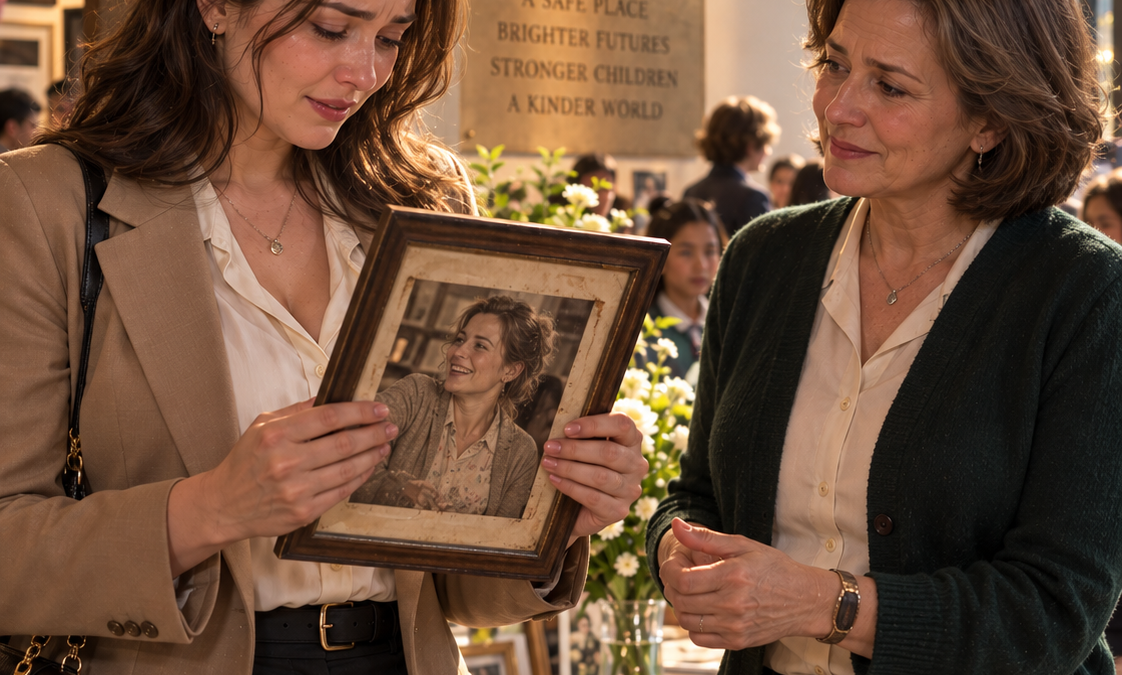
Billionaire CEO Left Her Car at His Garage—What the Single Dad Found Changed Everything
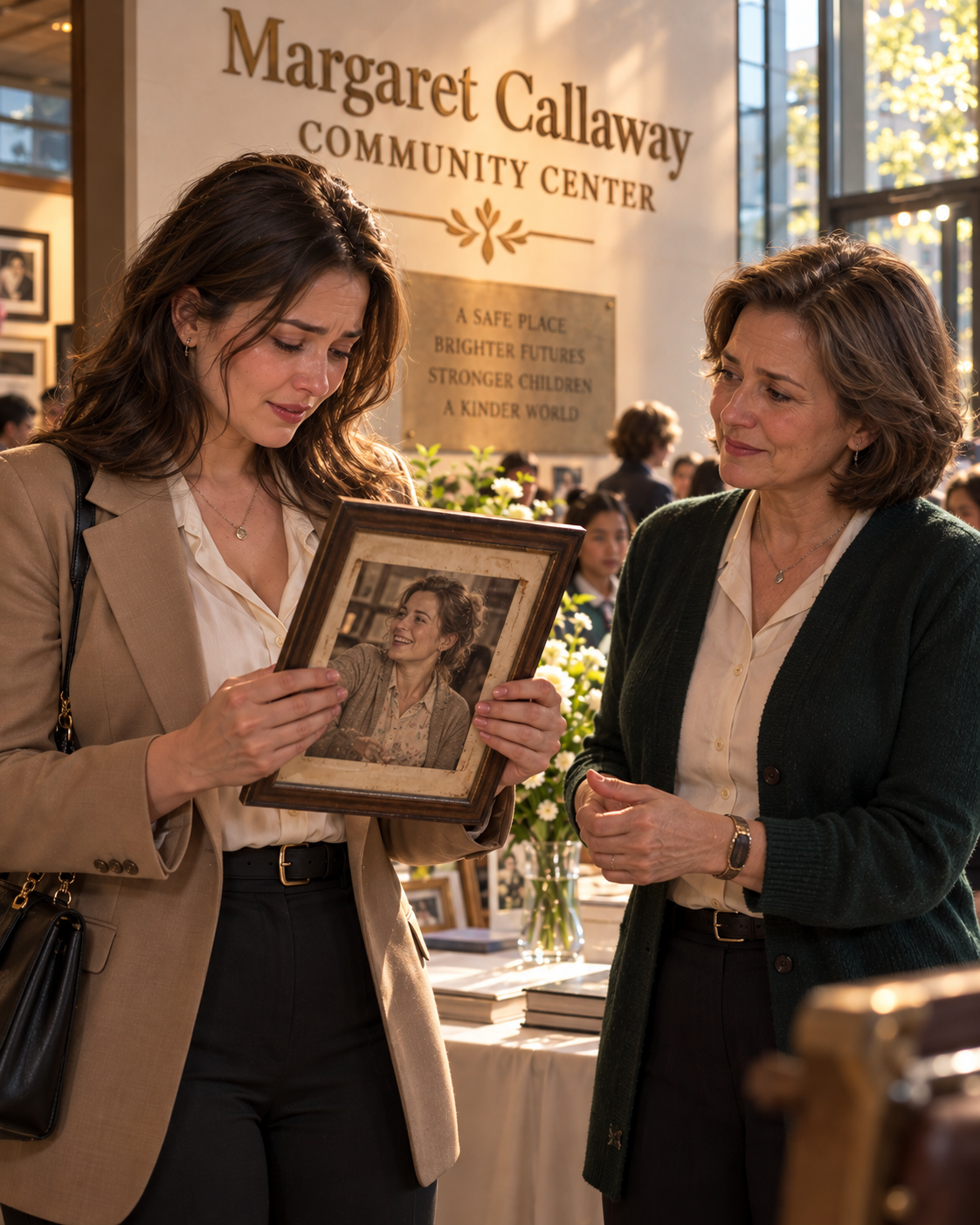
She walked into his shop like someone who had forgotten how to ask for help. No eye contact, no small talk, just keys dropped on a counter and a car that costs more than his house sitting in bay 3.
Ethan Mercer had fixed a thousand cars.
He thought he’d seen everything.
He hadn’t seen anything yet because tucked inside that black sedan, behind a panel she clearly never wanted anyone to touch, was a leather folder.
And inside that folder was a little girl’s face that matched the most powerful woman in Colorado.
Some repairs open more than engines. This one cracked open a life.
This one’s worth it.
The first thing Ethan Mercer noticed about the woman was that she didn’t look at him.
That wasn’t unusual.
Exactly.
Plenty of people who brought their cars to Mercer and Sun Auto on Route 12 didn’t look at him.
They looked at their phones, at the floor, at some middle distance that seemed to exist only for people who had somewhere more important to be. He was used to being invisible to that particular category of customer, the ones who viewed a mechanic the way they viewed a toll booth, a necessary inconvenience between here and there.
But this woman was different in a way he couldn’t immediately place.
She drove the kind of car that usually made his stomach tighten a little. A black Mercedes S-Class, the newer model. The one that ran somewhere north of $110,000, even before options.
The kind of car he’d learned not to touch with greasy hands before wiping them twice on a clean rag.
The kind of car that arrived in his bay maybe twice a year, usually driven by someone from Denver who’d taken a wrong turn or blown a tire on the interstate and had no other option.
She parked it herself, which surprised him. Most people who owned that car let someone else park it. She cut the engine and sat for a moment.
Just sat there. Ethan was standing near the entrance to bay 2, coffee in one hand, clipboard in the other, watching her through the windshield without meaning to stare. She had both hands still on the wheel, even though the car was off, and her eyes were focused on something outside.
Not the shop, not the mountains, not anything he could identify.
just out like she was having an argument with herself and hadn’t finished yet.
Then she got out. Serena Vale was 30 years old, though she could have passed for older in that moment.
Not because she looked worn out exactly, but because she carried herself with the kind of weight that takes years to accumulate.
She was dressed simply, dark trousers, a cream blouse with the first button undone, no jewelry except a thin watch on her left wrist that he’d later learned costs more than a semester of his daughter’s school supplies.
Her hair was pulled back, not styled, like she’d done it in a car mirror somewhere and hadn’t thought about it since.
She walked to the counter without looking at the shop, without looking at him, and set the keys down with a small precise click.
“Check engine light,” she said.
Her voice was flat, professional. The voice of someone who gave instructions all day and expected them followed.
It’s been on for three days.
There’s also a sound when I accelerate over 60.
Kind of a She paused, searching. A low hum underneath. Could be a few things, Ethan said.
Wheel bearing maybe. Could be the exhaust.
I’ll get under it.
She nodded once. How long? Depends what I find.
If it’s straightforward, a few hours.
If it’s the bearing, I’ll need to order the part.
Probably overnight. Something passed across her face.
Not frustration exactly, more like a calculation. Quick and private.
That’s fine, she said.
I’ll find a hotel.
She didn’t ask which hotel.
She didn’t ask if there was a loner.
She just reached into her coat pocket, placed a business card on the counter beside the keys, and turned to go. Ethan picked up the card. Serena Vale, chief executive officer, Valamont Group.
He recognized the name vaguely.
Some tech and real estate conglomerate he’d seen in the business section of papers he only half read.
The address on the card was Denver, a long way from here for a check engine light. Is there a number I can reach you at? He called after her.
She was already at the door. She glanced back over her shoulder and for just a second, well, one real second, her eyes met his ottom of the card, she said.
Then she was gone.
Ethan stood for a moment looking at the space where she’d been.
Then he looked at the car. Then he looked at his coffee, which had gone cold.
“Okay,” he said to nobody.
The shop was quiet that Tuesday morning. That was both the blessing and the problem with Hartwell, Colorado, population 4,000 and some in early October.
The summer tourists were gone.
The ski season hadn’t started.
The town existed in a kind of held breath pause between busy periods, which meant Ethan had time to do his work right and also meant his checking account was doing what it always did this time of year, quietly panicking.
He’d opened Mercer and Son 7 years ago after his father’s heart attack forced the old man out of the bay and into a chair by the window where he watched cable news and ate things the doctor told him not to eat.
The tim son in the name had always been Ethan even though technically the business had belonged to his father first.
His father had built it from a single bay in the 70s, grew it to three bays and a steady reputation, and then handed it off with the particular mix of pride and relief that old men feel when they finally admit they’re tired.
Ethan had kept it running, barely sometimes, but running. He had help 2 days a week from a kid named Dylan, who was 19 and more interested in his phone than in torque specs, but who showed up and tried, which counted for something.
Today was not one of Dylan’s days.
So it was just Ethan, the shop, the mountains outside the open bay door, and a $100,000 car that someone had left behind like a coat. He moved the Mercedes into bay 1, the cleanest bay, and started with the diagnostic reader. The check engine code came up fast.
P420, catalyst system efficiency below threshold. Oxygen sensor data was off.
He’d need to look at the catalytic converter.
Maybe the O2 sensor itself. Straightforward enough. The sound was something else.
He drove it around the block just once, carefully, like he always did with cars that cost more than he earned in 2 years, and felt it himself. That low hum under 65, faint but persistent.
He agreed with her diagnosis underneath. Maybe the carrier bearing on the drive shaft.
He’d need to get it up on the lift and look.
He drove back to the shop and pulled it into position. What happened next was the kind of thing that seemed small at the time. He was sliding under the rear of the car with a work light, running his hand along the undercarriage, checking for anything loose or damaged when his fingers hit something unexpected.
Not in the mechanical sense, not a part that had come free or a bracket that had cracked, something attached to the interior, just inside the rear panel on the driver’s side.
He’d pulled the access panel earlier to check a wiring harness, and it hadn’t closed quite flush, which had made him look more closely.
There, wedged between the structural frame of the panel and the interior trim, was a leather folder, dark brown, the size of a school notebook, old in a way that felt personal rather than just aged, like something that had been handled often and carefully over a long time. It was held shut with a worn elastic band that had lost most of its tension.
Ethan held it for a moment without opening it.
He wasn’t a curious man by nature, not in the prying sense.
He’d found things in cars before, sunglasses, cash, once a handgun that he’d turned into the sheriff’s office with minimal conversation.
He knew the protocol. Set it aside.
Mention it to the owner when they came back.
Don’t make a thing of it.
That’s what he intended to do.
He set it on the workbench beside the car and went back to examining the drive shaft, but the folder sat there and the workbench was right at eye level from where he was working and the elastic band, without anyone touching it, slipped free. The folder fell open. The photograph landed face up on the bench.
Ethan stood slowly wiping his hands on his rag and looked at it. It was an old photo, maybe 30 years old, maybe more, judging by the color quality and the rounded corners. It showed two figures, a woman, middle-aged, heavy set, with kind eyes, and a cardigan buttoned to the collar, and a little girl.
The girl was maybe 6 or 7 years old. She was thin in the way that worried people when they saw it.
She had both hands wrapped around the woman’s arm, not holding it exactly, more like tethering herself to it.
Her eyes were looking directly at the camera. Serious eyes, watchful, not smiling, but not scared either, just very alert, like a child who had learned to pay attention. Ethan looked at the photograph for a long moment.
Then he looked at the business card on his clipboard. He looked back at the photograph.
He was not the kind of man who jumped to conclusions. He spent his days diagnosing problems methodically, ruling out the obvious before moving to the complicated.
But the shape of that little girl’s face, the angle of her jaw, the set of her eyes, the way she held her mouth was not something he needed to be a detective to recognize.
He set the photograph down carefully and looked at the other contents of the folder because at this point the folder was already open and the photograph was already visible and he told himself he wasn’t really going further than what had already fallen out on its own.
There were more photographs.
A few more of the girl at different ages at a document official looking typed with the words Hartwell Children’s Home across the top in a faded institutional font.
The date on it was more than two decades old.
There were handwritten notes on line paper, some in a child’s uneven handwriting, some in an adult’s precise cursive.
There was a drawing crayon the way a young child does it of a house with a yellow sun in the corner and three stick figures standing outside it. Ethan stood at his workbench for a long time.
Outside the mountains didn’t move.
The shop was quiet. Somewhere down Route 12, a truck passed and the sound of it faded into nothing. He closed the folder carefully and put it beside the keys.
He didn’t think about it consciously for most of the rest of the morning.
He worked the way he always worked, hands busy, brain half somewhere else, and the job occupied enough of his attention that he didn’t obsess.
He replaced the oxygen sensor, cleaned the catalytic converter connections, and confirmed that the drive shaft carrier bearing had in fact worn through. The bearing would need ordering.
He called the parts supplier in Denver, got a delivery estimate of next morning, and that was that. The car was staying overnight. He sent a text to the number on the card.
Serena Vale, found the issue. Catalytic converter sensor and a carrier bearing part arriving tomorrow morning. Car will be ready by noon tomorrow.
Let me know if you have questions. Ethan Mercer, Mercer and Sun Auto.
The reply came 4 minutes later, which surprised him a little.
He’d expected the kind of person who had assistance to read their texts.
Thank you.
That’s fine.
That was all. He ate lunch at his desk.
A sandwich he’d made that morning.
Turkey, slightly too much mustard, the same thing he made three or four days a week because his daughter had declared mustard her favorite condiment 6 months ago. And now everything in the house was a vehicle for it. His daughter was nine.
Her name was Maya.
She had her mother’s eyes and his stubbornness.
And she was at school right now being patient about a father who packed the same sandwich repeatedly and thought this was a form of love because it was. Her mother had been gone for 3 years.
Ethan didn’t think about Clare everyday anymore, which was both a relief and something he felt guilty about during the moments when he noticed it.
He thought about her in pieces now.
The way she’d laughed at her own jokes before she finished telling them, the specific sound of her coffee cup on the nightstand at 6:00 in the morning, the way she’d held Maya on her lap even after Maya was too big for it, because neither of them wanted to admit that part was over.
Those were the things that came to him. Not the end. Mostly not the end.
Three years was enough time to function. Not enough time to stop noticing the chair across the table was empty.
He finished his sandwich and looked at the folder.
He shouldn’t look at it again.
He knew he shouldn’t look at it again.
He pulled it toward him and opened it again.
Hartwell children’s home.
He’d known it existed once, the way you knew about places in a small town that were part of its history without quite being present in it.
The old building on Carmichael Street had been empty since he was in high school. Before that, it had been a group home, a transitional facility, whatever the official language was for the place where children went when there was nowhere else.
It had closed when he was maybe 15. funding cuts, he thought, or some state consolidation, or both.
The building had sat empty for years, then been demolished to make a parking lot that nobody really needed.
He hadn’t thought about it in a decade.
The documents in the folder were fragments, not a complete file, nothing like that. More like things that had been saved selectively.
The way people save things, they can’t explain saving.
A few pages from what looked like a case record identifying information blacked out in the way that institutional documents sometimes were. A letter handwritten by someone named Margaret.
Your hard work this year has made us all proud. We believe in you.
An intake form with a date that put Serena Vale at the Hartwell Children’s Home when she would have been Ethan did the math about 6 years old.
He looked at the crayon drawing again.
Three stick figures outside a house with a yellow sun underneath in wobbly child’s handwriting.
Me and Margaret and Emmy.
He didn’t know who Emmy was.
He suspected he never would. He looked at the photographs more carefully this time. The older woman, Margaret, he assumed, appeared in several of them.
She had the look of someone who had worked with children for a long time. patient, solid, with a quality of stillness that made her seem larger than she was.
In one photo, she had her arm around the little girl who was slightly older in this one, maybe eight or nine, and the girl had her head turned slightly away from the camera, but she was almost smiling. Almost.
There was something about that almost smile. Ethan sat with the folder for a while, not reading, just sitting.
He was aware that he was doing something he shouldn’t be doing, even if he couldn’t quite articulate why it felt wrong.
The folder had fallen open.
He hadn’t gone looking for it, but he’d kept looking, and there was a difference between those two things that he was choosing not to examine too closely right now.
He thought about Serena Veil stepping out of that car. The stillness of her, the way her hands had stayed on the wheel after the engine was off, like she needed a moment before she could be in the world. He thought about the weight people carried without showing it.
He thought about Maya, who sometimes woke up at 2:00 in the morning and didn’t say why, and he’d sit with her until she went back to sleep.
And neither of them said anything about it, and this was the only way he knew to handle certain things. He closed the folder again.
This time, he didn’t reopen it.
Maya got off the school bus at 3:47, which was 2 minutes late, which always made Ethan stand at the shop door watching the road in a way he tried not to make obvious.
When the bus finally appeared around the bend, orange and unhurried, he felt the small tension in his chest release in the way it always did, and he went back to pretending he’d been working the whole time.
She came through the side door of the shop with her backpack hanging off one shoulder and a look on her face that he’d learned to read as something happened today.
I’ll tell you when I’m ready.
Hey, Bug. Hey, Dad.
How was school? Fine.
She dropped her backpack on his desk. She always dropped it on his desk.
He’d stopped caring and climbed onto the high stool she liked and looked at the Mercedes.
Whose car customer?
It’s really nice.
Yeah, like really nice. I know what nice means, Maya.
She grinned at that.
A quick sideways grin she’d inherited from her mother.
And that still caught him off guard sometimes. Can we have pizza tonight? We had pizza last week.
That was last week. It feels very recent, Dad. Fine.
Yes, but the good kind, not the frozen kind, obviously. She hopped off the stool and rummaged in her backpack for something. Mrs.Teller wants a parent signature on this permission slip for the science museum trip.
It’s in November.
It’s October.
She’s very organized.
He took the slip and signed it without reading it, which he knew he should stop doing.
“What happened today?”
he said. not pushing, just leaving the door open.
Maya was quiet for a second. She was nine, but she had the conversational rhythms of someone older. She took time before she answered things, thought about how to say them.
He’d never taught her to do that.
She’d just always been that way.
Madison said something, Maya said finally. About what?
About mom, he set the pen down. What did she say?
She said she felt sorry for me because I didn’t have a mom.
A pause. I told her I did have a mom.
She just wasn’t alive anymore.
And then Madison said that didn’t count.
Another pause. And then I said she stopped.
What did you say? I said she was wrong and walked away. Ethan looked at his daughter.
That was the right thing to do. I wanted to say something else. I know.
The right thing is usually not the thing you want to say. Maya seemed to consider this, Dad.
Yeah. Do you think mom would have liked this car? He looked at the Mercedes again.
She’d have liked to drive it, he said.
She’d have thought owning one was a waste of money.
Maya nodded like that confirmed something. Same, she said.
She grabbed an apple from the small basket he kept near the desk, because left to herself, she’d eat nothing between lunch and dinner, and then claimed she wasn’t hungry at dinner while clearly starving, and went to the back room where he’d set up a small table for her homework.
Ethan stood alone in the bay for a moment, listening to the ordinary sounds of his daughter settling in. He looked at the folder on the workbench.
He thought about a little girl who had been 6 years old in a children’s home in this same small town, who had grown up to drive a $100,000 car and leave her keys without a word and carry the past in a leather folder she’d hidden so well she’d maybe forgotten it was there.
He wondered how many ways there were to survive something. The evening was plain and quiet, the way evenings in Hartwell usually were.
Ethan picked up pizza from Carmines on Third, the actual restaurant.
good crust sauce that tasted like someone had made it that day and drove home with Maya in the passenger seat telling him about the science museum and whether they’d actually get to touch anything or just look through glass at things because looking through glass at things was according to Maya basically just a worse version of the
internet.
He didn’t really have a counterargument for that.
They ate at the kitchen table, the same table where he and Clare had eaten a thousand meals. the same table where Maya had done her first homework and spilled juice on the wood and learned to ride out the look he gave her when she was careless.
He’d refinished it last spring.
Running his hand along the grain now he couldn’t tell where the old stains had been, which was either good workmanship or loss, and he wasn’t always sure which.
“Dad,” Mia said, pulling cheese off her slice in the way she always did before eating it, a habit that had once driven Clare crazy.
Do you think rich people are happy? He looked up.
Where did that come from? The car.
I was thinking about it. She wound the cheese around one finger. Like a person who has that kind of car must have a lot of money.
And people always say money doesn’t make you happy, but they also really seem to want it.
So which is it?
He thought about Serena Veil sitting in the driver’s seat with both hands on the wheel and the engine off.
I think, he said slowly, some people get everything they wanted and then find out that what they wanted wasn’t what they needed.
Maya absorbed this.
That’s sad.
Yeah, it kind of is.
What’s the difference between wanting and needing?
He picked up his own slice. Wanting is about what you think will fix things.
Needing is about what’s actually broken.
Maya ate her cheese.
I think you’re pretty philosophical for a mechanic.
I think you’re pretty philosophical for a 9-year-old.
Mom used to say that, too.
She wasn’t wrong.
They ate the rest of the pizza mostly in comfortable quiet.
Ethan washed the dishes and Maya dried, which had been their routine since she was tall enough to reach the counter, and it was one of those domestic things he’d never expected to find meaningful when he was younger and had no idea what meaning felt like in practice.
He thought about the folder again. He thought about it while Maya brushed her teeth and while he went through her backpack to make sure the permission slip was in the right pocket and while he turned off the lights in the kitchen and stood at the window for a moment
looking at nothing in particular.
There was a person coming tomorrow who had grown up here, who had grown up hard in a building that was now a parking lot in a town that probably didn’t know she was from it.
She’d built an empire.
She kept a folder hidden in her car like a buried thing. Ethan turned the lights off and went to bed.
He didn’t sleep for a long time.
The part arrived at 9:43 the next morning, which was earlier than expected. The delivery driver was a young man Ethan recognized vaguely from somewhere.
Maybe his daughter’s soccer season, maybe the hardware store, maybe both.
In a town this size, people circled through each other’s periphery constantly without fully landing in each other’s awareness.
Early for once, Ethan said.
Driver got replaced,” the young man said, already heading back to his truck.
“New guy is aggressively on time.”
Ethan carried the bearing inside and got to work. He was good at this part.
Not in a way he’d ever said out loud.
He’d grown up in a culture of men who didn’t describe themselves as good at things.
They just were or weren’t, and the quality spoke for itself, but he was.
His hands knew this kind of job the way some people knew music through repetition that had passed beyond conscious effort. into something physical and reliable.
He worked steadily and didn’t rush and didn’t cut corners.
And when the job was done, it was done correctly. And that was its own reward in a way that almost nothing else in his life had ever been. By 11:15, the car was finished.
He cleared the check engine code, ran the diagnostic again, drove it around the block twice. The hum was gone.
The sensor read. He parked it back in bay 1, and stood beside it for a moment.
The folder was on the workbench where he’d put it the day before.
He’d moved it twice, once to clean the bench, once to stop himself from looking at it again, and it had ended up in the same place both times, like it kept migrating back.
He picked it up and held it. He thought about protocol. Set it aside.
Mention it to the owner.
Don’t make a thing of it.
He thought about the look on Serena Veil’s face when she’d handed over her keys.
that flat professional voice.
The way she’d said that’s fine to everything, like fine was a wall she’d built around herself.
He thought about a little girl holding an older woman’s arm like it was the only solid thing in the world.
He put the folder on the driver’s seat of the car and then picked it up again.
He set it on the passenger seat instead, more visible, harder to miss when she got in. Then he moved it back to the workbench. He sent her a text.
Car is ready. Finished early.
You can pick up anytime. The reply came faster this time.
I’ll be there in 20 minutes.
He read that text twice. He looked at the folder. He made a decision.
Or maybe the decision had already been made during the long insomniac hours the night before, and he was only now catching up to it.
He wasn’t going to pretend the folder didn’t exist.
He wasn’t going to hand it over with a cheerful found this in your car like it was a lost set of sunglasses.
And he wasn’t going to make it a production either.
wasn’t going to treat it like a moment, like something from a movie.
He was just going to give it back to her and let her decide what it meant. Simple as that. He set it on the counter beside the keys and the invoice, and he went to wash his hands twice.
And then he stood at his workbench and waited. She was 24 minutes, not 20.
He heard the cab before he saw it. The town only had two, and one of them needed a muffler.
And then Serena Veil stepped out and crossed the parking lot with the same purposeful walk she’d had coming in.
Heels today, which seemed like an odd choice for a repair shop, but maybe she’d had meetings.
Maybe she always wore them.
Maybe it didn’t matter.
She came through the door and looked at the counter, at the keys, at the invoice. Ready early, she said.
Earlier than I thought. He slid the invoice across carrier bearing and the oxygen sensor. The catalytic converter was fine once the sensor was reading correctly.
You’ll see it itemized there.
She picked up the invoice and read it the way a person reads a restaurant check. Quick, thorough, looking for something wrong.
This seems low, she said.
It’s what it costs.
She looked up at him for the first time since entering.
I’ve taken cars to shops in Denver and paid twice this for smaller jobs.
Denver’s not here.
A beat.
Something in her face adjusted slightly, like she’d filed that under unexpected.
She reached for her keys, and that’s when she saw the folder.
She went completely still, not dramatically.
It wasn’t a movie moment.
It wasn’t a gasp or a stumble.
It was quieter than that.
She just stopped the way a person stops when they’ve walked into a room and suddenly can’t remember why.
I found it during the inspection, Ethan said. His voice came out even, which he was grateful for.
panel behind the rear seat fell open when I was checking the wiring.
I didn’t.
He paused, considered. I saw enough to know it was yours.
Serena didn’t say anything.
She was looking at the folder the way you look at something you thought you’d lost or thought you’d put somewhere safe or thought you’d handled by putting somewhere you’d eventually forget about.
I’ll get you your total, Ethan said, deliberately giving her a second by looking back at his paperwork.
She picked up the folder. He heard the elastic band.
He heard the soft sound of it opening.
He didn’t look up.
The shop was very quiet. Outside, a car passed on Route 12.
A bird called once from somewhere in the pine trees behind the parking lot. How much did you read? She said finally.
He looked up then. Her voice was different.
Not flat anymore. Not professional, but very controlled.
the way a person’s voice gets when they’re holding something in place by force of will.
Enough to know what it was, he said. Not everything.
I wasn’t trying to.
I should have stopped sooner than I did. She was holding the folder with both hands, not open, just holding it.
Hartwell Children’s Home, she said, not asking.
Yes, you know it. I know it existed.
The building’s been gone since I was a teenager.
I didn’t know anything about who was there.
She looked out through the bay doors at the mountains. From here, the ridge was blue with morning haze, and the aspens were starting to turn yellow and gold.
And that particular orange that only happens in Colorado for about 2 weeks in October before everything goes brown. I grew up here, she said like she was telling herself.
Not many people know that. I figured.
The folder’s been in that car for 2 years.
I kept meaning to. She stopped.
I don’t know what I kept meaning to do.
Ethan leaned against the workbench and let the silence sit there for a moment because some silences didn’t need to be filled.
The woman in the photographs, he said finally. Margaret.
Serena’s jaw tightened just slightly.
She ran the home for years. She was she was good. A pause.
She passed away 4 years ago.
I didn’t find out until after.
There was a whole story in that sentence and Ethan didn’t ask for it.
You could hear the shape of something without needing to pull it into the light.
I’m sorry, he said.
She looked at him then full look, not over the shoulder, not sideways.
She looked at him the way people look at each other when they’re deciding how honest to be.
I have a meeting in Denver at 4:00.
She said, “You’ve got time.”
I know.
She didn’t move toward the door.
The house I drew, she said, and she wasn’t quite talking to him now.
She was somewhere else a little in the picture. Three figures, a breath. I used to draw that same house over and over.
I thought if I drew it enough, it would become real. Ethan thought about Maya and the permission slip signed without reading it and the mustard on every sandwich and the chair across the table that was empty.
He thought about how people built small rituals against the larger absences. Did it help?
he asked. She almost smiled.
It wasn’t quite there, but it was close.
It kept me busy. She tucked the folder under her arm.
“My card,” she said.
“You have it?”
“Yeah, if you have any issues with payment, call that number.
My assistant will sort it.”
“There won’t be issues with payment?”
She nodded once, picked up her keys.
“Ethan,” she said.
“Yeah, thank you for not pretending you didn’t see it.”
She walked out. He listened to the cab pull away.
He stood in the bay for a while with his hands in his pockets, looking at the space where the Mercedes had been. Outside the aspens were burning gold in the October light, and the mountains sat where they always sat, and the shop was quiet in the way small places are quiet when something large has moved through them and left everything rearranged just slightly.
He didn’t know if he’d see her again.
Probably not, he thought. People passed through towns like Hartwell all the time briefly and then continued on to wherever they were actually going. That was the nature of a place on the edge of somewhere else.
He went to write up his paperwork. His hands were steady.
3 days passed and Ethan didn’t think about Serena Vale.
That was what he told himself anyway. He thought about her Tuesday afternoon when Mia asked again about the nice car and whether its owner was nice, too.
And he’d said he honestly wasn’t sure.
He thought about her Wednesday morning when he drove past Carmichael Street on the way to the hardware store and slowed down without meaning to, looking at the parking lot that sat where the children’s home used to be.
Plain asphalt, a few painted lines, a shopping cart someone had abandoned near the curb. Nothing that looked like anything had ever been there.
He thought about her Thursday when a woman in a silver sedan came in asking about a strange noise and he’d listened to her describe it and said probably the bearing before she’d even finished her sentence because apparently carrier bearings were living in his head right now.
What he didn’t do was expect to hear from her again.
So when his phone rang Friday morning, a Denver area code he didn’t recognize, he answered it the way he answered all unknown numbers with the mild weariness of someone who’d been through enough spam calls to be permanently cautious.
This is Ethan.
It’s Serena Vale.
A pause. He set down the wrench he was holding.
Hey, he said. I know this is unexpected, she said.
She had that professional voice on again, the CEO one. the one that moved through pleasantries like they were items on an agenda.
I have a question and I want to ask it directly because I don’t have a lot of time.
Is that all right? Sure.
You said you grew up in Hartwell, born and raised.
Do you know anyone who would remember the children’s home?
Not professionally, not the county system. I mean someone who was actually there, a resident, a staff member, someone connected to it. Ethan pulled the stool out from under his workbench and sat on it.
Can I ask why? She was quiet for just a beat too long.
I’ve been trying to track down some records about the home specifically, the later years before it closed.
The county says the physical files were transferred to state archives when the facility shut down. The state archives say they received nothing.
I’ve been through two lawyers and 3 months of requests, and I keep hitting the same wall.
What kind of records? Placement records, discharge paperwork.
Correspondence from the administration. A pause.
There was a woman named Margaret Callaway. She ran the residential program from the late8s until the home closed.
I found almost nothing about her outside of what I already had. Margaret, the woman in the photographs, the cardigan, the kind eyes.
I don’t know anyone off hand, Ethan said honestly.
But Hartwell’s small.
If someone knows, someone knows.
I realize I’m asking you to do something that’s not your job.
You’re not asking me to do anything yet.
You’re asking if I can help.
Another pause longer this time. Yes, she said. I suppose I am.
Ethan looked out through the open bay door. The morning was overcast, the mountains gray behind a low ceiling of cloud. October was doing what October did in Colorado, being beautiful for an hour and then threatening rain for the rest of the day.
Let me ask around, he said.
I can’t promise anything.
I understand. And I might not find anything.
This was a long time ago. I know. Why now?
He said it came out before he decided to say it, and he half expected her to go cold, to put the professional voice back on full and tell him it wasn’t relevant.
Instead, she took a breath. He heard it small and deliberate.
“I drove back through Hartwell on the way out,” she said.
I went past Carmichael Street.
He nodded even though she couldn’t see him.
I sat in the parking lot for a while, she said. Just sat there.
A pause. I do that sometimes.
I’ve done it three or four times over the years.
I never stopped before.
I’d drive past, see the lot, keep going.
What was different this time? I had the folder, she said simply.
You gave it back to me.
He didn’t know what to say to that, so he didn’t say anything.
And she seemed to understand that because she moved forward.
I’ll be back in Hartwell next Thursday, she said.
I have a meeting with the county planning office. Unrelated business.
If you find anything, I’d like to talk in person.
Okay. Thank you, Ethan.
She hung up before he could respond to that, which he suspected was intentional. He sat on the stool for a moment with his phone in his hand, looking at the morning and the clouds and the empty bay in front of him. Then he pulled up his contacts and found the number for Ruth Hagen.
Ruth Hagen was 73 years old, had lived in Hartwell since before Ethan’s parents had, and knew the history of this town the way some people knew the Bible, chapter verse, with strong opinions about interpretation.
She’d been on the town council for 16 years, volunteered at the library, and had what Ethan’s father used to call a memory like a steel trap and a mouth to match.
She also brought her 1994 Buick in twice a year for service, which she considered routine maintenance. And Ethan considered a small miracle of automotive resilience. He called her.
“Ethan Mercer,” she said in the way she answered all calls, like she’d been expecting them and was mildly amused to be right.
What did I forget to fix on the Buick? Nothing, Mrs.Hagen. I actually have a question.
Oh, those are more fun. Go ahead.
The Hartwell Children’s Home on Carmichael.
A short silence.
Lord, I haven’t heard that in years.
What about it? Do you know anyone who worked there?
Staff, volunteers, anyone who would have been involved in the late8s through when it closed? Well, she drew the word out, which meant she was thinking or she was deciding how much to say, or both. I knew Margaret Callaway a little.
She ran the residential program for years. Quiet woman, serious. Good with children, though.
You could see that. She came to the library sometimes for read alouds. Why are you asking?
I’ve got someone trying to find out more about the home.
Margaret specifically. Is this something to do with that car that was in your bay this week? My neighbor Carol said she saw a very expensive black car outside your shop Tuesday.
Ethan made a mental note about the speed at which information moved in a town with 4,000 people.
Carol’s very observant, he said.
Carol’s very nosy, but the result is the same.
A pause. Margaret Callaway passed away a few years back.
Heart attack, I believe. She had a daughter, though, Ellen. Ellen Marorrow.
Now, she married a man from Fort Collins.
She doesn’t live here anymore, but I think she comes back sometimes.
I have a Christmas card address somewhere if that’s useful.
That would be incredibly useful, Mrs.Hagen. Give me until this afternoon.
And Ethan, the Buick’s making a sound on left turns.
Bring it in Monday. I certainly will.
She hung up.
Ethan put his phone in his pocket and stood up and went back to work because the morning wasn’t going to fix itself, and he had a transmission to look at before noon.
But something had shifted in the air of the shop slightly. Some quality of the day had changed.
He couldn’t have said what exactly.
It felt like a door he hadn’t noticed opening.
By 2:00, he had an address and a phone number for Ellen Morrow in Fort Collins written in Ruth Hoggin’s careful cursive on a slip of paper she’d dropped off personally along with a container of cookies she claimed were leftover from a church gathering.
Though Ethan suspected she’d made them specifically, he didn’t push on this.
He ate two of the cookies and put the rest in the breakroom. He sat with the slip of paper for a while, turning it over in his fingers. This was the point where he could reasonably stop.
He’d done what Serena had asked, found a lead, something she could follow up on herself.
He could text her the information, she’d take it from there, and his involvement in whatever this was would end cleanly and correctly with a phone number on a piece of paper.
He texted her, found a lead. Margaret Callaway had a daughter named Ellen Morrow, Fort Collins. I have contact info.
The reply came in six minutes. How did you find this?
Asked someone who knows everyone. Small towns.
Yeah. A pause, then.
Thank you. Can you send the contact info? He sent it.
Then he sat there and waited to feel like he was done.
And the feeling didn’t quite arrive.
The thing was, and he turned this over without wanting to. He understood something about what she was doing that had nothing to do with him and everything to do with a very particular kind of loss.
The kind where you weren’t sure exactly what you lost or when or whether the thing you were searching for even still existed.
The kind of loss that made you hide a folder in your car and drive past a parking lot and not stop for years.
He’d spent 3 years reaching for a woman who wasn’t there anymore.
He knew what it felt like to search for something you couldn’t properly name.
He didn’t text her anything else.
He went home, made dinner, something other than sandwiches, rice, and chicken, a meal that required minimal creativity, but at least involved heat, and sat across from Maya while she told him about a book she was reading.
“Something about a girl who
found a door in her house that led somewhere else entirely.”
“Where does it lead?”
he asked.
“I don’t know yet.
I’m only halfway.”
“What do you think’s on the other side?”
Maya twirled her fork. I think she wants it to be somewhere better than where she is.
But I think it’s going to be somewhere harder and then she has to figure out which thing she needs more.
He looked at his daughter across the table.
That’s pretty deep for a kids book.
Kids books are deep. Adults just forget. He laughed at that.
A real laugh, the kind that surprised him.
Maya looked pleased with herself in the specific way she got when she’d made him do that.
That night after she was in bed, Ethan sat at the kitchen table with a cup of coffee that was too hot to drink and his phone face up. And he thought about what he knew.
He thought about Serena at 6 years old in a building that no longer existed in a town she’d left and never publicly claimed.
He thought about Margaret Callaway, who’d had kind eyes and had come to the library for readalouds, who had put her arm around a thin little girl in a photograph.
He thought about how certain people carried their whole origin story in silence and built something on top of it that looked like confidence, looked like success, looked like the kind of self-possession that other people admired without understanding what it cost.
He thought about his own shop, the way it had been his father’s first, and the name on the sign was both of them, even though his father hadn’t been in a bay in years.
He thought about what it meant to be from somewhere that had decided you didn’t matter enough to keep.
He went to bed before he could think himself into something he couldn’t walk back from.
Thursday came the way Thursdays in October came in Hartwell. Cold in the morning, the kind of cold that reminded you this was a temporary arrangement between seasons.
That winter was patient and certain and coming regardless. He opened the shop at 7:30, started coffee, checked his schedule. He had a break job at 9:00 and an oil change at 11:00 and a woman named Patricia Voss who always came in around 2 with a list of vague concerns about her Subaru that never matched what was actually wrong with it, but required a lot of listening before they arrived at the truth together.
At 10:15, a black Mercedes S-Class pulled into his lot. Same car.
He recognized the plates now. He watched through the bay door as she got out. She was dressed differently than before.
Say dark jeans, a gray sweater, the heels replaced by boots that looked like they were built for actual terrain.
Her hair was down, which he hadn’t seen before.
She looked less like a CEO and more like a person, which he understood were sometimes the same thing and sometimes not. She came in without quite knocking, which was fine because there was no door to knock on in the open bay.
And she looked at him with the direct look she’d had at the end of their last conversation.
Hey, she said. Hey.
He wiped his hands on a rag. The car.
Okay.
The car’s fine.
I’m not here about the car.
A small pause. I called Ellen Morrow.
He waited. She remembered me. Serena said she was 17 when I was seven.
She helped in the younger kid’s wing after school sometimes.
She was speaking carefully like she was measuring each sentence before releasing it. She said her mother talked about me after I left. What did Margaret say?
Serena crossed her arms. Not defensively, more like she needed somewhere to put her hands. Ellen said her mother used to say I was the one she worried about the most because I was too quiet and too self-contained and I never asked for help even when I needed it.
She said her mother she stopped for a second. She said her mother kept track of me for years after I left.
not officially, just kept asking around. The shop was quiet except for the distant sound of the break job in Bay 2, which Ethan had left running while he waited for a part.
That’s a hard thing to find out late, he said.
Ellen has some of her mother’s things.
Serena’s voice had tightened just slightly at the edges.
Letters, notes from the home.
She’s willing to share them with me.
She wants to meet. Are Are you going tomorrow? Fort Collins.
She looked at the Mercedes through the bay door. I drove up here first.
I don’t know why.
To return the favor, maybe, he said. She looked at him.
What favor?
I didn’t pretend the folder wasn’t there.
You came back to not pretend the errand was just business. A silence. Serena looked at the floor, which was as close to an admission as he suspected she got.
I don’t know what I’m doing, she said.
And it came out with an honesty that seemed to surprise her, like she’d meant to say something more controlled, and that had come out instead.
Yeah, you do, Ethan said, not unkindly.
You’re going backward through something you skipped.
She looked up at him. Everyone skips things, he said.
When you’re surviving, you skip things.
You go back later when you have the capacity.
Or you don’t.
He shrugged.
You’re going back.
That makes it sound more intentional than it is.
Most things that matter aren’t intentional at the start.
She studied him with that evaluating look.
You’re a strange mechanic.
I’ve been called Stranger Things.
I believe it. She uncrossed her arms.
The folder. I looked through all of it the other night.
Really looked, not just I’d been not quite looking at it for 2 years.
A pause. There are more drawings in there.
I didn’t remember making most of them.
The house, among others. She moved to the open bay door and stood looking out at the parking lot and the mountains beyond.
I started the company because I needed something that couldn’t be taken away.
That was the entire original motivation.
I needed something I couldn’t lose.
She said it flatly without self-pity. Just the statement.
By the time it became what it is, I’d stopped being able to remember why I started.
That’s it happens.
You build towards something and then it’s built and you’re just inside it.
And the folder, she turned slightly. The folder is why I started literally I kept it to remind myself and then I kept it in the car to keep it close and then I put it behind a panel to keep it at a distance.
She paused.
Those aren’t contradictory.
I know they sound like it.
They don’t, Ethan said.
They sound exactly like something a person does. She was quiet for a moment.
Outside, a car passed on Route 12. Slowed, moved on.
I should let you get back to work, she said.
You don’t have to go anywhere.
The words came out without planning, and he heard how they sounded and didn’t backtrack because backtracking would have made it worse.
Serena heard it, too. He could see the slight adjustment in her expression.
Careful. Not unwelcoming, just careful. I have the planning meeting at 2:00.
She said it’s 10:30.
I know what time it is. A beat.
Then surprising him, she said, “Is there somewhere in this town that has decent coffee?”
He thought about it.
“Orlas on Maine.
It’s not fancy, but it’s actual coffee.”
“Fancy is overrated,” she said in a tone that suggested she was aware of the irony given what she drove.
He hesitated. He had a brake job technically running in bay 2. The part had been installed.
He just needed to test the system, which would take 20 minutes at most.
He looked at the bay, looked at the clock, looked at the woman standing in his shop door, who had driven up from Denver before a 2:00 county meeting for reasons she couldn’t fully articulate.
“Give me 20 minutes,” he said.
She nodded. She pulled out her phone and went to lean against the outer wall of the shop in the gray morning light, and Ethan went back to the break job. He finished in 18 minutes.
He washed his hands twice, changed his shirt to the cleaner one he kept in the back because he’d learned this lesson the hard way years ago, and told the shop answering machine he’d be back by noon.
They walked to Orlas because it was five blocks, and there was no reasonable argument against five blocks. Serena walked like a person who walked in cities, fast, forward- facing, minimal sideways drift.
He walked like a person who had spent his whole life in a town where you were likely to see someone you knew on any given block and slow down for it.
You’re very comfortable here, she said.
I grew up here. I mean, you move through it like you belong to it. He considered that.
I guess I do. Is that strange to me?
Yes.
I’ve lived in four cities in 12 years.
I move through places like I’m passing through.
Do you feel like you’re passing through?
Most of the time, yeah.
What does it feel like when you don’t?
She was quiet for half a block.
I don’t know, she said.
I haven’t not felt that way in a long time.
A pause. Maybe since I was here.
He didn’t push on that.
Orles was the kind of coffee shop that existed in small towns as a kind of civic institution. The same six tables it had always had.
The menu written on a chalkboard in the same handwriting for 15 years. The smell of coffee and something baked that was different each day and consistently good. Orla herself was behind the counter, a compact woman in her 60s with gray braids and a habit of greeting everyone by name.
Ethan, she said the usual. Please.
He turned to Serena.
“Black coffee,” she said.
“Whatever you have.”
“We have three kinds,” Orla said.
“Surprise me.”
Or assessed her with the brief efficiency of someone who had spent decades reading what people actually wanted versus what they said they wanted, and poured her a dark roast without further comment. They took a table by the window.
The street outside was quiet in the mid-m morninging way of small towns. A few cars, a woman walking a dog, a teenager on a bike who almost ran a stop sign and caught himself at the last second.
“This town hasn’t changed much,” Serena said.
She was looking at the street.
“Some new houses out on the east side, a couple businesses closed on Maine, but mostly no.”
“The school’s the same.”
I drove past it. Same building, new gym they added maybe 8 years ago. She wrapped her hands around the coffee cup.
I went to school here until I was 9. Then they moved me.
She said it without much inflection.
That’s what they called it.
Moving like furniture.
Ethan drank his coffee and didn’t say anything that would interrupt her.
There was a teacher. She said third grade Mrs.Patterson.
She used to let me stay in the classroom during recess if it was cold because my coat wasn’t She stopped.
The coat didn’t fit right.
Someone had donated it and it was three sizes too big and the other kids gave me a hard time about it. Mrs.Patterson said I could come in and read if I wanted.
A pause. I read every book on the classroom shelf that winter. He nodded.
He could see her at 8 years old in a coat three sizes too big reading her way through a shelf of books to get away from cold and mockery. When I started the company, she said, one of the first things I did was fund winter coat drives for three schools in Denver.
I’ve done it every year since.
A half beat. I never told anyone why.
You don’t have to tell people why to do the right thing.
She looked at him. Most donors want recognition.
You’re not most donors.
No. She agreed quietly.
I’m not.
She drank her coffee. He drank his.
Outside, the cloud cover had broken a little, and a thin line of sunlight was working its way along the street, catching the edges of things. Ellen said something else.
Serena said, “When I called her, he waited.”
She said her mother kept a list in her personal things of the children who’d come through the home.
Serena’s voice was careful again.
Precise.
Margaret kept track of them the way you’d track, I don’t know, the way you’d track something that mattered to you personally.
Not officially, just knowing. She set her coffee down. Ellen said she found the list after her mother died.
She said about a third of the names had notes beside them. Some good. Married, working, doing okay.
Some She paused.
Some weren’t good.
And yours? She looked out the window.
Ellen said she didn’t read all of them.
She said it felt too private. A breath.
I think I know what Margaret would have written. I think she would have said I got out and that was what mattered.
Is that what mattered? Getting out was necessary.
Serena said. What you do after?
That’s the part that’s harder to account for.
Ethan leaned forward slightly. What do you mean?
She turned her coffee cup in her hands.
I left this town and I didn’t look back for 22 years because looking back meant it meant admitting the thing I’d been running from was still real, still part of me.
Her voice was steady, but there was something underneath it. Not quite cracking, but present.
I built everything on the idea that I’d moved past it.
And I had in most ways, but you can’t build a whole life on the premise that a part of it doesn’t exist.
The folder, he said. The folder, she said. He thought about that, about the things people kept close and kept hidden at the same time.
about the human capacity for compartmentalization, for shoving the tender parts behind panels and telling yourself you’d deal with it later, and then later becoming years, and years becoming a defining fact about you that you didn’t know was defining you.
He thought about his own drawer at home in the bedroom, bottom drawer, under some sweaters, where Clare’s letters were, the ones she’d written him early in their relationship before texting, had consumed everything.
actual handwritten letters.
He’d read them once since she died, about 8 months after, in the middle of the night when he couldn’t sleep, and then he’d put them back, and he hadn’t opened the drawer since.
Not because he’d forgotten them, because he couldn’t yet figure out what to do with the weight of them.
“My wife,” he said, not planning to say it, and Serena went still in the way of someone who knows to stop and listen.
She’s been gone 3 years, and I have there are letters.
her letters.
I’ve had them in a drawer since not long after.
I haven’t looked at them in almost 3 years.
A quiet beat.
What’s stopping you?
She said, “I think the same thing that was stopping you.”
She held his gaze. Not knowing what to do with what you find.
Yeah. Outside, the sunlight moved along the street and reached the window and put a bar of warmth across the table between them. And neither of them said anything for a moment, and that was okay.
I’m going to Fort Collins tomorrow, she said eventually.
I know.
I don’t know what Ellen has.
I don’t know if it’ll be, she paused.
I don’t know if it’ll be hard.
Probably it will be. Yes, probably.
She looked at her coffee.
I keep telling myself I have a 4:00 in Denver on Friday that I can’t miss.
Like, that matters right now. The 4:00 will be there. Everything is always there, she said.
And there was something in that sentence that sounded less like a complaint and more like an exhausted fact. He looked at her.
She was staring at the street with that quality he’d first noticed when she arrived.
The exhaustion that lived behind the competence, the something that success had cost. He understood it better now. Not fully.
You could never fully understand someone else’s cost, but better.
You know what the weird thing is?
She said, “Tell me.
I have people around me all day.
Staff, advisers, people whose entire job is to be available.”
She turned from the window. And I drove up here to talk to a mechanic in a town I left 22 years ago because she stopped.
“Because,” he said.
She looked at him directly.
“Because you gave me back something I was hiding from and didn’t say a word about it except what needed to be said.
And that’s that’s not a thing people usually do.
He didn’t know what to say, so he was honest.
I almost pretended I hadn’t seen it.
But you didn’t.
No. Why?
He thought about it seriously. Because she deserved a serious answer.
Because you’d driven from Denver to a small town repair shop and sat in the parking lot for a while before you came in.
I don’t know how I knew that’s what you’d done.
I just He turned his cup.
You had the look of someone who needed the thing they were pretending they didn’t need.
The corners of her mouth moved.
Not a full smile, but the same almost smile he’d seen in the photograph of the 8-year-old girl with her face half turned from the camera.
That’s annoyingly perceptive, she said.
Occupational hazard.
You spend enough time diagnosing what’s wrong with things, you start noticing when something’s off.
Do you apply that to people generally or just women who abandon expensive cars in your shop?
I’ll get back to you on that.
She almost laughed. It was a small sound and she contained it quickly, but it was there and it changed something in the set of her face, loosened it just slightly, like a screw turned a quarter turn. They stayed another 20 minutes.
They talked less about the heavy things and more about practical ones.
what she’d say to Ellen, whether she should bring the folder or leave it for later, whether it was better to go in knowing what she wanted from the meeting or to let the meeting tell her.
He didn’t give her answers exactly.
He asked questions the way he asked questions when a customer described a problem he wasn’t sure he’d diagnosed right, circling around the thing, getting the angle right.
When they left and walked back toward the shop, the morning had warmed a few degrees, and the cloud cover had mostly gone. The mountains were clear and sharpedged the way they got in high altitude light.
Everything more itself than usual. At the shop, she stopped at the edge of the lot.
“Thank you,” she said for the coffee and the a gesture that encompassed more than she put into words.
“Good luck tomorrow,” he said.
She nodded. She went to the car and got in, and he heard the engine turn over low and smooth.
He watched her pull out of the lot.
He watched her turn left on Route 12 toward the county planning office and then eventually Denver and a life that was entirely removed from this parking lot and this shop and this town that had once meant something to her before she’d learned to survive by leaving.
Ethan stood in the morning light for a moment, hands in his pockets. He thought about the bottom drawer at home under the sweaters.
He thought about it for the first time in months, not as a closed thing, but as a door. He went back inside to work.
Ellen Morrow lived in a house that looked like it had been added to slowly over many years.
A front porch that didn’t quite match the siding.
A garage that was slightly too large for the lot. Flower beds that had been wellkept once and were now in the process of being reclaimed by the kind of determined weeds that respect neither money nor intention.
It was on a quiet street in Fort Collins where the houses sat back from the sidewalk and the trees were old enough to have opinions about the neighborhood. Serena sat in the car outside for 4 minutes before she got out.
She knew it was 4 minutes because she watched the clock on the dashboard and was aware that she was watching it and did it anyway because there were moments when you needed 4 minutes to become the person who could walk through a door.
She’d driven up that morning, left Denver at 7:00, stopped once for coffee, she didn’t finish.
The folder was on the passenger seat.
She’d almost left it at the hotel and then brought it at the last second.
The way you bring a thing you don’t know what to do with because leaving it behind feels worse than carrying it.
She knocked.
Ellen Morrow was 54 years old with her mother’s steady eyes and a way of holding herself that was guarded without being unwelcoming.
She was shorter than Serena had pictured from the phone call. She had a dish towel in her hand when she opened the door.
And she looked at Serena with a recognition that went beyond seeing a stranger’s face.
“Serena,” she said, not a question.
“Ellen, thank you for having me.”
Ellen stepped back to let her in. The inside of the house was what Serena had come to think of as a live-din house. Not a decorated house, not a staged house, but a place where actual time had accumulated.
books on actual shelves that were organized in a way that only made sense to their owner. A cat moving across a doorway with the slow authority of an animal that had long ago established that it owned the premises. Family photographs on a side wall, dense and overlapping in the way people did before photos became something you kept on a phone.
Coffee, Ellen said, please. They sat at the kitchen table and there was a brief ordinary interlude of cups and the sound of the coffee maker and the cat appearing again to inspect the visitor and decide against her.
Ellen put a plate of sliced apple on the table between them for no particular reason and it seemed like the kind of thing her mother would have done and Serena didn’t say this but felt it.
You said on the phone you’ve been trying to find records from the home.
Ellen said she had a directness that wasn’t unfriendly just efficient.
a person who didn’t have time for long warm-up acts.
Yes, the official records seem to have disappeared somewhere in the transfer when the county closed the facility.
I’ve been through the legal channels twice.
They probably weren’t kept well to begin with.
Ellen wrapped her hands around her cup. My mother used to say the paperwork was always the last priority. The kids were the first priority and the paperwork was what you did after everything else was done, which meant it was often not done.
She sounds like she was a practical person. Very. Ellen looked at her coffee.
She didn’t talk about the kids from the home very often.
Not because she didn’t care, but because she cared too much and she knew where the line was.
You didn’t bring it home.
A pause. Except sometimes.
Rarely, she’d mentioned someone when she was worried.
She mentioned me. She mentioned you.
Ellen’s voice didn’t change in register, but something in it shifted slightly.
A few times over the years, not constantly, but when she paused, choosing words.
When she thought you’d done something, when she saw my name somewhere.
Yes, the company was in the news a lot around 2019 2020. She showed me an article once. Ellen looked up.
She was proud.
I don’t think she would have wanted me to tell you that.
She was private about it, but she was. Serena looked at the table.
The feeling in her chest was the kind that didn’t resolve into crying exactly.
Just sat there like pressure.
I didn’t know she passed until after.
A full year after. I know.
I wondered about reaching out. Ellen turned her cup.
I didn’t know if it would be I didn’t want to land something heavy on you out of nowhere.
It would have been okay, Serena said. And then because honesty seemed like the only appropriate currency here, it would have been hard, but it would have been okay. Ellen nodded slowly.
She left things.
She said, “I mentioned that on the phone.
I want to be clear that some of what she kept was personal, her own writing, her own processing of a very difficult job over a very long career. I went through it after she died, and I made some decisions about what should stay private. She looked at Serena directly.
“I want to be honest with you about that, so you know I’m not giving you everything.
I’m giving you what I think she would have wanted you to have.”
“That’s fair,” Serena said.
Ellen got up and left the kitchen. Serena heard her on the stairs, then moving across a floor above, then coming back down. She returned with a shoe box that was taped shut and a manila envelope that was not.
She set the envelope on the table. This one first.
Inside the envelope were photographs Serena had never seen. Not the ones from her own folders, different ones, earlier ones, years she barely had clear memories of.
She was in some of them, sometimes with other children, sometimes alone. In one, she was sitting on the steps of the home eating something. an ice cream bar, she thought, based on the shape, and looking at something out of frame, her face entirely unself-conscious, not performing anything, just a child eating ice cream and looking at something interesting.
She stared at that photograph for a long time.
She could not remember the last time she’d seen a photograph of herself as a child where she wasn’t aware of the camera, where she was just there, existing without knowing she was being recorded.
“My mother took that one,” Ellen said.
She had a disposable camera she used sometimes, mainly for documentation, but sometimes just because. How old am I here? Seven, I think, maybe eight.
Seven. Serena had been in the home for a year by 7 and would be for almost two more years after. She tried to find that girl in herself, the one eating the ice cream bar, looking at something that had interested her enough to forget everything else.
And the distance between that child and the woman sitting at this table felt enormous and very small at the same time. The box, Ellen said, has some of her notes from the home. Administrative things she kept copies of.
She was meticulous about copies, and she hesitated. There are letters she wrote and never sent. Serena looked up.
She had a habit of writing letters when she was processing something, Ellen said.
Most of them were to people she couldn’t actually send them to.
Former kids who’d left the system and she’d lost track of people from her past.
A careful pause. There are two addressed to you.
The kitchen went very quiet. She wrote them after she saw the articles about your company.
Ellen said she didn’t mail them because she didn’t think it was her place to show up in your life like that.
She said Ellen’s voice caught slightly.
The first crack in her composure quickly contained.
She said you’d worked hard to build something and she didn’t want to complicate it by becoming a piece of your past that showed up uninvited.
Serena sat with that for a moment. The particular ache of a kindness that had been offered and withheld for the same reason.
Can I read them?
That’s why you’re here.
Ellen left the kitchen with a quiet tact that reminded Serena again of the woman’s mother.
The cat came back and sat in the doorway watching with the flat patience of its species. The letters were in envelopes, unsealed.
The handwriting was the same precise cursive from the letter in her folder. Your hard work this year has made us all proud, but longer now, fuller, less formal. The first one was dated 6 years ago.
She read She read it twice.
She didn’t cry, which surprised her.
She felt like the air had changed in some fundamental way, like a pressure shift you feel in your ears, a change in the quality of everything around her. Margaret Callaway had written about watching a child grow through a hard time and not knowing for years what had happened to her.
She’d written about the specific worry she’d carried for Serena, the quietness of her, the self-containment, the way she’d said yes to everything and asked for nothing, and how that pattern in a child was never a sign of confidence, no matter how it looked from the outside.
She’d written, “I always thought if I could tell her one thing, I would tell her that needing help is not the same as being helpless.
I spent too many years not saying that out loud to her.
I hope she figured it out on her own.”
She hadn’t entirely, but she was working on it.
The second letter was shorter, dated 3 years after the first, more direct in the way that letters written late in life became direct without apology for taking up space. Margaret had written about being proud, not of the company, not of the wealth, but of the fact that Serena had survived something that had broken other children and had managed to be a person on the other side of it.
Breaking is not the worst thing she’d written.
Plenty of things break.
What you do after, that’s the thing that defines you.
Serena read that line three times. Then she folded the letters carefully and put them back in their envelopes and sat for a moment with her hands flat on the table. Ellen came back to the kitchen.
She looked at Serena and seemed to read enough from what she saw not to ask. The shoe box, Serena said.
What’s in it exactly?
Copies of intake and placement records she kept for herself. Some correspondence with the county from the years before closing. A list.
Ellen sat down. A list of names. Children who came through the home during her years.
She kept it updated as long as she could. There are notes beside some names. Can I see it?
Ellen opened the shoe box and sorted through it with the careful efficiency of someone who’d already been through it once and knew what was where.
She produced a folded sheet of paper, not that old, maybe 15 years, typed on a home computer and updated in pen around the edges. Serena unfolded it.
41 names, some she recognized, fragments of memory, faces she hadn’t thought of in 20 years.
A boy named Daniel who’d had a stutter and had been relentlessly cruel to the younger children in the specific way that children passed down what was done to them.
A girl named Pria who’d been quiet like Serena, but in a different way, internally quiet, like the sound was off.
A pair of brothers whose name she now read, but whose faces she’d lost to time.
Her own name was near the middle of the list, beside it in pen, placed with Harkin family, age nine.
aged out of system 18 company founder doing well and then below that in different ink like an addition made later she didn’t forget where she started I can tell from the way she does things that matters stared at that last line for a long time she hadn’t known Margaret was watching she’d thought she’d left that chapter sealed she looked down the rest of the
list some names had no notes at all some had brief updates working in Seattle 2015.
Others had harder ones. A name she recognized.
James, quiet kid, 2 years older, had taught her how to play cards and cheated at it constantly. Had beside it only.
Incarcerated. 2009.
And several names had beside them in Margaret’s precise handwriting a single word.
Lost track. Lost track. That was the one that got her.
Not the failures or the hard endings, though she’d understood were possible, had always been possible, had feared being one of herself.
What hit her was the lost track. The names beside which Margaret had simply run out of information. Children who had vanished from every system of knowing, who existed somewhere in the country without anyone having a thread back to them, 41 names.
She didn’t know what percentage was normal for an institution like this.
She suspected the answer was that there was no normal, just the specific weight of specific names on a specific list that a woman had kept in a shoe box because she couldn’t let herself stop counting.
“How many are there now?”
Serena said, “Do you know of the ones on the list?”
Ellen had clearly thought about this question before. I reached out to some after she died, not all.
I didn’t have contact for all of them.
The ones I found, she paused. Some are fine, working, families.
Okay. Some are not doing well.
Some, she stopped and smoothed the edge of the table with her thumb.
I found three who’d passed away.
Not of old age. Serena set the list down.
She sat with the particular feeling of a person whose life had gone a specific way, who was sitting across from evidence of how many ways it might have gone.
She didn’t feel guilt exactly.
Guilt implied a choice she’d made that someone else hadn’t made.
What she felt was more like the discomfort of randomness. The awareness that the difference between her name and the name beside it on the list might have been a single decision by a single case worker on a single afternoon and that she had no real accounting for why things had landed the way they did.
“I want to do something,” she said.
The words came out before the plan was attached to them, which was unusual for her. She was a person who planned. She had people whose job was to develop the plan before she said the words.
I don’t know what yet, but I want to do something with this.
Ellen looked at her steadily. What kind of something?
I have resources. I have infrastructure. She picked up the list and looked at it again.
The home closed because of funding. The kids dispersed and the system moved on and the building became a parking lot. Her voice was even, but the flatness of it was doing work now.
The same work it did when she was angry in a boardroom and didn’t want the room to know.
That’s not a natural disaster.
That’s a choice.
A series of choices. And choices can be made differently. Starting where.
Serena looked up from the list.
I don’t know yet, but that’s what I mean.
I don’t know yet.
And usually I’d have the plan first.
This time I’m going backward.
She thought about what Ethan had said in the coffee shop.
You’re going backward through something you skipped.
I need to understand what happened before I can understand what to do about it. Ellen was quiet for a moment. Then my mother had ideas.
In her last years, she talked sometimes about what she would have done differently, what the home could have been if the resources had been there. She looked at the shoe box.
I can share those notes with you, too, if you want. I want everything, Serena said.
If you’re willing.
I’m willing.
Ellen looked at her with that steady look.
My mother spent 30 years caring about people who mostly couldn’t do anything for her.
I think she’d be glad someone who could do something is asking.
They spent two more hours at that kitchen table. Ellen went through the shoe box piece by piece.
And they read some things together, and others Serena photographed with her phone, and still others Ellen said she’d mail copies of, and there were moments of ordinary quiet between them that felt less awkward than it should have given that they were essentially strangers assembling the memory of a woman they’d each known in completely different ways.
At one point, Ellen said, “She called you her stubborn one.
That was the word she used. Not difficult, stubborn, a small almost smile.
She meant it admiringly. I know, Serena said.
I was R. Ellen corrected.
And the correction was gentle and accurate, and Serena accepted it. She left Fort Collins at 2:00 in the afternoon with the folder and the photographs and a set of copied documents and two unmiled letters in a manila envelope on the passenger seat.
She drove south toward Denver, and the mountains were on her right the whole way, solid and indifferent and enormous.
And she drove with both hands on the wheel and didn’t turn the radio on.
She had a 4:00. She made it with 11 minutes to spare, which was enough time to sit in the parking garage and be someone different for a moment before she went back to being the person who ran meetings.
The meeting was about a property acquisition in Boulder. It was a reasonable meeting, professionally competent people doing the work.
she paid them to do. And she was present in the way she was always present, attentive, efficient, asking the right questions. And somewhere underneath that, two unmiled letters were sitting in a manila envelope in her car, and a list of 41 names was living in a photograph on her phone.
And she did not bring any of this into the meeting room because that was not how she operated. But she thought about it underneath.
She thought about it the way you think about a thing you can’t unknow.
Afterward, alone in her office on the 14th floor with Denver spread out below her in the early evening light, the grid of streets, the mountains just visible to the west, the city doing what cities did, moving and churning and not caring.
She sat at her desk and didn’t start the next thing immediately.
She called Ethan. He picked up on the third ring. She heard shop sounds in the background, something mechanical, then quiet as he presumably moved away from it.
Hey, he said. Hey, she paused.
I went. How was it?
She looked at the window at the city. It was hard, she said.
Like you said it would be. Yeah. She left letters.
Her voice was controlled. Margaret letter she wrote and never mailed.
Ellen gave them to me. A silence on his end.
The right kind of silence. She said I was her stubborn one. Serena said that was apparently her word for me.
Sounds about right.
You’ve known me for a week.
I’ve met enough people to know stubborn when I see it.
A pause. How are you doing? Really?
The question landed differently than it usually did. Most people who asked her that were asking for a status update, a reassurance that everything was functional and moving forward. He was asking the other thing.
I’m sitting in my office, she said.
I have six emails to answer and a call to Tokyo at 8 and I’m She stopped.
I’m trying to figure out what I owe to 41 names on a list.
What do you mean? She told him about the list. Not all of it.
Some of it was not hers to tell, but the shape of it, the notes beside the names, the ones marked lost track, the ones that didn’t have good endings.
She told him what she’d said to Ellen about wanting to do something, about not having the plan yet, about going backward.
He listened without interrupting, which was one of the things she’d noticed about him.
He didn’t jump in with solutions when you were still inside the problem.
Most people jumped.
Most people couldn’t help themselves.
The parking lot on Carmichael Street, she said when she’d finished, is it owned by the county?
I think so.
I honestly don’t know.
I never had a reason to look into it. I have people who find out things like that.
I figured you might.
There’s nothing there now, she said.
Nothing useful.
Just a parking lot that doesn’t seem particularly necessary.
She turned her pen in her fingers. There could be something there again. Not the same thing.
Something better. What are you thinking?
I don’t know yet.
I keep saying that.
It’s uncomfortable.
You don’t like not knowing.
Nobody likes not knowing. Some people are better at sitting with it than others. She almost smiled.
Almost. Is that directed at me? Mild observation.
She turned the pen the other way.
You said once that what you needed wasn’t the same as what you wanted.
You said wanting is about what you think will fix things and needing is about what’s actually broken.
A pause. I said that at dinner to Maya. She told you?
No, you. You stopped.
I said that.
I didn’t realize you remembered it.
I remember most things, I hear. Occupational hazard of running meetings. She looked at the mountains to the west.
I’ve spent 20 years building things because I needed something that couldn’t be taken.
That was the wanting, the needing.
I think the needing is something I haven’t looked at properly until this week.
What does it look like when you look at it? She was quiet for a moment.
Outside her office, the floor was mostly empty. Her assistant had gone home.
The finance team had gone home. The building was settling into the after hours hum that large buildings made when they were mostly unoccupied.
Like 41 names, she said, like a parking lot that used to be something.
And Margaret’s letters.
She looked at the envelope on her desk, like evidence that someone was paying attention, even when I didn’t know it.
Her voice came out smaller than she’d intended on that sentence, and she didn’t try to correct it.
I spent a long time thinking no one was paying attention. She was she was a breath.
That doesn’t fix the years when I didn’t know, but it changes something about it changes the shape of the story.
When you think you were alone in something and then find out you weren’t, it doesn’t undo the time you spent alone, but it matters.
Yeah. He said it does.
She heard him shift on whatever he was sitting on. She heard the background sound of the shop faintly.
Something metal. A door.
How’s Maya?
She asked. The question seemed to catch him off guard.
A small pause.
She’s good.
She’s reading a book about a door in a house that leads somewhere else.
Is it a good book? She says kids books are deeper than adults remember.
She’s not wrong.
She rarely is.
It’s exhausting.
This time Serena did smile quiet and private in her empty office.
I’m going to come back to Hartwell, she said.
I don’t know when exactly.
Soon. Okay. I need to walk around, look at things properly.
I’ve been driving past this town for years without without actually being in it.
It’s not a big town, Ethan said.
But it’s worth actually being in.
I believe you. She hung up a few minutes later and sat in the quiet. She answered two of the six emails, the urgent ones, and left the rest.
She pushed the Tokyo call to 9:00.
She ate a sandwich at her desk that her assistant had left and that she’d ignored for 3 hours, slightly stale now, and ate it without complaint.
She read Margaret’s second letter again.
Breaking is not the worst thing. Plenty of things break.
What you do after, that’s the thing that defines you.
She folded it back into the envelope. Outside Denver had turned fully to evening, the lights coming on in grids and clusters, the mountains gone dark against the sky.
She sat with the city below her and the letters on her desk, and the list of 41 names on her phone, and the particular knowledge that she had resources that most people didn’t, and a debt she’d never quite named, and a parking lot in a small town that had been empty for 22 years.
She opened a
new document on her computer.
She typed, “What would it look like if it existed?”
She stared at the blank space below that question for a long time. Then she started writing.
It wasn’t a business plan.
It wasn’t a proposal.
It was messier than that.
Fragments of what she’d seen in Ellen’s kitchen.
Things Margaret had apparently said, things she herself remembered from Carmichael Street. The smell of the dining room.
The particular sound the heating system made. the spot on the third floor landing where the light came through a window at a certain angle in late afternoon. And if you stood in it long enough, you could almost forget where you were.
She wrote about the cold coat in Mrs.Patterson’s classroom.
She wrote about the crayon drawing to the house, the yellow sun, the three figures.
She wrote about the ice cream photograph she hadn’t known existed, the one of her at seven eating something and looking at something interesting and not knowing she was being recorded.
She wrote for an hour. None of it was usable as a plan. All of it was necessary as a foundation.
Her assistant called about the Tokyo meeting at 8:58. She took the call. She was professional and present and clear.
And when it was done, she closed the document and saved it under a file name that didn’t describe what it was.
And she went home.
She stood in her apartment, high floor, clean lines, the kind of space that said, “This person succeeded in the same way a resume said it without quite saying it.
” And she looked at it the way you look at a place when you’re seeing it from slightly outside yourself.
She’d chosen everything in this apartment carefully, every piece of furniture, every absence of clutter.
She’d built it to look like someone who had everything under control.
She thought about Ellen Morrow’s house with its mismatched porch and its too large garage and its cluttered family photographs and its cat that passed judgment on visitors.
She thought about Ethan Mercer’s shop with the high stool Maya used and the basket of apples near the desk and the coffee going cold on the clipboard.
She set her keys on the counter and looked at the envelope and the folder she’d put there side by side.
a luxury apartment above a city, a leather folder from a children’s home that didn’t exist anymore, two letters from a woman who had watched her from a careful distance and been proud of her in silence.
She picked up the folder and took it with her to bed.
She didn’t hide it behind anything.
She put it on the nightstand. In the morning, it was still there, and so was she. and she lay for a moment looking at the ceiling before the day started its demands, thinking about stubborn girls and parking lots and what could be built on ground that had been emptied.
She got up before her alarm. She had things to find out. The county owned the parking lot on Carmichael Street.
That was the first thing Serena found out. On a Tuesday morning, 3 days after Fort Collins, while she was still in her robe with her second cup of coffee and a legal pad covered in the kind of handwriting that happened when your brain was moving faster than your pen, her real estate attorney, a careful man named Douglas Fitch, who had been with her since the early years and had learned to read her moods with the precision of someone
whose livelihood depended on it, called her back within the hour.
The parcel’s been county held since the facility closed.
He said, “No development plans on record.
They’ve been using it as overflow parking for the municipal building two blocks over, which doesn’t actually need overflow parking based on any usage data I can find.
” So, they’re holding it and not using it, essentially.
What would it take to acquire it? A pause.
Douglas was always honest with her, which was why she kept him.
It’s not a straightforward commercial acquisition.
It’s municipal land.
You’d need to go through a disposition process.
The county would have to declare it surplus, publish notice, potentially take proposals. It could take months.
It could take longer if there’s any political friction.
Is there likely to be political friction?
I don’t know enough about Hartwells County government to say.
She thought about what Ethan had said. Small town, someone always knows someone.
Let me find out what I can from the ground level first, she said. Then we figure out the path. What are you building?
Douglas asked. Not accusatorilially.
He was the kind of lawyer who asked because he needed to know in order to do his job correctly.
I’m not sure yet, she said.
Something that should have been there already.
He accepted this with the equinimity of a man who had learned that she usually knew what she meant even when she couldn’t say it precisely yet.
I’ll have a title search and full parcel history on your desk by end of day, he said, and hung up.
She called Ethan at 9:15. He answered on the second ring and she could hear bay sounds behind him.
Something with an air compressor, the particular rhythm of a shop in the morning. I need a favor, she said.
And I want to be upfront that it’s outside what you’ve already done for me.
Okay, he said. Uncomplicated, just okay.
I need to know who the county commissioners are and whether any of them are the kind of people who would be open to a conversation about the Carmichael Street lot before anything formal is filed. A pause.
Ruth Hagen would know that.
The woman who gave you Ellen’s contact information.
She’s been on every committee in this county at some point.
If she doesn’t know the commissioners personally, she knows someone who does.
Would she talk to me?
She’d love to talk to you.
He said it with a dryness that told her there was history attached to that statement.
She already suspects you’re involved in whatever this is.
Carol told her about the car.
Carol Serena saidwell’s informal intelligence network.
There are maybe 12 carols in various configurations. They share information with remarkable efficiency.
That’s either terrifying or useful.
In my experience, both. She drove up that Saturday.
She didn’t tell herself she was driving up for any single reason because there were several reasons and she’d learned that lying to herself about motivation was a habit she was trying to break slowly with mixed results.
She wanted to walk Carmichael Street. She wanted to meet Ruth Hagen. She also, without entirely meaning to, wanted to be in a town that felt like something real after a week of 14-hour days, in an office that felt, in the way she was only now beginning to notice, like a very expensive and functional kind of nowhere.
She parked on Main Street, not near the shop. She walked first. Hartwell in late October was doing its end of season thing.
businesses with handlettered signs about winter hours.
The kind of preparation for cold that small towns did with a practicality that cities didn’t bother with.
There were people on the street, not many, but present, nodding at each other in the way of people who recognized each other without necessarily stopping. A hardware store with a display of snow shovels already assembled near the door.
A diner called Pauly’s that smelled like bacon grease and coffee from 20 ft away.
She walked down to Carmichael Street. The parking lot was smaller than she remembered, which was the thing that always happened with places from childhood.
They contracted in physical fact against the scale of memory. Maybe 40 spaces poorly maintained. The paint lines faded to suggestions.
One working light pole, a chainlink fence along the back edge beyond which was a narrow alley and then the rear of some commercial buildings. She stood on the sidewalk and looked at it for a while.
She tried to find the building inside the lot the way you tried to find a face inside a crowd, looking for the shape of something that wasn’t there anymore.
She knew from the records that the home had been a two-story structure, originally a Victorian era residence that had been converted sometime in the 1940s. She knew it had had a porch because she could almost remember the porch sitting on steps that were slightly too high, her feet not quite reaching the ground.
She couldn’t find it.
The lot was just a lot, but she stood there anyway because standing there was the point because she’d been driving past for years and the driving past had been its own kind of lie and she was done with that particular lie.
She took out her phone and photographed it. Not for the record, not for the lawyers, just to have. Then she walked to Mercer and son.
Ethan was under a truck when she came in. literally under it on a rolling creeper, only his legs visible from the waist down. The shop was otherwise empty.
She stood near the entrance and waited, and after a moment, he rolled out from under the truck and looked up at her from the floor with a face that was half grease and half surprise.
“Hey,
” he said.
“Hey.”
She looked at the grease on his face.
“Should I come back?”
“No.”
He sat up and reached for the rag tucked into his waistband. I needed to stop anyway.
The rusted bolt I’ve been arguing with is winning, and I need to regroup.
She smiled at that.
He stood, wiping his hands, and looked at her with the direct, uncomplicated attention she’d come to think of as specifically his, not assessing, not performing interest, just actually looking.
“You walked from somewhere,” he said.
“Carichel Street,” he nodded.
“How was it?”
smaller than I remembered, which I expected.
She leaned against the workbench in the spot that seemed to have become her spot for no reason except that it was where she’d stood in previous conversations, and the body was a creature of habit.
Empty.
It’s been empty a long time.
I know. She looked at the truck.
Rusted bolt frame mounted crossmember.
It’s been in there so long, it’s basically become part of the truck.
I’ve tried penetrating oil, heat, two different impact guns.
He looked at it with the expression of a man who had been personally insulted.
I’m going to win.
I just need a minute. I believe you, she said, and she meant it. She told him about the county ownership, the Douglas Fitch conversation, the disposition process.
She told him what she was thinking. Not a plan yet. Still not a plan.
She kept saying that she was unusually uncomfortable with how long the not knowing was lasting. but the outline of a direction, a community center, maybe not just a building, programming, education, support, transitional housing, assistance, mentorship, something that addressed not just the absence of the home, but the gap that absence represented, the gap in the system that left kids like she had been without consistent support once they aged out or were moved on. Ethan listened with his arms crossed and his back against the truck, the rag still in his hand.
That’s a big project, he said when she finished.
Yes, for one town. It would start with one town.
I’d want to understand what works before I replicated it.
If I replicated it. She paused.
I have people who do feasibility analysis.
I have architects, community development specialists, but they’re all going to tell me what the data says, and the data doesn’t know this town.
She looked at him directly. You do? He was quiet for a moment.
You’re asking me to be involved.
I’m asking if you want to be.
You don’t have to frame it as something larger than it is.
I’m not trying to recruit you into a project that takes over your life.
I just mean that someone who is actually from here and knows how it works would be useful as a sounding board at minimum. He looked at the truck.
He looked at the workbench. He looked at her. My father grew up near Carmichael Street.
He said he used to say he remembered when that building was a home. He never liked what it became, the parking lot. He said it was the kind of thing towns did when they ran out of ideas.
Your father’s not wrong.
He’s also never been wrong about anything in his life, which he makes very clear.
A pause that almost had a smile in it.
He’d probably have opinions about this.
I’d like to meet him sometime.
Ethan looked at her with an expression she couldn’t quite read.
not surprised exactly, but something adjacent to it, like a small recalibration was happening. Yeah, he said. Okay.
He’d get a kick out of meeting you.
Ruth Hogan was everything Ethan had suggested she’d be, which was to say she was 73 years old and had the energy of someone 60 years old and the opinions of someone who had earned the right to all of them.
She lived four blocks from the shop in a house that had a garden. She was clearly still tending despite the October temperatures on sheer principle.
When Ethan called and explained there was someone who’d like to talk to her, she said, “Is this about Carmichael Street?”
He looked at Serena who was standing next to him.
“Yes,” he said.
“Bring her at two,” Ruth said.
“I’ll make something.”
They walked because Ruth’s house was walkable and Serena had said she wanted to walk more of the town and Ethan didn’t have anything scheduled until 4:00.
They walked in the easy quiet of people who had passed the stage of needing to fill silence, which was something that had happened gradually enough that neither of them had marked the moment.
“You grew up here your whole life?”
Serena asked.
“They were on Third Street, past the diner, heading north.”
“Went to Denver for 2 years after high school.
Thought I might do something else.”
He paused. My father had the first heart episode when I was 20.
I came back to help. Then he had another one.
Then I’d been back long enough that leaving felt he thought about the right word, unnecessary.
Do you regret it? Sometimes, not often.
He looked at the street. Clare loved it here. She was from outside Boulder originally.
She said Hartwell was the first place she’d ever lived that felt like she used this word.
I’ve thought about it since textured, like there was something to hold on to.
I know what she meant, Serena said quietly.
I just didn’t know I knew it until I was already gone.
He looked at her briefly. She was looking at the street ahead.
Do you think you could have stayed? He said if things had been different.
She considered the question seriously, which was the thing about her that he’d come to notice.
She didn’t give quick answers to the questions that didn’t have quick answers.
I think I would have had to leave to become who I became. I needed the distance, a pause.
But I think I also needed to come back. I just did it on a 22-year delay.
Better late than never. Barely, she said, and there was something in the word that was almost humor, but had a harder edge underneath it.
Ruth Hogan had made cornbread which sat on the kitchen table beside a pot of coffee and three mugs in a bowl of butter that she put in front of Serena with the authority of a woman who did not entertain debate about whether you wanted cornbread. She looked at Serena for a moment when they were introduced.
Not rudely, but frankly the way certain older people looked at you when they were cross-referencing what they’d heard against what they were seeing.
You grew up here, Ruth said.
Yes, ma’am.
Hartwell Children’s Home.
Yes.
Ruth nodded once as if a question she hadn’t asked aloud had been answered.
I remember when that building closed. I was on the town council at the time. We argued about what to do with it for 2 years and then the county just made it a parking lot because arguing is expensive.
She poured coffee. I thought about it afterward.
Thought we should have pushed harder.
I’m here to push harder.
Serena said late. Ruth looked at her with an expression that was assessment and satisfaction in equal measure.
“Tell me what you’re thinking,” she said, “and I’ll tell you what’s realistic.”
What followed was 90 minutes of the most practically useful conversation Serena had had in months, and she had a lot of conversations. Ruth Hagen knew the county commissioners by name, by temperament, and by the particular self-interest that motivated each of them.
Not corruptly, just humanly. She knew which ones cared about legacy projects and which ones cared about budget optics and which one had been trying to get something done on the east side of town for years and would trade cooperation on Carmichael Street for support on his east side project.
Commissioner Dale Whitmore Ruth said pointing with her butter knife.
He’s the one you want first.
He’s been here 20 years.
He knows where everything is buried and he genuinely cares about what happens to the town.
He’s also not an idiot which narrows the field.
Can you make an introduction? Ruth gave her a look that suggested the answer was obvious.
I’ve known Dale since he was coaching his son’s little league in 2003.
I’ll call him this afternoon.
Ethan, who had been letting Serena run this conversation with minimal interference, which Serena had noticed and appreciated, said, “What about the building?
If they agree to disposition, there’s nothing there.
You’re starting from a foundation.”
“New construction.”
Serena said, “I’d want it done right, not fast.
” “That costs money,” Ruth said.
“I have money.”
Ruth looked at her.
“Yes,” she said.
“I can see that.”
A pause.
“I’ll say one thing to you, young woman, and I hope you take it the way it’s meant.”
She leaned forward slightly.
“This town has had people with money try to do things for it before.
Some of them helped. Some of them built something, put their name on it, and left. What you build is not the most important part.
What stays after you go back to Denver is the most important part. The table was quiet.
Serena set her coffee cup down.
I don’t want to put my name on it, she said.
I want to put Margaret Callaway’s name on it.
Ruth sat back. Something moved across her face.
A slow opening like a window in a room that had been closed a long time. Margaret, she said she spent 30 years in this town taking care of children with no recognition and no real support. Whatever gets built there should carry her name.
Serena’s voice was steady.
I’m funding it.
She earned it. Ruth looked at her for a long moment. Then she looked at Ethan.
Then she looked back at Serena. Dale Whitmore is going to like you, she said.
I’ll call him today.
She met Dale Whitmore the following Wednesday in his county office, which was a room that smelled of old carpet and government coffee and had a wall of photographs that chronicled 30 years of county events in the slightly overexposed way of photographs taken before smartphone cameras.
He was a heavy set man in his late 50s who shook hands like he meant it and looked at her with the measured weariness of an elected official who’d learned that people who came in with big ideas were sometimes followed by big headaches.
Ruth came.
Ethan came, which Serena hadn’t asked for and hadn’t needed to ask for.
He’d said he had an afternoon free and would it be useful to have a local face in the room, and she’d said yes because it was true.
The meeting lasted 2 hours. Whitmore asked careful questions.
He had a man from the county assessor’s office on the phone for part of it.
He asked about timelines, about community input, about what the programming would look like, and who would run it dayto-day.
That last question was the one she didn’t have a complete answer to and she said so that’s the part that has to come from here.
She said I can fund it. I can build it.
I can provide resource frameworks for the programming but I can’t run a community center in Hartwell from a Denver office.
The people who run it have to be people who live here. Whitmore looked at Ethan.
You know anyone? Ethan looked slightly caught by that.
I know everyone. he said.
Give me time to think about who. Fair enough.
Whitmore looked at the papers on his desk.
She’d brought a preliminary concept document, not a full plan, just the shape of what she was proposing.
He’d been reading it in sections throughout the meeting.
The disposition process is going to take time.
I can push it through faster than it usually goes if there’s council agreement, but we’re still looking at 3 to 4 months minimum.
I understand. And there will be a public comment period.
People will have opinions. People should have opinions, Serena said.
I’d rather have the arguments now than build something nobody feels ownership over.
Whitmore looked at her with something that was closer to respect than the weariness he’d come in with.
You’ve done community projects before, different kinds.
I’m learning as I go on this one.
The best ones always are, he said, which was either wisdom or a thing politicians said, but it seemed genuine coming from him. He closed the folder.
Let me talk to my colleagues.
Ruth will tell you I’m a straight shooter, so I’ll be straight.
I think this can move.
I think there are two commissioners who will need convincing and one who’s going to grandstand for a while before coming around.
That’s normal.
Don’t take it personally.
I never take grandstanding personally.
Serena said, “It’s just noise with a schedule.”
Whitmore laughed, a real laugh, surprised out of him.
“All right,” he said.
“We’ll be in touch.”
Walking out of the county building into the cold afternoon, Ethan said, “That went well.”
“It went well enough,” Serena said.
“There’s a difference.
You’re never satisfied with well.
I’m satisfied with done.
” She pulled her coat tighter.
The wind had picked up coming down off the mountains with the specific cold that mid- November brought to Colorado. The cold that had weight and intention.
“Well, is the part in between that keeps changing.”
“Not bad for a first meeting,” he said.
“3 to 4 months is a long time.
It’s enough time to figure out the parts you don’t know yet.”
She looked at him. He was squinting slightly against the wind, hands in his jacket pockets, standing on a county building sidewalk like a man who had nowhere particular to be.
and was fine with that. She was aware, not for the first time, of how different they were, the ways that were obvious and the ways that were less so.
She was also aware that the differences mattered less to her than they would have when she was building in the mode she’d been in for 20 years, the mode where everything was evaluated for utility and compatibility, and what it cost you.
She wasn’t sure when she’d shifted out of that mode.
Somewhere between a leather folder falling open and a table with cornbread on it and a list of 41 names.
“Can I ask you something?”
she said.
“Sure.”
“The shop, Mercer and Son,” she looked at him.
“You kept the name even though it was your father’s first.”
“It’s my name, too.”
“I know, but some people would have changed it, made it their own thing.”
She paused.
“Why didn’t you?”
He thought about it for a moment and she could see him actually considering it, not reaching for a quick answer. Because the name was already true, he said.
It was always my shop, too. My father started it, but he built it to pass on.
Changing the name would have been like like saying that what came before didn’t count.
She stood with that for a moment. The wind moved between them.
That’s what I’m trying not to do, she said, with the center.
I don’t want to come in and overwrite what was there.
I want to build from it. I know, he said.
That’s why it’s going to work.
She wasn’t certain of that.
She was certain of very little right now in the specific way she was unaccustomed to being uncertain, which was the discomfort of a person who had operated for years on precision and data, and was now navigating by something less mappable.
But she found standing on a county sidewalk in the cold with a mechanic from a small town she’d left 22 years ago that the uncertainty felt different than it had a month ago.
Less like failure, more like the thing that came before building. She went back to Denver that evening.
She sat on her couch. She sometimes sat on her couch now, which was new.
Previously, the couch had been primarily decorative with the folder on the cushion beside her and Margaret’s letters on the coffee table and her legal pad across her knees.
And she worked on what the center could look like from the inside out. Not the building, the inside. What a child who came to that building would find there.
What a teenager who had nowhere certain to be would find there. What a young adult aging out of a system that had failed to prepare them would find there. She filled four pages.
She thought about what Ethan had said about his wife. Textured something to hold on to. And she thought about what it meant to make a place that had texture.
that offered something to hold on to. Not just programs, not just resources, but presents.
The thing Margaret had given her without ever having enough of the right tools to give it properly. She called Ellen Marorrow at 9.
I wanted to tell you something, she said.
I’m naming it after her.
A silence on the line.
The center I’m building, Serena said.
On the site, it’s going to be called the Margaret Callaway Center.
Ellen’s voice when it came was careful and full at the same time.
She would have argued with you about that.
I know that’s partly why she deserves it.
Ellen was quiet for another moment. She would have been She stopped.
She would have gotten very busy.
When she didn’t know what to do with an emotion, she made herself very busy.
I understand that impulse. I know you do, Ellen said.
She knew it, too. After she hung up, Serena sat in the quiet of her apartment for a long time. The city moved below her.
She’d lived in this apartment for 4 years and had never quite gotten used to the sound it made at night.
Not unpleasant, just present, the low, constant register of a city not sleeping. She thought about Hartwell, which at this hour was probably very quiet.
She thought about Ethan’s shop, locked up in dark, and the high stool near the desk and the basket of apples.
She thought about Maya, who was probably asleep by now, who read books about doors that led somewhere else entirely. She picked up the legal pad. She turned to a fresh page.
At the top, she wrote, “Who runs this after I leave?”
Then she wrote, “What does a child need that isn’t on a program list?”
Then she wrote, “What did I need that no program gave me?”
She wrote that last one and then sat with it for a while before she wrote below it slowly. Someone who paid attention. Someone who remembered my name after I left.
Someone who kept track.
She looked at what she’d written.
Then she wrote one more line. Build the thing that keeps track.
It wasn’t elegant.
It wasn’t a mission statement or a vision document.
It was just a true thing written on a legal pad at 10:30 at night by a woman who had spent 20 years building for the wrong reasons. or not the wrong reasons exactly, but incomplete ones, and was now trying to find what had been missing. Outside Denver hummed.
The mountains were invisible in the dark.
In a shoe box in Fort Collins, there was a list of 41 names, and some of them had good notes beside them, and some didn’t, and some had nothing at all, and the nothing at all ones were the ones she kept coming back to.
She was going to need a staff meeting next week. She was going to need Douglas Fitch to start the formal paperwork.
She was going to need an architect who understood community programming, not just square footage. She was going to need to go back to Hartwell and walk the lot again, this time with measurements.
She was also going to need to make peace with 3 to 4 months of in between, which was not her natural habitat. She turned off the lamp.
She lay in the dark for a moment. She thought about the photograph of herself at 7 eating an ice cream bar, looking at something interesting out of frame, not knowing anyone was recording the moment.
She tried again to find that girl in herself, the unself-conscious one, the one who had not yet learned that attention was dangerous, that being seen was a risk. She thought she could almost find her if she was patient enough, if she kept looking. She was trying to learn patient.
It was harder than most things she’d done, but she was stubborn.
Margaret had said so. She closed her eyes. The 3 to four months Whitmore had estimated turned into five because one commissioner did grandstand, a man named Gerald Puit, who had concerns about traffic impact on Carmichael Street that everyone including Gerald Puit understood were not actually about traffic.
And because the public comment period generated 47 written responses, which was 47 more than anyone expected from a town of 4,000 and which had to be read and formally addressed before the disposition vote could proceed. Serena read all 47 herself.
She hadn’t planned to.
Douglas had offered to summarize them, but she’d taken the folder home one night and read them start to finish at her kitchen table with cold coffee and a legal pad for notes, and she was glad she had.
31 were in support. Several of those were from people who remembered the home.
Former neighbors, a retired teacher who turned out to be Mrs.Patterson, now 81 years old and still sharp enough that her letter was three paragraphs of precise argument and one paragraph of personal memory that Serena read twice. 12 were neutral or procedural questions about zoning, about construction timelines, about parking.
Four were opposed on grounds ranging from reasonable concerns about funding sustainability to one that was simply a man named Dennis who wrote that he liked the parking lot and did not see why things had to change. She wrote Dennis a personal letter, not argumentative.
She explained what the center would offer, acknowledged that change was disruptive, and told him she hoped he’d visit when it opened.
She gave him her direct email address. He wrote back 3 days later.
I didn’t realize it was going to be named for someone who actually worked here.
That’s different.
I withdraw my objection. That letter she kept.
She put it in the folder between Margaret’s photographs and Ellen’s copies of the intake records because it seemed like the right company for it.
Proof that people could change their minds when you talk to them like adults instead of obstacles. The disposition vote passed 4 to1 in March.
Gerald Puit was the one.
She was in the county building for the vote, which she hadn’t planned to attend.
She was going to watch the live stream from Denver, and then had driven up that morning without quite deciding to. Ethan was there.
Ruth Hagen was there in the front row wearing a blazer Serena had never seen her in before, which seemed like a deliberate statement about the occasion.
When the vote was called and the four hands went up and Gerald Puit crossed his arms and didn’t raise his, Ruth turned around in her seat and found Serena’s eyes across the room and gave her a single nod that contained about 20 years of civic effort compressed into one gesture.
Serena nodded back outside after on the county building steps in the March cold. She stood for a moment and let herself feel it. Not triumph.
She’d learned the difference between the feeling at the end of a deal and the feeling at the start of something actually hard.
And this was the latter. But something a door opening that had been locked for a very long time.
Ethan was beside her.
He’d come out with his jacket unzipped in the way of a man who had lived in Colorado long enough to find March merely brisk rather than cold.
4:1, he said. 4:1, she said.
Gerald’s going to come around eventually.
Gerald came around on the parking lot once Dennis did.
He’s not opposed to the center.
He just needed to register his position.
She’d learned Gerald Puit over the past 5 months the way she learned most things that stood between her and a goal carefully without contempt.
He was a man who needed to feel that he’d been consulted rather than overrun.
She understood that more than she wanted to admit. What happens now? Ethan said groundbreaking in June.
If the architect finishes the plans on schedule, she looked at the street. Construction through the fall and winter. If everything goes right and something will go wrong, something always goes wrong.
I’m accounting for that.
We’re looking at opening in maybe 18 months.
18 months.
It’s fast for this kind of project.
She said it without boasting, just accurately.
I’m pushing the timeline.
The architect is not thrilled with me. I imagine a lot of people are periodically not thrilled with you. Most of them tell me about it directly, which I prefer.
It’s the ones who aren’t thrilled and don’t say anything who cause problems.
He looked at her sideways. Is that directed at anyone in particular? Gerald Puit, she said, and myself historically.
He laughed at that, and she let herself laugh too briefly, standing on the county steps in March, with the vote barely an hour old and the work ahead enormous and the cold coming down off the mountains with its usual complete indifference to human schedules.
The architect’s name was Vera Okcoy, a woman from Denver who specialized in adaptive community spaces and who had pushed back on Serena’s timeline within 48 hours of being hired, which was how Serena had known she was the right person.
They’d had five meetings over the winter, some in Denver, two in Hartwell, where Vera had walked the Carmichael Street lot with a measuring tape and a camera and the focused expression of someone who has already seen a building where there was only pavement.
“You want it to feel permanent, but not institutional,” Vera had said at their third meeting in Serena’s Denver office, spreading drawings across the conference table.
“Those are not easy to reconcile.
I know.
Institutional buildings tell people they’re being processed.
Permanent buildings tell people they’re worth investing in.
She tapped one of the drawings. I want materials that age well.
Real wood, brick, nothing that looks like a budget decision, but the interior. She moved to the floor plan.
The interior needs to feel like a home, not an office. What does that mean practically?
irregular room sizes, natural light in the spaces where people spend time, not not just in the entryway, a kitchen people can actually use, not a kitchenet, a room with soft furniture and no stated purpose. She looked up.
Kids who grew up in institutions can clock a controlled environment from the doorway.
Everything about the design should say this is yours, not you’re here to receive services.
Serena had looked at the floor plan for a moment. A room with no stated purpose, she said.
The best thing I ever put in a community center, Vera said. People fill it with whatever they actually need.
In one project, it became a music room. In another, a quiet room for people who needed an hour away from everything.
You don’t know what it’ll become until you let it become.
Serena had thought about Mrs.Patterson’s classroom, the shelf of books, the cold outside, and the space inside to read your way through a winter.
Build the room, she said.
It was during the design phase that she’d had the conversation with Ethan that she turned over in her mind afterward more than once.
Not because it was dramatic, but because it wasn’t, and because the ordinary things were the ones she was still learning to trust.
She’d come up on a Saturday in January, ostensibly to meet with Vera, to walk the lot one more time, and the meeting had finished early, and she’d found herself at the shop again, sitting on the stool near Ethan’s desk while he worked on
something she couldn’t identify, involving a carburetor and a great deal of patience.
Maya was at the desk doing homework.
Her backpack exploded across the surface with the thoroughess of a child who had never met a bag she didn’t want to empty immediately.
“Can I ask you something?”
Maya said, not looking up from whatever she was writing.
“Sure,” Serena said.
“What was it like growing up in the home?”
Ethan went still for just a second at the workbench.
Then he continued working, and Serena understood he was giving her the room to answer or not answer without interference, which was something she’d come to appreciate about him.
He didn’t manage her.
She looked at Maya, who had looked up now and was watching her with the frank curiosity of a 9-year-old who hadn’t yet learned that some questions were considered impolite.
It was hard sometimes, Serena said. And okay sometimes the people who worked there, the good ones, made the okay times possible.
Maya considered this. Were you scared at first? Then I learned how things worked and I was less scared.
She paused. I was more careful.
You learn to be careful when you’re not sure what’s permanent.
What does permanent mean? It means what stays, what you can count on.
Serena looked at the carburetor on the workbench at the familiar clutter of the shop.
When I was your age, I didn’t know what was going to stay, so I was careful with everything.
That sounds exhausting, Maya said with the guileless accuracy of childhood. It was, Serena said.
That’s why I’m building something now that might help kids who are in that situation have a few more permanent things.
Maya absorbed this. She looked at her homework then back up.
Dad said you’re naming it after someone.
Margaret, a woman who worked there when I was there. Was she nice? She was better than nice.
She was consistent. She showed up every day and she did her job and she paid attention. Serena looked at Maya directly.
That’s worth more than nice.
Maya turned this over.
Then she went back to her homework, which was apparently the conclusion she’d needed because she didn’t ask anything else.
Ethan caught Serena’s eye over the carburetor and said nothing.
But there was something in his expression that was close to gratitude, and she looked away before it became a moment neither of them had signed up for. She drove back to Denver that evening, thinking about the word Maya had used.
Exhausting, yes, and also necessary for a time. The carefulness had been necessary. It had kept her moving.
The problem wasn’t that she’d been careful.
The problem was that she hadn’t been able to stop.
She thought about that for most of the drive.
She thought about whether she’d stopped yet or was in the process or whether stopping was even the right frame.
Maybe it wasn’t about stopping, but about choosing differently.
Being careful about the right things and less careful about the rest.
She wasn’t sure.
She was working on it.
The groundbreaking was on a Wednesday in June, which was neither particularly convenient nor inconvenient for anyone, but which the county had selected and which she had accepted because she’d learned over the past 8 months that some battles were worth having and some weren’t, and the date of a groundbreaking was not.
It was a blue sky Colorado morning, the kind that felt like the weather was making an argument for itself. She stood at the edge of the Carmichael Street lot with a shovel that had a ceremonial blue ribbon on it. Someone had tied it.
She didn’t know who.
And looked at the small crowd that had gathered. Whitmore and two other commissioners.
Ruth Hagen in a different blazer, which Serena was coming to understand was Ruth’s particular language for marking occasions.
Vera Okoy, Douglas Fitch, who had driven up from Denver and looked slightly puzzled by all of it in the kind way of a lawyer who dealt in documents and found public ceremonies mildly baffling.
Several people she didn’t recognize.
towns people who had read about the project in the Hartwell Courier, which had run a story in April that had been more accurate than she’d expected.
Ellen Morrow was there.
She’d driven down from Fort Collins.
She was standing slightly to one side of the main group, and when Serena saw her, she nodded once, the same kind of nod Ruth had given her at the vote, compressed and full. And Ethan was there with Maya, who was standing beside him in a jacket that was this time the right size and wearing the expression of someone who took ceremonies seriously without being solemn about them.
She’d brought a notebook for reasons that remained her own.
Whitmore said some words about community investment and county partnership that were the expected words for this kind of occasion and were delivered with reasonable sincerity. Ruth said nothing formally because no one had asked her to speak and because she seemed to feel her presence was sufficient statement. Then it was Serena.
She’d written something.
She’d rewritten it four times, which was unusual for her.
She was a confident public speaker, had been for years, had learned early that the boardroom voice worked in most rooms if you didn’t oversell it.
But she’d rewritten this one because the boardroom voice wasn’t what this called for.
and finding the other voice, the one underneath, took longer than she’d expected.
She stood at the edge of the lot with the shovel and the blue ribbon and the mountains behind her.
And she looked at the people in front of her and she said, “I grew up here.
I don’t think many people in this town knew that, and I didn’t do much to change that for a long time.”
She paused.
I left when I was nine, and I told myself I’d left the whole thing behind me, and mostly I believed it.
But you don’t leave the places that shaped you.
You carry them. I carried this lot, not the lot, the building that was here, the people in it, for 22 years without quite admitting I was carrying it. She looked at Ellen briefly.
There was a woman named Margaret Callaway who ran the residential program at the Hartwell Children’s Home for most of its existence.
She was not famous.
She didn’t have resources.
She had 30 kids at a time and a budget that was never enough and a system that made her job harder than it needed to be. and she showed up every day anyway.
A pause. She kept a list of the children who came through. She updated it for years.
She kept track of people who’d left, not because anyone asked her to, but because she thought it mattered to know.
The crowd was quiet.
June in Colorado was warm enough that she wasn’t cold.
And she was aware of the sun on her face and the smell of the lot, asphalt, and dust.
and the particular feeling of standing on ground that meant something to you personally and had no idea what gets built here is going to carry her name and it’s going to do the things she spent her career doing without enough support.
It’s going to keep track of kids who need consistency of young people who are aging out of systems that don’t follow up of people who fell through cracks that shouldn’t exist.
She looked at Whitmore.
That means this center is going to need the county’s continued commitment, not just its approval.
I want to say that publicly, so it’s on record that I said it.
Whitmore, to his credit, nodded without flinching.
And it’s going to need this town, she said.
Not my money. My money builds the building.
What fills it, the people who run it, the people who use it, the people who decide it’s theirs, that comes from here.
From people who live here and know what this place actually is. She looked at Ethan for just a second and away.
I’m an outsider now.
I know that. What I can do is make it possible. What you do with it is yours.
She stopped.
She’d meant to say more, but it felt complete, and she’d learned that knowing when to stop was its own skill.
She put the shovel in the ground. It was harder than it looked.
The lot was old asphalt over compacted earth and the shovel hit resistance on the first push, and she had to lean into it, and for a second she thought with a flicker of absurdity, “Of course, nothing here is easy.”
And then the blade broke through, and she turned a wedge of ground, and it was done. People applauded.
Maya wrote something in her notebook.
Ruth Hagen said something to the person beside her that Serena didn’t catch.
After when the crowd was doing the thing crowds do when a formal moment ends and becomes informal, small groups, separate conversations, someone producing coffee from somewhere, Ellen came to stand beside her. She would have been here, Ellen said quietly. Not to anyone specifically, just releasing it.
I know, Serena said.
She she would have stood at the back so as not to be in anyone’s way.
Ellen looked at the broken asphalt, the fresh turned earth, and then she would have found a reason to stay late and help clean up.
“I know that, too,” Serena said.
“I’ve been reading her notes for 8 months.
I feel like I know exactly how she would have moved through a room.”
Ellen was quiet for a moment, then.
Thank you for doing this the way you’re doing it.
There were other ways you could have done it. Yes.
You could have come in and fixed it cleanly and left. Yes.
Why didn’t you?
Serena thought about how to answer that honestly.
Because clean isn’t the same as right, she said finally.
And I’ve spent a lot of years choosing clean.
Ellen nodded.
She reached out and briefly touched Serena’s arm.
Just a moment, light, the kind of contact that communicated something that wasn’t available in words, and then stepped back into the crowd.
Ethan found her later when most of the others had gone and it was just the two of them and Maya standing at the edge of the lot in the June morning looking at the place where the building would be. Good speech, he said. The shovel stuck, she said.
Nobody noticed. I noticed.
He smiled.
How are you doing with the director’s search?
The question of who would run the center had been the hardest one, as she’d known it would be.
She’d interviewed 11 candidates over the winter.
Some were wellqualified and felt wrong in ways she couldn’t fully articulate.
Others had the right instincts, but not the experience. One she genuinely liked had taken another position in February, which had felt like a setback and was.
I think I have someone, she said. A woman named Terresa Vargas.
She ran a transitional housing program in Pueblo for 7 years. She grew up in the foster system.
Serena paused.
She came to the interview and the first thing she said was, “I’m not interested in programs that help people look like they’re okay.
I’m interested in helping people actually be okay.
Those are different things.”
What did you say?
I said, “When can you start?”
He laughed.
“That sounds like your kind of hiring process.”
She starts in August. That gives her time to be part of the construction to understand the space before it opens.
She’ll hire her own team from there.
Serena looked at the lot. I want her to own it.
If I’m in her business every week, she won’t be able to own it.
Can you let go of it enough for that? The question was honest, and she took it seriously.
I’m working on it, she said.
I don’t have a clean answer.
That’s a better answer than most people give.
Maya, who had been crouching down looking at the broken ground near the shovel mark, stood up and held out her notebook. I wrote the names, she said.
the ones from the list. Well, not all of them. There were too many, but some of them.
Serena looked at the notebook. Maya had copied a handful of names from the list.
She must have seen it at some point, Serena realized, probably on her phone during one of the times she’d been at the shop in her careful 9-year-old handwriting under the name she’d written, so they don’t get lost track of.
Serena looked at this for a long moment.
She looked at Maya, this child with her mother’s eyes and her father’s stubbornness and her own particular way of seeing things that didn’t belong to either of her parents.
That was entirely hers.
“Thank you,” Serena said.
“And she meant it in the specific way you meant something when you couldn’t find a larger word for it.
” “It seemed important,” Mia said.
“Matter of factly.”
Then she went back to looking at the ground.
Ethan was watching his daughter with the expression of a man who had given up being surprised by her, not because she’d become predictable, but because surprise had been replaced by something steadier and deeper.
He caught Serena’s eye.
“She takes after her mother,” he said.
“The parts that see things.”
“She takes after herself,” Serena said.
“Give her that.”
He considered it. Fair point.
They stood for a moment in the June morning, the three of them, at the edge of a lot that would be a building in 18 months, and before that had been a parking lot, and before that a home, and before that, a house where someone had lived an ordinary life without knowing what the ground would eventually hold. That was the thing about ground, Serena thought.
It didn’t know what it was for.
It just held what was put on it. What mattered was what you decided to put there, and whether you meant it, and whether you stayed.
She stayed.
That was the part she hadn’t expected to commit to and had.
Anyway, she came back to Hartwell over the construction months more than the project required. She told herself it was oversight, which was partly true and partly the kind of story you tell yourself when the real reason is harder to look at directly.
The real reason was that the building going up on Carmichael Street was the first thing she’d built that felt like it was made of something honest, and she wanted to be near it while it was becoming itself.
She watched the foundation go in. She watched the framing rise.
She watched Vera argue with a subcontractor about window placement with a focused ferocity that Serena recognized as a quality she either inspired or hired for and watched the argument resolve in Vera’s favor because Vera was right about the window in the subcontractor, to his credit, eventually admitted it.
She had dinner at Ethan’s house three times over those months.
not planned or planned only in the loosest sense. The kind of planning that was really just leaving room for something.
The first time was after a long site meeting that ran until 7 and Maya called the shop to ask if Serena was coming for dinner and Ethan had looked at Serena and said, “Are you?”
And she had said yes because the alternative was a hotel room in Hartwell that was fine and impersonal and nowhere near as interesting. They ate at the table with the refinished surface, the three of them, and it was ordinary in the way that things were ordinary when they were also a little new.
Slightly more careful than usual, slightly more aware, and then gradually less so as the meal went on, and the food was good, and Maya talked about the book she’d finished, the one about the door, which had turned out to lead somewhere harder and necessary, and the girl had been better for going through it.
Called it, Ethan said.
You didn’t call it, Maya said.
I called it. I said it was going to be harder. I said it was going to be harder first before you said anything.
You’re right, he said.
You did. Maya looked at Serena.
He always tries to take credit.
I’ll remember that, Serena said.
The second dinner, she brought things.
Wine she’d selected without overthinking it.
Bread from a bakery in Denver that was genuinely good.
a book for Maya that she’d found in a store on 16th Street and had bought on instinct.
A novel about a girl who builds a boat and sails somewhere nobody expected. Maya received it with the seriousness she brought to books, turning it over, reading the back, looking up with an expression that said she would reach her own conclusions and they would not necessarily align with the blurb.
Thank you, she said. And then a beat later.
I’ll tell you what I think when I’m done.
I’d like that,” Serena said.
The third dinner was quieter. January, cold outside, everyone slightly tired in the way of mid-inter.
Maya fell asleep on the couch before 8 with the new book open on her chest. And Ethan carried her to bed with the practiced ease of a man who had done this a thousand times, and Serena sat at the kitchen table with her cup of coffee and listened to the house settle.
When he came back and sat across from her, the table between them, the kitchen quiet and ordinary around them, she said, “I opened the drawer.
” He looked at her.
“The letters,” she said.
“Claire’s letters.
He was very still.
I read some of them before I he paused.”
“When did you do that?”
“Last month.”
She turned her cup.
“I wanted to tell you because you told me about the drawer.”
He nodded slowly.
“How was it?”
he said.
“Not I’m glad or how brave, just how was it?”
The same question he’d asked about Fort Collins.
“It was hard,” she said.
And then it was, “I don’t know.
It was like hearing a voice you’d been trying to remember the exact quality of it.”
He looked at the table. She was funny.
I’d remembered the funny, but the letters were funnier than I’d remembered.
She was the funniest person I’ve ever known, he said, without trying to be.
Just she’d say things.
“What kind of things?”
And he told her, and she listened. And the kitchen was warm, and outside was winter. And this was the third dinner.
and the conversation that sometimes happened between two people who had each been carrying something alone for long enough that setting it down, even briefly, even imperfectly, in the presence of another person, was its own kind of shelter.
She didn’t stay late.
She drove back to the hotel at 10:00 and sat in the parking lot for a few minutes before going in.
Not the way she used to sit outside places she couldn’t bring herself to enter, but differently.
just sitting, letting the evening be what it had been without immediately converting it to the next thing. The Margaret Callaway Center opened on a Saturday in September, 14 months after the groundbreaking, which was 4 months earlier than the original estimate and 3 months later than the revised estimate and ultimately on a timeline that was its own and answered to no one.
Terresa Vargas had been living in Hartwell since August in a rental on the north side of town and had spent those weeks doing what Serena had hoped she’d do and hadn’t asked her to do because it wasn’t the kind of thing you could ask for.
She’d walked the town.
She’d gone to the diner and the hardware store and the library.
She’d talked to Ruth Hogan, who had apparently given her a 90-minute briefing on the town’s political landscape that Teresa had described on the phone to Serena as the most useful onboarding I’ve ever received.
She’d hired four people, all local, all with some connection to either education or community work or both.
She’d opened the not stated purpose room to the public 3 weeks before the official opening to see what happened.
And what happened was that a group of teenagers showed up and arranged the furniture in a configuration that made no sense aesthetically and perfect sense practically and then sat in it and talked for 2 hours and Teresa had left them alone and written in her notes. Room works.
The opening was not a big event which was deliberate. No press from Denver.
There had been a piece in the Courier and another in a regional magazine and Serena had done exactly one interview which she’d agreed to on the condition that it focus on the center and Margaret rather than on her and the journalist had honored that more or less.
There were no speeches except a short one from Teresa and a shorter one from Whitmore and nothing from Serena who had decided months earlier that she’d said what she needed to say at the groundbreaking and the opening belonged to the center, not to its funding source.
She stood in the back.
She’d arrived early and walked every room before the public came in.
Run her hand along the walls, stood in the not stated purpose room, and felt what Vera had built, looked at the light coming through the windows she’d argued for, sat for a moment in the kitchen that was a real kitchen where real cooking could happen.
She’d stood at the door of the room where the tutoring and education support would happen, looking at the books on the shelves, real shelves, good books.
Maya had sent a list of recommendations with characteristic seriousness, and she’d thought about a classroom in the third grade with a window and a shelf and a winter outside.
She’d stood at the entrance where the name was, and she’d stood there for a while, Margaret Callaway Center.
Simple letters, good stone, the kind of thing that aged well.
She’d said what she needed to say to that name silently and privately, standing at the entrance of a building on a Tuesday morning in September before anyone else arrived, and she didn’t repeat it because it was enough.
Ethan and Maya came midm morning when the opening had been going for an hour, and the rooms were full of people moving through them with the tentative curiosity of people in a new place that might become familiar. Maya had her notebook. She was documenting something.
Serena didn’t ask what.
It looks real, Ethan said, standing beside her in the main hall, looking at the flow of people. Buildings usually do, she said. I mean, it looks like it belongs here.
Like, it’s been here.
She understood what he meant. Vera had said something similar at the final walkthrough.
It doesn’t look like it was dropped in.
It looks like it decided to grow here.
Whether that was good architecture or the particular weight of a project that had started with real history rather than a blank concept, she didn’t know.
Probably both.
Teresa’s good, she said.
She is.
He’d been watching Teresa move through the room across from them, talking to people with the ease of someone who was genuinely interested in the answer to whatever she was asking.
She’s going to fight for this place.
She already is. She called me last week to tell me she wants to expand the transitional support program in year 2.
She’d already found a potential co-unding source.
Serena paused.
She wasn’t asking permission.
She was telling me, so I wasn’t surprised.
How was that? Honestly, it was a relief. She meant it.
She’d been building toward being able to feel that and had made it.
Had arrived at the place where someone else’s competence felt like an asset rather than a displacement.
It had taken longer than she’d expected, and she was glad she’d gotten there.
They found a corner near a window where they could see the room without being in the center of it. Maya had migrated to the bookroom, where a librarian volunteer was doing something with paper bags and markers that Maya had apparently found compelling enough to stop documenting and start participating.
“How long are you staying?”
Ethan said.
“Tonight.
I have a board meeting Monday.
I can’t move.”
Another acquisition. a devestment.
Actually, there are parts of the company I’ve been running past their useful life because I hadn’t been paying attention to whether they still made sense.
She’d been doing this over the past several months, looking at what she’d built, not as a monument to be maintained, but as a living thing that should be pruned.
Some of it had surprised her.
Some things she’d thought were core turned out to be habit.
I’m simplifying.
He looked at her.
You’re not a simple person.
No, she agreed.
But I’ve been making things complicated in ways that weren’t necessary.
That’s different.
He nodded slowly. Outside the window, Carmichael Street was just a street, ordinary and unremarkable.
The kind of street that existed in a thousand small towns without much note. The building behind them was new enough to still smell like fresh paint in some rooms. It would age.
It would become familiar. People would stop noticing it was new.
They’d just know it was there.
That was the goal, she thought. Not a monument, something that became ordinary in the best sense, expected, relied upon, unremarkable in the way that the things you actually counted on became unremarkable over time. Ruth Hagen found them eventually, because Ruth always found people eventually.
She was carrying a small plate of something from the kitchen. Someone had put food out, and Ruth had taken some with the comfort of a woman on her own territory. The not stated purpose room, she said without preamble.
What about it? Serena said. There are currently four teenagers in there.
Two of them I recognize.
They’re from the Dalton family.
Rough year. The parents have been having trouble. Ruth looked at the food on her plate.
Then it’s Serena.
They’ve rearranged the furniture.
I heard that’s what happens.
Good arrangement, actually. You can see the whole room from any chair.
Ruth ate whatever she’d taken.
Vera Okcoy is a smart architect. Yes, Serena said, smart enough to make a room with no purpose and know it would find one.
Yes.
Ruth looked at her for a moment with the assessing look she’d given her at that very first meeting at the kitchen table, the one that cross referenced what she’d heard against what she was seeing.
Whatever she found in the looking, she seemed to make peace with it. Margaret Callaway used to come to the library, she said, for the read alouds. She had a way of sitting near the back so the kids could all see the reader without her being in the way.
A pause. She was good at not being in the way. Serena was quiet.
You’re working on that, Ruth said.
Not unkindly, just accurately. I am, Serena said. Ruth nodded, ate the last of whatever was on her plate, and moved back into the crowd with the efficiency of a woman who had other conversations to have.
The day did what these days did. It moved.
People came and went.
Teresa and her team were everywhere and nowhere, easy in the space in the way you only were when you’d lived in it a little.
Mia came back from the bookroom with paper bag creations she wouldn’t fully explain, but seemed pleased with.
Ethan fixed a doors stop that had come loose near the entrance without anyone asking him to with a tool from his jacket pocket in 30 seconds and went back to his coffee.
She watched him do that and felt something she didn’t name but recognized the particular warmth of a person who does the right thing without needing it acknowledged.
Ellen Morrow came in the afternoon.
She’d driven down from Fort Collins again, and Serena met her at the entrance, and they stood for a moment under Margaret’s name in the September light.
“I brought something,” Ellen said.
She held out a frame, small, the kind that sat on a desk. Inside it was a photograph Serena had never seen.
Margaret Callaway, younger than in the other photographs, standing in a room that looked like the old home, laughing at something off to the side, just laughing.
unself-conscious, caught in a moment she hadn’t known was being recorded.
For the wall, Ellen said, “If you want.”
They put it in the front hall on the wall beside the entrance to the main room, low enough that a child could see it, high enough to be respected.
Margaret Callaway looking sideways at something funny mid laugh, not knowing she’d be here.
Serena stood in front of it for a moment after they hung it. She thought about the photograph of herself at 7 eating an ice cream bar, not knowing.
She thought about what it meant to be caught in a moment of being simply and fully yourself, laughing, eating, curious about something just out of frame, and to have it preserved by someone who’d thought, “This is worth keeping.
” She thought about the difference between being watched and being seen.
She thought about 41 names on a list and the ones marked lost track of and whether some of them might find their way through a door like this one in some town someday and find a room with no stated purpose and furniture arranged in a way that made sense and a kitchen where actual food was cooked and a shelf of real books.
She thought you can’t fix everything.
She’d known that going in and she knew it more now.
You couldn’t locate all the names.
You couldn’t undo the years.
You couldn’t make a parking lot into a home and call it even.
But you could do the thing you could do clearly and specifically and without pretending it was more than it was. You could name something after someone who deserved naming.
You could build a room and let it become whatever it needed to be. You could give a place to a woman like Terresa Vargas and get out of her way and let her run it. You could stop driving past and actually be in the place.
She went and found Maya near the bookroom still holding her paper bag creation. What is it? Serena asked.
Maya looked at it appraisingly. The house, she said.
Kind of. Kind of.
It’s more like it’s a house, but the walls are different things.
This side is the town, she pointed. This side is the mountains.
This side is people. And this side, she turned it. This side is still being decided.
Serena looked at the paper bag house with its four sides and its undecided wall. I like it.
She said, “You can have it.”
Maya said, “I made it for you, actually.
I just wasn’t sure if it was done yet.”
She took it. She drove back to the hotel at 7 with the paper bag house on the passenger seat where the leather folder used to sit. The folder was at home now in Denver on her bookshelf.
Not hidden, not displayed exactly, just present the way things were present when you’d made peace with them.
The letters were beside it in their envelopes, Margaret’s handwriting visible on the outside.
She’d learned something over this year that she hadn’t known to look for when it started.
She thought what she needed to do was go back and fix something, repair the gap, fund the project, build the building, and those things were real and mattered, and she’d done them.
But the thing she hadn’t expected was what it had done to her.
Not healed exactly. She was uncomfortable with that word.
too complete, too clean. And nothing about this had been clean. But something shifted.
The way a bone heals, not back to what it was, but to something that holds weight again differently.
She’d learned that you could build a life on incomplete foundations and function in it for 20 years and not know what was missing until something fell open that was supposed to stay closed.
She’d learned that the things you hid from yourself had a specific weight that you carried without knowing you were carrying it, and that setting them down changed your posture in ways you noticed slowly.
She’d learned that the small towns you left carried you whether you asked them to or not.
She’d learned that a mechanic in a bay was not a lesser conversation than a boardroom, and that a 9-year-old with a notebook saw more of certain things than most adults she’d met, and that a woman named Ruth Huggin was worth listening to without
qualification.
She’d learned, was still learning, that being difficult to help was not the same as being strong, and that needing things didn’t make you helpless, and that the distinction Margaret had spent 30 years trying to teach children who’d been taught otherwise, herself included, was not a lesson you learned once.
It was a thing you practiced. You kept practicing until it became more natural than the old way. And even then, some days you slipped back.
She sat in the hotel parking lot. Not for very long this time.
She didn’t need very long.
She looked at the paper bag house on the passenger seat. Four sides, the town, the mountains, people, and one side still being decided.
She thought that was probably right. She thought the not yet decided was not a failure of completion, but an accurate description of how most real things worked.
You built as much as you knew how to build, and you left a wall that the people inside could decide for themselves, and you hoped you’d made something sturdy enough to support whatever they put there.
She took the house inside with her. In the morning, she drove back to Denver. She had a board meeting and a divestment and a call with an architect about a second project, not Hartwell, somewhere else, another town with a gap in it that might benefit from the same frame.
Different specifics.
She’d learned enough now to know the specifics mattered, that you couldn’t template a thing like this, that every town’s gap had its own particular shape, and you had to look at it before you could address it.
She was learning to look before she moved.
Slowly, with the stubbornness Margaret had noted, she drove south, with the mountains to her right, and the sky very blue, and the paper bag house on the passenger seat, and the road ahead of her, unambiguous in the way roads were when you knew where you were going, even if you didn’t know everything about what it would look like when you got there.
She didn’t know what the undecided wall would become.
She was, for the first time in a long time, genuinely curious to find out.

