“Is This Seat Free?” the Disabled Woman Asked—Seconds Later, the Single Dad Left Her Fighting Tears (Part 3)

“Is This Seat Free?” the Disabled Woman Asked—Seconds Later, the Single Dad Left Her Fighting Tears (Part 3)
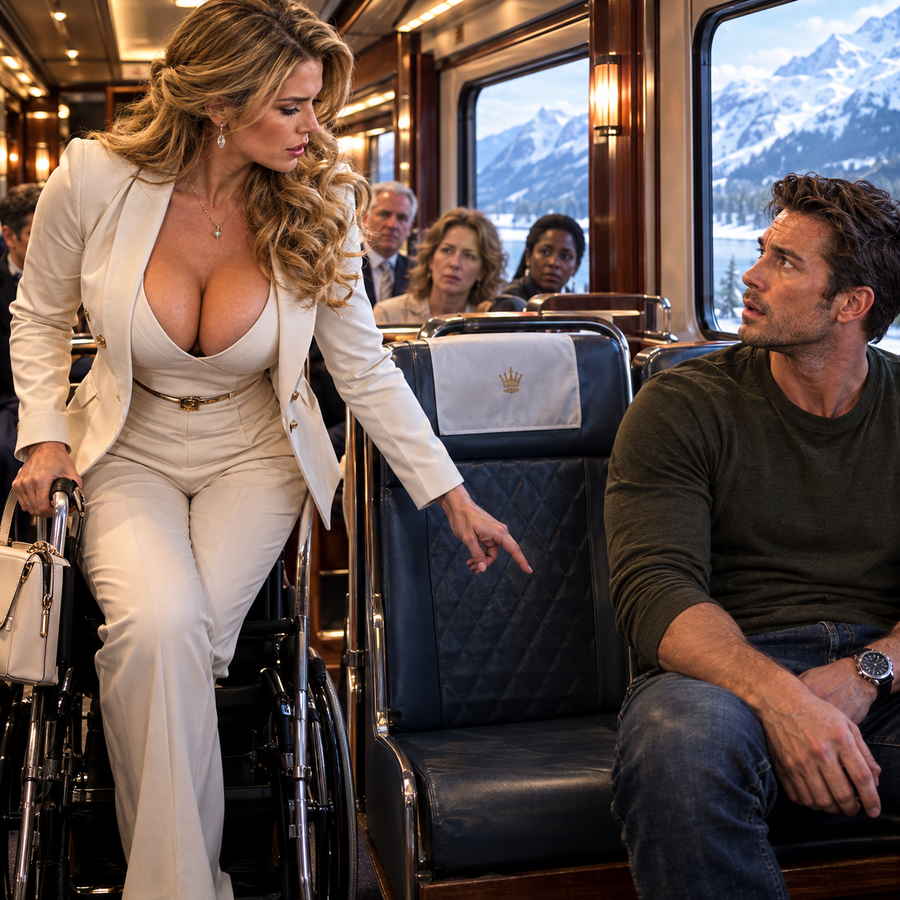
PART 3
Rachel stared at this 8-year-old Emma had turned 8 in March. an event Rachel had attended with a card and a set of architectural pencils that Emma had treated with the reverence usually reserved for surgical instruments and felt the now familiar sensation of being simultaneously exasperated and entirely charmed.
That is Rachel started thorough
offered. I was going to say alarming.
It’s thorough Emma repeated firmly and took her article back to the house.
Daniel looked at Rachel. Six clients, he said again, working on seven, she said.
He put down the specifications he’d been holding.
He looked at her in the direct uncomplicated way. He had the way that still after 3 months occasionally caught her offguard because she kept expecting it to come with something attached and it never did. It was just attention, just him looking at her.
I’m glad for real, Rachel.
I’m really glad.
She looked at the entrance drawing. The customer entrance will be done by Thursday, she said. The contractor, Patricia, is coming at 8:00.
He let her redirect. He always let her redirect when she needed to. She was aware of this and had been meaning to say something about it and kept not finding the right moment.
Patricia good, he said. Patricia is excellent. Fair warning.
She will have opinions about your paint colors.
I don’t have paint colors yet.
She’ll have opinions about that, too.
He almost smiled. Should I be scared? Professionally, no.
Personally, she once argued with a client for 40 minutes about the difference between cream and off-white. Those are the same color.
Don’t say that in front of Patricia.
He did smile then, the full version, not the careful almost version she’d seen most often in the early weeks, but the one that arrived when he was genuinely amused and had stopped managing it.
She knew what it looked like now.
She’d cataloged it the way you cataloged things that mattered without deciding to.
The customer entrance went in on Thursday. Patricia did have paint opinions. Daniel listened to all of them with the patient.
Genuine attention he gave to everything and then chose a deep gray blue that Patricia had not suggested, but immediately said was correct. And Patricia looked at him for a moment with the expression of someone revising their assessment upward.
and Rachel watching from the workbench thought, “Yes, that’s the right response to Daniel Mercer.”
By the first week of June, Mercer Automotive Works. The sign was up, a simple black-on-g gray design that Daniel had ordered, and Emma had approved before anyone else had been consulted was ready to open. It was not dramatically different from what it had been before.
That was the point. Rachel had not rebuilt the garage. She had made it work the way a garage for a working mechanic should work efficiently, logically with the tools in the places you reached for them first, with a customer entrance that felt like a business rather than a backyard with storage that meant Daniel spent time fixing cars instead of looking for things.
The accessible entrance was wider than required. The approach path was level. The door handle was at the height that worked for the greatest number of people.
Rachel had not made a speech about any of this.
She’d just built it.
On the morning of the soft opening, not a party, not a ceremony. Just the first day, Daniel put a sign out front and open to customers.
Rachel drove to Milbrook at 7:30 with coffee and two pieces of cornbread from a bakery she’d found that was almost as good as Broad Street grounds, which she’d been back to four times.
Daniel was already in the garage when she arrived.
He’d been there since 6, she suspected, though he wouldn’t say so.
She handed him the coffee and the cornbread. He looked at it. You remembered?
He said, “You told me once that you never ate enough on days that mattered,” Rachel said.
Emma mentioned it.
She said, “You forgot that to eat the morning of her first day of second grade, and you were distracted until lunch.”
Emma said that. Emma says things.
He took the coffee. He looked around his garage, the new layout, the west wall, the south wall with the wrenches where they belonged, the customer entrance visible through the open side door, the sign on the front of the building. It looks right, he said.
It is right. He looked at her.
Rach, don’t.
She said, not unkindly.
I’m going to anyway.
Daniel, you took a problem I’d been fighting for 2 years and you fixed it in 3 months.
And I know you’re going to say it was mutual and you needed a project and it was practice for the other work.
And all of that is true.
And it’s also true that you did something for me that changed what my life looks like.
And I want to say thank you in a sentence clearly so that you actually hear it. She looked at the coffee cup in her hands.
He said, “Thank you.”
She looked at him.
You’re welcome.
She said clearly in a full sentence so that he actually heard it. They stood in the garage for a moment.
Outside, a car turned onto the street, slowed, and pulled toward the front of the building. The first customer, Daniel, sat down his coffee.
He said, “Okay.”
He went to the door. Rachel stayed at the workbench. She listened to him greet the customer, a woman with a sedan that had been making an unfamiliar noise.
and she listened to him listened to her describe the noise and she recognized in the way he listened to the customer the same quality she’d first woke on a train in January when he’d turned from the window and looked at her face complete uncomplicated attention whatever the problem was he was going to understand it before he tried to fix it she thought about what kind of mechanic that made him she thought it made him a very good one arrived at 8:15 dropped off by a neighbor and came directly to the workbench where Rachel was reviewing plans for her
seventh client, a man in his 50s in Norristown, who had lost part of his left hand in a factory accident 5 years ago and needed his kitchen modified so he could cook.
Emma sat beside her and looked at the plans. Kitchen, Emma said.
Rachel confirmed.
What’s the main problem?
Rachel showed her.
Emma asked three questions, two of which were perceptive and one of which revealed a misconception about loadbearing walls that Rachel corrected carefully and completely because Emma’s misconceptions deserve the same quality of correction
as anyone else’s.
At 10:00, Rachel’s phone rang.
It was a number she didn’t recognize.
Philadelphia area code. She almost let it go to voicemail.
She answered, “Is this Rachel Whitmore?”
A woman’s voice, professional, slightly formal.
I’m calling from the disability rights architecture initiative.
My name is Stance Bell. I got your name from a Dr. Anita Patel at the Kesler Institute.
Rachel sat up straighter.
Doctor Patel said, “You’ve been doing accessible residential work.”
Constance continued.
We’re putting together a design collective architects, engineers, and planners who specialize in accessible design.
We’re in the early stages, but we’re looking to build a roster of practitioners to consult on projects and potentially take on contract work.
I’d love to talk with you about whether this might be something you’d be interested in, Rachel said.
What kind of projects? Constance told her.
Rachel listened with the focused stillness she brought to things that were about to change something. public buildings, residential retrofits, municipal accessibility audits, not small jobs, significant work.
The kind of work she’d done at the level of corporate structural engineering, but in a direction she’d never gone before.
The kind of work Natalie would have said was the point.
I’m interested, Rachel said.
Can you come to Philadelphia next week?
We’d like to meet in person.
Yes, Rachel said, I can do that. She hung up and sat with the phone in her hand. Emma looked at her.
“What was that?”
“A door,” Rachel said.
Emma considered this.
“What kind of door?”
“A good one,” Rachel said.
Emma appeared satisfied and went back to studying the kitchen plans. Rachel looked at the phone for one more moment and then put it in her bag and went back to work. She did not tell Daniel about the call until later that afternoon when the early rush of opening day customers had slowed and the two of them were sitting on the workbench with the second set of coffees.
Emma had appointed herself responsible for procuring which she’d done with the authority of a person who had decided that coffee logistics were now her domain.
He listened to the whole thing without interrupting.
When she finished, he said, “Are you going?”
I just said I was. I know you said it.
I’m asking if you’re going.
She looked at him.
What’s the difference?
The difference is that you said yes on the phone before you’d thought it through and now you’re sitting here and you’re going to think it through and I want to know what you think.
She sat with that. Outside a second customer pulled up.
It’s the right work, she said finally.
It’s what I’ve been building toward even when I didn’t know I was building toward it.
Everything I’ve done in the last 3 months, George Gald and the bathroom, the kitchen in Norristown, this garage, all of it was pointing at this kind of work.
I just didn’t have the name for it yet.
Then you should go, Daniel said. It might mean more time in Philadelphia.
He looked at her steadily.
Philadelphia’s an hour and 40 minutes by train, he said.
I know because I’ve done it.
She looked at him. He held her gaze.
She said, “Daniel Rachel.”
He said her name the same way she’d said his with the same weight in the same register.
The register that meant stop managing this. Stop being careful. Just say the thing, she said.
I’ll still come on Saturdays.
Something in his face did what faces did when they got the answer they’d been waiting for.
He nodded. Good.
I might need you to drive me to physical therapy sometimes. My Thursday appointment when the train is unreliable.
Done. and your car situation needs to be addressed.
The brakes on the Silverado are going to need attention before winter.
I know about the brakes, you know, and you haven’t done it.
I’ve been busy.
You’re a mechanic, Daniel.
I know I’m a mechanic, Rachel.
Then fix your brakes. He looked at her for a moment.
Then he said, “Have dinner with me.”
The shift was so clean and so unexpected that Rachel stopped. He said it again clearly, so there was no interpretation required.
Not with Emma. Not at the garage.
Dinner, you and me. She looked at the workbench. She looked at her hands.
She thought about the first morning on the train when he turned from the window and looked at her face. Not the crutches, not the brace, her face.
She thought about the hospital lobby and the nod across the room. She thought about his jacket on her shoulders in the February cold and the drawing Emma had made with the silver hoop earrings. She thought about a woman named Laura who had kept a photograph for 7 years because she understood that kindness needed to be remembered.
She thought about Natalie standing in that photograph head tilted laughing. She thought about what it meant to want something and actually let yourself have it.
She said, “Fix your brakes first.”
He blinked.
Then seriously, I’m not having dinner with someone who’s driving around on bad brakes.
It’s irresponsible.
It’s Rachel.
That’s not fix the brakes and ask me again.
He stared at her. She looked back at him with a complete composure of a woman who had said exactly what she meant.
Then she saw his face shift the starting of the smile.
The real one, the one he couldn’t manage when he was trying to manage it.
Fine, he said. Fine, she said.
Emma appeared from around the side of the building with a look on her face that suggested she had heard heard more of this conversation than she was going to admit.
I’ll fix the brakes tomorrow.
Emma announced apparently to no one in particular since apparently nobody in this garage is going to take initiative. Emma, Daniel said.
What? The brake pads are right there.
Third shelf, south wall, which is the correct wall now. Thanks to Rachel, she looked at Rachel. He likes you.
she said with the simple directness of someone stating a fact that everyone already knew and nobody was saying.
He’s been different since January.
I’ve been waiting for him to catch up to what’s actually happening.
Rachel looked at Daniel. Daniel looked at the ceiling.
She’s eight, he said.
She’s right, Rachel said.
Everybody keeps saying that because it keeps being true, Emma said and went back to wherever she’d come from.
The garage was quiet for a moment. Daniel looked at Rachel.
Rachel said, “Fix the brakes.”
He exhaled.
“I’ll fix the brakes tonight.”
She picked up her coffee.
“Good.”
He picked up his outside. The afternoon was doing what June afternoons in Pennsylvania did, which was proceed with warmth and uncomplicated brightness without making a fuss about it.
The rest of that Saturday was ordinary. Customers came and went.
Daniel worked.
Emma did homework and presented Rachel with two questions about fractions that Rachel answered and one question about why people in the 18th century wore so many layers that Rachel did not answer because she didn’t know Ned and said so and Emma accepted this with surprising grace probably because Rachel had at least been honest about it.
At 5:30 Rachel started packing up her bag. Daniel was underneath the sedan which the owner had left for the afternoon.
The legs she could see from the ankles down were still, which meant he was either thinking or done and just hadn’t moved yet.
I’m heading out, Rachel said.
A pause. Brakes are fixed, he said. She stopped on the Silverado, he said.
I did them at lunch. Or you say I was too fast about it. I had the pads since last month.
I was always going to do it today. She still for a moment.
Is that right? She said. Mhm.
She picked up her bag.
He said, “Saturday dinner this Saturday.
Not the garage.
Somewhere with good windows.”
Silence from under the car. Then I know a place.
Emma’s going to want to come.
Emma’s going to want to come.
Is that okay? He slid out from under the car.
He was looking up at her from the floor, which was an unusual angle for a conversation, but managed somehow to have the same quality as every other conversation they’d had direct.
Clear without performance.
He said, “Yeah, that’s okay.
” She said, “Good.”
She walked to the door. She stopped. She said without turning around at the wall.
“I’ve been different since January, too.
In case you were wondering,” she heard him not quite ling behind her, the sound of someone keeping a response to themselves.
She walked to her car. She drove home through the June afternoon with the windows down and the heater off because it was finally warm enough and she had been waiting for that. the specific relief of warmth after a long winter, the particular exhale of a season that had been hard finally releasing into something easier.
She was thinking about Philadelphia, about Constance Bell and the Disability Rights Architecture Initiative, and what it would mean to do this work at that scale.
She was thinking about Gerald, who called her sometimes now just to tell her things that he’d cooked dinner for his daughter last Sunday, that he’d rearranged his closet on his own, that he’d taken the bus to the library for the first time since the stroke.
She was thinking about Emma’s drawing, which was framed now on the wall of Rachel’s apartment, the two figures and the child, and Natalie in her silver hoop earrings with the small envelope under her arm.
She was thinking about Daniel Mercer, who had fixed his brakes at lunch on a day when she’d said, “Fix your brakes and hadn’t even connected the two events until she asked.”
Or had connected them immediately and done it anyway.
She wasn’t sure which, and she wasn’t sure it mattered.
She got home, changed, made tea, and sat at her desk, a real desk now, in a corner of the bedroom she’d given over to the practice.
with the new notebook and the client files and the architectural pencils in their correct order. And she opened the notebook.
She wrote the date June 7. She wrote Gerald Cooking Bus Library. She wrote Mercer Autoworks open entrance working sign looks right.
She wrote Constance Bell, Philadelphia next week. She looked at the list.
She wrote one more line. Saturday dinner.
She looked at it. She thought about what Natalie would say about a person who went through two years of rebuilding herself and came out the other side scheduling dinner with a man whose daughter had a search alert on her name and who fixed his brakes.
Same afternoon she mentioned it. Natalie would say about time.
She would say it with the exact combination of affection and exasperation that had characterized 29 years of being Rachel’s sister.
and she would tilt her head to the left and slightly back and her silver hoop earrings would move and Rachel would roll her eyes and mean exactly none of it. Rachel closed the notebook. She picked up her phone and typed a message to Daniel.
She wrote, “Tell Emma the place needs good windows.”
His reply came back in 2 minutes.
She’s already looking it up.
And then a minute later, she says she found three options and has ranked them by window quality.
She’s prepared a brief and then immediately after I’m sorry in advance, Rachel laughed the real version, the one that arrived without asking and put the f face down on the desk and looked at the ceiling of her apartment and said to no one and to someone, “Okay, I see what
you were doing.
I see the shape of it.”
She waited for the familiar weight of grief to follow the thought. It came but gently the way it came sometimes now.
Not the knock you sideways kind. Not the kind that found you unprepared and took the floor out from under you. The kind that was simply love with nowhere left to go looking for the nearest place to land.
She let it land. She sat with it and then she opened the notebook again and she got back to work. The Saturday dinner happened.
Emma’s brief had been thorough.
She had ranked three restaurants by window quality, natural light coefficient, her term, delivered without irony, proximity to public transit, and what she called general atmosphere of not being too loud, which was her way of saying she wanted to be able to have a real conversation and not shout over music that nobody had asked for. The winning restaurant was a place called Corazon Market Street, a neighborhood spot that had been there since 1,987 and showed it in the best possible way.
Worn wooden tables, good light, a menu written on a chalkboard that changed twice a week. Emma approved of it immediately upon entry.
She said, “The windows are excellent,” Daniel said.
“You’ve never been here.
I’ve seen photographs,” Emma said and found them a corner table.
they ordered. Emma ate pasta with the focused appreciation of a person who had researched the menu in advance. Daniel ordered something he barely tasted because he was mostly watching the two people he brought to dinner, which Rachel noticed and did not mention.
Rachel ordered the fish and ate most of it and stole two of Emma’s bread rolls because Emma wasn’t going to finish them and said so.
The conversation was easy in the way that conversations were easy when the people having them had already been through difficult things together and no longer needed to manage impressions. Emma talked about a project she was doing for school, a presentation on bird migration routes that had evolved, apparently without teacher input or approval into a full comparative analysis of seven species across three continents,
including handdrawn maps that she had transferred to poster board with architectural precision.
Your teacher must love you, Rachel said. What?
My teacher is sometimes overwhelmed by me. Emma said she told my dad.
I was highly motivated.
That’s a good thing.
She said it in a way that had other meanings, Emma said. Daniel looked at his water glass.
She means well, he said. She does, Emma agreed.
She just wasn’t expecting the maps.
Rachel looked at Daniel. He looked back at her.
Something passed between them that was familiar now.
the shared comprehension of people who had been paying attention to the same person long enough to find the same things funny without having explain why after dinner walking to Daniel’s truck the Silverado with the fixed brakes which Rachel had checked herself before getting in fact she mentioned and which Emma found completely reasonable and
Daniel found both unnecessary and exactly right.
Emma took Rachel’s left hand.
Not dramatically, not as a statement, just reached up and took it. The way children took hands when they were walking somewhere and it was dark and the sidewalk was uneven.
As a practical and unremarkable gesture of connection, Rachel held Emma’s hand and did not look at Daniel and did not say anything.
She felt him beside her, not saying anything either. They walked half a block like that.
Then Emma spotted a bookstore window and made the sharp lateral movement of a child who had seen something she needed to investigate. And the hand was gone, and Emma was pressing her face to the glass, describing a book about Antarctic birds that she needed immediately and probably already owned.
Daniel stopped beside Rachel, he said quietly.
She doesn’t do that with everyone.
Rachel watched Emma explain the Antarctic bird book to the window. I know, she said. He was quiet for a moment.
Are you okay? She looked at him.
I’m really okay, she said.
That’s the thing.
I keep waiting for it not to be true, and it keeps being true. He looked at her in the dark outside the bookstore in the particular way he looked at her now that she had stopped being surprised by steady present entirely without agenda.
Good, he said. Emma bought the Antarctic bird book.
Daniel carried it because the hard cover was enormous, and Emma’s backpack was already full of the items she considered essential for a Saturday dinner, which included her colored pencils, three reference books, and a small notebook for observations.
They drove back to Milbrook. Emma fell asleep in the back seat somewhere on the highway. The Antarctic bird book open on her lap, her head against the window.
Rachel watched the highway lights pass and thought about a woman named Laura Mercer who had kept a photograph for seven years and written someday on the envelope.
She thought, “This is the someday.”
She thought she knew there would be one. The fall came the way falls came in Pennsylvania, not gradually, but in a week, the temperature dropping one Tuesday and not going back up. By October, Mercer Autoworks had been operating for 4 months, and it was doing what a good business did in its first year, which was staying afloat and building steadily and earning the kind of reputation that came from doing the work correctly and treating people decently.
Rachel knew the financial picture because Daniel had asked her in September to look at his books.
He’d asked carefully in the way he asked for anything that felt like an imposition.
He said, “I’m not asking you to fix it.
I just I want someone I trust to look at it and tell me if I’m thinking about it right.
” She looked at the books.
She told him what she saw, which was a business that was viable, but was going to need one decision before winter, whether to hire a part-time mechanic to take on overflow work, which would cost money in the short term and require a revenue threshold.
He was three months away from reliably hitting or wait until spring, which was the more conservative choice and would mean he’d have to turn away work over the winter.
What would you do?
He said, “I’d hire the mechanic,” she said.
“You’re going to hit the threshold.”
“Turning away work in your first winter will cost you more long-term than the short-term expense.”
“That’s a real answer,” he said.
“You asked for a real answer.”
He hired the mechanic, a man named Victor, 58, who’d been laid off from a dealership in Chester County, and who turned out to be exactly what the shop needed.
Experienced and unflapable and deeply good at the diagnostic work that Daniel didn’t always have time for.
Victor met Rachel on his second day and said, “You’re the engineer who designed this layout.”
“I am.”
Rachel said, “South wall wrench placement is perfect.”
He said, “I’ve been in shops for 30 years.
Nobody puts the wrenches on the south wall. They always put them on the west. The west wall creates a bottleneck, Rachel said.
Yes, it does. Victor said with the fervor of a man who had been waiting for someone to say this.
Emma, who was present, said, I told them that in February. Victor looked at Emma.
How old are you? Eight.
Sim said. Victor looked at Daniel.
She told you in February. She was right. Daniel said.
She is clearly always right. Victor said.
And from that point on, he and Emma had the relationship of two people who had recognized each other as fundamentally aligned in their approach to the world, which was to be correct and patient about it. In October, Rachel went to Philadelphia three times. The disability rights architecture initiative was real and growing constants bell had turned out to be exactly what Rachel needed her to be which was a person who understood the work and the people it was for with the
specificity that came from having navigated an inaccessible world personally.
Constance used a power wheelchair. She had been a municipal planner for 20 years before founding the initiative and she brought to it the rigorous institutional knowledge that Rachel brought to structural problems thorough practical uninterested in gestures. They worked well together immediately.
By November, Rachel had 12 active clients and a formal consultings agreement with the initiative that brought in contract work from public projects across three counties. She had also quietly been asked to advise on the design standards for a new community health center in West Philadelphia that would serve primarily elderly and disabled residents.
She accepted. She called her mother to tell her.
Her mother said Natalie would say, “I told you so.”
Rachel said Natalie would be completely insufferable. She really would.
her mother said. And they both laughed and it was a real laugh. The kind that had grief in it and love in it equally.
The kind that Rachel had not been able to do for almost 2 years and could do now, she said. I think she set this up.
Her mother was quiet for a moment. What do you mean?
I don’t know exactly how to explain it, Rachel said.
But I think she left things in the right places. I think she knew something about how things moved through the world and she trusted it to keep moving after she was done. Her mother said that sounds exactly like your sister.
I know.
Rachel said it’s very annoying.
Her mother laughed again. They stayed on the phone for an hour.
In December, two things happened.
The first was that Emma’s follow-up MRI came back clear.
The small vascular malfformation had not grown. The neurologist described the management plan going forward, annual imaging, a list of symptoms to watch for, lifestyle considerations that were minimal and manageable and said the word stabiliten several times with the particular emphasis of a doctor who wanted a word
to do heavy lifting.
Daniel called Rachel from the parking garage of pen medicine 30 seconds after the appointment ended.
He didn’t say anything for a moment.
She waited.
Then he said, “Stable,” she said.
I know. How do you know?
Because I’ve been sitting here since 11:30 waiting for your call.
A silence. Rachel.
Daniel.
You’ve been sitting.
Don’t make it a thing, she said.
Just tell me she’s okay.
She’s okay.
He said. His voice did what voices did when they were carrying too much to stay completely controlled.
She’s okay.
Rachel closed her eyes. Good, she said.
Very quiet. Good.
Emma took the phone from her father and said, “The neurologist said, “My brain is very interesting.
” He used that word specifically.
I’m keeping that.
Rachel made a sound between a laugh and something else. You should absolutely keep that. I told him I knew, Emma said.
He seemed surprised.
He shouldn’t have been, Rachel said.
That’s what I said.
A pause. Rachel.
Yeah. Thank you for waiting. Rachel pressed her free hand flat against her kitchen table and held on.
always,” she said.
The second thing that happened in December was that Rachel had a setback. She had been half expecting it. Dr.
Patel had warned her that the nerve regeneration process was not linear, that there would be periods of progress followed by periods where the progress seemed to reverse or or stall and that this was normal and did not mean the trajectory had changed. She had understood this intellectually.
She had been less prepared for the specific morning in December when she woke up and the pain in her left leg was back at a a level she hadn’t felt since the previous winter.
A deep grinding ache that told her immediately before she’d even tried to stand that today was going to be different.
She lay in bed for a long time. She thought about the surgery option that Dr. Patel had moved to unlikely but not impossible.
She thought about what another surgical recovery would mean.
the months of reduced mobility, the rebuilding, the clients she’d have to defer.
She thought about the West Philadelphia Community Health Center and the consulting agreement, and Gerald, who called her to report on his mornings and the 12 people whose projects were in various stages of completion. She thought about what it meant to be back at the beginning. She was not at the beginning.
She knew that.
But pain had a way of collapsing time, of making the worst moments of the past feel present, of returning you to a version of yourself that you thought you’d left behind.
She canceled her appointments for the day. She called Dr. Patel.
She texted Daniel. Bad pain day.
Not coming Saturday.
Don’t worry.
Replied in 4 minutes. Okay. Calling you tonight.
She put the phone down and stared at the ceiling and felt the particular bitterness of a setback arriving exactly when things had been going well, which was the specific cruelty of setbacks. They waited for you to relax. She spent most of the morning in bed, moving carefully when she had to move, managing the pain with the protocol she and Dr.
Patel had established for exactly this kind of day. She did not catastrophize.
She had gotten better at not catastrophizing. She simply hurt and she let herself hurt and she did the things that helped and waited for them to help. By afternoon, she was at her desk, not working, just sitting, the notebook open, pen in hand, not writing anything, looking at the names of her clients, looking at the small framed photograph on the wall, Natalie in her silver hoop earrings, standing with Laura Mercer in the photograph that Emma had given her a copy of, framed in a thin black frame that Emma had selected and presented to Rachel in September, with the semnity of a person making a meaningful shift.
She looked at Natalie. She thought about the surgery, the possibility of it, the months it would take.
She thought about what she’d said to Gerald on his first visit.
What do you absolutely refuse to accept? She got out a piece of paper.
She wrote the question at the top. She sat with it for a while. Then she wrote her answer underneath it.
Stopping. She looked at the word.
She thought, “That’s right.
Not stopping. not disappearing to it into a setback the way she had in the first year when every obstacle had felt like proof of a verdict when she had pulled back from people and projects and plans cuz being involved meant being visible and being visible meant people see you fail. She picked up her phone and called Dr.
Patel. Doctor Patel said the pain pattern was consistent with a nerve in the middle of a regeneration cycle uncomfortable but indicative of activity not regression.
She adjusted the protocol slightly, she said. This is not a step back, Rachel.
I know it feels like one.
I know it’s not, Rachel said.
I just needed to hear you say it.
I’ll say it as many times as you need.
Daniel called at 7:30 as he’d said he would.
He asked how she was. She told him the truth, which she had learned with considerable effort to do with Daniel specifically.
not the managed version, not the version calibrated to not worry him, but the actual truth. She said the pain had been bad.
She said she’d had a few hours in the morning where the old thinking had come back.
The thinking that translated every setback into evidence, that she wasn’t going to make it, that the version of herself she’d been building was fragile, that she’d been fooling herself.
He listened to all of it.
Then he said, “Is it still bad right now?
The pain better, she said. Manageable.
The thinking gone, she said. Mostly.
What happened to it? She looked at the piece of paper on her desk. The question and the answer underneath it.
I argued with it, she said, and it lost. He was quiet for a moment. Good, he said.
She heard something in that word that he hadn’t dressed up or explained.
She let it be what it was.
Emma wants to know if you’re coming Sunday, he said.
She said, “Saturday is waved under the circumstances, but Sunday is non-negotiable.”
Her word non-negotiable. Rachel repeated.
She’s been spending time with Victor.
His vocabulary is very precise. Tell her Sunday.
Rachel said she’s going to have questions about the West Philadelphia project.
She saw the preliminary plans on your desk last week. I know. She asked me three questions about foundation load tolerances before you got back from the hardware store.
What did you tell her? I told her the truth.
She understood it. A pause. Of course, she did.
Sunday, Rachel drove to Milbrook. The pain was manageable.
Not gone, it would not be gone for several weeks. She had accepted that, but at the level she could work through.
The level her body had learned to function beside rather than be stopped by. Emma met her at the door with the Antarctic bird book opened to a page about Arctic turns and a look on her face that said she had been waiting since Saturday and was not going to pretend otherwise.
“You’re here,” Emma said.
“I’m here,” Rachel said.
Emma looked at her carefully, the assessing look, the one she’d had since the first morning on the train.
The look that was direct but not unkind.
“Are you okay getting there?”
Emma nodded, appearing to find this acceptable. I made you tea, she said.
It’s on the workbench.
I looked up which kind was best for nerve pain. Victor helped me figure out the water temperature. Rachel looked at this 8-year-old who had looked up the correct tea for nerve pain and consulted a 58-year-old mechanic about water temperature and made it and put it on the workbench.
She said, “Emma, what?
Thank you.”
Emma considered this. You always say thank you.
She said, “You don’t have to keep up.”
I know I don’t have to, Rachel said.
I’m doing it anyway.
Emma almost smiled. It was the expression Rachel had started to think of as the Emma smile, the one that arrived when something had landed exactly right, and Emma was acknowledging it without making a fuss.
Daniel had the same smile. They wore it the same way, carefully, as if smiling was a thing you did when you meant it, and not a social courtesy. She went inside.
She drank the tea. It was the right temperature. January came.
One year since the train, one year since a crowded morning car and a window seat, and a man who moved his tool bag without being asked, and a child who reached into her backpack and changed everything. Rachel was thinking about this on the morning of the anniversary January. Same gray Pennsylvania cold, same early light when her phone buzzed.
Daniel, same train, same time.
Bring Emma’s ticket, she insists.
She stared at the message. She thought about how Daniel Mercer communicated via text, which was in complete sentences with no abbreviations and occasional precision that made her think of the way he listened. Nothing wasted.
Everything meant, she typed back, he replied.
Because it’s the anniversary.
Because Emma researched anniversary traditions and decided this one was appropriate.
Because I think she’s right.
Rachel looked at the message for a long time.
She typed, “She’s always right.
I know, he replied. 7:14.
Don’t be late.
She was on the platform at 7:12. Daniel and Emma were already there.
Emma had her yellow backpack now decorated with additional iron-on patches, a godwit mid-flight, an arctic turn, a small frog in revolutionary was uniform that she had added in October, and which had required sourcing a custom patch from a woman on the internet who made them to order. Emma saw Rachel and walked toward her with a purposeful stride of someone who had organized this and was confirming the logistics were in order.
“You’re early,” Emma said.
“So are you,” Rachel said.
“I’m always early,” Emma said.
“I don’t understand people who aren’t.”
Daniel reached them. He was wearing the same worn jacket from a year ago, the one Rachel had borrowed in February and returned and sometimes thought about. He looked at her in the pale January light.
“You okay?”
He said, “Yes,” she said completely.
The train arrived. They got on.
They found seats not the same seats. The car was different. The configuration slightly different, but close enough that when Emma settled between them and opened her notebook, and Daniel looked out the window with the expression of a man doing his best thinking.
Rachel felt the specific reverb of a year looping back to where it had started. She looked at the seat beside her.
She thought about what had been in that seat a year ago, what had been possible and what had seemed impossible, and which of those categories things had turned out to occupy. She thought about the words someday written on an envelope. She thought about the difference between waiting for something and building toward it.
About halfway to Philadelphia, an elderly man made his way down the aisle with the careful deliberation of someone who had been managing a body that required deliberation. He stopped beside the empty seat in the row ahead of them. He looked at it.
He looked at the car. He looked uncertain the specific uncertainty of a person, calculating whether the space was actually available or whether he was misreading something. Rachel was watching.
Before Daniel moved, before Emma looked up from her notebook, Rachel picked up her bag from the empty seat beside her and shifted it to her lap.
She said, “Is this seat free?”
The man turned. He saw the crutches.
He saw the brace. He looked at her face, not at the logistics of her, but at her face. The way you looked at someone when they were offering you something real.
Are you sure? He said completely, Rachel said. He sat.
She settled back. She was aware of Daniel beside her very still.
She did not look at him yet. She looked forward at the seat in front of her, at the window, Sir Pennsylvania tracked past in its January gray, and she sat with the feeling of having done something ordinary that was also not ordinary at all.
That was, in fact, the continuation of something that had started years before she was on this train started with a woman named Natalie, who had believed in looking directly at people, who had left kindness behind her like a long thread that had kept moving. After she stopped, Daniel put his hand over hers.
Not a word, not an explanation, just his hand over hers on the armrest, warm and certain. She turned her palm up. She held on.
Emma looked up from her notebook, looked at their hands, looked at Rachel’s face, looked at Daniel’s face, and appeared to perform a rapid internal assessment of the situation.
She said, “Finally,” Daniel said.
Emma, “What?”
“It took almost a year.
That’s a long time.
I kept waiting. Emma, Rachel said.
Yes. Right about the Arctic turns.
Emma held her gaze for a moment. Then she looked back at her notebook. Fine, she said.
But I’m noting this in my records.
You have records? I keep records of important things, Emma said.
Already writing. This is important.
Daniel’s hand was still over Rachel’s.
Rachel looked out the window. She thought about the elderly man now settled in the seat ahead.
looking at the Pennsylvania landscape with the quiet relief of a person who had found a place to rest after not being sure one existed. She thought about Daniel 11 months ago on a floor in a garage, unable to reach for a tool until a 4-year-old handed him a plastic screwdriver and the world reorganized itself into something he could work with. She thought about Gerald shaving himself in the bathroom every morning.
She thought about Victor on the south wall saying finally someone who understands the wrenches. She thought about Constance Bell who had built an entire institution out of the conf. The world could be designed for the people who actually lived in it.
She thought about a community health center in West Philadelphia that was going to have an entrance that worked for everyone who needed to come through it. She thought about Laura Mercer, who had taken a photograph and written a word on an envelope and trusted that word to find its way to the right moment. She thought about Natalie standing in that photograph, laughing at something, her silver hoop earrings, catching whatever light had been available that day.
Her head tilted left and slightly back, full of the particular conviction that kindness was not a finite resource. That it did not diminish when you gave it away, that it moved through the world, finding the next person it needed to reach, and the next and the next.
So long as someone kept passing it forward, she had been right. She had always been right about that.
and Rachel Whitmore, who had driven her shoulder into a closing train door a year ago, with no idea what was waiting on the other side of it, who had spent two years rebuilding herself into someone she wasn’t sure she recognized.
Who had written three words in a notebook and then a fourth and then built an entire practice and a family and a life she hadn’t let herself want until it was already there.
Understood now what her sister had understood long before her. The good we leave behind does not disappear when we do. It travels.
It finds the next person who needs it. And it does not stop.
It does not stop. It does not stop.

