“Touch Her Again and You’ll Regret It!” Single Dad Protected CEO—Then Everyone Learned He Was a SEAL (Part 2)
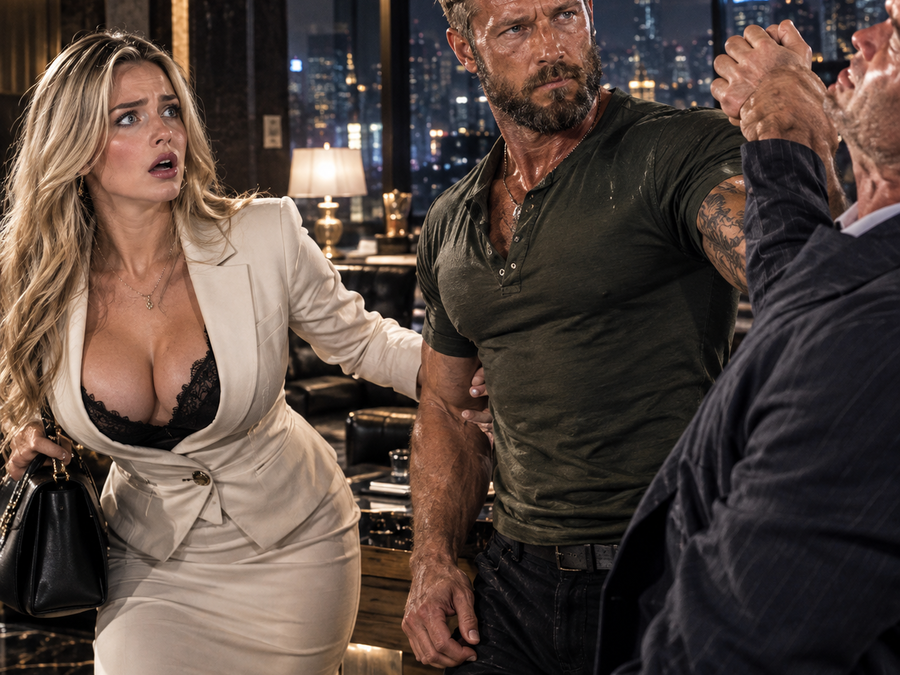
“Touch Her Again and You’ll Regret It!” Single Dad Protected CEO—Then Everyone Learned He Was a SEAL (Part 2)
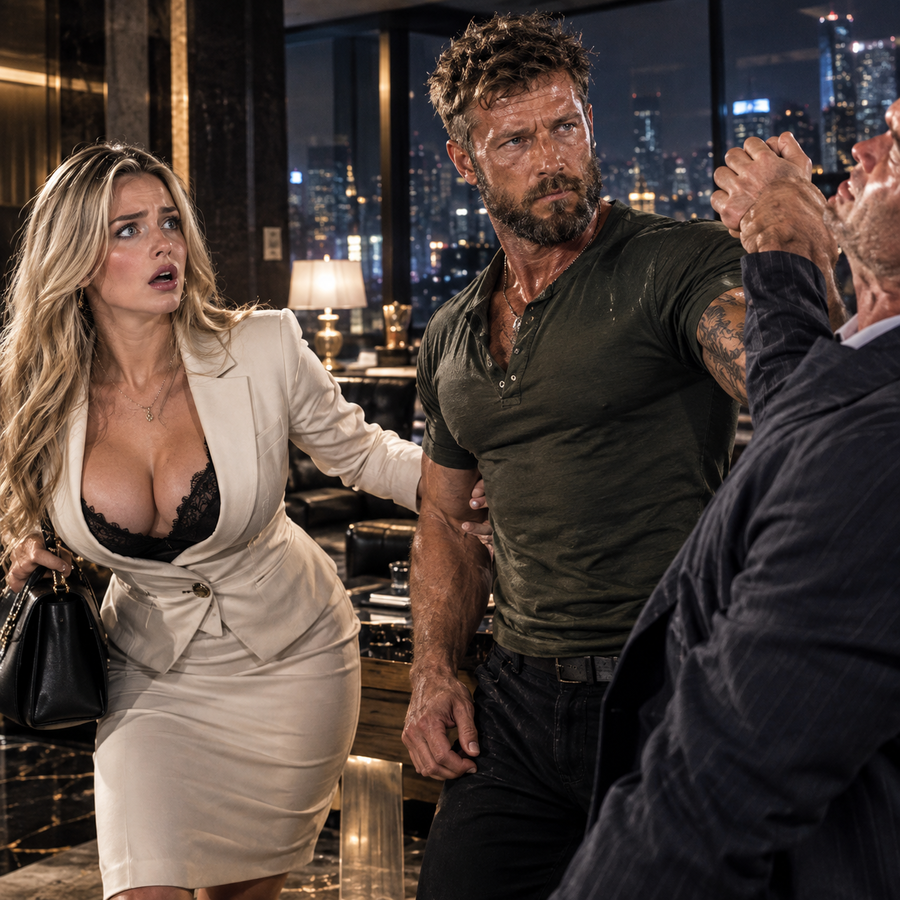
PART 2
Something moved across her face. Not surprise exactly. More like recognition. “That’s how I used to feel before all of this started,” she said quietly. “Every problem had a solution. Then he started in on us, and I started waking up at three in the morning thinking this was the one that didn’t.” “It has a solution,” Michael said. “You sound sure.” “I am sure.”
She nodded once. Then she straightened up to her full height and the vulnerability closed back over like water over a stone, and she was the CEO again. “I’ll call the board. 2:00 p.m. I’ll tell Grant it’s a financial update.” “Good,” Michael said. He stopped at the door. “When this is over,” she said, “I know you said you’re walking away. I understand that. But I want you to know—” She paused, choosing words carefully. “Whatever you did before, whatever those fourteen years were, the way you do what you do, it matters. What you are matters.”
He didn’t answer that. But he held her gaze for one second longer than he would have otherwise. Then he went back to work.
At 11:44 a.m., the story dropped. Michael was in the temporary office when his phone lit up with a news alert from a financial publication. The headline read: “Questions Surround Security Consultant at Bennett Aerospace; Sources Allege Classified Access.” The byline was the journalist Reyes had named. The story was three thousand words of carefully constructed implication. No direct accusations. Nothing legally actionable. But a cascade of “sources say” and “questions have been raised” and “industry insiders suggest” that added up to a portrait of a shadowy figure with a classified background who had inserted himself into a defense company under suspicious circumstances. His name was in the third paragraph. Michael Carter. Former military. No verifiable employment history.
He read the whole thing once. Then he closed his phone. He went to Victoria’s office. She’d already seen it. She was standing at her desk with her phone in her hand and an expression that, for the first time in his three days at the company, looked something close to afraid. “The board is going to see this,” she said. “Yes.” “They’re going to walk into that meeting thinking—” “I know what they’re going to think.” He said, “Let them think it.”
“Michael—” Victoria. He waited until she looked at him directly. “Do you trust me?” The question sat in the air between them. She’d known him for three days. He’d turned her company upside down, given her a burner phone, made her act normal while everything was falling apart. And now he was asking her to walk into a boardroom full of her most important stakeholders with a news story calling him a thief and tell them to listen to him anyway. “Yes,” she said. “God help me. Yes.” “Then let’s go,” he said.
The board convened at 2:00 p.m. sharp. Twelve people around a long table. Men and women in their fifties and sixties. Faces that belonged to people who had built things and protected them and knew the cost of losing them. They had the article in front of them. Michael could tell by the way they looked at him when he walked in. A mixture of weariness, confusion, and the particular cold assessment of people who were trying to figure out if they’d made a mistake.
Grant Miller was at the far end of the table. He looked exactly right. Composed. Professional. Subtly concerned in the way that a man who believed he was about to watch someone else’s trap close would look. Michael set a single folder on the table in front of him. He didn’t open it. He looked around the room. “I know what you’re thinking. Give me twenty minutes and I’ll show you why you’re looking at the wrong person.”
One of the board members, a man named Harrove, silver-haired, sharp-eyed, said, “Mr. Carter, given the story that ran this morning, I think we need to understand who you are before we hear anything you have to say.” “That’s fair,” Michael said. “So let me tell you.” He opened the folder. Not the financial records. Not the evidence against Miller. A single document. Official government letterhead.
“My name is Michael Carter. From 2006 to 2020, I served with Naval Special Warfare Development Group. That is the classified designation for SEAL Team 6.” He said it the same way he said everything. Level. Unhurried. Without drama. “I cannot tell you what I did during those fourteen years. The specifics are classified and will remain so. What I can tell you is that I left with an honorable discharge and a record that has never, not once, included a breach of trust or a theft of any kind.”
The room was very quiet. He turned to the next page. “What I can also tell you is this. The article that ran this morning was fed to that journalist by Damian Cross, who has been attempting to acquire this company through coercion and intimidation for eight months. I can prove that. And I can prove that he has had help from inside this room.”
Every head at the table moved. Not toward Michael. Toward Grant Miller. Miller’s face didn’t break. It was impressive, actually. The man was good. He kept his expression in the zone of professional surprise. Eyebrows slightly raised. The look of a person who was confused by an accusation he hadn’t anticipated. “Michael,” he said, with exactly the right amount of measured concern in his voice. “I think you need to be very careful about what you’re implying.”
“I’m not implying anything,” Michael said. “I’m stating it.” He opened the folder to the third section and slid a page down the table toward Miller. “Your salary at Bennett Aerospace is $87,000 a year,” Michael said. “Your current financial obligations—mortgage, vehicle lease, private school tuition for your children, your wife’s business investment—total just under $700,000 annually. Either you’ve made some extraordinary investments, or someone has been supplementing your income.”
He slid another page. “This is a payment record from a shell company called Crestfall Partners, which is one of four entities used to route funds on behalf of Damian Cross. Two payments. The first for $240,000, made fourteen months ago. The second for $180,000, made six weeks ago.” He looked up. “Both to an account held in the name of a limited liability company registered in Nevada. The registered agent of that LLC is your wife.”
The room made a sound. Not a loud sound. A collective intake of breath. Grant Miller’s face finally moved. Not much. Just a fraction. Just enough. “This is fabricated,” he said, and his voice was still remarkably steady. “I don’t know what this man has put together, but—” “The server room,” Michael said. “2:40 a.m. The camera glitch that it logged as a malfunction. It wasn’t a malfunction. I found the transmitter you installed behind the processor rack in rack seven. I left it in place last night at 11:47 p.m. That transmitter was used to access a technical specification file from a terminal in the server room, copy it to an external drive, and forward it to a server registered to one of Cross’s shell companies.”
He set a printed log on the table. “That file had a tracker embedded in it. This is the complete chain of transmission.” Silence. Complete silence. Miller was looking at the log. He knew. He knew that Michael had built the whole thing backwards from that transmitter. That every move he’d made in the last thirty-six hours had been visible. That what he’d believed was a quiet, invisible operation had in fact been conducted inside a closed loop that Michael had been controlling from the start.
“The file you transmitted,” Michael said, almost gently, “was not real. It was a constructed document with no proprietary value, designed specifically to be accessed. Everything about that document, including the fact that you accessed it, copied it, and forwarded it, is documented, logged, and has already been shared with the FBI’s Cyber Division and the Assistant United States Attorney for the Western District of Texas.”
The words landed in the room like stones in still water. Miller stood up. “This is—” he started. “Sit down, Grant,” Victoria said. Her voice was quiet. Controlled. The voice of a person who had spent eight months having her company threatened, her decisions undermined, her authority eroded, and who had just watched the wall come down. He sat down.
One of the board members picked up a phone. Two hours later, federal agents walked through the front door of Bennett Aerospace. They walked past the lobby security, past the reception desk, past the elevator bank, down the hall to the office where Grant Miller was still sitting, having been told by Victoria’s attorney, who arrived forty minutes earlier, that he should stay in the building and not attempt to contact anyone. He hadn’t tried.
Michael stood in the corridor and watched them go past and felt nothing particular. Not satisfaction. Not relief. Something quieter. The feeling of a thing being completed. Victoria came to stand beside him. “It’s going to take time,” she said. “The legal process. Cross still has lawyers and he’ll use them. I know he’s not done.” “No,” Michael agreed. “But he’s not what he was this morning.”
She looked at him sideways. “You told the board you were SEAL Team 6.” “Yes.” “That’s the first time you’ve said it out loud, isn’t it?” He thought about it. In a room like that. “Yes.” She was quiet for a moment. “How did it feel?” He watched the federal agents turn the corner at the end of the corridor. “Like taking something out of the ground that should have stayed buried,” he said. “And realizing it doesn’t weigh as much as you thought.”
She nodded slowly. His phone buzzed. Emma. Text from the school’s check-in app. “Just wanted to say hi.” He looked at it for a moment. Then he typed back: “Hi, Bug. Taco night tonight.” Her response was immediate. “Yes.” He put the phone in his pocket.
There was still Cross. The journalist. The story that was already out there. The lawyers who would work for the next six months to minimize what had happened here today. The possibility that Cross would find another angle, another pressure point, another gap in the wall. There was still all of that. But right now, in this corridor, the man who had spent six years being invisible had just stood in a room full of people and said his name. Said what he’d done. Said it plainly, without apology, without drama. And the walls hadn’t come down. Emma was still safe. Victoria’s company was still standing. And Damian Cross, somewhere in the city right now, was looking at a situation that had just changed in ways he hadn’t planned for.
Michael straightened his jacket. There was still work to do. He went back to doing it.
The story didn’t die overnight. Michael knew it wouldn’t. Men like Cross didn’t fire one shot and walk away. They fired, reloaded, and fired again. And they kept firing until either the target went down or the ammunition ran out. And Cross had more ammunition than most people accumulated in a lifetime.
By 7:00 the next morning, three more outlets had picked up the original story. By 9:00, a cable financial news program had run a four-minute segment with a graphic that put Michael’s name next to the words “classified background” and “defense contractor controversy” in the same breath. By 10:30, Bennett Aerospace’s stock had dropped six points. Michael watched the number on Victoria’s office monitor and said nothing. She was watching it, too. Her jaw was tight, but her hands were still. She’d been in the building since 6:00 a.m. He’d been there since 5:45.
“How bad does it get before it gets better?” she asked. “Depends on how fast the federal filing moves,” he said. “The U.S. Attorney’s Office will want to move carefully. They don’t like to lose.” “How long is carefully?” “Days. Maybe a week.” She turned from the monitor. “We don’t have a week. The board is already getting calls from institutional investors. Harrove texted me at 6:00 this morning asking if I had a communication strategy.” “What did you tell him?” “I told him I was working on it.” She looked at Michael. “Are we working on it?”
“Yes,” he said. “But not the way he means.” She waited. “Cross is running a narrative,” Michael said. “He can’t beat the evidence in court, so he’s going to try to win in public first. Make the story big enough and loud enough that by the time the truth comes out, people have already made up their minds.” He turned away from the monitor. “The only way to beat that is to put someone in front of a camera who’s harder to dismiss than a headline.”
She understood immediately. “You.” “Me.” She stared at him. “You just told a boardroom you were SEAL Team 6 yesterday. You said it like it cost you something.” “It did.” “And now you’re saying you’ll do a press conference.” “Not a press conference,” he said. “One interview. One journalist. Someone with credibility and no existing relationship with Cross.” He paused. “Someone who’ll let the facts speak and not turn it into a spectacle.”
Victoria was quiet for a moment. “I know someone,” she said. “Dan Mercer. He’s been covering defense industry for fifteen years. He broke the story on two Pentagon contracting scandals. Cross has never been able to buy him or threaten him into silence.” She paused. “He’s been trying to get an interview with me for four months.” “Call him,” Michael said. “Tell him you have something bigger than what he’s been chasing.”
She picked up her phone. While she made the call, Michael stepped into the corridor and called Reyes. “The outlets that picked up the story,” he said when Reyes answered. “Can you track the sourcing? Who’s already working it?” “Two of the three are using the same language as the original piece. Word for word in some sections. That means they’re not doing independent reporting. They’re amplifying. Someone is seeding them.” “Cross’s PR firm.” “Almost certainly. I’ve got a name. Stanton Group out of D.C. They specialize in corporate reputation management. Their client list is private, but I’ve got a contact who owes me a favor.” “How fast?” “Give me two hours.” “You’ve got ninety minutes,” Michael said, and hung up.
He went back into the office. Victoria was just ending her call. “Mercer can be here at noon,” she said. “He didn’t ask many questions. I think the offer scared him a little.” “Good,” Michael said. “Scared journalists do better work. They’re more careful.”
She sat down and looked at him with an expression he’d seen building for the last twenty-four hours. Not doubt. Something more complicated than doubt. “Michael,” she said, “when you do this interview, when you sit down with Mercer, it’s not just your name out there. It’s everything you’ve kept private. Emma. Your past. The whole life you built in this city.” “I know.” “Does Emma know?” He was quiet for a moment. “She knows I’m doing something important. She’s nine. She understands more than she should.” “Have you talked to her about it?” He looked at the window. “Last night at dinner, she asked me if I was going to be on the news.” He almost smiled. “I said probably not. She said she’d ask Priya to record it just in case.” Victoria looked at him. “She’s remarkable.” “She is,” he said simply. “She gets it from her mother.” The way he said it closed the subject gently but completely. And Victoria understood and moved on.
“What do I tell my communications team?” “Tell them to hold every statement until after the interview. Nothing goes out before Mercer’s piece publishes. Not a tweet, not a press release, not a comment to any outlet. Total silence.” “They’re going to push back hard on that.” “I know,” he said. “Tell them it’s not a discussion.” She almost smiled. Almost. “You know, you sound like a CEO when you say things like that.” “I’ll try to stop,” he said.
At 11:15, Reyes called back, twenty-three minutes ahead of schedule. “Stanton Group is confirmed,” Reyes said. “My contact pulled their client intake records for this year. Cross has been with them since February. That’s two months before he first approached Victoria Bennett publicly.” He paused. “Carter, they didn’t start the PR campaign when this went sideways. They started it before he made his first move. This was always the plan. Acquire through pressure, and if the target resisted, destroy the credibility of anyone who helped them.”
Michael stood in the temporary office with one hand flat on the desk. Planned from the beginning. Grant Miller placed six years ago. Stanton Group retained eight months ago. The journalist cultivated before a single public move was made. This wasn’t an acquisition attempt. It was a machine. A carefully constructed, patient, multi-year machine for taking things from people who wouldn’t give them up willingly.
“How many companies?” Michael said. “I found evidence of four complete acquisitions using this model,” Reyes said. “Two more that were in progress and appear to have been abandoned when the target sold voluntarily.” He paused. “One of those four companies had a CEO who ended up facing federal charges that were eventually dropped. By then, the company was gone.” “What were the charges?” “Theft of proprietary technology,” Reyes said. “Sound familiar?”
It landed exactly as hard as it was meant to. “How is he going to do the same thing to me?” Michael said, not a question. He was already doing it. “The journalist piece was step one. My guess is step two was a formal complaint to the DoD referencing your classified background as a security concern. Get the government looking at you while Cross’s lawyers create enough noise to muddy the waters on the evidence you’d gathered.”
“He didn’t know about the board meeting,” Michael said. “He didn’t know we’d moved.” “No,” Reyes said. “And that’s the only reason this is still recoverable. You beat him by about eight hours.” Eight hours. Michael thought about the phone call at 6:15 in the morning. Cross, on the other end, unhurried, confident, offering him an exit. He’d already set the machine in motion by then. He was offering the exit because he expected Michael to take it. And if Michael took it, the machine would run anyway, and nobody would be standing in front of it to slow it down.
“I need everything you have,” Michael said. “The four companies, the Stanton Group connection, the pattern. Everything documented and formatted for legal use.” “Already done,” Reyes said. “Sending it now.” “Marcus.” Michael paused. “Thank you.” A brief silence. “Don’t thank me yet,” Reyes said. “Cross still has lawyers and money and a PR firm, and you’re about to go on the record in public about who you are. That’s not nothing.” “No,” Michael agreed. “It’s not nothing.” He hung up and opened his email.
Dan Mercer arrived at noon precisely. He was in his late forties, gray at the temples, carrying a shoulder bag that looked like it had been to six continents and remembered all of them. He shook Victoria’s hand, shook Michael’s hand, and sat down at the conference table with a recorder and a notepad and the look of a man who had walked into rooms like this before and learned to let the room tell him what it was.
He looked at Michael for a moment. Then he said, “You’re not what I expected.” “What did you expect?” Michael said. “Someone who wanted to be in front of a camera.” Mercer said, “You don’t.” “No.” “Then why are you doing this?” “Because the story that’s running right now is wrong,” Michael said. “And wrong stories hurt real people.” Mercer opened his notepad. “Then let’s get the right one.”
The interview lasted two hours and fourteen minutes. Michael told it straight. No dramatic framing, no appeals to emotion, no performance. He told Mercer about the restaurant, about Emma, about the man at the school fence, about Victoria’s call and his three conditions. He walked through the evidence. The transmitter, the financial chain, the shell companies, the pattern across four prior companies, the Stanton Group, the journalist who had run the original story. He had the documentation for every single claim.
He talked about his service without revealing anything classified. He said the words “SEAL Team 6” in the same flat, factual tone he used for everything else, and Mercer wrote them down without reacting, which told Michael this was a man who understood how to handle information with appropriate weight.
At one point, Mercer looked up from his notes and said, “You walked away from that career and became a maintenance technician.” “Yes.” “Why?” Michael looked at the table for a moment. “Because Emma needed a father more than the Navy needed another operator,” he said. “And I’d been making the wrong choice on that question for too long.” Mercer wrote that down. “Do you regret it?” Mercer asked. “Walking away.” “No. Not even now, when all of this is—” “When you’re back in it.” “I didn’t walk back into it,” Michael said quietly. “It walked into Emma’s school. That’s different.”
Mercer held his gaze for a moment. Then he nodded slowly and wrote something down. At 2:17 p.m., Michael’s phone buzzed. He looked at it under the table. It was the burner. Victoria had texted from across the room. “Cross’s lawyers just filed an emergency injunction. They’re trying to block the federal filing on procedural grounds.” He typed back: “It won’t hold. Federal judge, Western District. Cross doesn’t have that bench.” Her response: “How sure are you?” He thought about it honestly. “85%.” Three dots. Then: “That’s the most uncertain you’ve expressed about anything since you got here.” He typed: “I know.” “I’ll take it.” He put the phone away and returned his attention to Mercer.
“One more question,” Mercer said. “And you don’t have to answer it.” “Ask it.” “The article this morning. Your name in print. Your background. The implication.” He paused. “When you saw it, what was the first thing you felt?” Michael thought about it. Genuinely thought about it. The way he tried to be honest when a question deserved honesty. “I thought about Emma reading it someday,” he said. “Not now. Someday. When she’s older. And I thought about what I wanted her to understand when she did.”
“What do you want her to understand?” “That the truth is worth more than staying quiet,” he said. “Even when staying quiet is easier. Even when it costs something to speak.” Mercer looked at him for a long moment. “Thank you,” Mercer said. “When does it publish?” “Tonight. 8:00 p.m.” He closed his notepad. “I’ll have it fact-checked and reviewed by 6:00. If there’s anything you want to clarify, you can reach me until 5:30.” He left.
Victoria and Michael sat across from each other at the conference table in the aftermath of the interview and the particular silence that follows something that can’t be undone. “How do you feel?” she asked. “Like I opened something I can’t close again,” he said. She nodded. “Is that bad?” He thought about it. “Ask me tomorrow.”
At 4:48 p.m., the emergency injunction was denied. Michael got the notification from the U.S. Attorney’s Office contact he’d been keeping updated. A woman named Assistant U.S. Attorney Patricia Chen, who had spent fourteen years prosecuting corporate fraud and had the particular intensity of someone who took it personally. She texted: “Injunction denied. Judge agreed procedural grounds insufficient. Filing proceeds. Expect formal action within 48 hours.” He forwarded it to Victoria. Her response came in eleven seconds. “I think I need to sit down.”
He walked to her office. She was already sitting. She had both hands flat on the desk in front of her, the way people do when they need to feel something solid. “48 hours,” she said. “Yes.” “He’s going to know it’s over.” She said, “What does he do when he knows it’s over?” It was a good question. The right question. And Michael had been turning it over in the back of his mind for the last two hours. Cross was a man who built machines. Careful, patient, multi-year machines. He didn’t operate on impulse. But cornered men with resources and nothing left to lose were a different calculation from the confident man who had called Michael at 6:00 in the morning.
“He might try one last move,” Michael said. “Something aggressive. Something public.” “What? What kind of move?” “I don’t know yet,” he said honestly. “But I want you to do something for me tonight.” “What?” “Don’t go home alone,” he said. “Take your assistant. Take building security. Take whoever you trust, but don’t be alone tonight.” She looked at him. “You’re worried about me.” “I’m being careful,” he said. “There’s a difference.” “Is there?” He held her gaze for a moment. “Not always,” he admitted. She almost smiled. It was the realest expression he’d seen from her in four days.
“I’ll call my sister,” she said. “She lives twenty minutes from me, and she never lets me do anything stupid.” “Good,” he said. “Go home at 6:00. Don’t stop anywhere between here and there. Text me when you’re inside.” “Michael—” she paused. “What about you?” “I’m going to pick up Emma and make tacos,” he said. She laughed. It was a short laugh, surprised out of her, but it was real. “Tacos,” she said. “It’s been a taco-heavy week,” he said.
He left the building at 5:20 and picked Emma up from the after-school program at 5:45. She came through the door with a drawing she’d done in art class and held it up for him immediately. It was a picture of a man in a gray jacket. He stared at it. “Ms. Kowalsski said draw someone you admire,” Emma said. “I drew you.” He took the drawing carefully. The man in the picture was tall and wore a gray jacket and was standing between a smaller figure—Emma, he understood, in her glasses—and a shadow that the crayon strokes made look large and threatening.
“Emma,” he said. “I know,” she said. “I know you don’t like being in pictures, but she said admire, and you’re who I admire.” She shrugged with the complete non-self-consciousness of a nine-year-old who had said a true thing and saw no reason to qualify it. He folded the drawing and put it carefully in his jacket pocket. “Tacos,” she said. “Tacos,” he said.
They were halfway through dinner when his phone lit up. Reyes. He excused himself from the table and stepped into the hallway. “Cross is moving,” Reyes said without preamble. “My contact at Stanton Group just tipped me. They’ve been told to prepare a full media package for a 7:00 a.m. press conference tomorrow morning. Cross is going to go public. Full personal statement. Documents that he’s claiming prove the theft allegation. The whole thing.”
“What documents?” “That’s the part I don’t like,” Reyes said. “My contact says they’re real documents. Internal Bennett Aerospace communications. Not fabricated.” Michael’s mind moved fast. “Leaked by Miller before we shut him down.” “That’s my read. They had a pipeline for months. He pulled real documents. Actual internal communications. He’s going to use them out of context to make the story hold together long enough to—” “Long enough to move the stock,” Michael said. “If the stock drops far enough, the board gets nervous and starts looking for an exit. That’s the play.”
“That’s the play,” Reyes said. “He’s not trying to win in court anymore. He’s trying to win in the market. He drops a press conference tomorrow morning. The stock tanks. Institutional investors panic. The board votes for a sale as the only way to stabilize the share price.”
Michael stood in the hallway of his apartment and looked at Emma through the kitchen doorway. She was reorganizing her taco with the focused precision of someone who took the ratio of ingredients very seriously. Forty-eight hours for formal federal action. A press conference at 7:00 a.m. He had eleven hours.
“I need to make a call,” he said. “Chen?” Reyes said. “Chen,” Michael confirmed. He called the Assistant U.S. Attorney at 8:17 p.m. She answered on the second ring. “I know why you’re calling,” she said. “I just got the same intel.” “Can you move faster than 48 hours?” A pause. The kind of pause that meant a person was calculating, not hesitating. “I can get an emergency seal on the documents Cross plans to use. They constitute evidence in an active federal investigation. His lawyers can argue the First Amendment until they’re blue, but we can tie up the press conference long enough to make it moot.” “How long to get the seal?” “Judge Foster owes me a favor,” Chen said. “I can have it by midnight.”
“That still leaves the press conference,” Michael said. “Even if the documents are sealed, he walks out there tomorrow morning and reads a statement and—” “And Mercer’s piece runs tonight at 8:00,” Chen said. “Mr. Carter, the story is already changing. By midnight, your interview is the one people are sharing. By 7:00 a.m., Cross walks out to give a press conference, and half the financial press already has the other version. That’s a very different room.”
Michael was quiet for a moment. “You’ve been thinking about this,” he said. “I’ve been doing this job for fourteen years,” she said. “I think about everything.” “Will it work?” Another pause. More honest than the first. “Probably,” she said. “Not certainly. Cross is good and he’ll adapt. But right now, you have momentum and evidence and a published interview and a federal filing that survived an emergency injunction. That’s more than most people have at this stage.” She paused once more. “Go home, Mr. Carter. Be with your daughter. I’ll get the seal.”
He went back to the kitchen. Emma had finished her taco and was now drawing something on a napkin with a pencil she’d apparently been carrying in her pocket, which was the kind of detail about his daughter that never surprised him anymore. “Everything okay?” she asked without looking up. “Getting there,” he said. “Did you eat yours?” She pointed at his plate. He sat down and picked up his taco. “I’m eating it now.” “Good,” she said. “They’re better warm.”
At 8:00 p.m., his phone showed a news notification. Mercer’s piece had published. The headline: “The Quiet Protector: How a Former SEAL Uncovered a Year-Long Corporate Conspiracy—And Why He Almost Didn’t.” He looked at it for a long moment. Emma looked up from her drawing. “Is that you?” “Yeah,” he said. “That’s me.” She looked at the screen, read the headline with the focused lip movement he loved. Then she looked up at him with those amber-brown eyes. “Quiet Protector,” she said. “That’s good.” “You think so?” “Yes,” she said, with the complete confidence of someone who had thought about it for approximately four seconds and reached a permanent conclusion. “Because the loud ones are usually just loud.”
He looked at his daughter. He thought about Grant Miller sitting somewhere tonight in the company of federal agents and attorneys. He thought about Damian Cross, who was about to discover that the machine he’d built with years of patience and millions of dollars and the careful corruption of good people could not survive a single man who had decided that tonight was not the night to be invisible anymore. He thought about a restaurant four days ago. A woman in a charcoal suit. Sixty people who said nothing. He thought about the worn jacket hanging by the front door.
He picked up his taco. “You’re right,” he told Emma. “I know,” she said, and went back to her drawing.
At 11:53 p.m., Chen texted him. “Seal granted. Documents are locked. Cross’s lawyers have been notified.” Michael read it and put the phone face down on the nightstand. Emma was asleep. The apartment was quiet. The street noise was soft and ordinary, and the refrigerator hummed its constant small note. He lay in the dark and felt something shift in his chest. Something that had been held tight for a long time. Not painfully. Just constantly. Like a muscle braced against a weight it had learned to carry.
He’d said his name in a boardroom. He’d told his story to a journalist. He’d let the world see what he was and trusted that what he was would be enough. He didn’t know yet if it was enough. He’d find out tomorrow. But tonight, in this apartment, with Emma asleep in the next room and the drawing in his jacket pocket of a tall man in a gray jacket standing between his daughter and a shadow, Michael Carter breathed slowly in the dark and let himself feel something he hadn’t felt in a long time. Not safe. He was too experienced to feel safe. But something close. Something that felt like the first day of a thing finally turning in the right direction.
He closed his eyes. Tomorrow was going to need everything he had. He was ready.
At 6:43 in the morning, Michael’s phone rang. It was Chen. He was already awake, already dressed, already standing at the kitchen counter with a cup of coffee he hadn’t touched. Emma was still asleep. He’d checked on her twice. “He’s doing it anyway,” Chen said. Michael set down the cup. “The seal—” “His lawyers filed a motion at 6:00 a.m. arguing the seal is an unconstitutional prior restraint on speech. Judge Foster is reviewing it now. They’re not blocking the documents. They’re arguing the press conference itself can’t be stopped.” She paused. “And they’re right. I can keep the documents out of his hands, but I can’t stop him from walking up to a microphone.”
“What time?” “7:00. He moved it up twenty minutes.” Michael looked at the clock on the microwave. 6:43. Seventeen minutes. “Where?” “Weston Hotel downtown. Grand Ballroom. His PR team sent invitations to forty-two journalists last night. Local TV is already there.” Seventeen minutes. He did the math. It didn’t work out the way he needed it to. So he made a different kind of calculation entirely.
“Is Mercer’s piece still leading the financial news cycle?” he asked. “As of twenty minutes ago, yes. It’s been shared forty thousand times since last night. Three major financial outlets have run follow-up pieces referencing it.” “But?” “But Carter,” her voice tightened, “Cross knows that. He’s not doing this because he thinks it’ll win in court. He’s doing this because he needs forty-eight hours of noise. Enough noise to spook the board before the federal action locks everything down.”
“The board meeting,” Michael said. “Victoria has a standing emergency board convene provision in the company charter. If she calls it before Cross finishes speaking—” “It buys you what, exactly?” “It buys the board a reason to wait,” he said. “If they’re actively in session receiving information, they can’t vote on anything. Cross needs a board vote within the next forty-eight hours, or the federal filing makes any acquisition attempt radioactive. He can’t buy a company that’s in the middle of a federal investigation. Every investor he’d need walks away.”
Chen was quiet for three seconds. The three seconds of a person checking a calculation. “That’s a very small window,” she said. “I know.” “Are you going to make it?” “I’ll make it,” he said. He hung up and called Victoria. She picked up before the first ring finished. She’d been awake, too. He could hear it in her voice. The particular alertness of someone who had not slept well and didn’t care.
“I know,” she said. “My assistant just called me. The press conference.” “You need to be in that boardroom in thirty minutes,” Michael said. “Emergency session. Use the charter provision. Whatever it takes.” “I’m already in my car,” she said. He stopped. “You left early.” “I left at 6:00,” she said. “I had a feeling.” A beat. “Michael, Harrove called me at 6:30. Two institutional investors called him this morning. They’re nervous. If Cross goes up there and reads a statement for twenty minutes on live television—” “He won’t have a room to read it to,” Michael said. “What does that mean?” “Get to the board,” he said. “I’ll explain when I get there.” He ended the call.
He went to Emma’s door. He opened it quietly. She was on her side, one arm under her pillow, glasses folded on the nightstand, breathing slow and even. Nine years old and completely unaware that the next two hours were going to determine whether everything her father had done in the last five days held together or came apart. He stood there for ten seconds. He had seventeen minutes. Now sixteen. And a twenty-minute drive to the Weston downtown, which meant the math required him to leave this apartment right now.
He left a note on the kitchen table. Four words. He’d developed the habit two years ago for the occasional early morning when a neighbor sat with her until he got back. “Back by 9. Love, Dad.” He grabbed his jacket and went. He was in the car by 6:47. He called Reyes while he drove. “I know where you’re going,” Reyes said. “Tell me you have eyes on it.” “I’m parked across the street. Forty-two press credentials issued. About thirty journalists inside so far. Two local TV cameras. One national feed.” A pause. “Carter. His legal team is large. Four attorneys I can count from here. Plus what looks like two private security contractors. These aren’t the guys from the restaurant. These are professionals.”
“I’m not going in to fight anyone,” Michael said. “Then what are you going in to do?” “Talk,” Michael said. A silence. “Then you’re going to walk into his press conference.” “Yes.” “That’s either the best idea you’ve had all week or the worst one.” “I know,” Michael said. “I’ll find out which.”
He parked two blocks from the Weston at 6:59. He walked fast, not running, because running announced urgency and he needed to walk in like a man who belonged there. The lobby was busy with the particular controlled chaos of a media event. Setting up. Journalists checking credentials. Camera operators running cable. A PR assistant with a clipboard who was vibrating with pre-event anxiety. Michael walked past her. “Excuse me,” she said, turning. “Do you have a credential?”
He stopped. Turned. Looked at her with the particular calm that fourteen years of high-pressure situations had built into him at a cellular level. “I’m Michael Carter,” he said. “I think Mr. Cross will want me in the room.” She stared at him. “Tell him I’m here,” Michael said. “Right now. Before he goes on.”
She looked uncertain for exactly three seconds. Then something in his expression convinced her that the uncertain path was the dangerous one. She picked up her radio. He waited. Forty seconds later, one of the attorneys appeared from a side door. Fifties. Navy suit. The expression of a man who had been surprised before and didn’t enjoy it. “Mr. Carter,” the attorney said. “I’m Richard Voss. I represent Mr. Cross. I’d strongly advise you—” “Is he in the building?” Michael said. “Mr. Cross is preparing—” “Get him,” Michael said. “Tell him I want two minutes before he goes up there. Two minutes. If he says no, I walk into that room and I take questions from the floor.”
Voss stared at him. “Two minutes,” Michael said. “Go.” Voss went. Michael stood in the corridor and breathed steadily. His heart rate was what it always was in these moments. Controlled. Elevated only enough to be useful. He thought about Emma’s drawing in his jacket pocket. Tall man in a gray jacket. He thought about Victoria right now walking into a boardroom and invoking a charter provision to buy forty-eight hours. He thought about Cross on the other side of this door and what a man like that did when he understood the walls were closing.
The door opened. Damian Cross walked through it alone. He looked different from the restaurant. Still polished. Still silver-haired. Still wearing money the way some men wore skin. But something around his eyes had changed. Four days of a plan unraveling did things to a face, even a practiced one. He stopped six feet from Michael and looked at him with an expression that had shed the amusement entirely. “You have nerve,” Cross said.
“I have two minutes,” Michael said. “So I’ll be quick.” “You have nothing to say that I want to hear.” “Then listen anyway.” Michael took one step forward. Not aggressive. Just closing the distance enough to make this a conversation between two people instead of a performance. “You’re about to walk into that room and spend twenty minutes trying to create enough noise to spook Victoria Bennett’s board into a panic vote. I understand the strategy. It’s the same one you’ve used before. It worked before.” He paused. “It won’t work today.”
Cross’s jaw tightened. “And why is that?” “Because this morning, Victoria Bennett is sitting in an emergency board session that will run continuously until the federal filing is complete. There’s no vote to force. There’s no window.” Michael kept his voice even. “And because Mercer’s piece ran last night and forty thousand people shared it before you woke up this morning. You walk in there and read your statement, and the first question from the floor is going to be about a former SEAL who documented your four-year operation against this company. That’s not the room you prepared for.”
Cross was very still. “Walk away,” Michael said. “Today. Whatever legal exposure you have right now is manageable. The moment you go up there and make this bigger and louder and more public, Chen’s office has political cover to go harder. That’s not a threat. That’s just how it works.” Silence. Cross looked at him. Really looked at him for the first time without the filter of contempt or strategy. Just one man reading another. And Michael let him look because he had nothing to hide in this moment. And Cross needed to see that.
“You came here to talk me down,” Cross said. “I came here to give you a choice,” Michael said. “You didn’t give Victoria one. I’m giving you one anyway.” The silence stretched. Cross said, “Why?” “Because I’m not interested in destroying you,” Michael said. “I’m interested in protecting her. Those aren’t the same thing.”
Cross looked at him for seven more seconds. Seven long, measured seconds. Then he looked at Voss, who had materialized silently near the door. Something passed between them. The wordless communication of a man and his attorney who had run enough scenarios to know when a scenario had expired. Voss said, very quietly, “Damian.” Cross turned away from Michael. He straightened his jacket. He said nothing. He walked back through the door. Voss followed. The door closed.
Michael stood in the empty corridor and breathed.
At 7:14 a.m., the Stanton Group issued a statement on behalf of Damian Cross, saying the press conference had been postponed pending ongoing legal review. Michael was back in his car when his phone lit up with the notification. He sat in the parking garage and read it twice. Then he called Victoria. “It’s over,” he said. A silence that lasted long enough that he checked to make sure the call hadn’t dropped. “Victoria. I’m here.” “She said—” and her voice had something in it he hadn’t heard before. Not relief exactly. Something quieter and more private than relief. “I’m here. The board is still in session. Harrove just showed me the Stanton Group statement.” Another pause. “Michael, is it really over?”
“Cross will negotiate with Chen’s office,” he said. “His attorneys will cut a deal that keeps him out of prison and costs him money. It won’t be enough, but it’ll be something. Miller will cooperate to reduce his exposure. The story runs its course.” He paused. “Bennett Aerospace is still yours.” He heard her exhale. It was the most unguarded sound he’d heard from her in five days. “Thank you,” she said. Quiet. Real. The second time she’d said it to him, and like the first time, in the restaurant, it carried the particular weight of words from someone who didn’t say them lightly. “You did the work,” he said. “I just—” “Don’t,” she said. “Just let me say it.” He let her say it.
He drove back to his apartment. Emma was awake when he walked through the door. She was at the kitchen table in her pajamas with a bowl of cereal and his note in front of her, reading it with the expression of someone who had information they were waiting to deploy. She looked up when he came in. “It’s 7:42,” she said. “I know.” “You said back by 9:00.” “I know. I was early.” She looked at him. The cereal-and-pajama version of the assessing look that he recognized from the woman who had very different reasons to assess him. “Did you finish it?” Emma asked. “Yeah,” he said. “I finished it.” She nodded. Went back to her cereal. “Good,” she said. “Because today’s Friday and I have a science presentation and I need you to quiz me on the water cycle before school.”
He sat down across from her. “Hit me.” “Okay.” She straightened up, serious as a professor. “What is evaporation?” “Water turning into vapor due to heat,” he said. “Correct. What is condensation?” “Vapor cooling and turning back into water droplets.” “Correct.” She pointed her spoon at him. “What causes precipitation?” “Water droplets in clouds getting heavy enough to fall.” She considered this. “I would have said clouds getting too heavy, but I think yours is technically more accurate.” She went back to her cereal. “You’d get full marks.” “Good to know,” he said.
He made her lunch while she got dressed. Peanut butter, the good kind, with apple slices and the little crackers she liked, the ones shaped like fish. He put the lunch in her bag and handed her the bag at the door. And she put it on, and then she stopped and turned around. “Dad,” she said. “Yeah.” “That drawing I made.” She paused. “The one I gave you yesterday. Did you still have it?” He reached into his jacket pocket, unfolded it carefully, held it out. She looked at it. The tall man in the gray jacket and the shadow and the small figure with glasses. “You kept it in your pocket the whole time,” she said. “Yeah,” he said.
She looked up at him. And in her face, in this nine-year-old face that was half her mother and half himself and entirely its own extraordinary thing, he saw something so clear and uncomplicated and true that it moved through him like a physical force. “Okay,” she said. Just that. “Okay.” She went to school.
He stood at the door for a moment after it closed behind her. Then he went inside, poured out the cold coffee, made a fresh cup, sat at the kitchen table, and for the first time in five days, did absolutely nothing. He sat in the quiet of his apartment and drank his coffee and let the silence be silence.
Three days later, Patricia Chen called with the formal update. Cross’s attorneys had reached out for a proper session. He was cooperating, which in Chen’s experience meant his internal polling had told him the evidence was airtight and the smart play was to minimize the damage and preserve what could be preserved. Miller had already agreed to full cooperation in exchange for a reduced charge. The two prior acquisition cases were being reopened. “He’s done,” Chen said. “Not in a trial-tomorrow way. But done. The machine is broken.”
Michael said, “What are you going to do now?” she asked. The question had a professional framing, but underneath it was genuinely curious. “I have a maintenance job,” he said. A pause. “Mr. Carter, you could—” “I know,” he said. “Thank you, Patricia.” He hung up.
He called Victoria an hour later. She was in a board meeting. A real one, not an emergency one. The kind where people talked about quarterly projections and R&D budgets and normal problems that had normal solutions. She stepped out to take his call. “Chen called me,” he said. “It’s done.” “I heard from her this morning.” A pause. “The board voted this morning to offer you the position of Director of Corporate Security. Full-time. Salary. I am not allowed to say out loud because it would embarrass both of us, but—” “Victoria.” “I know what you said. I know your three conditions. I know the third one was that you walk away.” She paused. “I’m telling you anyway. Because you should know you’re wanted here.”
He was quiet for a moment. He looked at Emma’s drawing, which he’d put on the refrigerator that morning, held up by a magnet shaped like a Texas star. “I appreciate that,” he said. “But no.” “But—” “I appreciate it. Genuinely.” “Then you’re going back to the maintenance job.” “I have a nine-year-old who needs her dad at pickup at 3:15,” he said. “That’s the job.”
A long pause. The kind that meant a person was feeling something and deciding how much of it to say. “You know,” Victoria said, “I’ve managed four hundred and thirty people for three years. I’ve negotiated defense contracts with four-star generals. I’ve sat across from venture capital firms that tried to take my company apart, and I held the line.” She paused. “And I have never met anyone who made me feel as safe as you did walking into that restaurant. I don’t mean physically. I mean the feeling that someone had decided you mattered. That’s rarer than it should be.”
“You mattered before I walked across that room,” he said. “That’s not something I gave you.” A silence. “Goodbye, Michael,” she said. And the way she said it carried everything that a simple goodbye between two people can carry when those two people have been through something real together. “Take care of your company,” he said. He ended the call.
He stood in his kitchen and looked at the drawing on the refrigerator and thought about what she’d said. The feeling that someone had decided you mattered. He turned it over in his mind the way he turned most important things over. Quietly. Carefully. Without rushing toward a conclusion.
He’d spent six years making himself small. Not out of fear exactly. Out of the particular discipline of a man who had learned what happened when powerful forces decided you were a problem. He’d come home from a life that existed in classified files and made himself a maintenance technician and a father and a man who pressed his one good shirt for his daughter’s birthday dinner. And he had decided that was enough. That it was the right enough. That Emma deserved a father who was present and whole and not carrying the weight of a world she hadn’t asked to inherit.
He hadn’t been wrong. But he hadn’t been entirely right either. Because the thing he’d buried wasn’t just a skill set or a record or a clearance level. It was a part of himself that knew how to stand between people and the things that threatened them. And you could bury that, and you could make yourself small, and you could skip lunches for two weeks to afford a birthday dinner at a restaurant with chandeliers, and it would still be there. Waiting. Because it wasn’t something you did. It was something you were.
A week after the press conference that never happened, Michael was back at Meridian Industrial. Pete Gorman was waiting for him in the breakroom with a look on his face that said he had opinions and had been saving them. “So,” Pete said. “So,” Michael said. “I read the article.” “I know.” “Mercer piece. Yes.” Pete was quiet for a moment. He poured himself a coffee. He handed Michael a cup without asking. “SEAL Team 6,” he said. “Yes.” “And you’ve been fixing our conveyor belts for three years.” “Yes.” Pete nodded slowly. “You know what the funny thing is?” he said. “What?” “You’re still the best maintenance tech we’ve ever had.” He picked up his cup. “Don’t let that go to your head.”
Michael drank his coffee. “You good?” Pete asked. “Yeah,” Michael said. “I’m good.” “Emma good?” “She got a 100 on her math test.” Pete smiled. “That’s the important stuff,” he said. “Come on. East Wing compressor’s been making a sound again.” They went to work.
That afternoon, Michael picked Emma up at 3:15 exactly. She came through the school doors and saw him and did the thing she’d been doing since she was six. Grabbed his hand and swung it once, back and forth, the way children do when they are so completely certain they are safe that they have energy left over for joy. They walked to the car. “How was the science presentation?” he asked. “I got an A,” she said. “Mrs. Kowalsski said my explanation of the water cycle was the clearest one in the class.” “Because you practiced.” “Because you quizzed me,” she said. “Same thing.”
They drove home through the Austin afternoon, the windows down because Emma liked the air, and she talked about Priya. They had reconciled the marker situation, resolved through the purchase of a new set, which Emma had funded from her allowance with the confidence of someone who understood that some problems had simple solutions if you were willing to pay the price. And she talked about a book she was reading. And she talked about soccer practice on Saturday. And Michael drove and listened and asked the right questions and felt the Austin sun through the window and the warmth of his daughter’s voice filling up the car.
Three months later, the federal case against Damian Cross was formalized. Four charges. Two counts of corporate espionage, one count of securities fraud, one count of conspiracy to commit wire fraud. His legal team negotiated. It took time. These things always took time. But it moved. Michael testified once in a closed session for three hours. He answered every question directly. He told the truth in the flat, unhurried way he told everything. The AUSA who handled the session told Chen afterward that he was the clearest witness she’d ever worked with. Chen told Michael that. He said, “Thank you.” She said, “What are you doing these days?” “Maintenance work,” he said. “And coaching soccer.” A pause. “Soccer?” “Emma’s team needed an assistant coach,” he said. “They’re terrible. We’re working on it.” Chen laughed. It was the first time he’d heard her laugh. “Good,” she said.
One evening, six months after the restaurant, Emma was doing homework at the kitchen table and Michael was making dinner. And she looked up from her book and said, out of nowhere, the way nine-year-olds said things that had clearly been sitting in the back of their minds for a long time, “Do you miss it, Dad? The SEAL stuff.” He turned from the stove. Looked at her. “Sometimes,” he said honestly. “Parts of it.” “Which parts?” He thought about it. The real answer, not the comfortable one. “The feeling that what you were doing mattered,” he said. “That it was bigger than just yourself.”
She considered this with the seriousness she gave to all important things. “But what you did for Ms. Bennett mattered,” she said. “And you did that here.” “Yeah,” he said. “I did.” “And coaching soccer matters,” she said. “To us. Even though we’re terrible.” “You’re getting better. Keesha scored last Saturday.” “She did,” he said. Emma looked back at her book. Then she said, quietly, not looking up, “I think the bravest thing you ever did wasn’t the SEAL stuff.”
He stirred the pot. “No?” “No,” she said. “I think the bravest thing you ever did was come home.” The kitchen was quiet. He kept stirring. Outside, the Austin evening was settling into the particular blue-gray that came just before dark, and the street was doing what streets do, carrying its ordinary traffic of ordinary people going home to ordinary lives that were each of them as complicated and as irreplaceable as any classified mission Michael Carter had ever run.
He thought about a restaurant. A woman with her wrist in a man’s grip. Sixty people who looked away. The chair scraping back. The walk across the room. He thought about the note he’d left on the kitchen table that morning five months ago. Four words. “Back by 9. Love, Dad.” He’d made it back by 7:42. He thought he’d keep making it back.
Emma was right. Coming home was the bravest thing. Not because it was hard in the way that other things had been hard. Not the training, not the missions, not the years of operating in the dark in places the world would never know about. But because it required a different kind of courage entirely. The courage of showing up every day for someone who needed you to be consistent. The courage of being present when presence was all you had to offer. The courage of deciding that an ordinary life, lived with full attention and full love, was not a lesser thing than the extraordinary one you’d left behind.
It was, in fact, the only thing. Michael Carter turned off the stove and called his daughter to dinner. She came. They ate. And whatever the world outside was doing—the headlines and the federal cases and the machinery of consequence grinding slowly toward justice—inside this apartment, at this table, with this girl who had her mother’s eyes and her father’s stubbornness and a 100% on her math test, everything was exactly what it was supposed to be. Whole. Present. Enough.
That was the story of Michael Carter. Not the missions. Not the classified record. Not the boardroom or the press conference or the trap built from a single planted file and a tracker that followed the truth home. The story was this. A man who had been many things chose every single day to be one thing above all others. A father who came home. And that turned out to be the most powerful thing he ever was.

