She Collapsed at the Party—Then Woke Up in the Mafia Boss’s Arms Hearing One Word
She Collapsed at the Party—Then Woke Up in the Mafia Boss’s Arms Hearing One Word
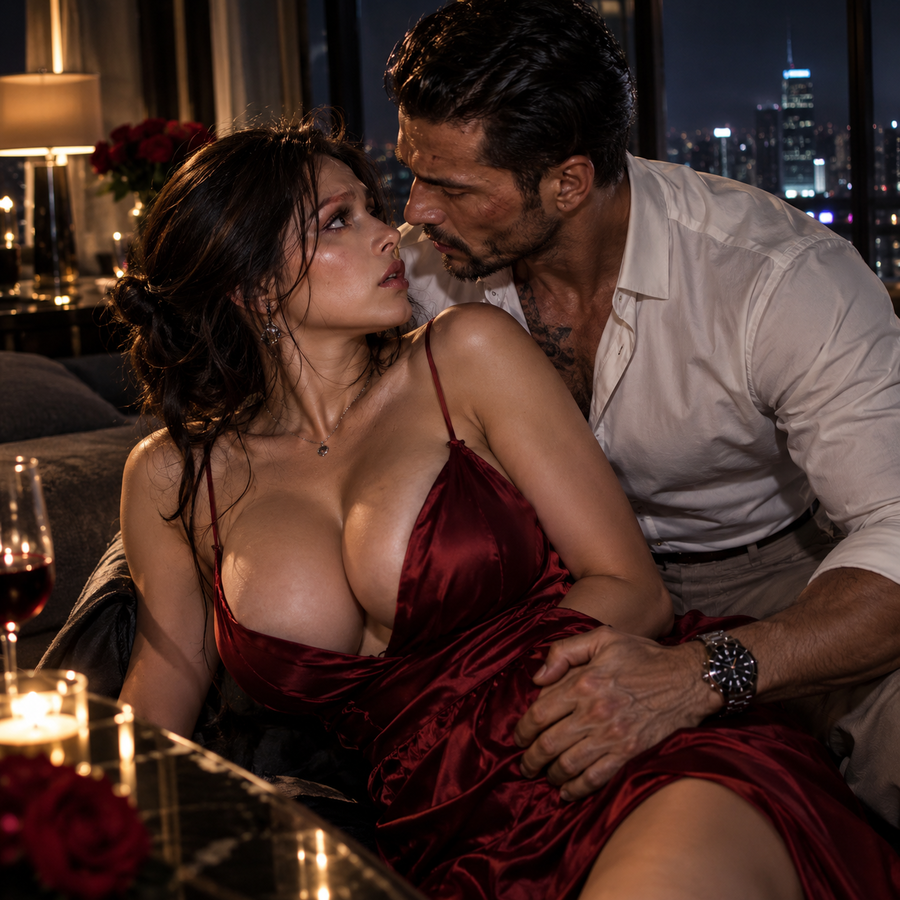
The music pounded through my body like a second heartbeat, each bass note vibrating against my ribs as I weaved through the crowd. Crystal chandeliers cast fractured light across the marble floors of the hotel ballroom, transforming ordinary faces into kaleidoscope masks. I shouldn’t have been there, an invisible ghost among Manhattan’s elite. But when your roommate is the event photographer and begs for an assistant, you don’t say no. Not when you’re three months behind on rent.
“Just hold the reflector and stay out of the way,” Zoe had said, squeezing my arm before disappearing into the crowd, leaving me alone with equipment I barely knew how to use. The champagne they’d offered staff was cheap, nothing like what flowed freely for the guests, but it hit my empty stomach hard. I hadn’t eaten since yesterday’s half sandwich. The room tilted slightly as I pressed my back against a pillar, trying to steady myself.
My black uniform, borrowed from Zoe’s closet, hung loose around my waist. I’d lost weight again. That’s when I first noticed him. He didn’t move like the others. While the crowd ebbed and flowed in chaotic patterns, he cut through like a blade. Straight. Deliberate. Unavoidable. Three men flanked him, their eyes constantly scanning the room. His suit wasn’t flashy like the tech executives or the Wall Street types, but something about the fabric caught the light differently, absorbing rather than reflecting. Italian. Custom-made. Even I knew enough to recognize that.
When he turned, I glimpsed his profile. Sharp jaw, straight nose, dark hair cropped close at the sides but longer on top. Not classically handsome, but magnetic. Something ancient in my brain whispered danger. I looked away too late. His gaze locked with mine across the room, and for a moment, everything else blurred. A half smile appeared on his face, there and gone like a camera flash.
I felt naked, exposed, as if he’d reached across the distance and peeled back my skin to examine what lay beneath. “Move, will you?” Someone bumped into me, spilling champagne down my borrowed dress. The spell broke. I mumbled an apology, dabbing futilely at the stain with a cocktail napkin. When I looked up again, he was gone.
“Emma, there you are.” Zoe materialized beside me, camera hanging around her neck. “I need you upstairs for the balcony shots. The client wants the whole ballroom from above.” I followed her to the grand staircase, grateful for a task to focus on. The second floor was quieter, the music a distant thrum. We found a service door that led to a small balcony overlooking the ballroom. “Hold this.” Zoe thrust the reflector into my hands. “And don’t drop it. It costs more than your student loans.”
The joke hit too close to home. My stomach lurched as I positioned myself beside her, arms trembling slightly from exhaustion and hunger. Below, the party swirled in patterns of wealth and power I’d never understand. The champagne, the stress, the hunger—it all crashed against me in waves. Black spots danced at the edges of my vision. “I need to sit down,” I murmured, but my voice was lost beneath the music.
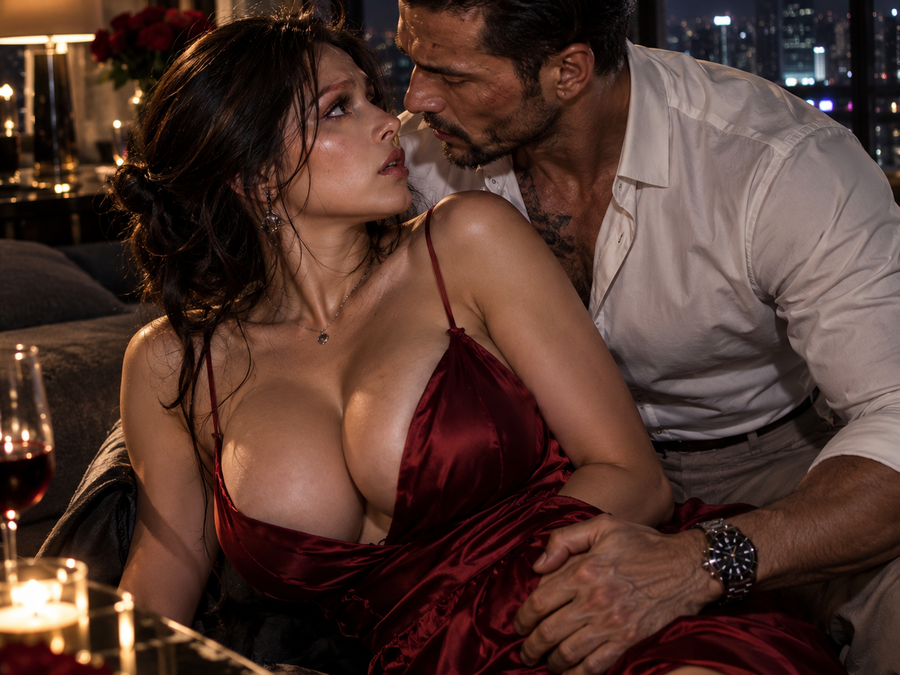
The spots expanded, merging into darkness. The last thing I remembered was the reflector slipping from my fingers, Zoe shouting my name, and the sensation of falling. Then, nothing. I awoke to the scent of leather and something spiced. Sandalwood perhaps, or amber. My eyelids felt heavy, but I forced them open. The first thing I saw was not where, but who.
Him. The man from the ballroom. His face hovered above mine, features sharper up close. Deep-set eyes the color of burnt copper studied me with unnerving intensity. I realized with a jolt of panic that I was cradled against his chest, one of his arms supporting my shoulders while the other lay across my waist. “Don’t move,” he said, his voice lower than I’d expected, a rough edge beneath the cultured tone. “You fainted.”
“We were in a car.” “No, a limousine.” The privacy divider was up, enclosing us in a cocoon of soft lighting and plush seating. Outside the tinted windows, Manhattan slipped by in streaks of neon and shadow. “Where—” My voice cracked. I tried again. “Where are you taking me?” “Hospital.” I struggled to sit up, panic giving me strength. “No, no hospitals. I can’t afford—” I bit my lip, embarrassment flooding through me. “I’m fine. It was just low blood sugar. Please, just let me out here.”
His arm tightened around me, not painfully, but with unmistakable authority. “You hit your head when you fell. You need medical attention.” “Who are you?” I managed, though I suspected I already knew. There had been whispers at the party about a guest no one dared approach directly. Someone powerful enough to make politicians and billionaires nervous.
He studied me for a long moment, as if weighing what to tell me. “Alessandro Russo,” he finally said, not offering his hand, not adding any title or explanation. The name hit me like cold water. Everyone in New York knew the Russo family. Officially, they owned real estate and shipping companies. Unofficially, they controlled much of the city’s underworld. I’d read enough headlines to know that law enforcement couldn’t touch them. Witnesses disappeared and prosecutors suddenly dropped cases. I was alone in a car with a man who could make people vanish.
“Your friend, the photographer. She’s following in another car,” he added, misreading my fear. “She wanted to accompany you, but there wasn’t room with my security.” “I need to go home,” I said, trying to keep my voice steady. “Thank you for helping me, Mr. Russo, but I’m really fine.” His lips curved slightly. “Alessandro,” he corrected. Then, “What’s your name?” Something told me lying would be dangerous.
“Emma. Emma Callaway.” “Emma,” he repeated, as if tasting the name. “You work for the event company?” “No, I—I was just helping my roommate. I’m a student at NYU. Fine arts program.” I was babbling now, words spilling out unchecked. “I graduate this spring if I can afford the last semester’s tuition.” His expression changed subtly, interest sharpening. “You’re an artist?” I nodded, not trusting my voice anymore. Why was he asking? Why did he care?
The car slowed, then stopped. We’d arrived at a private entrance to what looked like an upscale medical facility. Not a regular emergency room. “This is my family’s medical center,” he explained, reading my confusion. “They’ll take care of you.” Before I could protest again, the door opened. One of his security men stood waiting.
With surprising gentleness, Alessandro shifted me toward the door, but kept one arm firmly around my waist. “I can walk,” I insisted weakly. “Humor me,” he replied, guiding me out of the car with practiced ease. Inside, everything happened quickly. I was taken to an examination room that looked more like a luxury hotel suite than a hospital. A doctor appeared, a woman in her fifties with a kind face but eyes that darted nervously to Alessandro.
“It’s likely just dehydration and low blood sugar,” she told him after examining me. “But we’ll run some tests to be sure there’s no concussion.” Alessandro nodded. “Do whatever is necessary. I’ll wait.” “That’s really not—” I began. But he cut me off with a look. “I’ll wait,” he repeated, this time to me.
After blood draws and a quick CT scan, the doctor confirmed her initial assessment. “You need rest, proper nutrition, and fluids,” she told me. “I’m prescribing some vitamins and setting up a follow-up appointment.” “I can’t afford—” I started to say. “It’s taken care of,” Alessandro interrupted. He’d stayed nearby throughout, making calls in hushed Italian that I couldn’t understand.
When the doctor left, he approached my bedside. “When was the last time you ate a proper meal, Emma Callaway?” The question caught me off guard. I looked down at my hands. “Yesterday? Maybe the day before.” Something flashed across his face. Anger, but not directed at me. “That ends now.”
A nurse appeared with discharge papers. As I signed them, I noticed all billing information had been blacked out. Alessandro guided me back to the waiting limousine, his hand at the small of my back, not forcing, but unmistakably present. Inside the car, he handed me a small paper bag. “You need to eat something before taking the medication.” Inside was a gourmet sandwich and bottled water. My hunger overwhelmed my pride, and I ate quickly, aware of his eyes on me.
“Your roommate has been informed that you’re safe and will be brought home soon,” he said once I’d finished. “She was quite concerned.” Relief washed through me. At least Zoe knew where I was. “Thank you,” I said softly. “For everything. But you really didn’t have to do all this.” “Yes,” he said simply. “I did.”
The car stopped outside my apartment building in Brooklyn, a run-down walk-up that looked especially shabby after the luxury I’d just experienced. Alessandro frowned as he took in the graffiti-covered entrance, the broken security door. “This is where you live?” I bristled despite myself. “Not everyone can afford Manhattan penthouses, Mr. Russo.”
He didn’t respond to my tone. Instead, he reached into his jacket and withdrew a business card. Simple cream-colored stock with just his name and a phone number embossed in black. He pressed it into my palm, his fingers lingering against mine. “If you need anything, anything at all, you call this number. It reaches me directly.”
I stared at the card. “Why would you—” “I have a proposition for you,” he cut in. “A business proposition. Your artwork.” My heart skipped. “My artwork?” “I collect pieces from emerging artists. I’d like to see your work.” His eyes held mine. “Think about it. Call the number when you’re ready.”
One of his security men opened my door. Before I could step out, Alessandro leaned closer. The scent of his cologne enveloped me, making my head spin. “Rest, Emma,” he said, his voice low near my ear. “We’ll speak again soon.” I managed to nod, then escaped the intensity of his presence. As I fumbled with my keys at the building’s entrance, the limousine remained idling at the curb. Only when I was safely inside did it pull away.
Upstairs, I found Zoe pacing our tiny living room. “Emma, oh my god.” She threw her arms around me. “Are you okay? When you fell, I thought—and then he just appeared out of nowhere and caught you before you hit the ground. He wouldn’t let anyone else touch you.” My mind reeled. “What?” “He caught me?” “You don’t remember? You started to collapse and I screamed and suddenly he was there like he’d been watching you. He caught you before you hit the floor, carried you out himself.”
Her eyes were wide. “Do you know who that was?” I sank onto our threadbare couch, the business card still clutched in my hand. “Alessandro Russo.” Zoe’s face paled. “The Alessandro Russo. Holy—” “Those guys with him, they blocked anyone from following you. One of them told me you were being taken care of and gave me a card to call for updates. I’ve been getting text messages about your condition.”
I closed my eyes, trying to process everything. “He wants to see my artwork.” “What?” Zoe sat beside me, grabbing my arm. “Are you serious?” “He said he collects pieces from emerging artists.” Even saying it aloud sounded absurd. Zoe was quiet for a long moment. “Be careful. Guys like that, they don’t just help random girls out of kindness.”
I thought about the way he’d looked at me, the gentle way he’d held me, the authority in his voice when he said “that ends now” about my hunger. “I know,” I whispered. But later that night, as I lay in bed staring at the ceiling, his business card on my nightstand, I couldn’t stop thinking about the moment when I’d first opened my eyes in his arms. His face hovering above mine, those copper eyes searching my face as if memorizing every detail. In my half-conscious state, just before fully waking, I could have sworn I heard him whisper something as he held me. A single word that made no sense. “Ours.”
Three days passed before I found the courage to call the number on Alessandro’s card. Three days of Zoe alternating between excitement—”Do you know how much his kind of people pay for art?”—and concern—”Just be careful, Em. Men like him always want something.” Three days of trying to convince myself I had imagined the whispered word, the intensity in his eyes.
My finger hovered over the call button for nearly ten minutes before I finally pressed it. The phone rang twice before a deep voice answered. “Mr. Russo’s office, Miss Callaway.” Not a question, but a statement. My stomach dropped. How did they know it was me? I hadn’t even given my name to the caller ID. Before I could respond, there was a rustling sound. And then Alessandro’s voice came through the speaker, sending an involuntary shiver down my spine.
“Emma,” he said, and somehow the way he pronounced my name made it sound like something precious. “I was beginning to think you wouldn’t call.” “I—” My voice caught. I cleared my throat and tried again. “I’ve been thinking about your offer to see my artwork.” “Good. Are you free tomorrow afternoon?” The question caught me off guard. I had expected more preamble. Perhaps a formal gallery appointment. “Yes, I—I don’t have classes on Fridays.” “Perfect. My driver will collect you at two.”
It wasn’t a request. “Bring samples of your work. Whatever you consider your best pieces.” “Mr. Russo—” “Alessandro.” He corrected the same way he had in the car. “Alessandro,” I repeated, the name feeling foreign on my tongue. “I don’t think I can transport my larger canvases. I work primarily in oils and some of them are quite big.”
There was a pause, and I could almost feel him recalibrating. “Where do you work? Do you have a studio?” “Just my bedroom,” I admitted, embarrassment warming my cheeks. “I had studio space at school, but I couldn’t afford the fees this semester.” Another pause, longer this time. When he spoke again, his voice had an edge to it. “Give me your address. I’ll come to you.”
Alarm bells rang in my head. A man like Alessandro Russo in our shabby apartment. “That’s not necessary—” “It is.” He cut me off. “If I’m to properly evaluate your work, I need to see it in its entirety, not just samples.” I swallowed hard. There was no graceful way to refuse without losing this opportunity completely. And despite my apprehension, a part of me—the part that had been creating art in obscurity for years—desperately wanted someone to see my work. Really see it.
“Okay,” I said finally, giving him my address, though he likely already had it. “Two o’clock tomorrow,” he confirmed. “And Emma?” “Yes?” “Eat something today.” The line went dead. I stared at my phone, equal parts irritated and intrigued by his commanding tone. Who tells a stranger to eat? But then again, he had seen me at my worst. Fainting from hunger. Vulnerable and embarrassed.
That evening, I spent hours cleaning our apartment, then rearranging my paintings to create a makeshift gallery in our small living room. Zoe helped, moving furniture to make more space, hanging pieces on every available wall. “You know,” she said, stepping back to examine a large canvas depicting a woman dissolving into smoke, “these are really good. Like, seriously good. I know I’ve said it before, but seeing them all together like this—” She whistled low. “No wonder he wants to see them.”
“He hasn’t seen them yet,” I reminded her, anxiety churning in my stomach. “And he’s probably just being polite because of what happened at the party.” Zoe gave me a skeptical look. “Men like Alessandro Russo don’t do anything out of politeness. They do things because they want something.” She hesitated. “Just promise me you’ll be careful tomorrow. Don’t be alone with him.”
“We’ll be right here in the living room,” I assured her. Though the thought of being alone with him sent contradictory pulses of fear and anticipation through my body. “I’ll try to come home early,” she promised. That night, I barely slept. Every time I closed my eyes, I saw his face. Felt the phantom sensation of his arms around me. By morning, dark circles shadowed my eyes, and no amount of concealer could hide my exhaustion.
At precisely two o’clock, a sharp knock came at our door. My heart hammered as I crossed the living room, wiping my sweaty palms on my jeans before opening the door. Alessandro filled the doorframe, taller than I remembered, dressed in a charcoal suit that probably cost more than a year’s rent. Behind him stood one of his security men, face expressionless.
“Emma,” Alessandro said, his eyes sweeping over me in a quick assessment that missed nothing. Not the nervous fidget of my hands, nor the dark circles under my eyes. “You didn’t sleep.” Not a question. I stepped back, allowing him to enter. “I was preparing,” I said, gesturing to the living room where my paintings were displayed.
He nodded to his security man, who took up position outside the closed door. Then he turned his full attention to the room, to my art. I watched his face as he moved slowly from piece to piece, studying each with an intensity that made my skin prickle. For several minutes, he said nothing, just moved methodically around the room. I hovered anxiously, waiting for some reaction, some indication of what he thought.
Finally, he stopped before my largest canvas. A dark cityscape with a single illuminated window, a solitary figure silhouetted against the light. “This one,” he said, turning to me. “Tell me about it.” I moved closer, but maintained a careful distance. “It’s called Witness. It’s about urban isolation. How we can be surrounded by millions of people, but still completely alone. How we watch each other from a distance, but rarely connect.”
He studied me with the same intensity he’d given the painting. “You feel this way. Isolated.” The question felt too personal, but something in his gaze compelled honesty. “Sometimes. Don’t we all?” “No,” he said simply. “Not all of us.” He turned back to the painting. “How much?”
I blinked, caught off guard. “I’m sorry?” “How much for this piece?” My mind went blank. I’d sold a few small paintings through student exhibitions, but nothing this size, nothing this personal. “I—I don’t know. I hadn’t thought about selling it.” Alessandro turned to me fully, his expression unreadable. “Everything has a price, Emma. Name yours.”
Something about his phrasing sent a shiver through me. “Five thousand,” I blurted out, naming a figure that seemed outrageous to me. The corner of his mouth twitched, not quite a smile. “That’s severely undervalued.” He reached into his jacket and withdrew a checkbook. “Twenty thousand.” I gasped. “That’s—that’s too much. It’s not worth—” “I decide what things are worth to me,” he interrupted, already writing the check. “And I want this piece. Along with those two.”
He nodded toward a pair of smaller canvases. One of a woman with her back turned, looking out over turbulent water. Another of hands reaching through darkness toward a single point of light. I felt dizzy. “Those as well? Ten thousand each?” He tore out the check and held it out to me. “Forty thousand total.”
My hand trembled as I took the check, staring at the amount written in bold, confident strokes. This was more money than I’d ever seen at once. Enough for tuition, rent, supplies for a year or more. “Why?” I managed to ask, looking up at him. Alessandro studied me for a long moment. “Because they speak to me. Because you have talent that deserves recognition. And because I want them.”
There was something beneath his words, something unspoken that hung in the air between us. Before I could decipher it, he moved closer, into my personal space. Not touching me, but near enough that I could smell his cologne. Feel the heat radiating from his body. “You’re not eating properly,” he said, his voice low. “You’re still too thin.”
I crossed my arms defensively. “I eat enough.” “No, you don’t.” His eyes narrowed. “And you’re not sleeping. Are you always this careless with yourself?” Irritation flared. “With all due respect, Mr. Russo—” “Alessandro.” “Alessandro,” I corrected, meeting his gaze despite the intimidating intensity. “My eating and sleeping habits are none of your concern.”
Something dangerous flashed in his eyes. There and gone in an instant. “They became my concern the moment you collapsed in my arms, Emma.” The memory of that moment—of waking in his embrace, disoriented and vulnerable—sent heat through my body. “That was an unusual circumstance. It won’t happen again.”
He stepped closer, and this time his hand came up, fingers brushing my cheek in a touch so light it might have been imagined. “See that it doesn’t. I won’t always be there to catch you.” I couldn’t breathe. Couldn’t think past the sensation of his fingertips against my skin. When he withdrew his hand, it felt like losing something essential.
“I’ll send people to collect the paintings tomorrow,” he said, his tone shifting to business-like efficiency. “In the meantime, use some of that money to eat a proper meal and get some rest.” I nodded, still clutching the check. “Thank you for the purchase. I mean, it’s—” “The investment,” he replied. “I have an eye for potential. For things of value others overlook.”
His gaze traveled over me again, more deliberately this time. “Very few people surprise me, Emma Callaway. You did.” Before I could respond, he turned toward the door. “I have a gallery opening next Friday evening. A private showing for a new artist I’m sponsoring. I’d like you to attend.”
“Me? Why?” “Because I think you’ll find it educational. And because I want you there.” He reached into his pocket and produced a cream-colored envelope. “The details are inside. My driver will collect you at eight.” Again, not a request. I took the envelope, fingers brushing his. “I don’t have anything to wear to that kind of event.” A small smile curved his lips. “That’s been taken care of as well.” “What do you mean?” “You’ll see.”
He moved to the door, opening it to reveal his waiting security man. “Friday. Eight o’clock. Eat something substantial before then.” Then he was gone, leaving behind the scent of his cologne, a check for forty thousand dollars, and a thousand unanswered questions.
I sank onto the couch, staring at the check in my hand. It felt surreal, like something from a dream or a nightmare. What did he really want from me? Men like Alessandro Russo didn’t pay forty thousand dollars for paintings from unknown artists without expecting something in return. My phone buzzed with a text message from Zoe. “Sorry, can’t get away from work. Everything okay? Is he still there?”
I typed back. “He’s gone. He bought three paintings for $40,000.” Her response came instantly. “What? OMG, are you serious?” Before I could reply, another text appeared. “Wait, what does he want in return?” The same question that was spinning through my own mind. What did Alessandro Russo want from me? And why did the intensity in his eyes, the gentleness of his touch, make me almost not care about the answer?
Two hours later, as I was still trying to process everything, a delivery arrived. A large white box tied with a black satin ribbon. The delivery person refused to tell me who it was from, but I already knew. Inside, nestled in layers of tissue paper, lay a dress of deep midnight blue, the fabric catching the light like water. Alongside it was a smaller box containing delicate silver jewelry and a pair of heels that looked Italian and expensive. At the bottom was a card with a single line written in strong slanted handwriting: “For Friday. Wear your hair down. —A”
I ran my fingers over the dress, the silk cool and smooth against my skin. It was the most beautiful thing I’d ever seen and probably cost more than all my possessions combined. This was dangerous. He was dangerous. Everything about this situation screamed at me to run, to tear up the check, return the dress, forget Alessandro Russo and his intensity, his unexpected gentleness, his commanding presence.
Instead, I found myself lifting the dress from its box, holding it against my body as I looked in the mirror. It would fit perfectly. As if he’d somehow known my exact measurements. As if he’d studied me. The thought should have frightened me. Instead, I felt a thrill run through me. A dangerous, forbidden excitement at being seen. Truly seen. By someone like him. Friday suddenly seemed very far away.
The next morning, I deposited the check, half expecting it to bounce despite knowing it wouldn’t. By afternoon, the funds were in my account. More money than I’d ever had at once. I paid my outstanding tuition balance, bought art supplies, and set aside money for rent and groceries. Still, most of it remained. A strange security I’d never known before.
True to his word, men came for the paintings, handling them with professional care, wrapping each meticulously before carrying them away. They left me with a receipt and another business card, this one for an art gallery in Chelsea. The owner’s name was circled in the same strong handwriting. “She’s expecting your call.”
That evening, as I sat on the fire escape outside our apartment window, sketching the sunset, my phone rang with an unknown number. “Miss Callaway?” a woman’s voice asked when I answered. “This is Sophia Russo. Alessandro’s sister.” My pencil froze mid-stroke. “Oh, hello.” “My brother asked me to call you,” she continued, her voice pleasant but reserved. “He mentioned you might need assistance preparing for Friday’s event.”
“I—that’s not necessary—” “It wasn’t a suggestion.” She cut in smoothly. “Alessandro rarely takes an interest in new artists. When he does, the family supports his decision. I’ll pick you up tomorrow at noon. We’ll have lunch, then visit my personal stylist.” Like her brother, Sophia Russo didn’t make requests. She stated what would happen.
Before I could formulate a response, she added more softly, “He told me about your work. I’d like to see it for myself sometime.” “Of course,” I managed. “Good. Noon tomorrow, then.” She hung up. I stared at my phone, then out at the darkening sky. What was happening to my life? A week ago, I was just another struggling art student, invisible and forgettable. Now I had caught the attention of one of New York’s most powerful and dangerous families. All because I’d fainted at a party. All because Alessandro Russo had caught me as I fell.
All because he’d whispered that single inexplicable word as I lay unconscious in his arms. “Ours.” Sophia Russo was nothing like her brother. Where Alessandro emanated danger and intensity, Sophia was all polish and practiced charm. She arrived in a sleek black Mercedes, not a limousine, with only a driver and no visible security. Her handshake was firm, her smile diplomatic, her designer outfit impeccable without being flashy.
“You’re smaller than I expected,” she said, appraising me as we settled into the back seat. “Alessandro said you were too thin, but I assumed he was exaggerating.” I shifted uncomfortably. “I’ve been busy with school. Sometimes I forget to eat.” Sophia raised a perfectly shaped eyebrow. “A dangerous habit. Especially around my brother.” “What do you mean?”
“Alessandro has protective instincts.” She studied me with eyes the same burnt copper as her brother’s. “He doesn’t like seeing vulnerability without addressing it.” The car glided through Manhattan traffic with the frictionless ease of extreme wealth. We arrived at a discreet restaurant on the Upper East Side, where the maître d’ greeted Sophia by name and led us to a private dining room.
“So,” Sophia said once we were seated and wine had been poured. “Tell me about your art.” “Didn’t Alessandro already tell you?” “I’d prefer to hear it from you.” I described my work, my techniques, my inspiration. As I spoke, Sophia watched me with an analytical gaze that missed nothing. She asked specific, knowledgeable questions that revealed her own extensive art background.
“You’re talented,” she concluded as our main course arrived. “But talent alone doesn’t explain my brother’s interest.” I set down my fork. “What does that mean?” Sophia took a sip of wine, considering her words. “Alessandro doesn’t collect art for status or investment, though he’s shrewd about both. He collects pieces that speak to him on a personal level.” She leaned forward slightly. “The fact that he purchased three of your works at once is unusual. I got the impression he overpaid significantly.”
“Oh, he absolutely did.” Sophia waved a dismissive hand. “But money means nothing to him. Your paintings contain something he wanted to possess.” A chill ran through me at her phrasing. “I just paint what I see and feel.” “And what my brother saw in your work resonated with him.” She studied me again. “What happened at the gallery event? Alessandro told me you fainted, but he was unusually vague about the details.”
I described the night, ending with waking up in Alessandro’s arms. I omitted the whispered word. It felt too private, too confusing to share even with his sister. Sophia listened intently. When I finished, she nodded slowly. “And now he’s invited you to the opening on Friday as his guest.” “Is that significant?” “Alessandro doesn’t bring guests to business events,” Sophia said carefully. “Ever.”
The implications hung between us. I pushed my half-eaten food around my plate, appetite suddenly gone. “I don’t understand what he wants from me.” Sophia’s expression softened fractionally. “Neither does he, I suspect.” She reached for her purse. “Come, we have appointments to keep.”
The rest of the afternoon passed in a whirlwind of luxury. Sophia’s stylist worked on my hair and makeup, teaching me techniques for the event. A personal shopper brought selections that complemented the blue dress. Sophia supervised everything with crisp efficiency, occasionally stepping away for hushed phone calls in Italian. By five o’clock, I barely recognized myself in the salon mirror. My usually unruly hair fell in soft waves. My skin looked luminous. And I’d learned how to recreate the subtle makeup look for Friday.
“Alessandro was right about your bone structure,” Sophia commented as we returned to the car. “You clean up remarkably well.” I wasn’t sure if it was a compliment or an observation. “Thank you for today,” I said. “For everything.” She waved my gratitude away. “This isn’t charity, Emma. When a Russo shows interest in something—or someone—we protect that interest.” She handed me a small shopping bag containing cosmetics and accessories. “Friday is important to Alessandro. Important people will be there. Don’t embarrass him.”
“I’ll do my best,” I said stiffly. Sophia’s expression thawed slightly. “That came out harsher than intended. What I meant was, be yourself. But the best version. The version I’ve seen glimpses of today.” Her tone softened further. “My brother doesn’t extend himself for just anyone. There must be something special about you.”
Before I could respond, the car stopped outside my building. Sophia’s eyes narrowed at the graffiti-covered entrance. “This neighborhood isn’t safe.” “It’s all I can afford,” I said, though that wasn’t entirely true anymore. “Thank you again for today.” Sophia nodded. As I reached for the door handle, she spoke again. “Emma, one more thing.” I turned back. “Yes?”
“Be careful with Alessandro,” she said, her voice uncharacteristically gentle. “Not because he would hurt you, but because he doesn’t know how to care for fragile things without breaking them.” The warning stayed with me for the next two days, echoing in my mind as I tried to focus on schoolwork and not the approaching Friday evening. Sophia had given me a glimpse into Alessandro’s world. A world of wealth, power, and unspoken rules. I didn’t understand.
Friday arrived with a mixture of anticipation and dread. I spent hours getting ready, following Sophia’s instructions meticulously. When I finally stepped into the midnight blue dress, it fit as if created specifically for my body. The silk flowed like water, making me feel simultaneously exposed and armored.
At precisely eight, a knock came at the door. I opened it, expecting a driver, but found Alessandro himself standing there. For a moment, he simply looked at me. His expression shifting subtly from appreciation to something deeper. More possessive. “Beautiful,” he said finally, the single word carrying more weight than effusive praise.
I flushed under his scrutiny. “Thank you. And thank you for the dress. You shouldn’t have—” “I wanted to,” he cut in. “It suits you.” In the sleek black limousine, Alessandro sat closer than necessary, his thigh occasionally brushing mine when the car turned. He smelled of that same sandalwood cologne, mingled with something distinctly his.
“Sophia tells me you had a productive day together,” he said, his eyes still moving over me in that assessing way that made my skin tingle. “She was very helpful.” I hesitated. “She seems protective of you.” A slight smile curved his lips. “My sister sees herself as the family diplomat. She smooths the way.” His hand moved to rest beside mine on the seat. Not touching, but close enough that I could feel its heat. “Did she warn you about me?”
The directness of the question startled me into honesty. “Yes.” “And yet you’re here.” Not a question, but a statement tinged with satisfaction. “I’m curious,” I admitted. “About the gallery, about your world, about why you’re doing all this.” He studied me for a long moment. “Curiosity can be dangerous, Emma.” “So I’ve heard.” His smile widened fractionally. “Sophia approves of you. Despite her warnings. That’s rare.”
The gallery was in a converted warehouse in Chelsea. The space transformed into a minimalist showroom with dramatic lighting. As we entered, conversations paused. Heads turned. Alessandro’s hand settled on the small of my back, guiding me through the crowd. People nodded deferentially as we passed, their eyes curious, sometimes suspicious as they took in my presence at his side.
“They’re wondering who you are,” Alessandro murmured close to my ear. “Who am I?” I asked, the question more loaded than I intended. His hand pressed slightly firmer against my back. “Tonight you’re with me. That’s all they need to know.”
The artist being featured was a young sculptor whose work featured twisted metal forms that somehow conveyed both violence and fragility. Alessandro introduced me to her, a nervous woman not much older than me who kept glancing at him with a mixture of gratitude and fear. “Your work is amazing,” I told her sincerely. “Thank you,” she replied. “Alessandro saved my career. I was working as a waitress, creating pieces in my parents’ garage, when he saw one of my sculptures at a street fair.”
She lowered her voice. “He bought everything I had, then set up this showing. Introduced me to collectors who actually matter.” I glanced at Alessandro, who was speaking with an older couple nearby, his attention seemingly elsewhere, though I suspected he could hear every word. “Why would he do that?” I asked.
The sculptor shrugged. “He said my work reminded him of how beauty can emerge from destruction.” She looked around at the crowded gallery, at the red sold stickers already appearing beside most pieces. “Whatever his reasons, I’m grateful.”
Throughout the evening, Alessandro kept me close, his hand returning to my back whenever we moved through the crowd. He introduced me to selected people—gallery owners, collectors, artists—but deflected questions about my relationship to him with practiced ease. “Emma is a talented painter,” he would say. “You’ll be seeing her work soon enough.”
By the time we left, my head was spinning from champagne and information overload. The limousine waited at the curb, and Alessandro helped me inside with a gentleness that contrasted with the commanding presence he’d projected all evening. “What did you think?” he asked as the car pulled away.
“It was enlightening,” I said. “Everyone seems afraid of you. Even the artist you’re helping.” Alessandro didn’t deny it. “Fear and respect often look similar.” “Which do you prefer?” His eyes gleamed in the dimly lit interior. “From most people, either is acceptable.” He shifted closer. “From you? Neither.”
My breath caught. “What do you want from me, Alessandro?” He studied me for a long moment, something unreadable passing behind his eyes. Then he reached out, his fingers tracing the line of my jaw with feather-like precision. “Everything,” he said simply. The word hung between us, heavy with implication.
“Everything.” My pulse quickened as his fingers continued their gentle exploration, tracing from my jaw down to the hollow of my throat, where my heartbeat betrayed my reaction. “You don’t even know me,” I whispered. “I know enough.” His voice had dropped lower, rougher at the edges. “I know your talent, your struggle, your strength. I’ve seen how you fight to survive in a world that wants to break you.”
His hand moved to cup my cheek. “And I know that from the moment I caught you as you fell, something changed.” I couldn’t look away from his gaze. Couldn’t pretend I didn’t feel the electric current running between us. “For you or for me?” “Both.” Alessandro leaned closer, his breath warm against my lips. “Tell me you don’t feel it too, Emma. Tell me and I’ll stop.”
The invitation to refuse was there. Genuine despite the power he held over me in so many ways. I could end this now with a single word. Instead, I found myself closing the distance between us, my lips meeting his in a kiss that started tentative but quickly blazed into something desperate and consuming.
His hand slid into my hair, cradling my head as he deepened the kiss. I tasted expensive champagne and something darker, more intoxicating. My fingers clutched at the lapels of his jacket, anchoring myself against the sensation of falling all over again. When we broke apart, both breathing hard, his eyes had darkened to molten copper. “Come home with me,” he said, the words somewhere between a question and a command.
Warning bells rang in my head. Sophia’s caution echoing. He doesn’t know how to care for fragile things without breaking them. Yet I found myself nodding, unable to deny the pull between us. Unable to walk away from whatever this was becoming.
Alessandro pressed a button on the console beside him, murmured something in Italian to the driver, then drew me back into his arms. The rest of the ride passed in a blur of heated kisses and exploring touches. His hands respectful yet possessive, always stopping just short of crossing invisible boundaries.
His home was not what I expected. Instead of a sterile penthouse, the limousine delivered us to a converted industrial building in Tribeca. Security was everywhere but discreet. Men nodding respectfully as Alessandro guided me through a private entrance and into an elevator requiring both a key card and fingerprint scan. “I value my privacy,” he explained, noting my surprise at the measures.
The elevator opened directly into his apartment, though apartment seemed an inadequate word for the sprawling space. High ceilings with exposed beams, brick walls softened by strategic lighting, and floor-to-ceiling windows showcasing the glittering city beyond. But what caught my breath was the art. Dozens of pieces thoughtfully arranged throughout the open space. Paintings, sculptures, installations. Some by artists I recognized, others unfamiliar. And there, in a place of honor on the main wall, my three paintings. Already professionally hung and perfectly lit.
“You displayed them,” I said softly, moving closer to the wall. Alessandro came up behind me, his hands settling lightly on my shoulders. “Of course. Art should be seen. Appreciated.” His thumb traced small circles against the bare skin of my upper back. “Like you.”
I turned in his embrace, studying his face. “Why me, Alessandro? With your resources, your connections. You could have anyone. Why a struggling artist from Brooklyn?” His expression softened fractionally. “Because you’re real.” He tucked a strand of hair behind my ear. “In my world, authenticity is rare and precious. You create beauty from pain without artifice. You survived hardship without becoming hard.”
“You barely know me,” I repeated, though the protest sounded weak even to my ears. “I know what matters.” He led me to a leather sofa, poured two glasses of amber liquor from a crystal decanter. “When I caught you that night, when you were unconscious in my arms, you seemed so fragile. Yet there was something in your face. A strength that moved me.” He handed me a glass. “Then I saw your art and understood. You transform vulnerability into power. That’s rare.”
I sipped the liquor, smoky and expensive, while processing his words. “And what do you transform, Alessandro? What pain shapes your world?” Something dangerous flashed in his eyes. “You ask dangerous questions.” “You invited me here,” I countered. “If I’m going to enter your world, shouldn’t I know what drives you?”
Alessandro set down his glass, moved closer until our knees touched. “My family built an empire from nothing. We protect what’s ours. Sometimes that requires difficult choices.” “Is that why people fear you?” “They fear what they don’t understand.” His hand found mine, fingers intertwining. “Power always frightens those who don’t possess it. And me?” “Should I be frightened?”
His grip tightened slightly. “Never of me, Emma. With me.” The distinction felt important, though I wasn’t entirely sure what it meant. I finished my drink, the alcohol warming my blood, lowering defenses I hadn’t realized I’d constructed. “You’re tired,” Alessandro observed, taking the empty glass from my hand. “It’s been an overwhelming evening for you.”
I started to protest, then realized he was right. The emotional intensity of the night had drained me more than I’d noticed. He stood, pulling me gently to my feet. “Come,” he said, leading me through the apartment to a guest room larger than my entire Brooklyn apartment. “Rest. We can talk more tomorrow.”
I blinked in surprise, having assumed his invitation home held different implications. “You’re not—” A small smile touched his lips. “I don’t rush what’s important, Emma.” He brushed his fingers against my cheek. “And this—you—is important to me.” He showed me the attached bathroom, pointed out a silk nightgown laid out on the bed. “My assistant anticipated you might stay. Everything you need should be here.”
He moved to the door, paused. “If you need anything, I’m just down the hall.” Before he could leave, I caught his hand. “Alessandro?” He turned back, eyebrow raised in question. “That night when I fainted, when you caught me, did you say something to me?” His expression stilled, became unreadable. “What do you think you heard?”
I hesitated, then decided on honesty. “It sounded like ‘ours.’ That doesn’t make sense.” Alessandro studied me for a long moment. Then he stepped closer, his hand cupping my face with surprising gentleness. “Sleep, Emma. We’ll talk tomorrow.” He pressed a kiss to my forehead and left, closing the door softly behind him.
I stood frozen, more confused than ever. He hadn’t confirmed or denied. But something in his reaction told me I hadn’t imagined it. I’d heard correctly. But what could it possibly mean? The nightgown fit perfectly, like everything else Alessandro had provided. I slipped between silken sheets, my body exhausted but my mind racing. Despite my mental turmoil, sleep claimed me quickly. Deep and dreamless.
I woke to sunlight streaming through windows and the scent of coffee. For a moment, I was disoriented. The luxurious surroundings unfamiliar. Then memories flooded back. The gallery. The limousine. Alessandro’s kiss. His mysterious non-answer to my question. After showering in the marble bathroom stocked with expensive toiletries, I found clothes laid out. Designer jeans and a cashmere sweater that fit as if made for me. The thought was both comforting and unsettling.
How much had Alessandro planned? How long had he been watching me before that party? I followed the coffee scent to the kitchen, where I found not Alessandro, but a middle-aged woman preparing breakfast. “Good morning, Miss Emma,” she said with a slight accent. Eastern European, perhaps. “Mr. Russo had to step out for a business matter, but said to make you comfortable. Breakfast will be ready in five minutes.”
“Thank you.” I accepted the coffee she offered, wandered to the floor-to-ceiling windows while I waited. The view was spectacular. Manhattan spread below like a living map, the morning sun glinting off glass and steel. My phone buzzed in the pocket of the borrowed jeans. A text from Zoe. “Um, where are you? Did not come home last night? Are you okay?”
I quickly responded. “I’m fine. At Alessandro’s. Nothing happened. We’ll explain later.” Her response was immediate. “Nothing happened. At Alessandro Russo’s. Call me.” Before I could reply, I heard the elevator doors open. Alessandro strode in, dressed impeccably in a charcoal suit, speaking rapid Italian into his phone. He spotted me by the windows and his expression warmed, though he continued his conversation for another minute before ending the call.
“You slept well?” he asked, crossing to where I stood. I nodded. “Better than I have in months.” “Good.” He brushed a kiss against my cheek, the gesture surprisingly domestic. “I’m sorry I wasn’t here when you woke. An urgent matter required my attention.” “It’s fine. Your housekeeper has been very kind.”
“Mrs. Petrova takes good care of me.” He guided me to the dining area where breakfast was being laid out. An impressive spread of pastries, fruit, eggs, and now a view. Over breakfast, Alessandro outlined his day. Meetings until early afternoon. Then he would be free. “I thought perhaps I could show you my other galleries. Several have spaces opening for exhibitions in the coming months.”
The implication was clear. “You want to show my work?” “Of course.” He said it as if it were the most natural thing in the world. As if unknown artists regularly received such opportunities. “Your talent deserves to be seen.” I sat down my coffee cup carefully. “Alessandro, this is happening very fast. Yesterday, I was a student struggling to pay tuition. Today you’re talking about gallery exhibitions and—and it feels—I don’t know—like I haven’t earned it.”
His expression hardened slightly. “The art world isn’t a meritocracy, Emma. Talent means nothing without opportunity and connections. I’m offering both.” “Because you—what? Like my paintings? Like me?” I met his gaze directly. “What am I to you, Alessandro?”
He reached across the table, took my hand in his. “You’re something precious I found unexpectedly. Something I want to protect and nurture.” His thumb stroked across my knuckles. “Is that so difficult to accept?” “When it comes from someone like you? Yes.” “Someone like me,” he repeated, a dangerous edge entering his voice. “And what am I in your eyes?”
I didn’t look away. “Powerful. Dangerous. Someone who takes what he wants and eliminates obstacles. Someone people fear.” I paused. “Someone I’m drawn to despite all the warning signs.” Alessandro’s grip tightened. “At least you’re honest.” He studied me for a long moment. “My world is complicated, Emma. There are aspects of my business, my family, that would disturb you. But I can promise you this—what I feel for you is real. Unexpected, but real.”
“What do you feel for me?” I asked, my voice barely above a whisper. “We barely know each other.” Alessandro considered this, his thumb still making slow circles against my hand. “In my experience, time is not the most reliable measure of connection.” He leaned forward slightly. “I’ve known people for decades whom I understand less than I understand you after these few days.”
“That doesn’t answer my question.” A ghost of a smile touched his lips. “No, it doesn’t.” He released my hand and stood. “Come with me. I want to show you something.” Curious, I followed him through the apartment to a door I hadn’t noticed the night before. It required another key card to open, revealing a private study.
Unlike the modern aesthetic of the rest of his home, this room was old-world. Leather-bound books lining the walls, a massive antique desk, and the scent of aged paper and wood polish. Alessandro crossed to a painting mounted behind his desk. A small dark piece depicting a young woman with haunted eyes standing before a burning building. The style was centuries old, Renaissance perhaps, but the emotion in the subject’s face felt startlingly modern.
“My grandmother,” he said, watching my reaction. “Painted in 1942 after she fled the Nazis who burned her family home in northern Italy.” I moved closer, studying the details. The subtle reflection of flames in her eyes. The way her hands were both clenched and protective. “It’s extraordinary.” “She was nineteen,” Alessandro continued. “Alone, her family murdered, with nothing but her wits to keep her alive.”
His voice softened. “She met my grandfather a month later. He was a young soldier with connections to the resistance. They married within six weeks.” “That’s very fast,” I observed. “When you find something worth protecting in a world determined to destroy everything beautiful, you don’t hesitate.” He turned to face me fully. “My grandmother said she knew within moments of meeting him that he would either save her or destroy her. Sometimes, Emma, the heart recognizes what the mind would question.”
The parallel was unmistakable. I swallowed hard. “And did he save her?” “They saved each other.” Alessandro’s gaze was intense. “They built a new life in America. Created a family. An empire. Everything I have began with that moment. That recognition between them.”
“Is that what this is?” I asked, gesturing between us. “Recognition?” “I believe so.” He moved closer, his hand coming up to trace the line of my jaw. “When I caught you that night, when I held you in my arms, something shifted. I can’t explain it rationally.” “That’s not very reassuring, coming from a man in your position. Don’t you need to be rational? Calculating?” “In business, yes. In matters of the heart—” He shrugged slightly. “Even I must surrender to forces beyond my control sometimes.”
The vulnerability in that admission struck me more powerfully than any declaration could have. Alessandro Russo, admitting there were things he couldn’t control. It humanized him in a way nothing else had. “You still haven’t told me what you whispered that night,” I said.
His expression became guarded. “Perhaps because I’m not sure you’re ready to hear it.” “I’m stronger than I look.” “I’m well aware.” His fingers moved from my jaw to the pulse point at my throat. “Your heart is racing.” “You make me nervous.” “Good,” he murmured, leaning closer. “Nervousness is appropriate when standing at the edge of something life-changing.”
This time, I was the one who initiated the kiss. Rising on my toes to press my lips to his. Alessandro responded immediately, his arms encircling me, drawing me against his body with controlled urgency. Unlike the tentative exploration of our first kiss, this was deeper, more demanding. A claiming on both our parts. When we broke apart, his eyes had darkened to that molten copper that made my stomach tighten.
“Stay with me today,” he said, his voice rough. “The meetings can wait.” I hesitated, torn between desire and caution. “I have classes.” “Skip them.” His hands traced down my spine, settling possessively at the small of my back. “Just for today.” The recklessness of it appealed to something in me I hadn’t known existed. The desire to throw caution aside, to dive headlong into whatever this was. Consequences be damned.
“Just for today,” I agreed. His smile was transformative, warming his normally austere features. “I’ll make some calls.” We spent the day in a bubble of intimacy that felt surreal. Alessandro showing me his private collection of art, explaining the stories behind each piece. We talked for hours about everything and nothing. My childhood in a small Pennsylvania town. My dreams for my art. Books we’d read. Places we wanted to see.
He ordered lunch delivered from an exclusive restaurant, and we ate on the balcony overlooking the city. Afterwards, he showed me his extensive library, pulling volumes of art books I’d only seen behind glass in university collections. “These are for reference,” he said, placing a rare book of Renaissance sketches in my hands. “Feel free to use anything here whenever you want.”
The casualness of the offer—as if I would naturally be spending enough time here to make use of his library—wasn’t lost on me. Alessandro spoke of us as if we were already established. As if my integration into his life was a foregone conclusion. Part of me wanted to resist this assumption, to assert my independence. But another part—the part that had always felt unseen, unvalued—basked in his focused attention. In being treated as if I mattered.
As evening approached, Alessandro received a call that made his expression darken. He spoke in rapid Italian, his tone hardening with each exchange. When he hung up, the warmth I’d witnessed all day had vanished, replaced by cold calculation. “I need to go out,” he said, already reaching for his jacket. “A situation requires my personal attention.”
“Is everything okay?” He paused, considering his words. “Business complications. Nothing for you to worry about.” He crossed to me, placed a gentle kiss on my forehead. “My driver will take you home if you wish. Or you’re welcome to stay. I may be late.”
I thought of my tiny Brooklyn apartment, of Zoe’s inevitable interrogation, of the cramped bed and noisy neighbors. Then I thought of this sanctuary with its library and art and silence. “I’ll stay,” I decided. “If that’s really okay.” Relief flickered across his face. “More than okay.” He hesitated, then added, “Emma, there are aspects of my business that it’s better you don’t know details. Safer for you.”
The reminder of who he really was—what he really did—sent a chill through me. I’d spent the day with Alessandro, the art collector, the intelligent conversationalist, the attentive companion. But now, Alessandro, the mafia boss, was reasserting himself. “I understand,” I said quietly.
His eyes searched mine, looking for judgment or fear. Finding neither, he nodded once. “I’ll have Mrs. Petrova prepare dinner for you. Don’t wait up.” After he left, the apartment felt emptier than its spacious dimensions warranted. I wandered through the rooms, examining artwork, trailing my fingers over books and furniture that cost more than I’d make in years. Eventually, I settled in the library with a rare volume of Botticelli sketches and lost myself in the master’s work.
Mrs. Petrova brought a tray with dinner. Simple but delicious pasta and a glass of wine. After eating, I curled up on the leather sofa with another book. Despite my intention to wait for Alessandro’s return, exhaustion claimed me, and I drifted off, surrounded by the scent of old books and leather.
I woke to the sensation of being lifted. Disoriented, I blinked awake to find Alessandro carrying me toward the bedroom. “You’re back,” I murmured sleepily. “I told you not to wait up,” he chided gently, pushing open the door to the guest room with his shoulder. “I didn’t mean to.”
As my senses returned, I noticed he’d changed clothes. His new shirt was impeccable, but a faint metallic scent clung to him. Copper and salt. I chose not to examine what that might mean. He laid me on the bed with surprising gentleness. “Sleep, Emma. We’ll talk tomorrow.”
“Stay.” I found myself saying, catching his hand as he straightened. “Please.” Alessandro went still, his expression unreadable in the darkness. “Are you sure?” I nodded, shifting over to make room. After a moment’s hesitation, he removed his shoes and jacket and stretched out beside me on the bed.
I turned into him, resting my head on his chest, listening to the steady beat of his heart. His arm came around me, protective and possessive at once. “This wasn’t my intention when I brought you here,” he said quietly into the darkness. “I know.” And somehow I did know. Despite his reputation, despite the obvious attraction between us, Alessandro had been careful not to pressure me. Not to take advantage of the power imbalance between us.
We lay in comfortable silence for several minutes before I gathered the courage to ask the question that had been haunting me. “Alessandro, when I fainted at the party and you caught me, what did you whisper?” His body tensed almost imperceptibly beneath mine. For so long that I thought he wouldn’t answer, he was silent. Then, his voice so low I barely caught it. “Ours.”
I lifted my head to look at his face. “Ours? What does that mean?” In the dim light filtering through the windows, his expression was solemn, intense. “In my family, there’s a story passed down generations. A belief.” His hand stroked slowly up and down my spine. “That when you find the one person meant for you, something inside recognizes them instantly. My grandfather described it to my father, who described it to me. Like pieces of the same soul finding each other again.”
“Soulmates?” I asked, skeptical despite the intimacy of the moment. “Nothing so poetic,” he corrected. “More primal. A recognition at a level beyond conscious thought. When I caught you, when I held you unconscious in my arms, something in me responded. A certainty I can’t explain logically.” His eyes held mine. “Ours. Meant to be part of us. Part of me.”
The confession should have frightened me. Its intensity. Its presumption. Instead, it resonated somewhere deep inside. As if answering a question I hadn’t known to ask. “That’s why you’ve done all this,” I gestured vaguely, encompassing everything. “The money, the clothes, the galleries. Because of some family superstition.”
“No,” he said firmly. “I’ve done all this because you deserve it. Because your talent is extraordinary. The recognition merely opened my eyes to you when I might otherwise have passed by.” His hand came up to cup my face. “I would never force you into anything, Emma. I may be many things, some of them dark, but never that.”
I believed him. Despite every rational objection, despite knowing so little about him beyond his reputation, I believed in his sincerity. “I should be running in the opposite direction,” I whispered. “Why aren’t you?” I considered the question seriously. “Because when I’m with you, I feel seen. Like someone finally notices me. Not just my art or what I can offer, but me.”
Alessandro’s thumb traced my lower lip. “I see you, Emma Callaway. All of you.” He leaned closer, his breath warm against my lips. “And everything I am responds to everything you are.” This time when we kissed, it was different. Deeper. With an underlying urgency that hadn’t been there before.
His hands tangled in my hair as mine explored the solid plains of his chest. We moved together as if we’d done this countless times, as if our bodies already knew the language of each other. Clothes were discarded slowly. Each new revelation of skin met with reverent touches. Unhurried exploration. When we finally came together, it was with a sense of inevitability. As if we were always meant to find each other this way. To connect in this most intimate manner.
Afterward, lying tangled in silk sheets, in each other’s limbs, Alessandro held me close. His heartbeat strong and steady beneath my ear. “What happens now?” I asked, tracing patterns on his chest. “Whatever you want,” he said, surprising me. “I won’t pressure you, Emma. This—us—it needs to be your choice.”
I propped myself up on an elbow to look at him. “The great Alessandro Russo leaving a decision to someone else. I’m shocked.” A smile tugged at his lips. “Only for you.” His expression grew serious. “My life is complicated. There are aspects of my family, my business, that will never be completely legitimate. I won’t insult you by pretending otherwise.”
“I know what your family does, Alessandro.” “You know rumors. Headlines,” he corrected. “The reality is both less and more dramatic than what you’ve heard.” He tucked a strand of hair behind my ear. “I can promise you safety. Protection. Everything material you could want. But I can’t promise a simple life.”
I thought about my existence before him. The struggle to pay rent, to buy art supplies, to be noticed in a world that valued connections over talent. Then I thought about these past few days. Not just the luxury and opportunity, but the feeling of being valued. Being seen. “I don’t need simple,” I said finally. “I just need real.”
Alessandro’s eyes darkened. “What we have is real, Emma. Perhaps the only real thing in my world right now.” He pulled me back into his arms, and we slept entwined. My head on his chest. His arms protective around me.
The following months transformed my life in ways I could never have imagined. Alessandro kept his promises. My work was featured in prestigious galleries. Collectors began acquiring my paintings. Critics praised my raw emotional honesty. I finished my degree with honors, no longer worrying about tuition or supplies.
More importantly, I found in Alessandro a partner who challenged me, protected me, and loved me with an intensity that still sometimes took my breath away. He never hid the darker aspects of his world from me, but he kept them separate enough that I could pretend they didn’t exist most days.
Zoe worried constantly, though she warmed to Alessandro after he helped her secure a prestigious photography position. Sophia became unexpectedly both mentor and friend, guiding me through the complexities of Alessandro’s world with surprising patience.
Six months after that fateful party, Alessandro took me back to the hotel ballroom where we first met. The space was empty, save for thousands of candles and an elaborate dinner for two beneath the crystal chandeliers. “This is where everything changed,” he said, leading me to the exact spot where I’d fainted into his arms. “Where I found you.”
He knelt on one knee, producing a ring box containing an antique diamond that had belonged to his grandmother. The woman in the painting. “Emma Callaway,” he said, his voice rough with emotion. “I knew you were mine the moment I caught you. Will you be my wife?”
Looking down at this powerful, dangerous, complex man who had seen me when I was invisible to everyone else, I knew there was only one possible answer. “Yes,” I whispered, offering my hand. “Ours.”
As he slipped the ring onto my finger, as he rose to kiss me beneath the same chandeliers where I’d once fainted from hunger and exhaustion, I understood that sometimes falling—literally and figuratively—leads not to disaster, but to being caught by the right arms at exactly the right moment. I had fallen into Alessandro Russo’s world by accident, but I would stay by choice.