The Mafia Boss Saw the New Nurse — She Had Saved Him 15 Years Ago, But He Hid the Truth
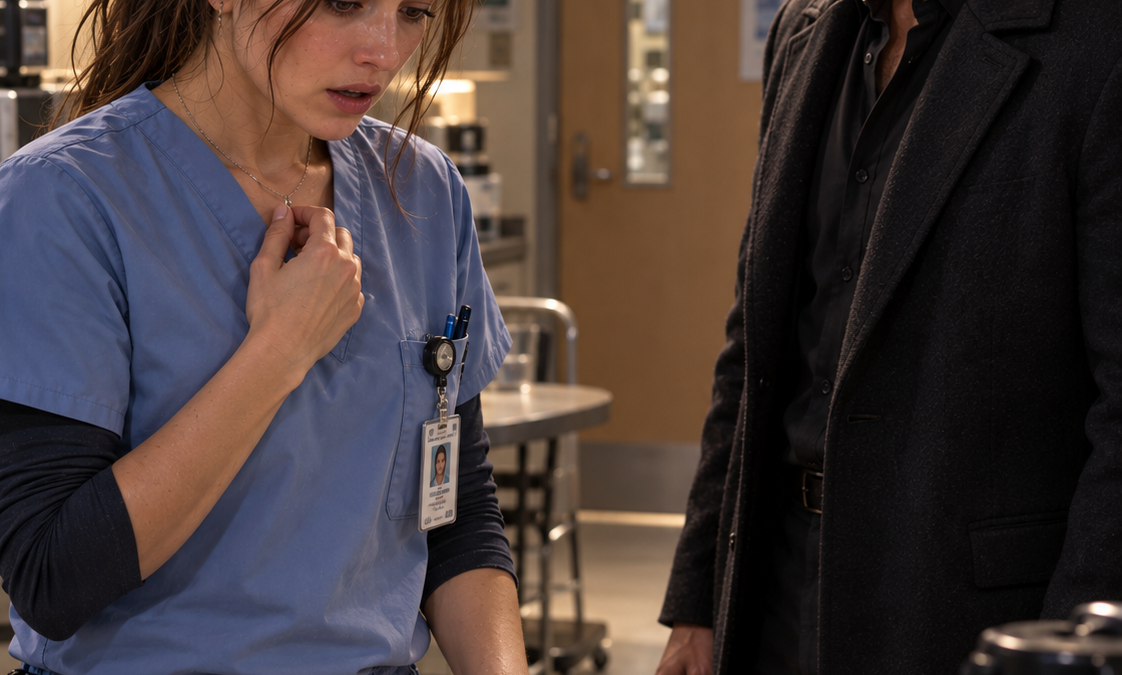
The Mafia Boss Saw the New Nurse — She Had Saved Him 15 Years Ago, But He Hid the Truth
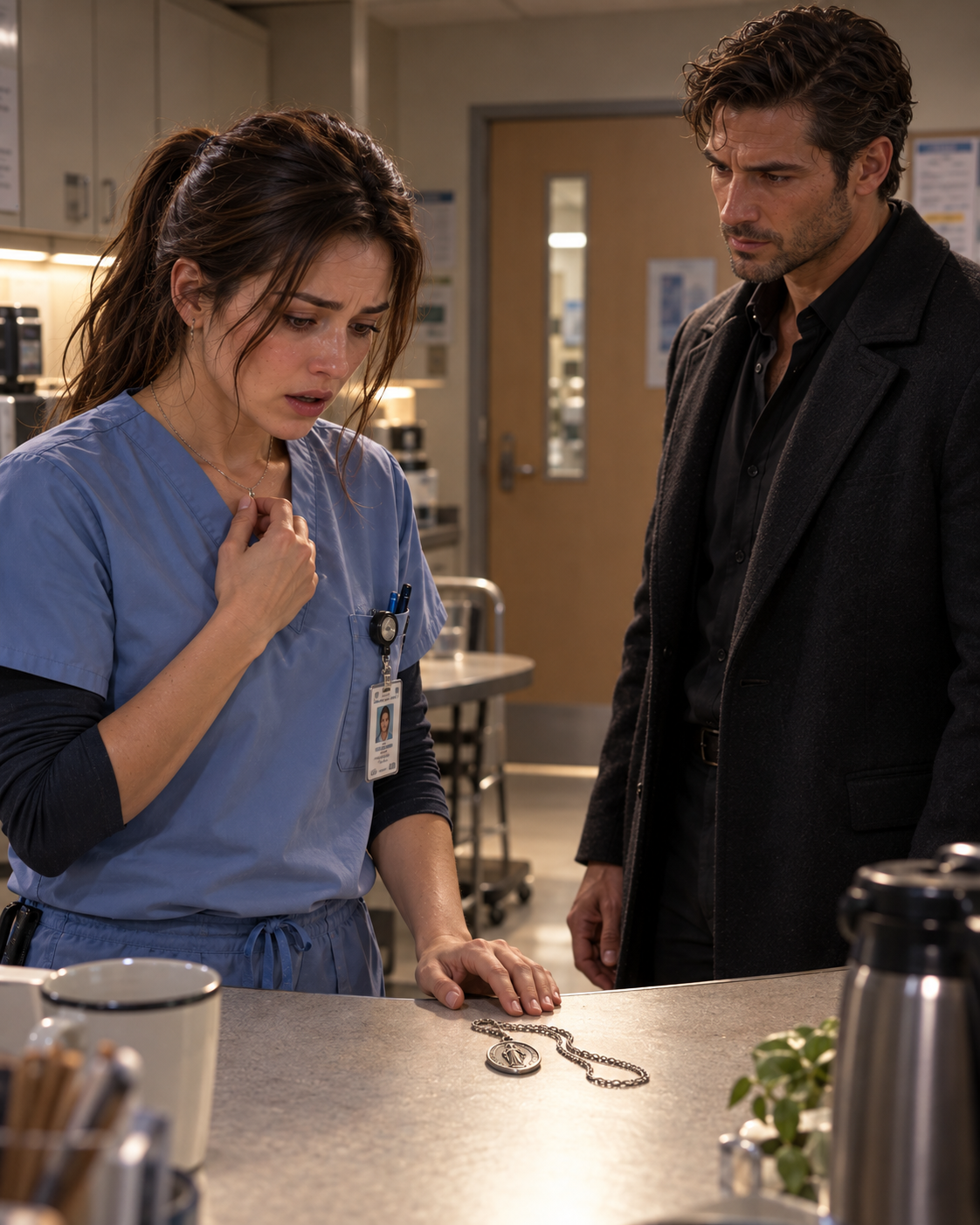
The call came in at 6:47 in the morning and the man who took it went pale.
Three floors above the general ward of St.Michael’s Medical Center, someone had accessed Vincent Moretti’s restricted patient file.
Not a doctor, not a nurse. The access code belonged to an administrative assistant who had been on family leave for 9 days.
She didn’t do it.
Somebody who knew exactly how to make it look like she did had. By 7:15, Adrienne Moretti already knew. By 7:30, he was in his car.
The two men beside him understood without being told to stay quiet and stay out of his way. Someone had gotten too close to his uncle.
In Adrienne’s world, that was the kind of mistake people didn’t get to make twice.
Adrien Moretti was not a man who announced himself.
He didn’t need to.
The moment he stepped off the elevator on the seventh floor of Saint Michael’s Medical Center, the energy in the hallway shifted the way air pressure shifts before a storm.
Invisible, unmistakable, a signal that the atmosphere had decided to behave differently. The two nurses at the nearest station looked at each other, then looked away from him. A young orderly pushing a linen cart found somewhere else to push it.
The administrator who had called Adrien 40 minutes ago stood near the nursing station with the expression of a man who had since deeply regretted making that call. His name was Gerald Hol, 53 years old, 11 years managing private wing operations. He had dealt with difficult family members before, powerful ones, families who came with lawyers and donation histories and expectations the hospital relied on.
But none of those families had come with the quiet around them that always preceded Adrienne Moretti. None of them had a man walking two steps behind who looked like he had never once needed to raise his voice to get something done.
Mr.Moretti. Gerald stepped forward, extending his hand.
I want to assure you that we’ve already which file was accessed.
Adrienne said he didn’t shake the hand.
Gerald let it fall.
Your uncle’s full medical record, treatment history, current medication protocols, his physician’s notes from the last.
By who? The access code belongs to one of our administrative coordinators.
A yuan, but she’s been on leave.
She wasn’t.
I know she didn’t do it.
Adrienne finally looked at Gerald directly. That was somehow worse than being ignored. Someone used her credentials.
That means someone inside your building either stole them or was given them. Which one is it? Gerald opened his mouth and then did not say anything useful.
“Find out,” Adrien said.
“Today.”
He walked past Gerald toward room 714, and his bodyguard, a wide, quiet man named S, who had worked for the Moretti family for 16 years, followed without being asked. Gerald Hol watched them go and reached for his phone for his phone with hands that were not entirely steady. The door to 714 was a jar.
Adrienne pushed it open.
There was a nurse in the room with her back to the door, bent slightly over the medication chart, clipped to the side rail of Vincent’s bed.
She was writing something. She wore the standard pale blue scrubs of the private wing, dark hair pulled back, and she was talking to Vincent in a low, easy voice, the tone of someone who had already understood that this particular patient responded better to conversation than to the clinical efficiency most staff defaulted to in rooms like this one. The dosage
changer doctor ordered yesterday is showing up correctly now.
She was saying I just wanted to double check before morning rounds. Vincent propped against three pillows and looking significantly more alert than any man 3 weeks out of a serious cardiac event had any right to look waved a hand.
You’re the third person who’s checked that this morning.
Then I’m the first person who checked it correctly.
She said the other two were looking at last Tuesday’s chart.
Vincent made a sound that was almost a laugh. Adrienne stopped in the doorway. S nearly walked into his back.
The nurse straightened, turned to reach for something on the supply cart beside side. The bed and that was when Adrienne saw her face for the first time in 15 years.
The breath he took was so controlled. It was almost silent. He was good at that.
He’d spent most of his adult life perfecting the discipline of giving nothing away in his face, in his posture, in the fraction of a second that separated reaction from response.
But his feet had stopped moving. And S, to his credit, said absolutely nothing, which was the correct professional decision.
She hadn’t seen him yet.
She was reading something on the cart, making a note on the chart.
And Vincent, who had been watching Adrien from the moment the door opened, was watching his nephew with an expression Adrienne couldn’t entirely read.
It wasn’t surprise.
It wasn’t confusion.
It was something older and more deliberate than either of those things. The nurse looked up.
She saw a large man in a dark coat standing in the doorway with another large man directly behind him. She took this in the way a person takes in weather, noted it. assessed it, made a decision.
Her eyes moved from Adrienne to Vincent, measured the distance, and settled into something pragmatic.
If you’re here to visit, she said, visiting hours for the private wing are 10 to noon and 3 to 6.
If you’re here to frighten him, you can wait outside.
Nobody in Adrienne’s world spoke to him that way.
Not administrators, not other men’s lieutenants, not hospital staff who had looked his name up online and understood what they were looking at.
Nobody said the words, “You can wait outside to Adrien Moredi.”
With that particular flat certainty, then that indicated. They meant every syllable.
He still didn’t say anything.
The nurse’s eyes moved briefly to S, then back.
I’m going to need you to make a decision.
Vincent spoke from the bed. Adrien, come in.
Tell your man to stay in the hall. The name landed in the room.
Adrienne watched the nurse’s face for a reaction.
There wasn’t one.
Adrienne meant nothing to her.
She was already turning back to Vincent’s chart, having apparently filed Adrien under difficult family member, not immediately dangerous, and resumed her work.
Her professional dismissal of him was so complete and so matterof fact that it took him a full 3 seconds to understand that it wasn’t a performance.
She genuinely wasn’t afraid of him.
He stepped inside. Sedayed in the hall.
Adrienne pulled the door partway closed and crossed toward the chair beside Vincent’s bed.
Not because he decided to sit down, but because it gave him an angle where he could see her face without making it obvious that he was looking at it. Vincent studied him with those slow measuring eyes.
You’re staring at my nurse.
I’m not staring.
You stopped breathing for a moment when she turned around.
I’m 73 and I’ve had a cardiac event.
I’m not blind.
The nurse glanced back over her shoulder. Mr.Moretti, the younger one.
I need to finish the morning medication review.
You’re welcome to stay as long as you’re not disruptive.
She turned back to what she was doing.
I’ll step out when I’m done.
Adrienne looked at the back of her head.
The particular way she’d said the younger one, zero difference, no calculation, just a small logistical clarification, made something tighten in his chest in a way he didn’t have a clean word for.
Her name is Clareire Bennett, Vincent said quietly. transferred to this wing three weeks ago.
Best nurse I’ve had since I arrived.
He paused. You know her.
I don’t know her.
You recognized her.
It’s not the same thing.
Vincent considered that for a moment. I see. He said in a tone that suggested he saw considerably more than he was letting on.
Clare finished the chart, clipped it back to the rail, and turned to face them. She had a professional smile, not warm exactly, not cold, just present.
the smile of someone who had learned to work with difficult people by refusing to assign them more authority over her day than the situation required.
I’ll come back at 9 for the vitals check,” she said to Vincent.
She looked at Adrien briefly.
“There was a security issue this morning in the administrative office.
Someone on your family’s staff has already spoken to Mr.Halt.
If you have additional concerns about your uncle’s privacy, you should speak to the department head directly.”
She picked up her cart.
I’m not the right person for that conversation.
She moved toward the door. Miss Bennett.
She stopped, turned. Who requested you for this wing? Adrienne asked.
Something shifted in her expression. Not irritation exactly. More like a woman deciding how much she wanted to engage with a question she found slightly presumptuous.
The nursing placement coordinator. Before that, a pause. She looked at Vincent.
Vincent looked at the ceiling. I transferred from the general ward, Clare said carefully, because the position was open and the salary differential would help my situation.
Someone apparently mentioned my name to the coordinator, but I was told it was a standard personnel recommendation. Her eyes moved to Vincent again. The ceilings remained fascinating to him.
If someone on your family staff influenced that placement without my knowledge, I’d appreciate being told so I can decide for myself whether I want to continue in this position.
The sentence landed cleanly. No drama in it, no performance of anger, just a woman stating plainly what she required.
Vincent made a small approving sound. Adrienne said nothing.
He was looking at the empty chain around her neck fine silver, just a delicate loop visible above the collar of her scrubs. No pendant, no metal, just the chain of something that had once hung there and no longer did. Clare followed his eyes.
It was my mother’s, she said briefly.
Sabi, I keep the chain because I’m not ready to put something else on it.
She looked at him with the expression of someone who had learned that private information shared with strangers had a way of being used against you later.
I don’t know why I told you that.
She left.
Adrienne sat in the chair beside his uncle’s bed and listened to the cartwheels quiet down the hallway outside.
Then he put his hand in his coat pocket and closed his fingers around a small worn piece of metal.
“You know her,” Vincent said again.
Not a question this time. A long time ago, Adrienne said. Before any of this, Vincent was quiet.
Down the hall, someone laughed a short surprised sound.
Adrien thought it might be Clare’s voice, though he couldn’t be certain.
She doesn’t know who you are, Vincent said.
No. Does she know who you were?
Adrien didn’t answer that.
He stayed for 20 more minutes. When he stood to leave, Vincent caught his sleeve with one thin hand.
Don’t frighten her away, Vincent said.
She’s the first person on this floor who talks to me like I’m a man, not a file.
I know, Adrienne said.
He walked out into the hallway, collected S with a look, and made it to the elevator before he stopped and said quietly, “I want a security rotation on the seventh floor.
” Discreet, “I want eyes on all staff access logs going back 60 days.”
S didn’t ask why.
What Adrienne didn’t say out loud was, “And I want to know if anyone is already watching her.”
He pulled out his phone and called the man who managed his private security operations. And he gave him three instructions, the last of which was to assign someone to unobtrusively confirm that Clare Bennett arrived home safely after her shift ended that afternoon. He told himself it was standard precaution.
He’d told himself a lot of things over 15 years that turned out to be considerably more complicated than they first appeared.
The night Adrienne first met Clare Bennett, he was bleeding into a dumpster and trying to decide if he was going to live. He was 24 years old.
He had been running for six blocks through a neighborhood he didn’t know, and the cut along his side had gone from something manageable to something that was making the edges of his vision behave in ways he didn’t like.
His brother, Marco, had told him to stay in the car.
Adrienne hadn’t stayed in the car.
Marco was dead, and Adrien had been running ever since.
And the sheer uselessness of that choice, stay in the car, don’t stay in the car.
It didn’t change what happened to Marco was somehow the worst thing.
Worse than the blood, worse than the cold, or the not knowing how far behind him the other men were. He ducked into an alley between a dry cleaner and a diner.
The diner’s back door was closed, but not locked.
A small, careless gap, the kind that exists in service businesses at 11:00 at night when whoever was supposed to close properly was tired. Adrien pressed himself into the gap and stood there trying to breathe without making sound and felt the wet heat of his own blood soaking through his shirt.
The door opened from the inside. A girl stepped out with a garbage bag in each hand. young 1820.
He couldn’t tell in the low light and she stopped the moment she saw him.
And to her credit, she did not scream. She just looked at him.
Took in the blood. Took in the way he was standing against the wall. Took in the expression on his face that he knew was not a good expression.
“Are you going to hurt me?”
she asked.
“No,” he said.
“Are you going to hurt yourself more if I just close this door?”
It wasn’t really a question.
Probably, he admitted. She stood there for another moment. He could see her thinking, not frightened, rabbit quick thinking, but the slower, more practical thinking of someone weighing a decision and understanding its weight.
She set the garbage bags down beside the dumpster.
Then she looked back at the door, looked at him, and said, “Come in quick.”
before someone sees. Her name was Clare.
He found that out later in the back of the diner at a table that hadn’t been wiped down since the last service.
She cleaned the cut with supplies from a first aid kit mounted near the walk-in cooler. She did it with the focused, slightly grimacing efficiency of someone who was not trained for this and was going to do it correctly anyway. How bad is it?
He said, “You don’t need stitches.
You might need stitches.
You definitely need to not move around for a while.”
She pressed a folded cloth against the wound and taped it with what she had.
I’m not a doctor.
I know.
I can’t call an ambulance.
I know that, too. She looked at him steadily.
“Who are you?”
He hesitated half a second, and the hesitation told her enough.
“Okay,” she said.
“Never mind, Adam,” he said.
“Call me Adam.”
She didn’t push it.
She gave him water and a container of soup.
She heated in the industrial kitchen, moving around the closed restaurant with the practiced ease of someone who’d worked there, long enough to know exactly where every light switch was in the dark.
She told him she was 19. She told him her mother was sick and the medication was expensive and she was picking up every shift available. She told him she was trying to get her CNA certification because the hospital across town was hiring and the hospital paid better than the diner.
She said all of this the way you talk to someone you’ve decided not to be afraid of filling silence with ordinary information, making a crisis feel like an inconvenience that could be managed.
He listened to every word. Around 1:00 in the morning, she was sitting across from him with a cup of coffee herself. And she was doing something with her hands, pulling a small pendant back and forth on a chain around her neck.
The absent habit of someone who thinks through their hands. What is that?
He said. She glanced down.
St.Christopher. My mother gave it to me.
Patron saint of travelers. A pause.
Supposedly protects you when you’re going somewhere dangerous.
She slid it off over her head without ceremony and set it on the table between them.
I don’t travel, she said.
And you look like you’re going somewhere.
I can’t take that, he said.
It was your mother’s.
She’ll understand.
She pushed it across the table. You can give it back whenever. He put it in his pocket at 2A.
Me. When he finally left, slipping out the back door into an alley that had gone quiet.
He looked back once.
The light in the diner’s narrow back window was still on.
He never came back. Not because he forgot her.
He did not forget her.
He didn’t come back because by the time he was in any position to come back, he had become someone you don’t walk back into a 19-year-old diner girl’s life as.
You don’t show up on that doorstep when your name is in the newspapers for the wrong reasons.
When the men around you have blood on their hands. When the price of keeping people safe in your world is that they have to stay far away from it. He had told himself that too.
In the present, Adrienne sat in the back of his car outside Saint Michael’s and turned the metal over in his fingers.
The silver had gone dull from years of handling. The chain was the same one.
He’d had a cracked link repaired once quietly at a jewelry shop whose owner had the good sense to ask no questions.
St.Christopher looked up from the flat disc with the patient slightly worn expression of all old things carried too long. His phone buzzed. his operational director.
Two more unauthorized access attempts on the hospital’s internal network, both blocked by the firewall, both originating from an IP address registered to a telecommunications reseller on the outer southside, a company that existed only on paper, and one whose name Adrien recognized as a technical front associated with a specific man who worked inside his own
organization.
That was not a coincidence.
That was a message sent by someone who either didn’t know Adrienne would eventually trace it back or didn’t care.
Adrienne told his director to document everything and bring a full report by six. Then he sat for a moment longer with the metal in his hand. 15 years.
She had looked directly at him, not through him the way most people did, but right at him with those direct eyes that had looked at him the same way when he was a bleeding 24year-old in the back of a closed diner line. and she had seen nothing she recognized.
No ghost, no echo of the frightened young man who’d eaten her soup and taken her metal and disappeared.
Just a difficult man in a doorway.
He hadn’t expected that to land the way it did.
Clare Bennett finished her shift at 3:30 and took the stairs instead of the elevator because she always took the stairs. She developed the habit during the years of double shifts when she needed those 45 seconds of movement to transition from being a nurse back into being a person.
She was on the third floor landing when she noticed the man. He was leaning against the wall beside the exit door, looking at his phone, maintenance uniform.
She’d passed him 40 minutes ago on the fifth floor doing the same thing, leaning, scrolling, apparently unoccupied.
Maintenance workers were often unoccupied.
That wasn’t unusual.
Being on two different floors in the same idle position at the same time was slightly unusual in the way that small insistencies were slightly unusual. Probably nothing, possibly something.
She pushed through the exit door and walked to the parking structure without looking back. She told herself it meant nothing. She almost believed it.
Behind her, the man in the maintenance uniform put his phone to his ear. He said four words.
She’s heading to her car.
V. Vincent Moretti was eating dinner when Clare came back.
She wasn’t supposed to be back.
Her shift was over. The evening nurse, a quiet woman named Patricia, who had been competent and thoroughly uninterested in Vincent for 3 weeks, had taken over. But Clare had come back because she had a question.
and she had learned in the difficult years of her late 20s that ignoring things that didn’t add up was how you ended up blindsided by things that should have been obvious.
I have a question, she told Vincent. He set down his fork.
I imagine you have several, just one for now. She sat in the chair beside his bed, the same chair she noticed that Adrienne had occupied that morning.
Did you ask someone to request me specifically for this wing? Vincent considered his dinner.
Mr.from “Vincent,” he said.
“We’ve discussed this.
Mr.makes me feel like I’m about to receive bad news, Vincent.”
She folded her hands in her lap, a gesture she’d learned from a supervisor who told her once that folded hands in a patient’s room signaled, “I am not in a hurry, and you cannot wait me out.
” “Did you?”
Vincent looked at her for a long moment. The eyes of a man who had watched a very great deal of human behavior and had no intention of being rushed.
I mentioned to the hospital’s patient liaison that I had heard you were exceptional, he said finally.
I may have mentioned it in a context that resulted in a specific recommendation. Why?
Because when a man my age finds a nurse who actually looks at him instead of past him, Vincent said he’s not inclined to let her disappear to another floor.
That’s the reason you gave me.
It’s a true reason.
I didn’t ask if it was true.
I asked if it was the whole reason. Vincent smiled.
It was a real smile, not a performance.
The smile of a man who was genuinely pleased to be talking to someone who didn’t let things slide.
No, he said it isn’t.
The room was quiet. Down the hall, a monitor beeped twice and stopped.
Patricia’s soft footsteps passed the door without pausing.
Your nephew, Clare said. He knows me.
I believe he does. From where? Vincent looked at her with that careful expression again.
That’s a question for him, he said.
Not me, she stood. tucked the chair neatly back against the wall.
“I’m not going to ask him,” she said.
“No, I’m going to let him tell me,” she paused at the door.
“If he decides not to, that’ll tell me something, too.”
She left. Vincent sat with his dinner getting cold, and thought about the two most stubborn people he had known in a long life.
And a cheap silver medal that a frightened young man had been carrying in his pocket ever since the night, a girl he’d never met, chose to help him for no reason.
Other than that, it was the decent thing to do. He picked up his fork. He had always known patience was going to be necessary.
He just hadn’t been certain until today whether his nephew still had enough of it.
The call came to Adrien at 8:47 that evening.
The man he’d assigned to confirm Clare’s safe arrival home was reporting that she had arrived, that she’d stopped for groceries on the way, and that there was a green sedan parked three units down from her building that had been there when she arrived, and was still there 45 minutes later when she went inside.
The registration on the sedan traced back to the same telecommunication shell company as the network intrusion. Adrien set his phone on his desk and sat in the quiet of his study for a long time, splitting.
The problem with protecting someone from a threat they didn’t know existed was that doing it invisibly required exa exactly the kind of surveillance and control that Clare Bennett had made clear.
In the first 10 minutes he’d known her as an adult, she considered a violation.
The problem with telling her the truth was that telling her the truth meant telling her everything. He opened the desk drawer and set the metal on the surface where he could see it. You can give it back whenever.
15 years of whenever had arrived all at once in a private hospital wing in the worst possible form. He closed the drawer, left the metal on top of the desk, picked up his phone.
Double the rotation on the parking structure, he said when S picked up. And I want someone on her block tonight. Quiet.
She doesn’t see anyone.
Got it. One more thing. Yeah, if she notices.
Adrienne paused and she will notice. What do I tell her? Adrienne looked at the metal on his desk at the dull silver disc that had traveled farther than either of them had ever expected.
“Tell her the truth,” he said.
“Tell her I ordered it.”
He hung up.
He sat back and thought about a 19-year-old girl in the back of a closed diner pushing a cheap metal across a sticky table to a man she had no reason to help, saying, “You can give it back whenever.”
She had never asked him for a single thing in return.
That was the thing he’d carried longest.
Not the metal that she noticed on the third day. Not the man himself.
She never saw his face clearly enough to identify him. It was the pattern it she noticed.
The way a silver was parked somewhere within line of sight of wherever she happened to be standing when she left the building. The way a man in a gray jacket materialized on the bus platform two mornings in a row and then vanished before she boarded.
the way that particular quality of being watched which she had learned during the lean years after her mother’s illness to recognize the way you learn to recognize the smell of weather changing had settled onto her shoulders like something physical.
She didn’t say anything yet.
She paid attention instead. On the fourth day, she took a different route to the parking structure, longer through the connecting walkway that passed the outpatient pharmacy. She walked slowly enough to give anyone following her time to adjust.
The man in the gray jacket appeared at the far end of the walkway 80 seconds after she entered it. She went home, made dinner, and did not sleep well.
The fifth day, she went directly to Gerald Holt’s office.
Gerald looked relieved to see her, then immediately looked as though he regretted the relief. She sat down across from his desk without waiting to be invited, and she folded her hands the way she always folded them.
when she had decided she was not leaving a room without an answer. I need to know, she said, whether the additional security presence on the seventh floor includes any arrangement regarding individual staff.
Gerald blinked.
I’m sorry.
Has anyone from the Moretti family’s private security contracted with the hospital or with an external firm to maintain surveillance on specific employees?
The silence lasted about 2 seconds too long. Bennett, Gerald said carefully.
The arrangement that Mr.Moretti’s team has in place is specifically designed to to what?
To ensure the safety of Gerald. She used his first name the same way she used the folded hands a signal.
I have decided to be direct and I am inviting you to do the same. Is someone following me? Gerald looked at his desk at the phone on his desk at the door behind Clare which was closed.
The security detail has been instructed to maintain an informal awareness of staff who interact directly and regularly with Mr.Moretti’s uncle.
He said as a precautionary, she stood up.
That’s enough, she said.
Thank you.
She left his office and went back to the seventh floor and did not speak to anyone for the rest of the morning except Vincent’s attending physician with whom she had three very specific questions about a dosage transition.
she wasn’t satisfied had been adequately explained in the chart notes.
The physician answered two of the three.
The third one, why a supplemental medication had been added to Vincent’s protocol by an outside consultant rather than the attending team, did not produce a satisfying answer.
She wrote it down. She was still writing when the elevator opened down the hall and Adrien Moretti stepped out. She heard him before she saw him, not footsteps.
Adrien didn’t announce himself with footsteps.
It was the change in the hallway. Patricia had once described it to Clare as the temperature dropping, which Clare had dismissed missed as dramatic.
She understood it better now.
It was simply that every person in Adrienne’s immediate vicinity became slightly more careful.
The way people become more careful around an open edge.
He wasn’t doing anything to cause it.
He didn’t have to.
She put her notebook in her pocket and turned to face him before he reached the nursing station. I need 5 minutes, she said.
He stopped. Read her face with those flat measuring eyes that she had decided over 5 days of occasional proximity were his primary diagnostic tool.
Whatever he read, he said. All right.
She gestured toward the small family consultation room beside the elevator. He followed her in. She closed the door.
She did not sit down. Neither did he.
You had someone following me, she said. A pause.
He didn’t deny it.
She had expected him to manage it to redirect, to frame it differently, to deploy the particular verbal dexterity.
She had watched him use with Gerald and the hospital administrator and the two men she’d seen him speak with in the hall on Tuesday.
He didn’t do any of that.
Yes, he said. The simplicity of it almost stopped her.
She’d braced for deflection without telling me.
Yes, without asking. Yes, she studied his face.
There was nothing apologetic in it, not yet.
But there was something that was not quite what she’d expected from a man who had apparently spent considerable energy ensuring that every variable in his immediate environment was arranged to his satisfaction.
He looked like a man who had made a decision he understood she was going to object to and had decided to accept the objection rather than argue with it. That was almost more infuriating than a denial would have been. I grew up with very little money, she said.
My mother was sick for a long time before she died. During those years, I dealt with landlords, social workers, hospital billing administrators, and a rotating set of people who all believed that they were helping me and therefore did not need to ask permission before making decisions that affected my life directly.
She paused.
Do you understand what I’m telling you?
Yes.
Then explain to me why I shouldn’t walk off this floor right now and request a transfer back to the general ward.
Adrien was quiet for a moment when he spoke. His voice was careful in the way of a man choosing words that were true rather than words that were useful.
There was an attempt to access your uncle’s Vincent’s medical records.
The IP address traces to an entity that has a connection to a conflict in my organization. I have reason to believe that anyone who has direct contact with Vincent may be observed by the same party that accessed his records. She processed this.
Observed meaning watched at minimum. and your solution was to also watch me.
My solution was to make sure that if anyone moved past watching, there was someone positioned to intervene without telling me. The words were already familiar to both of them. She could hear it, the circuit they were running.
He knew it, too.
I didn’t want to alarm you unnecessarily, he said.
That is exactly what everyone says, Clare told him. Right before it turns out, the thing they chose not to tell me was precisely the thing I needed to know. The rooms were small.
There was a box of tissues on the table and a framed photograph of the hospital’s garden on the wall and nothing else.
Adrienne stood against the far side of the table with his hands at his sides and let her finish.
If I’m in danger, she said, I need to know that.
I am capable of making informed decisions about my own safety. I do not need someone to manage the information I receive about my own life. A pause.
If you decide you can’t work with that, then we don’t have anything further to discuss and I’ll speak to Gerald about the transfer.
Adrienne looked at her for a long moment.
You’re right, he said.
She waited for the followup, the qualification, the but the gentle repositioning that would technically concede the point while functionally changing nothing.
It didn’t come.
If I learn something that involves your safety, I’ll tell you directly, he said.
I won’t manage it for you.
The quiet between them lasted about 3 seconds.
“All right,” she said.
She opened the door, walked back toward the nurse’s station.
Behind her, she heard Adrienne step into the hallway and say something brief and quiet to S, who had been standing a discreet distance from the consultation room door.
She didn’t look back.
She had the distinct unsettling feeling that the man she’d just finished arguing with had surprised her.
She wasn’t ready to examine what that meant yet.
Vincent had opinions about the situation. He expressed them through a combination of strategic questions and the kind of long silences that were clearly invitations to Phil.
He was different today, Vincent said that afternoon during Clare’s vitals check.
I don’t discuss Mr.Moretti with you, she said, adjusting the blood pressure cuff.
I’m not asking you to discuss him.
I’m making an observation.
He watched her face with the patient interest of a man who had spent 73 years reading people.
You’re not angry anymore.
I wasn’t angry.
You were absolutely angry. She wrote down the reading. I was precise.
Vincent made the almost law sound. Adrien described you once.
Not recently. A long time ago. He paused.
He said you were the most practical person he’d ever met.
At the time, I didn’t understand why he said it the way he did, like it was something he wanted to remember.
She kept her eyes on the chart. When did he describe me to you?
Some years ago. in a conversation.
I won’t repeat the context of another pause.
He didn’t use your name.
I didn’t know it was you until last week.
She set the clipboard down.
She didn’t look at him directly.
She looked at the middle distance above his left shoulder, which was where she looked when she was deciding something.
Vincent, she said, “Yes, I’m going to ask you one thing, and I want a straight answer.
I’ll do my best.
Is he a good man?”
The question sat in the room. Vincent was quiet long enough that she finally looked at him directly.
He is a man, Vincent said slowly, was done things that good men do not do, for reasons that were sometimes necessary and sometimes not.
He is also a man who has spent the last several years trying to undo what he can and carry what he can’t.
He looked at her steadily. I have known him his entire life.
I cannot tell you he is a good man.
I can tell you he is trying to be, which is more than I can say for most people who’ve had what was handed to him.
She picked up the clipboard.
That’s a more honest answer than I expected, she said.
I told you I’d do my best.
She left with no further comment. Vincent settled back against his pillows and and looked at the ceiling with a very slow chest match and armorless chess match and already knowing where where it was going. 3 days later, the thing Adrienne had been expecting moved a step closer.
A man who identified himself as a representative of the Moretti family’s charitable foundation arrived at the hospital’s patient services office and requested an update on Vincent’s prognosis and treatment timeline.
He produced paperwork that looked correct. He spoke with two staff members before some someone thought to verify his authorization code which turned out to be 18 months expired. By the time security went back to find him, he was gone.
Adrien learned about it within 40 minutes. He called his director of internal operations, a man named Ferris, who had been with the organization for 22 years and whose primary skill was that he never assumed anything was coincidental.
He’s testing the perimeter.
Ferris said, “I know he’s not being subtle about it.”
“No,” Adrien turned this over.
The lack of subtlety was the point. Dominic Raldi was not a man who moved carelessly.
He was h a man who sometimes allowed you to see him moving to see if it would make you react predictably. If Adrien pulled in, closed ranks, moved Vincent, that was a predictable response and a predictable created opportunities Dominic could use. Keep documenting.
Every attempt, every code used, every name, paper trail, separate servers, nothing on the shared network. You think it goes further than him? I think it might.
Adrien paused. And I think he may have something on the hospital side.
Someone he’s placed or someone he’s pressured.
You want me to look at the staff?
I want you to look at who’s been asking questions about the staff.
He hung up and stood at the window of his office for a while, thinking about the green sedan that had been parked near Clare’s building, about the expired authorization code and the man who had vanished, about the way Dominic had spent the last 18 months watching Adrienne’s gradual shift in operational priorities with the focused patience of a man building a case.
a sound like green wood splitting and about the clue Bennett who who noticed medication discrepancies before attending physicians who recognized a pattern in two separate elevator appearances who had come back to Vincent’s room off shift to ask a pointed question was exactly the kind of person Dominic would realize was a variable he hadn’t accounted for.
She offered to drive him. That was how it started.
She was leaving.
It was raining and Adrienne’s car was on the other side of the structure because the usual space had been taken by a delivery truck.
His coat was adequate.
He didn’t mind rain, but she was pulling out as he was crossing the structure and she slowed and rolled the window down.
I’m going north, she said.
He stopped walking.
He wasn’t sure what his face was doing.
Whatever it was, it made her say, “It’s just a ride, not a contract.”
“North works,” he said, and got in.
She drove the way. She did everything efficiently without ceremony.
She asked him where to drop him. He gave an intersection.
She navigated there with the radio on low.
Something instrumental and didn’t try to fill the 12 minutes with conversation.
He was the one who spoke first.
You’ve been here 6 weeks, 5 and a half.
Vincent talks about you. He talks about everyone. She said he told me yesterday that his cardiologist reminds him of a man who once owed him money.
I didn’t ask for elaboration.
The edge of something that wasn’t quite a smile crossed his face.
He noticed that she tracked it in her peripheral vision. Can I ask you something? He said, probably.
The work you do, the night shifts, the difficult patients. You could have transferred to an easier ward.
I did the easier wards for 3 years. She said they were easier because the patients had money and no one was in any real trouble.
The trouble was all administrative and interpersonal, and it never went anywhere. A pause. I did better when the work was harder.
I don’t know why.
I stopped questioning it. He watched the rain on the windshield.
You did your CNA certification, he said. She glanced at him.
A quick look, not alarmed, more the look of someone who has just received information they weren’t expecting and are deciding whether it matters.
I did my RN after. When did I mention the CNA?
He hadn’t prepared an answer for that.
In 15 years, he had never had to explain the answer to that question because it had never come up because he had made sure their lives were maintained in separate orbits that would theoretically never intersect.
“I’m not sure,” he said.
She drove. He watched her face in the passing street lights and thought about all the different kinds of lies.
The ones that were technically true, the ones that were omissions, the ones that sat in your chest and calcified over years until you couldn’t tell anymore where the lie ended and the person you’d become had started.
She pulled over at the intersection he’d named.
“Thank you,” he said.
“Don’t make it complicated,” she said.
“It was raining.”
He got out. She drove away without looking back. He stood on the wet sidewalk in the rain for a moment before his phone rang.
“It was Ferris, the outside consultant who added the supplemental medication to Vincent’s protocol,” Ferris said.
I traced his credentials.
He’s licensed.
Everything checks out, “But his practice address for the last 3 years is a building that also houses three shell companies with Raldi’s name on the paperwork.”
Adrien stood very still.
“When was the medication added?”
4 days before you arrived at the hospital. What does it do? At standard doses, nothing.
It’s a common cardiac supplement, but if combined with a specific interaction trigger, Ferris stopped.
You should hear this from a doctor, not me.
I’ve got a contact at Northwestern, I trust.
I can have him look at the full protocol tonight. Do it, Adrien said.
Tonight, and nobody accesses Vincent’s chart until we know what we’re looking at.
He ended the call. The rain was heavier now.
He was standing still in it without noticing.
Someone had placed a medication in his uncle’s care protocol.
Dominic hadn’t been testing the perimeter of the hospital for information.
He’d already been inside.
Clare was eating cereal at her kitchen counter at 11:00 that night when the hospital sent a secure message to her work tablet, alerting her that Vincent Moretti’s medication protocol had been temporarily suspended, pending a physician review, effective immediately.
She read it twice. Then she read the specific medication that had been flagged.
She put down her spoon.
3 weeks ago, she had caught a discrepancy in Vincent’s chart, not this medication, a different one, a simple notation error that she’d corrected through proper channels.
She had filed the report the way she always filed reports, cleanly and without drama, and had not thought further about it because the error had been minor, and the correction had been straightforward. But the medication currently suspended pending review was the supplemental compound that the outside consultant had added. She remembered it because she had done exactly what she had told the physician she intended to do.
She had looked up at the outside consultant’s name, run a standard verification of credentials, and made a note in her own records because the addition had been unusual enough to warrant the note.
She got up, went to her bag, found the small notebook she carried everywhere.
She looked at what she’d written 3 weeks ago.
Consultant name, credential verification number, date added, notes, interaction potential with current anti-coagulant therapy, confirm with attending. She had confirmed with the attending. The attending had reviewed it, said the dosage was minimal, no significant interaction risk, and had moved on.
But she had also noted, almost as an afterthought, that the consultant’s licensing information listed a practice address she had looked up out of habit because habit was how she’d gotten through the difficult years.
The address was a commercial building in the South Loop. She had not thought anything of it at the time.
She thought quite a lot of it now.
She picked up her phone and considered calling the hospital’s pharmacy line.
She could initiate a formal review request, get the full interaction analysis through the standard process, go to the attending in the morning. That was the correct process.
She also knew with the particular instinct she had developed for situations where the correct process and the complete picture were not quite the same thing, that what she was holding in her notebook was not just a minor irregularity. She dialed Gerald Hol. He picked up on the fourth ring, groggy and confused.
It’s Clare Bennett.
She said, “I need to ask you about the outside consultant who added a supplemental compound to Vincent Moretti’s protocol.
Specifically, I need to know who authorized that consultation to proceed outside the normal attending process.”
A pause. Clare, that kind of review request goes through.
Who authorized it, Gerald? He was quiet long enough that she could hear him becoming more awake.
It came through patient services, he said finally.
A request from the family’s representative.
Which representative? Another silence.
I’d have to pull the file.
I don’t have it in front of me.
Pull it tomorrow, she said first thing.
And Gerald, don’t let anyone access that file until you pull it yourself.
She hung up.
She sat with her notebook in her hands and thought about the man in the maintenance uniform, about the silver Civic, about Adrien Moretti telling her, “I’ll tell you directly.”
and the feeling she’d had afterward, the unsettling feeling of a man who had surprised her.
She thought about the way Adrienne had known she’d gotten her CNA certification, the specific small detail of it, the way it had surfaced in a conversation that should not have contained it.
She thought about the the empty chain around her neck and the fact that a man she’d met 6 weeks ago had looked at that chain with an expression she hadn’t been able to classify cleanly as curiosity.
She put the notebook away, washed her cereal bowl, turned off the kitchen light. She went to bed and did not sleep for a long time.
The next morning, she arrived on the seventh floor 40 minutes before her shift started and went directly to Gerald’s office where he was already at his desk with a file open and an expression she had seen before on people who had found something they didn’t want to find.
The authorization came through a family representative account, Gerald said without preamble.
The account is registered to the Moretti organization’s patient liaison coordinator.
Name: Gerald turned the file. She read the name.
She wrote it in her notebook. Has that account been used before to authorize clinical recommendations? No, Gerald said.
Never. She looked at the signature line.
Read it twice.
This isn’t a clinical recommendation, she said.
This is an administrative access approval that was used to route a clinical instruction through a non-clinical channel. She looked up at him.
That’s not a mistake.
That’s someone who knew exactly which gap in the system would allow a consultant to add a medication without going through the attending standard review.
Gerald looked at the file, then at Clare, then at the window, which offered him no useful guidance.
I need you to hold this file, she said, and I need you to flag it for the hospital’s compliance office, not through normal channels directly today.
Don’t put it in the general documentation system until compliance has it.
Claire, if I do that without consulting the administrative, Gerald, she folded her hands.
Someone used an administrative pathway to introduce a medication instruction into your hospital’s protocol for a patient who is both seriously ill and the uncle of a man you are well aware has dangerous enemies.
She spoke quietly without drama the way she’d learned to speak in crisis moments because drama made people freeze and she needed him moving.
If you wait on this and something happens to that patient and it comes out that you had this information and sat on it, what happens to you? Gerald looked at the file.
He picked up his phone.
By the time Adrienne arrived at the hospital at 8:30, the compliance flag was already in the system, and the attending physician had pulled Vincent’s supplemental compound and contacted the Northwestern contact Ferris had identified, who had confirmed what Ferris had suspected at higher doses.
The interaction risk was significant. Adrien found out all of this in the elevator on the way up. By the time the doors opened on the seventh floor, he had called Ferris and told him to prepare everything they had to false authorization, the shell company address, the network intrusion attempts, the expired credentials for secure external transfer.
He walked down the hall. Clare was coming the other direction. They stopped 6 ft apart.
She had a chart in one hand and her notebook in the other, and she was looking at him with an expression he hadn’t seen her use before.
Not the flat professional distance, not the direct irritation. Something else. The expression of someone who has spent the night making connections and has arrived at a place they are not sure they want to be.
The supplemental medication, she said. I know, he said. I flagged it to compliance at 6:30 this morning.
I know that, too. She studied him.
You found the consultant’s connection to whoever ordered this last night after you dropped me back in that intersection in the rain.
He didn’t move.
You knew last night, she said.
And you still didn’t call me.
I didn’t know enough last night to Adrien.
It was the first time she had used his name directly. It stopped him the way a hand on the shoulder stops someone, not forcefully, just completely.
I flagged it. I went through Gerald.
I used the correct process and I documented everything. and I woke up a hospital administrator at 11:00 at night because I noticed something that you apparently also noticed.
At some point in that sequence of events, I would have appreciated a phone call.
I didn’t want to involve you until I had documentation.
I already involved myself, she said.
That’s what I’m telling you.
I was already involved.
Keeping me in the dark doesn’t keep me safe.
It just means I’m operating without information that I could use.
She paused. I thought we talked about this. The hallway was quiet.
Patricia passed at the far end, saw them, and found something urgent to do in the supply room. Adrienne looked at her.
There was a version of this moment he knew well, the version where he absorbed the criticism, redirected to the immediate operational concern, and moved them both past the friction toward the practical matter at hand. He was good at
that version.
He said, “You’re right.
I defaulted to my old pattern.
I’m sorry.
It landed differently than she expected. She could see at the slight reccalibration, the moment of deciding whether an apology without a qualifier was what it appeared to be.
“Okay,” she said finally.
“Can I see what you documented?”
She handed him the notebook, open to the relevant page. He read it.
His eyes moved through her handwriting, small, efficient, precise, and he was aware, as he read, of the quality of attention it represented, the care, the three weeks of noticing small things and writing them down and pulling them together in the middle of a sleepless night without anyone asking her to. He closed the notebook and handed it back.
“You got more than my team did in the same window,” he said.
I was in the room.
“I know.”
She tucked the notebook under her arm.
“What are you going to do with what you have?”
Report it through appropriate legal channels. He said it flatly. The same way she stated things she meant.
She looked at him. Something in the look was not quite disbelief.
More like a woman recalibrating her reading of a situation. Not your own people, she said.
No. That costs you something.
Yes. She stood there for a moment longer.
Then she looked past him toward Vincent’s door.
I need to do my rounds, she said. I know. She walked past him.
He stood in the hallway for a moment before he reached into his coat pocket. He pulled out the metal. He had carried it in different pockets of different coats for 15 years.
It had traveled to more cities and more situations than he could name with any precision.
He had taken it out in moments of genuine doubt, and in moments of manufactured doubt, and in moments when he wasn’t sure what he was doing, but the weight of it in his hand gave him something to calibrate against.
He was going to have to tell her not today. Not in a seventh floor hallway when she was doing her rounds and the compliance flag was still fresh and Dominic was somewhere out there recalibrating his next move.
Not today.
But the longer he didn’t tell her, the more weight the silence accumulated.
He’d learned that, too.
He put the metal back in his pocket and went to see his uncle. Vincent was awake.
He looked at Adrienne’s face the way he always looked at Adrienne’s face with the patience of a man who had watched this particular human being for 39 years and had a reasonable working theory about most of what he saw there.
She flagged the medication, Vincent said before my team did. Hm.
Don’t, Adrienne said.
I’m not doing anything.
You have a face when you’re thinking something.
I have a face in general, Vincent said. It comes with the head. He settled back against his pillows.
Are you going to tell her? Adrienne sat in the chair.
“I have to,” he said.
“I know you have to,” Vincent said.
“I asked if you’re going to.”
The room was quiet except for the steady rhythm of the cardiac monitor, which had become over the weeks of visiting this room one of the most familiar sounds in Adrienne’s life.
“When it’s over,” Adrienne said.
“When Dominic is handled and you’re stable and she’s out of the direct line of whatever comes next.
” “That’s the sensible timeline,” Vincent said.
“You disagree with it.
I think sensible timelines have a way of running out, Vincent said mildly.
That’s all.
Adrienne looked at him.
She’s already figured out that I know something.
I haven’t told her, he said.
She doesn’t know what it is.
But she knows it’s there.
Yes, Vincent said. She would. The monitor kept its rhythm.
Down the hall, Clare’s voice moved from one room to the next.
The low, easy level tone of someone who could talk to frightened people without making them feel like they were being managed. Adrienne had heard that voice in a closed diner kitchen at 2:00 in the morning.
He had heard it in the hallways of this floor for 6 weeks. He had no way to explain to any living person, including Vincent, exactly what it did to him, to hear it in both contexts, to understand that the woman had not changed in any fundamental way, only in direction, only in scope, only in the accumulated weight of the years between.
If I tell her, Adrienne said, she’ll want to know why I didn’t come back.
Yes, Vincent said.
And I don’t have an answer that doesn’t require explaining everything else.
No, Vincent said.
I don’t imagine you do.
A knock at the door. Clare opened it, looked at both of them, and then looked specifically at Adrien in a way that had a particular quality to it, not suspicion exactly, but the look of a woman who has just decided that the conversation she needs to have with this man is more urgent than the conversation she was already planning.
Someone accessed the family liaison account again, she said. 20 minutes ago from inside the hospital, Adrienne stood.
Compliance already knows, she said.
But whoever it is they’re in this building right now.
The three of them held that for a moment.
Adrien looked at S, who had appeared in the doorway behind Clare and said, “Lock down the wing.”
He looked at Clare.
“Go,” she said before he could say anything else.
“I know what I’m doing.”
He left.
She stood in the doorway of Vincent’s room and watched him move down the hall with S at his shoulder and the particular focused stillness of a man who had just shifted from one mode of operation into another that she had not yet seen.
She closed her hand around the empty chain at her collar.
She was beginning to understand that the thing she didn’t know about him was not small and that he knew she was beginning to understand it and that whatever came next, whatever the thing he was carrying actually was neither of them was going to be able to pretend much longer that it wasn’t there.
The man they found was not Dominic. That was the first thing Adrien understood when S brought him the name 20 minutes after the lockdown.
not one of Dominic’s external operatives, not a planted stranger with false credentials.
The man who had accessed the family liaison account from inside the hospital was a 26-year-old named Kevin Marsh, who had worked in Saint Michael’s patient services office for 3 years and whose personnel file showed nothing more alarming than two late arrivals and accommodation for his handling of a difficult billing dispute.
Kev Marsh was currently sitting in a hospital security office on the ground floor, very pale, with the expression of a young man who had made a calculation about his own safety and was rapidly revising it. Not Adrien walked in, sat across from him. Said nothing for about 8 seconds, which was long enough to be uncomfortable.
I need you to tell me who gave you the account credentials, Adrienne said. Kevin looked at the two hospital security officers in the room.
They looked at the wall. Kevin looked back at Adrien and understood with the particular clarity of someone who has just correctly assessed how much trouble they are actually in that the two security officers were going to be very interested in the wall for the duration of this conversation.
I don’t Kevin started.
You don’t need to explain what you did.
Adrienne said I know what you did. I need to know who told you to do it and what they told you to look for.
Kevin’s hands were flat on the table.
young hands, slightly trembling. He said it was a family authorization check, Kevin said. He said the account holder had authorized a secondary user for emergency access and I was just completing the registration.
Who said a man named Carver?
He said he worked for your organization’s administration office.
He had a card. He had a badge. Describe him.
Kevin described him.
Adrien listened to the description with the attention of a man filing every detail for immediate use and thought, “Not Dominic directly.
Dominic sent someone new, someone none of my people have seen before.
That was worse than if it had been someone he recognized.”
“Did Carver tell you what he was looking for in the file?”
Kevin nodded miserably.
“Staff movement records, specifically the shift schedule for the nursing staff on the seventh floor.
” Adrienne kept his face exactly where it was.
He wanted to know Clareire Bennett’s schedule, Adrienne said.
Not a question. Kevin looked down at the table. That was enough.
Adrienne stood, said something brief to the hospital’s head of security about ensuring Kevin remained available for a formal statement, and walked out of the room into the corridor where he stopped and called Ferris.
“Pull everything we have on a man named Carver,” he said.
“Mid-40s, 6 ft gray at the temples, scar along the left jaw.
Not a name I recognize from current operations. How fast do you need it? An hour ago working.
He ended the call. Stood in the institutional corridor with the fluorescent lights doing what fluorescent lights do in thought with the cold, precise anger that was more useful to him than the hotter kind about what this meant.
Dominic wasn’t probing for Vincent’s medical information anymore.
probing for Clare’s schedule, which meant either Dominic had concluded that Clare’s documentation of the medication irregularity posed a specific risk to him, or this was the thought Adrienne did not want to finish, but had to Dominic had already understood something about Adrienne’s relationship to Clare that Adrienne had not made visible to anyone except and he was moving toward her, not for what she knew, but for what she meant.
Either possibility required the same immediate response. He went back upstairs.
Clare was doing a medication check on the room, two doors down from Vincent’s when he appeared in the doorway.
The patient like Greenwood splitting the an elderly man named Hartley who had been recovering from hip surgery for 2 weeks and who had decided that Clare was his favorite person in the building looked from her to Adrien with the interested assessment of a man who had nothing else to do. 2 minutes, Adrienne said.
Clare held up one finger without looking at him and finished recording Hartley’s reading.
She made a note on the chart.
She told Hartley she’d be back at noon.
She walked out of the room and into the hall and turned to face Adrien. The man who accessed the account was looking for your shift schedule.
Adrienne said she processed that.
Her face didn’t change, but something shifted behind her eyes.
the quick pragmatic processing of a woman who had already half expected bad news and was now calibrating exactly how bad.
Meaning someone wanted to know when I’d be in the building and when I wouldn’t.
Yes, because of what I filed with compliance possibly or because of something else. She looked at him.
What else? He said it cleanly because she had earned clean information delivered without performance.
There may be someone in my organization who has concluded that you matter to me. And who would use that?
The hallway was quiet. A monitor beeped somewhere.
A door opened and closed at the far end.
“Do I matter to you?”
she said. He held her gaze.
“Yes,” he said.
It was not a moment she seemed to know what to do with. She looked away briefly, not in discomfort, more in the way of someone, setting something aside to deal with later, because the immediate situation required her full attention. What do you need from me?
She said, I need you to let me assign someone to stay with you until this is resolved. On shift, off shift.
I need to know you’re not.
He stopped.
I’m asking this time.
She considered him for a long quiet moment. All right, she said, but I choose who.
I’m not walking around with one of your men who looks like a wall.
Tell me what you need. A woman.
Someone who can pass as a colleague or a friend. No one in a suit. He nodded.
And Adrien. She waited until he looked at her directly.
When this is resolved, whatever that means, there’s something I need to ask you.
Not now. When this is over, he understood from the way she said it and the specific weight she put on the word ask that she had already begun to put pieces together.
That the gap between what she knew and what she was about to know was narrowing in ways that neither of them could prevent much longer.
“When it’s over,” he said.
“I’ll tell you everything.”
It was the first time he had used that word everything. He saw her register it the particular specificity of everything versus what you need to know versus any of the other framings he could have used.
She registered it and did not ask him to explain it. She went back to her rounds. Ferris called at 11:40.
The man named Carver was real. His actual name was Thomas Vega.
He had done contract security work for Dominic Raldi’s private operations for seven years, never appearing in any capability that connected him visibly to the Moretti organization’s main structure.
He was on paper a logistics consultant. He had no criminal record because he had never been caught doing anything that resulted in one.
He’s not a muscle guy, Ferris said.
He’s a logistics guy.
He arranges things, access, timing. He makes problems appear and disappear.
Disappear. How? A pause.
There are three open investigations in the last four years that have Vega’s fingerprints around the edges without him in the frame.
One was a warehouse fire that killed two people. One was a car accident that killed one. One was a hospital complication that was ruled natural.
Adrien was sitting in his car in the hospital parking structure. The concrete around him was silent except for the occasional distant sound of a car.
He was looking at a fixed point in the middle distance and thinking with a precision that felt in the moment almost physical, like something mechanical engaging inside his chest. Cold and necessary. A hospital complication, he said.
Patient was a liability witness in a civil matter involving a construction company with ties to Raldi’s financial network.
He died 3 weeks into a routine recovery. The attending was questioned and cleared.
Which hospital? Ferris gave him the name of a hospital on the north side. Not St.Michaels.
Not this time.
Send me Vega’s photo, Adrien said.
Already sent. He opened the photo. Looked at it for a long moment.
Then he called S. I need you to put this photo in front of every person with access to the seventh floor.
Nursing staff, housekeeping, food service, administration. Anyone who has seen this man in this building in the last 3 weeks, I need to know exactly what he looked like and exactly where he was.
That’s a lot of people.
Start with housekeeping. They see everything and nobody looks at them on it. He sat in the car a moment longer.
Then he called the direct number for the deputy director of a federal task force whose existence he was technically not supposed to know about. Sun, who had been quietly receiving information from Adrien for 18 months in exchange for certain considerations regarding the scope of several ongoing investigations.
The deputy director picked up on the second ring. I have a package ready, Adrienne said.
Financial documentation, access records, a medication placement in an active patients clinical protocol, and a logistics operative with a history that you will find very interesting. How complete is it?
Complete enough that your team can build the rest without me. Timeline today. But I need something from you first.
What? A protection detail?
One person, plain clothes, medical administrative cover.
She’s a nurse at St.Michaels.
She doesn’t know about this arrangement and she won’t, but I need her covered by someone with actual authority while the package is in transit.
A silence.
That’s unusual, the deputy director said.
The package is worth it. Another silence, longer this time. 8 hours.
The deputy director said, “I need 8 hours to arrange the cover.”
“You have six,” Adrien said.
He ended the call. He sat in the parking structure for a moment longer and thought about what he was about to do.
The package he was preparing to hand over contained in information that was specifically carefully curated enough to establish Dominic’s betrayal and Vega’s pattern, clean enough to protect the people it needed to protect.
But it also
contained buried in the financial documentation references to transactions that would open doors into Moratti organization operations that had nothing to do with Dominic. He had prepared for this. He had known when he started down this path 18 months ago that pulling one thread would eventually mean acknowledging where the thread was attached.
He’d had 18 months to decide if that was a price he was willing to pay.
He had decided. It still felt sitting in a concrete parking structure at noon, like standing at a very specific kind of edge.
He went back upstairs.
He was in Vincent’s room when his phone lit up with a message from Ferris that read, “Only call me.”
Now he excused himself, stepped into the hall.
“Talk,” he said.
“I pulled Vegas building entry records from the hospital security system,” Ferris said.
“He’s been inside St.Michael’s before.”
“Not this week.
4 weeks ago, 2 weeks before you even arrived, Adrien was standing very still. He visited the seventh floor under a contractor maintenance authorization. Ferris said he was in there for 45 minutes.
I pulled the floor plan against the entry log. A pause, Adrien.
He was in the medication storage room. The air in the hallway felt different. He was in there before the consultant added the protocol change, Ferris said.
He was in there before there was a protocol change to protect. Adrienne said yes.
Which meant this had not begun as a response to Adrienne’s arrival at the hospital.
This had not begun as a response to Clare’s documentation or Vince’s illness or any of the recent events that Adrienne had been treating as the origin point of the problem.
This had begun 4 weeks ago before Adrienne knew Clare was here. Before Dominic knew Adrien had any connection to her. Dominic had moved against Vincent long before he understood that Clare existed as a complication.
The medication in Vincent’s protocol had been placed by Vega four weeks ago, and then a supplemental order had been routed through a false family authorization to give it clinical cover, a sound like, and the whole construction had been sitting inside Vince care for a month, while Vincent’s condition fluctuated in ways the attending had attributed to the natural difficulty of cardiac recovery.
Adrienne stood in the hall and felt the full weight of what this meant arrive with a completeness that left no room for adjustment. His uncle had been quietly, methodically being positioned for a death that would like medical misfortune.
The betrayal was not new. It was not reactive.
It had been running underneath everything for a month, patient and deliberate, in the hands of a man Adrien had trusted for over a decade. He called Ferris back in his pocket.
He walked directly to Vincent’s room.
Vincent was awake reading. He looked up when Adrienne entered and immediately set down the book.
“What happened?”
Vincent said. Adrienne told him.
“Not all of it.
Not the federal contact, not the package, not the full scope of what was about to move.”
But he told him about Vega, about the medication storage room, about the 4-week timeline. Vincent listened without interrupting.
His face throughout was the face of a man receiving information he had partly feared was coming and whose primary response was not panic but a specific tired anger that had its roots somewhere deep and old. Dominic, he said when Adrien finished. Yes.
How long have you known it was him?
I’ve suspected for weeks.
I’ve had documentation for 4 days.
Vincent looked at his hands. You were hoping to be wrong. I was hoping to have more.
You have enough. Yes.
Vincent was quiet. Outside the room, the floor went about its ordinary business.
Clare’s voice carried faintly from somewhere down the hall, that low, practical tone.
Vincent heard it, too. His eyes moved briefly toward the sound and then back to his nephew.
She’s safe, Adrienne said.
I’ve made arrangements.
I know you have. Vincent paused.
Dominic knows about her. He knows something.
He may not know everything.
He’s known you for 20 years, Adrien.
He knows when something matters to you. Vincent looked at him steadily.
He would have found out eventually regardless.
You can’t keep two things in the same life without them eventually touching.
Adrienne said nothing. When are you moving?
Vincent said. Tonight. Maybe sooner if Vega moves first.
And afterward. Afterward, the organization will be different.
The parts that need to go will go.
Some people will leave because they don’t like the direction.
Some investigations may get more productive. He set it flat with the specific flatness of someone who has already processed the emotional content of a decision and arrived at its practical shape.
It’ll be rough for a while.
I know, Vincent said.
I’ve been watching you work toward this for 3 years.
I thought you’d find a way to do it without the cost.
A pause. I was wrong.
Everyone’s wrong about something.
Vincent smiled. It was faint, but it was real.
Tell her, he said before tonight. Whatever happens tonight, tell her first.
I can’t tell her in the middle of Adrien.
Vincent’s voice was quiet and final.
I have been in this bed for three weeks watching that woman notice everything. Everyone else walked past.
If Dominic’s people make a move tonight and something goes wrong, and she finds out afterward who you are to her history, finds out because someone else tells her or because she pieces it together herself.
She will never forgive you. The timing, not the secret, the timing. He paused.
Tell her now while you still have the choice.
Not later when you’ve run out of it.
Adrienne stood at his uncle’s bedside.
He reached into his pocket. The metal was there, the same as always, worn smooth, where his thumb had rubbed it thousands of times in thousands of situations that had required him to hold something solid and real in his hand. He looked at it.
She’s going to have questions I can’t answer.
Well, he said. Yes. She may not want anything to do with me afterward.
That’s her right, Vincent said.
It always was. He found her in the small breakroom at the end of the hall, eating a sandwich at the counter with the focused efficiency of someone consuming calories on a schedule rather than out of any real appetite.
She looked up when he came in. Read his face. Close the door, she said.
He did. She put down the sandwich, turned to face him with the full direct attention that had always been the most disarming thing about her. Not because it was aggressive, but because it left no room for the small evasions that most people operated in without noticing.
Whatever you’re about to say, she said, just say it.
Don’t manage it.
He reached into his pocket and set the metal on the counter between them. She looked at it. The silver disc sat on the laminate countertop, dulled with age.
the figure of Saint Christopher worn soft by years of handling. The chain was attached, the repaired link barely visible.
It was exactly what it had been. It was exactly what it was. She stared at it for a long moment.
Then she looked up at him with an expression that went through several things.
Quickly, recognition, confusion, something that was working very hard to stay steady and said in a voice that was almost entirely level, “That’s my mother’s medal.
Yes, I gave it to someone. A pause.
Her voice had gone very careful. A long time ago. Yes, to a young man named Adam.
She looked at the metal then at him who needed luck more than I did. Yes. The breakroom was small and entirely quiet.
Whatever noise the floor was making on the other side of that door did not reach them.
Clare stood at the counter with both hands flat on its surface and looked at him with eyes that were doing something he hadn’t quite seen before working through it.
The architecture of the past 15 years suddenly rearranging itself against a different foundation.
You’ve known who I was, she said.
Since the day you walked into Vincent’s room.
Yes. From the moment I turned around. Yes.
She looked away from him down at the metal. The empty chain was at her collar where it always was, and she touched it once briefly with two fingers.
You didn’t say anything, she said.
No. Why? It was the question he had known was coming.
The one Vincent had warned him about, the one he had rehearsed approximately 40 versions of in the years since he had first understood that coming back into her life as himself would require him to explain what he had become in the time between.
He didn’t
use any of the rehearsed versions because telling you who I was meant, telling you what I became, he said.
And I didn’t know how to do that without losing the one memory I had of being someone you looked at without he stopped started differently.
When I left that night, you were 19 years old and you’d helped a stranger for no reason except that it was the right thing to do.
I knew what I was going back to. I knew what the next 10 years were going to require me to be. I told myself I was protecting you by staying away.
That was true. It was also convenient. She was silent.
Both things were true at the same time, he said.
That’s the honest version.
Clare looked at the metal on the counter.
She didn’t pick it up.
The person I remember helping, she said slowly, was frightened. Not of me, I knew that of something else.
He was 24 years old and he’d been hurt and he was sitting at a diner table at 2:00 in the morning eating soup because he didn’t have anywhere else to go.
A pause. He was the only person from that period of my life who I thought about without she stopped, made a small controlled sound that was not quite a laugh. I thought about what happened to him, whether he was all right.
I know. How do you know?
because I thought about whether you were all right. Every few months for 15 years, I looked.
He said it plainly without making it sound romantic or excessive, just the plain fact of it. I knew about your certification, your hospital transfers. I knew when your mother died.
The silence that followed was different from the silence before it. It had more weight.
The particular weight of a person realizing that they were known by someone they didn’t know they were known by and deciding whether that was a violation or something else entirely.
“That should bother me more than it does,” she said finally.
“I know.
Why doesn’t it bother me more?”
“I don’t know,” he said.
“I was expecting it to.”
She looked at him. He looked back. The 15 years between them sat in the room like a piece of furniture neither of them had chosen.
But that had been there so long it had become part of the arrangement. You should have come back, she said.
Yes, not as this. She gestured a brief economical gesture that encompassed him, the coat, the world he represented.
But earlier, before it went this far, I know if that night mattered. She stopped, began again.
You told me that night in the car that you were going somewhere dangerous. You took the medal because you said you needed luck.
If that night, actually.
She looked at him with the directness she always used, the kind that didn’t soften itself to make the question easier.
Why did you still become this man? He had known this was the question.
He had spent 15 years building and discarding answers to it. Because I went back, he said, and my brother was dead, and the men who killed him were still operating, and I was 24, and I had grown up in that world, and I understood exactly what it would take to protect the people still in it. A pause.
And the night you helped me, that was the last night I was certain about who I was. After that, the decisions stopped being clear.
They stacked up, one on top of another, until the stack was too high to see over. She was watching him.
I kept the metal because it was the last object. From the last night, I felt certain, he said.
That’s all.
It wasn’t nobility.
It was a man holding on to the last thing that made sense before nothing did. The silence stretched.
Clare picked up the metal from the counter, held it in her palm, looked at it the way you look at something that has traveled further than you can entirely account for.
You’re in the middle of something, she said.
Yes.
Something that’s going to get worse before tonight.
Possibly. She closed her fingers around the metal. Then she held it out to him.
Take it back, she said.
Not because I’ve forgiven you.
Not because I’ve decided anything.
She looked at him steadily.
because you’re going to need to finish what you started today and I need to think and neither of those things benefits from a conversation we don’t have time to have right now.
He took the metal from her hand.
Their fingers didn’t quite touch.
When it’s over, she said, I’m going to have a great deal more to say.
I know, and you’re going to have to answer questions you don’t have rehearsed answers for.
Most of them, yes. Okay, she said. She turned back to her sandwich, which had been sitting on the counter throughout all of it, utterly indifferent, she picked it up.
Go do whatever you have to do, he went. Ferris called at 217.
Vega’s gone, he said.
Last known location was the hospital’s east entrance 2 hours ago.
He hasn’t shown up on any of the external cameras since.
Adrien was in his car in the parking structure. He had been there for 40 minutes working through phone calls, building the sequence that would deliver the package to the federal contact and simultaneously trigger the internal audit that would formalize the documentation against Dominic. Everything was staged.
Everything was ready. He needed approximately two more hours. Pull everyone off the external positions and put them on the building, he told Ferris.
He’s not gone.
He’s waiting for what?
for me to leave. Adrienne thought about the schedule Kevin Marsh had been accessing.
The shift schedule for seventh floor nursing staff.
Claire’s shift ends at 3:30.
You think he’s going to move on her when she leaves the building.
I think Dominic told him to neutralize the compliance documentation.
The fastest way to do that isn’t to steal the file.
The file already exists in multiple systems. The fastest way is to discredit the person who created it or remove the person who can speak to its contents.
He set it flat, the cold mechanics of it, because the anger underneath it was not useful right now. I need you to call the federal contact and tell them the timeline moved up.
I need the cover on her now. Not in 6 hours.
Calling now. And far Yeah.
Where’s Dominic?
A pause. His car left his residence at noon.
It hasn’t been tracked since whoever is driving cut the GPS somewhere in the South Loop.
He’s coming here himself.
That’s my read.
Adrienne sat with that for a moment. Dominic Raldi coming to the hospital himself, not sending Vega alone.
That was a man who had decided that the situation required his personal attention. That was a man who had concluded that the careful pent work of the past 4 weeks was running out of runway and who was arriving to handle the final piece himself. Meaning Dominic already knew about the federal contact.
Meaning there was a leak not in Ferris. Ferris had been the architecture of this for 18 months.
Not in S. The leak was somewhere newer. Somewhere in the last 722 hours in the the circle of people who had known that Adrienne was moving toward an external handoff.
He thought back through every call, every conversation, every person who had been within hearing distance of any piece of this. He got out of the car.
He went back inside the hospital.
He took the stairs to the seventh floor and walked past the nurse’s station and pushed open the door to Vincent’s room without knocking.
Dominic Raldi was standing at Vincent’s bedside.
He was wearing a coat, unhurried, with the settled look of a man who had arrived where he intended to arrive. Vincent was in his bed, very still, watching Adrien come through the door with the expression of a man who has just spent the last 5 minutes being extremely careful about every word he chose.
Dominic Adrien,” he said, calm, almost warm.
The voice of a man who had known Adrien for 20 years and was operating from that familiarity like a tool.
“I was wondering how long it would take you to come back upstairs.”
Adrien looked at his uncle. Vincent gave a small controlled shake of his head.
He didn’t touch me.
“I’m all right.
” And Adrien moved that information to one side and looked back at Dominic.
“You’re going to want to step away from that bed,” Adrien said.
Dominic didn’t step away.
I’ve been thinking, Dominic said, about how this conversation was eventually going to happen.
I’ve been thinking about it for about a year and a half, actually.
Ever since I started to understand what direction you were taking this organization, he tilted his head slightly. The warmth in his voice was real, which was the worst thing about it. It had always been real.
You’re going to hand a federal contact everything we’ve built.
You’re going to take the organization apart yourself because you’ve decided that being Adrien Moretti is something you don’t want to keep paying for.
Get away from him, Dominic.
And I’ve been trying to understand.
Dominic continued as though Adrien hadn’t spoken.
What changed? Because for years you were the most disciplined person I knew.
You didn’t let personal situations affect operational decisions.
You didn’t let sentiment become a vulnerability.
He paused.
And then a nurse shows up on the seventh floor and you turn into someone I don’t recognize.
Adrien was standing 8 feet from Dominic. He was aware of S somewhere behind him in the hall.
But S was one man and Dominic had not come here alone and the two of them both understood the geometry of the room. This has nothing to do with her.
Adrienne said it has everything to do with her.
Dominic said you’ve been moving toward this for 3 years.
But it was theoretical. She made it real. She reminded you of whoever you used to think you were, and you decided to burn this down to prove it to her.
His voice had not risen. This was the most dangerous version of Dominic. The one who was not angry, the one who had thought it through and was proceeding from conviction.
I’m not the one who changed, Adrien.
You are. You put medication in his room, Adrienne said, nodding toward Vincent. 4 weeks ago.
Before any of this, Dominic was quiet for a moment. Vincent has been declining for 2 years.
he said medically, slowly.
A man in his condition who passes in his sleep during a difficult recovery, that’s not a murder, Adrien.
That’s a mercy and a practicality.
With Vincent gone, the internal pressure for transition would have resolved itself in ways that allowed.
Don’t, Vincent said from the bed.
Both men looked at him. Vincent was looking at Dominic with the full weight of 73 years behind his eyes.
Don’t dress it up, he said quietly.
I knew you when you were 30 years old and still believed that the people around you meant something.
Don’t dress it up with words like mercy in front of me.
Dominic looked at him for a long moment. Then he looked back at Adrien.
You’ve been building a case for a federal contact.
Dominic said, “I know you have.
I know it’s ready to move.
I know the timeline is today.”
He reached into his coat pocket. He produced a small drive. I built one, too.
Mine is considerably more comprehensive. It includes 18 months of your communications with federal officials, which is its own federal matter.
It includes the original authorization for the operations you’ve been trying to distance yourself from.
He set the drive on the bedside table.
Walk away from whatever arrangement you’ve made.
Tell your contact the package isn’t coming.
And I step back from this hospital, from the nurse, from all of it. We go back to running the organization the way it was built to run without your reforms, without your conscience project.
He paused.
Or you move forward and what’s on that drive moves at the same time.
And the only difference is that your nurse, your nurse and your federal contact are both standing much closer to the fire than they are right now. The room held all of it.
Vincent looked at his nephew. Adrien looked at the drive on the bedside table. Dominic watched him with 20 years of familiarity and the absolute confidence of a man who believed he had just played the card that ended the game.
And Adrien understood with a completeness that was almost physical that the version of this moment he had planned for the version where the handoff happened cleanly and the cost was born primarily by him had just been replaced by a version where the cost was going to be paid by everyone around him
simultaneously. and the only variable remaining was whether he would spend the next 30 seconds choosing to protect himself or choosing to stop.
He reached into his pocket, not for a weapon, for his phone.
He dialed the federal contact directly in front of Dominic and said, “The timeline moved.
Send your people to St.Michael’s Medical Center, 7th floor, right now, and have someone pick up what’s on that drive.
I know what’s on it, and it won’t change anything cuz I’m not stopping.”
He hung up. He looked at Dominic.
Dominic looked back at him with an expression that was for the first time in 20 years of Adrien knowing this man’s face.
Something that might have been surprise. Everything it costs, Adrienne said.
All of it.
I’m done making decisions about who gets protected and who doesn’t by how convenient their safety is for me.
He stepped aside from the door. You can walk out, he said to Dominic. Or you can wait for the people who are arriving.
Either way, it’s over.
Dominic looked at the drive, at Vincent, at the door, at Adrien, and for the first time in 20 years, the man who had never once miscalculated a room found himself in a room he had completely miscalculated. Dominic did not walk out. That was the first thing that went wrong.
He stood in the room for 3 seconds after Adrien hung up the phone, and something moved behind his eyes, not panic. Dominic had never panicked in his life, but a rapid, cold recalculation, the kind that a man like Dominic ran when the primary plan failed and the contingency plans activated in sequence, each one replacing the last with mechanical precision.
He said, “Vega, he said it toward the door.”
S appeared in the doorway at the same moment as a man Adrien had never seen before. her mid-40s.
The gay-tempered man Kevin Marsh had described a scar along the left jaw that matched Ferris’s photo exactly.
Thomas Vega, he was inside the hospital. He had been inside the hospital the entire time, positioned in the hall, waiting for exactly this signal.
S moved. Vega moved faster.
What happened in the next 4 seconds was not clean. It was not cinematic. It was two men of roughly equal size in a hospital hallway with the particular brutal economy of people who had both been trained to end situations quickly.
And the sound of it, a sharp impact, a grunt, something hitting the wall reached Vincent’s room before Adrien had fully processed that it was happening.
Adrienne went through the door. S had Vega against the wall, but not controlled.
Vega, had one hand free and was using it, and S’s grip was slipping on account of the angle.
Adrien covered the distance in three steps, got his arm across Vega’s throat from behind, and applied pressure with the focused deliberate mechanics of a man who had learned this in a context where doing it wrong had consequences.
Vega’s free hand came up.
Adrienne’s weight shifted.
The wall took most of the impact. Vega went down, not unconscious. Down and not getting up immediately, which was enough.
Adrien straightened. His coat had been grabbed and twisted at the shoulder.
His breathing was harder than he wanted it to be. He was 39 years old and had not done this particular kind of work personally in several years. And he was feeling the relevant information in his shoulder and his ribs.
S was against the opposite wall, hand pressed to his temple, which was bleeding from a cut that looked worse than it probably was. He was upright and functional.
He met Adrienne’s eyes and nodded once.
Cuff him, Adrienne said. Three nurses were frozen at the station 15 ft away.
One of them, Patricia, had her hand on a phone. She had not yet dialed. She was looking at Adrien with the expression of a woman in the process of rewriting her understanding of the last 3 weeks.
Call hospital security, Adrienne told her. Tell them we need a lockdown on this floor. Tell them federal law enforcement is incoming.
He looked at her steadily. Please. Patricia dialed.
Adrienne went back into Vincent’s room.
Dominic had not moved from beside the bed, a sound Greenwood splitting, standing with the stillness of a man who had processed the failure of his contingency, and was now operating from something that was neither anger nor defeat. But a third thing, the particular quality of a person who was decided in the absence of all other options, to be completely still and wait, he was looking at Adrien. Adrien crossed the room and picked up the drive from the bedside table.
He looked at it, looked at Dominic.
18 months of my communications,” Adrienne said.
“Yes, everything on here.
Everything relevant to federal exposure.”
“Yes.”
Adrienne put it in his pocket.
Dominic’s eyes tracked the movement.
“You realize,” Dominic said quietly.
“That it doesn’t matter where that drive is.”
“I have copies.”
“I know.”
“Then why?”
“Because I’m not interested in destroying the evidence,” Adrien said.
“I’m interested in it existing somewhere that I control until the people who need it have it.”
He paused.
I’m going to give it to them myself along with mine.
All of it together. Dominic looked at him for a long moment.
The calculation was visible. Not the panic.
Never the panic, but the grinding of a very good mind against a problem it could not solve the way it had solved every other problem for 20 years.
You’ll take yourself down with it.
Dominic said parts of it. Yes. The will change.
Adrienne said that was always going to happen.
The difference now is that I’m choosing the direction instead of having it chosen for me.
Dominic said nothing. You could have come to me, Adrienne said, and he meant it. There was no performance in it.
No rehearsed concession. He meant it the way you mean a thing. You have turned over for a long time in the dark.
3 years ago, when you first decided I was going wrong, you could have come to me directly. I did, Dominic said.
You didn’t listen.
I listened. I disagreed.
That’s what not listening looks like from where I was standing.
Dominic’s voice hadn’t changed in pitch or temperature.
It remained the voice of a man having a conversation of considerable gravity and conducting himself accordingly, which had always been the most impressive and most terrible thing about him. You inherited something, Adrien.
You didn’t build it.
The men who built it, your father, the men before him, they understood that it only works because everyone inside it understands the cost of disloyalty. You started changing the cost.
That’s not a moral evolution.
That’s structural failure in slow motion.
I know you believe that. I know you used to. The room was quiet.
Vincent was still in his bed, not moving, watching of them, with the expression of a man attending an argument that had been building for years, and had finally arrived at its full size.
“You tried to kill him,” Adrienne said.
“He meant Vincent.
He said it without heat, because the heat had nowhere useful to go. Not as an operational necessity, as a problem to be managed.
He’s not a threat to you, Dominic.
He’s a 73-year-old man in a hospital bed.
He’s the reason you still think you have permission to be sentimental, Dominic said.
He’s the last person who talks to you like you owe it to someone to be better than this.
Without him, you make different decisions. Vincent made a sound.
Not a word. Just the sound of a man absorbing something. Get out of this room, Adrien said.
Dominic straightened his coat. He looked briefly at Vincent.
Something crossed his face. Not apology, not regret, but maybe the ghost of a recognition that was too late to be useful.
Then he looked at Adrien.
You’re going to spend the next 5 years managing the consequences of today.
He said, “Probably, and she’s going to watch it happen.”
And at some point, she’s going to decide that what you’re managing is not something she wants to be adjacent to.
Maybe, doesn’t that?
Yes. Adrienne said it does. Now get out.
Dominic walked to the door. In the hall, two hospital security officers had arrived. Vega was seated against the wall.
S beside him. The situation contained in the minimally acceptable sense of that word. Dominic looked at the security officers with a measured assessment of a man, deciding whether the situation warranted further engagement, concluded it did not, and stood quietly as they approached him.
Adrien watched from the doorway. He heard the elevator open. He heard voices he recognized as federal, the particular quality of authority that announces itself through economy of movement rather than volume.
He heard Sal saying something navigational, directing people, the competence kicking back in now that the crisis moment had passed.
He stood in the doorway of his uncle’s room for a moment.
Then he went back inside. Vincent was the one who spoke first.
Are you hurt? No. Your shoulder.
It’s fine.
Vincent looked at him. Adrien was standing near the window, not at it, not looking at anything in particular. His hands were at his sides.
The drive was in one pocket, and the metal was in the other, and he was aware of both of them with the specific awareness of a person who has just spent a great deal of compressed energy and whose body has not yet decided how to account for it.
S,
he’s all right.
Cut on his temple.
He’s been hit worse, Vincent said.
Yes. A knock at the door.
One of the federal agents, a woman in a gray blazer with the particular efficiency of someone who had done this many times, stepped in and looked at Adrien. Mr.Moretti. We need about 10 minutes with you.
Five, he said. I need to do something first. She looked at him.
Five, he said again. She stepped back.
He went to find Clare. She was not on the floor. Patricia, when he reached the nursing station, told him that Clare had been in the medication room when the situation in the hall occurred, and that someone, one of the federal agents who had arrived ahead of the main group, the plain clothes cover, who had been positioned on the floor, had moved her to a staff room two doors down and told her to stay there until the floor was cleared.
Adrienne went to
that door, knocked silence. Then, who is it? Adrien.
A pause that lasted about 4 seconds. The door opened.
She was standing in the center of the small room, not against the wall, not sitting standing in the middle of it the way she stood when she had been made to wait against her will, and had decided the only dignified response was to refuse to look like she was waiting. She was still in her scrubs.
Her arms were crossed, not defensively, more the way a person holds themselves when the alternative is their hands looking purposeless. She looked at his shoulder at the specific angle of his coat.
You’re hurt, she said.
I’m all right.
That’s not what I said.
She crossed the room, pulled his coat back from the shoulder before he could say anything else, and assessed what she was looking at with the same focused efficiency she brought to everything clinical. A bruise developing. Nothing structural.
The kind of impact injury that would be unpleasant for a week and then would not. She released the coat. Sad headcut.
He’s being looked at.
How bad? Moderate.
He’ll be annoyed more than hurt.
She stepped back. Let him have his space.
Her eyes went to his face and stayed there, not searching exactly, more the way she looked when she was deciding whether she’d already formed an accurate read of a situation and whether the remaining information changed it.
Is it over? She said the immediate part, yes.
And the part that isn’t immediate, that’s going to take longer.
He was honest about it because she had never once indicated that she wanted anything else. months, possibly longer.
There will be legal processes, investigations. Some of what comes out will be things I have to stand in front of and account for.
She received this without visible reaction. Just listened.
I know, she said. I figured.
You figured. You told Vincent you were handing something to federal law enforcement that was going to have costs.
I’m not an idiot, Adrien.
She said his name the same way she’d said it in the hall.
Not harshly, just directly. the word used as a tool for precision rather than a statement about how she felt. I understood what you were deciding to do.
He looked at her.
You’re not shocked, he said.
I’m not unshocked, she said carefully.
I’m I’ve been standing in this room for 40 minutes making myself stay put when I could hear things happening in the hall.
And I have a great deal I want to say to you, and now is not the time for most of it. She paused.
Are the people out there going to want to talk to me? The federal agents? Yes.
about what you documented, specifically the medication chain and the authorization records.
Then I’ll talk to them.
She said it without drama as a simple operational fact.
I documented everything correctly and I kept my own records and I’ll walk them through all of it.
I know you will. I know you know a beat.
That’s part of the thing I have to say to you later.
The part about knowing things about me. I without telling me you knew them.
I understand. She looked at him steadily.
Do you? I understand it better than I did a month ago.
He said, I understand it imperfectly.
I have a very long history of believing that knowing what’s for someone and deciding it for them are the same operation.
They aren’t.
She let that sit for a moment.
No, she said they aren’t.
A knock at the door. The federal agent, the woman in the gray blazer.
Miss Bennett, we’re ready when you are.
Clare looked at her, then at Adrien. Go, she told him.
I’ll handle this, he went.
The next three hours were the most organized chaos of of Adrienne’s adult life, which was saying something given the adult life in question.
The federal agents took Dominic and Vega separately, which was standard.
They took Adrienne’s package in Dominic’s Drive, and spent 40 minutes with the documentation before one of the senior agents, a man named Pollson, who had the flat affect of someone whose job had calcified.
Most of his expressiveness came and sat across from Adrien in the family consultation room and put both drives on the table between them.
You understand, Pollson said, that what’s on yours is going to open investigations that will include your organization.
I understand some of those investigations may result in charges. I understand that, too. Pollson looked at him for a moment.
He had the look of a man who had spent his career watching people make decisions and who was occasionally surprised by the specific form those decisions took.
18 months ago, Pollson said, “When you first reached out to my office, yes, you knew this was where it was going.
I knew it was one of the places it could go.”
Adrienne said, “I was hoping for a cleaner path.
There isn’t one.
Your attorney needs to be present for the rest of this conversation. I know.
I’m calling him after we’re done here.
Pollson looked at the drives at Adrien at the drives again.
The medication in your uncle’s care protocol, he said.
We’ve already spoken to the hospital’s compliance office and the attending physician.
Based on the documentation your nurse provided, she’s not my nurse.
A pause.
Based on the documentation Misss Bennett provided, Pollson said, “With the careful neutrality of a man making a minor adjustment combined with the pharmaceutical analysis your contact at Northwestern completed, we have enough for a clear indictment on the
medication placement alone.”
“That’s separate from the financial documentation, which opens a different set of questions.”
“Good,” Adrien said.
What you handed us today, Pollson said slowly, is going to create problems for a number of people, including some people who have been useful to this office in other contexts.
I know you’re comfortable with that.
I’m not comfortable with any of it, Adrienne said.
I’m willing to accept it.
Those aren’t the same thing.
Pollson stood, extended his hand. Adrienne shook it. Your attorney, Pson said.
Today. Today? Adrien confirmed.
He called Marcus Webb, who had been his attorney for 11 years from the parking structure at 4:15 and told him everything in about 12 minutes. Marcus listened without interrupting, which was one of the things Adrien had always valued about him.
When Adrien finished, Marcus said, “How long have you been planning this?”
18 months formally. Longer informally. You should have called me 18 months ago.
I know you’re going to have exposure on at least three of the operations in the documentation.
I know this is going to be a long year. I know, Marcus.
All right, Marcus breathed out. I can be there in 2 hours. Take three.
I need to handle something first. He ended the call.
He sat in the parking structure for a moment with his hands on his steering wheel, not driving anywhere. The shoulder hurt. His ribs hurt a less than they had an hour ago, which was either healing or the specific numbness that preceded a worse report later.
He was tired in the way that wasn’t about sleep, the kind of tired that lived under the muscles in the place where years of accumulated decisions were stored.
He thought about Dominic, 20 years. He had known Dominic Raldi for 20 years.
And the man who had stood beside Vincent’s bed today was the same man who had taught a 25-year-old Adrian how to read a room, how to hear what people weren’t saying, how to carry authority without performing it.
The same man, a sound like Greenwood splitting. Not a different person, not a corrupted version of someone better, just a person who had believed in one set of values with total conviction and had watched someone he respected begin to dismantle them and had responded with everything he had.
Adrien was not going to pretend that was simple. He put the car in drive.
Sals had been taken to the emergency department for the cut, which turned out to require four stitches. Adrienne found him there sitting in a curtained bay with a bandage on his temple and the stoic expression of a man who considered a medical visit an administrative inconvenience.
“You should go home,” Adrienne said.
“I’m fine, S.”
I said, “I’m fine.”
He looked at Adrienne’s shoulder with the professional assessment of someone who had been adjacent to this kind of work for 16 years.
You should have a doctor look at that.
Later, that’s what you always say, and I’m always right.
S looked at him. The particular look of a man who had been in the same orbit as another manor for long enough that certain things did not require articulation.
It went the way it needed to go.
Said, “Not the way I planned.”
“No, better maybe.”
Adrien considered that.
“How do you figure?
You planned to hand the package cleanly and stay out of the room when it landed,” S said, “If that had happened the way you planned, Dominic would have been picked up at his residence tonight.
No confrontation.
You’d have handed them everything and he’d have been gone and you’d have had to live with the version where you never looked at him directly when it happened.
He paused. Instead, you were in the room.
He knows it was you. Not a process, not a package you directly.
He shrugged, which clearly hurt. Seemed like it mattered.
Adrienne was quiet for a moment. It mattered, he said.
He left S to the remainder of his administrative inconvenience. Vincent was asleep when Adrien came back to the seventh floor.
The room was quieter than it had been in weeks. The additional security hardware Ferris had installed was still in the hall, but the specific quality of tension that had lived in this wing since the network intrusion had released the way air releases after a storm. Not warm yet, but no longer pressurized.
A nurse Adrien didn’t recognize had replaced Patricia for the remainder of the shift.
The floor was resuming its ordinary operations with the particular resilience of places. People were already dealing with serious things and had learned to continue regardless.
Clare was at the nursing station. She was writing up her formal statement for the federal agents.
He could see the careful handwriting moving across the pages, small and precise. She had two cups of coffee on the desk, both of which appeared to have gone cold at some point without her noticing. She was entirely focused.
She did not look up when he approached. He stopped a few feet from the station.
She looked up. Done with your attorney? She said not yet.
He’s coming in 2 hours.
I wanted to. He stopped.
Started differently. How are you?
She considered the question with the seriousness she gave. Most questions not performing the consideration actually doing it.
I’m all right.
She said, I’m angry at a few things, but I’m all right.
The anger is about specifics, not about you generally. What specifics?
The 40 minutes in the staff room.
She said, “I understand why it happened, and I know the person who put me there was operating on your instructions and believed they were keeping me safe, but 40 minutes of sitting in a room being kept away from a situation happening on my floor.”
She put down her pen.
I know you understand why that’s not all right, he said.
I’m sorry.
I know you are. She picked the pen back up.
I’m still angry.
You’re allowed to be.
I know I am. She looked at him with a glint of something that was not quite exasperation, more like a woman who had been told she was allowed to feel her own emotions and found the reassurance slightly redundant.
I don’t need permission to be angry, Adrien.
Right. Yes.
He looked at the cold coffees. Do you want a fresh one? She blinked.
He wasn’t entirely sure why he’d said it.
He wasn’t the kind of man who offered things in the middle of serious conversations.
He didn’t run errands.
He had people who handled logistics. bas.
But she had two cold coffees on the desk, and she had been writing for an hour, and she had spent 40 minutes in a room while things happened that she should have been allowed to know about, and it was apparently the specific form his
discomfort had decided to take. In this moment, Clare stared at him for a moment.
“Yes,” she said.
“Actually, yes.”
He went and got coffee.
He came back with two cups from the floor’s service station, which were institutional but hot, and he set one in front of her and held the other because he had not thought through what to do with the second one, beyond not leaving her to drink alone.
She looked at the cup at him.
“Thank you,” she said.
He sat on the chair beside the station, not in it exactly on the edge of it. Specific posture of a man who is not certain he is supposed to be sitting down, but who has decided to anyway.
The things I have to account for, he said over the next year.
They’re going to be visible.
Some of them will be in the news.
I can’t.
He measured this.
I can’t give you a version of this that looks better than it is.
I’m not asking you to.
I know.
I’m telling you anyway.
Because I spent 15 years telling myself that the version I could control was the version people got to see.
That’s not something I can do anymore.
Not with you. She held her coffee with both hands. the practical gesture of someone whose hands needed something to do while they thought.
I’m not deciding anything tonight, she said.
I know I have, she paused. There is a great deal that I feel right now, and I have learned in a fairly difficult education that making decisions inside a great deal of feelings is how you end up making the wrong ones. She looked at him.
I need time. You have it, and I need you to not. She stopped.
I need you to not do the thing where you manage the distance, where you pull back in a way that’s designed to look like respect, but is actually a form of control, keeping yourself at the exact distance that creates the impression of your choosing rather than mine.”
He looked at her. She had in one sentence named something about him that he had not entirely named for himself.
“How do you do that?”
he said.
“Do what that?”
She looked at him with the faint, tired, very real expression of a woman who has spent most of her adult life paying close attention and understanding that most people don’t want to be paid close attention to until it’s useful to them.
I’m a nurse, she said.
It’s the job.
He let that sit.
I’ll be here, he said.
At whatever distance makes sense. Not arranged, just present.
She nodded. Seems splitty d.
They sat with their coffees in the quiet of the nursing station, while the floor went about its ordinary evening business around them, and neither of them said anything for a little while, and the nothing felt for the first time in a very long time, like something that was not being managed. The formal statement took another hour.
Marcus Webb arrived at 6:45, reviewed everything, conferred with Pollson’s office by phone for 30 minutes, and told Adrien in the car afterward that the exposure was manageable, that the cooperation would factor significantly into any subsequent proceedings, and that the next several months would require patience and legal discipline, and the specific kind of quiet that was not the same as hiding.
Adrienne said he understood.
Marcus said, “There’s one other thing.
Tell me Dominic’s drive the 18 months of communications.
Pollson’s office is going to hold that separately because of the internal jurisdictional questions.
But Marcus paused, some of what’s on it is going to surface in proceedings.
Your communications with the federal contact. The arrangement, he said it carefully, the way lawyers said things carefully when they were preparing you for something.
It’s going to look to people on the outside like you turned on your own organization.
People inside the organization. I know, Marcus.
Some of them are not going to be I know. Adrien looked out the window at the city going dark around them.
Some of them are going to leave. Some of them are going to be angry.
Some of them are going to be frightened about what the investigations mean for them personally. He paused.
That’s something I have to stand in front of.
Same as everything else. Marcus was quiet for a moment.
You’ve changed, he said finally.
Not an accusation. Slowly, Adrien said, then fast. He looked out at the city.
His city sounded smplitting. A city in the complicated can belong to you when you have helped shape it and damaged and spent years trying to work out which parts of your shaping were worth keeping and which parts needed to stop. His phone lit up.
a message from a number he didn’t recognize which resolved itself within seconds into a message from a burner that Ferris used for sensitive communications.
Vega is cooperating.
He’s giving them the full 4-week timeline, the medication placement, the authorization route, everything.
He wants a deal and he’s buying it with Dominic’s operational records going back 6 years.
Adrien read it twice. Then a second message from Ferris directly on the regular line.
Also, Vincent’s attending just cleared the supplemental medication from the protocol.
No interaction risk going forward.
He’s stable.
Says he wants to go home in 2 weeks. You know what that means? Get ready for the argument.
He almost smiled. Stounded green.
He put the phone in his pocket and looked out at the city and thought about his uncle who had spent three weeks in a hospital bed watching two people who didn’t know each other reconstruct something out of 15 years of distance and who had said with the patience of a 73-year-old man who had been right about most things he waited out tell her before tonight.
He had it hadn’t resolved anything.
It had opened things that would take months to properly address and possibly longer. And there was no version of the coming year that was comfortable or clean or certain. But it had been the truth delivered without management to a person who had always deserved it.
That was new. That was in its way the most frightening thing that had happened today.
Not Dominic in the room. Not the drive on the bedside table. Not the phone call to Pollson in front of the man who had run calculations against him for 20 years.
The frightening thing was standing in a hospital breakroom and putting the metal on the counter and saying without armor, without the fallback positions, without the controlled distance he’d maintained for 15 years.
Here’s the thing I’ve been carrying, and here is what it cost both of us, and I don’t have a clean answer for any of it.
The frightening thing was that she had listened and that he did not know yet what she was going to decide. Marcus dropped him at his building at 7:30. Adrien went upstairs, changed his coat, had someone look at his shoulder, who confirmed it was a bruise and not structural, and who was professional enough not to say anything about how it had happened.
He ate something that had been prepared and left in his kitchen by someone whose job it was to ensure he ate, which he had always found slightly strange and had never known how to change without creating an awkward personnel situation. He sat at his desk. He took out the metal and set it on the surface.
He looked at it. The thing about carrying something for 15 years was that you stopped being aware of it as a weight. A sound like green wood splitting like the coat the distribution or the phone not noticed until the moment you reached for it and found it missing at which point it became the only thing you could think about.
He had reached for it in rooms where decisions were being made and in rooms where things had gone wrong and in rooms where he was sitting alone at 2 in the morning trying to remember why any particular choice had seemed correct. He had reached for it in a hospital elevator before he knew she was there before any of this. It looked exactly like what it was.
A cheap piece of silver that had traveled too far. He closed his hand around it.
He thought about what Vincent had said, the quiet, exact observation that had landed.
Like all of Vincent’s quiet exact observations, which was to say cleanly, and without warning, a person can remember the kindness that once saved him.
Eventually, he has to decide whether that memory will merely comfort him or change the way he treats people when he finally holds the power. For 15 years, he had used it as comfort.
Today, for the first time, he had used it the other way. a sound like green wood splitting.
Question of whether it had cost too much, whether the answer would be Clare walking away, whether the investigations would unravel something that couldn’t be rebuilt, whether the things he’d handed Pollson’s office today would come back in forms.
He couldn’t predict those questions did not resolve in his desk chair at 7:30 on a cold evening.
They would not resolve for months. He knew that. He sat with it anyway, the metal in his hand, and the city going about its indifferent business outside his window, and thought about a woman standing in a breakroom, holding a cold sandwich, with the posture of someone who had spent 40 minutes being kept away from a situation on her own floor, and was furious about it in the spec, precise way she was furious about everything, not loudly,
not performatively, but with full intention.
Munchin and who had looked at the metal and at him and at 15 years of accumulated distance and had said in the voice she used when she meant every syllable when this is over I’m going to have a great deal more to say can’t wait to know what she would say he was for the first time in 15 years willing to wait for it without arranging the answer 3 weeks after Dominic Raldi was formally charged the story ran in the Tribune not on the front page page seven business section below a story about a downtown
development project.
The headline was careful in the way newspaper headlines were careful when the subject had been carefully managed by attorneys on multiple sides. It named Dominic. It named the organization in broad terms.
It named the federal task force. It mentioned in the third paragraph that a cooperating party had provided documentation central to the indictment.
It did not name Adrien. that would come later and in different contexts and with considerably more detail. Clare read it on her phone on the bus to work.
The way she read most things quickly, completely a sound like green wood splitting with the focused attention of someone who understood that the space between what was written and what had happened was where the actual information lived. She read it twice. Then she put her phone in her bag and looked out the window at the city going about its Tuesday morning and thought about a man sitting in a car outside a hospital at 2 in the afternoon making a phone call in front of some who had spent 20 years believing that phone call would never happen.
She thought about that for the rest of the bus ride. She did not call him. She had not called him in 3 weeks.
He had not called her. This was by unspoken agreement the distance they had each decided to maintain. not as punishment, not as withdrawal, but as the necessary space that allowed the next thing to be a choice rather than a continuation of momentum.
She had learned in the difficult years that the things you decided inside the pressure of ongoing events had a way of turning out to be not quite the things you would have decided with full information and adequate sleep. She wanted full information and adequate sleep before she decided anything about Adrienne Moretti.
The problem was that she already knew quite a lot. Vincent went home in the first week of October. The discharge took most of of a morning because Vincent had opinions about the process and express them at some length to Patricia who had become through proximity and the particular bond that forms between a competent nurse and a patient who respects competence something approaching fond of him despite herself.
Clare was on shift for the first half of it.
She supervised the medication transition, reviewed the home care instructions with the private nurse the Moretti family had arranged, and answered Vincent’s questions about his dietary restrictions with the same directness she’d always used.
He was dressed in his own clothes, dark slacks, good shirt, the kind of unhurried dressing of a man who had made peace with moving slowly and wasn’t interested in performing urgency.
He looked better than he had on the day she’d arrived.
He looked like a man who had come close to something and stepped back from it and was taking the stepping back seriously. She was writing up the final discharge notes when he appeared at the nursing station.
I want to say something before I go, he said. Vincent, she kept writing.
You don’t have to say anything.
I know I don’t have to.
I want to. He waited until she looked up. An exceptional nurse.
You were exceptional before any of this, and you will be exceptional after it.
Whatever else happens or doesn’t happen, that’s yours.
Nobody gave it to you and nobody can take it. She looked at him.
That’s the first thing, he said.
The second thing is that my nephew is going to spend the next year being accountable for decisions he spent the previous 15 years making, and that is going to be ugly in places, and he knows it, and he chose it anyway. I want you to know that the choosing was real, not performed, not calculated.
He paused. I have known him his entire life.
I know the difference. I know you do, she said.
And the third thing, he was quiet for a moment. He carried that metal for 15 years.
I watched him carry it. I watched what it was, what it represented to him change slowly. The way things change when you keep handling them.
It started as a debt. Then it became a memory.
Then it became something he used to remember who he was before he stopped being certain. He looked at her with the steady eyes of a man who had watched a great deal of human behavior and had chosen at the end of it to say the precise thing rather than the diplomatic one.
It ended as evidence of you that you existed and that you had treated him like a person when he had no claim on being treated that way. He needed that evidence for years.
A pause.
I think he needed you to know he’d kept it even more than he needed to keep it.
Clare put down her pen. She did not say anything for a moment.
He’s lucky to have you, she said finally.
He is, Vincent agreed. I have been telling him that for 39 years with mixed results.
He straightened his coat. Take care of yourself, Clare. Take care of yourself, she said.
And follow the dietary guidelines.
I know you’re going to argue with them.
Argue with the home nurse, not with your cardiologist. He smiled.
The real one. No promises, he said. He left.
She watched the elevator close behind him and then went back to her notes. And if her handwritings was slightly less precise for the next few minutes than it usually was, there was no one at the station to notice.
Seagull proceedings began in November with the kind of procedural grinding that happened when cases were large and involved multiple jurisdictions and people with expensive attorneys on all sides. Marcus Webb issued a carefully worded statement. The federal task force issued a carefully worded statement.
Several news organizations published stories of varying accuracy ranging from spectacular to one piece that bore only a passing relationship to events. As Clare understood them, she read them all.
She also in the same submitted same period submitted a formal proposal to the hospital’s community outreach board for a satellite nursing clinic in the Pilson neighborhood where she had grown up and where she knew from the years of her mother’s illness exactly what the gap between a clinic visit and an emergency room visit cost a family that couldn’t afford either but could manage one of them.
The proposal was detailed funding models, partnership structures, staffing projections, a 5-year sustainability plan. She had been working on parts of it for 2 years.
The events of the previous two months had clarified her, thinking about the parts she’d been less certain of.
The board scheduled a review for January. She told no one about the proposal except her friend Donna, who was a social worker in the same neighborhood and who had been telling Clare for 4 years that the clinic was a good idea and she should just do it.
I’m doing it, Clare told
her.
Finally, Donna said, “What changed?”
Clare considered this question with the seriousness she gave most questions.
“I stopped waiting for conditions to be perfect before I did something,” she said.
Donna looked at her.
“That’s annoyingly vague.
I know. Is this about the Moretti thing? The story in the Tribune, said a hospital nurse.
It’s about a lot of things, Clare said.
The clinic is about the clinic. Donna let it go because she had known Clare for 8 years and understood that certain conversations had a timing that Clare controlled and that pushing the timing produced exactly nothing useful.
In December, 3 days before Christmas, Adrienne’s attorney issued a secondary statement acknowledging Adrienne’s cooperation with the federal investigation and for the first time in any public document, his intention to pursue a formal devestature of the operational structures that were the
subject of the ongoing proceedings.
The language was legal and cautious. The meaning was not.
Clare read it on her lunch break. She sat with it for a while.
Then she picked up her phone and typed a message short. She was not a person who used many words when few would do.
I read the statement.
I’m ready to talk when you are.
She sent it. She ate the rest of her lunch.
37 minutes later, her phone showed a reply.
Tomorrow, if you’re willing, there’s a place on rine.
I know. Coffee.
Nothing complicated. 11:00 if that works. She replied, it works.
She put her phone away and went back to her shift and did not spend more time on it than she’d already spent because she had learned in a fairly demanding school that the anticipation of difficult conversations was always worse than the conversations themselves and the best thing to do with the waiting was to fill it with work.
The coffee place on Rine was small and slightly worn and not the kind of establishment anyone would associate with Adrienne Moretti’s public life, which was probably the point.
He was already there when she arrived. He was in a corner booth facing the door with two cups on the table and no phone, no in his hand, which she had not expected. He stood when she came in, which surprised her more than it should have.
She sat down across from him. He looked different than he had in October.
Not softer, that wasn’t the right word.
The quality of containment was the same, the flat measuring attention, the economy of movement.
But there was something that had been removed or had shifted specific the buttic tension that had lived him throughout the week’s hospital.
The constant peripheral awareness of every angle in a room. It was still there.
It was just quieter. You look tired, she said.
I am tired, he said. Cooperating with federal investigations is an exhausting process.
I imagine a lot of sitting in rooms answering questions you already answered. A lot of documents.
He paused.
A lot of time to think about things you’ve been not thinking about carefully enough.
She held her coffee.
The statement she said, “Yes, the divevestature.
That’s real.
It’s real.
The timeline is 2 years, maybe three.
Some of it requires legal processes I can’t accelerate.
Some of it is already done.”
He said it plainly, the same way he said most things when he wasn’t managing the delivery.
It’s not a complete accounting.
I know that there are things in the documentation that are going to surface over the next year in ways I can’t predict and can’t entirely control.
I wanted you to know that before anything else. I know, she said.
I’ve been reading.
I know you have.
You’ve been keeping track of what I read.
No. He looked at her directly.
I’m just aware that you pay attention to everything.
It would be strange if you hadn’t been following it.
She let that settle. I have questions, she said.
I know.
not about what’s in the news, about you.
She turned the cup in her hands, the habit she’d noticed in herself, the same way she’d once noticed it in him.
You told me in the breakroom that you kept the metal because the night we met was the last time you felt certain about who you were, and then you went back and you made the choices you made.”
She looked at him.
“I need to understand what it meant that you kept it, whether it was comfort or whether it was something you used.
” He was quiet for a moment, not avoiding the question, thinking about it with the same care she’d asked it with.
Both, he said. At different times, both.
In the beginning, it was comfort. I told myself it reminded me that a decent version of me had existed once.
Later, I think it became something I carried as a kind of witness, something that knew what I’d been and watched what I was becoming.
He paused.
I’m aware that’s a strange relationship to have with a piece of metal.
It’s not strange, she said.
People carry stranger things. I also used it as a reason to not come back, he said.
As long as I had it, I had the memory intact. If I came back, the memory would either be confirmed or complicated.
I chose intact. He looked at her. That was cowardice, not practicality.
I’ve stopped calling it practicality.
The distinction mattered to her. She could feel it mattering the specific difference between a man who had found a better justification and a man who had stopped justifying.
Why now?
She said, “Of all the times, why did you decide in the last 2 months to change the thing you’d been doing for 15 years?”
“I didn’t decide it all at once,” he said.
The federal arrangement had been building for 18 months before you arrived at Saint Michaels. I had already made the decision to go a different direction. What changed was he stopped.
When you walked into that room and you didn’t recognize me and you told me I could wait outside, I understood for the first time in a very long time that I had no claim on you, no history that you knew about, no debt, no obligation, nothing.
You were looking at me exactly as I was and finding it unremarkable. A pause.
That’s a very unusual experience.
I’ve spent most of my adult life in rooms where what people knew about me preceded me.
You had no idea who I was, and you were completely unimpressed. She made a sound that was not quite a laugh.
You were standing in a doorway in a coat that cost more than my monthly rent, she said, blocking a sick man’s room.
Yes, being unimpressed seemed like the appropriate response. It was. He looked at her steadily.
That’s the point.
You gave me the appropriate response for the actual situation rather than the one my reputation was supposed to produce. I had forgotten what that felt like. She was quiet for a moment.
I have one more question, she said, and then I want to say some things. All right. The night in the diner, when you called yourself Adam, she held his gaze.
Were you protecting me or were you protecting yourself?
He didn’t look away.
Both, he said. If I told you my real name, I was putting you in a world you had nothing to do with. That was real.
It was also easier to be Adam for one night. to sit in that kitchen and be a person who someone helped simply because it was the right thing to do and not have to carry everything else into it.
He paused. I have been I have been more honest about that in the last 2 months than I was with myself for the 15 years before it. She nodded slowly.
Okay, she said.
Now I’ll say some things.
He waited.
I’m angry, she said.
I want to be clear about that first. A sound but 15 years of distance.
I understand the 15 years and I’ve thought about them carefully and I can follow the logic even when I don’t like it.
I’m angry about the 6 weeks at the hospital.
I’m angry that you stood in that room on the first day and recognized me and didn’t say anything, then spent 6 weeks in my vicinity while knowing something fundamental about our shared history that I didn’t know.
She held the cup
with both hands.
I understand why you didn’t say it immediately.
I even think you were trying to protect something real. But I spent 6 weeks feeling like something was wrong with my read of you and not not being able to figure out what it was.
And it was because there was a piece of information I didn’t have that would have explained everything.
You withheld that piece.
And I need you to understand that that’s not a small thing.
I know, he said.
I don’t think you fully know, she said.
I think you understand it intellectually.
I think you’re going to keep understanding it more as time goes on and you’re going to have to sit with it the way I sat with it and there’s no shortcut for that.
She looked at him.
I’m I’m not saying this to punish you.
I’m saying it because if there’s going to be anything between us going forward, it has to be built on you understanding that fully, not on you deciding you understand it enough.
Yes, he said. Good. She breathed out.
Now, I also know that you put yourself in a room with a man who had been planning your uncle’s death and told him to his face that you were ending it.
I know you handed a federal contact information that you knew would open investigations into your own operations. I know that cost you people and relationships and material things that you spent years building.
She paused. I watched you choose that, Adrien.
I watched the specific form of it, not the legal strategy, not the calculation, the choice. I watched you decide in the middle of a situation you could have managed differently to stop managing it.
He was very still.
I’m not forgiving you for everything because of that.
She said that’s not how it works and I don’t think you’d want it to work that way.
But I’m I can see what changed and I’m not the kind of person who sees something real change in someone and ignores it because acknowledging it is complicated.
He said nothing for a moment then.
That’s the most honest thing anyone has said to me in a very long time.
It’s a reasonably low bar, she said.
Something crossed his face. Not the almost smile she had cataloged at the hospital. Something fuller than that, less contained.
Brief and then contained again. But she had seen it. What happens now?
He said, “I don’t know,” she said.
“I genuinely don’t.
I’m not I’m not ready to be in a relationship with you.
I’m not ready to know what I want that to look like or whether it’s something I want at all.
There’s too much that I’m still deciding.
She looked at him directly.
What I can tell you is that I’m willing to keep talking if you’re willing to keep being honest.
Not managed honest, actually honest, including about the things that don’t reflect well on you.
Yes.
He said, “And I need you to understand that my life is my life.”
She said, “My clinic proposal, my career, my decisions about where I live and what I do and who I see those not things you arrange.
Not secretly, not openly, not out of care, not out of anything. I understand. Do you?
I’m working on it, he said.
That’s the honest version.
I understand it. I still catch myself planning things, arranging angles.
It’s built in deeply.
But I’m catching it now, which I wasn’t always doing.
He looked at her. I will tell you when I catch it, if that helps, she considered him. It helps, she said.
The clinic proposal was approved in February. The vote was 7 to2 in favor with conditions a 12-month pilot reporting requirements a formal partnership with the neighborhood health district that added a layer of administrative process Clare found mildly maddening but accepted as the reasonable cost of institutional support.
She called Donna from the hospital parking structure afterward and said simply it’s approved.
Donna made a sound that was largely incoherent with satisfaction. The funding was the next problem.
Community health grants, a a small foundations that specialized in underserved neighborhoods, a partnership with a nursing school that would provide rotating student placements.
Clare spent three evenings a week for 6 weeks building the financial structure which required skills she had accumulated sideways from years of managing her mother’s medical bills and her own impossible arithmetic and the particular financial creativity of people who had learned that the standard pathways were not always open to them.
In March a contribution arrived from a charitable foundation she had not contacted. The foundation was legitimate, registered, public record, audited with a documented history of funding community health initiatives.
The contribution was a standard grant amount, nothing extraordinary. The cover letter named no individual donor.
She recognized the foundation’s name.
She sat with the envelope on her kitchen counter for a long time. Then she called him.
He picked up on the second ring. The House Foundation, she said. A pause.
It’s a legitimate contribution, he said.
Same conditions as every other donor. No strings, no access, no influence on how you run the program.
I know it’s legitimate.
I looked it up. She kept her voice level. Did I ask you to contribute?
No. Did we discuss the clinic funding? No.
Then walk me through your thinking, she said specifically. He was quiet for a moment. She could hear him deciding between the version that would sound better and the version that was accurate.
I heard about the approval, he said, through Vincent who heard it from.
It doesn’t matter how he heard it.
I looked at the funding gap. The foundation makes regular contributions to programs like this.
I didn’t reach out to you first because I thought he stopped.
I thought I was doing it correctly. No visibility, no influence, the same as any other.
Adrien, I know, he said. We talked about this. I know.
You told me you were catching it. I missed this one. he said.
I thought because it was legitimate and structured correctly and genuinely beneficial to the program.
I told myself it wasn’t the same thing.
It is the same thing. She said the form is different. The pattern is the same.
You saw a situation you could improve for me and you improved it without asking. He said nothing.
I’m not going to return the contribution.
She said it’s already in the foundation’s accounting and returning it creates complications I don’t want.
But I need you to understand what just happened. I do.
Tell me what happened. He breathed out.
I made a decision about your life that was mine to make in the sense that the money is mine, but wasn’t mine to make in the sense that your clinic is yours.
I framed it as charity rather than as what it was, which was interference. And I told myself a story about the distinction between them that was convenient for me. Yes, she said.
That’s what happened.
I’m sorry, he said.
And then not the version where I apologize and move on. The actual version. She stood in her kitchen for a moment.
I know the difference, she said.
I’m getting better at telling them apart.
I know you are. The next time she said you ask me first.
Whatever your answer to yourself is about whether it’s the right thing you ask me first, and you let me decide.
Yes, he said. A silence stretched between them. Not uncomfortable.
the kind of silence that had accumulated over months of conversations that were mostly about hard things and that had developed in the accumulation a quality of its own.
How’s the shoulder?
She said a beat. It healed. I know it healed.
I’m asking how it is now.
It’s fine.
Occasionally stiff when the weather changes. You should do the stretches.
I sent you the sheet. You sent me a physical therapy exercise sheet. You had a muscle bruise in a difficult location.
And you’re not 25, she said.
Do the stretches. A very brief pause. Right.
He said the clinic opened in April, not with a ceremony. Clare had vetoed the ceremony on the grounds that a ceremony required a budget line she preferred to spend on supplies, a sound like Greenwood splitting, and that the community she was serving had a reasonably low tolerance for events that prioritized the feelings of the people doing good work over the needs of the people the good work was for. Instead, she opened the doors at 8:00 in the morning on a Tuesday with four other nurses, a part-time physician assistant, two student placements from the nursing school partnership, and a waiting room that had 12 people in it before 9:00.
By noon, 17 people had been seen, three referrals made to specialists. One critical blood pressure reading caught that the patient had been carrying for months without knowing. Two follow-up appointments scheduled for the following week.
She ate lunch standing at the supply counter and felt something settle in her chest that had been unsettled for a very long time.
Donna came by at 4:00 and helped with the last hour of intake and then sat in the empty waiting room afterward and said, “I’ve been telling you to do this for 4 years.
” “I know, 4 years, Clare.
I know, Donna.
Was there something specific that finally I stopped waiting?”
Clare said, “I told you.”
Donna looked at her with a particular expression of someone who had 8 years of context and was applying it to the current situation. Is this related to the man who stands outside sometimes? She said.
Clare looked up from the supply inventory she was completing.
He doesn’t stand outside.
She He sat in a car down the street 2 weeks ago for about 20 minutes and then drove away. Donna said twice.
I noticed. Clare looked at the inventory sheet.
He’s not a problem.
she said.
I didn’t say he was a problem.
I said I noticed. Donna paused.
He’s the one from the tribune, isn’t he?
Donna, the cooperating party. You were the nurse. He was the Clare said.
He was the Donna was quiet for a moment. Then does he know about the clinic?
He contributed to the funding through a foundation. Did you ask him to? No.
Was he supposed to ask you first? Clare put down the inventory sheet.
He’s learning, she said.
Donna looked at her for a long moment with the eight years behind her eyes. He makes you look different, she said finally. What does that mean?
I don’t know exactly.
Less like you’re bracing for the next thing.
Donna shrugged.
You’ve looked like you were bracing for the next thing since your mother died.
You look different now. Not finished.
You’re still you, just less braced.
Clare didn’t say anything.
That’s not nothing, Donna said.
No, Clare said.
It’s not nothing.
He came to the clinic on a Thursday evening in May.
Not inside, he was standing on the sidewalk when she locked the door in a dark coat with his collar turned up against weather that hadn’t quite decided if it was spring yet.
His hands in his pockets. The street light was directly above him, and it made his neck tattoos visible in the kind of detail that was usually softened by indoor lighting.
He was not attempting to blend in. He was not performing anything.
He was simply standing on a sidewalk outside a clinic at the end of its operating day. She stopped on the step.
He looked at her.
I thought I’d walk with you, he said, if that’s all right.
She came down the step.
Donna says you’ve been sitting in your car down the street.
She said twice.
He said, “I was in the neighborhood.
I didn’t want to.
I wasn’t going to come in without you inviting me.
But you also weren’t leaving.”
“No.
” She tucked her bag over her shoulder, started walking.
He fell into step beside her. Not ahead, not behind. The clinic, he said after half a block.
Good first month, she said. Better than the projections.
Good.
He said it the same way you say something you mean completely, but don’t know how to expand on.
That’s good.
Don’t perform not saying what you want to say, she said.
I wanted to see it. He said, I wanted to see what you built without walking in and making it about me being there. He paused.
I’m aware that’s still about me.
On some level, some level, she agreed. They walked. The city moved around them.
People leaving offices, a food cart on the corner, someone on a bicycle who came too close to the curb and then corrected. The ordinary density of a city evening. How are the proceedings?
She said, slow, he said. My attorney describes it as watching a glacier. Large, inevitable, and extremely gradual.
He glanced at her. Three of the operations are in formal devestature. The rest is pending.
There are people who are He paused. Some people who worked inside the organization for years are in difficult positions because of of what was documented.
I didn’t target them.
The documentation was what it was, but I know what the consequences look like. Do you feel responsible for that? Yes, he said.
And I don’t think I should stop feeling responsible for it just because the decision was right.
She thought about that as they walked.
That’s different from what you would have said four months ago, she said.
I know. Four months ago, you would have said the decision was right.
Full stop. I know. He walked beside her, his hands still in his coat pockets.
I spent a lot of years treating the correctness of a decision as the end of the moral accounting. Once I decided it was right, the costs were just costs, variables, things to manage. He looked at the street.
That’s not the whole account.
No, she said it isn’t.
They had reached the corner where she turned toward the parking structure. She stopped. He stopped.
She looked at him in the uneven light of a city street with his coat and his visible tattoos and the specific quality of contained stillness that she had been reading for months and that she understood differently now than she had in October. She had looked at him on the first day and seen a man blocking a doorway. She saw something more complicated now.
Not simpler, not easier, more complicated, and more real, which was the direction most things moved when you paid enough attention. The metal, she said. He reached into his pocket.
He placed it in his palm and held it toward her, the same way she had handed it to him across a diner table when she was 19 years old, and he had no claim on her time or her charity. She looked at it.
“Keep it,” she said.
He didn’t move.
“Keep it,” she said again.
Not because you owe me.
Not because it’s a symbol of something I’m ready to name yet.
She met his eyes. Sitst. Because you carried it for 15 years and it means something about who you decided to try to be.
And I’m not going to take that away from you just because we haven’t finished figuring out what comes next.
He closed his fingers around it slowly. The street light shifted as a cloud moved somewhere above them. What does come next?
He said. She thought about that with the full honesty it deserved.
Not the hopeful version, not the cautious version, just the actual assessment of where she was.
“I don’t know yet,” she said.
“I know I’m not ready to stop talking to you.
I know that I look at you and I see the man from the diner and the man from the hospital and the man on that phone call with Pollson, and I don’t know yet how to hold all three of them in the same frame.”
She paused.
“I know that’s work, and I know you’ve been doing some of it.
I’m still doing it, he said.
I know. She looked at him.
That’s the part that matters most to me, not that it’s done, that you’re still doing it.
He stood on the sidewalk with the metal in his closed hand and looked at her with the expression of a man who had learned in a difficult year that the most important things were not the things that got resolved.
They were the things that you kept showing up for a after the resolution had turned out to be more complex than you’d expected.
Coffee sometimes, she said. Not a question.
Whenever you want, he said. She started toward the parking structure. She turned back once, not to say anything, just to look.
He was still standing at the corner, not following, not moving away. The street light was still doing what street lights do, indifferent to everything below them.
She turned back around. She walked toward her car. sees.
She thought about a 19-year-old girl in the back of a closed diner, pressing a cheap metal into the palm of a frightened young man and telling him he could give it back whenever.
She thought about all the time between that moment and this one, the years of her mother’s illness, the certifications, the long shifts, the debts paid down dollar by dollar, the grief, the work, the slow construction of a life that was hers entirely.
She thought about the fact that all of that had happened without him and was hers without qualification and that the question of whether he was part of what came next did not diminish any of it or require not any of it to be different. She had not been waiting.
She had been building.
what happened from here was a different open uncertain the kind that didn’t resolve in a parking structure on a Thursday evening in May but that she was for the first time in a long time willing to sit with without needing to know this answer immediately.
She got in her car. She drove home through the city in the early dark of a spring evening that was finally after months of resisting beginning to feel like it meant what it was supposed to mean.
Behind her, on the corner outside a community nursing clinic in Pilson, a man in a dark coat stood for another minute in the streetlight before he turned and walked toward the street, not ahead of where she was, not behind, just moving in the same general direction, at his own pace, carrying something that had traveled a very long way and had not yet finished what it was supposed to
Two.

