“Please Keep Him… He Was Abandoned Like Me,” the Maid’s Toddler Told the Mafia Boss—Then He Froze
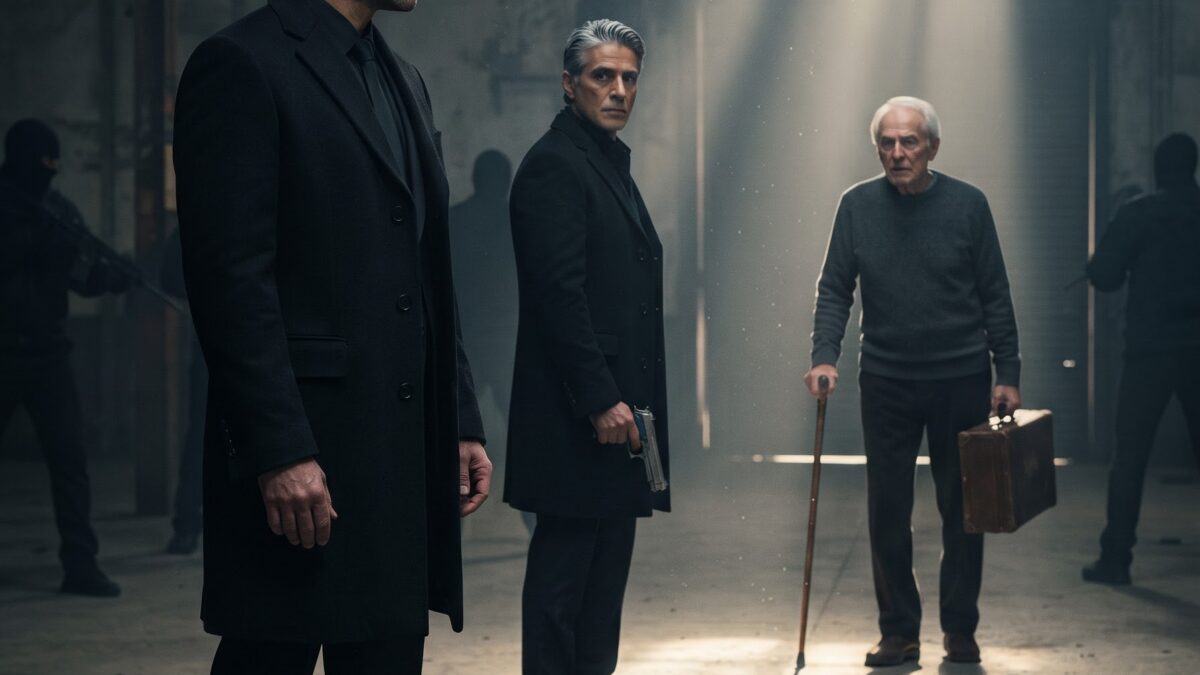
“Please Keep Him… He Was Abandoned Like Me,” the Maid’s Toddler Told the Mafia Boss—Then He Froze
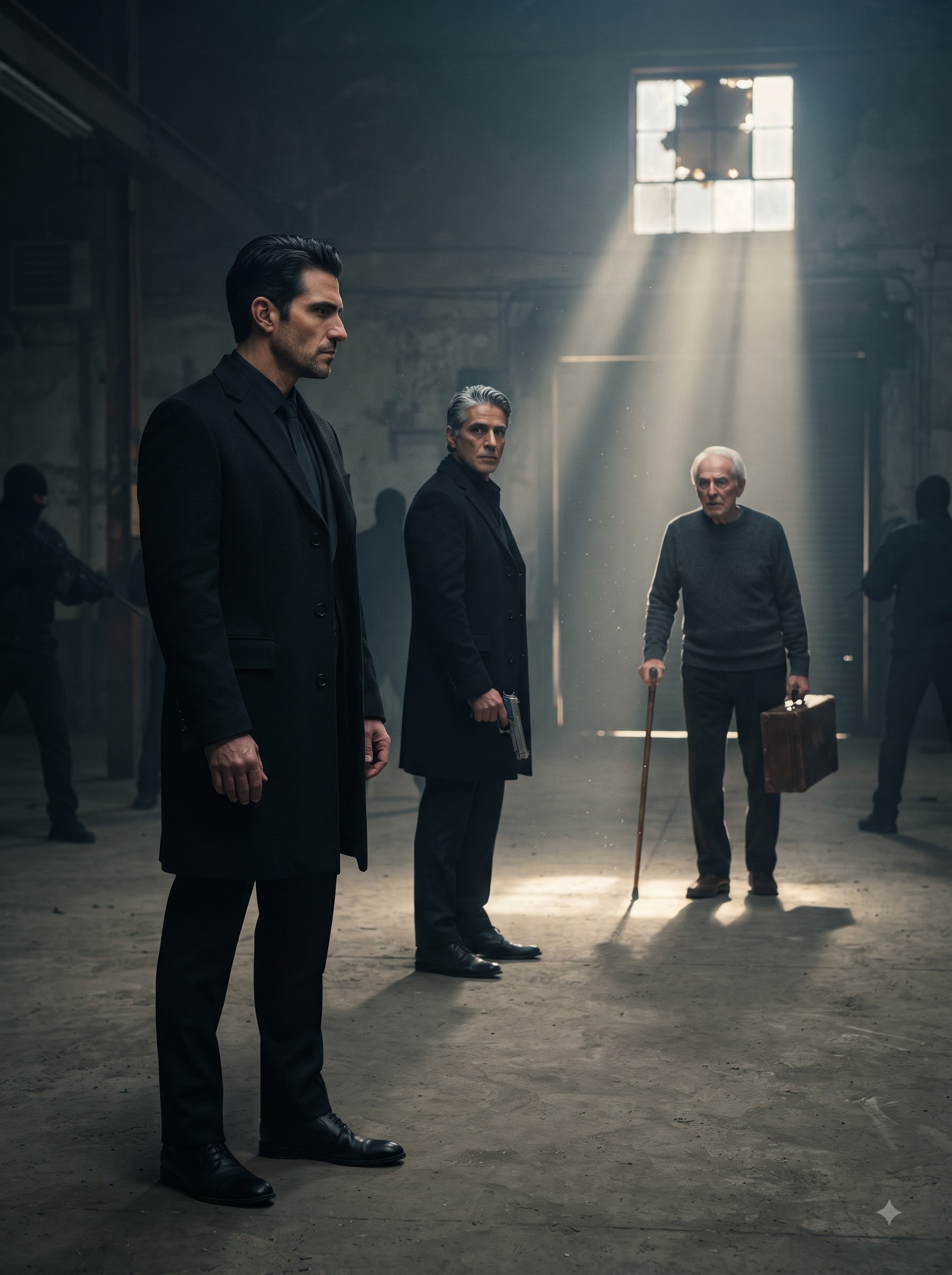
Please keep him because he was abandoned too, just like me.
The three-year-old girl clutched the scrawny puppy tightly to her chest and looked up at the mafia boss whom the entire estate feared. Her father had left long ago, so she believed she understood the feeling of being someone no one wanted to keep. Dante reluctantly agreed to let the puppy stay, but a few days later, the little girl found him lying motionless beside his food bowl.
He had been poisoned. And when the doctor removed the old collar from his neck, what had been hidden inside left Dante utterly stunned.
Long before Mia Bennett ever set foot in his private garden, before a puppy’s ragged breath had rearranged the geometry of his mornings, Dante Moretti woke the way he had woken for 15 years alone, in the exact center of a bed built for two people.
The Moretti estate on Long Island had 40 rooms, 30 staff, and a security system whose annual maintenance cost more than most families earned in a decade. The east wing held the old ballroom his mother had once used for charity dinners, closed now behind double doors that no one opened. The west wing held the servants quarters.
The north wing was his. And somewhere in the middle of all of it, in a bedroom his architect had once described as generous, Dante lay on his back and listened to the house breathe without him.
His bedroom was large enough to make loneliness feel architectural. The left side of the bed was smooth. It had been smooth for 15 years, never rumpled, never warm, never occupied.
The maids no longer bothered to make it up properly. They simply pulled the coverlet flat across an emptiness everyone had learned to respect. He rose at 6:30, showered, dressed in dark gray, went downstairs.
By 7, he was in his study with a cup of coffee that would go cold before he touched it. His family lawyer, a man named Ferrante, who had served three generations of Morettis and looked older than any of them, was already waiting with a leather folder pressed against his chest. Good morning, sir.
Dante did not answer. He sat, opened the folder, and began signing. Wire transfers to a shipping concern in Polarmo.
A shell company’s quarterly filing.
A shipping dispute out of Elizabeth that would end the moment his signature reached the right desk. and a problem in Naples.
A small problem, one that needed only a single sentence from Dante to become someone else’s problem entirely.
He gave the sentence. Ferrante wrote it down.
90 minutes passed without a single word wasted between them. When the folder was closed and the old lawyer had gathered his things, he lingered at the edge of the desk in a way Dante recognized.
“Fronte was working up to something.”
“Your birthday is next week, sir.
” Dante turned a page of the ledger.
“I am aware.
Your mother used to arrange a dinner. I only wondered whether my mother is dead. Dante did not lift his eyes.
There is nothing to arrange. The old man bowed his head, murmured his apology, and left alone again.
Dante set his pen down. 15 years ago, he had inherited the Moretti organization, this estate, three legitimate companies, several illegitimate ones, and enough enemies to make sleep a calculated risk.
He had inherited the vineyards outside Sarrento and the accounts in Zurich, and the men who called him sir before they called anyone else anything. He had also inherited silence, the particular silence that fills a house after two funerals in one week.
He had told himself over the years that he preferred it this way. Morning light spread across the marble floor of the hall outside.
Somewhere three floors below, staff moved along a service corridor. Guards changed posts at the outer walls.
A gardener started a mower against the eastern boundary. More than 40 people were already inside the estate, and yet Dante could cross three floors of it without a single voice reaching him, unless he spoke first.
He had designed it that way, or so he told himself. He rose and walked to the window overlooking the rear garden.
Beyond the terrace, past the fountain, stood a dark wooden door set into a wall of climbing ivy. It was closed.
It was always closed. No one entered without his permission. No one ever had.
Two floors below the study where Dante Moretti stood watching a garden door that would not stay closed much longer. Another world was waking up inside the same house. The staff kitchen smelled of bread, coffee, and warm butter.
It was one of the few rooms in the estate where people occasionally forgot to lower their voices, though most of them remembered soon enough. A long wooden table ran down the middle of it, worn smooth in places by four decades of elbows and cutting boards. A radio on the shelf above the pantry murmured a morning weather report no one was listening to.
At the counter, Elena Bennett was slicing pears. She was 33, dark-haired, with the composed and slightly guarded posture of someone who had learned early that a woman working inside a wealthy house survived by being unremarkable. She had worked for the Morettes for 4 years.
The salary kept her daughter clothed, fed, and near a good pediatrician. The small room they shared in the West Wing was clean and secure. Elena had built an entire life out of carefully not seeing the parts of this household she was not meant to see.
At the table behind her, three-year-old Mia Bennett sat with her legs swinging above the floor, working her way through the second half of an apple.
Mia’s father had left when she was still too small to remember his face.
Elena had never planted hatred for him in her daughter’s head.
She only said when Mia asked, and Mia did ask less often lately that daddy had gone away. Nothing more. It was the truth Elena could live with saying and the truth Mia could live with hearing.
Elena sat down the knife and turned. Mia, listen to me. The little girl looked up, dark curls tumbling into her eyes.
Today you stay near the kitchen. No main hallway, no front courtyard.
Elena crouched, so she was at her daughter’s height and absolutely no going into the garden behind the dark wooden door.
Do you understand? Mia nodded.
Seriously. Say it back to me.
Stay here. No dark door. Good girl.
Elena smoothed a curl behind her daughter’s ear, kissed the top of her head, and turned back to the counter.
The tap ran. The knife resumed its rhythm.
The radio spoke of an approaching cold front, somewhere above the sink, through a hairline crack in the old window frame that no one had ever gotten around to ceiling. A sound slipped into the kitchen.
Elena did not hear it. The running water in the radio and the small, ordinary machinery of morning covered it entirely. Mia did.
The little girl stopped chewing. The sound came again, thin and uneven, as if something too tired to cry properly was still trying.
Not a bird, not the wind, something smaller and more broken than either. Mia slid down from the chair. Her socks made no noise on the tile.
She crossed the kitchen slowly, glanced once at her mother’s back, bent over the sink, humming absently to the radio, and then pushed the service door open just wide enough to slip through.
Outside, the morning air was cold against her cheeks. She followed the sound past the herb beds, along the wall of the garage, and toward the narrow side entrance the household used for deliveries. She never once looked up.
If she had, she might have noticed the camera mounted above the delivery gate. Its black glass eye should have been pointed toward the road.
Instead, it was angled several degrees off, staring blankly at a stretch of stone wall wrapped in ivy. It recorded nothing of the approach.
It recorded nothing of what waited beneath the hedge. Mia found him under the Hawthorne bushes near the iron railing where dry leaves had collected in a small brown drift. The puppy lifted his head as she approached, though the effort seemed to cost him something he could not afford.
His golden coat was matted and dull. His paws were dark with mud.
His body was so thin that each shallow breath moved his ribs visibly beneath the skin. Mia crouched down in the leaves, hands folded neatly in her lap, and looked at him with the calm attention of a child who had not yet learned to be afraid of anything small.
Hello,” she whispered.
Mia held out two small fingers. The puppy sniffed them once, then with what looked like the last polite gesture a starving creature could still manage.
He gave them a single soft lick. That was enough. She slipped out of her cardigan without ceremony, the way children take off clothes when something more urgent has arrived, and wrapped him in it.
Careful of his legs, careful of his ribs. He weighed almost nothing.
When she lifted him against her chest, his head fell into the hollow of her collarbone as if he had been searching for exactly that shape all night. It was only then that she noticed the collar, old leather, cracked along one edge, far too large for the thin neck it circled. Someone had punched an extra hole through it by hand to make it fit.
The cut was uneven, made with something that was not a proper leather punch. The buckle was dark with years, almost black where fingers had touched it a thousand times.
Mia rubbed her thumb across the metal once. A brief flash of brass came through beneath the tarnish, and with it, the ghost of something engraved a mark.
“Perhaps letters, perhaps not.
Whatever it was, it meant nothing to a three-year-old. What mattered was that the puppy was cold.
“I got left, too,” she whispered against the top of his dirty head.
“But I still have mama.
You don’t have anybody, so I have to find you a house,” she began to walk.
The gardener was crouched by the boxwoods when she found him. He looked up, saw the bundle in her arms, and softened his voice the way people do when they know they are about to disappoint a child.
“I can’t, sweetheart,” he said, holding up two hands full of dirt as if the dirt itself were proof.
She nodded gravely and moved on. Marco, the driver, was polishing the fender of a black sedan in the garage. He listened patiently to a sentence and a half before shaking his head.
“I live in a one room apartment, Cara.
They don’t allow pets.
I’m sorry.”
Rosa, the linen keeper, was folding towels in a warm cedar scented room off the back stairs.
She reached instantly for a piece of bread when she saw the puppy pressed it into Mia’s palm and told her to feed him slowly, small bites, and then said no before Mia had finished asking the question.
At the front gate, a guard in a dark jacket watched Mia approach with a curious tilt of the head. When she began to explain, his hand moved toward the radio clipped at his belt. Mia stepped back at once.
She did not know exactly what the radio would do. She only knew the motion looked too much like the first step in losing him.
She turned and walked away deeper into the house. Her arms had begun to ache. The puppy, however, had stopped trembling.
He had tucked his nose beneath her chin and gone completely to sleep. And the small, warm weight of him against her heart was worth every step.
She passed through rooms she had never seen, a music room with a covered piano, a library where the smell of old paper was thick as syrup, a small chapel no one used. She climbed a short flight of stairs and found herself in a long gallery lined with painted portraits of dead Morettis, their oil painted eyes following her with the same skeptical attention every generation seemed to have inherited. At the far end of the gallery stood the dark wooden door her mother had specifically mentioned.
It was open. Not much, only a few inches, just enough. Mia stopped.
She remembered her promise. She remembered the exact words. No dark door.
Then the puppy shifted against her chest and let out a small tired breath. The kind of sigh that ends a long day for someone who has not slept in one.
Mia looked through the crack. Beyond the door lay a quiet garden, and at its center, a man sitting alone on a stone bench beneath a fig tree. She knew his face.
Everyone in the house knew his face. She had heard the staff lower their voices when they said the name Mr.Moretti. the way people say the names of storms.
But Mia carried none of the fear that came with that name. She only saw a person she had not yet asked.
She pushed the door open and stepped inside. Dante Moretti had come out to the garden to read. He had not read a single line.
The folder lay closed under his right hand. The coffee beside him had gone cold nearly an hour ago. He had been sitting beneath the fig tree in the exact posture of a man who intended to work, spine straight, jaw set, papers ready, and had done nothing but watch the light move across the gravel path at his feet.
He heard the door open before he saw her. It was not the sound of a guard or of Ferrante returning with something forgotten, or of one of the household men who occasionally braved this part of the estate to bring news that could not wait. It was a smaller sound, a hesitation, and then a push.
Wood against its hinge. He looked up.
A little girl was standing at the edge of his private garden with a dirty puppy in her arms and no idea at all that grown men had died for less. The whole garden seemed to hold its breath.
Dante Moretti had been threatened by men with armies behind them.
He had been lied to by senators, betrayed by business partners, shot at twice, and poisoned once badly enough to spend a week in a private clinic under someone else’s name.
None of them had ever done what this three-year-old was doing now, walking straight up to him without a single moment’s fear, as if she had simply been directed to his address by an ordinary map.
She stopped in front of the stone bench. Solemn, serious wisps of dark hair had escaped a faded blue ribbon and were curling around her face. One of her socks had slipped down to her ankle.
Both of her arms were full of a creature who should not, by any measure of the estate security, have been on the property at all.
Please keep him,” she said, “because he was abandoned too, just like me.
” Dante did not answer immediately.
She took his silence as permission. Very carefully, as if she were placing something breakable on an altar, she bent and set the puppy down on the flag stone at his feet.
The little animal wobbled once. Then, ignoring the perfectly good stone and the perfectly good sunlight.
He took two unsteady steps forward, climbed up onto Dante’s polished left shoe, turned in a slow circle, folded himself into a warm golden curve, and closed his eyes.
Mia’s face lit up.
He chose you. Dante looked down.
One small paw rested across the edge of the leather.
He could feel the puppy’s body trembling faintly through the shoe.
The fast, anxious rhythm of a heart that had spent too long being cold. He should have called a guard. He should have ordered the animal removed to a shelter.
and the child returned to her mother. It would have taken three words. He did not speak.
Behind Mia, footsteps came running along the gravel, quick, uneven, breath already gone. Elena Bennett appeared under the archway with her hair loose around her shoulders and her indoor slippers still on her feet.
She had run through half the estate barefoot at the ankles. When she saw the garden, the puppy, her daughter standing before the master of the house.
The color left her face in one long clean draw. Mr.Moretti, I am so sorry. She was told not to.
Dante lifted a single hand. Elena stopped speaking at once. He looked at her.
In the first second, he saw exactly what he expected to see.
A servant’s fear.
The practiced stillness of a woman who understood in one glance that her livelihood was standing on very thin ice. But underneath the fear was something else. Her eyes had already moved.
Once toward the route, Mia must have taken through the house. Once toward the outer wall of the estate.
It was not the reaction of a mother caught with a runaway child. It was the reaction of someone silently mapping an exit. Dante filed the observation away without understanding it.
“Where did she find him?”
he asked quietly. Mia answered before her mother could open her mouth.
“By the delivery gate,” Dante’s gaze sharpened.
“The delivery gate was locked between scheduled arrivals.
Every vehicle that passed it was logged. Every foot of the approach was covered by cameras.
A stray puppy could not have reached the inner hedge on its own.”
Elena’s expression shifted by a fraction.
He saw her arrive at the same conclusion he had a fraction of a second after he did, and with far more understanding of what it meant. He should have started asking questions then.
Instead, he looked back down at the small trembling weight across his shoe and heard himself speak. One night, he glanced up at Elena. Call the veterinarian.
Have her here in the morning. He bent and slid a hand beneath the puppy, lifting him gently against the front of his coat.
The animal barely stirred. No one noticed the fine, careful line of stitching hidden inside the leather of the old collar. Not yet.
By 8:00 that evening, Rosa had produced an old wool blanket from somewhere in the back of the linen room and folded it into a neat rectangle beside Dante’s bed.
She placed it at a careful distance from the fireplace, far enough to be safe from a spark, close enough to catch the last of the warmth. Then she bowed slightly, said nothing, and left the room as quickly as Dorm allowed. Dante closed the door behind her.
He carried the puppy over to the blanket, set him down in the exact center of it, and pointed once, “Stay!”
The puppy blinked up at him. Dante went into the adjoining bathroom, washed his hands, changed his shirt for a darker one, splashed cold water against the back of his neck.
When he came back out, the blanket was empty. The puppy was curled on top of his left shoe again. The same shoe from the garden, the polished one, as if he had been searching for it all evening and had only just now, with visible relief, found it back.
Dante moved him to the blanket. 2 minutes later, the puppy was on the shoe. By the third attempt, the animal did not even bother pretending to consider the blanket.
He simply walked around it, climbed carefully onto the smooth leather, lowered his chin, and released a long, satisfied sigh. the sigh of a small creature who had already decided how the negotiation was going to end. Dante stood over him in silence.
It was absurd. Men who had refused Dante Moretti, one thing usually reconsidered before being asked a second time. This 8-PB creature had refused him three times before dinner and was now sleeping as if the matter had been closed for hours.
He should have been annoyed. He was not.
Instead, without quite knowing why, he leaned over and dimmed the lamp so that the light would no longer fall across the puppy’s face.
Then he undressed, laid down on his own side of the bed, the side that had always been his, and closed his eyes. He did not sleep.
The house sounded different. Dante knew every ordinary noise inside these walls, the way a violinist knows an instrument, the soft contraction of copper pipes cooling behind the plaster, the distant hush of the service elevator settling between floors, the muted step of a guard changing posts along the
outer terrace at 11, he had memorized these sounds without meaning to.
Over 15 years of lying awake listening to a house that never quite went silent. Now, in the middle of all of it, there was a new sound.
A small, uneven breath close to the bed. Every few seconds, a faint catch would enter it, as though the puppy had not yet learned that no one tonight or any night after was going to come and take the warmth away from him.
Dante told himself he was listening because an animal that weak might stop breathing without warning. It was a reasonable explanation. It sounded sensible enough that he almost believed it for the first hour.
Somewhere after midnight, he stopped believing it entirely. He had simply grown accustomed in the space of a single evening to hearing something alive beside him. The realization did not feel comfortable.
It did not feel entirely unwelcome either. He lay very still, staring at the dark ceiling, and did not examine it further.
When he woke again, the sky beyond the curtains was still black at the edges, but softening at the center. Before he had swung his feet to the floor, before he had reached for his watch, before he had reached for anything at all, the first thing he did was look down at the shoe.
The puppy was still there, still breathing, still alive. At 5:00 in the morning, wearing only trousers and a shirt with the sleeves rolled to his forearms.
Dante Moretti walked into the staff kitchen. Rosa nearly dropped a mixing bowl. She had run this kitchen for 4 years and had not, in all of that time, seen the master of the house step across its threshold.
She was not entirely sure he knew the way. Dante stopped at the long counter.
Chicken, he said, “Boiled, no salt, cut small, and water, not cold.”
Rosa stared at him. Her mouth opened once, then closed.
Her eyes flicked toward the hallway as if she expected some further explanation to walk in behind him. None did, for she tried carefully.
For the guest, sir. Dante looked at her. Rosa lowered her eyes at once, but not quite quickly enough.
The corner of her mouth had already given her away.
“Yes,” Dante said quietly.
“For the guest.”
20 minutes later, the boiled chicken was cooling in a small ceramic bowl on the floor of the sun room off the kitchen, and the puppy was eating from it with the determined, slightly bewildered focus of a creature who could not quite believe that the food would still be there when he lifted his head between
bites. Dante was watching from a chair by the window when the door opened. Mia stopped so suddenly that Elena, still tying the sash of her robe with one hand, nearly walked straight into the back of her.
The little girl’s hair was unccombed.
She was still in her pajamas, pale yellow with small white stars and dragging one slipper by its heel because she had not bothered to put it on properly. She looked at the puppy. She looked at Dante.
She looked at the puppy again. He stayed, she said. Dante glanced at the animal at his feet.
So, it appears. Mia crossed the room and dropped straight to her knees on the tile.
Apparently, indifferent to the fact that she was going to have to eat breakfast on those knees later, the puppy lifted his head from the bowl. His tail thumped once against the floor.
Just once, but it thumped.
See, Mia announced, “He knows me.
He knows chicken.”
Mia considered the correction seriously, waited against her original position, and evidently decided the distinction was not worth pursuing. Elena had stopped by the door. Her hands were folded in front of her in the careful posture of a woman making a point of not intruding.
Her face was calm, but Dante noticed because Dante noticed everything now, whether he wanted to or not, that her eyes moved in a small deliberate triangle. First to the puppy, then to the bowl, then to him. She was still watching.
The veterinarian arrived at 8:00 exactly. Dr.Chen was a slim woman in her early 50s with a soft voice and the composed expression of someone who had spent 30 years treating extremely expensive horses and moderately dangerous men and had long since concluded that animals were on the whole the easier of the two.
She set her bag on the low sunroom table and lifted the puppy onto a folded towel with the practiced gentleness of a person who had never once frightened a small creature by accident. The examination was quick.
Underweight, mildly dehydrated, no fractures, no visible disease, coat filthy but intact, estimated age around 3 months. He is fortunate, Dr.Chen said.
Another few nights outdoors in this weather, and I might have been telling you something different. Mia placed both hands protectively on the edge of the table.
He was cold, she said, as if that fact alone deserved a full medical entry. Dr.Chen slid a careful finger beneath the old collar. This needs to come off.
It has been rubbing him raw underneath.
Dante’s eyes sharpened.
Keep it, he said. She looked up.
The collar, sir. Yes, keep it.
She did not question him. She unbuckled it carefully without examining the underside and slid it into a clean paper sleeve, which she placed on the table beside her bag.
Then she went through the instructions. small frequent meals, a full course of vaccinations to be scheduled, warmth, sleep, and the fact that a puppy of this age would without exception chew anything he could reach. Dante listened with the same still, absorbing attention he normally reserved for financial reports.
At the end, Dr.Chen glanced at Mia. And what is his name?
Mia turned immediately toward Dante. Elena, quite involuntarily, did the same. Dante looked at the puppy.
The puppy was attempting to eat the end of the stethoscope. He had not thought about a name.
Names implied intention. Names were what one gave to things one meant to keep.
Leo. The word was out before he had decided on it.
Mia’s eyes widened.
I wanted to help pick. You can choose the nickname. She thought for several long seconds, brow furrowed as if she were deciding on a treaty.
Leo Moretti. Dante looked at her.
Moretti. He lives here. There was no arguing with it.
Elena pressed her lips together very carefully. Dr.Chen bent over her notes to hide a smile.
Dante inclined his head. Then we are agreed. Mia bent down close to Leo.
So close that her nose almost touched the top of his head. Welcome, Leo Moretti. Leo sneezed directly into the sleeve of Dr.Chen<unks coat, closed his eyes, and went to sleep, settling the matter with the quiet finality of a creature who considered the negotiation formally concluded.
One night became two because Dr.Chen advised against moving him too soon. two became four because Mia declared with the unassalable logic of a three-year-old that they could not possibly send Leo away before he had finished the food that had already been opened for him.
By the end of the week, no one was pretending anymore.
A small dog bed appeared beside Dante’s desk in the study.
No one recorded the order. No one delivered it in front of him.
It was simply there one morning, tucked against the wooden panel where his feet naturally rested. A second water bowl materialized in the private garden beside the fountain.
One of the outer guards began quietly opening the side gate whenever Leo trotted toward it without being asked and without once looking at anyone for confirmation. No one discussed how any of it had happened.
It simply accumulated the way weather accumulates on a shoreline grain by grain until one morning the map has quietly changed shape. Dante began walking the perimeter of the estate at dawn. He told himself when he thought about it at all that the walks were operational.
a chance to inspect the walls, the eastern flood lights, the condition of the gravel paths after the night’s cold.
In truth, he walked at dawn because Leo woke before 6, and considered closed bedroom doors a personal insult against his character. The first morning, Dante attempted his usual brisk pace. Leo stopped after 30 steps to investigate a wet leaf with such deep absorbed concentration that Dante was forced to wait, hands in his coat pockets, staring at a hedge, while a puppy conducted a scientific inquiry into the nature of oak.
The second
morning, Leo became transfixed by the same stone for nearly a full minute. By the third morning, Dante had unconsciously shortened his stride.
Men who saw them from a distance suddenly developed compelling reasons to study fences, radios, their own shoes, or the sky.
In the study, Leo slept beside Dante’s chair during meetings.
The first time a shipping broker from Newark noticed the puppy. He lost his place in the middle of a sentence about container weights.
Dante did not look up from the ledger. Continue. The broker continued.
Leo rolled onto his back, all four paws pointed hopefully at the ceiling. The broker lost his place a second time. Dante finally raised his eyes.
If the dog can follow this meeting, he said quietly. I trust you can as well. The man went red to the ears and completed his report without another error.
Mia visited every afternoon, and because Leo had established the private garden as his rightful kingdom, Mia gradually established herself there, too. Dante did not remember granting her permission. Somewhere in the middle of the second week, permission had simply become unnecessary, and neither of them had noticed the exact hour it happened.
One afternoon, Rosa walked past the kitchen and found Mia standing on a low stool at the counter, explaining to Dante with tremendous seriousness that eating bread without butter was sad. Dante nodded gravely, as if considering a proposal from an offshore lawyer, and reached across her for the butter dish.
Rosa turned away quickly and pretended to search for something in the pantry until her face was under control. Elena saw all of it. She saw the coloring book that appeared on the garden bench one morning in case someone wants to use it.
She saw Dante pause at the kitchen doorway and asked Rosa in a tone that pretended not to care which vegetables the little one actually ate. She saw him standing at the study window in the late afternoons longer than he needed to watching a garden that was empty of anyone but a puppy chasing his own tail. She said nothing to him about any of it.
But late that night, after Mia was asleep with one arm flung across her stuffed rabbit, Elena stood at the window of the servant’s quarters and looked out across the dark lawn.
She was, as far as she could tell, the only person inside the walls of the Moretti estate who had allowed herself to sit with a very simple fact. A stray puppy could not have reached the inner hedge on his own. Someone had brought him there.
Someone had known the cameras. Someone had chosen this house, this gate this morning, and she was the only person in the entire dinner lit marble floored 40 room house who had begun to ask the question that mattered, why? On Thursday afternoon, Mia arrived in the private garden carrying a folded sheet of construction paper in one hand and a small tin of colored pencils in the other.
Dante was already on the stone bench, a folder of shipping manifests open across his knee. He had at some point over the last several days stopped bringing work to the garden and started bringing the appearance of work to the garden. The distinction was subtle.
He had not yet admitted it to himself. Mia climbed onto the bench beside him without asking.
Kicked her legs twice against the stone and unfolded the paper across his sleeve. I drew you. The drawing contained a yellow dog nearly the size of a house, a bright green tree, a black rectangle that appeared to represent the estate, and a very tall man standing beneath the tree with two long arms extended stiffly toward the sky.
Dante studied it with the same absorbed seriousness he had once used for war room maps. That is me. Yes, and that is Leo.
Yes, he is larger than I am. I like him more. Dante glanced sideways.
Mia had already returned to selecting a new pencil, entirely unbothered by what she had just said. A moment passed. Then he noticed something else.
Why do I not have a mouth? Mia paused. She looked up at him, then back down at the paper, then up at him again.
I don’t know what your smile looks like.
The answer arrived without ceremony in the exact same tone she might have used to explain that she did not know the color of a bird she had never seen. She had not intended to wound him. That was somehow worse.
Dante looked down at the faceless figure standing beneath the tree.
Mia had already chosen a red pencil and begun coloring in Leo’s collar.
Her tongue was pressed to the corner of her mouth. She hummed a little under her breath.
A song without a tune. Do people get lonely? She said conversationally.
If there are lots of people in the house, but nobody talks to them.
Dante’s gaze rose slowly from the drawing.
Mia was still looking at the paper. Why do you ask? Mama says being alone and being lonely are different.
Your mother is usually correct. So she pressed harder with the red pencil. Are you?
He could have answered no. It would have been easy. He had lied to himself in far more elaborate ways for 15 years in far more complicated languages on far more important questions.
Instead, he watched Leo trotting in an uneven circle across the grass, trying without much success to catch his own tail.
“I don’t know,” he said.
Mia nodded once, as if that were entirely sufficient.
“Okay,” she did not ask again.
In another wing of the estate, in the small utility room off the tool shed where the gardening staff kept fertilizers, pesticides, and a locked medical cabinet for the guard dogs that no longer lived on the property, a man in a white kitchen jacket was opening a cupboard. He had been hired 3 weeks earlier on the personal recommendation of Gabriel Reichi to replace a sue chef who had left without notice. His paperwork was clean.
His references had checked. He nodded politely at everyone he passed in the corridors, and no one had any particular reason to remember his face.
He reached to the back of the top shelf, his fingers closed around a small unlabeled bottle. He slipped it into the inner pocket of his jacket and closed the cupboard quietly behind him.
Late that afternoon, after Mia had been carried back to her room, half asleep against her mother’s shoulder, Dante sat alone in the study.
The drawing was still in his hand. He looked at it for a long time.
Then instead of sliding it into a drawer, he laid it flat on the corner of his desk beside the folder of shipping manifests. He did not know why. He did not attempt to justify it.
The knock came a few minutes later, one short, one long, a signal. 15 years old.
Come. Gabriel Reachi stepped into the study with the weekly security report tucked under one arm. He was tall, dark-haired, 45, dressed with the deliberate simplicity of a man who no longer needed to prove anything.
He glanced at Dante, then at the drawing on the desk, and his mouth curved into a warm, easy smile.
She’s talented, that one.
Dante nodded once.
Gabriel<unk’s eyes drifted downward past the corner of the desk to where Leo lay asleep on the small dog bed.
His expression did not change. His smile stayed exactly where it was, but his gaze remained on the puppy for one second longer than it should have.
The next morning began the way every morning of the last two weeks had begun. Mia woke at dawn, pulled her dress over her head without asking her mother for help, and ran barefoot through the corridor toward the private garden. Leo was always waiting for her at the side door.
Always. He was not there. She stopped on the flagstones, one small hand still on the door frame, and called his name in the bright, unworied voice of a child who assumed the world was still where she had left it.
Leo, nothing. She stepped down into the grass.
She checked beside the fig tree. She checked behind the fountain where he sometimes chased his own reflection.
She checked the small patch of ivy near the wall where he had once fallen asleep with a leaf on his nose. She found him near the second water bowl. He was lying on his side.
His food dish was tipped and something white had gathered at the corner of his mouth. His eyes were half open and they did not track her when she crouched down beside him. Leo.
She touched his shoulder. He did not move. Leo.
The scream that came out of her did not sound like a three-year-old. It sounded like something much older breaking in half.
Elena was already halfway down the staircase when she heard it. She hit the ground floor at a run, hair loose, one hand still tying the cord of her cardigan, and reached the garden ahead of anyone else. Dante arrived seconds later.
He did not ask what had happened. He crossed the grass in four strides, dropped to one knee, slid both hands beneath the puppy, and lifted him. Leo weighed almost nothing, and at the same moment, he weighed like stone.
Dante pressed his fingers behind the small jaw and felt faintly the fluttering thread of a heartbeat that was still just barely refusing to stop.
“Get Chen!”
Now, Elena already had her phone in her hand. Dante carried Leo through the corridor at a controlled walk that took more discipline than running would have. In the small examining room off the kitchen, he laid the puppy on the table, tilted his head, checked the airway, lifted an eyelid.
The pupil did not react to light. Behind him, Mia was shaking so hard that her teeth were audible. Elena had both arms around her.
One hand pressed flat against her daughter’s chest, whispering something Dante could not hear and was not meant to.
Dr.Chen arrived in 12 minutes. She did not greet anyone. She opened her bag on the table, pulled out a small vial, held it to the light, then bent over Leo, and began to work.
Refined stricken, not rat poison. The pharmaceutical grade, the kind kept behind a locked cabinet in veterinary supply rooms.
Controlled by inventory, signed for by name. An IV line, activated charcoal by syringe, an injection into the muscle of the hind leg, fluids running. Chen counted breaths under her own breath, and Dante did not interrupt her once.
4 hours passed.
Elena carried Mia to the low couch against the wall and sat with her there, the little girl’s face buried in her shoulder.
her own eyes fixed on the table. Dante did not sit at all.
He stood at the far end of the room with one hand braced against the window frame and he did not look away. At 12 minutes past noon, Leo opened his eyes.
They were unfocused. His breathing was shallow, but they were open.
Mia made a small broken sound against her mother’s neck and began to cry.
Quietly this time, the shaking finally spilling out of her in a way it could not before. Dun did not move for a long moment. Then he crossed to the door and gestured Dr.Chen into the corridor with a single motion of his fingers.
“You are certain about the substance,” he said.
“Lo, certain.
It is a controlled compound.
Whoever did this had access to a veterinary supply cabinet or to someone who did.”
Dante nodded once.
“Thank you.”
He returned to the examining room. He did not sit.
He stood beside the table and let his hand rest very lightly on the towel beneath Leo<unk’s ribs.
to poison the puppy’s food.
Three things had been necessary. Access to a locked veterinary cabinet. Entry to a bowl kept inside the family wing of the estate.
Knowledge of Leo’s feeding schedule, which was known only to interior staff.
The person who had done this was living inside these walls. And more troubling than that, more urgent than that, was a smaller question that would not stop turning at the back of his mind. Why would anyone go to that much trouble to kill a puppy?
He lifted his eyes. Dr.Chen had returned to the doorway.
Elena had raised her head.
Mia was asleep now against her mother’s collar, exhaustion having finally taken her.
Dante’s voice, when it came, was very quiet.
“Starting tonight,” he said.
“Every person in this estate is going to believe that Leo is dead.
Only the four of us will know otherwise.
Not Rosa, not the guards, no one.”
He paused. I want to see who reacts. Elena looked at him for the first time since she had walked into the Moretti house 4 years ago.
She understood completely and without possibility of turning back that she was standing at the edge of something far larger than a poisoned dog. The lie began that same evening.
By nightfall, the story had already begun to move through the corridors of the estate in the particular way bad news moves through a household. A whispered sentence in a service pantry, a nod exchanged in a hallway, a bowed head at the linen closet.
The puppy had not made it. Dr.Chen had done what she could. The little one had been told.
Miss Elena was keeping her daughter close. Rosa heard it in the kitchen while chopping onions.
She set down the knife, wiped her hands slowly on her apron, and then began to cry the honest, unhurried tears of a woman who did not know she was being watched and who had loved that puppy without ever admitting it to anyone. Dante, informed of her reaction by one of the two men who did know the truth, filed it away and moved on. Leo was carried, wrapped in a folded blanket, to a small examining room in the closed east wing of the estate.
A wing no one had used in more than a decade. Only Dante had the key. Dr.Chen slept there for two nights on a narrow couch pushed against the far wall, one hand within reach of the IV stand.
Mia was taught the shape of the secret. Elena crouched in front of her daughter in the servants quarters and held both of her small hands.
This secret, she said, keeps Leo safe. When you see the others, Rosa, the guards, anyone, you have to pretend you are sad. Do you understand?
Mia looked at her mother for a long moment. Then she nodded in the strange absolute way that only very young children can nod, as if she had already understood something no one had bothered to explain. On the second day after the poisoning, Dante came to the East Wing and asked Dr.Chen to go over the puppy again.
Not medically, physically, every inch of him, coat, paws, teeth, ears, neck, everything. Dr.Chen studied him for a moment before she reached for her light.
Are you thinking someone has attached a tracking device, sir? I do not know what I am looking for, Dante said quietly. Only what should not be there.
They worked slowly. Chen ran her hands through the golden fur along the ribs, checked between each toe, lifted each ear, ran a finger along the gum line.
Nothing. Then she reached for the old leather collar. Dante had told her two weeks earlier and without explanation to keep it.
It had been sitting in its paper sleeve on a side shelf ever since. Neither of them had touched it. Neither of them had at the time understood why he had said it.
Chen laid it flat under the examining light and turned it slowly. She paused.
“The inner leather is thicker than it should be,” she said.
Dante moved closer. She angled the lamp.
Beneath years of ground in dirt along the inside curve of the collar was a single line of stitching so fine, so evenly spaced, so carefully placed against the natural grain of the leather that it was almost invisible. It was not the work of a saddler.
It was the work of someone who had used medical thread and who had known exactly what invisibility looked like. Chen took a small scalpel from the tray. She did not ask permission.
The cut was clean, 2 in. She peeled the inner layer back. Something small fell out onto the metal tray with a soft click.
A flash drive, matte black, roughly the length of half a fingertip. Dante picked it up.
For 30 full seconds, he said nothing at all. Dr.Chen, who had spent her career learning when medicine was needed and when silence was needed, quietly began collecting her instruments.
I will be in the next room, she said. If you need me, she closed the door behind her without waiting for an answer. Dante remained alone with the puppy.
His thumb closed around the flash drive until the plastic edges pressed into his skin. The dog was not astray. The thought arrived fully formed in the exact tone he used with himself in the middle of the night when the facts had finally stopped being negotiable.
Someone had brought Leo to this estate on purpose. Someone had known which camera was blind, which gate was unlocked, which morning would go uninterrupted. Someone had chosen a starving puppy because a starving puppy was the one delivery no one would ever inspect.
And someone else, someone already inside these walls had recognized what that puppy was carrying and had tried to kill him before anyone could find the seam. Who sent him? Who wanted him gone?
Dante lifted his eyes. Leo was watching him from the towel. His eyes were still tired, but they were focused now, and his tail moved once a soft, weak thump in recognition.
Dante bent close and rested two fingers on the crown of the puppy’s head.
“What did you bring home to me?”
he said very quietly. He straightened, slid the flash drive into the inner pocket of his jacket, and left the room. He did not return to the study.
Instead, he went upstairs to his private bedroom, closed the door behind him, and knelt in front of the fireplace. He pressed the correct panel of the false stonework, a narrow cabinet released with a soft breath of stale air, older than the last decade.
Inside, on a shelf that had not been touched in nearly a year, sat a small laptop. It had never been connected to a network.
It had never been connected to anything at all. It was the machine Dante kept for the rare occasions when discretion mattered more than speed.
He lifted it out, closed the panel, and carried it to the desk. Dante slid the flash drive into the port. The screen woke slowly, the way old machines do when they have not been used in months.
A single window opened. A single line of text waited for him. Password required.
He tried his father’s date of birth first.
It was the reflex of a son who had for 15 years measured every password by whether his father would have approved of it. Access denied. He tried his own.
Access denied. He paused.
Then, with the slow deliberation of a man reaching for something he had not touched in a long time, he typed his mother’s date of birth.
The window opened. Dante did not move for a moment. His mother had been a quiet woman.
She had kept her birthday off official documents, off charity roles, off the family’s public records.
She had disliked celebrations of any kind, and had more than once in Dante’s childhood forgotten to observe her own birthday until someone else reminded her.
Only the people closest to his father had known the date. He set that observation aside and looked at what the drive contained.
There were four folders and two loose files. Photos over 300 images. Financial scans of bank documents.
Audio 47 recordings. Four.
Dante. MP4. A single video file.
Read first. TXT. A small text document at the top of the list.
He opened the text file first. Six lines. No signature.
Dante. If you are reading this, I have failed. Watch the video first, then verify everything for yourself.
Do not trust anyone inside the house, especially not the person you trust most.”
Dante read it twice. His hand, when he reached for the mouse again, was not entirely steady. He opened the phot folder.
The first image loaded slowly. A man stood in the doorway of a small cottage somewhere at the edge of what looked like farmland.
He was in his mid60s. His hair had gone entirely white.
He wore a dark gray sweater buttoned at the throat and he was looking at the camera the way a man looks at someone he trusts with the mild patient attention of a person who had long since stopped being surprised by anything. At his feet in a small crescent of morning sun, sat a golden puppy. The puppy was smaller than Dante had ever seen him, perhaps eight or nine weeks old.
But the shape of the head, the set of the ears, the exact tilt of the left forpaw, it was unmistakably Leo. And the man, the man Dante had recognized before he had finished breathing in.
Vtorio Duca.
For 15 years, that name had been a sealed compartment in Dante’s head.
Vtorio had been his father’s most trusted lieutenant.
The man who had taught Dante how to hold a lead line, how to whistle a dog to heal, how to read the eyes of an animal before its mouth ever moved.
Vtorio had been the man everyone assumed had sold the route that killed both of Dante’s parents.
He had disappeared before he could be questioned.
Dante, 23 years old, wounded, freshly inheriting an empire he had never wanted, had signed the order that made Vtorio<unk’s death an open contract on four continents.
15 years of hunters had never found him because Vtorio had been alive the entire time. Dante moved to the next photograph.
Vtorio at an outdoor market, a sign in the background in a language Dante’s eyes registered before his mind caught up Spanish, perhaps Portuguese, somewhere in the southern hemisphere.
Victoria was choosing tomatoes and there was flour on his sleeve. The next Victoria with a woman in her late 30s.
The resemblance in the eyes was immediate. His daughter almost certainly. The next Vtorio on a wooden porch.
A slightly older Leo, perhaps a year and a half now, was lying across his lap.
Vtorio<unk’s hand rested on the puppy’s back.
Both of them were looking at the same thing off to the left of the frame. and both of them in that single frozen second looked exactly as tired and exactly as content as two creatures who had grown old together. Dante sat back in the chair.
For 15 years he had believed Vtorio had betrayed his family and vanished into the world with the price of their blood in his pocket. For 15 years he had built policy, ordered searches, closed friendships all around that one fixed assumption.
And now Vtorio was appearing in front of him in hundreds of photographs alive, hidden, and raising the very puppy someone had carefully, deliberately arranged to slip inside Dante’s walls.
Dante closed the folder. He opened the video.
The screen went black. A moment of silence. Then a voice older than Dante remembered it.
Horser, tired down to the bones, but instantly and completely unmistakable began to speak. If you are hearing this Dante, then I did not make it back in time.
And I am sorry. I am sorry for 15 years of silence. I am sorry for letting you believe I was the one who sold your father and mother.
I was not. But if I had come back without proof, they would have killed me before I could finish the first sentence. Victoriao sat in front of the camera in a plain room.
Behind him was a bare white wall, no window, no picture frame, no calendar, nothing that would give a stranger a name or a country. He wore the same gray wool sweater from the porch photograph.
His hair was white. His hands were folded on the table in front of him with the patience of a man who had rehearsed this speech many times before he ever recorded it.
The eyes, though, the eyes were exactly what Dante remembered from childhood. The sharp, unhurried attention of a man who had spent his life training dogs and reading people and had never quite been able to switch either instinct off.
The recording ran for a little under 12 minutes. 3 weeks before the ambush, Vtorio said he had discovered that there was a traitor inside the Moretti organization. The proof was not yet sufficient.
What he had was a pattern of small wrong things. Meetings that had happened without being logged, an eastern security code activated at hours when no one should have been there.
A single unexplained wire transfer that had crossed his desk and refused to reconcile against any legitimate ledger.
He had gone to Dante’s father with all of it.
Dante’s father had listened.
Then he had smiled in the tired way. Older men smile at older friends and said Victoria was seeing ghosts because he was getting old.
I know the smell of fear,” Vtorio said quietly into the camera.
“Your father was afraid.”
3 weeks later, Dante’s parents were ambushed on a route that only four people had known about.
His father, his mother, Vtorio himself, and a fourth person, whose name Vtorio spoke aloud and which had been carefully, deliberately erased from the recording, a single second of dead air where a name should have been. Dante paused the video, made a note on the pad beside the laptop. Continued within 48 hours of the ambush, the false evidence had arrived.
Wire transfers from Vtorio<unk’s accounts to Salvator linked accounts dated in the weeks before the attack.
Photographs of Vtorio meeting a Salvator intermediary at a hotel in Trieste, a meeting Vtorio said had never happened, in a hotel he had never entered, with a man he had never in his life laid eyes on. If I had come back, Vtorio said, I would not have been killed by the enemy outside. I would have been killed by the traitor inside.
So I ran. 15 years, three false identities, five countries, one brief marriage he did not describe in detail. A daughter named Sophia, the woman in the photograph, Dante confirmed, glancing back at the folder still open behind the video.
And in every one of those 15 years, Vtorio had been building the file that now sat on Dante’s desk, bank records of the suspicious trust accounts, recorded telephone calls obtained through an old friend in Italian intelligence who owed Victoriao a favor from a life neither of them talked about anymore.
Surveillance photographs of recent meetings between the traitor and members of the Salvator family taken in the last 2 years from more than one continent.
I’m not going to tell you the name in this video,” Vtorio said.
He looked directly at the camera. You would not believe it from me.
Not after 15 years of hearing me called the man who sold your parents. Everything on this drive can be independently verified.
You have to find it yourself. He paused.
You have to be the one who arrives at the truth. Otherwise, the truth will not survive the man who hears it.
Then he spoke of Leo. The puppy had been his companion for the last 8 years. Dante did the arithmetic silently and understood.
Not Leo then, an earlier dog.
Leo<unk’s mother most likely or the litter before Leo’s.
Victoriao had raised the line himself when the hunters had finally found his hiding place. Three weeks ago, he had understood that there would not be time to come home in person.
“I could not come back myself,” he said.
“So I sent him instead.
If anyone inside your house recognizes him, that is the traitor.
Because only the traitor knows he is my dog.”
He drew a slow breath. He looked tired in a way that no rest could reach.
There is one way for you to know that this is really me. Dante Bruno, the German Shepherd I gave you when you were nine was never afraid of the rain. He was only afraid of thunder.
I told you that once when you were 8 years old, sitting on the kitchen floor with him during a summer storm. No one else was in the room.
No one else has ever known. The video ended.
The screen returned to black. Dante did not move for a long time, 5 minutes, perhaps more.
He sat with his hands folded exactly the way Vtorio had folded his own in the recording and he stared at the dark screen without blinking. Bruno he had not allowed himself to think that name in 15 years.
Bruno had died in the same ambush that had killed his parents, flung himself between a gunman and the rear door of the car and taken three rounds meant for Dante. Vtorio had given Dante that dog as a birthday present when Dante was 9 years old.
Vtorio had also, on a summer night before Dante turned nine, sat on the kitchen floor beside a shaking puppy during a thunderstorm and quietly explained to a small boy that the noise, not the water, was the frightening part. No one else had been in the room. No one else had ever known.
Dante reached forward and clicked the financial folder open. He began to work. Dante could not trust a single person inside the Moretti organization.
That fact settled into him the way a stone settles into a riverbed heavily.
And with the quiet permanence of something that would not be moved by anything short of flood, the traitor, if Victoria was right, had been walking the corridors of this house for 15 years, had reported to Dante’s desk, had eaten at his table, had bowed his head at the
funerals.
There was exactly one man Dante could still call. Alessandro Ki was 78 years old.
He had worked for Dante’s grandfather in an era Dante barely remembered, had refused every promotion that would have entangled him with the darker sides of the family, and had walked away from the entire world of Moretti business 20 years ago without ever looking back.
He lived alone in a small house in western Connecticut, kept bees, read history in three languages, and owed the family nothing but a single old debt that had never involved money. Dante crossed the room to a small cabinet behind the bookcase and lifted out a plain black satellite phone. It had no contact saved.
It had no number history. It existed for the handful of occasions in a life when every ordinary line of communication had become a liability. The call rang twice.
Yes.
Alessandro<unkre’s voice was thin with age and immediately alert.
It is Dante. There was no pause on the other end. There was no at this hour and no is something wrong.
There was only the calm attention of a man who understood that Dante Moretti did not call this number to make conversation. Send me what you need me to see, Alisandro said. Dante transmitted three scanned bank documents from the financial folder.
He did not explain where they had come from. He did not name Vtorio. He did not name Leo.
Three requests, he said. First, confirm whether the accounts are genuine. Second, tell me who owns them.
Third, I want the transaction history for the last 15 years, every deposit, every withdrawal. Understood?
Do not use anyone connected to the family. I have not used anyone connected to the family in 20 years.
The line closed. Dante set the satellite phone down and returned to the desk.
While Alessandro worked, he opened the audio folder. 47 files arranged by date. He selected the most recent one, 3 months old.
The recording was short, a telephone call between two men. One voice he did not know, low and clipped with the faint accent of Northern Italy. The other voice had been filtered, pitch shifted, its edges softened, but the rhythm of the speech, the placement of the pauses, the small habitual clearing of the throat between sentences, brushed against something Dante had heard every day for 15 years and could not in that moment allow himself to name.
He’s near Milan.
I need another two weeks.
You don’t have two weeks.
He’s already copied the files.
Then increase the budget. Transfer as usual. The call ended.
a transfer of money to kill Vtorio. Dante closed his eyes for a long moment. When he opened them, he saved the file to a separate folder and marked it for later analysis.
He would need better equipment and someone he trusted with audio forensics to lift the mask off that second voice. He did not have either yet.
He opened the folder of recent surveillance photographs. 6 months ago, a hotel bar in Zurich from the neutral high angle of a fixed camera. Two men seated together at a corner table.
The first was easy to identify.
Luca Salvatorei, the youngest son of the family, Dante’s father, had spent his entire adult life resisting.
Dark suit, cufflings catching the light, face turned toward the camera in a way that could not possibly have been accidental. The second man had his back to the lens, black overcoat, a little gray at the temples. His head was tilted, one shoulder slightly higher than the other.
In the small unconscious way a person leans when he is listening to something he does not want anyone else in the room to overhear.
Something in Dante’s chest tightened.
He knew that silhouette. He did not yet allow himself to attach a name to it.
2 hours later, the satellite phone rang.
Aleandro<unk’s voice had changed.
It was no longer the calm, practiced voice of a retired lawyer receiving a routine inquiry. It was slower. It was heavier.
The three accounts are real. They belong to a private trust registered in Lugano, Switzerland, 20 years ago.
The named beneficiary on the original filing is a single person. He waited half a beat.
Marcoi Dante sat forward. Marcoi has been dead for 15 years. Yes.
Alessandro let the word rest between them. The trust, however, has not been dormant.
Over the last 15 years, deposits totaling roughly $12 million have entered it. Withdrawals have been made in irregular amounts and at irregular intervals never large enough to trigger flags on either side of the Atlantic.
The withdrawals were not made by Marco. By whom?
By his authorized next of kin, his older brother. Dante already knew the answer.
He asked anyway. He needed to hear the word out loud in another human voice in a room that was not his own head. Who?
Gabriel Richi. Two floors below.
On the main hallway of the study wing, Gabriel Richi raised his hand and knocked on the door of Dante’s official office.
Two short, one long. The signal 15 years old. The office was empty.
The connecting panel that led to Dante’s private inner room was closed, and from the corridor, there was no sign that it existed.
Gabriel waited. He knocked again. No answer.
He stood in the corridor for exactly 5 seconds, a small, still figure with a weekly security folder tucked under one arm and the same easy expression he had worn every day of the last 15 years. Then he turned and walked away.
Dante rose from the desk. He walked to the fireplace in his private bedroom, knelt, and pressed a second panel of the false stonework, one he had not touched in nearly a decade.
The mechanism resisted him. Dust had settled into the brass track behind the wood.
When the panel finally shifted aside, it released a slow breath of old paper, worn leather, and something colder that memory supplied on its own the smell of a house that had once belonged to two other people. Inside were the files from the worst night of his life.
And beside them, in a separate stack tied with faded cotton twine, were the personnel records his father had kept privately, the ones that had never been digitized, the ones no one else had known existed. Dante carried the stack to the desk. He found Marco Richi near the middle of the pile.
The file was thin, only three pages. The first page was the official version. Marco Richi, field operative, killed in action on the 24th of March, 18 years ago, while deviating from operational orders.
Internal responsibility review closed. A single paragraph, a single seal.
The neat closed language of a report that had been designed to be filed and never opened again. The second page was almost empty. Only the impression of a cover stamp remained at the top, and along the binding, a narrow strip of paper edged the kind left behind when a page has been removed with a very sharp blade by someone who wanted the removal to look as much as possible like an accident.
Dante ran his thumb along the strip. Whoever had done it had known what they were doing.
The third page had survived.
Three witness statements from members of Marco’s team.
Their accounts taken together contradicted the official summary in every material detail. Marco had not deviated from his orders. He had followed them precisely.
The operation had failed because a political contact a government official the Moretti organization had been quietly protecting for years had been exposed at the exact wrong moment. Two men had died in the resulting collapse. One of them was Marco.
Someone higher in the chain had needed the failure to belong to a dead subordinate so that the relationship with the official could be preserved.
Beneath the third page, in ink that had faded slightly, but not enough, was Dante’s father’s signature.
And beneath the signature, a single handwritten note in the same familiar hand. Richi must understand that family stability comes before personal grief.
Arrange private compensation. Dante stopped breathing for a moment. He read the sentence again, then a third time.
For 15 years, he had been asking one question about his family. What did Vtorio do to us? He had built policy around that question.
He had ordered searches around that question. He had watched 15 years of his life narrow into the shape of that question.
Now, sitting in a room lit only by the desk lamp, he was going to have to ask a different one. What did we do to Gabriel first?
Marco had died in disgrace. The Richi family had not been granted a formal funeral through the organization.
Marco’s name had never been entered on the wall of honored dead at the country house in Sarrento.
Dante’s father had paid a private settlement, perhaps believing in the way men of his father’s generation had always believed that money was a kind of dignity if it was heavy enough.
Gabriel had been 30 years old when Marco died. He had not left. He had not raised his voice.
He had come to the funeral, accepted the formal condolences of the men who had signed off on his brother’s dishonor, and returned to work the following Monday.
In the years that followed, Dante’s father had quietly given him more responsibility.
Perhaps out of guilt, perhaps because Gabriel was genuinely excellent at his job, perhaps because both were true at the same time, in the way most things in the Moretti house had always been true. There had at one point been serious discussion of promoting Gabriel to head of internal operations, a position that would have placed him above several older captains and beside the family itself. Then Dante had turned 20 and begun to take a role of his own.
The position had quietly disappeared from every subsequent meeting agenda. In a surviving letter to a senior adviser, tucked between two ledger sheets in a folder Dante had never bothered to reread. his father had written in his familiar even hand.
Gabriel is useful, but the future belongs to blood. Dante set the letter down.
He did not move for a long time. It was not a single betrayal.
It was not the neat package treachery he had lived with for 15 years. It was a slow, careful collection of injuries that Gabriel had accumulated in absolute silence in front of everyone. And no one, including Dante, had ever seen him do it.
The satellite phone rang a second time. Dante lifted it. Yes, one more thing.
Allesandre said his voice was quieter now. The way voices go quiet when they are carrying weight. 3 months ago, one of the Legacy Eastern security codes was activated at 2:11 in the morning.
The badge that authorized it belonged to Gabriel Reachi. He was in the panel room for 12 minutes. A pause long enough to verify that an old code still worked.
Elena had not heard the phone call. She did not need to. The estate had changed, not in ways a visitor would have noticed.
in the small, careful, downward tilt that only someone who lived inside a house could feel when the house was quietly bracing itself. There were more guards now at the doors that had never mattered, the pantry service door, the linen corridor, the stare between the servants wing and the main hall. The locks were being turned twice instead of once.
The radio in the staff quarters had begun to whisper at all hours, low and continuous, the way radios whisper when the men carrying them no longer trust silence. Dante had not come down for dinner three nights in a row. Rosa had been quietly instructed to send food up to the study on a tray, and Mia, three years old, but with the small, precise antenna of a child who had spent her entire life reading a single adult face, had begun to go quiet.
That evening, while Elena was rinsing shampoo out of her daughter’s hair over the low tub, Mia looked up through wet lashes and asked in the voice she only used when she was thinking carefully, “Mama, is Uncle Dante sad?”
Elena’s soapy hand paused.
Why do you
ask, love?
Because today he didn’t look at Leo as long as he usually does.
Elena did not answer. She rinsed the last of the suds, wrapped Mia in a towel, carried her to bed, and read her two pages of a picture book about a rabbit who could not find his shoe. Mia was asleep before the shoe was found.
Elena kissed her forehead. She stood for a long moment in the doorway.
Then she walked out of the servant’s wing through the long corridor of Moretti portraits and knocked on the door of Dante’s study.
She did not wait to be told to come in. She closed the door behind her.
Dante looked up from a page of handwritten notes. Is Mia all right?
She is sleeping. Then I need you to hear me before you answer. She did not sit.
She stood a few steps inside the door. Her hands folded in front of her, not out of fear, but to keep herself perfectly still. Mia thinks this garden is the safest place in the world because you are in it.
She thinks that if Leo is with you, nothing bad can happen to him. She thinks every man in a dark coat inside this house is your friend because they work for you.
She does not understand what is happening this week, but she feels it. You have been different.
Dante set his pen down. Someone in this house tried to kill Leo.
I am finding out who. I know and I believe you will.
That is not what worries me. Elena took one careful step closer to the desk. You care about her.
I know that now. I was not sure before, but I know now, and that frightens me more than if you did not.
Dante leaned back in his chair. His voice was quiet. Explain.
Because caring about someone makes you believe that wanting to protect them and being able to protect them are the same thing. He looked at her.
Elena spoke softly, but she did not step back. They are not the same thing.
The clock on the shelf ticked.
Somewhere in the corridor beyond the door, a guard’s footsteps passed and faded.
“Do you want me to send her away from me?”
Dante asked at last.
Elena’s face tightened.
It cost her something. No.
Then what do you want? I want you to understand what you are asking her to trust.
I have asked her for nothing. Exactly.
Her eyes did not leave his. She gave it anyway.
Dante looked down at the page in front of him. He was for the first time in a long time, unable to find an answer that would not sound like arrogance. Elena watched him a moment longer.
Then she inclined her head, not differential, not dismissive, only exhausted, and left the room. She walked back through the corridor.
She passed the sleeping shape of her daughter without turning on the light in the small closet of the servants’s room she shared with Mia.
She reached to the back of the top shelf and pulled down a small canvas suitcase she had not opened in 4 years. She set it on the bed.
Into it went three of Mia’s dresses, a pair of small shoes, a jar of her allergy medicine, her birth certificate, enough cash folded into a book to last them several days on their own, the stuffed rabbit from her pillow.
Elena closed the case. She did not zip it all the way.
She pushed it under the bed with her foot until the edge disappeared beneath the fringe of the coverlit. She had not decided, but she was ready. The next morning, Dante made his decision.
He would not confront Gabriel. Not yet.
Not without evidence that could stand entirely on its own.
Evidence that did not require Vtorio<unk’s voice or Leo’s collar or anything a defense could dismiss as a ghost story from a man who had been declared a traitor 15 years ago.
If Gabriel understood that he had been seen, he would move first. And Dante had learned enough about the man in one long night to know exactly how much damage a first move from Gabriel Richi would do. He needed Gabriel to remain confident.
So Dante continued as usual. The morning security meeting took place in the study at 9:00. Gabriel arrived on time.
With the weekly folder tucked under one arm and the same warm, unhurried smile he had worn every day of the past 15 years.
He shook Dante’s hand.
He accepted coffee. He walked through the perimeter report, the personnel changes, the two low priority items from the Long Island Sound waterfront.
Dante listened. For the first time in years, he watched. He watched the way Gabriel moved across the rug, the exact tilt of his head when he listened, the friendly, almost affectionate way he said the names of the younger guards as if they were nephews he had watched grow up.
It was all natural, perfectly natural. That was what was terrifying.
That afternoon, Dante brought Leo out to the garden. The puppy was steady on his legs again, though his walk was still slower than it had been.
Mia was already on the grass with a small pile of pine cones she was arranging in a shape only she understood. Elena sat on the stone bench with a book open across her knee, the same page she had been reading for 20 minutes. Gabriel appeared along the gravel path beside the hedge, his usual afternoon route through the estate.
He saw Dante.
He nodded, “Pleasant, unhurried afternoon.”
Between one heartbeat and the next, Leo went rigid. His ears flattened against his skull.
His tail dropped straight down and pressed hard against his hind legs.
He backed away from the path in small jerking steps, circled once behind Mia’s ankles, and pressed himself against her calves so tightly that she stumbled and had to catch herself on the bench.
He did not bark. He did not growl.
He only watched Gabriel walk past, the whites of his eyes showing on both sides until the man disappeared behind the greenhouse. Mia dropped to her knees.
Leo, it’s okay.
It’s okay.
She put both small hands on his shoulders. The puppy was shaking hard enough that she could feel it through her palms. She looked up, her eyes went to Dante, and then with the exact certainty of a child pointing out a color.
Her finger lifted toward the corner where Gabriel had gone. Him: Dante looked at Leo for several seconds.
Then at the empty gravel path, he remembered what Vtorio had said in the video. Leo has been my companion for the last 8 years.
If Gabriel had ever gone near Vtorio<unk’s hiding place even once, even years ago, Leo would remember the voice, the scent, and the fear that had been tied to both.
Elena had already stood up. She crossed the grass without hurry, sat beside Dante on the bench, and lowered her voice so that Mia would not hear.
“What is happening?”
“I will tell you later.”
“No, now.”
Dante looked at her. He chose the man I have trusted for 15 years, he said quietly.
Maybe the man who arranged the ambush that killed my parents and who tried to kill Leo. Elena did not gasp. She did not put a hand to her mouth somewhere.
She had already been standing in the anti-chamber of that sentence for 2 days.
She only asked, “And Mia, no one knows that I have found any of this.
If Gabriel does not see me act differently, she is safe.
But if he suspects Elena finished the sentence for him, then she is not.”
Dante nodded once. Elena rose, walked back to where her daughter was still crouched over Leo and lifted Mia into her arms.
She held her for a long moment before she carried her inside longer than any afternoon had ever required. That night, after Mia was asleep, Elena bent down beside the bed.
She pulled the small canvas suitcase out from where she had pushed it the night before. She did not open it. She did not close the zipper.
She only carried it to the door of the room and set it down beside the frame, upright, within reach. She was not leaving. She was only ready.
Dante waited another week. Aleandro used the time to confirm the last remaining pieces.
Sophia Duca, Vtorio<unk’s daughter.
The woman in the porch photograph was safe in a small apartment in Novara. She had answered the satellite call on the second ring.
And once Allesandro had used a phrase Vtorio had left with her years ago for exactly this purpose. She had answered every question calmly.
Yes. A man named Gabriel Richi had come to their door twice in the last 3 months. Both times her father had refused to see him.
She described the voice through the door, even warm, patient. It matched with unnerving precision, the voice Dante had listened to across a study desk every Monday morning for 15 years.
Allesandro also arranged Vtorio<unk’s return.
It was a trip Victoriao had prepared for two full years in advance in the event that Dante ever contacted him. Papers, timing, a private flight into Tedboroough, a car that answered to no Moretti driver.
The plan itself was simple. Dante would offer Gabrielle a false trail. He would say casually in the middle of a Monday meeting that he had located a warehouse in Queens where Victoria was believed to have hidden the original evidence years ago.
The warehouse had once belonged to the Moretti network. It had been abandoned for 8 years. No one had walked through its doors since a routine sale that had never quite closed.
On Monday morning in the study, Dante closed the security folder and rose from his chair as if the meeting were already over. I am going to check something tonight. He said alone.
I do not want anyone to know until I have confirmed whether there is anything actually there. Gabriel looked up. Do you want me to go with you?
No. Stay here. Keep the house running.
Gabriel nodded once. Careful, courteous. Understood.
By late afternoon, five men Dante had never used before vetted through Aleandro. Drawn from outside every reporting line Gabriel had ever touched were already inside the warehouse in Queens.
They took positions in the rear stacks, behind an old rolling shelf, and in the office loft above the main floor. Small directional microphones were placed at three points around the central aisle. Victoria Duca was in the back room behind the warehouse office, seated on a folding chair, a cane resting across his knees.
Inside the estate that evening, Elena was told she carried Mia into Dante’s private safe room without waking her, a small windowless chamber behind a steel door with its own locking system and a dedicated line to the outer gate.
She
laid Mia on the couch inside and covered her with a blanket. Dante placed a small revolver on the low table beside her.
Elena had never held a gun in her life. She did not touch it, but she did not push it away either. Mia stirred once, half asleep.
Where’s Uncle Dante going?
To do something important. Coming back.
Elena smoothed the curls at her daughter’s temple.
Yes, he is coming back at the warehouse. At exactly 9:00 in the evening, Dante arrived alone.
He parked one block over. He walked the last stretch under the sodium lights.
Hands in the pockets of his coat. He unlocked the side door, stepped inside, let the door close behind him.
The warehouse was cold. Dust rose in the beam of the flashlight he carried.
He moved between the stacked crates as if he were searching pausing here, tilting the light there, letting the occasional footstep carry. 15 minutes later, the side door opened a second time.
Gabriel Reachi stepped through. He had a pistol in his right hand, not the sidearm he wore for daily work.
A personal weapon, unregistered, the kind of gun a man carried when he did not intend for anyone to trace what it had done. Dante did not turn.
You are earlier than I expected.
You didn’t suspect anything until you read that drive, did you?
Dante turned. The two men faced each other in the center of the aisle.
A broken pane of glass in the high wall above them threw a diagonal shaft of white light across the space between them.
Gabriel<unk’s mouth curved slightly, not quite a smile.
You kept Leo alive, he said. That was your first mistake. Dante did not draw his weapon.
He stood very still, hands loose at his sides, and waited. He wanted Gabriel to say it out loud because every second of it was being recorded and because after 15 years he needed to hear it.
Gabriel let out a long slow breath. When he spoke his voice was almost conversational. You want to know why?
Fine. Your father killed my brother.
Not with a gun, with a signature. Marco died as a deserter in the record. Our family was denied a funeral through the organization.
Your father handed me an envelope of money at the back door of this estate and said, “Family stability comes before personal grief.”
Dante did not look away. I read the file. My father was wrong.
Wrong? Gabriel laughed once without warmth. Just wrong?
He destroyed your brother’s honor to protect a political relationship.
That was a crime.
I will restore Marco’s record publicly, and I will apologize to your family in front of every captain who serves this name.
15 years too late. Yes, but you had choices. You could have exposed him.
You could have walked away. You chose to sell the root.
You chose to kill my mother, and my mother had nothing to do with Marco.
Gabriel’s face did not change.
Your mother was collateral. And me?
Dante’s voice stayed level.
You pulled me out of the burning car. What was that for?
Gabriel studied him for a long moment. A Moretti had to survive. An air full of hatred keeps the war pointed outward at the Salvator and away from the man standing beside him.
You made it easy for me to hide. So, I was a tool. You were also the brother I never had again.
That is not a contradiction. At that exact moment, the door at the rear of the warehouse opened. A white-haired man stepped through with the slow, careful step of someone who no longer trusted his knees.
He carried a cane in one hand and an old leather case in the other. The dim light caught the gray wool of his sweater.
Victoriao Duca.
Gabrielle’s arm moved before his mind did.
The pistol swung toward the back door. Three shots cracked from three different points in the warehouse.
The loft, the rear stacks, the office corner. Not from Gabriel.
Gabriel’s weapons spun out of his hand and skidded across the concrete.
He dropped to his knees. One hand pressed against the other, blood between his fingers.
He was still alive. Dante had given the order in advance. Alive.
Gabriel did not raise his eyes. Vtorio stood in the shaft of gray gold light from the broken window, the leather case at his side. He looked at Dante.
Neither of them spoke. 15 years could not be filled by a sentence. Dante inclined his head once.
Victoria returned the gesture.
Two of Dante’s men moved forward and cuffed Gabriel<unk’s wrists behind his back.
Gabriel did not resist. His shoulders had already dropped in the exact posture of a man who had rehearsed this moment.
Silently, more often than he had ever admitted, outside the highbroken window, the New York Knight had settled into a deep, unbroken blue. Gabriel was taken away, not to any police station, but to an internal tribunal Dante had rebuilt in his first months as head of the family, quietly at a time when no one had expected him to reform anything at all. Gabriel would live.
He would keep his life and nothing else. No authority, no accounts, no name in the ledger, no contact with anyone he had known. For a man who had once held all of it, and had spent 15 years quietly holding a little more, it was a punishment heavier than a bullet.
In the warehouse, Vtorio set the leather case down on an overturned crate. He did not speak. Neither did Dante.
Finally, Vtorio broke the silence. I missed you.
Dante did not answer. His eyes did not fill, but something in his shoulders eased a downward settling that had not happened in 15 years.
Back at the estate, Elena was waiting in the front hall with Mia asleep against her shoulder. When Dante stepped through the door with the white-haired stranger behind him, Mia lifted her head and did not understand.
She understood only when Vtorio lowered himself carefully to one knee, and Leo, carried down from the east wing by Dr.Chen, broke free and ran across the marble floor to him, tail whirling, and covered the old man’s face with the absolute disbelieving joy of a creature who had been given back the one person he had been waiting for.
Mia stood very still.
Then she turned her face into her mother’s shoulder and said quietly, “I thought Leo was left, but somebody loved him a lot.”
Elena held her tighter.
In the days that followed, Dante publicly cleared Vtorio<unk’s name inside the organization.
Marco Richi’s file was corrected.
Restitution was sent quietly and without ceremony to the surviving members of the Richi family.
Elena came to Dante’s study four evenings later.
I am taking Mia away for a while. Dante set down his pen.
I understand it is not because of you. I know. She had been prepared for him to argue.
He did not. The next morning, Elena and Mia walked out through the front gates with a single small suitcase. Mia crouched at the top of the drive and hugged Leo one last time.
Leo, who would now live with Vtorio in a small guest house Dante had opened just beyond the eastern wall. She pressed her nose to the top of his head and whispered something no one else was meant to hear. Then she looked up at Dante.
Will I see you again? If your mother says yes. The car door closed.
Dante stood alone in the drive. The autumn wind off Long Island was cold against his face.
Three weeks passed. In those three weeks, Dante restructured the entire Moretti organization from the ground up.
He separated every shadow operation from the residential estate permanently and on paper. He sold three businesses whose ledgers could never be cleaned and did not replace them. He moved all business meetings to an office building in Manhattan, so that the house on Long Island would once again be only a house.
He dismissed the two guards Gabriel had personally promoted, not because he had proof of anything against them, but because he no longer wished to sleep inside a chain of trust that Gabriel had shaped, the dark wooden door that led into his private garden, the one his mother had chosen the color of, the one no one had been permitted to open for 15 years. He removed the latch entirely. He did not want it to close by itself anymore.
That Sunday afternoon, Vtorio came to the estate with Leo at his heel.
The two men sat in the garden and opened a bottle of the old red wine Dante’s father had once favored.
A bottle that had been waiting in the cellar for a long time without knowing what it was waiting for.
Leo, older now and steadier on his legs, curled contentedly across the top of Dante’s left shoe.
An old habit, a new piece. The front bell rang.
Dante rose. Elena Bennett was standing at the gate with Mia beside her.
No suitcase, no appointment, only the two of them in coats against the autumn air. Dante walked out to meet them. Mia ran the last few steps and wrapped both arms around his legs before he had finished bending down.
Elena looked at him steadily. I would like to try again with conditions.
Agreed. All of them.
In the garden, Mia ran straight to Leo and buried her face in the golden fur at his shoulder. Then, without warning, she looked up at Dante.
Are you still lonely? Dante looked at Mia. He looked at Elena standing a little behind her.
He looked at Vtorio, seated in the sunlight beneath the fig tree. He looked at Leo.
Then he smiled. Really smiled for the first time in 15 years.
Not anymore. Mia had once believed that she had saved an abandoned dog. But Leo had never been abandoned.
He had been sent by a man who could not come home himself into the arms of a child who did not yet know the meaning of the word stranger. And on the day she had carried him through the dark wooden door, she had, without ever knowing it, carried a 15-year-old Truth home with him, the door remained open. It stayed open from that afternoon onward, not because there was no longer any danger in the world beyond it.
Dante was too honest a man now to pretend that, but because he had finally understood that closing it had never kept anyone safe. Not his mother, not his father, not himself. What had kept him alive in the end had not been walls.
It had been a three-year-old girl with a starving puppy in her arms, an old man who had refused to let the truth die in a foreign country, and a golden dog who had chosen a shoe over a blanket on his very first night. Dear friends, this story quietly asks each of us a single question, the same question Mia asked in the garden. Are you still lonely?
We build tall walls around our hearts because we have been hurt. We tell ourselves that if we need no one, no one can wound us again.
But the truth Dante Moretti learned through a child and a puppy and a truth buried for 15 years is that walls do not keep pain out. They only keep love from finding its way in. Sometimes the person who saves us is not the one we expected.
Sometimes it is a small hand reaching up. Sometimes it is a creature who has nothing left to give but trust. Sometimes it is a door we forgot to lock.
And sometimes the greatest act of courage a human being can perform is to allow another human being to come close again.

