She Lost Her Job Helping an Old Woman—Unaware She Was a Billionaire’s Mother
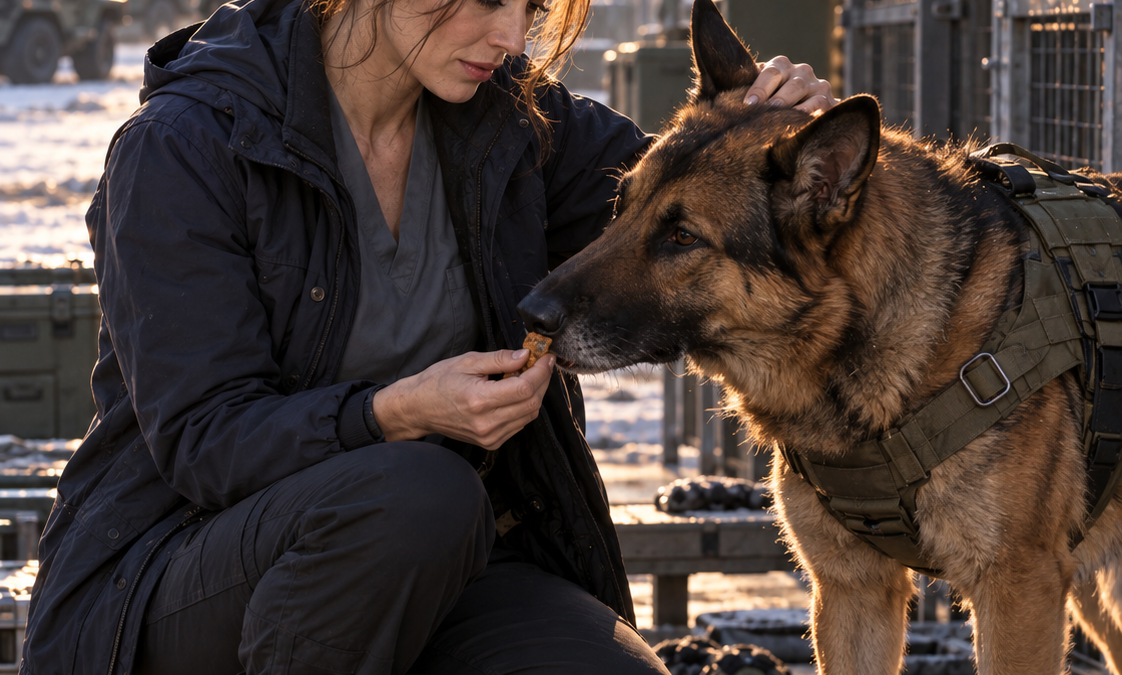
She Lost Her Job Helping an Old Woman—Unaware She Was a Billionaire’s Mother
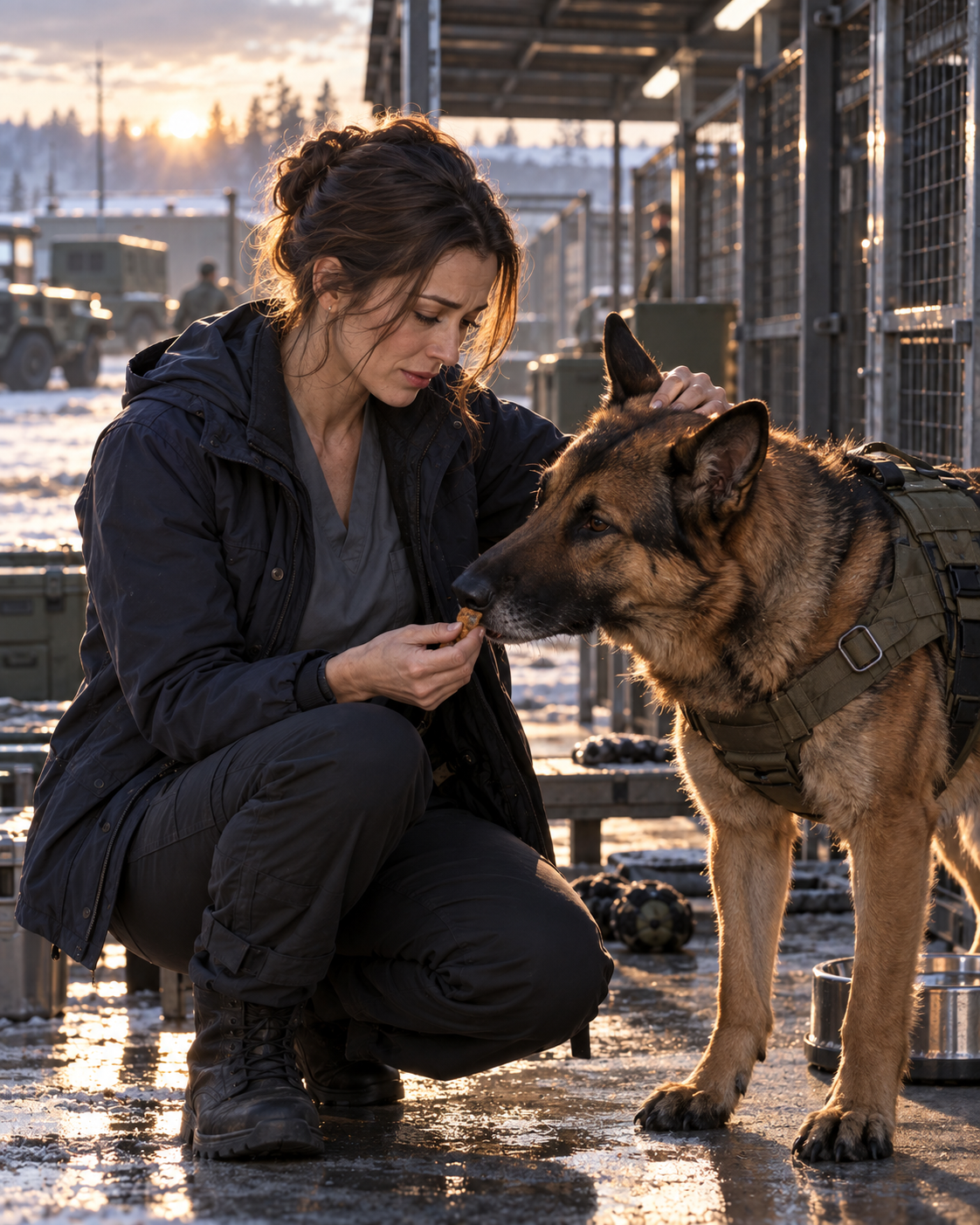
In a Vermont blizzard that buried every road in white, a young waitress chose to help a trembling old woman everyone else ignored.
That choice cost her job before sunset. But a retired Navy Seal, his faithful K-9, and the quiet mother of a billionaire had seen enough to know one small Mercy could change an entire town.
Snow had been falling over Mercy Ridge since before dawn. Not in pretty flakes that made postcards, but in thick white curtains that swallowed porch steps, fence rails, tire tracks, and the dark line of the mountain road until the whole town looked erased.
By late afternoon, the windows of the snow lantern diner glowed the color of weak honey against the storm. And inside, every booth was full of people shaking snow from their sleeves, wrapping numb hands around coffee mugs, and speaking louder than usual because the wind kept throwing itself against the glass like it wanted a seat at the counter. Emily Carter moved through it all with a pot of coffee in one hand and a stack of order slips tucked under her thumb.
Her brown blonde hair pulled into a knot that had given up hours ago. Her cheeks flushed from the kitchen heat. Her wrists red from washing dishes when the bus boy failed to show.
She was 24, though most days lately she felt either 16 or 60 with no age in between.
16 when she glanced at her phone and saw another message from Mercy Ridge High about Noah’s robotics fee.
60 when she counted rent, groceries, winter oil, and the tiny envelope where she kept emergency cash that never stayed full long enough to deserve the name. At table 7, a trucker wanted more gravy. At table two, a tourist from Connecticut complained that the pie was cold.
At the counter, old Mr.Delaney wanted to tell the same story about the blizzard of 1978, and Emily listened while refilling his cup because everybody deserved to be heard at least once, even if once had become a hundred times. The bell above the door snapped against the frame, and a gust of snow blew in along with Caleb Morgan and a German Shepherd the color of stormbbent grass and black pine bark.
Caleb paused on the mat as if measuring the room before stepping into it. He was broad- shouldered, almost too still, with a weathered canvas coat powdered white, and a pair of gray eyes that noticed exits windows, hands, and the uneven rhythm of strangers breathing before they noticed the specials board.
Ranger shook once, sending snow in a halo around him, then gave the nearest customer a look of grave disappointment, as if the man personally controlled the weather and had performed poorly. A few people laughed. Caleb did not exactly smile, but something at the corner of his mouth moved.
“Delivery for Pastor Anne,” he told Emily when she came close enough to hear him over the wind.
His voice had the quiet flatness of a man who never wasted volume. Emily nodded toward the back hallway where the church donation boxes were stacked.
“Kitchen is drowning, but the pantry shelf is clear.
If Ranger steals bacon, I never saw him.
RER’s ears flicked at his name.
Caleb looked down. He heard that.
Good. I meant him to.
The small joke warmed the space between them for half a second, which was more warmth than the storm had offered all day. Emily had seen Caleb around Mercy Ridge for almost a year, always with Ranger. Always doing jobs nobody had officially assigned him.
He shoveled the church steps before funerals. He fixed the ramp behind the clinic. He drove supplies to shutins when younger men found excuses.
Folks said he had been a Navy Seal, though no one said it around him twice. Folks also said Ranger had served with him overseas, which Emily believed because that dog carried himself like a retired general who still expected proper paperwork.
Caleb carried two sealed boxes toward the hallway, boots leaving clean, wet half moons on the floor, while Ranger followed at his left knee until they reached the middle of the dining room. Then the dog stopped. Not slowed, stopped.
His head turned toward the far window booth where an old woman sat alone with both hands around a cup of tea she had not touched. She wore a gray wool coat too thin for the storm, a knitted hat pulled low, and gloves mended at the fingertips with brown thread. Beside her sat a worn leather purse, the kind older women kept for decades because it had survived enough life to be trusted.
Emily had noticed her earlier, but only in flashes. The old woman had ordered tea, asked the price twice, and chosen nothing else after staring at the menu for a long time. She had smiled when Emily told her the soup was good, then said she was not very hungry, and the careful voice of someone who did not want to admit anything cost too much.
Now Ranger was staring at her with his body alert but gentle tail low, ears forward. Caleb lowered the boxes onto a chair.
Ranger. The dog did not move.
Emily followed his gaze and saw what she had missed while racing between tables.
The old woman’s fingers trembled against the cup.
Not the ordinary tremor of age alone. Her knuckles were pale, her shoulders tight, her lips pressed together as if she were keeping a sound inside.
She looked toward the restroom sign, then toward the crowded aisle, then down again. The tea trembled harder. Emily felt the room narrow.
A man at table 7 lifted a hand for gravy. The tourist from Connecticut tapped her fork against the pie plate.
Behind the register, Grant Hollis snapped open the cash drawer with more force than necessary. Grant was 46 square-faced, always clean shaven, and so devoted to the diner schedule that Emily suspected he would put the second coming on a wait list if it arrived during lunch rush.
He had warned her twice that week. Stay on your assigned tables, no extra favors, no free refills unless the customer ordered a meal, no charity theatrics. His phrase, not hers.
Mercy Ridge was having a brutal winter and Grant believed kindness was a leak in the roof of profit. Emily believed the roof was already leaking if kindness could ruin it.
But belief did not pay Noah’s school fees.
Belief did not keep the lights on. The old woman tried to stand.
Her knees buckled so slightly that most people would have missed it. Ranger gave one low sound, not a bark, more like a note pressed from the chest. Caleb moved first, fast enough that the air seemed to part for him.
But Emily was already there, sliding between chairs and coffee cups.
“Ma’am,” she said softly, setting the pot on the nearest table without looking.
“Let me help you.
” The old woman flushed with embarrassment.
I am sorry. I only need the restroom.
It is foolish. I thought I could.
Her voice thinned. It is not foolish, Emily said. The floor is wet and this place is packed.
Take my arm. Caleb stopped a few steps away.
Close enough to help far enough not to crowd her.
Ranger sat beside him, eyes on the old woman’s breathing.
I can clear the aisle, Caleb said. Emily nodded once, grateful for the way he did not make a performance of it. He turned slightly and somehow the customers who had been blocking the path discovered they could move their boots, bags, elbows, and attitudes.
After all, Emily felt the old woman’s weight settle carefully against her forearm.
Under the gray coat, the woman was smaller than she had appeared, light as a bundle of dry sticks, and cold came off her sleeves. My name is Emily, she said as they moved. You do not have to rush.
Ruth, the woman whispered. My name is Ruth.
All right, Miss Ruth. One step. Good.
Another.
See, we’re doing fine.
The aisle smelled of coffee, wet wool, fried onions, and the sharp lemon cleaner they used on the floor when the snow melt turned everything slick. Emily talked because silence often made people feel watched.
She told Ruth the restroom door stuck in cold weather and needed a firm push. She told her the soup was chicken and rice, not too salty today because the cook was in a good mood, which meant he had only yelled at the freezer once. Ruth gave a breath that almost became a laugh.
Behind them, Caleb waited near the hall, facing the dining room. Not like a guard exactly, but like a man who understood dignity sometimes needed a perimeter. When Ruth came back out, her color had not improved.
Her lips had a faint bluish cast that tightened something in Emily’s chest.
“Have you eaten today?”
Emily asked. Ruth looked ashamed.
“A little.
A little meaning breakfast.
A cracker on the bus.”
The answer landed quietly and heavily. Emily glanced at Caleb. His expression did not change much, but his jaw set.
Warm soup, he said. Small bowl, toast if she can manage. I cannot pay for much, Ruth said quickly.
Tea is enough. Tea is not enough in this weather, Emily said and helped her back toward the booth.
We’ll figure it out.
That was when Grant saw them. He had been arguing with a man about a declined card, his tie tucked into his vest like he was preparing for battle with the receipt printer.
But now his eyes fixed on Emily’s hand under Ruth’s elbow.
The look on his face changed from irritation to calculation, then to something colder. Emily eased Ruth into the booth, pulled the chair closer so she would not have to twist, and wrapped a paper napkin around the hot cup so her hands would not burn.
Caleb set the delivery boxes by the kitchen door, then returned without being asked. Ranger came too, of course, because Ranger considered any plan without him incomplete.
Emily, Grant called, not loud enough to sound cruel to customers. Loud enough that every worker heard.
Your section is waiting. One minute, she said. This customer needs help.
Grant walked toward her through the narrow aisle, smile stretched thin. Every customer needs help.
That is why they are customers. A few people chuckled, unsure whether they were allowed. Emily kept her voice calm.
She has not eaten and she is cold. I am getting soup. Did she order soup?
Ruth stared into her tea.
Caleb’s eyes lifted to Grant.
Ranger looked at Grant’s shoes, then his face, then sat down directly between him and the booth.
The dog made no sound. Somehow it was worse than barking. Grant halted, annoyed and faintly nervous.
Is that dog licensed to be in here? Retired military working dog.
Caleb said, “He is cleaner than most of the boots in this room.”
One laugh burst from the counter before its owner swallowed it. Emily should not have smiled.
She did anyway.
Grant’s face reened.
I am not discussing animal policy with you. Emily, table 3 asked for the check. Table 7 needs gravy, and those people by the door have been waiting 8 minutes.
And Miss Ruth has been waiting longer than that for someone to notice she could barely stand. The words came out before Emily could soften them. The diner changed temperature, not literally.
The old heater still clanked. The windows still sweated, but conversations dropped into a lower register, and the scrape of fork seemed suddenly too loud.
Grant stepped closer. Ranger stayed seated.
Caleb laid one hand lightly on the dog’s collar, not because Ranger needed restraint, but because Caleb understood signals.
You do not get to lecture me about service in my diner, Grant said. It is not your diner, Emily replied, then wished she had not. Grant smiled then, and that was worse than anger.
No, but I manage it. Which means I decide who stays on the schedule. Ruth lifted her head.
Please, sir, she was only helping me, ma’am.
With respect, you are not the only person in this building. Ruth flinched at the word respect because there was none in it.
Caleb’s thumb moved once over Rers’s collar.
Emily saw it, a small motion like a man counting himself back from an edge. She had heard enough whispered stories to know Caleb had edges most people never saw.
She also knew he had entered this moment because Ranger had noticed Ruth and because he himself could not walk past distress without paying some private price. That mattered to her.
It made her stand straighter.
I’ll get the soup, Emily said.
Then I will catch up my tables. No, Grant said.
You will catch up now. Grant. The cook had appeared in the pass window, wiping his hands on a towel.
I can ladle soup.
It ain’t a federal case.
Stay out of it, Walt. The cook disappeared slowly, muttering something that sounded unfit for Sunday.
Emily felt Ruth’s fingers close around her sleeve.
The old woman’s hand was trembling harder now, partly from weakness, partly from humiliation.
Emily could imagine her own mother in that booth if her mother had lived long enough to grow old. She could imagine Noah at 16 pretending not to need help because pride was sometimes the last warm coat a person owned.
She could imagine herself 30 years from now counting coins under a window while busy people trained themselves not to see. The thought moved through her like a match.
Small, bright, dangerous. She turned toward the kitchen.
Walt, small chicken and rice, please put it on my employee meal.
Grant’s voice cracked through the diner.
Do not take another step. Emily stopped. Snow hissed against the glass.
Somewhere a child asked his mother why the dog looked mad.
Rers’s tail tapped once as if answering.
Caleb said, “Mr.Hollis, this can be handled quietly.”
“It is being handled,” Grant said.
“By me.”
He pointed toward the register.
“Emily, I warned you about this.
Customers come here for service, not a sermon.”
Emily looked at Ruth, whose eyes shone with tears she refused to let fall. She looked at Caleb, who had the stillness of a winter tree, scarred but standing. She looked at Ranger, who had chosen his place on the floor and would need either a command or a miracle to abandon it.
Then she looked at Grant. If helping an old woman reach the restroom is a sermon, maybe the diner needed one. A sound moved through the room.
Not applause, not shock, something caught between.
Grant’s mouth tightened.
His pride had an audience now. And pride with an audience is a hard thing to save.
Kitchen now, he said. We are discussing your future here.
Emily’s pulse beat in her throat.
Noah’s robotics fee, the electric bill, the envelope with $12 and a grocery receipt in it.
She felt all of it. Every practical fear, every consequence lined up like dark birds on a wire.
But Ruth’s hand still held her sleeve.
Caleb saw the fear. He did not rescue her from it.
Instead, he gave the smallest nod, the kind that said he would respect whatever choice she made. That somehow made the choice hers again.
Emily gently covered Ruth’s hand with her own.
“I’ll be right back with soup,” she said.
Grant’s face went blank, the kind of blank that comes before a door closes.
Outside, the storm erased another row of tire tracks. Inside, under the yellow diner lights, Emily walked toward the kitchen, and every eye in the snow lantern followed her as if they already knew something in the room had begun to break. The wind outside the snow lantern diner thickened until the window beside Ruth Whitaker turned from glass into a pale moving wall, and the whole town of Mercy Ridge seemed to shrink to the size of that crowded room with its yellow lights, wet floor mats, and the smell of soup beginning to warm in the kitchen.
Emily Carter could feel Grant Hollis behind her as she reached the pass window. Not close enough to touch, but close enough to make every step sound like a bad decision. Walt the cook slid a small bowl of chicken and rice soup onto the counter without a word.
His big face had gone stiff, and for once he did not complain about the onions, the fryer, the schedule, or the fact that tourists expected homemade biscuits during a blizzard, as if biscuits were born from weather reports. He put two slices of toast on a saucer and added a packet of crackers with the careful seriousness of a man placing sandbags before a flood. Employee meal, he said under his breath.
No charge. Emily nodded, throat tight.
Grant heard him anyway.
That comes out of somebody’s pay.
Take it out of mine, Walt said. His voice carried farther than he meant it to. Several customers turned.
Grant’s nostrils flared, but he was too busy being angry at Emily to start a second fire.
Emily took the tray. The soup trembled in the bowl, and for one ridiculous second, she thought of her own hands as weather. She had been steady all day because a waitress learned steadiness the way a sailor learned knots with repetition and punishment.
Smile when a man calls you sweetheart in a tone that makes the word dirty. Smile when someone blames you for the price of eggs. Smile when the card declines and the customer looks at you as if you personally emptied their account.
But now her hands knew what her face refused to show. They shook, not from cold. She breathed through her nose and walked back toward Ruth.
Caleb Morgan had not moved from the aisle.
He stood with one hand resting loosely on RER’s collar, his posture relaxed enough not to alarm the room, and precise enough to tell Grant that relaxed did not mean harmless.
Ranger sat squarely in front of the booth, sable coat shining under the lights, one scarred ear tipped toward Ruth and the other toward Grant. The dog looked bored in the way old soldiers looked bored when foolish men confused volume with command.
Ruth watched Emily approach with an expression that carried gratitude and embarrassment in equal measure. Older people often apologized with their faces before they used words Emily had noticed. They apologized for needing a door held for counting change slowly, for asking someone to repeat a sentence when the room was too loud.
It broke something small in her every time.
“Here we are,” Emily said, setting the tray down gently.
“Small bowl, not too hot.
Toast if you want it. Crackers if you want to pretend crackers are exciting.
” Ruth made the breath that almost became a laugh again.
“You are very kind.
I am very behind on table 7’s gravy, but yes, I am trying.”
This time, a few people smiled openly. Caleb glanced down and the corner of his mouth moved again. Ranger leaned forward and sniffed the soup, then looked at Emily with approval.
“Health inspector,” Caleb said.
“Strict standards.”
Ruth’s hand hovered over the spoon.
“I truly can pay something you already paid for tea,” Emily said.
“Soup is on me.”
Grant stepped closer.
“No, it is not.”
The room tightened around the words. Emily did not turn.
Grant, please do not please me. Do your job. Ruth slowly lowered the spoon.
Sir, I did not mean to cause trouble. Trouble is caused by employees who forget their role.
Caleb’s voice entered gently, which somehow made it firmer.
Her role appears to be serving people. Grant swung toward him. And yours is what exactly?
bringing a dog into my dining room and interfering with Caleb looked at him for a long moment. Today delivery driver then deliver and leave soon as the road is passable. That earned a low ripple from the counter because everyone knew the road was no such thing.
Snow plows had gone by twice and lost the fight both times.
Grant’s ears reened.
Emily office now. Emily finally turned.
Ruth needs someone beside her until she eats a little. She nearly fell. She is sitting.
Because I helped her sit and now you are finished. The old heater knocked hard in the wall.
A metal cough that startled Ruth.
Rers’s head lifted and he shifted closer to the booth.
Caleb noticed Ruth’s fingers tighten on the spoon.
His eyes softened just for a moment.
“Mrs.Whitaker,” he said, though no one had told him her last name.
Ruth blinked.
“How did you?”
He nodded toward the small luggage tag tied to the worn purse.
“Old Habin, sorry.
No harm done. Try a little soup.
Slow.”
His voice lost its winter edge. It became the voice of someone who had talked injured young men through breathing, through waiting, through one more minute.
Ruth obeyed before she seemed to realize she had. Emily watched the spoon reach her mouth. Color did not flood back.
Life rarely worked that theatrically, but Ruth swallowed, then took another small spoonful, and a fragile relief moved through Emily’s body.
There, Emily whispered. Good. Grant slapped a check presenter against his palm.
Touching. Are we all done with the charity pageant?
Something changed in Caleb’s face.
Not anger exactly, something older and colder.
He took one step, not toward Grant, but slightly between Grant and Ruth’s booth.
Careful. The word was so quiet that half the diner leaned in to hear what had already landed. Grant laughed once, sharp and false.
Is that a threat? No.
Caleb’s hand remained open at his side.
It is advice. Ranger stood. The movement was unhurried.
He did not bear teeth. Did not bark up.
Did not do any of the things that would make the moment unsafe or ugly. He simply stood between the manager and the old woman with the absolute confidence of a creature who knew what loyalty required.
Emily felt a strange urge to cry, not because of fear, but because a dog had understood the room better than most of the people in it. Grant pointed toward the door.
Get that animal out of here. Ranger is not the problem, Emily said.
You are making one. Grant turned on her with relief as if she had given him the target he wanted.
That is enough. He reached for the schedule clipboard hanging by the register and yanked it free.
The pages fluttered names and hours and small hopes clipped under plastic. Emily saw her own name circled for the weekend double shift. She had counted on that shift.
She had built the electric bill around it. Grant drew a pen from his vest pocket and scratched a hard line through her hours. The sound was tiny.
It cut anyway. You want to care for strangers?
Wonderful. Do it on your own time. Emily stared at the line through her name.
You’re firing me for helping a customer.
I am removing an employee who refuses instruction during a rush. That is a prettier sentence.
A laugh escaped someone and died immediately.
Grant’s voice rose.
Apron. The diner went so quiet that Emily heard the snow sliding down the outside of the window in soft, heavy sheets.
Ruth’s spoon stopped halfway to the bowl.
“No,” Ruth said.
“Please, I will leave.
Do not punish her.
Ma’am, this is not your concern.
It became my concern when she helped me.
” Ruth’s voice shook, but it did not disappear.
Caleb looked at her with respect. Emily had the sudden sense that Ruth Whitaker had not always been the small, trembling woman in the booth. There was something under the gray coat.
Something trained by years, sorrow, money, or motherhood, or all three. Grant missed it completely. Men like him often missed mountains when they were dressed as hills.
Apron, he repeated.
Emily’s hand went to the knot at her waist.
For a second, she saw Noah at their small kitchen table, hunched over a secondhand robotics kit, his dark hair falling into his eyes, pretending the missing parts did not bother him. She saw the letter from the electric company, still unopened because not opening it had bought her one more hour of denial.
She saw her mother’s face in the last winter before illness took her, proud and tired, telling Emily that character was what remained when convenience walked out.
Emily untied the apron. The fabric came loose with a whisper.
She folded it because her mother had taught her never to throw what did not belong to you, even when your heart wanted to. I am sorry, Miss Ruth, she said. You have nothing to be sorry for, Ruth whispered.
Emily set the apron on the end of the counter. Grant snatched it as if it might contaminate the place.
Your final check will be mailed. Of course it will, Walt muttered from the kitchen.
By horseback come spring. A few people made the dangerous mistake of smiling. Grant glared at him.
Emily picked up her coat from the hook by the back hall. It was thin thrift store navy blue with a missing inside button, and she had never hated a piece of clothing so much for being inadequate.
Caleb stepped forward.
Road’s bad.
I’ll drive you.
Emily shook her head. You have deliveries. Deliveries can wait.
I cannot owe anyone anything today. The words came out more sharply than she intended. Caleb stopped and his eyes changed.
Not offended. Understanding.
He knew debt had many shapes. Money, favors, lives not saved, names carried in silence. He nodded once.
Then let me walk you to your car so you don’t slip.
Emily wanted to refuse that too, but Ranger had already moved to the door and looked back at her as if the matter had been decided by a higher committee.
Ruth reached for Emily’s hand.
Her fingers were warmer now, barely. What is your last name, dear?
Carter. Emily Carter.
Ruth repeated it slowly, like a prayer she wanted memory to keep.
Yes, ma’am.
I will not forget this. Emily smiled, but it shook at the edges. Please just finish your soup.
She turned before the tears could gather where customers might see them. Pride again, that last thin coat.
Caleb opened the door and the storm rushed in so hard the bell struck the wall.
Cold took Emily’s breath at once.
The parking lot was a blur of white cars, softened into lumps, tire tracks, filling as soon as they were made. Ranger went first, breaking a path with steady confidence paws, punching dark holes in the snow.
Emily stepped onto the walk and nearly slid.
Caleb’s hand came under her elbow, firm, brief, respectful.
She did not pull away. The wind snatched at her hair and drove flakes into her eyelashes.
Behind them, inside the diner, faces watched through the glass. Some looked ashamed.
Some looked curious. Grant did not look out at all.
He had already turned back to the register as if erasing someone from a schedule erased what had happened.
At Emily’s old sedan, half buried near the side lot, Caleb waited while she scraped snow from the driver’s door with a loyalty card because her ice scraper had cracked the week before.
He took a proper scraper from his truck and handed it to her without comment. She stared at it.
I said, “I cannot owe.
You can return it to Pastor Anne’s donation shelf when you’re done.
Then you owe the shelf.
” Against her will, Emily laughed.
It came out small and broken, but it was real. Ranger wagged once, satisfied. Caleb cleared the windshield with efficient strokes.
He did not ask if she was all right. People asked that when they wanted an answer that would make them comfortable.
Instead, he said, “Do you have somewhere warm to go?”
“Home.
Heat working.”
She hesitated too long. His eyes flicked to her face.
“Mostly?”
Mostly is a suspicious word in winter.
“My brother is there.
I need to get back before he worries.”
“How old?”
16. Good kid. Best one.
Then drive slow. If the hill by Miller Road is iced over, turn around and call the church.
Anne will send me. You do not have to. I know.
The words were plain, and because they were plain, they did not feel like charity. Emily took the scraper.
“Thank you.”
Caleb nodded. Ranger stepped close and pressed his cold nose against her glove.
The touch undid her more than the firing had.
“You, too,” she told him.
“Thank you, Sergeant Judgment.
Caleb almost smiled. He outranked me emotionally.
Emily got into the car, turned the key, and listened as the engine complained before catching. The heater blew air that was mostly hope. Caleb stood in the snow until she pulled out.
Ranger beside him like a shadow with breath. In her rear view mirror, the snow lantern shrank behind a veil of white.
The yellow lights looked warm from outside. That felt unfair.
Inside, Ruth ate three more spoonfuls of soup after Emily left. Each one tasted like salt chicken and the bitter knowledge that she had been the reason a young woman walked into a blizzard without a job.
Caleb returned only long enough to collect the delivery receipt and make sure Ruth could stand when she needed to. He did not speak to Grant. He did not need to.
Ranger, however, paused by the manager’s polished shoes and sneezed once with devastating timing.
Walt coughed into a towel to hide a laugh.
Grant’s face darkened.
Ruth watched everything. She watched the customers avoid her eyes. She watched Caleb lift the boxes again.
She watched Ranger glance back at her before leaving as if assigning her responsibility. When the door closed behind them, Ruth opened her worn purse and took out a small cream colored card embossed with Whitaker Hospitality and Care.
Her thumb rested over the name, Theodore Whitaker, Chairman. Not yet, she thought.
Money arriving too quickly often made truth run for cover. She needed to know who Emily Carter was when no one powerful was watching. She needed to know whether this diner was an unfortunate corner of a decent business or a symptom of something Theodore had stopped seeing.
She slipped the card away and asked the young host for a glass of water. That waitress, Root said carefully.
“Has she worked here long?”
The host looked toward Grant, then lowered his voice.
“Two years covers everyone’s shifts, brings muffins when the dishwasher’s kids are sick.
Does she often help people like me? The boy swallowed.
Yes, ma’am.
That’s kind of the problem.
Ruth looked at him. He flushed.
I mean, not a problem problem. Mr.Hollis says she wastes time. Ruth turned back to the window.
Snow erased the tire marks where Emily had driven away. No, she said softly. Some people spend time.
Some people invest it. The host did not know what to do with that.
So he refilled her water and retreated. Ruth sat alone with soup cooling before her and an old ache behind her ribs that had nothing to do with age. Long ago, before private jets and boardrooms and men who spoke to her son in polished numbers, she had been a young mother counting coins for medicine.
She remembered what it meant to be treated as an inconvenience. She remembered the face of one nurse who had stayed after her shift because Theodore had a fever and Ruth had no ride.
Ruth had never learned that nurse’s last name.
Regret had a long memory. She would not make the same mistake twice.
Outside, Emily’s car crawled through the storm toward the edge of town.
Wipers losing their battle, fingers stiff around the wheel. She told herself not to cry until she reached home.
Then the heater coughed. The road vanished under a fresh sweep of snow. And her phone buzzed with another message from Noah.
She did not read it yet. She already knew one problem was waiting. She did not know there would be another under it, folded neatly beneath his math book, like a secret too heavy for a 16-year-old boy to carry.
By the time Emily Carter reached the building where she and Noah rented the upstairs apartment, the storm had turned the street lights into soft white ghosts and the sidewalks into guesses. Mercy Ridge had always looked gentle under snow from a distance, like one of those little wooden villages people set beneath Christmas trees.
But up close, winter had teeth. It crept under doors, stiffened pipes, emptied wallets, and made every small mistake expensive.
Emily parked behind the old brick building with the laundromat on the first floor, turned off the engine, and sat for a moment while the car ticked and cooled around her. She still wore the thin navy coat. Her work shirt smelled like coffee and frier oil.
Her apron was gone. That absence felt louder than it should have.
She had hated that apron some days. Hated the way the strings dug into her waist during double shifts.
Hated the stains that survived every wash.
Hated the pockets always full of other people’s receipts and pennies.
Now she missed it with a grief that embarrassed her. A job was not a person.
A job did not love you back. Still losing it felt like being shoved from a lit room into weather. She wiped her eyes with the heel of her hand before tears had a chance to become dramatic.
There was no time for drama. Drama did not call the electric company. Drama did not tell Noah he might have to wait on the robotics fee.
Drama did not explain why she had chosen a stranger over a paycheck they needed. Upstairs, the apartment windows glowed faintly, which meant Noah was home and probably pretending he was not worried.
Emily took Caleb’s scraper from the passenger seat, tucked it under her arm, and stepped into snow up to her calves.
The cold bit through her shoes at once. Her socks were wet before she reached the back door.
Inside the stairwell smelled of detergent, old dust, and somebody’s cabbage soup.
The radiator near the mailboxes clanked without producing much heat.
Emily climbed slowly, listening to the building’s familiar complaints.
Third step loose, fifth step squealled. Landing window rattled whenever the wind came hard from the west.
Home, she told herself. Still home. Noah was at the kitchen table when she opened the apartment door, his school hoodie pulled over his head, a pencil turning between his fingers.
He had their mother’s dark eyes and the Carter talent for hiding panic under sarcasm.
You are early, he said. Too casual.
Emily hung her coat on the chair because the hook by the door had been loose for three months. Slow day during a blizzard.
Blizzards make people weird. Half the town came in then nobody left. It got complicated.
Noah looked at her shirt, then at her waist. Teenagers saw more than adults gave them credit for, especially teenagers who had learned bills had moods.
Where is your apron? Emily went to the sink and turned on the tap, buying time with the sound of water. It came out cold, then colder.
Grant fired me. The pencil stopped.
What? She kept her back to him because his face would make it worse. I helped an elderly woman who needed assistance.
He said I ignored my section. It happened fast.
He fired you for helping an old lady.
Noah’s voice rose, cracked, then steadied with a kind of anger too large for his thin shoulders.
That is illegal, right? Or evil.
It should be one of those. Emily almost smiled.
The law and evil are not always scheduled for the same shift. M. He stood.
This is not funny. I know.
She turned off the tap and faced him. I know it is not.
I am sorry. Why are you sorry you helped somebody?
because we needed that job. The truth sat between them, plain and poorly dressed. Noah looked down at the table.
There were textbooks, a calculator with a cracked case, a robotics flyer, and under the edge of his math notebook, a folded envelope with the electric company’s blue logo.
Emily saw it. Noah saw her see it.
Neither moved for a second. Then Noah grabbed the envelope too late, as if speed could reverse sight. I was going to tell you when.
After I figured something out, Noah, I can get a job at the gas station.
Mr.Barnes said, “Maybe weekends.
I can drop robotics. It is stupid anyway.
Just little rich kids making machines that pick up foam balls like that solves world hunger.”
The bitterness in his voice was borrowed from fear and did not fit him. Emily crossed the kitchen and took the envelope gently from his hand. Pass due.
Final notice. The words had a way of standing taller than others on a page.
You are not dropping robotics. We might not have electricity, Emily. Then your robot will be thematically appropriate.
He stared at her, then laughed once, despite himself, angry and weteyed. She pulled him into a hug before he could decide he was too old. For a moment, he resisted all elbows and pride, then folded against her.
He smelled like pencil shavings and laundry soap. 16.
Still a child. Not a child at all. I am supposed to help you, he said into her shoulder.
You do help me. Not enough.
That is not yours to decide tonight. She released him and smoothed the front of his hoodie because mothers did that and she had become something like one without ever being asked. I will find work.
Mercy Ridge is not the whole world. In this snow, it kind of is.
He had a point. Outside, a plow groaned past and left a ridge of ice along the curb. Emily opened the refrigerator.
Half a carton of milk eggs, a jar of pickles, leftover rice, two apples bruised on one side. She took out the rice and eggs. Dinner.
Noah made a face. Ah, yes.
It’s the classic Carter feast.
Rice with whatever did not fight back. Chef recommends gratitude.
Chef needs butter. Chef knows. They moved around each other in the tiny kitchen with practiced economy.
Noah set plates. Emily cooked the rice in a skillet until the edges crisped, then scrambled eggs through it. The apartment filled with a warm, ordinary smell that made the day feel survivable for the length of a meal.
She told Noah a softened version of what had happened.
Ruth’s trembling hands, the soup, Grant’s ultimatum, Caleb and Ranger.
She left out the worst humiliation because she did not want Noah carrying it to school like another book. But she told the truth of the choice. Noah listened for Ruck still in his hand.
What kind of dog blocks a manager? A retired canine with excellent judgment.
Can we borrow him for parent teacher conferences? We do not have parents.
The joke slipped out before she could stop it. Noah looked at her and for a second grief moved through the room like a cold draft. Their mother had been gone 2 years.
Their father longer than that, though not by death. Absence had many methods.
Emily reached across the table and tapped Noah’s knuckles.
Sorry.
It’s okay.
No, it was a bad joke. It was kind of a good bad joke. They ate.
The lights flickered once, twice, then held. Both of them looked up at the ceiling. Neither spoke.
Later, after Noah pretended to study and Emily pretended to believe him, she sat on the edge of her bed with her phone and made a list of places that might hire Blue Spruce Motel, Miller Pharmacy, North Road Bakery, the ski rental shop, the big lodge up the mountain if she could reach it. Her fingers hovered over the Snow Lantern employee group chat.
Messages had already arrived. Walt, you okay, kid?
Jenna Grant is telling everyone you walked out. Mr.Delaney, this is Mr.Delaney. My granddaughter put me in this phone.
You did right. Emily read that one twice. It made her cry quietly with one hand over her mouth so Noah would not hear.
She replied to Walt that she was fine. People said fine when language ran out.
Across town, Caleb Morgan stood in the equipment bay behind the Little Stone Church, stacking the delivery boxes beside shelves of canned soup, blankets, and bottled water. Pastor Anne Miller, silverhaired and small enough that people underestimated her until she started organizing them, checked items off a clipboard.
You are brooding, she said. Caleb lifted another box. inventorying with your eyebrows.
Ranger lay near the heater, chin on his paws, eyes open.
His left ear tracked Pastor Anne’s voice.
Caleb did not answer. Anne set down the clipboard.
Emily, he slid the box into place. Fired for helping Ruth.
For disobeying Grant. Same sentence, different soul. Caleb looked at her.
Pastor Anne had a way of saying things that sounded like scripture, even when they were just accurate. Roads will be bad tonight, he said.
You need the generator checked. Noah Carter knows more about that old generator than most adults in this town.
Emily’s brother.
Yes, bright boy. Heavy shoulders. Caleb thought of Emily in the parking lot, refusing help because debt frightened her more than weather.
He understood that too well. Maybe I will check it with him.
Anne’s expression softened.
Maybe you will.
Don’t make it a ministry, Caleb.
You can turn a grocery run into a covert operation, but I am not allowed to make things a ministry. He gave her a look.
Ranger thumped his tail without lifting his head. Anne smiled. God has a sense of humor.
That dog is proof. That dog judges sermons.
Only the long ones. Caleb almost laughed. It surprised him enough that he turned away.
Humor came less often now. When it did, it felt like hearing music from a house he used to live in.
After the church, he drove the truck through streets that had narrowed to white tunnels between snowbanks. Ranger sat beside him, harness clipped nose twitching at scents carried through the vents. They passed the laundromat building.
Caleb slowed without meaning to. The upstairs windows glowed weakly.
He could see a boy’s silhouette moving behind a curtain than Emily’s smaller still.
Ranger whed once. I know, Caleb said. The dog looked at him.
No. Ranger continued looking. We are not appearing at her door like a rescue committee.
Ranger sneezed. That is not an argument. But Caleb parked across the street for 2 minutes anyway.
engine running, watching the building as snow gathered on the windshield. He told himself he was checking road conditions.
He had told himself worse lies and survived them. In the diner, Ruth Whitaker remained long after she should have left. The storm made travel unwise, and Grant, perhaps remembering that other customers had eyes, offered to call a taxi in a tone polished thin.
Ruth declined.
She asked for the host’s name.
She asked how long Grant had managed the place. She asked whether staff turnover had always been high in winter. The host answered nervously.
Walt answered more freely when Grant went to the office. By the time Ruth finally rose, she knew enough to feel the old sadness sharpen into purpose. This was not just one cruel moment.
It was a culture built from little permissions. Look away. Hurry up.
Do not help unless help can be build. She left cash for the tea and soup, more than enough, folded under the saucer so Grant would not see before Walt did.
Then she stepped into the storm with her worn purse held close. A black SUV idled at the curb, nearly invisible under snow.
The driver hurried out. Mrs.Whitaker, we were worried. I asked you not to hover, Daniel.
Your son asked me to keep you safe.
Ruth looked back at the snow lantern’s yellow windows.
Then he may be interested to know what safety costs other people. Daniel opened the door. Warm air rolled from the SUV.
Ruth paused before getting in. Find out where Emily Carter lives. Quietly.
And who owns this diner now.
Yes, ma’am.
Also, Daniel.
Ma’am.
No intimidation, no dramatic billionaire nonsense. I want truth, not theater.
Daniel’s mouth twitched.
Understood. Ruth settled into the seed and took one last look at the building where a young woman had lost her job for doing what any decent soul should have done. In her purse, the cream colored card waited.
She would use it soon. Not yet.
Truth needed a little darkness before a lamp meant anything. That night, the snow kept falling.
It covered tire tracks, footprints, porch steps, and the place where Emily had stood with her borrowed scraper. It covered the snow lantern sign until only the word lantern remained visible, glowing dimly through white. And in the upstairs apartment over the laundromat, Emily Carter fell asleep at the kitchen table with job listings open on her phone while Noah quietly tucked the electric notice into his backpack, already deciding he would fix this himself if the adults could not.
Morning
came to Mercy Ridge without much, only a paler shade of white pressing against windows and the muffled scrape of plow blades somewhere beyond the curtain of snow. Emily Carter woke with her cheek stuck to a page of job listings she had copied into a notebook after her phone battery dropped to 8%. For 3 seconds, she did not remember.
Then the apartment cold reached through her sweater, the chair achd under her spine, and the word fired returned with the ugly patience of a bill collector. Across the tiny kitchen, Noah stood at the stove making coffee badly.
Their mother had believed coffee was a sacred substance and should never be bullied. Noah bullied it every time.
“Do not drink that,” Emily said, lifting her head.
“I made it for you.”
“That is what frightens me,” he looked tired.
Too tired for a school day, though school had already announced a delayed opening. Snow days in wealthier homes meant pancakes, cartoons, and children cheering at the window.
In the Carter apartment, a snow day meant missed wages, higher heat, and the math of whether walking to the store was cheaper than driving because gas had become precious.
Noah poured the coffee into their mother’s old mug, the one with a faded Bluebird and set it in front of Emily with ceremonial seriousness.
It has only a few grounds in it. Luxury, she took a sip and made herself swallow. Bold, she said like gravel.
You are welcome. He sat across from her, trying to look casual.
So, what’s the plan?
I go everywhere that has a roof and ask if they need help. Roads are bad. People still need workers when roads are bad.
People also need workers who arrive alive. Emily looked at him over the mug. That sounded suspiciously adult.
I hated it, too. She smiled, then opened the notebook.
She had circled six places.
Blue Spruce Motel, Miller Pharmacy, North Road Bakery, Harper’s Grocery, the ski rental shop, Whitaker Mountain Lodge.
Though that one looked unrealistic because the lodge sat above town where the road climbed through pines and expensive silence. She would try anyway. Pride could not drive a plow.
You are going to school if they open. She said robotics. Noah shrugged.
Might be cancelled. If it is not, you go. M you go.
He leaned back, anger building because helplessness needed somewhere to stand. You cannot keep pretending this is normal.
I am not pretending. I am choosing the next useful thing.
That is just pretending with a clipboard. The sentence was so accurate Emily nearly laughed.
Instead, she reached across the table and stole his toast. Then I will be organized. By 9:00, she was outside in boots that leaked near the toes, walking down Main Street with printed resumes inside a grocery bag to keep them dry.
Snowbanks rose to her hips. Storefronts wore icicles like tired teeth. The air smelled of woodsm smoked diesel and the clean metallic cold that made every breath feel borrowed.
She started at North Road Bakery where Mrs.Klene clasped Emily’s hands and said she would hire her in a minute if flour, butter, and winter business had not all become impossible.
At Miller Pharmacy, the owner looked uncomfortable and asked whether the situation at the snow lantern had been a misunderstanding. Emily asked what he had heard.
He would not meet her eyes.
At Harper’s Grocery, the assistant manager said they were fully staffed, then lowered his voice and told her Grant Hollis had called early that morning to warn local businesses she had walked out during a rush and had issues following procedure.
The words landed harder than the firing because they traveled without her. A lie with a phone could outrun a woman on foot in snow.
“Did he say anything else?”
Emily asked. The assistant manager looked toward the office. I am sorry, M.
I have to be careful. Careful.
The favorite word of people who wanted to remain clean while someone else got dirty. Emily thanked him anyway because manners were free and sometimes all she could afford. By noon, her socks were wet, her resumes bent at the corners, and her stomach had begun speaking in sharp private sentences.
She sat on a bench outside the closed visitor center under an awning that failed at being shelter and ate the apple she had brought from home, cutting away the bruised side with her thumbnail. Across the street, the snow lantern sign blinked through falling snow. Only the word lantern was visible again.
She wondered if Ruth had made it somewhere safe. She wondered if Caleb thought she had been foolish.
She wondered why the thought mattered. A truck slowed near the curb. familiar dark green under a crust of white.
Rers’s head appeared in the passenger window, ears high, eyes fixed on her apple with moral intensity.
Caleb rolled down the driver’s window.
Cold entered the cab in a white swirl. Bench is a poor lunch spot.
It has ambiance. It has frostbite. Then it is an immersive experience.
Ranger made a soft whine. Caleb looked at the dog.
No, she is not giving you apple. You have standards. Emily held up the core.
I have half a bruised apple and a resume. Your standards may survive.
Caleb studied her not in the way men sometimes did when they wanted to measure beauty or weakness, but like someone reading weather. Grant called around.
It was not a question.
Emily’s shoulders dropped despite her effort.
You heard? Small town, big mouths. I thought former Navy Seals had more classified vocabulary.
Most of it is not suitable for diners. She laughed despite herself, then hated that her eyes stung. I cannot get a job if everyone thinks I am unreliable.
People who know you do not think that. People who know me are not hiring.
Caleb looked down the street. Snow collected on his eyelashes and did not seem to bother him. Pastor Anne needs help tonight if the church opens warming tables.
Paid from the emergency fund. Not much.
I can do that. The answer came too fast.
She tried to slow her pride down. If she truly needs help, she truly does.
Ranger placed one paw on the window switch and lowered the glass another inch by accident or strategy. Caleb moved his elbow.
Traitor. Emily smiled at the dog. Hello, Ranger.
Ranger huffed, fogging the air. Caleb reached behind the seat and pulled out a wrapped sandwich. Anne made too many.
Did she? She is careless with sandwiches.
Emily stared at the brown paper package written on it in Pastor Anne’s looping hand with the words, “For whoever Kayla pretends does not need this.”
Emily pressed her lips together. That woman is dangerous. Yes, I cannot take it if Caleb set the sandwich on the bench beside her instead of handing it to her.
Then do not take it from me. Take it from Anne, who will argue theology until spring if you refuse.
Emily picked it up. It was warm. Ham, cheese, and mustard, probably from the church kitchen.
Her hunger rose so quickly it almost shamed her. She unwrapped it and took a bite before pride could file an appeal.
Caleb looked away to give her the privacy of eating. That quiet courtesy undid something in her more than pity would have. When she finished half, she wrapped the rest for Noah.
Thank you, she said. I mean, thank Anne.
I’ll misdeliver the message accurately.
A snow plow passed, burying the curb in gray slush. Caleb waited until the noise faded.
Noah, no engines. He knows everything that can be taken apart and put back together.
Except our lives. Those are still pending.
Church generator keeps stalling. I could use help checking it before night.
Emily frowned. Are you offering him work?
I am offering him a problem with tools and can pay a small stipen from the same fund. He is 16.
I was 16 once. That does not reassure me. Fair.
His honesty surprised her.
He continued, “No dangerous work, no road calls, just the generator indoors with me there.
He keeps school first.”
Emily looked toward the laundromat building down the hill, though she could not see it from here. Noah needed money, yes, but he needed dignity more.
He needed to contribute without being swallowed by adult fear. I will ask him, she said.
You will not make him feel like a charity case.
Caleb’s eyes returned to her.
No. The answer carried no decoration because none was needed. She believed him.
At the edge of town, inside a black SUV parked beneath snow heavy pines, Ruth Whitaker read the notes Daniel had gathered. Emily Carter, 24, guardian in practice if not paperwork for younger brother Noah. Mother deceased, father absent.
Rent current, but late twice. No record of complaints at Snow Lantern before yesterday. Covered shifts.
Paid for meals quietly. Once walked three miles to deliver soup to Mrs.Avery when the power went out.
Ruth rested the papers on her lap and watched the town through tinted glass. When her son Theodore had been small, she had worked nights cleaning rooms at a roadside inn outside Burlington.
A woman named Grace had once left a $20 bill under a Gideon Bible with a note that said, “You look tired.
Buy supper.”
Ruth had kept the note for 20 years. Money did not make people kind. Lack of money did not make them noble.
She knew better than sentimental nonsense, but hardship revealed whether a person clenched their fist or opened their hand. Emily Carter, it seemed, opened hers even when it was empty. Daniel looked at her through the rearview mirror.
Mrs.Whitaker, Mr.Whitaker, has called twice. Then he can practice patience.
He sells luxury experiences. Patience should be included. Daniel wisely said nothing.
Ruth turned another page. Snow Lantern Diner was part of a small regional chianton with review for acquisition by Whitaker Hospitality and Care.
Theodore’s team had flagged the Mercy Ridge location for operational inconsistency and staff retention concerns.
Such bloodless phrases. They sounded tidy enough to put in binders.
They did not show Emily stepping into snow with a folded apron left behind.
“Ask Theodore to meet me at the lodge tomorrow,” Ruth said.
“In person.”
“He will want details.
Tell him I found a leak in the roof.”
Daniel glanced up.
“The diner roof?
The moral one.”
“Again?”
Daniel chose silence. Ruth smiled faintly.
“And send a message to Emily Carter from an unmarked office number.
No promises, no explanation beyond the address. Ask her to come tomorrow morning if she can safely travel. That may frighten her.
Then add please.
Yes, ma’am.
No, add two pleases. She has had enough commands.
That afternoon, Noah met Caleb in the church equipment bay because Emily had said yes after making Caleb repeat every safety condition twice and Pastor Anne repeat the payment details once. The generator sat in the corner like an offended elephant painted red, smelling faintly of oil and age. Noah arrived with his hood up and his suspicion higher.
You are Mr.Morgan Caleb.
Emily said, “I am not supposed to call you sir because it will make you twitch.”
Pastor Anne, sorting blankets nearby, looked delighted. Caleb gave no visible reaction except a slow blink. Emily has tactical instincts.
Ranger walked over, sniffed Noah’s boots, then pressed his head briefly against the boy’s knee.
Noah froze. Is he allowed to do that?
He only does it to people he likes or people carrying beef jerky. I have neither.
Then congratulations. Noah crouched carefully and let Ranger sniff his hand. The dog licked his knuckles once.
Something in the boy’s guarded face eased.
Caleb saw it and felt an old ache. Young men trying to become useful too quickly had been his business for years. Too often they had mistaken usefulness for worth.
He had made that mistake himself and worn it like armor until it fused to him. Show me what you know, Caleb said, nodding toward the generator.
Noah pushed up his sleeves. Within 5 minutes, he had identified a clogged fuel filter, a cracked hose, and a loose connection. Pastor Anne blamed on age because she blamed many mechanical issues on the general fallen state of creation.
Caleb watched without interrupting. The boy was good, not flashy, careful. He handled tools like they mattered because he knew what replacement cost.
“Who taught you?”
Caleb asked. YouTube and desperation.
Reliable instructors if dramatic. Noah smiled. Small victory.
Outside the storm deepened toward evening. Emily worked at the church warming tables, serving soup to people who arrived red-faced and quiet from cold. Pastor Anne moved among them with prayer offered only when welcomed a hand on a shoulder.
A joke about the coffee being strong enough to forgive sins. Caleb and Noah got the generator running just as the lights flickered overhead.
The machine caught with a steady rumble and everyone in the basement applauded. Noah tried to shrug it off, but his ears went pink. Emily saw.
For the first time since the firing, something like hope warmed her chest. It did not last long.
Her phone buzzed near the soup pot. Unknown number.
She wiped her hands on a towel and read the message. Please come to Whitaker Mountain Lodge tomorrow morning if road conditions allow. Ask for Mrs.Whitaker.
Please. Emily stared at the screen. The name hit her first.
Whitaker.
Ruth’s luggage tag.
The old woman’s quiet eyes.
Caleb came up beside her close enough to see her expression, but not the message. Bad news.
Emily handed him the phone because suddenly words felt slippery. He read it and his face changed by almost nothing, which for Caleb meant a great deal.
Ruth, he said. The woman from the diner, Noah asked.
Emily nodded slowly. I think so.
Pastor Anne joined them holding a ladle like a scepter. Whitaker Lodge. Emily looked from Anne to Caleb to Noah.
Snow hammered the church windows. The generator rumbled under the floor, newly alive, because Noah had refused to give up on a stubborn machine.
“I do not know what this is,” Emily said.
Caleb looked toward the dark road, climbing the mountain. Ranger stood from his place by the heater, ears forward as if he had heard a call no human could.
“Then tomorrow,” Caleb said, “we find out.”
The next morning, the snow had not stopped so much as changed its method, falling finer now, like powdered glass sifted from a gray sky, and the road to Whitaker Mountain Lodge climbed out of Mercy Ridge in pale switchbacks that made Emily Carter’s old sedan feel like a nervous animal.
She had borrowed Caleb’s ice scraper, taken Pastor Anne’s advice to fill a thermos with coffee, and accepted Noah’s insistence that she text him when she arrived because teenagers were hypocrites when it came to worrying.
The lodge address sat on her phone screen like a dare. Whitaker Mountain Lodge was the kind of place Emily had only seen from below.
A wide timber building set among pines above town where guests paid more for one weekend than she spent on rent. In summer, it hosted weddings with white chairs and string quartets. In winter, it became a postcard for people who enjoyed snow because someone else shoveled it.
Emily had never entered except once to drop off a lost tourist scarf at the front desk. Now she was driving there because a trembling old woman with a worn purse had asked for her.
“Please,” the message had said twice.
That small politeness frightened her more than a command might have. Commands were simple.
You obeyed or you did not. Please opened a door and made you choose whether to step through.
Halfway up Miller Road, the sedan’s rear tires slipped.
Emily corrected carefully.
heart jumping and whispered, “Nope, we are not doing this.”
The car did it anyway. One slow slide, not dramatic, not cinematic, just enough for the right wheels to sink into soft snow near the shoulder. The engine coughed, the tires spun, and the mountain road settled into silence around her.
Emily gripped the wheel.
“Wonderful, very dignified.”
She tried reversing. Snow sprayed, nothing.
She tried rocking the car gently, the way Noah had shown her after watching a video, but the tires dug deeper. Her phone had two bars, then one. She closed her eyes and considered every terrible possibility in alphabetical order.
Before she reached bankruptcy, headlights appeared through the white behind her. A dark green truck slowed, hazard lights blinking amber.
RER’s head rose in the passenger seat.
Emily laughed once, half relief and half embarrassment. Of course, Caleb Morgan stepped out, wearing the same canvas coat, knit cap pulled low, boots sure on the snow. He approached from the side, not directly in front of the car, the way a man did when safety habits had become bone.
Morning, he said when she lowered the window. Are you following me?
Road only goes one place. That is not a no.
Ranger barked once from the truck as if supporting cross-examination. Caleb looked at the tire buried near the shoulder. You almost made it to the bad part.
This is the good part compared to the turn after the bridge. Yes.
Emily rested her forehead on the steering wheel. I may become a person who lives in this ditch.
Rent is cheaper. She looked up sharply, then saw the almost smile and surrendered one of her own. He hooked a tow strap to the sedan with efficient movements, explaining each step without making her feel stupid.
Stay in the driver’s seat when I pull Steia gently toward the road.
No sudden gas. I was planning to perform a dramatic escape.
Save it for spring. Ranger watched from the truck with the solemn air of a supervisor who had seen apprentices fail before.
Within minutes, the sedan was free, angled safely on the road behind Caleb’s truck.
Emily stepped out, boots sinking into new powder. Thank you.
Road gets worse. Leave your car at the church lot below and ride up with me.
Pride rose automatically, then looked at the mountain, the snow, and her car’s bald tires and made the rare wise choice to sit down.
All right. Caleb nodded as if accepting a tactical briefing.
They left the sedan in a cleared turnout by the old chapel road.
Emily climbed into Caleb’s truck where Ranger immediately placed a wrapped protein bar in her lap with his mouth, then sat back as if completing an official delivery.
Emily held it up. Is this from you or your commanding officer?
Caleb started the engine. He has been trying to give you that since yesterday.
Does he think I look hungry? He thinks everyone looks underprepared. She unwrapped it because Ranger was staring with such intensity that refusal seemed impolite.
Tell him thank you. He prefers payment in admiration.
Aren’t most men like that?
Caleb gave her a sideways look and for the first time she heard him laugh. Not much more breath than sound, but real. The truck climbed through pines heavy with snow.
Branches bowed over the road, white sleeves brushing the windshield. The world beyond the headlights disappeared.
Inside the cab, the heater hummed and Rers’s breath warmed the air with dog patience.
Emily watched Caleb drive. He did not grip the wheel tightly, but every movement had intention.
“Does this weather bother you?”
she asked.
“Weather is honest.”
That is the most Vermont veteran answer I have ever heard. People are harder to read and yet you read everyone. Occupational damage.
She looked down at the protein bar rapper. Ruth Whitaker. Do you know who she is?
No. He paused.
Name is familiar. The lodge. Whitaker Hospitality owns it.
And a lot of other things, I assume. People with their name on buildings usually do.
Emily’s stomach tightened.
What if she wants to pay me off or thank me in a way that makes me feel? She searched for the word. Purchased.
Caleb supplied. Yes. Then say no.
You make that sound simple. It is not, but it is allowed.
The truck rounded the final bend and Whitaker Mountain Lodge emerged from the storm, vast and warml looking with stone chimneys, tall windows, and golden lights spilling across a port kosher where staff in wool coats hurried between luxury SUVs. The sight made Emily acutely aware of her thrift store coat damp cuffs and boots that squeaked.
Caleb pulled under the covered entrance. A valet stepped forward, saw Ranger, saw Caleb, and straightened in the instinctive way people did around those two without knowing why.
Emily wiped her palms on her jeans. Do I look like someone who belongs here?
Caleb looked at her. Not the coat, not the boots. You look like someone who helped an old woman in a room full of people who did not.
That answer stayed with her as she entered. The loft smelled of cedar, cinnamon, fresh coffee, and money polished until it did not have to announce itself. A fire burned, and a stone hearth tall enough to stand in.
Guests murmured over newspapers. A child in red snowpants dragged a stuffed moose across the rug.
Behind the front desk, a receptionist with perfect hair looked up. May I help you? Emily swallowed.
Emily Carter. I was asked to see Mrs.Whitaker.
The receptionist’s face changed in a flash.
She tried to hide. Of course. Please wait one moment.
She stood immediately as if Emily’s name had turned to key.
That frightened Emily more than being ignored. Caleb remained near the entrance with Ranger giving her distance. She wished he would come closer and hated that she wished it.
A senior assistant arrived. A woman in a charcoal suit with silver glasses and calm eyes. Miss Carter, Mrs.Whitaker is waiting in the east sitting room.
Mr.Morgan, she asked that you join as well if you are willing.
Caleb’s brows moved slightly.
Me? Yes, sir. I am not.
She was specific. Ranger stood. Decision made.
Caleb looked at Emily. She gave a small shrug that meant please and I am terrified.
and if you leave, I will haunt you.”
He followed. The east sitting room overlooked a valley erased by snow.
Ruth Whitaker stood beside the window, no longer in the gray coat, but in a soft blue dress with a cream shawl over her shoulders. Her hair, white and neatly pinned, made her seem both frailer and more formidable.
The worn purse sat on a chair beside her like a witness. When she turned, Emily recognized her face before she understood anything else.
The same kind eyes, the same careful mouth.
“Emily,” Ruth said, crossing the room slowly.
“You came?”
Emily took her hands without thinking.
“Are you feeling better?”
Ruth’s eyes filled at once.
“Of all the questions you might ask, that is the first.”
“Well, are you?”
“Yes, dear.
much better. Emily became aware of the expensive room the assistant Caleb brained or the ridiculous fact that she was holding hands with a woman who clearly belonged to the building in some way Emily did not.
She released Ruth gently. I am glad. Ruth looked at Caleb.
And you must be Mr.Morgan. Ranger made quite an impression. Ranger sat at the sound of his name and looked modestly proud.
Ma’am, Caleb said.
Ruth smiled. Please, Ruth. The door opened before the moment could settle.
Theodore Whitaker entered with a folder in one hand and a phone in the other, tall silver at the temples, dressed in the kind of dark suit that made weather seem like a rumor. He had the polished fatigue of a man who slept in expensive rooms but rarely rested.
Mother, I came as soon as he stopped.
His gaze moved from Ruth to Emily to Caleb, then fixed on Caleb’s face.
Recognition sharpened it. Chief Morgan.
Caleb’s posture changed so subtly.
Emily almost missed it. Not Chief anymore. Theodore lowered the folder.
You were with the security team outside Mosul Whitaker relief convoy 9 years ago. The room became very still.
Caleb’s jaw tightened.
Different life. You got our people out when the root collapsed.
Theodora’s voice softened with a respect that did not seem rehearsed.
I never had the chance to thank you properly. Caleb looked toward the window where Snow moved like static.
Your people made it home. That was the point.
Emily did not ask. She understood enough. Some memories were rooms with locked doors.
Ranger rose and pressed against Caleb’s leg, grounding him without drama.
Ruth watched the exchange, and something in her expression said she had not known this thread would appear, but she accepted it as part of the weaving.
Then perhaps, she said, “Both of you understand what it means when someone acts before asking what reward is attached.
Theodore turned to his mother. What happened? Ruth sat motioning for Emily and Caleb to do the same.
Emily remained standing until Ruth gave her a look that somehow contained grandmother queen and disappointed Sunday school teacher. She sat. Ruth told the story plainly.
No embellishment, no sobbing. The crowded diner, her trembling hands, Emily helping her.
Caleb and Ranger standing guard without making a scene. Grant firing Emily.
Ruth repeated Grant’s words with enough precision to make them sound smaller each time.
Theodore listened without interruption, but his face changed as the account continued. At the end, he looked at Emily.
Miss Carter, I am sorry. Emily gripped her knees. You did not fire me.
No, but a company my team is considering purchasing allowed that kind of management to stand. That makes it my concern.
Considering purchasing Snow Lantern is part of a small chain under acquisition review. Emily looked at Ruth.
Ruth nodded. I went there dressed simply because I wanted to see how ordinary guests were treated before Theodore signed anything.
I expected cold tea and perhaps impatience. I did not expect you to lose your job for helping me. Emily felt heat rise in her face.
Not anger exactly. Exposure. So it was a test.
Ruth flinched. Not of you.
But I was tested anyway. The room inhaled.
Theodore looked at his mother. Ruth accepted the wound because it was fair. Yes, she said, and I am sorry for that.
The apology was direct, no polish.
It lowered Emily’s defenses more than a gift would have.
Caleb sat silent beside Ranger, but Emily felt his attention like a handrail. Theodore closed the folder.
I would like to offer you a position here at the lodge. There it was, the golden bridge, the thing people in stories were supposed to accept with tears and music.
Emily heard Noah’s voice, the electric bill, the robotics fee, the refrigerator’s sad inventory.
She also heard Grant saying, “Charity pageant.”
Her spine straightened.
“No.
” Theodore blinked.
Ruth did not.
Caleb’s mouth moved almost imperceptibly as if he had expected nothing less.
“May I ask why?”
Theodore said, “Because if you give me a job because your mother feels guilty, then Grant still gets to define me.
I become the poor waitress someone rescued. I cannot build a life on that. Theodore studied her.
The businessman in him was waking not coldly now, but with interest. What would be acceptable? A real application, a real interview, real standards.
If I fail, I fail.
If I earn it, no one whispers that I was handed something because I fed soup to a wealthy man’s mother.
Ruth’s eyes shown.
Emily, I am grateful, Emily said. But gratitude and dignity have to fit in the same room.
Caleb looked down at Ranger. Told you, he murmured.
Rers’s tail tapped once.
Theodore heard and to his credit smiled faintly. Then we will do it properly. The lodge has a guest services coordinator opening, training benefits, stable hours, and a 90-day evaluation.
Your recommendation will be sealed. Supervisors will know only that you are an external candidate referred by corporate review which is common during acquisitions. You will be judged by performance.
Emily’s breath caught at benefits.
She tried not to show it.
And my former manager’s claims.
We will investigate separately. I do not want revenge.
Theodore leaned forward. Neither do I. I want accuracy.
Ruth touched the worn purse beside her. And I want Theodore to remember that accuracy without mercy is still incomplete. Theodore accepted that like a son who had heard versions of it before and perhaps ignored them too often.
Caleb finally spoke. Grant has been calling local businesses about her.
Theodore’s expression cooled.
Has he? Yes, Emily said. But I cannot prove what he said.
You do not have to prove everything alone. The sentence sounded generous, yet Emily heard the danger in it. Power could protect, and power could drown.
Theodore seemed to realize it, too. With your permission, we will document what we can.
Quietly. Emily nodded.
Quietly. Ruth smiled at the word.
No dramatic billionaire nonsense. Theodore looked at his mother. You have been speaking with Daniel.
Daniel has sense. For the first time that morning, Emily laughed easily. The room warned.
Ranger, deciding business had become less severe, laid his head on Emily’s boot.
She looked down. Is this also part of the interview? If so, you passed, Caleb said.
The meeting ended with paperwork, a temporary schedule, and a start date 3 days away if the roads reopened enough. Theodore asked Caleb to remain a moment.
Emily stepped into the hallway with Ruth. Snow pressed against the tall windows, but the lodge lights made it look less like eraser and more like a blank page.
Ruth took Emily’s hand again.
You were right to call it a test. Emily looked at her.
I did not mean to be unkind. Truth is not unkind because it is uncomfortable.
Ruth squeezed her fingers. I have spent too many years letting money soften the edges of what I do.
Yesterday you reminded me that a person can be seen clearly only when no one thinks there is anything to gain. Emily swallowed. I was scared.
Of course you were. I still am.
Good. Courage without fear is often just poor judgment. Emily laughed softly.
From the sitting room.
Theodore’s voice drifted low.
Chief Morgan, I could use someone with your experience advising our winter safety protocols. Caleb answered.
I am a delivery driver.
Ruth’s eyes twinkled.
That man lies about his own usefulness. So does Emily.
Caleb’s voice added from inside, dry as kindling.
Emily gasped. Ruth laughed outright. It sounded younger than her years.
Down in the lobby, a guest complained about a missing luggage cart. A child cried because his mittens were wet.
And a bellman dropped a stack of towels. Ordinary trouble.
Manageable trouble. Emily looked around and for the first time since Grant scratched her name from the schedule, imagined herself inside a future instead of outside a door.
Then her phone buzzed. A message from Noah. Power out on Maple Street.
Church generator still running. Also, Ranger left hair on my hoodie.
Should I invoice him? Emily smiled and typed back.
Charge him in admiration. Before she could put the phone away, a second message arrived from Jenna at the diner.
Grant is saying you stole tips. He is telling everyone corporate will hear about it.
Emily’s smile faded.
Ruth saw. Caleb stepped out of the sitting room at the same moment, reading her face faster than words. What happened?
he asked. Emily held up the phone.
Outside, the snow kept falling soft and relentless, and the bright lodge suddenly felt less like rescue than the beginning of a much longer climb. 3 days later, the storm loosened its grip on Mercy Ridge just enough for the roads to become passable in the way old Vermonters use the word, which meant a person might survive them if humility sat in the passenger seat and speed stayed home.
Emily Carter reported to Whitaker Mountain Lodge at 6:30 in the morning, wearing black slacks borrowed from Pastor Anne’s donation closet, a white blouse she had ironed under a towel because the apartment iron left rust marks and boots polished until the cracks looked intentional.
She had slept badly, not from fear alone, though fear had certainly pulled up a chair.
She kept seeing Grant’s message moving through town faster than truth kept hearing the phrase stole tips in voices that had once said she was sweet, helpful, reliable.
A reputation she had learned could be made of glass in poor hands and stone in rich ones. Hers felt like glass.
Noah had stood in the kitchen before she left and performed a serious inspection of her outfit with a piece of toast in his mouth. You look like a hotel person, he said. Is that good?
You look like you know where towels are. High praise. Also, if rich people are mean, call me.
I will send a strongly worded email after school. Terrifying.
He had hugged her quickly, pretending it was accidental, then handed her the repaired thermos. Coffee, less gravel. Now, as Caleb drove her up the lodge road because the sedan still could not be trusted on the steeper turns, Emily held the thermos with both hands and tried not to rehearse every possible failure.
Ranger sat between them like a judge overseeing the appeal of winter.
“You are quiet,” Caleb said.
“I am imagining myself dropping a tray in front of a senator.
Are senators scheduled? I do not know. Wealthy places collect them.
Most senators can pick up a tray that does not match my understanding of government. Caleb looked at her and one corner of his mouth moved.
Ranger sighed deeply, bored by civic analysis. At the lodge, the lobby had changed from the magical glow of her first visit into a workplace with cables under rugs, carts to move, phones ringing, guests needing extra blankets, and supervisors who spoke in clipped but not unkind sentences.
Emily’s trainer was Marisol Vega, the assistant front office manager.
A woman in her early 40s with black hair and a smooth bun, quick hands, and eyes that missed nothing. You are Emily Carter, Marisol said. Yes, good.
I am Marisol. I do not care who referred you.
I care whether you listen, learn, and tell me the truth before a small problem becomes a large one. Emily breathed for what felt like the first time all morning. I can do that.
Everyone says that. We will see.
It should have sounded harsh. Instead, it sounded fair.
Fair was a luxury Emily had not expected to feel like kindness. The first hours came fast. Reservation system, room keys, accessibility requests, lost luggage forms, fire exits, guest privacy.
The quiet art of saying no without making a person feel dismissed. the harder art of saying yes without promising what the building could not provide. Emily wrote notes until her fingers cramped.
She learned that room 214 needed extra pillows because Mr.Henson had shoulder surgery, that the West Elevator sometimes hesitated, but was safe that a guest named Mrs.Ames panicked if staff knocked loudly because her late husband had been a police officer and bad news had once arrived that way. Marisol noticed Emily noticing.
You ask different questions, she said during a break behind the front desk. Bad, different, useful, different.
Most new hires ask where the supplies are. You ask why the guest needs them.
Emily looked down at her notebook. People tell you things without words if you are moving slowly enough.
This building moves fast. Then I will learn to listen faster.
Marisol’s expression did not soften, but approval flickered.
By noon, Emily had handled the lost mitten emergency with more diplomacy than the situation deserved, found lactose-free milk for a guest who looked close to tears, and redirected a man who wanted to yell about valet delays by offering him coffee and a view of the plow crew working like exhausted saints below. She
made mistakes, too. She sent one call to the spa instead of maintenance.
She printed a registration card twice. She forgot the code for the staff pantry and had to knock until a housekeeper let her in with a grin. None of those mistakes killed her.
That surprised her. At the snow lantern, mistakes had been traps.
At the lodge, at least under Marisol’s eye, they were information.
Caleb spent that same morning in a conference room with Theodore Whitaker and the operations director, looking at winter emergency plans printed in glossy binders that had clearly never been dropped in slush. Ranger lay under the table, occasionally opening one eye when someone used the word liability too often.
Theodore wore no tie today, which made him look less like a chairman and more like a tired son trying to understand his mother’s anger.
Our properties pass inspection, the operations director said. I am sure they do, Caleb replied.
Inspection tells you whether exits exist. It does not tell you whether a night clerk knows how to move an elderly guest with a walker during a power outage while two children are crying and the backup radio is dead. The director blinked.
Theodore leaned back. Can you design training for that?
Yes. Caleb regretted the answer as soon as he said it. Ranger thumped his tail once under the table.
Traitorous beast. Theodore noticed. Your partner approves.
My partner approves of sandwiches. Then we will include sandwiches.
Caleb looked at the binder. The old discomfort rose in him. Planning meant imagining what could go wrong.
He had once been very good at that, so good it had hollowed out parts of him. He could map danger faster than joy. But this was different, he told himself.
This was not sending young men into harm. This was teaching hotel staff how to keep guests calm, warm, accounted for.
This was turning a skill that had haunted him into something that might shelter people. Maybe he was not ready to call it redemption.
That word was too clean. During lunch, he found Emily in the staff corridor eating half a sandwich and studying the property map. You survived, he said.
Barely. A 7-year-old asked why we do not have penguins if this is a winter lodge.
I had no answer. Management failure. I wrote it in the log.
Ranger sat in front of her. She offered him nothing because Marisol had already warned her that feeding dogs in uniform, even heroic ones, created politics.
Ranger looked betrayed. Caleb said he believes policy is personal.
Emily glanced at the conference room folder under Caleb’s arm.
And you? Did you become an executive? I became a headache.
That sounds like management. He leaned against the wall, leaving space between them. Theodore asked me to advise on safety training.
Will you? I said yes too quickly. That happens when a person knows they should.
Caleb looked at her. She had soup colored eyes he had noticed yesterday. Warm brown with green at the edges when the light hit.
He immediately filed that observation somewhere private and pretended he had not made it. You sound like Pastor Anne. I will take that as a threat.
Emily’s phone buzzed.
Her face changed before she opened it as if she already knew trouble had found the number. Jenna from Snow Lantern had sent a screenshot.
Grant had written to the regional owner claiming Emily had mishandled cash, disrupted service, and created an unsafe environment by encouraging a stranger’s dog to block management.
Emily stared at the words until they blurred. Unsafe environment, she whispered.
Ranger sat down. The dog hearing his name wagged. Caleb read the screenshot with a stillness that made the corridor feel smaller.
This is retaliation. It is a story, Emily said. And he has a title.
Stories can be checked. Not always by people who care.
Caleb’s answer was quiet.
Then we find people who care and give them facts. She shook her head. I do not want this to become some dramatic fight.
I do not want Theodore crushing him because he can. Then everybody will say I hid behind a billionaire. What do you want?
The question stopped her. People had asked what she needed.
People had offered what they thought she should accept. Caleb asked what she wanted as if the answer had weight.
Emily looked through the small staff window at the snow piled against the service entrance. I want the truth recorded somewhere he cannot rewrite it.
I want to keep this job if I earn it. I want Noah not to think lying wins.
Caleb nodded. Then that is the mission. The word mission made him look uncomfortable after he said it.
But Emily did not tease him. She understood it was a gift from his language to hers.
Marisol documented Emily’s first day performance without mentioning Grant.
Theodore’s legal team requested employment records from Snow Lantern as part of the acquisition review using ordinary language and no threats.
Ruth, meanwhile, sat in the lodge library with tea and called three old friends in hospitality, each of whom owed her favors they had offered long ago and hoped she had forgotten. She had not.
But she asked only for process, not pressure. I want the truth, she told one retired compliance officer. Not a hanging.
You always were inconveniently ethical, the woman said. No, I am trying to become so before the Lord asks for receipts.
By evening, Emily rode back down the mountain with Caleb and Ranger exhausted in a way that felt different from diner exhaustion. Her feet hurt, her head was full, but her name had not been crossed off anything today.
Noah met them at the church where he and Caleb spent an hour replacing the generator hose under supervision. Pastor Anne paid Noah in cash and a slice of apple cake, which he claimed was excessive until he ate it in four bites. Caleb corrected his grip on a wrench once and praised the repair twice.
Noah pretended not to glow. The days that followed settled into a rhythm made of work, snow, and quiet investigation.
Emily trained at the lodge. Caleb drafted emergency scenarios and hated how natural it felt.
Noah helped at the church and kept robotics grumbling about sleep while secretly building a small sensor for detecting furnace failures in old homes. Ranger became unofficial morale officer, though Marisol insisted his title remained visitor for insurance reasons.
Ruth visited the lobby without announcement, always dressed simply, always watching. She saw Emily kneel to speak with a guest in a wheelchair rather than bend over her. She saw Emily find a quiet corner for an exhausted mother traveling alone with two children.
She saw Emily tell a wealthy man no with such grace that he thanked her before realizing he had been refused. Theodore watched too, at first because his mother demanded it.
Then because he could not stop noticing what his metrics missed. Guest satisfaction was a number.
Emily created moments before numbers knew they existed. On the seventh day, the investigation turned.
The regional owner of Snow Lantern replied that the security footage from the night Emily was fired had been overwritten because of a technical issue. Grant submitted a written statement repeating his accusations. Two employees gave cautious statements, both too afraid to contradict him directly.
Walt called Emily that night, voice low. Kid, I am sorry. He is leaning on people.
I know. I told the truth. Thank you.
But the camera by the register is gone. He says it failed.
Emily sat on the apartment floor beside Noah’s robotics parts phone pressed to her ear and watched her brother pretend not to listen.
Maybe it did. Walt snorted. And maybe I am the Duchess of Vermont.
After the call, Noah looked up. The diner has more than one camera. Emily blinked.
What? For insurance.
Remember when Mrs.Avery slipped near the door two winters ago?
Grant bragged about the old backup system because it saved the owner’s money.
There was a little box in the coat closet. Ancient. Probably records lowquality, but it might not overwrite the same way.
How do you know that I fix people’s Wi-Fi?
Adults talk around teenagers like we are furniture. Emily stared at him. Hope rose, cautious as a candle.
She called Caleb. He answered on the second ring. Ranger barked in the background.
Noah says there may be a backup camera system, she said. At Snow Lantern Coke closet, old insurance recorder.
Caleb was silent for a beat, then. Do not go there. I was not Emily.
Fine. I was considering it. Do not.
We document the lead and let Theodore’s acquisition team request equipment access through the owner.
She exhaled. You are annoyingly reasonable. Occupational recovery.
The next morning, Theodore’s team made the request.
The owner, alarmed by possible liability and eager not to lose a buyout, agreed. Grant protested too loudly.
That did not help him. Caleb went with the compliance officer, not as muscle, but as someone who could identify whether equipment had been tampered with. He wore no uniform, made no threats, and spoke very little.
Ranger was not allowed inside during the inspection, so he sat in the truck and judged the snowfall. The old recorder was exactly where Noah said, dusty, neglected, still blinking with stubborn green life. The footage was grainy, angled poorly, and far from cinematic.
It did not need to be beautiful. It only needed to be true.
It showed Emily helping Ruth. It showed Ranger sitting.
It showed Grant scratching Emily from the schedule before reviewing anything. It showed no theft by Emily. Later footage from another day showed Grant placing pulled cash tips in a drawer not used for staff distribution.
Not a spectacle, not a dramatic villain speech. Just enough. Consequences often arrived quietly wearing paperwork.
Theodore watched the footage in a lodge office with Ruth, Marisol, Caleb, and Emily.
Emily’s stomach twisted seeing herself on screen, small and tired and stubborn under bad fluorescent light.
Grant looked smaller, too. Not monstrous, human, which was worse in some ways because it meant he had chosen every step.
We will proceed carefully, Theodore said. Internal review, employment council.
If the acquisition continues, he will not remain in management. Emily nodded. She thought she would feel triumph.
Instead, she felt sad and deeply tired.
Ruth saw, “Truth does not always feel like victory,” she said.
“Sometimes it feels like setting down a heavy bag.”
Emily looked at the frozen image of herself helping Ruth stand. I just wanted him to stop lying. He will.
Caleb’s voice was steady.
And you did not become him to make it happen. That mattered more than she expected.
Outside the office, a commotion rose in the lobby. A bus carrying elderly guests from a medical conference in Burlington had arrived late after road closures, and several passengers were cold, frightened, and confused by the delay.
Marisol moved toward the door, but Emily was already standing. Work did not wait for feelings to finish. In the lobby, she saw canes, walkers, anxious faces, wet gloves, and one older man shaking with the effort not to admit he was scared.
The scene folded back on itself. Ruth in the diner, soup in a trembling hand.
Grant saying, “Hurry.”
Emily drew one breath.
“Marisol, can we open the small conference room as a warm waiting area, Te soup, extra chairs with arms, and a list of medications if anyone needs refrigeration?”
Marisol looked at her for half a second, then nodded.
“Do it.
” Caleb saw Ranger rise beside him, ears forward.
Theodore watched Emily move into the crowd, not with authority granted by title, but with authority earned by attention. Ruth smiled through sudden tears.
For an hour, Emily forgot Grant.
She learned names, found blankets, asked before touching anyone’s arm, listened for what embarrassment tried to hide.
Caleb directed luggage carts so paths stayed clear. Ranger lay beside a woman whose breathing slowed when her hand rested on his fur.
Noah, arriving after school for generator work, was pulled into carrying warm cups and took the responsibility with terrified pride. The crisis passed gently because people made it gentle.
That evening, Theodore stood near the lobby fire and said to Caleb, “This is what my company keeps trying to put in training manuals.”
Caleb watched Emily laugh with an elderly guest who had accused the lodge of being too fancy to trust. You cannot put that in a manual. No.
Theodore’s face was thoughtful.
But maybe you can build a place where it is allowed. The lights flickered.
Then once, twice. The generator caught smoothly because Noah had done his work well. Everyone applauded again and Noah bowed with ridiculous flourish.
Emily laughed until she had to wipe her eyes. For the first time in days, the sound did not break.
Then the radio at the front desk crackled with a weather alert. Another band of snow was moving in faster than predicted, heavy enough to close the upper road by morning. Marisol began adjusting schedules.
Caleb stepped to the window, looking at the mountain dark beyond the glass. Ranger joined him, body alert. Emily came up beside them.
Bad? she asked. Caleb watched the snow thicken in the lodge lights.
Not yet. Ranger gave a low sound, the same deep note he had made in the diner before anyone else understood Ruth needed help.
Caleb looked down at him. Emily felt the fine hairs rise along her arms. Somewhere beyond the bright windows, winter was gathering itself again.
The second wave of snow arrived after midnight with no thunder, no grand announcement, only a deepening silence that made every window at Whitaker Mountain Lodge looked like it had been packed from the outside with white wool. By dawn, the pines bowed low under the weight.
The upper road was closed, and the guests woke to the strange luxury of being trapped somewhere beautiful. Some treated it as an adventure.
Some treated it as a refund waiting to happen. Emily Carter learned quickly that hospitality during a storm was less about smiling and more about translating fear into small practical comforts.
Extra socks, clear updates, a place to charge phones, a list of who needed medicine kept cold, a quiet table for the man whose wife had passed away the previous winter, and who did not want to explain why snow made his hands shake.
Marisol gave Emily a radio at 7:15 and said, “Channel 3, do not make promises.
Do not disappear if you do not know.
Say you are checking and then actually check.”
Emily clipped the radio to her waistband like a badge she had not earned yet and answered, “Understood.”
Also, Mrs.Ames likes oatmeal but says she does not. Bring brown sugar separately. Got it.
And Mr.Belle in 312 will complain about the plows even though the plows are saving us. Should I agree with him emotionally and not factually?
Marisol looked at her for one full second, then smiled for the first time since Emily had met her. You may survive. The morning became a series of small storms inside the large one.
A family from New Jersey discovered their toddler had hidden a room key inside a boot. A retired judge demanded to know why the road closure applied to him.
A grandmother in a purple cardigan cried quietly because she could not get through to her daughter. Emily found the child a sticker, the judge a chair near the window where he could watch the plow crew perform democracy upon snow and the grandmother a landline in the back office. She did not fix everything.
That was the first lesson. She made the next minute bearable.
That was often enough. Ranger became a moving landmark in the lobby escorted by Caleb when official and wandering with eerie permission when not. Staff who had looked uncertain about a large German shepherd in a luxury lodge began greeting him as if he sat on the board.
He chose his people without explanation. An anxious child, a veteran traveling alone, a housekeeper whose mother was in the hospital.
Once he settled in front of Theodore Whitaker and stared until Theodore lowered the phone he had been using to argue about acquisition numbers. Am I being audited?
Theodore asked. Caleb reviewing supply routes near the fireplace did not look up. He prefers the term assessed.
And the verdict?
Ranger placed his chin on Theodore’s polished shoe inside.
Theodore slowly put the phone away. I see.
Ruth knitting near the library doorway, laughed softly. Emily saw the exchange from the front desk and tucked it away. The lodge was full of money systems titles and polished wood, but a dog had just reminded the chairman to become reachable.
That felt like a sermon Pastor Anne would enjoy too much.
Downstairs, Noah worked with Caleb in the maintenance corridor after school closures made remote assignments optional, and Pastor Anne declared, “Useful learning acceptable as long as he finished his math.”
The boy had been invited to help install battery sensors on critical equipment, a small pilot Caleb insisted, was Noah’s idea, because it mostly was.
Noah pretended not to care. He carried a toolkit with the pride of a knight carrying a sword. This place has three backup systems, Noah said, crouched near a panel.
Our apartment has one flashlight with bite marks on it. Why bite marks? Caleb asked.
Emily tried to open the battery cover with her teeth during the last outage. Improvised tools are a sign of resourcefulness or panic, often related. Noah glanced at him.
Were you really a Navy Seal? Caleb tightened a screw. Yes.
Do you hate when people ask? Depends why. I am asking because people talk like it means you are never scared.
Caleb sat back on his heels. The fluorescent light hummed above them. He could have given the easy answer, the one people wanted, something about training or courage.
Instead, he looked at the sensor in Noah’s hand.
Fear is information. Sometimes useful, sometimes wrong. Training helps you decide which.
Noah absorbed that. Were you scared yesterday when Ranger made that sound? Yes.
You did not look scared. That was training.
So courage is pretending. Caleb shook his head. Courage is doing the next right thing while fear talks.
The boy turned the sensor over. Emily does that?
Yes. She thinks I do not notice she is wrong. Noah smiled faintly, then looked serious.
I want to help her, not just be another person she has to protect. Caleb recognized the shape of that burden.
It had sat on his own shoulders at 16, long before war gave it a uniform. Helping does not mean becoming older than you are.
Easy for adults to say. You all already got to be kids. Caleb looked at him for a long moment.
Not all of us. Noah lowered his eyes.
The corridor was quiet except for the building’s distant pipes.
Then Ranger patted in, apparently bored with executive assessment, and pressed a cold nose into Caleb’s neck.
Caleb flinched. Noah laughed so hard he nearly dropped the sensor.
“He just saved that conversation from becoming too deep.
That is his specialty,” Caleb said, rubbing the dog’s head.
In the afternoon, the lodge hosted an emergency tea service in the large conference room because people trapped by weather became less difficult when handed warm cups and something sweet. Emily coordinated seating for older guests near the walls where chairs had arms.
She placed children near the windows with coloring pages. She quietly asked kitchen staff to set aside plain soup for anyone whose stomach was upset. She moved fast but not rushed.
There was a difference. Theodore watched from the balcony above the lobby.
Ruth beside him. She has been here a week, he said.
Less, Ruth corrected. And yet she sees the room better than people who trained for years. Some training begins in hardship.
Ruth’s needles clicked.
Some training begins in love. Theodore leaned on the railing.
I reviewed Grant Hollis’s file.
complaints going back 18 months. High turnover, declining local trust.
My team summarized it as operational friction. You like summaries. They make pain fit on one page.
He looked at his mother. That is not entirely fair. No, but it is useful.
He sighed. I built this company to take care of people.
Ruth’s face softened.
You built it after your father died because you could not save him and wanted to build places where care looked orderly.
Theodore’s jaw tightened.
Mother truth again. Inconvenient.
Below Emily knelt beside Mrs.Ames, the widow, who disliked admitting she liked oatmeal.
The older woman’s hands shook as she unfolded a napkin.
Emily did not call attention to it. She simply steadied the teacup by turning the handle toward her good hand.
Mrs.Ames looked up startled by being helped without being exposed. Theodore saw it. His expression shifted not dramatically but like a door opening in a room he had stopped entering.
I have been measuring care by whether systems exist, he said. Ruth followed his gaze.
Systems matter, but people feel whether a system has a heart. At 4, Marasol handed Emily a stack of comment cards. Read them later if praise makes you awkward.
Praise does not make me awkward. Marasol raised an eyebrow. Emily took the cards.
Fine. It makes me mildly allergic. Several guests mentioned you by name.
Emily looked at the cards as if they might explode. That is good.
That is excellent. At Snow Lantern, being noticed usually meant trouble.
Marisol’s face changed just enough.
Here, being noticed can mean growth. Get used to both. Emily carried the cards to the staff break room and read one.
Emily made my mother feel safe. Five words. She sat down hard.
The breakroom smelled of microwave soup and floor cleaner. Outside the small window, snow fell past the service lights in endless silver lines. She pressed the card flat with both hands.
Safe. Not impressed.
Not served quickly. Safe. She thought of Ruth in the booth, the spoon trembling.
She thought of her mother, who had once told her there were two kinds of warm places, the kind with heat and the kind where people stopped being afraid. She did not know she was crying until Caleb appeared in the doorway and immediately looked like he regretted witnessing human emotion without a permit.
Bad time. he asked.
Emily laughed through the tears. No. Yes, I do not know.
He stayed by the door. Want me to get Marisol?
No, Ruth. No, Ranger. She wiped her face.
Obviously. Caleb looked down the hall.
Ranger. The dog appeared within seconds as if filed under emotional emergencies.
He came to Emily and laid his head on her knee. She buried her fingers in his thick sable fur and breathed.
“A guest wrote that I made her mother feel safe,” she said.
Caleb leaned against the doorframe.
“You did.”
“It should not feel this big.”
“Maybe no one let it be big before.”
Emily looked up at him. His face was quiet, but not empty. She wondered how many good things he had minimized because he could not bear their weight.
“Does Ranger do this for you?”
she asked, scratching the dog’s ear.
“More than I admit.
What happens when you do not admit it? He sits on my boots until I reconsider.
Wise command structure.”
Caleb nodded gravely.
“Ugiving.”
The radio at Emily’s waist crackled before the moment could become too tender.
Marisol needed help with a guest at the front desk whose medication shipment had been delayed by the road closure. Emily stood folded the comment card carefully and returned to work.
The hours stretched. Snow kept falling. The lodge settled into a rhythm of contained worry.
After dinner, nothing demonstrated the battery sensors to Pastor Anne by video call, explaining how the device could send a simple alert if a generator backup dropped below a certain level. Pastor Anne declared it a small technological angel, which made Noah groan, and Caleb hide a smile.
Theodore overheard and asked Noah whether the idea could be tested in several older homes in Mercy Ridge after the storm.
Noah’s mouth opened.
No sound came out. Emily passing with towels nearly dropped them.
Paid pilot, Theodore added. through the community resilience fund we are creating.
Noah looked at Emily asking permission and trying not to look like he was asking permission. Emily nodded slowly. School first, she said.
Always, Theodore said. Noah found his voice.
I can write a proposal. Do that.
The boy floated for the next hour. Emily watched him from the lobby and felt something inside her unclench.
Not solved. Nothing was solved, but a door had opened for him, too. One that did not require him to abandon his childhood to help her.
That mattered more than she could say. Near 9, the front desk received word that the lower road would reopen briefly in the morning for essential travel, but the upper service road near the old overlook remained unstable and closed.
Caleb studied the map with the maintenance chief. Ranger stood beside him, body tense.
“What’s wrong with him?”
Emily asked.
Caleb followed the dog’s gaze toward the dark windows.
“He hears something.”
“The storm?”
“Maybe.”
Ranger moved to the glass doors and stared into the white beyond the entrance lights. His ears angled forward, then flattened slightly. Not fear, focus.
Caleb’s expression hardened.
The radio crackled again, this time with a call from county dispatch patched through the lodge line. A shuttle from a nearby medical conference had taken a longer route after a closure and was overdue.
Last known location near the old overlook road. The dispatcher emphasized that emergency crews were stretched thin and visibility was poor.
The words were professional, careful, and stripped of panic. That made them worse. Emily felt the lobby shift around her as staff realized what the message meant.
Theodore stepped forward. How many passengers? Seven.
Marasol said, listening to the call. Mostly older guests, driver included. Caleb looked at Ranger.
Ranger did not look away from the doors. Outside, snow moved through the lights like millions of white warnings.
Emily remembered Ruth’s hands to bust that had brought cold guests the way one small delay could become danger when everyone assumed someone else would handle it.
Caleb reached for his coat.
Emily’s heart kicked.
Caleb. He looked at her. No bravado, no performance, just the next right thing.
While fear talked. We need to find them before the road disappears completely, he said.
Ranger gave one low sound, and this time everyone in the lobby understood enough to listen. The old overlook road above Mercy Ridge was the kind of place tourists loved in summer and locals respected in winter.
A narrow shelf cut along the mountain where maples leaned over the drop, and the view, when weather allowed, opened all the way to the silver thread of the river below. That night there was no view.
There was only snow thick and windthrown moving through the beams of Caleb Morgan’s truck like the world had become a shaken jar of white ash.
He drove with Ranger harnessed beside him.
Marasal’s radio clipped to his coat and the lodge emergency kit secured in the back.
Behind him, one maintenance truck followed with two staff members trained in winter response. County rescue was coming from the lower road, but slowly.
Everything was slow in weather like this, except the cold. Cold traveled efficiently. At the lodge, Emily Carter stood behind the front desk with a handwritten list of the missing passengers, their ages if known, medical notes if provided by the conference coordinator, and contact numbers arranged in neat columns because order was the only thing her hands could make while Caleb and Ranger moved into the dark.
Theodore had authorized the lodge to open the ballroom as a receiving area. Ruth sat near the fireplace with a prayer book open, but did not force words into the room. Pastor Anne patched in by phone from town because roads kept her below the mountain helped coordinate volunteers who could bring blankets, soup, and portable chargers once the lower route cleared.
Noah hovered near Emily, no longer pretending he was not scared. What can I do? He asked.
Battery station, Emily said. Phones, radios, anything people need charged.
Then check the backup sensors. I can do more.
That is doing more. He looked ready to argue, then saw her face and swallowed it. Okay.
Marisol handed Emily a second radio. You will log updates, exact times, no speculation. Emily nodded.
Her throat felt tight. But her handwriting stayed clean. The first radio call came at 9:18.
Caleb’s voice low under static.
Passing mile marker 3. Visibility poor.
Road still intact. Ranger has scent interest near the east bend.
Scent interest. The phrase sounded too mild for the way everyone stopped moving. Emily wrote it down.
9:18. Ranger alert near East Bend. She pressed the talk button.
Copy. We are ready here.
Her voice sounded steadier than she felt. Caleb heard the steadiness and knew what it cost. In the truck, Ranger leaned forward, nose working through the vent gap, body taut in his harness.
Caleb had seen him like this in places he did not discuss. Dust instead of snow, heat instead of cold, different countries, same ancient language of a dog saying there is someone out there. Caleb slowed before the east bend.
The road vanished and reappeared in fragments under the headlights. Snow had drifted across the pavement in smooth white waves.
“Easy,” he murmured.
Ranger whed once sharp and focused. Caleb stopped. The maintenance truck stopped behind him.
He stepped out and the cold struck the exposed skin around his eyes. No drama, no cinematic howl, just cold, immediate, and serious. He moved to the roadside marker, swept snow away with his boot and listened.
Wind in branches, radio static, his own breath. Then Ranger gave a short bark toward the treeine below the road.
Caleb keyed the radio. Possible location below East Bend. Vehicle not visible from road.
Beginning cautious search on marked line. No one moves without tether. He kept the details simple, safe, procedural.
The men with him knew enough to attach lines, mark the roadside, and move slowly. Ranger worked ahead within the line, not pulling wildly, but choosing each step with disciplined urgency. Caleb followed the dog, boots sinking old instincts opening inside him like locked drawers.
He did not welcome them. He used them. Fear talked.
Training answered. At the lodge, Emily repeated the update to Marisol Theodore and the waiting staff. She did not say below the road to the guests gathered near the fireplace.
She said, “The search team has located a likely area and is proceeding carefully.”
Words mattered. Words could either steady a room or scatter it.
One elderly man began asking whether the missing shuttle had gone over the edge. Emily knelt beside his chair. Sir, we do not know that.
What I do know is trained people are there. They have equipment and they are communicating with us.
Can I bring you tea while we wait? He stared at her, needing something solid. Chamomile if you have it.
We do. They did not. Emily found mint and called it mountain herbal with enough confidence that he accepted it.
Back on the overlook, Ranger found the shuttle by scent before the headlights caught the faint reflective strip half hidden below the roadside brush. The vehicle had slid into a sheltered depression, tilted but upright, partially blocked by snowladen saplings.
It was not the terrible image Caleb’s mind had tried to throw at him.
He silently thanked God for that quickly, almost roughly the way a man thanks someone he is still learning to speak to again. Vehicle located, he radioed.
Upright occupants visible, beginning contact request county continue. Emily closed her eyes for one breath around her staff exhaled as one body. Copy, Caleb, she said.
Receiving area ready. Her voice nearly broke on his name, but held. The passengers were frightened, cold, and exhausted.
The driver had kept them inside to avoid exposure, which may have saved them from worse danger. Caleb did not make him feel foolish for the route choice.
There would be time later for reviews, maps, decisions. Now there were people.
Ranger climbed into the shuttle first with permission, moving down the aisle as if inspecting a barracks, pausing at each person. A woman in a knitted red hat began crying when his head touched her knee.
“Hello, sweetheart,” she whispered.
“Hello.”
The dog stayed long enough for her breathing to slow. Caleb gave simple instructions.
“We are going one at a time.
Warm blankets first. No rushing. If you feel dizzy, say so.
Pride stays on the bus.”
One older man tried to joke that his pride was all he had left. Caleb handed him a blanket.
Then wrap it up, too. The man laughed, and the laughter helped more than bravery would have.
The rescue was slow and careful. No dangerous heroics.
No one running into white darkness. Lines, lights, names checked twice, hands guided, bodies warmed, dignity protected. Caleb had learned long ago that panic loved empty space.
So he filled the space with calm words. Ranger filled it with fur breath and the occasional stubborn refusal to move until someone admitted they needed assistance. The last passenger, Mrs.Lillian Greer, was 82 and embarrassed by how weak she felt.
I am holding everyone up, she said.
Ma’am, Caleb replied, “The mountain has been here thousands of years.
It can wait five more minutes.”
She smiled under the blanket. You always talk like that, only when the weather is listening. When they brought the first passengers into the lodge, Emily met them at the entrance with warm towels, chairs, and a system that made chaos feel almost gentle.
Name? She asked softly.
“Any medication in your bag?
Anyone you want us to call?
Tea or broth?”
She had staff write answers so the passengers could keep their hands wrapped around cups. She noticed who avoided eye contact, who laughed too loudly, who looked for a spouse before sitting. Noah managed charging stations with solemn efficiency, tagging phones with room numbers and names.
Theodore carried luggage himself until a guest tried to tip him, and he realized with startled humility that doing ordinary work anonymously felt better than being thanked as chairman. Ruth watched from her chair, prayer book in her lap, lips moving silently. Each arrival added relief and fresh worry because Caleb and Ranger were still out there.
At 10:41, the radio crackled. Last passenger moving now.
Ranger has secondary alert down slope holding position. Emily froze. Secondary alert.
Marisol whispered. Theodore stepped closer.
Emily keyed the radio. Caleb, repeat.
Static wind then his voice. Ranger hears something below the shuttle location.
Could be equipment shift. Could be person.
I am checking with line support. Emily did not ask him not to go. That would be fear speaking without usefulness.
Instead, she said, “Copy.
We are with you.”
Caleb heard more in that than the words, “We are with you.”
Not, “Come back this second.
Not be invincible.
With you.”
He followed Ranger several yards farther down within the secured line lights sweeping over snowpacked brush.
RER’s body lowered, focused on a narrow drainage dip.
A sound came again, not dramatic, small. A tap perhaps.
Caleb raised his fist and everyone stopped. He listened. Tap.
Pause. Tap.
The driver, still shaken, had mentioned a child. know all conference passengers were adults.
Caleb’s mind sorted facts rejected assumptions made room for possibility.
Announce, he told the maintenance worker. The man called out. A faint answer came from below, thin with cold, but clear enough to be human.
They found a teenage boy from a local snowmobile club separated from his group hours earlier and sheltered in a shallow culvert. He was frightened and chilled, but conscious.
The details of how he ended there could wait. Caleb kept the recovery careful, calm, and non-graphic.
Ranger lay flat near the boy while the team secured him.
The dog’s body, a dark, warm presence in the snow.
“You found me,” the boy whispered.
Caleb looked at Ranger.
“He did.”
“Good dog,” Ranger thumped his tail once, accepting the obvious.
When the update reached the lodge, Noah’s face went pale.
A kid. Emily put a hand on his shoulder.
They found him. He is coming in. Because of Ranger.
Because of Ranger Caleb and everyone doing their part. Noah looked toward the doors as if seeing the line between childhood adventure and winter danger for the first time.
I used to think storms were cool. They can be beautiful and serious at the same time, like you.
Emily blinked. Was that a compliment?
Do not make it weird. She squeezed his shoulder.
Never. The last arrivals came near midnight. County rescue took the teenage boy for medical evaluation, and the older guests settled into warm rooms, shaken, but safe.
Staff moved quietly now, tired beyond jokes. Emily stood near the entrance when Caleb finally walked in with snow crusted on his shoulders and Ranger limping slightly from packed ice between his pads.
“He’s hurt,” Emily asked.
Fear jumping too quickly. Caleb knelt and checked the paw.
“Ice ball, not injury.”
Ranger leaned heavily into him, milking the concern.
“Are you sure?”
Caleb looked up. His face was drawn, eyes shadowed, but there was no hidden alarm.
Yes.
Emily crouched anyway and warmed Rers’s paw between her gloved hands while Caleb watched.
The lobby around them blurred for a moment. Her hair had escaped its tie.
There was a smudge of tea on her sleeve.
Her hands were gentle with his dog, and something in Caleb’s chest shifted with such quiet force that he looked away.
Ruth saw. Of course, Ruth saw most things. Theodore approached.
Caleb, what you did tonight? Caleb stood.
Team effort. Yes, but you let it. The word led hung there.
Caleb almost refused it. Ranger pressed against his leg before he could. Emily rose beside them.
He did, she said. Caleb looked at her and the old reflex to disappear into usefulness met a new discomfort.
Being seen not as a weapon, not as a rescue story, as a man who had done a hard thing carefully and come back. The protocols need work, he said. Because work was safer than praise.
Theodore nodded. Then help me build them. The lobby had gone nearly quiet.
Snow still fell outside, but the lodge lights held. Noah came over carrying a tray of unused cups.
“Ranger saved a kid,” he said.
“Ranger should get a community medal.”
“Ranger wants bacon,” Caleb said.
Marisol appeared from nowhere.
“Ranger may have medically appropriate turkey.”
The dog perked up. Emily laughed. For a moment, the night held together.
Then Grant Hollis walked into the lobby. No one had expected him.
He wore a dark overcoat dusted with snow, his expression tight, his confidence thinner than usual, but still present. A local road had opened just enough for him to reach the lodge, and desperation had apparently driven where wisdom would not.
Theodore’s face cooled.
Ruth sat straighter. Emily felt her pulse kick.
Grant looked at her, then at Caleb, then at the guests and staff who had turned toward him.
“I need to speak with Mr.Whitaker,” he said.
“There has been a misunderstanding.”
Ranger, who had been promised turkey, and therefore should have been busy, stepped forward instead. He crossed the rug, sat directly in front of Grant Hollis, and did not move.
The lobby went silent. Grant stared down at the dog.
Caleb closed his eyes for half a second as if asking heaven for patience.
Emily, exhausted beyond caution, said softly, “I think Ranger remembers you.”
Grant Hollis had chosen the worst possible room in Mercy Ridge for a performance, though he did not yet seem to understand that the lobby of Whitaker Mountain Lodge was no longer the polished stage he had expected, full of wealthy guests, who might assume a manager in a dark overcoat deserved belief. It was a shelter after a rescue crowded with tired staff.
Older passengers wrapped in lodge blankets.
A teenage boy’s parents speaking quietly with county responders near the entrance.
Noah Carter guarding a table of charging phones like a small exhausted sentry. Ruth Whitaker seated by the fire with a prayer book closed in her lap.
Theodore Whitaker standing without the protective shine of distance. Emily Carter in a blouse with tea on the sleeve and Caleb Morgan beside a German Shepherd who had just decided the visitor required containment.
Ranger sat in front of Grant with perfect calm sable tail still headlifted, eyes dark and unreadable. He did nothing threatening. He did not need to.
Some creatures made judgment look like posture. Grant tried to step around him.
Ranger shifted exactly enough to remain in the way. A few guests noticed.
One of the rescued women whispered, “That is the dog who found us.”
The words traveled softly through the room.
Grant’s face tightened.
He looked at Caleb. Control your animal.
Caleb’s voice stayed even.
He is controlled. Then move him. Ranger Place.
Ranger did not move. Caleb looked down. The dog looked back around the fireplace.
Weary people began to understand that the command had been heard and rejected on principle. Emily pressed her lips together because laughing would be unwise and possibly fatal to her dignity.
Caleb sighed. Ranger.
The dog lowered himself from sitting to lying down directly across Grant’s path, chin on paws as if settling in for winter.
Noah covered his mouth. Marisol turned away with a sudden interest in the registration desk. Theodore, to his credit, did not smile, though the struggle was visible.
Ruth allowed herself one small, elegant cough. Grant flushed.
This is ridiculous, Emily said quietly. It is a little familiar.
He turned on her. You should not even be here. The lobby changed.
Not loudly. No one gasped.
No one shouted. But attention gathered around Emily like a shield built from eyes. The older guests she had helped looked toward Grant with confusion and distaste.
Staff members who had watched her manage the rescue area straightened. Theodore stepped forward. Mr.Hollis, you asked to speak with me.
You may do so in my office tomorrow with council present. This is not the time.
Sir, I came because lies are being spread about me and about the diner. Emily Carter is manipulating this situation.
Caleb’s jaw set.
Emily felt old heat rise, shame and anger mixed, but she did not step back. I have not said anything false about you. You made me look cruel in front of customers.
You fired me in front of customers because you refused to work. Ruth stood then slowly but with a force that made Daniel her driver move as if to help and then think better of it.
Mr.Hollis Grant stiffened. Mrs.Whitaker, I am glad you are well, but you must understand. I understand that yesterday I was a frail old woman in a cheap coat and you spoke to me as if my need was an inconvenience.
Tonight I am Mrs.Whitaker and your tone has improved. That is not service.
That is calculation. The words landed cleanly without cruelty.
Grant’s mouth opened.
Nothing useful came out. Theodore looked at his mother and for a moment Emily saw the boy he must once have been corrected at a kitchen table by a woman who had worked too hard to tolerate nonsense. Grant tried another direction.
There are procedures. Businesses cannot operate on feelings. Marisol stepped from behind the desk.
Businesses also cannot operate on false staff reports, missing camera footage, and tip handling irregularities. Grant went pale. I do not know what you think you have.
Theodore’s voice was calm.
Enough to continue an internal review through proper channels. You should not discuss it in a public lobby. So, I am already guilty.
No, Theodore said, “You are already being reviewed.
There is a difference.
One you did not give Miss Carter.”
That sentence did what shouting could not. It turned the room toward the truth without making a spectacle of punishment.
Emily felt the first clean breath since Grant entered.
Ranger, apparently satisfied that Theodore had found his spine, stood and returned to Caleb’s side.
Grant looked smaller without the dog blocking him. He looked around and saw not enemies perhaps, but witnesses. That frightened him more.
“I will leave,” he said.
“Daniel will see you safely to your vehicle,” Theodore replied.
“Roads are still poor.”
Even that courtesy seemed to sting Grant because it was more than he had offered Ruth. He turned coat sweeping and followed Daniel through the doors into the snow. The lobby remained silent until the doors closed.
Then Mrs.Greer, the rescued woman in the red hat, said, “I would like that dog at all my difficult conversations.”
Laughter broke the tension, gentle and tired. Ranger wagged as if accepting bookings.
Emily laughed, too, but her knees felt weak. Caleb noticed.
“Sit,” he said softly.
“Are you ordering me or the dog?”
“Both, if needed.”
She sat on the edge of a lobby chair before her body voted without her. Ruth came to her, took her hand, and said nothing for a long moment. Sometimes silence was the only honest respect.
Theodore addressed the staff and guests briefly, thanking them for their patience, assuring them all rescued passengers were safe and warm, and explaining that further business matters would be handled privately. He did not
name Grant again.
Emily appreciated that turning pain into public entertainment would have felt like another kind of theft. By 1 in the morning, the lodge settled.
Guests went upstairs. Staff rotated rest periods.
Noah fell asleep sitting at the battery station, his head on folded arms, a phone label stuck to his sleeve. Emily draped a blanket over him.
Caleb stood nearby with two cups of coffee. He handed one to her.
Anne did not make it, so quality may vary. Emily sniffed.
Smells legal. Barely. They stood near the lobby windows, watching snow soften the world yet again.
Ranger lay beside Noah’s chair, guarding the boy as naturally as breathing.
“You handled Grant well,” Caleb said.
Emily took a sip and winced.
“That is because Ruth handled him first.
You did not let him pull you into the mud. I wanted to.
That counts, too.”
She looked at him.
“Wanting to?
Choosing not to.”
Caleb’s face was halflit by fire, the scars of sleeplessness under his eyes more visible now.
I spent years thinking control meant feeling nothing. It does not.
Sometimes it means feeling every ugly thing and not handing it the wheel. Emily absorbed that.
Is that what you did tonight on the mountain? His gaze went to Ranger.
I tried. You found them. Ranger found them.
You followed. Caleb huffed.
Not quite a laugh. That is often the best I do. It is not small.
He looked at her then, and the room seemed to quiet around them, though maybe Emily was only very tired. Neither was soup, he said.
The words reached her in a place she had not known was still waiting for permission to matter. Soup. A hand under an elbow, a chair pulled closer.
The world made grand speeches about values then often failed at a bowl of soup. Emily looked down into her terrible coffee and smiled. We are a strange rescue team.
You, me, a dog, a billionaire’s mother, a pastor with weaponized sandwiches, and a teenage engineer.
That does sound underfunded. effective though. For the next two weeks, under calmer skies, but mountains of lingering snow, the story widened beyond the night at the lodge.
Snow Lantern’s regional owner cooperated with Whitaker’s review because the acquisition mattered and because evidence had a way of making avoidance expensive.
Employees gave fuller statements once Grant was placed on administrative leave. Walt spoke plainly.
Jenna cried while describing how often staff had been told not to help elderly customers unless it was their table. The host admitted he had lied by omission because he feared losing hours. No one celebrated these confessions.
Emily did not want heads mounted on walls. She wanted the air cleared so people could breathe.
Grant’s review concluded with his removal from management and mandatory reporting to the ownership group regarding wage and tip practices.
Details stayed private as they should. The public result was simple.
He would not supervise Snow Lantern staff again. When Theodore told Emily, she sat in the lodge office with her hands folded.
What happens to him? She asked.
Theodore seemed surprised. That depends partly on the current owner. If our acquisition closes, he will not be retained in a leadership role.
There may be other consequences through proper channels. I do not want him destroyed. Ruth, seated beside the window, watched her carefully.
Theodore asked, “Why not?”
Emily looked at the snow piled on the sill. Because then people make the lesson about punishment.
The lesson should be about what you allow before punishment is needed. Caleb, leaning near the door with Ranger, lowered his eyes. Ruth smiled.
There she is. Emily looked embarrassed.
What? The woman I met in a storm. Theodore folded his hands.
Then we build policy around prevention, not revenge. It sounded corporate, but for once, corporate language carried a living pulse. The acquisition moved forward.
Snow Lantern would be renovated, but not erased. Staff would keep jobs where possible, receive retraining, and operate under new guidelines that allowed discretion when elderly, ill, disabled, or vulnerable guests needed help. Marisol asked Emily to help draft the guest dignity protocol, which made Emily laugh until she realized Marisol was serious.
“I have worked at the lodge for 2 weeks,” Emily said.
“And learned before that for years,” Marisol replied.
“Write what people like Grant never bothered to see.”
“So Emily wrote, “Not fancy words, practical ones.
Ask before touching. Do not shame a guest for needing time. Offer seating.
Alert a supervisor when help requires leaving your station, and supervisors must support the guest care plan instead of punishing the employee. Keep soup available during severe weather.
That last one made Theodore smile. Soup policy? He asked.
The most important policy. Approved.
Caleb’s safety training grew, too.
He built simple scenarios for staff across lodge departments, power outage, missing guest, severe cold medical concern, road closure, confused elderly visitor. He refused dramatic drills.
The goal is not to scare people into freezing, he told Theodore’s managers during the first session.
The goal is to give them steps so fear has less room to improvise. Emily watched from the back and saw a version of him she had only glimpsed.
Not the silent man in the diner. Not the haunted man looking out at snow. A teacher, quiet, precise, patient with those willing to learn, merciless only toward sloppy assumptions.
Ranger demonstrated how to approach a frightened guest by doing nothing more than lying down nearby until the volunteer relaxed. The staff applauded. Ranger accepted Turkey.
Noah’s sensor proposal became a pilot through the Community Resilience Fund.
Three older homes, the church, and eventually the snow lantern would receive simple backup alerts designed by Noah with adult oversight. He pretended to hate the attention and secretly revised his proposal six times.
Emily found him one night at the kitchen table, surrounded by wires and graph paper, grinning at a message from Theodore’s technology director.
What? She asked.
They said, “My design is elegant.
That is good. That is engineer flirting.
Please never explain that again.”
Noah threw a pencil at her. It missed. Their apartment lights stayed on.
The bill was paid from Emily’s first lodge paycheck and Noah’s church stipened.
Not by miracle money, which made both of them proud in a fierce, quiet way. Help had come, yes, but they had worked through the open door.
That difference mattered. On a Sunday after church, Pastor Anne preached about lamps under baskets, though she insisted afterwards she had not based the sermon on anyone in particular.
while looking directly at Emily, Caleb, Ranger, Ruth, Theodore, Noah, Walt, and half the lodge staff who had somehow filled three pews.
“Stle,” Caleb murmured.
Emily whispered.
“She does not believe in subtle.”
Ranger slept through the sermon until the word sandwich appeared in an unrelated illustration, at which point he opened one eye. Ruth laughed so hard she had to dab her eyes.
The thaw did not come all at once. Winter rarely surrendered dramatically, but roads improved.
The lodge returned to ordinary luxury, and Snow Lantern prepared to reopen under new management. Theodore asked Emily to join a small advisory team for the reopening. She tried to say she was too new.
Marisol told her that false modesty wasted time. Caleb said nothing, but Ranger sat on her boot until she agreed. The night before the reopening, Emily stood outside the dark diner with Caleb while workers inside tested lights and arranged fresh menus.
The old sign had been repaired. Snow lantern shone fully now, both words clear in warm gold.
Emily tucked her hands into her coat pockets. I thought I would hate seeing it again. Do you?
No. That almost annoys me.
Caleb looked at the windows. Places remember what people do in them, but they can hold more than one memory.
Is that what you tell yourself? He was quiet long enough that she regretted asking.
Then he said, “I am trying.
” Ranger pressed against his leg.
Emily touched the dog’s head.
He is helping. He always does.
The door opened and the new manager waved them in to review the layout. Emily took one step, then stopped.
On the floor near the window booth, she could almost see herself bending to help Ruth. Apron strings tight, fear lined up in her chest.
She could almost hear Grant’s voice.
Then she saw something else.
a space wide enough for a walker, a staff station with emergency contact cards, a sign behind the counter that said, “Ask us if you need assistance,” and Walt in the kitchen, pretending not to cry over a new soup warmer.
The past had not vanished. It had been answered. Caleb stood beside her without rushing.
“Ready?”
he asked. Emily looked at the booth by the window where tomorrow Ruth had asked to sit again.
Not completely. Caleb nodded. That works.
They entered anyway. Outside, the snow began again.
Lighter now, not a wall, but a blessing laid softly over the town. Emily thought the story might finally be turning toward peace.
Then the new manager approached with a worried expression and a folded letter found in the office files addressed to Emily Carter in Grant’s handwriting.
Never sent. Whatever was inside it had waited for her in the dark.
The folded letter looked harmless in Emily Carter’s hand, which made it feel more dangerous.
It was ordinary diner stationary snow lantern printed in faded blue across the top. The paper creased twice and softened at the corners as if someone had carried it, reconsidered it, hidden it, then let dust decide what courage could not.
Grant Hollis had written her name on the outside in tight block letters. Emily stood near the window booth where everything had begun, while the renovated diner hummed around her with the strange half-life of a place not yet open. Chairs stacked, coffee earns unplugged menus, fresh and too clean.
Walt arguing with a soup warmer as if they were old enemies reunited. Caleb Morgan stood beside her, giving her the courtesy of not reading over her shoulder. Ranger sat at her feet, nose lifted toward the paper, unimpressed by stationery as a species.
The new manager, Denise Parker, waited near the counter. Denise was in her 50s, with short gray hair, calm hands, and the tired kindness of someone who had managed people long enough to know policy mattered most when feelings ran hot.
We found it in the locked drawer when we cleared Mr.Hollis’s office.
She said, “It may be nothing.
It may be something you should have. Your choice whether to read it.
Emily looked through the window. Snow fell lightly over Main Street, softening the tire tracks but not erasing them. She had spent weeks learning that truth mattered.
Now truth had arrived folded and unwanted. I will read it, she said. Her voice sounded steadier than her body.
Caleb’s eyes flicked to her face.
here. If I take it home, Noah will hover like a nervous librarian.
Accurate. Ranger leaned against her shin. Emily unfolded the paper.
The first line was not, “Dear Emily.”
Grant had crossed that out.
Beneath it, he had written, “Miss Carter,” then crossed that out, too.
The actual letter began without greeting.
“I do not know if this will matter, and I do not expect you to forgive me.”
Emily stopped. She had expected excuses.
She had prepared herself for blame dressed as apology. The sentence left her with nowhere to put the shield she had raised. She kept reading.
Grant wrote that the diner had been failing long before the storm. Corporate pressure, labor shortages, bad reviews, costs rising faster than sales.
He wrote these things not as justification, though he came dangerously close in places, but as a man laying out the furniture of a room where he had behaved badly.
He admitted he had seen Ruth’s hands shaking.
He admitted he had been afraid that if he let Emily leave her tables, the room would fall behind, complaints would rise, and his own failures would become visible. He admitted in a sentence scratched so hard the pen had nearly torn the paper that he had chosen control over compassion because control was easier to measure.
Emily’s fingers tightened.
Caleb watched her, not the letter. Ranger placed one paw on her boot.
She read on. Grant denied taking money for personal use, but admitted he had moved tip cash without transparency to cover drawer shortages, telling himself he would fix it later.
Later, he wrote, “Became a place where I stored everything I was ashamed of.”
He wrote that accusing Emily had been cowardice. He had known she did not steal. He wrote that after seeing the rescue at the lodge from the lobby, after watching the people she helped look at her with trust, he understood something he had tried not to know.
The diner had not become chaotic because Emily cared. It had become hard to manage because he had taught good employees to be afraid of caring. The final lines were uneven.
You made me feel small because you did a small thing with more courage than I had in my whole office. I hated you for that before I understood it.
I am sorry. I do not ask you to speak to me.
I only wanted the truth written by my own hand once. Emily lowered the letter.
The diner sounds returned slowly, Walt muttering, a chair scraping, Denise breathing through her nose like someone who understood letters could weigh more than boxes. Emily did not cry. She felt something more complicated and less cooperative.
Anger, still relief, strangely sadness, definitely a tiredness that seemed to belong not just to her, but to every person who had ever waited too long for an apology that came after the damage.
Caleb said, “You do not owe him anything.”
She nodded.
“I know.
Knowing and feeling are different, also annoying. He gave the smallest smile. Denise stepped closer.
Would you like us to put it in the file? Emily looked at the letter again. Part of her wanted it preserved as evidence.
Part of her wanted to burn it in the soup warmer and let Walt claimed the machine had finally done something useful.
“Make a copy for the file,” she said.
“I will keep the original.”
Denise nodded. That is fair. Ranger stood abruptly and walked to the window booth where he sat facing the table as if the meeting had moved.
Emily laughed under her breath. He has an agenda. Caleb looked at the booth.
He wants you to sit. You taught him that? No, he teaches me.
Emily sat.
The vinyl seat had been replaced, but she still remembered the old crack near the edge where Ruth’s purse had rested.
Caleb sat across from her only after she nodded. Ranger positioned himself between them and the aisle, naturally blocking drafts and unnecessary interruptions.
Emily folded the letter carefully. I thought an apology would make me feel powerful. Did it?
No. It made him human. That can be inconvenient.
She looked at Caleb. Do you have people you need apologies from?
His face changed, a door closing gently but not fully. Outside, a truck passed, tires hissing through slush.
Yes. Do you have people you need to apologize to? The question came out softer.
Caleb looked down at his hands. They were broad, scarred along one knuckle, steady on the table.
Yes. Emily waited. Waiting had become one of the ways she cared.
Caleb did not tell her everything. He did not describe the mission that ended his service thing.
Teammate, he had not reached in time. The family letter he still kept unopened in a drawer.
He did not turn trauma into a story for the booth. He said only.
There was a man under my command. Tyler Hayes, younger than me, funny at the wrong times, brave in ways that made me want to strangle him.
He did not come home from our last deployment. I wrote to his mother once, a formal letter.
It said the correct things. I never wrote the true one.
Emily’s hands stilled.
Why? Because the true one would say I was sorry I lived.
Ranger pressed his head against Caleb’s knee.
The words hung there quiet and immense. Emily did not rush to correct him, telling a hurting person they were wrong too quickly could become another way of not listening. She let the silence hold.
Then she said, “Would Tyler want that to be the whole truth?”
Caleb closed his eyes briefly.
“No.”
Then maybe the true letter has more than one sentence. He looked at her then and for a moment she saw how tired he was of surviving without forgiving himself for it.
Pastor Anne says, “God does not ask us to carry graves in our chest to prove we loved people.
” Emily smiled faintly.
She says things like that and then pretend she just came for casserole. Weaponized sandwiches and theology. A dangerous woman.
Caleb looked toward the kitchen where Walt was testing the soup warmer with great suspicion. Maybe I should write the letter.
Maybe. You make that sound simple.
It is not, but it is allowed. He recognized his own words from the ride to the lodge. That made him smile for real briefly and unwillingly.
Snow Lantern reopened the next morning under a sky washed pale blue after weeks of storm. Snow still lay thick on rooftops and along curbs, but sunlight struck it in bright sheets that made the whole town squint. The repaired sign glowed even in daylight.
Inside the diner smelled of fresh coffee, toast, chicken soup, and new beginnings that were still nervous about themselves. Denise Parker greeted employees by name. Walt wore a clean apron and claimed the new soup warmer was an overeducated bucket.
Jenna arranged menus at the counter with hands that shook slightly until Emily hugged her. The host from the night Ruth came in stood straighter than before.
On the wall near the register, a small framed statement read, “At the snow lantern service means seeing the person before the transaction.
If you need assistance, please ask any staff member. If you see someone who needs help, tell us.
We will make time.”
Emily had written the last sentence. Theodore had approved it without editing, which impressed Marisol more than it impressed Emily.
Guests arrived slowly at first, curious locals pretending they were not curious. Mr.Delaney came for coffee and announced that he had always supported soup as public policy. Pastor Anne brought three church ladies who inspected the pie with spiritual seriousness.
Noah came after school in his nicest hoodie, which meant the one with only one paint stain. Caleb arrived with Ranger, who was greeted by half the diner as if he were the mayor. And Ruth arrived last, wearing the same gray coat she had worn the first day, the worn purse over her arm.
Theodore offered her his elbow, but she shook her head and took Emily’s instead.
Together, they walked to the window booth.
The room watched not with the cruel attention of the firing day, but with a tenderness that made Emily’s cheeks warm.
Ruth sat where she had sat before. Emily placed tea before her, then soup.
On the house, Ruth asked. Emily smiled.
On the policy? Ruth laughed.
Even better. Caleb and Ranger took a nearby table close enough to be part of things far enough to let the women have their moment. Theodore stood by the counter speaking with Denise about staff training, but his eyes kept returning to his mother.
Emily sat across from Ruth. Do you regret the test?
Ruth asked. Emily considered.
Yes. Ruth nodded, accepting it.
Do you regret helping me? No. That answer came without effort.
Even after everything, especially after everything. If I had ignored you, I would still hear that version of myself.
Ruth reached across the table and covered Emily’s hand.
I came to Mercy Ridge to find out whether my son’s company had forgotten people.
Instead, I found a young woman who remembered for all of us.
Emily’s eyes stung.
I did not do it alone. No, but you began where you stood. The day unfolded gently.
Staff helped guests with careful ease. When an older man struggled with the step near the entrance, the host brought the portable ramp without being asked and did not make the man feel watched.
When a mother with two children spilled hot chocolate across the table, Jenna laughed kindly and brought towels before embarrassment could settle.
Walt sent soup to Mrs.Avery’s house through a volunteer driver because she was snowed in and had called only to ask about the reopening.
Each small act seemed to light another. Caleb saw it and thought of training diagrams, emergency plans, all the formal tools he trusted.
None of them meant much unless people were allowed to care. At 4, Noah pulled him aside near the coat rack.
Can I ask something? Yes.
If my sensor pilot works, Theodore’s tech guy said maybe I could visit their engineering office this summer.
Not a job, like a shadow day. Good. I feel guilty.
Caleb frowned. Why? Because it happened because Emily got fired.
Caleb looked toward the booth where Emily and Ruth were laughing over something Pastor Anne had said. No, it happened because Emily helped someone Ruth paid attention to.
You fixed a generator and you built something useful. Pain opened the door. Work walked through it.
Noah absorbed that. You should put that on a mug.
Absolutely not. Pastor Anne would. That is why we must stop her.
Noah grinned, then his face sobered. Are you going to write your letter?
Caleb looked at him sharply. Emily told you no.
Ranger sat on your boot while you stared at stationery in the church office. I am not furniture. Remember?
Caleb exhaled. The boy missed little. I started it.
Good. You are 16.
Stop sounding like Anne. Everyone says that to people who are right.
Caleb gave him a look. Noah wisely retreated to the counter. That evening, after the diner closed, Caleb drove to the church instead of home.
Ranger followed him into the small office where Pastor Anne kept extra candles, printer paper, and a jar of peppermints that had fused into one holy object. Caleb sat at the desk with a blank page.
For 10 minutes, he wrote nothing. Ranger lay across his boots, ensuring accountability.
Then Caleb began. Dear Mrs.Hayes, he stopped, crossed it out, started again. Dear Linda, he wrote that Tyler had made people laugh when they were afraid.
He wrote that Tyler had once fixed a broken radio with tape stubbornness and language his mother would not have approved. He wrote that Caleb had carried guilt too long, not because Tyler would have wanted it, but because setting it down felt like leaving him. He wrote that Ranger still responded to a whistle Tyler had used.
He wrote that he was sorry his first letter had sounded like a report instead of a man grieving her son. He did not describe harm. He did not reopen wounds with details.
He honored a life. When he finished, his hands were shaking, not from cold. Pastor Anne found him there and read only his face.
“Do you want me to mail it?”
she asked. Caleb folded the letter.
“Tomorrow.”
“All right.”
“Do not say anything profound,” she considered.
“That limits me.”
He laughed once cracked and quiet. Ranger lifted his head, pleased.
The next week, a reply came. Caleb did not open it at first. He carried it in his coat pocket through two safety trainings, one lodge inspection, and a lunch where Emily pretended not to notice him touching the envelope every few minutes.
Finally, at the snow lantern after closing, he sat in the window booth while Emily wiped counters and Ranger snored under the table.
“Open it,” Emily said without turning.
“You are bossy now.”
“Promotion hazard,” he opened it.
Linda Hayes wrote with round, careful handwriting. She thanked him for the true letter.
She wrote that she had never blamed him. She wrote that Tyler had loved his team, that he had written home about Ranger stealing socks.
That grief did not need Caleb’s guilt to prove Tyler mattered.
At the bottom, she added, “Live well, chief.
Let that be one more way you honor him.”
Caleb read it twice. The room blurred. Emily came to the booth and sat across from him without a word.
He handed her the letter. She read it, then folded it carefully.
Ranger Woke placed his head on Caleb’s knee and sighed with the satisfaction of a commander whose subordinate had finally followed an order.
Caleb covered the dog’s head with one hand.
Outside, the snow had stopped. The street beyond the diner window shone under the moon white and still. For once, stillness did not feel like waiting for danger.
It felt like rest.
Then Theodore’s car pulled up outside, and Ruth stepped out, holding a folder thick with plans for a new community program.
Emily saw the folder and groaned, “That woman is about to make kindness administrative.
” Caleb looked at Ranger.
“We were warned.”
Ranger wagged, ready for whatever came next.
Ruth Whitaker’s folder was not a folder so much as a weather system.
It arrived at the Snow Lantern Diner under her arm on a moonlit evening when the streets of Mercy Ridge had finally been plowed clean enough for people to complain about parking again, which locals considered a sign of recovery. Emily Carter had just finished wiping the counter.
Caleb Morgan was folding Linda Hayes’s letter back into its envelope with the careful movements of a man handling something newly sacred.
and Ranger was considering whether the underside of the window booth contained forgotten toast. Theodore followed his mother through the door, carrying two more binders and the expression of a chairman who had lost control of his calendar to a woman in a gray coat. Do not groan, Ruth told Emily before Emily made a sound.
I heard you through the window.
Emily’s mouth opened.
Caleb looked away traitorously amused. I was groaning with admiration.
No, dear. You were groaning because you know I have plans.
Both can be true. Ruth sat at the booth and placed the folder on the table.
This town fed me soup when I needed it, found people in a storm, fixed generators, changed a diner, and taught my son that metrics do not hold anyone’s hand.
We are going to make sure it lasts longer than a touching story people tell for 2 weeks. Theodore set the binders down. Mother has named it the Lantern Initiative.
Emily blinked. That sounds official. It is not official until someone argues about the logo, Theodore said.
I have already argued, Ruth replied. The logo was sentimental nonsense. There was a snowflake shaped like a heart.
Caleb visibly winced. Ruth pointed at him. Exactly.
Emily laughed. Even Theodore smiled.
The Lantern Initiative, once translated from Ruth’s folder into ordinary language, was a community care and safety program linking the lodge, the diner, the church, older residents, winter drivers, and local teens who knew technology better than most adults.
Emily would help train hospitality staff to recognize when guests needed assistance without embarrassment. Caleb would lead practical winter safety and calm response workshops for businesses, churches, and volunteer groups.
Noah’s sensor pilot would expand to homes where power failure posed serious risk, with adult electricians ensuring proper installation and Noah receiving mentorship rather than exploitation.
Pastor Anne’s warming tables would receive steady funding for storms.
Snow Lantern would keep a pay it forward soup fund quietly administered so no one had to perform need in public. Ruth insisted on that phrase, perform need. It made everyone at the table grow quiet because they knew exactly what she meant.
People should not have to become pitiful to receive help. Ruth said.
Emily ran her thumb over the edge of the folder. This is a lot. Yes.
Why me? Ruth looked almost stern. Because you will notice when it becomes too polished to be useful.
Theodore added. And because Marisol recommended you for a leadership development track.
Emily turned toward him so fast. Ranger looked up.
She what? Your 90-day review is not complete, but your performance during the storm, the guest recovery, and the reopening has been exceptional.
Marisol believes you could train across properties eventually. Emily stared. Somewhere in her mind, Grant scratched a line through her name again, but this time another hand wrote it somewhere better.
She looked at Caleb. He said nothing.
His eyes said he was not surprised. That annoyed her enough to steady her. I have been at the lodge a few weeks and alive for 24 years.
Ruth said, “Experience is not only what someone pays you to do.”
Theodore slid a document across the table.
“No decision tonight.
A development path, paid training, mentorship with Marisol, continued work at the lodge, occasional support for the diner and community program.
You can say no.”
Emily looked at the pages but did not read them.
Her mind had gone to Noah rent the electric bill the way her mother’s hands used to rest on the kitchen table when she counted grocery money.
I do not want to become someone who forgets people because I am busy becoming successful. Caleb spoke then build reminders into the work. She looked at him.
He touched the envelope in his coat pocket. Some letters are reminders.
Ranger bumped Emily’s knee under the table.
Less profound, but equally effective. And some dogs, she said. Caleb nodded.
Especially some dogs. The following weeks moved with the strange speed of a life-changing and practical increments.
There was no single trumpet moment. There were forms, meetings, late buses, revised schedules, training sessions, grocery lists, and Noah losing one robotic screw.
so important he declared the universe hostile. Emily kept working at Whitaker Mountain Lodge, where Marisol pushed her hard and praised her rarely enough that each good word felt minted.
She learned budget basics, staff scheduling, guest recovery protocols, and how to read complaint data without forgetting the human being behind it. The first time she led a morning briefing, her voice shook.
She acknowledged it. If my hands are trembling, it is because I care.
And drank too much coffee. Both are manageable. The staff laughed and the laugh helped.
She briefed them on an incoming group of older guests, weather concerns, and a quiet note that one guest had recently lost her husband and might need extra patience.
Afterward, Marisol said, “You did not overexlain.”
Emily waited. That is praise.
High praise. You are emotionally lavish.
Do not get used to it.
Caleb’s trainings began in the church basement with 12 volunteers, three business owners, two skeptical snowplow drivers, Denise from Snow Lantern, and Pastor Anne in the front row pretending not to take over.
Caleb wore jeans and a flannel shirt, not a uniform. Ranger lay beside the projector screen and snored during the introduction, which made everyone relax. Caleb taught them how to create check-in lists during storms, how to speak calmly to frightened guests, how to avoid rushing older people on icy paths, how to call professionals rather than improvise dangerous rescues, and how to think in steps.
He did not glorify risk. He repeated that the bravest plan was often the one that kept untrained people out of harm and got proper help moving sooner.
“We are not here to make heroes,” he said.
We are here to make fewer emergencies worse. Walt raised a hand.
Can soup be part of emergency planning?
Yes, Caleb said, “Soup is morale logistics.
” Pastor Anne whispered, “Amen.”
and wrote it down.
Noah’s sensor project grew beyond anything he had expected.
Theodore’s technology director, Priya Sha, video called him twice a week and treated him like a young engineer, not a charity case.
That distinction changed the way Noah sat in his chair. He still had homework.
He still took out the trash badly. He still left socks in places that suggested a sock migration mystery.
But he began talking about college again. Not as a fantasy Emily wanted for him, but as a map he might actually follow. One night, Emily found him at the table building a prototype casing from recycled plastic.
If this works, he said, Mrs.Avery’s daughter will get an alert before the backup battery dies.
That is wonderful. It is simple.
Simple things can matter. Noah looked at her over a wire.
Like soup. Exactly like soup, he groaned.
We are becoming a family with themes. Every respectable family has themes. Ours are soup, snow, and dogs with authority issues.
From the rug, Ranger lifted his head. Caleb had come by after training to drop off paperwork and somehow stayed for Chile.
He heard that. Caleb said.
“Good,” Noah replied.
“I meant him to.”
Ranger thumped his tail, forgiving nothing and everything.
Emily’s apartment changed, too, not in a fairy tale way, but invisible breaths.
The heat stayed on. The refrigerator held more than eggs, pickles, and anxiety. A new hook by the door replaced the loose one installed by Caleb after he stared at it for three visits and finally muttered that it was a structural insult.
Emily bought Noah proper winter boots, then cried in the store parking lot because buying boots without choosing between bills felt like wealth. Caleb found her there and said nothing, just stood beside the car while Ranger leaned against her until the moment passed. Sometimes rescue looked like not making a person explain.
Ruth remained close though she refused to let anyone turn her into a saint. I meddle, she told Pastor Anne over tea.
Let us be accurate. Mddling can be a spiritual gift if properly supervised, Anne replied.
By whom? God, ideally me if he is busy.
Ruth loved her immediately. The two women became a force in town affairs, so gentle in tone and so immovable in result that Theodore began checking his calendar with fear.
They organized listening sessions for older residents about winter access, seating, transportation, and the quiet humiliations people endured because asking for help felt risky. Emily attended the first one as notetaker and left with six pages of practical changes.
More benches near Main Street, better signage for accessible entrances, a phone tree that did not require internet, a diner policy allowing staff to assist without losing wages, a lodge shuttle plan for medical appointments during storms. None of it made headlines.
All of it mattered. Grant Hollis did not vanish from the world because real life rarely grants that convenience.
He left Mercy Ridge for a time to stay with a sister in New Hampshire. Through Denise, Emily heard he had entered a management ethics course required by the ownership group before any future position could be considered.
Walt claimed an ethics course for Grant was like teaching a snowblower ballet, but he said it quietly and then looked guilty.
Emily kept Grant’s letter in a box with her mother’s Bluebird mug receipt, Noah’s first robotic certificate, and the comment card that said she made a mother feel safe.
She did not forgive all at once. She did not pretend the damage was small, but she stopped letting Grant be the narrator.
That was its own mercy. Caleb mailed more letters. One to Linda Hayes again, shorter this time.
One to an old teammate he had avoided for years.
One to himself at Pastor Anne’s suggestion, though he complained so dramatically that even Ranger left the room.
The letter to himself stayed in his drawer unread after the first time, but written. He slept slightly better.
Not every night. Healing did not obey inspirational schedules.
Some nights he still woke before dawn with his heart hammering and RER’s head already on the bed, steady and warm.
But now, when the old memories came, he had more than silence waiting. He had work that did not require him to be invincible.
He had a town that knew his name without needing his war stories. He had Emily, whose presence made him want to become easier to find.
Their friendship changed quietly in ways neither announced because both were cautious with hope. He drove her less because her car finally got proper tires through a payment plan she insisted on handling herself.
Still, he found reasons to stop by the lodge when she worked late. She found reasons to ask about training schedules that could have been emailed.
Ranger found reasons to sit between them and sigh, oppressed by human slowness.
On an evening in late February, after a lantern initiative session at the diner, Emily and Caleb walked outside while Noah helped Walt carry soup containers to Pastor Anne’s car.
Snow lay high along the sidewalks, but the sky was clear and full of stars sharp enough to ring. I received my review, Emily said. Caleb tucked his hands into his coat pockets.
And excellent. Marisol used the word potential.
Then she looked uncomfortable and told me not to become smug. Too late.
Obviously, I am unbearable now. I suspected. She bumped his shoulder with hers.
He absorbed the contact like someone learning a new language. Theodore offered the leadership track officially. Will you take it?
Emily watched her breath rise white in the cold. Yes, I am terrified. Good.
She laughed.
That is Ruth’s line.
Borrowed wisdom. What about you, Theodore? Offered you the regional safety director role.
Caleb looked across the street where the snow lantern sign glowed warm gold. I told him I would start part-time, build the program, train local leads, no suit. The no suit clause seems important.
Critical and ranger. Ranger walking ahead stopped at his name and looked back.
Caleb said, “Senior adviser.”
Emily nodded. With turkey benefits, non-negotiable. They stood under the repaired sign, the word lantern bright above them.
Emily felt the old day layered beneath this one.
The firing Ruth’s trembling hands, Caleb’s quiet warning.
Ranger’s stubborn body between cruelty and weakness.
But the memory no longer owned the place. It had become foundation, not prison.
“Do you ever wonder what would have happened if Ranger had not noticed Ruth?”
she asked. Caleb looked at the dog.
I try not to build alternate grief. That is a phrase. occupational recovery.
She smiled. I think I would have noticed eventually. Yes, maybe too late, maybe.
But you noticed when you did. Emily nodded.
The cold touched her cheeks clean and bright. I used to think kindness was something extra, something you did after the real work if there was time. Caleb watched the sign light the snow.
Now, now I think kindness is often the real work. Everything else is scheduling. Caleb looked at her then, and the quiet between them changed, not into a declaration, not yet, but into a place both recognized.
Ranger walked back, inserted himself between them, and leaned his full weight against Emily’s legs.
“He approves?”
she asked.
“He is preventing emotional inefficiency naturally.”
From across the street, Pastor Anne called, “Are you two going to stand in the cold until spring?”
Noah added.
“Some of us have soup logistics.
” Emily laughed, and Caleb did, too.
A real laugh this time, warm enough to startle him. The sound rose into the clear winter air and stayed there a moment, bright as the diner sign.
The next morning, an invitation arrived from Theodore’s office.
The lantern initiative would launch publicly in one week at Snow Lantern with town leaders, lodge staff, volunteers, older residents, and local families invited. Ruth requested that Emily speak.
Emily immediately said no to the empty apartment.
Noah, who was eating cereal from a mug because bowls were apparently too traditional, said, “You are going to speak.”
I am not. You are.
Ranger will sit on you until you agree. Ranger does not live here. That has never stopped him emotionally.
Emily groaned. Public speaking terrified her more than angry managers, rich offices, and icy roads combined.
At the lodge, Marisol told her leadership required voice. Ruth told her testimony was not bragging if it pointed toward grace.
Pastor Anne told her Moses had objected too, which Emily considered unfair escalation.
Caleb said only, “Say what is true.
Stop when you are done.”
That was the most useful advice and also the hardest. The day before the launch, Emily stood alone in the diner after closing, practicing near the window booth.
“My name is Emily Carter,” she began, then stopped because it sounded like a school report.
She tried again.
“A few weeks ago, I lost my job here.”
“Too heavy.”
She tried a joke too thin. She pressed both hands to the table.
Outside, snow began to fall slow and soft. Not a storm, a memory.
Caleb entered quietly with Ranger, who trotted straight to the booth and laid his head on the seat where Ruth had once sat.
“Pastor Anne said, “You might be here,” Caleb said.
“Pastor Anne has informants.”
“Yes.”
He leaned against the counter. Want an audience? No.
Ranger sneezed. Fine. One judgmental audience.
She tried again. This time she did not perform.
She spoke to the empty booth. To the girl she had been that day.
To Ruth’s trembling hands.
To Noah hiding bills. To Caleb in the snow.
To Rers’s stubborn goodness.
The words came slowly than more easily. Caleb listened without interrupting.
When she finished, the diner was quiet, except for the soft hum of the refrigerators.
“Well,” she asked.
He looked at her with a steadiness that no longer frightened her.
“That is the truth,” Ranger wagged.
Emily exhaled.
“Tomorrow the town would gather.
Tomorrow the story would become something shared. And somewhere under all her fear, a small light stayed lit. The morning of the Lantern Initiative launch arrived bright and cold, with Mercy Ridge covered in snow so clean it looked as if the whole town had been given one more chance to be careful with itself.
Sunlight struck the drifts along Main Street and broke into silver sparks, and the repaired snow lantern sign glowed above the diner door, even though daylight made it unnecessary.
Emily Carter stood inside near the window booth, smoothing the front of her navy dress for the 10th time, and wishing dresses came with pockets large enough to hide a person’s entire nervous system.
The diner had been rearranged for the event. Chairs faced the counter.
A small table near the entrance held pamphlets about storm check-ins, elder assistants, emergency warming stations, and Noah’s battery sensor pilot.
Another table held coffee, tea, soup cups, and pastor Anne’s sandwiches, which had become so famous that Theodore Whitaker once joked they should be listed as infrastructure.
Walt guarded the soup warmer like a man who had survived a long war with machinery and reached a tense peace treaty. Denise moved through the room, checking sight lines, wheelchair access, and whether anyone had placed a chair where Ranger would decide it offended him. Caleb Morgan stood by the door in a dark sweater instead of a suit, which had been his firm condition for public participation.
Ranger sat beside him wearing a new service vest patch that read, “Retired K-9 community safety adviser.”
Noah had designed the patch. Ranger seemed aware of its importance and insufferable about it. Ruth Whitaker arrived in the same gray coat that had fooled almost everyone weeks before, the worn purse over her arm, her white hair pinned neatly beneath a soft hat.
Theodore walked beside her, not guiding unless she asked a small but important change. Behind them came Marisol, lodge staff, rescued passengers from the shuttle, older residents from town, church volunteers, the snowplow drivers, local business owners, Jenna, the young host, Mr.Delaney, Mrs.Avery, and half of Mercy Ridge pretending they had not cancelled other plans to witness something they would later claim they happened to attend.
Emily watched them fill the diner and felt the room stretch beyond itself. This was the same place where she had untied her apron with fear lined up in her chest. The same window, the same counter, the same floor, though now dried, polished, and wide enough for walkers.
Yet the room was not the same because people had decided to answer what happened there. That was the difference between memory and healing, she thought.
Memory kept the wound visible. healing asked what the wound required of the living. Noah approached carrying a small remote for the presentation screen.
His hair was combed so aggressively it had begun resisting in sections. You look like you are about to negotiate with Congress, Emily said. I am the technology portion of this operation.
Naturally, your hands are shaking. Thank you for the field report.
He grinned, then softened. Mom would be proud.
The words entered quietly and found their place. Emily looked at him. For a moment, she saw their mother in his eyes, tired and amused and brave because what else was there to be?
She would be proud of you, Emily said. She would tell me my patch design is crooked.
It is a little crooked. Betrayal. Ranger barked once from the door.
Noah pointed at him. The client approves.
Caleb came over as Noah went to test the screen. Ready?
He asked. No, that works.
Emily laughed because he had given her the same answer weeks earlier at the diner door. Do you have any advice that is not terrifyingly minimal? Breathe before the first sentence.
Look at Ruth if you forget why you were speaking. Look at Noah if you forget who you are speaking for.
Do not look at Theodore’s binders.
They will multiply. She smiled. That was almost a speech.
I am recovering.
Ranger appeared and pressed his head against Emily’s hand, grounding her with warm fur and quiet authority.
She scratched behind his scarred ear. And you? Advice?
Ranger sneezed. Caleb nodded.
He says avoid jargon. Wise.
The event began not with Emily, thank goodness, but with Theodore. He stood near the counter where Grant had once held the schedule clipboard and looked uncomfortable in a way that made him more human.
A few weeks ago, he said, “My mother came into this diner during a storm and was treated by one employee with the dignity every guest deserves.
That employee was punished for it. Our company cannot undo that moment.
We can decide what it teaches us.”
He paused and Emily saw Ruth watching him with the tender severity only mothers perfected. The Lantern Initiative is our commitment to practical mercy, not slogans, not publicity, practical mercy.
Training policies, winter safety staff, support community technology, and a simple promise that people will not be punished for noticing when another person needs help. There was applause, warm but not showy.
Theodore looked at Caleb. Mr.Morgan will lead the safety training program with local volunteers and business staff.
He has insisted we keep it practical, calm, and free of heroics. I have learned that is usually his way of saying something wise.
Caleb’s expression suggested he would rather be outside shoveling the roof.
Ranger wagged, enjoying his discomfort. Caleb spoke next, short as promised.
He talked about storm’s preparation and the importance of calling for proper help before situations worsened.
He did not describe the rescue in frightening detail. He spoke of checklists, warm spaces, clear communication, and the discipline of slowing down enough to make good decisions.
Fear is not failure, he said. It is information.
We train so fear does not have to drive. Noah standing by the screen whispered mug quote. and Emily nearly lost her composure.
Caleb’s eyes flicked toward them.
He had heard. Of course, he had.
Ranger sat taller, perhaps in agreement. Noah presented his sensor pilot with a seriousness that lasted almost 3 minutes before Mr.Delaney asked whether the device could also detect when his neighbor borrowed his snow shovel and failed to return it.
Noah, to his credit, replied, “That is version two.”
The room laughed and Noah relaxed. He explained how battery alerts would help older residents stay safer during outages, how volunteers would install devices with licensed oversight, and how the program would never replace human check-ins.
Technology is not kindness, he said, glancing at Emily. It is a tool kindness can use. Emily stared at him, heart full.
Pastor Anne whispered, “Amen.”
and did not bother hiding it. Ruth spoke after Noah.
She did not stand at the front like a donor receiving gratitude. She stood beside the window booth, one hand resting on the worn purse.
“When I sat here that day, I was cold, embarrassed, and afraid of becoming a burden.”
She said, “Many older people know that fear.
Many poor people know it. Many grieving people know it. Many veterans know it.
We teach ourselves to need less because needing anything can expose us to shame. The room had gone quiet enough to hear the coffee machine click.
Emily Carter did not ask who I was. She did not ask what I could give.
She saw me. That is where every good system must begin. Ruth looked at Theodore.
My son has built many impressive things. Today, I believe he is helping build one necessary thing.
Theodore lowered his eyes briefly, moved in a way no applause could touch. Then Ruth turned to Emily.
And now, dear, it is your turn.
Emily’s body immediately suggested leaving by a window.
Instead, she walked to the front. The diner seemed both too small and too full.
Faces watched her, but not hungrily. Kindly, that was somehow harder.
She took one breath before the first sentence as Caleb had told her. She looked at Ruth.
She looked at Noah. She did not look at the binders.
“My name is Emily Carter,” she began.
“A few weeks ago, I lost my job in this diner because I helped a woman reach the restroom and brought her soup.”
Her voice shook. She let it. I wish I could say I was brave the whole time.
I was not. I was scared about rent, my brother bills, and what people would say about me. I was angry, too.
But underneath all that, one thing was clear. If I had looked away from Miss Ruth because helping her was inconvenient, I would have had to live with that version of myself. She glanced toward Caleb and Ranger by the door.
I am not the only person who chose to notice. Ranger noticed first.
Caleb made space without making anyone feel small. Walt made soup. Pastor Anne made sandwiches and then pretended sandwiches were not a ministry.
Noah fixed a generator and reminded me that young people should be given chances, not just worries. Marisol taught me that fair standards can be a form of respect. Theodore listened when listening cost him something.
Ruth told the truth even when it made her own choices uncomfortable. Ruth wiped her eyes. Theodore did too, though he pretended to adjust his glasses.
This initiative is not about making everyone perfect, Emily continued. It is about making it easier to do the decent thing before a crisis forces the issue.
It is about giving workers permission to care, giving older neighbors ways to ask for help without shame, and giving this town a way to keep its lights on for each other when snow makes the roads disappear. She paused. The room blurred slightly, but she found her footing.
I used to think kindness was extra, something you did after the real work. Now I think kindness is often the real work. Sometimes it looks like a bowl of soup.
Sometimes it looks like a ride in a storm, a repaired generator, a policy changed, a letter written, a dog refusing to move when everyone else is confused. Small things are not always small. They are seeds.
And if we protect them, they grow into places where people feel safe. Silence followed and for one terrible second, Emily thought she had failed.
Then Mrs.Avery began clapping. Mr.Delaney joined.
Then Walt, Jenna, Denise, Marisol, Noah, Theodore, Ruth, Pastor, Anne, and finally nearly everyone in the diner. Ranger barked once, which Noah later claimed was formal approval. Emily laughed and cried at the same time, which should have been physically inefficient, but apparently was possible.
Caleb stood near the door, looking at her with an expression so open it startled them both. After the speeches, the launch became exactly what Ruth hoped, practical. Volunteers signed up.
Older residents maru needed storm check-ins. Business owners scheduled training. Noah demonstrated sensors until he lost track of time.
Pastor Anne recruited drivers with the sweet ruthlessness of a woman who believed casserles and accountability belonged together. Theodore spoke with staff without checking his phone. Ruth sat in the window booth and drank tea that was hot, paid for, and no longer lonely.
Emily moved through the room, not as a waitress and not as a rescued girl, but as someone whose experience had become guidance. That difference steadied her.
Near the end of the afternoon, Denise handed Emily a small brass key for the community supply cabinet.
She said, “Sup vouchers, emergency blankets, contact cards, phone chargers, and the dignity forms you wrote.”
Dignity form sounds awful. Then rename them, Emily thought. Lantern cards better, she took the key.
It was small and warm from Denise’s hand.
At closing, after the last volunteer left and Walt locked the kitchen, Emily stepped outside with Caleb, Ranger, Noah, Ruth, Theodore, and Pastor Anne. The sky had turned lavender over the white roofs. The repaired sign glowed behind them.
Across the street, the church bell rang six times. Noah was talking too fast about sensor installations.
Theodore was listening seriously.
Ruth tucked her arm through past Dann’s as if they had been friends for 20 years instead of weeks.
Ranger leaned against Caleb, tired from being admired. Emily stood beside Caleb and watched breath rise from the group in pale clouds.
“Happy?”
Caleb asked. Emily considered the word. Happiness had once seemed like something fragile, easily broken by bills or bad news.
This felt sturdier, not flawless. Earned.
“Yes,” she said, “and scared.”
“Good.
You really need new material.”
He smiled. Working on it.
Ranger nudged Emily’s hand.
She scratched his head.
“What about you?”
she asked Caleb.
“Happy.”
He looked at the diner, then the church, then Noah making Theodore hold a prototype casing. Then Ruth laughing at something Pastor Anne said.
His hand rested on Ranger’s back.
Closer than I was. Emily nodded. That was enough.
More than enough. Then Caleb added, I mailed another letter to Linda. To myself.
Emily looked at him. And still a terrible correspondent. She laughed.
But but I wrote back. The answer was quiet, and it meant more than he would explain on a sidewalk.
Emily slipped her hand into his. She did it without ceremony, without asking the future to introduce itself all at once.
Caleb went still for half a breath, then closed his fingers around hers. Ranger looked at their hands, sighed heavily, and sat on both their boots.
Noah noticed and shouted, “Finally!”
from across the snow.
Pastor Anne said, “Amen.”
with suspicious speed. Ruth laughed until Theodore had to steady her.
Caleb closed his eyes as if praying for patience, but he was smiling. Weeks turned into months. Spring came slowly to Mercy Ridge, revealing mailboxes, fence rails, and the stubborn green edges of life under snow.
The lantern initiative did not become famous in the way internet stories become famous and vanish. It became useful. That was better.
Snow lantern kept soup ready. Lodge staff trained other properties.
Caleb’s calm response workshop spread across the region.
Always practical, never flashy, with Ranger demonstrating that sometimes the most powerful intervention was a steady presence.
Noah’s sensor pilot earned a state youth innovation award, and he wore a suit to the ceremony with sneakers because he claimed innovation required mobility.
Emily began traveling with Marisol to train guest services teams, telling them not the polished version of the story, but the human one. How easy it is to miss a trembling hand when a room is busy.
How costly it can be to punish compassion. How a policy without mercy becomes a locked door. Theodore changed, too.
Not overnight. He still loved numbers, still used phrases that made Ruth threaten to throw scones at him.
But he visited properties differently. He asked housekeepers what slowed them down. He asked front desk clerks what guests were afraid to request.
He asked older guests whether chairs were placed where they actually needed them. Ruth told him he was becoming almost tolerable. He considered that high maternal praise.
Grant Hollis eventually sent one more letter, this time through Denise, stating he had completed his course and had taken a non-management position outside hospitality. Emily read it once and felt no surge of anger. That surprised her.
Forgiveness, she decided, was not a door thrown open. Sometimes it was discovering the old door no longer locked you inside. She wished him honesty and left it there.
On the first anniversary of the blizzard, Mercy Ridge held a small community supper at Snow Lantern. No speeches were planned, which meant Pastor Anne gave only two. Ruth wore her gray coat.
Theodore ladled soup badly until Walt removed him from duty for the safety of broth. Noah installed a sensor in the diner supply cabinet just because he could.
Caleb and Emily arrived together, ranger between them, older now, but still alert, still convinced the town required supervision. Emily paused outside the window booth where Ruth had once sat alone. The glass reflected her face back to her, older by a year, steadier still herself.
Caleb stood beside her. Do you ever miss the life before?
He asked. She thought of the fear, the double shifts, the way she had believed survival left no room for dreams.
Then she thought of the good parts, too. Because no life was only darkness. Noah at the table.
Walt’s gruff kindness, Mr.Delaney’s stories, the stubborn pride that had carried her.
I honor it, she said. I do not miss being trapped in it.
Caleb nodded. That is a good distinction.
Marisol taught me distinctions. Ranger taught me most of mine. Ranger, hearing his name, walked to the door as an elderly woman approached with a cane.
Without command, he positioned himself beside the entrance, blocking the draft, while Denise opened the door and Emily stepped forward to offer an arm. The woman smiled, surprised to be helped before she had to ask.
Emily felt the old story echo, but this time no one shouted. No one measured compassion against the clock. The room simply made space.
Ruth watched from the booth, eyes bright. Theodore rested a hand on her shoulder. Pastor Anne bowed her head for a private thank you.
Caleb looked at Emily and she looked back. Outside, snow began to fall again, gentle as a blessing. Inside, the snow lantern filled with warmth, soup, laughter, and the golden light of people who had learned that mercy once protected could become a habit.
Ranger lay down in the center aisle where he could see every door, every hand, every person who might need noticing. He had been a military dog, a rescue dog, a stubborn dog, and now in his dignified old age, he was something like a town conscience with paws.
Emily passed him with a tray of tea and whispered, “Good boy!”
Ranger thumped his tail once, accepting the truth. And in Mercy Ridge, where a waitress once lost her job for helping an old woman in a snowstorm, the story did not end with wealth promotion or applause.
It continued every time someone slowed down. Every time someone asked if help was needed.
Every time a small light stayed on for a stranger in the white weather of the world. The lesson of Emily Ruth Caleb and Ranger is simple, but it asks something real from us. Kindness means the most when there is no promise of reward.
A warm bowl of soup, a steady arm, a patient word, or a phone call during a storm may look small, but God often uses small mercies to open doors no one else can see. We do not need to be rich, powerful, or perfectly brave to help someone. We only need to notice and then do the next right thing with love.

