Former Navy SEAL Fixed an Old Man’s Truck for Free—“Stay Away from My Father,” His Daughter Said
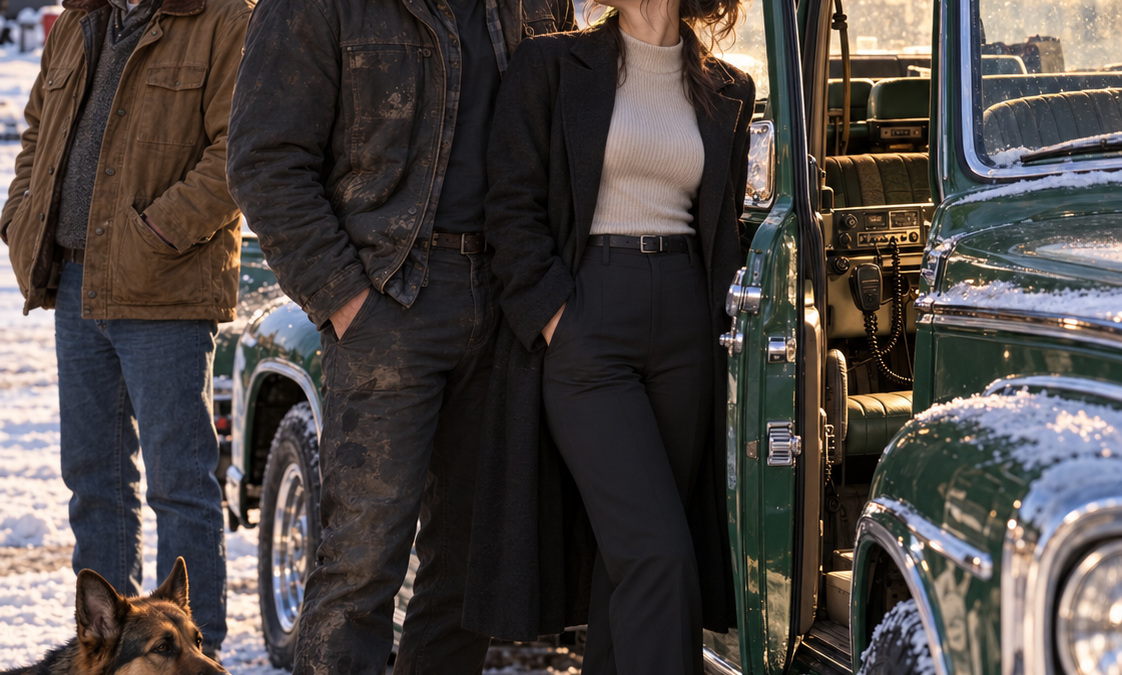
Former Navy SEAL Fixed an Old Man’s Truck for Free—“Stay Away from My Father,” His Daughter Said
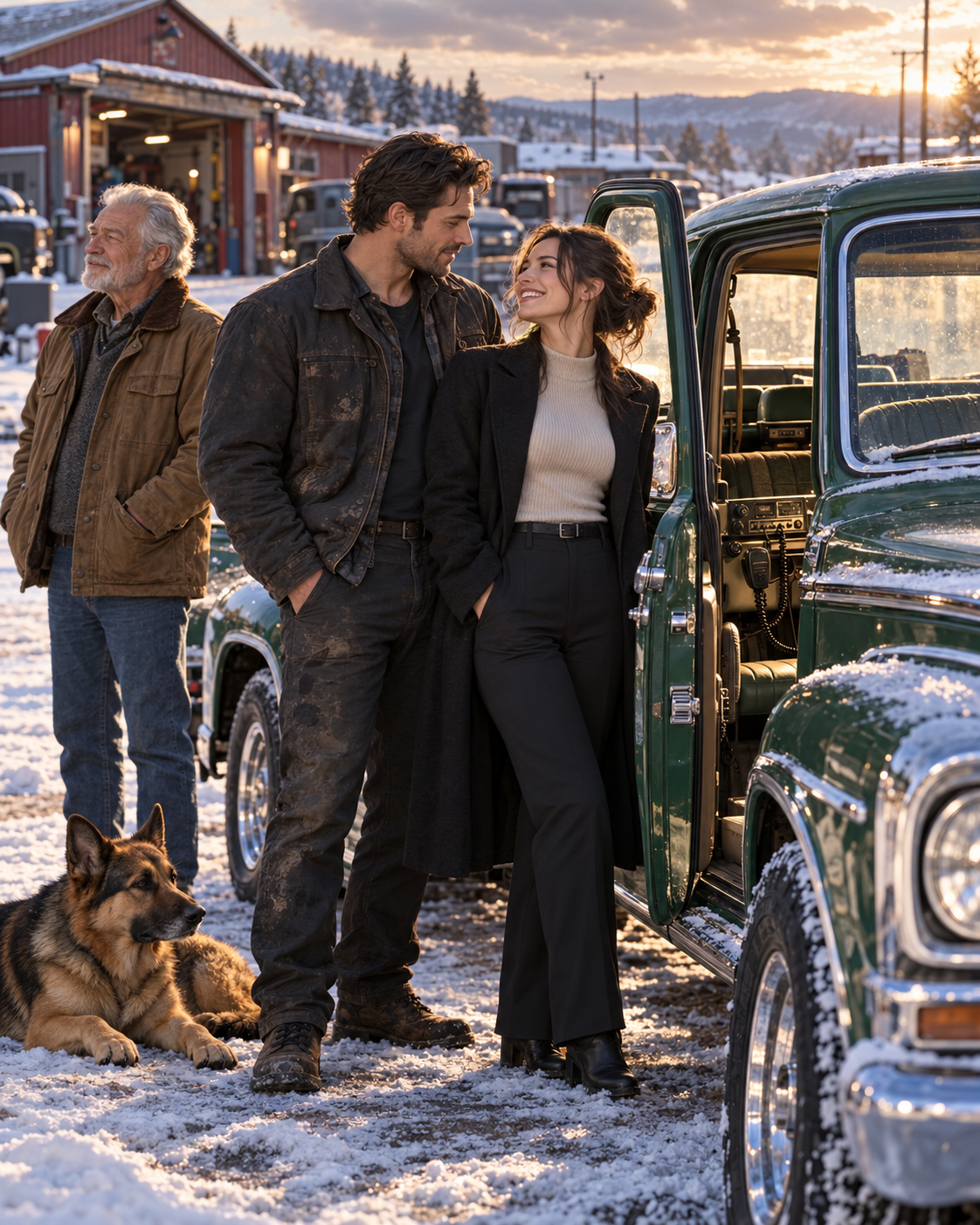
The $36,000 check sat on Mason Reed’s workbench beside his father’s worn ratchet and a stack of bills he could barely pay.
Julia Witcom stood across from him, telling him to take the money and stay away from her father. 4 days earlier, Mason had only stopped to help an old man whose truck had broken down.
He didn’t know who the man was, and he hadn’t charged him a dime.
Now, his garage was 45 days from serious trouble. and that check could solve almost every problem he had.
Atlas, his German Shepherd, lay quietly beside his father’s empty stool while Julia waited for an answer.
By the time Julia walked out, the certainty she had arrived with was gone. Their argument was only the beginning of a relationship neither of them could have imagined.
By the last week of November, winter had settled over Spokane Valley without ceremony.
Mornings came hard and dry, laying a thin skin of frost across warehouse roofs along East Trent Avenue. Wind moved through the industrial blocks in long, cold pushes, rattling loose signs and making the garage door at Reed Motorworks shiver in its tracks whenever someone opened it.
The sign above the building had once been red. Jack Reed had painted it by hand more than 20 years earlier. Now the paint had faded toward brick brown, and the final letters in motor works had nearly disappeared.
Mason Reed noticed it every morning and did nothing. There were always more urgent things, customer repairs, supplier invoices, the lift in bay 1, and a furnace that occasionally seemed to reconsider its commitment to the profession. Atlas watched the furnace with the same expression he gave overly friendly strangers.
The German Shepherd was eight now, darker around the muzzle than in Mason’s last years in uniform.
Atlas had worked beside him during the final part of Mason’s Navy career, and certain habits remained.
He preferred doorways and corners where he could see most of her room.
At the garage, that usually meant the space beneath Jack’s old workbench.
Mason had been out of the Navy for 5 years. the first three.
He worked beside his father. A former Navy Seal did not become a mechanic overnight.
The teams had taught Mason how to keep equipment moving when conditions were bad and options were worse. Jack had taught him why machines failed in the first place.
Long before Mason had a driver’s license, Jack made him learn socket sizes by feel.
After Mason came home, his father spent three years correcting him and slowly trusting him with the difficult jobs. Then Jack died, leaving him the garage, a battered toolbox, loyal customers, and a way of doing business that had never cared much for margins. For 2 years, Mason had kept the garage alive, but not healthy.
The newer service centers around Spokane Valley had bright websites, online appointments, shuttle service, clean waiting rooms, and financing options. Reed Motorworks had a coffee pot old enough to vote, handwritten notes, and mason. It also had a habit of telling customers things they did not always want to hear.
That Tuesday morning, a woman brought in a 7-year-old SUV after another shop had recommended a repair costing several thousand. Mason traced the problem to a damaged connector and a smaller failed part, then charged a fraction of what she had expected. She left relieved.
Mason watched the SUV disappear and knew honesty had just cost him the kind of invoice his monthly numbers badly needed.
Later, one of Jack’s oldest friends arrived with a grinding front wheel.
Mason knew the man lived mostly on retirement income, so he split the bill into two payments. Atlas accepted a biscuit and received more gratitude than Mason did. Near closing, another customer wanted to spend almost $4,000 keeping an aging sedan alive.
Mason looked at the rust underneath and told her to save the money for a down payment on something more reliable. She thanked him and left.
Another repair gone. Jack would have approved. Jack was also dead, which meant he no longer had to balance the books.
Several commercial customers were late paying invoices.
Mason’s parts supplier had shortened his credit terms.
The heating system needed work. One lift was leaking.
Insurance renewal was coming. And the bank had requested a meeting about the commercial loan tied to the building.
The letter sat open on Jack’s desk.
Before leaving that evening, Mason looked through the office glass. Atlas lay beneath the workbench, chin on his paws.
Jack’s toolbox still stood against Bay 2.
Each drawer labeled in his block handwriting. A promise Mason had made to himself several nights earlier came back with uncomfortable precision. No more free rescues.
No more unpaid favors disguised as quick jobs. No more telling himself he would save the garage tomorrow. He had spent years helping whoever stood in front of him.
Reed Motorworks had become the one thing he kept asking to wait. Mason shut off the lights and left early.
The first snow looked harmless. By the time he reached the main road, it was not.
Wet flakes thickened against the windshield while wind pushed them sideways through the headlights. Lane markings blurred.
Traffic slowed. Atlas sat behind the passenger seat while Mason checked the clock more often than he liked. He could still make the bank meeting barely.
Then he saw the hazard lights. An old pickup sat angled near the shoulder with its hood raised. An elderly man in a faded canvas coat stood beside it.
One hand braced against the fender while the other held a flashlight into the engine bay. Mason eased off the gas. The man looked stubborn rather than frightened.
Jack had possessed the same posture. The particular refusal to admit weather, age, or common sense had any authority over him. Mason drove past.
Relief came first. The man had a phone. Roadside assistance existed.
Someone else would stop.
Mason had a meeting that might decide whether his father’s garage still belonged to him in a few months.
All of those reasons were sensible. In the rear view mirror, the amber lights grew smaller. Atlas turned his head and kept watching them.
Mason remembered the ledger and his promise to stop treating every stranger’s emergency like a personal assignment.
For once, he needed to choose the garage. The next intersection appeared through the snow. Mason exhaled, muttered something Atlas politely ignored, and turned around.
“One more,” he said quietly.
“Then we’re done saving strangers.”
Atlas gave no sign that he believed him. By the time Mason pulled in behind the pickup, snow had begun collecting along the road edge. He switched on his hazards, grabbed a roadside bag, and stepped into the cold.
The old man looked up.
“I’m fine,” he said.
Mason glanced at the dead truck, then at the weather.
That’s encouraging.
One corner of the man’s mouth moved.
His name was Harold Witcom. The truck had lost power gradually, lights dimming before the engine quit.
Harold described the symptoms with unusual precision, and Mason noticed. He checked the obvious things first, then traced the trouble to a deteriorating electrical connection near the engine block.
Cold and wet had finally pushed the weak connection past its limit. Harold held the flashlight exactly where Mason needed it without being told.
You’ve done this before.
Once or twice. Mason cleaned and secured the connection, protected the damaged section as well as he could, then warned Harold that the repair was temporary. Harold nodded before he finished.
Atlas stood near Mason’s open vehicle door, watching both men.
Harold glanced toward him.
That dog always look at people like he’s reviewing their paperwork, only the suspicious ones.
Harold laughed and the truck started on the second try. Its headlights steadied. The engine settled into a rough but dependable idle.
Harold reached for his wallet. Mason checked his phone.
The bank meeting had already begun and several missed calls filled the screen. He put the phone away.
Keep it. Harold frowned, but Mason only told him the meeting was already missed, so at least one of them should get home before the roads froze. Harold put the wallet away and reached behind the seat for an old steel thermos.
He poured coffee into the lid and handed it over. It was strong enough to remove paint, but it was hot.
While Snow hissed softly against the hood, Harold asked where Mason worked. Reed Motorworks Family Place.
My father’s.
Harold nodded as though that explained more than Mason had said.
Before leaving, he wrote Mason’s name and number in a small notebook.
“I’ve got a few old vehicles,” he said.
“Might need somebody who still fixes things instead of replacing them.”
Then he drove away. Mason returned to his vehicle and listened to the bank voicemail twice before calling back.
The loan officer agreed to meet him the following morning. By then, the snow had eased. The consequences had not.
The next day, the bank gave Mason 45 days to bring the loan into a range they could restructure. Once normal operating expenses were counted, he needed roughly $17,800 more than the garage was likely to produce on its own. The deadline said enough.
Mason drove back to Reed Motorworks beneath a hard, pale sky. The old sign looked even more faded in daylight.
Inside, Atlas lifted his head from a folded blanket. The furnace clicked on, rattled for 12 seconds and shut itself off again.
Mason stood beneath the vent, and looked up at it. Helpful, he said.
Very helpful. Atlas put his head back down.
45 days had begun. 3 days after the snowstorm, Mason was replacing a front wheel bearing on a delivery van when he heard an engine outside that sounded familiar for all the wrong reasons.
Not broken, just old enough to have a voice. The uneven idle reached the garage before the truck did, followed by the soft chirp of a belt that had probably been promising to fail for several winters without finding the nerve. Mason rolled out from beneath the van and wiped his hands on a shop towel.
Harold Witcom’s green pickup stopped just outside bay 2.
Atlas lifted his head from beneath Jack’s workbench.
Harold climbed out carrying the same battered thermos. Though this time he looked less like a stranded driver and more like a man who had arrived exactly where he intended to be.
“You break down again?”
Mason asked. Harold looked offended.
“The truck’s fine.”
Mason glanced toward the hood.
“Then I assume you came to apologize for the coffee.”
Harold looked down at the thermos.
“Don’t push your luck.”
He walked into the garage without asking permission, slowly enough that Mason had time to notice what he was looking at. Not the waiting area, not the faded walls, the work. Harold studied the shelves where Mason kept filters and fittings labeled in black marker.
He paused beside the alignment rack, ran his eyes over the floor drains, then stood for several seconds in front of Jack’s old toolbox.
The name Reed was still painted on the top drawer in Jack’s blocky handwriting.
Harold did not touch it. That earned him more trust than Mason expected.
“Your father?”
Harold asked. Mason nodded.
For a moment, the garage filled with the ordinary sounds of heat pipes ticking and tires hissing on wet pavement outside. Jack Reed had been able to hear a failing bearing before most customers finished describing the noise.
He had distrusted unnecessary parts, glossy sales language, and anyone who referred to a repair bay as a service experience. Mason had once thought the Navy had made him good at fixing things.
It had certainly taught him to keep equipment running under pressure, often with too little time and fewer options than anyone would have preferred. Then he had come home. Jack had spent the next 3 years showing him the difference between making something survive and making it right.
Harold seemed to understand without Mason saying much. You worked with him long? 3 years after I got out.
Not long enough. No. Harold nodded as if that answer belonged to both of them.
Then he turned back toward the bays. He said he had a few vehicles stored across town and wanted someone to inspect them properly. Old pickups, service trucks, a couple of utility vehicles, maybe more depending on what Mason found.
How many is a few? Seven to start.
Mason lowered the towel. Seven inspections were not a favor. Seven vehicles meant labor, parts, scheduling, and possibly enough money to matter.
He reached for a service pad and started explaining his rates. Harold did not interrupt to ask for a discount.
That alone separated him from most people who began a sentence with, “I’ve got several vehicles.
” As Mason wrote, Harold’s questions changed.
He wanted to know how Mason handled vehicles that spent more time idling than driving. what usually failed first after repeated winter exposure.
Whether Mason preferred replacing suspect components early or waiting for measurable wear, how often he had worked around fleet vehicles that could not afford long downtime. None of the questions sounded casual. Mason stopped writing.
You collect old trucks professionally? Harold took a drink from his thermos. I spent a long time around logistics.
That was all he offered. Mason had known men in the teams who could answer a question with three words and somehow make it clear the conversation was over. Harold had the same talent.
He moved toward the open bay door and looked out at the dull winter light. My daughter runs the company now. There was pride in the sentence, but something else underneath it.
Fatigue perhaps or the resignation of a father who knew pride and peace were not always delivered together. Good at it.
Annoyingly, Mason smiled. Harold continued watching the road.
Smartest person I know. Remembers every number she reads. Finds problems before most people know there is one.
Sounds useful. It is.
The pause that followed said the subject was more complicated than that. Harold finally turned.
She won’t like you.
Mason leaned against the workbench.
You’ve known me 4 days.
That should be enough for her. Mason assumed it was another joke.
Harold did not explain.
Before leaving, he tore a sheet from Mason’s service pad and wrote an address on the back.
A private storage facility near the industrial corridor. Monday, 9:00. Mason looked at the paper for the seven vehicles for a start.
And after that, Harold pulled on his gloves. Maybe we talk about something larger.
He started toward the truck, then stopped beside Atlas. The German Shepherd remained stretched beneath the bench, watching him.
Harold looked down.
He’s still reviewing me.
Results aren’t final.
Harold gave the dog a faint nod. Fair. Then he left.
For the rest of the weekend, Mason tried not to think too much about the phrase something larger. He had learned not to build hope from vague promises. Seven paid inspections were enough.
Monday morning arrived under freezing fog. Moisture clung to the windows and turned the parking lot into a gray sheet of slush bordered by ice.
Mason reached the garage before 7, swept both bays, cleared the workbench, and checked Harold’s handwritten address twice.
At 8:15, tires rolled slowly over the gravel outside. Mason looked through the office window, expecting the green pickup.
A black SUV stopped beneath the faded Reed Motorworks sign instead. It was clean in the deliberate way expensive vehicles stayed clean, even when the rest of winter had given up. A woman stepped from the rear door wearing a dark wool coat and black boots almost untouched by roads salt.
She looked to be in her mid-30s. Her posture was straight without seeming stiff and her eyes moved across the garage once before settling on Mason. She did not look lost.
Atlas rose but stayed beside the workbench. Mason put down the rag in his hand.
Can I help you? The woman said his full name. Mason Daniel Reed.
Hearing the middle name changed the temperature of the room more effectively than the failing furnace ever had. Mason studied her.
That depends. Julia Witcom.
The connection took a second.
Harold’s daughter.
Mason glanced toward the SUV. No, Harold. He said he was meeting me this morning.
He won’t be.
Mason’s first thought was that something had happened.
Julia noticed.
He’s fine.
Only then did Mason relax slightly. Julia stepped farther inside. Her attention moved over the shop without touching anything.
The old lift, the shelves, the worn stool beside Jack’s bench.
Atlas standing quietly a few feet away. I wanted to speak with you before you had another conversation with my father. The phrasing carried more weight than the words themselves.
Mason folded the shop towel once and set it aside. About the vehicles, about him. Julia opened a slim leather folder.
The first thing she gave Mason was not an explanation. It was a name.
Northline Emergency Logistics. Mason knew it. Most people in Eastern Washington knew it, even if they did not know much about the family behind it.
Northline trucks moved generators, utility equipment, replacement parts, mobile support units, and emergency supplies throughout the Pacific Northwest whenever storms, outages, or damaged infrastructure made ordinary shipping less ordinary. Harold Witcom had founded it decades earlier.
Mason looked toward the empty parking space where he had expected the old green pickup. Suddenly, the questions about idling vehicles, winter corrosion, downtime, and maintenance made sense.
Harold had not spent a long time around logistics. He had built an empire around it.
Your father left out a few details. He does that. Julia placed several pages on the workbench.
Mason’s business name appeared at the top, then the numbers.
Loan balance, late payments, supplier terms, estimated monthly revenue, the bank deadline, 45 days, $17,800. Mason stared at the pages, then at her. You looked into my garage.
And you? Her tone remained measured.
No fraud complaints, no criminal history, strong customer reviews, good technical reputation, serious financial pressure. She spoke as though she were reading weather data.
That calmness bothered Mason more than anger would have. Julia tapped the bank figure.
You’re under significant pressure, Mr.Reed.
Then you happen to meet my father on the side of the road. Help him for free.
And 3 days later, he wants to bring you into private vehicle work. Mason let out a short breath.
You think I planned the snow? Julia did not smile.
She said, “Wealthy men were noticed in ways they rarely understood themselves.
” Mason looked toward the bay door.
Your father was standing beside a 20-some yearear-old pickup wearing a coat with a zipper that barely worked. My father prefers looking ordinary. He succeeded.
That almost moved something in her expression. Almost. Mason pushed the papers back.
I didn’t know who he was.
Julia left them where they were. People in financial trouble, she said, sometimes became very good at recognizing opportunity. Mason felt the first real edge of anger.
He pointed toward the snowstained service van outside.
If I were hunting billionaires, I’d probably pick somewhere warmer than the side of a highway.
Julia’s face remained composed.
The argument moved in circles after that. Every answer Mason offered seemed to become evidence of another possibility.
If he had accepted money on the roadside, he might have been taking advantage. because he refused it.
Julia suggested he could have been creating a larger obligation. There was no version of the story Mason could tell that her suspicion could not absorb. He recognized the structure before she did.
So that’s convenient.
Julia’s eyes narrowed slightly.
If I take his money, I’m using him.
If I don’t, I’m playing a longer game.
I didn’t say that.
You didn’t have to.
For the first time, her control tightened visibly. Mason had dealt with pressure from people who shouted, threatened, negotiated, and tried to intimidate.
Julia did none of those things. She simply kept placing facts between them until they began to feel like accusations.
Then she mentioned the garage, the supplier, the bank, the building. That changed something.
Mason’s voice dropped rather than rose.
You don’t get to use my father’s garage as proof that I’m dishonest.
Julia glanced toward the faded sign through the front window. When she spoke again, her tone softened by less than an inch. Then you understand why someone might become protective of what their father built.
The sentence landed. For a second, Mason saw something behind the polished certainty. Not warmth exactly, something closer to fear that had learned how to wear a good coat.
It vanished almost immediately. Julia reached into the folder again and removed a checkbook. Mason looked at it.
“You’re serious?”
she wrote carefully, tore the check free, and slid it across Jack’s old workbench.
$36,000. Mason did not touch it at first.
That number was not abstract. It was the bank, the supplier, the furnace, the lift, insurance, breathing room.
He finally picked it up.
Atlas lay down beside Jack’s empty stool.
Julia waited.
that compensates you for your time, your roadside assistance, and any inconvenience involving my father.”
Mason looked at the amount again. Then she gave him the condition. No private work for Harold.
No meetings, no business proposals, no calls initiated by Mason. Nothing that allowed what had begun beside the road to become something larger. Mason held the check long enough to feel every practical argument for keeping it.
He could call the bank before lunch. he could bring the supplier account down.
The furnace might stop sounding like it was dying in installments.
Jack’s garage might survive because a woman who distrusted him had decided his absence was worth $36,000.
His gaze moved to the toolbox, then to the stool, then to Atlas. Finally, Mason placed the check on the workbench and slid it back across. Julia looked down at it.
“The amount isn’t the problem,” Mason said.
Her eyes returned to him. The condition is for the first time since she entered the garage, Julia Witam had nothing ready to say.
She collected the paperwork slowly. The check went back into the folder last. At the door, she paused as though she had expected one of them to add something.
Neither did. Then she walked into the freezing fog and the black SUV disappeared beyond the wet front windows.
5 minutes later, Mason stood in the office, staring at the board above Jack’s desk.
Bank notice, supplier invoice, insurance renewal, heating estimate. Every piece of paper carried a number. None cared about dignity.
Atlas came in and sat beside him. Mason looked at the dog.
That may have been the dumbest decent thing I’ve done all year.
Atlas offered no opinion, which at that moment felt suspiciously like agreement. The consequences of refusing $36,000 were less philosophical the next morning.
At 8:12, Mason’s parts supplier called.
The conversation lasted less than 4 minutes until Reed Motorworks brought its account down. Every new order would have to be prepaid.
No more 30-day terms, no exceptions for longtime customers, no promise that a fleet invoice was coming soon. Mason understood. That almost made it worse.
He spent the next hour calling people who owed the garage money. One small delivery company promised to send $2,500 by Friday.
Another commercial customer apologized three times before asking for 10 more days. The largest outstanding invoice belonged to a contractor whose accounting department had apparently developed the ability to lose paperwork whenever Mason called.
By lunchtime, he had recovered $800. It was better than nothing and nowhere close to enough. The old temptation to blame Julia surfaced occasionally.
But Mason knew better. She had not created his debt.
She had simply walked into the middle of it, put a price on his disappearance, and left him staring at problems already there. That evening, after the last customer drove away, Mason lowered the thermostat another two degrees and turned his attention to the leaking lift in bay 1, Atlas settled on a folded blanket nearby. The repair should have been hired out.
Mason knew that, but hiring someone required money, and money had recently become a subject with too many opinions attached to it. He worked beneath the lift until hydraulic fluid streaked one sleeve of his coveralls.
The concrete pulled heat through his shoulders. Somewhere above him, the garage radio played softly beneath the rattle of the furnace. Jack would have hated the situation.
Mason could almost hear his father asking whether Pride was paying interest. Now, the thought annoyed him because it sounded accurate.
He had defended something important when he refused Julia’s check.
He was still certain of that. What he was less certain about was whether dignity and stubbornness had become tangled together somewhere along the way. The lift finally held pressure shortly before 10.
Mason stood, rolled one shoulder, and looked toward Jack’s stool.
Good news, he told Atlas.
We’re still broke, but now we can lift things.
Atlas thumped his tail once. Harold called the next morning.
Mason watched the name appear on his phone and let it ring. There were already enough Whitcom complications inside Reed Motorworks.
Harold called again that afternoon. Mason let that one go, too.
He was not angry with the old man exactly. Harold had not written the check, but Mason had no desire to become the disputed property in a family argument between a billionaire founder and the daughter who believed strangers needed financial screening before they were allowed within 10 ft of him.
The following days returned to ordinary work. Brake pads, a failing alternator, a heater core Mason wished belonged to anybody else. Mason collected another partial payment from a fleet customer and prepaid for parts he would once have ordered on account.
None of it solved the larger problem, but motion felt better than waiting. Late Friday afternoon, light snow began drifting past the front windows.
It was the quiet kind, falling almost vertically in the still air and whitening the edges of the parking lot without immediately covering the pavement. Mason was finishing a wheelbearing when headlights moved across the inside wall.
He knew the engine before he saw the truck.
Harold’s old green pickup stopped beneath the faded Reed Motorworks sign.
Mason closed his eyes for half a second. Atlas stood.
Harold climbed from the driver’s side wearing his familiar canvas coat.
The passenger door opened next. Julia stepped down. No polished SUV waited behind them.
No charcoal suit. No leather folder.
She wore jeans, winter boots, and a dark sweater beneath a plain coat. Her hair was tied back with less precision than Mason remembered.
Without the armor of her first visit, she seemed younger. Mostly, she seemed uncomfortable.
Harold pointed toward the garage door. Julia gave him a look that suggested the ride over had contained several conversations neither wanted repeated.
Then they came inside. Harold removed his cap and placed it carefully on the workbench.
He did not apologize for Julia. He did not explain her. He simply made it clear with the efficiency of a man who had managed difficult people for most of his life that she had something to say and he intended to stand far enough away to make sure she said it herself.
Julia faced Mason. Her apology was shorter than he expected.
She admitted she had investigated him because suspicion had been easier than asking questions.
She had treated his financial problems as evidence of poor character and used the possibility of losing his father’s garage as leverage.
There was no explanation attached to the apology. No, but that mattered. Mason had spent several evenings imagining what he would say if Julia returned.
Most versions were sharper than anything useful. Standing across from her now, he discovered anger was easier when she was absent. He accepted that she understood what she had done.
He did not tell her it was fine. It had not been.
The more important question remained. Why did you assume the worst?
Julia’s expression changed slightly.
Harold moved toward the front window and looked outside at the falling snow. For once, he seemed uninterested in helping the conversation along.
Julia rested one hand against the edge of an empty workbench, but did not sit on Jack’s stool.
Her mother’s name had been Margaret.
She and Harold had been married for nearly four decades. Margaret had been the person who could make Harold leave a depot before midnight, take a vacation without bringing three phones, or admit that being tired was not a sign of weak leadership.
When she died several years earlier, Harold did not collapse in any dramatic way. He simply began disappearing from the life he had built. He stopped attending some meetings.
He drove old roots instead.
He visited depot’s north line no longer needed and bought trucks that reminded him of the company’s early years.
Sometimes he spent entire afternoons talking with mechanics and retired drivers. Harold remained at the window.
Mason looked at the old green pickup outside and understood it differently now.
During that period, one of Northline’s longtime executives had taken advantage of Harold’s distance from the company.
The man had been trusted for years, close enough to the family that Julia had grown up seeing him at holiday dinners. He routed a series of contracts through companies connected to people he knew, hiding inflated costs behind legitimate work. Northline eventually discovered it.
Most of the financial damage was recovered. The other damage remained. Harold had built a company by trusting people until they gave him a reason not to.
After the betrayal, he began questioning the very instinct that had once made employees loyal to him. Julia had watched it happen. She had also spent months in rooms where executives questioned whether she was ready to lead.
She learned to arrive with every number memorized and every weakness already identified. Being prepared became being guarded.
Being guarded became assuming motives before anyone could hide them. Eventually, she began investigating people around Harold before she ever met them. Mason understood the progression, even if he did not approve of where it ended.
Julia had not been protecting a fortune. She had been trying badly to protect the part of her father that still wanted to believe people could be decent. Mason glanced toward Harold.
The old man kept watching the snow, understanding Julia changed the shape of her mistake. It did not erase it. Mason made that clear.
If she had a question about him, she could ask him. If she did not believe the answer, she could walk away, but she would not use money, investigators, or her position to decide his value again. Julia nodded.
Agreed. Harold finally turned from the window. Excellent.
Are we done growing as people? Mason looked at him.
Harold rubbed his hands together.
because this garage is cold enough that I’m starting to remember the snowbank fondly.
Julia lowered her eyes, but Mason caught the beginning of a smile. The tension loosened. Harold picked up his cap, then reached inside his coat.
Mason immediately looked suspicious.
If that’s another checkbook, you can both leave.
It was not. Harold pulled out several photographs and spread them across the workbench.
They showed an old warehouse near the northeast industrial area, not far from North Sullivan Road. brick walls, tall windows, wide bays, years of dust and neglect. Harold had bought it the previous month.
He called the project Second Watch Veterans Technical Center. The name stayed with Mason. Harold did not want a polished charity built for photographs and donor plaques.
He wanted a practical place for veterans who had reached the stage of life when too many people began speaking about them as though experience had an expiration date. Many would be over 50. Some had left the military decades earlier and spent years in other trades.
Some had been laid off. Some were retired but restless. Others simply wanted to learn enough modern systems to remain useful in workplaces that had changed around them.
The center would offer practical training, part-time pathways, mentoring opportunities, and a place where older veterans could contribute without pretending they were 25. Mason studied the photographs longer than he intended. The warehouse reminded him of Reed Motorworks before Jack had made it his own.
Empty space, waiting for a reason to matter. Then suspicion returned.
“If this is payment for the roadside repair, I’m not interested.”
Harold looked irritated. It was Julia who answered quietly.
“It isn’t.
” Harold had watched Mason work.
He had seen how the garage was organized, how Mason spoke to customers, and how he chose repairs based on what people actually needed rather than what produced the largest invoice. He had also noticed something Mason himself rarely considered unusual.
Mason respected old equipment without romanticizing it. He knew the difference between something worn out and something worth saving. Harold needed someone to help shape the technical side of second watch with that same judgment.
Not because Mason had been kind to him, because Mason was good at his work. That landed harder than Mason expected.
Jack had been the last person to say it that plainly. Julia reached into her coat.
This time, Mason only raised an eyebrow. She produced a thin contract packet. 6 months salary, benefits, clearly defined authority over technical planning.
regular milestones, no ownership transfer, no hidden repayment, no condition involving Harold’s personal life.
At the end of the project, if Second Watch opened successfully, the arrangement could become permanent. Mason looked at Harold, then Julia, then the first page. A week earlier, $36,000 had been offered to make him disappear.
Now work was being offered because someone believed he belonged in the room. Those were not the same thing.
He did not sign. Not yet. Mason closed the packet and held it beneath one hand.
I’ll read it.
Harold nodded once. Julia did too.
For the first time, neither Witcom seemed interested in pushing him toward an answer. Outside, Snow continued settling quietly on the old pickup.
Inside Reed Motorworks, Atlas walked over, sniffed the edge of the contract, and lay down across Mason’s boots.
Harold looked at the dog.
I assume that means he’s reviewing the terms.
Mason looked down at Atlas. He charges more than I do.
And for the first time since the black SUV had appeared outside his garage, Julia laughed. By the first week of January, Spokane Valley had settled into a harder kind of winter. The sky was clear enough to turn the snow on warehouse roofs almost white blue beneath the sun, but the temperature stayed well below freezing.
Metal burned cold through gloves. Breath hung in the air inside unheated corners of the building. Every truck door seemed reluctant to open before sunrise.
Mason signed the six-month contract after having a lawyer review it. That part mattered to him. No favors hidden in the language.
No ownership changes, no clause giving Northline control over Reed Motorworks. The agreement paid him to help design, organize, and operate the technical side of Second Watch through opening and its first months of use.
For the first time in weeks, he had income he could count on. It did not solve the garage.
It gave him room to breathe while he tried. Mason began splitting his days between Reed Motorworks and the old warehouse near North Sullivan Road.
Atlas went with him most mornings, riding quietly in the rear and learning the new building faster than some of the contractors did. Second watch was still mostly dust, exposed walls, old concrete, and the steady sound of work. The building had good bones, high ceilings, wide bays, thick exterior walls, enough space to create work areas without making the place feel crowded.
Years of neglect showed everywhere, but Mason preferred that to something overdesigned. Empty buildings were honest about what they needed. Harold saw possibility in almost everything.
Julia saw the budget. Mason saw what would fail first if they chose badly. That difference became obvious during the second week.
Mason wanted heavier workts with adjustable heights, wider aisles between certain stations, and a set of rolling equipment stands that cost more than the basic versions. Julia had already priced.
She studied the numbers without saying much. Mason knew that look.
It was the same one she had worn before writing the check. Only now he no longer assumed it meant trouble. Julia asked why a training center needed commercialgrade equipment in spaces where many people would only be learning.
Mason walked her through the room instead of answering from across a table. He stopped beside a temporary bench and asked her to imagine someone 65 years old spending 2 hours bent over it because the surface sat too low. Then he pointed toward a fixed engine stand positioned close to the wall.
A younger person might shift around it without thinking. Someone with a stiff back or bad knee would spend half the session fighting the layout before touching the work. Saving money there, Mason told her only move the cost somewhere else.
fatigue, minor injuries, people quitting because the room made them feel older than they were. Julia looked around again.
She approved the change. Mason tried not to look surprised. A week later, the advantage belonged to her.
He wanted to replace an entire section of storage shelving after finding rust along the lower supports. To Mason, visible corrosion meant suspicion, and suspicion usually meant replacement.
before failure had a chance to become expensive. Julia asked for an independent inspection.
Mason did not like the delay. The report came back 2 days later. Only one section needed replacement.
The rest could be cleaned, reinforced, and reused safely. The savings were significant. Mason read the report twice.
Then he found Julia in the temporary office and admitted she had been right. She looked up from her laptop. Should I document this?
Don’t make it strange.
Julia almost smiled. After that, their disagreements changed. They still had them.
Mason cared about durability, safety, and whether equipment could survive years of use. Julia cared about schedule, cost, staffing, and whether a good idea would still be affordable 6 months later.
But gradually, the goal stopped being to prove the other person wrong. They began asking better questions.
What are you seeing that I’m not?
What am I missing? The shift was small enough that neither commented on it. Harold noticed.
Harold noticed everything he pretended not to notice. He had started appearing at Second Watch most mornings in the same canvas jacket Mason had first seen beside the broken pickup. Julia once brought a suit coat for a donor visit.
Harold left it hanging in the office. By lunch, he was in one of the bays arguing with a contractor about whether an old piece of equipment should be repaired or replaced. Nobody won the argument.
Harold seemed delighted. He also refused to behave like a benefactor.
When workers thanked him for funding the project, he redirected attention towards someone else. When a local veteran organization sent a letter praising his generosity, he folded it and placed it beneath a stack of maintenance cataloges.
He wanted Second Watch to feel useful before it felt impressive. Mason understood that. Atlas did too.
Within two weeks, the German Shepherd had developed a routine. He inspected the front office, walked the main aisle with Mason, then settled near whatever workbench received the most morning sun. People began arriving early because they knew he would be there.
One of them was Frank Delaney. Frank was 63, broad through the shoulders despite having lost some weight over the years, with gray hair clipped short and hands that still carried small scars from decades around machinery.
He had served in the army and worked in a motorpool when he was younger. After leaving the military, he spent most of his civilian career doing maintenance work in warehouses and distribution facilities. The last one had closed.
Frank did not describe himself as unemployed. He said he was between reasons to set an alarm.
He first came to Second Watch because a veteran service coordinator had mentioned the program. He stood near the entrance for almost 10 minutes before walking farther inside.
Mason noticed but did not approach immediately. People who had spent years being useful sometimes hated being treated like they had arrived needing rescue.
Frank eventually wandered toward Atlas. That solved the introduction.
He crouched slowly and held out one hand. Atlas sniffed it then allowed Frank to scratch behind one ear.
I’m not here to start another career, Frank said.
Mason was checking a delivery list nearby. Good. Frank looked over.
We’re not handing them out.
That got the smallest possible laugh. Frank came back the next morning.
Then again 2 days later. At first, he spoke mostly to Atlas.
He asked the dog questions nobody expected answered. He complained about the coffee.
He sat on an unfinished bench during breaks while Atlas settled beneath his knees as though the arrangement had existed for years. Eventually, Frank began commenting on the work around him. Not correcting people, not trying to take over, just noticing things.
A tool stored too far from where it would be used. A cartwheel that needed attention. A young contractor wasting time walking back and forth because material had been stacked badly.
Mason recognized the habit. Experience had a hard time staying silent forever. Julia noticed Frank for a different reason.
A veteran employment program might help cover part of his retraining and equipment costs, but his paperwork had stalled months earlier because of missing records and forms he had stopped trying to chase. Julia asked permission before touching the problem. That alone mattered.
2 days later, she had arranged a call, found the missing documentation, and printed a clean checklist for Frank. She did not hand him the finished solution.
She put everything in order so he could finish it himself. Mason saw that it complicated the version of Julia he had built in his head.
So did the sponsor meeting later that week. A regional company offered to fund several pieces of equipment if Second Watch placed large branded signs throughout the training floor and use sponsor messaging at every public event.
The money would have helped. Julia turned it down. She accepted a smaller contribution with simpler recognition.
Her reason was straightforward. Veterans were not going to spend their time learning inside a billboard. Harold heard about it and looked unusually pleased.
Mason said nothing, but something shifted again. The same happened with the schedule. A contractor fell behind on part of the interior work, threatening the opening timeline.
Julia could have forced the instructors to begin orientation while construction crews were still occupying parts of the building. She did not. She moved the orientation date instead.
A week mattered less than starting badly. Mason remembered the woman who had once tried to buy certainty with a check.
She was still exacting, still like numbers, still carried folders. But he was beginning to understand that control and care could look similar from far away, sometimes even from close up.
Julia’s understanding of Mason changed more slowly.
One morning, she followed him through a section of the building that had just been cleared for equipment installation. Mason stopped before entering.
His eyes moved automatically toward both doors, the corner behind a temporary wall, the open path between stacked crates, and the nearest exit. Then he walked in. Julia noticed.
Do you always do that? Mason paused. Do what?
Look at every way out before you enter. He considered it.
I guess you didn’t know.
Not until you asked. That was all he said. His military past existed like that now.
not as stories he told. As habits he sometimes forgot other people did not have. A few days later, a delivery arrived three hours late and half the planned installation work became impossible before closing.
The crew immediately began discussing how to recover the full schedule. Mason did not. He removed two non-essential tasks, moved one crew to a different area, delayed a cosmetic job, and gave everyone a clear next step.
Nobody rushed. Nobody stood around.
The lost afternoon became half a lost afternoon. Julia watched from the doorway.
She had expected him to protect the plan. Instead, he protected the people working inside it. Later, she asked whether that came from the Navy.
Mason thought about it partly. The rest came from Jack.
His father used to say panic was just confusion moving fast. Mason had laughed at the phrase as a teenager. He understood it now.
By the end of the month, Second Watch no longer felt like Harold’s idea, Julia’s project, or Mason’s contract.
It had begun becoming a place. Frank had his own coffee mug in a cabinet, despite insisting he was not officially part of anything.
Harold had claimed a chair nobody else wanted. Atlas had learned which doors opened into warm rooms, and Mason had stopped counting how many times Julia surprised him.
One afternoon, he found her standing beside Frank while he reviewed the final page of his veteran program paperwork. She did not hover.
She did not explain it for him. She simply waited until he finished, then pointed out the line he had missed.
Frank signed it. Atlas slept beneath the table.
For a moment, Mason saw Julia not as the woman who had entered Reed Motorworks with a background report, but as someone who had spent years believing protection meant controlling every unknown and was slowly discovering another way. Across the room, Julia looked up.
Mason was holding a worn equipment catalog in one hand and arguing with Harold about whether a 30-year-old drill press deserved another life. She watched him laugh at something Harold said then kneel to inspect the machine instead of dismissing it because of its age. The man she had once called resistant to change did not actually fear change.
He simply wanted a reason for it. That distinction mattered.
Outside the January sun fell behind the warehouse roofs, turning the snow pale gold for a few minutes before the cold returned. Inside second watch, the building was still unfinished. So were the people in it.
For the first time, that did not feel like a problem. Winter changed its mind in early February.
For 3 days, temperatures climbed just high enough to soften the snow piled along Spokane Valley’s industrial roads.
White shoulders turned gray. Parking lots became shallow fields of slush.
Water ran beneath old snow banks and collected in every low place it could find. Then the temperature dropped again.
By sunrise, yesterday’s puddles had become glass.
Mason learned to step carefully outside second watch. Atlas learned faster and looked faintly offended that humans required so much effort to stay upright.
Inside, the building no longer felt like a construction project. There were still unfinished details.
A few walls needed paint. Labels were missing from storage cabinets. One classroom had chairs stacked in a corner because nobody had agreed where they belonged.
But the place had begun developing habits. Coffee appeared before 7. Someone always forgot to turn off the radio in the parts room.
Harold left his gloves in a different place every afternoon and blamed everyone else. The next morning, veterans started arriving early enough that Mason sometimes found the front lights already on. Most importantly, the men and women coming through second watch were beginning to show Mason what the center actually needed to become.
Harold’s first idea had leaned heavily toward automotive work because that was the world he understood best.
Mason had initially thought the same way. Then the veterans arrived. Some wanted diagnostics training.
Others had spent enough years crawling under vehicles and had no interest in doing it again. One man who had worked logistics in the Air Force discovered he was better suited to parts coordination and inventory control than physical repair. Another had spent most of his civilian career around small engines and quickly became useful around generators and portable equipment.
A retired Navy electrician had no desire to return to full-time work, but enjoyed helping others understand wiring diagrams that looked impossible until he explained them. The program began changing around the people rather than forcing the people into the program.
Mason liked that. It reminded him of something Jack used to say when customers became attached to a diagnosis before the car had been inspected.
Don’t repair the story, repair the problem.
Second Watch was not there to turn every veteran into a mechanic. It was there to make experience useful again. That difference mattered.
Frank Delaney seemed to understand it before anyone officially explained it. He still insisted he was not an instructor. He said it often enough that people had stopped listening.
One cold Tuesday morning, Mason found Frank standing beside another veteran at a diagnostic station. The man had been struggling to make sense of a simple fault reading and had started pressing buttons faster, as though frustration might frighten the machine into cooperation.
Frank never touched the controls. He asked what had changed before the warning appeared. Then he asked what had stayed the same.
Within several minutes, the other man had found the issue himself. Frank stepped away like nothing important had happened. Mason watched him cross the room toward the coffee pot.
3 weeks earlier, Frank had stood in nearly the same place, saying he was not interested in learning anything new. Now he was teaching without admitting it. Atlas followed him.
That had become another second watch habit. The German Shepherd had somehow developed a schedule that included Mason only when convenient. He spent mornings near the main work area, afternoons beside whoever seemed most likely to drop a cracker, and breaks under the table where Frank usually drank coffee.
Men who rarely spoke about themselves talked to Atlas freely. Some told him about dogs they had owned years ago. Some simply sat.
One veteran began arriving 20 minutes early every Thursday, poured coffee, and occupied the same chair beside Atlas without saying much to anyone. Nobody tried to improve the arrangement. It worked.
Harold once stood in the doorway watching three men waiting patiently for Atlas to finish greeting someone else. That dog has better attendance than half the Northline board.
Mason glanced over. He also listens better.
Harold considered that lower salary, too. Those moments kept Second Watch from becoming too serious about itself. The project had plenty of weight already.
Budgets still had limits. Opening deadlines still existed.
Reed Motorworks still had bills, and Mason and Julia still disagreed. The difference was that disagreement no longer felt like danger.
Mason had stopped assuming every question from Julia meant she intended to cut something. Julia had stopped assuming every objection from Mason was another attempt to preserve the past.
They had learned each other’s patterns.
When Mason became unusually quiet while reviewing a purchase list, Julia knew he had found something he did not trust. When Julia removed her glasses and placed them beside her laptop, Mason knew the numbers were about to become unpleasant. Sometimes he could tell she was going to reject an idea before she spoke.
Sometimes she approved one before he finished defending it. The familiarity arrived without announcement. One evening, long after most of the crews had left, they sat at a folding table reviewing the final equipment schedule.
Snow melt tapped steadily from the roof outside. Mason reached the section covering the classroom and light work areas. The numbers were higher than he remembered.
He checked again. Julia had added taller chairs with better support, adjustable work surfaces, and several changes to equipment placement that made the room easier to move through without unnecessary bending or lifting. Mason looked across the table.
You changed this. Julia kept reading.
I corrected it.
That’s an interesting word.
She finally looked up. You were going to argue about those chairs for another 3 weeks. I had a strong case.
You had the same case six times. Mason studied the revised layout again.
She had remembered nearly everything he had raised, not just the expensive equipment, the smaller things where someone with a stiff knee would stand, how far a person would need to carry a heavy part, whether a work surface could be adjusted instead of forcing the worker to adjust to it. Mason did not thank her
immediately. Something about doing so felt too formal now.
Instead, he nodded once. Julia understood anyway. Their conversations had started requiring fewer words.
Harold noticed that, too. He had been noticing it for weeks.
Fortunately, he possessed just enough restraint to pretend otherwise roughly half the time. The other half, Mason, occasionally caught him looking between them with the satisfied expression of a man watching two people slowly discover something he had already decided was obvious. Mason ignored him.
Julia ignored him more professionally. Outside Second Watch, Reed Motorworks continued balancing on a narrow line.
The six-month contract gave Mason dependable income and allowed him to keep negotiations with the bank moving. Several overdue customers had finally paid enough to reduce the pressure.
The parts supplier had loosened restrictions slightly after Mason brought the account down, but the garage was not saved. Not yet. It had simply stopped falling quite so quickly.
Mason still opened it early several mornings each week and returned after second watch when customer jobs required it. Julia began stopping by occasionally.
At first, she came because documents needed signatures or because Mason had left something at the center. Then she began noticing the garage itself, not the equipment, the systems, or the absence of them.
One afternoon, she stood near the office while Mason searched through a stack of paperwork for an estimate he knew he had written two weeks earlier.
The estimate was eventually found beneath an invoice, a supplier statement, and a handwritten note reminding Mason that Mrs.Callahan’s Buick needed an oil change sometime in February.
Julia said nothing. That made Mason suspicious. Later, a customer called asking whether it was time for scheduled maintenance.
Mason knew the vehicle immediately. He knew what had been repaired the previous spring.
He remembered the faint vibration the customer had complained about and which tire had been replaced. What he did not know was when anyone had last contacted the customer.
There was no reminder system. Jack had remembered customers because Jack had known most of them for 20 years. Mason had inherited that habit in a business with fewer familiar faces and less time.
Another afternoon, Julia watched him finish a repair, answer the phone, approve a parts order, return a customer voicemail, then forget to follow up on an estimate waiting for approval. By closing time, Mason had worked continuously. He had also left money sitting untouched because the business depended too heavily on one person remembering everything.
Julia still did not criticize. That surprised him more than criticism would have.
She began asking questions instead. How did customers schedule? Mostly by calling.
What happened when Mason missed a call? They left a message.
Who followed up? Mason did. When?
When? I can.
Julia looked toward the office. The desk carried more paper than surface. A calendar hung beside it, crowded with handwritten notes.
There were things Jack’s system did beautifully.
Every repair had context. Longtime customers were known as people, not account numbers.
Nobody was pushed through the garage like inventory, but the system had been built for a smaller world when Jack could carry half the business in his head.
Mason had been treating those habits as part of the garage’s identity.
Julia seemed to understand that criticizing them directly would only make him defend them, so she waited. A few evenings later, she found Mason in the office trying to locate a warranty record while Atlas slept near the heater.
Julia picked up one of Jack’s old service books.
Its pages filled with neat handwriting from years before. She turned several pages without comment.
Then she set it down. If your father had been offered something that let him spend less time chasing paperwork and more time fixing cars, would he really have refused it?
Mason looked at her. His first instinct was yes.
Jack disliked computers. Jack distrusted anything described as an upgrade.
Jack once kept a telephone on the office wall 3 years after everyone else had stopped using one. But Mason remembered something else.
His father had also bought his first electronic diagnostic scanner the moment he became convinced it helped him diagnose cars more accurately. He had replaced handwritten parts catalogs when digital ordering became faster. Jack had resisted useless change.
He had not resisted useful tools. Mason looked around the office. The old calendar, the stack of unpaid invoices, the estimates waiting for followup, the notebook filled with customer reminders written in three different pens.
For two years, he had told himself preserving Reed Motorworks meant preserving the way Jack had run it. For the first time, that idea felt incomplete. Maybe some things were tradition, and maybe some things were only habits that had outlived the man who created them.
Mason did not answer Julia, “Not yet.”
But after she left, he remained in the office longer than usual, looking at Jack’s service book beneath the fluorescent light.
Atlas raised his head once. Mason turned another page.
This time, he was no longer asking what his father would have kept. He was beginning to wonder what Jack would have changed. A few days before the final inspection, freezing drizzle moved across Spokane Valley and left a thin shine over everything it touched.
By evening, railings, truck roofs, and parking lot edges had hardened beneath a clear layer of ice. The roads were still open, but anyone walking outside second watch learned quickly to shorten their steps. Inside, the center looked almost finished.
The classrooms were ready. Tools had been labeled. Workts stood where Mason and Julia had argued for weeks about putting them.
Frank’s coffee mug had somehow acquired a permanent place beside the breakroom sink, though he still insisted he was not officially part of the staff.
Atlas had claimed a warm patch near the main hallway. The final inspection was scheduled for the following morning.
For the first time in months, the opening date felt real. That lasted until shortly after 7. One of the technicians asked Mason to come to the workshop area.
The problem was simple enough to understand. Even if the equipment behind it was not, part of the safety system serving the workshop was not working as reliably as it should.
Nobody was in danger. Nothing had failed catastrophically.
But until the problem was corrected and checked again, that part of second watch could not be approved for use. Mason stood in the middle of the workshop while the technician explained what could be completed that night and what would probably have to wait until morning. Julia arrived halfway through.
She listened without interrupting, then looked immediately toward the schedule taped to a nearby wall. Harold wanted to call more people. Mason looked around the room.
For several months, opening day had been treated like a finish line. Every delivery, budget, meeting, repair, and argument had pointed toward it. Now, the easy response would have been to try to save everything at once.
Mason had learned a long time ago that this was how tired people made bad decisions. He asked the technician one question.
What could safely be fixed by professionals tonight? The answer gave him the first boundary.
Everything outside that boundary became somebody else’s job.
The technical work stayed with the technicians. Mason turned to the rest of the center.
The affected workshop could be closed off. The classrooms were ready. The diagnostic area had no problem.
The common spaces were clear. Some final cleanup and safety checks could still be finished before morning. That became the plan.
Not the opening they wanted, the opening they could responsibly prepare for. Mason gathered the people still in the building and divided the remaining work into small jobs. Nothing dramatic, no speeches, no one carrying more than they should.
Frank and two other veterans checked the hallways and cleared anything that had accumulated near doors. Another small group moved unopened boxes into storage. Julia went through the room list and marked which areas could be used if the workshop stayed closed.
Harold attempted to move a heavy folding table by himself. Mason saw him from across the room.
So did Julia. Put it down. They said it at the same time.
Harold stopped. He looked from one to the other with deep disappointment.
I’m 73, not medically mysterious.
Julia pointed toward a lighter stack of chairs. Harold muttered something about hostile management and moved the chairs instead.
The moment broke the tension just enough. Work continued.
Atlas moved through the building as if supervising all of it. At one point, Mason turned a corner and found the German Shepherd stretched directly across the cleanest part of a hallway everyone needed to use.
Atlas. The dog opened one eye. Mason pointed.
Atlas stood slowly, moved three feet to the side, and lay down again with the dignity of someone complying under protest. Frank watched from the doorway.
He’s management now.
He works fewer hours than Harold. Harold heard that from the next room, and objected loudly enough to prove the point. By 10, the building had changed.
Not physically by much, but the anxiety had become organized. Julia noticed it.
She had seen Mason under pressure before, but always in smaller moments. A late delivery, a scheduling problem, an argument over equipment.
This was different. Nobody in the room was confused about what mattered next.
Mason did not move faster than everyone else. He did not raise his voice. He simply kept narrowing the problem.
When someone asked about a detail that could wait, he moved it aside. When two people reached for the same task, he sent one somewhere more useful.
When Frank offered to stay on his feet another hour after his knee began bothering him, Mason shifted him to the table with the checklists. Julia understood then where the Navy still lived in him, not in stories, not in posture, not in anything theatrical. It lived in the way he reduced chaos until people could see the next useful thing to do.
By midnight, the workshop had been isolated from the rest of the building. The hallways were clear. The areas that might be opened had been checked twice.
The technicians were still working on the problem Mason had deliberately left in their hands. Outside, the freezing drizzle had stopped. The temperature kept falling.
Around 2:00 in the morning, people began leaving in small groups. Mason insisted the older veterans go home.
Frank objected until Atlas walked over and leaned against his leg. Mason looked at the dog.
“Good, now you’re helping.”
Frank gave Atlas a tired scratch behind one ear and finally agreed to leave. Harold stayed longer than anyone expected.
Julia found him sitting in the breakroom with a cup of coffee that had gone cold. He looked less like the founder of Northline than an old man watching something he cared about reach a moment he could not control.
She sat across from him for a while. Neither said much.
Near dawn, the technicians finished what they could. The affected workshop still could not be signed off. Mason accepted it.
The rest of the center was ready. That had to be enough. The inspectors arrived shortly after 8.
Morning light reflected sharply from the ice outside. Inside, the building smelled faintly of coffee, clean floors, and the kind of fatigue that came after everyone had done exactly as much as they could. Mason walked the inspectors through the center.
He did not hide the workshop problem. He explained it first.
That mattered. The inspection moved slowly from room to room.
Doors, walkways, lighting, clear exits, basic safety. Nothing about it felt dramatic until one of the alarm tests sounded without much warning.
Frank had returned early. The noise caught him off guard.
He stopped in place for a moment, shoulders tightening. Mason saw it.
So did Atlas. The dog looked toward Mason and waited.
Mason gave a small hand signal. Atlas crossed the room and sat beside Frank.
Frank rested one hand against the dog’s neck.
A few breaths later, the tension left his shoulders. He nodded once and returned to what he had been doing. One of the inspectors noticed.
He said nothing. Later, another inspector set a clipboard on the edge of a table while checking a doorway.
It slipped to the floor. Atlas looked toward Mason again.
Another small cue. The German Shepherd picked it up carefully and carried it back. Harold watched from several feet away.
At least one employee passed. Julia closed her eyes.
The inspector smiled despite himself. It was the first light moment of the morning. The final conversation happened near the main entrance.
The result was not perfect. The workshop with the unresolved safety issue would remain closed.
No exceptions. Mason expected that the classrooms, diagnostic area, office spaces, and other approved sections could open with restrictions while the remaining work was completed. The inspectors would return after the repair.
Julia listened closely. The disappointment on her face was controlled but visible. For months, she had measured the project against a clean opening date.
Now, second watch would begin with one section behind a closed door. Mason did not argue with the decision.
He did not ask the inspectors to overlook anything. He simply confirmed what could open, what had to remain closed, and what needed to be finished before the follow-up. That calmness seemed to matter more than persuasion would have.
After the inspectors left, Julia stood in the hallway looking toward the closed workshop. We were supposed to be finished. Mason leaned against the wall beside her.
We’re ready enough to open safely.
That isn’t the same thing.
No. He let the silence sit.
Then he told her something Jack had never taught him. That lesson had come earlier. A good plan was not one that survived every problem unchanged.
A good plan was one that still gave people a way forward after something went wrong. Julia looked toward the classrooms where chairs were already in place.
Then toward the temporary barrier, closing the workshop. For once, she did not open the schedule. 3 days later, the technicians finished the remaining work.
The inspectors returned. The workshop passed. By that afternoon, the temporary barrier was gone.
Second watch could open fully. Mason stood in the center of the workshop while Atlas wandered in, circled once, and lay down beneath one of the adjustable workts Julia had approved weeks earlier.
Frank came through the doorway behind him. Harold followed, carrying coffee.
Julia entered last. For several seconds, nobody said anything. The room was not perfect.
There were still small marks on the floor. One cabinet door closed harder than the others.
A corner of the wall would eventually need another coat of paint. Mason looked around anyway. Second watch was ready.
Not because nothing had gone wrong, because they had learned what to do when it did. Opening day arrived beneath a clear morning sky and 6 ines of fresh snow. The roads had been plowed before sunrise.
Thin steam lifted from rooftops as daylight spread across Spokane Valley, turning the warehouse roofs bright enough to make people squint. Second Watch did not open with a crowd large enough to block traffic. Harold had resisted that idea from the beginning.
There were veterans, family members, instructors, a few Northline employees, local partners, and the people who had spent weeks carrying boxes, arguing over equipment placement, cleaning floors, filling out forms, and discovering that opening a building required far more decisions than anyone admitted at the beginning. That was enough. Inside, coffee was already disappearing faster than expected.
Atlas moved through the room with the confidence of someone who believed the entire event had been arranged for him. Harold wore his old canvas jacket. Julia had brought a suit coat anyway.
It remained hanging in her office. Mason found Harold near the main bay, listening to Frank Delaney explain a diagnostic tool to another veteran. A few months earlier, Frank had stood near the entrance, saying he was not looking for another career and had barely wanted to touch equipment newer than the tools he remembered.
Now he was leaning against a workbench. Patient and unhurried, showing someone else where to begin, he never grabbed the controls.
He asked questions. What changed?
What stayed the same? What had the machine already told them?
Mason recognized his own influence in that, though he suspected Frank would deny it if asked. More important, Frank looked different, not younger. That would have missed the point.
He looked occupied. There was somewhere his attention belonged. A local utility contractor had offered him part-time work 3 days a week, inspecting returned equipment, reviewing maintenance records, and helping younger mechanics catch problems before they became expensive.
Frank had accepted. He did not call it a new career.
He said he was simply tired of having Mondays with nowhere to go. That answer stayed with Mason longer than any speech could have. The short opening ceremony ended without much ceremony.
Harold refused a podium. Julia gave a brief welcome.
Mason said even less. Second watch had not been built to make speeches about veterans. It had been built to give people a place to use what they still knew.
That seemed explanation enough. Afterward, Frank found Mason near the workshop and asked him to bring Harold outside. They followed him around the side of the building to a sheltered space near the main entrance.
A bench sat against the brick wall. It was heavy, simple, and clearly handmade. Frank had built the frame from leftover steel that had once supported old warehouse shelving.
The seat and back were made from reclaimed timber found inside the building, sanded smooth, but not polished enough to erase every mark. Mason ran one hand across the wood. He could still see old nail holes.
Frank had left them. At the center of the back rest was a small brass plaque.
Second watch. Frank stood with both hands in his coat pockets.
For once, he seemed uncomfortable being the person everyone was looking at. He did not make a speech. He only said the center had reminded him of something he had apparently forgotten for a while.
Useful and young aren’t the same word.
Harold looked away for a moment. Mason understood why. Frank had spent enough years being needed that losing that feeling had been harder on him than losing a job.
Now he had made something with his hands and put it outside a building where other people might find their own reason to come back tomorrow. Harold sat first.
Mason joined him.
Atlas walked beneath the bench, turned once and lay down across both men’s boots.
Harold looked down. Well, ownership appears settled.
Frank laughed. So did Mason.
The bench stayed. By late afternoon, most visitors had gone.
Mason was helping stack extra chairs when Julia appeared carrying a folder. He stopped. She noticed his expression.
You realize not every folder contains an ambush.
Statistically, I’m still cautious.
Julia handed it over. Northline wanted Mason to continue running the technical side of Second Watch after the six-month project term. The offer was longer term with stable salary, benefits, and enough authority to make the work worth accepting.
Mason read more carefully than Julia expected. Then he reached the second proposal. Northline also wanted to invest in Reed Motorworks, not buy it, not rename it, not absorb it into Northline.
The plan was to help Mason expand enough to handle a limited number of fleet accounts without turning the garage into something Jack Reed would not recognize. The investment came with defined terms.
Mason retained control over repair standards, staffing, and customer recommendations. There was no clause requiring him to sell unnecessary work.
No condition that he stop serving longtime customers. No attempt to replace the old name above the door. Mason closed the folder halfway.
And if I say no, Julia leaned against the table. Second watch still wants you. That answer mattered more than the proposal.
The first time Julia had offered him money, it had been attached to disappearance. This time, the money was attached to work he had already proven he could do.
There was another difference.
Over the previous several weeks, Julia had begun helping Reed Motorworks with Mason’s permission.
She had not redesigned the garage. She had organized the parts Mason had never been good at organizing. Customers could now request appointments online without losing the option to call.
Service reminders went out automatically instead of depending on Mason remembering that Mrs.Callahan’s Buick had been due 3 weeks earlier.
Outstanding invoices were tracked. Estimates waiting for approval no longer vanished beneath supplier statements. Julia had also helped arrange a small number of predictable fleet accounts carefully scheduled so the garage would not become overwhelmed by volume.
The website remained plain. The waiting room still had the same old chairs.
There was no espresso machine, no leather sofa. The coffee pot remained old enough to vote.
Most important, Mason still told customers the truth. If a vehicle was worth fixing, he said so.
If it was time to stop spending money on it, he said that, too. Julia had not made Reed Motorworks more aggressive, she had made it less forgetful. The bank noticed stable second watch income, improved collections, and the new fleet agreements gave Mason enough consistency for the loan to be restructured.
The heater was replaced. The lift received the parts it actually needed. Mason hired another veteran from Second Watch for part-time work and created a few scheduled hours each month for customers facing real financial difficulty.
That mattered to him. For years, helping people had meant giving away time whenever someone asked.
Now the garage could plan for kindness instead of allowing kindness to quietly drain it. Jack might have called that suspiciously organized.
Mason thought he would have approved anyway. The sign outside Reed Motorworks was repainted in the same red Jack had used years earlier. Mason kept the old lettering style.
Inside, Jack’s stool remained beside the workbench.
Nobody sat on it. Some traditions were still traditions.
Others had simply needed better paperwork. Several weeks after opening day, Harold called Mason and Julia to a small vehicle bay behind second watch. The green pickup waited beneath the lights.
For the first time since Mason had known it, the truck looked ready for another 20 years. The body had been repaired, the engine rebuilt, the seats restored. Chrome had been cleaned rather than replaced wherever possible.
Harold walked around it slowly, taking in each change. Julia opened the passenger door. Most of the interior looked renewed.
One thing did not. Beneath the dashboard sat an old CB radio. The casing was scratched.
The microphone had faded from years of use. A strip near the cord had once been wrapped and rewrapped enough times to leave a permanent mark.
Julia had originally suggested replacing it with something cleaner. Mason had not. He had repaired the bracket, cleaned the contacts, secured the old microphone, and left the case exactly as it was.
Harold reached through the open door and touched it. For several seconds, he said nothing when North Line had consisted of only a few trucks. That radio had been one of the ways drivers stayed connected across long winter routes.
Margaret used to call the base station when weather turned bad. She would ask whoever answered how far Harold was from home. Sometimes he would hear her voice come through that old radio before he reached Spokane.
Harold rubbed his thumb across the worn microphone. Then he stepped away before anyone could turn the moment into something larger than he wanted.
Runs better now. Mason nodded.
Much. Harold looked pleased.
Good. He left them standing beside the truck.
Julia remained near the passenger door. Across the lot, Reed Motorworks could be seen beyond the edge of the property.
Its repainted sign bright against the late winter gray. She looked toward it. I changed the system.
Mason followed her gaze. You kept the soul. He looked at her.
I’m not sure if that’s a compliment or an invoice.
Julia laughed. The sound had become easier around him over the last few months.
Then she asked if he wanted to have dinner. Not a meeting, not a working dinner.
Not a conversation about contracts, budgets, veterans programs, fleet accounts, or the survival of Reed Motorworks. Dinner. Mason looked at her for a moment.
He had spent months learning Julia through disagreement. He knew when she was tired by the way she removed her glasses. He knew when a number bothered her before she mentioned it.
He knew she had begun keeping dog biscuits in one desk drawer while insisting they were there only because Atlas expected them. What he did not know was what they would be when there was finally nothing left to negotiate. That seemed worth finding out.
I picked the restaurant. Julia narrowed her eyes.
Why?
I’d like somewhere with prices on the menu.
She shook her head. Deal. Atlas had been lying near the bay door at the word dinner.
His head came up. Then the rest of him followed. Julia looked at the German Shepherd already standing beside Mason.
Is he invited? Mason glanced down. Atlas was looking toward the exit.
I don’t think either of us was consulted.
Outside, snow had begun falling again over Spokane Valley. Light enough to drift beneath the parking lot lamps without covering the pavement.
Back at Reed Motorworks, the new heater ran steadily through the cold. No rattle, no hesitation.
And beneath Jack Reed’s old sign, the garage stayed open.
There are some sounds that tell you more than words ever could. An old heater finally running without a rattle.
A coffee mug settling onto a workbench before sunrise. A German Shepherd shifting under a bench because somebody has stayed talking longer than expected. Those little things stayed with me.
I’ve known people who could fix almost anything with their hands, yet had a hard time believing anyone still needed what they knew.
Age can do that quietly. So can retirement, loss, or simply waking up one morning without a place that expects you to show up.
Maybe that is why Frank’s Monday mornings mean so much to me.
Not because he became somebody new, but because he found a place where the man he already was still mattered. This is a fictional story, but that feeling is not fictional at all.
I suspect many families have watched someone they love struggle with the question of whether they still have something to give. Sometimes a little grace looks less like an answer and more like a chair pulled closer, useful work waiting, or a patient dog resting nearby.
If this reminded you of someone who still had more to give than people realized, I’d be glad to hear about them in the comments.
If these grounded human and K9 stories mean something to you, you’re always welcome to like or subscribe.
And somewhere under that second watch bench, Atlas would probably still be asleep before anyone finished the coffee.
We rise like the night’s young hearts.
wild.
We’re going to be two hearts running wild.
We lay awake
so loud as the hours pass.
We’re going to do it all again.
We want to chase the night. Want to dance to the night. Pull the stars from the sky.
Just two hearts running wild. Never sleep as we running wild.
The moon lights it was the best we ever had.
And we’ll stay on forever.
We’ll never have

