My 7-Year-Old Granddaughter Called Me at Midnight: “Dad’s Girlfriend Hurt Mom With a Golf Club…”—I Rushed Over Immediately, But What I Discovered That Night Revealed a Secret Our Family Had Been Hiding for Years
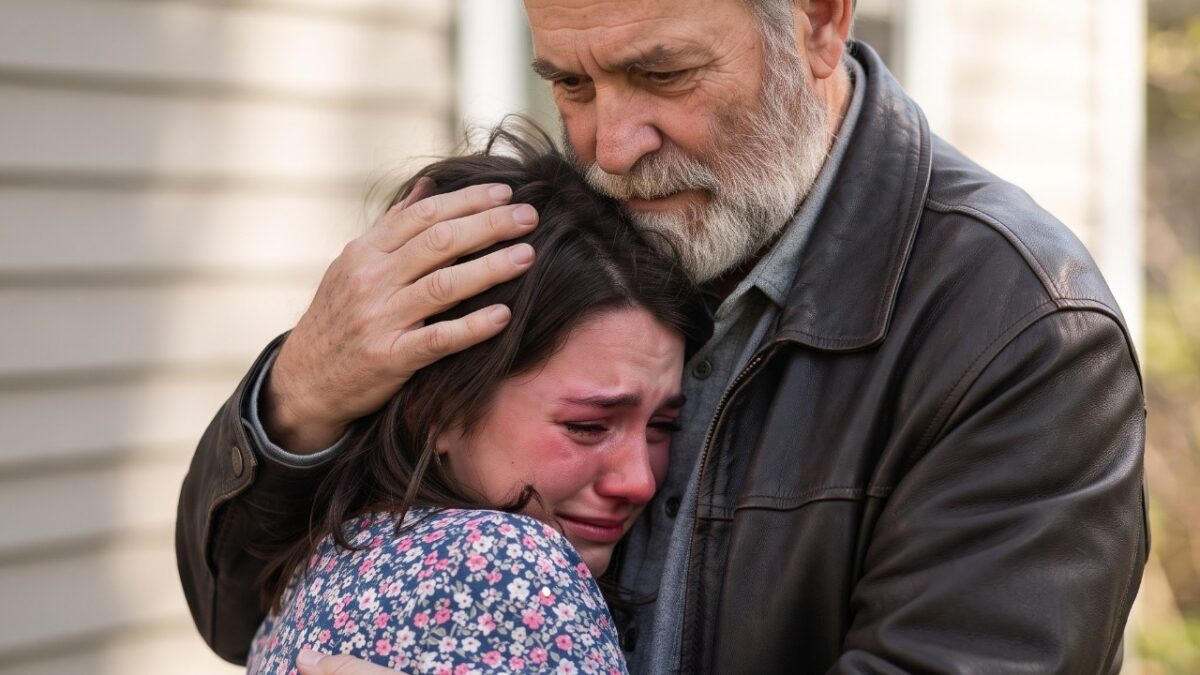
My 7-Year-Old Granddaughter Called Me at Midnight: “Dad’s Girlfriend Hurt Mom With a Golf Club…”—I Rushed Over Immediately, But What I Discovered That Night Revealed a Secret Our Family Had Been Hiding for Years
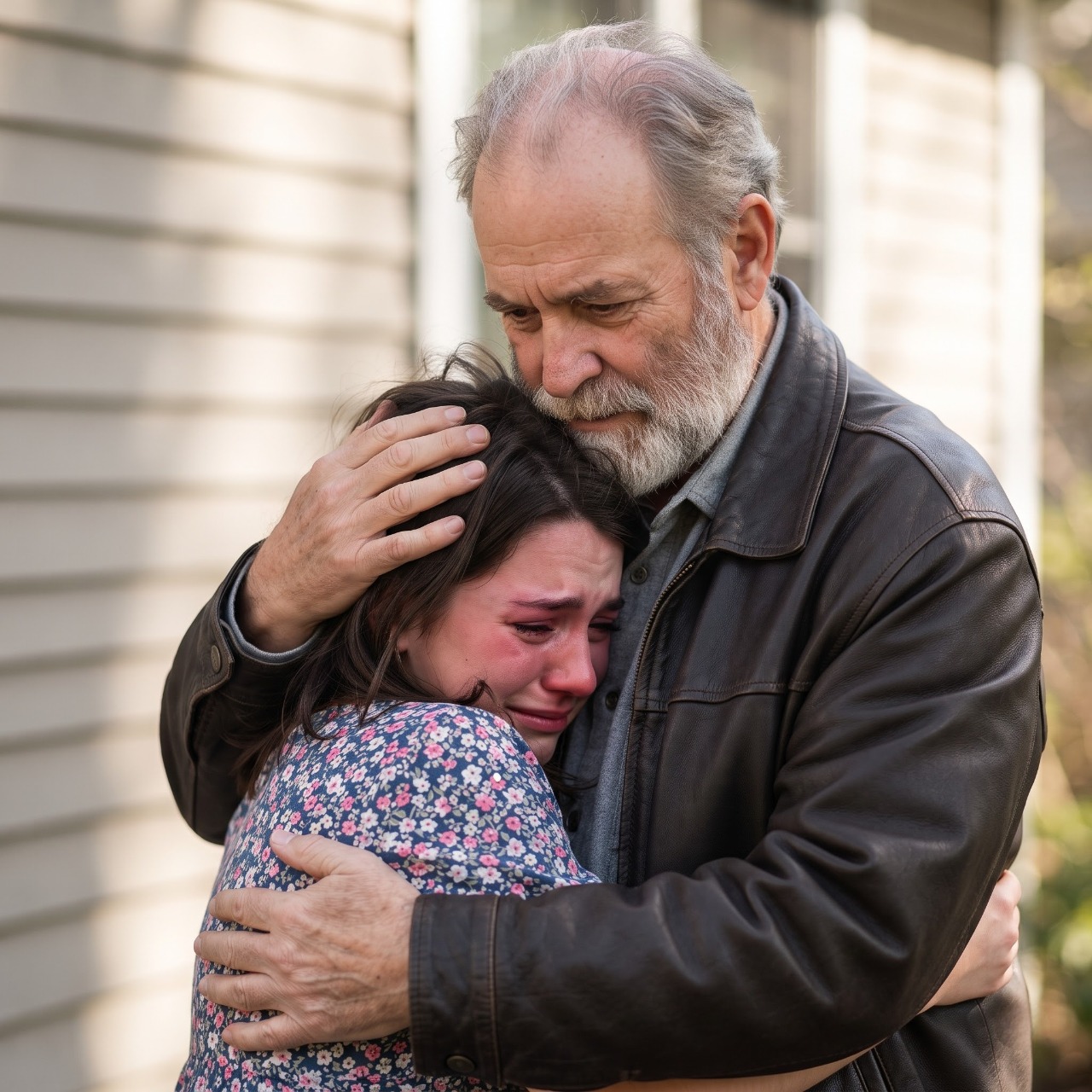
My seven-year-old granddaughter called while I was asleep, sobbing so hard she could barely speak.
Grandpa.
Dad’s girlfriend hit mom with a golf club.
Then her voice dropped to a terrified whisper.
If I cry, she’ll hurt mom again.
Behind her, I heard a woman screaming, and something crashed to the floor. I jumped out of bed, called my younger brother, and raced across town.
Minutes later, I reached the house and heard my granddaughter scream my name from upstairs. I kicked the door open and froze at what I saw.
I have spent 30 years walking into buildings after something went wrong. Burned out walls, collapsed floors, structures that look solid from the outside and were hollow at the core. My job was to read what was left behind and figure out the truth before anyone else convinced themselves it was something else.
I was good at it. I was methodical, patient, and I did not rattle easily.
Ren had never called me in the middle of the night, not once in her seven years. My heart was already moving faster than my brain when I picked up. I pressed the phone to my ear and said her name, and what came back through the line broke something open in my chest before I even understood what I was hearing.
She was sobbing. Not the kind of crying that builds slowly.
The kind that had already been going on for a while, the kind a child produces when they have been holding it in so long that the dam finally gives way all at once. I heard her try to pull in a breath and choke on it. Ren.
My voice came out steadier than I felt.
Grandpa’s here.
Talk to me. It took her three tries to get the words out.
Grandpa Dad’s girlfriend hit mom with a golf club.
The room went cold. Ren was wearing the smartwatch her mother had bought her 6 months earlier.
Sarah had set it up herself, linked it to a family account, and showed Ren exactly how to reach me if she ever felt unsafe. I had thought it was a thoughtful precaution at the time.
Standing in the dark beside my bed at 2:00 in the morning, I understood it was something else entirely. It was a plan.
Before I could say anything back, I heard it through the line behind Ren’s breathing.
A woman’s voice.
Sharp and furious words I could not make out clearly, but a tone I understood immediately. Someone was shouting in that house. Someone was very, very angry.
Then Ren’s crying stopped.
Not gradually, all at once. like a switch being thrown.
What replaced it was worse than the crying had been because the sound that came through next was barely a sound at all. Her voice dropped as something just above a whisper, thin and careful and terrified in the way only a child can be terrified when they have already learned that making noise has consequences.
If I cry, she breathed, she’ll hurt mom again.
My hand tightened around the phone so hard my knuckles achd. 30 years of training myself not to let panic take the wheel. And in that moment, every bit of it was the only thing standing between me and coming apart completely.
Ren listened to me very carefully. I was already moving toward the closet, pulling on clothes with one hand keeping the phone pressed against my ear with the other. Lock your bedroom door right now.
Do not come downstairs. Do not open that door for anyone.
Do you hear me? Not for anyone, no matter what they say or whose voice it is. Okay.
The word was so small I almost missed it. Keep the watch on your wrist. I am coming.
I will not hang up. Promise? I promise.
I grabbed the landline from the kitchen and dialed 911 while keeping Ren connected on my cell. When the dispatcher answered, I gave them the address of my son.
Declan’s house across town, told them I had a 7-year-old child alone on the second floor.
after witnessing an assault told them there was at least one adult still in the building and the situation was active. The dispatcher told me to stay on the line.
I told her I had another call open with the child and needed to go. Then I called my younger brother Bowen on the landline. Bowen is 58 years old and spent two decades as an emergency medical technician before his knees gave out and he moved behind a desk.
He lives 4 minutes from Declan’s house.
I live 19. When he answered on the second ring, his voice was already alert in the way of someone who has been woken by phone calls that matter before and knows immediately that this is one of them.
Get to Declan’s house right now, I said.
Ren is locked in her room upstairs. Sarah may be hurt. Police are on the way, but you will get there first.
Bowen asked one question. Is Ren safe where she is?
For now, I’m going, he said, and the line went dead.
I was in my car before I finished buttoning my shirt. I connected my cell to the hands-free system so I could hear Ren through the speakers while I drove both hands on the wheel moving through empty streets faster than I should have been moving.
She did not talk much. Mostly I heard her breathing.
Once I heard her shift position, a quiet rustle of fabric, and my mind built the image of her pressed into the corner of her room in the dark, holding the watch up close to her face. Once I heard the floor creek somewhere outside her door, and my foot nearly left the gas pedal entirely.
Ren, I said, I’m here.
Still that whisper. Is the door locked? Yes.
Good girl. You were doing exactly right. I turned on to Declan Street with 15 minutes elapsed since the first call.
Bowen’s truck was already at the curb.
The porch light was on, and parked in the driveway, exactly where it always sat, was Declan’s car.
I stopped moving for just a second when I saw it. Declan had told me yesterday afternoon that he had a business trip. He said his partner, Lachlan Marorrow, was handling a deal out of state and needed him there by morning.
He said he would be gone for a couple of days. His car was sitting right there in his driveway. Bowen was on the front porch when I came up the walk, his fist raised to knock again.
The front windows were dark. We could hear nothing from outside.
I called Declan’s number, standing on that porch, and listened to it ring through to voicemail while Bowen hammered on the door hard enough that the frame shook.
Nothing. Then from somewhere above us, through the walls and the dark and the distance, came a sound that I will carry with me for the rest of my life.
My granddaughter’s voice high and cracked and desperate, calling my name.
Grandpa. Bowen looked at me. I looked at him.
We did not need to discuss it. We stepped back and we kicked that door in together. The lock gave on the second impact.
The door swung inward and slammed against the wall, and I went through it without stopping Bowen, one step behind me. And what I found on the other side of that threshold was not what I had been bracing myself to find.
The person on the floor was not Sarah. She was sitting on the floor with her back against the sofa. One hand pressed to her left shoulder, her face twisted into an expression that was working very hard to look like pain and grief, but kept sliding towards something tighter and more calculating underneath.
Vesper Crane, 31 years old, dark hair loose around her shoulders, wearing clothes that looked too put together for the middle of the night. The golf club was on the floor about 4 ft to her right. I registered all of that in under 3 seconds.
30 years of walking into damaged buildings teaches you to read a room before you open your mouth. And what that room told me in those 3 seconds was that something was wrong with the picture I was looking at. Vesper looked up at us and her face crumpled.
The tears came fast, the kind that seemed practiced, and she reached one hand out toward me like she was drowning.
She attacked me,” Vesper said, her voice breaking on the last word in a way that did not quite match the steadiness in her eyes.
“Sir just came in here screaming.
She grabbed the club.
I didn’t know what to do.
I just she went crazy.
I couldn’t stop her.
Where is Sarah?”
I said. She ran. Vesper pressed harder on her shoulder and winced.
After she hit me, she just ran out the back door.
I don’t know where she Bowen.
I turned to my brother who was standing just inside the doorway with his jaw tight and his hands clenched at his sides. His EMT instincts were clearly pulling him toward Vesper, but his eyes kept cutting to the staircase. Stay here.
I took the stairs two at a time.
Ren’s bedroom door was the second one on the left.
I could see the thin strip of darkness under it, no light on inside, and for one terrible second, my heart seized up completely. Then I heard her, a small, careful sound from the other side of the door, barely louder than breathing. Ren, I pressed my palm flat against the door.
It’s Grandpa.
I’m right here.
The sound of a lock sliding back. The door opened three inches and one eye appeared in the gap, wide and dark and wet with tears that had been cried and cried again until there was almost nothing left. Then she yanked the door open the rest of the way and threw herself at me with everything she had.
She was shaking so hard I could feel it in my own bones when I caught her. Her fingers gripped the back of my shirt like she was trying to hold on against a current and her whole small body was trembling from the inside out.
I wrapped both arms around her and held on and felt her bury her face against my neck. And her breath was coming in these short, jagged pulls that told me she had been working very hard not to make a sound for a very long time.
I’ve got you, I said into her hair.
I’ve got you.
You did exactly right. She made a sound against my shoulder that broke my heart clean in half. I carried her downstairs just as the first cruiser pulled up outside.
Red and blue light sweeping through the front windows. Bowen was crouched near Vesper, not touching her, keeping careful, professional distance while asking her standard questions in the calm, measured tone of a man who had seen genuine injury, and was privately unconvinced he was looking at one now.
He caught my eye over Vesper’s head and gave me the smallest shake of his head.
I read it clearly. Detective Rorahan arrived 7 minutes after the first officers.
He was 47 years old, built like a man who had once been an athlete, and was now mostly tired with sharp gray eyes that moved around a room the same way mine did cataloging, sorting, filing. He introduced himself with a handshake that was firm without being performative, and I respected him immediately for the fact that his first question was not about Vesper.
“Where’s the child?”
he said.
“Right here.”
I shifted Ren slightly so he could see her face. She had stopped shaking quite so violently, but was keeping her grip on my shirt with both fists.
She okay? She will be.
Callahan nodded once, then turned to survey the room. I watched him take in the same things I had taken in, and I watched his eyes stop on the golf club the same way mine had.
He did not say anything yet, but something moved across his face. The officers worked through the house while Callahan spoke with Vesper. I stood near the kitchen doorway with Ren still in my arms, close enough to hear without being close enough to interfere.
Vesper’s story came out in pieces, punctuated by tears that arrived and departed with suspicious convenience.
Sarah had shown up unannounced. Sarah had been irrational accusatory. Sarah had grabbed the golf club from the corner near the coat rack.
Sarah had swung it. Vesper had tried to block it, hence the shoulder. Then Sarah had simply run.
An officer came down from the second floor and caught Callahan’s attention.
No one else in the house, he said. Back door was unlocked.
Callahan said, “Show me.”
I carried Ren to the kitchen while they moved to the back of the house, and that was when I saw it.
Sarah’s phone on the counter beside the coffee maker screen.
Dark plugged into its charger like it had been there all evening, her bag hanging on the hook by the back door, her coat on the peg above it, and at the base of the stairs, half tucked under the bottom step like it had been knocked there one single shoe, a gray sneaker, Sarra’s size.
I stood there looking at that shoe
and felt something cold move through me that had nothing to do with the night air coming through the open back door. A woman does not walk out into the dark in October without her coat, without her phone, without both shoes, without her bag.
Not unless the walking out was not her idea. Callahan came back from the yard and found me still standing there, still looking at the shoe. He followed my gaze down to it, and something shifted in his expression.
“Mr.Whitfield,” he said.
“Cormac.
Cormarmac.”
He pulled out his notebook, an actual paper notebook, which I found reassuring in a way I could not entirely explain. I need to ask your granddaughter a few questions.
I want to do it right, which means I need you to sit over there while I talk to her. Not behind her, not coaching, just present so she feels safe. Can you do that?
Yes, I said even though it was one of the hardest things he could have asked me.
Ren sat on the couch across from Callahan with a police officer’s jacket draped over her shoulders because she had started shaking again and someone had noticed.
She answered his questions in that same careful whisper she had used on the phone and I sat 8 ft away with my hands clasped between my knees and my chest so tight I could barely draw a full breath. She told him she had woken up because of the shouting.
She told him she had come out to the hallway and seen her mother and Vesper near the bottom of the stairs. She told him things had been very loud and then something fell over and she got scared and went back toward her room.
And then she said the thing that made the room go quiet. I think dad was there too.
Her voice was barely above a murmur. Someone who looked like dad was in the hallway.
He told me to go back to my room. Vesper straightened up from across the room so fast her shoulder forgotten entirely.
“She just woke up?”
she said loudly enough that Callahan glanced over at her. She was half asleep.
She probably “Thank you,” Callahan said in a tone that was not warm at all.
He wrote something in his notebook and did not look up again. I did not say anything either, but my heart was hammering against my ribs, and in the back of my mind, something was already pulling at a thread I did not want to pull.
Declan’s car in the driveway, Declan’s phone going to voicemail.
Declan, who had told me just yesterday afternoon that he would be out of town.
Later that night, after the officers had taken their statements and the EMTs had looked at Vesper’s shoulder, and Callahan had told me quietly that Sarah was being listed as a missing person pending investigation.
I sat alone in my kitchen
with Ren, finally asleep in the guest room and my phone in my hand.
I opened my messages and scrolled back 3 weeks to a conversation I had been trying not to think about since the moment I heard Ren’s voice on that call.
Sarah had sent me a text. October 3rd, 11:42 in the evening.
Dad, I think someone’s been following me.
Maybe I’m just being paranoid.
I had written back the next morning.
You’re dealing with a lot right now.
Try to get some sleep. I stared at my own words until they blurred at the edges and the ache that moved through my chest. Then was not grief exactly.
It was the particular weight of being wrong when it cost something you could not give back. The kitchen light was too bright for 2:00 in the morning or 3 or whatever time it was by then.
I had stopped checking the clock somewhere between Callahan’s last question and the sound of the final cruiser pulling away from the curb.
The house had gone quiet in the way that houses go quiet after something violent has moved through them. Not peaceful, but hollowed out like the air itself had been used up.
I sat at the kitchen table with my phone face up in front of me and Sarah’s message still on the screen.
Dad, I think someone’s been following me.
Maybe I’m just being paranoid.
And below it, my response sent the next morning at 7:43 while I was eating breakfast and thinking about nothing in particular.
You’re dealing with a lot right now.
Try to get some sleep. I read my own words four times.
Each time they landed a little harder. I had been a man who made his living finding the things other people missed. And my daughter-in-law had told me she was scared.
And I had told her to get some sleep. The shame of that sat in the center of my chest like something with weight and edges, and I did not try to push it away. I deserve to feel every ounce of it.
Upstairs in the guest room at the end of the hall, Ren was finally sleeping. It had taken a long time to get her there.
She had not wanted to let go of my hand, and when I tried to ease my fingers loose, she had tightened her grip until her small knuckles went white.
“Is the door going to lock?”
she had asked, staring up at the ceiling with eyes that were red and swollen from hours of crying.
“Yes,” I said.
“Will you check it?”
I got up and checked the lock, tried the handle in front of her so she could hear it hold. Came back and sat down on the edge of the bed.
“What if she finds out where we are?”
Ren asked. Her voice was the voice of a child running through every terrible possibility and unable to stop.
“She doesn’t know where I live,” I said.
And even if she did, she would have to get through me first. That is not going to happen.
Ren looked at me for a long moment. Her lip was trembling, but she pressed it flat the way a child does when they are trying very hard to be brave and not quite managing it. Grandpa, she said quietly.
Is mom going to be okay? I reached out and put my hand over hers.
We are going to find her, I said. That is the only thing that matters right now, and that is what we are going to do.
She had held on to that answer the way she had held on to my shirt when I carried her down the stairs like it was the only solid thing in reach. And eventually, an hour later, she had finally let sleep take her.
Now, I sat alone in my kitchen and stared at my phone and tried to think like the man I used to be at work, the one who did not let emotion fill in the gaps where evidence should go. Callahan had left me his card.
Before he walked out the door, he had turned back and said with a directness I appreciated, “Don’t go back to that house.
Don’t contact Declan until we’ve had a chance to speak with him.
If you remember anything else, anything at all. Call me. Not in the morning.
Now, if you need to. I had nodded. What I had not told him was that I was already remembering things, not new things, old things, details I had filed away and labeled as unimportant because I had wanted them to be unimportant.
7 weeks ago, Sarah had called me on a Sunday afternoon, and somewhere in the middle of the conversation, she had mentioned that Ren had come home from a weekend at Declan’s with a bruise on her shin.
Sarah said Ren told her she had fallen off the back porch step.
I had said, “Children fall.”
Sarah had been quiet for a moment and then said, “Yes, probably.”
5 weeks ago, Sarah had texted me a photo of a drawing Ren made at school. In the drawing, there were four figures.
One was labeled mom. One was labeled grandpa. One was labeled dad.
The fourth one, slightly off to the side, had no label at all. When I had asked Ren about it at my house the following weekend, she had shrugged and said it was nobody, just somebody from the picture.
3 weeks ago, the text message. I picked up my phone and called. It was past 4 in the morning and he answered on the second ring, which told me he had not gone home yet.
It’s Cormarmac Whitfield, I said.
I know, he said. What have you got?
I told him about the Sunday phone call, the bruise, the drawing, the text message from 3 weeks ago that I had dismissed because I had wanted there to be a simple explanation, and she had given me one. I told him all of it in the flat factual tone I used to use when I was presenting findings to insurance boards, keeping my voice steady, even though my throat kept trying to close around the words.
Callahan listened without interrupting. When I finished, he was quiet for 3 seconds.
I counted and then he said, I’m going to need you to forward me that text message tonight, the one from 3 weeks ago.
I’ll do it right now.
An Cormarmac. He paused.
You’re not the first person who got an explanation that made sense and took it.
That doesn’t make you responsible for what happened in that house tonight.
I forwarded the message and set the phone down and pressed both hands flat on the table in front of me. My palms were damp.
I had not noticed until just then how much I had been sweating or how hard my hands had been shaking since I stopped moving long enough to feel them. In the morning, Bowen came by with coffee and two paper bags from the diner three blocks from his house.
He set everything on the table without asking whether I wanted it because he knew I had not eaten anything and was unlikely to do so voluntarily. And he sat down across from me and pushed a cup in my direction.
“How’s she doing?”
he met me. Ren.
“Still sleeping?”
I said. Bowen wrapped both hands around his own cup.
His face had the particular look it got when he was working something out and not yet ready to say it. He had worn that same expression through two decades of emergency calls. The look of a man who has seen what people can do and is still somehow surprised by it every single time.
The shoulder, he said finally. I know. I looked at it.
The bruising pattern. He stopped and shook his head.
I’ve seen a lot of impact injuries, Cormarmac.
The way that Mark sat on her shoulder didn’t match the way she said she was hit.
The angle was wrong. I looked at him across the table. My coffee was going cold in front of me and my chest achd with a tiredness that had nothing to do with sleep.
You’re going to need to tell Callahan that already texted him.
Bowen took a long drink from his cup and set it down.
There’s something else.
When I was with her waiting for the officers to finish upstairs, she said something I keep turning over. What?
He met my eyes.
She said I didn’t think it would go this far.
Not I can’t believe this happened.
Not I’m so scared.
She said she didn’t think it would go this far.
He paused.
That’s a strange thing to say if you’re the victim.
I sat with that for a moment. Outside, the sun was beginning to suggest itself at the edges of the sky.
Pale gray light pressing against the kitchen window. And somewhere upstairs, a floorboard creaked as Ren shifted in her sleep.
You need to tell Callahan that too, I said. Already did, Bowen said. And for the first time since he had kicked that door in beside me in the dark, he reached across the table and put his hand briefly on my arm.
We’re going to find her Cormarmac.
I had said those same words to Ren 4 hours earlier.
Hearing them said back to me in my brother’s voice in the thin gray light of a morning I had not expected to be sitting in.
I held on to them the same way she had. Because they were the only solid thing in reach.
Declan arrived at my front door at 9:47 in the morning. And the first thing I noticed was his hair. It was combed, not the careless, freshly showered kind of combed that a man produces when he has been awake since 3:00 in the morning driving back from wherever he actually was.
It was deliberate. parted on the left the way he had worn it since college, every strand sitting exactly where it was supposed to sit, like he had stood in front of a mirror and taken his time with it.
His shirt was clean. His jacket had no wrinkles.
He looked in every visible way, like a man who had slept in a bed and woken up at a reasonable hour. He looked the way you look when you have had time to prepare.
I opened the door and he came in, and the expression on his face was the right expression. worry pulling at the corners of his eyes, jaw-tight hands moving restlessly at his sides, all the correct notes.
I had spent 30 years reading structures that were designed to look sound when they weren’t.
And I recognized the performance for what it was, even as some part of me wanted desperately to be wrong. Dad.
His voice cracked on the word genuine enough that it hurt to hear. What happened? I got your messages.
I came as fast as I could. My phone was dead all night. And when I finally charged it this morning, I had 17 missed calls, and I he stopped himself, pressed one hand over his mouth, pulled it away.
“Where’s Ren?
Is Ren okay?”
“She’s upstairs,” I said.
“She’s still sleeping.”
“And Sarah?”
They’re saying Sarah is missing, I said.
“Yes.”
He made a sound low in his throat that I could not interpret and dropped into the chair at my kitchen table, the one Bowen had been sitting in 2 hours earlier. He put both elbows on the table and pressed his face into his hands, and his shoulders shook once hard, like something had moved through him that he could not contain. I sat down across from him and waited.
After a moment, he lifted his head. His eyes were red at the rims, which could mean he had been crying or could mean he had not slept. His voice, when he spoke again, was careful in a way that might have passed for grief, but landed differently on my ear.
“Tell me what you know,” he said.
So I told him. Not everything.
Not what Bowen had noticed about the shoulder.
Not what Callahan had said about the investigation’s direction.
Not the text message from 3 weeks ago that I had forwarded at 4 in the morning. I told him the shape of it.
Ren’s call, the house, Vesper, the shoe at the bottom of the stairs, Sarah’s phone on the counter.
He listened with his hands wrapped around the coffee mug I had set in front of him without asking.
And when I finished, he stared into the mug for a long moment before he said, “It doesn’t make sense.
Sarah wouldn’t just she wouldn’t attack someone and run.
That’s not who she is.”
No, I agreed.
It isn’t.
Something flickered across his face at that. Too fast for me to name. Where were you last night, Declan?
I kept my voice even the same tone I used to use when I was interviewing building managers after a structural failure.
neutral, conversational, like the answer didn’t matter when it mattered enormously.
He told me Lachlan Marorrow, his business partner, had picked him up around 10:00 in the evening to discuss a deal they were trying to close before the end of the quarter. They had worked through dinner.
Then Declan had decided to stay at the hotel near the airport rather than drive back late since he had an early flight in the morning for a site visit.
His car was at the house because he had left with Lachlan in Lachlan’s vehicle.
His phone had died sometime around midnight, and he hadn’t had a charger at the hotel.
He delivered all of it in a steady, reasonable stream. One detail connecting cleanly to the next. Each piece sitting exactly where it needed to sit.
The way a well-built alibi sits, not too much detail, not too little. Nothing you could immediately disprove, and nothing that explained away the car in the driveway or the fact that Ren had seen someone who looked like her father standing in the hallway. I nodded along and said nothing.
My phone rang 40 minutes after Declan arrived.
I stepped into the hallway to take it and Callahan’s voice came through without preamble.
We pulled footage from a residential security camera across the street from your son’s house.
Belongs to a neighbor named Thea Drummond.
She’s got a wide-angle unit mounted above her garage that covers the full front of the street.
She came to us this morning voluntarily when she heard about the police activity last night. He paused.
Cormarmac, the footage shows Declan getting out of a black SUV registered to Lachlan Marorrow’s company at 1:31 in the morning and walking toward the house.
The hallway felt very narrow all of a sudden. 1:31, I said.
1:31 a.m.He was at that house before Ren called you, before any of this happened. Another pause.
There’s something else.
Mrs.Drummond reviewed her footage going back 72 hours at our request. There is an unfamiliar vehicle dark sedan plates obscured parked on the street for several hours across three separate days leading up to last night.
Different times each day, never the same spot twice always with a sighteline to the front of Declan’s house.
The cold that moved through me then started at the back of my neck and worked its way down. Someone was watching the house, I said.
For at least 3 days before last night, Callahan said this wasn’t impulsive.
Somebody planned this.
I stood in the hallway with my hand flat against the wall for balance and thought about Sarah’s text message.
I think someone’s been following me.
I had told her to get some sleep.
And while I was telling her that someone had already been sitting in a dark car outside her daughter’s home, watching and waiting and counting down to something.
Ren told you she saw someone who looked like her father. I said she did.
Callahan said, “And now we have footage placing him there at 131.
We’re going to need to speak with Declan formally.
Don’t tell him about the footage.
Understood. I put the phone in my pocket and walked back into the kitchen.
Declan was still sitting at the table, both hands around the mug, staring at the surface of the coffee, like it contained something he was trying to read. He looked up when I came in, and his eyes went to my face with an alertness that was not quite the alertness of a grieving man.
It was the alertness of someone checking to see how much had changed while they were not in the room.
“Everything okay?”
he asked. Callahan updating me, I said.
I sat back down across from him and picked up my own coffee and held it without drinking. Tell me something, Declan. When did you last actually speak to Sarah?
Not text, speak. He thought about it.
Or performed thinking about it. Maybe 4 days ago.
We had a call about Ren’s school schedule.
It was fine, normal. She seemed okay to you. She seemed like Sarah.
He set the mug down. a little tired maybe, but okay. I looked at my son across the table.
He was 37 years old, and I had watched him grow from an infant into a man, and I had believed through all of it that I knew who he was. I had believed that the way you believe in loadbearing walls, not because you have tested them recently, but because they have held for so long, that you have stopped questioning them.
The footage from Thea Drummond’s camera had just told me the wall had a crack in it I had never thought to look for.
I’m glad you’re here, I said, because it was the true version of what I felt, even if it was not the whole of it.
Declan reached across the table and gripped my forearm briefly the way he used to when he was younger and needed to say something he did not have words for. His hand was steady. Mine hidden under the table was not.
After he left, I sat alone in the kitchen and thought about the 131.
about a man who had told me he was out of town, getting out of his partner’s SUV in the dark, walking toward his own house, entering it, and then an hour and 42 minutes later, that same house containing a woman with a questionable shoulder injury, a missing wife, and a 7-year-old child who said she had seen her father in the hallway.
Declan had been in that house. He had looked his daughter in the eye and told her to go back to her room. And then, when the sirens came, he had run.
Callahan called again the following morning at 8:14 while I was standing at the kitchen counter watching Ren eat cereal. She was not really eating.
She kept pushing the pieces around in the bowl with her spoon moving them from one side to the other, her eyes fixed on the middle distance somewhere between the table and the window.
The home security system at Declan’s house, Callahan said without greeting.
It’s missing 17 minutes of recorded footage.
I turned away from the table so Ren would not see my face. What do you mean missing? The system itself is intact.
No malfunction, no power interruption, no hardware issue. What we have is a gap in the recorded data between 1:48 and 2:05 in the morning, 17 minutes, during which your granddaughter was awake and something was happening in that house.
He paused to let that sit. Someone logged into the systems administrator account remotely and deleted that segment. The account access log shows the login came from an external device.
I pressed my free hand flat against the countertop and held it there. Declan has administrator access.
He does through a management app on his phone. Another pause. Under United States law, the deliberate destruction of potential evidence in a criminal investigation is a separate offense from whatever else is being investigated.
I want you to understand that we are not treating this as a technical glitch. I understand.
I said we’re going to bring him in for a formal conversation.
Not today. We want a few more pieces in place first. I thanked him and set the phone face down on the counter and stood there for a moment with my hand still pressed flat against the tile, feeling the cold of it against my palm, using it to anchor myself to something solid.
Behind me, I heard a small clatter and then Ren’s voice high and immediate and frightened.
I’m sorry.
I’m sorry.
I didn’t mean to.
I’m so sorry.
I turned around. She had knocked her glass of orange juice off the edge of the table.
It had not broken plastic, thank God, but the juice was spreading across the floor in a slow orange pool, and Ren was on her feet with both hands pressed against her mouth, her eyes enormous and filling fast.
“I’m sorry,” she said again, the words coming out in a rush.
“I didn’t mean to knock it.
I wasn’t trying to make a mess.
Please don’t be Ren.”
I crossed the kitchen in four steps and crouched down in front of her, so my eyes were level with hers. Her whole body was rigid, shoulders up near her ears, hands still pressed to her mouth like she was trying to hold in something she was afraid to let out.
“Hey, look at me.”
She looked at me. Her eyes were spilling over now, two thin tracks running down her cheeks, and her breath was coming in the short, shallow pulls of a child bracing for something.
“It’s juice,” I said.
“That’s all it is, just juice on the floor.”
Her lip trembled violently, “But I made a mess.
Messes get cleaned up.”
I reached out and gently pulled her hands away from her mouth, held them in mine. Her fingers were ice cold.
“You are not in trouble.
Not even a little bit.
Do you hear me?”
She stared at me for a long moment, like she was searching my face for the thing that would contradict what I was saying, the tightening around the eyes, or the set of the jaw that meant the words, and the truth were two different things. When she did not find it, something in her shoulders dropped about half an inch. Accidents are not emergencies, I said.
It came out of nowhere.
Something my own father had said to me once decades ago after I had put a baseball through a neighbor’s window.
I had not thought about it in years. Say it back to me.
Ren blinked. Accidents are not emergencies.
That’s right.
I squeezed her hands once and let go, then stood and got the paper towels from beside the sink. Help me clean it up.
She nodded, still sniffling, and crouched down beside me on the floor, and we cleaned up the orange juice together without another word about it.
When we were done, she looked up at me from the floor with those red- rimmed eyes and said very quietly, “Grandpa.
” She used to get really mad when I spilled things.
I kept my expression steady, even though something hot and sharp moved through my chest at those words. She who? Ren looked down at the paper towel in her hands.
Miss Vesper. I did not press her. I filed it away the same way I had filed the drawing, the bruise, the text message, the way you file a hairline crack in a foundation wall when you are not yet sure how deep it runs.
I tied off the paper towels, tossed them in the trash, and told Ren she could watch television in the living room if she wanted. She patted off down the hallway, and I stood at the sink and ran the cold water and held my wrists under it until my pulse stopped hammering quite so hard. Bowen came by that afternoon with groceries because he had apparently decided that keeping me fed was his primary contribution to the situation and I was not going to argue with him.
He set three bags on the counter and started putting things away in the refrigerator with the familiar efficiency of a man who had been in my kitchen enough times to know where everything went.
“How is she?”
he asked, meaning Ren, without turning around.
“She apologized four times this morning for knocking over a glass of juice,” I said.
Bowen’s hands stopped moving for just a second.
Then he resumed putting things away.
“Yeah,” he said very quietly like that one word contained everything he needed to say about it.
She told me Vesper used to get angry when she spilled things. He closed the refrigerator and turned around.
His face had the particular stillness it got when he was working hard not to let what he was feeling show which in Bowen’s case meant he was feeling something considerable.
Did you tell Callahan?
I’m going to call him after you leave.
Bowen leaned back against the counter and crossed his arms and looked at the floor. Cormarmac, how long do you think this was going on before last night?
I don’t know, I said.
And then, because it was true, and because he was my brother and the only person in the world I did not have to manage my words around long enough that a seven-year-old learned to brace herself for what happens when she makes a mess. The silence that followed was the kind that does not need to be filled.
Bowen looked up from the floor and met my eyes. And what passed between us in that look was the shared awful weight of understanding, something you wished you did not understand.
That evening, after Ren had eaten half a grilled cheese sandwich and fallen asleep on the couch with the television murmuring in the background, I sat at the kitchen table and opened my phone and stared at the list of contacts until I found Callahan’s number.
Before I dialed, I looked at the smartwatch on Ren’s wrist.
She had refused to take it off since the night it all started sleeping with it, on showering with it, on checking every hour to make sure the battery was charged.
Sarah had put that watch on her daughter’s wrist and taught her exactly what to do with it.
A woman who had been afraid enough to plan for the possibility that planning might be all she could do. The thought of Sarah sitting somewhere in the dark planning made my throat close up entirely.
I dialed Callahan. When he answered, I told him what Ren had said about the juice about Vesper, about the anger.
I kept my voice flat and informational, the way I had been trained to present findings, even though my hands were shaking against the phone, and the ache behind my sternum had not let up since the moment Ren’s name had lit up my
screen two nights ago.
Callahan listened to all of it.
When I finished, he said, “This is useful, Cormarmac.
I mean that.
Find her.”
I said, “It came out rougher than I intended.
That’s all I’m asking.
That’s what we’re doing, he said.
I ended the call and set the phone on the table and looked at the smartwatch on Ren’s wrist from across the room, its small screen glowing faintly in the dim light of the living room.
That watch had already saved her once. It had put her voice in my ear at 2:13 in the morning and given me 19 minutes to get to her. I did not know then that it was also carrying something else, something Sarah had planned for in that quiet, careful way.
She planned for everything, something none of us had thought to ask about yet. It was the third evening.
Ren had eaten better that day half a bowl of soup at lunch, most of a grilled cheese at dinner, which I counted as progress because the day before she had pushed everything around her plate until it went cold. She was sitting on the living room floor after dinner with her back against the couch, her knees pulled up to her chest, holding the stuffed rabbit she had brought in her overnight bag the night this all started.
She had not let go of it for more than a few minutes at a stretch since I brought her home. I was washing the dinner dishes when she appeared in the kitchen doorway.
She was holding something I had not seen before. Not the rabbit, an older toy, a cloth doll maybe 10 in tall with button eyes and yarn hair the color of straw. The fabric was worn soft with age, the kind of worn that comes from years of being carried and held and slept with.
And along the back seam running from the doll’s left shoulder down to its hip was a line of stitching in a thread that did not quite match the rest.
Darker, newer, Ren held it out to me with both hands the way you present something you have been asked to deliver and have been waiting carefully for the right moment.
Mom said, “If she ever doesn’t come home,” Ren said, “I have to give this to you.”
The dish in my hand went back into the sink. I dried my hands on the towel hanging from the oven handle, slowly giving myself those few seconds to make sure my face was doing what I needed it to do. Then I crouched down in front of her and looked at the doll she was holding out.
When did mom give this to you? I asked. Before.
Ren’s voice was careful.
A few weeks ago. She said to keep it in my bag and not tell anybody.
She said if something happened and she didn’t come back, I would know when to give it to you.
She paused.
I knew last night, but I wasn’t ready yet.
I reached out and took the doll from her hands, and the weight of it, the slight ordinary weight of a child’s toy, felt heavier than anything I had held in a long time.
I turned it over, ran my thumb along the back seam, where the stitching changed color. The thread there was tighter than the original, pulled close and deliberate, and underneath my thumb, I could feel the faint outline of something small and hard inside. I wanted to open it right then.
Every instinct I had from 30 years of finding things was screaming at me to open it. Instead, I looked at Ren and kept my voice level.
You did exactly right, I told her. Exactly right.
I need you to do one more thing for me. Okay. I need you to go watch television for a little while so I can make a phone call.
Is it about mom? Yes.
She searched my face the way she had been doing since the night this started, looking for the gap between what I said and what I meant. When she did not find one, she nodded and went back to the living room and I heard the television come on a moment later.
I called. He arrived 22 minutes later with an evidence technician, a woman named Marsh, who had the efficient, unhurried movements of someone who had processed thousands of scenes and was not going to be rushed through this one. She photographed the
doll from multiple angles before touching it, documented the irregular stitching, and then opened the back seam with a small tool while I stood in my own kitchen and watched with my arms crossed and my jaw so tight it achd.
Inside, wrapped in a small square of cotton fabric, was a key, brass, small, with a number stamped into the head. 214.
Callahan held it up in a gloved hand and looked at it for a moment. Storage facility key, he said.
That number is a unit number. He looked at me.
You have any idea where Sarah rented storage? No, I said.
She never mentioned it.
We’ll find it.
He slipped the key into an evidence bag.
There’s something else.
He reached into the inside pocket of his jacket and produced a small evidence envelope already sealed. Through the clear plastic, I could see a folded piece of paper. This was inside the doll as well, tucked underneath the key.
It’s addressed to you.
He held the envelope out to me. I looked at it for a moment without taking it.
Callahan said quietly, “You can read it here.
I need to document that you received it, but you can read it.”
I took the envelope, opened it, unfolded the paper inside.
There was one line, “Sarah’s handwriting, which I had seen on birthday cards and grocery lists, and the occasional note left on my kitchen counter on Sunday mornings when she brought Ren over early and I was still asleep.
Neat, slightly left-leaning, entirely her.”
Dad, if you’re reading this, I was right to be afraid.
My hands did not shake. I had spent 30 years training them not to shake when I needed them to hold steady.
But something happened behind my sternum that I could not train away a deep lurching movement like something that had been braced against a door, finally feeling the door give. Sarah had called me dad since the second year of her marriage to Declan. Not father-in-law, not Cormarmac, not some careful formal address.
Dad, just that.
And she had written it at the top of a letter she did not know if I would ever read in a situation where she had been frightened enough to sew a key into a child’s toy and instruct a seven-year-old to carry it until the right moment.
I folded the paper and handed it back to Callahan. I did not trust myself to hold it any longer. The storage unit, I said.
We’ll have a location by morning, he said.
And Cormarmac, this changes things. the key, the note.
The fact that she planned for this, she knew she was going into something dangerous. This was not a spontaneous confrontation.
She prepared. I know, I said. After they left, I went to the living room doorway and looked at Ren.
She was on the couch now with the rabbit in her lap, half watching the television, her eyes going to me every 30 seconds or so to check that I was still there. The smartwatch glowed faintly on her wrist. I went and sat down beside her.
She leaned into me immediately the way she had been doing since the night I carried her down the stairs, like my presence was a wall she could put her back against.
“Grandpa,” she said without looking away from the television.
“Yeah, mom planned it, didn’t she?
The doll and the key and all of it.
” I looked down at the top of her head.
7 years old, and she had already figured out what it had taken me several minutes to fully absorb.
“Yes,” I said.
She did. Ren was quiet for a moment.
Then she said, “Mom’s really smart.
My throat closed up so completely that it took me a full 3 seconds to answer her.”
“She is,” I said.
“She really, really is.”
Ren nodded like that settled something and leaned a little harder against my side, and we sat there together while the television played something neither of us was watching. And outside the window, the October dark pressed in against the glass. And somewhere out there, Sarah was waiting to be found by the trail of breadcrumbs she had left behind before any of this happened.
She had planned for the possibility that she would not make it out. And she had made absolutely certain that if she did not, the truth would.
Callahan called at 10:47 that night after Ren had finally fallen asleep with the cloth doll tucked against her side and the smartwatch still on her wrist.
“We found the storage facility,” he said.
Secure vault on Meill Avenue.
The unit is registered to Sarah under a separate email address we weren’t aware of.
We executed the search this evening. A pause that told me he was choosing his next words carefully.
There’s a significant amount of material in there.
Cormarmac documents a USB drive a sealed envelope addressed to her attorney, a man named Aldis Price.
We’re going to need time to work through all of it, but there’s a copy of the USB contents that Sarah authorized for release to you.
Specifically, in the event the unit was accessed by law enforcement during an active investigation into her disappearance. She documented that authorization with price in writing before any of this happened. I sat down at the kitchen table because my legs had decided they were done holding me up.
She planned the chain of custody, I said. She did, Callahan said.
She planned quite a lot. Another pause.
I’m going to send an officer over with the copy tonight if that’s acceptable.
I think you should see it. The officer arrived 40 minutes later, left a sealed drive on my kitchen table, and was gone in under 3 minutes. I sat alone with it for a long moment before I opened my laptop.
The drive contained a single folder.
Inside were subfolders, each labeled in Sarah’s precise, slightly leftleaning hand.
The same handwriting I had seen on the note in the doll. the same hand that had written dad at the top of that single devastating line. I opened the first subfolder.
Then I stopped breathing for a moment. Sarah had been investigating for 4 months. It had not started as an investigation.
She told the story herself in a brief type note at the top of the first document she had been going through, financial disclosures for the divorce proceedings. When Declan left a folder of company documents on the kitchen counter during one of their handoffs with Ren, he had been on his phone distracted and he had picked up the wrong folder. She had opened it before she realized what it was, and a single line item in a transfer summary had not matched a corresponding entry she had seen in a joint tax filing from 2 years prior.
The number was off by $400,000. She had set the folder aside and said nothing, but she was an independent accountant with 12 years of experience reading financial documents, and the $400,000 discrepancy had sat in the back of her mind like a splinter she could not stop pressing on.
2 weeks later, she had started pulling threads. What she found over the following four months was not a simple case of a husband hiding assets before a divorce, though that was where it had started.
Three shell companies had received substantial transfers from the operating accounts of the real estate investment firm Declan co-owned with Lachlan Marorrow. The transfers were structured to move in amounts just below the federal reporting threshold, a technique called structuring, which is itself a federal crime regardless of where the underlying money comes from.
Some of the transfer authorizations carried Declan’s credentials, but the amounts, the frequency, and the destination accounts pointed toward a scale of operation that Declan, based on what Sarah could reconstruct of his actual involvement, almost certainly did not have the sophistication to have designed alone.
She had written it plainly in her notes. Declan knows part. Lachlan knows everything.
I sat with that line for a long time. Then I opened the subfolder marked Vesper. There were seven photographs inside.
Four of them were taken at what looked like a corporate event, a ballroom round tables with white linens, men and women in formal dress. The fifth photograph was a closer shot of two people standing near a bar, their heads angled toward each other in the posture of people having a conversation they do not want overheard.
One of them was Lachlan Morrow. I recognized him immediately.
I had met him twice at company events in the years before Declan and Sarah’s marriage had deteriorated.
a large man with a silver watch and the kind of handshake that lasted slightly too long. The other was Vesper. This photograph had been taken nearly two years ago.
Declan had told me he and Vesper had met at a coffee shop 11 months ago, introduced by a mutual friend. Sarah had written a note beneath the photographs.
Vesper checked her connection to LM.
I’m not sure yet.
I saw them at the Harmon Gala. She used a different last name that night.
The way he looked at her wasn’t professional.
I stared at that sentence. She used a different last name that night.
That was why Declan had never connected them. He had met Vesper months later through what he believed was a separate channel under her real name with no apparent link to his business partner.
Whatever that link actually was, Sarah had not been able to confirm it before she disappeared. But she had seen it.
She had photographed it. And she had filed it away in a folder on a USB drive inside a storage unit with a key hidden inside a cloth doll.
The last subfolder had a name that stopped me cold. 48. I clicked on it.
A single encrypted file sat inside, locked behind a password I did not have.
I tried Ren’s name.
I tried Sarah’s birthday.
I tried the storage unit number. Nothing worked. I sat back in my chair and looked at that file name and felt the particular frustration of a man who has spent his career opening things and has just found one he cannot open.
48. Not a date. The format was wrong.
Not an address, not a unit number, a standalone number filed deliberately labeled, deliberately locked behind a password that Sarah had chosen and not left anywhere I could find. She had put it there for a reason. Everything else in this drive had a reason.
The photographs, the financial records, the careful notes written in her precise accountant’s hand, none of it was accidental.
None of it was careless. Sarah did not do careless, which meant the file marked 48 was the most important thing on the drive, and I had no idea what was inside it. I closed the laptop and pressed both hands over my face and sat in the dark kitchen of my house and thought about a woman who had spent 4 months quietly building a case while raising a daughter and managing a divorce and apparently living with the knowledge that she was pulling on threads that someone powerful did not want pulled.
She had not gone to the police. She had not gone to me.
She had built a system, documents, backups, a key inside a toy, a letter to her attorney, a note to me, and she had kept it all moving quietly forward while the world around her looked normal. I thought about her text message.
Maybe I’m just being paranoid.
She had not been paranoid. She had been right, and she had known she was right, and she had kept going anyway. And she had done it all in a way that made sure that even if something happened to her, the work would survive.
I pushed back from the table and walked to the doorway of the living room. Ren was asleep on the pullout couch I had set up for her, the cloth doll in the crook of her arm, the smartwatch glowing on her wrist. She looked smaller, asleep the way children do, stripped of the careful bravery she had been wearing, like armor since the night I carried her down those stairs.
Her mother had taught her to press a button on that watch and find somewhere safe. Her mother had taught her to carry a doll until the right moment and then give it to me. Her mother had been preparing her daughter for the possibility that preparation might be the only protection she could offer.
I went back to the kitchen table and opened the laptop again. I looked at the encrypted file 48.
I wrote the number down on the notepad beside the laptop and underlined it twice. And then I sat back and looked at it and let my mind work the way it worked best. Not forcing it, not reaching for the answer, just letting the pieces sit where they were and waiting to see what shape they made.
I did not sleep that night, but somewhere around 3:00 in the morning, a thought moved through me that I could not shake. Sarah had planned for every possibility. She had planned for being found, for not being found, for the documents surviving, for the key being discovered.
She had planned for Ren’s safety, and for the chain of custody of her evidence, and for a letter to land in my hands at exactly the right moment.
She had planned for the number 48 to mean something to someone. I just had not figured out yet who that someone was supposed to be. I had not slept.
When Callahan called at 7:52 in the morning, I was still at the kitchen table with the laptop, opened the notepad beside it, and the number 48 underlined twice in my own handwriting, staring back at me like an accusation. I answered before the second ring. Forensics came back on the golf club, Callahan said without preamble.
I want to walk you through what they found. I pushed the notepad aside and straightened in my chair.
Go ahead.
Blood spatter pattern and impact trajectory analysis, that’s the study of how blood moves and lands based on the force angle and position of an impact, came back inconsistent with Vesper Crane’s account of how she was struck.
He spoke carefully the way he always did when he was giving me information he wanted me to understand fully rather than partially. She told us the strike came from her right side while she was standing near the sofa.
The pattern on the club and the wound distribution on her shoulder don’t support that.
The angle of the impact mark on her shoulder is inconsistent with a strike delivered from the position she described. The club was moved.
I said the club was moved. He confirmed after the impact occurred or possibly before someone repositioned it.
We can’t say with certainty who or exactly when, but the physical evidence does not match the scene as Vesper described it.
A pause. Her version of events has a structural problem now. And we have 17 minutes of deleted footage that could have shown us what actually happened.
I thought about Vesper sitting against that sofa with her hand pressed to her shoulder, the tears arriving and departing with that suspicious convenience and the way she had straightened up so fast when Ren mentioned seeing her father in the hallway. A woman performing injury.
A woman who had been in that house during the 17 minutes. The camera was dark with time and motive and the presence of mind to reposition a piece of evidence before the door came down.
There’s more.
Callahan said, “Tell me.”
We pulled Vesper Crane’s phone records as part of the broader investigation.
The pattern of contact between her and Lachlan Marorrow goes back 22 months, not occasional consistent. Multiple contacts per week, sometimes multiple per day, including during periods when she was supposedly in an exclusive relationship with your son. His voice stayed flat, but something underneath it sharpened.
We also ran her name against event records for the Harmon Corporate Gala from two years ago. She attended under the name Vesper Aldrich.
Different last name, same person. The breath I let out was long and slow and controlled because it needed to be.
Declan never knew. I said it was not a question.
There’s no evidence he did.
From what we can reconstruct, Vesper was introduced to him through what appeared to be an independent social channel 11 months ago. He would have had no reason to connect her to a woman he may have briefly encountered at a business event under a different name 2 years prior. I stood up from the table and walked to the kitchen window.
The backyard was gray and still in the early morning light, the oak tree at the far end dropping the last of its October leaves in the windless air. Somewhere in the house, I could hear Ren moving around upstairs.
small footsteps crossing the floor above me, the creek of the bathroom door. So, Lachlan placed her, I said.
And that’s the working theory, Callahan said.
We’re not ready to formalize that yet, but the timeline and the contact patterns support it.
She moved into Declan’s life at a point when the financial irregularities were already underway and Declan’s marriage was deteriorating.
Having someone close to him, someone who could monitor his behavior, manage his emotional state, make sure he stayed inside the arrangement rather than stepping outside it.
That would have been useful to someone running the operation Sarah’s documents describe.
I pressed my hand against the cold glass of the window. Outside, one of the last leaves let go of the oak tree and drifted down through the still air.
I watched it fall.
She was keeping him contained, I said, and making sure that if anyone started asking questions, Callahan said, “The first person Declan would turn to for reassurance was someone whose interests aligned with Lachlan’s.”
I thought about my son sitting across the kitchen table from me yesterday morning, his hair combed, his hands steady, delivering his alibi in that smooth rehearsed stream. I had told myself he was performing grief. But now I understood there was a second layer to it.
He had also been performing confidence. The confidence of a man who believed he still had someone in his corner, someone who had been put there specifically to make him feel that way. Declan had been used.
That did not excuse a single thing he had done or failed to do. But it added a dimension I had not fully understood before, and understanding it made the whole shape of what had happened in that house feel even colder than it already had. Cormarmac.
Callahan’s voice brought me back.
How are you holding up? The question surprised me enough that I did not answer immediately. In 4 days of working with this man, he had not asked me anything personal.
He had been professional, thorough, and consistently direct, all of which I respected. The question felt like a door opening very slightly.
I’m functional, I said.
That’s the best I can tell you right now.
Understood. The door closed again gently.
I need you to stay that way.
We’re getting closer.
The pieces are starting to connect, and when they do, I need you sharp.
I’m sharp, I said.
I haven’t slept, but I’m sharp.
Get an hour if you can, he paused. Anne Cormarmac, the work Sarra did in those documents, the structuring analysis, the Shell company mapping the way she documented the authorization chain.
That’s not amateur work.
That’s methodical, careful, experienced financial investigation.
She’s been doing it for 12 years.
I said, I know.
I’m just telling you she gave us a very good foundation to build on.
Whatever happens next, she did her part. She did more than her part.
I ended the call and stood at the window for another moment, watching the oak tree shed the last of its leaves into the still October air. Bowen arrived an hour later, as he had been doing every morning since this started with coffee and something from the diner, and the particular steadiness that was the most useful thing he owned.
He took one look at me when I opened the door and said, “You didn’t sleep.”
“No, sit down.
” He came in and set the bags on the counter and started pulling things out with the efficiency of a man who has made himself useful in crisis situations his entire adult life.
Where’s Ren?
Living room.
She’s okay.
She ate some toast.
That’s good.
He handed me a coffee cup. Talk.
So I told him all of it. The forensic results on the golf club.
The phone records the Harmon Gala Vesper Aldrich becoming Vesper Crane and walking into Declan’s life on a schedule that had nothing to do with coincidence.
Bowen listened with both hands around his cup and his eyes on the table. And when I finished, he looked up and his jaw was tight in the way it got when he was angry and working hard to stay useful instead. She played him, Bowen said, for almost 2 years.
And he never, he stopped, shook his head.
No, he wouldn’t have.
Declan always wanted to believe the best case explanation. When something looked right, he took it at face value.
He always did that even when we were kids. I know, I said.
That’s not an excuse.
I know that, too. Bowen looked at me across the table, and what moved across his face was the same complicated thing I had been carrying for 4 days. The grief for a son who had failed and been failed simultaneously.
the fury at a system of manipulation that had been running quietly for two years inside a family I thought I understood. What does Callahan need from us? Bowen asked.
Because that was Bowen. When everything hurt, he moved toward the next useful thing. He needs us to stay steady and let him work.
I said Bowen nodded once.
Then that’s what we do.
Upstairs, Ren called my name from the hallway. Not frightened, just checking. Making sure I was still in the house, still audible, still there.
Down here, I called back. Come down if you want breakfast.
A pause. Then small feet on the stairs.
And a moment later, she appeared in the kitchen doorway in her pajamas, the cloth doll under one arm, the smartwatch on her wrist. She looked at Bowen and then at me, and something in her face relaxed by a fraction.
The particular relief of a child who has learned that certain combinations of people mean safety. Uncle Bowen brought food, she asked.
He did, I said. She came in and climbed into the chair beside me.
And Bowen put a blueberry muffin on a plate in front of her without being asked. And she pulled it apart with her fingers and actually ate it piece by piece while the morning light came through the kitchen window and the three of us sat together in the particular silence of people who are holding something heavy and have agreed without words to hold it together. It was the afternoon of the fourth day when Ren said the thing that changed everything.
She was sitting at the kitchen table with a box of colored pencils Bowen had brought, working on something in a spiral notebook. She had been drawing a lot since this started filling pages with houses and trees and figures I did not ask her to explain. I was at the counter making her a sandwich the radio on low in the background and the afternoon was ordinary enough that for about 11 consecutive minutes I had almost forgotten to be terrified.
Then Ren looked up from her notebook pencil still in hand and said in the same tone she might have used to ask about the weather, “Grandpa, what does it mean when somebody says you just need people to believe she left on her own?”
The knife I was using stopped moving. I set it down on the cutting board very carefully the way you set something down when you do not trust your hands to be casual about it.
Then I turned around and looked at her. She was watching me with those steady, serious eyes, the pencil held loosely between her fingers, waiting for an answer. The way children wait with complete patience and no awareness that the question has just rearranged the air in the room.
Where did you hear that, Ren? I kept my voice, even conversational. Nothing in my tone that would make her feel like she had said something wrong.
She thought about it. The night everything happened, Miss Vesper said it.
She looked back down at her notebook and turned the pencil over in her fingers. She was talking to dad in the hallway.
I don’t think she knew I could hear.
My heart was slamming against my ribs so hard I was certain she could hear it from across the table. I did not ask her to repeat it. I did not ask her what else she remembered.
I did not lean forward or change my posture or let anything happen in my face that might signal to her that those words were the most important thing anyone had said in 4 days.
“Thank you for telling me,” I said.
“Can you keep drawing for a little while?
I need to make a phone call. She nodded and went back to her notebook and I walked out of the kitchen into the hallway and called. And when he answered, I told him exactly what had happened, not what Ren had said.
Not the specific words, but that she had volunteered information that seemed directly relevant to the investigation, and that I had not asked her to elaborate.
“Good,” Callahan said immediately, and I could hear him moving the sound of a chair and then footsteps.
“You did exactly right not to push her.
I’m going to arrange a formal interview at the Child Advocacy Center.
That’s a specialized facility designed specifically for interviewing child witnesses.
The interviewers are trained to elicit accurate information without leading the child, and the session is recorded and documented in a way that makes it admissible in court.
Under the National Children’s Alliance protocol, no family members are present during the interview itself.
I understand, I said.
It’s not a reflection on you,” he added, reading something in my silence.
“It’s about making sure what she says can actually be used.
If a family member is present and the defense can argue the child was coached or influenced, the whole testimony becomes vulnerable.
We do it this way to protect her words.”
When I asked, “Tomorrow morning, if she’s willing, we’ll make it as easy on her as we can.”
I went back into the kitchen. Ren was still drawing her tongue pressed slightly to the corner of her mouth, the way it always went when she was concentrating hard. I sat down across from her and watched her work for a moment.
A house with a yellow door, a tree with too many branches, a small figure standing beside it that might have been a person or might have been something else entirely. Ren, I said, there are some people who help kids when scary things happen. They want to talk to you tomorrow.
Not about everything, just about what you remember.
You don’t have to say anything you don’t want to say and I’ll be right outside the whole time.
She kept drawing. Will they believe me?
The question hit me square in the chest. Yes, I said.
That’s their whole job.
She considered that. Okay, she said and went back to drawing.
The interview the following morning lasted 40 minutes. I sat in a waiting area with chairs the color of old mustard and a television mounted too high on the wall playing a nature documentary with the sound turned down and I stared at the closed door at the end of the hallway and did not check my phone once because I did not trust myself to look at anything other than that door when it opened and the interviewer came out a woman in her 40s with a calm unhurried manner and the kind of face that made you believe she had heard difficult things before and was not rattled by them.
She gave me a small, steady nod. She did very well, the woman said. She was consistent, clear, and unprompted.
We<unkll have the full documentation to Detective Callahan by end of day. Ren came out behind her, still holding the cloth doll she had carried in, and walked straight to me and tucked herself against my side.
“Can we get hot chocolate?”
she asked into my jacket.
“We can get whatever you want,” I said.
My voice came out rougher than I intended and I pressed my hand against the back of her head and held it there for a moment. Callahan called while we were still in the parking lot.
I told Ren to wait by the car and stepped a few feet away. The interview is going to give us exactly what we need.
He said she reproduced the language consistently, the same phrasing, the same context, the same sequence of events across multiple separate questions that approached it from different angles.
When a child does that without prompting, without leading, it’s about as solid as child witness testimony gets.
He paused. The exact words she reported, you just need people to believe she left on her own.
That’s a deliberate statement of intent.
It’s not something a person says by accident.
No, I said it isn’t.
There’s something else.
My team went back to the warehouse address we pulled from the financial records yesterday.
The one associated with one of Lachland’s shell companies.
a paw that felt heavier than his usual pauses. We found a shoe cormarmac left behind a pallet near the south loading bay.
Its Sarah’s size matches the brand of the one we found at the house.
And beside it, underneath the edge of the pallet, there was a piece of paper torn, partially damaged. The only legible text was three letters and a partial word. He read it to me.
LM don’t trust.
I gripped the phone so hard the casing creaked. She left it deliberately, I said.
The words came out barely above a whisper because my throat had closed down to almost nothing. She took it off and pushed it under the pallet so someone would find it.
And that’s our read.
Callahan said she was conscious and thinking clearly when she went through that location. She was trying to leave a trail.
He let that sit for a moment.
She’s still out there, Cormarmac, and she’s been doing everything she can to help us find her.
I turned around and looked at Ren, who was leaning against the car with the cloth doll held against her chest, watching me with those steady eyes, waiting for me to come back. Her mother had taught her to press a button and find somewhere safe. Her mother had taught her to carry a doll until the right moment.
Her mother had taken off her shoe in a dark warehouse and pushed it under a pallet and scratched three letters on a piece of paper with whatever she had in her hand because she was not done fighting and she was not going to stop until someone found her or she ran out of ways to leave marks behind. I walked back to the car.
Ren looked up at me.
Grandpa, she said, “Did they find something?”
I crouched down in front of her so my eyes were level with hers. the same way I had done when the orange juice spilled across the kitchen floor 4 days ago.
My throat was still half closed and my chest was aching with something that was not quite grief because grief meant it was over and this was not over.
“Your mom left some things for us to find,” I said.
“She’s very smart.”
Ren’s lip trembled.
Then she pressed it flat the way she always did when she was working hard at something. Like a trail.
Exactly like a trail. She nodded slowly. Then she reached out and took my hand and held it with both of hers and did not let go.
“Then we have to follow it,” she said.
We had been home from the child advocacy center for less than 2 hours when Callahan called again. Ren was upstairs with the television on the volume low, the cloth doll propped against the pillow beside her.
I had checked on her twice since we got back, and both times she had been awake, but still staring at the ceiling with the particular expression of a child, working through something too large to put into words. I had not pushed.
I had just made sure she knew I was downstairs.
When Callahan’s name came up on my screen, something in my chest tightened before I even answered.
Lachlan Marorrow’s attorney called us this morning.
Callahan said his voice carried a specific kind of flatness, not neutral, but the controlled tone of a man choosing his words with precision.
He’s representing his client as a cooperative party, says Mara wants to provide information and a hard drive containing what the attorney describes as comprehensive documentation of the financial irregularities, all pointing to Declan as the primary architect.
I walked to the kitchen window. Outside, the afternoon had gone gray. A flat October sky pressing down over the backyard.
The oak tree was almost bare now. His attorney called you this morning, I said.
Yes.
The same morning your team found Sarah’s shoe at the warehouse.
A pause. Yes.
That’s not cooperation.
I said that’s a man who just found out how close you are and is trying to get in front of it.
That’s my read, too, Callahan said.
But the hard drive goes to forensic analysis regardless.
We don’t take anyone’s word for what’s on it.
The analysis came back the following day and what it showed carved out the last remaining space for Lachlan Marorrow to stand in. Callahan walked me through it on the phone that evening while Ren slept upstairs.
The forensic team had not simply checked the files on the drive they had examined, the metadata, the version histories, the serverside backup records, and the synchronization timestamps that track when a document is created, modified, and saved across a network.
This kind of digital forensics goes far deeper than looking at a file’s surface date.
It reconstructs the actual life of a document, when it was truly born, when it was changed, and whether the story those timestamps tell is consistent with the story the document claims to tell about itself.
Several files on Lachland’s hard drive told two different stories.
At least four documents that the drive presents as having been created and finalized months ago show internal evidence of having been substantially revised after Sarah’s disappearance.
Callahan said the version history doesn’t match the backup record.
The synchronization timestamps are inconsistent with the claimed creation dates. Someone accessed and rewrote portions of those documents after the night Sarah went missing and then manipulated the surface metadata to make them appear older.
My jaw tightened so hard my back teeth achd. He was building a case against Declan after the fact. He was trying to Callahan said the problem is that digital evidence leaves traces that are very difficult to fully erase.
When you manipulate a file surface date, you change what anyone looking at the icon on the desktop would see.
But you don’t change what the server recorded when the file was actually touched.
You don’t change the version history stored in the document’s internal structure.
You don’t change the synchronization record on the cloud backup.
Those things sit underneath the surface and they don’t lie.
I thought about Sarah’s USB drive, the careful, methodical documentation she had built over 4 months, the way she had structured her authorizations, her backups, her chain of custody.
She had known at some level that this was how the fight would eventually be fought in timestamps and metadata and version histories in the digital bones of documents that told the truth even when the surface had been dressed up to say something else. She had built her evidence to survive exactly this kind of scrutiny. Lachlan had built his to fool it.
The difference showed. What happens to the deal? I asked.
The offer is withdrawn.
Callahan said, “When your cooperative evidence turns out to have been partially fabricated, you lose the standing to negotiate.
His attorney is going to have a difficult conversation with his client tonight.”
Something moved through me that was not quite satisfaction. It was colder than that.
The particular cold of watching a structure fail under examination. The feeling I knew from 30 years of walking into buildings and finding the cracks that should have been fixed before anyone moved in. Lachlan Marorrow had spent considerable effort building a false version of events.
He had done it quickly under pressure after Sarah disappeared, which meant he had underestimated what her documentation would look like when it was laid beside his. He had not known about the USB drive.
He had not known about the chain of custody she had established with Aldis Price. He had not known that she had been 4 months ahead of him before he even knew she was looking. He had brought a document he had dressed up for 2 days.
She had brought four months of work she had built to last. Cormarmac.
Callahan’s voice shifted slightly.
I want you to know where we are. The warehouse location, the shoe, the note, the forge documents were building towards something.
I can’t tell you exactly when, but we’re close.
How close? My voice came out rougher than I intended.
All the careful flatness I had been maintaining cracking slightly around the edges.
close enough that I need you to keep doing what you’ve been doing, he said.
Stay steady. Keep Ren steady.
Don’t contact Declan.
And if anything else surfaces anything at all, you call me immediately. I will, I said.
After I ended the call, I went upstairs and stood in the doorway of Ren’s room.
She was asleep now. Finally, the doll tucked against her side, the smartwatch glowing faintly on her wrist.
Her breathing was slow and even, and she had stopped frowning in her sleep sometime in the last hour, which I counted as the smallest possible victory and took it anyway. I looked at the watch for a long time.
Lachlan had taken Sarah’s phone.
He had taken her keys. He had taken her ability to call for help or walk out a door on her own terms. He had calculated carefully that cutting off her lines of communication would cut off her ability to fight back.
He had not accounted for 4 months of preparation. He had not accounted for a key inside a cloth doll. He had not accounted for a storage unit on Merryill Avenue or a letter addressed to a retired building inspector who had spent 30 years learning to find the things people tried to hide.
And he had not accounted for a 7-year-old girl who had been taught very deliberately to press a button on her watch and find somewhere safe.
I reached out and pulled Ren’s door almost closed, leaving it open just enough that she would be able to hear me if she called.
Then I went back downstairs and sat at the kitchen table with my notepad and wrote the number 48 at the top of a fresh page and underlined it once. I still did not know what it meant, but I was beginning to understand that Sarah had not left anything in that drive without a reason.
And whatever that number was protecting it was the last thing she had locked before she walked into that house. Callahan called at 9:17 the following morning. Declan came in.
He said he had his attorney with him. I was standing at the kitchen counter with a cup of coffee I had not touched yet, watching Ren through the window as she sat on the back porch steps in her coat, the cloth doll in her lap, looking at the oak tree, the way children look at things when they are thinking about something else entirely.
I turned away from the
window so she would not see my face.
“Tell me,” I said.
Callahan read from what I understood to be a summary document, his voice carrying the flat, careful cadence of a man who has learned to deliver difficult information without editorial commentary. In 30 years of presenting findings to insurance boards and building commissions, I had used the same cadence myself.
I recognized it for what it was, not indifference, but the discipline of a professional who understands that the facts land harder when they are not wrapped in emotion. Declan had admitted to using the administrator account on the home security system to delete 17 minutes of footage the morning after Sarah disappeared. He had done it from his phone remotely using credentials he had set up when the system was installed.
His stated reason was that the footage showed him inside the house during the hours he had claimed to be elsewhere and it showed a confrontation about financial matters that he believed would expose his involvement in the shell company arrangements. He had not, he said, understood the full scope of what he was deleting. He had understood enough.
He had also admitted to the shell company arrangements. He and Lachlan had used three entities to move money in ways that were structured to avoid federal reporting thresholds, the same structuring offense Sarah had identified and documented in her four months of quiet investigation.
Declan’s involvement had been presented to him initially as a tax efficiency strategy.
By the time he understood what it actually was, he was already inside it and afraid of what coming out would cost him. But what Lachlan had done with that structure beyond what Declan knew about was substantially larger. He had used the same shell architecture to move funds Declan had no knowledge of, and he had arranged the paper trail in a way that ran the exposure back toward Declan if anything ever broke open.
Declan had been a useful instrument and a convenient target simultaneously, and he had not seen it until Sarah’s documents made it impossible to miss.
Callahan paused after that section. I waited. He was asked directly about the night Sarah disappeared.
Callahan continued. He stated that he received a message from Sarah earlier that evening asking to meet and discuss the financial documents she had found. He believed she wanted to confront him before turning the material over to her attorney.
He arranged with Lachlan to be picked up and taken out for the evening to establish distance. He returned to the house later that night because he wanted to speak with Sarah before she made any formal moves.
He came back, I said. My voice came out flat.
At 1:31, Callahan confirmed. He entered the house.
There was a confrontation Sarah Vesper and Declan in the front hallway and living room area. Ren woke up. Sarah attempted to get Ren back to her room.
Declan’s account is that he was trying to deescalate the situation when Lachlan arrived in the SUV.
I pressed my free hand flat against the counter and held it there. He says Lachlan took over the conversation. Callahan went on.
Declan states he did not know in advance that Lachlan would come to the house or that the situation would develop the way it did. When Lachlan indicated he was going to take Sarah somewhere else to continue the conversation, Declan did not intervene. a pause that felt like it lasted considerably longer than it did.
He states he heard the siren shortly after Sarah was taken from the house. He exited through the back door and called Lachlan from down the street.
Lachlan told him to stay away and return in the morning with an account of where he had been. He heard the sirens. I said yes.
He heard the sirens and he did not call 911. No, Callahan said he did not.
I set the coffee cup down very carefully because my hand was shaking and I did not want to drop it. The shake was not grief exactly. It was the physical expression of something that did not have a clean name, the convergence of fury and sorrow, and the particular anguish of a father who had raised a son and was now holding the summary of every moment that son had chosen wrong when it mattered.
His stated reason for not calling, Callahan said, and I could hear him choosing the words carefully, was that if law enforcement responded and the full situation came to light, his own involvement in the financial arrangements would be exposed. The kitchen was very quiet. Upstairs somewhere, a pipe knocked once in the wall.
Outside, Ren was still sitting on the porch steps, still looking at the oak tree.
“He chose himself,” I said.
The words came out barely above a whisper, rough at the edges, stripped of the professional flatness I had been maintaining for the past six days. Sarra was being taken out of that house, and he chose himself.
Callahan did not answer immediately. When he did, his voice had lost some of its bureaucratic neutrality.
“Yes,” he said.
“That’s an accurate characterization.
I ended the call and stood in the kitchen with my hand still flat on the counter and my eyes on the window and the oak tree and the small figure of my granddaughter sitting in her coat with the doll in her lap. I had raised Declan.
I had taught him how to walk into a damaged building and read what it told him. I had taught him that the structure under the surface was what mattered, that what a thing looked like from the outside was not the same as what it was. I had spent 30 years trying to pass on the understanding that the truth was always findable if you were willing to look past the story someone had laid on top of it.
And my son had stood in a hallway while the mother of his daughter was taken from a house. And he had looked past the story of who he wanted to be, and he had chosen the one that cost him less. I pushed off the counter and walked to the back door and opened it.
The October air came in cold and sharp, carrying the smell of dead leaves and the particular stillness of a morning that did not yet know what was going to happen in it. Ren looked up when she heard the door. Her face was pinched with cold at the cheeks and the tip of her nose, and she had both arms wrapped around the cloth doll, and when she saw me, she shifted sideways on the step to make room.
I went out and sat down beside her. The concrete step was cold through my jeans.
Neither of us said anything for a moment, and the quiet between us was the kind that did not need filling.
Then Ren said without looking at me, “Is it bad news?”
I thought about all the ways I could answer that. I thought about the summary Callahan had just read me each line of it sitting in my chest like something with weight and edges. I thought about my son, who had heard the sirens and made a calculation, and walked out the back door.
“It’s information,” I said finally.
Sometimes information feels like bad news at first, but it’s always better to know than not to know.
Ren considered that. The oak tree dropped a single leaf into the yard and it turned slowly in the still air on its way down.
“Is it going to help us fine, Mom?”
she asked. I looked at my granddaughter, 7 years old, sitting on a cold porch step with a cloth doll in her arms, asking the only question that actually mattered to her.
“Yes,” I said.
“It is.”
She leaned against my arm. then and I put my arm around her shoulders and we sat on the cold step together and watched the oak tree lose the last of its leaves.
And I held on to that answer the same way she had been holding on to every answer I had given her since the night this started because it was true and because it was going to have to be enough for now. Ren fell asleep at 8:43. I know the exact time because I was sitting in the hallway outside her door when her breathing finally evened out and I looked at my watch and noted it the way I note everything out of habit out of 30 years of understanding that the specific detail is always more useful than the general impression.
I
went back downstairs and opened the laptop. The USB copy had been sitting in a folder on my desktop since Callahan sent it over and I had been through most of it.
the financial documents. The Shell Company records the subfolder marked Vesper, the encrypted file marked 48.
But there was one section I had opened and closed twice without fully working through because each time I opened it, my mind had been pulled elsewhere by something more immediately urgent. A subfolder simply labeled photos.
I opened it now. 41 images, buildings mostly industrial structures, commercial properties, a few residential complexes, all of them photographed in the flat documentary style of a professional assessment.
I recognized most of them. They were job sites I had worked over the past 12 years, buildings I had inspected and filed reports on properties whose codes and case numbers lived in the filing cabinet in my spare bedroom. I leaned closer to the screen.
Sarah had grown up alongside my work the way children grow up alongside whatever fills their parents’ house.
When she was still new to the family, still learning who we all were, she used to sit at my kitchen table on Sunday afternoons and help me organize files. She had a system for memorizing address codes.
She turned them into sequences, broke them into pairs of numbers, and matched each pair to something she already knew. She had showed me the trick once, laughing at her own nerdiness, and I had written it down because it was genuinely elegant. I pulled out my notepad and wrote down the case number from the first photograph.
Then I wrote down the last four digits. Then I did it again for the second photograph. And the third, I worked through the folder image by image, pulling the terminal digits from each case number, writing them in sequence down the left side of the notepad page.
When I had finished all 41 images, I had a string of numbers that looked like nothing until I broke them into pairs the way Sarah had taught me and matched each pair to the address notation system she had used when she was 23 years old, sitting at my kitchen table on a Sunday
afternoon. My hands stopped moving. The pairs resolved into a street address and a unit number, a warehouse district, the kind of lowprofile industrial zone that exists on the edges of most midsized American cities.
The places where self- storage facilities and light manufacturing and logistics operations cluster together because the rent is low and the visibility is lower.
I checked the address against the Shell company records in Sarah’s financial documentation.
One of the three companies in Lachland’s network had leased a unit in that district 14 months ago.
The lease was still active. My chest went tight in a way that had nothing to do with the hour.
I called. It was 11:22 at night and he answered in two rings which told me he had not gone home either. I found something in the USB, I said.
The photographs Sarah included, she arranged them by case number from my old inspection files. She used a memorization system we developed together when she was first learning to organize my records. When you pull the terminal digits from each case number in sequence and break them into address pairs the way she used it, they resolve to a specific location.
I read him the address. A pause, the sound of typing.
Then that’s in the Kellerman Industrial Zone, roughly 4 miles from where we found the shoe.
One of the Shell companies in her financial records leased a unit there 14 months ago.
I said, “The lease is current.”
Another paws longer.
You’re sure about the address?
I checked it three times.
I said, “She built it into those photographs using a system that only makes sense if you know how she organized my files.
She coded it for me specifically. She knew if something happened to her and the USB made it to me, I would eventually work through every folder.
Cormarmac. His voice had changed, still controlled, but something underneath it had quickened.
Don’t go there.
I need you to hear that clearly. Do not go to that location.
I know, I said.
That’s why I’m calling you.
I’m going to make some calls right now.
This is going to move quickly. He paused.
You did good work tonight. I ended the call and set the phone on the table and pressed both hands over my face and held them there.
My palms were damp. My heart was going faster than it had any business going in a man of 63, but I let it run because there was nothing to be done about it and because some situations simply demand a faster heart.
Callahan called back 11 minutes later. Mrs.Drummond has additional footage, he said without greeting.
She reviewed everything on her system at our earlier request and found two more items we hadn’t pulled yet.
Vesper Crane visited the house twice in the week before the incident.
Once carrying a large bag, once leaving at 11 at night after Declan’s car was already in the garage and the unfamiliar vehicle we identified as conducting surveillance.
She captured a partial plate on the third day. We ran it.
The vehicle is registered to a holding company that traces back to Lachland Marorrow’s corporate network.
The cold that moved through me then was absolute. He was watching the house, I said. For at least 3 days, Callahan said, planning the timing, waiting until the variables were right.
A brief pause. What happened in that house was not a confrontation that got out of hand.
It was an operation. Vesper was inside. Lachlan was outside monitoring.
Declan was the alibi and the distraction. Sarah walked in because she received a message asking her to come. And by the time she understood what she had walked into, the exits were already covered.
I looked at the notepad on the table.
The address I had pulled from Sarah’s photographs written in my own handwriting underlined once.
She had known. She had known before she walked into that house that she was walking into something that had been designed.
And she had still gone because the alternative was letting it continue. And Sarah did not let things that were wrong simply continue. She had gone in prepared.
She had gone in with backups and codes and a key inside a cloth doll and a number she had not yet explained to me.
She had gone in expecting to come back out and she had left enough behind to make sure that even if she didn’t, the people looking for her would find their way to the right address.
Before I tell you what was recorded on that watch the 7 seconds of audio that changed everything I want you to do.
One thing, type the word watch in the comments if you’re still here with me on Revenge Dad because what you are about to hear is the moment this entire case broke open.
Please know the story continuing from here includes some fictional elements built around a core message I want you to carry with you.
If you’d rather not continue, this is a natural place to pause.
No pressure at all.
But if you’re ready, keep listening.
The morning arrived gray and cold. the kind of October morning that does not bother pretending to be anything other than what it is. I had slept three hours on the couch with my phone on the cushion beside me.
And when I woke at 6:48, I lay still for a moment listening to the house before I moved. Ren was already awake. I could hear her upstairs small footsteps crossing the floor, the particular creek of the third step from the top that I had been meaning to fix for 2 years.
By the time I had coffee started, she appeared in the kitchen doorway in her pajamas, the cloth doll under one arm and the smartwatch on her wrist, her hair uncomed and her eyes still carrying the particular heaviness of a child who has not been sleeping well. Sit down, I said.
I’ll make eggs.
She climbed into her chair and set the doll on the table in front of her and watched me move around the kitchen the way she had been watching me since the night this started tracking, checking, making sure I was still there and still solid. I made
scrambled eggs and toast and set a plate in front of her, and she actually picked up her fork and ate without me having to ask, which I counted as the kind of small victory that mattered in a week made entirely of things that were not small.
We were halfway through breakfast when she looked up from her plate and said in the same tone she had used to ask about the colored pencils and the hot chocolate and every other ordinary thing. Grandpa does the detective need the recording in my watch. My fork stopped moving.
I set it down on the edge of my plate and looked at her. She was looking back at me with those steady serious eyes, a piece of toast in one hand, entirely calm as though she had just asked me to pass the butter which recording ren.
I kept my voice the same temperature it had been a moment ago. Conversational, careful.
Mom showed me, she said.
She said, “If I’m ever scared and I can’t call anyone yet, I should press the little button on the side and find somewhere safe first.
It records.
It saves to the family account.”
She set the toast down and touched the watch with two fingers. I pressed it before I called you. I forgot to tell the detective.
The kitchen went very still around me. I thought about the night of the 7th, 2:13 in the morning, Ren waking up to the sound of shouting, coming out to the hallway, seeing her mother and vesper near the bottom of the stairs, a 7-year-old child who had been taught by her mother to press a button and find somewhere safe first. She had pressed the button before she locked herself in her room.
Before she called me, the watch had been recording.
“Ren,” I said, and my voice came out lower and rougher than I intended.
“You did exactly the right thing telling me.
I’m going to call Detective Callahan right now.
She picked her toast back up. Okay, she said and took a bite and went back to eating as though she had just resolved something minor.
I stepped into the hallway and called. When he answered, I told him what Ren had just told me.
I heard him stop moving on the other end of the line. Then I heard him start moving again faster.
The smartwatch model she’s wearing syncs automatically to the family cloud account whenever it’s in range of a known network, he said, and I could hear him already pulling up something on a computer.
If she activated the recording function before she called you, the audio file would have uploaded automatically. We need to access that account immediately. Tell me what you need from me, I said.
The account login.
I’m going to send a tech over in the next 20 minutes.
Don’t let her touch the watch settings.
The technician arrived in 18 minutes. She was young, efficient, and spoke to Ren directly before touching anything, explaining what she was going to do in language a 7-year-old could follow, which made Ren sit up straighter and extend her wrist with a semnity that would have made me smile under any other circumstances. Callahan called me from the station 40 minutes after the technician left.
We’ve pulled the file and run initial analysis, he said.
I’m going to describe what it contains.
There are multiple voices. The first section has significant background noise consistent with a physical confrontation.
Raised voice movement impact sounds.
We can identify at least two female voices and one male voice consistent with Declan’s known vocal pattern.
A pause. In the final 12 seconds of the recording, a second male voice becomes audible.
The audio is muffled. She was behind a closed door on the second floor, but the voices raised well above the level of conversation.
Whoever spoke was shouting to be heard over the struggle below. That volume is what saved the recording.
My hand tightened on the phone.
“What does he say?”
I asked. Callahan read it to me.
“Get her in the car.
I’ll handle the rest.”
The hallway wall was very solid under my palm. I pressed my hand against it and held it there and breathed through the next several seconds with the particular discipline of a man who has spent 30 years keeping himself functional in rooms where things had gone catastrophically wrong.
I had heard Lachlan Marorrow’s voice across conference tables and in building corridors and at two company events that I had attended because Declan had asked me to.
I had heard it enough times to know it the way you know a sound that has been part of your landscape for years.
It’s him, I said.
We’re running formal voice analysis, Callahan said.
I can’t tell you yet what the evidentiary status of this recording will be.
We’re working with the DA’s office to confirm admissibility under the applicable wiretapping statutes.
What I can tell you is that a 7-year-old child activated a recording function her mother taught her to use, and the resulting audio places a second male voice at that location, giving an instruction consistent with the removal of a person from the premises. Another pause.
Her mother taught her well. I ended the call and stood in the hallway for a long moment with my hand still flat on the wall, the phone in my other hand, the sound of that sentence still moving through me. Get her in the car.
I’ll handle the rest.
Spoken in the same voice I had heard making small talk at a company dinner 3 years ago. The same voice that had called Declan his partner, his friend, the man he trusted with the business he had spent 15 years building. the same voice that had been running an operation designed to use my son and silence my daughter-in-law and ensure that no matter what happened, the name Lachlan Marorrow stayed clean.
I went back to the kitchen. Ren looked up from her plate.
“Was it helpful?”
she asked. My throat closed up completely for three full seconds.
When it opened again, I sat down across from her and looked at this seven-year-old child who had pressed a button in the dark and hidden in her room and called her grandfather and carried a cloth doll for 6 days and walked into a child advocacy center and sat across from a stranger and told the truth. And I said, the only thing that was accurate.
Yes, I said. It was the most helpful thing anyone has done.
She considered that seriously. Then she picked up the last piece of toast and finished it.
And the morning continued, and outside the gray October sky pressed down over the bare oak tree, and somewhere an hour away from where we were sitting, in a warehouse district called Kellerman, the last pieces were moving into place.
Callahan called at 2:17 in the afternoon the following day, a Thursday, 8 days after Ren’s call had pulled me out of bed in the dark.
“We have enough,” he said.
The audio, the vehicle data, the financial records from Price, the warehouse address from Sarah’s photographs.
It’s sufficient for a warrant and sufficient for entry.
We’re moving on the Kellerman location this afternoon.
My chest tightened so hard I had to sit down. I want to come, I said.
I knew the answer before I said it. I said it anyway because I needed him to hear that I had considered it and was prepared to argue for it, even knowing I would lose.
You can’t.
His voice was not unkind, but it carried the particular firmness of a man who has had this conversation before and knows exactly where it ends. You are a civilian with a direct familial connection to the victim and to one of the suspects. If you are present at the scene, any evidence collected in your proximity becomes vulnerable to challenge.
Defense council will argue contamination. I cannot let you give them that opening. I understand, I said.
There’s a parking area on the north side of the Kellerman complex outside the active perimeter.
You can be there.
I can’t stop you from being there, but you stay in your vehicle and you do not approach the building and you do not interfere with any aspect of the operation.
Are we clear?
We’re clear, I said.
I called Bowen and asked him to come stay with Ren.
He arrived in 11 minutes, came through the door with his coat still unzipped, took one look at my face, and said, “Go.”
I went. The drive to Kellerman took 44 minutes.
In afternoon traffic, I parked in the north lot, as Callahan had described, a flat expanse of cracked asphalt bordered by a chainlink fence with a sighteline to the industrial complex beyond, but no access to it. Three unmarked vehicles were already positioned near the main entrance.
I could see figures moving with a particular purposeful stillness of people who are about to do something and are waiting for the exact right moment. I turned off the engine and sat.
30 years of walking into buildings. 30 years of being the one who went in and read what was there and came back out with answers.
And now I was sitting in a parking lot in a car with the engine off and the most important building I had ever needed someone to walk into was 200 yard away and I was not allowed inside it. The minutes did not pass the way minutes usually pass.
They stretched and compressed in ways that had nothing to do with clocks. I watched the figures near the entrance.
I watched a cloud move across the gray October sky above the industrial roof line. I watched my own hands on the steering wheel and told them to stop shaking and they did not entirely listen. I thought about Sarah in that building.
I thought about the shoe under the pallet, the note with three letters, the 41 photographs arranged in a sequence that only made sense if you had sat at my kitchen table on a Sunday afternoon and learned how I file things. She had been thinking about me when she built that code. She had been thinking about whether I would figure it out, whether I would get there in time, whether the breadcrumbs she had left would be enough.
I thought about Ren pressing a button on a watch in the dark. I thought about a cloth doll with a key inside it. I thought about a single line of handwriting on a folded piece of paper.
Dad, if you’re reading this, I was right to be afraid.
She had been right. And she had known she was right. And she had walked into that house anyway.
And she had done it because the alternative was letting something wrong continue without being named. Sarah had never been able to let wrong things go unnamed. It was the quality I had admired most in her from the first year she was part of this family.
And it was the quality that had put her in that building. And it was the quality that had also given us every single piece of evidence we needed to find her. My phone buzzed on the passenger seat.
A text from Bowen. Ren ate lunch.
She’s watching a movie.
She asked me to tell you she knows you’re going to bring mom home.
I read the message three times. My vision blurred at the edges in a way I did not try to stop. A seven-year-old girl sitting on a couch watching a movie, certain of something.
I was not yet certain of sending me that certainty through Uncle Bowen’s phone because she wanted me to have it while I waited.
I set the phone face down on the passenger seat and looked back at the building. The figures near the entrance had stopped moving.
A radio crackled somewhere. I could not hear it from where I was, but I saw one of the figures raise a hand and the others went still.
Then the hand came down and they moved and they moved fast and I pressed both palms flat against the steering wheel and held on. The next 14 minutes were the longest of my life.
I did not check my phone. I did not start the engine. I did not get out of the car.
I sat with my hands on the wheel and my eyes on the building. And I breathed the way I had learned to breathe in situations where breathing was the only thing I could control.
slow, even deliberate, one breath at a time, making each one last long enough to fill the space before the next one. I had spent 30 years learning to read what had already happened, to walk into the aftermath and reconstruct the truth from what was left behind.
I was good at it. I had been good at it for a very long time. But I had never before had to sit outside a building and wait to find out if someone I loved was still alive inside it.
The difference between those two things, between reading what was left and waiting to find out what was still there, was the longest distance I had ever had to sit with. Then I saw Callahan walking toward my car.
He was moving at a pace that was not running, but was faster than his usual deliberate stride. His face was turned toward me, and even from 200 y, I could read the set of it, the particular expression of a man carrying news that is not the worst possible news. I had spent 30 years learning to read structures.
I read his face in the time it took him to cross half that distance and I let out a breath I had been holding for 7 days. He was still 10 ft from my car when he said it.
He did not wait until he reached the window. He did not make me sit through another second of not knowing.
He raised his voice just enough to carry across the remaining distance and said, “We found her.
She’s alive.”
I bent forward over the steering wheel and pressed my forehead against my hands and did not move for a long moment. 7 days. 7 days of messages and timestamps and shell companies and a key inside a cloth doll and a seven-year-old child who had learned to press a button in the dark.
7 days of sitting at my kitchen table at 3:00 in the morning with a notepad and a number I could not decode. 7 days of holding myself together with the specific discipline of a man who understands that falling apart is a luxury that has to wait. The luxury did not wait any longer.
My shoulders shook once hard and then I pressed my hands over my face and let myself have 30 seconds of something I could not have named precisely. But that involved every ounce of fear and relief and exhaustion that I had been carrying since 2:13 in the morning on a Tuesday in October.
Then I straightened up, wiped my face with the back of my hand, and got out of the car. Callahan was waiting.
He gave me a moment, the professional courtesy of a man who has delivered enough news to understand that people need a few seconds on the other side of it. And then he walked me through what they had found. Sarah was in a rear office of the warehouse building a room that had been used as an administrative space before the property went into the renovation cycle that had been stalled for 8 months.
The outer door had been secured with a padlock from the outside. Her phone and keys had been taken. She was dehydrated and exhausted and had a bruise along her left forearm that would need to be documented and assessed, but she was conscious she was oriented and she had identified herself to the officers by name before they had finished reading her the situation.
She
asked for you immediately, Callahan said. And then she asked for Ren.
Can I see her? Give us 20 minutes to finish the scene documentation. Then yes.
The 20 minutes were worse than the 14 I had spent in the parking lot because now I knew she was in the building and I was still outside it. I stood by my car and looked at the sky and thought about nothing in particular because thinking about particular things was not something I was capable of just then.
When Callahan came back and walked me inside, the building smelled of concrete dust and old insulation and the particular staleness of a space that has been closed up too long. We moved through a main corridor past two officers still working and through a heavy door into the rear section of the building.
She was sitting on a metal folding chair that someone had brought in for her, wrapped in an emergency blanket that crinkled when she moved, holding a bottle of water with both hands. She looked thinner than the last time I had seen her two weeks ago, a Sunday afternoon, when she had dropped Ren off at my house and stayed for coffee, and we had talked about nothing important at all, and I had not known that 2 weeks later, I would be walking into a warehouse to find her wrapped in a foil blanket. She looked up when I came through the door, her eyes filled so fast that the tears were already running down her face before I had crossed half the distance between us.
And she stood up from the chair on legs that were not entirely steady and said with a voice that cracked straight down the middle, “Dad.”
I crossed the rest of the distance and put my arms around her, and she grabbed the front of my jacket with both fists and held on. And for a long moment, neither of us said anything that needed to be said in words. She was shaking.
the fine constant tremor of a body that has been running on fear and adrenaline for too long and does not yet know it is allowed to stop. I held on and felt it move through her and did not tell her to stop because she had earned the right to shake for as long as she needed to.
“Where’s Ren?”
she asked into my shoulder, her voice muffled and rough.
“She’s safe,” I said.
“She’s with Bowen.
She’s been waiting for you.”
A sound came out of Sarah then that I had no word for. Not a sob exactly, though it had the shape of one.
The sound of something held very tightly for a very long time. Finally being allowed to move. She did everything right, I said.
Everything you taught her, the button on the watch, the doll, all of it. Sarah pulled back far enough to look at my face.
Her eyes were swollen and her face was pale, and she had a bruise on her forearm that made something hot move through my chest when I looked at it, but her eyes were clear. Whatever they had done to her body in that room, they had not touched what was behind her eyes. The 48 hours, she said.
We’ll talk about that when you’re ready, I said.
Not right now. She nodded and leaned her forehead against my shoulder and closed her eyes, and I stood in that warehouse with my arms around my daughter-in-law and felt the particular weight of 7 days lifting from my chest, one layer at a time. A paramedic came in 10 minutes later and asked very gently if he could check her over.
Sarah straightened up and squared her shoulders with an effort that was painful to watch and said yes.
And then she looked at me and said, “I want to see Ren tomorrow morning.”
I said, “Tonight you let them take care of you.
” She looked at me for a long moment.
Then she said, “Is she okay?
Really okay?”
I thought about Ren eating scrambled eggs. Ren asking if the recording was helpful.
Ren sending me her certainty through Bowen’s phone while I sat in a parking lot and could not stop my hands from shaking.
I thought about a seven-year-old girl who had been braver than most adults I had ever known.
She’s going to be okay, I said.
She gets that from her mother.
Sarah’s chin trembled violently.
She pressed her lips together and nodded once hard the way she did when she had decided not to cry and was overruling herself. Then the paramedic asked her to sit back down and she did. and I stepped back and let them work and I stood in the corner of that warehouse room and breathed for the first time in seven days.
The following morning, Ren saw her mother for the first time. I drove her to the facility where Sarah was being assessed and cared for, and a social worker met us in the lobby and explained what would happen.
That she would bring Ren into the room, that a medical professional would be present, that the reunion would be as quiet and unhurried as Ren needed it to be.
She crouched down to Ren’s level when she said this, which I appreciated.
Ren listened to the whole explanation with her hands folded in front of her and then said, “Can I bring my doll?”
“Of course,” the social worker said.
I waited in the lobby. I did not look at my phone. I did not read the magazines on the table beside my chair.
I sat with my hands on my knees and looked at the door at the end of the hallway and listened to the building settle around me. 18 minutes later, Ren came back through the door.
She was not running. She walked slowly with the particular deliberateness of a child carrying something fragile inside herself. And when she reached me, she climbed into the chair beside mine and sat very close and leaned her head against my arm.
“Mom cried,” she said.
“I know,” I said.
“I cried, too.”
She paused, but it was the okay kind. I put my arm around her and held her against my side.
And for a long moment, the lobby was very quiet and very enough.
Two days later, when Sarah had rested and been medically cleared and moved to a safe location that Callahan’s team had helped arrange, she asked me to come and sit with her.
She wanted to tell me what had happened. She said she needed to say it out loud to someone who would understand all of it, and I was the person she had chosen. I sat across from her at a small table in the kitchen of the temporary apartment and she wrapped both hands around a mug of tea and told me she had gone to the house that night because Declan had sent her a message asking to meet before she took the financial documents to Aldis Price.
He had said he wanted to explain his side of it. She had believed him because she had known Declan for 12 years and she understood that whatever else he had become, he was not someone who could look her in the eye and set a trap deliberately. She had been right about that.
The trap had not been Declan’s.
Vesper had been in the house when she arrived. That had not been part of what Declan had described.
The conversation had escalated quickly, and when Ren came to the hallway doorway, Sarah had moved to get her back to her room. Lachlan had arrived while she was on the stairs. She had not heard the door.
He had simply been there in the hallway in the way that people are there when they have been waiting. He wanted the storage unit location, Sarah said.
And the passwords and the name of my attorney. She looked at her mug. He thought if he had those three things, he could contain it.
But Price already had everything I said. She looked up at me then, and for the first time since I had walked into that warehouse, she smiled.
It was small and tired and absolutely genuine, and it lit something in her face that the past 8 days had not entirely extinguished.
“Tell me about the 48,” I said.
She set the mug down. Before I went to the house, I called Aldis.
I told him that if I had not contacted him within 48 hours to confirm I was safe, he was to release the full encrypted archive to the investigating authorities immediately. No waiting, no checking with anyone. No discretion automatic release on a timer.
The file I had found on the USB drive, the one marked 48, the one I could not open, contained the access credentials for that archive. Aldis had the password.
It was never meant for me to open. It was meant for him. She folded her hands on the table.
Aldis received the archive automatically on day two. He held it according to my instructions until he had legal grounds to release it formally.
When Detective Callahan’s investigation reached the point where Price could engage, he handed over everything.
I sat with that for a moment. Lachlan thought the USB was the evidence.
I said the USB was a decoy, she said. A partial copy enough to be credible, not enough to be complete.
If he found it, he would think he had everything. The real archive was with Aldis the entire time.
She paused. When they kept me past a 48 hours, they triggered the release themselves.
They did not know that holding me was the same as handing the case to my attorney. I thought about Lachlan sitting across from his lawyer, being told that the deal he had just offered, the information he had planned to trade for his freedom, was already in the hands of the people he had been trying to outmaneuver.
that every hour he had spent in that warehouse waiting for Sarah to give him what he wanted had been an hour he was spending destroying his own position. His attorney called Callahan this morning.
I said they withdrew the deal offer. Sarah nodded. She had already known.
Callahan had told her. There was nothing left to offer. She said gave them everything I had spent four months building.
The shell companies, the structuring, the transfer records, the communication logs. She picked up the mug again.
Lachlan built his operation on the assumption that the person who found it would be alone and unprepared. He did not account for the possibility that she had been preparing for longer than he had been watching. She said it without triumph, just as a fact stated plainly the way she stated all facts clearly, without embellishment in the precise language of a woman who had spent 12 years understanding exactly what numbers meant and exactly what they proved.
I reached across the table and put my hand over hers. You could have told me, I said when you sent that message 3 weeks ago. You could have told me all of it.
She looked at my hand on hers for a moment. Then she looked up. I know, she said.
I almost did. A pause. But I needed to be sure first.
And I was almost sure. I just needed a little more time.
You didn’t have it, I said.
No, she said.
I didn’t.
She turned her hand over under mine and held it.
“But you came anyway.
You left me a key,” I said.
“I was always going to come.”
She pressed my hand once hard and then let go and picked up her mug and we sat together in the small kitchen of the temporary apartment. While the afternoon light moved across the table between us and outside the window, the October sky was finally beginning to clear. Justice, in my experience, does not arrive in a single dramatic moment.
It arrives in paperwork, in scheduled hearings and phone calls from attorneys and documents that require signatures and dates. It arrives administratively incrementally in the particular language of a system that moves slowly by design.
Lachlan Marorrow was formally charged with unlawful restraint, criminal extortion, and federal financial fraud. The charges were federal because the warehouse sat across a state line which elevated the jurisdiction and removed any possibility of the kind of local arrangement that men with resources sometimes manage to engineer.
His attorney filed motions. The motions were denied.
The deal he had tried to construct collapsed entirely when Aldis Price’s submission made clear that everything Lachland had planned to offer was already in the record.
Vesper Crane accepted a plea arrangement in exchange for her cooperation and testimony. Declan entered a formal guilty plea to obstruction of justice and accessory after the fact.
He received a suspended sentence, significant fines, and the permanent loss of his business license. I was not present for any of it.
Callahan kept me informed by phone in the same flat, careful cadence he had used throughout, and I listened and said thank you and meant it. The first supervised visit between Declan and Ren happened six weeks after Sarah came home.
I drove Ren to the family services office and waited in the parking lot, the same parking lot where I had sat watching a building two counties away and counted minutes like they were something I could save up. Bowen had offered to come.
I told him I was fine. He came anyway and we sat in my car and he brought coffee and did not say much, which was exactly what I needed. Ren was inside for 40 minutes.
When she came out, she walked to the car and climbed into the back seat and sat with the cloth doll in her lap, looking out the window. I did not ask immediately. I gave her the space to come to it herself.
After two blocks, she said, “He cried.”
“I know,” I said.
“He said he was sorry,” she paused.
“I didn’t say it was okay because it’s not okay yet.”
Another pause shorter.
“But I said I heard him.
I kept my eyes on the road. My throat was doing something complicated and I needed a moment before I trusted my voice. That was exactly the right thing to say, I told her.
Ren looked down at the doll in her lap.
Is it okay that I’m still mad at him?
Yes, I said. It is absolutely okay. She nodded slowly the way she did when she was filing something away for later consideration.
Then she looked out the window again and the afternoon moved around us and we drove home. More than a year after the trials concluded, the cloth doll came back. It arrived in a sealed evidence return envelope processed through the correct channels signed for at my front door on an ordinary Wednesday morning.
I brought it to Ren myself.
She was at Sarah’s apartment by then, sleeping in her own room with her own things around her, the smartwatch on her nightstand instead of her wrist because she did not need it there anymore.
She turned the doll over in her hands and found the second lining herself without prompting.
Inside was a small folded piece of paper in Sarah’s handwriting.
I read it to her. Ren, you were so brave. Mom is proud of you every single day.
Ren held the doll against her chest and cried. And she did not apologize once for crying. And I sat beside her and did not say a word because there was nothing that needed saying.
That was enough. That was more than enough.
Nearly a year after that, I woke at 2:13 in the morning. I lay still for a moment listening.
The house was quiet. I got up and walked to the hallway and looked into the room Ren used when she stayed with me.
She was asleep. The cloth doll beside her pillow, the smartwatch on the nightstand, its small screen dark.
I stood in the doorway for a long time. 30 years of reading damaged structures had taught me that the most important thing was always underneath the surface in the bones of a building, in the numbers that did not add up in the details people hoped nobody would find.
But the night
of 213 had taught me something that 30 years had not. Sometimes the most important signal is not in a document or a camera or a hard drive.
Sometimes it is just a child’s voice at the end of a line trying not to cry.
And the only thing that matters is whether you get up. I have told this family story not because I am proud of how it unfolded, but because I nearly missed everything that mattered. I had 30 years of experience reading structures and I still told a frightened woman to get some sleep.
Don’t be like me.
When someone you love tells you they are afraid, stop. Listen.
Take it seriously before the evidence forces you to. This was a family story about betrayal. Family betrayal that did not arrive loudly.
It crept in through small explanations I accepted because accepting them was easier than looking closer. I believe God places people in our lives who carry the truth we need to hear.
Sarah carried it for four months alone. Ren carried it in a cloth doll.
I was given every sign. I just had to finally be willing to read them. If this family story about family betrayal has taught me anything, it is this love is not the same as assuming everything is fine and silence is not peace.
Sometimes it is just a child who has learned that crying has consequences. If this story stayed with you, leave a comment below.
I read every single one. Share this with someone who needs to hear it today and subscribe so you never miss a story that matters.
Your support means more than you know. Thank you for staying with me until the very end.
Please note, future stories on this channel contain fictional elements created for educational and reflective purposes. If that is not the content you are looking for, we completely respect your choice.
THE END.

