4 Bikers Protected a Frightened Little Girl—Then They Learned the Truth
4 Bikers Protected a Frightened Little Girl—Then They Learned the Truth
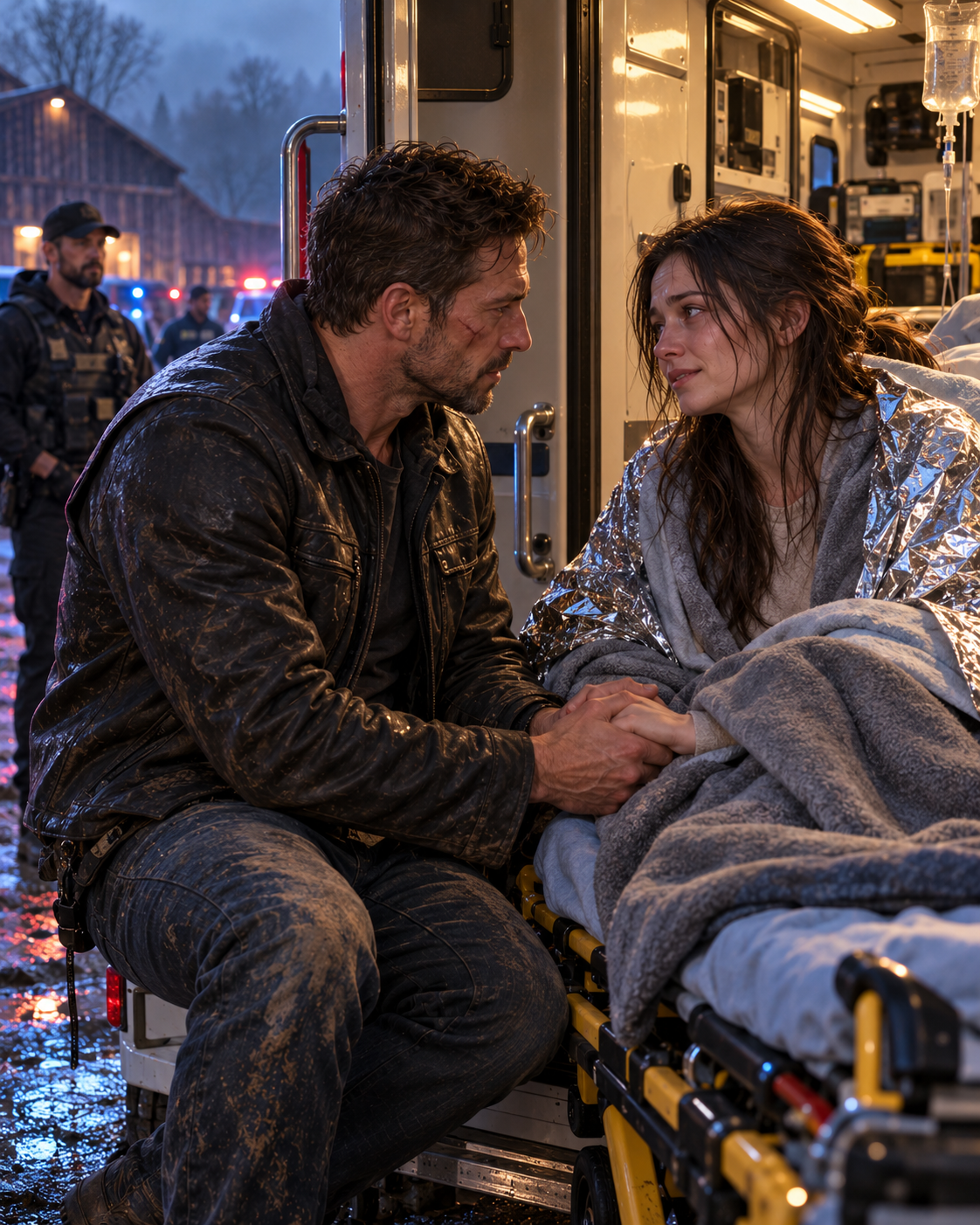
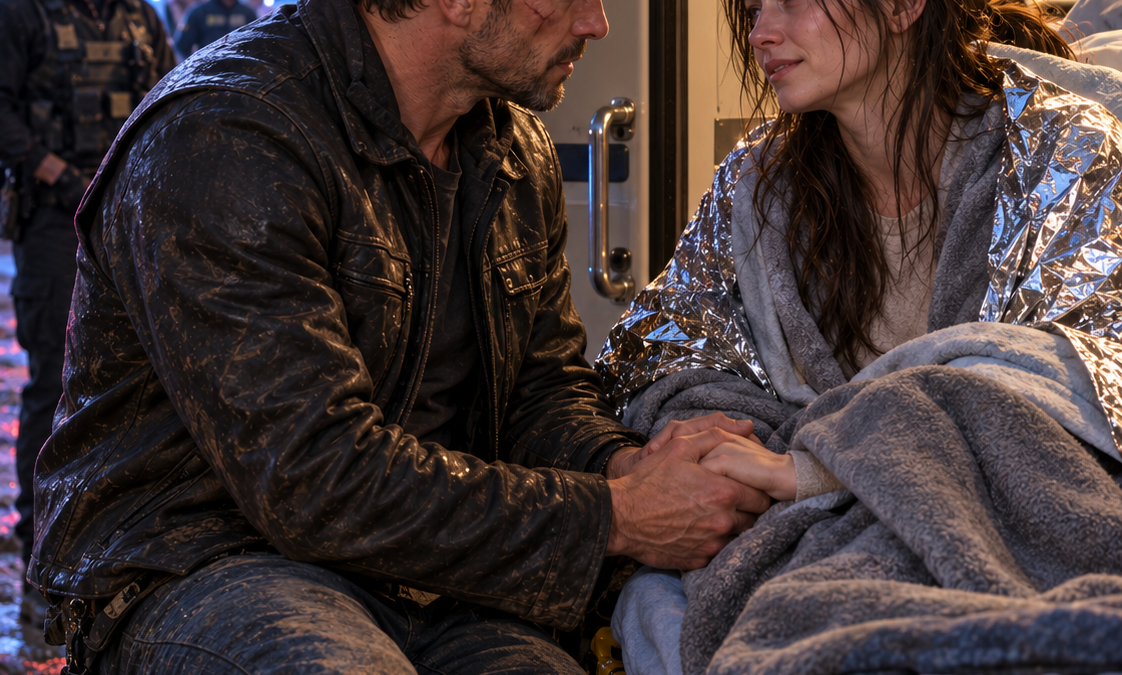
She was 10 years old, running through rain so cold it felt like broken glass against her skin. And the truck behind her had no headlights.
That was the part that made Ryder Cole’s blood stop moving.
Not the sound of her boots slapping against wet asphalt. Not the way she burst through the garage door with her hair plastered flat against her white face. Not even the single word she managed before her knees nearly buckled.
It was the truck parked half a block back in the dark. engine idling, headlights deliberately off.
Patient the way only the most dangerous kind of man knows how to be patient. Ryder had seen that kind of patience before in Fallujah in the silence before everything went wrong.
He set down his wrench.
The rain had been falling since 4:00 in the afternoon, and by 9:00 it had turned mean. It came down sideways off the mountains, the kind of November rain that carried ice inside it without ever fully committing to sleep, and it turned every street light in Harrow into a smeared orange bruise against the dark.
The town itself was the kind of place that had stopped expecting good news somewhere around 1987.
old mill buildings with their windows boarded, a main street with three closed storefronts for everyone still operating, and roads that the county resurfaced just often enough to remind everyone they’d been forgotten.
Iron Valley Garage sat at the end of Mercer Street like it had always been there and always intended to stay. The sign above the rollup doors was missing two letters, and nobody had replaced them.
The concrete floor was stained black with decades of oil and transmission fluid and the particular kind of permanent grime that only comes from men who work until their hands bleed and then come back the next morning and work some more. Four motorcycles were parked inside.
Three Harleys and one older Triumph that its owner, a compact, dark-eyed man named Santos, claimed he’d kept running through sheer personal stubbornness for 19 years.
Ryder Cole was under the second Harley, a 2009 Road King with a fuel delivery problem that had been irritating him for 3 days. He had the tank off and his forearms coated to the elbow in grease. And his mind was in the particular kind of empty place that mechanical work sometimes produced.
Not peace exactly, more like a temporary ceasefire between him and the rest of his own head. He had 41 years of living behind him and a body that carried the evidence of most of the difficult ones.
A scar along his left jaw from a piece of shrapnel that had missed his kurateed by the distance of a drunk surgeon’s bad Tuesday.
A knee that predicted rain more accurately than the local news.
Hearing in his right ear that cut out sometimes without warning, which was why he almost didn’t hear the sound of running boots.
Almost. Santos heard it first.
He was at the workbench near the open side door cleaning a carburetor with the focused attention of a man who had nothing waiting for him at home and had long since made peace with that fact. He straightened up, looked toward the door, his hand, moving entirely without instruction from the thinking part of his brain, set down the carburetor brush and moved to the edge of the workbench where a torque wrench was sitting.
Old habits.
You didn’t spend four years in the infantry and entirely lose old habits.
Hatch Mercer looked up from the corner where he’d been reading something on his phone, his heavy boots crossed at the ankle, his reading glasses, which he refused to acknowledge he needed, perched on the end of his nose.
He was 53, built like a man who had once been larger and had compressed rather than diminished with age, with a deputy sheriff’s badge he no longer carried, but a deputy.
Sheriff’s instincts he couldn’t have left behind if he’d tried.
He took off the glasses and folded them without looking at his hands. The fourth man, Dex Holloway, was the youngest of them at 34, a former army mechanic with a talent for engines and an unfortunate relationship with silence.
He filled it constantly, talked through everything, processed the world in spoken sentences.
But he’d gone quiet, too.
He could feel what the other three were already reading in the air. The running boots hit the concrete apron outside the garage door.
And then the door itself swung open with a violence that wasn’t anger.
That was pure desperation. And the girl came through it.
She was small. She was soaked through to the skin.
Her sneakers left wet prints on the oil dark floor, and her chest was heaving with the particular breathless urgency of someone who had been running longer than their body wanted to run, who had pushed past the point where the legs wanted to stop and had kept going on something other than physical capacity. She scanned the room in a single sweep. Rider still half under the motorcycle, Santos at the bench, Hatch in the corner, decks by the back wall.
and her eyes were doing a calculation that no 10-year-old should know how to do. Not assessing threat exactly, assessing which threat was smaller, which danger was the lesser one.
She had dark eyes and dark hair plastered to the side of her face and a bruise on her right forearm that was at least 3 days old and had gone through the yellow green stage that meant it was healing, but had been significant when it was fresh. Ryder was already out from under the motorcycle.
He hadn’t made a decision to move.
His body had simply registered what it was looking at and acted without consulting him the way it had been trained to do in a different country for different reasons a long time ago.
He crouched down so he wasn’t looming, put himself at her eye level.
The floor was cold and damp against his knee through his jeans, and he registered that fact and filed it away.
“Hey,” he said, kept his voice at conversation volume.
No urgency in it, no alarm, even though every nerve he had was lit up.
You’re inside now.
She looked at him. She was deciding. He could see it.
The same rapid private calculus he’d watched soldiers make before crossing an open stretch of ground where every second of delay was its own kind of danger.
But moving too fast was worse. Then she grabbed his sleeve. Both hands.
The fabric of his flannel shirt pulled taut. Her knuckles were white.
“He’s following me,” she said.
Every wrench in the building stopped turning. Dex had been about to say something, so some reflexive noise of comfort or confusion, and it died in his throat. Santos set the carburetor brush all the way down now, not just aside.
Hatch was already on his feet, already moving toward the side window, not running, not drawing attention to the motion, just transitioning from sitting to standing to positioned with the practiced unhurriedness of a man who knows that you don’t telegraph intent.
What’s your name?
Ryder asked the girl. Avery.
Avery. Okay.
My name’s Ryder.
Nobody’s going to touch you in here.
He wasn’t performing calm.
He was calm. The specific kind that comes from years of having your nervous system forced to override its own panic response until the override becomes the default. Where is he?
She swallowed. Her jaw was trembling. Cold.
Fear. Probably both. Probably impossible to separate them at this point.
He was right behind me. Dark truck.
He doesn’t have his lights on.
Hatch from the window. I see it.
Those three words landed in the room like stones. Nobody moved dramatically.
That was the thing. There were no dramatic gestures, no weapons produced, no speeches given.
Santos simply moved to the position near the door where the angle was best. Dex reached up and killed two of the interior lights, leaving the garage dim enough that anyone looking in from outside would have trouble reading faces.
Ryder stayed exactly where he was, crouched at Avery’s level, because moving away from her right now would have been the wrong call.
And he knew it the same way he knew most things. Not from thinking it through, but from accumulated damage. Lights on or off the whole time you were running?
He asked her. Off?
She said, “He’s been doing it for he does it for a long time.”
The phrase for a long time landed with a weight that pressed against the inside of Ryder’s chest like a thumb on a bruise.
Not an incident, a pattern. Not tonight, an ongoing thing.
Is there someone we can call? Your mom. Dad.
Something moved across her face.
It was too complicated to name quickly, and he didn’t try.
my mom.
But she’s she doesn’t know I left.
She’s going to be so scared.
What’s her number?
Avery told him. Ryder pulled out his phone and stepped two paces away. Close enough that Avery could still see him, which mattered, but far enough to lower his voice and dialed.
Outside, the dark truck hadn’t moved.
Hatch had his phone out, too, and Ryder caught the motion of him typing rather than calling and understood he was running the plate. former deputy still had the contacts would know in a few minutes who that truck was registered to, assuming it was registered at all, assuming the plate was real.
Both of which were assumptions Ryder was not prepared to make.
The call connected on the second ring and a woman’s voice came through tight with the kind of fear that hasn’t broken into panic yet.
The last seconds of control voice. Hello.
Who is this?
My name’s Ryder Cole.
I run a garage on Mercer Street. Your daughter came in out of the rain.
She’s safe.
She’s standing right next to me.
A sound from the other end.
That wasn’t a word.
She said there’s someone following her.
Dark pickup. No headlights.
He’s still outside.
Oh god. The voice dropped.
Oh god. He found us again.
I need to I’m coming.
I’m coming right now.
Don’t let her.
She’s not going anywhere.
Neither are we. You know the address. Mercer and fourth.
That’s us.
5 minutes. She said please.
5 minutes. He hung up and looked at Avery.
Your mom’s on her way.
5 minutes.
For the first time since she’d come through the door, Avery’s grip on his sleeve relaxed by one small degree.
Not gone, still white knuckled, still desperate, but one small degree.
Hatch stepped away from the window and crossed the floor to Ryder, shouldertosh shoulder, and said quietly enough that the words didn’t carry.
2019 Ram registered to a Gavin Rhodess county address.
I’ve seen that name.
Where?
Hatch’s mouth tightened.
Can’t place it yet.
Recent. Something I came across before I turned in the badge.
A pause.
That’s not good.
It wasn’t good.
A name that a former law enforcement officer had encountered but couldn’t immediately locate in his memory.
Was a name that had appeared in enough different places to become background noise. Background noise was not how innocent men ended up.
Outside the truck idled, patient, still dark. Ryder stood up and looked at Santos, who nodded once and then looked at Dex, who for once said nothing, and then looked back at the window, where all he could see was rain falling through orange light and the black shape of a vehicle that was choosing to wait rather than leave.
Predators who waited were worse than the ones who rushed. He knew that, too, from the other side of the world.
Danielle Quinn arrived in 4 minutes and 30 seconds, not 5, which told Ryder something about the speed she’d been driving and something else about the kind of fear that compresses time.
She came through the door without knocking. The door was open, had been open.
They’d left it open deliberately, and Avery crossed the floor to her mother in three running steps, and Danielle caught her daughter with both arms.
And the sound she made was not quite a word, and not quite anything else either. It was the sound of a specific kind of terror releasing. Ryder gave them 30 seconds.
Then Miss Quinn.
Danielle looked up over the top of her daughter’s head.
She was mid30s, dark-haired like Avery, with the particular look of someone who had been running on adrenaline and insufficient sleep for long enough that the exhaustion had stopped being acute and become structural. There were shadows under her eyes that were more than tonight.
There was a way she kept her daughter pulled tight against her left side while her right hand stayed slightly out. Not a combat stance, not trained, but the instinctive geometry of a woman who had spent months trying to put her own body between her child and something dangerous.
He’s still out there, she said.
It wasn’t a question.
Still in the truck.
We’ve got someone calling it in.
Her face moved through something complicated.
They won’t do anything.
The flatness and how she said it. No bitterness, no anger anymore, just fact.
Hit Ryder harder than anger would have. Anger meant you still expected something different.
That flatness meant the expectation had been taken from her.
They’ve been called before.
He said it wasn’t a question either.
11 times, Danielle said, in 7 months, three counties.
She said it the way you say a number you’ve memorized because you’ve had to repeat it so many times in so many offices to so many indifferent faces that it has stopped feeling like a real number and started feeling like a combination to a lock that never opens.
He always explains it away.
He knows how to He’s very good at explaining things away.
Dex had drifted closer and Ryder heard the sharp exhale through his nose that Dex made when he was working very hard not to say something. Santos from the window.
Cop just turned down the street. They all watched.
A patrol car rolled slowly past the garage, its spotlight flicking briefly over the dark truck, then continued. Ryder waited.
The truck’s engine sound changed.
A subtle shift in idle that you’d only catch if you were listening for it.
And then the headlights came on. Not rushing, not startled, deliberate, measured. The truck pulled away from the curb and turned at the corner and was gone.
Just like that, gone. And when the patrol car came back around, which it did to its credit, which was more than nothing, and the officer came inside and took down information and called it in, the truck was nowhere on the road within a fiveb block search.
And Gavin Rhodess,
when his name was run, had no active warrants, and there were no plates visible on any security footage from the two cameras on this block that actually functioned.
Ryder watched the officer’s face while he explained to Danielle that there wasn’t much they could do tonight, that she should document everything, that there were resources available, and he watched the way the officer was not wrong, was in fact doing what he was trained to do within the structure of what he was permitted to do, but was also functionally useless in the way
that structures are often useless when someone has learned exactly how to move inside their gaps.
Danielle listened, nodded, thanked him, and when he was gone, she stood in the middle of the garage, and her daughter was pressed against her side, and the silence was the loudest thing in the room. Ryder looked at Hatch.
Hatch looked at his phone.
“Still working, still pulling at whatever thread the name Gavin Rhodess had snagged in the back of his memory.”
“You have somewhere safe to be tonight,” Ryder asked Danielle.
“We have an apartment,” she said.
“But he knows where it is.
He’s She stopped.
Started again. He drove past it twice this week slowly with his lights off.
Same as tonight, Avery said very quietly from against her mother’s side.
The words went through the room. Ryder pulled out a chair from beside the workbench, a beat up metal thing with a cracked vinyl seat, and Danielle sat because she needed to, because the adrenaline had done its work and left, and what was underneath it was pure exhausted human terror. Santos made coffee without being asked, which was either instinct or the simple fact that it was the only useful thing to offer, and Avery sat in the chair next to her mother and wrapped both hands around the mug Santos gave her and stared at it.
Hatch came to Ryder’s shoulder again.
This time his voice was very quiet.
“I placed it,” he said.
Ryder turned slightly so his back was to the Quins.
“6 months ago,” Hatch said before I turned in the badge.
There was a report domestic out in Caldwell County. Woman named Petra Sims.
She’d filed against a man matching RHS’s description, different name.
Report went nowhere. Then 3 weeks later, Petra Sims stopped returning calls to the county victim advocacy office.
He stopped. Ryder waited.
“She never came back,” Hatch said.
“Case is still technically open.
Nobody’s actively working it.”
In the silence that followed, the rain hit the garage roof in waves, and the coffee maker made its small domestic noise, and Avery turned the mug slowly in her small hands, and Ryder stood very still, with everything Hatch had just said, spreading outward through his understanding, like a crack moving through ice. Not a man who frightened women and moved on.
a man who completed what he started. A man who had done it before. A man who had somehow walked away from all of it.
He looked at Danielle Quinn’s profile, the rigid set of her jaw, the way she kept one hand on Avery’s back without seeming to notice she was doing it, and he understood that she already knew on some cellular level what she was dealing with.
That was why the flatness. That was why 11 reports across three counties.
She wasn’t being paranoid.
She was being accurate.
“We’re not calling it a night,” Santos said from behind him.
“Not a question.”
“No,” Ryder said.
Dex was already pulling a sleeping bag from the storage shelf in the back.
“They kept two, winter habit, men who’d spent enough nights unable to get home.”
He set it on the bench without a word, without drama. and that small pragmatic motion said more than any speech would have.
Ryder pulled over another chair and sat down across from Danielle. He rested his forearms on his knees and looked at her straight on. The way he looked at people when he needed them to understand he was not performing concern.
Tell me everything he said from the beginning. All of it.
every time you reported it and what happened after. She looked at him for a moment, measuring the same calculation Avery had made when she came through the door, the same private triage of which danger was smaller, which stranger was safer. Then she took a breath and she started talking.
And as she talked, the rain kept falling. And outside on Mercer Street, the street lights made their orange bruises against the dark.
and Hatch Mercer sat in the corner with his phone and his retired deputies contacts and started pulling threads.
And what he was beginning to find at the end of those threads would not become clear until much later that night when a name came back in a returned text message that made him stand up very slowly from his chair and cross the room to Ryder
and say in a voice stripped of all expression, “Ryder.”
Roads didn’t work alone on the Petra Sims disappearance.
Someone helped bury the report. He held up his phone. The name on the screen was someone Ryder knew.
The name on the screen was Carl Ryder Cole. Not Ryder.
Not the man standing in the garage with grease on his forearms and a 10-year-old girl’s coffee mug still sitting on the bench beside him.
The other Cole, the one who had taken a different road at a different junction 30 years ago and had ended up somewhere that looked like success if you didn’t examine it too closely.
His uncle Carl Cole was 58 years old and held the position of Harrow County Deputy Commissioner of Public Safety, which was the kind of title that meant he sat on three oversight boards and attended four ribbon cutings a year and had his photograph taken shaking hands with the state representative every election cycle. He had a house on the north side
of town with a flag pole in the front yard. He sent Christmas cards.
He had delivered the eulogy at Ryder’s father’s funeral 14 years ago and had put his hand on Ryder’s shoulder afterward and said with what had seemed at the time like genuine weight that family was the only thing that lasted.
Ryder stood holding Hatch’s phone and did not move for a long time.
The rain on the roof, the coffee maker going quiet.
Avery’s small breathing from the chair where she’d fallen into the thin, exhausted sleep of a child whose body had simply refused to carry the fear any further.
“How solid is this?”
Ryder asked. His voice was level. He had trained it to be level in worse moments than this, and it held now, though the effort was something only he could feel, a kind of internal physical pressure behind the sternum.
“Solid enough to scare me,” Hatch said.
Text came back from Willa Marsh. You remember Willa?
Ryder remembered Willa Marsh, records clerk for the county sheriff’s department for 22 years.
The kind of person institutional memory lived inside. The kind who knew where every filing error, every procedural irregularity, every buried report actually went when it disappeared.
She says the Petra SIMS report was flagged at intake for review by the public safety oversight board.
Hatch said standard protocol when there’s a crosscount element.
The board chair at the time reviewed it personally and issued a hold. Hold meaning what?
Hold meaning it went into a secondary file that doesn’t show up in the standard database search.
Not deleted, just placed where nobody would look unless they knew to look there. Hatch took his phone back. The board chair who issued the hold was your uncle.
Danielle had heard.
She hadn’t moved, hadn’t said anything, but her posture had changed in the way that people’s postures change when they hear something that confirms what they’ve been trying to convince themselves wasn’t true.
Her shoulders came down about half an inch. Not relief.
The specific physical surrender of a person who has been holding themselves rigid against a reality they couldn’t prove and has just been handed the proof and found that proof is not the comfort you think it will be.
He has people, she said quietly. I always felt like he had people. Every time I reported it, there was always this this moment where the officer would leave the room to make a call and when they came back, something had changed in their face.
She paused. I thought I was going crazy.
You weren’t, Hatch said.
I know that now, she said. And there was nothing satisfying in how she said it.
Santos was leaning against the workbench with his arms crossed and his eyes doing that thing they did when he was processing. Very still, very flat, the particular blankness that was not absence of thought, but the opposite.
He’d been listening to all of it.
He said nothing yet. Santos operated on a longer fuse than most, but when he reached the end of it, the end of it was final.
Dex was pacing. small circuit. Three steps and turn.
Three steps and turn near the back wall. He was chewing the inside of his cheek, which meant the thing he was not saying was fighting hard to become the thing he was saying. Ryder handed the phone back to Hatch.
He walked to the window. The street was empty. No truck, no patrol car, nothing but rain, an orange light, and the absolute stillness of a small town at nearly midnight on a November week night.
Everything looked normal. Everything looked like nothing was happening. That was the problem with men like Gavin Rhodess and the structures that protected them.
They operated in the space between normallooking moments. They survived because the moments between their actions looked exactly like nothing.
“We need to know more before we do anything,” Ryder said still at the window.
“Define anything,” Dex said.
The pacing stopped. Ryder turned around. Dex was looking at him with an expression that was asking a specific question, and Ryder looked back at him steadily until Dex exhaled and looked away.
I mean, we need to know the shape of it, Ryder said.
Before we walk into something we can’t walk back out of.
And the woman, Santos asked, still in the same position, his voice was quiet and very even. Petra Sims, the name sat in the room.
Yes, some writer said that, too. Hatch was already typing.
He had a network, not official anymore, retired badge territory, but two decades of relationships with people who still carried the badge and who trusted him specifically because he’d handed his back with his conscience intact, which
was a rare event than the public generally understood.
It was past midnight. People would still answer. Danielle stood up from her chair and came to stand a few feet from Ryder.
She kept her voice below the range that would disturb Avery, who was still asleep against the cushion Santos had folded against the arm of the chair without any fuss. A wordless pragmatic act that Ryder had clocked and filed.
Men who’d never been good with words sometimes communicated exclusively through small pragmatic acts, and Santos was one of them.
“You need to understand something about Gavin,” Danielle said.
“She was holding her own coffee, cold now, the mug with both hands.
Not for warmth, but something to do with her hands.
He’s not impulsive.
He never loses his temper in public. He never raises his voice.
He is He is so normall looking that every time I tried to describe him to someone, it came out sounding wrong, like I was describing someone who didn’t exist.
How long has he been following you? Ryder asked.
7 months.
But I didn’t know him 7 months ago.
I knew him before that. She stopped.
We were neighbors. same apartment building in Caldwell. He was friendly.
He helped me carry groceries once when Avery was sick. He seemed She shook her head. When it started, I thought I was misreading things.
He’d be somewhere I went, the pharmacy, the school pickup.
I’d see his truck and think, “This is a small town.
People are everywhere.”
And then Avery told me something. Ryder waited.
She told me he’d spoken to her, Danielle said, twice.
Once outside the school and once at the park. Both times when she was briefly alone.
both times asking her questions about me, about our schedule, what time I got home, what nights I worked late. She set the coffee down.
That was the day I stopped thinking I was misreading things. Avery was still asleep.
The sound of her breathing was slow and even now the deep involuntary rest of a child who had burned through every reserve.
And Ryder found himself listening to it the same way he’d listened to things in other dark places.
Measuring it against the silence, making sure it stayed steady. You moved, he said twice. He found us both times within 3 weeks.
Same county? No. Caldwell first, then we crossed into Harrow.
He found us here in 18 days. She paused. He has access to something.
Some way of finding addresses.
I don’t know if it’s DMV records or utility applications or I don’t know, but he’s faster than we can move.
Resources, Ryder thought. Or someone with resources helping him.
Both possibilities sat in the same dark territory. Hatch looked up from his phone. Ryder.
The tone of it brought everyone’s eyes to him.
Willa came back again.
Hatch said she’s been going through secondary files.
He looked at the phone, then at Ryder.
Petra Sims isn’t the only one.
There are three other reports going back 6 years. Different names, different counties, all involving a man whose physical description matches roads.
All flagged for board review. All issued the same hold. The silence went very deep.
6 years, Santos said. 6 years, Hatch confirmed. Ryder turned back to the window.
The rain had slowed slightly, gone from the driven sideways sheets of earlier to something steadier and vertical, and in the change he could see the street more clearly, empty, quiet. He pressed two fingers against the cold glass and felt the temperature outside pushing back against his skin. Six years of buried reports.
Three other names. A county official with the reach to make evidence disappear.
and a man out there right now in a dark truck with his lights off who had been at this for long enough to know exactly how much protection he had. This was not a domestic stalking case that had escalated.
This was something with architecture. He turned from the window.
I need to make a call. Who? Dex asked.
Someone I don’t particularly want to call, Ryder said.
Which was all he said about it.
and the others let him go to the back of the garage near the storage room door where there was enough distance for the conversation to be private and he stood there in the half dark with his phone and made the call he didn’t want to make.
Detective Marlo Voss picked up on the fourth ring.
She sounded like someone who hadn’t been asleep but wasn’t pleased to be further confirmed in her insomnia.
Ryder had known Voss for 6 years since the situation with Dex’s brother that had brought them into contact with county CD for the first and so far only time.
And their relationship occupied the specific difficult territory between mutual respect and mutual weariness that existed between people who operated by adjacent but not identical codes. Cole, she said, not a greeting exactly, an acknowledgement. I have something, he said.
At midnight. At midnight. A pause.
He could hear her moving. The specific sound of someone shifting from horizontal to sitting, feet on floor. How bad?
Depends on what’s at the end of it, he said.
Possibly vary. He kept it short.
Names, dates, the secondary file situation, Willa Marsh’s findings.
He did not mention his uncle’s name.
Not yet. not over a phone call and not until he had looked at more of what Hatch was pulling.
Because the moment he said that name to a detective, the entire situation would be taken out of his hands and entered into a process he couldn’t monitor or control.
And if that process had gaps in it, if his uncle’s reach extended into C, then Danielle Quinn and her daughter would be exposed as the source before anyone was in custody.
He wasn’t ready for that risk.
Voss listened without interrupting, which was one of the things he respected about her. When he finished, she was quiet for a moment. The Sims case, I know, she said.
It crossed my desk about 2 months ago as a cold referral. Nothing attached to it.
I put in a records request and got back a file that was thinner than it should have been. How much thinner?
Initial intake form, no follow-up documentation, no interview transcripts, no officer notes beyond the first contact. She paused. I flagged it and got back a notification that the file was complete per county records.
It’s not complete, Ryder said.
No, Voss said.
I know it’s not.
Another pause. Longer.
He could feel her making the same calculations he’d been making, the same assessment of how much ground to walk across and how fast.
I need to see what you have. Not over the phone.
I know. Bring Mercer, she said.
He He knows how to package this. I know that too, Cole.
Her voice shifted by one register. Not softer, just more stripped down.
If this is what you’re suggesting it is, if there’s an institutional element, you understand what that means for how we have to move.
Yes. Carefully.
Yes. In the morning, she said 7. The diner on Portsouth, not the building.
7. he said and ended the call.
He stood for a moment in the half dark near the storage room door. The garage sounds came through.
Rain on the roof, the low murmur of Hatch and Santos talking at the bench, the periodic sound of Dex’s boots on the concrete, the small deep sleep breathing of the child in the chair.
He pressed the heel of his hand against the doorframe. The wood was cold and solid against his palm.
He thought about his uncle, about the Christmas cards, about the hand on his shoulder at his father’s funeral, about the voice saying, “Family is the only thing that lasts.”
He went back into the garage. Hatch was off the phone and standing beside Santos with an expression that had moved from the controlled neutrality he maintained under stress into something else.
Something with edges. What? Ryder said.
Will found something else.
Hatch said in the secondary files, one of the three names, a woman named Carla who was in the Caldwell County system as a missing person’s report from 4 years ago.
He stopped. Ryder waited. The report was filed by a brother.
Hatch said brother’s name in the intake form is listed as Ryder Cole.
He met Ryder’s eyes.
She’s in the secondary file, Ryder.
which means someone flagged her case for board review. The floor did not move, but it felt like it did.
Carla, his sister, whose disappearance had been ruled a voluntary adult relocation by the county 3 months after she was reported missing, whom he had spent the better part of a year trying to find before the absence of any evidence that she was being held anywhere had finally agonizingly eroded his certainty that something had happened to her. whom he had filed one final report on before the deputy behind the desk had looked at him with exhausted professional patience and explained that adults had the legal right to choose not to be found.
His sister, whose name was in a secondary file next to three other women who had made reports about a man matching Gavin Rhodess’s physical description.
He heard himself say, “Who flagged it?”
“Same hold,” Hatch said.
same board chair, the same name, his uncle. Ryder sat down.
Not dramatically, he simply ran out of whatever had been keeping him upright and found the nearest surface, which was the edge of the workbench, and sat on it. He put both hands flat on his thighs and looked at the concrete floor between his boots and breathed. Nobody spoke.
That was the thing about these men. They knew when speech was the wrong tool. Santos put a hand on the back of his own neck and looked at the ceiling.
Dex stopped pacing and stood with his arms at his sides. Hatch set his phone face down on the bench.
Danielle Quinn across the room was watching him with an expression that had gone very still and very careful. The expression of someone who understands they are witnessing something private and are holding themselves very quiet so as not to disturb it.
When writer looked up, his face was the face of a man who has just had his personal history rewritten by someone else’s hand.
Not collapsed, not destroyed, but fundamentally rearranged into a shape he didn’t choose and can’t unsee.
She’s not a voluntary relocation, he said.
No, Hatch said.
I don’t think she is.
She’s He stopped, looked at the floor again, looked back up.
She’s somewhere in this.
We don’t know where yet, Hatch said, and the carefully neutral word yet was the most important word in the sentence.
But she’s not not voluntarily gone, Santos said quietly.
“No.”
Ryder pressed both hands flat on the workbench on either side of him and pushed himself back up to standing. The motion was deliberate and slow.
The motion of a man reloading something. 7:00, he said.
Portsmith Diner Hatch, you and me. He looked at Santos.
You and Dex stay with them.
Nobody moves them until I know the shape of the structure we’re dealing with.
And if Roads comes back tonight, Dex asked. Ryder looked at him.
The answer was in his face and Dex read it correctly and nodded once. Get Danielle to call her landlord and give notice.
Ryder said, “Tonight.
I don’t care what time it is.
They’re not going back to that apartment.”
He paused. There are two rooms above this garage.
They haven’t been used in about 3 years.
Heat works. The bathroom works.
It’s not It’s fine, Danielle said from across the room.
The quickness of it said everything about how far past preferences she was operating. One more thing, Ryder said. He looked at Hatch.
Danielle mentioned a journal, meticulous, everything documented. Hatch nodded slowly.
If it’s admissible, if it’s as complete as she says, it’s more than we can get from the secondary file alone.
Physical documentation timestamped in her handwriting. He looked at Danielle.
Where is it? In my car, she said. I keep it there.
I kept it where I could always get to it. I need you to bring it inside, he said. And then we make a copy.
Hatch. I have a scanner on my phone. Hatch said.
Every page, writer said, every page of that journal gets into the cloud tonight. Not because he was paranoid, because he had just understood that Gavin Rhodess was not a man operating on instinct and anger. He was a man operating inside a system.
Systems could be disrupted. Systems had pressure points. But systems also had reach.
And if his uncle’s reach extended, if the architecture of protection ran deeper than one hold on one set of files, then a single physical journal in a single car represented the most vulnerable documentation in the entire case.
He looked at Avery, still sleeping, at the particular stillness of her face in sleep, the way the tension left it so completely that she looked years younger, looked like a child who had never learned the particular calculus of which stranger was safer. He looked back at the others. There was a moment, brief, unspoken, something that passed between four men who had been in places that required this kind of wordless renegotiation of what a situation actually was.
And then they all moved at once, each toward a different task. And the garage filled with the quiet, purposeful sounds of people who have accepted where they are and what needs to happen next.
at 6:45 in the morning with Danielle’s journal fully copied and encrypted on three separate cloud services and hatch behind the wheel of his truck warming the engine and Santos and Deck settled into the kind of vigilant quiet that combat veterans could maintain indefinitely and Avery still sleeping upstairs in a room that smelled of old motor oil and winter
cold but was locked and warm.
At 6:45, just as the first gray light was beginning to press itself against the garage’s high windows, Ryder’s phone buzzed.
Unknown number. He picked up.
Nothing on the other end. No voice, just the sound of breathing. And very faintly beneath it, the sound of a Harley engine idling somewhere distant.
A specific model, a specific year.
He’d been listening to engines long enough to know.
The sound of a Road King, same as the one he’d been working on when Avery came through his door.
And that specific detail, that familiar mechanical sound used in this context, told him that whoever was on the other end of the line had been watching the garage long enough to know what was inside it. He opened his mouth.
Before he could speak, a woman’s voice, barely above a whisper, cracked with something that might have been weeks of disuse, said two words.
Find me. And the call ended.
He stood there with the dead phone in his hand and the two words still moving through him like a current that hadn’t finished traveling.
Find me.
The voice had been a woman’s.
Barely a voice at all.
The kind of sound that comes from a throat that hasn’t been used for speaking in a long time or has been used only for other things, things that leave different marks.
Cracked at the edges.
Careful with volume, the way people are careful when they’ve learned that volume has consequences.
He knew that voice.
He had not heard it in 4 years, and it had lived in a specific place inside him, where he kept the things he didn’t take out and examine, because examining them served no purpose he could tolerate.
And yet he knew it the same way he knew the sound of that Roadking engine from the marrow outward. The specific frequency of it registered somewhere below conscious thought.
Carla Hatch was at the truck door, and he turned when Ryder didn’t come.
He read the stillness and crossed back across the concrete without being asked what happened. Ryder showed him the unknown number.
Told him the two words. Told him about the Roadk in the background.
Hatch looked at the number for a long time. Then she called you.
She still had your number. Or someone gave it to her.
Ryder’s voice was flat because he was making it flat.
Or someone let her call. The second possibility was worse than the first and they both understood why without saying it.
A woman held somewhere for four years who still had her brother’s number memorized and managed to get to a phone.
That was one thing terrible in its own right, but navigable. A woman whose captor allowed the call.
That was something else. That was a message being sent.
That was someone who knew Ryder was involved now and wanted him to know they knew. roads, Hatch said. Or my uncle, Ryder said.
Hatch was quiet for a moment. Or both.
They drove to the Portsmith Diner in silence that was not comfortable, but was the kind of shared silence that doesn’t need to be filled.
The silence of two men who have absorbed the same information and need the drive to let it settle into something they can work with.
The heater and Hatch’s truck ran loud and uneven, and the windows fogged slightly at the edges, and outside the November morning was the color of old concrete, lightless and low, the kind of morning that felt permanent.
Detective Mara Voss was already there when they arrived.
Corner booth back to the wall, coffee in front of her that she’d barely touched, which meant she’d been here long enough for it to go cold and hadn’t noticed.
She was 50, lean in the specific way of someone who didn’t eat enough on difficult cases and was currently on a difficult case.
Her eyes were the kind of brown that looked almost black in low light. And they moved across both men as they came through the door with the professional assessment of someone who read people for a living and had gotten very good at it.
She looked at Ryder’s face and said, “Something happened since midnight.
” He sat down, told her about the call, told her about the voice.
Voss set her coffee cup down very carefully with the deliberate precision of a person managing their physical reactions. Your sister? I believe so.
And the road king in the background. Someone who knew I was working on one.
Someone who’d been watching the garage.
Boss looked at Hatch. What else did Willow find? Hatch laid it out.
The secondary file. The four women including Petra Sims and Carla. The board review holds.
The name attached to every hold. He did not say the name out loud. He slid his phone across the table with the screen showing.
Voss looked at it.
Her face did not change in the way that faces don’t change when someone has trained themselves extensively not to let them change, but her right hand flat on the table beside her coffee cup pressed down slightly harder against the surface.
A
small thing. Ryder caught it. You understand?
She said, “What this means for how I can move?”
Yes.
Writer said, “If this name is in the chain of command for any division that feeds into my unit, then I cannot run this through standard channels.
I flag this internally and it goes to someone I cannot vet for connection to him before I know what those connections are.”
“How long to vet?”
Hatch asked.
“I don’t know.
The honesty in it was precise and not comfortable. I need to bring in someone I trust completely outside the county structure.
State level.
That takes time I don’t have.
If your sister is She stopped, chose the word carefully. If your sister is being held somewhere that could be moved, Ryder looked at her.
How long? 24 hours to make the right contacts without alerting the wrong ones. Maybe less.
She paused. Maybe more.
The diner around them made its ordinary morning sounds. Dishes, coffee, a radio behind the counter playing something country and innocuous, and the normaly of it felt almost aggressive against what they were saying in the corner booth.
There’s something else, boss said.
She pulled a manila folder from the bag beside her and opened it on the table, turned it to face them. A photograph. A farm property aerial view printed from what looked like a county GIS map.
Two weeks ago, I got an anonymous tip. A location in the Eastern Hills about 40 minutes from here on Route 9. Old agricultural property been out of active use for about 8 years.
Changed hands twice in the last 6 years through LLC’s I have not been able to trace to a natural person.
Writer looked at the photograph. Rolling terrain, treeine, two structures visible, a main building and what appeared to be a large outbuilding, possibly a barn.

