A Former Navy SEAL Said, “No Woman Would Want Me”… She Whispered, “Then You Forgot About Me” – Part 1
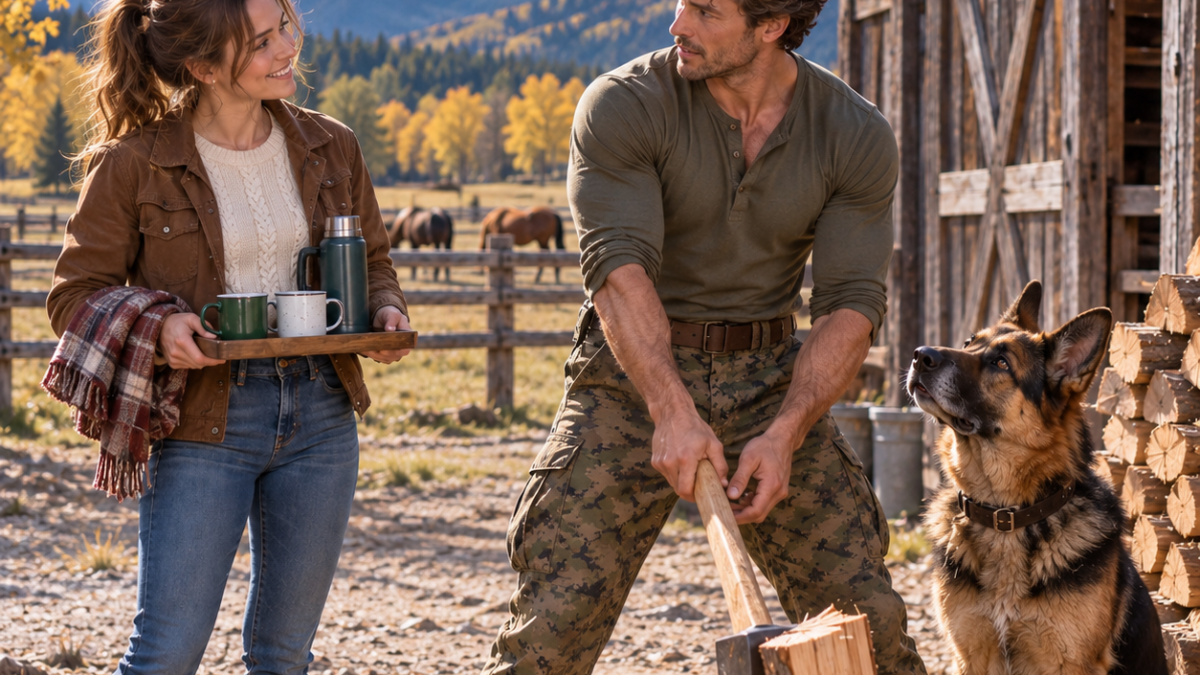
A Former Navy SEAL Said, “No Woman Would Want Me”… She Whispered, “Then You Forgot About Me”
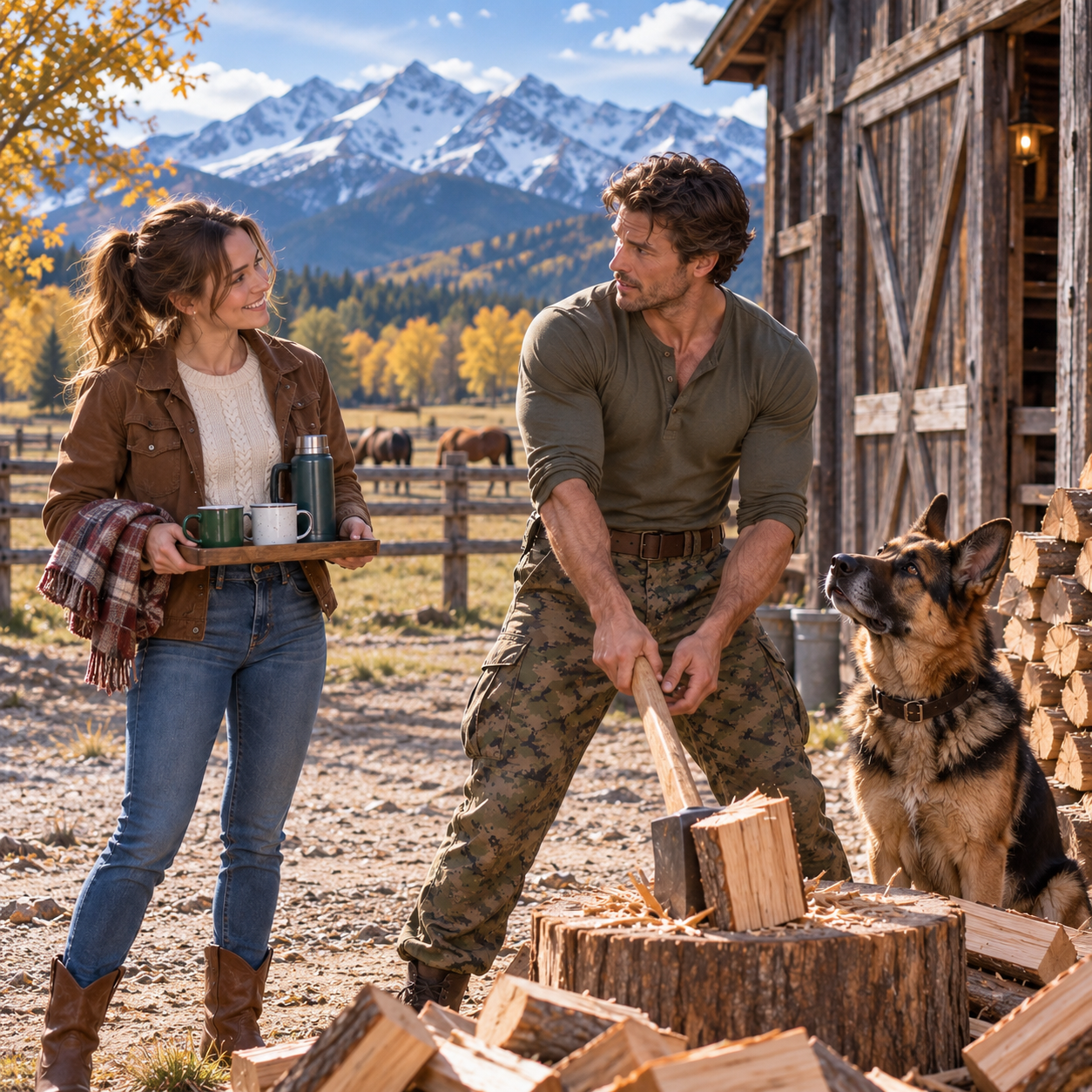
6 years after leaving the Navy Seals, Jack Callahan had gotten used to doing everything alone.
One afternoon, while splitting firewood, Emily asked him a question he wasn’t ready for.
Do you ever think about not doing all this by yourself? Jack gave a dry laugh.
No woman with any sense would want a man like me.
Emily didn’t smile.
Then you forgot about me. Jack went still.
For years, he had seen her as the neighbor’s little girl he once looked after.
But Emily wasn’t that girl anymore.
And Jack was about to learn that even for a man trained to watch the horizon, sometimes the best things in life aren’t far away at all.
They’ve been right beside us, waiting to be seen.
5 weeks earlier, Jack Callahan’s life was still arranged in a way that required very little explanation.
North Fork Ranch sat several miles outside Joseph, where open pasture gave way to scattered cottonwoods, and the Wawa Mountains rose beyond the valley with enough presence to make most buildings look temporary. Jack owned neither the largest ranch, nor the prettiest one in the county.
He had a modest cattle herd, a hayfield that behaved differently every year, an old barn with a roof he kept promising himself he would replace, and enough work to send him to bed tired without making him wonder how he would pay the feed bill. At 40, that suited him. He had been out of the Navy Seals for 6 years.
He almost never introduced himself as a former SEAL unless someone asked directly, and even then he had learned how to shorten the answer before curiosity became a second conversation. The military had taken a large part of his adult life, but Jack had no interest in turning the rest of it into a museum.
Some habits had followed him home anyway.
Before going to bed, he checked the next day’s forecast and the fuel levels in the tractor and UTV.
tools went back where they belonged because wasting 10 minutes looking for a socket annoyed him more than spending 30 seconds putting it away. He kept spare fence staples in two places, filled diesel before the gauge reached the bottom quarter, and could usually tell from the smell of the air and the movement of grass whether a forecast had underestimated the wind. None of this seemed unusual to Jack.
It was simply easier to prepare before something became a problem. Mako understood that kind of life. The German Shepherd had left service not long after Jack did, and 6 years on ranch land had softened some of the harder edges of his working years.
There was gray beginning around his muzzle now, and he no longer treated every morning as if someone had issued him an assignment. He slept in patches of sunlight, took an unreasonable interest in the barn cats, and occasionally pretended not to hear Jack when the porch was warmer than the pasture. But the old discipline remained beneath all of it.
A small movement of Jack’s fingers could still bring him to heal.
A quiet word could stop him halfway across a field. More often than not, Mako glanced at Jack before crossing a gate or approaching something unfamiliar, as though the two of them were continuing a conversation that had started long before either had known what North Fork Ranch looked like.
Jack liked that about him. Neither of them required much talking.
Most mornings began before sunrise and ended according to the work rather than the clock. That September had been mild with cool mornings and dry afternoons, and Jack was trying to finish several repairs while the ground was still easy to work. One section of fence along the western pasture had begun leaning after years of frost and spring runoff, and the wooden brace at Old Orchard Gate was soft enough that Jack could press his thumb into it.
The gate divided North Fork from Harper Ridge Ranch. Technically, the property line ran straight through an old apple orchard that neither family had planted.
Some of the trees barely produced anymore, while others seemed determined to prove they could outlive everyone in Wawa County. The Harpers gathered what food they could use. Jack mostly left his side to deer, birds, and whatever Mo considered worth investigating.
Paul and Marlene Harper had lived next door longer than Jack had owned North Fork.
Paul had known Jack’s father and had watched Jack leave the valley as a young man, convinced there was nothing in Oregon large enough to hold him.
Marlene still sent over food whenever she believed Jack had been living on coffee and fried eggs for too many days, no matter how often he told her he knew how to cook. Their daughter was different. Emily Harper was 26 now.
Jack knew this as a fact in roughly the same way he knew North Fork sat at a certain elevation or that the tractor had recently crossed 4,000 hours. The number registered. What it had never quite done was replace the older version of Emily he carried around without realizing it.
In Jack’s memory, she was 10 years old and wearing rubber boots nearly two sizes too large.
There had been a handful of afternoons back when Jack was in his early 20s and home between stretches away when Paul and Marleene had needed someone to keep an eye on her. Jack had never been especially qualified for the job, a fact everyone involved appeared to understand, except Emily.
Once he had handed her an old walkie-talkie and turned feeding chickens into what he called Operation Chicken Feed. Emily had taken the assignment with terrifying seriousness. She disappeared behind the barn and radioed back that three chickens were hostile and one had gone missing.
Jack told her to maintain visual contact and avoid negotiations until reinforcements arrived. By the time Paul returned home, Jack and Emily had built what she called a command post in the hoft using two blankets, bailing twine, and a folding chair that had somehow come out of the tack room.
Paul stood at the bottom of the ladder for several seconds before asking what exactly he was looking at. Jack told him Emily outranked him and therefore all complaints needed to be directed through the proper chain of command.
For years afterward, Paul brought up the incident whenever he wanted to remind Jack that judgment had improved with age. Those memories stayed easy because they demanded nothing from him.
Emily had been the Harper kid, then the teenager Jack saw during occasional visits home, then the young woman he heard had gone away for school and work. By the time she moved back to the valley, Jack had already returned from the Navy and settled into North Fork. They became neighbors again without ever having to decide to.
What Jack had been slower to notice was that Emily had built a life of her own. A converted room along the enclosed porch of Harper Ridge served as the office for Harper Farm Ledger, the bookkeeping business she ran for ranches and small agricultural operations around the valley.
She handled invoices, payroll, cattle sale records, and the collection of receipts that local ranchers seemed able to generate in extraordinary numbers or developing equally extraordinary reasons for not organizing them. She could spend a morning behind two computer monitors and the afternoon helping Paul move mineral tubs or checking a fence line from the pickup. She knew when a feed bill looked wrong, how much hay her father had left in the south shed, and which sound from the old tractor meant it merely disliked the weather, and which meant Paul should turn it off immediately.
Jack knew most of this separately. He had never assembled the pieces. Late that September afternoon, he was doing exactly what he had come to Old Orchard Gate to do, removing the rotten brace before it failed completely.
Mako lay in the grass several yards away, his ears moving independently with the sounds around him. A light breeze worked through the orchard, dropping an occasional apple into the dry grass with a dull, heavy thump. Jack had just set the replacement board against the post when he heard the Harper side of the gate open.
Emily came through carrying a shallow wooden crate. She wore work jeans, boots, and a faded green overshirt with the sleeves pushed back. Her dark hair was tied loosely behind her head, and there were three apples already in the crate.
Afternoon, she said. Jack nodded toward the trees. Harvesting, salvaging.
Mom wants enough for applesauce. And Walter Keen claims his tree gave him six apples this year.
Generous tree. He called it an insult.
That sounded like Walter. Emily moved beneath one of the older trees and began checking the fruit that had fallen into the grass, leaving bruised apples where they were and adding the good ones to the crate.
She worked without hurry, but without wasted motion either, turning each apple once in her hand before deciding. Jack returned to the brace.
For several minutes, there was no reason to talk. That had always been one of the easier things about the Harpers.
Silence around them rarely needed fixing. Mako apparently disagreed about the division of labor.
He stood, stretched, then wandered toward Emily. Jack barely looked up.
Mako. The dog stopped. Emily had just cut into a small apple with the pocketk knife she used for sorting fruit.
She looked at Mako, then at Jack. Mako looked at Jack, then at the apple. Jack gave him the hand signal to return.
Mako took one obedient step in Jack’s direction.
Emily held up a narrow slice of apple. You can keep issuing orders, she said.
I’m going to continue negotiations.
Mako stopped again. Jack stared at his dog.
You know better.
Mako’s ears moved forward.
Emily considered the evidence.
I think he’s requesting revised terms.
He’s retired.
His terms of food and sleeping indoors. That sounds like a strong contract. She gave Mako the apple only after looking at Jack for permission.
The dog accepted it with considerably more dignity than the situation deserved, then settled near her crate instead of returning to Jack. Jack went back to the gate.
Traitor.
Emily’s smile stayed with her work.
They talked in pieces over the next half hour, mostly because neither of them was trying very hard to have a conversation. Emily mentioned that the Brennan place farther north was having a difficult year.
Feed costs had climbed at the wrong time and they were debating whether to sell a smaller pasture they rarely used rather than borrow against equipment already carrying debt. Jack paused with the drill in his hand. Selling the pasture solve it for a while and after that?
Emily shrugged slightly.
That’s what Mrs.
Brennan asked. She had suggested they first look at two underused equipment payments and whether one lease could be ended before winter.
She was careful not to present herself as a financial adviser. Her job was to show people what their own numbers were saying clearly enough that they could make decisions without guessing. Jack listened.
A few minutes later, she told him about a client who continued sending photographs of receipts so blurry she suspected the man was trying to make his expenses legally unrecognizable. Jack said that sounded less like bookkeeping and more like witness protection.
Emily laughed, a quick surprised sound that made Mo lift his head. Then she mentioned her father.
Paul had spent most of the morning trying to diagnose a problem with the old tractor, despite Emily suggesting several times that the most productive repair might be admitting he did not know what was wrong. Jack glanced across the fence toward Harper Ridge, still running, the tractor or dad.
Either both somehow. Jack smiled despite himself.
By the time the new brace was secured, the crate was nearly full. Emily lifted it against one hip, called Mako away from the apples, and headed back toward the gate.
Jack watched her set the crate down before opening it. She went through, pulled the gate closed behind her, then tested the latch once with her hand before picking up the crate again.
It was an ordinary movement. Jack checked gates exactly the same way.
Emily started toward Harper Ridge without looking back, while Mako remained beside Jack now that the possibility of more apples had departed.
For most of Jack’s life, memory had been useful because it told him where things belonged.
Standing beside the repaired gate, he found himself looking across the orchard and realizing that one memory might simply have been kept too long. The little girl in oversized boots was still there somewhere.
She just no longer explained the woman walking home with the crate. By the first week of October, Walawa Valley had settled into several days of weather that made people forgive the months that had come before it. The mornings started cool enough for a jacket, with thin mist resting over the lower fields and due darkening the fence rails.
By noon, the sun had burned most of it away, leaving the mountains sharp against a pale blue sky and the pastures bright beneath cottonwoods turning yellow along the creeks. Hay trucks moved through Joseph with dust on their tailgates, and ranchers who had spent most of September watching forecasts finally stopped talking about rain for a few days.
Jack used the clear stretch to work. There were mineral feeders to move, two sections of fence that needed tightening, and a hydraulic hose on the tractor that had begun sweating enough oil to earn attention before it became something more expensive.
He worked through the list in the order that made sense, and by Friday afternoon had nearly convinced himself there was no practical reason to attend the Wawa Valley harvest supper and dance that evening. Then Paul Harper drove up. He needed help hauling folding tables to Prairie Hall in Enterprise.
Jack looked at the tables stacked in Paul’s pickup, then at Paul, who was wearing the expression of a man deliberately refusing to acknowledge that he had just eliminated an excuse.
“You staying?”
Paul asked.
“For the tables?
For the supper?”
Jack glanced toward the pasture. Paul followed his eyes.
Your cattle can survive 3 hours without supervision.
They’ve surprised me before.
Paul grinned.
Marlene said you’d say something like that.
The matter was decided with less ceremony than Jack would have preferred. He left Mako at Northfork with a full water bowl, a late feeding, and access to the enclosed porch. The dog watched Jack change from his work shirt into a clean, dark button-down with the same steady interest he normally reserved for weather fronts and unfamiliar vehicles.
You’re not invited, Jack told him.
Mako rested his chin back on his paws.
That’s not disappointment.
The dog closed his eyes. Jack took that as agreement. Prairie Hall sat on the edge of Enterprise, a broad old building that had spent decades being whatever the community needed it to be.
Wedding receptions, 4H meetings, memorials, fundraisers, Christmas markets, and county dinners had all passed through the same polished doors. That night, long tables filled the main room beneath strings of warm bulbs, and simple autumn branches gathered from around the valley. Crockpots lined one wall.
Pies lined another. Someone had put cider in galvanized drink dispensers while a local acoustic group was setting up near the dance floor.
Jack helped Paul unload the tables and would have been perfectly contented to leave afterward. Marlene Harper intercepted him before he reached the door. She handed him a tray of cornbread.
Kitchen. Jack looked down at it.
I’ve been assigned.
You look capable.
That’s how they get you.
Keep moving. He did.
By the time he returned from the kitchen, leaving would have required enough visible effort to draw attention, which made staying the less troublesome option. He recognized nearly everyone in the room. Ranchers from outside Joseph talked near the coffee.
A pair of women from the veterary clinic were arranging raffle tickets. Two men Jack knew from a local veterans group occupied a corner table and were already arguing about which one of them had cheated at cards the previous winter.
The owner of Blue Basin Feed and Supply stood near the dessert table wearing a shirt too clean to have been near his own store that day. It was ordinary, noisy, familiar.
Then Emily came through the side doors with her mother. Jack noticed her before he intended to. Her dress was dark burgundy, simple enough to belong at a community supper rather than a formal event, and her hair was down instead of tied behind her head, the way he usually saw it at the ranch.
Nothing about her appearance was dramatic. She was still Emily, still carrying two serving bowls, because Marlene had clearly decided arriving empty-handed was unacceptable.
But the image refused to connect cleanly with the girl Jack remembered in oversized boots. He looked away. That should have settled it.
It didn’t.
Emily moved easily through the room, greeting people she knew and helping wherever something needed doing. She set down the bowls, rearranged a stack of plates that had started sliding, and stopped to speak with an older couple near the entrance.
She did not seem to be trying to attract attention. She attracted it anyway. Caleb Morris, a paramedic Jack knew from Enterprise, caught her near the cider table and kept her there in conversation for several minutes.
Caleb was 31, steady, well-liked, and had once helped Jack move an injured ranchhand from a pasture without turning the situation into a spectacle. There was nothing wrong with him.
That was inconvenient. Later, Emily danced with Nathan Bell, a man she had known from college, who now worked in Bend, and had apparently come home to visit family. He was easygoing, laughed often, and looked comfortable enough beside her that Jack found himself following them across the floor before noticing what he was doing.
He shifted his attention to a conversation beside him about calf prices. For perhaps 2 minutes, it worked.
Then someone at the table mentioned Emily’s name.
Jack looked over again. This time she was sitting beside Luke Brennan, whose family owned the ranch Emily had mentioned at Old Orchard Gate.
Luke was a few years older than she was, broad through the shoulders from actual ranch work rather than a gym, and by Jack’s estimation, an entirely decent man.
Jack had helped him pull a truck from a muddy access road two winters earlier. and Luke had shown up at North Fork the following spring with a new tow strap because the old one had been damaged.
No reason to dislike him either. Jack took a drink of coffee that had cooled enough to be disappointing. Interesting room tonight.
The voice beside him belonged to Maggie Sloan. She had been widowed nearly 9 years and ran a small horse property east of Joseph with more competence than most people half her age.
Maggie had known Jack since he was a boy, which meant she had never felt any obligation to treat him with the careful politeness strangers sometimes gave veterans. Jack kept his eyes on the room.
Crowded. Mhm. He knew that sound.
Maggie took a sip of cider.
You’ve been watching Emily Harper for about 10 minutes.
I’ve been watching the room.
Maggie considered that. Then she looked toward Emily, who was laughing at something Luke had said.
Funny how the room keeps moving to wherever Emily is. Jack turned his head toward Maggie.
She smiled into her cup. You always this subtle.
I’m old enough not to waste time pretending I didn’t notice something.
I’m leaving.
You just got here.
I’ve been here 2 hours.
Then you’re making progress.
Jack changed the subject by asking about one of her horses, which Maggie allowed only because she had already made the point she wanted to make. The music shifted after supper, and people moved between the tables and dance floor in the relaxed way of a town gathering, where almost everyone had known one another too long to be impressive.
Jack spoke with Paul, helped carry two empty trays back to the kitchen, and spent several minutes listening to one of the veterans complain that his grandson had reorganized his garage according to a system no adult understood. Through all of it, Emily kept entering his peripheral vision. He found that irritating, not because of anything she had done, mostly because he was beginning to suspect Maggie might not be entirely wrong.
Near the far wall, a few local makers had set up small tables with leather work, pottery, carved wood, and jewelry. Emily stopped at one while Marleene was talking to someone nearby. Jack was across the room when he saw her pick up a ring.
It was small, set with a warm colored stone that caught the light differently when she turned it between her fingers. Jack knew enough about Oregon to recognize sunstone, though not enough about jewelry to tell whether the ring was expensive.
Emily slipped it briefly onto one finger. She studied it. Then she smiled at something the woman behind the table said, removed the ring, and placed it carefully back in its tray.
The moment lasted less than a minute. Jack had no reason to remember it.
Still, he did. He left Prairie Hall later than planned. The temperature had dropped sharply, and the warmth inside the building made the parking lot feel even colder.
He drove back toward Joseph with the window cracked slightly, letting the cool air clear the smell of coffee, food, and too many people from the truck cab.
He stopped at the Sloan place on the way because Maggie had agreed to keep Mo for the evening after insisting the dog deserved better company than Jack’s empty porch.
Mako climbed into the rear seat, circled once, and settled.
“You had a good night?”
Jack asked. Mako looked out the window. Same.
Jack did not turn on the radio. The road between Enterprise and Joseph ran dark except for occasional ranch lights and the glow of another vehicle passing the opposite direction.
His headlights caught fence posts, dry grass, the pale trunks of roadside trees. Without warning, he remembered a voice through an old walkie-talkie.
Three chickens hostile, one missing. Jack smiled before he could stop himself.
For a moment, Emily was 10 again, standing behind the Harper barn with one boot half full of straw and the absolute confidence that Jack had placed her in charge of something important. Then the memory gave way to the woman at Prairie Hall, 26 years old, running a business, helping her parents because she chose to, not because she had nowhere else to go. sitting with Luke Brennan, dancing with Nathan Bell, talking easily with Caleb Morris.
Men who saw what was in front of them without needing 14 years to adjust the picture.
Jack’s jaw tightened slightly, not from anger, but from the direction his thoughts had taken.
He corrected himself.
Paul’s daughter, 14 years younger, the Harper kid.
Three facts, clean and useful. He had spent enough of his life making decisions from facts rather than impulses to know the difference.
Mako raised his head when the truck turned onto the North Fork Drive. Jack parked beside the barn and shut off the engine.
Neither of them moved. The ranch sat dark except for the porch light Jack had left on. Somewhere beyond the barn, one of the cattle shifted against a metal feeder.
Mako waited in the back seat, patient enough to let Jack finish whatever useless argument he was having with himself. The problem was not that another man had asked Emily to dance. The problem was much quieter than that.
Jack wanted to see her tomorrow. For the next several days, Jack discovered that wanting to see Emily again was considerably easier than finding a reason to do it.
That was probably for the best. There was enough work at North Fork to keep a sensible man occupied. A loose sheet of metal on the equipment shed had started lifting whenever the afternoon wind came down from the mountains.
One pasture gate needed new hinges, and the hydraulic hose Jack had been watching finally reached the point where watching it was no longer maintenance. He worked through all three.
Emily appeared only at a distance. Once her pickup passed North Fork while Jack was moving mineral tubs. Another afternoon he saw her near the Harper barn with Paul.
Both of them leaning over the open hood of the old tractor while Paul pointed at something and Emily stood with her arms folded in the unmistakable posture of a woman waiting for a machine to prove her father wrong. Jack smiled and kept driving.
That should have been enough. Nearly a week after the harvest supper, he was on a short ladder replacing flashing along the equipment shed when Mako lifted his head from the shade beside the barn.
The dog did not bark. He simply watched the county road.
Jack followed his line of sight and saw Emily walking toward Joseph with a paper grocery bag tucked against one side, a thermos in her other hand, and a thick folder held under one arm. She was not dressed for town. work jeans, boots, a charcoal sweater beneath a canvas jacket.
Her hair was tied back again. For some reason, Jack found the familiar version of her easier to deal with. He drove the last screw into the flashing, climbed down, and set the drill on the tailgate.
Truck breakdown. Emily stopped at the edge of the drive. Flat tire, blue basin has it.
You walking into town? Walters.
Walter Keen lived less than a mile away on a narrow piece of ground between two larger ranches. He had chewed horses around Walawa County for most of his adult life before finally admitting that his knees had different plans.
Retirement had not improved his temperament or his ability to stay out of other people’s business.
Jack glanced at the bag. What happened? Nothing dramatic.
His backs bothering him again.
And I told him I’d bring lunch.
I also finished sorting some bills he’s been ignoring.
Ignore them long enough, they disappear.
That’s apparently his financial strategy.
Jack wiped his hands on a shop rag.
I’ll walk with you.


