My Boss Kissed Me in Front of Her Family… Then Her Dad Said, “I Told Him Not to Come”
My Boss Kissed Me in Front of Her Family… Then Her Dad Said, “I Told Him Not to Come”
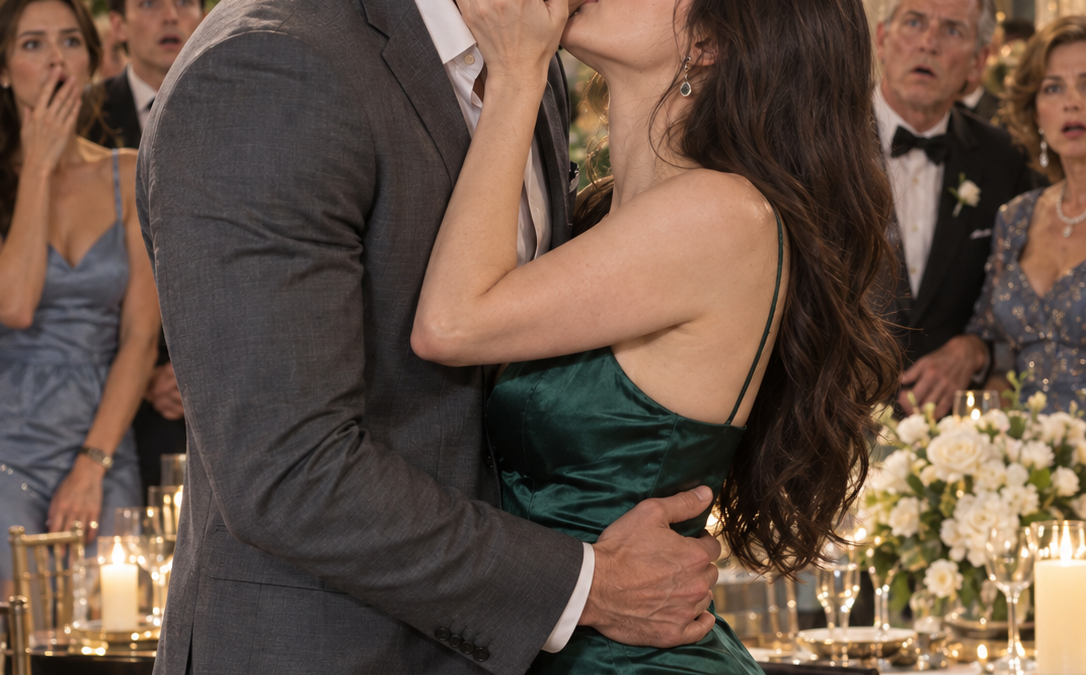
My boss kissed me in front of her parents just as her mother suggested she meet another man.
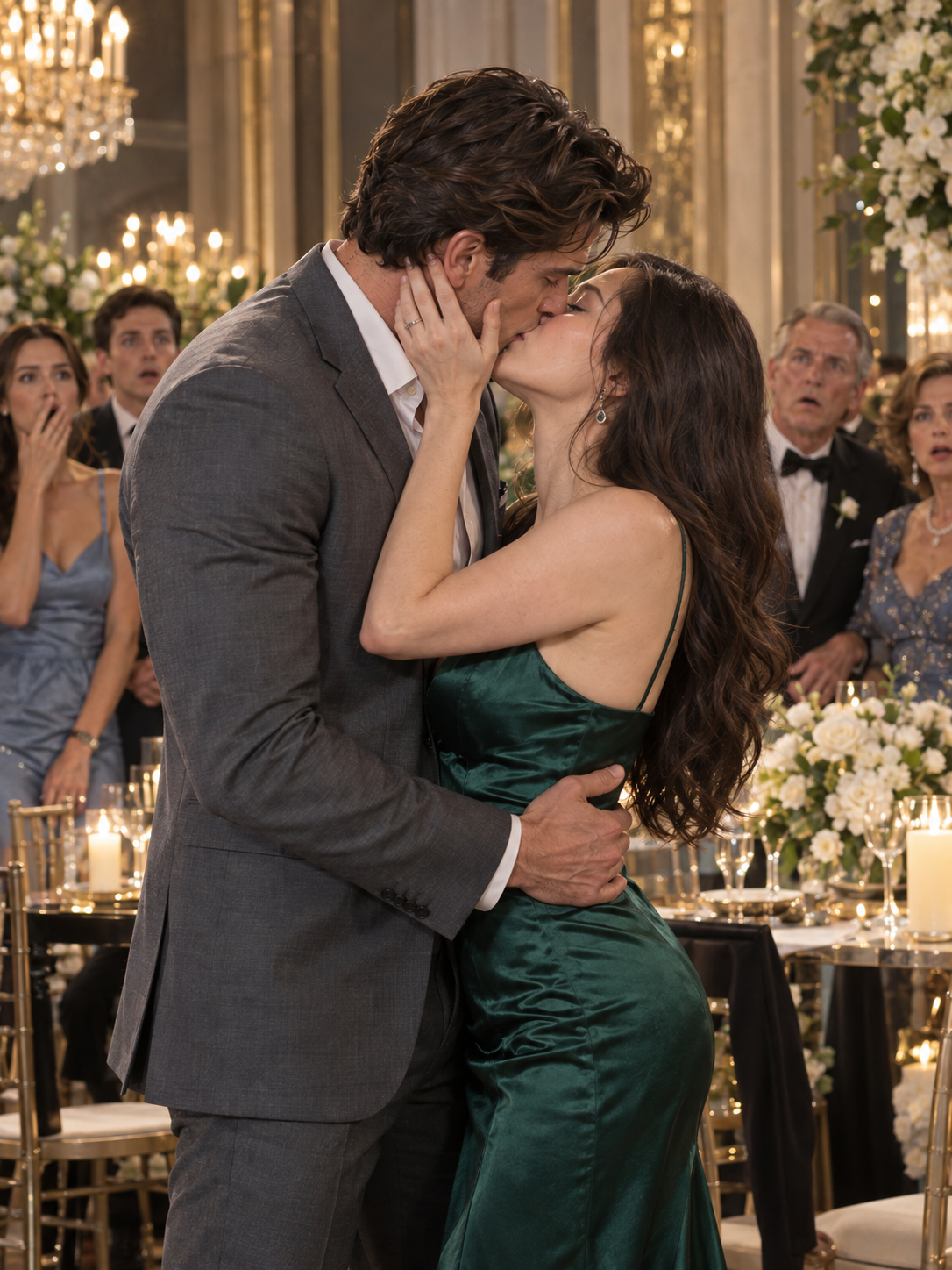
One second Camille Porter was gripping the back of my chair. The next her hand was against my cheek and the room went quiet enough to hear a spoon hit the table.
I kissed her back. That was the part I would have to answer for later.
When she pulled away, her father didn’t ask what was going on.
He looked straight at me and said, “I told him not to come.”
Camille turned. You two spoke.
I could still feel the warmth of her hand. By then, I knew my silence was about to matter more than the kiss. If you like romances in which a perfectly ordinary dinner becomes spectacularly complicated, like the video, subscribe, and tell me.
Would you have told Camille about the phone call before you walk through her parents’ door?
My name is Miles Avery. I was 32, a senior exhibition producer at a design museum in Denver.
And until that Saturday, I had never been kissed by the person who approved my vacation requests. I had imagined it. Obviously, I was an adult, not a piece of gallery furniture, but imagination had the considerable advantage of not requiring an explanation to human resources.
Camille Porter was our director of exhibitions. At 34, she could look at an empty room and see where people would stand, what they would touch, and which corner they would remember on the drive home. I could look at the same room and tell her that the wall she wanted to remove was loadbearing.
Between us, we usually made something worth visiting. She had been my boss for 20 months. We disagreed about exhibit labels, lighting budgets, and whether my office contained an actual desk beneath the drawings.
She trusted me with problems she didn’t yet know how to solve.
That trust was probably when the trouble started. Neither of us named it.
On Friday afternoon, I was crouched inside a mockup of a hand operated printing press when Camille appeared at the workshop door. Our next exhibition would let visitors try tools used by crafts people across Colorado.
The press still had a spring that resisted the reasonable ambitions of a six-year-old. So, I was adjusting its tension with a wrench.
“Is it safe?”
she asked.
“For a six-year-old?”
“Almost.”
“For our insurance carrier.”
Ask me after lunch on Monday.
“Comforting.
” She stepped inside but kept her shoes clear of the sawdust.
“I need a favor, a personal one.”
I looked up. Camille made requests for work in complete sentences.
Personal favors tended to arrive with a warning. That depends, I said. Does it involve moving furniture?
Dinner at my parents house tomorrow. Worse than furniture.
She folded her arms, but she was trying not to smile.
My mother wants me to meet a friend’s son.
She says it isn’t a setup, which is how I know it is.
You know my parents. I thought having a friend there might keep the evening from turning into an interview.
A friend? I repeated.
Camille’s eyes held mine.
Yes. Is that a problem? It was a problem in the same way a small flame beside a stack of paper was a problem.
It wasn’t one until somebody pretended not to see it.
No, I said I can be a friend. I own several appropriate shirts.
One of them has a tiny paint stain on the cuff. I lowered the wrench. You inspected my cuffs.
I noticed things, Miles. 7:00. 7.
Does your mother know I’m coming?
She knows. She invited me to bring someone.
She left before I could ask whether she had told them whom. I watched her through the workshop window where she stopped to move a display card 2 in to the left. The card did look better.
She irritated me most when she was right. I had met her father the previous spring during a Saturday museum workshop.
Ray Porter had spent 30 years teaching shop classes. Retirement apparently meant continuing to teach them without a school bell.
We’d exchanged numbers because he offered to help with another workshop.
I met her mother at a fundraiser. Beth Porter had asked whether Camille remembered to eat when we worked late. I told her the museum had never lost a staff member to a missed dinner.
Camille overheard and informed me that discussing her meals with her mother qualified as a breach of professional confidence. They were good people.
Saturday still worried me. At 11 the following morning, my phone rang while I was trying to fix a cabinet hinge in my apartment. Ray Porter appeared on the screen.
I sat down the screwdriver. Morning, Ray.
The workbench still holding up? Better than my knees.
Listen, Miles.
Beth mentioned you’re coming tonight.
His voice had lost the easy warmth I remembered from the workshop. Camille asked me, I said. I figured she did.
He paused.
I think you should tell her you can’t make it.
I sat on the kitchen floor cabinet door open beside me. Is there a reason?
Because you work for her.
Because she’s upset with us and won’t say it.
I don’t want you becoming the person she brings along so she doesn’t have to have a conversation with her mother and me.
I’m capable of saying no to an invitation.
I know.
I’m asking you to say no to this one.
I could have ended the call there.
Instead, I asked, “Does Camille know you’re calling me?”
“No, she’d be furious.”
“That at least we agreed on.”
“Ry,” she asked for a friend at dinner.
I said, “Yes, if you’re worried about her, you should talk to her.”
“I have tried.
” A chair scraped at his end of the line.
She hears concern and thinks it’s a plan for her life.
Maybe that’s partly my fault.
I don’t expect you to understand all of it.
I am asking you to stay out of the middle. Calling me puts me in the middle. He went quiet.
I heard a door close somewhere behind him.
You’re right, he said at last.
I shouldn’t have made the call, but I’ve made it now.
Think about what I’m asking.
After we hung up, I stared at the open cabinet. For once, the repair looked less complicated than the rest of my day.
I typed a message to Camille. Your dad called me. Then I stopped.
I could picture her receiving it while she was getting ready, calling him immediately, and spending the next 6 hours fighting about a dinner that hadn’t happened.
I deleted the message and told myself I’d speak to her on the drive home.
It sounded considerate while I was alone in my kitchen. I would learn how thin that reasoning was when I had to say it aloud.
Camille opened her parents’ front door at 7 sharp.
She wore dark trousers and a green blouse with the sleeves rolled once at her wrists. Her hair was loose instead of clipped back for work. I noticed.
She noticed me noticing. The shirt survived inspection, she said.
I considered submitting it for approval yesterday.
I’d have sent it back with notes.
She stepped aside to let me in. The house smelled of roasted peppers and warm bread. Family photographs lined the hall.
In one, a younger Camille stood beside Rey at a school workshop holding a crooked wooden birdhouse with the proud expression of someone who had built it herself. She followed my gaze.
Don’t look too closely.
One wall fell off on the ride home.
Your father didn’t fix it.
I wouldn’t let him.
It was my birdhouse. There was enough of the woman I knew in that answer to make me smile.
It also reminded me that Rey had known exactly what he was doing when he asked someone else to change her plans. Beth came out of the kitchen, hugged me, and said there was enough food for six, though there would only be four of us. Rey emerged a moment later.
Our handshake was brief. His eyes held mine long enough to make the phone call feel present in the room.
Camille was watching us, so he asked about the museum’s new press instead.
Dinner began with safe subjects.
Beth described a neighbor’s dog that had learned to open a backyard gate.
Rey asked whether the teen workshops would return in winter. When Beth left the table for the bread, Camille leaned toward me.
You look tense. Your father has strong opinions about spring tension on printing presses.
He has strong opinions about most tension. Her knee brushed mine beneath the table.
Neither of us moved right away. Rey asked how the exhibition was coming along. Camille and I answered together, then stopped together.
Beth smiled into her water glass. Halfway through dinner, Camille excused herself to help her mother bring in dessert.
Rey waited until they’d reached the kitchen.
You could have called me back, he said, and said what?
That I’d changed my mind because you asked.
I wanted to keep her from feeling cornered. So did I.
That’s why I’m here.
He rubbed a hand over his forehead. Up close, he looked tired rather than angry.
Then please let her answer for herself if Beth brings up Adrien.
I wasn’t planning to speak for her.
Camille returned with four plates of peach cobbler before he could respond.
She took her seat, glanced between us, and asked, “What happened?”
“Your father and I disagree about the workshop schedule,” I said.
Rey looked at me. I looked at my plate. It was a lie, modest in size and impossible to take back.
Camille knew our workshop dates were already set. Her expression told me so, though she let the moment pass.
Beth waited until we’d eaten a few bites.
Camille, I spoke to Marisol this morning.
Adrienne’s back in town after his project ended.
He asked about you.
If you’d like to get coffee sometime, I could give him your number.
Camille set down her fork.
Mom, I told you I wasn’t interested in an introduction.
All right.
I haven’t given him anything.
Beth’s face softened.
I thought you might like him.
That’s all.
I want you to stop arranging ways for me to find out. Ray started to speak. Camille shook her head.
Please don’t explain what she meant.
He closed his mouth. I had never seen her speak to him like that. For a second, I thought the conversation was finished.
Then Camille looked at me, looked away, and gripped the back of my chair.
“There’s someone I’m interested in already,” she said.
Beth’s eyes widened.
Ray’s expression tightened.
My pulse made a hopeless attempt to escape my chest. Camille turned to me.
The anger had drained from her face. What remained was nerves.
“Will you trust me for one second?”
she whispered. I knew I could say no.
She gave me time to do it. I nodded. Her hand came up against my cheek.
She kissed me and I forgot the room for one dangerous second. Then I kissed her back. Her fingers caught lightly at my collar and the kiss lasted long enough to become a choice we had both made.
When she pulled away, she looked as startled by that as I felt.
Beth didn’t move.
Rey placed his spoon beside his plate. I told him not to come, he said.
Camille’s hand slipped from my shoulder.
You two spoke? I could have told her about the call before dinner.
I’d nearly done it.
Now she had to hear it from her father.
With all three of them waiting to see whether I’d tell her the truth.
Yes, I said. She stepped back from me. What did my father tell you about me?
What did my father tell you about me? Camille was standing 3 ft away. I wanted to close the distance.
That would have been a strange first response to a question about honesty. He asked me not to come.
I said he thought you’d brought me because you didn’t want to talk to him and Beth about Adrien.
He was worried about what it could mean for us at work. Beth turned to Ry.
You called Miles. I did. Ry rubbed the edge of his napkin between his fingers.
I shouldn’t have.
Camille looked back at me. And you told him no.
I told him you’d invited me and I’d said yes.
You could have told me. I know.
I’d lied when she asked what Rey and I had discussed at the table.
No explanation would change that.
I didn’t want this to become a fight before dinner.
I said that wasn’t my choice to make for you.
I’m sorry.
Rey leaned forward. Camille, I called him.
If you’re angry, be angry with me.
I can manage being angry at two people. She looked at both of us.
I need some air, Miles.
Her parents’ front walk was lined with small solar lights, most of which had surrendered to the shade.
Camille headed past them to the sidewalk. I followed, giving her room until she stopped beneath a maple tree.
“I wasn’t trying to trick you,” I said.
“I know,” she exhaled.
That’s making it harder to stay angry.
You can stay angry anyway. I earned some.
She studied me. Why did you come?
Be honest this time. Because you asked.
And because I wanted to see you when there wasn’t a conference table between us.
Her face softened, then closed again. Did my dad say he knew something about how I feel?
No, he said you were upset with them. I was. She touched her lips, then dropped her hand.
I shouldn’t have kissed you like that.
I asked whether you trusted me, but I didn’t tell you what I was going to do, and I’m your boss.
You gave me a chance to say no. I kissed you back.
That doesn’t make it fair.
No, I said it means we should talk about it. She moved a loose leaf with her shoe.
I’d seen Camille handle a failed delivery with three calls and a plan.
here. She looked uncertain of where to put her hands. I told them there was someone I was interested in.
She said that part was true.
I hadn’t planned to say it tonight.
I waited. Some things were too important to turn into a joke. She looked up.
It was you, Miles, before dinner.
I was hoping, I said, “How long?”
“Long enough to know I shouldn’t ask you out while you sign my reviews.
” She made a small sound that might have been a laugh.
You’re terrible at being reassuring.
I’m excellent at identifying problems.
You hired me for it.
I hired you because you showed up to your interview with an example of a children’s exhibit you said you would rebuild from scratch.
Also an example of identifying a problem. This time she laughed. When it faded, she held my gaze.
I don’t want this to be a performance we did for my parents.
Neither do I. The front door opened. Rey came down the walk alone, stopping far enough away that Camille could choose whether to speak to him.
“Your mother wants to know if you’d like us to pack up the cobbler,” he said.
“Dad, that was her question.
Mine is whether you’ll let me apologize without explaining it away.”
Camille folded her arms. Rey took the silence as permission to try.
“I thought you were about to use a man you work with to prove something to us,” he said.
I worried it could hurt both of you. I should have told you my concern, not called him behind your back.
You could have asked why I invited him.
I could have, and if I’d said I wanted him there because I like him.
Ry glanced at me, then back at his daughter.
I’d have worried about the work situation, but I would have listened.
I’d like you to try that first next time.
He nodded. Beth appeared in the doorway holding two covered containers.
Nobody seemed eager to repeat dessert indoors, so we said good night on the walk. Camille accepted a container from her mother and hugged her. When Beth apologized for bringing up Adrien after Camille had already said no, Camille told her they could talk tomorrow.
I went to my car. Camille followed with the second container and held it out to me.
Is this a consolation prize? I asked.
It’s peach cobbler.
Don’t make it less valuable by naming it.
Are we all right?
I don’t know exactly what we are.
She rested her hand on the passenger door. I know.
I want to find out. I also want you to tell me if my family calls you again.
You’ll know before I hang up.
Good.
And I won’t kiss you at another family dinner without a clearer warning.
Will there be another family dinner?
Eventually, they’re still my parents.
She smiled, tired and genuine. Drive home, Miles.
Sunday brought a message from her just after lunch. Dad and I talked.
He listened.
Mom still thinks you’re charming, unfortunately.
I replied, “She sent me home with enough cobbler to suggest a favorable assessment.”
Camille, don’t let it go to your head.
Dad asks about the printing press. Me, that is the most Ray Porter change of subject possible. I saw her Monday at a meeting about the upcoming exhibition.
Lucia Torres, our content lead, had laid out sample handles for the interactive stations. One was too small for an adult hand. Another required too much force for a child.
Camille asked Lucia what visitors needed to learn, asked me what the equipment could withstand, and refused a design that would leave half the visitors watching instead of participating. I admired her at exactly the wrong time during a staff meeting. Afterward, she waited while Lucia gathered the samples.
“Can I see you for 5 minutes?”
Camille asked me. In her office, she left the door open.
“I noticed.”
She noticed me noticing.
“I want to ask you to dinner,” she said.
“An actual date.
I can’t do that casually when you report to me.”
“No,” I said.
“But you can ask.
I can say yes.
Then we can talk to Nina before we make this something everybody else has to guess about.”
Camille sat against the edge of her desk. Do you want to say yes?
Very much. Good, because I have spent 48 hours wondering whether you meant what you said on the sidewalk. I did.
All of it. Even the part about being excellent at identifying problems.
That’s the part I can document.
She smiled, but neither of us reached for the other. Lucia could still be heard outside stacking wooden samples on a cart. The open door mattered.
We had work to finish before we got to be alone. Over the week, we kept our usual schedule. There were visitor tests, a shipping delay, and one afternoon when I sat on the workshop floor with a granola bar.
Camille found me there and set down a bottle of water.
“Your mother would approve,” I said.
“Please never tell her about the granola bar.
She’ll send you a meal plan.
” She sat on a crate across from me.
For five minutes, we spoke about the press, then fell quiet. That had happened before Saturday, too.
The difference was that I now knew why I wanted her to stay. We agreed on a date at an outdoor market the following weekend.
Camille wanted to see a ceramicist demonstrating a footpowered wheel. I wanted to know whether either of us could talk for an afternoon without saying the words installation schedule.
She said the museum would probably have to close if we succeeded. At the market, she arrived carrying a canvas tote bag and wearing a faded blue sweater I had never seen. We watched the potter send her a lump of clay.
Camille asked questions until the woman offered to let her try. 3 minutes later, Camille had clay on both hands and a bowl that was leaning with conviction.
Don’t say it, she warned me.
I was going to say it has character.
You were going to say it’s structurally unsound.
Both can be true. She bought the bowl anyway.
We walked past stalls selling bread, prints, and old maps. Without work to discuss, our conversation found other places to go.
She told me Ry had taught her to make that birdhouse when she was 10. When its wall fell off, he had offered to fix it before she could even decide whether she wanted his help.
“He meant well,” she said.
“He usually does.
I just wanted him to ask me first. Did you keep it?
It’s in my apartment, still missing a wall.
So, it needs repairs.
It’s mine, she said, and bumped her shoulder against me.
You’re starting to sound like him.
Later, on a bench outside a bookstore, she told me why Rey worried so much about her reputation.
At her previous job, she’d dated someone more senior.
They’d disclosed it and the organization had changed her reporting line.
Even so, when she earned a promotion, a few co-workers insisted he must have helped.
She’d had to spend months proving work that should have spoken for itself.
I don’t want you to go through that, she said.
And I don’t want people assuming I chose you for a project because of us.
I don’t either, but I want to try, Camille.
She set the uneven bowl between us. So do I.
On the walk back to her car, she took my hand. We stopped beside the passenger door. There were shoppers passing a few feet away.
Nobody knew who we were. Camille looked at me, waiting.
I’d like to kiss you, I said.
Is that okay? Yes.
It was slower than the kiss at her parents’ table.
When we parted, she was smiling and I realized I was too. We should talk to Nina on Monday, she said. I know.
I wish we had a little longer before Monday. We have the rest of the afternoon, I said.
She glanced at the market behind us.
The potter’s still there.
I could get you a bowl.
I’ll carry yours.
Two might be more than this relationship can support. On Monday, Nina Patel listened while Camille and I explained that we had gone on a date and intended to keep seeing each other. Nah thanked us for coming in early.
She said Camille would need to step away from decisions about my pay, evaluations, and assignments until the executive director approved a new reporting arrangement.
She also said we’d have to be clear about how we handled joint projects.
We agreed. None of us pretended an open door and good intentions would be enough. We left her office separately.
An hour later, Camille asked me to stop by hers. The short list for exhibition lead was on her screen.
My name was on it beside Lucia’s and another producers.
I looked at Camille. When did this happen? The nominations closed 10 days ago, she said.
Before dinner at my parents house, I put your name forward because of your work. Nah needs to know I was the one who did it.
I stared at the list.
I’d wanted the project long before I knew Camille wanted me.
Now we had to find a way for those two truths to exist in the same room. Camille turned her monitor so I could see the dates. She had submitted my nomination 10 days before our first kiss.
The record was clear. That should have made me feel better.
Instead, I imagined walking into an interview while everyone wondered whether the woman I’d begun dating had put me there.
You should tell Nah, I said. I already asked for a meeting. I wanted you to see this first.
I don’t want you taking my name off the list.
I wasn’t going to.
Camille took her hands off the keyboard. I put you forward because you built the last three exhibitions on time.
On time and made two of them better than my original plans.
I won’t pretend I didn’t mean it.
It was the kind of praise I’d wanted from her for months.
I wished I’d heard it somewhere other than a conversation about whether it was safe for her to say it.
Nah brought the museum’s executive director, Evelyn Shaw, into our meeting.
Evelyn was a quiet woman who asked questions so specific that evasive answers tended to give up halfway through. She confirmed the nomination had been submitted before Camille and I had gone on a date. Camille would have no part in reviewing proposals or selecting the lead.
While the process ran, Evelyn would oversee my evaluations and assignments.
This isn’t only about you two, Evelyn said.
Lucia and Jordan are on that list. The team needs to see a fair process.
Agreed, Camille said. I agreed too.
I liked Lucia. Jordan Blake, our other producer, had rescued an exhibition opening when a freight elevator failed. Both deserved a real chance.
At lunch, Lucia joined me in the workshop. She was carrying a measuring tape and the expression she wore when she intended to ask something uncomfortable.
“Did you know about the nomination?”
she said. Not until today.
Are you and Camille together? I put down the bracket I was sanding. We went on a date.
We’ve told Mina.
Lucia nodded.
Okay, I’m asking because I want this job, too.
I don’t want to find out later that decisions were already made.
They weren’t.
Camille’s out of the selection process.
I know Nah sent the notice. Lucia leaned against a workt. I needed to hear it from you.
I appreciated that she had asked, though it stung.
You’re right to ask.
Good. Now, can I borrow the tape measure? You have the only one that retracts without trying to remove a finger.
You said mine was cheap. It is.
Hand it over.
She left with it, and I realized fairness wasn’t a piece of paperwork Nina could file on a shelf.
It was something my co-workers had to live with every day. The lead candidates had four days to present an approach for the new exhibition. Mine centered on working mechanisms visitors could operate.
A printing press, a small footpowered wheel, and a station where people could assemble a simple joint.
Lucia’s proposal put the craftseople’s recorded voices and personal histories at its center.
Jordan focused on a flexible layout that could travel to libraries around the state. All three ideas had merit.
That made preparing mine considerably less fun. On Wednesday evening, Camille came to my apartment with dinner from a place around the corner.
She noticed I’d spread sketches over half the table and set the food on the clear half.
“I’m allowed to look at this as your girlfriend,” she said, pointing to one drawing.
“But I’m not allowed to tell you what I think.”
“Girlfriend?
It was the first time either of us had used the word.”
I looked up. What? She asked.
Nothing. Say the first part again. Miles.
I like the sound of it. She smiled but gently rolled the drawing away from herself.
I do too.
I’m serious about the second part.
The panel will assess your proposal. If I give you private notes, we undermine the whole process. I know.
I took the food out of its bag. For tonight, we could discuss something you are allowed to have an opinion about, such as whether your ceramic bowl can hold soup.
It’s on my bookshelf.
That’s an answer.
We ate from mismatched plates. She told me Beth had apologized again, this time without offering to introduce anybody else.
I told her my kitchen cabinet still opened only if I lifted it first. For a while, the evening belonged to us.
When she left, she kissed me at the door and told me to sleep. I promised to try. We both knew I would spend another hour on the drawings.
Friday’s test session ended that plan.
We brought in a small group of visitors before the museum opened, including two families who regularly helped evaluate our exhibits. One boy turned the press handle easily and printed a crooked leaf.
His younger sister tried twice and couldn’t move it.
An older visitor could turn it, but had trouble holding the paper in place at the same time.
“Our accessibility coordinator pointed to the height of the work surface.”
“Some visitors won’t be able to reach this from a seated position,” she said.
“And asking someone to hold paper steady while turning that handle requires two good hands.
” “I wrote it down.
We had tested the spring in the workshop, but I’d concentrated on whether it was safe and durable.
I’d missed how many people would need a different way to participate.
The little girl studied the print her brother had made.
“Can I do the stamping part instead?”
“Yes,” I said, “and I can make that part easier to reach.
” Lucia had been watching from the other side of the table.
After the families left, she stood beside me. The recorded stories could play while people choose an image.
She said, “They could print with either a handle or a pad.
Same idea. More ways in.
You want to help me improve a proposal we’re competing on?
I want the exhibit to work. She folded her test notes.
Put my name on the revision if we use my idea. Of course.
I approached Evelyn and the selection panel. Rather than quietly changing the drawings, they gave each candidate the same 48 hours to address the test results. They also confirmed that collaborations were allowed if contributions were credited.
Lucia and I spent Saturday at the workshop building a second way to make a print. We came close to an answer by evening.
The new station let visitors turn a lighter handle or press a wide pad. The print could be secured before either action.
It cost more than the original version, which meant we would have to simplify another station to stay inside the approved budget. Camille walked through the workshop on her way out. She saw the revised model and stopped.
Before our date, she would have picked it up, tested it, and argued with me over the cost until one of us gave in. Now she rested her hands at her sides.
“It looks different,” she said.
“That’s the approved level of feedback.
” Her eyes narrowed.
“I can also tell you it’s made of wood.”
Lucia laughed from the supply shelves.
I smiled, but it didn’t last.
After Camille left, I spent another hour trying to decide which feature to cut. She knew the entire exhibition budget better than anyone.
I missed being able to ask her. We met outside a neighborhood diner later that night. Camille could tell something was wrong before I sat down.
You can say it, she said.
I know you can’t help with the proposal.
I hate that I can’t even ask what you think.
I hate it, too. At work this week, you barely looked at me while we reviewed the test. I felt like you were ashamed of us.
She set down the menu.
I wasn’t ashamed.
I was trying to keep you from getting advice nobody else could have. I should have told you how strange that felt instead of going silent. That was the thing about Camille.
When she knew she’d made a mistake, she didn’t waste time decorating it.
I don’t need you to fix my work.
I said, I do need to know you’ll still talk to me when it’s difficult.
I will. She reached across the table.
and you don’t have to tell me what you’ve designed for us to talk about how hard this is.
I took her hand. We ordered dinner and spent most of it arguing about whether an uneven ceramic bowl could legally be called art.
By the time we walked out, the worry hadn’t disappeared, but it had stopped sitting between us.
Sunday afternoon, Ray appeared at the workshop while I was packing away tools.
He’d come to return a box of clamps from the teen program.
I showed him where to put them. For several minutes, we discussed a loose hinge on a display case.
Both of us aware he hadn’t driven across town solely to discuss a hinge.
I owe you a better apology, he said at last. I decided I knew what would protect Camille.
Then I tried to make you carry out my decision.
She’s told you how she feels?
Yes, she was clear. He examined one of the prints drying on a rack.
You care about her? I do.
Then I’m going to let you both work out what that means, even when it makes me nervous.
It makes me nervous, too. He gave me a faint smile. Good.
I’d worry if it didn’t.
That evening, Lucia and I submitted a shared revision. We kept our separate applications for the lead role, but asked the panel to consider dividing production and content responsibilities if they chose our combined design. Evelyn confirmed she had received it.
No promises. Camille came over after dinner.
I told her only what I was allowed to share. The proposal was in and I was exhausted.
We sat on my front steps watching headlights pass at the end of the block. She leaned against me.
Ray came by. I said. He apologized.
He told me he would.
You’re both getting better at telling people what you’re about to do.
She nudged me. Then her phone lit up with a message from Nah. She read it and turned the screen toward me.
The panel had asked for a final meeting in the morning.
The revised design was still under consideration, but they hadn’t chosen a lead.
Whatever they decide, I said, I want us, but I can’t spend our time wondering whether every setback is something you need to save me from.
Camille turned to face me.
I know I don’t want to become another person who makes decisions for you.
And if I don’t get this project, u, she said, then I’ll be with you.
I kissed her. When we drew apart, she stayed close, her fingers curled around mine. The panel meeting was less than 12 hours away.
I wanted to believe we could carry that answer into it, no matter whose name Evelyn read aloud.
At 8:30 Monday morning, I was sitting outside Evelyn’s office with a folder on my lap and a smudge of blue ink on my thumb.
I had washed my hands twice. The ink, like the question of whether I wanted the job badly enough, refused to go away.
Lucia came around the corner carrying her own folder. She sat beside me.
“You sleep?”
she asked. I closed my eyes for several hours.
There may have been intervals of unconsciousness.
“Good enough?”
she glanced at my thumb.
“You missed a spot.”
“I know.”
Jordan joined us a minute later. He offered each of us a peppermint from a paper bag, then took one himself. We ate them in silence until Nah opened the door.
Evelyn and two other panel members were seated around the conference table.
Camille wasn’t there.
I knew she wouldn’t be, but I had looked for her anyway.
The visitor test changed how we’re evaluating the exhibition, Evelyn said.
We asked for a lead because we expected one proposal. The strongest submission now combines two. I felt Lucia sit a little straighter beside me.
Evelyn looked at Jordan first.
His plan for a traveling layout had impressed the panel, she said, but they didn’t have funding to build and maintain a mobile version this year.
Jordan nodded.
He asked whether his concept would stay in the museum’s planning file.
Evelyn said yes and told him which part they particularly wanted to revisit.
She didn’t offer him a consolation title.
Jordan deserved a real answer, and he got one. Then Evelyn turned to Lucia and me.
The panel had selected our revised approach. I would lead production and the installation team. Lucia would lead content, interviews, and the visitor experience.
We would share the exhibition budget and report separately to Evelyn for decisions that affected our individual performance. I want to be clear, Evelyn said.
This is based on the test results, the revised design, and both of your work records. Camille nominated Miles before either of them disclosed a relationship.
She had no role in this decision.
Nah has the timeline and the panel’s assessments on file.
The explanation wasn’t addressed only to me.
Lucia had asked for a fair chance.
So had Jordan, even if he hadn’t used those words.
I was relieved that Evelyn had treated their trust as part of her job. Questions?
She asked.
One, Lucia said, “Will we have enough for the second printing mechanism?”
Evelyn smiled faintly. If you remove the overhead projection station, Yes.
Lucia and I turned toward each other.
We’d already argued over that station for 6 hours.
We could live without it. When the meeting ended, Jordan shook our hands.
Make it work, he said. My niece has opinions about museums.
I’ll bring her in to test it.
We’d like that, I told him.
I found Camille near the rear loading door checking the measurements of a display case. She glanced up when I approached.
You’re back.
I am. She waited.
I could see how much effort it cost her not to ask before I was ready. They chose Lucia and me.
I said, “Two leads, no overhead projections.”
Camille let out a breath and grinned. For a moment, she looked as if she might run across the loading bay. Then she remembered there were people carrying a case past us.
Congratulations, Miles.
I’m proud of you.
You haven’t seen the final drawings.
I know what it took to get to them.
She didn’t claim a piece of the decision.
That made her words land exactly where they belonged. Nenah finalized our reporting arrangement that week. Evelyn would make decisions about my evaluation, pay, and assignments.
Camille would still direct the exhibition program and review the finished work alongside the rest of the team.
If our responsibilities overlapped in a way that affected me personally, we’d bring Nina in before making a call.
There was paperwork. There were several conversations nobody would call romantic. I was glad we had them.
Being with Camille did not turn my work days into dates. On Tuesday, she rejected a proposed wall color that I liked.
On Thursday, I told her the interactive station wouldn’t fit where she wanted it.
We debated both in front of the team. I changed the wall color. She changed the floor plan.
Nobody had to pretend we suddenly agreed on everything.
Outside the museum, we learned each other’s less useful habits.
Camille read menus before she arrived and still needed 10 minutes to choose.
I bought books about projects I might build someday and stacked them beside the hinge I hadn’t fixed.
She kept a pencil in nearly every room of her apartment. I kept losing the one she handed me. The first time she invited me over for dinner, I found the crooked ceramic bowl on her bookshelf.
Beside it stood the childhood birdhouse, one wall missing, its roof painted a determined shade of yellow.
“You kept them together,” I said.
“They’re both evidence I shouldn’t work without supervision.”
I picked up neither object. They look like they belong to the same person.
Camille stood beside me. Dad asked last month if I wanted him to fix the birdhouse.
What did you say? No.
Then I told him I appreciated being asked. He laughed and said it had only taken him 24 years to learn. A respectable training period.
She leaned against my shoulder. He likes you, by the way.
He had a memorable way of showing it.
He’s working on that, too.
6 weeks after the selection meeting, the exhibition opened. I spent the early hours tightening hardware, checking instructions, and resisting the urge to adjust things. Visitors would immediately adjust again.
Lucia came through with the last audio recordings. A craftswoman we had interviewed stood beside her station and listened to her own voice describe the first tool her father had taught her to use.
She reached for Lucia’s hand.
Lucia held it without saying anything. At the printing station, Jordan arrived with his niece as promised.
She chose an image, secured her paper, and tested the wide pad. The printed leaf came out a little dark on one side.
She liked it that way. Later, an older visitor used the lighter handle and showed his print to the person beside him.
Not every visitor used the station as we’d imagined.
They were able to use it, which mattered more.
Evelyn stopped by with the museum’s board chair.
She introduced Lucia and me as the leads and let us talk about the work.
I told them how Lucia’s interviews had shaped the station.
Lucia told them about the family test that had changed my first design. Neither of us mentioned who might have won the original competition.
By then, it seemed like a question about an exhibit we had never built. Camille kept her distance while I was working.
At closing, I spotted her alone near the entrance reading a visitor’s comment card.
She folded it when she saw me.
“Good day,” she asked.
A little girl printed six leaves and insisted on carrying all of them home.
“I’d say so.
” She may have been testing the station’s endurance.
“We’re prepared for seven,” Camille laughed.
Then she took my hand out in the open where a few colleagues could see us. Lucia passed on her way to the office and lifted a weary thumb. I returned it.
“What was on the card?”
I asked. Camille unfolded it and let me read.
Someone had written that they had expected to watch other people make things, then had been surprised to find something they could do themselves. I read it twice. Lucia needs to see this.
I made a copy for her. Camille slipped the card back into its envelope.
Now, can I take you to dinner? You skipped lunch. Have you been reporting my meals to your mother?
No, I’m asking you myself.
That weekend, Beth invited us both over. Camille called her to ask who else would be there. Beth said Rey had made enough food for the family, and that was the entire guest list.
Camille accepted. The questions about other guests had become a family joke, though Beth answered them seriously every time. Ray met us at the door.
He looked at our joined hands and stepped aside to let us in. The exhibition was good, he told me.
I tried the press twice. First print came out better.
That’s why we let you have two tries.
Your instructions could use a line telling people they’re allowed to be terrible at it.
I’ll talk to Lucia, I said.
Beth called from the kitchen that she had already put extra potatoes in the oven. We ate at the same table where Camille had kissed me weeks earlier. Ry asked about the teenagers from his workshop.
They were coming to the museum on Tuesday.
Camille told him what they’d be able to try.
Beth described a new recipe she had attempted and warned us that its appearance was not an accurate measure of its taste. At dessert, Ry reached for his glass.
Camille watched him over the rim of hers.
“I’m only drinking water,” he said.
“You’ve cleared your throat twice.”
“I am permitted to have a throat.”
Beth laughed. I reached for another spoonful of dessert, content to let father and daughter negotiate whatever sentence he was preparing. I was going to ask if you two wanted to come by next month, Ry said.
The workshop students are showing their projects. No one has to say yes tonight.
Camille lowered her glass.
I’d like to, Miles.
Me, too. Rey nodded and returned to his dessert.
It was a small exchange. A few weeks earlier, he might have called me first to make sure I came.
Camille noticed the difference. Under the table, she squeezed my hand. After dinner, we went out onto the front walk while Beth and Ray cleared the plates.
The solar light still didn’t illuminate much.
Camille stood close enough that her shoulder touched my arm.
“I thought you hated coming here,” she said.
“I like your parents.
Your father and I had one disagreement about who gets to accept your invitations. I won that one. You did?
She looked toward the front door.
I’m glad you came that night.
He told me not to. Good thing you listened to me instead. I turned toward her.
The dining room light fell across her face.
She wasn’t trying to prove anything to anyone.
She was just looking at me with that patient, slightly amused expression I had once watched from across a conference table.
“I love you,” I said.
Her smile changed. She came a step closer and rested her hand against my chest. I love you too, Miles.
I had a speech prepared about why I told her. Can I hear it now?
I’m struggling to remember it.
Then you can tell me on the way home. We have time.
She kissed me and I kissed her back. From the porch, we heard the faint clatter of plates and her parents discussing who had volunteered to wash them. When we separated, Camille kept hold of my hand.
We went back inside to help, then left together. On the drive home, I remembered the speech in pieces.
THE END.

