Part 2: “I understand that you’ve been lying to me. For how long, Daniel? How long have you had someone else?”
PART 6 — THE CEREMONY
The next ceremony was in November.
The airfield was cold. The sky was gray. A light rain fell, the kind that soaks through your clothes without you noticing.
I stood near the back of the crowd. Karen was beside me, her hand in mine. Alex and Emma were there too—they’d driven down for the weekend, at Karen’s request. They wanted to support me.
Rose was at the front, near the memorial. She was wearing a black dress and a silver pin shaped like an angel’s wings. Marcus had given it to her on their tenth anniversary.
General Harmon was there again. So were a dozen other brass—admirals, generals, colonels. Word had gotten around about last year’s ceremony. About the speech. About me.
I didn’t want any of it.
But I stood there anyway.
The ceremony started at noon.
Same as last year. Prayer. Moment of silence. Flag folding. The names of the fallen read aloud, one by one.
And then General Harmon stepped up to the podium.
“Last year,” he said, “I spoke about a man named Daniel Mercer. A man who saved three lives and never asked for credit. A man who carried guilt that was never his to carry.”
He paused.
“Today, I want to talk about that guilt. Because I’ve come to understand something over the past year—something that I think everyone here needs to hear.”
The crowd was silent.
“Guilt is a strange thing,” Harmon said. “It makes us believe things that aren’t true. It makes us blame ourselves for things we couldn’t control. It makes us carry burdens that were never ours to carry.”
He looked at me.
“Daniel Mercer has spent seventeen years carrying a burden. He believes he let his teammate die. He believes he could have done more. He believes he failed.”
I felt Karen’s hand tighten around mine.
“But here’s the truth: Daniel Mercer did not fail. Daniel Mercer did everything humanly possible. He crawled through fire. He pulled three men out of a burning helicopter. He held his dying friend in his arms and promised to take care of his widow. And he kept that promise—for seventeen years.”
Harmon’s voice was steady.
“The only person who believes Daniel Mercer failed is Daniel Mercer. And today, I want to set the record straight.”
He looked out at the crowd.
“Daniel Mercer is not just a hero. He is a man of extraordinary character. He is a man who has given more than anyone should ever have to give. And he deserves to be honored—not just for what he did on that mountainside, but for what he’s done every day since.”
I don’t know what I expected after that.
Applause, maybe. Tears. Hugs.
What I got was Thomas Webb.
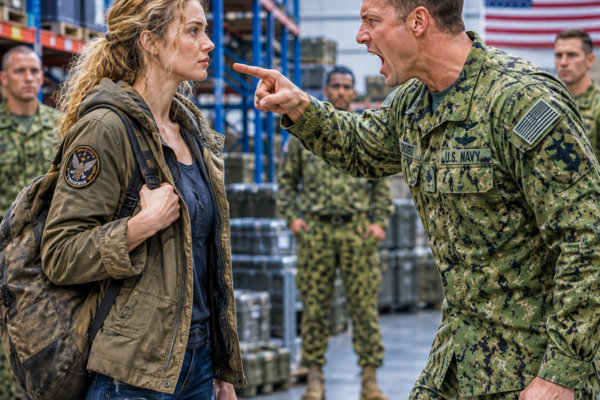
He stepped out of the crowd as Harmon finished speaking. Tall, gray-haired, with the same angry face I remembered from the funeral. He walked to the front of the gathering and turned to face me.
“Daniel Mercer,” he said.
The crowd went quiet.
“I’ve waited seventeen years for this moment.”
I stepped forward. Karen tried to hold me back, but I shook my head. This was something I had to do.
“Thomas,” I said.
“You killed my brother.”
The words hit me like a punch. I’d known they were coming—I’d been expecting them for weeks—but they still hurt.
“No,” I said. “I didn’t.”
“You left him to die.”
“I tried to save him.”
“You failed.”
“Yes.” I looked him in the eyes. “I failed. I couldn’t reach him in time. The fire was too heavy. I tried—I tried as hard as I could—but I couldn’t get to him.”
Thomas’s face twisted.
“You expect me to believe that?”
“I don’t expect you to believe anything. I just want you to know the truth.”
“The truth?” Thomas laughed. It was an ugly sound. “The truth is that you’re a liar. You’ve been lying for seventeen years. You’ve been pretending to be a hero, pretending to care about Rose, pretending to be some kind of saint. But you’re not. You’re just a coward who let his friend die.”
I stood there.
I didn’t argue. I didn’t defend myself. I just stood there and let him say it.
Because a part of me believed him.
Rose stepped forward.
“Thomas,” she said. “Stop.”
He turned to look at her. “Rose—”
“No.” Her voice was sharp. “You don’t get to do this. You don’t get to come here, after seventeen years of silence, and attack the man who’s been taking care of me.”
“Taking care of you?” Thomas’s face twisted. “He’s been living off my brother’s memory. He’s been—”
“He’s been keeping his promise.” Rose’s voice broke. “Marcus made him promise to take care of me. And he did. Every week. Every anniversary. Every birthday. Every Christmas. He’s been there for me when you weren’t.”
Thomas went still.
“I’ve been—”
“Busy.” Rose’s voice was hard. “I know. You’ve been busy. You’ve been running your construction company. You’ve been raising your kids. You’ve been living your life. And that’s fine, Thomas. That’s your right. But don’t you dare come here and pretend you cared about Marcus more than Daniel did.”
Thomas’s face went white.
“I loved my brother,” he said.
“I know you did. But loving someone isn’t the same as being there for them. And Daniel was there. He’s always been there.”
She turned to face the crowd.
“Daniel Mercer is not a coward,” she said. “He’s not a liar. He’s the man who held my husband’s hand when he died. He’s the man who promised to take care of me, and kept that promise for seventeen years. He’s the man who saved three lives on that mountainside. And he’s the man who deserves to be honored, not blamed.”
The crowd was silent.
Thomas stood there, his face a mask of rage and grief.
“I don’t believe you,” he said.
“I don’t care,” Rose replied. “I know the truth. And that’s all that matters.”
Thomas left after that.
He walked out of the ceremony without looking back. I watched him go, feeling something I couldn’t name. Not anger. Not relief. Just… exhaustion.
Karen came up beside me.
“Are you okay?” she asked.
“I don’t know.”
“That was—”
“I know.”
She took my hand. “Let’s go home.”
I nodded.
But as we walked toward the truck, General Harmon stopped me.
“Mercer,” he said.
“General.”
He extended his hand. I shook it.
“You did good,” he said. “Up there. You didn’t fight back. You didn’t argue. You just stood there and took it.”
“I didn’t have a choice.”
“You always have a choice.” He looked at me. “And you chose to let him say his piece. That’s not weakness, Mercer. That’s strength.”
I didn’t answer.
“One more thing,” Harmon said. “There’s something I’ve been meaning to tell you.”
“What’s that?”
He reached into his pocket and pulled out a small box. Black velvet. The kind of box that holds medals.
“This came in last week,” he said. “From the Pentagon.”
I opened the box.
Inside was a medal I’d never seen before. A silver cross with a red center. The words “VALOR” inscribed on the bar.
“What is this?” I asked.
“It’s the Airman’s Medal,” Harmon said. “It’s awarded for heroism not involving actual conflict with an enemy. It’s rarely given. Only a handful of PJs have ever received it.”
“Why are you giving it to me?”
“Because you earned it.” Harmon’s eyes were steady. “For what you did on that mountainside. For what you’ve done every day since. For being the kind of man who shows up, no matter what.”
I stared at the medal.
I didn’t know what to say.
PART 7 — THE MEDAL
I didn’t put the medal in the shoebox.
I put it on the mantle. In the living room. Where everyone could see it.
Karen noticed it the next morning. She was drinking coffee, looking at the fireplace, and her eyes landed on the small black box.
“What’s that?” she asked.
“Something General Harmon gave me.”
She walked over. Opened the box. Looked inside.
“Daniel,” she said. “This is—”
“I know.”
“You need to tell people about this.”
“No.”
“Daniel—”
“I don’t need people to know.” I looked at her. “I just need you to know.”
She was quiet for a moment.
Then she walked over and kissed me.
The weeks after the ceremony were quiet.
Thomas Webb didn’t contact me again. I heard through Rose that he’d gone back to his construction company, back to his life, back to pretending that his brother’s death was someone else’s fault.
I didn’t blame him.
Grief does strange things to people. I knew that better than anyone.
The kids came home for Thanksgiving.
Alex brought his girlfriend, a quiet girl named Sarah who worked at a hospital in Richmond. Emma brought her roommate, a loud girl named Jess who laughed at everything.
The house was full. The table was set. The turkey was in the oven.
For the first time in a long time, everything felt normal.
“Daddy,” Emma said, during dinner. “Can I ask you something?”
“Sure.”
“When you were in the Air Force—when you were doing all that stuff—were you ever scared?”
I thought about it.
“All the time,” I said.
“Really?”
“Really. Fear is normal. It’s what you do with it that matters.”
“What did you do with it?”
I looked at her. At my daughter, twenty-one years old, with her whole life ahead of her.
“I used it,” I said. “I let it push me forward. I let it remind me what was at stake.”
“Did it work?”
“Sometimes.”
“And when it didn’t?”
I thought about Marcus. About that canyon. About the seventeen years of guilt I’d carried.
“When it didn’t,” I said, “I learned to forgive myself.”
Emma nodded slowly.
“That’s good,” she said. “That’s really good.”
After dinner, I went out to the porch.
The sky was clear. The stars were out. The same stars I’d looked at that night in the truck, when everything seemed lost.
Karen came out a few minutes later. She was carrying two cups of coffee.
“Thought you might need this,” she said.
“Thanks.”
She sat down beside me.
“Emma asked me something earlier,” she said.
“What?”
“She asked me if I was proud of you.”
“What did you say?”
“I said yes.” Karen looked at me. “I said I was prouder of you than anyone I’d ever known.”
I didn’t answer.
“I meant it,” she said. “I know things were hard. I know I made mistakes. But I want you to know—I see you now. The real you. And I’m proud of him.”
I took her hand.
“I’m proud of you too,” I said.
“For what?”
“For staying. For trusting me. For—”
“For loving you?”
“Yeah.” I looked at her. “For loving me.”
She leaned against me.
“I always loved you,” she said. “I just didn’t know who you were.”
PART 8 — THE TRUTH
A year passed.
Then two.
The ceremonies continued. The anniversaries continued. Rose continued to live in her little house in Suffolk, tending her garden, keeping Marcus’s memory alive.
And I continued to show up.
But something was different now. The guilt was still there—I don’t think it ever goes away completely—but it was quieter. Softer. Less like a knife and more like an old scar.
Karen and I grew closer. We talked more. We shared more. She started asking about my time in the service, and I started answering. Not everything. Not the classified details. But enough. The shape of it.
The kids grew up. Alex got married. Emma graduated and got a job at a mental health clinic in Charlottesville. They called me every week. They asked about the old stories. They wanted to know.
And I told them.
The thing about keeping secrets for twenty-three years is that when you finally let them out, you realize how much space they were taking up.
I’d spent so much of my life hiding. Hiding my past. Hiding my pain. Hiding the medals in the shoebox and the photographs in the attic. Hiding the fact that I was more than what people saw.
And now I wasn’t hiding anymore.
It was terrifying.
And it was wonderful.
One day, Karen asked me: “What was the best day of your life?”
I thought about it.
“Not what you’d expect,” I said.
“Tell me.”
“It was a day in Afghanistan. We’d been on a mission—extraction of a wounded soldier. He’d been hit by an IED. Lost both legs. We got him out, got him to the hospital, saved his life.”
“That was the best day?”
“No.” I looked at her. “The best day was two weeks later. We got a letter from his wife. She said he was walking again. With prosthetics. She said he was going to be okay. She said—”
My voice caught.
“She said thank you.”
Karen took my hand.
“That’s beautiful,” she said.
“It was.” I looked at her. “It was the moment I realized why I did it. Why I put myself through all of it. Why I went back, again and again, even when I was scared. Because sometimes—just sometimes—you get to save someone. And that makes all the difference.”
That night, I had a dream.
I was back on the mountainside. The fire was everywhere—orange and yellow and red, licking at the sky. I could hear the chopper rotors, the crack of gunfire, the screams of the wounded.
And I could see Marcus.
He was lying in the dirt, thirty yards away, bleeding out. His eyes were open. He was looking at me.
“Danny,” he said.
“I’m coming.”
“No, you’re not.”
“I’m coming. I’m going to get you.”
“You can’t.” He smiled. That same grin I remembered from Kosovo, from Afghanistan, from a hundred other places. “It’s okay, Danny. It’s okay.”
“No—”
“You did good.” His voice was faint. “You did so good. Take care of Rose for me.”
“I will.”
“Take care of yourself too.” He closed his eyes. “That’s all I ever wanted.”
I woke up crying.
But for the first time in seventeen years, the tears weren’t from guilt.
They were from gratitude.
PART 9 — THE GARDEN
Rose died in the spring.
It was sudden. A heart attack. She was in her garden, pulling weeds, doing the thing she loved. She went quickly. Without pain.
I got the call from her neighbor.
“Mr. Mercer?” she said. “I’m sorry to tell you—”
I knew before she finished.
I’d known Rose for seventeen years. She’d been the closest thing I had to a sister. She’d been the reason I kept going, the reason I kept my promise, the reason I never gave up.
And now she was gone.
The funeral was small.
Just family and close friends. Marcus’s relatives, some of whom I’d never met. Rose’s neighbors. A few people from the ceremony.
And me.
I stood in the back of the church, watching the casket, feeling something I couldn’t name.
Karen was beside me. She held my hand.
“You okay?” she whispered.
“No.”
“Want to leave?”
“No.” I looked at the casket. “I want to stay.”
After the funeral, we went to Rose’s house.
Her lawyer was there—a thin, gray-haired man named Harold who’d handled her affairs for years. He asked everyone to gather in the living room.
“I have something to read,” he said. “Rose left instructions.”
The room went quiet.
Harold opened a folder.
To my family and friends,
If you’re hearing this, I’m gone. Don’t be sad. I’ve had a good life. Better than I deserved. And I have one person to thank for that.
His name is Daniel Mercer.
I felt everyone turn to look at me.
Daniel was my husband’s best friend. He was with Marcus when he died. He held his hand. He made a promise to take care of me, and he kept that promise for seventeen years.
He showed up every week. He sat with me when I was sad. He made me laugh when I wanted to cry. He paid for my groceries when I couldn’t afford them and my roof when it leaked. He never asked for anything in return. He never expected anything. He just showed up.
I don’t know if Daniel knows this, but he saved my life. Not just once—every day, for seventeen years. When Marcus died, I wanted to die too. Daniel was the reason I didn’t. He was the reason I got up in the morning. He was the reason I kept going.
And I want him to know: he didn’t fail. He never failed. He was the best thing that ever happened to me.
I want to leave him something. It’s not much. Just the house and the garden and the little plot of land. But I want him to have it. I want him to know that he was loved.
Thank you, Daniel. Thank you for everything.
—Rose
I sat there in the living room, surrounded by strangers, and I cried.
Not the way I’d cried in the garage. Not the way I’d cried in Rose’s garden, when she’d told me Marcus forgave me.
This was different. This was grief and gratitude and love, all mixed together, all pouring out of me at once.
Karen held me. Alex and Emma held me. People I’d never met came up to me and told me how much Rose had meant to them, how much they’d heard about me, how grateful they were.
And I realized, sitting there, that I’d been wrong.
Not about everything. But about one thing.
I’d spent seventeen years believing I’d failed Marcus. That I should have saved him. That I should have done more.
But I’d been looking at it all wrong.
I hadn’t failed Marcus. I’d honored him. I’d kept my promise. I’d taken care of Rose. I’d kept his memory alive.
I’d done everything he’d asked.
And that was enough.
PART 10 — THE MOUNTAIN
I went back to the ceremony the following year.
Same airfield. Same memorial. Same gray sky. But everything was different.
Rose wasn’t there. She’d been the heart of the ceremony—the reason it existed. Without her, it felt incomplete.
But we gathered anyway. Because that’s what you do. You gather. You remember. You keep going.
General Harmon was there. So was Cole. So was a young PJ named Miguel who’d served with Marcus’s old unit. He’d heard the stories. He wanted to meet me.
“You’re Daniel Mercer?” he asked.
“That’s me.”
“Man, I’ve heard about you. You’re a legend.”
I laughed. “I don’t know about that.”
“No, seriously. They tell stories about you. About the mountainside. About the rescue. About how you held your friend while he died.”
I didn’t answer.
“I just want you to know,” Miguel said, “that’s why I joined. That’s why I wanted to be a PJ. Because of guys like you.”
I looked at him. Young. Eager. Full of the same fire I’d had at his age.
“Be careful,” I said.
“What?”
“Out there. Be careful. Don’t take unnecessary risks.”
“I won’t.”
“And if something goes wrong—if you can’t save someone—don’t blame yourself. You do what you can. And that’s enough.”
Miguel looked at me for a long moment.
“Does it get easier?” he asked.
“What?”
“The guilt. The memories. Does it get easier?”
I thought about it.
“No,” I said. “But it gets quieter.”
The ceremony was simple this year.
A prayer. A moment of silence. The names of the fallen.
And then General Harmon stepped up to the podium.
“This year,” he said, “we lost one of our own. Rose Webb. Wife of Marcus Webb. Friend to all of us. She was the heart of this ceremony, the reason we gather here every year.”
He paused.
“But before she died, she told me something. She said she wanted this ceremony to continue. She said she wanted us to keep gathering, keep remembering, keep honoring the men and women who gave their lives for their country. And she said she wanted to make sure one person was honored above all others.”
I felt my stomach drop.
“His name is Daniel Mercer.”
The crowd turned to look at me.
“Daniel has been part of this ceremony since the beginning. He has never missed a year. He has never asked for recognition. He has never expected anything in return. He just shows up. He just keeps his promise.”
Harmon’s voice was steady.
“But this year, I want to do something different. I want to tell you the whole story. Not just about what Daniel did on the mountainside. But about what he did afterward.”
He looked at me.
“Daniel Mercer spent seventeen years taking care of Rose Webb. He showed up at her house every week. He made sure she had food. He made sure she had shelter. He made sure she didn’t give up. He did all of this quietly, without ever asking for credit, without ever expecting anything in return.”
The crowd was silent.
“When Rose died, she left him everything. Her house. Her land. Her savings. Not because he asked for it—he never asked for anything. But because she wanted to. Because she wanted him to know that he was loved.”
Harmon paused.
“Daniel Mercer is not just a hero. He is a man of extraordinary character. He is a man who has given more than anyone should ever have to give. And today, I want to ask him to come forward.”
I didn’t move.
Karen pushed me.
“Go,” she whispered.
I walked to the front of the gathering. Stood next to Harmon.
“Daniel,” he said. “On behalf of everyone here—on behalf of Rose, and Marcus, and the men you saved, and the men you couldn’t save—thank you.”
He handed me a flag.
It was folded in a triangle. Blue and white and red. The flag of the United States Air Force.
“This was Rose’s,” Harmon said. “She wanted you to have it.”
I took the flag.
It was light. So light. Just cloth and stitching and memory.
But it felt heavier than anything I’d ever held.
The ceremony ended.
People came up to me. Old teammates. Old friends. People I’d never met. They shook my hand. They hugged me. They told me stories about Marcus, about Rose, about what I’d meant to them.
And I stood there, holding the flag, and I accepted it all.
Later, after everyone had gone, I walked to the memorial wall.
Marcus’s name was there. Etched in granite. Just a name, like all the others.
I stood there for a long time, looking at it.
“I did it,” I said. “I kept my promise.”
The wind blew. The flag fluttered in my hand.
“I took care of her. I took care of her for seventeen years. And I’ll keep taking care of her memory for as long as I live.”
I paused.
“I miss you, Marcus. I miss you every day. But I’m okay now. I’m okay. Because I know you’re proud of me. And that’s all that matters.”
I touched the wall.
“I’ll see you on the other side.”
Then I turned and walked back to my family.
Karen was waiting by the truck.
“Ready?” she asked.
“Yeah.”
We drove home in silence. The sky was gray. The rain was light. The same as it had always been.
But something was different.
I was different.
I was no longer the man who hid in the shadows. I was no longer the man who carried guilt he didn’t deserve. I was no longer the man who believed he’d failed.
I was Daniel Mercer.
Air Force Pararescueman.
Hero.
Husband.
Father.
Friend.
And for the first time in seventeen years, I was proud of who I was.
We pulled into the driveway.
The house looked the same as it always had. White siding. Black shutters. A porch with two chairs.
But it felt different now.
It felt like home.
Karen took my hand.
“I love you,” she said.
“I love you too.”
We walked inside.
And I hung the flag on the wall.
PART 11 — THE MANTLE
The flag stayed on the mantle.
Right next to the Airman’s Medal. Right next to the photographs of Marcus and Rose, which I’d finally taken out of the shoebox and put in frames.
Karen had done that. She’d gone up to the attic one day and brought down the shoebox and arranged everything on the mantle. The medals. The photographs. The flag.
“You deserve to see them,” she said. “Every day.”
So I did.
Every morning, when I came downstairs for coffee, I saw them. Marcus’s grin. Rose’s garden. The folded flag.
And I remembered.
Not the pain. Not the guilt. Not the seventeen years of silence.
The love. The promise. The man I’d been and the man I’d become.
Thomas Webb came to see me a year later.
He showed up at the training center, unannounced, looking older than I remembered. Grayer. Tired.
“I want to talk,” he said.
We sat in my office. I poured him a cup of coffee.
“I was wrong,” he said.
“About what?”
“About you.” He looked at the floor. “I blamed you for Marcus’s death. For seventeen years, I blamed you. And I was wrong.”
I didn’t answer.
“I talked to some of the men from your unit. The ones who were there. They told me what really happened.” He looked up. “They told me you tried. They told me you crawled through fire. They told me you saved three lives and almost died yourself.”
“That’s true.”
“I know.” He swallowed. “And I know Rose was right. You took care of her. You kept your promise. You did everything my brother asked you to do.”
I looked at him.
“Why are you here, Thomas?”
He was quiet for a moment.
“Because I wanted to say I’m sorry.”
I studied him. He was a proud man—I could see that. Proud and stubborn and angry. But there was something else there now. Something softer. Something that looked almost like regret.
“I’m sorry too,” I said.
He looked up. “What do you have to be sorry for?”
“For not reaching out. For not explaining. For letting you carry your anger for seventeen years without knowing the truth.” I paused. “I could have told you. I could have told everyone. But I was too scared. Too ashamed. And that’s on me.”
Thomas nodded slowly.
“Maybe we both made mistakes,” he said.
“Maybe.”
We sat there for a while, drinking our coffee.
“You know,” Thomas said eventually, “Marcus used to talk about you.”
“He did?”
“All the time. He used to say you were the best man he ever knew. He used to say you were the one he’d want watching his back. He used to say—” He paused. “He used to say you were his brother.”
I felt my eyes sting.
“He was my brother too,” I said.
Thomas stood up.
“I should go.”
“Okay.”
He walked to the door. Then he stopped and turned around.
“If you ever want to visit his grave—the family plot—you’re welcome. I’ll leave your name at the gate.”
I nodded.
“Thank you.”
He left.
I sat in my office for a long time, thinking about what he’d said.
He used to say you were his brother.
Maybe that was the thing I’d forgotten, over all those years. Not the mission. Not the canyon. Not the guilt.
The love.
Marcus had loved me. The way you love a brother. The way you love someone you’d die for.
And I’d loved him too.
And that love—that love was the thing that mattered. Not the failure. Not the guilt. Not the seventeen years of silence.
The love.
PART 12 — THE HONOR
The final ceremony was held in the spring.
The sky was blue. The sun was warm. The trees were in bloom.
It was a different day. A different world. A different life.
But the same people. The same memorial. The same names carved in stone.
I stood at the front this time. Not hiding in the back. Not hoping nobody noticed me.
At the front. With my family around me.
Karen. Alex. Emma. Their partners. Cole. Miguel. General Harmon.
And Thomas Webb, standing off to the side, watching.
The ceremony began. The prayer. The silence. The names.
And then General Harmon stepped up to the podium.
“This is the last time I’ll do this,” he said. “I’m retiring next year. So I want to say something that I’ve wanted to say for a long time.”
He looked at me.
“Daniel Mercer and I have known each other for seventeen years. We’ve been through a lot together. We’ve lost people. We’ve mourned. We’ve kept going.”
He paused.
“But I don’t think I’ve ever said this to him directly. So I’ll say it now, in front of all of you.”
He looked at me.
“Daniel, you are the finest man I have ever known. Not because of what you did on the mountainside—though that was extraordinary. Not because of the medals—though those are well-deserved. But because of who you are. Because of how you show up. Because of the way you love.”
I felt my throat tighten.
“You kept your promise to Marcus. You took care of Rose. You raised a family. You taught the next generation. You did all of it quietly, without ever asking for credit, without ever expecting anything in return.”
He paused.
“And that, more than anything else, is what makes you a hero.”
The crowd applauded.
I stood there, surrounded by the people I loved, and felt something I hadn’t felt in a long time.
Pride.
Not in the medals. Not in the missions. Not in the things I’d done.
In who I was.
After the ceremony, we gathered at the memorial.
I walked to Marcus’s name. Touched the granite.
“I did it,” I said. “I kept my promise. I took care of her. I lived my life. I became the man you always believed I was.”
I paused.
“I miss you, Marcus. Every day. But I’m okay now. I’m okay. And I know you’re proud of me. And that’s enough.”
I touched the wall one last time.
“See you on the other side.”
Then I turned and walked back to my family.
They were waiting for me. Karen, Alex, Emma. The people who’d seen me at my worst and loved me anyway. The people who’d stood by me when I couldn’t stand by myself.
“Ready?” Karen asked.
“Yeah.”
We walked to the truck. The sun was shining. The birds were singing. The world was alive.
And I was alive with it.
We drove home in silence.
Not the heavy silence of the drive home from the garage, all those years ago. Not the tense silence of the weeks after the ceremony, when everything was uncertain.
A comfortable silence. A peaceful silence. The silence of two people who’d been through everything together and come out the other side.
Karen took my hand.
“I’m proud of you,” she said.
“Thank you.”
“No. I mean it. I’m really proud of you.”
I looked at her.
“I know,” I said. “I’m proud of me too.”
She smiled.
“I love you, Daniel.”
“I love you too.”
We pulled into the driveway. The house looked the same as it always had. White siding. Black shutters. A porch with two chairs.
But it wasn’t the same. It would never be the same.
Because I wasn’t the same.
I was Daniel Mercer.
Air Force Pararescueman.
Hero.
Husband.
Father.
Friend.
And for the first time in my life, I was proud of who I was.
The flag was on the mantle.
The medals were on the shelf.
The photographs were in their frames.
I stood in the living room, looking at them. Marcus’s grin. Rose’s garden. The folded flag.
And I remembered.
Not the pain. Not the guilt. Not the seventeen years of silence.
The love.
The promise.
The man I’d been and the man I’d become.
And I knew—finally, completely, for the first time in my life—that I had done enough.
That I had been enough.
That I was enough.