The Grieving Navy SEAL Refused Christmas — Then Three Freezing Girls Knocked
The Grieving Navy SEAL Refused Christmas — Then Three Freezing Girls Knocked
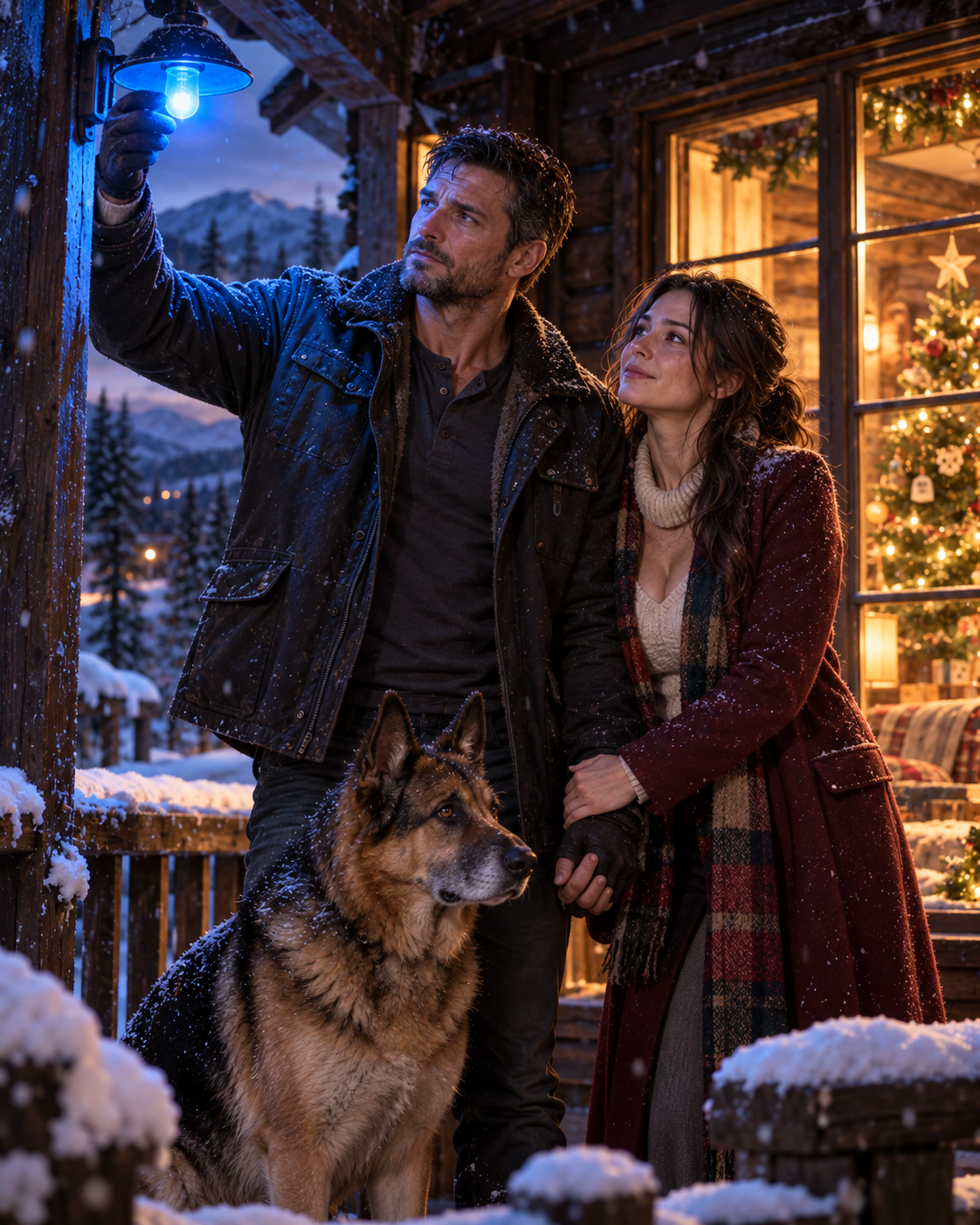
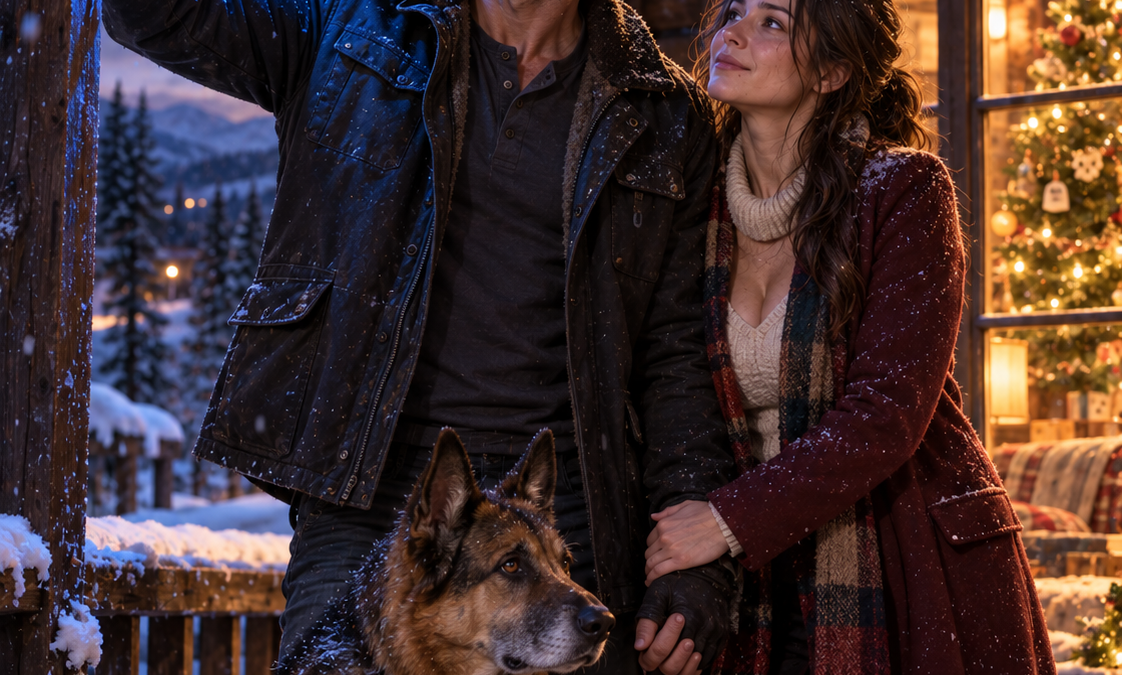
On Christmas Eve, retired Navy Seal Caleb Ror had left only one blue porch light burning in the mountain storm, not as welcome, but as punishment. Then his old canine atlas dragged him to the door, where a mother stood frozen with three girls and a promise she could not afford to break. Snow fell so thick over the Cascade Mountains that Christmas Eve seemed less like a night and more like a white wall lowered from heaven.
Near Levvenworth, Washington, where the road climbed through fur trees and disappeared around blind curves, Caleb Ror sat alone in a cabin that remembered warmth better than he did. The stove held coals, no flame. The kitchen held bread, canned soup, and a mug of coffee gone cold beside his elbow.
There was no tree, no music, no lights in the windows, though a box of them sat in the loft under three winters of dust. Outside on the narrow porch, one blue bulb burned over the door.
Caleb had left it on the way some men leave a stone on a grave. It was not decoration. It was the color of a signal lamp he had once carried through dark places far from home.
And after Emma and Noah were gone, he had kept it shining because his boy used to say, “Dad comes home when the blue light is on.”
Caleb had come home too late. That was the whole sermon of his life. Now across the room, Atlas lifted his head from the braided rug.
The German Shepherd was 6 years old, sablecoated with a black saddle and a muzzle beginning to silver, and one hind leg carried a hitch from an old injury. Atlas knew the difference between wind and trouble. That was why Caleb noticed when the dog stopped breathing easy and fixed his amber eyes on the door.
“No,” Caleb said, because he had spent years pretending commands worked on memory and weather.
Atlas rose across the room, sniffed along the door seam, and whed low. Caleb looked toward the black window.
“Branches,” he muttered.
Atlas came back, caught Caleb’s sleeve between his teeth, and pulled.
Not hard enough to tear it. Hard enough to end the argument. Caleb set his mug down.
You outranked yourself again. Then, beneath the storm, he heard it. A knock, small, uneven, three taps, a pause, then two more.
The kind a hand makes when the person using it has nearly spent the last of its strength. Caleb stood before grief could argue. He took the flashlight from its hook, checked the latch, and opened the door into cold so fierce it shoved straight through his shirt.
At first, he saw only white. Then Atlas barked once, sharp and commanding, and Caleb saw them in the blue porch light. A woman bent against the storm with three girls pressed around her like she was trying to be a coat big enough for all of them.
Snow had sealed itself to their hair.
The smallest child hung in the woman’s arms with her head against a navy parka torn at one shoulder.
Her cheeks had lost their color. The older girl, maybe 10, stood upright by force of will, alone, one arm locked around a seven-year-old who stared at Atlas with eyes too wide for crying. The woman raised her face.
Her lips trembled before any sound came. Please, she said, her knees loosened. Caleb stepped forward and caught her by the elbow.
The older girl flinched, then squared herself as though ready to fight a grown man with nothing but a wet backpack. Children first, the woman said. I am not asking for me.
The little one has asthma. We got turned around. I saw your light.
My mother said, “If we ever saw a light in a storm, we were to knock and not be ashamed.”
Please don’t let them be split up.
Caleb heard every word, but not in order. Light, storm, knock. Children first.
Don’t let them be split up.
The smallest girl opened her eyes a crack. They were soft brown, glassy with cold, trying to focus on the man in the doorway. She looked past Caleb to the blue glow.
Her little voice came out thin as thread.
Are you the man who keeps God’s light?
Caleb had been shot at, shouted at, buried under noise, and woken by alarms in rooms where nobody knew his real name. Nothing had ever gone through him as cleanly as that question.
For a moment, the porch was not a porch. It was the old road 3 years before, slick with storm. The kind of night when headlights smear into halos and a family car can be late enough to become a lifetime.
Noah’s voice rose in his head, bright and ordinary from the last December morning Caleb had been given with him.
Keep the blue one on, Dad. Then you can find us.
Caleb’s left hand closed around the door frame until the wood pressed lines into his palm.
Atlas nudged his thigh hard. The woman sagged again and that saved him from the past.
Work had always saved him if only for minutes at a time. Inside, Caleb said. It came out rough, almost angry, because tenderness had rusted in him.
He reached for the smallest child. The woman hesitated with the terror of someone who had protected a child too long to surrender her easily.
“I’m Caleb Ror,” he said.
Retired Navy. This is Atlas. He likes children better than people.
Give her to me before the cold takes more from her. The woman searched his face and found whatever desperate people find when there is no better choice.
She placed the little girl in his arms. She weighed almost nothing under the wet coat. Caleb carried her to the stove.
Atlas door. The dog backed toward the entrance and placed himself between the storm and the family while Caleb guided them inside one by one.
The 10-year-old helped the seven-year-old over the threshold before stepping in herself. Even half frozen, she turned back to make sure the woman had come too. Caleb saw that.
He saw too much.
The air filled with wet wool, pine smoke, cold metal, and the faint medicinal smell from the little girl’s scarf.
Caleb opened the stove, fed in cedar, and kindling, struck a match, and bent close until flame licked up. The fire caught slowly, then with a soft roar.
“Coats off,” he said.
“Not fast.
Arms first.
Sit close, not on top of the stove.”
you. He pointed to the oldest, then softened his hand when she stiffened. Name Sophie Hayes.
Sophie, keep your sister awake. Ask her stupid questions.
The seven-year-old blinked.
I don’t know stupid questions.
Caleb grabbed blankets from the cedar chest, then ask smart ones badly. A tiny sound came from her. Not quite a laugh, but near enough to change the room.
I’m Emily, she whispered.
That’s Grace.
Lauren, the woman said behind him. Lauren Hayes. She tried to help and nearly dropped to one knee.
Caleb pushed a chair behind her with his boot. Sit.
I can help. You already did. He heard how blunt it sounded, but Grace shifted in his arms and made a faint wheezing sound, and the world narrowed.
Caleb laid her on the rug near the stove, tilted her gently to ease her breathing, and peeled away one soaked mitten. Her fingers were cold enough to scare him, though he did not let fear into his face.
Fear in a room like this was contagious. A man learned that. Sophie talked to her.
Sophie’s teeth chattered so hard the words bumped into each other.
Grace, remember Nana’s pancakes?
Remember how she burned the first one every time and said it was for the angels? Grace did not answer. Atlas lowered himself beside the little girl, huge body, curved but not touching until Caleb gave a small nod.
Then the dog tucked close along her side, warm and steady, his ears tilted as though he too were listening for the child’s breath.
Emily watched him with wonder.
“He knows.”
“He does,” Caleb said.
He moved fast now, but carefully. blankets, dry socks, kettle on the stove, broth from the pantry, the old medical kit from under the bench, the one he hated seeing because it belonged to years when he could fix a body faster than he could speak to one.
He checked Grace without making a show of it. Kept his movements ordinary.
Told Lauren what he was doing in plain words. Warmth first, breathing steady, small sips when she could take them.
Lauren watched him with eyes that wanted to trust and had been disappointed by the world too recently to do it quickly. We were trying to reach Wanachi, she said. My mother knew someone there or thought she did.
The pass closed behind us. My phone died.
The car slid near a turnout. We walked toward what I thought was the service road.
In this, Caleb asked, and the old hardness entered before he could stop it.
Lauren’s chin lifted.
“No, in sunshine and bird song, I chose the blizzard for charm.”
Emily looked startled.
Sophie looked offended on Lauren’s behalf.
Caleb stared at the woman. Then a sound came out of him, small and dry and almost unused, but still a laugh. Lauren seemed surprised by herself, as if sarcasm had escaped through a crack in her exhaustion.
Atlas thumped his tail once against the floor. Once like a judge allowing a point. The room did not become cheerful.
Nothing so cheap happened. Grace was still too quiet.
The storm still pressed its white face to every window. But a human sound had entered the cabin, and that mattered. Caleb poured broth into chipped mugs.
Small sips.
Don’t gulp.
Emily wrapped both hands around hers and stared at the blue bulb glowing through the window glass.
“Why is your Christmas light blue?”
Caleb’s hand stopped on the kettle.
“It’s not a Christmas light.
It is tonight,” Emily said with the calm authority of a child who had survived enough in one evening to claim naming rights.
Sophie whispered.
“Emily, what?
It saved us.”
Luring closed her eyes, not from weakness, but from the awful relief of hearing one of the children speak as if mourning existed. Caleb turned away to stack another log. Drink your broth.
He felt Noah in the room the way a person feels a familiar song from another car at a stoplight. There and gone.
There and gone. Noah with his blue pencil.
Noah with his gaptothed grin. Noah kneeling in front of Atlas and trying to teach a working dog to wear paper antlers.
Caleb shut the stove door harder than needed. Atlas lifted his head. Grace stirred.
Mama, she whispered. Lauren slid from the chair to the floor.
I’m here, baby.
Cold.
I know you’re getting warm.
Grace’s eyes drifted toward Caleb.
light man. Caleb swallowed once.
Just Caleb on Lauren’s wrist, half hidden under the damp cuff of her sweater.
Something pale caught the fire light. A cord bracelet.
Tied to it was a small laminated photograph clouded by moisture, but still clear enough when Lauren moved. Caleb saw a young woman in blue scrubs standing beside another woman at a church table stacked with donated coats. The woman in scrubs had dark hair, a smile that leaned slightly left, and one hand lifted because someone had called her name just as the picture was taken.
“Emma, Caleb’s lungs forgot their work.”
Lauren noticed his stare and covered the bracelet with her other hand.
“It was my mother’s,” she said.
A woman helped her once. She told mom if things ever got bad in the mountains, there were still houses where people opened doors.
Caleb did not answer. The stove popped.
Snow hissed against the glass.
Atlas rose and pressed his broad head under Caleb’s hand, forcing his palm into fur, into warmth, into now.
Grace made a soft sound and tucked closer to the dog.
Lauren followed Caleb’s gaze again, and her guarded expression changed into alarm.
“Do you know her?”
she asked.
Caleb’s mouth opened, but no words came.
Outside, the blue porch light burned on in the storm. No longer punishment, not yet welcome, but bright enough for the lost to find.
And inside the cabin with three children thawing by his fire and his dead wife’s photograph tied to a stranger’s wrist.
Caleb Ror understood that the night had not knocked on his door by accident. The storm did not pass after Caleb Ror shut the door. It settled in.
Inside the stove began to throw heat in earnest, but warmth had rules. He wrapped Grace in dry wool, kept Atlas beside her like a living wall, and set Lauren, Sophie, and Emily close enough to feel the fire without roasting their chilled skin.
“Small sips,” he said again, handing out broth.
“Hands around the mug.
Do not race each other.”
Emily looked down at her chipped cup.
“Is there a prize if I lose my Caleb glanced at her?”
“You get to keep your eyebrows.”
“I like my eyebrows,” she said solemnly, and Sophie made a tiny sound that almost became a laugh.
Lauren pressed a hand over her mouth, though, whether to hide a smile or shaking. Caleb could not tell.
The woman’s eyes kept returning to Grace.
Every few breaths she leaned forward as if her body might hold the little girl’s lungs steady by wanting it badly enough.
He crouched beside Grace and listened without making the room watch him do it. Her breathing was tight but present. Her collar had begun to come back by fractions.
Atlas rested his chin near her blanket and flicked one ear whenever she moved.
“She needs her inhaler,” Lauren said.
It was in the car. We had one in the front pocket.
I thought I had it when we started walking, but Emily slipped and I grabbed her and somewhere after that. She stopped, ashamed of a thing no one decent would blame her for. We will manage what is here?
Caleb said. If she worsens, I have oxygen and a radio.
A radio works up here? Sophie asked. There was a sharpness in her voice.
Not rude, defensive. A child who had learned questions could be shields.
Sometimes, Caleb said, “Which is better than never.
” Sophie nodded once, filing that away like a person twice her age.
The wet backpack lay near the stove, and when Emily shifted toward it, Sophie caught the strap at once.
“Don’t.”
Caleb watched.
“Something important in there.”
“Everything,” Sophie said.
Lauren closed her eyes. Sof the girl tightened her grip. Nana said not to lose it.
Caleb did not reach for the bag. He had seen grown men break over less than a child believing one canvas sack held the last order from the dead. Then we dry it where you can see it.
He set a chair close to the stove, not too close, and helped Sophie hang the bag by its straps. Only then did her shoulders lower.
Lauren whispered, “Thank you.
” Caleb gave a short nod and went to the pantry because gratitude had become one more thing he did not know where to put.
He found crackers, peanut butter apples gone soft but still good, and a tin of Christmas cookies Megan Whitaker had left on his porch 2 days earlier after he refused to answer the door. Emily stared.
“Are those legal dinner emergency law?”
Caleb said, “Cookies outrank vegetables tonight.”
Emily looked at Atlas.
“Does he get one?”
“He negotiates badly.”
Atlas thumped his tail once, proving he understood slander. The small humor held for a moment, then Grace coughed, and the room went still.
Not a dramatic sound, not loud, just enough to tighten every adult face. Caleb reached for the medical kit.
Lauren reached two, then pulled her hands back, forcing herself to let him work. That restraint told him something about her.
Panic was easy. Trust was harder.
He checked Grace, then took out a small emergency oxygen bottle and a soft pediatric mask Emma had once insisted they keep after Noah’s winter croo scared Caleb half to death.
He had not looked at it since. Now his fingers remembered the valve before his heart could object.
“This will help her rest,” he said.
“You can hold it near her face.”
“Do not press hard.”
Lauren took the mask like it was a candle. Grace stirred but did not fight.
Atlas lifted his head and nudged the child’s elbow until her hand rested in his fur.
“Good girl,” Lauren breathed.
Caleb turned away too quickly.
In the corner, the bracelet photograph flashed again on Lauren’s wrist.
Emma’s face in fire light.
Impossible. No, not impossible. The world was fond of folding back on itself when a man thought he had escaped it.
The woman in the picture, Caleb said, his voice lower than he meant. Lauren looked at the bracelet.
Her name was Emma. Emma Ror.
I think my mother kept that photo wrapped in tissue in her Bible. She said Emma helped her when my father got sick and bills ate the house from the inside out.
Mom always said there were people who did not make speeches about goodness. They just carried groceries up icy steps.
Caleb gripped the back of a chair. Emma was my wife. The words entered the room and changed it.
Lauren’s face opened with shock, then softened into something more careful.
Sophie stopped chewing.
Emily looked from Caleb to the picture, trying to understand how the dead could arrive in a storm on somebody’s wrist.
Was Lauren asked gently. Caleb nodded once.
3 years. He did not say more.
Not yet. The cabin did not deserve the whole weight in one breath.
Lauren touched the photograph with her thumb.
I’m sorry.
This time it landed differently. Perhaps because Lauren was not trying to fix anything. She was holding a child upright with one hand and his past with the other.
Your mother, he said. Name? Norah Hayes?
Lauren glanced at the drying backpack. She died in October.
Cancer. She made me promise that if things got bad, I would keep the girls together. Sophie and Emily are mine.
Grace is my sister’s little girl.
My sister passed last year, and Grace has been ours since. Mom said children who have already lost enough should not be sorted like laundry. Caleb looked at Sophie.
The girl had gone very still hearing the private adult truth spoken aloud. We were going to Wachi, Lauren continued. Mom had written to a woman she knew through church.
She said, “Maybe there would be room.
Maybe someone could help me find work.
Maybe I could keep all three girls if I could just get through winter.”
“Maybe,” Caleb said.
“It is a small word to carry children over a mountain.”
Lauren’s eyes flashed.
It was the only word I had. He deserved that. He accepted it with a nod.
Fair.
Grace’s eyelids fluttered.
Sophie, I’m here.
Did we get split? The question was hardly more than air.
Sophie leaned close.
No, we’re all here.
Even Aunt Lauren. Even the dog.
Name? Atlas. Emily supplied.
Grace’s mouth twitched.
Big map dog. Caleb glanced over despite himself.
What? Emily pointed at the dog. Atlas holds the world.
We learned that. So he is a map dog.
That may be the first promotion he has accepted, Caleb said.
Lauren’s shoulders shook once.
Then she looked down quickly because relief can break a person almost as cleanly as grief. Caleb pretended not to see.
He moved to the radio shelf, partly because Grace needed help and partly because the photograph had made the cabin too crowded with ghosts. The hand crank radio sat beneath a coil of cord and a tin of batteries.
He checked the weather channel. Static.
He adjusted the antenna. More static than a voice swallowed by snow. He switched to the local emergency ban Sheriff Daniel Price monitored during winter closures.
This is Ror cabin off Icicle Ridge Service Road. Medical assistance requested for a child with breathing distress. Four civilians sheltering.
Repeat. Four civilians sheltering.
Static answered. Caleb waited. Atlas watched him from the rug.
Ror cabin. This is The voice vanished. Caleb adjusted again.
Megan, Daniel, anyone on this channel respond? Nothing.
Then faint and thin, Megan Whitaker’s voice cut through.
Caleb, say again. Did you say child?
Caleb leaned closer. Megan, I have a 4-year-old female asthma history, cold exposure, breathing, tight but stable on lowflow oxygen, need pediatric inhaler, steroid if available, and road status.
Static chewed the reply. He caught only pieces. Storm cell roads closed.
Trying. Do not try the upper road, Caleb said sharply.
Megan, stay in town. Do you copy?
Stay in town. Lauren looked up at the command in his voice.
Sophie did too. It was not anger exactly. It was the sound of a man who had once given orders because lives depended on them and hated how natural it still felt.
Megan’s voice returned in fragments.
I hear child.
We’ll get Price.
Then a burst of static cracked across the cabin and the signal disappeared completely. Caleb held the microphone a moment longer. Megan.
Only Snow answered. He set it down slowly.
Lauren’s face had gone pale again, though this time not from cold.
Will she come? She might try.
Is that bad? Caleb looked at the window at the world erased beyond it.
Tonight trying can be bad. No one spoke.
The children seemed to understand enough to be quiet and not enough to be spared. Caleb hated that line.
He had lived on it too often. He crossed back to the stove and added another log, buying seconds.
Then he turned to Lauren. Grace is warmer. Her breathing is better than it was.
That matters. We keep her calm, keep her upright, keep the room warm, but not smoky, and keep drying the radio.
Lauren nodded, but tears slipped. Anyway, she brushed them off with irritation, as if they were one more inconvenience. My mother said the light would mean help.
I kept telling the girls that. I kept saying just get to the light. You did.
I nearly didn’t.
Caleb wanted to tell her nearly was not the same as failing, but he had never believed it when others said it to him. Instead, he picked up the kettle.
Te? Lauren stared at him. That is your answer?
No, that is hot water with leaves in it. My answers are worse.
Emily giggled into her mug. Sophie tried not to, which made it worse.
Lauren looked at Caleb for a long second, and in that look, he saw exhaustion, suspicion, gratitude, and the first faint edge of trust. Tea.
Then, she said, “If it outranks panic, most things do.”
He made it strong because Emma had made it strong. He put honey in the girls cups because Noah had once believed honey could improve almost any disaster. And while the storm leaned harder against the cabin, Caleb Ror stood between a dead past and a breathing child doing the next useful thing.
Near midnight, Grace’s breathing eased enough that Lauren’s head bowed with silent thanks.
Atlas did not move from her side. Sophie finally let go of the backpack strap, though her fingers stayed curled as if remembering it.
Caleb returned to the radio once more, static.
Then one word came through in Megan’s voice, broken and urgent.
Coming. The signal died after that.
Caleb closed his eyes for half a second. Lauren saw his face.
You told her not to. Yes, she is your friend.
Caleb looked at Emma’s photograph on Lauren’s wrist, then at the storm.
She was Emma’s.
The distinction hurt as soon as he said it. Atlas rose, ears forward, staring toward the dark window beyond the blue porch light. Somewhere out on the buried road, a woman with medicine might be driving into weather that did not forgive good intentions.
Caleb reached for his coat. Lauren understood at once.
“No,” she said.
“You cannot leave.”
Grace breathed softly under the blanket. Emily clutched her mug. Sophie looked from Caleb to the door, already measuring what adults might sacrifice.
Caleb put one hand on Atlas’s head.
The dog was quivering, “Ready.
I may not have a choice,” Caleb said.
Outside, the storm swallowed every landmark, every track, every easy answer.
Inside the photograph of Emma Ror rested against Lauren’s wrist like a message delivered three years late, and the radio silent now seemed louder than any alarm Caleb had ever heard.
Christmas morning came without sunrise. The sky over Icicle Ridge turned from black to a dull peter gray, but snow still swept sideways past the windows so thick that the blue porch light glowed in broad daylight like a lantern underwater.
Caleb Ror had slept 20 minutes in a chair with one boot on and one hand resting on Atlas’s collar.
Grace dozed upright against Lauren’s shoulder, breathing easier with the borrowed oxygen close, and Atlas pressed along the blanket at her feet.
Sophie sat on the rug with a cracker in one hand and her backpack strap in the other. Caleb opened his eyes when a log shifted in the stove.
He thought he heard Noah moving in the loft. Then Emily snored a small whistle and the present returned with all its strange furniture.
Lauren saw him wake. You should lie down. I did.
That was sitting. Advanced version.
She looked too tired to smile, but one corner of her mouth tried. Caleb stood joint stiff and checked the radio. Static.
He checked Grace with Lauren watching every movement. Better, he said.
Not perfect. Better.
Lauren closed her eyes for one breath. Thank God. Sophie looked up sharply.
Does that mean we can leave when the road opens? Caleb heard the difference.
Not today. Tomorrow.
Depends on the storm.
And after that, Lauren said, “Sophie.”
The girl looked down. I just want to know when somebody is going to tell us what happens to us.
The cabin became still in a way the storm could not explain. Caleb had no right to answer, which did not stop the question from landing in him.
Emily crawled out from under the table, hair smashed on one side, and said, “I vote we do not go anywhere until my socks stop being soup.”
“Your socks are by the stove,” Sophie said.
Then they are soup being reheated.
Grace stirred against Lauren and murmured, “No soup socks.”
The smallest joke loosened the air. Caleb went to the kitchen because feeding people was simpler than comforting them. He found oats, brown sugar, powdered milk, and a jar of peaches Emma had canned in there last summer.
He stood with the jar in his hand too long. The label was in her writing.
Peaches August too sweet. Blame Noah.
He almost put it back.
Atlas got up, crossed the kitchen, and bunked his nose against Caleb’s knee.
Not hard enough, Caleb opened the jar. He made oatmeal and stirred in peaches, and the children ate as if each spoonful had been sent down a rope from heaven.
Emily declared it legal breakfast. Sophie asked if she could wash the bowls after.
Caleb said, “No.”
Sophie frowned. I can. I know.
Then why not? Because you are 10. 10year-olds can wash bowls.
10year-olds can also sit near the fire and eat a second helping. Sophie did not know what to do with that.
Lauren did.
She looked at Caleb over Grace’s head and something quiet passed between them.
Not romance. Not yet. Recognition.
Maybe the rare kind that says you saw the same wound I saw.
After breakfast, Emily wandered near the bookcase while Lauren changed Grace into one of Noah’s old flannel shirts Caleb had left folded in a cedar drawer and never touched.
The shirt hung past the child’s knees.
Then Emily said, “What is three warm things?”
Caleb turned so fast Atlas lifted his head. Emily stood by the old leather chair holding a small blue notebook with a bent cover.
Caleb had not seen it in 3 years. He knew exactly where it had been tucked between the cushion and the arm where Noah liked to hide treasures from imaginary pirates.
“Put that down,” Caleb said.
The words cracked across the room. Emily froze. Sophie rose at once, protective as a match.
Lauren looked from Caleb to the notebook and understood enough to move slowly.
“Emily, sweetheart, bring it here.
I didn’t mean Emily’s lower lip shook.
Caleb hated himself before she finished the sentence. Put it on the table, he said quieter, but the damage had already entered her face. Emily set the notebook down as if it might burn her and backed toward Lauren.
Grace watched with solemn eyes. Atlas stood, picked up the notebook gently in his mouth, and carried it not to Caleb, but to the rug in front of the stove. Then he sat beside it and looked at Caleb.
Caleb rubbed both hands over his face.
“Of course,” he muttered.
“Mutiny before coffee,” Emily whispered.
“I am sorry.”
Caleb looked at her.
“No,” he said.
The word came out rough. He tried again.
“No, you did not do wrong.
That was Noah’s notebook.”
Lauren’s hand settled on Emily’s shoulder.
Your son. Caleb nodded. He had a game.
Every night, even bad nights, he wrote three warm things, not big things. A dog sneeze, a blue pencil, pancakes shaped wrong.
Emma said it trained the heart to notice mercy before sleep. Grace lifted her head.
Can hearts be trained? Caleb looked at Atlas.
Some better than others. Emily edged closer. What was in it?
I don’t know anymore.
That was not true. He knew some pages by heart.
He also knew that if he opened it, the room might tilt.
Sophie surprised him by saying, “We don’t have to look.”
She meant it. Her fingers were white around her mug, but she meant it. Caleb saw the older child discipline in her the habit of wanting less so nobody had to say no.
Why are you holding the backpack? He asked gently. Sophie glanced down as if she had forgotten her hand was there.
It has Nana’s papers.
And and the letter for Wachi and Grace’s stuffed rabbit and the picture of mom before she got sick and a list Nana made of things we are supposed to remember.
What things?
Lauren shook her head faintly, but Sophie answered, “Stay together.
Knock if there is light.
Don’t lie about needing help.
Don’t let anybody made Grace feel like extra trouble.
Say thank you even when scared.
Keep Emily from feeding rocks to ducks because she thinks ducks need minerals.”
“They might,” Emily said.
Caleb looked at the ceiling. The laugh came quicker this time and hurt less. Not painless, less.
Lauren wiped under one eye with her thumb. My mother wrote lists for everything.
Soup rent courage. She said courage leaks if you do not patch it. She sounds bossy.
Caleb said she was magnificent. Lauren answered.
No defense, only fact.
Caleb walked to the rug and picked up Noah’s notebook.
Atlas allowed it. that felt like permission from a committee he had not known existed. The cover was soft at the edges.
Inside, Noah’s handwriting leaned uphill across the pages.
Caleb opened to one near the middle. Warm Thing one.
Mom put cinnamon in cocoa. Warm thing two.
Atlas did not eat my mitten even though he wanted to. Warm thing three. Dad comes home when the blue light is on.
Lauren saw and so did Sophie and none of them spoke. Caleb closed the notebook then opened it again to a blank page near the back. His voice sounded like it had walked a long distance.
One line each. Emily blinked. For us, for the book.
Sophie looked uncertain. Are you sure? No.
Caleb set the pencil beside the page. Do it before I get smarter.
Emily went first because hesitation was not one of her major talents. She wrote slowly, tongue caught between her teeth. Warm thing.
Atlas is a map dog and did not judge my socks. Grace needed help holding the pencil.
Lauren guided her hand and Grace whispered each word as if telling a secret to the page. warm thing.
I am breathing by the fire. Sophie stood last. She stared at the page so long Caleb thought she might refuse.
Then she bent and wrote in small, careful letters. Warm thing number one, he let us stay. Caleb stepped back.
He did not trust his face. The stove ticked. The storm moaned under the eaves.
He looked at Noah’s line on the opposite page and Sophie’s beneath it.
Two children who had never met writing across the years to the same frightened man. Dad comes home when the blue light is on. He let us stay.
Lauren read the lines and pressed her lips together.
Caleb, don’t.
She stopped. Good woman or tired woman?
Maybe both. The radio chose that moment to crackle. Caleb moved fast, grateful for a task.
Ror cabin. Static rolled.
Then a man’s voice broke through.
Caleb, this is Price. You copy? Sheriff Daniel Price sounded as if he were speaking from the bottom of a tinned bucket.
Caleb gripped the microphone. Copy.
Megan tried to head up before dawn. She is stuck near the lower service split. says she has medication.
I told her she has more heart than sense. Lauren went rigid.
Caleb closed his eyes once. Condition cold, embarrassed. Vehicle half buried.
No obvious injuries. Visibility bad.
I can reach her from townside if road crew clears the first mile, but not fast. You are closer by ridge trail. Daniel paused.
I am not asking you to go out there. That was exactly the kind of sentence men used when asking without wanting the guilt of asking. Caleb looked at Grace by the fire.
He looked at Lauren who understood too much and said nothing. He looked at Atlas already standing.
“How far?”
Caleb asked. Lauren inhaled sharply.
Daniel’s voice returned.
“Maybe two miles by trail, maybe three with drifts.”
“Bad idea.
most useful things are. That is not a rescue plan.
No, that is commentary. Emily whispered. Is he always like this?
Sophie whispered back. I think the dog is in charge. Caleb reached for his coat.
Lauren rose. Grace still tucked against her. You told Megan not to come.
I did.
And now you were going after her because she didn’t listen.
That is the shape of it. Grace needs you here.
The words were not selfish. That made them harder.
Caleb looked at the oxygen bottle, the stove, the radio, the child whose breathing had steadied but not become easy. Grace needs the medicine Megan has.
You all need the road report, and Megan needs not to sit in a buried car because she cared about a child.
Lauren’s face tightened.
What do you need? Atlas nudged his hand.
Caleb fastened the dog’s reflective harness, the one with old unit patches he had never removed.
I need you to keep that fire at this height. Vent cracked.
If Grace coughs hard, keep her upright and calm. Sophie, you watch the kettle, not your mother.
Emily, no experiments with socks. Grace, breathe slow with Atlas until he gets back.
Grace frowned. Atlas is going. Atlas goes where work is.
Bring him back. Caleb met her eyes. The room waited.
I will. Lauren stepped closer and lowered her voice.
Do not make promises just to comfort a child.
I don’t.
She searched his face and found the truth of that which scared her more than a lie might have. She nodded once and handed him a red scarf from the drying chair.
Tie this to your pack. If the snow takes the trail color helps.
Caleb almost refused. He took it.
Their fingers touched cold to warm. Thank you.
Outside, the blue light burned weakly through the blowing snow. Caleb opened the door and the storm rushed in like it had been waiting for another chance.
Atlas stepped out first, nose high body angled into the wind. Caleb followed.
Behind him in the cabin, three girls and one exhausted woman watched from the fire lit room where Noah’s notebook lay open on the table.
Snow swallowed Caleb’s first tracks at once.
The blue light became a blur behind him, then a star, then only the idea of a house. Atlas looked back once to make sure Caleb was still coming. Caleb tightened the scarf on his pack and moved forward.
For the first time in 3 years, he was leaving his cabin on Christmas morning, not to run from the living, but to bring one of them home.
The ridge trail behind Caleb Ror’s cabin did not look like a trail anymore.
It looked like a blank sentence the mountain had written over everything men thought they owned.
Christmas morning hung pale and windthrashed above Levvenworth, and the snow came sideways in hard sheets that erased Caleb’s tracks almost as soon as he made them.
Atlas moved ahead in his reflective harness, nose low, ears cutting through the white.
The red scarf Lauren had tied to Caleb’s pack snapped behind him like a small flag of somebody else’s faith.
He had not wanted to take it. He was glad he had. That bothered him more than the cold.
The cabin disappeared after the first bend blue porch light swallowed by fur trunks and snow. Caleb kept his breathing even, not because the climb was hard, though it was, but because his mind wanted to run backward. Another road.
Another storm. Another woman waiting where he could not reach her in time. He pressed two gloved fingers against the radio clipped to his chest.
Ror moving on ridge trail. Atlas tracking. Price status.
Static. Then Daniel Price came through in broken pieces.
Copy. Visibility poor.
Megan reports engine off. Staying put.
Tell her not to walk. Already did.
She called me bossy. She is alive then.
A crackle might have been Daniel’s laugh.
Caleb followed Atlas between trees bent under snow. He did not think of himself as brave.
Brave was a word people used from warm rooms after the weather was over. Out here there was only useful and useless. Fear could come along if it kept its mouth shut.
Atlas stopped twice to test the air. Once he angled toward a drainage cut, then corrected back uphill, trusting scent where sight had failed.
Caleb trusted the dog more than maps, more than memory, sometimes more than himself. Back at the cabin, Lauren would be keeping the stove steady. Sophie would be pretending not to worry.
Emily would be asking too many questions because silence frightened her. Grace would be breathing.
Please God, breathing. Caleb did not often pray with words.
Words had become crowded places. But the thought went up anyway, plain and unpolished.
Keep the child breathing. A gust slam snow into his hood.
Atlas barked once. Caleb stopped.
The dog stood at the edge of a shallow cut where the service trail dipped toward the lower road. below, half buried near a stand of young pines, something red flashed through the storm.
Tail light. I have visual, Caleb said into the radio. Vehicle below the cut, driver side partially covered, no smoke, Daniel answered.
Do not take the slope straight down. Its shelves near the culvert. I see it.
He did now barely. A smooth white curve where the snow had drifted over a drop.
The old Caleb, the one who had once believed speed could outrun loss, might have gone direct. This Caleb looked at Atlas, looked at the trees, chose the longer line.
“Find safe,” he told the dog.
Atlas moved left, testing the crust, then led him through a stand of fur where roots held the slope in place. It took 10 minutes to cover a distance that looked like 10 seconds.
That was how mountains taught humility. One slow step at a time.
Megan Whitaker was inside the red Subaru wrapped in a silver emergency blanket and wearing the expression of a woman furious at herself for needing rescue.
When Caleb cleared snow from the window, she glared at him through fogged glass and mouthed, “Do not start.”
Caleb opened the door against the packed drift.
“Merry Christmas.
I liked you better grieving and silent. You did not. No, but it gave me fewer opportunities to make bad choices.
Her voice shook from cold, though she tried to make it sound like annoyance.
Megan was 40 with closecropped black hair under a knit cap and a nurse’s calm that usually made other people ashamed of their panic.
Today, her cheeks were pale and one hand clutched a medical bag like it was a newborn. Caleb checked her quickly. All business.
Any pain, dizzy, trouble breathing, bruised pride? That is chronic.
I brought the inhaler. She shoved the bag toward him.
And a spacer, oral meds, extra tubing, thermometer, children’s fever reducer, protein bars, and the ginger tea Emma used to claim could fix everything except your mood.
Caleb’s hand paused at Emma’s name.
Megan saw it softened for half a second, then returned to practical child. Stable Grace four asthma history. Lauren exhausted, protective, funny when cornered.
Megan’s eyebrow rose.
That last part sounds inconvenient for you. Focus.
I am. This is my bedside manner. Atlas stuck his head into the car and sniffed the medical bag.
Megan scratched behind his ear. At least one ro is pleased to see me. The wind pushed hard against the car, rocking it on its buried tires.
Caleb glanced uphill. The weather had thickened. We move now.
Price is trying from townside, but I do not want you waiting here. Megan looked past him toward the slope.
On foot, short distance to the trail, then slow. My car will enjoy Christmas alone.
She started to protest, then saw his face and stopped. Good.
Caleb slung the medical bag under his coat to keep it dry, then helped Megan out. She was steadier than he expected and colder than he liked. Atlas led Caleb followed Megan between them for the climb.
Twice the wind staggered her, and twice she cursed so politely it sounded like church bulletin language. Caleb almost smiled. Almost.
Halfway up, the radio cracked. Ror, this is Price. Road crew says slide risk rising.
I am turning toward your place on snowmobile with supplies. Meet or return. Caleb looked at Megan, then at Atlas, then at the sky, pressing down.
Return to cabin. We have medication.
Do not take the upper chute.
Daniel answered, “You giving me orders, seal?”
Yes, Meereen. Christmas miracle. You spoke in full sentences.
Megan bent against the wind said, “Tell him I heard that and support him.”
Caleb did not. He saved his breath for climbing.
By the time the cabin’s blue light reappeared through the trees, it looked less like a punishment and more like a promise someone had kept while he was gone.
Lauren opened the door before he knocked. The relief on her face came and went so quickly he might have missed it if he had not spent a lifetime reading small movements.
Then she saw Megan and stepped back.
“Thank you,” Lauren said.
“Thank me after I make your niece mad,” Megan replied, already moving toward Grace.
The cabin became a field clinic without losing its soul. Megan washed her hands, warned.
The inhaler explained everything to Lauren in plain language and let Grace hold Atlas’s collar while she listened to the child’s breathing.
No frightening words, no drama, just care practiced and firm. Caleb stood near the door, dripping snow suddenly useless in his own house. Sophie watched Megan with hungry attention.
Are you a doctor? Nurse practitioner.
Is that close? close enough to boss doctors, not close enough to get their parking spaces.
Emily looked impressed. Grace accepted the inhaler because Megan told Atlas to demonstrate breathing first, and Atlas, after a long stare that suggested professional insult, huffed through his nose on command. Grace laughed, coughed once, then breathed easier after the medicine did its quiet work.
Lauren put a hand over her eyes. Caleb looked away to give her privacy.
Megan did not.
She squeezed Lauren’s shoulder and said, “You got her here.
That is why she is sitting by this stove complaining about my cold hands.
” Lauren nodded, unable to answer.
A rumble outside announced Daniel Price before his knock did. The sheriff arrived wrapped in snow, broadshouldered, red-faced, carrying a pack of road flares, soup cans, batteries, and the suspicious moral energy of a man who disliked being worried.
Ror, he said, “Price, Whitaker, you are a menace.
” Megan pointed at Grace, “A useful menace.”
Daniel removed his hat when he saw the children. His face changed.
Law came into the room with him. But so did decency.
“Ma’am,” he said to Lauren.
“Sheriff Daniel Price, I need to ask a few questions when you are ready.”
Lauren’s body tightened at once.
Sophie moved closer to Emily. Caleb saw it. Daniel saw it too and softened his voice.
“No one is taking anyone anywhere in this storm.
I need names, vehicle location, medical needs, and whether anybody else is out there.”
“No one else,” Lauren said.
“Just us.”
“Vehicle?”
She glanced at Caleb.
Near Steven’s Pass, I think we left it when it slid off near a turnout.
I tried to mark the road with a scarf, but the snow pluren gave it from memory. Daniel wrote it down, stepped toward the radio, and called dispatch.
The answer came back in pieces, but enough. A state plow had reported a small truck near a closed spur road before visibility dropped.
No occupants visible from the road. Daniel turned slowly.
“That yours?”
Lauren nodded.
“Our papers are in it?”
Sophie blurted the letter of the guardianship paper Nana’s box.
We had to leave the big bag because Grace couldn’t walk.
Lauren whispered, “Sophie, stop.”
But the girl was already crying angry tears.
“If we don’t have the papers, they can split us.”
The cabin fell silent.
Daniel’s jaw worked once.
Megan looked at Caleb. Lauren gathered Sophie close, though the child resisted for half a second before folding into her. Nobody is deciding that today, Daniel said.
You cannot promise that, Sophie snapped.
Daniel took the hit because he deserved part of it and because he was wise enough not to argue with terror wearing a child’s face.
“No,” he said.
“But I can promise I will not make it worse today.”
Caleb looked at the blue notebook on the table, then at the photograph still tied to Lauren’s wrist.
Emma’s smile watched from the curve of damp plastic.
The storm had brought them medicine. It had also brought the next problem clean and hard.
Without the papers, Lauren was a frightened woman in a stranger’s cabin with three children, one of them not legally hers unless the right documents could be shown.
with the papers. She was what she had been all along, a mother keeping a promise under impossible weather. Caleb did not like systems when systems arrived before mercy.
He also knew mercy lasted longer when it learned to stand on paper. Daniel cleared his throat.
When the wind drops, I can try for the truck wheat, Caleb said. Lauren looked up. No, he met her eyes.
Not now. When the wind drops, Atlas can find what the snow hides.
You just came back and I will come back again. She did not like the promise.
He saw that. Neither did he.
Promises had weight. Still, Grace was breathing easier.
Megan was warming her hands by the stove, and Daniel had brought Law into the room without letting it devour anyone. The day had moved.
That mattered. Outside, the snow struck the windows with fresh force.
Daniel’s radio crackled on his shoulder.
He turned away to listen, then went still.
Dispatch confirms the truck’s plate, he said.
It matches. Sophie wiped her face with her sleeve.
Lauren closed her eyes. Caleb looked at Atlas, who was already watching the door again. Old instincts awake.
The mountain had taken their road, their papers, and almost their hope, but it had not taken the blue light. Not yet.
And in Caleb Ror’s cabin, where Christmas had been forbidden for 3 years, four strangers, one nurse, one sheriff, one retired seal, and one limping canine stood around a fire while the next rescue began to take shape.
By afternoon, the storm loosened its fist just enough to tempt foolish men and necessary ones.
The snow still fell over the ridges near Steven<unk’s pass, but the wind dropped from a roar to a long cold breathing, and the fur trees outside Caleb Ror’s cabin stood visible again in gray layers.
The blue porch light remained on pale in daylight, stubborn as a small prayer.
Inside, Grace slept after the medicine began to help one hand buried in Atlas’s sable fur.
Emily sat cross-legged nearby and whispered facts to the dog as if he had asked for a full education. Sophie stood at the window, not touching the glass eyes fixed on the buried road beyond it. Lauren pretended not to watch her watching.
That kind of pretending fooled no one.
Sheriff Daniel Price spread a county map on Caleb’s kitchen table, weighing the corners with mugs.
Meghan Whitaker marked the known closures with a red pencil she found in a drawer.
Caleb recognized it as Noah’s and said nothing.
Some Herz did not need a ceremony every time they rose.
“Truck was seen here,” Daniel said, tapping a curve near a spur road east of the pass.
Plow driver said it was angled off the turnout but not down the slope. Visibility was poor.
He did not stop because the closure crew was moving traffic. Lauren wrapped both hands around her cup. I thought I could come back for the bag.
I thought if I got the girls warm first, you made the right call, Megan said. Papers do not breathe.
Sophie did not turn from the window. Papers decide things.
That landed harder because it was true. Daniel rubbed his jaw.
Sometimes today, people decide first and papers help later. Sophie gave him the look children reserve for adults who have made promises life already broke.
Caleb could have told Daniel not to waste words.
Instead, he checked Atlas’s harness, then the emergency pack.
rope, flares, hand warmers, first aid kit, radio, dry gloves, nothing heroic, useful things. Lauren saw the rope and stiffened. You said when the wind dropped, it is still snowing.
It is Washington, Daniel said. If we wait for perfect, we will die of old age. Lauren did not smile.
Caleb closed the pack. We are going to the truck, taking the papers if we can reach them safely and coming back. No extra searching, no pride.
That last part new for you? Megan asked.
Seasonal? Daniel snorted.
Lauren stepped closer, lowering her voice so the children would not catch every edge. I need those papers. I know that.
But I need you alive more than I need a folder. Caleb looked at her. It was a strange thing being told he was needed without being commanded to bleed for it.
Alive is in the plan. Plans fail, then we adjust.
That sounds like something men say before women have to live with the consequences. Daniel suddenly became interested in the map.
Megan looked at the ceiling. Caleb accepted the hit because it had truth in it.
You are right, he said. Lauren blinked, disarmed by agreement.
I will come back if the truck is buried too deep, if the slope is unstable, or if Atlas refuses the approach. I am not going to prove anything on that mountain.
Sophie turned. Then promise?
Caleb’s first instinct was to refuse.
Promises had teeth, but the girl was not asking for comfort. She was asking if adults could be measured. I promise I will not risk myself for paper if there is another way.
It was not everything she wanted. It was enough that she nodded.

