Part 2: “Those coves don’t exist on any map I’ve ever approved. So tell me, Captain—what exactly are you teaching your students to find?”
Chapter Six: The Archive
The archive was in the basement.
Elena followed Roman down a narrow staircase, through a door that required three separate locks, into a room that smelled like old paper and dust and something darker—something that made her think of secrets and lies and the things people did to protect themselves.
The room was filled with maps. Floor to ceiling. Wall to wall. Charts and surveys and hand-drawn sketches, some of them so old they were crumbling at the edges, some of them so new the ink was still bright.
“My grandmother’s collection,” Roman said. “Started in 1995. Continued by my father. Continued by me.” He gestured at the walls. “Every cove we’ve ever used. Every route we’ve ever mapped. Every person we’ve ever helped.”
Elena walked slowly around the room. The maps were annotated in handwriting—some of it Russian, some of it English, some of it in a script she didn’t recognize. She stopped at a map of the Massachusetts coast, covered in tiny red dots.
“What are the dots?”
“Successful landings.” Roman’s voice was quiet. “Each dot is a person or family who got out. Who made it to safety.”
“How many?”
“Since 1995?” Roman paused. “Three hundred and forty-seven.”
Elena’s breath caught. “Three hundred and forty-seven people.”
“Give or take. Some of them were children. Some of them were entire families. Some of them—” He stopped. “Some of them didn’t make it.”
“What do you mean?”
“Not every landing is successful. Sometimes the weather turns. Sometimes the Bratva gets there first. Sometimes the people we’re trying to help—” He paused. “Sometimes they don’t trust us. Sometimes they run. Sometimes they get caught.”
“How many?”
“Seventeen.” Roman’s voice was flat. “Seventeen people died trying to reach our coves. Seventeen people I couldn’t save.”
Elena thought about her grandmother—about the blessings she’d given to fishing boats, the saints’ names she’d whispered over the water, the prayers she’d offered for people Elena had never known.
“She knew,” Elena said. “My grandmother. She knew about the ones who died.”
“She did.” Roman met her eyes. “She was the one who started the tradition of marking the coves with saints’ names. She said it was because the saints were the only ones who could guide the dead home.”
“She never told me.”
“She never told anyone. But she kept a list.” Roman crossed to a small cabinet in the corner of the room, opened it, and pulled out a leather-bound notebook. “The names of every person we’ve lost. She wrote them down. Every single one.”
Elena took the notebook. It was old, worn, the pages brittle with age. She opened it to a random page and saw her grandmother’s handwriting—the same spidery script as the prayer book.
Yuri Andropov. Age 34. Died November 12, 1998. Sank in a storm off Saint Brendan Cove. Body recovered.
Maria Petrova. Age 67. Died March 3, 1999. Heart attack during landing at Saint Nicholas Cove. Body recovered.
Unknown woman. Age approximately 25. Died June 7, 2001. Found on the rocks near Saint Jude Cove. No identification. Buried in the paupers’ field.
Elena closed the notebook. Her hands were shaking.
“How do you do it?” she asked. “How do you keep going? Knowing that people die? Knowing that you can’t save everyone?”
Roman was quiet for a moment.
“Because if I stop,” he said, “more people die. Because if I give up, the Bratva wins. Because—” He paused. “Because my brother is still in that prison. Because my father is still dead. Because my mother died of a broken heart. Because I can’t bring them back, but I can save someone else’s family.”
Elena looked at him—at the scar on his forearm, the gray eyes, the hands that had marked seven coves with the names of saints. She thought about the weight he carried. The grief. The guilt. The determination.
“I want to help,” she said.
“You already are.”
“I want to do more.”
Roman’s expression didn’t change. But something in his eyes—something behind the gray—flickered.
“Then learn the charts,” he said. “Learn the routes. Learn the coves. Learn everything I can teach you.”
“And then?”
“And then we’ll see.”
Chapter Seven: The First Crack
The next three weeks were the most exhausting of Elena’s life.
She spent her days at the port authority, reviewing shipping manifests and filing reports and pretending that nothing had changed. She spent her nights at the academy, studying charts and maps and the names of saints until her eyes ached and her brain felt like it was going to explode.
Roman was a demanding teacher. He didn’t tolerate mistakes. He didn’t accept excuses. He pushed her harder than she’d ever been pushed—harder than her grandmother had pushed her, harder than her professors at university, harder than anyone.
But he was also patient. When she got frustrated, he backed off. When she made mistakes, he corrected her without judgment. When she asked questions, he answered them—fully, honestly, without the evasion she’d come to expect from men in power.
“You’re not like other bosses,” she said one night, after a particularly brutal session on tidal patterns. “Most men in your position would have given up on me by now.”
“Most men in my position are idiots.” Roman was leaning against the wall, arms crossed, watching her with an expression she couldn’t read. “You’re smart. You’re determined. You’re—” He paused. “You’re worth the effort.”
Elena felt her face heat. She turned back to the chart, hoping he hadn’t noticed.
“I’m not doing this for you,” she said. “I’m doing it for my grandmother.”
“I know.”
“And for the people who need help.”
“I know.”
“And because—” She stopped.
“Because?”
“Because I want to prove that I’m not just a bureaucrat. That I’m not just someone who files reports and closes reviews and pretends that everything is fine.” She looked up at him. “I want to do something that matters.”
Roman was quiet for a moment. Then he pushed off from the wall and crossed to the table, standing close enough that Elena could feel the warmth of his body, smell the salt and cedar and something underneath that made her think of old libraries and locked doors.
“You already do,” he said. “You matter. More than you know.”
Elena’s heart was pounding. She could feel it in her throat, in her temples, in the pulse point behind her ears.
“Is that a professional assessment?” she asked.
“It’s an observation.”
“From my boss?”
“From someone who’s been watching you for three weeks.” Roman’s voice was quiet. “Someone who’s noticed the way you bite your lip when you’re concentrating. The way you tap your pencil when you’re frustrated. The way you—”
“Stop.”
Roman stopped. His eyes met hers.
“I’m sorry,” he said. “I shouldn’t have—”
“No.” Elena shook her head. “Don’t apologize. Just—” She took a breath. “Just don’t do this. Not now. Not when I’m still trying to figure out what I’m doing here. Not when I’m still trying to understand what you want from me.”
Roman was silent for a moment.
“I don’t want anything from you,” he said at last. “I want—” He stopped. Started again. “I want you to be safe. I want you to be happy. I want you to find your place in this world. Whether that’s here, with us, or somewhere else.”
“And if I want to be here?”
Roman’s expression didn’t change. But something in his eyes—something behind the gray—softened.
“Then I’d be glad,” he said. “More glad than you know.”
He turned and walked away, leaving Elena standing alone in the archive, surrounded by maps and charts and the names of saints.
She thought about what he’d said—I want you to be safe—and she wondered if he meant it as a promise or a warning.
She wondered if she would ever know.
Chapter Eight: The Betrayal
The first crack in Roman’s control came three weeks later, at 2:47 in the morning.
Elena was in the archive, studying a chart of the Maine coastline, when her phone buzzed. She looked at the screen and felt her blood go cold.
Luka: Trouble at Saint Jude. Bratva patrol boat in the area. Need backup.
She grabbed her coat and ran.
Saint Jude Cove was the smallest of the seven—a narrow inlet on the northern edge of the harbor, accessible only at high tide, surrounded by rocks that could tear the hull off a boat if the pilot didn’t know exactly what they were doing.
Elena arrived to find Roman already there, standing on the dock with a pair of night-vision binoculars pressed to his eyes. Luka was beside him, holding a radio, his face pale in the moonlight.
“What’s happening?” Elena asked.
“Bratva patrol boat.” Roman’s voice was tight. “They’re circling the cove. They know something’s here.”
“Do they know about the coves?”
“Not yet. But they’re getting closer.” He lowered the binoculars. “We have a landing scheduled for 3:15. A family of four—two adults, two children. They’re coming in from the south. If the Bratva sees them—”
“Then they’re dead.”
“Then they’re dead.”
Elena’s mind was racing. “Can we delay the landing? Send them to a different cove?”
“No time. They’re already in the water. They’ve been traveling for three days. They can’t turn back.”
“Then we need to distract the patrol boat.”
Roman looked at her. “How?”
Elena thought for a moment. Then she pulled out her phone.
“The port authority has a routine inspection scheduled for tonight. A random safety check on all vessels in the harbor. If I call it in—if I say I spotted a suspicious vessel near Saint Jude—they’ll send a coast guard cutter to investigate.”
Roman’s eyes widened. “You’d do that?”
“It’s my job, isn’t it? Inspecting suspicious vessels?” She smiled. It was a small smile, sharp at the edges. “I’ll tell them I saw a boat matching the Bratva’s description. They’ll come investigate. The patrol boat will have to leave. And your family—”
“Will have a clear path.”
“Exactly.”
Roman stared at her for a long moment. Then he nodded.
“Do it.”
Elena made the call. She kept her voice calm, professional, utterly convincing. She described a vessel—a dark-hulled motorboat with a distinctive red stripe—heading toward the northern edge of the harbor. She said she’d seen it from the port authority’s observation tower. She said it looked suspicious.
The dispatcher thanked her and said a cutter would be dispatched immediately.
Elena hung up and looked at Roman.
“Now we wait.”
They waited.
The cutter arrived twelve minutes later—a bright white vessel with blue lights flashing, cutting through the dark water like a knife. The Bratva patrol boat saw it coming and turned away, heading back toward the main harbor. The cutter followed.
At 3:15, a small motorboat slipped into Saint Jude Cove. Elena watched from the dock as a family of four—a man, a woman, two children—climbed onto the beach. They were wet, exhausted, terrified. But they were alive.
Roman met them on the beach. He spoke to them in Russian—quiet, reassuring words that Elena couldn’t quite hear. The woman started crying. The man shook Roman’s hand, over and over, as if he couldn’t believe they’d made it.
Elena watched from the dock, her heart pounding, her hands shaking.
She had done this. She had saved them.
The debrief was at 4:30 in the morning, in the academy’s main room. Roman sat at the head of the table, his face gray with exhaustion, his eyes sharp and cold.
“Someone tipped them off,” he said. “The Bratva patrol boat didn’t just happen to be in the area. They were looking for something. They knew a landing was scheduled.”
The room was silent. The cadets exchanged glances—nervous, uncertain.
“Who knew about the landing?” Roman asked.
“Only us,” Luka said. “The seven of us. And Elena.”
“Then one of us is a traitor.”
The word hung in the air like a death sentence.
Elena felt her stomach clench. She looked at the cadets—at Luka, Nadia, Viktor, Sasha, Dmitri, Masha, Yuri. She had spent three weeks with them. She had studied with them, eaten with them, laughed with them. She had started to think of them as friends.
Now one of them was a traitor.
“Could it be someone outside the network?” Elena asked. “Someone who overheard something? Someone who—”
“No.” Roman’s voice was flat. “The landing was scheduled in the archive. No one outside this room knew about it. No one outside this room could have tipped them off.”
“Then what do we do?”
Roman was silent for a moment. Then he stood.
“We find out who it is,” he said. “And we deal with them.”
Chapter Nine: The Interrogation
The interrogation happened in the basement, in a room Elena had never seen before—a small, windowless space with a single chair and a single light bulb hanging from the ceiling.
Roman sat across from Viktor, the youngest of the cadets—a quiet, nervous boy of twenty-two with a stutter and a habit of looking at the floor.
“Tell me what you know,” Roman said.
“I don’t—I don’t know anything.” Viktor’s voice was shaking. “I swear, Captain, I didn’t—”
“Someone tipped them off. Someone in this room. Someone who knew about the landing.” Roman leaned forward. “Was it you?”
“No! I would never—”
“Then who?”
“I don’t know! I don’t—” Viktor’s voice cracked. “I don’t know who it was. But it wasn’t me. I swear it wasn’t me.”
Roman stared at him for a long moment. Then he stood.
“Get out.”
Viktor scrambled to his feet and ran.
Elena watched from the doorway, her heart pounding. “You believe him?”
“I don’t know.” Roman’s voice was tired. “I don’t know who to believe. I don’t know who to trust.”
“You can trust me.”
Roman looked at her. His eyes were gray and cold and utterly exhausted.
“Can I?”
Elena felt the words like a slap. “What do you mean?”
“I mean—” He stopped. Started again. “I mean you’re new. You’re untested. You’re—”
“I saved that family tonight. I called the coast guard. I—”
“I know.” Roman’s voice softened. “I know. But someone betrayed us. Someone in this room. And until I know who it is—”
“You’re going to suspect everyone.”
“Including you.”
Elena stared at him. The words hurt more than she expected—more than they should have.
“Fine,” she said. “Suspect me. But while you’re doing that, maybe you should consider the fact that the Bratva has been watching this academy for months. Maybe someone outside the network figured out what we’re doing. Maybe someone—”
“Maybe.” Roman’s voice was flat. “Or maybe someone inside the network sold us out.”
They stood in the basement, facing each other, the single light bulb swinging overhead.
“What now?” Elena asked.
“Now we find out who the traitor is. And we deal with them.”
“And if it’s me?”
Roman was silent for a long moment.
“Then I’ll deal with you too.”
Chapter Ten: The Weight of Suspicion
Three days passed.
Three days of silence, of sidelong glances, of conversations that stopped the moment Elena entered a room. The academy felt like a different place now—the easy camaraderie replaced by something brittle and watchful. The cadets moved in pairs, never alone. The archive was locked at all times. Roman’s office door stayed closed.
Elena spent those three days at the port authority, going through shipping manifests with a fine-toothed comb, looking for anything that might explain how the Bratva had known about the Saint Jude landing. She found nothing. The manifests were clean. The records were clean. Whatever had tipped them off, it hadn’t come through official channels.
On the fourth day, she found something else.
It was a memo—buried in the port authority’s internal filing system, dated six weeks earlier. A request from the Bratva’s shipping company for access to the harbor’s tidal data. The request had been approved by someone in the records department, someone whose name Elena didn’t recognize.
She printed the memo and drove to the academy.
Roman was in the archive, alone, staring at a chart of the harbor. He looked up when she entered, and his expression shifted—something like relief, something like wariness.
“You found something,” he said.
“I found something.” She handed him the memo. “The Bratva requested access to the harbor’s tidal data six weeks ago. The request was approved. They’ve had access to our tidal patterns for over a month.”
Roman read the memo. His jaw tightened.
“Who approved it?”
“Someone in the records department. A clerk named Patricia Hayes.” Elena paused. “I checked her file. She’s been working at the port authority for twelve years. No disciplinary issues. No suspicious activity. But her son—”
“Her son?”
“Her son works for the Bratva. He’s a mid-level manager at their shipping company. He was hired two years ago.” Elena met Roman’s eyes. “I think she’s been feeding them information. Not about the coves—I don’t think she knows about the coves. But about the harbor. The tides. The patrol schedules. Everything they’d need to figure out when and where we’re operating.”
Roman was silent for a long moment.
“The traitor isn’t in the network,” he said slowly. “It’s in the port authority.”
“It’s in the port authority.” Elena paused. “And I think I know how to prove it.”
Chapter Eleven: The Trap
The plan was simple.
Elena would file a report—a fake report, a trap—claiming that a landing was scheduled at Saint Christopher Cove on Friday night. She would leak the report to Patricia Hayes, who would pass it to her son, who would pass it to the Bratva. And then they would wait.
“If the Bratva shows up at Saint Christopher,” Elena said, “we’ll know Patricia is the leak. If they don’t—”
“Then we’re back to suspecting the network.” Roman’s voice was flat. “And we’ve wasted a week.”
“It’s not a waste. It’s a test.” Elena met his eyes. “If the Bratva shows up, we know the leak is in the port authority. If they don’t, we know the leak is in the network. Either way, we learn something.”
Roman was silent for a moment. Then he nodded.
“Do it.”
The report was filed on Wednesday morning. By Wednesday afternoon, Patricia Hayes had accessed it three times—Elena could see the digital trail in the system logs. By Thursday morning, the Bratva’s shipping company had requested updated tidal data for the Saint Christopher area.
“They took the bait,” Elena said.
“Then we set the trap.” Roman’s voice was grim. “We stage a landing at Saint Christopher on Friday night. We make it look real—boats, people, the whole thing. And when the Bratva shows up—”
“We catch them in the act.”
“Exactly.”
Chapter Twelve: Saint Christopher
Saint Christopher Cove was the northernmost of the seven—a deep, wide inlet on the edge of the harbor, accessible at all tides, surrounded by cliffs that made it invisible from the sea.
Elena stood on the cliff above the cove, watching the boats move into position. Roman was beside her, his face pale in the moonlight, his hands steady on a pair of binoculars.
“Are you sure about this?” she asked.
“No.” His voice was quiet. “But it’s the only way.”
They waited.
At 11:47, a dark-hulled motorboat appeared at the mouth of the cove. Not one of theirs—Elena could tell by the shape, the speed, the way it moved through the water. It was a Bratva patrol boat.
“Showtime,” Roman said.
He raised a radio to his lips. “All units, move in.”
The academy’s boats—three of them, hidden behind the cliffs—surged into the cove. The Bratva patrol boat tried to turn, tried to flee, but it was too late. The academy’s boats surrounded it, cutting off every escape route.
Elena watched from the cliff as Roman’s men boarded the Bratva boat. She heard shouting, the sound of a scuffle, a single gunshot.
Then silence.
Roman’s voice came over the radio. “We got them. Three men. All alive.”
Elena let out a breath she hadn’t realized she’d been holding.
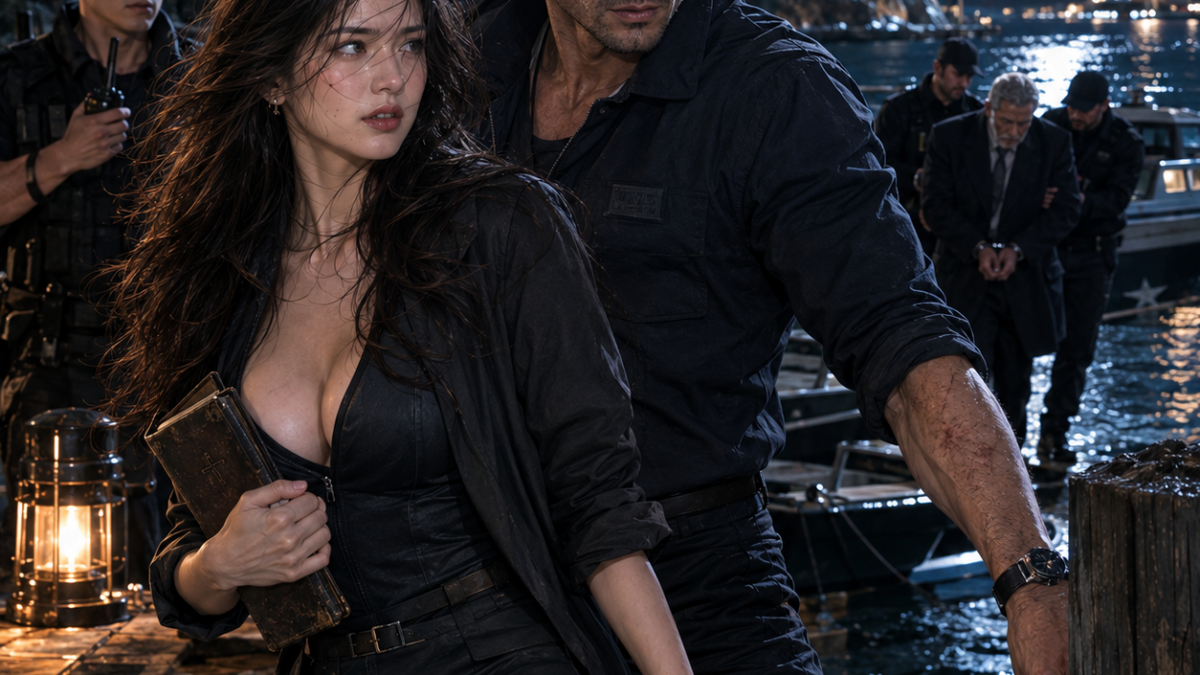
The interrogation happened on the dock, in the open, under the floodlights of the academy’s boats. The three Bratva men—young, scared, clearly low-level—were handcuffed and kneeling on the wooden planks.
“Who sent you?” Roman asked.
The oldest of the three—a man of about thirty with a broken nose and a defiant expression—spat on the dock.
“I don’t talk to traitors.”
Roman crouched down, bringing his face level with the man’s.
“I’m not the traitor here,” he said. “You are. You’re working for people who kill innocent families. Who smuggle weapons. Who destroy lives. And you’re too stupid to realize it.”
The man’s expression flickered. Just for a second.
“I don’t know what you’re talking about.”
“I think you do.” Roman stood. “Take them to the warehouse. We’ll continue this conversation there.”
Chapter Thirteen: The Confession
The warehouse was on the edge of the harbor—a derelict building that Roman’s network had used for years as a holding facility. Elena had never been inside before. She followed Roman through the door, into a space filled with crates and chains and the faint smell of rust.
The three Bratva men were chained to chairs in the center of the room. The oldest—the one with the broken nose—was staring at Roman with an expression of pure hatred.
“You think you can scare me?” he said. “You think I haven’t been tortured before?”
“I’m not going to torture you.” Roman’s voice was calm. “I’m going to tell you the truth.”
“The truth?”
“The truth about what your organization does. The truth about who you’re working for. The truth about what happens to people like you when they’re no longer useful.”
The man laughed. It was a harsh, ugly sound. “You think I don’t know? You think I’m stupid?”
“I think you’re scared.” Roman stepped closer. “I think you’ve been scared your whole life. I think you joined the Bratva because you thought it would make you strong. But it didn’t. It just made you a tool. A weapon. Something to be used and discarded.”
The man’s expression flickered again. This time, it didn’t recover.
“What do you want?” he asked.
“I want to know who told you about the landing at Saint Jude. I want to know who’s been feeding you information about this academy. I want to know who the leak is.”
The man was silent for a long moment.
“Patricia Hayes,” he said at last. “She’s the one. She’s been feeding us information for months. Tidal data. Patrol schedules. Everything.”
“Why?”
“Because her son owes us money. Gambling debts. We told her we’d forgive the debt if she helped us.” The man’s voice was bitter. “She didn’t want to. But she didn’t have a choice.”
Roman was silent for a moment.
“And the traitor in my network?”
The man looked up. His eyes were wide, confused.
“There is no traitor in your network. We didn’t need one. Patricia gave us everything we needed.”
Elena felt the words like a punch to the gut. She looked at Roman—at his face, his expression, the way his hands clenched at his sides.
“There’s no traitor,” she said. “There never was.”
Roman didn’t look at her. He was staring at the Bratva man, his eyes cold and hard.
“Get them out of here,” he said. “Put them on a boat to Canada. Make sure they never come back.”
The cadets moved to obey. Elena watched them go, her heart pounding.
When the warehouse was empty, Roman turned to her.
“You were right,” he said. “The leak was in the port authority. Not in the network.”
“I was right.” Elena paused. “But you didn’t believe me.”
Roman’s jaw tightened. “I didn’t know what to believe.”
“You suspected me.”
“I suspected everyone.” His voice was quiet. “I told you that.”
“You suspected me.” Elena stepped closer. “You looked at me—the woman who saved your family, who filed the report, who helped you set the trap—and you wondered if I was the traitor.”
Roman was silent.
“Say it,” Elena said. “Say you suspected me.”
“I suspected you.”
The words hung in the air between them.
Elena felt something break inside her—something she hadn’t even known was there. She had trusted him. She had believed in him. She had thought—foolishly, naively—that he trusted her too.
“Then we’re done,” she said.
“Elena—”
“No.” She held up a hand. “I’m not going to be someone you suspect. I’m not going to be someone you doubt. I’m not going to spend the rest of my life proving that I’m not a traitor.”
“You don’t have to prove anything.”
“Then why did you suspect me?”
Roman was silent for a long moment.
“Because I’m broken,” he said at last. “Because I’ve been betrayed before. Because everyone I’ve ever trusted has let me down. Because—” He stopped. “Because I’m scared. Of losing you. Of losing the network. Of losing everything I’ve built.”
“Then you should have trusted me.”
“I know.” His voice was barely a whisper. “I know.”
Elena turned and walked away. She didn’t look back.
Chapter Fourteen: The Fallout
The next week was the longest of Elena’s life.
She went to work. She filed reports. She reviewed documents. She pretended that nothing had changed.
But everything had changed.
She didn’t go to the academy. She didn’t study the charts. She didn’t see Roman. She stayed in her apartment at night, reading her grandmother’s prayer book, trying to understand what her grandmother would have done.
Saint Jude is for the desperate cases.
She was a desperate case now.
On the seventh day, there was a knock at her door.
She opened it to find Luka—the young cadet with the bruised jaw and the hard eyes—standing on her doorstep.
“Captain sent me,” he said. “He wants to see you.”
“I don’t want to see him.”
“I know.” Luka’s voice was quiet. “But he’s not asking for himself. He’s asking for the network. There’s a landing scheduled for tomorrow night. A family of six. They need your help.”
Elena stared at him.
“Why me?”
“Because you’re the only one who knows the tidal patterns for the southern coves. Because you’re the only one who can navigate the approach to Saint Michael. Because—” Luka paused. “Because you’re a Volkov.”
Elena was silent for a long moment.
“Fine,” she said. “I’ll help. But I’m not doing it for him.”
“I know.” Luka’s expression didn’t change. “But he’s doing it for you.”
Chapter Fifteen: Saint Michael
Saint Michael Cove was the southernmost of the seven—a narrow inlet on the edge of a rocky peninsula, accessible only at low tide, surrounded by cliffs that made it invisible from the land.
Elena stood on the deck of a small motorboat, her hands steady on the wheel, her eyes fixed on the dark water ahead. She had studied the charts for months. She knew the approach vector by heart.
“Zero-four-five degrees,” she murmured. “Hold until you see the red marker.”
The red marker was a rock formation—a natural arch that caught the moonlight like a beacon. Elena steered the boat toward it, her heart pounding, her hands steady.
Behind her, a family of six huddled together—a man, a woman, four children, all of them wet and exhausted and terrified. They had been traveling for five days. They had been chased by the Bratva. They had almost died twice.
But they were alive.
Elena guided the boat through the arch, into the cove, toward the dock. Roman was waiting there, his face pale in the moonlight, his hands steady on a rope.
She cut the engine. The boat drifted toward the dock. Roman caught the rope, tied it off, and helped the family onto the beach.
Elena watched from the boat. She watched Roman speak to the family in Russian, his voice quiet and reassuring. She watched him wrap a blanket around the youngest child, a girl of about five. She watched him look up at her, his eyes meeting hers across the water.
“Thank you,” he said.
Elena didn’t answer.
Chapter Sixteen: The Dinner
The family was safe. The landing was successful. The network was intact.
But Elena still didn’t go back.
She stayed in her apartment. She went to work. She filed reports. She pretended that nothing had changed.
Then, on a Thursday evening, there was another knock at her door.
She opened it to find Roman standing on her doorstep, holding a bottle of wine and a paper bag that smelled like food.
“What are you doing here?” she asked.
“I’m here to apologize.” His voice was quiet. “Properly. Not with excuses. Not with explanations. Just—apologize.”
Elena stared at him.
“You brought wine?”
“And food. From that Russian place on Fifth Street. The one with the pelmeni you said you missed.”
Elena felt her heart clench. She had mentioned the pelmeni once—once—three weeks ago, in passing, during a late-night study session. She hadn’t thought he’d remembered.
“Come in,” she said.
They ate at her small kitchen table. The pelmeni were perfect—warm and savory and exactly what she remembered from her grandmother’s kitchen. The wine was red and dry and went straight to her head.
“I’m sorry,” Roman said, for the fifth time. “I’m sorry I suspected you. I’m sorry I didn’t trust you. I’m sorry I—”
“Stop.” Elena set down her fork. “You’ve apologized. I heard you. But apologizing doesn’t fix what happened.”
“I know.”
“Do you?”
Roman was silent for a moment.
“I know I hurt you,” he said. “I know I broke your trust. I know I—” He stopped. “I know I’m not easy to love. I know I’m broken and suspicious and controlling. I know I’ve spent twenty years building walls and I don’t know how to take them down.”
“Then why are you here?”
“Because I want to try.” His voice was barely a whisper. “Because you’re the first person in twenty years who’s made me want to try. Because—” He paused. “Because I love you.”
Elena stared at him.
“What?”
“I love you.” He said it again, louder this time, as if he was trying to convince himself. “I love you, Elena. I love your determination. I love your sharp tongue. I love the way you bite your lip when you’re concentrating. I love the way you stood up to me in the chart room. I love the way you saved that family at Saint Jude. I love—” He stopped. “I love everything about you.”
Elena’s heart was pounding. She could feel it in her throat, in her temples, in the pulse point behind her ears.
“You love me,” she repeated.
“I love you.”
“You suspected me of being a traitor.”
“I know.” His voice cracked. “I know. And I’ll spend the rest of my life making it up to you. If you’ll let me.”
Elena was silent for a long moment.
“I don’t know if I can trust you,” she said.
“I know.”
“I don’t know if I can forgive you.”
“I know.”
“I don’t know if I can—” She stopped. “I don’t know if I can love you back.”
Roman’s expression didn’t change. But something in his eyes—something behind the gray—flickered.
“Then I’ll wait,” he said. “I’ll wait as long as it takes. I’ll prove to you that I’m worth trusting. I’ll prove to you that I’m worth loving.”
“And if I never do?”
“Then I’ll still love you. I’ll still protect you. I’ll still—” He stopped. “I’ll still be here.”
Elena looked at him—at the scar on his forearm, the gray eyes, the hands that had marked seven coves with the names of saints. She thought about the weight he carried. The grief. The guilt. The determination.
She thought about her grandmother, who had blessed boats by saints’ names and never explained why. She thought about the family that had landed at Saint Nicholas Cove. She thought about the three hundred and forty-seven people Roman had saved.
She thought about the fact that she loved him too.
“I don’t know if I can say it back,” she said. “Not yet.”
“I know.”
“But I—” She stopped. “I want to try.”
Roman’s expression shifted—something like hope, something like relief.
“That’s enough,” he said. “That’s more than enough.”
He reached across the table and took her hand. His grip was warm, steady, reassuring.
“One day at a time,” he said.
“One day at a time.”
Chapter Seventeen: The Warning
The Bratva came for them on a Tuesday.
Elena was in the archive, cataloguing a new set of charts, when her phone buzzed with a message from Luka:
Bratva at the academy. Ten men. They’re asking for Roman. Get out now.
She didn’t get out.
She ran.
The academy’s main room was a tableau of controlled violence. Ten men in dark coats stood in a loose semicircle, their hands visible but their postures coiled. At their center was a man Elena had never seen before—tall, silver-haired, with the kind of face that had been handsome once and had since been carved into something harder.
Roman stood opposite him, alone, his hands at his sides.
“Yuri Volkov,” the silver-haired man said. “The prodigal son. The traitor. The man who thinks he can build an empire out of nothing.”
“I don’t have an empire,” Roman said. “I have a pilot academy.”
“You have a smuggling network.” The man smiled. It didn’t reach his eyes. “You think we don’t know? You think we haven’t been watching you for years? The coves. The cadets. The refugees. All of it.”
Elena’s blood went cold. She pressed herself against the wall, hidden in the shadows of the corridor, listening.
“If you knew,” Roman said, “why didn’t you stop us?”
“Because we wanted to see how far you’d go.” The man gestured at the academy’s walls, the charts, the windows that looked out on the harbor. “You’ve done well. Better than we expected. You’ve moved hundreds of people. You’ve cost us millions in lost revenue. You’ve—” He paused. “You’ve been a thorn in our side for twenty years. But thorns can be removed.”
“What do you want?”
“I want you to stop. I want you to close the academy. I want you to tell your cadets to go home. And I want you to leave this city—leave this country—and never come back.”
“And if I don’t?”
“Then we’ll kill everyone you love.” The man’s voice was calm, conversational. “Starting with the woman hiding in the corridor.”
Elena froze.
The man turned, looked directly at her hiding place.
“Elena Morozova,” he said. “Granddaughter of Anastasia Volkov. Port authority inspector. The woman who filed the report that closed our access to the harbor’s tidal data.” He smiled. “We know all about you.”
Roman didn’t turn. He didn’t look at her. But Elena saw his shoulders tighten—saw the way his hands clenched at his sides.
“Leave her out of this,” he said.
“She’s already in it.” The silver-haired man stepped closer to Roman. “She’s been in it since the moment she found your charts. The moment she chose to help you. The moment she—” He paused. “The moment she fell in love with you.”
Roman was silent.
“Here’s what’s going to happen,” the man said. “You’re going to close the academy. You’re going to tell your cadets to go home. You’re going to get on a plane and leave. And the woman—” He gestured at Elena. “She’s going to stay. She’s going to work for us. She’s going to be our eyes and ears in the port authority.”
“Like hell she will.”
“Then we’ll kill her. And you. And everyone else in this building.” The man spread his hands. “It’s your choice.”
Elena stepped out of the corridor.
Chapter Eighteen: The Stand
The room went silent.
Elena walked forward—slowly, deliberately—until she stood beside Roman. She could feel the tension in his body, the coiled violence, the way he was holding himself back from attacking the silver-haired man.
“Who are you?” she asked.
The man smiled. “Ivan Volkov. Roman’s uncle. The man who killed his father.”
Roman’s breath caught.
“You—” Roman’s voice was a whisper. “You killed my father.”
“I did.” Ivan’s voice was calm. “I killed your father. I killed your mother. I would have killed you too, but you were seventeen and stupid and I thought you’d be harmless.” He paused. “I was wrong.”
Elena looked at Roman—at his face, his expression, the way his hands shook with rage.
“You killed my brother,” Roman said. “You killed Dmitri.”
“Dmitri killed himself. He asked too many questions. He knew too much.” Ivan shrugged. “I just made sure he was in a place where he couldn’t cause any more trouble.”
Roman lunged.
Elena caught his arm—held him back—her grip tight and steady.
“No,” she said. “Not here. Not now.”
Roman looked at her. His eyes were wild, desperate, full of grief and rage and something that might have been love.
“He killed my family,” he said.
“I know.” Elena’s voice was quiet. “But if you kill him now, you’ll be just like him. You’ll be a murderer. You’ll be the thing you’ve spent twenty years fighting.”
Roman’s breath was ragged. His body was shaking.
“I can’t—” He stopped. “I can’t let him—”
“You won’t.” Elena turned to Ivan. “You want the academy closed? You want us to leave? Fine. But you’re going to have to kill us first. Because we’re not going anywhere.”
Ivan’s smile faded.
“You’re bluffing,” he said.
“No, I’m not.” Elena pulled out her phone. “I’ve been recording this entire conversation. Every word. Every threat. Every confession. If anything happens to us—if anything happens to anyone in this building—this recording goes to the FBI. The ATF. The Coast Guard. The New York Times. Everyone.”
Ivan’s face went pale.
“You’re bluffing,” he said again, but his voice was less certain.
“Am I?” Elena held up her phone. The recording app was visible, the red button still active. “You killed Roman’s father. You killed his mother. You killed his brother. You’ve been running a criminal empire through the harbor for thirty years. You think the authorities wouldn’t be interested?”
Ivan stared at her.
“You’re a port authority inspector,” he said slowly. “You’re a bureaucrat. You don’t have the authority to—”
“I’m a Volkov.” Elena’s voice was cold. “And I’m not afraid of you.”
The silence stretched. The ten men behind Ivan shifted, uncertain, looking to their leader for guidance.
Ivan’s expression flickered—something like rage, something like fear.
“You think you can threaten me?” he said. “You think I haven’t dealt with threats before?”
“I think you’ve never dealt with someone who has nothing to lose.” Elena stepped closer. “I’ve already lost my grandmother. I’ve already lost my career. I’ve already lost my—” She stopped. “I’ve already lost everything that mattered to me. And I’m not going to lose Roman too. Not to you. Not to anyone.”
Ivan stared at her.
Then he laughed.
It was a cold, ugly sound—the laugh of a man who had spent thirty years killing people and had never been challenged by a woman with a phone and a recording app.
“You’re brave,” he said. “I’ll give you that. But brave doesn’t stop bullets.”
“Neither does killing us.” Elena met his eyes. “If you kill us, the recording goes out. If you hurt us, the recording goes out. If you do anything—anything at all—the recording goes out. And then you’ll have the FBI, the ATF, the Coast Guard, and every newspaper in the country on your doorstep.”
Ivan’s smile faded.
“What do you want?” he asked.
“I want you to leave. I want you to forget this place exists. I want you to forget we exist.” Elena paused. “And I want you to tell your men that if they ever come near this academy again, I’ll release the recording. Not as a threat. As a promise.”
Ivan was silent for a long moment.
Then he turned and walked away.
His men followed.
Chapter Nineteen: The Aftermath
The academy was silent.
Roman was sitting on the floor, his back against the wall, his head in his hands. Elena sat beside him, her hand on his shoulder, her heart still pounding.
“I’m sorry,” he said. “I’m sorry I couldn’t—I’m sorry I didn’t—”
“You didn’t do anything wrong.” Elena’s voice was quiet. “You held back. You didn’t kill him. That’s not nothing.”
“He killed my family.”
“I know.”
“He killed my brother.”
“I know.”
“He’s been—” Roman’s voice cracked. “He’s been running the Bratva for thirty years. He’s been killing people, trafficking weapons, destroying lives. And I just—I just let him walk away.”
“You didn’t let him walk away. I did.” Elena met his eyes. “Because I knew that if you killed him, you’d never forgive yourself. You’d become the thing you hate.”
Roman was silent for a long moment.
“How do you know me so well?” he asked.
“I don’t.” Elena smiled. It was a small smile, tired but genuine. “I’m just guessing.”
Roman laughed. It was a broken sound, half sob, half relief.
“I love you,” he said. “I love you so much it scares me.”
“I know.” Elena leaned her head against his shoulder. “I love you too.”
Roman went still.
“Say that again.”
“I love you.” Elena closed her eyes. “I’ve loved you since the moment you walked into the chart room and told me the coves were real.”
“You didn’t even know me then.”
“I knew enough.” Elena opened her eyes, looked at him. “I knew you were the kind of man who would risk everything to save people. I knew you were the kind of man who would carry the weight of the world on his shoulders and never ask for help. I knew—” She paused. “I knew you were the kind of man I could love.”
Roman stared at her.
“You’re not broken,” she said. “You’re not suspicious. You’re not controlling. You’re just—” She touched his face. “You’re just a man who’s been hurt. A man who’s been betrayed. A man who’s spent twenty years building walls because he was afraid of being hurt again.”
“And now?”
“Now you have me.” Elena smiled. “And I’m not going anywhere.”
Roman kissed her.
It was a soft kiss—gentle, tentative, full of everything they hadn’t said. It was a kiss that tasted like tears and relief and the beginning of something new.
When they broke apart, Roman was smiling.
“I don’t deserve you,” he said.
“You don’t have to deserve me.” Elena took his hand. “You just have to love me.”
“I do.”
“Then that’s enough.”
Chapter Twenty: The New Normal
The next six months were the happiest of Elena’s life.
The academy stayed open. The network stayed intact. The Bratva stayed away—Ivan had kept his word, and the recording Elena had made was still hidden in a safety deposit box, a sword of Damocles hanging over his head.
Elena left the port authority. She had been offered a job at the academy—teaching navigation, charting, and the history of the coves. She had accepted.
She moved into Roman’s apartment—a small, spartan place on the top floor of the academy building, with a view of the harbor and a bed that was too soft for her taste and too hard for his. They argued about it constantly. It was the happiest argument of her life.
The cadets became her family. Luka, who had lost his father to the Bratva and had found a new purpose in the network. Nadia, who had been trafficked as a teenager and had escaped through the coves. Viktor, who had been wrongly accused of being a traitor and had spent months proving his loyalty. Masha, Yuri, Sasha, Dmitri—all of them, scarred and broken and determined to save others.
And Roman—Roman, who had spent twenty years building walls and had finally let someone in.
Chapter Twenty-One: The Saint’s Blessing
One year after the confrontation with Ivan, Elena stood on the dock at Saint Nicholas Cove, holding her grandmother’s prayer book.
The cove was quiet. The water was calm. The old wooden dock creaked beneath her feet.
Roman stood beside her, his hand in hers.
“What are you thinking?” he asked.
“I’m thinking about my grandmother.” Elena opened the prayer book to the first page. For Elena, who will find the saints when she is ready. “She spent her whole life protecting people. She never told me. She never told anyone.”
“She was protecting you.”
“I know.” Elena closed the book. “But I wish she’d told me. I wish I’d known. I wish—” She paused. “I wish I could have thanked her.”
Roman was silent for a moment.
“You can thank her now,” he said. “By continuing her work. By saving people. By—” He gestured at the cove. “By being here.”
Elena looked at him.
“I love you,” she said.
“I love you too.”
She took his hand and led him to the end of the dock. The water was dark and deep and full of secrets. The stars were bright overhead.
“Saint Nicholas,” she said, her voice quiet but clear. “Patron saint of sailors. Protector of travelers. Guardian of the lost.”
Roman looked at her.
“What are you doing?”
“Blessing the cove.” Elena smiled. “It’s a family tradition.”
She closed her eyes.
“Saint Nicholas, bless this cove. Bless the people who land here. Bless the people who leave here. Bless the people who—” She paused. “Bless the people who find their way home.”
She opened her eyes.
Roman was staring at her.
“That was beautiful,” he said.
“It was my grandmother’s prayer.” Elena tucked the prayer book into her coat. “She used to say it every time a boat left the harbor. Every time someone started a journey. Every time someone needed protection.”
“Did it work?”
Elena looked at him—at the scar on his forearm, the gray eyes, the hands that had marked seven coves with the names of saints.
“I don’t know,” she said. “But I’d like to think so.”
Roman pulled her close. His arms wrapped around her, warm and steady and safe.
“I love you,” he said. “I love you more than I ever thought I could love anyone.”
“I know.” Elena smiled. “I love you too.”
They stood on the dock, wrapped in each other’s arms, surrounded by the names of saints and the memory of everyone who had come before.
Epilogue: The Harbor at Dawn
Three years later, Elena stood on the deck of a small motorboat, watching the sun rise over the harbor.
Roman was beside her, his hand in hers. Behind them, a family of five—refugees from a country Elena couldn’t pronounce—huddled together, wrapped in blankets, their eyes wide with hope and fear.
“Saint Michael Cove,” Elena said. “Approach vector: zero-nine-zero degrees. Hold until you see the white marker.”
The white marker appeared—a quartz vein in granite, catching the first light of dawn.
Elena steered the boat toward it, her hands steady, her heart full.
She thought about her grandmother—about the blessings she’d given to fishing boats, the saints’ names she’d whispered over the water, the prayers she’d offered for people she’d never known.
She thought about Roman—about the man who had spent twenty years building walls and had finally let someone in.
She thought about the network—about the three hundred and forty-seven people they had saved, and the seventeen they had lost, and the hundreds more who were still out there, waiting for a way out.
She thought about the fact that she was part of something bigger than herself. Something that mattered. Something that would last.
“Saint Michael,” she whispered, “protect us.”
The boat slipped into the cove. The family landed safely. Another journey ended. Another life began.
And Elena Morozova—Elena Volkov, now—stood on the dock, holding her husband’s hand, watching the sun rise over the harbor.
She was home.