Part 2: “Play it again. I dare you to tell me that note sounds the same as it did fifty years ago.”
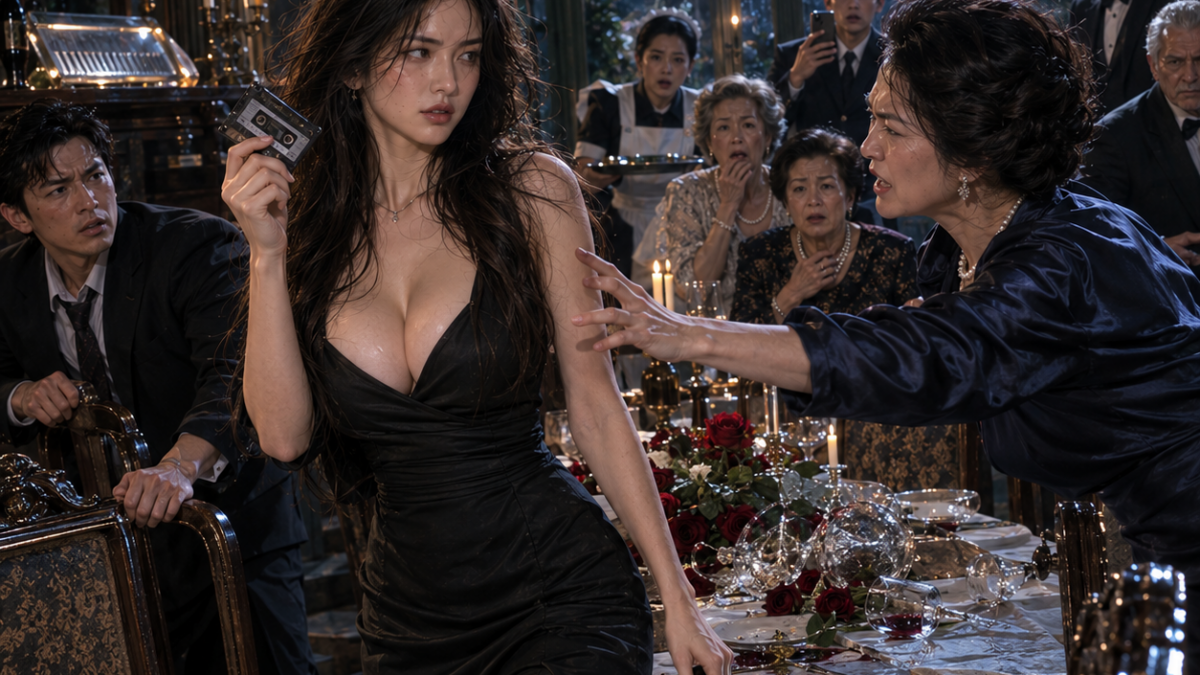
Chapter Nine: The Conservatory
One month later, I sat alone in the conservatory, the glass harmonica spinning under my fingers.
It was the replica—the fake. The real one was still missing, one of the many instruments that Vivian had sold to buyers who had since disappeared into the shadows. The FBI was still looking for it, but I had stopped expecting them to find it. Some things, once lost, stayed lost.
I played the scale my grandfather had taught me, the same scale he had recorded on that long-ago tape. The notes emerged thin and dull, but I didn’t stop. I played the chorale from Bach’s Cantata 147, feeling the music resonate through the empty room, through the empty house, through the empty space where my grandfather’s voice used to live.
“You’re playing it wrong.”
I turned. James was standing in the doorway, his hands in his pockets, his expression uncertain.
“The instrument is a fake,” I said. “It can’t sound right.”
“Not the instrument. The interpretation.” He walked toward me, his footsteps echoing on the marble floor. “Grandfather always played the chorale faster. More joyfully. You’re making it sound like a funeral.”
I stared at him. “You remember how he played?”
“I remember everything.” He sat down on the bench beside me—the bench where I had sat as a child, watching my grandfather’s fingers dance across the glass. “I used to sneak down here at night, after he’d gone to bed. I’d listen to the tapes he made. The originals. I never knew why he made them, but I loved listening to them. I loved hearing his voice.”
“He knew,” I said. “He knew someone might try to sell the collection. He made the tapes to catch them.”
“I know. I’ve been listening to them too.” James looked at me, his eyes—my grandfather’s eyes, my father’s eyes, my eyes—filled with something I hadn’t seen in a long time. “I’m sorry, Clara. I should have been here. I should have helped you. Instead, I was too busy pretending everything was fine.”
“We all were.” I turned back to the glass harmonica, my fingers resting on the spinning bowls. “That’s what this family does, isn’t it? We pretend. We pretend everything is fine, even when it’s falling apart. We pretend we’re not hurting, even when we’re bleeding. We pretend the people we love are perfect, even when they’re monsters.”
“But we’re not monsters.” James’s voice was quiet. “Not all of us. You’re not a monster, Clara. You’re the one who found the truth. You’re the one who saved the collection. You’re the one who’s going to rebuild this family, piece by piece.”
I laughed—a short, bitter sound. “No pressure.”
“No pressure at all.” He smiled, and it was the first real smile I’d seen from him in years. “Just the weight of generations of stolen art and family secrets. Easy.”
We sat there for a long time, the two of us, listening to the rain against the windows and the faint hum of the spinning glass bowls. And for the first time since I’d come home, I felt something other than anger and grief.
I felt hope.
Chapter Ten: The Appraiser’s Secret
Marcus called me two days later, his voice tight with excitement.
“Clara, I found something. In the recordings. Something I missed the first time.”
I was in my grandfather’s study, going through his papers, trying to make sense of the chaos Vivian had left behind. “What kind of something?”
“Listen to this.” There was a pause, then the sound of a tape clicking on. My grandfather’s voice emerged, but not the one I’d heard in the dining room. This one was younger, rougher, almost afraid.
“This is Edmund Ashworth, recording on the twelfth of August, 1983. I have made a terrible mistake. The instrument I acquired last month—the Amati violin—I have discovered that it was taken from a private collection in Prague. The owner, a man named Josef Novák, was murdered during the theft. I did not know. I swear to God, I did not know. But now I do, and I cannot pretend otherwise.”
I felt the blood drain from my face. “Murdered?”
“There’s more. Listen.”
“I have tried to contact the authorities, but I am afraid. The men who sold me the violin—they are dangerous. They have connections everywhere. If I go to the police, they will kill me. They will kill my family. I have no choice but to keep silent. But I will not profit from this. I will keep the violin in my collection, but I will never sell it. And I will record everything I know—every detail of the transaction, every name, every face—so that someday, someone can bring these men to justice.”
The tape clicked off.
“Marcus,” I said slowly, “are you telling me that my grandfather wasn’t just a thief? That he was involved with murderers?”
“I’m telling you that your grandfather was a complicated man who made terrible choices and then spent the rest of his life trying to make up for them. He didn’t steal the instruments for profit—or at least, not only for profit. He stole them because he was trying to save them. The men he was dealing with were going to destroy them, melt them down, sell them for parts. He bought them to keep them safe.”
“But he still bought them. He still paid murderers for stolen instruments.”
“Yes. And he knew it was wrong. That’s why he made the tapes. That’s why he left everything to you. He wanted someone to finish what he started—someone to track down the stolen instruments, return them to their rightful owners, and bring the criminals to justice.”
I sat in silence for a long moment, processing this. My grandfather—the man who had taught me to play piano, who had read me bedtime stories, who had told me I could be anything I wanted to be—was a criminal. A thief. A man who had profited from murder.
But he was also a man who had spent his final years trying to undo the damage he’d caused. A man who had left behind a trail of evidence—tapes, documents, recordings—so that someone else could finish the work he couldn’t.
“He was trying to protect us,” I said finally. “He was trying to protect the family.”
“He was trying to protect you.” Marcus’s voice was gentle. “He knew what Vivian was doing. He knew she was selling the instruments. And he knew he couldn’t stop her—not without exposing his own crimes. So he did the only thing he could. He left you the tools to stop her instead.”
I thought of the tapes in the safe. The recordings I had played for the family. The voice of my grandfather, broken and afraid, confessing his sins to a cassette recorder in the hopes that someday, someone would listen.
“Marcus,” I said, “I need you to do something for me. I need you to help me find the men who sold my grandfather that violin. The men who murdered Josef Novák.”
There was a long pause on the other end of the line. Then Marcus spoke, his voice steady.
“I was hoping you’d say that. Because I’ve already started looking.”
Chapter Eleven: The Name on the Tape
The name was Josef Novák.
Marcus found it in the background noise of the 1983 recording—a slip of the tongue, a muttered curse, a mention of “the Novák job” that my grandfather hadn’t realized he’d captured on tape. From there, the pieces fell into place with the terrible logic of a puzzle designed to destroy whoever solved it.
Josef Novák had been a Czech musicologist, a scholar who had spent his life collecting and preserving historical instruments. His specialty had been violins from the golden age of Cremona—Amatis and Stradivaris and Guarneris, instruments that had been played by generations of musicians and had absorbed centuries of music into their very wood. His collection had been legendary in academic circles. His murder, in 1983, had been a footnote in a Prague newspaper—a burglary gone wrong, the police had said. No suspects. No arrests.
But Marcus had found something the police had missed. A list, tucked into the back of one of my grandfather’s notebooks, written in his cramped, precise handwriting. Names. Dates. Amounts. And at the bottom, in a different pen, a single sentence:
The men who killed Novák are still out there. They will never stop looking for what I took from them.
“The Amati violin,” Marcus said, spreading the notebook across my grandfather’s desk. “That’s what they want. It was the centerpiece of Novák’s collection—a 1649 Amati, one of only seven known to exist. Your grandfather bought it from the killers without knowing what they’d done. When he found out, he refused to sell it back. He kept it hidden.”
“Where?”
“That’s the question.” Marcus tapped the notebook. “Your grandfather was paranoid—and for good reason. He didn’t record the location of the violin on any of the tapes. He didn’t write it down in his papers. He was afraid that if the wrong people found out where it was, they’d come for it. And for him.”
“But Vivian was selling the instruments. If the Amati was still in the collection—”
“It wasn’t. I checked the inventory. The Amati disappeared from the collection sometime in the 1990s—before Vivian took over. Your grandfather must have moved it. Hidden it somewhere no one would think to look.”
I stared at the notebook, at the list of names and dates and amounts, at the single sentence at the bottom that had haunted my grandfather for decades. “The men who killed Novák. Do we know who they are?”
“We know one of them.” Marcus pulled out another piece of paper—a photograph, grainy and black-and-white, from a surveillance camera. “This is the man your grandfather dealt with. The one who sold him the violin. His name is Viktor Marek. He’s a Czech national with ties to organized crime across Europe—art trafficking, arms dealing, a little of everything. He’s been on Interpol’s watch list since 1995.”
“Where is he now?”
“No one knows. He disappeared about ten years ago—around the same time your grandfather stopped recording his dealings. Either he retired, or—”
“Or someone retired him.” I thought of my grandfather, old and sick and afraid, living in a house full of stolen instruments and secrets. “My grandfather wasn’t a violent man. But the people he dealt with were.”
“That’s what worries me.” Marcus leaned forward, his expression serious. “Clara, if Viktor Marek is still alive—if he finds out that the Amati is still out there, and that you’re looking for it—”
“He’ll come for me.” I said the words calmly, but I felt something cold settle in my chest. “He’ll want to finish what he started.”
“Which is why I think we should go to the FBI. Tell them what we’ve found. Let them handle the investigation—”
“No.” I stood up, pacing toward the window. The sea was gray today, matching my mood. “The FBI has been investigating the stolen instruments for months, and they haven’t found the Amati. They don’t know about Marek, or the murder, or any of it. If we hand this over to them, they’ll take years to put the pieces together—if they ever do. Meanwhile, Marek is still out there. Still looking. Still dangerous.”
“Clara—”
“I have to find the Amati.” I turned back to face him. “Not just for the family. Not just for the museum. For Josef Novák. He died because my grandfather made a deal with the wrong people. The least I can do is make sure his instrument doesn’t end up in their hands again.”
Marcus was silent for a long moment. Then he sighed.
“Where do we start?”
“Where does anyone start when they’re looking for something their grandfather hid?” I picked up the notebook, flipping through the pages. “We start with the people who knew him best. The people who helped him hide it.”
Chapter Twelve: The Groundskeeper
Thomas Ashworth had been the groundskeeper at Ashworth House for forty-seven years. He had planted the roses in the garden, maintained the cliffs along the sea path, and driven my grandfather to the village every Tuesday for groceries. He had also, I suspected, been the one who helped hide the Amati.
I found him in the greenhouse, tending to a row of orchids that had been my grandmother’s favorite.
“Miss Clara.” He straightened up, wiping his hands on his apron. He was in his seventies now, weathered and gray, but his eyes were still sharp. “I heard you were back. Heard about what happened with your aunt.”
“Word travels fast.”
“Small village. Big family. Nothing stays secret for long.” He picked up a watering can and began moving down the row of orchids. “What can I do for you?”
“I need to ask you about my grandfather. About something he hid.”
Thomas didn’t look at me. He just kept watering the orchids, his movements slow and methodical. “Your grandfather hid a lot of things, Miss Clara. Some of them I helped him with. Some of them I didn’t.”
“The Amati violin. The one he bought in 1983. Do you know where it is?”
Thomas paused. The watering can hovered over a white orchid, suspended in midair. “Why do you want to know?”
“Because the men who sold it to him are still looking for it. And because I want to return it to the family of the man they murdered.”
Thomas set down the watering can and turned to face me. His expression was unreadable.
“You’re sure about that? About the men who sold it?”
“I have evidence. Tapes. Notebooks. My grandfather recorded everything.”
“I know.” Thomas’s voice was quiet. “He told me. Near the end, when he knew he didn’t have much time left—he told me everything. About the violin. About the murder. About what he’d done.”
“You knew? All this time, you knew?”
“I knew enough to keep my mouth shut.” Thomas walked toward the back of the greenhouse, where a heavy wooden door led to a storage room. “Your grandfather made me promise. He said if the wrong people ever found out where the violin was, they’d come for it. They’d come for his family. He said it was safer if no one knew—not his wife, not his children, not even you.”
“But he told you.”
“He told me because he needed someone to help him move it. Someone he could trust.” Thomas opened the door, revealing a dark, narrow staircase leading down. “Come on. I’ll show you.”
I followed him down the stairs, my heart pounding in my chest. The storage room below the greenhouse was cool and damp, filled with old tools and dusty boxes and the faint smell of earth. At the far end, behind a shelf of broken pots, Thomas pulled out a key and unlocked a heavy metal door.
“The old root cellar,” he said. “Your grandfather had it reinforced in the 1980s. Humidity control. Temperature control. Security system. Cost him a fortune, but he said it was worth it.”
He opened the door, and I stepped into a room that felt like a tomb.
The walls were lined with shelves, each one holding a single instrument case. Violins. Violas. Cellos. A bassoon that looked like it belonged in a museum. And in the center of the room, on a velvet pedestal, a single black case with a brass nameplate.
Amati, 1649 — Josef Novák
“It’s been here the whole time,” I whispered. “He never sold it. He never let anyone touch it.”
“He kept it safe.” Thomas stood in the doorway, his voice echoing in the small room. “He told me once that he thought of it as his penance. Every day he woke up and knew it was here, hidden away, waiting for someone to do the right thing with it. He said it was the only thing that kept him from going mad.”
I approached the pedestal slowly, my hands trembling. The case was cool under my fingers, the leather worn smooth from years of use. I opened the latches one by one, my breath catching in my throat.
The violin was beautiful.
It was the color of honey and amber, the varnish glowing in the dim light of the cellar. The craftsmanship was flawless—every curve, every line, every detail had been executed with the kind of precision that only came from decades of practice. I could see the wear on the fingerboard, the patina on the scroll, the faint marks where generations of musicians had held it against their chins.
This was an instrument that had lived. That had been loved. That had been stolen and murdered for.
“It’s real,” I said. “It’s actually real.”
“Your grandfather never let anyone play it. Not once, in all the years he had it. He said he didn’t have the right.” Thomas’s voice was gentle. “But I think he would want you to play it, Miss Clara. I think he would want you to bring it back to life.”
I lifted the violin out of its case—carefully, reverently, the way I had been taught to handle instruments that were older than countries. It felt warm in my hands, alive in a way that the replicas never could. I picked up the bow, rosined it, and raised the instrument to my shoulder.
And I played.
The first note emerged like a bird taking flight—clear, golden, soaring up toward the ceiling of the cellar. The sound filled the space around me, wrapping around my body like a physical thing. I played the scale my grandfather had taught me, the same scale he had recorded on that long-ago tape. Then the Bach chorale. Then a piece I had learned as a child, a simple folk song that he used to sing to me when I couldn’t sleep.
The music was perfect. The instrument was perfect. And for a moment—just a moment—I felt my grandfather’s presence in the room with me, listening, approving.
Then the door at the top of the stairs banged open, and I heard Marcus shouting my name.
Chapter Thirteen: The Threat
I scrambled up the stairs, the violin still clutched in my hands. Marcus was standing in the greenhouse, his face pale, his phone clutched to his ear.
“What’s wrong?”
He held up a hand, silencing me, then finished his call with a quick “We’ll be there in ten minutes.” He turned to face me, his expression grim.
“Vivian’s been released on bail.”
“What?” I felt the floor tilt beneath me. “How? The charges—”
“Her lawyer argued that she’s not a flight risk because her passport was confiscated and she has strong ties to the community. The judge agreed. She’s out. And she’s already been in contact with someone.”
“Who?”
“His name is Viktor Marek.” Marcus’s voice was tight. “The FBI intercepted a call from her burner phone. She told him about the tapes. About the Amati. About you.”
I felt the blood drain from my face. “She’s working with him. She’s been working with him all along.”
“It looks that way. The FBI thinks Marek is the one who’s been buying the stolen instruments from Vivian—not for himself, but for a network of collectors in Eastern Europe. He’s been using her to launder the provenance of stolen art, selling it to private buyers who don’t ask questions. And now he knows the Amati is still in the collection—and that you have the tapes that could send him to prison.”
“The tapes.” I looked down at the violin in my hands. “He wants the tapes.”
“He wants everything. The tapes, the violin, the evidence your grandfather collected. He’s been looking for it for thirty years, Clara. He thought your grandfather had destroyed it—or that it was lost when he died. But now he knows it’s been here all along. And he’s coming to get it.”
I looked at Thomas, who was standing in the corner of the greenhouse, his face pale. “How long do we have?”
“Not long.” Marcus checked his phone. “The FBI is monitoring Marek’s movements, but he’s careful. He knows they’re watching. He’s not going to come here himself—not yet. He’s going to send someone. Someone who can get in and out without being noticed.”
“Someone like—”
The gunshot interrupted me.
Thomas fell to the ground, clutching his leg, blood spreading across his jeans in a dark stain. I screamed, dropping to my knees beside him, the violin slipping from my grasp.
“Thomas! Thomas, can you hear me?”
“I’m okay,” he gasped. “Just—just my leg. Get out of here, Miss Clara. Get out of here now.”
Another gunshot shattered the glass of the greenhouse. I heard footsteps crunching on the gravel outside, moving fast. Marcus grabbed my arm and pulled me toward the door.
“We have to go. Now.”
“The violin—”
“I’ve got it.” He scooped up the instrument and case, dragging me toward the back of the greenhouse. “There’s a path through the garden. It leads to the cliffs. We can get to the village from there.”
“Thomas—”
“The FBI is on their way. They’ll find him. But we have to go.”
I looked back at Thomas, bleeding on the floor of his own greenhouse, and felt something inside me snap. I had come home to save my family’s legacy. Instead, I had brought violence and danger to the people I loved.
“Clara!” Marcus’s voice was sharp. “Now!”
I ran.
Chapter Fourteen: The Cliff Path
The path along the cliffs was narrow and treacherous, carved into the stone centuries ago by smugglers who had used it to evade the authorities. The rain had stopped, but the ground was still slick, and the sea below was a churning gray mass that promised a quick death to anyone who fell.
I ran without thinking, Marcus close behind me, the violin case clutched to my chest. My lungs burned. My legs ached. My mind was a blur of fear and grief and rage.
“They’re behind us,” Marcus gasped. “I can hear them.”
I could hear them too—footsteps on the path, voices calling out in a language I didn’t recognize. Czech, maybe. Or Russian. Marek’s men, sent to retrieve what their boss had been looking for all these years.
The path curved around a bend, and I saw it—a narrow cave opening in the cliff face, barely visible behind a curtain of ivy. A hiding place. A place where someone could wait out a storm, or ambush an enemy, or hide something precious.
“Here!” I grabbed Marcus’s arm and pulled him toward the cave. “We can hide here.”
We squeezed through the opening, into a darkness that smelled like salt and stone and something older, something that had been waiting in the dark for a very long time. I pulled Marcus deeper into the cave, away from the entrance, into a narrow passage that led to a small chamber.
“There’s something here,” I whispered. “Something my grandfather left.”
I pulled out my phone, using the flashlight to illuminate the space. The cave was small, maybe ten feet by twelve, with a natural shelf in the back wall that had been carved into something like a desk. On the shelf, wrapped in oilskin, was a package.
I opened it with trembling hands.
Inside was a journal—leather-bound, worn, filled with my grandfather’s handwriting. And beside it, a letter, addressed to me.
Clara,
If you’re reading this, it means you’ve found the cave. It means you’ve found the violin. And it means you’re ready for the truth.
The men who killed Josef Novák are still looking for the instrument. I’ve spent the last twenty years trying to protect it—and you—from them. But I’ve failed. They know it’s here. They know I have it. And they won’t stop until they get it back.
There’s only one way to end this. You have to give them what they want—not the violin, but the evidence. The tapes. The notebooks. The journal you’re holding now. Everything I’ve collected over the years. It’s the only thing that can send Marek and his men to prison.
But you can’t do it alone. You need help. You need—
The sound of footsteps in the passage interrupted me. I looked up, my heart pounding, to see a figure silhouetted against the entrance of the cave.
“Aunt Vivian.”
Chapter Fifteen: The Confrontation
She stepped into the cave, her heels clicking on the stone floor. She was wearing a black trench coat over a gray dress, her hair pulled back in a severe bun. She looked like what she was—a woman who had spent her entire life hiding behind a mask of respectability.
“Clara.” Her voice was calm, almost gentle. “I thought I might find you here. Your grandfather used to talk about this cave. He said it was his favorite place to think. I never thought to look here myself.”
“Because you were too busy selling off his collection.”
“I was trying to protect it.” Vivian’s expression flickered—something like regret, something like anger. “I told you before, Clara. I told you the truth. Your grandfather was a criminal. He stole those instruments. He hurt people. I was trying to undo the damage he’d done.”
“By selling the instruments to the same men who murdered Josef Novák?”
Vivian’s face went white. “How do you know about—”
“I know everything. I know about Marek. I know about the Amati. I know about the men who’ve been looking for it for thirty years.” I held up the journal. “And I know that my grandfather spent the last twenty years of his life trying to make things right. Trying to protect his family. Trying to protect me.”
“You don’t understand—”
“I understand perfectly.” I stood up, the violin case still clutched to my chest. “You’ve been working with Marek for years. You sold him the instruments, and he sold them to collectors who didn’t ask questions. You used the money to fund your lifestyle, to pay for the house, the cars, the diamonds. And when you found out the Amati was still hidden, you were afraid. Afraid that if Marek ever found out, he’d come after you. Come after the family.”
“I was protecting us—”
“You were protecting yourself.” My voice was sharp as glass. “You knew what Marek was. You knew what he’d done. And you made a deal with him anyway. You sold your soul, Aunt Vivian. And now you’re going to pay the price.”
Behind me, Marcus shifted, his phone in his hand. “The FBI is five minutes away. They’re tracking the men outside. It’s over, Vivian. There’s nowhere left to run.”
Vivian looked at him, then back at me. For a moment, I saw something I hadn’t expected—genuine fear. Not fear of the police. Not fear of prison. But fear of something else entirely.
“You don’t know Marek,” she said, her voice dropping to a whisper. “You don’t know what he’s capable of. If he doesn’t get what he wants, he’ll destroy everything. He’ll destroy you. He’ll destroy this family.”
“Then let him try.” I stepped toward her, the violin case held in front of me like a shield. “I’m not afraid of him. I’m not afraid of you. And I’m not going to let you destroy my family’s legacy any more than you already have.”
Vivian stared at me for a long moment. Then, slowly, her expression crumbled. The mask she had worn for so long—the mask of the respectable widow, the loving aunt, the innocent victim—fell away, revealing something raw and broken underneath.
“I was going to leave,” she whispered. “After I gave Marek the violin, I was going to leave. I was going to disappear and never come back. I never wanted to hurt you, Clara. I never wanted—”
“You hurt everyone.” My voice was quiet, but it carried through the cave. “You hurt my grandfather. You hurt this family. You hurt me. And now you’re going to face the consequences.”
The sound of footsteps echoed through the passage—more this time, heavier, faster. The FBI, finally arriving. I heard voices shouting, the crackle of radios, the metallic click of weapons being drawn.
“Vivian Ashworth,” a voice called out. “Come out with your hands up. You’re under arrest.”
Vivian looked at me one last time. Then she turned and walked out of the cave, her heels clicking on the stone, her head held high.
Chapter Sixteen: The Return
The next few hours were a blur of police lights and flashing cameras and questions that seemed to repeat themselves endlessly. The FBI had arrested six men, including the two who had attacked us at the greenhouse. Marek himself was still at large, but the evidence in my grandfather’s journal—the names, the dates, the transactions—had given the authorities enough to issue an international warrant for his arrest.
Vivian was taken into custody, facing charges that would keep her in prison for the rest of her life.
And I stood on the cliffs above the sea, watching the sun rise over the water, the Amati violin in my arms.
“You should play it.”
I turned to find Marcus standing behind me, two cups of coffee in his hands. He looked exhausted—his clothes rumpled, his hair a mess, dark circles under his eyes—but he was smiling.
“I will,” I said. “When I’m ready.”
“When will that be?”
“I don’t know.” I looked out at the sea, at the light spreading across the water like golden honey. “Maybe when I stop being so angry. Maybe when I stop being so scared. Maybe when I can hear the music again without hearing everything else.”
Marcus was silent for a moment. Then he set down the coffee cups and reached for the violin.
“May I?”
I hesitated. Then I handed it to him—the instrument my grandfather had hidden for decades, the instrument Josef Novák had died for, the instrument that had brought so much pain and so much beauty into the world.
Marcus raised it to his shoulder. He closed his eyes. And he played.
The notes that emerged were not the notes I had played in the cave—the tentative, grief-stricken sounds of a woman trying to remember how to breathe. These were notes of joy. Of hope. Of survival.
The Bach chorale swelled and receded, the violin’s voice soaring up toward the lightening sky. I watched Marcus’s fingers dance across the strings, watched the bow draw across the strings with the kind of precision that came from decades of practice. And for the first time in weeks—maybe for the first time in years—I felt something loosen in my chest.
When the piece ended, I reached for the violin. Marcus handed it back to me, and I raised it to my shoulder, and I played.
I played the scale my grandfather had taught me. I played the folk song he used to sing to me when I couldn’t sleep. I played everything I had learned in Vienna, everything I had learned at his feet, everything I had learned in the long years of trying to be the person he believed I could be.
And the music was perfect.
Chapter Seventeen: The Museum
The Metropolitan Museum of Art withdrew from the acquisition on a Friday.
I read the letter in my grandfather’s study, surrounded by boxes of papers and tapes and the faint ghost of pipe smoke. The museum’s director had been gracious—more gracious than I deserved, given the scandal that had engulfed his institution. He offered to help with the restoration of the collection. He offered to provide experts, funding, a team of conservators who could assess the damage Vivian had done. He offered, in short, to help me rebuild.
I accepted.
The following Monday, I stood in the conservatory with a team of museum specialists, watching them examine each instrument with the kind of care that only came from decades of experience. They tested materials, measured resonance, photographed provenance marks. They confirmed what Marcus had found—seventeen forgeries, seventeen originals missing—and began the painstaking work of tracking down the stolen pieces.
Some of them were recovered within weeks. The Stradivarius turned up in a private collection in Tokyo. The Amati cello was found in a warehouse in Vienna, wrapped in newspaper and forgotten. The 1740 harpsichord was located in a mansion in Switzerland, where it had been sitting untouched for years, gathering dust and silence.
Others took longer. The glass harmonica—the original, the one my grandfather had recorded in 1987—was eventually traced to a collector in Buenos Aires who had bought it without knowing its history. He returned it voluntarily, moved by the story of Josef Novák and the men who had murdered him. He wrote me a letter, expressing his condolences and his hope that the instrument would one day sing again.
I wrote back, thanking him. Then I sat in the conservatory for a long time, the real glass harmonica spinning under my fingers, and I played the scale my grandfather had taught me.
The notes shimmered and bloomed, filling the room with light.
Chapter Eighteen: The Return
The Novák family came to Ashworth House in the spring.
They were Czech—Josef’s granddaughter, a woman named Anna who taught music history at Charles University in Prague, and her two children, a boy and a girl who looked at the house with wide eyes and whispered to each other in Czech. They had come to reclaim the Amati violin, the instrument that had been stolen from their grandfather, the instrument that had cost him his life.
I met them at the front door, the violin case in my hands.
“Miss Ashworth?” Anna’s English was accented but clear. “I’m Anna Nováková. We spoke on the phone.”
“Yes. Please, come in.”
I led them into the conservatory, where the afternoon light was pouring through the windows and the instruments were gleaming on their shelves. Anna’s children gasped—the boy, who was about twelve, immediately gravitated toward the harpsichord. The girl, younger, stood transfixed in front of the glass harmonica.
“This is where my grandfather kept his collection,” I said. “It’s been in the family for three generations. My grandfather started it in the 1960s. He was a musician, and a historian, and—” I hesitated. “He was also a thief. He stole some of these instruments. He profited from the theft of others. And he spent the last twenty years of his life trying to make amends.”
Anna looked at me, her expression unreadable. “Your grandfather bought the Amati from the men who murdered mine. He knew what they had done, and he kept the instrument anyway.”
“Yes.”
“He kept it hidden for decades. He never returned it. He never told anyone what had happened.”
“He was afraid. He was afraid of what would happen if he went to the police—to him, to his family. He was a coward. And he spent the rest of his life trying to atone for that cowardice.”
Anna was silent for a long moment. Then she walked toward the violin case, which I had set on the table at the center of the room.
“May I?”
“Please.”
She opened the case. The violin lay inside, its varnish glowing in the afternoon light. Anna reached out a hand, then stopped, her fingers hovering over the strings.
“My grandfather used to play this instrument,” she said quietly. “He used to play it for me, when I was a little girl. I remember the sound—it was like nothing I had ever heard before. Like the music was coming from somewhere else. Somewhere beyond the world.”
“The instrument is yours,” I said. “It belongs to your family. I’ve already contacted the authorities—they’ve agreed to release it to you, along with the documentation my grandfather kept. The evidence he collected. The tapes he made.”
Anna looked at me, her eyes bright with tears. “Why are you doing this? You could have kept the violin. You could have sold it, or hidden it, or—”
“I could have.” I reached into my pocket and pulled out the letter my grandfather had written to me, the one I had found in the cave. “But my grandfather asked me to do the right thing. And for once in my life, I’m going to listen to him.”
I handed her the letter. She read it slowly, her lips moving silently over the words. When she finished, she folded it carefully and tucked it into her pocket.
“Thank you,” she said. “For returning the violin. For telling the truth. For—” She stopped, her voice catching. “For caring about what happened to my grandfather.”
“He was a good man,” I said. “And he deserved better than what he got.”
Anna nodded. Then she turned to her children and said something in Czech. The boy came over to the table, his eyes fixed on the violin.
“Is that it?” he asked. “Is that Grandpa’s violin?”
“Yes,” Anna said. “That’s it.”
“Can I hold it?”
“Carefully.”
She lifted the violin out of its case and placed it in her son’s hands. The boy held it the way a child holds something precious—with wonder, with reverence, with the kind of care that comes from understanding the true value of what he’s been given.
“Play something,” Anna said. “Your grandfather would want you to play.”
The boy raised the violin to his shoulder. He closed his eyes. And he played.
The notes that emerged were simple—a folk song, I think, something old and sad and beautiful. But they filled the conservatory with a kind of light, a kind of warmth, a kind of grace that I had not felt in that room for years.
When he finished, there were tears on my cheeks.
Chapter Nineteen: The Trial
Vivian’s trial began in June.
I testified on the second day. I stood in the witness box and told the court everything—about the tapes, about the forgeries, about the men who had murdered Josef Novák and the deal my grandfather had made with them. I told them about the cave, about the journal, about the years of secrets and lies that had been hidden in that house by the sea.
Vivian sat at the defendant’s table, wearing a gray suit and no jewelry. She looked smaller than I remembered. Older. Broken.
When my testimony ended, she stood up and asked to speak. The judge allowed it.
“Clara,” she said, her voice quiet. “I know you won’t believe me. I know you have no reason to. But I am sorry. I am sorry for what I did—to you, to this family, to the people I hurt. I was wrong. I was selfish. And I have no excuse.”
I looked at her—this woman who had been part of my life for as long as I could remember. This woman who had taught me to play piano, who had bought me books and clothes and told me I was special. This woman who had stolen from our family for decades, who had lied to my face, who had nearly destroyed everything my grandfather had tried to protect.
“I know,” I said. “And I forgive you.”
Vivian’s eyes widened. “You—”
“I forgive you,” I repeated. “Not because what you did was okay. Not because I’m not angry. But because I’ve spent too many years carrying around anger and grief and resentment. I’ve spent too many years being afraid of the truth. And I’m tired. I’m tired of being afraid. I’m tired of being angry. I’m tired of letting you and my grandfather and the men who hurt Josef Novák control my life.”
I stepped down from the witness box and walked toward the door. Then I turned back, just for a moment.
“I hope you find peace, Aunt Vivian. I really do. But I’m not going to wait around to see it.”
I walked out of the courtroom, into the sunlight, into the rest of my life.
Chapter Twenty: The New Collection
The Ashworth Collection reopened to the public in the fall.
It was smaller now—many of the instruments had been returned to their rightful owners, and the ones that remained were ones with clear provenance and uncomplicated histories. But what it lacked in size, it made up for in integrity. Every instrument in the collection had been authenticated, documented, and approved by an independent board of experts. Every piece of provenance had been verified. Every shadow of the past had been brought into the light.
I stood in the entrance hall on opening day, watching visitors file through the doors. There were school groups and elderly couples and young musicians carrying instrument cases. There were journalists and art critics and the simply curious. And there, in the corner, was a familiar face.
“Marcus,” I said, crossing the room to greet him. “I didn’t expect you to come.”
“I wouldn’t miss it for the world.” He was wearing a suit, which was unusual for him—he was a jeans-and-sweater kind of person. “You look good, Clara. Different.”
“Different how?”
“Happy.” He smiled. “You look happy.”
I thought about it. Happy. It wasn’t a word I had used to describe myself in a long time. But maybe he was right. Maybe, after everything, I was finally learning to be happy.
“Come on,” I said, taking his arm. “I’ll give you a tour.”
We walked through the collection together, past the violins and violas and cellos, past the harpsichord and the bassoon and the glass harmonica. I told him about the restoration work, about the new provenance documentation, about the plans for a concert series that would feature the instruments in performance.
“It’s incredible,” he said. “What you’ve done here. What you’ve built.”
“I didn’t do it alone.” I stopped in front of the glass harmonica, the real one, the one that had been returned from Buenos Aires. “I had help. From you. From James. From Thomas. From everyone who believed that this collection could be something more than a family secret.”
“Your grandfather would be proud.”
I looked at the instrument—the spinning bowls, the mahogany case, the faint marks where my grandfather’s fingers had rested. And I felt something I hadn’t felt in years.
“I hope so,” I said. “I really hope so.”
Chapter Twenty-One: The Last Tape
I found the final tape three months later.
It was hidden in a compartment in my grandfather’s desk—a secret drawer I had never noticed, tucked behind a stack of old letters. The tape was unlabeled, but the date on the case was December 25, 1998—the same day he had recorded the “personal” tape I had played for the family.
I inserted it into the player and pressed play.
“This is Edmund Ashworth, recording on the twenty-fifth of December, 1998. Christmas Day. This is the last tape I will ever make.”
His voice was older now, weaker, but still recognizable—still the voice I remembered from a thousand childhood afternoons.
“I have made many mistakes in my life. I have hurt people I loved. I have stolen things that didn’t belong to me. I have lied to my family, to my friends, to myself. But if there is one thing I have done right, it is this: I have raised a granddaughter who is stronger than me. Who is braver than me. Who is better than me.”
I felt tears prick at my eyes.
“Clara, if you’re listening to this, I want you to know something. I want you to know that I loved you. I loved you from the moment you were born—the moment I held you in my arms and looked into your eyes and saw all the possibility in the world. I loved you when you were a little girl, playing in the garden, chasing butterflies. I loved you when you were a teenager, arguing with me about music and books and everything else under the sun. I loved you when you went to Vienna, following your dreams, becoming the woman you were always meant to be.”
“I know I wasn’t always good at showing it. I know I was distant, and difficult, and sometimes cruel. I know I hurt you, Clara. I know I disappointed you. But I want you to know that none of that was your fault. It was mine. All of it was mine.”
“You are the best thing that ever happened to me. And I am so, so proud of you.”
The tape clicked off.
I sat in my grandfather’s study, tears streaming down my face, and I let myself feel everything—the grief, the anger, the love, the loss. I let myself remember the man he had been—not the criminal, not the coward, but the grandfather who had taught me to play piano, who had read me bedtime stories, who had told me I could be anything I wanted to be.
He had been wrong about so many things. But he had been right about me.
I picked up the phone and called Marcus.
“Clara? What’s wrong?”
“Nothing’s wrong.” I wiped my eyes with the back of my hand. “I just—I just wanted to hear your voice.”
There was a pause. Then, softly: “I’m glad you called.”
“I’m glad I called too.” I looked around the study—at the bookshelves, at the desk, at the rain-streaked windows. And I felt something I hadn’t felt in years.
Peace.
Chapter Twenty-Two: The Concert
The first concert of the Ashworth Collection series was held on a rainy evening in November.
I stood in the wings of the concert hall, watching the audience fill the seats—donors and scholars and music lovers and curious locals, all of them gathered to hear instruments that had been silent for decades. The program was simple: a Bach partita on the harpsichord, a Mozart sonata on the fortepiano, a folk melody on the glass harmonica. And at the end, a new composition—a piece written specifically for the collection, by a young composer who had spent months studying the instruments and their history.
“You nervous?” James appeared beside me, two glasses of champagne in his hands.
“Terrified.”
“You’ll be fine. You’ve been preparing for this for months.”
“I know.” I took the champagne and sipped it, letting the bubbles settle my stomach. “It’s just—this is the first time these instruments have been played in public since I was a child. The first time anyone has heard them. And I want it to be perfect.”
“It will be.” James smiled. “You’re an Ashworth. We don’t do anything halfway.”
I laughed—a real laugh, the kind I hadn’t heard from myself in years. “That’s what worries me.”
The lights dimmed. The audience fell silent. And I walked out onto the stage, the violin in my hands.
The first note emerged like a bird taking flight—clear, golden, soaring up toward the ceiling of the concert hall. The audience held its breath. And I played.
I played the pieces I had practiced for months, the pieces my grandfather had taught me, the pieces that had lived in my heart since childhood. I played the Bach partita, the Mozart sonata, the folk melody I had heard on the glass harmonica. I played the new composition, the one written specifically for this moment, this collection, this family.
And when I finished, the audience stood and applauded, and I felt something I had never felt before.
I felt like I belonged.
Chapter Twenty-Three: The Future
The Ashworth Collection is now in its third year of operation.
It has grown—not in size, but in scope. We host regular concerts, workshops, and educational programs. We partner with museums and universities around the world. We work with law enforcement to identify and return stolen instruments to their rightful owners. We are, in short, everything my grandfather hoped we would be—and nothing like what he feared we might become.
Marcus and I were married last spring. It was a small ceremony—just family and close friends—held in the conservatory of Ashworth House. James was there. Thomas was there, his leg healed, his garden thriving. Anna Nováková came from Prague, and her children played the Amati violin during the ceremony, filling the house with music that had been silent for too long.
Vivian is serving a fifteen-year sentence. I visit her once a year, on Christmas Eve. We don’t talk much. But I bring her cookies, and she asks about the collection, and we sit together in the visiting room and watch the snow fall outside the window.
It’s not forgiveness. Not really. But it’s something.
The glass harmonica still spins under my fingers. The Stradivarius still sings. The Amati still lives, in the hands of Anna’s grandchildren, who are learning to play the music their great-grandfather loved.
And every Christmas, I take out my grandfather’s tapes and play them one by one. I listen to his voice—young, old, afraid, hopeful—and I remember the man he was. Not the saint I wanted him to be. Not the villain he feared he had become. Just a man, complicated and flawed, trying to do the right thing in a world that made it nearly impossible.
He made mistakes. He hurt people. He spent years hiding from the truth.
But in the end, he gave me the tools to do what he couldn’t. He gave me the tapes, the journal, the evidence. He gave me the courage to face the truth, even when it cost me everything.
He gave me the glass inheritance.
And I will spend the rest of my life making sure it is never lost again.








