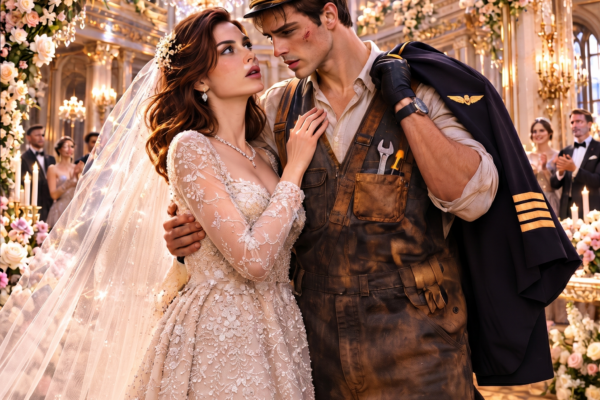
They Mocked Her Body—She Became the World’s Top Model

THE WOMAN THEY COULDN’T BREAK
For five years, Wendy Lane had believed that love was something a woman could earn by giving enough of herself away.
She had given Kyle Carter her time, her trust, her inheritance, and nearly every opportunity her family name could offer. When he decided to enter politics, she had quietly stepped away from the modeling career she had once dreamed of. When campaign donors hesitated, she persuaded her father to help. When Kyle needed introductions, she opened doors that would otherwise have remained firmly shut. She even convinced herself that his growing ambition was something they were building together.
She had imagined the night of his election victory a hundred times. In every version, Kyle found her in the crowd, took her hand, and thanked her for believing in him when the rest of the world had not. Perhaps he would finally give her the engagement ring he had been promising. Perhaps he would announce their wedding date.
Instead, Wendy found him in a hotel suite with her closest friend.
She had been looking for him because the photographers downstairs were asking where the newly elected assemblyman had gone. The party occupied the top two floors of a luxury hotel, and the private rooms were supposed to be reserved for family and senior campaign staff. Wendy had used her access card to reach the upper corridor.
The door to the corner suite stood open by several inches.
She heard a laugh she recognized.
Then Kyle spoke.
“Look at that dress. Four of Wendy could fit inside it. How did someone that size ever imagine she belonged on a runway?”
Sophia Miller laughed softly. “Don’t be cruel. She’s been through a lot.”
“That’s exactly why I’m finished pretending. You’re the woman I should have been with from the beginning.”
Wendy stopped breathing.
Sophia was wearing a pale silk dress Wendy had bought for her months earlier, when she had helped her prepare a portfolio for an exclusive casting in Paris. The dress looked beautiful on her. Sophia’s dark hair fell over one shoulder, and her smile was the same warm, affectionate smile she had worn at Wendy’s birthday dinners.
Kyle was sitting on the edge of the bed, his shirt unbuttoned.
Wendy stepped into the room.
For a moment, nobody moved.
“Wendy,” Sophia said, reaching for the sheet. “This isn’t what it looks like.”
Wendy stared at her. “Then tell me what it looks like.”
Kyle stood. His expression changed quickly, but not into shame. Irritation came first, followed by the familiar political smile he used whenever a conversation threatened to become inconvenient.
“You shouldn’t be up here,” he said.
“You’re my fiancé.”
He glanced at Sophia, then back at Wendy.
“Not anymore.”
The words landed with such casual finality that Wendy almost wondered whether she had heard them correctly.
“You were going to tell me?”
“We’ve been over for a while. I just didn’t want to upset you.”
“You ordered an engagement ring last week.”
Sophia lowered her eyes. Kyle’s jaw tightened.
Wendy looked between them. “How long?”
Sophia sighed as though Wendy were exhausting her. “Do we really need to do this?”
“Yes.”
“I never considered you a friend,” Sophia said. “Not a real one. I hated the way you treated me like a charity project. You paid for things, introduced me to important people, and acted as if I should be grateful every time you remembered I existed.”
“I thought I was helping you.”
“You were buying the illusion that I liked you.”
Sophia’s voice was calm, almost conversational. That made it worse.
“The night you introduced us at your birthday party, Kyle kissed me by the pool. He came back to you afterward, but he was already thinking about me. Every time he had to pretend to be affectionate, he complained that your medication smelled awful. He said your condition made him uncomfortable.”
Wendy felt the room tilt.
She remembered that birthday party. Sophia had worn a blue dress and spent the evening asking Wendy about her health. Kyle had arrived late, kissed Wendy in front of the guests, and whispered that he was proud of her.
She had believed him.
“Don’t touch her,” Kyle snapped when Wendy took a step toward Sophia.
Wendy stopped. “You told me you loved me.”
“I told you what you needed to hear.”
“Was any of it real?”
Kyle exhaled sharply. “Wendy, look at yourself. You’re not the woman I started dating. I am an assemblyman now. My wife has to be polished, disciplined, and camera-ready. I can’t have reporters photographing me beside someone who looks like she has given up on herself.”
“I’m sick,” Wendy whispered. “You know why my body changed.”
“You always have an explanation. First it was the miscarriage, then the medication, then the doctors. My life cannot revolve around your problems.”
“My father helped you win.”
“And I’m grateful. But that doesn’t mean I owe you the rest of my life.”
Wendy’s eyes burned.
“You wouldn’t even have a campaign without Lane Group.”
Kyle’s expression hardened. “I have the seat now. What can your father do? Threaten me? Withdraw his money after the election? That would make him look like a bitter businessman trying to control an elected official.”
He stepped closer, lowering his voice.
“You were useful, Wendy. That’s all. Your family had money, influence, and connections. I needed those things. I didn’t need you.”
Sophia folded her arms. “You should leave before you embarrass yourself further.”
Wendy looked at the woman who had once slept beside her during hospital visits, who had held her hand after the miscarriage, who had called her family.
She finally understood that the cruelty had not begun tonight. It had simply stopped pretending to be kindness.
“Enjoy your victory,” she said. “Both of you.”
Kyle gave a humorless laugh. “Don’t make a scene.”
Wendy turned toward the door.
Then she stopped.
“One more thing. You have my father’s money, my family’s connections, and five years of my life. You don’t get to tell me I have nothing left.”
Kyle looked amused. “What exactly are you going to do? Walk back onto a runway?”
Wendy held his gaze.
“Yes.”
For the first time that night, his smile faltered.
“Everyone,” he called when they returned to the ballroom, “please welcome your newly elected state assemblyman, Kyle Carter!”
Applause swept through the room. Cameras flashed. Kyle lifted a hand and returned to his public smile as though nothing had happened.
Wendy stood near the entrance, watching the man she had helped build become a stranger in front of hundreds of people.
A security guard approached her. “Miss Lane, I’m sorry. The assemblyman’s office asked us to escort you out.”
Before Wendy could answer, another man stepped between them.
“Who gave you that instruction?” he asked.
The guard straightened. “Mr. Thorne. I was just following the request from Assemblyman Carter’s staff.”
Evan Thorne had arrived without fanfare, yet the people nearby seemed to notice him immediately. As president of Thorne Group, he was one of the most influential figures in the fashion industry. He wore a black suit without a tie and carried the composed expression of a man accustomed to being heard.
“Then you should follow the venue’s rules instead,” Evan said. “This event was funded by Lane Group. Miss Lane is not trespassing.”
Kyle approached, his smile returning.
“Mr. Thorne, this is a private disagreement. Wendy has been struggling with her health. Sometimes she becomes confused and says things that aren’t true.”
Wendy turned sharply. “Don’t use my health to explain your affair.”
Kyle raised his hands, performing concern for the watching guests.
“We ended our relationship months ago. I kept it quiet because I didn’t want to make her condition worse. She hasn’t accepted it, and lately she’s been following Sophia and me.”
Sophia appeared beside him, her expression carefully sorrowful.
“Wendy, I never wanted to hurt you. I hope one day you’ll understand.”
The scene was almost convincing. Kyle looked patient, Sophia looked heartbroken, and Wendy looked like the angry woman who had interrupted a celebration.
Then Wendy remembered the ring.
She pulled her phone from her bag and opened the confirmation email she had received only days earlier. The custom jeweler had copied her on the order because the ring was being designed to her preferences.
She held the screen up.
“Assemblyman Carter, the jeweler’s confirmation is dated last Friday. The order is under your name. The engraving says ‘Mrs. Wendy Lane.’ You were still ordering my engagement ring while telling Sophia you loved her?”
A ripple passed through the guests.
Kyle’s face tightened. “That proves nothing.”
“It proves you were lying.”
Sophia stepped forward. “She’s making things up. She’s jealous because I’ve been selected for the Thorne spring couture casting.”
Wendy looked at her.
“Did you forget who paid for your portfolio? Who covered your travel to Paris? Who gave you the contacts you needed to get those castings?”
“I earned my opportunities.”
“With my money.”
“Wendy,” Kyle warned. “Enough. You’re ruining my victory party.”
Wendy looked around the ballroom. The flowers, the champagne, the lighting, the rented venue, the orchestra—her family’s foundation had paid for all of it.
“Your victory party?” she asked. “I paid for this room.”
She walked to the center of the ballroom.
“Ladies and gentlemen, since everyone seems interested in my future, let me make one announcement. I am returning to modeling. I will audition for the Thorne couture collection, and I intend to walk the runway again.”
Laughter broke out among some of the guests.
Kyle shook his head. “With your current appearance? You’re humiliating yourself.”
Wendy did not look at him.
“Then you can watch.”
That night, she called her father.
William Lane answered on the second ring. “Wendy?”
“Dad, I need you.”
His voice sharpened. “Where are you?”
“At the hotel. Kyle cheated on me with Sophia. He says we’re finished. He says he only needed our money and connections.”
There was a silence.
Then William said, “Come home.”
“I’m sorry. I should have listened to you.”
“You don’t owe me an apology for loving someone. But you do owe yourself a better future.”
Wendy closed her eyes.
“I’m going back to modeling.”
“Then we’ll make sure you get the chance.”
William had warned her about Kyle from the beginning. He had disliked the young politician’s eagerness, his habit of turning every conversation toward influence, and the way he treated Wendy’s generosity as though it were an entitlement. But when Wendy had insisted she loved him, her father had chosen to support her rather than drive her away.
Now his patience was over.
“Listen carefully,” he told her. “Kyle has been living in properties financed through Lane Group. Several of his cars are leased through our subsidiaries. His campaign received twenty million dollars from the Lane Foundation under a formal agreement. I want finance and legal to review every transaction tonight.”
“Dad, I don’t want to do anything illegal.”
“Neither do I. We will recover what belongs to us through proper channels. If he misused foundation money, he can explain it to the authorities.”
“And the election?”
“He won the seat. That doesn’t make him immune from scrutiny.”
Wendy swallowed.
“Thank you.”
“Come home, sweetheart. We’ll deal with tomorrow when it comes.”
At nine the next morning, Wendy arrived at Thorne Group headquarters.
The building was all glass and pale stone, with a long entrance hall displaying photographs from the company’s most celebrated fashion campaigns. She had visited before, but never as a candidate. On the way in, she passed two young models who glanced at her and whispered.
She kept walking.
At the reception desk, she gave her name.
“Wendy Lane. I’m here for the couture casting.”
The assistant checked her tablet.
“I’m sorry, Miss Lane. Your casting assignment has been changed. The couture slot now belongs to Sophia Miller. You can wait for the ready-to-wear selection.”
Wendy stared at the screen.
“My name was confirmed first.”
“The schedule has been updated.”
“By whom?”
“Orders from above.”
Sophia appeared from the corridor wearing a fitted cream jacket. She looked surprised to see Wendy, but the smile that followed was too deliberate to be sincere.
“Oh, Wendy. I didn’t know you’d be here.”
“You know exactly why I’m here.”
Sophia turned toward the receptionist. “Is there a problem?”
“Apparently, my casting slot was reassigned to you.”
Sophia gave a sympathetic little laugh. “The creative team reviewed our portfolios. They felt my look was a better fit for couture. I’m sure you understand.”
Wendy looked at her. “You stole my place.”
“Don’t make this difficult. I didn’t change the schedule.”
A man in a dark suit approached from the elevators. He was one of the casting managers.
“Miss Lane, you were informed that you’re not on today’s couture list. Please don’t delay the process.”
“Can you tell me why?”
“The decision came from above.”
“From the company?”
“From the assemblyman’s office, actually. His staff raised concerns about the potential publicity around your appearance.”
Wendy stared at him.
“Kyle’s office is making casting decisions for Thorne Group?”
The manager shifted uneasily. “We have to consider our partnerships.”
“Then call your president.”
A few people in the lobby laughed.
Sophia tilted her head. “Wendy, perhaps you should go home. You’re already under enormous stress. Nobody wants to see you hurt yourself trying to prove something.”
“Stop pretending to care about me.”
“You’re making a scene.”
“No. I’m asking a simple question. Is this a fashion company or a political office?”
The manager signaled security.
Before anyone could approach her, a voice came from the upper landing.
“Why is the casting team arguing in the lobby?”
Evan Thorne descended the stairs. The manager immediately straightened.
“Mr. Thorne. Miss Lane’s application isn’t approved for today’s couture casting.”
“Who made that decision?”
The manager hesitated. “The schedule was changed after concerns were raised by Assemblyman Carter’s office.”
Evan looked at him.
“Since when does an elected official decide which models work for this company?”
He turned to the receptionist.
“Restore the original schedule. The casting begins now. Everyone who has an appointment will be considered.”
Sophia’s smile disappeared.
“Mr. Thorne, with respect, Wendy’s appearance has become controversial. We have a brand to protect.”
Evan’s gaze moved to her.
“Then the brand should be represented by people who understand fashion. Not by people who think a woman’s body is a public inconvenience.”
He looked at the staff.
“Move to the casting room.”
As the crowd began to disperse, Sophia leaned close to Wendy.
“You think this means you have won?”
Wendy met her eyes.
“No. It means I get to try.”
The casting room was larger than Wendy remembered. A temporary runway had been built across the center, with white panels at the far end and cameras positioned along both sides. A line of models waited near the mirrors. Most were young, extremely slim, and dressed in black test outfits.
Wendy changed into the simple charcoal dress the casting team provided. It was a little tight at the shoulders, but the fabric fell cleanly over her waist and hips. She tied her hair back and stepped toward the stage.
A model near the mirror gave her a quick once-over.
“Is she really going to walk?”
Another whispered, “Maybe she thinks this is a charity event.”
Wendy pretended not to hear.
She had spent too many years measuring herself against strangers’ expectations. In the beginning, modeling had been the one place where she felt entirely at home. She loved the discipline, the clothes, the transformation that happened when she stepped into a look and understood what the designer wanted to say.
Then her health had collapsed. Medication changed her weight, her strength, and eventually her relationship with her own reflection. After the miscarriage, even walking past a fashion magazine felt like a reminder of everything she had lost.
She had retreated from the runway because she could no longer bear to be seen.
Today, she was determined not to retreat again.
The casting director explained the exercise. Each model would walk the length of the runway, turn, and return without posing excessively. They were looking for presence, control, and the ability to carry the garments rather than simply display their bodies.
Sophia walked first.
She moved with practiced confidence, her steps measured and her shoulders held in the exact position she had rehearsed. The panelists made notes.
Then Wendy’s name was called.
She stepped onto the runway.
For the first few paces, she heard nothing but the sound of her shoes against the floor. She kept her shoulders relaxed and her chin level. She did not try to pull her stomach inward or shorten her stride. She walked as she was, letting the dress follow the shape of her body.
At the far end, she paused, turned, and returned with the same steady rhythm.
The room was quiet.
One of the judges looked up from his notes.
“Again,” he said.
Wendy repeated the walk.
This time, she let the movement come more naturally. She remembered the first runway she had ever walked, years earlier, when she had been so nervous that she nearly missed her mark. She remembered her mother’s voice afterward: Don’t look down, darling. The world can wait for you to finish your walk.
When Wendy reached the end, she did not look toward Sophia. She looked straight ahead.
The casting director spoke first.
“Her presence is strong. Her pace is controlled, and she understands how the clothes move.”
Another judge nodded. “She has something the others don’t. The camera will find her.”
Sophia stepped forward.
“This is ridiculous. She isn’t even close to couture proportions. Her body doesn’t fit the brand.”
Evan, who had been observing from the back of the room, stood.
“Fashion is not a measurement chart,” he said. “And nobody here is being paid to insult another model.”
Sophia flushed. “I was only being honest.”
“Then be honest about your own performance. Miss Miller, your casting is finished.”
“Finished? You can’t be serious.”
“Security will escort you out if you continue disrupting the process.”
Sophia turned toward Wendy, her expression full of contempt.
“This isn’t over.”
Wendy watched her leave, then looked back at the judges.
“Am I still being considered?”
The casting director smiled.
“You’re not just being considered. We’d like you to join our couture show as a featured model.”
Wendy felt her knees weaken.
For a moment, all she could do was stare at him.
Then she nodded.
“Thank you. I won’t waste the opportunity.”
Evan approached after the others had left.
“You did well.”
“I was terrified.”
“You didn’t look it.”
“That doesn’t mean I wasn’t.”
He smiled faintly. “Courage usually looks ordinary from the outside.”
Wendy laughed, and the sound surprised her. It had been a long time since she had laughed without wondering how she looked while doing it.
Her success did not end the attacks. By the afternoon, a video from the casting had appeared online. The clip showed Wendy walking, followed by a few seconds of Sophia complaining about her body. The comments divided quickly. Some praised Wendy’s confidence; others mocked her weight and insisted that she was damaging the industry.
Then another video appeared.
It had been filmed during a training session in a private studio. Wendy was shown throwing a towel, striking a locker, and shouting after a painful exercise. The clip ended with her sitting on the floor, visibly distressed.
The footage had been edited to make it look as though she had attacked someone.
The post was accompanied by a headline suggesting that Wendy was mentally unstable and dangerous to work with.
Sophia’s social media account published a statement minutes later.
I hope people will be kind to Wendy. She’s been through a lot, and I still consider her a friend. I only want her to be healthy and happy.
It was the same performance she had delivered in the ballroom: sweet concern wrapped around a knife.
When reporters gathered outside the Thorne building, Sophia arrived with a publicist.
“Please don’t blame Wendy,” she told them. “I know she can be difficult sometimes, but she’s struggling. I hope she gets the treatment and support she needs.”
A reporter asked whether Wendy had stolen her casting opportunity.
Sophia lowered her eyes.
“I don’t want to speak badly about her. I wish her well.”
By evening, Sophia was trending as an example of kindness under pressure. Luxury brands began approaching her, impressed by the attention. Wendy’s name, meanwhile, was attached to words like unstable, difficult, and unprofessional.
Wendy watched the video twice.
The first time, she felt humiliated.
The second time, she noticed the audio had been cut. The clip began after an argument and ended before the person who had provoked her entered the room. A few moments were missing, and the camera angle made it appear that she had thrown the towel at someone.
It was not the full story.
Evan stood beside her while she watched.
“Do you want us to issue a statement?”
“I want the original footage.”
“We’re already asking the studio for it.”
“And the person who recorded this?”
“Our technical team is checking that, too.”
Wendy lowered the phone.
“She wants everyone to believe I’m unstable. If I deny it, she’ll say I’m making excuses. If I stay quiet, people will think the video is true.”
“Then we don’t respond to a lie with another argument,” Evan said. “We find the source.”
Wendy stared at the screen.
“I don’t want to spend the rest of my life defending myself.”
“You won’t have to. But this one deserves an answer.”
The next attack came during a media appearance arranged for the couture collection.
Wendy arrived wearing a black suit and low heels. Her right hand was still sore from the training session, where she had struck a metal locker after Sophia’s assistant deliberately switched her personal belongings. Wendy had injured two fingers and needed a bandage.
The reporters noticed it immediately.
“Miss Lane, is the injury related to your recent breakdown?”
“Did you hurt yourself backstage?”
“Are you taking medication for an emotional condition?”
“Did you actually bully Sophia Miller three years ago?”
Wendy stopped at the microphone.
Before she could answer, Sophia stepped forward.
“Please give her some space. Wendy has been under a lot of stress. I know she doesn’t always handle pressure well, but I don’t want anyone making her situation worse.”
Wendy looked at her.
“Do you ever get tired of pretending to care?”
Sophia blinked.
“I don’t know what you mean.”
“You keep telling people we’re friends. We’re not. And you don’t have to protect me from questions. You can simply answer for what you’ve done.”
Sophia’s expression changed. “Wendy, please. Not here.”
A reporter raised his phone.
“Miss Miller, was Wendy bullying you in school?”
Sophia hesitated, then nodded.
“She could be very harsh. I didn’t want to discuss it publicly, but there’s an old recording.”
Within minutes, a clip appeared online. The audio sounded like Wendy ordering Sophia to get on her knees and apologize. The comments exploded.
So the sweet girl really was bullied?
Wendy has been acting like a victim while tormenting Sophia for years.
How did someone like that get a couture contract?
Wendy listened once.
The voice sounded close to hers, but the words were not what she remembered.
She called Evan.
“It’s fabricated.”
“Don’t respond yet,” he said. “Our audio team is checking it.”
The following morning, Thorne Group released the restored recording. It had been reconstructed from a backup file and compared against the original voices in the company’s archived audition footage. The restored audio revealed that Sophia had insulted Wendy’s late mother, mocked her illness, and threatened to sabotage her design sketches. Wendy’s demand that Sophia apologize came afterward.
The edited clip had removed everything that led up to it.
Wendy watched the full recording in Evan’s office.
She remembered that day. Three years earlier, she had still been working on her comeback after a long period away from modeling. She had shown Sophia a set of sketches she had been developing for a small collection. Sophia had mocked the designs, then told her that a woman with Wendy’s body and medical history should be grateful to be allowed backstage at all.
Wendy had confronted her. Someone had recorded the argument, but Sophia had controlled the footage.
This time, the truth was public.
The company’s statement was direct: Thorne Group would not tolerate defamation, manipulated recordings, or attacks on a signed model. Legal action would be taken against anyone responsible for distributing fabricated material.
Sophia’s sponsorships began to disappear.
Wendy looked at the restored audio report.
“I don’t want revenge just because she embarrassed me.”
Evan closed the folder. “Then don’t pursue revenge. Pursue accountability.”
“She’s going to say I used my father’s money to destroy her.”
“Let her. We have the recording. We have the original file. We have the technical report.”
Wendy nodded.
“Then let the evidence speak.”
Thorne Group’s legal department filed a claim against Sophia for business defamation and intentional interference with Wendy’s contract. The company also notified brands that had relied on the manipulated recording when making sponsorship decisions.
Within two days, several offers were withdrawn from Sophia.
She called Kyle.
He was sitting in his campaign office, surrounded by legal papers and unanswered messages. Lane Group had already frozen several accounts connected to his campaign, and the state legislature was demanding an explanation for the funding behind his election.
When Sophia entered, he barely looked up.
“You said you could fix this,” she said.
“Do you see me fixing anything?”
“You’re an assemblyman. Use your position.”
Kyle dropped a file onto the desk.
“My position is being investigated. The campaign finance committee has requested the full records. Half the people who congratulated me last week won’t return my calls.”
“If I hadn’t been watching Wendy for you, I’d never be in this mess.”
Kyle stared at her.
“Get out.”
“You promised you’d make me famous.”
“I promised a lot of things. That doesn’t mean I can deliver them now.”
Sophia stepped closer. “Don’t you dare leave me with all of this.”
“I’m trying to keep my own head above water.”
The door opened. His chief of staff entered, pale and breathless.
“Assemblyman, the legislature has received an impeachment motion. More than two-thirds of the members have signed it. The hearing is scheduled for this afternoon.”
Kyle’s face drained of color.
Sophia grabbed his arm. “You can’t fall. What happens to me if you lose everything?”
He pulled away.
“Go to Wendy. Beg her.”
“Are you insane?”
“She’s the one person who can ask her father to drop the lawsuit. You used to be friends, didn’t you?”
Sophia stared at him.
Then, for the first time, she understood that Kyle was willing to sacrifice her to save himself.
Wendy did not expect Kyle to come to the Lane estate.
He arrived after sunset, without his usual security team, and waited until the front gate staff confirmed that she was home.
When Wendy walked into the entrance hall, she found him standing beside the staircase.
His suit was wrinkled. His eyes were red. He looked older than he had at the victory party.
“Wendy.”
She stopped several feet away.
“You shouldn’t be here.”
“I know I was wrong.”
“You’re going to have to be more specific.”
He swallowed.
“It’s the campaign funding. Your father has frozen the accounts. They’re saying I misused twenty million dollars. It was legitimate funding. It was all disclosed. If the Lane family withdraws support and cooperates with the investigation, I could lose my seat.”
“You used the foundation’s money under an agreement. That agreement has conditions. My father is entitled to recover any funds that were misused.”
“I didn’t misuse it.”
“Then prove it.”
“Wendy, please. After five years together, are you really going to destroy me?”
She looked at him for a long moment.
“You’re still talking as though this is something I’m doing to you.”
“I loved you.”
“No. You loved what came with me.”
Kyle’s expression sharpened. “You gave everything willingly.”
“I gave it because I believed we were building a life together. You knew that. You encouraged it. Every time I questioned your intentions, you told me I was being insecure. Every time my health got worse, you made me feel guilty for needing help.”
“You’re exaggerating.”
“You told Sophia my body made you sick. You used my family’s money to reach office, and then you stood in front of a room full of people and called me unstable when I caught you in bed with her.”
Kyle rubbed his forehead.
“I made mistakes.”
“You made choices.”
“Wendy, look at yourself now. Do you really think you can go back to modeling? Do you think Evan Thorne will keep protecting you forever?”
Wendy’s expression did not change.
“I don’t need him to protect me forever. I need you to stop believing every woman must depend on a man to have a future.”
Kyle moved closer.
“Without me, nobody would have wanted you.”
“Then you should have left me alone. You would have discovered that I was capable of wanting myself.”
He stared at her.
“You’re going to regret this.”
“No. I regret the years I spent trying to earn your affection. That’s different.”
She turned to the house manager.
“Please ask Mr. Carter to leave.”
As the staff approached, Kyle’s voice rose.
“You think you won? You don’t know what I know about you.”
Wendy stopped.
“What does that mean?”
Kyle smiled. It was the old campaign smile, but the warmth was gone.
“You’ve been telling everyone a beautiful story about your comeback. The sick girl who survived betrayal and returned to the runway. But what happens when people hear about your past? Your medication, your miscarriage, the parties you attended, the things your family did to keep its reputation?”
“My family has nothing to hide.”
“Everybody has something to hide.”
He leaned closer.
“Tomorrow, I will tell the press everything. I’ll make sure the whole country knows exactly who you are.”
Wendy looked at him calmly.
“Then you should make sure every word is true. False statements about a private person’s medical history can create serious legal problems, especially when you’re already facing fraud charges.”
“You think I care?”
“You will.”
The smear campaign began before dawn.
Anonymous accounts posted supposed excerpts from Wendy’s medical history. The documents included real information mixed with altered notes, false diagnoses, and rumors about her private life. Some posts suggested that she had been addicted to prescription medication. Others claimed that her miscarriage had resulted from an affair.
A series of articles questioned Lane Group’s business practices and implied that the family’s philanthropy was a cover for political influence.
Wendy woke to hundreds of messages.
For a moment, she could not move. The words on the screen seemed to drag her backward into the years she had tried to leave behind.
She remembered hospital corridors, the smell of disinfectant, the uncertainty of appointments, the shame she had felt when her body changed. She remembered being unable to climb a flight of stairs without stopping. She remembered the empty room she had prepared for a child who would never come home.
Now strangers were discussing all of it as if her suffering were entertainment.
Evan called before she could reply to anyone.
“Don’t read any more of it.”
“It’s everywhere.”
“I know. Our team is tracing the accounts.”
“They’re attacking my father, too.”
“Your father has already seen it. He’s dealing with the business side. I’ll handle the media and the technical evidence.”
Wendy sat on the edge of the bed.
“What if some of it is true?”
“Then we’ll separate what is true from what has been altered. Having a medical history isn’t a crime. Being ill isn’t a scandal.”
“I don’t want people to feel sorry for me.”
“Then don’t ask them to. You don’t owe anyone an explanation for surviving.”
There was a pause.
“I’m not afraid of you being associated with controversy,” Evan continued. “I’m afraid you’ll let the lies make you doubt yourself.”
Wendy closed her eyes.
“Why do you keep doing this for me?”
“Because I believe you.”
“We’re working together.”
“It has never been just work.”
He did not ask her to answer. He only promised that the evidence would be ready before the morning news cycle.
Then he contacted Mona, his head of security and investigations.
“Start a confidential review of every document in the leak. I want the original files, publication history, payment trails, and account ownership. Check the Lane records, too. Medical records, pharmacy records, every person who handled Wendy’s prescriptions. Do not alert anyone connected to the old investigation.”
“Understood.”
“And Mona?”
“Yes?”
“Find out what really happened during the years her health deteriorated. I want the source, not another theory.”
At Thorne Group, the board had reached its limit.
Three luxury partners had paused negotiations. Several investors were concerned about the bad publicity. Victor Thorne, Evan’s uncle and a senior board member, called an emergency meeting.
“We cannot allow this to continue,” Victor said. “Wendy Lane’s contract is putting the company at risk. The controversy is damaging our reputation.”
Another director nodded. “Fashion depends on public perception. We sell aspiration, refinement, and exclusivity. The public is questioning whether this model belongs in our campaign.”
Wendy stood across the table. Her hands were folded in front of her, but her voice remained steady.
“I understand the commercial concerns. But the accusations are false, and the truth will be established. I also want to address the suggestion that my body is the problem.”
Victor looked impatient.
“This is not a debate about social ideals. It’s a business decision.”
“Then let’s talk about business. My casting performance has been watched internationally. The engagement numbers on the official Thorne channels are higher than those of the other featured models. The audience isn’t rejecting me. Some partners are reacting to rumors before verifying them.”
“That attention may disappear tomorrow.”
“Then let me give it something worth remembering.”
Evan leaned back in his chair.
“Go on.”
Wendy took a breath.
“I want to propose a three-month campaign. I’ll continue working with the company’s medical and fitness team. I want to demonstrate what strength and conditioning can do for someone recovering from a long illness. I don’t want to promise a particular weight or force my body into a size that isn’t healthy. I want to show that a model can be strong, expressive, and professional without becoming a copy of the same narrow ideal.”
Victor frowned.
“You intend to keep your current medication?”
“My doctors will review everything. I will not stop medication without medical supervision.”
The board exchanged looks.
Wendy continued. “People are saying my body is the product of medication, and that I could never model without it. I won’t make a reckless decision just to satisfy them. But I am willing to commit to a structured plan and let the results speak for themselves.”
Evan nodded.
“The company will fund a qualified medical team, a nutrition specialist, and professional conditioning. Wendy’s health will come first. We will not ask her to make unsafe changes to meet a marketing deadline.”
Victor tapped his pen against the table.
“And if there is no visible progress?”
“Then we review the contract based on actual performance, not rumors,” Evan said. “I’ll take responsibility for the decision.”
“Three months,” one director said. “That’s a long time for a brand under pressure.”
“It’s also enough time to show whether the campaign has value,” Evan replied. “Wendy has already demonstrated her runway ability. What we’re testing now is whether Thorne can lead a broader conversation without compromising quality.”
The board agreed to a three-month review.
As the meeting ended, Wendy felt the pressure of the decision settle over her shoulders.
“I won’t let you down,” she told Evan.
“Don’t make the promise to me.”
“Who should I make it to?”
“Yourself.”
For the first time, she thought that might be enough.
The next morning, Wendy’s first training session began at six.
The doctor assigned to her case reviewed her medical history and made it clear that abrupt changes to long-term medication could be dangerous. They would adjust treatment only if her condition allowed it. The plan focused on strength, mobility, cardiovascular endurance, sleep, and nutrition—not on punishing her body for existing.
Wendy agreed.
She started with a short walk on a treadmill. By the end of ten minutes, her breathing was ragged and her legs were trembling. A trainer offered to stop.
“Give me two more minutes,” she said.
“You don’t have to prove anything today.”
“I know. But I want to finish what I started.”
She completed the two minutes, then sat down and drank water.
The footage from the gym was already attracting attention. Reporters waited outside, hoping to capture a dramatic failure. Some online commentators accused her of staging the entire comeback. Others questioned why a fashion company was paying for her fitness program.
Wendy decided to livestream selected sessions herself.
She explained that her medication would only be changed under medical supervision, and that her goal was not to achieve a particular clothing size. She wanted to regain stamina and confidence after years of illness.
“Some people think I’m trying to prove I can become thin,” she said during the first broadcast. “I’m not. I’m trying to prove I can become stronger. Those are not the same thing.”
The response was mixed, but it was more thoughtful than the insults had been.
Several viewers shared their own experiences with chronic illness, weight changes, and the pressure to fit an image. A few thanked her for refusing to turn recovery into a competition.
Wendy saved those messages.
She returned to the gym the following day.
And the day after that.
The process was not dramatic. Some mornings she felt strong; others she woke with aching joints and exhaustion. Her progress came in small increments: one more minute on the treadmill, a longer stretch, a stairway climbed without stopping. She began to recognize the difference between discomfort that came from effort and pain that meant she needed rest.
The trainer taught her how to build strength without overloading her joints. The nutrition specialist helped her establish regular meals rather than treating food as something to fear. Her medical team monitored her condition and made careful decisions about treatment.
Wendy did not lose herself in the plan. She learned to listen to her body.
Meanwhile, the board pressure grew.
Three major luxury houses withdrew their offers to collaborate with Thorne Group. Victor used the cancellations to argue that the company should replace Wendy before the season’s main campaign.
Evan refused.
Instead, he contacted a smaller international couture label known for working with models of different ages and body types. The company’s creative director had seen Wendy’s casting video and wanted to discuss a trial endorsement.
It was an opportunity, but not an easy one. The label had faced criticism in the past for relying too heavily on a small group of established faces. Its director wanted someone who could bring a genuine story to the campaign, not someone selected for publicity alone.
Wendy agreed to a test shoot.
The night before, she stood in front of her wardrobe for nearly an hour. She finally chose a simple dark dress and a pair of low heels.
“You’re trying to make this too complicated,” Leah, her assistant, told her.
“I haven’t done a major shoot in years.”
“Then tomorrow you do one. That’s all.”
At the studio, Wendy met the photographer, a woman named Camille who had worked across Europe for more than two decades.
Camille studied her in the changing room.
“Your measurements are not the issue,” she said. “What I need to know is whether you can trust yourself in front of the camera.”
“I think I can.”
“Good. Don’t try to look smaller. Don’t make yourself apologize with your posture. The garment has shape. Let it have shape.”
The first few frames were hesitant. Wendy kept adjusting her shoulders and smoothing the dress.
Camille lowered the camera.
“Wendy. Look at me.”
Wendy did.
“You have spent years being told that your body is a problem to solve. Today, it is not a problem. It is simply the body wearing the clothes. Let me photograph the woman, not the argument.”
Something in Wendy relaxed.
The next sequence was different. She stopped trying to hide the lines of her figure. She turned into the light, allowed the fabric to move, and held each pose without rushing.
Camille began shooting faster.
“That’s it. Stay there. Turn your chin slightly. Now look over your shoulder.”
The studio fell into a focused silence.
When the photographer reviewed the images, she called the label’s director.
“You need to see these.”
Within hours, the director arrived. He examined the photographs in silence, then looked at Wendy.
“I was worried this might become a campaign built around a controversy,” he said. “It isn’t. The pictures are strong. Your relationship with the camera is natural.”
Wendy waited.
“We’ll offer you an international campaign,” he continued. “A placement in our spring editorial and a feature in two major fashion publications. We also want you considered for the global cover.”
For a moment, Wendy could not answer.
Then she smiled.
“I would be honored.”
The campaign was released a week later. It spread quickly through fashion forums. People praised the styling, the photography, and Wendy’s confidence. Some questioned the decision, but the images were difficult to dismiss.
The brands that had withdrawn their offers began calling again.
Wendy rejected their first attempts to return.
“If they couldn’t stand beside me when the rumors were loudest,” she told Evan, “they don’t need to stand beside me when the cameras arrive.”
He smiled.
“That’s your decision.”
“Good. Because I’m tired of being grateful to people who only value me when I’m profitable.”
Evan looked at her for a moment.
“That’s one of the reasons I respect you.”
Wendy glanced away. “You make it sound as though you know me very well.”
“I’m trying to.”
Mona arrived at Evan’s office with a file several days later.
“We found a connection between the anonymous accounts and a former Lane Group executive,” she said. “The person who coordinated the initial leak was not Kyle’s campaign manager. It was Arthur Lane.”
Evan’s expression changed.
Arthur was Wendy’s uncle, a senior member of the family business who had spent decades managing its internal operations. He had never appeared particularly ambitious. He was quiet at family functions, polite to William, and always seemed content to remain behind the scenes.
“What evidence do we have?” Evan asked.
“Payment records linking one of his consulting companies to the accounts that distributed the medical leaks. We also found correspondence between Arthur and Kyle. He gave Kyle internal information about Wendy, her health, and Lane Group’s finances.”
“Anything else?”
Mona placed another report on the desk.
“Her medical condition may not have been entirely natural.”
Evan opened the file.
The documents included pharmacy records, old clinic invoices, and a series of transfers to a supplier of restricted compounds. The transactions began around the time Wendy’s health first deteriorated.
“Arthur had access to the family medical arrangements,” Mona explained. “He could influence which pharmacy supplied certain prescriptions. We haven’t proved he personally altered the medication, but the pattern is suspicious. The same supplier received payments from a company linked to him.”
Evan looked down at the records.
“Why would he do this?”
“To gain control of the company. Wendy is William’s only child and designated heir. If she were too ill to take part in the business, Arthur could position himself as the most capable person to manage it.”
“Did he also have access to her prenatal medication?”
Mona hesitated.
“We’re still investigating.”
Evan closed the file.
“Keep it confidential. Get independent medical experts to review the records. And find the people who handled those prescriptions. We need evidence that can stand up in court.”
He paused.
“Do not tell Wendy until we’re certain. She’s already been through enough.”
That evening, Wendy found him waiting outside the studio.
“You look serious,” she said.
“I’ve had a long day.”
“That’s not an answer.”
He smiled faintly. “It’s the answer I’m willing to give tonight.”
They walked to a quiet restaurant near the river. Wendy talked about the campaign photographs, the upcoming couture show, and the strange feeling of having people recognize her in public again.
Evan listened.
After dinner, he drove her home. At the gate, she turned toward him.
“Thank you for everything you’ve done.”
“You’ve thanked me before.”
“I know. I still mean it.”
He studied her face.
“Wendy, there’s something about your past I may need to ask you.”
Her expression tightened.
“Is it about the miscarriage?”
Evan did not answer immediately.
“It’s about a night at the Sulsen Hotel. March seventeenth, four years ago. Do you remember being there?”
Wendy stared at him.
The date stirred a memory she had spent years trying not to touch.
There had been a charity gala. She had been attending events constantly, partly because her family expected it and partly because Kyle had encouraged her to remain visible among influential donors. She remembered drinking more than she intended. Someone had kept bringing her glasses. The room had become warm, and her memory afterward was broken into fragments.
“I don’t remember the whole night,” she said. “Why?”
Evan looked almost afraid of her answer.
“I was there too.”
Wendy felt her throat tighten.
“What do you mean?”
“I remember the hotel suite. I remember the windows overlooking the park. I remember you were frightened and barely able to stand. I was not clear-headed either. I searched for you afterward, but I didn’t know your name.”
She took a step back.
“Are you saying we—”
“I believe we were together that night. I don’t want to tell you what you remember. I want you to decide what you can.”
Wendy looked toward the street.
A week after that night, she had discovered she was pregnant. She had been terrified. She did not know who the father was, and she had been too ashamed and confused to tell anyone. By the time she finally sought help, her health was already deteriorating.
“I woke up in a room I didn’t recognize,” she said quietly. “I couldn’t remember how I got there. I didn’t know who had been with me. I tried to reconstruct it, but everything was blurred.”
Evan’s voice was soft.
“I remember you.”
She shook her head.
“Please don’t turn that night into something romantic. I was frightened. I don’t even know whether I was capable of making decisions.”
“I won’t. I’m sorry. I should have found you sooner, but I don’t want to take ownership of something you haven’t chosen to share.”
Wendy looked at him.
“Why are you telling me now?”
“Because I think it may connect to what happened afterward. And because if I was involved in bringing a child into the world with you, I should have known. You shouldn’t have had to face that alone.”
Her eyes filled.
“I found out I was pregnant and didn’t know who to tell. Kyle wasn’t supportive. He said the timing was terrible for his career. My father wanted me to rest, but I was so ashamed that I barely spoke to him. I thought I had ruined everything.”
“You didn’t ruin anything.”
“I lost the baby.”
Evan lowered his head.
“I am sorry.”
Wendy looked away, trying to steady her breathing.
“I don’t know what happened that night. I don’t know what it means now. I can’t make it into a happy story.”
“Then we won’t.”
He did not reach for her. He waited until she stepped closer and rested her forehead against his shoulder.
They stood there without speaking.
For Wendy, it was the first time someone had acknowledged the loss without trying to explain it away.
Arthur Lane’s position within the family began to unravel.
William confronted him after the independent audit uncovered several suspicious transfers. Arthur denied everything. He claimed the payments were legitimate consulting expenses and accused the finance team of misunderstanding old transactions.
But the evidence was growing.
An internal review found that Arthur had diverted funds through offshore companies, used family trust assets as collateral without authorization, and quietly acquired interests in businesses that later received Lane Group contracts. He had also sent financial documents to people connected to Kyle.
When Wendy and her father confronted him, Arthur’s mild expression finally disappeared.
“You’ve been looking into my accounts?” he demanded.
“We’re looking into the company’s money,” William said. “You are the one who used it.”
“I made decisions to protect the group.”
“You pledged three core projects as collateral and transferred millions through shell companies.”
“Those were temporary arrangements.”
“You also interfered with my daughter’s medication.”
Arthur laughed.
“That’s an absurd accusation.”
Wendy stepped forward.
“You had access to my prescriptions. You knew exactly what I was taking. You knew my health was getting worse.”
“You were always delicate.”
“Were you responsible?”
Arthur’s eyes shifted to her.
For a moment, the old mask returned. Then he said, “You were born into a life you never had to earn. Everything was prepared for you. Your father had a company, a name, and a fortune waiting for you. I worked for thirty years, and you were still the one who would inherit everything.”
“So you hurt me?”
“I wanted you out of the way.”
“You made me believe my body was failing because I had done something wrong.”
“I did what was necessary.”
William stepped between them.
“You drugged my daughter?”
Arthur’s silence was answer enough.
Wendy felt the room become very still.
“Why Kyle?” she asked. “Why help him?”
“Because he was useful. He wanted power, and he hated depending on your family. I gave him information. He kept you distracted while I prepared to take control.”
“You used him to destroy my relationship, then used the scandal to attack the company.”
Arthur shrugged.
“He was ambitious. I merely gave him opportunities.”
William’s face had gone pale with anger.
“You were treated as family.”
“Family?” Arthur laughed bitterly. “When did this family ever treat me as an equal?”
The argument ended when the legal team entered with the audit findings. Arthur was informed that his access to the company’s systems had been revoked and that the matter would be reported to the authorities.
He left the estate with a warning.
“You think you’ve won. You have no idea what I kept.”
Two hours later, he disappeared.
His overseas assets had been transferred. Several bank accounts were emptied. A batch of forged documents was sent to financial journalists, suggesting that William had authorized illegal transactions and that Lane Group’s books were unreliable.
The stock price began to fall.
William stared at the screen in his office.
“He has been preparing this for years.”
Wendy sat beside him.
“Then we stop reacting to every new accusation. We give the investigators everything.”
“The forged documents are convincing.”
“Only because he selected the pieces he wanted them to see. We release the original records, the audit trail, and the board minutes. Let them check every transaction.”
William looked at her.
“You sound like your mother.”
Wendy smiled sadly.
“That’s a good thing, isn’t it?”
He reached across the desk and took her hand.
“The best thing.”
The final stretch before Paris Fashion Week became a race against time.
Thorne Group was preparing its largest live runway presentation of the year. The collection would be streamed internationally, and Wendy had been selected to close the show. Her campaign had already attracted attention from fashion publications in Europe and Asia. The company wanted the presentation to make a statement about beauty, craftsmanship, and the changing expectations of the industry.
Arthur intended to turn that night into a disaster.
After his disappearance, Sophia contacted him through an encrypted account. Her career had collapsed, Kyle’s political position was under investigation, and she blamed Wendy for everything.
Arthur offered her a way to hurt the woman she hated.
Sophia still had access to a few people connected to the fashion industry. She promised to provide the show’s rehearsal schedule, Wendy’s dressing-room assignment, and the backstage routes. In return, Arthur would help her escape the legal claims and give her money to start over abroad.
But Arthur wanted more than a public embarrassment.
He planned to release Wendy’s medical records during the livestream, timed with an incident onstage that would make the show look unsafe. If the presentation collapsed, the company’s partners would withdraw, Lane Group’s financial crisis would deepen, and William would be forced to spend all his resources defending the business.
Sophia supplied the information. Arthur arranged the rest.
Mona’s team intercepted part of their communication before the plan was complete.
Evan read the report in his office.
“Three likely targets,” Mona explained. “The stage lift access, the spotlight power supply, and Wendy’s dressing room. We also found evidence that someone requested copies of her medical records from a former clinic.”
“Secure the lift and power system. Put two people at every access point. No one enters Wendy’s room without authorization.”
“And the media?”
“Prepare the evidence package. The moment the false documents appear, we release the verified records and identify the source. I want every leak traced.”
Mona nodded.
Evan called Wendy.
“We need to discuss the show.”
She listened as he explained what the security team had discovered.
“Then we should postpone it,” he said. “We can announce a change of schedule and move the presentation.”
Wendy looked at the collection hanging in the wardrobe.
“No.”
“Wendy, this isn’t a matter of pride.”
“I know. But the whole purpose of this campaign is to show that a woman doesn’t have to disappear when people attack her. If we cancel because Arthur threatens us, he wins the stage without even stepping onto it.”
“I won’t let you take unnecessary risks.”
“Then remove the risks. Secure the venue. Check every system. Have the authorities ready. But don’t cancel my walk.”
Evan studied her expression.
“You’re certain?”
“Yes. I’ve spent enough years letting other people decide whether I’m allowed to be seen.”
He nodded.
“Then we’ll do it your way. Full protection, no shortcuts.”
On the day of the show, the building was alive with movement.
Models passed through makeup stations. Tailors made last-minute adjustments. Camera operators checked their angles while technicians tested the lights. Guests arrived in formal eveningwear, and reporters prepared for interviews.
Wendy stood in front of her dressing-room mirror.
Her final look was a sculptural black gown with a sweeping train and fine silver embroidery. The dress had been designed to follow her natural silhouette rather than conceal it. The structure of the shoulders gave the look strength, while the fabric moved fluidly around her legs.
She ran her fingertips over the embroidery.
Her mother would have loved it.
A knock sounded.
“Come in,” Wendy said.
Evan entered, wearing a dark tuxedo. His eyes moved over the dress, and for a moment he seemed to forget whatever he had intended to say.
“You look beautiful.”
“That’s a very professional assessment.”
“I’m not speaking as the president of the company.”
Wendy smiled.
“Then what are you speaking as?”
“Someone who knows how much it took for you to get here.”
She looked at him through the mirror.
“I’m nervous.”
“That’s all right.”
“What if something goes wrong?”
“Then we’ll deal with it. You don’t have to carry the entire world on your shoulders tonight.”
Wendy turned toward him.
“I’m not trying to carry the world. I just want to finish the walk.”
“You will.”
He held out his hand. She took it.
Outside, the first model stepped onto the runway.
The show began.
The opening looks were received warmly. The audience applauded the craftsmanship, the textures, and the unusual silhouettes. The live stream numbers climbed. Wendy waited backstage, listening as each model was announced.
Then the lights in the corridor flickered.
A security guard appeared at the doorway.
“Mr. Thorne, we’ve got movement near the lower lift access.”
Evan’s expression hardened.
“Take the team there. Lock the backstage corridor.”
Wendy looked at him.
“Is it Arthur?”
“We don’t know yet.”
“Stay focused. Don’t let them pull you away from the security plan.”
He hesitated.
“I’ll be close.”
The music changed. Wendy’s entrance was next.
A technician hurried past the dressing room, speaking into a radio. Another guard closed the corridor door. Wendy heard a sharp voice from somewhere beyond the wall.
Then the house lights dimmed.
The announcer introduced the final section of the collection.
Wendy took one slow breath.
She stepped onto the runway.
The stage was bright, the audience a dark sea beyond the lights. She walked forward with measured confidence, letting the gown move around her. The cameras followed her. She reached the end of the runway, turned, and paused for the final pose.
The audience began to applaud.
Then a shout came from backstage.
A woman pushed through a restricted entrance, holding a small device in her hand. Security moved toward her, but she had already reached the edge of the stage.
Sophia.
“Look at her!” she screamed. “You all think she’s some kind of inspiration? She’s a fraud! She’s been hiding her medical records and buying her way into every show!”
The music stopped.
Sophia raised her phone.
“Tonight, everyone will know what she really is!”
Wendy recognized the expression on her face. It was not triumph. It was desperation.
“Put the phone down, Sophia,” Wendy said.
“You took everything from me!”
“No. You lost what you tried to steal.”
Sophia rushed toward her.
A security officer intercepted her before she reached the runway. Another guard took the device from her hand. The cameras continued recording, and the audience watched as Sophia was restrained.
Then a second alarm sounded.
“Code red,” a voice called over the security channel. “Possible device at the lower stage access. Lock every exit and sweep the equipment.”
Evan was already moving.
He ordered the broadcast team to preserve the live feed, then instructed the security director to evacuate the guests through the designated routes. The suspicious device was found attached to an equipment case near the lift system. It had not been activated, but the technicians identified signs of tampering.
The police arrived within minutes.
The show was suspended while the venue was secured. Wendy was escorted backstage, where Evan found her.
“Are you hurt?”
“No.”
He looked at her face as if checking every detail.
“Are you sure?”
“I’m sure.”
She glanced toward the stage.
“The show isn’t over.”
“Wendy, we have to let the authorities finish.”
“I know. But once the venue is safe, I want to walk again. Not because Sophia said those things. Because I came here to finish what I started.”
Evan looked at her for a long moment.
Then he nodded.
“Only when security confirms it’s safe.”
An hour later, the venue reopened under police supervision. The audience returned to their seats. The final section was restarted, and Wendy took her place at the entrance.
This time, when she stepped onto the runway, the applause began before she reached the light.
She walked to the end, turned, and faced the cameras.
The woman they had mocked for her body, the woman they had tried to frighten into silence, stood in the center of the stage without lowering her eyes.
When she returned backstage, Evan met her at the curtain.
“You finished.”
Wendy smiled.
“I did.”
He took her hand.
“And no one took that from you.”
Sophia was taken into custody on suspicion of attempted assault, defamation, and involvement in the plan to disrupt the show. Arthur was located after investigators traced the encrypted communications and the offshore payments connected to the venue incident.
But he still had one weapon left.
The medical records he had arranged to obtain included information about Wendy’s pregnancy and miscarriage. He claimed they would prove that the Lane family had hidden serious irregularities and that Wendy had been unstable long before Kyle entered her life.
Mona’s investigators had already discovered something more disturbing.
Arthur had arranged for substances to be added to Wendy’s nutritional supplements over several years. The compounds could interfere with her immune system, aggravate existing conditions, and intensify the side effects of her prescribed treatment. The investigation also found evidence that her prenatal medication had been tampered with.
The miscarriage had not been a random medical tragedy.
Arthur had wanted Wendy’s health to deteriorate so severely that she would be unable to inherit the company. He had also believed that a pregnancy loss would weaken her position within the family and make her less likely to have a child who might one day inherit the business.
When Wendy read the report, she sat very still.
“For years, I thought I had done something wrong,” she said. “I thought I had failed my baby because I wasn’t healthy enough.”
Evan sat beside her.
“You didn’t cause this.”
“I trusted the wrong people.”
“That doesn’t make you responsible for what they did.”
William entered the room. He had read the report as well, and his eyes were red.
“I should have protected you.”
“You did protect me, Dad. You just didn’t know what was happening.”
He took her into his arms.
For the first time, Wendy allowed herself to cry without trying to apologize for it.
The investigation also uncovered Arthur’s role in Kyle’s campaign financing, the fabricated financial documents, and the attempts to damage Lane Group’s overseas projects. Kyle, desperate to reduce his sentence, offered to cooperate. He provided information about Arthur’s offshore accounts and admitted that he had knowingly accepted money through an undisclosed arrangement.
But he and Arthur soon changed their stories.
They planned to accuse Wendy and Evan of fabricating evidence, claiming that the entire scandal was an internal Lane family dispute designed to destroy them.
Evan’s team intercepted a recording of their conversation.
“That’s their last move,” he told Wendy. “They want to confuse the court long enough to create doubt.”
“Then we show the entire chain.”
The legal team prepared a timeline covering Arthur’s contact with Kyle, the payments, the altered medical records, and the communications with Sophia. Independent experts reviewed the laboratory evidence. The original financial records were preserved and submitted to investigators. The police secured the backstage footage and the device recovered at the show.
For once, Wendy did not feel that she had to prove every detail alone.
She had her father. She had Evan. She had people who believed her.
And she had the evidence.
The trial began six weeks later.
Arthur arrived in court wearing a dark suit and carrying the expression of a man who still believed he could negotiate his way out of trouble. Kyle followed, flanked by lawyers. Sophia entered last, avoiding the cameras.
The prosecution presented evidence of financial embezzlement, medical tampering, business defamation, and the conspiracy to sabotage Thorne Group’s fashion show. The investigation established that Arthur had used shell companies to move money out of Lane Group, bribed intermediaries, and supplied Kyle with confidential information. It also proved that Sophia had knowingly distributed edited recordings and false statements about Wendy.
Kyle attempted to withdraw his earlier admissions.
“My testimony was coerced,” he announced. “Wendy Lane and Evan Thorne pressured me to blame Arthur. They fabricated evidence to protect the Lane family.”
Arthur immediately supported him.
But the prosecution played the recording from the detention center.
The court heard them discussing the plan to change their testimony and accuse Wendy and Evan of setting them up. Financial transfers followed, linking Arthur’s companies to Kyle’s undisclosed campaign accounts.
Then came the medical evidence.
Independent laboratories confirmed that the substances found in Wendy’s archived samples matched compounds purchased through a supplier connected to Arthur. Pharmacy records showed unauthorized changes to her prescriptions. A former clinic employee testified that Arthur had arranged access to Wendy’s treatment records and had pressured staff to follow instructions that did not come from her doctors.
The prosecution also submitted evidence that her prenatal medication had been tampered with.
Wendy listened without moving.
For years, she had wondered whether she could have done something differently. Whether she had failed to rest enough, whether stress had made her condition worse, whether she had somehow been responsible for losing her child.
Now the truth was being spoken in a courtroom.
It had never been her fault.
When the defense accused Evan of manipulating the investigation to gain control of Lane Group, the prosecution submitted his business records, travel documents, and the original communications showing that he had not been involved in Arthur’s financial schemes. The evidence also established that Evan had supported Wendy’s career under a formal company contract, not through a secret acquisition arrangement.
Arthur tried to introduce a forged letter suggesting that Evan had planned to take over Lane Group.
Wendy recognized the document.
“You sent this to my father last year,” she said. “You pretended it was prepared by his legal counsel.”
Arthur looked at her.
“It’s not what you think.”
“The original document is in the company’s archive. Your fingerprints are on the version you sent. You didn’t just forge an agreement. You wanted my father to believe Evan was using me.”
Arthur said nothing.
Kyle, seeing the case collapse, tried one final attack.
“Evan isn’t innocent,” he said. “He was involved in what happened four years ago. He knew about your child. He let you suffer.”
Wendy stood.
“Do not use my child to save yourself.”
Kyle continued.
“He was the man from the hotel. He knew what happened that night. He stood by while you lost everything.”
Evan remained seated, but his face had gone pale.
Wendy looked at Kyle.
“You are trying to turn a tragedy into another weapon. The evidence proves Arthur tampered with my medication. It does not prove Evan caused my miscarriage. You have no right to invent a different villain simply because the truth has caught up with you.”
The judge ordered Kyle to stop speaking.
The court recessed before delivering its decision.
When proceedings resumed, the verdict was clear.
Arthur Lane was found guilty of aggravated financial fraud, embezzlement, medical tampering, conspiracy, and business defamation. He was sentenced to twelve years in prison, with the proceeds of his illegal transactions subject to confiscation.
Kyle Carter was convicted of campaign finance fraud, bribery, abuse of office, and filing malicious false reports. He was sentenced to eight years in prison.
Sophia Miller was convicted of business defamation and her involvement in the attempted disruption of the Thorne fashion show. In light of her cooperation with investigators and her lack of a prior criminal record, she received a suspended sentence with strict probation conditions.
When the judge finished, the courtroom fell silent.
Then Wendy exhaled.
It was over.
Not every wound had disappeared. Not every memory had become easier to carry. But the people who had spent years making her suffer could no longer hide behind influence, money, or carefully rehearsed lies.
Outside the courthouse, reporters called her name.
“Miss Lane, do you feel you have finally won?”
Wendy considered the question.
“I don’t think this was a competition. I wanted the truth to come out. I wanted the people responsible to be held accountable. And I wanted to stop feeling ashamed of things that were never my fault.”
A reporter asked whether she hated Kyle.
“No,” she said. “I don’t want to spend any more of my life giving him that much importance.”
Evan stood nearby, waiting until the interview ended.
When they were finally alone, he asked, “Are you all right?”
Wendy nodded.
“I think I am.”
He took her hand.
“Then let’s go home.”
The months that followed were quieter.
Lane Group completed an independent review of its finances and recovered several of the assets Arthur had diverted. The company renegotiated its overseas project agreements, restored its partnerships, and strengthened the controls around its medical and financial operations.
The fashion campaign continued to grow.
Wendy appeared on international covers and walked in the Paris show. She did not become a different person, and she did not need to. Her body changed naturally as her health improved, but she no longer treated every change as a verdict on her worth.
The industry began using a phrase that made her laugh whenever she heard it: the Lane effect.
It referred to the growing popularity of models whose appeal came from individuality rather than a single prescribed body type. Wendy did not claim to have started the movement. She simply knew she had helped make more room for women who had once believed the runway was closed to them.
The luxury houses that had abandoned her during the scandal returned with larger offers. Wendy declined most of them.
“They want to be associated with me now that it’s safe,” she told Evan. “That’s not the same as believing in me.”
“Then choose the people who did.”
“I will.”
At home, she and William began having dinner together more often. He had spent so many years shielding her from difficulties that he sometimes forgot she was no longer a child.
One evening, he watched her reviewing a collection of campaign photographs.
“You’ve changed,” he said.
Wendy looked up. “In a good way?”
“In a stronger way. But I don’t mean your body. You don’t look at yourself the way you used to.”
She smiled.
“I think I finally stopped asking everyone else for permission to like myself.”
William reached across the table and squeezed her hand.
“Your mother would be proud.”
Wendy looked down at the photograph in front of her.
“I hope so.”
Later that night, Evan joined them for dinner. William watched him with the quiet attention of a father who had learned to judge people by what they did when things became difficult.
After dinner, he asked Evan to walk with him in the garden.
“I’ve watched you stand beside my daughter through a difficult year,” William said. “You didn’t ask her to become someone else. You didn’t use her success to build your own image. And when things became dangerous, you stayed.”
“I love her.”
“I know. But love is easy to say when life is comfortable. I wanted to see what you would do when it wasn’t.”
Evan nodded.
“I understand.”
William stopped beside the garden gate.
“I trust you with Wendy. But understand this: she is not someone you need to rescue. She’s someone you need to respect.”
“I know,” Evan said. “And I intend to do both.”
A few days later, Wendy and Evan returned to the Sulsen Hotel.
They stood near the windows of the penthouse suite, looking out over the city. The place brought back memories, but it no longer felt like a room she needed to avoid.
“Four years,” Wendy said.
Evan stood beside her.
“Four years since I first saw you.”
“You spent all that time looking for me?”
“I tried. I didn’t know your name. I only remembered pieces of that night. When I finally discovered who you were, I worried that telling you would make you relive something painful.”
“You were right to be careful.”
“I know.”
She turned toward him.
“I can’t change what happened that night. I can’t bring back the child we lost. And I don’t want us to pretend that loving each other now makes that grief disappear.”
“It doesn’t,” he said.
“But I do want a future with you.”
Evan took her hands.
“So do I.”
“I used to think love meant giving someone everything until they had no reason to leave. I don’t believe that anymore. I want to be with you because I choose you, not because I need someone to complete me.”
“And I want you to know you can choose yourself every day. I’ll still be here.”
She smiled.
“That sounds like a good beginning.”
He kissed her forehead.
Outside, the city lights stretched into the distance. Wendy thought about the girl she had been five years earlier: eager to please, terrified of being abandoned, convinced that if she became useful enough, someone would finally love her.
She wished she could reach back and tell that girl something.
You do not have to earn the right to be treated well.
You do not have to become smaller to make someone else comfortable.
And the people who benefit from your silence are not the people who deserve your loyalty.
Wendy had lost a relationship, a pregnancy, years of health, and the career she once thought she would never recover. Those losses would always be part of her story. But they would no longer be the whole story.
The following season, she walked the closing look at Paris Fashion Week. The audience rose as she reached the end of the runway. Cameras flashed, and applause filled the hall.
She paused beneath the lights, one hand resting lightly against the fabric of her gown.
For years, she had imagined that moment as proof that she was still beautiful enough, still worthy enough, still capable of being chosen.
Now she understood something different.
She was not standing there because the world had finally decided she deserved a place.
She was standing there because she had refused to surrender it.
Evan watched from the front row. William sat beside him, smiling with quiet pride.
When Wendy returned backstage, Evan was waiting.
“Ready to go?” he asked.
She looked once more toward the runway, then took his hand.
“I’m ready.”
For the first time, the future did not feel like something she needed to fight to survive.
It felt like something she was free to choose.
And this time, whatever came next, Wendy Lane would never again abandon herself for anyone else’s dream.