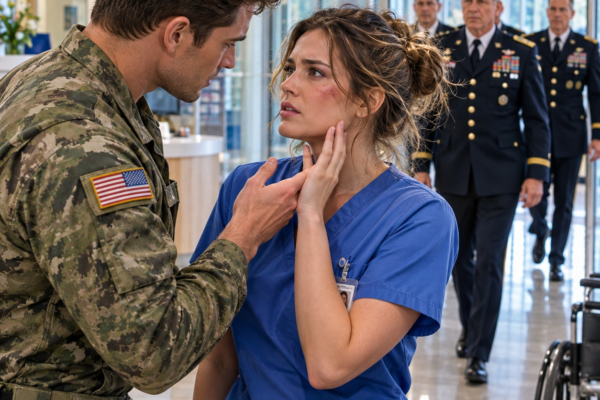
Part 4: Captain Slapped a Nurse in Public — Then Her Major Rank Ended His Career in Minutes
He had not designed the mechanism.
He had simply been in a position to stop it and had chosen repeatedly not to. That is its own kind of choice with its own kind of weight.
He accepted the outcome without contesting it.
Pell Cassons charges were filed at the departmental level.
Misuse of official position, abuse of oversight authority, conspiracy to obstruct a military investigation.
The announcement came through official channels at 11:00 and went simultaneously to every facility under the oversight boards jurisdiction.
Ward Finch was not charged. His cooperation, limited as it was, had provided the connection that made Casson identifiable.
His lawyer had moved efficiently.
He left Greystone at 1:00 in the afternoon. He walked through the lobby and through the main doors and across the parking lot to his car.
He moved with the unhurried deliberateness he had maintained all day, but something had diminished. Not dramatically, in the specific quiet way that a person diminishes when they understand that the thing they built their sense of security on was not what they believed it to be.
He had believed he was part of a network of mutual protection among people who understood how things actually worked. He had not understood that he was also, from Cassons perspective, a resource to be deployed and, if necessary, a layer of insulation between Casson and consequences.
He had been used by someone who was better at using people than Finch had known.
That was its own kind of reckoning.
None of what followed happened cleanly.
The legal processes were slow in the way that legal processes inside institutions are always slow. They required repetition and documentation and the grinding patience of a system that moves carefully because it has learned at significant cost over many years that moving carelessly produces outcomes that cannot be undone.
Breards legal team filed two motions in the first week.
Both were denied, but both required response time.
Casson retained counsel from a firm that specialized in military justice cases at the senior level. The firm was effective.
The proceedings would take months.
Some of the specific outcomes were not guaranteed, but the charges were in the record.
The names were in the record. The files were no longer the files that had been modified.
They were the restored files, the original complaints, the original witness statements.
Everything that had been removed or altered reinstated through a formal correction process that was itself documented and timestamped and signed by people who had no relationship with Breard or Casson or Osler.
The restored record said, these people came forward.
This is what they said.
This is what happened to them after they said it.
This is the pattern that their individual experiences create when you look at them together. That record cannot be modified again.
It exists now in a place that Breard cannot access and Casson cannot influence and Osler cannot cosign his way around.
It is in the official archive of the oversight command and it will remain there. That matters more than the sentences, not because sentences dont matter.
They do. Accountability has to include consequence or it isnt accountability, but sentences get appealed and modified and served and eventually the person who served them walks out the other side and the world continues.
The record continues too and the record says permanently and clearly what happened here.
In the language that institutions understand, with the documentation that gives it weight, with the 47 names of the people who came forward and told the truth and now have in writing confirmation that the truth they told was used.
47 people received letters.
Each letter confirmed that their statement had been received and reviewed and had contributed to the investigations finding.
Each letter was signed by someone with the authority to make the confirmation mean something. Flynn Dace received her letter on a Wednesday.
She was in the break room between patients when it came through to her work email.
She read it on her phone at the small table near the window where she had eaten lunch most days for the past two years.
The letter set her complaint submitted 14 months ago and returned to her with a form response saying it had been found without basis, had been reviewed by the investigation. Her witness statement had been used.
The investigation had proceeded in part because of what she had reported.
She read it twice.
Then she sat for a while without moving. She was not thinking in any organized way.
She was not constructing a response or planning what she would do with this information or calculating what it meant for her professional future.
She was simply sitting with the experience of being told in writing in the formal language of an institution that she had been right, that what she saw in the east corridor on that specific afternoon 14 months ago was real, that her decision to write it down and submit it through the proper channel had mattered, that her voice which the institution had officially told her had no basis had in fact been part of the foundation on which something real was built.
The body needs time to absorb certain things.
After a few minutes, she put her phone in her pocket and went back to work. She had a patient in bay two who needed her attention and she gave it fully.
But she walked back to that patient differently than she had walked to the break room 20 minutes earlier.
Not dramatically.
Slightly. The particular difference in a a bearing when something they have been for a long time has been not removed exactly, but acknowledged, given a place in the official record of things that happened.
Ren Obi passed her in the corridor and noticed. She didnt say anything.
She gave a small nod that Flynn understood without requiring explanation.
The nod of someone who has been watching and who knows. Some things dont need to be spoken to be shared.
Three weeks after the morning in the cafeteria on a Thursday, Soren left Graystone Army Medical Center for the last time. Her departure was not ceremonial.
She packed the contents of her locker into the same bag she had brought in 18 months ago.
There were not many contents. She had never filled that locker the way you fill a locker you expect to keep indefinitely.
She had always known she would be leaving it. She turned in her temporary access badge at the security desk.
She stood in the lobby for a moment.
The lobby was doing what it always did in the morning.
People arriving for the day shift, people leaving from the overnight, the ordinary movement of a facility that is larger than any one person in it and will continue to be that facility long after everyone currently in it has moved on.
A lot had changed in three weeks.
The administrative structure was under interim leadership while the formal proceedings worked forward through the system.
A complaint intake coordinator had been hired. The position had not existed before.
A staff advocate office was being established on the second floor in the space where the investigative working room had been. Two staff members who had transferred out of Graystone in the past two years had been contacted about returning.
Not all of them would.
Some had built new things in new places and those things were worth keeping. Some had decided that returning was was not the right choice for where they were now.
Both of those decisions were legitimate. The harm that had been done to them had not reversed itself when the charges were filed.
It had left a shape in their professional lives and in some cases in their personal lives, and those shapes did not simply disappear when the cause of them was removed. That is what sustained institutional harm does.
It changes people, not always permanently, not always in ways that foreclose the future, but it changes them.
They carry the experience forward and it becomes part of how they understand institutions and authority and the distance between what a system says it does and what it actually does when the pressure is on.
The best outcome is not that the harm becomes invisible. The best outcome is that it becomes part of a record that prevents the same harm from accumulating again in the same place.
Ren Obi found her in the lobby.
She had come down from the second floor with the look of someone who has been watching the entrance for a few minutes and wants to appear as though she just happened to be passing through.
Youre leaving today, Ren said.
Yes. Will you come back?
Soren considered the question honestly.
Not to this posting.
The assignment is complete.
Ren nodded. She had the manner of someone absorbing an answer they had expected, but needed to hear said out loud before they could fully process it.
Where do you go from here? Where they send me, Soren said.
Ren looked at her, at the face she had worked alongside for 18 months, at the face she had looked at across nursing stations and patient bays in the break room on the second floor and had understood one way for most of that time and was now looking at understanding it differently, not replaced, deepened. The same face with a dimension that had always been there, but had been held below the surface of the work.
The work you did here, Ren said and then stopped.
She was not a person who struggled to find words.
She was a person who chose them carefully and sometimes the careful choice required a pause.
A lot of people in this building spent years feeling like they were talking into a wall, she said. Every time someone said something, the wall got a little thicker.
Every time someone filed a report, the report went in one side and nothing came out the other. And after long enough, you stop being sure whether the problem is the wall or whether the problem is you, whether youre seeing something that isnt actually there, whether the safest thing is just to stop saying it.
She stopped. Soren didnt fill the space.
You heard what people were saying, Ren said. Thats what I want you to know.
Whatever else the investigation was and whatever it took and whatever it cost you that I dont know about. The people in this building were saying something and you heard it and you made it matter.
Soren looked at her. I know I did, she said.
They stood in the lobby without trying to fill it with anything else. The morning moved around them the way mornings do, purposeful, indifferent to what any individual within it is carrying.
How is Dale Pruitt? Soren asked.
He goes home Friday, Ren said.
Hes been asking for real food since Monday. His mother apparently makes a pot roast hes been describing to the entire ward staff in detail.
Soren smiled. It pulled slightly at the edge of the bruise on her jaw, which had moved past the blue purple of serious injury into the yellow green of genuine healing.
Not fully arrived on the other side, but committed to the journey. She picked up her bag.
She walked through the main doors of Graystone Army Medical Center into the October morning.
The air was cool, clear, the kind of October morning that reminds you the seasons are actually changing regardless of what is happening inside any particular building.
She walked to her car.
She put the bag in the backseat. She sat in the drivers seat for a moment without starting the engine.
She thought about the first morning she had done this in reverse, driving to this parking lot, walking through those doors, beginning something she wouldnt be able to end until it was ready to end on its own terms. Then she started the car and drove out of the lot and did not look back.
Six weeks later in a different city at a desk that was not yet familiar enough to feel like hers, Soren opened a briefing file. The file was dense, the kind of document that takes time to read carefully because what it describes has been accumulating for a while before anyone thought to put it in writing, the kind of document that requires a particular quality of attention, not skimming, not scanning for keywords, reading.
She read it with the same attention she had used 18 months ago in a cafeteria, the same attention she had used every day since in the corridors and patient bays and break rooms of a facility that had not known she was there for this reason. She made notes in the compact handwriting that had loosened slightly over the past months, not dramatically, enough that she noticed it when she looked at what she had written.
She thought about what Ren had said in the lobby, about talking into a wall, about learning to stop because the wall kept winning, about the slow internal erosion that happens when an institutions official response to your voice is silence or dismissal, often enough that you begin to incorporate the institutions judgment of you into your own judgment of yourself. She thought about the 47 people who had given statements, about Flynn Dace in the break room on a Wednesday, about Roo Tamsin handing over nine pages to an investigator who read the first one and understood immediately what it represented, about Dale Pruitt going home Friday, about the staff advocate office being established on the second floor of Graystone Army Medical Center in the room where a different kind of work had been done three weeks before.
She thought about what it means to do this work, not the version that appears in the language official reports use when they describe institutional accountability, the actual version, which is slower and less certain and requires you to hold things you cannot act on for longer than is comfortable, which costs something specific and real, that does not appear in any line item of any official document and which is worth the cost. Not because the outcomes are perfect, they never are.
The people who were hurt carry what happened to them forward. Some of them heal.
Some of them build something new somewhere else. Some of them are changed in ways that are permanent.
None of those outcomes are the same as the harm not having happened, but the record exists now. The original complaints are in the archive.
The restored witness statements are in the archive.
The 47 names are in the archive with notation confirming that their statements were received and used. The formal findings are in the archive.
The charges and the outcomes when they come will be in the archive. None of it can be removed.
That is what the work produces.
Not a world in which the harm didnt happen. A world in which the harm is named, documented, addressed through the only mechanisms that institutions actually respond to and made part of a permanent record that shapes what comes after.
Systems dont get fixed.
They get changed slowly and imperfectly and at the cost of people who absorb the damage of the unfixed version while the changing happens.
But they get changed and the change is real.
And the record of how it happened is itself a kind of prevention because the next time someone in a position like Briards considers whether the complaints against them will go anywhere, the answer will have changed.
There is a kind of power that announces itself constantly, that requires witnesses and the ongoing performance of authority to remain real.
The kind that has to keep demonstrating itself because without the demonstration it begins to dissolve. The kind that looks enormous until the structure under it gives way and then it is just a man adjusting his jacket in a corridor, being walked somewhere he does not want to go.
And there is another kind.
The kind that doesnt require the room to know its there, that does its work carefully and patiently over a long time and does not need to be seen while it does it.
That exists in the document boxes and the access logs and the scheduling records and the 47 witness statements and the formal findings that are now in an archive that Tuck Briard cannot access and Pell Kassen cannot influence.
Soren Vale had chosen the second kind a long time ago before Greystone, before the assignments that had preceded Greystone, she had made the choice. It had not made her life easier.
It had not made the cost of the work disappear.
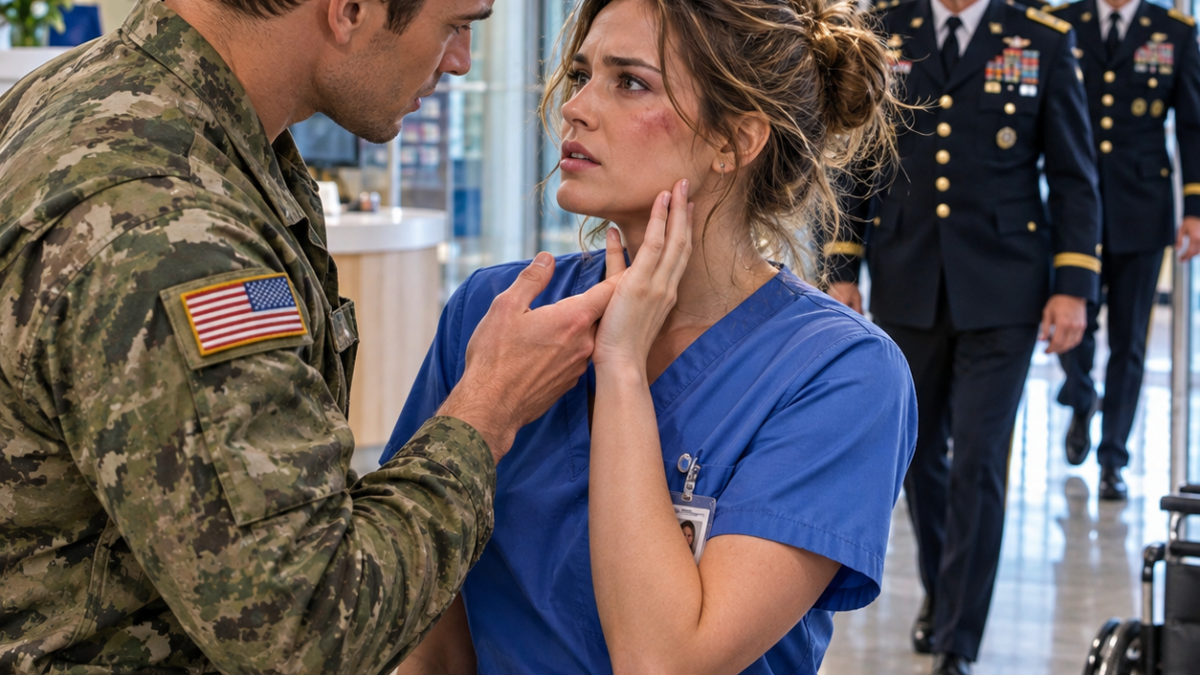
It had not protected her from the specific physical fact of a mans hand across her face in a cafeteria in front of 400 people who stood still and said nothing.
But the record she had built was in the official archive, and it could not be removed.
She looked at the briefing file on the desk in front of her, at the name of the facility on the cover page, at the city it was located in, at the preliminary summary of what had been accumulating there, and for how long and how many people had tried to report it through channels that had not worked.
Outside the window, a different citys morning was doing what mornings do, coming in gradually, making the shapes of things visible. She picked up her pen.
She opened to the first page.
She began.