My Sister’s Roommate Answered the Door in My Old Hoodie. Blushing, She Said, “I Sleep in It.”
My Sister’s Roommate Answered the Door in My Old Hoodie. Blushing, She Said, “I Sleep in It.”
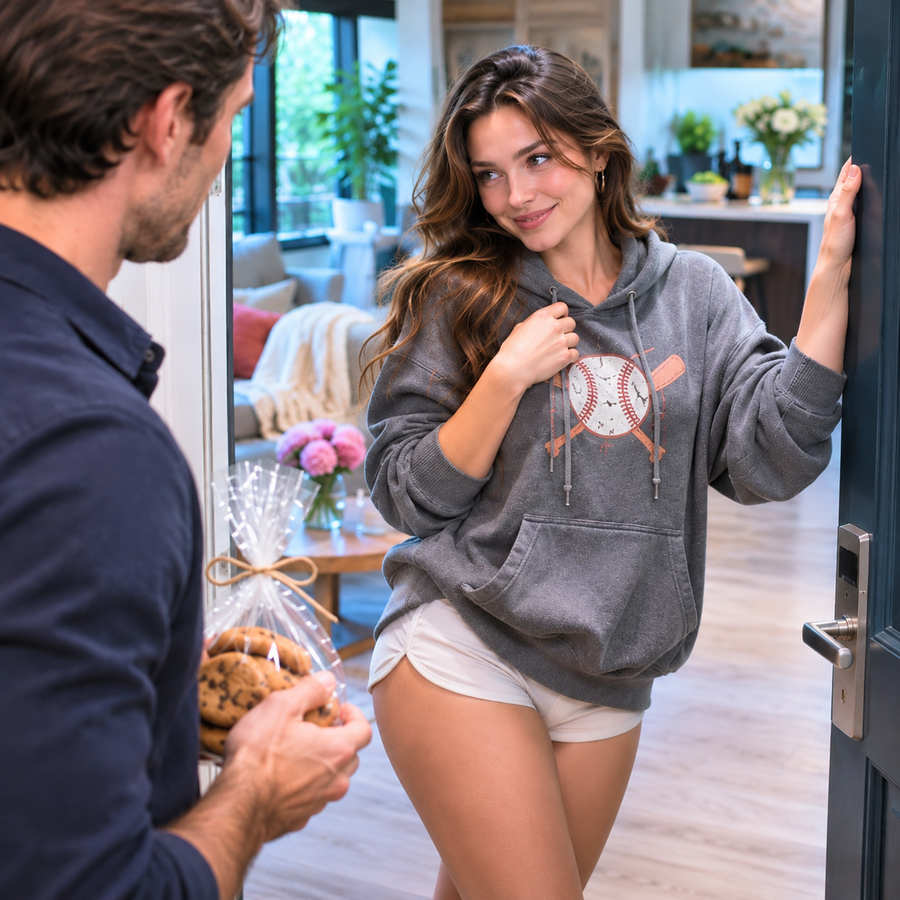
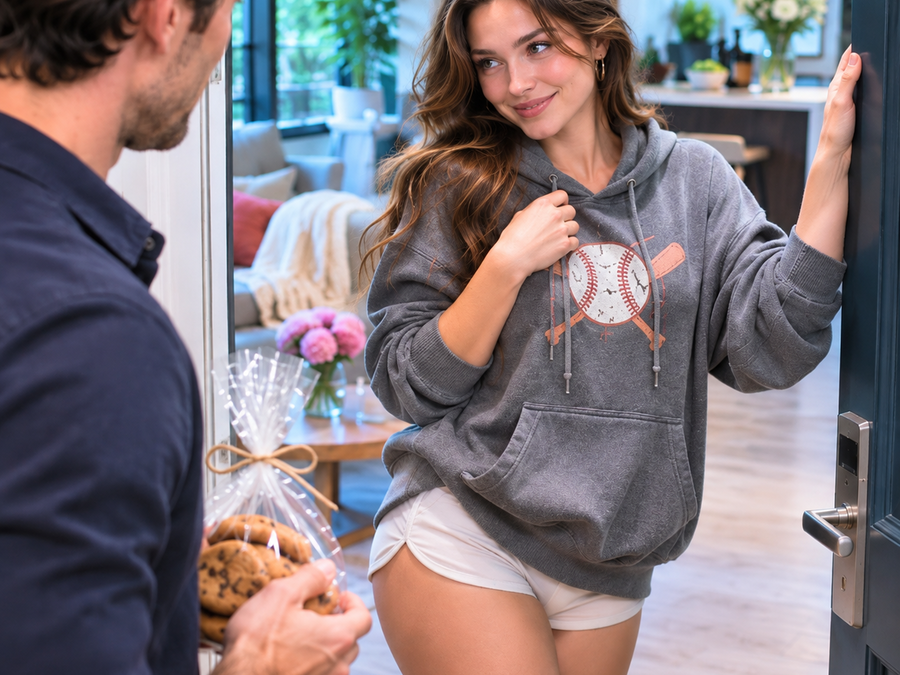
I knocked twice on my sister’s door with a bag of her favorite ginger cookies in my hand, and it was her roommate Cecilia who opened it, wearing a gray hoodie with a cracked softball logo across the chest.
I knew that logo well because I had paid for the team shirts myself.
It was the hoodie I had left on Rebecca’s couch last Christmas and given up on by February.
Rebecca stepped out to the pharmacy, Cecilia said, and then she noticed where I was looking. Her face went red from her collar to her hairline, but she did not tug the sleeves over her hands or step back into the hallway.
Okay, yes, it’s yours, she said.
I sleep in it. I should say that I am Martin Keating.
I am 35 and I spend my days telling truck drivers exactly where to be and when. That training is supposed to make me quick with the plane thing, and it abandoned me for a good three seconds. Cecilia Ferraro managed a restaurant downtown and had lived with my sister for two years.
In that time, I had probably seen her six times, always with Rebecca somewhere between us. She was quick, and she teased me the way you tease someone you have decided is safe. I had assumed that was the whole of it, and standing in that doorway, I understood I might have misread the situation badly.
She let me in because leaving me in the hallway would have made it worse, and she explained as she walked ahead of me into the kitchen.
Rebecca had told her to borrow it during the first cold week of January when the building’s radiator died, and Rebecca had meant it for a few nights.
I could have given it back in February, Cecilia said, filling the kettle with more attention than it needed. Nobody was ever going to ask me.
I just didn’t.
She turned around with her arms folded over logo and told me she would have lied if I had asked about it somewhere less awkward. Getting caught on the doormat, she said, had taken the option away from her. I took a chair at the kitchen table and set the cookies down, and for a while she did what she always did, which was to talk faster than I could think.
She said it was a very warm hoodie, that I should be flattered on behalf of the whole softball team, and that in her defense, it had a pocket that fit a phone and a bag of pretzels. I laughed because it was funny, and then I realized she was handing me a way out of the moment, the exact courtesy I usually hand to other people.
You don’t have to turn it into a joke for my sake, I said.
She stopped with the kettle still in her hand.
I’m not sure you don’t want me to, she said.
You always look so polite. That landed harder than anything about the hoodie. I told her that polite was what I did when I did not know whether I would be welcome, and that I had been polite around her for two years.
I said I had noticed her on every visit and had done nothing about it because I assumed she saw me as Rebecca’s brother who fixed the sink.
Finding out she slept in my old sweatshirt was, I said, the best thing I had ever heard on a doormat. Her cheeks were still pink, but she sat down across from me and looked straight at me, which I took as an answer. She poured two cups of tea that neither of us touched and asked what I would have done if I had not recognized the hoodie.
I told her I would probably have stayed polite for another two years, and she laughed so hard she had to put her hand over her mouth.
We heard Rebecca’s keys in the lock before either of us had decided what came next.
My sister walked in with a pharmacy bag and a complaint about the line, and she found her brother and her roommate sitting at opposite ends of the table drinking tea like a hostage exchange. If she noticed anything, she kept it to herself.
And I decided the afternoon I had come for belonged to her. I gave her the cookies and listened to her whole story about the landlord and the parking permit. After that, I helped her hang a shelf she had been threatening to hang for a month.
Cecilia went to her room to answer emails, and I could hear nothing from that direction, which was its own kind of noise. When it was time to go, Cecilia walked me to the door, and Rebecca accepted that from the living room as ordinary courtesy. In the hallway, with the door pulled almost shut behind us, I asked whether she wanted to meet somewhere neither of us had to explain.
A place she chose on a night she picked. I told her I was not asking for the hoodie back and that she should keep it for as long as she wanted.
She took my phone out of my hand, typed her number into it, and gave it back with her thumb still resting on the edge of the screen for a second longer than she needed.
She said she wanted a little time before this became Rebecca’s news.
It’s not a secret, she said.
I just want to know what it is before anyone else gets to have an opinion. I told her that was fair, and I meant it, which surprised me a little. She smiled, tugged the hem of my old hoodie down over her hip, and closed the door softly enough that I could tell she was still standing on the other side.
I walked down three flights of stairs with her number in my pocket and my sister’s laughter faintly audible through the wall.
The only question I could not answer was whether whatever had happened in that kitchen would survive a table where she was not wearing my sweatshirt and I was not holding a bag of cookies. I waited two days to text her, which in my line of work counts as stalling, and I spent most of the second day rewriting a message that came out three sentences long anyway.
In end, I wrote that this was Martin, that I wanted to take her for a walk and something to eat somewhere that had nothing to do with Rebecca’s apartment, and that I would work around whatever her restaurant schedule allowed.
She answered in under a minute, which made me feel like I had been holding my breath for no reason. She wrote that she closed on Thursdays and was usually out the back door by a quarter to 10 and that if I could stand a woman who smelled like garlic and floor cleaner, I could meet her at the alley behind the restaurant.
I told her I spent my days around diesel and could manage. She sent back a single word, good, and I read it more times than a grown man should admit.
Thursday night she came out through a steel door in a black work blazer with her hair pinned up badly and a cardboard cup of something in each hand. One of them was for me and it turned out to be the staff espresso, strong enough to take the finish off a truck bumper.
We started walking toward the river without deciding to because it was the direction the alley pointed.
She did not say hello so much as pick up where we had left off, announcing that she had spent 48 hours rehearsing a dignified way to bring up the hoodie and had decided there wasn’t one.
So here is my official position, she said, tipping her cup toward me. It was a very warm sweatshirt and you are not allowed to make a face about it. I told her I was making my regular face and that the only difference was that I now knew what she was wearing when she fell asleep.
She stopped walking for half a step and then she laughed and shoved my shoulder and I felt that all the way down my arm. She went back to joking after that, which I expected, and for a block I let her. She told me about a customer who had sent back a plate of pasta because it was too Italian and about sous chef who named his knives.
The jokes were good, and they were also a little like a hand held out at arms length. When she paused to take a sip of that terrible espresso, I asked her what she did at the end of a night once the last table was gone and the doors were locked.
She looked at me as if I had asked for her passwords.
Nobody had asked her that in a while, she said, and she certainly had never been asked by someone she’d only ever seen in her own kitchen holding a bag of cookies.
I said that was exactly why I was asking, because there was a whole life of hers I had never gotten close enough to hear about. She answered it properly, which I had not been sure she would. She counted the cash drawer, she said, twice, because she had started at 19 washing dishes at an Italian place that later went under, and she still did not trust a total that only came out once.
She turned the chairs up on the tables herself on the nights her staff was tired, and she ate cereal standing at the counter when she finally got home, usually in the dark, so she wouldn’t wake Rebecca.
I asked her when she had last sat at a table and eaten dinner before 9:00, and she had to think about it for longer than either of us liked.
She finally said it was probably during a holiday and that it might have been the Christmas I’d left the hoodie behind.
I did not point out the coincidence, and I could see her deciding whether I would, and then deciding she was relieved that I hadn’t.
We ended up at a diner near the bridge that stayed open all night and served pie on thick white plates, and she took a booth by the window instead of the counter. Sitting down across from her without Rebecca at the edge of the table felt strange for about a minute, and then felt like the plainest thing I had done all year.
She ordered coconut cream, and I ordered apple, and she stole a fork full of mine without asking telling me I had the face of a man who would never take the risk on coconut cream. I said that was a lot of conclusions to draw from a pie.
You’re easy to read, she said, still chewing, which I like because it’s restful.
I told her that she was not easy to read at all, but that I was getting better at it, and she set the fork down. She looked at me for a moment without a joke ready, and I watched her decide to let the sentence just sit there between us instead of swatting it away. I think that was when I understood what had been going wrong in my own head.
I had been treating her teasing like a screen I had to see through. When the interesting part was the moment she stopped and let something true stand. She told me later that the same thing was happening on her side, that she had been bracing the whole walk for me to ask her what this was or where it was going.
I had asked her about cereal and cash drawers instead, and it had apparently been the most reassuring thing a man had done in months. I never asked for a decision that night, and I did not say anything about the future beyond the fact that I was glad I had come. Somewhere around her second cup of decaf, she told me, quietly and without a punch line, that she had been thinking about me since before the hoodie, and that the hoodie had only been the thing that got her caught.
It was after midnight when we walked to her block, and she slowed down as her building came into view, the third floor window glowing yellow where Rebecca had left a lamp on. I felt the question settle between us without anyone speaking it because the easy ending to the evening was a staircase and a kitchen and a hushed argument about whether she should offer me tea.
She stopped at the corner, a half block short of the door.
I’m not going to ask you up, she said, And it’s not because I don’t want to.
She said that if we went back through that door tonight, the apartment would become the place where this happened, the way it had already become the place where it started.
And she wanted at least one thing between us that Rebecca’s furniture hadn’t witnessed.
I told her that sounded like the right call, and that I would rather be walked to a corner by her than let into a living room by accident. She smiled at that, a little crooked, like she had braced for an argument that never came. She picked the next meeting herself, which I took as a good sign.
There was a flea market on Sundays in the old railyard east of downtown, she said, with stalls of dusty tools and old signs and a woman who sold potato pancakes out of a converted bread truck. She said I would probably like the railyard more than she would, and that she wanted to see me explain it to her anyway.
We settled on 11:00 at the gate, and we put it in each other’s phones right there on the sidewalk, as though writing it down could make it harder to back out of.
She said good night by taking one step backward, still facing me, before she turned around and walked the rest of the way alone. I stayed where I was until I saw the lamp in the third-floor window shift, which meant she had made it inside.
On the long walk back to my own place, I checked my phone and found a message from Rebecca about Sunday dinner, asking whether I could bring the good bread from the bakery by my building. I wrote back that I could, and I stood there for a second with my thumb over the screen, aware that I had just typed a true sentence that left out the entire morning. It did not feel like a lie exactly, and it did not feel entirely innocent either.
I had been so busy making sure I never used my sister as an excuse that I had not yet worked out what to do about the fact that she would be sitting across from both of us by Sunday evening. She was at the gate of the old railyard at five minutes to 11:00, which I know because I had been standing there since a quarter to two.
She wore a green canvas jacket and her hair down, and for a second I almost didn’t recognize her without the restaurant blazer.
The market sprawled across a dozen tracks that had not carried a train in 30 years, with stalls of rusted tools, enamel signs, and a woman selling potato pancakes out of a converted bread truck exactly as promised. I told her the yard had once been a classification yard where inbound cars were sorted and built into outbound trains, and that a dispatcher like me would have lived and died by the board in the tower at the end of the lot. She listened more carefully than I deserved, and at a table of old brass lanterns she asked me which color lens meant go.
I said green, and she tapped her jacket sleeve and announced that she was wearing go, which I decided to take as an official statement.
We worked our way down the rows, and I noticed how often we both turned to check the other one’s face.
She held up a chipped enamel sign that read no spitting in two languages, and watched my reaction before deciding to buy it. I picked up a pocket watch with a dead face and caught myself glancing at her before I put it down, as if she might have an opinion on how it should be handled.
The potato pancakes came on paper plates with sour cream, and we ate them sitting on an old loading dock with our feet hanging over the gravel. With her plate balanced on her knee, she said she had something to say and wanted to get through it before she lost her nerve.
I want to see you again, she said.
I don’t mean I’m willing to or that I’d be open to it.
I mean I want to, and I’d like it to be a regular thing that I don’t have to keep proving brave enough to ask for.
I had been carrying something of my own for about three days, and her saying that made it impossible to hold it any longer. I told her that every message I had sent her ended with some version of if that works for you.
I said I had done the same thing on her kitchen chair, in the hallway, and on the walk by the river, handing her away to say no before she’d had to think about it.
I had always called that being considerate, but I now suspected it had also been a way of not being turned down in person. She told me she had noticed, and that she had actually started counting, and that somewhere around the fourth one, she had wondered whether I was warning her off.
Then here is it without the exit, I said.
I’d like to see you Wednesday and again on Saturday, and I’m not going to put a question mark on either one.
She looked at the paper plate for a moment and laughed and said it was the first time a man had handed her a schedule and she’d taken it as a compliment.
By mid afternoon, the crowds had thinned and we walked the long way back towards the gate along the one line of track that still saw traffic. A freight train was creeping past on the far side, maybe 30 cars of grain hoppers and tankers, and out of habit I started reading the car numbers and wondering where the consist had been built.
I was halfway through a sentence about the locomotive when Cecilia took hold of the front of my jacket with one hand. Martin, she said, you are doing it again.
You’re looking at the train when you could be looking at me.
Before I had finished turning my head, she kissed me, a short, deliberate kiss, a little stunned at its own nerve, with the freight grinding by in the background loud enough to cover whatever I might have said. When she stepped back, her face had gone pink again and she told me I could look at the train now if I wanted to. I I not look at the train and I did not ask her what this meant or where it was going.
I just kissed her back, slowly enough that she stopped joking, and we stood there until the last tanker car had rolled out of sight. At the gate, she brought up dinner without my having to, because she lived there and had clearly been thinking about it for a while.
Rebecca had been planning Sunday dinner for a week, and I was due at six with the good bread, which meant the two of us would sit across the same table in the same apartment as if nothing had happened. She said she was going home ahead of me to help with the cooking, and that she would not sit on my side of the couch or find an excuse to walk me to the stairs afterward.
Tonight I’m keeping this out here, she said, nodding at the yard behind her.
I don’t want it going through that door before I’ve decided how it goes through.
I told her that was fine and that I would not read anything into it.
She narrowed her eyes at how quickly I’d agreed and then said I hadn’t even sulked, which she apparently found suspicious in a man.
What I realized walking to the bakery was that I had spent years being Rebecca’s brother at that table, and the role had just stopped being neutral.
If I sat there tonight and treated Cecilia like the roommate I’d met six times, I would be acting, and everyone at the table except my sister would know it.
I had always been comfortable with silence, and I did not much like the way this one felt. When I mentioned it to Cecilia by text from the bakery line, she wrote back that she felt it too, and that she wanted to be the one to tell Rebecca. It was not about hiding it, she explained, because Rebecca was her friend and they shared a lease and a refrigerator, and it was not something Rebecca should have to hear from her brother.
I wrote back that I would not say a word to my sister unless she told me to, and Cecilia answered with a question I had been expecting.
Even if she asks you straight out, she wrote, I answered that I would not lie to Rebecca, but I would tell her this was Cecilia’s to tell, and she sent back a single green circle.
At 6:00 I knocked on the door with a loaf of sourdough under my arm, and Rebecca opened it with a dish towel over her shoulder and looked at me a beat too long. You look like a man who slept well, she said, taking the bread.
Behind her, Cecilia was standing at the stove with her back to the room and a wooden spoon in her hand. She did not turn around, but I could see the back of her neck going pink, and I understood that whatever time she thought she had was shorter than either of us had planned. Dinner was lasagna, and I have sat through freight audits that felt more relaxed.
Rebecca asked me about work, and Cecilia asked about the bread, and neither of them looked at the other one for longer than it took to pass a dish. Cecilia handed me the salt by the very tip of the shaker, so carefully that our fingers could not possibly have touched. Rebecca watched both of us the way a person watches long division, and she did not ask a single question that I would have had to answer.
When the dishes were done, I said good night, and Cecilia stayed at the sink with her back to me while my sister hugged me at the door a little longer than usual. I was halfway down the stairs when my phone buzzed with a message that read tomorrow night. Wish me luck, me.
Cecilia told me about it on the phone Monday near midnight, and she did not clean it up. She had waited until Rebecca was on the couch with a face mask on and a documentary playing, and then she turned the television off and sat down on the coffee table.
She said she had something to tell her and wasn’t asking her to say anything about it, only to hear it.
Martin and I have been seeing each other for about a she told her, and it started with the hoodie, which Rebecca already knew she wore, though not why. Rebecca laughed first, then stopped, and her first real question was when it had begun. When Cecilia said it was the afternoon Rebecca went to the pharmacy, my sister peeled off the face mask and said, It happened in my kitchen.
I was 20 minutes away buying cough drops. I asked Cecilia whether Rebecca was angry, and she said no, but that I should hear the rest of it exactly as it came.
Rebecca had said she wasn’t against it, and that her brother and her best friend were two of the people she trusted most, which was part of why it felt strange.
What she minded was Sunday, sitting at her own table feeling like the only person who hadn’t been told the joke.
She had also noticed, she said, that in the last year Martin had been dropping by more often, and she had assumed that was for her. She wanted to know that when I stood at her door from now on, I would be honest about which of them I had come to see.
Cecilia said she had nodded through all of it because there wasn’t anything unfair in it.
And then she had gone to her room and sat on the bed for 10 minutes without turning on the light.
I told her I was glad she hadn’t made it sound better than it was, and I meant it, though I did not sleep much that night.
The plan with Rebecca had been on the calendar for a month.
I had borrowed a coworker’s pickup to haul an oak bookcase she had found on a resale site across the river, and I showed up Saturday morning at 9:00 with coffee and no illusions.
We drove for 10 minutes in silence, and then at a red light with her eyes on the dashboard, she said, Cecilia talked to me. I said I knew.
She said she’d figured I would ask how it went, and I told her that was Cecilia’s to describe, but that I could give her my side if she wanted it.
I said I had been interested in Cecilia for a long time, and had never used Rebecca’s apartment as a cover, and I wasn’t going to start now.
When I come to see you, I’m coming to see you, I said.
When I come to see Cecilia, I’ll ask Cecilia, and I’ll tell you which it is before I knock.
Rebecca took her time answering, and the light turned green, and then someone behind us tapped his horn.
That’s more than I expected, she said finally.
I told her I was sorry she had found out across a plate of lasagna, and she said I’d looked like a hostage, and she’d honestly felt for me.
She said she was still going to be a little weird about it for a while, and I told her that was fair, since I’d be weird about it if the roles were reversed.
At the seller’s house, the two of us carried the bookcase down a driveway and up three flights of stairs, arguing about which end was heavier.
It was the most ordinary morning we’d had in months, and when we set it against her living room wall, she punched my shoulder and told me to go see my girlfriend, then immediately said that was not what she meant.
I said I’d noted it for the record and left before either of us could make it any worse.
Cecilia had the early shift that Saturday, and we met at 6:00 at a small wine bar two neighborhoods away from her block, mostly because neither of us had any history there. She dropped into the chair across from me, kicked off her shoes under the table, and let out a breath that seemed to have been waiting since Monday. Rebecca had texted her a photo of the new bookcase an hour earlier, she said, with three words underneath.
Your move, roommate. I laughed, and she said it was the nicest thing Rebecca had said to her all week, and that she was choosing to believe it was affectionate.
For a while, we talked about nothing important, and I realized I was relaxed in a way I hadn’t been since the hallway.
As if I had put down a load I’d been carrying without noticing the weight.
She brought up the other part when the second glass arrived.
I don’t want you to think this makes it settled, she said, turning the stem between her fingers.
Rebecca knowing is a relief, but it doesn’t tell us what we are, and I don’t want to start calling it something just because there’s finally someone to say it to.
I told her I didn’t need a word that night.
She said she might need one eventually, and I said that when she did, I would be glad to hear it, and that I would likely have an opinion of my own. She smiled with her chin on her hand, and I noticed that neither of us had suggested walking back to the apartment.
I walked her home anyway, as far as her building this time instead of the corner half a block short. The third floor window glowed yellow, and as we stood on the sidewalk, the curtain moved, and a shape that had to be Rebecca stepped away from it too quickly. Cecilia pressed her lips together to keep from laughing, and then gave up.
Next time you ask me out, she said, don’t text it.
Ask me where she can see you do it. For the next three weeks, we kept the schedule I had handed her at the railyard, Wednesdays and Saturdays, with no question marks on either one.
She took to rating my plans out of 10, and she was a hard grader. A bowling alley that smelled like fryer oil earned a six, and a long walk through the warehouse district earned a four because there was nowhere to sit.
I took my revenge by quizzing her on freight terms, and she turned out to be shamelessly good at guessing. She said anything called a reefer had to be refrigerated, and anything called a bobtail had to be embarrassing.
On Sundays, I still went to Rebecca’s for dinner, and before I knocked, I texted her whether I was coming for her.
She answered with a thumbs up the first time and obviously bring bread the second. And by the third week she had started adding, Cecilia says hi back without being asked. On the last Saturday of the month Cecilia chose the place, which was the roof of a parking garage three blocks from her restaurant.
She said it had the best view in the city that did not require a reservation. She had carried up two foam containers of leftover tiramisu and a pair of forks wrapped in a napkin.
And we sat on the low concrete wall with the river lights stretched out below us. For a while she kept her tote bag between her feet and glanced down at it every minute or so. I knew she was working up to something because she had gone quiet in the way she only did when a joke would have been easier.
Finally she reached into the bag and pulled out the gray hoodie, folded into a neat square with the cracked softball logo facing up.
I’m offering this back, she said, holding it out in both hands like a library book.
I mean it and I need you to hear that part.
I don’t want to keep wearing your sweatshirt as a reason to be near you because I’m near you anyway and the hoodie has started to feel like a cover story.
She said it had been the first honest thing she had done in my direction and she did not want it to become the last excuse she had left. I looked at the shirt and then I looked at her and I remembered the way she had stood in that doorway blushing and refusing to retreat. I told her to keep it.
I said I wasn’t saying it to be polite and that she should keep it because she liked it, which was the only reason I had ever wanted her to have it.
She held the hoodie against her chest for a second and then she tucked it back into the tote and said I had just lost any right to ask for it back at a later date. She picked up her fork again and went after the tiramisu and I realized I had been avoiding something I had planned to say that night. Over the last three weeks, I had noticed a pattern in my own messages.
I always chose the day and the place, and I always finished with some version of whenever you’re free, which sounded generous and was actually a way of making her carry every next step.
Cecilia had said once that I was like a man standing at the edge of a swimming pool, telling everyone else the water was fine.
I told her now that I had been leaving every decision to her because I thought it was respectful and that it probably sounded like I wasn’t sure I wanted to go in.
That’s exactly how it sounds, she said, laughing with her mouth full.
It sounds like you’re waiting for a lifeguard.
So I did what I should have done a week earlier. I said I wanted to take her to dinner, a real one with tablecloths on the Saturday after next at 7:00 and that I had already traded shifts with a dispatcher named Dale so I would not be on call.
I told her I had also checked the hours of an Italian place across the river that was not hers and that I’d made sure they weren’t her competition, which was the part I was proudest of.
She stared at me with the fork halfway to her mouth and I thought for a second I had overdone it. Then she said she would need to ask her assistant manager to close that night and that she could do it because for once she wanted to be the person who left early.
Yes, she said. 7:00.
I’ll wear something that isn’t gray.
She finished the tiramisu without saying anything else and I could tell she was working up to a second request. She wiped her fingers on the napkin, folded it very small and said she had one condition for the date. I told her I would take any condition that did not involve a hat.
I want you to pick me up, she said, at the apartment, at the door, not at the corner or outside the restaurant or anywhere down the street where nobody can see it. Rebecca will be home, and I want her to open the door or hear you knock.
You’d be there for me as my guest, and not because you happened to be passing by on your way to see your sister.
She watched my face while she said it, and I understood what it had cost her to ask.
A month earlier she had told me she wanted something that Rebecca’s furniture had never witnessed, and now she was inviting me back to that very door on her own terms.
I thought about all the times I had rung that bell with a bag of groceries or a bookcase and a clean excuse. This would be the first time I walked up those three flights with no excuse at all.
I’ll knock at 7:00, I said.
I’ll ask for you by name, and I’ll say hello to my sister like a man who knows exactly who he came for.
Cecilia nodded slowly, and the corner of her mouth went up in a way I had learned to look for.
Then she put one hand flat on the concrete between us as if to keep the moment from tipping over, and added the part I would have asked her to say if she hadn’t.
This isn’t a promise about anything else, she said.
It’s dinner and a door, and I’m not deciding tonight what comes after that.
I told her that suited me because I was happy to go as slowly as she wanted and would tell her plainly if I ever wanted to go faster. She laughed at that quietly and leaned against my shoulder, and we stayed on the wall until the garage attendant flicked the roof lights as a hint.
In the elevator down she held the tote bag against her hip with the hoodie folded inside, and I realized I had never been so glad to have something stay in somebody else’s possession.
I walked her as far as the building this time, past the corner, and stopped on the sidewalk where the third floor window could see us if wanted to. She kissed me good night where anyone might have watched, and she did not look up to check whether anyone had. I stood there afterward counting the two weeks between that sidewalk and Saturday, and I thought about the door at the top of the stairs.
It was the same door I had stood at a hundred times, and I had no idea how it would feel to knock on it for her. At 6:58 on Saturday I was standing on the third floor landing in my one good jacket, holding nothing in my hands, which felt more exposed than I had expected.
10 minutes earlier, from the street, I had texted Rebecca that I was coming for Cecilia and not for her. And she had written back, Noted.
Door’s unlocked, but knock anyway.
I knocked at seven exactly, three times, and I heard the television go quiet before the lock turned. Rebecca opened the door in socks and a long cardigan and looked me over like a man who had shown up to the wrong interview. Hi Rebecca, I said.
I’m here for Cecilia.
I’m still coming Sunday for you, and I’ll bring the good bread.
But tonight is hers. She held the door open a beat longer than she needed to, and I could not tell whether she was enjoying it or enduring it, though I suspected she was doing a little of both.
Cecilia came out of the hallway in a dark green dress with her hair down and a small leather purse on her shoulder, and she stopped when she saw the two of us standing there. I watched her reach for a joke because I knew by now what that looked like, the quick lift of the chin and the breath before the line. She let the breath out without the line.
I invited him, she told Rebecca plainly, and then she turned to me and said I was on time. I told her I had been on the landing since 6:52, and she said she had been listening for the stairs since 6:30, which made us even. Rebecca folded her arms over the cardigan and studied us with an expression I can only describe as administrative.
That was less weird than I braced for, she said at last.
So go and don’t text me updates.
She started back towards the couch, turned around once to point at me and said, you knocked like a person. The television came back on and nobody had asked either of us to perform anything for her.
On the stairs, Cecilia took my hand somewhere around the second landing and neither of us said a word until we reached the street.
Under the lamp outside, where Rebecca’s window could see us if it cared to, she stopped and admitted she had been afraid the door would be the hard part.
I said I had been afraid of the same thing and that it turned out to be the easiest thing I had done all month, which probably should have bothered me more than it did.
Then we’re finished with accidents, she said.
You don’t end up at my door because of a bag of cookies or a bookcase and I don’t end up wearing your sweatshirt because I got caught.
When you come over, it’s because I asked you and when I see you, it’s because one of us picked up a phone.
I told her those were the best terms anyone had ever offered me with one amendment, which was that I got to say my half out loud too and without a question mark. She said that had been in the contract from the beginning and she tugged me toward the bridge.
The Italian place across the river had white tablecloths and a waiter who recommended the wine with such confidence that Cecilia leaned over and whispered, I was never allowed to take her anywhere that didn’t have an alley door.
She rated dinner a nine out of 10 and when I asked what had cost it a point, she said the candle in the middle of the table was too small to hold her hand over. I moved the candle to the next table and she put her hand where it had been somewhere between the pasta and the coconut cream she did not order because she stole half of my apple tart instead. She told me she had not once looked at her phone to check whether Rebecca had texted.
I said I had not wondered either. It struck me that for the first time since the hoodie, nobody was waiting for either of us to explain where we had been. The arrangement we ended up with was a good deal less dramatic than that first doorway, and I have come to think that was the point.
I kept my Sundays with Rebecca, and I still text before I knock, though her replies have drifted from a thumbs up to a grocery list with Cecilia says bring the good cheese at the bottom. Cecilia passes me the salt now like a person who intends to touch my fingers. On the nights I stay for the documentary Rebecca picks, she sits on my side of the couch with her feet in my lap while my sister complains about the narrator, and nobody pretends not to notice.
Rebecca still gets weird about it now and then, usually when I laugh at one of Cecilia’s jokes before she does, and I let her be weird because she has earned it.
My time with my sister is mine, and my time with Cecilia is hers and mine, and I have yet to confuse the two on the landing. On a Thursday near the end of that month, a little after 11, my phone lit up with a message that read, come over.
Rebecca’s at book club.
I’m asking, not the apartment.
I climbed the three flights I had climbed a hundred times and knocked, and Cecilia opened the door barefoot in the gray hoodie with the cracked softball logo without a trace of a blush.
It’s mine now, she said before I could open my mouth.
I told her it had always suited her better than it ever suited the team, and she took hold of my cuff and pulled me inside. I did not leave anything behind that night, and I did not need to because I already knew I was coming back. For a long time, I believed the hoodie had brought us together.
And in the doorway since, I suppose it did. What I understand now is that it only got her caught. And everything after came from the two of us deciding what to do about being heard.
I still knock on that door every Sunday. And before I raise my hand, I always know which of them I came to see.
THE END.