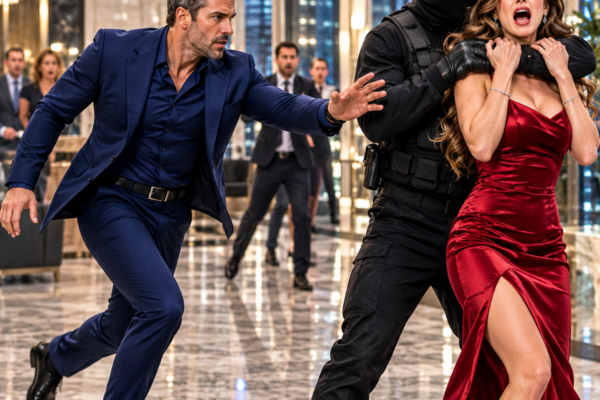
Part 3| The CEO Fired a Single Dad Guard—Minutes Later, His Navy SEAL Past Saved Her From a $500M Heist
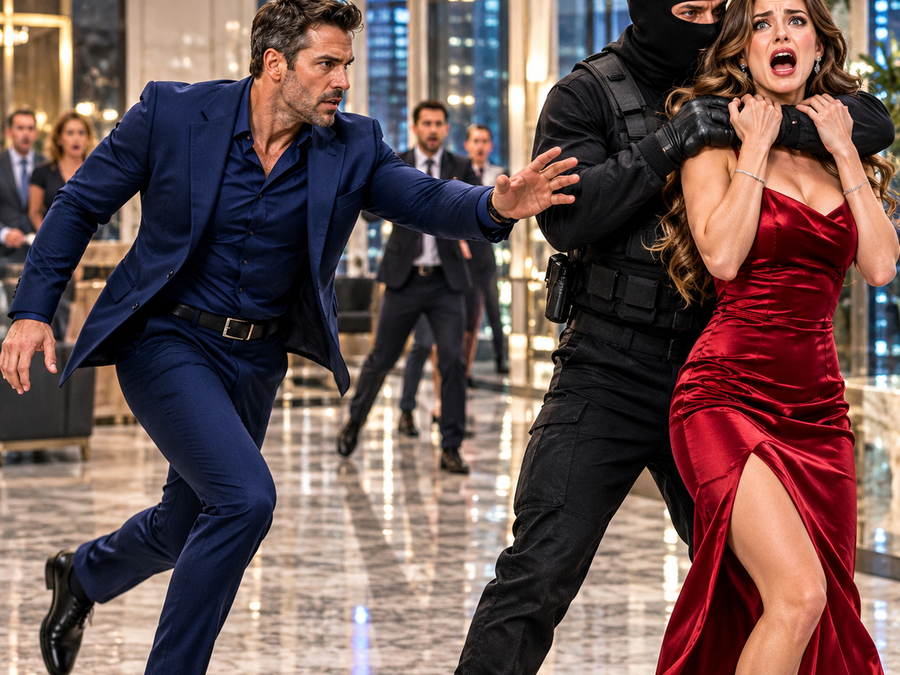
Part 3| The CEO Fired a Single Dad Guard—Minutes Later, His Navy SEAL Past Saved Her From a $500M Heist

PART 3
The gaps I documented, he said, none of them were things the AI system was incapable of addressing.
They were things nobody asked the system to address because nobody asked me what I knew. They asked my job title and decided that 11 years of walking this building produced nothing worth having.
I asked your job title, she said. you did and decided the same thing.
You did.
She nodded slowly, not defensively, just taking it.
The manual lockdown system, she said.
You found it in 1987 blueprints. City infrastructure archive 2021.
Why were you looking at 1987 blueprints?
Because I work here, he said.
Worked?
because knowing the building I was responsible for felt like the minimum.
The 41st floor door came open with a force that communicated that the people coming through it were not taking any chances.
And Logan had his hands up and his voice ready before the first tactical officer crossed the threshold.
And the next 30 seconds had a particular quality of controlled intensity that anyone who’d been on either side of a tactical entry would recognize.
the shout, the visual sweep, the targeting, the command to identify, the verbal response, the the hold, the assessment, the standown.
Logan kept his hands up and his voice level and watched the team move through the space with the professional appreciation of someone who’d done similar work in different circumstances.
Hayes, he said, Logan Hayes, former building security. This is Vivien Sterling, building owner.
We have one restrained individual in the conference room, male, goes by Reyes, part of the operational crew, non-compliant earlier, but currently secured. The team leader, a woman with tactical gear and the particular economy of movement that came from doing this repeatedly, looked at him for about 2 seconds before making a decision.
Hands down, she said. Stay put.
He put his hands down.
She looked at his side. You need medical.
And after the building’s clear, he said, “That’s not how this works.”
“The building’s not clear yet.”
She looked at him for another second.
“You’re the one who broadcast the position map.”
“M Sterling broadcast it.
I gave her the information.
” The team leader looked at Viven.
Back at Logan, she made a small gesture to one of her team members that he interpreted correctly as, “Keep eyes on them, but they’re not threats.
We’ve got 12 of them.
Two on suble three are contained by what appears to be our engineer is describing it as a physical barrier system that predates the building’s current infrastructure.
Manual hydraulic lockdown. Logan said original 1987 construction activation panel in the secondary infrastructure passage on suble 3.
There should be a laminated card on the panel with the deactivation sequence if your team needs to extract the contained individuals. The team leader stared at him.
How do you know about a 1987 hydraulic system?
He takes notes, Vivien said. Logan held up the notebook.
The team leader looked at it.
She looked like she had several questions she didn’t currently have time for.
“We’ll need that,” she said.
“I know.”
He held it out. And then after 11 years of keeping it close, of filling its pages in quiet lobbies at 3:00 in the morning and on slow afternoons when nothing was happening and in the infrastructure passages of a building that most people treated as a backdrop to their actual lives, he let it go.
The team leader took it with both hands, which he appreciated.
We’re going to need full statements from both of you.
Yes, Logan said.
There’s a command post established on Fifth Avenue, Southside, mobile command unit, Logan said.
I could see it from the windows. Third vehicle from the corner.
She stopped, looked at him again. Right.
Yes.
Can you walk? He stood up from the chair, which required more visible effort than he would have preferred, but was accomplished without assistance.
“I can walk,” he said.
He looked at Viven.
She was already on her feet holding her shoes in one hand the same way she’d been holding them when he’d come through her office door 4 hours ago.
There was a cut on her chin that had dried and a sleeve that had been torn at some point he hadn’t witnessed.
And her hair was entirely a different situation from whatever it had been at 8:47 when she’d stood in the lobby and looked at him like a decision that needed to be made.
She looked, he thought, like someone who’d been through something and hadn’t pretended otherwise.
He thought that was probably a reasonable place to start.
They walked out of the 41st floor executive suite side by side, past the tactical team working through the space, past the conference room where Reyes was being formally detained, through the reception area where a half empty coffee cup on the desk had been there since morning and was now evidence of a day that had become something nobody planned.
In the stairwell going down, Vivien said, “My first act as CEO was to fire the person who saved this company.”
Logan said nothing.
“That’s going to be the story,” she said.
“That’s what the headline is going to say.”
“Probably,” he said.
“Does that bother you?”
He thought about it as they descended. The stairwell was full of sound now.
Radios, footsteps, the organized noise of a building being reclaimed floor by floor.
What bothers me, he said, is that 18 people are going to go home tonight instead of not going home, and the diamonds are still in the gallery, and the financial data is still in the vault, and most of the people who were in this building when it started are going to be okay. He paused on a landing.
That part doesn’t bother me at all.
And the rest?
He looked at her.
Sophie’s tuition is due in 11 days, he said.
That part bothers me a little. Vivien Sterling looked at him for a moment with an expression that had several things in it.
And then she did something he hadn’t seen her do all night.
She laughed, short, tired, real, the kind of laugh that comes out when something hits the exact intersection of terrible and absurd.
“We’ll figure that out,” she said.
“I’m not asking for I know you’re not,” she said.
“That’s not why I said it.”
They went the rest of the way down in silence.
And when they reached the lobby, the same marble lobby where 4 hours ago he’d unclipped his badge and walked out without defending himself, it was full of tactical officers and the beginning of the forensic presence that would spend the next 3 days taking the building apart,
looking for evidence.
Logan walked through it without stopping. Outside, the rain had nearly stopped.
The air was cold and wet and smelled like wet concrete and exhaust and the particular smell of New York at 2 in the morning when the streets had been emptied of their usual noise.
And what remained was the city’s baseline, the thing underneath everything else.
He stopped on the sidewalk and breathed it.
His ribs told him that breathing deeply was an ambitious choice. He did it anyway.
Behind him, Sterling Tower stood exactly as it always had. 47 floors of glass and light and marble and the evidence of enormous amounts of money and ambition and effort.
The same building he’d walked into for 11 years and learned by heart, and watched from the inside with the patient attention of a man who understood that the most important things were usually the things nobody thought to look at.
He’d left at once tonight, three blocks away, with a cold thermos and overdue library books in his back seat.
He hadn’t gone far.
The hospital was quieter than he expected at 3:00 in the morning, which was either a good sign about the city or a bad sign about his sense of what hospitals were supposed to feel like.
They put him in a bay in the emergency department, and a resident named Dr.Okafor, who looked approximately 26 years old and had the specific exhaustion of someone 12 hours into a long shift, pressed on his ribs with practiced fingers and told him what he’d already suspected.
Three cracked, one fully fractured. The fractured one is the fourth intercostal on the left.
She looked at the X-ray on the screen.
You’ve had ribb injuries before.
Some, he said.
More than some.
She looked at him over the screen.
You should have come in hours ago.
I was busy. She had the expression of someone who had heard variations of this answer many times and had made her peace with the fact that some patients were going to do what they were going to do.
We’re going to wrap you, give you something for the pain, and I want to keep you overnight for observation.
The fractured rib is close enough to the plural cavity that I want imaging in the morning to confirm there’s no I have a daughter, he said.
8 years old.
She doesn’t know I’m here, and she’s going to wake up at my neighbor’s house, and she needs to know where I am before that happens.
Dr.Okafor looked at him.
Call her now, then you stay overnight.
Deal, he said.
He called Mrs.Okono from the hospital bay with a paper gown that wasn’t quite large enough for his shoulders and a blood pressure cuff still on his left arm.
Mrs.Okonquo answered on the second ring, which meant she hadn’t slept, which he’d expected.
“I’m at Mercy General,” he said.
“I’m fine, ribs.
They want to keep me overnight.”
A pause.
Logan, I know that child is going to wake up and tell her I’m okay.
Tell her I’ll be home by lunch.
He thought about it.
Tell her I’ll bring the good donuts.
She’s going to want to come see you.
Tell her the hospital has a rule about kids under 10 in the ER.
There was no such rule, but Sophie wouldn’t know that, and the last thing he wanted was his daughter sitting in a plastic chair in an emergency bay, looking at her father wrapped like something fragile.
I’ll see her at lunch.
Tell her I promise.
Mrs.Okono said things that were a mixture of relief and scolding that only someone who’d been genuinely worried could produce.
And he took all of it without objection because he’d earned it and because she’d earned the right to deliver it, and because on some level he needed to hear someone speak to him the way people spoke to someone they were glad was still around.
He slept 3 hours, which was more than he expected and less than he needed. And at 7:00 in the morning, he was sitting up in the overnight observation room watching the news coverage on the mounted television with the sound off when Vivian Sterling walked in.
She’d changed clothes.
She’d gone home at some point between the command post debrief.
And now, though she didn’t look like someone who’d slept, she was wearing dark slacks and a gray sweater and carrying two cups of coffee from the place on the corner that Logan knew charged $4 for a medium and was worth it.
and she stood in the doorway for a moment before coming in.
Like she was giving him the option of pretending he hadn’t seen her.
He hadn’t slept enough to bother with that.
You didn’t have to come, he said.
I know. She set one of the cups on the tray beside his bed.
How are the ribs? They have opinions.
That sounds like a yes to everything being broken. Three cracked, one fractured.
I’ve had worse.
She sat in the chair beside the bed, not perched on the edge of it, not the visitor’s posture of someone who didn’t plan to stay long, but actually sitting in it the way you sat when you were going to have a real conversation.
She wrapped both hands around her cup and looked at the television where the muted coverage was showing aerial footage of Sterling Tower with the Chiron reading Sterling Tower siege.
18 employees safe, mastermind arrested.
Adrien was processed at 4 this morning.
She said, “Federal charges.
The US attorney’s office is handling it because of the financial data component.
It crosses into securities fraud and wire fraud territory that takes it federal.”
She paused.
His lawyer was at the precinct within 40 minutes of the arrest, which tells you something about how prepared he was for the possibility of things going wrong.
“Prepared people don’t plan to get caught,” Logan said.
They plan for what happens if they do.
12 other individuals are in custody. The two on sublevel 3 were extracted after your tactical team found the deactivation card on the panel.
She almost smiled at that. Your laminated card building superintendent put it there in 1987.
Logan said, “I just didn’t throw it away.”
Vivien looked at the television for a moment.
On the screen, a reporter was standing in front of the building’s main entrance with the particular energized composure of someone who’d been live since midnight and was running on adrenaline and the professional commitment to staying vertical.
They’re calling you the anonymous security guard, she said.
The networks, the police haven’t released your name yet.
Good. She looked at him.
Most people would want I know what most people would want.
He picked up the coffee.
It was good.
the $4 place.
Definitely.
Sophie’s going to find out eventually, and I’d rather she find out from me than from a television.
Viven was quiet for a moment. Then, what are you going to tell her?
He thought about it.
He thought about Sophie at breakfast in Mrs.Okonquo’s kitchen, eating cereal because she always chose cereal when given the option, reading whatever book was currently absorbing her full attention and ignoring everything else.
He thought about her face when she asked questions, the particular focused attention she brought to things she actually wanted to understand. The truth, he said, simplified.
People were in trouble and I knew how to help and I helped.
And the part where I fired you 3 hours before it started.
She doesn’t need that part yet.
He said she’s eight.
The story for eight is dad went back because people needed help.
The rest of it she can have when she’s ready for it.
Vivien looked at her coffee.
She’s going to be extraordinary, she said, based entirely on the evidence of who raised her.
Logan didn’t respond to that immediately the way you didn’t respond immediately to something that landed somewhere real.
He just sat with it for a moment and let it be what it was.
She already is, he said. The television shifted to a new segment.
file footage of Adrien Mercer at some company event, shaking hands, smiling, the smile of a man who was very good at rooms. Logan watched it without expression.
He’d thought about Mercer a lot in the 3 hours he’d slept in the incomplete cycling way you thought about things when your brain was working through them under the surface.
Not with anger exactly, something more complicated than anger. 9 years was a long time to perform a version of yourself so consistently that everyone around you built their understanding of you around it.
Logan didn’t know what Adrien Mercer had originally intended when he joined Sterling Group.
Whether the plan had existed from the beginning or whether it had developed gradually, one small accommodation to ambition at a time, each step small enough to be rationalized until the accumulated distance from wherever he’d started was
too large to see clearly.
He didn’t know.
And he found that he didn’t particularly want to know.
Not because the question wasn’t interesting, but because the answer wouldn’t change anything about the 21 people who’d gone home safe, or the vault that was still sealed, or the ribs that were going to ache for the next 6 weeks.
What mattered was the record, the notebook, now in federal evidence. 14 months of observations that had been dismissed, ignored, routed around.
And that had ultimately been the thing that ended it, not the technology, not the multi-million dollar AI security integration that had been neutralized in the first 20 minutes. A man with a notebook and the stubborn conviction that what he saw and wrote down was worth something.
There was something in that worth sitting with. The thing about being underestimated, Logan had learned over a long time, was that it had two edges.
The obvious one was the cost. The years of not being heard, the reports that went into unread folders, the job title that made people look at you and see a function rather than a person.
That cost was real, and he wasn’t going to pretend it wasn’t.
But the other edge was less obvious and in certain situations, considerably more useful. When no one is watching you carefully, you can watch everything else.
When no one asks what you know, you can know things undisturbed.
When the world decides your background, you can learn the background the way no one who’s always been foreground ever bothers to.
He’d spent 11 years being background.
He knew things about that building that its architect didn’t know anymore.
That knowledge had last night walked 21 people out of a steam tunnel and sealed a billion-doll vault and kept a company from being hollowed out from the inside. Background, it turned out, was a place where a lot got done.
He was thinking about this when Viven said, “I want to offer you a position.”
He looked at her.
Chief Global Security Officer, she said, “It’s an executive role.
It includes a board seat, compensation that I’ll put in writing before you leave this hospital, and a meaningful equity stake in Sterling Group.”
She held his gaze. I want you to build a security infrastructure for this company that nobody can compromise the way Adrien compromised this one.
I want the technology and the human knowledge, both. And I want the person who understands why both matter and how they work together to run it.
Logan looked at the television.
Mercer’s smiling face had been replaced by the aerial shot of the tower again.
“Two conditions,” he said.
She didn’t look surprised.
“Tell me.”
Every employee who’s been flagged for elimination under the automation transition gets a genuine review before any final decision, not a procedural review, an actual conversation with someone who understands what they do and how they do it.”
He looked at her. Some of them are going to be redundant.
That’s fine.
But they deserve to have someone look at them the way you didn’t look at me.
Like there might be something there worth knowing before you decide.
Viven held his gaze.
Done.
What’s the second?
The people who made honest mistakes, bad calls, wrong assessments, things they got wrong in good faith, they get a path to fix it.
Not a pass, a path. He paused.
The resident who dismissed my seventh report because Mercer’s office had flagged it as reviewed.
She did her job as she understood it.
She shouldn’t lose hers because she trusted the system she was given.
Viven was quiet for a long moment.
You know that’s going to make the restructuring harder.
She said, “Yes, it’s going to take longer and cost more and some of the board is going to push back.”
“Yes,” he said.
Those are my conditions. She looked at him.
He looked back. Outside the hospital window, the sky was doing the thing October skies did when the rain cleared.
A hard, clean blue that looked almost aggressive after so many hours of gray, like the weather was overcorrecting.
Done, she said.
Both of them.
I’ll have legal draft it today.
He nodded.
There’s one more thing, she said.
She reached into her bag and set something on the tray beside his coffee. a check.
He looked at it without picking it up.
Sophie’s tuition and 6 months of what your salary should have been based on what I understand the market rate for someone with your actual qualifications and actual responsibilities was over the last 11 years, which is considerably more than what you were being paid.
She put her hand flat on it for a moment, not sliding it toward him, just placing it.
Not charity. Correction.
Logan looked at the check. He looked at her hand on it.
He thought about the tuition payment in 11 days.
He thought about the F-150 with the cracked tail light he kept meaning to fix.
He thought about Sophie’s Wednesday afternoon science club and the teacher who got it and the two friends who got it and what it had cost him over the years to maintain that for her on a salary that had never adequately reflected what he was
actually doing.
He picked up the check.
“Thank you,” he said and meant it without qualification.
Viven nodded. She picked up her coffee.
She looked at the television again and for a while they sat in a hospital room in the early morning with the sound off and the city beginning its day outside the window and the particular silence between them was the silence of two people who had been through something together and were still in the process of understanding what that meant.
He was discharged at 11.
Dr.Okafor gave him a prescription, a list of things he wasn’t supposed to do for 6 weeks, several of which he’d already done, and the look of someone who knew he was going to do them again and had made her peace with it.
He took a cab home.
He’d asked Mrs.Okonquo not to tell Sophie he was coming until he was in the elevator, and he could hear as he came through the apartment door the sound of running feet in the hallway that meant the warning had arrived approximately 3 seconds before he did.
Sophie hit him at about hip height, which was where she always hit him. And he made a sound that was partly from the impact and partly from the ribs and partly from something else entirely.
And he put his arms around her and held on.
“You’re squeezing too hard,” she said into his jacket.
“I know,” he said.
He didn’t stop.
“Mrs.Okonquo said you were at the hospital.”
“I was.
I’m okay.
She said you hurt your ribs.
Three cracked, one fractured.
I’ve had worse.
Sophie pulled back and looked up at him with the expression she used when she was determining whether she was being managed.
She was eight and she had his eyes in her mother’s jaw and a mind that had been terrifying him with its precision since she was approximately 4 years old.
You were at the building, she said.
The one on the news? Yeah.
The one where you used to work? Yeah.
She studied him. You went back?
Yeah.
Why? He crouched down, which was the wrong thing to do with cracked ribs.
And he did it anyway. Because this was a conversation that happened at eye level.
Because there were people in there who needed help, he said. And I knew how to help them.
But they fired you, she said.
The directness of it was pure Sophie. No softening, no diplomatic framing, just the fact as she understood it laid flat on the table.
Yeah.
A few hours before.
She looked at him for a long moment. She was working through something.
He could see it.
The processing that happened behind her eyes when she was integrating information and testing it against what she already knew about the world.
That doesn’t make sense, she said finally.
Why not?
Because if they fired you, they didn’t want you anymore.
So why would you go back to help them?
He thought about how to answer that in a way that was true without being complicated beyond what she needed right now.
And then he thought that maybe what she needed right now was the complicated version because she was Sophie and Sophie had always been able to carry more than he expected.
Because the people inside weren’t the same as the decision.
He said the people who needed help, the ones who were scared, the ones who were hurt, they didn’t fire me.
They were just there and I could help them.
He paused.
Somebody makes a bad call, that doesn’t mean you walk away from everyone around them.
You help the people who need helping. The rest of it you figure out later.
She thought about that for a long time. Long enough that his knees started to register a complaint alongside his ribs.
Okay, she said finally. Okay.
Okay, that makes sense.
She looked at him with the particular serious attention she brought to things she’d decided were important.
Are the people okay?
Yeah, everyone got out.
Good.
She hugged him again more carefully this time, her arms around his waist instead of his ribs because she’d processed the information about the ribs and adjusted her behavior accordingly.
That was Sophie.
She learned things and then she used them. You said donuts, she said into his jacket.
I did say donuts.
You didn’t bring donuts.
I was in the hospital.
That’s an excuse.
That’s an accurate description of where I was.
She pulled back and looked at him with an expression that was trying not to be amused and not quite succeeding.
“Dad, we can go get donuts,” he said.
“Give me 10 minutes to change.”
Mrs.Okong Quo, who had been standing in the hallway doorway through all of this with the expression of a woman who had decided not to interfere in something that was handling itself, caught his eye over Sophie’s head and gave him a look that had several things in it.
relief, exasperation, warmth, and then went to put the kettle on. He changed.
They got donuts.
Sophie got the kind with the sprinkles that he had always thought were excessive, and she’d always defended on aesthetic grounds.
And they sat at the kitchen table while the afternoon light came through the windows, and she told him about the book she was reading, which was about marine biology.
and he listened and asked questions and ate a glazed one because his ribs had already ruined the morning’s restraint budget and a donut wasn’t going to make the difference.
It was the most normal two hours he’d had in as long as he could remember.
In the weeks that followed, normaly and its opposite took turns. The federal investigation moved quickly, which was unusual, but the evidence was thorough.
both the content of Logan’s notebook, which the FBI forensics team apparently spent three days working through, with the focused appreciation of investigators who had rarely encountered documentation of that quality, and the administrative file logs that Viven had pulled from local storage and broadcast on the PA system, which were entered into the evidentiary record in their entirety.
Adrienne Mercer’s attorney entered a not-uilty plea and then 6 weeks later a guilty plea on four of the seven counts which the US attorney characterized as a reflection of the overwhelming documentary evidence rather than any crisis of conscience.
Logan read the coverage on his phone sitting in the pickup line at Sophie’s school and then put the phone in his pocket and didn’t think about it again that day.
The 12 operational crew members were processed separately.
Reyes, whose real name turned out to be Daniel Coloulton, received a sentence that reflected his role as the individual most directly responsible for Vivian’s confinement.
Logan didn’t attend any of the hearings.
He gave his deposition, answered the questions asked of him completely and accurately, and then went back to the work of the next thing. The media coverage peaked in the first week and then cycled the way coverage cycled.
Intense, then interpretive, then retrospective. Several outlets ran pieces about the anonymous security guard before his name became public.
And the pieces had a quality that Logan recognized as the particular sentimentality that attached to stories that confirmed something people wanted to believe about the world. He understood the impulse.
He didn’t object to it.
He just didn’t particularly recognize himself in the version of him the coverage produced.
The humble hero, the quiet guardian, the man who came back for the people who discarded him.
The real version was more specific and less symbolic. The real version had cracked ribs and cold coffee and a notebook full of maintenance observations and a daughter who needed donuts and a tuition payment that was due in 11 days.
The real version had spent an hour on a stairwell listening to building sounds and doing arithmetic about guard positions. The real version had been scared twice.
Once in the steam tunnel when he’d heard the voices above him and calculated the odds more clearly than he wanted to, and once on the 40th floor landing running toward 41 when he didn’t know yet whether he was already too late.
The real version was just a man who knew a building and made a decision.
But he understood that the story people needed was a little larger than that, and he didn’t begrudge them it.
His first day back at Sterling Tower was a Monday, 5 weeks after the night of the siege.
He’d negotiated his title, Chief Global Security Officer, and his equity position and the board seat, all of it in writing, all of it reviewed by a lawyer Sophie’s pediatrician had recommended because he didn’t know any lawyers and had to ask someone.
He’d spent the intervening weeks doing the groundwork.
Meetings with the security infrastructure team, review sessions with the department heads, three days at the city infrastructure archive, going through the building’s original construction documents with more intention than he’d ever had before because now the mandate was explicit rather than personal.
He wore the same clothes he always wore.
He brought the same thermos refilled with the same coffee.
He had a new notebook, same brand, same size, same black cover. because the old one was in a federal evidence room in lower Manhattan and probably would be for some time.
He came in through the main entrance.
He hadn’t planned it that way.
It was just the most direct route from the parking structure, the way it always had been. But he was aware as he crossed the threshold into the lobby of what the lobby was.
bets.
The same marble floor, the same security desk, the same camera positions he’d calibrated himself, the same view of Fifth Avenue through the glass front that he’d been looking at for 11 years.
He heard it before he fully registered what it was. Applause.
Not the polite event appropriate kind. The kind that started in one corner and spread because it was genuine.
The kind where people weren’t performing appreciation, but actually feeling it.
And the feeling needed somewhere to go.
Patricia from accounts receivable was near the front, which made sense given that she’d been the one to make the decision in the 22nd floor bullpen to look at a man who’d come out of a ceiling and decide to trust him.
She was clapping with the specific energy of someone who’d been waiting to do this.
Beside her, the man who’d had the panic attack behind the filing cabinets, she’d told Logan his name was Dennis, was clapping and had the expression of a person who hadn’t quite forgiven himself for the panic attack and was finding something in this moment that helped.
There were people Logan recognized and people he didn’t.
the overnight cleaning crew, junior analysts who’d been heading for the exit when everything started, security staff from the new team, people he hadn’t met yet, department heads he’d seen in meetings but not in person.
He stood in the middle of the lobby and let it happen.
He didn’t hold his hands up for quiet.
He didn’t make a speech.
He wasn’t built for that.
And it wasn’t what the moment needed.
He just stood there with his thermos and his new notebook and let the room be what it was because these people had been through something and the applause wasn’t really for him.
It was for themselves, for the fact that they were here and okay and standing in the lobby of a building that had tried to swallow them and hadn’t managed it.
He was just the occasion.
After a moment, he walked to the security desk, set down his thermos, opened the new notebook, looked at the camera feeds, the access log, the schedule for the day.
Same routine, different everything. Viven was waiting upstairs.
He knew they had a full team meeting at 10 to begin the formal roll out of what he’d been thinking of privately as the hybrid model, technology and human knowledge.
Neither one subordinate to the other, each one covering what the other couldn’t.
He had 40 pages of notes for that meeting and a list of questions he intended to ask out loud in front of everyone.
Because one of the things he decided in the five weeks of groundwork was that the culture that had allowed 14 months of warning signs to go unressed wasn’t a conspiracy.
It was a pattern.
And patterns lived in the normal behavior of normal workdays in the way meetings were structured and questions were fielded and the implicit hierarchy of whose observations got treated as data and whose got filed under concerns addressed in implementation updates.
That was going to change. That was going to change specifically and structurally, not just as an aspiration.
He had 40 pages of notes.
He also had a meeting with Patricia’s department at 2 because he’d asked to spend the first two weeks doing something that apparently no executive in the company’s recent history had done.
Going floor by floor talking to the people who worked in the building, asking them what they’d noticed, what they’d flagged, what they’d been told wasn’t their department.
He expected to fill the new notebook by end of the month.
He was writing his first notation, the East Freight Elevator, which he wanted a full mechanical review on before the week was out because it had been making that grinding sound for 6 weeks before the night of the siege, and he had no way of knowing if anyone had finally sent someone to look at it when he heard
footsteps and looked up. Sophie was standing on the other side of the security desk.
He’d brought her in on her way to school because she’d asked to see the building, and he’d thought correctly, as it turned out, that 5 weeks was enough distance to make that okay.
She’d been looking around the lobby with the systematic attention she applied to things she wanted to understand.
And now she was looking at him, specifically at the notebook, with the expression she’d worn at the kitchen table when he’d explained why he’d gone back.
“Is that a new one?”
she said, nodding at the notebook.
The old one is with the FBI. Why?
It had important information in it.
She processed this. Are you going to write everything down again?
Starting now, he said.
She looked around the lobby at the cameras, at the desk, at the elevators with their marble surrounds and the art installation in the center of the floor that she’d been examining with forensic interest when he’d found her two minutes ago.
“You really know this whole building?”
she said. most of it.
He said, “I’m still learning some of it.
Even after 11 years, buildings change,” he said.
“You keep paying attention.”
She thought about that in the way she thought about things, not dismissively, not quickly, but with the full weight of her actual consideration.
“Okay,” she said, which was what she said when something had made it through her internal evaluation process and been accepted.
He wrote the notation about the freight elevator.
He looked up at the camera feed, saw 12 of them on his primary screen, cycling through positions he’d specified in the new protocol, covering the angles he’d documented in the vulnerability reports that were now the foundation of the revised security architecture rather than the contents of an unread folder.
He thought about what it meant.
Not symbolically, not in the way the news coverage wanted it to mean, but practically, in the specific and unglamorous way that things actually meant what they meant.
It meant that the next person who walked circuits in this building and noticed something strange would have a direct line to someone who understood why that mattered.
It meant that the handwritten observation and the AI system were going to be treated as two parts of the same thing rather than as competing philosophies.
It meant that the building’s 1987 bones and its 2024 nervous system were finally going to be understood as belonging to the same structure.
It meant that the next time someone said, “I filed a report about this,” somebody was going to read it.
That was it.
That was the whole thing, reduced to its core.
Not heroism, not vindication, just the simple radical act of paying attention to people who were paying attention.
Logan Hayes, former Navy Seal, former night security guard, current chief global security officer, sat at the desk that had been his desk for 11 years and wrote a second notation of the day and drank his coffee while it was still hot for the first time in longer than he could remember. Sophie
said she had to get to school.
She hugged him carefully, mindful of the ribs because she’d learned things and she used them.
“See you tonight,” she said.
“7:00,” he said.
“I’ll make dinner.”
something good. Define good, she considered.
Not soup.
That’s a low bar.
It’s my bar, she said with the finality of someone who had decided the negotiation was over, and she was gone through the main entrance and into the October morning, her backpack slightly too large for her frame in the way it always was, already reaching into it for
whatever book was currently absorbing her full attention, Logan watched her go.
Then he looked back at his notebook and the camera feeds and the building around him.
47 floors of glass and marble and human lives and systems both old and new, known and still being learned. He picked up his pen.
He paid attention. That was how it had always started and it was how it would go on.
Not because anyone was watching, not because it had been recognized or rewarded or even noticed, but because some people were built a certain way.
And that way didn’t change when the circumstances changed and didn’t stop when no one was looking and didn’t walk away when things got hard.
It just kept going.
It wrote things down.
It came back when it was needed.
And in the end, when the building was counting and the lights were out and the people who thought they’d planned for everything discovered there was one thing they’d missed.
It was the thing that mattered. It always had been.