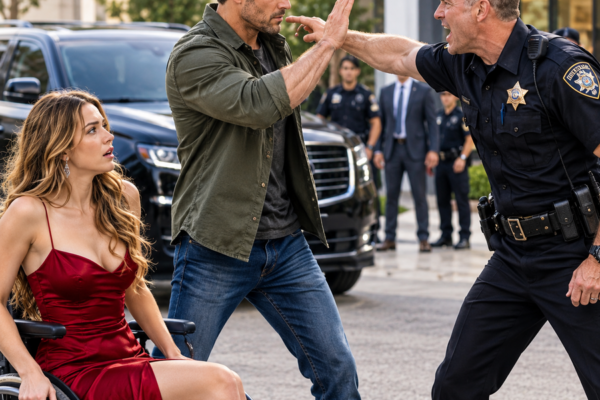
Part 1| Deputy Shoved a Disabled CEO—Until a Single Dad With a Secret Navy SEAL Past Stepped In
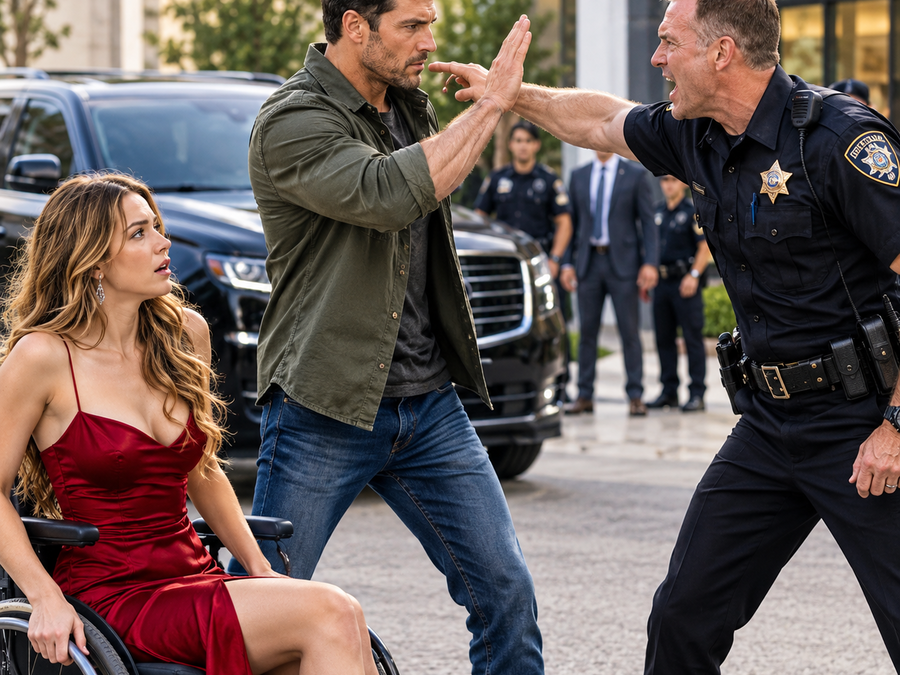
Part 1| Deputy Shoved a Disabled CEO—Until a Single Dad With a Secret Navy SEAL Past Stepped In
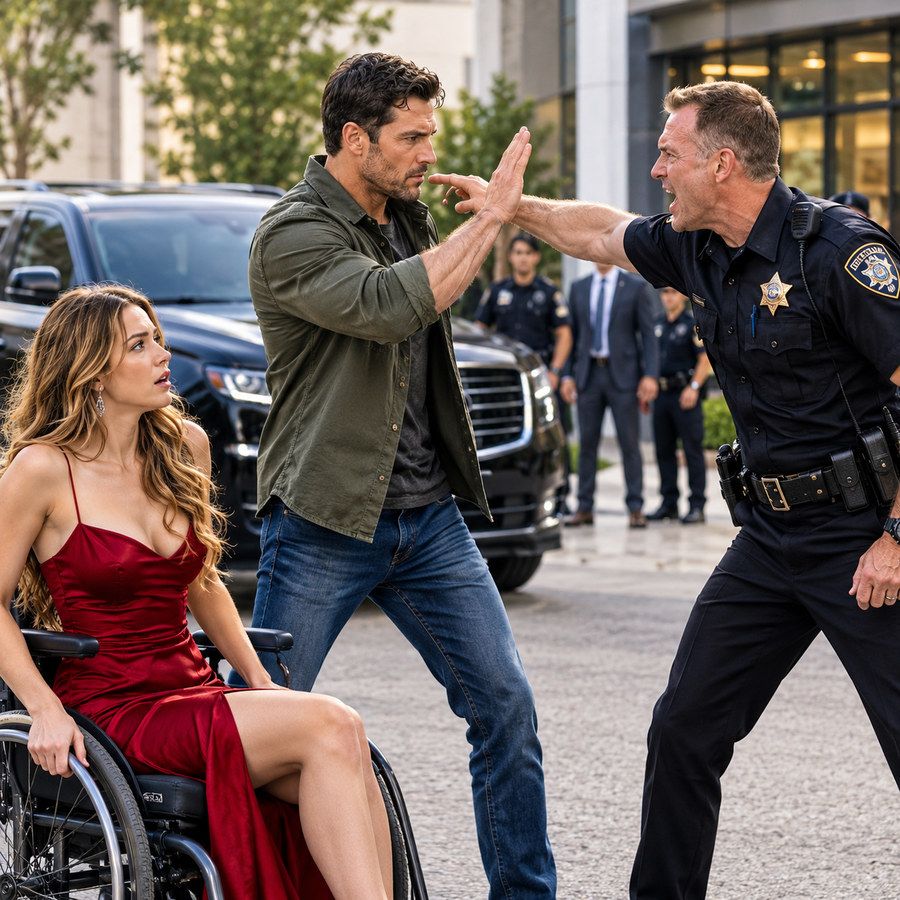
The wheelchair hit the frozen pavement like a gunshot.
One second, she was sitting beside a black reservoir, alone, grieving, minding her own business.
The next, a man with a badge had grabbed her chair and shoved, and Alina Marsh was on the ground, palms bleeding, cheek pressed against cold Idaho stone. Nobody was supposed to see it.
50 yard away, a man nobody in Cedar Hollow had ever really noticed, stood very still.
Beside him, his old dog stopped breathing.
What happened next would expose a pattern of abuse hiding behind a uniform.
It would drag one woman’s worst night into a countywide reckoning.
And it would force a broken soldier to decide whether he still had anything worth fighting for.
If this kind of story hits you somewhere real, subscribe right now.
Ring the notification bell so you never miss what comes next.
Drop your city or country in the comments because I want to see how far this story travels.
If it moves you, hit like before we’re done.
Now let’s go back to that November night in Idaho.
The wind came off the reservoir mean and without warning the way it does in the mountains in November. A gust a wall flat and indifferent carrying the smell of ice and pine and something darker underneath like wet stone that had never once known warmth.
Elena Marsh pulled her coat tighter and did not move. She had been sitting at the edge of the Willow Bend Reservoir park trail for the better part of an hour.
She was parked where the paved path curved away from the lot and opened toward the water.
On a clear day, you could see the far tree line from here, and the mountain ridge beyond it, pale and sharp.
Tonight the sky was the color of ash. The mountains had vanished.
The reservoir lay below her like a black mirror, and she stared at it as if it owed her something. She was 33 years old.
She wore the same charcoal coat she had worn to the funeral. She had not taken it off in 4 days.
3 days ago, she had sat at the front of St.Anna’s church while a priest said words about her sister Norah that were technically accurate and completely hollow.
Norah Marsh taken suddenly, “Beloved daughter, devoted sister.”
Alina had stared at the casket and thought he does not know her at all.
He is describing a greeting card.
Norah had been the one who drove 2 hours each way to take Alina to physical therapy, never asked, never late.
Norah had been the one who turned up at 11 at night with Thai food and terrible action movies because she had heard something in Alina’s voice.
Nora had been the blunt one, the numbers one, the chief financial officer who could make a boardroom go quiet with a single raised eyebrow. Years ago, after the accident, after the surgeries, after the brutal arithmetic of what Alina would and would not do again, Norah had sat by the hospital bed and said it flatly without ceremony.
You’re still you.
The chair doesn’t change that.
Don’t let anyone tell you different.
Nobody else had said it like that.
Her doctors used careful words built to manage expectations.
Her friends drifted away with the particular cowardice of people who do not know how to stand near grief.
Norah had said it like gravity, like a fact that needed no discussion. Now Norah was in the ground, and the priest had described a stranger, and Alina was still wearing the coat, because taking it off felt like agreeing to something she was not ready to agree to.
The water did not move.
Somewhere behind her, a crow called once and went silent. She had driven herself here in her modified van.
hand controls, ramp, the whole adaptive package.
She was not in crisis. She would be very clear about that later.
She was simply a woman who needed somewhere to be.
That was not an apartment full of casserole dishes and other people’s sympathy.
She needed air.
She needed the water.
She needed to not be the strong one for an hour.
The park closed at sunset.
She knew that she had been coming here for 2 years. She knew the lot lights clicked off at 8.
It was 8:24.
The lot was empty.
The trail was empty. She was bothering no one.
She heard the cruiser before she saw it. Tires on frozen gravel, the low idle of a county engine, headlights sliding across the trees.
“Here we go,” she thought.
“Go home, officer.
There is nothing to see.”
Deputy Travis Kell was 38 years old, 8 years on the county force, and he was having, by his own private assessment, a terrible month. A complaint had been filed over a roadside stop in October.
Lieutenant Dunn was watching him like a hawk.
And Kell was stuck on overnight park rotation like a rookie who needed a babysitter. 8 years and they had him checking parking lots.
He saw the lone figure at the trail’s edge before he left the car.
A woman in a wheelchair sitting very still in the dark.
Nothing about it looked dangerous. It looked sad.
His first instinct was to drive on and log the check. But Dunn had told him to document anything unusual.
And a woman alone at a closed park at night was technically unusual.
He climbed out.
The gravel crunched under his boots. He saw her spine straightened slightly, so she knew he was there, but she did not turn.
Park closed at sunset.
I need you to head on out. Alina looked over her shoulder.
Her face was pale and composed. Her eyes were dry, the eyes of someone who had cried recently and was not crying now.
I’ll be leaving soon.
I need you to go now. A few more minutes.
That’s all.
He studied her. You doing okay?
I’m fine.
He should have let it go.
The decent thing was to say, take your time. Walk back to the cruiser.
wait 10 minutes and watch her leave.
But there was something in her tone, not rude, just flat and self-possessed, as though she were setting the schedule, and he was a small inconvenience. Snagged something in him.
That wasn’t a request.
I heard you. She turned back to the water.
The back of her head, she had turned the back of her head to him.
Something in Kel’s chest went tight and hot.
Turn around when I’m talking to you.
She turned. Her eyes were steady, not afraid, not aggressive.
Steady. Somehow that was worse.
I’m listening.
He could not have said when it crossed over from official to personal. The temperature in his voice simply dropped below professional and kept falling.
He talked about regulations.
Then he talked about her attitude. Then he said things like people like you in ways that had nothing to do with regulations.
People like me, Alina said quietly. What does that mean?
People who think the rules don’t apply.
Sitting out here alone in the dark.
He let a beat pass.
Makes a person wonder if you’re really okay.
Maybe I should call a welfare check. There it was, a threat wrapped in helpful language.
Comply or I make this something else.
I’m fine, Alina said, her voice held, her hands tightened in her lap.
I’ll leave when I’m ready.
He took hold of the push handles. Not violently.
Not yet.
Just the casual closing of a hand the way you would grab a grocery cart.
This belongs to me to move.
Don’t.
The word came out like a blade.
Do not touch my chair.
You want to go on your own or you want help?
I said do not.
He shoved. Not a nudge, real weight behind it.
The chair lurched forward, and the front wheels struck a crack in the frozen pavement at exactly the wrong angle. Alina went over.
The sound was metallic and final, like a car door slamming in an empty garage.
The chair hit first, one wheel spinning uselessly in the air. Her body followed half a second later, her shoulder taking the impact, her glove palm tearing across frozen stone.
The coat rode up along her side, the breath punched out of her lungs. She lay on the ground at a closed park in Idaho while a deputy stood over her.
The reservoir was black and silent. The wind was the only sound.
For one suspended moment, nobody moved.
50 yards up the trail, in the shadow of a cluster of bare cottonwoods, Cole Brennan had gone completely still. He had heard the crack of metal, he had heard the gasp.
He was looking at a woman on the ground and a man with a badge standing over her.
Every instinct he owned was working before his conscious mind finished a single thought. Civilian down, one aggressor, armed, no other units.
His hand dropped to Atlas’s collar.
Not a grip, a touch.
The German Shepherd was already rigid beside him, muscles coiled, a growl held deep in his chest.
Easy, Cole thought.
Not a word, just pressure through the hand.
Atlas felt it and held.
Cole stepped out of the shadows and started walking. People in Cedar Hollow did not notice Cole Brennan much, which was exactly how he wanted it.
He had been in town 6 months, renting a small cabin on the east side of the ridge from a retired school teacher who asked few questions. He shopped at the same grocery store.
He drank coffee at the same diner. He walked Atlas, the same two trails most mornings.
He drove a dark green pickup with 180,000 mi on it and a dent in the rear panel he had never bothered to fix. He was 36 years old.
He looked older in the way of men who have spent years outside in weather that had opinions. 14 years in the Navy, most of them as a SEAL, deployments he would never discuss in any civilian room for the rest of his life.
By every measure his community used, he had been exceptional.
A shoulder injury ended it. Torn, fractured, rebuilt, and never quite the same.
The Navy offered him a desk, an instructor’s post, a gentle landing.
Cole looked at those offers with the cleareyed honesty that was one of his better qualities. understood he would not survive being the man who used to be in the field.
So he got out and there was more to it than that.
He had a daughter.
Lily was eight, bright and watchful, and she had spent too many of her years waiting at windows for a father who might not come home. He had promised her he would stay.
That promise was why he had driven west, looking for a place with room to breathe.
Right now she was home at the cabin, asleep under her quilt, with the school teacher’s granddaughter, watching the door for the hour he needed.
He had said he would be back by 9:00. He did not know yet what came next.
His shoulder achd in the cold. Atlas was 12 now, gray spreading up his muzzle like frost on darkwood, but still sharp, still the most reliable creature Cole had ever known.
Walking these trails at night, when the world was quiet, was one of the few things that settled his nerves.
Some nights he saw a woman in a charcoal coat at the water’s edge.
Always alone, always still, the stillness of someone who came here specifically not to be disturbed.
He understood that completely. He had never spoken to her.
Tonight he had watched the headlights sweep the lot.
He had heard the sound. That was not an accident.
His footsteps were loud on purpose. Sneaking up on an armed officer in a dark park was a fast way to get shot.
He walked at a steady, visible pace, hands loose body, saying, “I am coming.
I am not hiding. I see everything.
Kell heard him and turned.
He saw a man in a weathered jacket and an old dog.
Badge, no uniform.
Civilian, uninvolved, manageable. Sir, this area is closed.
Step back. Step away from her.
Cole’s voice was not loud.
It was the quiet of a man who had said things people obeyed because the alternative was worse.
Now the hairs rose on the back of Kel’s neck before his mind could explain why.
He covered it with authority.
I’m a county deputy.
I can see that Cole stopped 10 ft away. He looked at the woman on the ground, then back at Kell.
I watched what happened. You need to leave.
You don’t give me orders.
No, sir.
I don’t.
The standoff held for 3 seconds.
Atlas stood at Cole’s left side.
He did not lunge. He did not bark.
He was 12 years old and built like something that had been through a great deal, and his eyes never left Kell. It was the stare of a trained dog that had already done its calculation and was only being patient about the outcome.
“She was trespassing,” Kel said.
She was sitting beside a reservoir. Then you grabbed her wheelchair.
You shoved it. I saw all three from 50 yards.
I can describe the sequence if that’s useful.
Silence.
Kel’s jaw tightened.
You don’t know what you saw.
Know exactly what I saw.
Cole let the silence sit. He had learned long ago that most people cannot stand it.
And the one who fills it first is usually the one less sure of his ground.
Kel filled it.
She was uncooperative. Park closes at sunset.
People forget you talk to them.
A pause.
You don’t touch their equipment.
Not like that. Kel stared.
Behind his eyes, something was recalculating.
This was not unfolding the way it should. He looked at the woman who had pushed herself up on one braced hand, her shoulder plainly hurting.
She was watching him with an expression Cole would later try to name and never quite manage.
Defiance, more the look of someone proved right about something she desperately wished she had been wrong about.
Kel straightened.
He turned and walked back to the cruiser.
At the door, he stopped, one hand on the frame, and looked back.
You embarrassed the wrong man. Cole held his gaze.
He said nothing. There was nothing to say to that.
The engine turned over.
Headlight swept the treeine. Deputy Travis Kell drove away into the dark, and the sound faded, and there was only wind and water and two people and a dog.
Cole crouched beside her, not hovering, eye level, the way you do when you want someone to know you are there without making them feel surrounded. Are you hurt?
She took a moment doing a quick and honest inventory.
My shoulder will bruise.
Palm is scraped.
My pride is intact.
Good. He glanced at the chair.
One wheel was dented along the rim, but the frame looked sound. May I?
She nodded. He lifted the chair carefully and checked the wheel.
It would roll a little unevenly.
He set it beside her and held it steady without a word while she pulled herself back in.
The movement was practiced, the motion of someone who had done this many times in kinder conditions.
She settled and looked down at her hands.
Thank you.
You didn’t have to do that.
He had no right to touch your chair.
No, he didn’t.
She looked up.
Alina Marsh.
Cole Brennan’s Marsh.
Atlas chose that moment to close the distance.
He patted over with the deliberate slowness of an old dog who had decided something and laid his head against her knee. He did not demand anything.
He only made contact the way you sit beside someone in the dark. Alina looked down at him.
Something in her face softened at the edges. The way a very controlled thing softens when it meets something unexpectedly gentle.
What’s his name?
Atlas.
She put her scraped palm on the grave of his muzzle.
Hey, Atlas.
His tail moved once, slow and deliberate.
And Alina Marsh, who had not cried at her sister’s funeral, who had not cried in 4 days of wearing the same coat, pressed her lips together and began to cry loudly.
the way exhausted people cry quietly with some shame and some relief.
Like pressure finally leaving a place it had been building too long. Cole straightened and looked at the reservoir, he gave her the silence.
Sometimes the most decent thing you can do for someone is to stay in the room and not make it about you. After a few minutes, she stopped.
She found a tissue in her pocket, crumpled and old, and blotted her eyes with the efficiency of someone who had been holding herself together in public for far too long.
Sorry, you don’t need to be.
It’s been a week.
He paused.
Is there someone I can call to take you home?
A small, tired amount of dry humor crossed her face.
I drove myself here.
Right.
He glanced at the van in the lot.
Of course she had.
I meant someone who knows where you are.
A long beat.
Not really, she said. Not anymore.
She did not explain. She did not need to.
The coat, the black water, the closed park in November was all there. Cole understood at least roughly what not anymore meant.
He didn’t push.
He didn’t ask.
People were entitled to their grief in whatever shape fit them. The rims on your chair are bent, he said.
It’ll roll, but it’s going to pull right.
You’ll want to get it looked at.
She tilted her head back to logistics.
Manageable things at ground level.
Is there somewhere in Cedar Hollow that does that medical equipment place on Franklin near the hospital? Guy named Torres.
He’s good.
Fair.
Okay.
She looked at the reservoir one more time, then turned her chair. I should go.
Yeah. She paused.
She seemed to weigh something. Or maybe she was only tired.
Then she said without looking back, “He’s going to try to make that into something it wasn’t.”
Cole was quiet a moment.
Let him try. She nodded once and wheeled toward the lot.
Atlas watched her go until she disappeared, his tail still his face troubled. Cole had always been a little unnerved by how clearly that dog could wear an expression.
He stood in the dark beside the water long after the van’s tail lights were gone.
She hadn’t been wrong to warn him.
He knew the shape of this. Men who lived inside institutional protection understood that a badge was armor and that armor had nothing to do with truth.
It had everything to do with who got to write the report first. He had seen it in the military, too.
But there, other people stood above and around, and sometimes they had the will to step in.
Out here in a small Idaho county, he wasn’t sure what existed to check a deputy who had decided he had an enemy.
He called Atlas to heal.
They walked back through the dark to the truck.
Kell filed his report that night. Cole had expected that.
He had not expected how fast the language would swell.
What should have been a trespass contact became an erratic subject who resisted direction. A civilian witness had interfered with official duties and displayed threatening behavior toward a unformed officer.
He learned this 3 days later when a deputy he’d never seen knocked on the cabin door.
Young, nervous, plainly unsure what he’d been sent to do.
He asked whether Cole Brennan was available to make a statement about the evening of November 7th. Cole said yes.
He sat at the kitchen table and gave it plainly. The grab, the shove, the chair going over, Alina hitting the pavement.
He offered to have it notorized.
The deputy wrote everything down and left looking less certain of his assignment than when he’d arrived.
That night, Cole called the sheriff’s non-emergency line and asked politely whom he should contact about a formal complaint regarding deputy conduct.
He wrote down the name he was given and the address of the county administrative office.
He filed nothing.
Not yet.
He had spent a career in places where moving too early was as fatal as moving too late.
Patience was not passivity.
Patience was a tactical decision. Early action burned information and gave the other side time to adapt.
He kept hearing her voice.
He’s going to try to make that into something it wasn’t.
It was the voice of someone who knew exactly what a badge weighed when there were no witnesses and no recordings. Only two accounts of what happened in the dark.
except there had been three of them at that reservoir. The third had 14 years as a seal, including a very specific education in the value of paper.
Within an hour of getting home that night, he had written his own account, dated, timed, detailed. He had emailed it to himself so the timestamp would hold.
He had the photograph of the bent wheel rim taken quietly.
He had urged her to keep the receipt from Tors.
His statement was ready. He was only waiting to learn where to put it.
On the fourth day, he went back to Willow Bend. She was there, same spot by the water.
The charcoal coat was gone. She wore a dark blue fleece and a gray scarf, and she looked not better.
Exactly, but different, less like someone who had stopped in the middle of moving. Atlas saw her first.
At 12 years old, he moved with a speed Cole hadn’t seen from him in weeks.
“Hey, Atlas,” she bent forward in the chair.
“How are you, buddy?”
Cole stopped a few feet back.
“You came back.
I live 15 minutes from here,” she straightened.
“And I love this place.”
before last week.
I wasn’t going to let one bad night take it from me.”
He understood that completely.
She stayed in the chair he leaned against a nearby bench.
They watched the water for a few minutes.
It was a different silence than the first one.
Lighter, not the quiet of strangers.
The quiet of two people who had been through something hard together and no longer needed to fill the air.
Eventually, she said, he filed a report. I know they came to take my statement.
She looked at him.
What did you tell them what I saw?
A long beat.
Kell has 8 years on the force.
People know him. Does that change what happened?
But it might change what gets done about it.
She looked back at the water.
Anything gets done.
Cole waited a moment. I have documentation from that night.
Timestamped. She turned.
Something in her face shifted.
Not relief, but something next to it.
The look of someone who has been preparing for a fight alone and has just found out she might not be.
What kind of documentation? A written account made within an hour.
photos of your wheel rim.
Keep any receipts from to he paused.
And it may be worth asking someone at the county prosecutor’s office what a formal complaint against a deputy looks like.
She studied him.
You know a lot about this.
I know how institutions protect the people inside them and how to document things so they’re harder to rewrite.
She held his gaze quietly. Why are you doing this?
The question caught him off guard, not because it was unfair.
It was completely fair, but he had never put the answer into words, even for himself.
He thought about it honestly, and it wasn’t simple.
Part of it was that he could not watch something that wrong happened and do nothing.
Part of it was Atlas, who had made up his mind about her within minutes, and whose judgment Cole had learned over 12 years to trust.
Part of it was less comfortable to look at.
He was 6 months into an undefined life in an unfamiliar town, carrying an injury and a history he hadn’t figured out how to set down.
stepping into that dark park had been the first time in 6 months that the instincts he’d spent 14 years building had pointed at something that mattered.
He said none of that because it was the right thing to do. She looked at him a moment longer.
Then she turned back to the water.
Okay, she said. Atlas settled at her feet.
The three of them sat beside the black reservoir while the wind moved through the bare cottonwoods.
Somewhere behind them inside the sheriff’s department, a man named Kell was reframing things and polishing the story he meant to tell.
He had no idea what was already building against him. That night, she texted Cole the name of a disability rights attorney who took cases in Idaho on contingency.
He looked at it.
Then he looked at the cabin ceiling for a long time.
Then he typed back, “Does your account of the incident include the repair receipt?”
3 minutes later, his phone buzzed. Already did.
He almost smiled.
Then Atlas made the sound he made when something was wrong. Not a bark, not a growl, something lower than both.
Cole was at the window before he had consciously decided to move.
A county cruiser sat at the end of the gravel road, lights off, engine running, just sitting there watching. Down the hall, his daughter Lily was asleep in the room that faced the road.
Cole kept his eyes on the cruiser and felt something cold settle in his chest.
Didn’t pull forward.
It didn’t back away.
It idled there like something that had decided to make a point without committing to an act.
Its exhaust rose in a thin pale column against the dark.
He couldn’t see the driver and he didn’t need to.
He knew who it was the way you know certain things without confirmation. Pattern context the particular signature of a threat with a face attached.
Atlas was still making that low sound older than a growl.
Cole let the curtain fall and stepped back.
He didn’t kill the lights.
that would signal awareness, and he wasn’t ready to signal anything yet.
He walked to the kitchen and drank half a glass of water standing at the sink.
His shoulder achd in the cold, the way it always did this time of year.
A deep specific ache at the edge of the repaired joint. Quite pain, a reminder of something broken and put back together imperfectly.
He thought about what the cruiser meant, not legally, Kell wouldn’t act tonight.
With a complaint in motion, an attorney’s name in Alena’s phone, and a timestamped account sitting in Cole’s inbox, Kell was smart enough to know where the lines were.
The cruiser wasn’t a threat of action.
It was a message. I know where you live.
I know your truck.
I know your dog’s name.
I’m not done with you.
Cole had received that message before from different men in different countries. The content never changed.
The sender always believed it would accomplish something.
Rarely did. He went back to the window.
10 minutes later, the road was empty. The exhaust was gone.
Only the wind in the pines and Atlas breathing slow again.
He sat at the table with a yellow legal pad. He still used them.
He had used them his whole career for anything he didn’t want on a network.
He wrote the time, the vehicle, how long it stayed, which way it left. He noted it was the same deputy from November 7th.
Added the page to the folder he’d started at the reservoir.
Then he went to bed because 14 years had taught him to sleep when sleep was offered.
Whatever was in his head.
You learned that or you broke. There was no third option.
He slept.
Atlas curled at the foot of the bed and made no more sound. The morning came clear and bitter, the kind of November morning in Idaho that looked beautiful from inside and punished you the second you stepped out.
Cole checked on Lily first, still asleep, one arm flung over her head. He stood in her doorway a moment longer than he needed to.
Later, he ran three miles on the road behind the cabin, not fast. The shoulder set the pace, and it was more maintenance than effort.
He stood under a hot shower longer than he usually allowed, because the cold had gotten into the joint.
He made coffee he fed Atlas.
Then he sat with the legal pad and assessed the situation the way he’d been trained to, not emotionally, as a problem with parts taken in order.
One deputy with institutional cover and a personal grievance.
One woman filing or about to file a formal complaint.
One civilian witness whose account contradicted the official report.
One damaged chair documented one attorney.
One county process that would either work as designed or prove it didn’t.
And one cruiser idling outside his home in the dark.
The cruiser was the part that didn’t fit.
Everything else was legal procedural. The cruiser was personal.
It was Kell stepping outside the lines.
Not far, not provably, but outside. It was the move of a man who felt the walls of the official process closing in and wanted to remind the people pushing on them that he had other options.
Cole knew that kind of move.
He also knew how it usually ended.
He called Alina at 9:00.
She picked up on the second ring, which told him she hadn’t slept either.
There was a county cruiser outside my cabin last night, he said.
Engine on, lights off.
About 10 minutes of silence. Kell, most likely he ran my plates probably.
First night, he paused. Documented it.
Time, description, duration.
It’s in the file.
Other silence longer.
He could hear her breathing and the sounds out of a chair rolling on a hard floor.
Cole, her voice was level, but something moved under it.
I want to be honest.
When this started, I didn’t think about what it would cost you.
This I was thinking about my own situation, and you got pulled in because you happened to be there.
You don’t have to keep doing this.
I know. I mean it.
If you want to walk away from it, Mrs.Marsh, he said it evenly. I wrote that statement because it was accurate.
I logged the cruiser because it’s relevant.
Not doing anything except describing what happened to pause.
I’m not walking away from an accurate account.
Silence held a moment.
Okay, then. The attorney called yesterday.
Judith Ashford. She wants to meet next week.
She said the documentation I sent was thorough. She used that word very dry.
I sent her yours, too.
I hope that’s all right.
That’s exactly right.
She also said this kind of case depends on whether it’s an isolated incident or a pattern.
She’s pulling his record.
Complaints, disciplinary notes, anything in the public file.
Go ahead. Let me know what she finds.
I will a beat.
How’s your shoulder in this cold?
Caught him off guard. Not because it was intrusive, because it meant he had said something at some point that made it a fair question.
He’d mentioned the injury.
He couldn’t remember when.
Manageable.
That’s a seal answer.
What does that mean?
It means you won’t admit it hurts.
He didn’t respond.
She had read exactly what he’d said and exactly what it meant, which was not something he was used to.
I’ll be in touch, he said.
Yeah. Hey, Cole.
Yeah.
Be careful.
He hung up and sat with the phone on the table. Atlas watched him from across the room with the patient.
Faintly judgmental look of a dog who had formed opinions.
Don’t, Cole told him.
Atlas lowered his head onto his paws.
He went to Willowbend that afternoon.
He hadn’t planned to.
His body made the decision before his mind weighed in, and he had long ago learned to respect that kind of involuntary navigation.
He clipped Atlas’s leash and walked the trail in the thin light, the gravel frozen hard underfoot, the reservoir catching the pale sky and throwing it back.
He walked to the place where it had happened.
The ground was still scuffed when where the chair had gone over. The frozen gravel was displaced in a pattern that, if you knew how to read it, told the story plainly.
He photographed it, though he doubted it would survive another freeze and thaw. He noted the distance from the lot entrance.
He noted the nearest trail light 40 ft away.
It had been dark that night because the park’s lights ran on a timer that cut off at closing.
Nobody had seen it but him.
Nobody had heard it but him and Atlas.
He crouched beside the scuffed gravel and thought about what she’d said.
It depends on whether it’s an isolated incident or a pattern.
He hadn’t been in this town long enough to know from experience, but he had learned to read towns the way people do who spend their lives in unfamiliar places.
Small departments in small counties grow cultures. Cultures are shaped by whoever has been there longest and holds the most informal authority, not always the highest rank.
Sometimes it’s just the man who has stood through enough shifts, enough incidents, enough years that his idea of acceptable becomes everyone’s.
8 years was a long time.
He pulled out his phone and looked up the sheriff’s department.
He wanted the complaint line, the oversight process, the name of whoever handled internal affairs.
There was no internal affairs. Too small a department.
Complaints went straight to the sheriff. He looked up the sheriff, Harlon Boyd, elected 11 years in office.
His campaign page, still lived from the last cycle, showed him shaking hands with several deputies. One of them was Kell.
Cole put the phone away. Atlas was watching two ducks cross the far end of the reservoir with the look of an animal retired from duty and making peace with it.
“What do you think?”
Cole asked.
Atlas didn’t answer.
“Yeah,” Cole said.
“Neither.”
4 days later, Alina called at a/4 to 8 in the evening, and he heard the difference at once.
“Excitement, not relief.
The controlled anger that comes when something you suspected is confirmed, and the truth is worse than you hoped.”
Judith pulled his complaint history.
Do you have a minute? go.
Three formal complaints in eight years.
All three dismissed at the department level, never escalated.
She’s pulling the original files, but she said the dismissal language in two of them is nearly identical, which usually means a template, which means someone was making a habit of waving things away without reviewing them.
Cole picked up his pen.
What were the complaints?
One for excessive force, a roadside stop, 2019.
The man said Kell dragged him from the car and put him on the ground before he’d even stopped rolling.
Kel’s report said the man was reaching for something.
Dismissed. Insufficient evidence.
She paused. The second was 2021.
A woman said Kel followed her for 6 blocks after a traffic stop, then turned up at her home an hour later. He said he had more questions about the stop.
She called it intimidation dismissed.
Officer judgment within the scope of duties.
Cole wrote Stoneridge.
He noted from the file name she gave him.
Marla Stoneridge.
The third was last year October.
His supervisor mentioned it.
I don’t have details yet, but Judith said the report was she used the word carefully written like someone who knew how to build a narrative.
So there’s a pattern.
There’s something whether it’s enough.
She stopped. Judith said the key is whether any of those people will come forward.
If it’s only me and your account, it’s one incident.
If there are others who will say the same thing, it’s a practice.
Yes. She also said her voice dropped slightly.
She said, “These things are hard.
” She wanted me to know going in that even with documentation, even with witnesses, departments protect their own.
County politics are what they are, and sometimes what should happen doesn’t.
A long pause.
She said she’ll take the case.
And she said, “I should prepare for it to get ugly.”
Cole looked down at his legal pad.
Five pages now.
Dates, times, observations.
“What are you going to do?”
he asked.
The pause before her answer was long enough that he could hear Atlas shift in the other room.
“I’m going to do it,” Alina said.
“I was sitting by a reservoir, minding my own business.
He threw me out of my chair.”
Her voice was level flat.
If it goes forward, if they need your statement on the record, attached to a formal complaint, will you do that?
Yes.
Silence with a texture to it, something like relief mixed with the weight of what relief meant here.
Not that it would be easy, only that she was not carrying it alone. Thank you.
Don’t thank me.
I was there.
This is just accurate. She made a small sound close to a laugh.
You say that a lot.
Keeps being true.
She said good night.
He hung up and sat with the legal pad. He thought about how durable corruption could be when it was small enough to stay informal.
Not organized, not a grand conspiracy, just small decisions by small people who had learned that certain things went away if you filled out the forms correctly. At the bottom of the page, he added a line.
The three prior complaintants, names he did not have yet, people who had believed nobody would listen.
He had believed that about enough things in his own life to know how it felt. Two weeks passed without either of them deciding they built a routine.
Willow bend on Tuesday and Thursday evenings, sometimes Saturday morning if the weather held. Hour usually, Elina rolled the trail.
Cole walked beside her.
Atlas moved between them in the democratic way of dogs who have adopted more than one person.
She talked about Nora sometimes, not the way people perform grief for someone else’s comfort.
The real way broken and out of order, a thing Norah said once, a habit she had. Some moment from years ago that surfaced for no reason.
Cole listened. He was a better listener than talker, which did not surprise him, though it seemed to surprise her.
One evening she asked about the shoulder, not what happened, what it felt like now. He answered more than he meant to.
I can still run height.
I can’t do the overhead work I used to.
Can’t take a hit on the right side.
He looked at the water.
Some days as I don’t notice it.
Some days it’s all I notice.
She nodded. She understood that arithmetic.
The chair is like that.
She said, “Some days I forget it’s part of how the world sees me.
Someone talks to whoever I’m with instead of to me.
I remember Kel talked at you like you weren’t a person.
Kel talked at me like I was an inconvenience in a shape he didn’t respect.”
She shrugged.
That’s not new.
He just took it further than most. The reservoir lay gray and still in the thin light.
Norah used to say, “The chair didn’t change who I was.”
Alina said.
She was right.
But she didn’t always understand that it changes how the world comes at you.
You build a whole separate set of skills just to cross that gap.
They’re exhausting.
She watched the water.
She tried.
She didn’t always get it right.
She still showed up.
That’s more than most people do.
She pulled her jacket tighter.
It really is.
On a Thursday evening in late November, 17 days after the shove, they came back to the park and found a printed notice taped to the entrance gate, a restriction order.
Elina Marsh, pending investigation of a trespassing incident on November 7th, was barred from Willow Bend Reservoir Park under threat of citation. Cole read it twice.
Alina read it once, and he watched her face go very controlled and very quiet. A tightening along the jaw, the eyes going still.
He can do that?
Apparently, someone thinks he can.
She photographed the notice.
Or someone did him a favor and thinks this will scare me off. Does it?
She lowered the phone. What do you think?
Cole looked at the date issued 2 days ago, the same day Judith Ashford had sent a formal letter to the county administrator requesting Kell’s complete disciplinary record.
That was no coincidence.
He photographed the notice himself and noted the issuing stamp. Not the sheriff, not any named official, a general county parks administration stamp that anyone with the right forms could have pressed onto paper.
Alina had already texted Judith.
The answer came back in 4 minutes.
Screenshot and preserve the original.
This may constitute retaliation. Do not enter the park.
We move on it tomorrow. She read it aloud, then slid the phone into her pocket and looked past the gate at the path she had rolled for 2 years.
path to the black water, the place where she had sat through her worst nights and remembered the world was still large.
Atlas sat beside her and regarded the gate with the expression of an old dog facing an unreasonable obstacle.
“Come on,” Cole said.
“I know another trail, 12 minutes east.”
“Gate, the reservoir is nicer.
The other one has a better view of the ridge.”
A pause, then she turned her chair. They drove east in the cold dark, the gate and the notice and the name left behind them.
ahead. The sky did something with the last of the light that made the ridge look like the edge of something worth seeing.
Atlas rode with his head out the window in defiance of the temperature. Because he was 12 years old and had earned the right to make his own decisions.
At a red light in the center of Cedar Hollow, her van pulled alongside his truck.
She rolled down her window.
He rolled down his “Judith found one of the other complainants,” she said.
“The woman from 2021.
She wants to talk.”
The light changed.
Cole nodded.
They drove across town in the county sheriff’s office.
A file with Kel’s name on it sat on a desk that had never paid it much attention.
That was about to change. The woman from 2021 was Mara Stridge.
She lived in a pale green house on the eastern edge of Cedar Hollow with two dogs, a broken porch step nobody had gotten around to fixing, and the weariness of someone who had once tried to make something official and been made to regret it.
Alina called Cole the next morning. Mara had agreed to meet with Judith on Tuesday.
Alina said carefully that Mara had asked whether the civilian witness would be there.
Not officially, just present.
She wants to know what kind of person you are before she says anything on record.
That’s reasonable.
She’s been through more than what’s in the complaint file.
I’ll be there.
Judith’s office was a second floor suite above a tax preparation business on Main Street.
It smelled of old carpet and printer ink.
Judith was somewhere in her mid-50s, gay-haired with the economy of movement of someone who had spent decades in rooms where every gesture was read.
She shook Cole’s hand without ceremony, and studied him the way people did when deciding whether he would be an asset or a complication.
Mara was 44, compact, with the stillness of a woman who had learned that being noticed could cost her.
She sat with her hands folded on the table, her eyes moving between faces. She did not relax when she saw Cole.
She did not leave either. He took that as enough.
Judith explained the process.
Alena’s formal complaint had gone to the county administrator.
The administrator’s office had forwarded it to the state attorney general for review.
That could happen when a county lacked independent oversight or when someone in the office was paying attention.
That’s unusual, Alina said.
Not common, not unprecedented, and better than letting it sit in the sheriff’s inbox.
Mara looked at Alina.
You actually got them to move it up. The documentation helped.
Judith said timestamped accounts, repair records, photographs of the chair, the restriction notice which the administrator’s office has already flagged as procedurally irregular.
Mara turned to Cole.
You wrote one of the accounts.
Yes.
You saw it from 50 yards.
I had a clear line of sight. She studied him.
She had presented evidence before and been told it was not enough.
Now she was deciding whether this time would be different.
What did you do before you came here? Navy.
What kind of Navy? Cole met her eyes.
the kind where my word carries weight in a formal proceeding. The kind where I know chain of command and how to build an account that holds up under cross-examination.
He paused.
I’m not here to impress you, Mrs.Stonidge, you asked if I’d be present.
I was at the reservoir. I saw what I saw.
I’ll say exactly that on the record for as long as it takes.
She looked at him a moment longer than at Judith.
Okay, here’s what happened to me in 2021.
She talked for 40 minutes without stopping.
The public file was a skeleton.
What Mara gave them had flesh and weight, the detail of something that happened to a real person’s and had not been summarized into language built to shrink it.
Kell had stopped her for a broken tail light on a Tuesday evening in September. The stop lasted 22 minutes.
He asked her the same questions three times in different orders.
Where was she going?
Where had she been?
Who did she know in that neighborhood?
the way police sometimes did to catch inconsistencies or simply to make moving through the world feel like something that required permission. She had been polite.
She had expected a fix it ticket and 5 minutes.
Instead, he asked her to step out of the car.
He said it was procedure. It was not.
She stepped out because she was alone on a road at dusk with a man who had a gun and a badge. She did the calculation every woman in that position eventually does.
He ran her plates. They came back clean.
He walked slowly around her car looking at things. He asked if there was anything in the vehicle she wanted to tell him about.
She said no. He asked again differently.
She said no again. He handed her the ticket and told her to have a nice evening.
Her hands shook on the wheel for 10 minutes.
She sat in her driveway another 5 before she could go inside.
An hour later, a county cruiser pulled up outside her house.
Kell knocked a follow-up question. He said she opened the door because it was her house.
And in that moment, she actually thought she was safe.
The question was whether she knew a man named Darren Whitehorse four blocks over with a prior arrest.
She did not. Kell nodded slowly.
He said the neighborhood had been having some issues and he liked to know who the residents were and what they were about.
And he smiled. She described that smile in a way that made Judith stop writing and look up.
He told her she had a nice house.
He told her to get that tail light fixed.
Then he left. She filed a complaint the next day.
It was dismissed within a week. Insufficient basis.
Officer conducting routine community relations. Community relations.
Mara said.
Her voice was flat in a way that said everything.
Alena’s hands stayed still in her lap.
Her face held the expression Cole was learning to recognize.
Anger that was real and was being held in a very specific container because letting it out in the wrong direction helped no one.
Cole had not moved.
Forearms on the table, eyes on Mara.
He had listened the way he was trained to listen in briefings.
not waiting for his turn, just taking it in and cataloging. The visit to your home, he said when she finished.
Did he give any official framing? Investigation inquiry, he called it a follow-up question.
That’s all.
Did anyone else know he was there? My neighbor saw his car.
I didn’t think to ask her to write anything down.
Is she still your neighbor?
Yes, if she’s willing, Judith said, picking up the thread.
A statement placing a county vehicle at your residence that night could be valuable corroboration.
It’s been 3 years, but she may remember.
She’s got a good memory.
She doesn’t like police, which means she probably logged it.
There was more.
Judith went through it methodically.
Dates.
What Mara still had in writing whether she had told anyone.
Mara had kept the original ticket. She had a screenshot of the complaint confirmation email.
She had a text to her cousin sent the night Kel showed up timestamped 8:47 p.m.Sent to family at the moment it happened. was not a formal record, but it was contemporaneous and it was human and juries understood texts to cousins in ways they sometimes did not understand official documents.
Judith knew it. Cole saw her note the text carefully and underlined something twice.
By the time they finished, it was past noon.
Mara accepted a cup of coffee from the small machine in Judith’s breakroom and held it with both hands.
I almost didn’t come, she said to Alina.
I know. I went through this once.
I know what it cost me.
Not in money. in believing it was worth doing.
Elina was quiet.
I can’t promise it goes the way it should.
Judith already told me. Mara looked at her coffee.
But you’ve got documentation I didn’t have.
You’ve got him.
She tilted her head toward Cole without looking at him. Whatever he Nothing.
I’m in.
Mara said.
The state attorney general’s office moved faster than Judith expected.
By the first week of December, two investigators had driven up from Bois and sat in the county administrator’s conference room asking questions that a cautious middle-aged man named Holloway, who had clearly hoped this would go away, was now obliged to answer.
Alina told Cole on a Thursday evening at the East Trail, where they had walked since the restriction notice closed the reservoir to her. December light came in low and flat and orange, the kind that made everything look like the last day of something.
Atlas walked ahead with the deliberate pace of a dog, no longer interested in hurrying, but still insisting on choosing the route.
Holloway is cooperating.
Judah thinks he’s been uncomfortable with Kel for a while.
This is his exit ramp. Smart.
He sees which way it’s going.
Two more complaints surfaced since the inquiry was announced. People who never filed but told someone who told someone else.
She paused.
One is from 2018 before the ones in the file, so it goes back further. Apparently, her voice held something he had heard before.
Not satisfaction. What had been done to those people was nothing to be satisfied about.
It was the feeling of a pattern becoming undeniable, a truth that had always been there starting to take up the space it was owed. The investigators asked about the dismissal process, whether every complaint went through the same channel, whether one person signed off on them all, did one.
She doesn’t know yet, but the fact that they’re asking means they think so.
Cole thought of the sheriff’s campaign photo.
The hand on the deputy’s shoulder.
11 years in office.
Kell might not be the only problem. No, he might not.
They walked in silence. The orange light went purple at the edges.
The ridge turned black against the sky.
How are you doing with all of it? He asked.
She was quiet so long he wondered if she had heard.
Some days I’m certain this is right.
Some days I come home and sit there and think about Nora and the chair and that night and I’m just tired.
She glanced at him.
I’m not saying it so you’ll reassure me, you asked.
I know I’m going to keep doing it.
Tired’s fine.
Tired means you’re actually in it.
Is that Navy wisdom?
It’s just true.
The path curved to a clearing where the whole eastern face of the mountains opened up.
Atlas stopped there as he always did, as if he had personally selected the spot and was confirming it still met his standards. Alina stopped beside him.
The light was almost gone.
The cold was the clean, honest kind that did not apologize for itself.
My sister would have liked you,” she said.
Cole did not answer right away. He heard the past tense in it.
The specific weight. She sounds like she had good judgment.
Alina made the sound that was close to a laugh. She really did.
12 days later, Kel came without his badge.
It was a Tuesday, their usual evening, though Willow Bend was still closed to her.
They had switched to the East Trail by habit, arriving separately, meeting at the trail head. Cole got there first.
He parked, let Atlas out, and stood checking his phone.
Judith had sent word about an interview with the state investigators the following week.
Atlas stopped completely not the slow stop of an old dog finding a smell.
The hard stop, ears forward, body rigid, the posture that meant something in Atlas’s working vocabulary.
One Cole had learned to read the way he read instrument panels. Cole slid the phone into his pocket.
He looked at the treeine. A man stepped out from the bare cottonwoods along the edge of the lot 60 feet away in the failing light of a quarter to 5 on a December afternoon.
Cole knew the build in the walk before he saw the face.