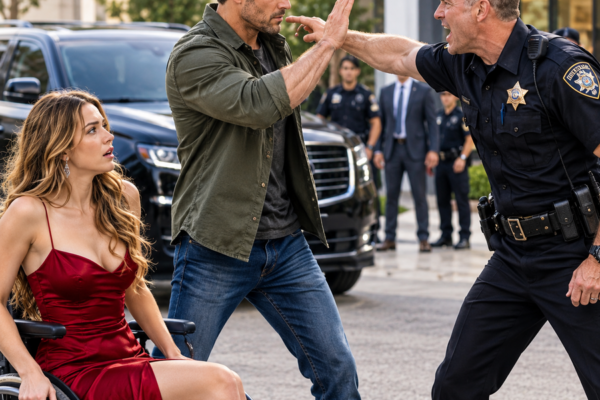
Part 2| Deputy Shoved a Disabled CEO—Until a Single Dad With a Secret Navy SEAL Past Stepped In
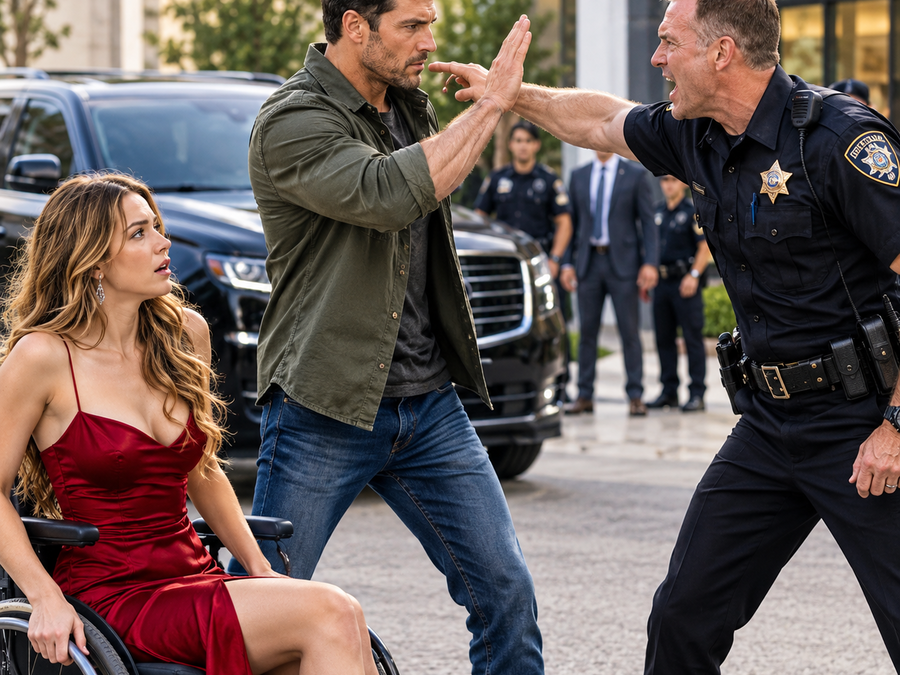
Part 2| Deputy Shoved a Disabled CEO—Until a Single Dad With a Secret Navy SEAL Past Stepped In
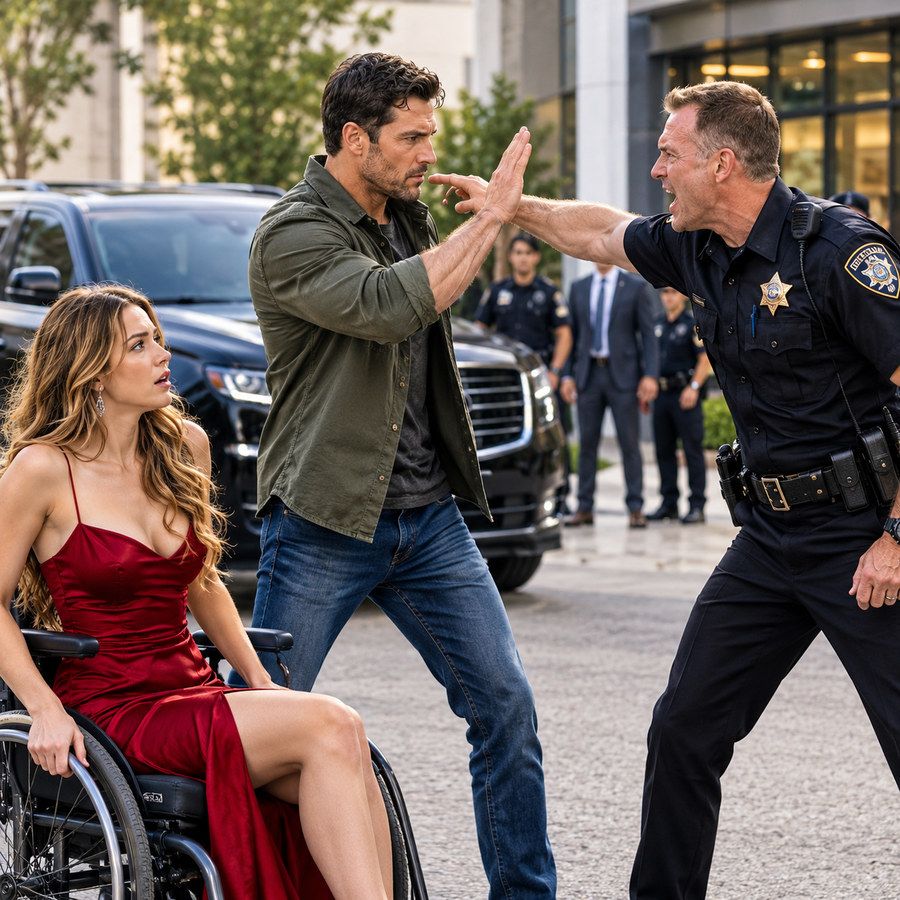
PART 2
Kell was out of uniform, dark jacket, jeans, work boots, no cruiser he had parked somewhere else, which meant he had thought about this before he came.
He had thought about this.
Cole’s assessment shifted in the half second it took to understand that.
Cole’s assessment shifted in the half second it took to understand that Kell in uniform was one kind of problem.
A man on the record technically accountable. Kell out of uniform with his cruiser parked where nobody would see it was another problem entirely.
Cole did not reach for his phone.
Not yet he stood where he was and watched Kel close the distance.
He adjusted his stance by about 3°. Feet a little wider.
Weight redistributed. The right shoulder rolled back by a fraction.
Nothing an observer would read as aggressive.
Everything that mattered for what he was ready to do.
Atlas did not move.
His growl was silent.
A vibration low in his chest. Kell stopped 15 ft away.
You know what you cost me?
It wasn’t a question.
His voice was low. And there was something in it past anger.
Anger had heat.
This was colder.
This was a man who had spent weeks turning rage into intention.
You’re going to want to be careful right now, Cole said.
the same voice he had used at the reservoir.
Quiet, factual. A woman was on the ground.
You know what you did.
You don’t know what you walked into.
I know exactly what I walked into.
I documented it within the hour.
My statement is with the state attorney general’s office.
Your complaint history is under review.
So, I’ll say this once.
Whatever you came here to do, don’t.
Kel’s jaw tightened.
Something moved behind his eyes, not a calculation. He had decided somewhere on the drive that certain outcomes were worth certain risks.
And that decision sat in the middle of his face where Cole could read it.
“My career is gone,” Kel said.
8 years.
“I didn’t end your career. You ended it at a reservoir on November 7th.” The silence between them had weight.
Kel moved.
No warning, no wind up, just a sudden closing of distance and a right hand swinging from the outside.
Cole was already moving because he had been watching the shoulder and not the face. shoulders told you what was coming a third of a second early.
A third of a second was everything.
He stepped left and slightly inside off the line of the punch.
He redirected Kel’s arm outward with both hands, not catching it, blocking it, redirecting it using the momentum, a very specific difference.
Kel lurched forward on his own force.
Cole stepped behind him, laid a hand on his collar, and let that motion carry him into the barrier post at the edge of the trail head. A second and a half, all of it.
Kell caught himself on the post and turned. His face went through surprise, then disbelief, then a fast recalibration.
He came again, a left this time low, going for the body.
Cole turned his hip into it, caught the wrist, and put pressure on the elbow in the direction it was never built to bend.
He walked hell backward two steps until his spine met the post.
Stop.
Cole was breathing normally.
His shoulder achd in the particular way it achd under load.
He noted it distantly and filed it away.
He was not squeezing.
He was simply holding the joint at the angle where forward pressure from Kell would hurt far more than compliance.
Kel breathed hard through his nose. Let go of me.
I’ll have you arrested for defending myself on a public trail when you arrived out of uniform and started the contact.
Cole kept his voice flat.
I’d be careful how that report reads.
Something in Kel’s body changed.
Not surrender.
The physical response of a man who has run into a wall he didn’t know was there.
Kohl’s had seen it before in training, in the field, in rooms where the person across from him suddenly understood the situation was not what he thought.
He released the arm and stepped back two full steps, clear space. Atlas had not barked.
He stood in that complete stillness, watching. Kel rubbed his elbow.
He looked at Cole with something that was no longer quite rage.
Rage had somewhere to go.
This was a man standing at the edge of a thing he had already stepped off, only now looking down.
Who are you?
Not a challenge.
almost a real question.
Cole didn’t answer.
Kel looked at Atlas. He looked at Cole.
He made a small sound that might have been a laugh or might have been something else.
Then he turned and walked back toward the treeine, and the bare branches closed behind him. The lot was empty and quiet again.
Cole stood still. His shoulder was talking now.
Loudly he rotated once carefully. Still functional, he would pay for it tonight, but that was manageable.
far side of the trees. He heard tires on gravel.
One vehicle moving away.
He called Judith Ashford. She answered on the third ring.
Something happened.
I need to tell you exactly what it was.
He was still on the phone when Elena’s van pulled into the lot.
She got out, ramp deploying, chair unfolding, the practice sequence, and she read his face before he could speak.
He held up one finger.
Judith was asking questions, and he answered in the order he would have used for any official debrief.
Location, initiating party, number of contacts, duration. Outcome: Any witnesses?
Judith asked. Negative.
Injuries?
None on my end.
His elbow will be uncomfortable.
He walked out on his own. Write it down within the hour and send it with a timestamp.
Same format as the reservoir already planning to Cole. Her voice slipped just for a second out of the attorney cadence.
What did he think was going to happen?
He looked at the empty tree line.
I don’t think he was thinking.
He hung up. Alina was watching him, hands still in her lap.
Tell me. He told her all of it in sequence.
No drama, no editorializing the facts in the order they came.
She listened without interrupting and her face went through several things.
None of them simple. He attacked you.
He swung at me twice.
I redirected him twice.
That’s an attack, Cole.
Yes.
Her jaw was set. This goes to the investigators.
Judith will flag it. Witness intimidation.
Attempted assault.
Conduct unbecoming.
You’re all right.
My shoulders annoyed with me.
I’m fine.
She held his eyes a long moment. The light was nearly gone now.
The lot sunk in the gray blue just after sunset. The ridge a dark line against a darker sky.
He came out here without his badge, she said, without his car.
Without anyone knowing where he was.
That’s a man who knows it’s falling apart and has decided to make it personal.
That’s my read.
She looked at her hands, then back up. Her face had stripped down to something clear and direct with nothing extra in it.
What did he look like when he left?
Cole thought about it like someone who just found out the story he’d been telling himself wasn’t true.
Alina nodded slowly. Atlas walked to her and set his head against her knee.
She laid her hand on his gray muzzle and kept it there. The three of them stayed in the failing December light without speaking.
Not because there was nothing to say, because everything that mattered had already happened, and some things you had to stand inside for a moment before you moved on. The wind came through the cottonwoods.
The investigator’s name was Carla Deming.
She drove up from Bois in a Grey State sedan and parked outside the county administrator’s building at 7 58 on a Wednesday morning, 2 days after Kell walked out of that treeine.
She was 49 and short with the kind of face people underestimated for the first 5 minutes of a meeting and spent the rest of it revising. Dark Blazer, a leather portfolio that had clearly been through many difficult rooms.
Her partner, a younger man named Rice, carried the secondary files and said almost nothing.
Cole eventually understood it was a division of labor.
Dean asked the questions.
Rice watched the room.
Cole was due at 9:00.
He arrived at 8:55, a habit he had never broken.
Early was on time on time was late.
He sat in the waiting area with a paper cup of bad coffee and a legal pad, 11 pages now, and read back through his notes the way he would have reviewed a mission brief. Not memorizing, orienting.
Judith arrived at 8:58 and looked at the cup.
Is that from the machine in the hall? Yes.
Don’t drink that, he put it down.
They’ll start with the parking lot, she said quietly.
Then the reservoir.
They may ask about your background. Be factual.
Don’t editorialize.
I know how to give a debrief.
This isn’t a debrief.
It’s an investigative interview.
There are legal dimensions.
Judith.
He looked at her calmly.
I know how to do this. She studied him.
Then she nodded and opened her portfolio.
The room was a borrowed conference room.
Laminate table, six chairs, a whiteboard with marker residue nobody had fully erased. A window onto the parking lot.
A small digital recorder sat on the table.
Deeming touched it once to confirm it was running.
Brennan, thank you for coming in.
For the record, you’re here voluntarily.
You’re not under investigation and you’re represented by council.
Walk me through December 9th at the trail head at Willow Bend Reservoir Park.
Start when you arrived. He walked her through it.
Arrived 421. parked exited with Atlas standing at the trail head checking his phone.
Atlas alerted at 433. Subject emerged from the tree line approximately 60 ft.
identified as Deputy Travis Kell from the November 7th incident. Out of uniform, no visible badge, no county vehicle, verbal exchange.
Subject initiated contact at 438.
Two attempts, both redirected.
Subject departed on foot at 441. A vehicle left from the north side of the trees about 2 minutes later.
Deeming wrote throughout. When he stopped, she looked up.
When you say redirected, what does that mean?
He swung. I moved.
His momentum took him into the barrier post. The second time I controlled his left arm at the elbow and walked him backward.
He stopped.
Did you strike him?
No.
Any injury you observed? He rubbed his elbow.
He walked out unassisted. And your own?
My right shoulder has a prior surgical repair.
Loading it that way aggravated it. Nothing acute.
Tell me about the repair. Judith shifted beside him.
The question was within scope, but it opened a door and Cole understood Deming had arrived at it deliberately. She had waited for the facts to be complete before she went looking for context.
Training accident, he said. January of last year, I was active duty Navy.
Rate and classification at separation. Senior chief petty officer.
Naval special warfare.
Deemings pen paused. You were a SEAL.
Yes.
Rice near the wall wrote something without looking up.
How long?
9 years assigned to the teams. 14 total.
And you separated 8 months ago. Relocated to Cedar Hollow about 6 months back.
Yes.
See theming set her pen down on the table. A deliberate gesture.
It changed the quality of attention in the room. I want to ask something slightly outside the formal scope.
You don’t have to Anderson.
Why did you step in at the reservoir?
You had no obligation.
You didn’t know, Miss Marsh.
Most people would have called it in and stayed back. Cole looked at the table, not avoiding it, finding the accurate answer.
I heard the impact. looked and I saw a woman on the ground and a man with a badge standing over her.
What I’d seen before that was clear enough.
The grab, the chair going over.
Pause. I have a particular aversion to walking away from something like that.
Because of your training, because of my nature. The training made me more useful in the moment.
It didn’t create the instinct.
Deeming was quiet a second.
Then she picked up her pen.
The documentation you’ve compiled.
Timestamped accounts, photographs, supplementary notes.
That’s not what civilian witnesses usually produce.
No, I imagine not.
Did you intend from the start to build a case?
I intended from the start to have an accurate record.
I’ve spent a lot of time in places where what actually happened mattered a great deal, and where people with authority over the story had reasons to prefer another version.
I learned to document.
She looked at him with an expression he couldn’t fully read.
Part professional assessment, part something closer to recognition. Okay, she said.
She turned a page.
Let’s talk about November 7th.
The interview ran 2 hours and 20 minutes. Judith stepped in twice.
Once when Rice asked about prior contact with the sheriff’s department, which she rightly called fishing.
Once when Dee asked him to characterize Kell’s emotional state, which was opinion, not observation.
He can describe what he saw, Judith said. Behavioral indicators, not characterization.
Fair deeming said without friction.
So Cole described them.
the jaw, the stillness before the first swing, the elbow, the sound Kel made as he turned away, that ambiguous sound, not quite a laugh, not quite anything else.
When it was over, Deming clicked off the recorder and leaned back.
Off the record, I can’t tell you where the investigation stands.
But what you’ve given us today with the prior documentation is substantially useful.
Parking lot is its own category.
That isn’t a he said, he said.
That’s a deputy who drove to a place where he knew a witness would be and started the contact.
Deputy Cole said as of yesterday afternoon, Kell is on administrative suspension pending this investigation.
Judith made a small controlled sound, the attorney’s version of a long exhale.
Without pay, I can’t confirm the terms.
Judith nodded, taking the non-answer as a yes. Cole picked up his legal pad and looked at the 11 pages.
The other complainants, Mara Stoneridge, the ones from 2018 and last year, “They’re being interviewed.”
“Everyone relevant is being interviewed.”
“Sheriff, everyone relevant,” Deeming said again.
In the hallway waiting for the elevator, Judith spoke quietly.
“You know what that means?
The dismissal process is under review.
Someone above Kell may be answering questions they thought they’d never face.”
“The elevator came,” they stepped in.
“How’s Alina?”
she asked.
“Steady and angry.
Those aren’t the same thing.
No, Judith said they aren’t.
Alina’s interview was the next day and she went alone.
She had told him the night before that she needed to do that part by herself.
He understood it once and said so because the understanding wasn’t complicated.
It was her account, her body, her chair, her night at the reservoir. He had been the witness.
She had been the person it happened to.
Different positions, different kinds of presence in the room. She texted him one line afterward.
Done. Judith says it went well.
Good, he wrote. Three dots appeared.
Then she asked about Nora.
He waited.
She asked who I called after it happened.
I said, “No one.”
She asked if there was someone I would have called.
I said, “My sister.”
She asked where my sister was.
I told her she died a few weeks ago, and that’s partly why I was at the reservoir that night.
Deeming just nodded and wrote it down and moved on, which was right.
And I cried in a state investigator’s office, not the plan he thought about what to say.
“That’s not a problem.
I know.
I just wanted to hold it together in there.”
You went in.
You were honest.
That’s holding it together.
Pause.
Yeah.
Okay.
Another message came an hour later. Mara called me after her interview.
Dean asked about the follow-up visit to her house in detail.
She said it felt like they already knew. Cole looked at that for a moment.
They probably did.
He wrote Rice had a separate file.
I saw it. It was thicker than it should have been for my interview alone.
What does that mean? It means someone did their homework before they drove up from Bois.
The suspension reached the papers 4 days later.
Not the Cedar Hollow Gazette, a weekly with the careful instincts of a paper that lived among the people it might have to write about.
A regional outlet, the Western Idaho Tribune, ran it as three paragraphs on page 8. County deputy suspended amid state investigation of conduct complaints.
Kell, it did not name Alina or Mara, said the attorney general’s inquiry was reviewing multiple complaints across several years and that at least one involved alleged use of force.
The sheriff’s office declined comment except to confirm the suspension.
Cole read it over coffee on a Thursday morning. Then he set the paper down and sat with it.
Not satisfaction exactly.
He had turned that question over these past weeks whether what he felt when the process moved the right way was satisfaction or vindication. and he had found it was neither.
The charges came with a civil complaint filed jointly by Judith Ashford on behalf of Alina and Mara. It named Kell individually.
It also named the county for the way it had let three complaints die quietly in a drawer.
Judith called it the part with the most structural teeth.
Civil case will take longer, she told Cole.
That’s just the reality.
But the criminal filing is public.
Anyone who searches Travis Kell’s name from now on will find these charges.
How is Alina taking it? She called me last night to make sure the filing would happen on schedule.
How do you think she’s taking it?
He almost smiled. He drove to her home that afternoon.
She hadn’t asked him to.
Some things didn’t need to be coordinated.
She opened the door in jeans and a gray sweater, her hair down, and stepped back to let him in without a word. She had been expecting him or someone like him.
The house was small and ordered.
Lower counters in the kitchen.
furniture arranged to leave clear paths. Along the entire east wall of the living room stood a bookcase with not an inch to spare.
History mostly, some science, a long shelf of legal and policy texts, the reading of someone who had been studying for a reason.
“How long have you been reading disability rights law?”
he asked. She was filling two glasses at the sink, moving through the space with the ease of someone who had remade it completely.
since the accident.
I figured if I was going to live inside this system, I should know which parts protected me and which parts only thought they did. She rolled out and handed him a glass.
There’s more gap than most people think.
The law says certain things.
Whether it means them depends on whether the people in the room take it seriously.
Pause.
They frequently don’t.
He sat across from her. What are you going to do with that?
What do you mean?
You’ve spent years studying the distance between what the law says and what happens to people in chairs.
You just live the most direct version of it.
And Judith says you’ve been helping the other complainants understand the process.
She was quiet.
Then she looked down at her glass.
There’s an advocacy organization in Boise.
They work with disabled residents on exactly this. Access complaint navigation documentation when police are involved.
They reached out after the story ran.
They saw my name. She set the glass down.
They asked if I’d want to work with them.
I haven’t answered.
Why not?
Because I don’t know if I want to leave Cedar Hollow.
She said it plainly without decoration.
Norah is buried here.
The reservoir is here.
Her eyes lifted.
You’re here.
He looked at her. She held his gaze and did not look away.
She never deflected hard things.
She just held them in the open and let them be what they were.
The work doesn’t have to be in boys, he said.
documentation, advocacy.
It’s needed everywhere, especially where the nearest help is 3 hours off and the people who need it are right here.
Is that your way of saying stay?
It’s my way of saying the place you’re looking for might already be where you are.
She turned toward her shelves, toward the years of research.
The wall she had built to understand the system she lived inside.
I’ll call them tomorrow.
I’ll ask if it can be done from here.
Marsh could even fund the part they can’t.
Good.
and if they say no, you’ll know something about them.
She studied him with an expression that held several things.
Warmth and the quiet recognition of someone who had found unexpectedly a person who said true things.
You’re not great at the soft landing.
No, he agreed.
It’s fine.
I don’t need one.
February brought a thaw that lasted 4 days, then a freeze that locked the valley down harder than before.
In the middle of it, the state attorney general announced that the investigation had widened to include Sheriff Boyd’s role in complaint oversight.
Two paragraphs in the regional paper, a longer piece in the boyise outlet. The sheriff did not comment.
His attorney said his client was cooperating fully.
Alina saw it before Cole did. Her text found him in the north sector in the middle of a search and rescue exercise with Atlas and two new volunteers.
Did you see the A announcement?
He read it at a water break.
Just saw it.
It keeps expanding.
I thought this was about one night at a reservoir.
He thought about how to answer it was. Then it turned out one night was part of something bigger.
That’s what happens when someone finally looks.
Pause.
Nora would have had something to say about that.
What would she have said?
The dots appeared and vanished twice.
She would have said, “See, I told you that you were the right person for this.”
She’d have been annoyingly right.
He looked at the white trail ahead at Atlas sitting patiently in the snow with his gray muzzle turned into the wind.
“She was right,” he wrote.
He put the phone away and called the volunteers back to the grid. On the last Thursday in February, Elina went back to Willowbend.
She told no one, not Cole, not Mara, not the director and boy she had been speaking with twice a week since January, who had agreed the work could be done from Cedar Hollow, who had asked her to take a case coordination role that was in practical terms what she had been doing informally
for 2 months. She drove herself, the lot lights burned now, even in the afternoon, because the county had finally fixed a timer broken for a year and a half.
She deployed her ramp.
She got into the chair. She rolled to the trail head.
The restriction notice was gone.
She knew it from Judith’s confirmation.
But knowing it from a page was different from seeing the gate clear and the trail open, and no paper telling her she wasn’t welcome where she had every right to be.
The path was packed snow, not ice, her wide winter tires bit and held. The cottonwood stood bare and gray on either side, and the reservoir showed through the gaps before she reached the curve.
Dark water under a pale sky going toward evening. She reached her spot where the trail bent and opened.
The far tree line lay doubled in the black water. The ridge above it went purple in the failing light.
She stopped. She breathed.
She listened to wind and water and a single bird in the cottonwoods that she did not try to name. 3 and 1/2 months.
The charcoal coat, the November dark.
The sound of Kel’s hand closing on the push handle of her chair.
Same trail, same cold. Everything else was different.
Kell had a court date in April. His attorney had entered a not-uilty plea, which Judith expected, and which meant months of process.
The civil case would be slower.
The county was in discussions.
In Judith’s carefully neutral phrase about remedies, the sheriff had quietly hired his own lawyer.
Victor Crane sat in a federal holding facility, his accounts frozen. The ledgers Norah had hidden now in the hands of people who could read them.
None of it was finished.
Some of it would resolve in ways that weren’t satisfying.
Some would resolve correctly. and slowly.
Some would turn on technicalities that had nothing to do with what happened on a cold night when a man decided his badge was permission.
But the record existed, all of it in order, in the words of the people it had happened to, timestamped and signed and sent to the right desks. Elina sat beside the water and thought about Nora, not the way she had in the first weeks, the desperate kind, gripping a voice in memory for fear it was fading.
This was calmer. The way you think of someone built into how you un understand the world, a beam in the architecture.
Even when they’re not in the room, you are still you.
The chair doesn’t change that.
Don’t let anyone tell you different.
She hadn’t let anyone.
She had, in fact, made it harder for anyone to say it to the next person.
She stayed 20 minutes, maybe more. Then she heard footsteps on the trail.
The rhythm of a man who walked as if conserving energy without knowing it. Claws on packed snow.
She turned.
Cole stopped a few feet back the way he always did, not hovering. Present Atlas went straight past him and put his head against her knee.
She laid a hand on his muzzle.
The gray fur was winter thick and warm. How did you know I was here?
I come on Thursdays.
She looked at him even when I was using the east trail. I liked the reservoir.
It was true.
It was also not the whole truth.
He would not explain the rest because the rest belonged to the things he said by continuing to show up.
She turned back to the water.
He came and stood beside her, looking at the same black surface. Atlas settled between them, a dog who had claimed two people and found the arrangement acceptable.
I called them today, she said. The organization said yes.
Part-time to start remote.
I’ll help people in rural counties build a record when institutions push back.
Complaint navigation, all of it, she paused. Turns out what I did to survive 3 months is a skill set.
It always was.
You just had to use it. The director said something.
She said, “Most people who come through this want to close the file and forget the rare ones come out wanting the next person to have a shorter fight.”
She’s right.
I don’t know that I’m rare.
I know what it felt like to be on the ground in that parking lot with nobody around.
And I know what it felt like to learn that five people had felt the same before me and nobody listened. Her voice was level.
I can’t unknow that.
I might as well do something with it.
A ripple crossed the reservoir, flattened, and was gone. What about you?
The search and rescue coordinator job.
Are you staying for it? He watched the water.
I’ve been trying to work out whether Idaho was a destination or a stop.
Whether I came to end up somewhere or just to stop being somewhere else.
I think it’s a destination.
Partly because of the search and rescue work.
I was looking at the reservoir coal. Yeah, you can just say it.
A silence, the kind he was better at than most. Not avoidance.
Thinking I came here to disappear.
It’s what I did for a long time.
You get very good at not existing, at moving through places without leaving a mark.
When I got out, I didn’t know how to stop.
He looked at the ridge. 6 months of being no one in a town where nobody knew my name or needed anything from me.
And then I heard a wheelchair hit frozen pavement. The cottonwood stirred.
And now, she said, “I coordinate the county search team.
I keep a documentation system.
Carol says is the best they’ve had in 20 years.
I have a reason to be on the trails in the morning.”
He paused. on Thursday evenings.
She looked at him a long moment, his profile against the dark water.
The last of the light. Atlas picked me first, she said.
He has better instincts than you some areas.
He looked at her then.
She was already looking at him directly.
Without the deflection, most people used to manage the discomfort of being seen.
In 14 years of service and six months of deliberate invisibility, nobody had looked at him the way Alina Marsh did as if he were a fact she had already verified and didn’t need to check again.
I’m not going anywhere, he said.
A simple sentence.
He meant all of it.
Good, she said.
Atlas stood, turned once, and sat down again with great deliberation, as if placing himself at the exact midpoint of the universe and finding it satisfactory.
They stayed until the light was almost gone.
Then Alina turned her chair. Cole walked beside her up the trail.
Atlas went ahead with the authority of an old dog who had decided where everyone was going and was only waiting for the humans to catch up.
The criminal case ran into spring, then summer, the way these things do. Continuences, motions, the slow machinery of a system at its best thorough and at its worst exhausting.
June Kell took a plea. two of the five charges, misconduct and one count of rights violation with the intimidation count weighing on sentencing.
No prison under the agreement.
That was the part that wasn’t satisfying.
He would carry the record and the permanent loss of his certification.
That was the part that mattered.
Judith called Elina.
Elina called Cole. He was out on a trail with Atlas and two volunteers.
And he stepped into the pines to listen.
It’s not everything, Alina said.
No, he’s not going to prison.
A silence, but he’s done.
he can never be a cop again. The county signed the civil settlement in April, which is a formal acknowledgement that the complaint process was broken.
Judith says that’s the more important piece.
It gives every future case something to point to.
She’s right.
I know she’s right.
I just wanted to feel more satisfied.
You built something that will protect people you’ll never meet.
He said that doesn’t always feel the way you think it should.
No, it doesn’t.
The volunteers watched him from the trail.
He held up one finger. Alina.
Yes, Nora would have been satisfied. A long quiet then was with something in her voice close enough to peace that it counted.
Yes, she would have.
By October, a year had passed since the reservoir, and the world had rearranged itself the way worlds do after something real moves through them.
Clean, not perfectly resolved, but different in ways that held. Alina had helped 14 people in four counties build records that made their complaints harder to dismiss.
Three cases were still open.
Two had already changed policy inside a department.
The rest sat in the long middle of institutional change, which required patience and accurate records kept over time.
She had been asked to speak at a state conference in November. She said yes, then spent 3 weeks failing to write it.
Finally, she put down the legal pad and told Cole, who sat at her kitchen table with coffee and a search team inventory he was trying to simplify, that she didn’t know how.
How to what? He said, not looking up.
how to explain what happened without making it a story about me.
It’s supposed to be about what the system does and how to fight it.
Tell them about Mara. She looked at him.
Tell them about the night she went home after the traffic stop.
Text she sent her cousin at 8:47 he set down the inventory.
Tell them what that text means as evidence.
What it would have meant if she’d known to keep it.
What it means now that she did.
Don’t start with yourself.
Start with the mechanism.
Alina sat with that for a long moment.
Then she picked up the pen.
On a Saturday morning, a year and a little more, after the cold night, and the sound of a chair on frozen pavement, they went back to Willowbend, four of them now. Lily ran ahead along the trail in her red boots kicking through the brown leaves, until Atlas gave her a look, and she slowed to match his pace.
The sky was clear, the light was thin and bright, the first frost on the ground.
The cottonwoods were stripped, their leaves lying flat along the path. The reservoir was perfectly still, and the whole ridge stood out sharp the way it only did in autumn.
Alena’s wheels made a dry whisper on the path.
Atlas moved in his old man’s walk, choosing each step, noseworking.
12 years old and still the most focused creature in any place he stood. Cole walked beside her.
They reached the spot, the curve where the trail opened, the place where she had been on the ground, and he had been 50 yard away, and Atlas had gone still.
They stopped. Nothing dramatic happened.
The reservoir was the reservoir.
The cottonwoods would grow leaves again in April and lose them again. A cycle indifferent to everything that had happened inside of it.
Looks the same, Elena said. Yes.
I thought it might feel different.
She watched the water. It feels like mine again.
Didn’t for a while.
Now it does. Good.
Cole said.
Lily slipped her mitten hand into Alena’s and said nothing, which was how she said most important things.
Atlas gave up his investigation at the trail’s edge and came to sit between them in the sun.
The frost caught the morning light the reservoir held the sky and somewhere in Cedar Hollow in a county in the slow imperfect resistant work of becoming more accountable than it had been. The record remained complete timestamped harder to erase than the people who had profited from its absence ever imagined.
The dedications was set for the following Saturday, and Alina spent the week pretending she wasn’t nervous.
She was good at pretending. She had run a board table for 11 years.
She could hold a straight face through a hostile audit. But on Wednesday night, she sat at her kitchen counter with the speech in front of her and the pen not moving.
And Lily, who was supposed to be doing her spelling words, watched her over the top of a worksheet.
You’re doing the quiet thing, Lily said.
What quiet thing?
Dad does it, too. When it matters, you both go quiet.
Alina laughed, and it surprised her. It came up from somewhere she had thought was sealed.
I suppose we do.
You could just say what’s true, Lily said, and went back to the word necessary, which she spelled with two C’s.
And then, after a moment of frowning with one, Alina looked at the blank page. Then she began to write.
Nothing had ended cleanly. She had learned that early, and it had stopped bothering her somewhere in the spring.
Deputy Travis Kell had been charged on a gray Monday in January. Five counts filed in public in the open record where anyone who typed his name would find them.
Judith Ashford had stood beside Elina on the courthouse steps, precise as a ruler, her coat buttoned to the throat and said only what the law required her to say.
She had turned and said quietly, “Now the real work starts.”
She had been right. The civil complaint went in the same week, filed on behalf of Alina and Marla Stonidge together, naming Kell and naming the county for the thing that had let him keep his badge through three dismissed complaints.
The system that looked away.
Lieutenant Dunn testified in March.
He sat in the witness chair with his hands flat on his knees and told the court what he had known and when he had known it.
It was not a pretty hour. He did not ask for mercy.
When he was finished, he looked across the room at Alina once, and she gave him the smallest nod. It was not forgiveness.
It was acknowledgment.
For a man who had finally chosen the right side on the worst night, it was enough.
The state investigation went wider after that.
It took the sheriff’s office apart one drawer at a time.
Sheriff Harland Boyd had spent 20 years protecting his deputies, and the files showed what that protection had really been. A quiet machine.
Complaints in, complaints out, nothing ever sticking. By summer, Boyd had resigned, and his attorney had stopped issuing statements.
Victor Crane lasted longer.
Men like him always did.
He wore his respectability like a good suit, and he sat through the first weeks of the fraud proceedings, looking mildly wounded, as though the whole thing were an administrative misunderstanding.
Then the forensic accountants laid Norah’s work on the table.
Norah had been methodical.
Alina had always known that, but she had not understood until that day in court how thorough her sister had been.
Every trfer, every shell account, every dollar that had left Marsh energy through Crane’s hands.
Norah had found it all.
Norah had built a case in the margins of ordinary spreadsheets in her blunt, careful handwriting, and then she had died before she could use it. The prosecutor held up one page.
Alina recognized the handwriting from across the room.
Corner in blue ink, Norah had written four words.
Tell Alina tonight everything.
Alina did not cry in the courtroom. She held very still and let the words be what they were.
Then in the hallway afterward in a small space beside a vending machine.
Cole stood in front of her without speaking, and she put her forehead against his chest and cried like she had at the reservoir the first night.
Only this time, it was not alone.
Crane was convicted on the fraud counts and on the charge connected to Norah’s death.
The judge’s sentence was long.
Elina listened to every word of it.
She did not feel triumph. She felt something quieter, like a door closing softly in a house she had stopped living in.
Kel took a plea in June.
Two of the five charges, misconduct and a rights violation. With the intimidation count folded into the sentencing terms, prison time.
That was the part that didn’t sit right.
And Alina had said so plainly to Judith, who had said, “I know.
I agree.”
But here what he loses. He lost the certification permanently.
He would never wear a badge in any county in any state again. He would carry the record of what he was in public where it could be read, and the county settlement acknowledged in writing that its complaint process had been broken.
Judith said that sentence would be quoted in other cases for years. Cole had listened to the news on the trail with Atlas sitting patient at his boot and two volunteers waiting nearby.
Afterward, he told Alina it wasn’t everything.
She said she knew.
She said, “But it’s real.”
And he said, “Yes.”
That was how justice looked most of the time.
She had decided. But a thunderclap, a slow, stubborn accumulation of true things on the right desks.
Marsh energy came back under her hands in the autumn.
It was strange walking into the boardroom as the sole voice.
The chair at the head of the table had been Crane’s favorite.
She had it removed the first morning and had them bring in a shorter table and no assigned seats. She cleared the room of the old habits.
Within 3 months, the accounts were open to a standing audit.
Within six, a new fund carried her sister’s name, the Norah Marsh Fund.
It paid for lawyers, documentation help, and emergency housing for people who had been pushed around by someone with authority and no accountability.
Mara Stridge sat on its first advisory board.
She had been guarded for so long that she walked into her first meeting like a woman entering a cold lake. The end of it, she was laughing at something, Judith said, and Alina had to look at the table for a moment.
Cole, she had offered him the job over dinner, and he had stared at her over a plate of Lily’s terrible attempt at lasagna and said, “You want me to run security?
Head of security for the company and the people in it?”
She paused.
I want someone who documents everything.
He had been quiet for a long moment.
His shoulder had healed badly the second time, and it would always ache in the cold.
He had thought once that a man like him had nothing left that anyone could use. Then he looked across the table at his daughter, who was trying to hide how much she was listening, and at an old dog asleep against the radiator, and at a woman who had never once looked at him as though he were broken.
“I’d want a regular schedule,” he said.
“School pickups.”
“Non-negotiable,” Alina said.
“Then yes.”
Lily from her chair said finally, and everyone laughed, and the lasagna went cold, and nobody minded. On the morning of the dedication, the sky was a hard, clean blue.
The first snow had come and gone, and what remained lay in thin white lines along the edges of the trail.
The wind was bitter, but it had stopped being cruel.
It was just November. A hundred people had come, more than she had expected.
Mara stood near the front with her coat pulled tight.
Judith was there, upright and unflapable, with a gloved hand resting lightly on the back of Mara’s shoulder.
Carol from search and rescue had brought a thermos and a stack of paper cups.
Even Dunn stood at the far edge of the crowd, hat in his hands, and when Alina glanced over, he lowered his eyes in a gesture that was almost a bow.
The sign was new, dark wood, white letters.
It stood at the head of the trail where a year before a forged notice had hung on a chain, Norah Marsh Memorial Park.
Beneath it, smaller, cut into the grain, were words Elina had chosen herself.
She counted everything. She missed nothing.
She loved without a ledger. Elena wheeled to the front.
Cole stood just behind her left shoulder, where he always stood, close enough to matter and far enough not to hover. Lily held the end of the ribbon in both mittens, with the solemn face of a girl who understood she was holding something important.
Atlas lay at the foot of the sign, gray muzzle on his paws, watching every person who approached as if he were still on duty.
She had written the speech three times.
She put it away.
“My sister was the best person I ever knew,” she said.
The wind took the words and carried them out over the water.
“Nobody moved.
She was blunt. She was funny.
She did not suffer fools. And she did not give up on people.
She found something wrong, and she tried to set it right.
And someone made sure she could not.”
She paused. A year ago, I sat at this reservoir after dark because it was the only place I could breathe.
A man with a badge decided I was a person he could throw to the ground. I learned something that night.
I learned that being alone is not the same as being without help.
It only feels that way until someone stops. She did not look at Cole.
She did not have to.
She felt him there steady as the ground.
This park is not about what was done to me. It is about the people who stopped.
The ones who stand up when walking past would be easier. and it is about my sister who never walked past anything in her life.
Her voice caught and she let it.
I heard you.
I’m sorry it took so long.
I’m doing it anyway.
Lily and Alina cut the ribbon together.
The crowd applauded and Atlas lifted his head and thumped his tail once against the frozen ground, which Lily announced was the dog’s official approval.
Afterward, when the crowd had thinned and the cups were collected and the cold had started to find its way through everyone’s coats, they walked down to the water.
Just the four of them. The sun was low.
The sky had turned the color of old brass, and the reservoir had taken the whole burning edge of it, so that the water looked less like glass and more like a mirror laid down for the evening. The far ridge went violet.
A single heron stood in the shallows, as still as a thought. Lily ran ahead a few paces, and stopped at the railing with Atlas at her side.
The old dog leaned against her legs the way he had since the first week.
She put a hand on his head and looked out at the water, and her voice came back to them, small and clear.
“Dad, it’s pretty it is,” Cole said.
He stood next to Alena’s chair.
His hand rested on the back of it lightly, the way a man’s hand rests when he has asked and been told yes.
Alina reached up and covered it with her own. His fingers turned under hers and held.
For a long moment, nobody said anything. The wind had dropped.
The light lay gold on all of them.
Somewhere across the water, a door closed and a dog barked once, and the world went on being ordinary and enormous.
“I used to think this place was where I came to be alone,” Alina said.
And now she watched Lily at the railing.
She watched the old gray dog with his patient eyes.
She felt the warmth of the man beside her, steady and real, and not leaving.
Now it’s where I come home to.
Cole did not answer. He did not need to.
He stood beside her and watched the last of the light slide off the water. For the first time in longer than he could count, the quiet inside him was not empty, was full.
Atlas sighed a long, contented old man’s sigh and lay down in the cold grass with his chin on Lily’s boot.
The sun touched the ridge and held there one breath longer than it should have. Then it let go, and the sky turned to ash and rose in the deep blue that comes just before the stars.
They were not alone, not any of them.
Not anymore. That is where we leave them.
At the edge of a quiet reservoir in a small Idaho town with the cold coming on and the lights of Cedar Hollow beginning to glow behind them. There are people in this world who walk past when someone is on the ground.
And then there are people who stop not because they are fearless and not because they are certain, but because walking past is a choice they cannot live with.
Those are the people who change things.
If you ever get the chance to be one of them, I hope you take it.
Thank you so much for staying with this story to the very end.