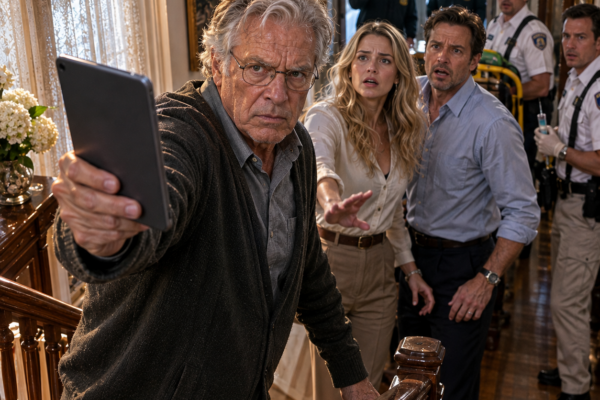
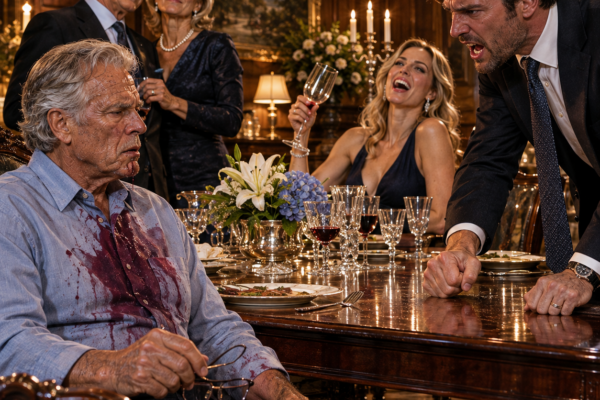
Part 4: My Oldest Son Called at Midnight — He Works for the FBI — “Hide in the Attic. Right Now.”
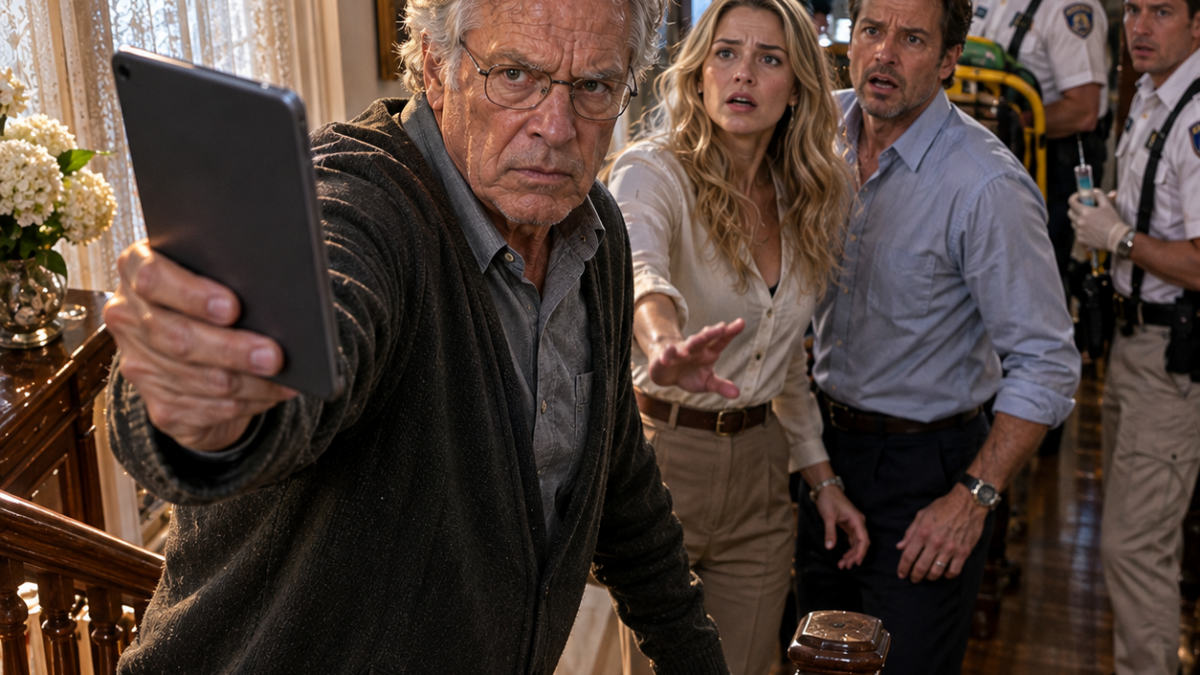
Thats federal fraud.
Russos lawyer arrived shortly after. But by then the paper trail was already overwhelming.
The investigation spread quickly. Richard Crane, the attorney who drafted the fraudulent power of attorney documents, was arrested at his downtown firm.
He claimed he had simply followed client instructions. The FBI uncovered encrypted emails tying him directly to Russo and Evergreens financial channels.
Victor Ashford, the Manhattan art dealer prepared to liquidate my collection, was detained at his gallery. A search warrant revealed a ledger spanning two decades of stolen and fraudulently acquired artwork.
The conspiracy was not a side hustle.
It was an enterprise.
Six primary defendants.
50 confirmed victims. $47 million siphoned from the elderly and vulnerable.
Evergreen Behavioral Center had been a facade polished brochures concealing a machine designed to strip dignity, autonomy, and wealth. Ryan asked me to provide a full deposition.
I spent two long days inside a federal building recounting every detail.
The hidden cameras. The pills.
The forged documents. The bribe to Russo.
The recordings from Helens portrait.
I handed over every file I had preserved in that attic studio.
This is one of the most comprehensive victim testimonies Ive ever seen.
Ryan told me. Its going to anchor the prosecution.
But I was not alone.
Robert Klein drove 3 hours to meet me at a quiet cafe near my house. He was tall, silver-haired, carrying grief like a permanent shadow.
What you did. he said, gripping my hand firmly.
You saved others. I wish I could have saved your mother.
I replied.
His eyes filled, but did not spill.
You gave her justice.
he said.
That matters. Margaret Lawson also agreed to testify.
I met her at a community center where she now lived in a modest apartment. She leaned on a walker, but her eyes were fierce.
They took everything.
she said.
But they didnt take my voice.
I squeezed her hand.
Well make sure its heard. Federal indictments followed swiftly.
Dr.Russo, Richard Crane, Victor Ashford. Nathaniel Holloways outstanding Nevada warrant was elevated into federal charges including conspiracy and financial exploitation.
Cameron and Claire faced counts of conspiracy fraud, elder abuse, and attempted kidnapping.
The US Attorneys Office pursued maximum sentencing.
They want precedent. Ryan told me.
A clear message. Evergreen was shut down permanently.
Federal authorities seized the property. Remaining patients were transferred to legitimate facilities under court supervision.
A restitution fund was established, though much of the stolen money had vanished into offshore networks.
Still, the machine had been dismantled. 3 months later, autumn settled over the city in crisp gold light.
Ryan and I stood outside the federal courthouse.
You ready?
he asked. I looked up at the granite facade, the American flag snapping sharply in the wind above it.
Yes. I said.
Its time.
Inside the courtroom was packed.
Reporters lined the back wall.
Robert Klein sat in the front row, hands clasped tightly.
Margaret Lawson sat beside her attorney, posture fragile but unbroken. And at the defense table sat Claire Cameron, Nathaniel Holloway, Dr.Russo, Richard Crane, and Victor Ashford, each flanked by federal Not powerful.
Not untouchable.
Just defendants.
Today was sentencing.
When the judge entered the room, fell silent. Victim statements were read first.
Robert spoke of his mothers final months, confused, sedated, robbed of clarity and dignity.
Margaret spoke of signing papers she could not read, of losing her home, of waking each night to memories of locked doors. Then it was my turn.
I stood slowly and approached the podium.
I did not look at Nathaniel first.
I looked at Claire. For a moment I saw not the architect of my near destruction, but the little girl in my studio asking why broken things deserve second chances.
Then the image dissolved.
I was almost declared insane. I began evenly.
Not because I was ill, but because I was profitable.
The courtroom remained still.
You drugged me.
I said, eyes shifting across the table. You isolated me.
You planned to strip away everything I built.
And you believed I would never fight back.
I let the silence stretch. You underestimated me.
I turned toward Claire.
You were my daughter.
I said quietly. I would have helped you if you had asked.
Her shoulders trembled.
But you chose theft over trust.
The judge later delivered sentence. Decades for Russo.
Decades for Nathaniel.
Substantial prison terms for Crane and Ashford. Cameron received less for cooperation.
Claires sentence landed somewhere between punishment and tragedy. As the marshals led them away, Claire looked back once.
I did not wave.
Outside the courthouse reporters gathered.
Ryan stayed at my side.
Justice.
someone called out.
Do you feel justice was served? I thought for a moment.
Yes.
I said. But justice doesnt undo damage.
It prevents the next one.
The system that preyed on the elderly had been exposed.
But vigilance would always be necessary.
I walked down the courthouse steps beside my son.
Autumn air cool against my face.
I had nearly lost everything. Instead, I had gained clarity.
And today I would face Claire one last time. Not as a victim, but as a man who survived.
Federal courtroom. Judge Patricia Coleman presiding.
It was the moment I had both dreaded and waited for.
The gallery was full long before the proceedings began. I sat in the front row beside Ryan, his hand steady on my shoulder.
To my left sat Katherine Hayes, composed and resolute.
Behind us were Robert Klein, Margaret Lawson in her wheelchair, and dozens of other victims and family members. People whose lives had been fractured by the machinery we had exposed.
At the defense table sat all six defendants, Claire, Cameron, Nathaniel Holloway, Dr.Gerald Russo, Richard Crane, Victor Ashford.
They had all entered guilty pleas.
The evidence had left them no room to maneuver.
Today was sentencing.
Judge Patricia Coleman, silver-haired and sharp-eyed, surveyed the courtroom with controlled gravity. We will now hear victim impact statements, she said.
Margaret Lawson was first.
A bailiff wheeled her forward.
Though her body appeared fragile, her voice did not waver. My name is Margaret Lawson.
I am 71 years old. Four months at Evergreen Behavioral Center cost me $1.
8 million, and my dignity.
Her hands trembled slightly on the arms of her chair. I wake up some nights convinced Im still there, drugged, restrained, confused.
These people stole my life. They deserve no mercy.
She was wheeled back to her seat in silence, so heavy it seemed to press on the walls. Robert Klein stood next.
His grief had aged him, but it had not broken him. My mother died at Evergreen, he said.
She died believing she had lost her mind, but she hadnt. Her clarity was stolen from her.
He turned and looked directly at Dr.Russo.
Mister, Shaw fought back.
My mother couldnt. So I ask this court to remember her and the ones who never made it out.
Katherine Hayes was third.
She stood straight, shoulders squared.
I watched my sister die in a facility just like Evergreen, she said.
Elder abuse thrives in silence behind locked doors under the guise of protection, but abuse is not a private matter.
It is a crime, and it must be punished as one.
Then my name was called. I rose slowly.
My legs felt heavier than they had in months, but I walked to the podium with purpose.
I looked first at Claire. She would not meet my eyes.
Your honor, I begin my name is Henry Shaw. I am 67 years old, not senile, not incompetent, not incapable, just 67.
A quiet ripple moved through the room. For 42 years I restored damaged paintings.
I believed that anything broken could be repaired, that if you worked carefully enough, patiently enough, you could bring beauty back from ruin.
I paused. But Ive learned something difficult.
You cannot restore someone who does not want to be restored. I turned toward Claire again.
My daughter orchestrated a plan to drug me, falsify medical records, and imprison me in a psychiatric facility.
She weaponized my grief over my late wife.
She used my love as leverage. My voice steadied further.
She did not simply steal money.
She attempted to steal my identity, my autonomy, my sanity. I let the words settle.
But this case is not just about me. I gestured gently toward Margaret and Robert.
It is about every person who entered Evergreen trusting it to provide care and left broken or not at all. It is about a system that treated older Americans as expendable.
I straightened. We are not expendable.
We are not burdens. We are not accounts to be emptied.
We are people, and we deserve protection.
I looked at Judge Coleman.
I ask this court to send a clear message that elder abuse, whether by family or institution, will not be tolerated. I stepped back and returned to my seat.
Ryan squeezed my hand firmly.
Judge Coleman leaned forward.
In my decades on this bench, she said, I have seen many forms of greed. Few have matched the cruelty displayed in this case.
Her voice was precise, cutting.
You turned medical care into a business model for exploitation.
You corrupted professional trust, and you shattered families. She opened her sentencing file.
Dr.Gerald Russo, you violated your oath and engaged in systematic fraud.
I sentence you to 18 years in federal prison and permanent revocation of your medical license. Russos face lost all color.
Richard Crane, you facilitated fraudulent guardianships and forged documents. 12 years in federal prison.
You are disbarred.
Crane lowered his head.
Victor Ashford, 10 years for conspiracy and trafficking in stolen property. Ashford stared straight ahead.
Cameron Drake, you participated in a scheme to drug and defraud your father-in-law. 15 years in federal prison.
Cameron closed his eyes. Nathaniel Holloway, the courtroom seemed to tighten.
You have a documented pattern of exploiting the elderly.
You conspired to defraud Mr.Shaw and discussed eliminating a co-conspirator. 22 years in federal prison.
Nathaniels jaw clenched, but he remained silent.
Then Judge Coleman turned her attention to Claire. Claire Shaw, the room felt still.
You were not coerced. You were not manipulated.
Evidence shows you initiated this conspiracy. You betrayed your father, the man who raised you and trusted you.
You exploited his grief and sought to imprison him for profit.
Claires shoulders began to shake. The You have shown no meaningful remorse.
The judges voice did not soften.
I sentence you to 24 years in federal prison. A broken sound escaped Claires throat.
No, please.
Judge Coleman continued.
All assets tied to this conspiracy are ordered seized and liquidated for restitution to victims.
Evergreen Behavioral Center is permanently closed.
Its remaining assets will be distributed accordingly.
The gavel struck. It was done.
Claire turned toward me, tears streaming freely now.
Dad, Im sorry. Please.
I held her gaze briefly. There was nothing left to say.
The marshals began escorting each defendant from the courtroom. Claire was last.
At the doorway she paused, looking back one final time. Dad, please.
I have nothing left to say, I told her quietly.
Her face crumpled.
The door closed behind her. Ryan wrapped his arm around my shoulders.
Lets go home, he said. Outside the autumn air was crisp and bright.
Reporters called out questions, but I did not stop.
Robert Klein shook my hand firmly. You gave them justice, he said.
Margaret Lawson squeezed my arm with surprising strength. Katherine walked beside me toward Ryans car.
Justice had been delivered, the conspiracy dismantled, the predators sentenced.
But as I settled into the passenger seat and watched the courthouse shrink in the rearview mirror, a deeper truth settled inside me. The life I had nearly lost, the quiet mornings, the attic studio, the simple dignity of autonomy, had been restored.
Not because the damage never happened, but because I fought. Now at 67, my life was not ending.
It was beginning again. The house on Hillcrest carried too many memories.
Three weeks after the sentencing, I walked through its empty rooms for the last time.
The police had cleared out Claire and Camerons belongings months earlier.
The furniture was gone, the closets bare, the walls stripped of photographs. Only echoes remained.
Helens laughter drifting through the kitchen, Claires small footsteps racing up the staircase, the quiet hum of the life we once believed was unbreakable. And beneath it all, the weight of betrayal pressed against the walls like dampness that would never quite dry.
I stood in the center of the living room and let the silence settle. I couldnt heal here.
A young couple bought the house.
They arrived one afternoon with two small children and kind of hopeful energy I remembered from years ago.
The husband measured windows while the little boy ran circles across the hardwood floor.
The wife lingered in the living room, sunlight catching in her hair. This house has such character, she said, smiling at the crown molding and wide archways.
It was my wifes dream home, I told her gently.
Take good care of it.
She promised she would. Before I handed over the keys, I removed the last piece of the past that belonged to me.
I climbed a small ladder and carefully lifted Helens portrait from its hook.
With steady hands, I unscrewed the tiny camera hidden behind her painted left eye.
The device that had recorded betrayal, exposed corruption, and ultimately saved my life.
I held the camera in my palm for a moment.
It had once been my lifeline. Now it was simply a reminder.
I no longer needed it. But I kept the painting.
Ryan helped me move into a smaller two-bedroom apartment closer to his home. It wasnt grand, but it was filled with light.
One bedroom became my studio, brighter than the attic had ever been, with tall windows that flooded the room each morning. Helens portrait hung in the living room once more, watching over the space, not as surveillance, but as memory.
Robert Klein visited about a month later.
We sat at my small kitchen table, coffee steaming between us.
He looked different, lighter, as though a weight he had carried for years had finally shifted. Because of you, he said, gripping his mug, my mothers estate is being partially restored.
Not everything, but enough to matter. I nodded.
I wish it had happened sooner. So do I, he said quietly.
Then he leaned forward. Im starting a foundation in her name for victims of elder abuse, legal aid, financial recovery, advocacy.
I want to help others before its too late. He met my eyes.
Will you join the board? A warm spread through my chest, slow and steady.
It would be an honor, I said. Margaret Lawson sent me a card soon after.
You gave me back my life, it read.
Im 71, not done yet.
Time to live again. Evergreen Behavioral Center was demolished within months.
Federal authorities seized the property.
The remaining patients, 28 of them, were transferred to legitimate care facilities. Many freed from the heavy sedatives regained clarity with startling speed.
Families wept as parents and grandparents returned to themselves.
The land was sold, and the proceeds were directed into a restitution fund. The machine that had devoured dignity for profit was gone.
In In place, something better began to grow. I found a new rhythm to my days.
I volunteered at the local community center teaching art restoration workshops for seniors. I offered free restoration services to families who couldnt afford them, especially those rebuilding after financial or emotional trauma.
I also began speaking publicly town halls, senior centers, advocacy panels.
Youre never too old to fight back. I told them.
And I meant every word. I spent more time with Ryans children, Emma.
My 9-year-old granddaughter loved to sit beside me in the studio. One afternoon, she watched intently as I worked on a cracked landscape painting.
Grandpa, she asked, why do you fix old paintings? I set down my brush and considered her question.
Because broken things still have value, I said. Sometimes they just need patience and someone who cares enough to do the work.
She thought about that. Like people?
she asked. Yes, I said softly.
Like people.
A year after the trial, December 25, a postcard arrived. Ryan had stopped by with the mail.
I was alone in my studio when I saw the return address, Federal Correctional Institution, Danbury, from Claire. I held the postcard for a long time before turning it over.
Dad, it began, I know you may not read this, but I need to say it.
Im sorry.
I was greedy, selfish, and cruel.
Prison gives you time, too much time, to think about what you destroyed. I dont expect forgiveness.
I dont deserve it, but I remember everything you taught me about second chances, about restoring broken things. Im trying to fix myself.
It may take 24 years. It may take a lifetime, but Im trying.
I love you. I always loved you.
I just forgot how to show it. I read it once, then again, then a third time.
Part of me wanted to tear it in half, to erase the reminder, to protect myself from reopening wounds that had barely begun to scar.
But another part, the father who had once swung her around the living room, who had guided her small hands across a paintbrush, felt something else.
Not forgiveness, not yet, but recognition.
She was trying. For now, that would have to be enough.
I did not reply.
Instead, I placed the postcard inside a small wooden box.
In it were childhood photographs of Claire, drawings she had made when she was little, crayon hearts and stick figures labeled dad. I closed the lid gently.
I am not ready to forgive, I told myself. But I am not ready to erase her entirely, either.
Time will decide the rest. Over the next year, life unfolded in ways I hadnt expected.
I testified in three additional elder abuse cases. The foundation Robert and I helped establish assisted 15 families with legal resources and emergency financial aid.
Margaret and I met for coffee weekly, sharing stories and laughter that felt hard-earned. I restored 23 paintings that year, all donated or belonging to families who had endured loss.
My relationship with Ryan deepened in ways I never imagined possible.
We spoke openly now, without hesitation.
My grandchildren filled my apartment with noise and questions and warmth.
One evening, Ryan arrived with Emma and her younger brother. Grandpa, Emma called, bursting into the studio.
I wrote an essay about you. About me?
I laughed.
What did you say? She handed me a folded paper.
Its about courage, she explained. My teacher said courage isnt not being afraid.
Its being afraid and doing the right thing anyway.
I said thats what you did.
My throat tightened unexpectedly. Your teacher is very wise, I told her.
Ryan rested a hand on my shoulder.
You okay, Dad?
I nodded, emotion settling into something steady and clear.
Im more than okay, I said.
For the first time in a long while, Im truly happy.
Later that night, after the children had gone home and the apartment was quiet again, I stood alone in my studio.
Sunlight filtered through the window, warm against the floor. Helens portrait gazed at me with the same calm strength it always had.
I picked up my brush.
We made it through, I whispered softly.
Were still here.
I returned to the canvas before me and continued painting.
I am 68 years old now, not ancient, not fragile, not defined by what was nearly taken from me, just 68.
And I have learned this, broken things can heal, damaged art can be restored, trust may not return in the same form, but it can grow again in new soil. Time moves forward, and so do I.
If youve stayed with me until this moment, let me leave you with something that took me 68 years to truly understand. This family story began with love, trust, and shared memories.
But it unfolded into something darker, a painful lesson about family betrayal.
I learned that blood does not automatically guarantee loyalty.
Sometimes the deepest wounds come from the hands we once held.
Yet even in the face of family betrayal, you do not surrender. You do not shrink.
You do not quietly accept injustice. I survived because I refused to become a victim.
And I discovered something even more important, that revenge is not about rage.
It is not about destruction.
It is about justice.
It is about standing tall when the world expects you to bow your head. My dad revenge was not fueled by bitterness.
It was driven by protection. I fought not only for myself, but for 50 other families whose own family betrayal left them voiceless.
Looking back on this family story, I see my mistakes clearly.
I should have asked for help sooner.
I should have trusted Ryan earlier.
I should have spoken up the moment something felt wrong. If you take anything from this family story, let it be this, do not wait until you are cornered.