“Don’t Ride!” Homeless Girl Warned Hells Angels — Her Warning Saved Every Life
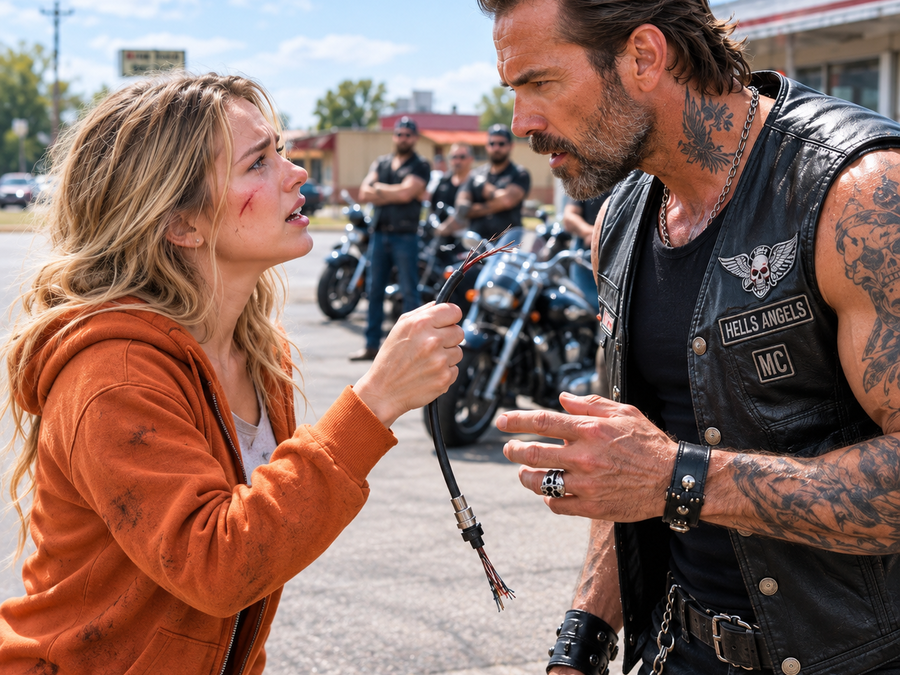
“Don’t Ride!”Homeless Girl Warned Hells Angels — Her Warning Saved Every Life
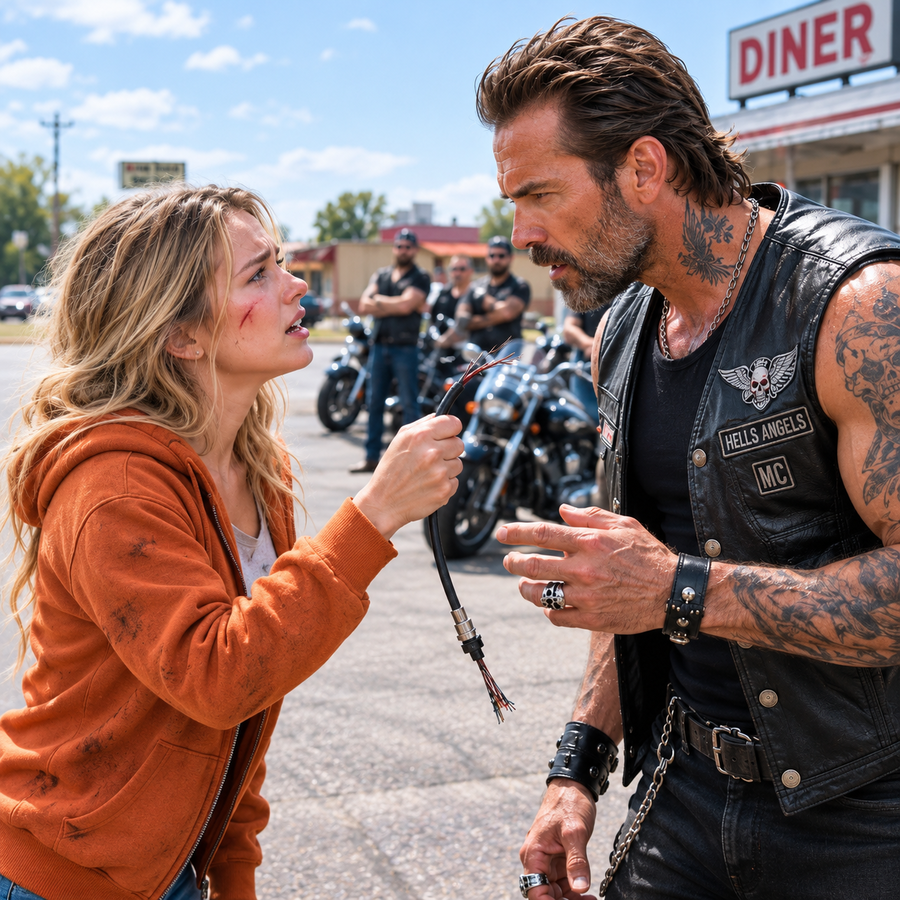
Ride. Two words, spoken by a woman nobody wanted to hear.
A woman the world had already decided didn’t matter.
There she walked miles through the cold Montana morning to deliver those words to 40 men who had every reason to dismiss her and almost did. What happened next would change everything, not just for the riders.
Her.
For every single person who thought they already knew the difference between someone worth listening to and someone worth ignoring, you’re wrong.
Air and Clearwater Flats, Montana had that particular kind of cold that settles into your joints and doesn’t let go.
And that reminds older men of injuries they thought they’d forgotten.
But it was the third Saturday of September.
High above the ridge was doing that thing it only does in the mountain west, turning a of pale gold that makes even people who’ve lived there their whole lives stop what they’re doing and look up for just a second.
Nobody looked up that morning. They were too busy with the bikes.
The motorcycle stood in the long gravel parking lot beside the Veterans of Foreign Wars Hall on Route 9. Three Hells Angels riders moved among them with the practiced comfortable confidence of men who had done this exact thing more times than they could count.
Look, checking tire pressure, running hands along exhaust pipes still cold from the night, putting on riding gloves, exchanging the kind of short quiet words that men who trust each other don’t need to decorate.
This was the annual Clearwater Memorial Ride, a tradition the Montana chapter had held for 11 consecutive years.
Robert, they rode for brothers who weren’t riding anymore, lost accidents, to illness, to the ordinary violence of time.
It wasn’t a rowdy event.
It wasn’t a spectacle.
It was private and serious and meaningful in the way that only rituals built from grief can be. Carter stood near the front of the lot beside his own machine, a 1998 Harley-Davidson Road King he had rebuilt from near wreckage 12 years ago with his own hands.
It was 56 years old, built wide through the chest and shoulders the way mechanics get built when they spend three decades using their bodies as tools.
His hair had gone fully gray in the last two years, nobody who knew him well would have called it aging. It just looked like weathering.
Like iron left in the rain long enough to earn its color, honestly.
Called steel since he was 22, not because of the motorcycles, though that’s what most people assumed, because of the particular quality of patience he carried.
By the way, he would listen to an engine, really listen, the way a doctor listens to a heart before he ever touched a wrench.
His first mentor, an old Navajo mechanic named Hector who’d worked out of a shop in Billings, from once that a machine will always tell you what’s wrong with it if you know how to be quiet enough to hear it.
Daniel had spent 34 years learning how to be quiet.
He was running his hand along the rear brake cable of his Road King when he heard Bobby Sims, one of the chapter’s younger members, say something sharp from across the lot.
Hey lady, you can’t be back here.
Daniel didn’t look up right away.
Finished the motion, felt the tension in the line the way you’d feel a pulse, and then he straightened and turned.
She was already halfway across the lot.
He registered several things about her in the space of a single breath, the way you do when someone appears where they shouldn’t be and your brain starts taking inventory before you’ve consciously decided to pay attention.
Young, mid 20s maybe.
Small frame, but not fragile looking.
More like someone who had been reduced by circumstances rather than built slight by nature.
Blonde hair was long and tangled and had the particular dull quality of hair that hasn’t been properly washed in days.
She wore an oversized army surplus jacket, faded to a color that was neither green nor gray anymore. Over a thin dark hoodie, her jeans were worn pale at both knees.
Boots lace up work boots, the kind designed for actual work, had seen so many miles the leather had cracked cracked and been repaired and cracked again along the toe boxes.
None of that was what made Daniel pay attention. What made him pay attention was the way she moved.
Wasn’t wandering.
She wasn’t looking around the lot with the unfocused eyes of someone uncertain of where they were going.
She was moving with direction.
She walked straight past Bobby Sims like he wasn’t there.
Straight past two other riders who turned to watch her.
And she went directly to the nearest motorcycle, a big touring bike belonging to a rider called Hatch, and she crouched down beside it.
She was looking underneath it.
Lady.
Bobby’s voice had that edge it gets when he’s trying to sound authoritative and isn’t quite landing it.
Lady, I’m talking to you.
These are private bikes.
You need to step back.
She didn’t look at him.
She moved to the next motorcycle.
Looked down, looked, moved to the next one.
Bobby looked over at Daniel with an expression that said, Are you seeing this?
Daniel gave a small nod that meant, Keep watching. She worked her way along the row with an efficiency that was almost clinical.
Not frantic, not random.
She was checking something specific. And she knew exactly what she was looking for.
She got to the fourth bike in the row, a 2019 Road Glide belonging to Marcus Webb, one of the chapter’s oldest members, and she stopped.
And something changed in her posture. Her shoulders came up.
Her chin dropped.
She put one hand flat on the ground beside the bike and leaned in closer.
And for just a moment, she went completely still in a way that made the hair stand up on the back of Daniel’s neck without him fully understanding why.
And then she straightened and moved to the next bike.
By now, riders had stopped what they were doing and were watching her. He stepped directly into her path.
Okay, I need you to stop right now.
Riders, these bikes belong to people who know what they’re doing and you’re not supposed to be touching anything.
She looked up at him.
Eyes were blue pale, tired blue, the color of sky in winter, and they were focused and clear in a way that Bobby clearly hadn’t expected.
He took a small step back without seeming to realize he’d done it.
I’m not touching anything, she said.
Her voice was steady.
For what?
She turned away from him and moved to the next bike.
Bobby looked like he was about to grab her arm, and Daniel started walking.
Not fast, not with any urgency in his step because he’d learned over a long life that urgency rarely improves a situation.
He walked with intention, the kind that causes a small crowd to part without being asked. And he got to the woman about 8 seconds.
She was crouched beside a 2017 Street Glide when he stopped beside her.
Her he didn’t say anything for a moment, just watch what she was doing.
She was looking at the rear brake caliper.
She’d produced a small flashlight from somewhere inside her jacket, a cheap one that takes a single AA battery, and she was shining it carefully along the underside of the caliper mounting bracket.
What are you looking for? Daniel asked.
She turned the flashlight off and looked up at him.
She assessed him the way someone does when they’ve learned the hard way that the person asking a question might use the answer against them.
Are you in charge here? She asked.
Close enough.
She stood.
She was shorter than he’d realized 5’4 maybe 5’5 and she had to tilt her head back slightly to hold eye contact with him.
Did it without hesitation.
Don’t ride today, she said.
Heard landed in the lot like a stone dropped into still water. He heard the ripple of quiet moving outward from where they stood.
Felt the attention of 40 men shifting toward them.
I not, he asked. She took a breath.
He could see something happening behind her eyes, a calculation, a decision about how much to say and how to say it, internal negotiation that people who who’ve been dismissed too many times get very familiar with.
Someone was here last night, she said. At the storage lot on Pinecrest Road where these bikes were parked before this morning.
It was there.
I saw them. And what they were doing under the bikes.
She stopped. Another breath.
It wasn’t maintenance.
Bobby had come to stand a few feet behind Daniel.
He made a sound not quite a laugh, but in that neighborhood.
You were at the storage lot last night. Yes.
What were you doing at the storage lot?
There was only the briefest pause.
She said.
She said it flatly without shame.
Apology, the way someone says a true thing they’re tired of having used against them.
His expression did what some people’s faces do in that situation.
One that that wasn’t kind.
Daniel kept his eyes on her. Hey peep, he said.
She looked at him for a moment like she was still deciding whether he meant it.
There were two men, she said. They came after midnight, arrived in a dark blue pickup, no plates visible.
I was behind the storage units.
There’s a gap between the fence and the last unit.
In the light I was back there and they didn’t see me.
Tools, not just tools.
They had a specific kit I could tell by how they moved that they’d done this before.
They worked fast.
They knew exactly which bikes they were getting to.
Like they had a list. It took maybe 20 minutes for both of them.
And then they left. And you decided the best thing to do was come here.
And I tried to call 911 first, she said.
Moved through her voice, not anger exactly.
Tired and specific. The dispatcher told me I was describing a person in a parking lot with tools.
And that wasn’t an emergency.
I I went to the police station in Clearwater at 7:00 this morning. To an officer named she pressed her lips together for a second.
His name tag said Briggs.
He listened to me for about 4 minutes and then told me there was no evidence of any crime and he couldn’t dispatch anyone based on my word alone.
The lot was very quiet now.
I’ve been walking since 7:45, she said.
I knew this ride was happening because I heard you all talking about it 2 days ago at the VFW parking lot when the bikes were being loaded.
I figured if the police wouldn’t listen, she stopped herself.
I figured I had to come here directly.
Daniel studied her face.
Years of working with people, not just machines. The people who depended on machines, who trusted their lives to metal and rubber and hydraulic fluid.
He had become a good reader of fear.
He’d seen the performed kind the kind people put on to get something from you.
And he’d seen the real thing.
The kind that sits behind the eyes and makes a person’s hands very still.
Her hands were very still.
What’s your name?
He asked.
Emily, she said.
Emily Dawson. Emily.
He said it simply. Not cold.
Present.
I’m going to ask Rachel to come look at something with me.
I need you to stay right here. He turned and raised his voice across the lot.
Rachel Brooks was 41 years old and had been the chapter’s most reliable mechanical mind for 6 years.
She’d spent 8 years before that working fleet maintenance for a long haul trucking company out of Missoula.
She had close cropped dark hair and a deliberate way of moving that communicated the effort that she did not make mistakes.
She came across the lot with her eyebrows slightly raised.
Look at Marcus’s bike, Daniel said quietly.
The brake system, tell me what you see. Rachel looked at him, at Emily.
Then she went to the bike. The lot held its breath.
Rachel crouched beside the street glide.
She had her own light, a headlamp she wore around her neck rather than on her head. But of someone used to working in tight spaces.
She clicked it on and leaned in close. The silence stretched.
Rachel went very still in the same way Emily had gone still.
The same particular quality of motionlessness.
She leaned in closer.
She ran her finger along something very carefully and then she pulled her hand back and looked at her fingertip and rubbed her finger against her thumb.
Stood up slowly. She turned and looked at Daniel.
She didn’t say anything for a moment.
Then she said, There were the cause. Get everyone back from the bikes.
The next 10 minutes were the longest 10 minutes of the morning.
Rachel went through the bikes systematically, starting with the ones Emily had identified as concerning.
Their mechanics, Polly Garza, Kevin Tran, and an older rider named Stetson, who’d worked on engines since before some of the younger riders were born, joined her.
They watched.
He didn’t crowd them.
He stood far enough back that he wasn’t in their light, but in their way, and he watched.
Emily’s stood near the edge of the lot.
Nobody had told her to stay.
Nobody had told her to go.
She had simply remained. Her arms folded across her chest.
Her face turned toward the group of mechanics with an expression that was impossible to read from across the lot.
Nervous exactly.
Something more exhausted than nervous. Expression of someone who already knows the outcome and has already spent all their feelings about it, waiting for everyone else to catch up.
B. Sims was standing beside Daniel.
You really think she’s telling the truth?
Bobby said, voice low.
Rachel’s face told me everything I needed to know, Daniel said.
Rachel just said to get back from the bikes.
She didn’t say Bobby.
Daniel turned and looked at him. Ever hear Rachel use that tone of voice before?
Bobby was quiet.
I haven’t, Daniel said.
In six years. He looked back at the mechanics working.
30 feet away from them, Emily Dawson stood with her arms folded and her eyes on the ground, letting for a world that had spent a long time not listening to her to finally hear what she was saying. And then Rachel straightened from the third bike.
She pulled off her examination gloves. She looked across the lot directly at Daniel and she made a gesture small.
The kind of gesture that doesn’t need explanation if you’re paying the right kind of attention.
Daniel walked to her.
She waited until he was close enough to speak quietly.
Someone modified the brake line connectors, she said. Not all of them, but enough.
The modifications are subtle.
I mean really subtle.
The thing you’d miss on a casual pre-flight check.
They look intact. They look functional.
You’d ride out of here and your brakes would feel perfectly fine all the way up until you hit a sustained descent.
Then the pressure drops, gradually at first, then faster.
You’d feel it happening.
The time you felt it on a mountain grade. She stopped.
How many bikes?
Daniel said.
I found it on five so far.
Haven’t finished checking.
Five. At minimum.
Five.
Daniel stood with that for a moment.
He turned and looked across the lot at Emily Dawson. She was looking back at him.
She’d been watching the whole time.
She would have known from Rachel’s body language, from the way the mechanics had clustered and gone quiet, what she’d said was being confirmed.
And yet there was something about her expression that hadn’t shifted, become vindicated or relieved or told you so.
She just looked tired, very, very tired, the kind of tired that has nothing to do with sleep. Walk back across the lot.
She watched him come. Please said when he got close.
I know, she said quietly. I need you to tell me everything you saw.
The summary the whole thing from the beginning.
She looked at him for a long moment. She said, but can I sit down first?
It was the first time since she’d walked into the lot that she’d asked for anything.
Pointed the steps of the VFW hall. Come on, he said.
They sat on the concrete step. And she talked and he listened.
He was very good at listening.
From the beginning, not from the night before, from how she’d come to be sleeping behind the storage units on Pinecrest Road in the first place.
He’d asked for the whole thing and she understood instinctively that he meant it, that he was the kind of man who understood that context isn’t a digression.
Next is the thing itself. She told him about her father.
He’d been a mechanic his whole life, ran a shop in Bozeman for 22 years.
Was called Dawson’s, which is not a creative name.
She acknowledged, but it was honest. Her father was not a creative man.
He was an honest one.
He brought her into the shop when she was seven years old, Colorado, young enough that the smell of engine oil became one of her foundational scents, the way the smell of a specific dish becomes tied to a memory of the person who cooked it.
Her watch.
Then he let her help. Then by the time she was 12, he was asking her opinion on problems he was working through because he needed her to solve them, but because he believed that saying a problem out loud to someone who might actually understand it was one of the best diagnostic tools available.
========== PART 2 ==========
She was 16 when she diagnosed by ear alone a failing valve in a customer’s engine that two other mechanics had missed.
Had gone to automotive school.
She had needed to.
Her job at Briggs and Sons Auto and Motorcycle Repair at 20 and she was good at it and things were fine. And then two years later her father had a stroke.
Not fatal, not immediately, but severe enough to take him out of the world he knew. He lived another eight months in a care facility and she visited every day.
Debt accumulated debt accumulated with the particular merciless speed that medical debt accumulates when you’re young and don’t yet understand what you should have done differently.
She didn’t tell this part quickly.
She didn’t rush through it, but she told it simply without asking for anything.
No sympathy was requested.
She was providing information.
After her father died, she spent four months trying to keep everything together. At her job she kept her apartment.
She kept making the minimum payments on the debt that kept growing faster than the payments could address it. She ate less.
She worked more.
She got a second job three nights a week at a bar called Grizzly’s on the edge of town.
Enough. It is almost never enough.
The apartment went first.
She moved into a room in a shared house, four people to a kitchen, a bathroom per floor, the kind of arrangement that works until one person’s circumstances destabilize and the arrangement can’t hold the weight for two months.
Then the woman who organized the household moved out.
Understanding that had kept it functional went with her. Within three weeks Emily was back in the lot looking for somewhere to sleep.
She said this the way she’d said everything else.
Not without feeling there was something in her voice that had weight, had texture, but without dramatizing it.
She was not performing her own history. She was handing it to him piece by piece like evidence.
Anyone?
Daniel asked.
Not challenging. Merely asking.
I have a cousin in Billings, she said.
Not close. I called her once.
She sent me $200. Again.
Why not? She turned and looked at him.
Have you ever needed to to borrow money from who loves you but has almost no margin? She asked.
From an institution? From a person?
A real person with their own rent and their own kids?
He understood what she was asking. He let the question be its own answer.
I made it work, she said.
About eight months I made it work. There are systems, if you learn them, shelters.
But shelters have rules and capacity issues and sometimes those rules make things harder, easier.
There are people who will pay you for day labor and not ask questions.
There are gaps between buildings that that are sheltered from the wind. Learn.
You were still working on vehicles?
When I could.
Walk into a shop and tell them I could do anything they had and I’d do it for 60% of what they’d pay a regular employee.
Some places turn me down, insurance issues, liability. Some places said yes.
You work with what says yes.
She had been in the Clearwater area for three weeks when she found the gap behind the storage units on Pinecrest Road.
It was out of the wind.
There was a dumpster from a nearby restaurant that was reliably stocked on Tuesdays and Thursdays.
These are the metrics by which a temporary shelter is assessed when you are a person without options. She had watched the motorcycles being unloaded into the storage lot two days ago.
She recognized the bikes, the quality of them, the care that had clearly been taken with them, and she recognized the patches on the riding gear of the men moving them.
She knew what the Hells Angels were in the broad strokes way that most people know.
She didn’t feel threatened by the proximity.
She felt in a pragmatic way that men who valued their machines as highly as these men clearly did were to create disorder around them. But people who care about beautiful things tend to extend that care outward.
She had heard them talking about the ride, the route, timing, the destination.
She hadn’t thought much about it.
Midnight came. Tell me exactly what you saw, Daniel said.
As exact as you can get. Emily had been keeping her hands folded in her lap.
She unfolded them and held them in front of her, not doing anything with them, just having them available.
Some people hold their hands when they’re thinking very carefully about precision.
I heard the truck before I saw it, she said.
I wasn’t asleep.
I’d been having trouble.
It was cold, colder than the previous nights, and I was lying there listening to the road sounds, which is something you do when you’re outside.
You track the sounds. Coming slowly at midnight into a storage facility is a different sound than a vehicle using the road.
Even without the headlights on, that I noticed. The engine was running when they got out, and they left it running the whole time they were there.
Tells you something.
Quick in, quick out, Daniel said.
They didn’t want to restart the engine, didn’t want the noise of that.
They kept it running, which means they were confident they wouldn’t be heard.
They had somewhere specific to go after and they needed to move fast.
How close were you?
Maybe 40 ft.
I was in there’s a chain link fence along the back of the storage units.
I was between the fence and the rear wall of the last unit.
From that angle, if you know what you’re looking at, I’m half of anyone working on the far side of the lot.
Could you see their faces?
Not clearly.
They were wearing dark clothes. One of them was tall, probably 6 1, 6 2, and the other was shorter, stockier.
The tall one was directing. He had a phone not calling on it, using it as a reference, like he was looking at something on the screen and then checking the bikes.
List or a diagram.
You said they had tools, a specific kit, canvas roll-up, the kind with individual pockets for each tool. Organized.
They weren’t improvising what they were using.
They knew exactly what they needed. There.
She paused.
I’ve carried a kit like that.
I was doing repair work out of my bag.
You develop it over time based on what you actually use versus what you think you’ll use.
What they had was develop, refined.
You don’t make a kit like that unless you’ve done this kind of work many times.
Daniel looked at her. You knew what they were doing, he said.
It wasn’t a question.
There.
I knew it was wrong, she said.
I knew it was the wrong kind of work for the wrong time of night.
I couldn’t see exactly what they were accessing from my angle.
I know how long it takes to do legitimate maintenance on a brake system.
Does and I know what a person looks like when they’re doing it correctly versus when they’re She stopped.
When they’re doing something else, how long were they there?
19 minutes.
He looked at her.
I had nothing else to do, she said simply.
19 minutes, two men, a specific kit, a phone with a diagram or a list.
Takes chosen deliberately, not at random.
In, out, engine running, lights off, gone.
Why did you wait until morning to come here? He asked.
Accusatory, genuinely curious.
Something moved across her face. Cuz I was deciding, she said.
Deciding what?
She turned and looked at the parking lot.
Bikes.
The riders who were still standing near them, talking in low voices.
The mechanics still working.
Or it would do any good, she said.
The honesty of it sat between them.
I’ve tried to report things before, she said.
I know how I look.
Know what people see when they see me.
And I know I know how many times a person in my situation can try to tell someone something true before the effort required to try again exceeds the likelihood of being believed.
She paused.
I did the math on whether coming here was worth it.
Several times. Walking through the dark.
What made you decide yes?
She was quiet for a moment.
About what happens on a mountain grade, she said.
The brakes give out.
She looked at him. I thought about that when I came here.
Rachel appeared at the edge of the steps. She looked up.
Seven bikes, Rachel said.
Her voice was very controlled. Seven, confirmed.
Possibly an eighth.
I want to look at it again before I say for certain.
Daniel stood up. Behind Rachel, across the lot, he could see the riders standing in clusters.
Their mood had shifted. He could read group mood the way he could read engines by its particular sounds and the particular quality of its stillness.
Got the mood of 40 men preparing for a memorial ride.
Got the mood of 40 men understanding what they’d nearly walked into.
He looked down at Emily. She was looking at Rachel.
Emily said quietly.
Not to anyone in particular. Absorbing the number.
At minimum, Rachel said.
She was looking at Emily now. Her expression was complex, the particular complexity of a woman who is very competent, looking at another woman who is also very competent.
Each of them recalibrating something. The modifications are clean.
Did this new brake systems.
They weren’t guessing.
Emily nodded slowly. No, she said.
They weren’t.
Daniel looked at his group across the lot.
40 men who had loaded up that morning with memorial patches on their jackets and stories of brothers on their minds and a long mountain road ahead of them.
There’s 40 men who had done their preflight checks careful.
Let us checks and found nothing because the people who had done this had specifically designed the damage to survive a careful practice check.
He thought about the grade at mile marker 31 on the northern route.
The long descent that dropped 800 ft over 2 where the road curved twice before opening out onto the valley floor.
Every foot of that descent, he had ridden it 11 times.
About what seven, possibly eight bikes with compromised brake systems would have looked like on that descent. He he was a man who had spent 34 years being very quiet and very still before he formed conclusions.
He did not make decisions from anger.
He did not speak from his chest, but he stood on those VFW steps for 15 seconds without saying anything. And in those 15 seconds, a great deal happened in the silence behind his eyes.
Then he turned to Rachel.
Get Hatch on the phone.
We need documentation photos of every modification before anything is touched.
Him to call Martinson. He turned to Emily.
I need to know if you’d be willing to talk to a detective.
Briggs, someone I know personally, a man named Martinson, a county investigator who’s worked with our chapter before.
He’s not going to look at you the way Briggs looked at you.
Emily looked at him for a long moment. Yes, she said.
I’ll talk to him.
Good. He looked at Rachel.
Get Martinson’s number from my phone.
And he paused. He reached into the inside pocket of his jacket and produced a folded $20 bill.
Out to Emily.
She looked at it.
There’s a diner across the street, he said.
Been since 6:00. Get something hot.
I need you here when Martinson arrives. I need you thinking clearly.
And that means I I need you to have eaten something.
She looked at the 20.
At him.
I’m not a charity case, she said.
Her voice was quiet. Angry, just stating a fact.
I know, he said.
This is payment for information that just saved 40 lives.
There’s a difference.
She looked at the 20 for another moment.
Then she took it.
I’ll be back in 20 minutes, she said.
She stood from the steps. She folded the 20 into her jacket pocket.
Across the gravel lot and across the road to the on the other side. Daniel watched her go.
Bobby Sims appeared beside him. You believe her, Bobby said.
It wasn’t quite a question.
Rachel confirmed it, Daniel said before that, before Rachel. You believed her before that.
Daniel was quiet for a moment, watching the diner door close behind Emily Dawson. She walked miles in the cold to warn strangers who had every reason to dismiss her, he said.
the police first.
She didn’t come here looking for money or attention.
Touch down next to bikes in a parking lot full of men who were already watching her with suspicion.
Looked at every single one of them and expression on her face was not the expression of someone performing concern.
He paused.
The expression on her face was the expression of someone who has already seen what happens when the brakes give out.
Bobby was quiet. What do you mean by that?
He said.
Daniel turned and looked at him.
I mean, I think she’s seen this before, he said.
Not this specific situation. Something like it.
I think she came here today carrying more than just what she saw last night.
He looked back toward the diner.
I think she came here carrying something she’s been trying to put down for a while.
Bobby didn’t say anything.
Across the road, through the diner window, Daniel could just make out the shape of Emily Dawson sitting at the counter. She had both hands wrapped around a coffee mug.
She was not looking out the window. She was looking at her hands.
She was very still.
The kind of still that is the opposite of empty. Still that is full.
Rachel came back to Daniel with her phone in her hand and an expression he recognized, the one she wore when she’d found something she wished she hadn’t.
Dawson’s on his way, she said.
Should be 40 minutes. The eighth bike confirmed.
Brakes total. Both rear brake systems and in three cases the front as well, both front and rear modified on three specific bikes.
Focuses, hatches, and yours. Daniel absorbed that without expression.
Bike, front and rear. Whoever did this, Rachel said quietly.
Knew which bikes they wanted to take out and they knew which riders they wanted to take with them.
The specificity of that landed differently than the general fact of the sabotage. There is a difference between someone who damages multiple bikes with broad intent and someone who knows whose bike is whose.
One who knows that takes time to account for the fact that certain riders on certain bikes will be at the front of the formation on the descent. One who knows the route well enough to know which bikes need to be fully compromised rather than partially.
It doesn’t random, Daniel said.
No, Rachel said.
It’s not, which means someone knew we’d be here.
Coming, the storage location, the route, someone with access to specific information. Rachel said nothing.
She let him think. How would someone know which bikes belong to which riders?
He said.
Her, if they’d been watching us long enough, Rachel said.
Or if someone told them. They looked at each other.
30 years of group rides, Daniel Carter had never once suspected that someone who rode with him might be something other than what they appeared to be. He had never needed to.
The Hells Angels had their conflicts, politics, their history.
Nobody who knew anything pretended otherwise. Internal bond of the chapter, the specific human architecture of trust that 40 years of shared road builds, he had never had reason to question that.
He questioned it now.
Not in a way that named anyone, in a way that condemned, but in the careful, uncomfortable way that becomes necessary when the facts demand it.
Don’t say anything about that part, he said quietly.
Anyone?
Not yet.
Understood, Rachel said.
When Martinson gets here, I’ll brief him separately.
Okay.
The riders tell them the ride is postponed due to a mechanical issue discovered during pre-flight.
That’s true.
It doesn’t raise any specific alarm inside the group before we know more.
Rachel nodded. Then paused.
Daniel, yeah.
That girl, Rachel said. And who walked in here this morning?
Yeah. Rachel looked at the diner across the road.
Which bikes?
She said.
She walked down the row and she stopped at specific ones.
She knew from what she saw from 40 ft away midnight in the dark, she knew which bikes they’d worked on.
Daniel looked at her.
Notice that too, he said.
That’s not a thing most people could do, Rachel said.
Mechanics couldn’t do that.
From that angle, that distance, at midnight, that’s a significant thing.
Yes, Daniel said. Rachel held his gaze for a moment.
Then she nodded and walked back toward the lot.
Turned and looked at the diner again.
Emily Dawson was still at the counter.
She’d been joined by one of the counter waitresses, appeared to be refilling her mug.
Emily was nodding at something the waitress said. She still had both hands around the mug.
He thought about what she had said on the steps, about what happens on a mountain grade when the brakes give out. About that, and I came here.
There was a story in that sentence that she hadn’t told him yet.
He understood that. He also understood that it was her story and that she would tell it when she was ready and that the correct thing to do was to be present for it when that moment came, rather than reaching for it before she offered it.
That was what Hector had taught him all those years ago.
A machine will always tell you what’s wrong with it if you know how to be quiet enough to hear it.
He stood on the steps of the VFW Hall and looked at the diner and listened to the sounds of 40 riders behind him, confused, concerned, recalibrating, and he let the morning settle around him with everything it had brought.
Her bikes, eight bikes, a 19-minute window, this tool roll developed and refined, a phone with a diagram.
========== PART 3 ==========
Two men in a dark truck with no visible plates and one woman with tired blue eyes and old boots and a small cheap flashlight in the pocket of a faded jacket.
Done the math in the dark on whether coming here was worth it and had decided yes.
He thought about the grade at mile marker 31.
About 40 men. He thought about the specific weight of being the person who keeps trying to tell people a true thing that nobody will believe.
Heavy that gets. How long a person can carry it before it breaks something in them.
Dawson had carried it long enough that it had worn through the soles of her boots and taken the shine out of her hair and left a particular quality of stillness in her hands that was the physical residue of a person who has learned to wait without expectation. She had still come.
She had done the math and she had still come.
He turned back to the lot. There was a great deal of work still to do.
And 40 men who were going to understand something today that no annual ride had ever taught them.
Most important thing you can do sometimes high enough to hear what’s coming before it’s too late to stop it.
The cot up on the corners.
The diner across the street was called Millie’s and it smelled like coffee and baked the particular warmth of a place that had been feeding people through cold Montana mornings for longer than most of the buildings around it had existed.
And sat at the counter and held her mug with both hands and didn’t think about anything for exactly four minutes.
That was all she allowed herself. Four minutes of not thinking.
Of just feeling the heat move from the ceramic through her palms and up into her wrists.
Of listening to the ordinary sounds of a diner, the cook calling something through the window.
Above the door, low murmur of two men in a booth talking about something that had nothing to do with brake lines or mountain grades or the specific calculation of a person does in the dark when they’re deciding whether hope is still worth the effort for minutes.
Then she set the mug
down, straightened her spine, started thinking again because there was more she hadn’t told Daniel Carter yet, not because she’d been hiding it, because he hadn’t asked the right question and she’d learned slowly, expensively over a period of years that the right way to give someone information they’re not ready for is to wait until the shape of what they already know has prepared them to receive it.
He’d asked her what she saw.
He hadn’t yet asked her why she recognized it.
The waitress, her name tag said Donna, she was somewhere in her 60s with reading glasses pushed up on her head and the unhurried efficiency of someone who has done this job long enough that it no longer costs her any effort refilled Emily’s mug without being asked and set a plate of toast and scrambled eggs on the counter in front of her.
Implements of the house, Donna said, you looked like you needed something solid. Emily looked at the eggs.
I have money, she said. I know you do, honey.
Doesn’t change what I said.
Emily looked at Donna for a moment, looked back at her with the particular expression of a woman who has seen enough of the world to know when someone is deciding whether to accept kindness without it, meaning they owe something, has the patience to wait out that decision.
Thank you, Emily said. Eat, Donna said, and move back down the counter.
She ate quickly, the way people eat when they’ve learned not to take the presence of food for granted.
She drank two more cups of coffee and she looked out the window at the VFW parking lot across the road where she could see the cluster of riders standing and the mechanics moving among the bikes in the particular organized energy of a situation that is just shifted from routine into crisis.
She had 20 minutes before she needed to go back.
She used them to decide how much to say.
County investigator Pete Martinson arrived in an unmarked gray sedan at exactly 37 minutes after Rachel’s call.
There was a Daniel was standing at the edge of the parking lot when he pulled in and he walked to the car before Martinson had fully opened the door.
Martinson was 53 lean through the face and shoulders with the kind of tan that comes from spending time outdoors rather than pursuing it.
He and Daniel had worked together not on anything like this on smaller things the kind of friction between a motorcycle club’s presence in a in a community and a community’s various responses to that presence for eight years.
They’d built the kind of professional relationship that doesn’t require warm up or social lubrication.
They could start in the middle.
Talk to me, Martinson said. Run out eight bikes, Daniel said.
Brake system modifications roll enough to survive a standard pre-flight inspection designed to fail under sustained pressure which means they’d have held together for the first 30 minutes of the ride and let go on the descent at mile marker 31.
Martinson absorbed this without any visible reaction which was one of the things Daniel respected about him.
at depth not at surface.
Who found it? A witness.
She’s coming back from across the street.
Daniel paused.
She was sleeping behind the storage facility on Pine Crest Road where we had the bikes parked before this morning.
She saw two men working on the bikes after midnight. She went to police at 7:00 a.m.Briggs turned her away.
Then she walked here.
Martinson looked at him steadily. Briggs, he said.
Yeah. There was a quality to the way Martinson said the name that told Daniel he was filing it into a specific category.
He didn’t explain what that category was.
He didn’t need to.
Has she given you a description of the men?
One tall dark clothing, dark blue pickup, no visible plates. Arrived after midnight and without headlights.
Out in 19 minutes.
Them had a canvas toolkit, organized, not improvised.
They was using a phone to reference something.
She thinks a diagram or a list.
This She believes they’d done this type of work before based on the efficiency of their movement.
She knows brake systems.
Her father was a mechanic. Her she worked in auto and motorcycle repair for several years.
Rachel confirmed that what Emily described seeing is consistent with what Rachel found.
Martinson looked toward the diner.
What’s her name?
Emily Dawson.
And she’s willing to give a formal statement.
She said yes. Okay.
Martinson’s reached into his car and produced a notebook, actual paper, spiral bound, the kind that some investigators still prefer because screens have glare and batteries die.
Start with the bikes. I want to see the modifications is before anything is touched.
Rachel’s photographs are already done.
She can walk you through them.
Good. He paused.
You said eight bikes.
Yeah, you said the modifications on three of them included both front and rear systems.
Yeah. Which three?
Daniel told him. Martinson wrote the names down.
He looked at them for a moment. Then he looked up.
Those are your three senior chapter members, he said. Front and rear on the senior riders, rear only on the others.
Yes.
Martinson said nothing for a moment.
I knew your formation, he said finally.
Who rides where?
Who leads the descent?
That’s my read, Daniel said.
There’s which means either they’ve been watching you long enough to know your riding patterns or they had help.
That’s my read too, Daniel said.
Martinson clicked his pen.
Who else knows I’m here?
Rachel.
Oh.
Keep it that way for now.
I already told her. Martinson nodded.
He closed his notebook and looked across the road at the diner.
Let’s go meet Emily Dawson, he said.
She was coming out the door as they crossed the street, Martinson, and she didn’t slow down or change direction.
Something shifted in the way she held herself, the micro adjustment of a person who has learned to read official energy from a distance and is already preloading a measured response.
She’d been talked to by officers before.
She knew what it meant when a man in plain clothes carried himself the way Martinson carried himself her even when he was trying to look casual.
Emily Daniel said when they met on the sidewalk, her this is Pete Martinson.
He’s a county investigator.
Worked with him for eight years.
He’s not Briggs.
Martinson put out his hand. Her Miss Dawson, I appreciate you coming forward this morning.
She looked at his hand for just a beat. Her then she shook it.
Officer Briggs told me there was no crime, she said. Officer Briggs was incorrect, Martinson said simply.
Is a documented crime.
What my colleague should have done at 7:00 this morning was send a unit to the storage facility and request that a county investigator be looped in.
Didn’t happen.
I’m sorry it didn’t.
He paused.
Like to take a formal statement from you.
It’s important not just for building a case because your observations this morning may be the most significant piece of evidence we have.
She was watching him with the careful attention of someone um who is listening not just to what is being said, but to the specific way it’s being said.
Numbers, you believe me, she said.
It wasn’t wonder, it was more like calibration.
She was checking whether the statement was accurate or whether she was misreading the room the way she had misread rooms before. Evidence and confirms your account, Martinson said.
Us, I also believe you. The two things together are what builds a case.
She nodded once. They they went back across the road and into the VFW hall.
Someone had unlocked it and they sat at one of the long folding tables inside.
Martinson opened his notebook. Daniel sat off to one side, close enough to hear, but positioned so that he was clearly in the background, letting Martinson run the conversation and Emily talk.
Martinson everything she told Daniel, and then she kept going.
That was because this time she was being asked by someone who was writing it down.
In that the physical act of a person recording your words in ink opens a specific door for people who have spent a long time saying true things into empty air. Martinson said midway through.
He’d been writing steadily, occasionally asking her to slow down or repeat a detail.
When you describe the toolkit the taller man was using the canvas roll, can you tell me anything more specific about the tools themselves?
Got his types? She thought about it.
He was using a torque wrench, she said. All by the motion you use a torque wrench differently than you use a ratchet.
There’s there’s a specific arc to the movement, a pause at the end when you’re waiting for the click.
He did it the right number of times on each connection point, which tells me he knew the spec he was working to. Martinson looked up.
He was working to a specific torque specification. Yes.
Not guessing or rushing, he was precise.
You can identify that from 40 ft in the dark.
I know what that motion looks like, she said.
I’ve done it probably 10,000 times.
He wrote it down.
He said.
The shorter man was using a phone as a reference. It looked like a diagram or a schematic, she said.
The way he was moving between the phone the bike it was call and response. Look at screen.
Look at bike.
Do the thing.
Look at screen again.
How you work from a technical diagram. Not a list.
Diagram, a schematic of the brake systems, of specific brake systems.
He wasn’t looking at the phone every time, only at certain bikes.
Which means he already had the other ones memorized. Schematic only covered specific models.
She paused. Three bikes they spent the time on the ones with both front and rear modifications.
Those are the bikes he referenced the phone for most.
There’s he seemed to know by memory.
Martinson stopped writing.
He looked at her. Then he looked at Daniel.
Daniel was already looking at him with the expression of a man who has arrived at the same place from a different direction.
Memorize the simpler bikes, Martinson said slowly.
He only needed the reference for the more complex modifications, which means he’d studied the technical specs of those specific bikes in advance, which means he’d been planning this long enough to learn the specs, Emily said.
Improvised. This was researched.
The word research landed heavily in the VFW hall.
Martinson excused himself to make a phone call. Daniel and Emily sat at the table while he was gone.
All was quiet.
The riders outside had moved to a secondary parking area, and most of them had no idea what was being discussed in here.
The way they’d been given was mechanical issue, ride postponed.
So that held.
There’s something else, Emily said.
She looked at her shear.
She’d been sitting with something since she came back from the diner.
He could feel it the way you feel a thing that hasn’t been said yet when you’ve learned to pay attention to that particular kind of weight.
Me, he said.
She looked at her hands for a moment. Eight months ago, she said, before I came to Clearwater, I was in a town called Ridgeline about 60 miles northeast of here, near the park boundary.
She stopped.
There was a her solo, not part of a group, went off the road on a mountain descent way nine north. Everyone called it an accident.
Bad luck on a curve, going too fast, whatever story makes it simple. Daniel was very still.
But you saw something, he said.
I didn’t see the crash.
I was nearby afterward.
I’d been in the area for a few days, and people were talking about it.
The rider’s name was Tommy Kessler.
He was 61 years old, been riding for 40 years.
Old people said he knew that road like the back of his hand. She paused.
Three days after the crash, they towed his bike to a lot on the edge of town. Her was in that lot for a different reason.
There was a repair shop adjacent to it.
I’d been doing some work for them.
And I walked past the bike.
She stopped.
Really?
Daniel said. She looked up at him.
I walked past the bike and something looked wrong. The rear brake assembly, the damage from the crash was extensive.
The bike was totaled, but underneath all of that, if you knew what you were looking at, you could see that the brake caliper mounting had been tampered with. Talk first in the crash modified before it.
The crash damage happened on top of the pre-existing modification. Modification was cleaner, older.
The silence in the hall had a particular quality now.
Anyone, Daniel said.
I told the repair shop owner.
He said the insurance investigators had already cleared the bike and it wasn’t his business.
She took a steady breath. Took photographs on my phone.
I went to the Ridgeline Police Department. I spoke to a sergeant whose name I wrote down, Sergeant Dell.
Let me the the crash had already been ruled accidental and that I was describing damage consistent with the impact with tampering and that if I came back again, he would have questions for me about trespassing on private property. You had photographs.
He looked at them on my phone. He said they showed crash damage.
Her voice was absolutely level.
He didn’t write anything down.
Daniel’s jaw was very tight.
Tommy Kessler, he said.
He died at the hospital in Kalispell, Emily said. Days after the crash, his wife was local.
She came to the impound lot after the insurance company released the bike. I saw her there.
She was looking at the bike and she was crying and she reached out and touched the handlebars and Emily stopped for just a moment.
When she continued, her voice was the same, but something in it had changed by a single perfect degree.
I wanted to tell her. I almost told her.
I looked at her and I thought about what I could actually give her. Not certainty, just a new horror to carry alongside the grief she already had someone she had no reason to believe.
She paused.
I didn’t.
And then I left Ridgeline and I’ve been carrying that choice ever since.
The door of the VFW hall opened. Benson came back in.
He read the room, both their faces, the quality of the silence, and he slowed down as he approached the table. Did I miss?
He said. Daniel talked Martinson what Emily had just told him with Emily occasionally correcting or adding detail.
Benson sat back down and he was writing before Daniel had finished the second sentence.
Finished, Martinson said, Tommy Kessler.
8 months ago.
Yes.
Emily said, you have the photographs. She reached into the inner pocket of her jacket and produced her phone.
It was an older model cracked across the lower corner of the screen. But functional, she unlocked it, navigated and slid it across the table to him.
Benson looked at the photographs. He looked at them for a long time.
His expression did not change in any dramatic way.
Daniel had worked with Martinson long enough to read the specific quality of his stillness. And what he read now was the stillness of a man who is looking at something that connects two things that have been separated that that produces the particular alertness of a shape suddenly becoming visible.
Listen, Martinson said. He set the phone on the table and looked at her directly.
I need to ask you something and I need you to answer me as specifically as you can. Okay, she said.
Notification you saw on Tommy Kessler’s bike upper mounting.
Is it the same type of modification you saw on the bikes across the street this morning? Emily was quiet for exactly three seconds.
Identical, she said. But related.
========== PART 4 ==========
It’s the same methodology, the same understanding of how a brake system fails under sustained pressure, but the same approach to making the failure look like mechanical wear rather than intentional damage.
It’s she searched for the right word.
It’s the same handwriting.
Her sentence, same handwriting. Martinson looked at Daniel.
Looked back at him. How many other crashes in this area, Daniel said quietly, have been ruled accidental in the last two years that involve motorcycle riders on mountain roads?
That, Martinson said, his voice careful and controlled, is the question I just got off the phone about.
League in the state office running a query right now. The silence held for a moment.
Then Emily said, there are more. Both men looked at her.
Don’t know how many, she said.
But when I was in Ridgeline, I heard people talking about another crash the summer before. Rider, different road, same area.
And in the weeks after I left Ridgeline, I was in two other towns further north.
I keep moving.
It is.
And in both places I heard people mention riders who’d gone off mountain roads in the previous year.
She paused.
I didn’t connect them at the time.
I wasn’t I wasn’t in a place where I could think in those terms.
I was thinking about finding food and staying warm.
Being here now, thinking about it.
How many?
Martinson said.
At least four, she said.
Including Tommy Kessler.
Possibly more. The number settled into the room.
Other crashes, all on mountain roads, all ruled accidental.
On a corridor of approximately 60 miles in northwest Montana. Heard of a woman who had tried to tell someone about one of them and been turned away with a threat of trespassing charges.
Ray Sims came into the hall 17 minutes later.
Her, he’d been nominated Daniel Cantrell by the vaguely uncertain look on his face to come find out what was happening.
As 40 riders standing in a secondary parking lot for an hour with no information is a situation that generates its own pressure.
Eyes are getting restless, Bobby said. He stopped when he registered Martinson at the table and then he registered Emily and he did a brief internal recalibration that read visibly on his face.
What was happening in here? Sit down, Bobby, Daniel said.
Sit down.
Bobby sat.
The eight bikes Rachel found, Daniel said.
This isn’t isolated.
We’re potentially looking at a pattern of incidents going back at least a year.
Bobby saw further.
Bobby’s face went through several changes.
Pattern, he said.
The kind that killed Tommy Kessler in Ridge Line 8 months ago, Daniel said. He stared at him.
Then he looked at Emily.
Something was happening in his expression, a process visible and real of reassessment. He had been the first one to challenge her in the parking lot that morning.
He had stood there with that edge in his voice and looked at her like she was a problem to be managed.
He was looking at her differently now.
You knew about Kessler?
He said. I had to report what I found.
Emily said, no one listened. Bobby opened his mouth and then he closed it.
He looked at the table.
He seemed to be having a private conversation with himself, the kind that shows on a person’s face when they’re actively changing their mind about something and feel the friction of that change.
Sorry, he said. Emily looked at him.
For this morning, he said. Us.
He stopped.
He tried again.
I was wrong. Emily held his gaze for a moment.
You were doing what most people do, she said.
It doesn’t make it right.
Unusual.
Still, still she agreed.
You stopped.
That’s more than a lot of people manage, Bobby nodded.
He didn’t look entirely comfortable, but Daniel recognized that particular discomfort.
It’s the discomfort of someone genuinely absorbing a lesson rather than performing the absorption of one.
It was the right kind of uncomfortable.
Mortenson had been on his phone again while this exchange happened. Off the call and looked at Daniel.
My colleague got preliminary results on the query, he said. He looked at him.
In the past 26 months, Mortenson said there have been seven single vehicle motorcycle accidents on mountain roads in a corridor between Clearwater Flats and the northern park boundary. The seven riders did not survive.
All seven were ruled accidental. He paused.
All seven involved riders who were members of or affiliated with motorcycle clubs or chapters in this region. Nobody in the room said anything for a moment.
Five dead in 26 months, all in the same corridor, affiliated with the same community.
It’s not random, Emily said.
Her voice was very quiet.
It was never random.
No, Mortenson said. It was not.
Mortenson’s phone buzzed.
He looked at the screen.
Quality of his attention sharpened in a way that Daniel recognized as the shift between gathering information and receiving information that changes what you do next.
Sir, excuse me, Mortenson said and went to the far end of the hall. Three of them, Daniel, Emily, Bobby, sat with the weight of five dead riders and two years of crashes that nobody had connected because nobody had been looking at them as a whole.
They’d each been a tragedy, an accident, bad luck on a mountain road, a thing that gets a few paragraphs in the local paper and a memorial decal on someone’s gas tank and then becomes one of those stories people tell carefully.
In a specific tone around the edge of what they’re really afraid of.
About the ride two days ago, Bobby said quietly.
He wasn’t talking to Emily.
He was talking more to himself, working something out two days ago.
She was there when we were loading the bikes, those men at midnight. She came here.
He was for a moment.
You to come here?
No, Daniel said.
have left.
If she’d left Clearwater last night, she wouldn’t have seen any of it.
She wouldn’t have had any of it to carry, but she was there, Daniel said.
Her, and she stayed.
Bobby looked at Emily.
Why didn’t you leave after you saw them?
He asked. Come in last night.
Most people would have I know what most people would have done, Emily said.
Wasn’t harsh about it.
She was just accurate.
I made a choice.
I’ve made that choice before.
It doesn’t always work out the way it did today.
The way she said that last sentence opened something. Her looked at her.
Tommy Kessler, he said. You tried.
I tried, she said.
It wasn’t your failure.
She was quiet for a long moment. No, she said.
I know that.
Knowing it and feeling it aren’t always the same thing.
No, Daniel said.
No, they’re not.
Martinson came back from the far end of the hall.
His face had changed. That was the state fraud investigation unit, he said.
At Daniel, then at Emily. There are three open cases involving motorcycle accident insurance payouts in the two county area that have been flagged internally for review.
They’ve been flagged for six months.
They just weren’t connected to each other because they were being reviewed in different departments.
He paused. Total insurance payout value across those three cases is approximately $4.
7 million.
The number dropped into the room. 4 million, Bobby said.
4. 7, Martinson said.
Are just the three flagged cases.
If all seven accidents are connected, someone’s been killing riders, Daniel said.
Collecting insurance money. That appears to be the working theory.
Her, for two years at minimum, and nobody connected it.
Martinson looked at him steadily. Accidents were in different jurisdictions, different responding agencies.
Her bumpy, different insurance companies processing the claims. Not someone looking at the pattern across all of them.
Looks like a tragic but unremarkable single incident. He paused.
This morning he turned and looked at Emily.
You walked across the road and told 40 people not to ride. Emily had both her hands flat on the table.
She was looking at them.
Her expression had the quality it gets in people when something enormous lands and there’s no rooms big enough inside any single emotional response to hold it.
Five dead, $4. 7 million, two years.
who slept behind a storage unit and tried once to tell the truth and was turned away and kept walking and kept moving and kept carrying it until she ended up in a gap between a fence and a wall 40 ft away from two men with a canvas tool roll and a phone with a schematic on the screen. That before 40 more riders were supposed to die.
Martinson said.
His voice was very measured.
May people’s voices get when they understand the weight of what they’re saying.
Photographs you took of Tommy Kessler’s bike, those are the first documented evidence of a modification connected to this pattern.
Photographs may be the anchor that ties all of this together.
Emily looked up at him.
You’ve been carrying this evidence for eight months, he said.
No one believed you had it. No, she said.
I need those photographs, he said. With your permission, like to transfer them from your phone directly to our evidence server.
Okay, she said.
And I need you to be available for further questioning over the next several days.
Not in a station if you’d rather not.
We can work around your situation.
We’ll make it work.
She looked at him with the careful attention she gave to new information, checking it for traps, for the fine print, for the gap between what was being offered and what would actually be delivered. But, she said.
I mean it, Martinson said. Then shifted it in her face.
Not dramatically.
She wasn’t the kind of person who let relief land dramatically.
Came instead as a very slight easing around the eyes.
The particular release of tension that has been held so long, it no longer announces itself when it finally lets go.
Hey, she said again. The door opened.
Rachel came in fast. Hers, the way Rachel moved when something urgent but not catastrophic had happened purposeful without being frantic.
Well, she said, we’ve got a problem.
He looked at her.
Marcus Webb, she said, he’s been making phone calls.
Here, he’s telling people outside the group about the postponement.
Webb, he’s naming names.
He’s saying the ride was canceled because of a homeless woman who came in with some story about the bikes.
She stopped.
Did it online in a forum with her name.
Daniel was already on his feet. Really his name, he said.
Emily Dawson, he named her specifically. Already been shared 14 times.
The room went very still. Her bodies.
Daniel turned to Martinson. Martinson had his phone out.
Other, the individuals who modified those bikes, Martinson said. His voice clipped and focused.
Do not yet know that the ride was stopped by a witness rather than by coincidence.
If they see her name, they’ll know there’s a witness, Daniel finished.
Which changes their situation significantly.
Emily was looking at both of them.
No, I’m here, she said.
Not scared.
Just the same steady assessing voice she’d used since she walked into the parking lot.
The voice of someone who thinks through consequences rather than around them.
But Daniel said, she nodded once. She picked up her coffee mug, which was empty, and set it down again.
Then we better move fast, she said. Daniel looked at Martinson.
Martinson was already dialing.
Rachel was looking at Emily with an expression that had moved well past the complex reassessment she’d had earlier and arrived somewhere much simpler and much more solid.
Abby Sims, who had started this morning by telling a tired woman with cracked boots that she wasn’t allowed to be in a parking lot on the edge of the VFW hall and understood in the specific minute way that real understanding arrives, that being wrong
about a person and knowing it and being willing to say it is not the end of a story.
It is how you earn your place in the next part of one. Martinson moved fast.
He was on the phone before Daniel finished his sentence to the far corner of the hall with the clipped forceful energy of a man who understands that the window between a witness being named publicly and a witness becoming a target is not measured in hours.
It’s measured in minutes.
Daniel turned to Rachel.
How many shares so far? 14 when I came in, Rachel said.
Was 3 minutes ago.
Which forum?
Road Iron Nation. Big national board, members all over the country.
Daniel knew the forum.
3,000 members across 12 states. A post could travel from Montana to Florida in under an hour if it hit the right threads.
Martinson posted Emily’s full name.
Emily Dawson.
Clearwater Flats. That was what he wrote.
He framed it like like she was some kind of crazy story. Her like it was funny.
Rachel’s voice was tight with something she was keeping controlled.
Called her the vagrant who grounded our ride.
The word landed in the room like a stone. They flinched.
Emily didn’t flinch.
She was looking at Rachel with the same steady attention she gave everything.
Caught the slight change in her breathing. Just the one adjustment, perceptible, the kind a person makes when something hits somewhere real and they decide immediately not to let it show.
Martinson asked. Off his call and was writing in the notebook again.
Can you remember, Daniel said, 14 years?
Is he someone who would have had access to the storage lot information? Lot planning.
The specific formation order. The question was clinical and precise and it fell into the middle of the room the way a clinical precise question does when it names something everyone is already thinking but nobody has said aloud.
looked at Martinson. Yes.
He said, where is he now? Outside, Rachel said, in the secondary lot.
He’s been out there the whole time.
I need you to not approach him, Martinson said.
Don’t change your behavior toward him in any way.
Let anyone else change their behavior toward him either.
He looked at Daniel. I can, Daniel said.
Is there anyone in your group who won’t be able to hold that?
Daniel thought about the 40 men outside, about their particular collective understanding of loyalty and its violation, about what the information he just confirmed that
five riders were dead and seven others almost joined them and someone who had ridden with them for 14 years may have made that possible would do to the specific kind of men who their lives around. The idea that the man riding next to you was the last person who would ever put your life at risk.
Hold, he said.
I’ll make sure of it.
Martinson held his gaze for a moment. Okay, he said.
I have a state fraud investigator and a county deputy coming in. ETA 20 minutes.
Nobody goes anywhere in the meantime. He paused.
And I need Marcus Webb to believe that this is still a routine mechanical postponement. He thinks we know more than that.
He runs, Bobby said. Or he makes a phone call, Martinson said.
Which is worse.
Daniel went outside.
20 minutes to stand among 40 men who didn’t know what he knew.
Like the weight of it wasn’t sitting on him like a concrete slab.
He had done hard things before. He had delivered news that broke people.
He had sat beside men dying in hospitals and held the kind of stillness that is the only real thing you can offer in those rooms.
He’d been the last person some men ever talked to and and had carried those conversations with him for years.
This was different.
This was 40 men who were alive because of a woman sleeping behind a storage unit and they didn’t know it yet.
And among them was a man who had known about the damage on those bikes or had helped make it possible or had done something Daniel couldn’t yet name precisely, but that amounted to the same shape of betrayal regardless of what you called it.
And Daniel had to look at Marcus Webb and see a brother. minutes he found Webb near the edge of the secondary lot into two younger riders named Garcia and Fell, 51 years old, heavy set with a full dark beard going gray at the edges and the easy expansive confidence of a man who had always been one of the most senior people in any room.
He’d been chapter treasurer for six years.
He knew the route planning because he helped coordinate it.
He knew the storage lot because he’d arranged the access to the formation order because he’d ridden in it for 14 years.
Daniel coming and lifted a hand.
Steel, what’s the word?
We riding today or what? Daniel stopped beside him.
He kept his voice level, his expression settled, his hands loose at his sides.
Working through it, he said. Rachel wants to be thorough.
Over some story from a street woman, Marcus said. He shook his head.
There was something loose and dismissive in the gesture that landed wrong. Herbs filed the way it landed without reacting to it.
I posted about it online. The guys on Road Iron are going to get a kick out of this.
Tommy Kessler used to say. He stopped.
He’d said the name reflexively, the way people say the names of the dead when they’ve been part of a shared history long enough.
And Daniel watched Marcus Webb register just a fraction of a second too late that he’d said Tommy Kessler’s name in the context of Emily Dawson’s warning.
It was a small thing, a very small thing.
The The of thing that 99 people out of 100 wouldn’t catch.
Daniel had spent 34 years being very quiet and very still. Tommy Kessler, Daniel said, keeping his voice completely neutral.
Tommy had a way of seeing through nonsense.
Marcus nodded.
Exactly. Tommy would have laughed this off and You remember where Tommy went down?
Daniel said. Highway 9 North, up near the park boundary.
Beautiful road, Daniel said.
Oh, curve though.
That’s what got him.
Marcus shook his head.
But he Speed in a bad curve, that’s all it takes.
Daniel looked at him for a moment.
For a moment.
========== PART 5 ==========
Yeah, he said.
That’s all it takes.
He turned and walked back toward the VFW Hall. Marcus resumed talking to Garcia and fell about something else.
was even relaxed, completely ordinary.
But Daniel kept walking, kept his pace unhurried, and he did not look back because he understood something now that he hadn’t fully confirmed before.
Marcus Webb knew Tommy Kessler’s crash wasn’t an accident because Marcus Webb had just described the cover story speed and a bad curve with the specific a fluent confidence of someone who had known the explanation before the crash happened.
After before.
Martenson was at the VFW Hall door when Daniel came back in.
I need 30 seconds, Daniel said quietly. Martenson read his face and stepped away from the door.
told him what Marcus had said. He told it exactly, word for word, including the tone, including the fluency, the precise way Marcus had named Tommy Kessler without hesitation and described the crash narrative as settled truth in a way that someone learning it after the fact would not have.
Martenson listened without interrupting.
When Daniel finished, Martenson was quiet for 4 seconds.
That’s not evidence, he said.
I know, but it’s consistent with I know, Daniel said.
I’m telling you because you need the full picture.
What you do with it is your job.
Martinson nodded. He looked toward the secondary lot.
My people are seven minutes out, he said.
I need Webb in a conversation when they arrive. fleeing, on his phone, talking to someone.
Can you put someone with him?
Bobby, Daniel said. He can do it.
Bobby knows?
Bobby knows enough.
He won’t tip it.
Martinson thought for three seconds. He said inside the VFW hall, Emily was alone at the long table.
Daniel had expected to find her sitting the way she’d been sitting before contained still, hands flat, but she was different now.
She had her phone on the table in front of her and she was looking at something on the screen slowly and when Daniel came in, she looked up and he could see that she’d found Marcus Webb’s post.
Any shares now? He asked.
41.
She down across from her. She turned the phone face down on the table and looked at him.
Rides with you, she said.
It wasn’t a question.
Long? 14 years.
She absorbed that. Sorry, she said.
He looked at her.
You’re sorry, he said.
Asked you, she said.
Finding out something like this about someone you trusted.
That’s not a small thing.
Even if you’re angry, even if you think you should have seen it, a small thing to carry.
Daniel sat with that for a moment.
Nobody had said that to him yet.
In the last two hours of processing logistics and evidence and implications, he had said the simple human true thing was that he had just discovered that a man he had ridden with for 14 years had in some capacity degree that still needed to be established contributed to the deaths of five people who had also been riders, had also been brothers to someone who had also been stood beside on cold mornings in parking lots before long rides.
He said it’s not.
He named me online, Emily said. She said it without drama.
She was working through it the way she worked through everything methodically, identifying the pieces.
41 shares. That forum reaches how many people?
40,000 members.
And the people who did this, whoever they are, how likely is it that they’re connected to that forum?
Those angels have a significant presence on Rhode Island nation, Daniel said.
If these people are targeting writers in this corridor, they’ve been watching this community, they would know the forum.
So they probably already know my name, she said.
And they know I’m here.
Yes.
She was quiet for a moment.
Then she said, are you going to tell me I should leave? No, Daniel said immediately.
is seven minutes from having backup here. The moment his people arrive, you have official protection as a witness.
Leaving now actually makes you less safe, not more.
She nodded slowly.
Oh, she said, then I stay. She picked up her phone again.
She turned it face up and looked at the post one more time, not at the shares, at the comments, but at the words themselves. Vagrant.
Crazy. She set the phone down.
You know what’s strange?
She said, six hours ago, I was behind a storage unit trying to decide whether any of this was worth it. If anyone would listen.
She paused.
Now I’m sitting in a VFW hall with a county investigator running state-level queries and a senior chapter member about to be looked at for involvement in a murder case.
She paused again.
Moved fast.
It usually does, Daniel said. Once it moves, I just she stopped.
She started again.
I just spent eight months thinking I was wrong about what I saw, but about whether it mattered.
Other saying something true into a world that won’t hear it is still worth doing.
She looked at her hands.
A hard thing to keep believing, but you kept believing it, Daniel said. Barely, she said.
And it was the first time she’d said something with the full weight of what it cost out the measured contained delivery she used for everything else.
That’s the word barely carrying everything that word carries when a person says it about their own endurance.
Daniel didn’t offer her anything to cover it.
He let it stand. After a moment she straightened and the containment came back and she said, what do you need from me right now?
Stay in this building, he said.
When Martinson’s people arrive stay visible to them.
Use your phone to contact anyone except through Martinson. Okay, he hesitated.
Is there anyone I can call for you? Anyone who should know where you are right now?
She looked at him.
No, she said just the one word and in it the specific shape of a life that has been lived without a net for long enough that the absence of one has become simply a condition rather than a loss.
Nodded. Okay, he said.
I’ll be back.
The two state investigators arrived in an unmarked black SUV and a county deputy came two minutes behind them. Hanson briefed them at the edge of the secondary lot out of eyeline from the main group positioned so that to anyone watching it looked like an ordinary consultation between official vehicles.
Lee Sims had done exactly what Daniel asked.
He’d positioned himself beside Marcus Webb with the relaxed bored energy of someone making the best of a delayed morning.
is about the road conditions on the northern route with the unhurried ease of a man who had no idea what what was happening 15 ft away. Bobby was better at this than Daniel had expected.
An investigator, a woman named Sandra Reyes, her 40s, sharp featured, the kind of professionally composed that comes with years of working cases where composing yourself is the job looked at Martinson’s notes for 45 seconds and then looked up.
Have documented mechanical evidence of the modification, she said.
Eight bikes, Martinson said. Photographed in situ before anything was touched.
Rachel Brooks, chapter mechanic, eight years fleet experience can give technical testimony. And the witness, Emily Dawson in the building, willing to cooperate, has additional photographic evidence from a prior incident eight months ago that may connect.
Reyes looked at him.
Photographed a prior modification Tommy Kessler’s bike ridgeline she reported at the time.
The report was dismissed.
Reyes was quiet for a moment.
Pull Kessler, she said to the deputy beside her.
Um file and pull the other six accidents Martinson queried.
Them on my screen in 30 minutes.
The deputy moved.
Person of interest, Reyes said to Martinson. Marcus Webb, you have basis for detaining him enough to bring him in for questioning, Martinson said.
Conversation Carter just described the unprompted knowledge of the crash narrative.
It’s not evidence to establish sufficient cause to hold him for an interview.
The forum post naming the witness posted from his phone.
Look, record, that’s enough, Reyes said.
She turned to the county deputy. Want that done quietly, not in front of the group.
Remember to ask Mr.Webb to join a conversation.
Don’t use the word, she paused, and get someone on that forum post.
I want it documented and I want it flagged if the perpetrators have seen that name. We need to know how quickly that information spread and where it went.
She looked at Daniel.
Sir, your chapter, are they going to be a problem when we approach Webb?
No, Daniel said.
Sir, you’re certain?
I’ll speak to the group myself before anything happens, he said.
40 men are alive because we didn’t ride this morning.
Sir, they know that.
They’re going to be angry and they have the right to be angry.
I’m going to do this correctly.
Reyes looked at him for a moment.
Hey, she said, let’s move.
Daniel gathered the riders in the secondary lot. He stood in the center of them.
40 men, 40 variations of the same tightly controlled tension that happens when a group of people understands that something is very wrong, but doesn’t yet know exactly what shape the wrong has taken.
They They were quiet.
They were watching him with the specific attention of people who trust that what they’re about to hear is is going to be hard and who are deciding in advance to receive it.
He told them everything, not the specifics of the investigation, the names, not the numbers from Martenson’s query, but the shape of it, that the bikes had been deliberately modified, that it was connected to a larger pattern of incidents.
The investigators were here and the situation was being handled through proper channels, but their job right now was to stand still and let that process work.
Told them that the woman in the VFW hall had walked miles through the cold to warn them. Them she had tried to do the same thing 8 months ago for Tommy Kessler.
Tommy Kessler’s name sit in the group.
He watched it move through 40 faces. Them had known Tommy personally.
Some of them had written at his memorial.
Kessler, some of them had said the word accident in sentences about Tommy Kessler and believed it as it was the explanation that was offered and there was no reason not to accept an explanation when a truer one never arrives.
Once after Tommy’s name had a particular texture, the texture of grief being reexamined, which is one of the most specific and difficult kinds of grief because it carries anger inside it and the anger has nowhere clean to go.
Older writer named Stetson said she tried to report Kessler’s crash.
She went to the Ridge Line police, Daniel said.
Either way, Stetson’s jaw moved.
Another writer, a man named Cole, who had written with Tommy Kels for 9 years, said nothing. He turned away from the group and he stood with his back to everyone for a long moment.
His shoulders moved once, then he turned back.
His face was very controlled. What do we do?
Cole said. Right now?
Daniel said. We stand here and we let the investigators do their work.
We answer questions if we’re asked.
We don’t touch anything, make any calls, and we don’t approach anyone the investigators are interested in.
Who are they interested in?
Garcia asked. Daniel looked at him.
That’s for the investigators to answer, he said.
Not me. Not yet.
Garcia understood the shape of that answer even if he didn’t know its content.
Troop understood the shape of it.
40 men stood with that understanding. One more thing, Daniel said.
The woman in the VFW hall, Tammy Dawson, she’s here as a witness under official protection now.
Anyone who thinks they need to say something about how she looks or where she came from or what she was doing, sleeping behind a storage unit, think carefully about whether you want to say that in front of me.
He paused. Think about whether you want to say it at all.
Nobody said anything.
Daniel said, stay here. Stay calm.
He turned and walked back toward the VFW hall. Behind him among the 40 riders, a low sound began.
Angry, not loud, something more like a collective exhale of a group of people beginning to process a truth that was going to take a long time to fully absorb.
He heard Cole’s voice among them saying Tommy’s name again.
Walking inside the VFW hall, Sandra Reyes had set up at the far end of the long table with a laptop and two phones and the specific organized efficiency of someone running a multi-thread operation. Dawson sat beside her.
The deputy was in the corner on his own phone.
Dawson’s Emily sat at the near end of the table.
She had been given a legal pad and a pen and she was writing, not waiting. Writing her observations from the night before, they realized, laid out in the ordered, precise way she organized everything.
Here, she was doing the work without being asked to do it because she understood what was useful and she was doing the most useful thing available to her.
Reyes looked up when Daniel came in.
We’ve got a problem, she said.
The forum post, she said, it’s been screenshotted.
Screenshots are circulating on a private chat group connected to Road Iron Nation.
I don’t have eyes on the private group, but a contact of Martinsons who monitors these networks says there’s been activity in the last 18 minutes that’s consistent with the post being actively discussed.
Discussed by who? Unknown.
She glanced at Martinson. There are two IP addresses that have been flagged by our network contact, Martinson said.
Access the public forum post within 4 minutes of it going live. Tape were created in the last 3 months.
Minimal post history, classic observation profiles.
They were watching the forum, Daniel said.
For exactly this kind of information, Reyes said. A witness, a location.
She paused.
Miss Dawson’s physical location is implied by the post Clearwater Flats, the VFW lot.
Anyone who’s been watching this ride knows exactly where that is.
Emily had stopped writing. She was listening.
How long ago was the post made?
She asked. 53 minutes ago, Martinson said.
And it’s a 40-minute drive from Ridgeline, she said.
But at the moment the post went up, they’d be 13 minutes out, Reyes finished.
The room was very quiet. Reyes looked at the deputy.
Something passed between them that didn’t need words.
Calling for additional units.
The deputy said, went back to his phone. Reyes looked at Emily.
Dawson, she said, I need you to move to the back of this building.
There’s a storage room through that door.
I want you in there with the door closed until I tell you to come out.
Emily looked at her. Not going to hide in a back room, she said.
Her voice was calm and clear and absolute.
But Reyes looked at her with the particular expression of a professional assessing whether an argument is worth having.
You’re a witness and an active.
I know what I am, Emily said.
I’ve been the witness nobody listened to for eight months.
I walked miles this morning to make sure someone finally would. Not going in a back room.
She paused.
I’ll move away from the windows.
I’m staying in this room.
Another pause. Please, she added.
As a softening, as a closing of the discussion, Reyes looked at Daniel. Daniel said nothing.
Reyes looked back at Emily. Away from the windows, she said.
Stay low.
Don’t use your phone.
Okay, Emily said.
She picked up her legal pad and her pen and moved to the interior wall of the hall and with her back against it and kept writing.
Reyes watched her for just a moment. Then very quietly that only Martinson could hear, she said, how long has she been awake?
Martinson thought about it. As we know, he said, all night.
Reyes looked at Emily across the room.
That woman with the legal pad and the cracked phone and the boots that had walked too many miles standing with her back to a wall in a VFW hall in Montana, laying down everything she saw with the methodical care of someone who has learned that the truth needs by documented precisely because the world
will not simply take your word for it.
All night, Reyes said. All night, Martinson confirmed.
Reyes turned back to her laptop. Get those units here now, she said.
The next six minutes were the longest six minutes in that building.
Daniel stood near the front door, not blocking it, positioned near it, in the particular way that a large man with specific experience stands near a door when he’s not sure what’s going to come through it.
Martinson was on one phone and then another.
The deputy called in a status and got one back that Daniel couldn’t fully parse from the partial words he caught.
Reyes Rachel came in from outside.
She looked at the room and understood it immediately, the changed atmosphere, positioning the quality of Reyes’s focus on her screen and she came to stand beside Daniel without being asked.
Happened. She said quietly.
He told her 40 seconds. She absorbed it.
Marcus, she said, still outside with Bobby, he said. We know about this development?
Not yet.
If something happens outside, Bobby’s solid, Daniel said.
Rachel nodded.
She leaned against the wall beside him and crossed her arms and looked at the front door with the same steady attention he was giving it. There, the back of the room from her position against the interior wall.
Emily watched them both. She had stopped writing.
She was listening to the quality of the silence, the way she’d listened to road sounds from behind the storage unit, tracking, assessing, measuring the gap between what was known and what was coming.
Reyes’s phone buzzed.
She looked at it. Units are two minutes out, she said.
Also have she stopped.
She was reading something on her screen. Expression changed.
What?
Martinson said.
The blue pickup, she said. No visible plates.
========== PART 6 ==========
I put a query through to traffic camera coverage on the routes between Ridgeline and Clearwater. She turned the laptop so Martinson could see.
31 minutes ago, a blue Dodge Ram, partial plate visible, three characters matching a vehicle registered to a shell company out of Kalispell that our fraud unit opened a file on six months ago in connection with one of the flagged insurance cases. Martinson looked at the screen.
Man, he said.
They’re already close, Reyes said.
Mr.Carter, she said, her voice shifting to the specific register of authority that is not performance but actual necessity. I need everyone out of this parking lot now.
Your riders, your mechanics, everyone.
Secondary lot behind the building.
Away from the road now.
Daniel turned to Rachel. Rachel was already moving toward the door and Emily Dawson, her position against the interior wall of the VFW hall, her legal pad on the floor beside her, put her pen in her jacket pocket, very still with both hands flat on her knees.
She had come to the end of the part she could do alone.
Everything from here depended on what the people who had finally listened to her would do with what she’d given them.
She had done her part. She had walked the miles.
She had sat in the police station. She had stood in the parking lot.
She had told the truth seven eight, nine times into rooms that were not ready to hold it.
And she had kept telling it anyway.
And she had kept the photographs on a cracked phone for eight months because she understood the level where a person understands things they cannot prove. The truth does not expire.
It waits.
It waits for the room that is finally ready. She sat with her back to the wall and her hands on her knees and she listened to the sound of boots on the floor and phones against ears and the outside beginning to reorganize itself around the information that she had.
Arrived through the cold Montana, dark to this building. And she let herself for just a moment close her eyes.
Not from exhaustion, from something else.
From the particular feeling of a weight being lifted that you’ve carried so long you stopped noticing it was there.
It was gone. The sound came before anything else.
An engine moving at the particular speed that is not casual and not emergency, the deliberate old speed of something trying not to announce itself while covering ground fast.
Heard it through the VFW hall’s front wall before anyone said anything.
Felt more than heard it. The way you feel low sound in your chest before your ears fully process it.
34 years of listening to engines had built in him a sensitivity to their specific vocabularies.
And what he heard now said, this is not someone passing through. This is someone arriving.
He looked at Reyes.
She’d heard it, too.
Already moving laptop closed, one hand on the radio at her Eyes going to Martin’s sin with a look that transmitted a complete tactical brief in under a second.
Uh-huh. She said to Martinson, go.
Martinson moved toward the rear of the hall. And Reyes said, her voice controlled and direct.
Do not move from that wall.
Emily didn’t move.
She didn’t answer either.
She just stayed exactly where she was, back against the interior wall and was on her knees and watched the room reorganize itself around the approaching sound with the same quality of attention. She gave everything complete and quiet and already three steps ahead in her mind.
The engine sound slowed, stopped.
The silence it left was louder than the sound had been.
Outside in the secondary lot behind the building, the riders, 40 Hell’s Angels riders stood together in the particular stillness of men who have been told to wait and are waiting, though not easily.
Rachel was with them. She had positioned herself at the corner of the building where she could see both the secondary lot and the edge of the front lot riders and she was the relay of something happened at the front.
Her she would know before the riders would and she would manage that information with the same precision she managed everything.
Reyes Sims was still beside Marcus Webb.
He he had felt the shift in the atmosphere, the the quickened movement of people going through the side door. Changed the quality of the silence from the front of the building and he had done the thing Daniel trusted him to do.
Then he had kept talking.
He had kept his body language loose and his eyes off the front of the building and his voice moving at the same unhurried pace.
Marcus had felt the shift, too.
Bobby could tell by the way Marcus’s attention changed the slight recalibration in his posture, the way his eyes moved toward the building and then deliberately moved away and then bowed back again before he stopped them.
Someone trying very hard to look like someone who has nothing to think about.
He kept talking about road conditions. At the front of the VFW hall, a deputy had taken a position beside the door, not dramatic, announced, simply present in the particular way that law enforcement learns to be present without triggering the wrong response in a volatile situation.
There, two additional county units had arrived two minutes before the truck. They were positioned on the road, not in the lot visible from the front entrance, but not blocking it.
A deliberate tactical choice.
You do not corner something dangerous into a single exit point before you understand what it’s prepared to do.
The Dodge Ram sat at the entrance to the VFW parking lot.
From inside the hall, Daniel couldn’t see it.
But through the single small window set high in the front wall, the now narrow horizontal window that VFW halls have, at that height, for reasons nobody quite remembers anymore, he could see the edge of the lot and the quality of light from the road.
It had not pulled in. It was idling at the entrance.
Can see the units on the road, Reyes said quietly.
Her radio to her ear, listening, they’re assessing.
They going to run? The deputy asked.
If they run, we let the units on Route 9 handle it, Reyes said.
Our job is in here. She looked at Daniel.
If they pull in, back, you do not engage, regardless of what you see or hear. Understood, Daniel said.
She looked at him for a moment to make sure the understood meant what it needed to mean. Her radio crackled.
The voice on it said three words.
Is moving. Everyone in the room held a breath.
Direction, Reyes said into the radio. A pause.
Pulling in. The truck pulled into the VFW lot slowly, which was somehow more unsettling than if it had come in fast.
Fast would have meant panic.
Slow meant calculation.
Meant whoever was in the vehicle had looked at the situation, the county units on the road, the lot, the building, and made a decision about how to proceed that wasn’t run and wasn’t flee.
Whatever that decision was, it was being executed deliberately. Reyes spoke rapidly into the radio.
Two transmissions.
Brief, precise.
She looked at the deputy.
I want you outside.
Left side of the entrance, out of the direct line from the vehicle.
For my signal.
The deputy nodded and moved. Opened and closed.
The sound of gravel under boots.
Very quiet. The hall was now Reyes and Daniel and Emily.
Reyes looked at both of them.
Nobody moves unless I say so. Then her radio crackled again.
Came through it, changed everything.
Not the voice from the road units. Voice.
A voice Daniel recognized with a specific jolt that traveled from his ears down through his chest.
Benson’s voice from the back of the building.
Reyes.
A situation at the rear exit.
Reyes’s expression didn’t change, but her eyes moved the rapid internal recalculation of someone understanding that the geometry of a situation has just shifted.
But, she said, individual approached from the tree line behind the secondary lot.
On foot.
Made contact with a member of the civilian group before I could intercept.
A pause.
The member is Marcus Webb. They are currently in conversation approximately 30 ft from the rear exit.
The VFW hall went absolutely silent.
Looked at Daniel. The truck at the front, she said, is very low is a distraction.
The real move is the back, Daniel said.
They sent someone on foot through the tree line while the truck drew everyone’s attention to the road.
Two-prong. Coordinated.
Planned in advance.
meant the decision to come here had been made before they arrived, before they could have known exactly what they’d find, which meant whoever was running this operation had a contingency per plan for exactly the scenario where a witness had named herself publicly and the ride had been stopped and the window for silence was closing.
Bobby, Daniel said.
Bobby’s with Webb, Reyes said.
Munson has eyes on them.
Bobby doesn’t know about the person from the tree line.
Reyes raised her radio.
Munson, the civilian beside Webb, does he have a visual on the individual who came from the trees? A pause.
His back is to the tree line.
He’s looking at Webb.
What is Webb doing?
Another Hunger is on his phone.
Reyes closed her eyes for exactly two seconds.
When when she opened them, she was already talking into the radio rapid the specific language of someone coordinating multiple moving pieces who cannot afford to have any single piece misunderstand its role. They looked at Daniel.
I cannot stop you from what you’re about to think about doing, she said.
I am asking you not to do it.
He looked at her.
Bobby doesn’t know there’s someone behind him, he said.
My people know. Martinson is one person managing a rear exit, a civilian in danger, and a suspect making a phone call.
I have units repositioning right now.
How long?
She didn’t answer.
That was its own answer.
Daniel looked toward the back of the building. Plus, he looked at the front.
He looked at Emily against the interior wall watching him with those pale, tired eyes that missed nothing.
And for a single second, they held each other’s gaze and something passed between them that was wordless, the specific understanding between two people who have each other, in their own way, spent a long time calculating whether it’s worth it to step into a
situation that could go wrong in order to prevent something worse.
Worse.
Then he turned and walked to the back, Carter Reyes said. Worse.
He didn’t stop.
He came through the rear exit door into the open air behind the building and found the secondary lot exactly as Rachel had left it, 40 riders there’s standing in a collective that had the specific quality of a large dog that has been told to sit and is sitting but is not relaxed about it.
And Bobby in three seconds.
Bobby was facing Marcus Webb. Marcus had his back to Daniel.
The phone was at Marcus’s ear at the edge of the tree line, 20 ft behind Bobby.
And Daniel had never seen stood in the specific way that someone stands when they are deciding whether to move or stay weight forward.
Plus, chin down, eyes moving rapidly between Bobby and Marcus in the corner of the building where Rachel stood watching. Rachel had seen him.
She had not moved. She had understood Rachel understood most things quickly and correctly that the wrong movement here was any movement that announced itself.
And crossed the lot.
He moved at the same unhurried pace he’d used all morning.
The pace he’d spent 34 years developing for exactly the kind of moment where urgency needs to happen without urgency announcing itself.
He came up beside Bobby. Bobby registered him in his peripheral vision and kept his eyes on Marcus.
Put his hand on Bobby’s shoulder, not gripping, just present.
The specific signal of two people who have worked together long enough to have a physical vocabulary. We understood.
He stepped slightly to the left, a really natural shift which opened Daniel’s sight line to Marcus’s face.
Marcus had the phone pressed hard against his ear.
Eyes were moving to the man at the tree line, the building, to Daniel, and then away from Daniel too quickly, the wrong speed, the speed of someone pretending they hadn’t registered something they absolutely had.
Where Daniel looked at Marcus Webb.
Marcus looked back at him.
14 years, 400 rides, 100 cold mornings in parking lots just like this one.
Abilities and a man who knew Tommy Kessler’s crash narrative before it happened.
Marcus, Daniel said.
His voice was completely even.
Not cold, present in the way that has weight.
Marcus’s jaw tightened.
His hand moved the phone slightly. Well, he said, who are you calling?
Just Marcus started hanging up the phone, Daniel said.
This is a private Marcus.
Just the name.
Just the weight of it and everything it carried 14 years, 100 rides, five dead riders.
Tommy Kessler’s name said with the fluency of a man who knew the explanation before the crash.
Marcus looked at him for three seconds.
Then he looked at the tree line.
There was gone.
He’d moved the moment Daniel appeared, vanished back into the trees with the speed and silence of someone trained for exactly that kind of disappearance.
Its own piece of information and Martinson had been watching from the rear exit door, had already transmitted it.
Marcus Webb looked at the space where the man had been.
Then then he looked at Daniel and something happened in his face, something that Daniel had seen before in his life often.
The particular collapse of a structure that has been holding under pressure for a long time giving way, not dramatic, not loud.
The quiet variety, the kind that shows up in the eyes before anywhere else.
He lowered the phone.
He didn’t hang up.
He just lowered it from his ear.
How much do you know? He said.
His voice was very quiet.
Daniel said. Marcus looked at the ground.
I didn’t know anyone was going to die, he said.
When it started, I didn’t know it would go that far.
It was she stopped. Just what?
Bobby said.
His voice had something in it that wasn’t quite anger and wasn’t quite grief, but was in the territory between them.
Marcus didn’t answer.
Just insurance money, Daniel said. Just kept looking at the ground.
Tommy Kessler, Daniel said.
Marcus’s jaw moved.
Did you know about Tommy before it happened?
A long silence.
Hunters, I knew something was going to happen on that road, Marcus said.
No, it would kill him. I was told it would just he stopped again.
I was told it would be a minor incident enough to file a claim. A minor incident, Bobby repeated.
He was in the hospital for four days, Marcus. I know.
The words came out stripped of everything, the bare fact of them and the bare fact of what they cost to say. Many others, Daniel said.
Marcus shook his head. Many others, Daniel said again.
Not a question this time.
I only knew about the ones in our corridor, Marcus said.
I wasn’t involved in the others.
I gave them information, routes, timing, which bikes belonged to which riders. I gave them that and they and then they used it.
He raised his eyes finally and looked at Daniel.
I didn’t know they were going to go this far.
I didn’t know they had this many people.
By the time I understood what I’d gotten into, I was already already what?
Daniel said.
Already in too deep? Marcus said nothing.
Five riders are dead, Daniel said. Five?
In 26 months in a corridor that you provided the route information for. You gave them the formation order.
You gave them the storage location.
He paused. You gave them the timing for this morning.
I know, Marcus said. And you named Emily Dawson on the forum.
Marcus closed his eyes.
I didn’t know what she’d seen, he said.
I thought she was just I thought it was going to die down.
If I made it look like nothing, like some crazy story from a homeless woman, they’d decide she wasn’t a threat and they’d leave.
They saw her name in four minutes, Daniel said. They were here in 41.
Marcus opened his eyes.
He looked at the empty tree line where the man had been standing. Waiting for her, he said.
And something in his voice changed when he said it shifted from the register of a man accounting for his choices into the register of a man understanding, possibly the first time at full weight, what those choices had nearly done.
I’m here for her.
Yes, Daniel said.
If she Daniel said again, quietly, closing that sentence before Marcus could finish it as the space inside that unfinished sentence was a space that Daniel didn’t need described.
Mortenson appeared from the rear exit door. He read the scene Marcus with his head down, with his jaw set, Daniel standing in the center of it with the particular stillness of someone who has absorbed something large and has not let it move him.
And he crossed the lot with the steady purposeful pace of a man who knows his job.
He stopped in front of Marcus Webb.
Webb, he said, I need you to come with me.
Marcus looked at him, then he looked at Daniel.
There was something in his eyes in that last look, not a request for forgiveness because he seemed to understand that was not available here. More like the look of a man who wants to be accurately witnessed in the moment of accounting for himself.
Who needs someone who knew him to see this clearly?
Look back at him, not with warmth, not with coldness either.
Honest honesty of someone who has decided that the truth of a thing is what it is, looking away from it serves no one.
Go, Marcus, he said.
Marcus nodded once. He went.
The blue Dodge Ram at the front of the lot had not moved throughout any of this.
========== PART 7 ==========
As Mortenson walked Marcus toward the building, Reyes came out the front door and two county deputies approached the truck from either side.
Driver’s door opened.
A man stepped out tall.
The description from Emily’s account matched and put both hands up before he was asked to.
He was calculating his his his odds, the way someone calculates odds when they understand the calculation has already been made for them.
The second man got out of the passenger side, shorter.
Daniel, coming around the corner of the building, them from 50 ft away. He stopped.
He looked at them with the same careful attention he’d given everything this morning.
Two men in dark clothes, a canvas tool roll in the bed of the truck, clearly visible.
And the specific body language of people who run out of options a few minutes before they realized it.
The deputies were professional and quick and thorough. They coordinated from the front step.
Martinson had Webb at the side door. The units from Route 9 were in the lot within 90 seconds of the call.
Because after all the weight of the morning, almost anti-climactic in its mechanics.
Almost.
The climax had already happened. It had happened at midnight in a storage facility on Pine Crest Road.
A woman behind a fence in the dark had watched and counted and made her decision. It happened at 7:00 in the morning in a police station when she walked in and was turned away.
It happened in the cold on the long walk from wherever she’d walked from to a VFW lot on Route 9 where 40 men stood beside bikes.
They didn’t yet know we’re going to kill them.
The arrests were the paperwork. The real thing had already happened.
Rachel came around the corner and stopped beside Daniel. They stood together and watched the activity in the front lot.
She said. Yeah.
14 years.
Yeah, she was quiet for a moment.
Cole’s going to need some time.
She said.
After what you told the group.
Tommy.
Cole and Tommy were close. I know, Daniel said.
Sit with him tonight.
Some of the others too.
Yeah. Rachel looked at the front lot.
Others at the two men being walked toward the county vehicles.
At the blue truck with the canvas tool roll visible in the bed. He said.
She looked at him.
The photograph she took of Kessler’s bike, he said.
8 months ago. She kept them on a cracked phone for 8 months.
Rachel understood what he was saying without him needing to finish it.
She said. She went to the police station in Ridgeline with those photographs and they threatened her with trespassing charges and she left and she kept walking and she kept the photographs.
I know. Rachel said again.
What do we owe someone like that? Rachel looked at him for a long moment.
Everything we can give, she said. He nodded.
She went back around the corner to the riders. He went inside.
Emily was still against the interior wall when he came back in.
She’d heard the activity outside, the voices, the cars, the movement, and she had stayed exactly where she was.
She had not moved toward the window. She had not asked anyone what was happening.
She had sat with her legal pad and her pen, and she had kept writing because that was the most useful thing she could do. And Emily Dawson, it was becoming clear, was constitutionally incapable of doing anything other than the most useful thing available to her.
Up when Daniel came in.
It’s done, he said.
Looked at him for a moment. Both of them?
Both of them? Marcus is with Martinson.
She absorbed that.
Gone from the tree line?
Gone, he said.
Martinson’s put out a description.
He won’t stay gone.
She nodded. She looked down at the legal pad.
She’d filled six pages, tight, precise handwriting, every detail she could recall, organized chronologically with specific times where she knew them and approximations where she didn’t, which were which, the kind of documentation that took discipline
to produce under pressure, and that would hold up.
Emily, Daniel said. She looked up.
He sat down across from her at the table, across the length of it at the corner.
Close.
The way you sit when what you’re about to say needs to travel a short distance.
Owe you an apology, he said. She looked at him.
Matters.
When you walked into that parking lot this morning, he said, I made a calculation. I decided you were probably telling the truth before I had confirmed evidence that you were.
I made that calculation based on watching you for 3 minutes, minutes of watching how you moved and what your face was doing and whether your fear was real. He paused.
That’s more than most people gave you, but it ‘s not the same as simply believing you from the first word.
And you deserve the first word. She held his gaze.
Ever says, you believe me fast enough, she said.
It wasn’t fast enough, he said.
Tommy Kessler, not for the four others, not for the eight months you spent carrying photographs on a cracked phone because nobody would look at them. She was quiet for a moment.
That comes.
You couldn’t have changed what happened in Ridge Line, she said.
No, he said. But someone was lost and the system that was there failed you.
He paused. That world, the the riding community, the Montana community, ever failures that world produced.
I share some of the weight of them.
She looked at him for a long for a moment.
Okay, she said. She said it simply dismissing it, receiving it.
I’d like to offer you something, he said.
She went slightly still.
He recognized the stillness, the preemptive bracing of someone who has been offered things that came with conditions she couldn’t meet, things that were framed as offers but were actually charity shaped like transactions or things that would require her to perform gratitude in a register she didn’t have access to.
Not charity, he said before she could say anything. Real work.
There’s a position at our chapter workshop mechanic, full time with a living wage and benefits.
The man who currently holds the position is retiring at the end of the month.
I’ve been looking for someone with the right skills for three weeks.
He paused.
Like the modifications on eight bikes that four experienced mechanics missed on their preflight. You identified a matching modification pattern from 40 ft in the dark using a flashlight that cost $3.
Eight years of professional experience and enough precision to hold up as a technical witness in a felony case.
Another pause. You are without question the most qualified person for the job that I have encountered in three weeks of looking.
She held very still. Then he said, and the chapter owns a bunk house on the east side of the property.
It’s used for visiting members and for seasonal workers when we do larger repair projects.
Two bedrooms, a kitchen, running water, there’s and heating that works.
It’s vacant right now.
It would be yours for as long as you need it while you get set up. She looked at him.
No strings, he said. No debt, no obligation to the chapter beyond doing the job.
Leave tomorrow and the offer of work still stands as a reference.
You could stay for a year and decide it’s not right and walk away and I would shake your hand and mean it.
He paused.
Making this offer because you are qualified and the position is real and the housing is available and those things aligning at this particular moment is not charity.
she said quietly. He considered that.
Maybe, he said.
Or it’s what happens when a person keeps doing the right thing long enough.
She looked at the table.
For the first time all morning she looked uncertain, afraid, not calculating, just uncertain the specific uncertainty of someone who has been in survival mode long enough that the prospect of something better than survival is an unfamiliar weight to hold.
Want to be someone’s project, she said.
You’re not someone’s project, he said.
You just helped break open a two-year insurance fraud scheme that killed five people and almost killed 40 more.
Are the most capable person who’s walked into my life in a long time.
I am making you a practical offer based on practical reality.
She looked up at him. Think about it, she said.
That’s all I’m asking, he said.
Once.
Then she picked up her pen and looked at the legal pad.
Hanson needs these pages, she said. He does, Daniel said.
She finished the page she was on. She was meticulous about it, dated it, signed the bottom, numbered the pages in the upper corner.
Then she set the pen down and squared the pages and slid them across the table. Looked at the stack of six pages, tight, precise, dated, signed.
The record of what one woman had seen and carried and kept and refused to set down even when every system available to her had told her it was pointless to keep holding it. He put his hand on the pages.
Thank you, he said.
Don’t thank me, she said.
Just make sure someone reads them.
They will, he said. Promise.
Outside the county vehicles were in motion.
Had changed vehicles, positioned, deputies moving with the specific organized efficiency of an active scene, just coordinating from the steps. The blue Dodge Ram sat between two county units like a period at the end of a sentence.
Inside the VFW hall, Donna from the diner across the road appeared at the side door.
Nobody had asked her to come, she had come. The way people who have been in service their whole lives come when they sense that someone somewhere needs something.
She was carrying a tray with two mugs of coffee and a plate of something wrapped in foil.
She set it on the table without saying anything. She looked at Emily.
She looked at the tray. Eat, Donna said.
And the smallest thing happened in Emily Dawson’s face, the absolute smallest thing.
Kind that you would miss if you weren’t paying the right kind of attention, a slight loosening around the mouth.
A fraction of ease, the particular expression of someone who has been tensed against the world for so long that a single ordinary act of uncomplicated human kindness lands with the specific impact of something they forgot was possible. She reached for the coffee.
She wrapped both hands around the mug. Here, she looked out the window, at the front lot, at the activity, at at the organized consequence of the words she had said and the photographs she had kept and the miles she had walked.
And she was quiet, not the heavy armored quiet of the morning, even lighter. The quiet of a person who has said what needed to say, and heard and can now finally, finally stop holding their breath.
Three weeks passed before the case broke open fully. The two men from the blue Dodge Ram were identified as contractors connected to a Kalispell-based shell company that had been quietly processing fraudulent motorcycle accident insurance claims for nearly three years.
From the tree line was picked up 48 hours later at a motel outside Whitefish.
Still carrying the burner phone he’d used to coordinate the approach to the VFW hall.
Swab gave a full statement in exchange for a reduced charge agreement, 14 pages. Bring every route, every timeline, every piece of information he had passed along across two years of Sunday morning rides and memorial planning meetings where nobody ever thought to question why he was taking notes.
The state fraud investigation unit confirmed six incidents directly connected to the scheme. Five dead, $11 million in fraudulent payouts across four insurance companies.
door of Mountain Roads that had been treated like a hunting ground.
These photographs of Tommy Kessler’s break assembly became exactly as Martinson had predicted, the anchor that tied everything together.
Forensic mechanic from the state crime lab examined them for 40 minutes and then told Sandra Reyes that the modification visible in those images matched methodology and execution, the modifications found on the eight bikes in the VFW lot.
Same handwriting, different sentence.
The phrase made it into the official report.
Tommy Kessler’s death was reclassified from accidental to homicide.
His wife, a woman named Carol, who had spent eight months believing her husband had died because he took a curve too fast on a road he knew like the back of his hand, got a call from Martinson on a Tuesday morning.
Daniel learned later that she had sat down on her kitchen floor when she heard what had actually happened. From grief, she was past the sharpest edge of grief by then.
From the particular overwhelming relief of knowing the true shape of a thing after living with the wrong shape for so long. Remember from knowing that her husband had not made a mistake, that it was not his fault, that the road had not taken him, that someone had, and that someone was now accountable for it.
The VFW hall three days later and asked to speak to the woman who had kept the photographs. Emily took the call in the workshop, standing beside a half-assembled touring bike, a wrench still in her hand.
Daniel was across the room and could not hear what Carol said.
They watched Emily’s face as she listened the stillness, the careful attention, and then something else moving through it.
Quiet and private, the specific expression of a person receiving something they have needed to receive for a long time without knowing they were still waiting for it.
Lasted 11 minutes. When Emily hung up, she set the phone on the workbench.
She stood with her back to Daniel for a moment.
Her shoulders moved once, same single motion that Cole’s shoulders had made in the secondary lot on the morning of the ride.
Then she picked up the wrench and went back to the bike. Daniel looked at the back of her head for a moment, then he went back to work too.
He never asked what Carol had said.
He didn’t need to.
The annual memorial ride happens six weeks after the morning that changed everything.
They voted unanimously to postpone the original September date and hold it in October instead, the same route, mountain roads, the same purpose, riding for brothers who weren’t riding anymore.
This year, the list had a name on it that hadn’t been there before Tommy Kessler’s death was no longer called an accident.
Naming it correctly changed what kind of grief it was.
And that mattered. It mattered enormously to the people who had loved him.
Emily wrote on the memorial for the first time.
Not in the back, as a guest, not as a courtesy, not as a symbol anyone had arranged for effect.
She rode because she was part of the chapter now, not a member in the formal sense, but in the sense that actually holds weight, the daily sense, working beside each other in the cold workshop on a Tuesday sense.
She rode on a bike she had rebuilt herself over the previous three weeks from a project frame that had been sitting in the corner of the shop since before she arrived. Rachel had watched her work on it with the particular attention of someone who recognizes skill and is not going to interfere with it.
When the engine started on the morning of the memorial ride, Daniel stood at the front of the formation and looked back along the line of bikes and riders. He found Emily near the middle of the group, helmet on, both hands steady on the grips.
She was looking at the road ahead, at him, not at the group, at the road. She had the expression of someone who has been heading somewhere for a long time and has finally identified the direction correctly.
Turned forward, the engines rose together, the formation moved. What rode down that mountain road that October morning was not just 41 motorcycles and 41 people and the weight of what had happened in a VFW parking lot on a cold September dawn.
What rode was the specific irreducible truth that the world produced more than it deserved of people like Emily Dawson, people who kept telling true things into empty air long after it stopped being reasonable to keep trying, who carried evidence on cracked phones through cold months and police stations
that wouldn’t write anything down, who walked miles in the dark to warn strangers who had every reason to dismiss them, and that at the least the rest of the world could do the absolute least was to finally stop and listen.
Emily rode through the mountain pass with the October cold against her face and Tommy Kessler’s name on the memorial patch on her jacket there by Carol herself, who had mailed it to the workshop with a handwritten note that said only he would have wanted you to have this.
She rode without looking
back. The road was open and long and cold and real, and she was on it, and she was heard, and she was home.